Free Museums in Rome
In short. Getting into Rome's museums for free isn't a stroke of luck: it's a system, and it pays to know it before you buy any ticket.

Getting into Rome's museums for free isn't a stroke of luck: it's a system, and it pays to know it before you buy any ticket. There are four ways in. On the first Sunday of every month, the state museums, monuments and archaeological parks open to everyone without a ticket, at the usual hours, with reservations recommended or required where applicable. Since February 2026, people who live in Rome and the Metropolitan City get into the city's museums and archaeological areas for free all year, by showing their ID card at the ticket office. People who live or are domiciled in the same area, or who study at a public or private university in the Metropolitan City, get in without paying for 12 months across the whole Roma Capitale Museum System with the €5 MIC card. And then there are the free admissions by law, which apply every day of the year: people under 18, people with disabilities with one companion, teachers and students of certain faculties, licensed tour guides of the European Union, journalists, Ministry of Culture staff. On top of all this, there is a list of Roman museums that never ask anyone for a ticket: from Museo delle Mura at Via di Porta San Sebastiano 18 to the Museo storico della Liberazione at Via Tasso 145, open every day from 9:00 to 19:00, Sundays and holidays included, with free admission. Phone information on the city system goes through the number 060608, active every day from 9:00 to 19:00. Tickets for the state sites are bought on Musei Italiani portal and app. The rest of this guide is meant to help you work out which of the four doors is yours, and not to waste the right day in the wrong place.
If you're looking for the full picture of the city's museum offerings, the general map is on the page of the museums of Rome, while the list of the state sites is gathered on the page of the state museums of Rome.
City Museums and State Museums: The Difference That Decides Whether You Get In Free
It's the most common confusion, and it produces real disappointments: people who show up at the Colosseum on the first Sunday of the month convinced they have the right MIC card in their pocket, and people who show up at the Capitoline Museums with an ID card from Latina believing they qualify for the free admission for residents. Rome has two public museum systems that look alike in name and nothing alike in their rules.
Who Runs the City Museums and How to Recognize Them
The city museums belong to Roma Capitale and are coordinated by the Capitoline Superintendency for Cultural Heritage. They are the Roma Capitale Museum System, the one you'll find in official communications as Musei in Comune. It includes the Capitoline Museums at Piazza del Campidoglio 1, the branch site of the Centrale Montemartini on Via Ostiense, Trajan's Markets with the Imperial Forums Museum, the Ara Pacis Museum, the Museum of Rome at Palazzo Braschi, the Museum of Rome in Trastevere, Galleria d'Arte Moderna on Via Francesco Crispi, the Villa Torlonia Museums, the Civic Zoology Museum, the Barracco Museum of ancient sculpture, the Carlo Bilotti Museum in the Orangery of Villa Borghese, the Pietro Canonica Museum, the Napoleonic Museum, the Museum of the Walls, the Casal de' Pazzi Museum, the Museum of the Roman Republic and Garibaldian Memory, the Villa of Maxentius on the Appian Way, the Alberto Moravia House Museum on Lungotevere, the Planetarium and the Museum of Roman Civilization at EUR, closed for years. To these you add the Forma Urbis Museum in the Caelian archaeological park and a long list of municipal archaeological areas.
The simplest way to recognize them: if the phone number you find on the website is 060608, you're in the city system. If the ticket office asks for your ID card to apply a free admission, you're in the city system. If they offer you an annual card for €5, you're in the city system.
Who Runs the State Museums in Rome
The state museums depend on the Ministry of Culture, through autonomous institutes and regional directorates. In Rome they are the Archaeological Park of the Colosseum with the Roman Forum and the Palatine Hill, the National Roman Museum with its sites at Palazzo Massimo, Palazzo Altemps and the Baths of Diocletian, the Galleria Borghese, the National Galleries of Ancient Art at Palazzo Barberini and at Palazzo Corsini, the National Gallery of Modern and Contemporary Art in Valle Giulia, the National Etruscan Museum of Villa Giulia, the Museum of Civilizations at EUR, Castel Sant'Angelo, the Pantheon, the National Museum of Palazzo Venezia with the Vittoriano, the Baths of Caracalla, Ostia Antica, the Villa of the Quintilii and the Appian Way Archaeological Park. Outside the city, within the same state perimeter, Hadrian's Villa and Villa d'Este in Tivoli.
Here a Roman ID card is worth nothing. What counts is age, profession, degree course, the calendar. And it's a difference with a precise logic: the city government makes cultural policy for its own citizens, while the State applies a national law that is the same in Bolzano and in Syracuse.
The Third Group: Museums of Institutions, Universities, Armed Forces and Religious Bodies
Then there's the submerged continent, and it's what makes Rome different from any other Italian city for anyone who wants to see things without paying. These are the museums that belong neither to the city nor to the State: those of the universities, starting with the Sapienza Museum Hub, those of the armed forces and law enforcement, those of banks, foundations, academies, religious orders, and the collections of ministries and institutes. Many have free admission by statute, and some only ask you to announce yourself. They are also the most fragile: reduced hours, sudden closures, skeleton staff. The golden rule is to call the day before.
The First Sunday of the Month: How It Really Works #domenicalmuseo
The initiative started in October 2014, presented by then-minister Dario Franceschini together with the Domenica di Carta, and it provides free admission on the first Sunday of the month to state museums, monuments and archaeological sites. Since then it has changed shape several times, but the principle has stayed the same: one Sunday a month, the State's heritage has no ticket booth. Today the formula is the simplest possible, 12 Sundays a year, all the first ones of the month, with no distinction of season.
What Exactly the Free Admission Includes
It includes ordinary admission to the state museums and archaeological parks. It does not include temporary exhibitions hosted in spaces with separate ticketing, it does not include special routes with limited numbers, it does not include guided tours and additional services. At the Colosseum Archaeological Park, for example, the free Sunday opens the Colosseum, the Roman Forum and the Palatine Hill, and the Forum Pass that combines the Imperial Forums, the Roman Forum and the Palatine Hill, but the panoramic elevator, the upper levels of the amphitheater, the arena, the underground chambers, the House of Augustus and the other routes with strictly capped numbers stay out. The Domus Aurea is not part of the initiative.
It's worth reading that list of exclusions carefully, because it says something true: the free admission covers the museum, not the premium experience. Anyone expecting to go down into the underground chambers of the amphitheater for free will be left empty-handed.
The Colosseum, Roman Forum and Palatine Hill on the First Sunday
The Colosseum Archaeological Park handles the free Sunday on a first-come basis, at the windows: the ticket office in Piazza del Colosseo, near the Temple of Venus and Roma, and the ticket office at Largo della Salara Vecchia, at the entrance to the Forum. You can't book online. Even people who hold the Membership Card or the Roma Pass pick up their ticket at the same windows. In practice: you go early, or you give up. At 9:00 in the morning the line at Largo della Salara Vecchia is already long, and by mid-morning the wait can top an hour.
Our opinion is clear-cut: the first Sunday of the month at the Colosseum is the worst day of the year to see the Colosseum. Not because it's free, but because the most visited monument in Italy with the ticket office switched off turns into a dense mass moving at walking pace along the ambulatory. If you've already seen the amphitheater, do something else. If you've never seen it, pay on a weekday in November and go home with a memory instead of a video of heads.
Museums Where You Need to Book Even When Admission Is Free
Free doesn't mean open. Some Roman state institutes work with rigid time slots and booking remains mandatory even on Sundays without tickets: Galleria Borghese, by its structure, admits a fixed number of visitors per two-hour shift, and admission without a reservation doesn't exist on any day of the year. Anyone aiming for Galleria Borghese on a free Sunday has to be in front of the official website the morning bookings open, not the night before. Casa Museo Mario Praz also works with groups of up to 12 people and 45-minute visits by mandatory reservation. Casa Pasolini in Monteverde also asks for a reservation.
Other institutes accept both online booking and picking up the free ticket at the automatic kiosk: this is the case for Casa Museo Boncompagni Ludovisi, the National Museum of Musical Instruments at Santa Croce in Gerusalemme, and the Giacomo Manzù Museum in Ardea. At Castel Sant'Angelo and at the Hendrik Christian Andersen Museum booking is not provided for and the free tickets are picked up on site. At the Andersen, however, groups are not admitted.
The Hours Nobody Looks At That Change Your Day
On free Sundays, the Pantheon stays open until 23:00 with last entry at 22:30. Castel Sant'Angelo opens 9:00-19:30 with last entry at 18:30. Casa Museo Andersen runs 9:30-19:30 with last entry at 18:45. The National Museum of Musical Instruments 9:30-19:30, last entry 18:30. The Giacomo Manzù Museum 9:00-19:30, last entry at 19:00. These are numbers that look like details and instead decide whether you manage to fit three places into a day or only two.
The practical advice, then, is counterintuitive: on free Sundays the Roman peak is between 10:30 and 13:00. From 15:00 on, many minor museums empty out, because people have lunch and don't come back. The two best hours of the year to see Palazzo Altemps in peace are 16:00-18:00 on the first Sunday of February.
What Still Costs Money on the First Sunday
The places that don't belong to the Italian State still cost money. The Vatican Museums belong to another State and have their own calendar, which I'll cover further on. MAXXI is run by a foundation with its own pricing policy, and its ticket office follows its own rules. The Scuderie del Quirinale, which host major exhibitions, charge the exhibition price. The Christian catacombs depend on the Pontifical Commission for Sacred Archaeology and have their own tickets. And the city museums, from 2026, have a rule of their own that makes the Sunday almost unnecessary: we'll get to that right away.
Free Museums in Rome for People Who Live in Rome and the Metropolitan City
It's the novelty that has changed the city's cultural life the most, and many Romans still don't take advantage of it. Since February 2026, all residents of Rome and the Metropolitan City get into the municipal museums and archaeological sites for free, all year. You don't need a card, you don't need to register: you show your ID card at the ticket office and walk in. The measure was openly created to encourage use by Roman citizens, and it covers a wide perimeter, from the Capitoline Museums to the Trevi Fountain.
Watch the administrative boundary, because it is more generous than people think: the Metropolitan City of Roma Capitale coincides with the territory of the former province and runs from Civitavecchia to Subiaco, from Fiumicino to Palestrina, from Tivoli to Anzio. Someone who lives in Guidonia, Velletri, Bracciano or Monterotondo has the same right as someone who lives in Trastevere. It's a detail that ticket offices still ask about hesitantly, and that is worth knowing better than the staff do.
Which City Museums Are Free for Residents
The list covers the whole system. The Capitoline Museums, Trajan's Markets with the Imperial Forums Museum, the Ara Pacis Museum, the Centrale Montemartini, the Forma Urbis Museum, the Sacred Area of Largo Argentina, the archaeological area of the Circus Maximus, the Museum of Rome at Palazzo Braschi, the Museum of Rome in Trastevere, Galleria d'Arte Moderna, the Villa Torlonia Museums, the Civic Zoology Museum and the Trevi Fountain. The overall count, including the archaeological areas you can visit by reservation, tops 20 sites, and takes in places the average tourist doesn't even suspect: the Mithraeum of the Circus Maximus, Monte Testaccio, the areas of the Testaccio district.
A Roman who seriously takes advantage of this free admission has in front of them a collection worth, at full price, several hundred euros a year. The statistics say almost nobody does it. That's why I insist so much on this chapter: the barrier is no longer economic, it's one of habit.
The Municipal Archaeological Sites Included in the Free Admission
Besides the museums enclosed within four walls, the free admission includes the archaeological areas managed by the Capitoline Superintendency. Some can be visited freely during opening hours, others only by reservation and with an escort, because they are underground chambers, cisterns, fragile spaces. This group includes the sacred area where Caesar died, the Caelian complex with the Forma Urbis Museum, the Roman houses of the Caelian Hill for the publicly managed part, and the Villa of Maxentius on the Appian Way, with the best-preserved circus of the Roman world.
What Still Costs Money Even for Residents
The free admission doesn't cover everything, and the misunderstanding generates arguments at the ticket window. Still paid are the temporary exhibitions hosted in spaces with separate ticketing, for example the major exhibitions in the wing of the Capitoline Museums devoted to exhibitions, the Planetarium shows, the Circus Maximus Experience, the visit with augmented reality viewers to the Circus Maximus, and the guided tours of the air-raid shelters of Villa Torlonia, which have their own cost and a reduced capacity. And, obviously, the State's museums stay out: the Roman ID card doesn't open the Colosseum.
The MIC Card: €5, 12 Months, the Whole City System
The MIC card remains the smartest tool the Capitoline administration has put in place in the last 10 years, and from 2026 it keeps being useful because it covers categories that residence alone doesn't cover. With €5 you get free entry for 12 months to the Roma Capitale Museum System.
Who Can Apply for the MIC Card
The card is reserved for adults who live or are domiciled in Rome and the Metropolitan City, and for university students of the public and private institutions in the metropolitan area. Domicile is the key that many overlook: an out-of-town student enrolled at Sapienza, Roma Tre, Tor Vergata, Luiss, Lumsa or one of the recognized academies is entitled to the card even if their residence has stayed in Bari or Trento. The same goes for people who work in Rome with a declared domicile in the city. Five euros for 12 months, for an out-of-town student, is the best cultural expense possible in this city.
Where to Get the MIC Card
You buy it on the official website miccard.roma.it, on the MIC Card app for Android and iOS, directly in the museums of the Roma Capitale system and at the city's Tourist Infopoints. If you buy it online, you then pick up the physical card at an authorized point. When the 12 months expire, you renew with the same methods, and it isn't an automatically renewing subscription: if you forget, it simply expires.
What the MIC Card Includes
It includes free and unlimited admission to the museums of the System and to the archaeological and historical-artistic areas managed by the Capitoline Superintendency, including the Trevi Fountain after the introduction of the new fee system. It includes direct access at the ticket office without waiting in the line at the cash desk, which on peak days at the Capitoline is worth half an hour of your life. It includes free participation in the aMICi program, the series of visits led by museum curators and officials, which is the best thing in the package and the least advertised. It includes a 10 percent discount in museum bookshops and cafeterias. It includes a reduction on exhibitions hosted in exhibition spaces with separate ticketing.
What the MIC Card Does Not Include
It does not include the State's museums: no Colosseum, no Galleria Borghese, no Palazzo Barberini. It does not include the Vatican Museums. On temporary exhibitions it gives a reduction, not free admission. The Planetarium shows, the Circus Maximus Experience and the virtual reality experiences remain at a reduced rate and are not free. The line-skipping benefit, finally, does not apply on the first Sundays of the month, when the line is a democratic line for everyone.
aMICi, the Program That Justifies the €5 by Itself
The aMICi program takes cardholders inside the museums accompanied by the people who study and preserve those museums. They are short sessions, focused on a core of works, on a restoration just completed, on a storeroom that opens for an hour. Anyone who has attended a few of them knows the level is that of a university seminar held in front of the originals. The calendar can be found on the city system's channels and on the Musei in Comune portal. Plainly put: aMICi is worth more than three paid commercial guided tours.
The New Fee Schedule for City Museums and the Free Museums in Rome That Aren't Free Anymore
On February 2, 2026, the new fee system of the Roma Capitale Museum System came into force. It gave a lot to Romans and took something away from everyone else, and it's right to say so clearly because it changes the itineraries of people coming from elsewhere.
The Five Museums That Now Charge Non-Residents
Five city museums that for years were free admission for anyone now have a ticket for non-residents: the Giovanni Barracco Museum of Ancient Sculpture on Corso Vittorio Emanuele II, the Carlo Bilotti Museum in the Orangery of Villa Borghese, the Pietro Canonica Museum at the Fortezzuola, the Napoleonic Museum at Palazzo Primoli and the Villa of Maxentius. The rate is €7.50 full price and €6 reduced. For residents of Rome and the Metropolitan City, admission stays free.
Anyone holding a guidebook printed before 2026, or an out-of-date web page, will show up at the Barracco convinced they're getting in for free and will find a cash desk. It's worth knowing before you plan an afternoon at the Piccola Farnesina.
The Trevi Fountain Ticket
Since February 2026, the new fee system has introduced for tourists and non-residents an entry ticket of €2 to the Trevi Fountain, while access stays free for people who live in Rome and the Metropolitan City and for people who hold the MIC card. It is a measure meant to regulate the flow in front of Nicola Salvi's basin, where at peak hours there are several thousand people at the same time. Details and times of application should be checked on the official website of the city museum system before you go.
The City Museums That Stay Free for Everyone
Four places in the city system ask no one for a ticket, resident or not: the Museum of the Roman Republic and Garibaldian Memory at Porta San Pancrazio, the Casal de' Pazzi Museum in Rebibbia, the Museum of the Walls at Porta San Sebastiano and Casa Museo Alberto Moravia, the latter with mandatory reservation. They are four small museums and four serious museums: anyone looking for free museums in Rome with no residence requirements and without waiting for Sunday starts here.
Free Admission by Law in State Museums: Who Gets In Free Every Day of the Year
The reference text is Ministerial Decree of December 11, 1997, no. 507, amended several times, which regulates fees and exemptions in the State's cultural institutes. It's a national rule: it applies at the Colosseum as at the Uffizi. Knowing it means not paying when you shouldn't, and unfortunately most of the people entitled don't know it.
Under 18s and the €2 Ticket for Young People
People under 18 get into state museums for free, regardless of citizenship. For citizens of the European Union between 18 and 25, the ticket price is €2. The limit is considered exceeded from the day after the 25th birthday. €2 for Galleria Borghese or for Palazzo Massimo is one of the few bargains left in Italy, and it has to be said that a great many university students don't know about it and pay full price because nobody tells them at the ticket window.
People with Disabilities and Companions
People with disabilities and a companion of theirs get in free. It is a full exemption, not a reduction, and it includes the person assisting the visitor. In Rome's city museums the wording speaks of people with disabilities and a family member of theirs. It's best to bring the documentation: in the practice of Roman ticket offices the certificate is almost always asked for, and arguing at the cash desk with a line behind you is no fun for anyone.
Teachers, Students and School Groups
Free admission goes to groups of students from public and private schools of the European Union accompanied by their teachers, teachers and students of architecture, cultural heritage conservation and education sciences, teachers and students of the academies of fine arts and AFAM institutions, and permanent teachers with the required ministerial certification. In Rome's city museums the list is even wider and includes teachers and students of biological and natural sciences for the faculties indicated, and students of the European Union's academies of fine arts with the enrollment certificate.
Tour Guides, Interpreters, Journalists, ICOM
European Union tour guides in the exercise of their professional activity get into state museums for free. In Rome's city museums free admission is recognized for licensed tour guides, and for the Union's tourist interpreters when they accompany a guide, with a valid license. Journalists with a professional ID get into the city museums for free. ICOM and ICOMOS members and members of the cultural institutes indicated get in free. Ministry of Culture staff on active duty get in free, retirees do not.
The Other City Exemptions Almost Nobody Uses
The list of exemptions at Rome's city museums holds a few surprises. Children under 6 are free. Access for study and research purposes is free, with prior authorization from the Superintendent: a real tool, which anyone writing a thesis should use much more often. Admissions during city cultural events decided by the administration are free. Blood donors are free in the months from July to October, with certification. Citizens of Paris are free, thanks to the exclusive twinning between Rome and Paris, which since 1956 has linked the two cities with the formula "only Paris is worthy of Rome, only Rome is worthy of Paris". Holders of the Carta Studenti of the Consulta Provinciale are free, as are participants in educational activities held in the rooms.
The Reductions: Wednesday Is the Day Nobody Uses
Among the reduced rates of the city museums there is one that deserves to be written in mental bold: the 50 percent reduction for non-residents every Wednesday in the last two hours of opening. It's the only systematic discount window for people coming from outside, and in the last two hours the museums are also empty. There is also a reduction for non-residents between 6 and 25, for permanent teachers in state and municipal schools, for members of the Biblioteche di Roma with the Bibliocard, for holders of the annual ATAC and Metrebus pass, and for groups of at least 20 people.
The Free Ticket Still Has to Be Issued
One last point, and it's not a technicality: even people entitled to free admission must pick up their own entry ticket, which is issued at zero value for access control and reporting. Anyone who skips this step and tries to enter by showing a card at the turnstile is sent back to the ticket office. In museums with capped numbers, like the Colosseum Archaeological Park, the free ticket for the special routes even has to be booked online, because a spot is a spot all the same.
Always-Free Museums in Rome: The Reasoned List
This is where the part that makes Rome unique begins. No other Italian city has a similar number of museums that don't ask for a ticket, by statute, by tradition or by the choice of the body that owns them. They are grouped by family, because the family explains the hours, the kind of welcome and the quality of the visit.
City Museums Free for Everyone
The Museum of the Walls occupies Porta San Sebastiano, at Via di Porta San Sebastiano 18, and it's the place where you physically understand what the Aurelian Wall was: you climb into the towers, you walk along a stretch of covered patrol walkway, you look at the Appian Way from where the sentries looked at it. Free admission. In our judgment it is the most underrated museum in Rome, and the best for an afternoon with bored kids.
The Museum of the Roman Republic and Garibaldian Memory occupies Porta San Pancrazio, on the Janiculum, rebuilt by Virginio Vespignani after French cannons reduced it to rubble in June 1849. It tells the story of the months of the 1849 Roman Republic with documents, prints, weapons and a section on Garibaldian memory. Free admission. If you visit it before going up to the Janiculum promenade, you understand why those marble busts are there.
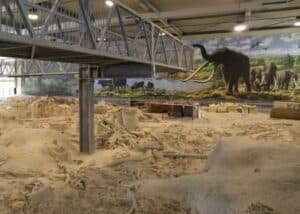
The Casal de' Pazzi Museum, in Rebibbia, is a museum built over a paleontological deposit: an ancient riverbed with remains of ancient elephant, aurochs, hippopotamus, and a fragment of an archaic human skull. Free admission. Take an eight-year-old child there and you won't regret it.
Casa Museo Alberto Moravia, on Lungotevere della Vittoria, preserves the writer's apartment with the library, the typewriter, the objects brought back from his trips to Africa. Admission is free with mandatory reservation and in small groups, because the apartment is an apartment and not a museum built to welcome crowds. If you love the house museum as a literary format, add Luigi Pirandello's study on Via Antonio Bosio to your list.
Roman State Museums With Free or Almost Free Admission
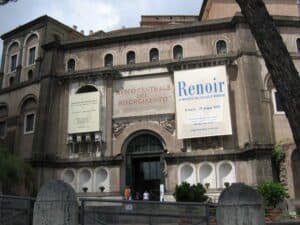
In the state perimeter permanent free admission is rarer, but it exists. The Central Museum of the Risorgimento at the Vittoriano and the Institute for the History of the Italian Risorgimento tell the story of the Italian nineteenth century inside Piazza Venezia complex. The Altare della Patria with the Shrine of the Unknown Soldier can be reached freely from the staircase, while the museum route of the VIVE follows the institute's fee schedule, with a full ticket at €18, reduced at €5 for ages 18-24 and free admission for people under 18 and for people with disabilities.
The Istituto Centrale per la Grafica, between Via Poli and Palazzo Poli, that is, inside the building that forms the backdrop of the Trevi Fountain, opens its exhibitions of prints and drawings with free admission. It's one of the most refined and least frequented places in the center: you enter from Via Poli 54 and find yourself in front of original intaglio plates and sheets by Piranesi.
University Museums: The Sapienza Museum Hub
Sapienza has one of the richest university museum systems in Europe, spread between the Città Universitaria in Piazzale Aldo Moro and some outside sites. 20 museums: Comparative Anatomy, Pathological Anatomy, Etruscan and Italic Antiquities, Anthropology, the Museum of Classical Art with its plaster cast collection, the Contemporary Art Laboratory Museum, Art and Mineral Deposits, Chemistry, Herbarium, Physics, Geology, Hydraulics, Commodity Science, Mineralogy, Origins, Botanical Garden, Paleontology, History of Medicine, Near East, Egypt and Mediterranean, Zoology. The University Museum of Earth Sciences is added to these.
The plaster cast collection of the Museum of Classical Art deserves a separate discussion: it is the largest Italian collection of plaster casts of Greek and Roman sculpture, born for archaeological teaching, and it lets you see side by side originals scattered across half of Europe. The visiting conditions change from museum to museum, with short hours and reservations often necessary: you contact the individual site or the secretariat of the Museum Hub before showing up.
Military and Law Enforcement Museums
Rome is full of armed-service museums, and almost all of them have free admission. The Historical Museum of the Carabinieri, in Piazza del Risorgimento, preserves uniforms, weapons, relics and a section dedicated to Salvo D'Acquisto. The Historical Museum of the Infantry, in Piazza Santa Croce in Gerusalemme, has flags, bladed weapons and the memory of the Great War. The Historical Museum of Military Motorization, at the Cecchignola, lines up hundreds of vehicles, from the kings' state cars to armored vehicles. The State Police Car Museum, at EUR, gathers the Panthers of every era, including the Alfa Romeos that made the news in the 1970s. The Historical Museum of the Fire Brigade tells the story of a trade through steam pumps, water tankers, helmets and uniforms, and opens on request at the Provincial Command.
A practical warning that applies to all of them: these are military or police facilities, so access requires an ID document and often advance notice, hours are reduced and tied to weekdays, and a closure for service needs can come without warning. You call first. Always.
Museums of Institutions, Banks and Foundations
The Numismatic Museum of the Italian Mint, on Via Principe Umberto, preserves dies, punches, medals and coins from Italian monetary history: a technical heritage few people imagine, with openings to be arranged with the institute. The Historical Museum of Communication, at EUR, traces the post, the telegraph, the telephone and the radio. The Peroni Beer Museum preserves the corporate archive of one of the oldest industrial brands in Rome. The Mathematics Museum and the Aldo Manuzio Museum of Writing complete the picture of the minor thematic collections.
This group also includes Galleria dell'Accademia Nazionale di San Luca, at Palazzo Carpegna in Piazza dell'Accademia di San Luca 77, with a fragment of fresco attributed to Raphael, canvases by Guido Reni and Van Dyck and Francesco Borromini's helical ramp, and Museo Fondazione Venanzo Crocetti on Via Cassia, and the Studio of the painter Francesco Trombadori at Villa Strohl-Fern, and Casa Museo Giacinto Scelsi on Via di San Teodoro, below the Palatine Hill, where the composer lived and worked. The opening conditions of these sites change often: before going, check the website of the institution that runs them.
The Churches That Are Museums in Practice, and Charge No Ticket
If I had to tell a visitor the main reason Rome remains the most affordable city in Europe for people who love art, I would point to the churches. They are picture galleries with free admission, with the originals in the place they were painted for, in the light they were painted for. An honest list, with what you find there.
The San Luigi dei Francesi Church, between Piazza Navona and the Pantheon, holds in the Contarelli Chapel Caravaggio's cycle with the Calling, the Martyrdom and Saint Matthew and the Angel, painted between 1599 and 1602: it's the place where European painting changes direction. Free admission, coin-operated lighting. Go at 9:00 in the morning, not at noon.
Santa Maria del Popolo, at the mouth of the Trident, puts in a single nave the Cerasi Chapel with Caravaggio's Conversion of Saul and Crucifixion of Saint Peter, the Chigi Chapel designed by Raphael and completed by Gian Lorenzo Bernini, Donato Bramante's apse and Pinturicchio's panels. No ticket.
The Sant'Agostino in Campo Marzio Church holds Caravaggio's Madonna of the Pilgrims, with the dirty feet of the devout that caused a scandal, the prophet Isaiah frescoed by Raphael and Jacopo Sansovino's Madonna del Parto. San Pietro in Vincoli, on the Oppian Hill, has Michelangelo's Moses, a survivor of the project for the tomb of Julius II. Santa Maria della Vittoria, in Largo Santa Susanna, has Bernini's Ecstasy of Saint Teresa in the Cornaro Chapel, the boldest piece of Baroque theater in the city.
The Sant'Ignazio di Loyola Church, in Campo Marzio, has Andrea Pozzo's vault with the Glory of Saint Ignatius and the false dome painted on canvas: you stand on the yellow marble disk in the center of the nave and look up. The Gesù, the mother church of the Jesuits, answers with the Triumph of the Name of Jesus by Giovanni Battista Gaulli and with the chapel of Saint Ignatius by Andrea Pozzo, where every afternoon a Baroque machine lowers the altarpiece to reveal the silver statue.
Santa Prassede, a short walk from Santa Maria Maggiore, preserves the Carolingian mosaics of the 9th century and the Chapel of San Zeno, which Romans called the Garden of Paradise: four meters by four of Byzantine gold, and you pay nothing. Santa Maria in Trastevere has the apse with its 13th-century mosaics and the stories of the Virgin by Pietro Cavallini. Santa Cecilia in Trastevere has Stefano Maderno's statue and, behind a separate entrance, Cavallini's Last Judgment in the nuns' choir.
Santa Maria sopra Minerva, the only Gothic church in the historic center, has Michelangelo's Christ Carrying the Cross, the Carafa Chapel frescoed by Filippino Lippi and the tomb of Beato Angelico. Santa Sabina, on the Aventine, has the wooden door of the 5th century with one of the oldest known crucifixions. Santa Maria in Cosmedin has the most beautiful Romanesque bell tower in Rome, and at the back of the portico the Mouth of Truth, which is an ancient sewer cover with the face of a river deity.
San Pietro in Montorio, on the Janiculum, has Bramante's Tempietto in its courtyard, the manifesto of High Renaissance architecture. The Santi Quattro Coronati Basilica, on the Caelian Hill, hides the Oratory of San Silvestro with its 13th-century cycle on the Donation of Constantine, and the cloister. The San Clemente Basilica has the apse mosaic with the cross as tree of life, which is free to enter, while the lower levels with the Mithraeum have their own ticket.
One warning: churches are not museums and must be treated as places of worship. Avoid service times, cover your shoulders and knees, and don't use flash. And in the major basilicas, like St. John Lateran, Santa Maria Maggiore and Saint Paul Outside the Walls, the nave is free but the cloisters, museums and special tours have separate tickets. It's the distinction that causes more confusion than any other.
Nights and weeks: when free museums in Rome become an event
Alongside the standing free admissions there are the special dates, and those are the ones that bring tens of thousands of people into the streets. They need a strategy, because the crush is guaranteed.
The Rome Museums Night
The Notte dei Musei di Roma is the event of the city museum system. In 2026 it took place on Saturday, May 23, from 20:00 to 02:00, with last entry at 01:00. The ticket is symbolic: €1 for residents of Rome and the metropolitan area, €2 for non-residents, free for MIC card holders. Admission is free for everyone at the Museum of the Roman Republic, the Casal de' Pazzi Museum and the Caelian Hill Archaeological Park. The edition networked 70 venues among museums, universities, Italian and foreign academies, embassies and institutes, with about 150 events including concerts, performances, guided tours and activities for children. Participation is allowed until places run out, and tickets are bought on site at each museum.
My practical advice: don't try to do the Capitoline Museums at 21:00. Go to the side venues, the foreign academies, the institutes, where there is no line and the quality of what's on offer is often higher. The Museums Night rewards those who have the courage to choose the lesser program.
The European Museums Night
The Notte europea dei Musei was born in France, reports to the French Ministry of Culture and is under the patronage of UNESCO, the Council of Europe and ICOM. Since 2005 it has brought together the museums of all Europe on the same evening. It takes place on the Saturday closest to ICOM's International Museum Day, which falls on May 18. In 2026 the date was Saturday, May 23, the same as the Rome Museums Night. State museums and cultural sites offer an extraordinary evening opening at the symbolic price of €1, without prejudice to the free admissions provided by law. All state and non-state museums, galleries, monumental complexes, archaeological areas and parks can take part, provided they have security systems and lighting suitable for night visits. Themes and arrangements are issued every year by circular of the Directorate-General for Museums, and the calendar can be found on the website of the Ministry of Culture.
The European Heritage Days
The European Heritage Days are the largest and best attended cultural event in Europe and in Italy they are held in September, with extraordinary openings, initiatives and a symbolic-cost evening opening at state cultural sites. The theme changes every year and is coordinated at the continental level by the Council of Europe together with the European Commission. The dates and program of each edition should be checked on the website of the Ministry of Culture: they change from year to year and it's not wise to trust your memory.
Free admission to the Vatican Museums on the last Sunday of the month
The Vatican Museums do not belong to the Italian State and have a calendar of their own, which must be kept separate from everything else. On the last Sunday of every month admission is free, with hours 9:00-14:00 and last entry at 12:30. Visitors must leave the halls 30 minutes before closing. The free admission does not apply when the last Sunday coincides with Easter, with the solemnity of Saints Peter and Paul on June 29, with Christmas on December 25, with Saint Stephen's Day on December 26 and with December 31. On other days the Museums keep the hours 8:00-20:00 from Monday to Saturday, with last entry at 18:00, and they are closed every Sunday except the last, as well as on the holidays indicated by the Vatican calendar.
Here I have to be brutal, because it affects your wallet and your day. The last Sunday of the month at the Vatican Museums is the longest line in Europe: people start queuing along the Leonine walls long before opening, the route is one-way and mandatory, and the Sistine Chapel turns into a packed box. Barely five hours of opening for the most crowded museum on the continent is a structural imbalance. If you have a zero budget and no alternative, do it, and arrive before 07:00. If you can afford the regular ticket, buy it and go on a Thursday in February: the difference between the two experiences is unbridgeable.
FAI Days, Open House Roma and the other special openings
The FAI Days
The FAI Spring Days are organized by the Fondo Ambiente Italiano and open, for one weekend, places normally closed to the public: private palaces, ministries, embassies, gardens, military complexes, archives. The 34th edition took place on March 21 and 22, 2026. Access is with a suggested free contribution in support of the Foundation and, for the most requested places, with online booking. In the fall the Foundation repeats with the FAI Autumn Days. The calendar and arrangements can be found on the website of FAI.
For Rome the FAI Days are the chance of the year to get in where you never get in: the ministry buildings along Via Veneto and Via XX Settembre, the clubs, the representative offices, the scientific institutes. It's worth booking the very day the portal opens, because the spots at the most desired places sell out in a few hours.
Open House Roma
Open House Roma is the architecture festival that opens to the public, free of charge, buildings, construction sites, private homes, design studios and infrastructure. The 2026 edition ran from May 16 to 24, for nine days. It's a different format from FAI: fewer historic palaces and more contemporary architecture, with the designers taking visitors through their own works. Program and bookings on the Open House Roma website.
Estate Romana and free culture in the hot months
Estate Romana, the summer festival promoted by Roma Capitale, is not a museum program, but from June to September it fills parks, courtyards, villas and archaeological areas with events that are free or low-priced: open-air cinema, concerts, readings, evening visits. Many initiatives take place inside or next to cultural sites, from Casa del Cinema arena at Villa Borghese to the gardens of Villa Torlonia, from the Baths of Caracalla to the Circus Maximus. In summer, moreover, many city and state museums extend their evening hours: a visit at 20:00 in July, with the light coming in low through the windows, is something else compared with 11:00 in the morning.
Free museums in Rome with children
In state museums anyone under 18 always gets in free, not only on the first Sunday. In city museums children under six never pay, and from six to 25 non-residents get the reduced rate. With this combination, a Roman family with minor children can today visit the museums of their own city without spending a euro, all year round.
The museums that really work with children
The Civic Museum of Zoology, at Via Ulisse Aldrovandi 18, next to the Bioparco, is the soundest choice: whale skeletons, dioramas, educational rooms built to be read by a seven-year-old. The Casal de' Pazzi Museum puts little ones in front of an ancient elephant tusk at the exact spot where it was found: in situ museography works with children better than any display case. The Museum of the Walls lets you walk inside a city gate and climb a tower, and kids find it more exciting than many picture galleries.
The Explora children's museum, at Via Flaminia 82, is designed entirely for childhood but has its own ticket and booked time slots: count it as an expense. The Military Motorization Historical Museum at the Cecchignola, with its tanks and vintage cars, is free and produces an enthusiasm that parents don't expect.
Survival rules for a family visit
A child can handle a museum for 40 minutes, not three hours. Better two small museums on two mornings than one giant in a day. On the first Sundays of the month, with the crowds, strollers become a serious problem in narrow rooms: check beforehand if the museum has a stroller check. And if the museum is free there is no moral obligation to see all of it: you go in, look at five things, leave happy and come back the next month. That's the real luxury of free admission, and almost nobody uses it.
Free museums in Rome and accessibility
People with disabilities and a companion get into state museums free of charge. In city museums free admission is granted to the person with a disability and one family member. Free admission is the easy part. The hard part is the physical accessibility of historic buildings built without elevators.
Among the free venues, the Museo storico della Liberazione on Via Tasso is accessible to visitors with mobility disabilities and offers audio guides in Italian, English, Spanish and German at no extra cost. The big city museums have equipped routes and elevators, but with exceptions: at the Museum of the Walls the walkway on the towers involves steep stairs and cannot be done in a wheelchair, and the same goes for many archaeological spaces. The most efficient way not to make a wasted trip is to call 060608 for city venues and the numbers of the individual institutes for state venues, asking about the accessible route and not about accessibility in general.
How you really save on museums in Rome
The rule that counts more than any discount
Before buying any ticket or any card, answer three questions. Do you live in Rome or in the Metropolitan City? Then the city museums are already free and at most you need the MIC card for line-free access and for aMICi. Are you under 18, or do you fall into one of the categories set by law? Then the state museums are already free and you don't need any card. Are you a tourist staying three days? Then your only real lever is the calendar: the first Sunday of the month for the State, Wednesday in the last two hours for the city museums, the last Sunday for the Vatican Museums.
The combinations that really save money
The single ticket of the National Roman Museum costs €15 full price and €2 reduced, and is valid for one entry to each site within a week of first access: Palazzo Massimo, Palazzo Altemps and the Baths of Diocletian, with the Crypta Balbi site temporarily closed to the public. The Octagonal Hall alone has a €5 ticket. Considering that Palazzo Massimo has the frescoes of the Villa of Livia and the Boxer at Rest, and Palazzo Altemps the Ludovisi collection with the Throne and the Suicidal Gaul, €15 spread over three museums remains the best value in the city even outside the free days.
The mistakes that make you spend more
The first mistake is buying a cumulative card without counting how many museums you will really visit: in three full days an average tourist does four, not 10. The second is booking the first Sunday of the month at places where booking doesn't exist, like the Colosseum Archaeological Park, and paying an intermediary for a service the institution doesn't offer. The third, the most widespread, is paying full price when you are entitled to free admission: tenured teachers, architecture and cultural heritage students, licensed guides, journalists. Show your ID and ask. If you don't ask, nobody tells you.
Three itineraries of free museums in Rome that really work
The first Sunday morning, downtown version
Opening at Palazzo Altemps at 9:00, an hour and a half among the Ludovisi marbles and the frescoed ceilings. A 10-minute walk to the San Luigi dei Francesi Church for the three Caravaggios, then to the Napoleonic Museum at Palazzo Primoli. Finish at Santa Maria del Popolo. Four top-tier places, zero lines worth the name, because the first Sunday crowd concentrates on the big names.
The Appia afternoon, open-air version
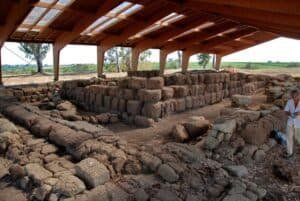
The Museum of the Walls at Porta San Sebastiano, always free, and then Via Appia Antica on foot or by bike: the Appia Antica Archaeological Park with its stretches of basalt paving, the Villa of Maxentius with the circus and the mausoleum of Romulus, and in the background the Villa of the Quintilii. On spring Sundays the road is closed to traffic and the silence you find at the fourth mile has no equal in Europe.
The tour of the museums nobody pays for, outside-the-center version
The Casal de' Pazzi Museum in Rebibbia in the morning, the Military Motorization Historical Museum at the Cecchignola in the afternoon, and on another day the Museum of the Roman Republic at Porta San Pancrazio followed by a walk on the Janiculum. Three free museums, three different neighborhoods, three stories that never touch, and no lines.
When to go and when to avoid free museums in Rome
The worst days of the year to visit Rome at zero cost are the first Sunday of April, May and June, with the long weekends of April 25 and June 2 acting as a multiplier. The best are the first Sunday of November, January and February: same free admission, a third of the people, and the winter light in the Capitoline halls, which is worth the trip all by itself.
Within the day, the good window for the minor museums is from 15:00 to 17:30. For the big state museums it's opening time sharp, at 9:00, arriving at 8:40. Wednesday afternoon in the last two hours, with the 50 percent reduction for non-residents in the city museums, is the best-kept secret of the system: half price and half-empty rooms.
The state museums of Rome, site by site: what you see on the free Sunday
The first Sunday of the month opens dozens of places, and choosing one blindly is the best way to waste it. Here is what each one holds, in order of priority for an adult, curious visitor.
Palazzo Massimo alle Terme
Palazzo Massimo, at Largo di Villa Peretti 2, in front of Termini station, is the site of the National Roman Museum that gives the most to first-time visitors. On the second floor are the wall paintings detached from the Villa of Livia at Prima Porta, the painted garden without a horizon that surrounded the underground room of Augustus's wife, and the stuccoes and frescoes of Villa della Farnesina, which in all likelihood belonged to Julia and Agrippa. On the lower floors the Boxer at Rest, a Hellenistic bronze found on the Quirinal Hill in 1885, with a broken nose and ears deformed by blows, and the so-called Hellenistic Prince. In the basement the Medagliere, one of the most important numismatic collections in Italy. If you have two hours and only one Sunday, this is the address.
Palazzo Altemps
Palazzo Altemps, at Piazza di Sant'Apollinare 46, a stone's throw from Piazza Navona, houses the Ludovisi collection inside a Renaissance palace with a double-loggia courtyard. Here are the Ludovisi Throne, a Greek relief of the 5th century BC with the birth of Aphrodite, the Gaul group in which he kills himself together with his wife, a Roman copy of a Pergamene original, the Ludovisi Ares restored by Gian Lorenzo Bernini in the 17th century, and the Great Ludovisi Sarcophagus with the battle between Romans and barbarians. The quality of the whole is very high and the crowd is always modest: on free Sundays it's the first recommended choice.
Baths of Diocletian and the Octagonal Hall
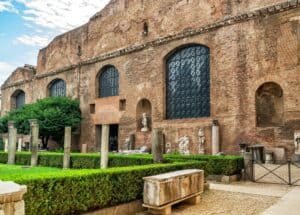
The Baths of Diocletian, at Viale Enrico De Nicola 78, occupy the largest bath complex of antiquity, built between 298 and 306. The site holds the epigraphic section, with thousands of Latin inscriptions arranged by theme, and the protohistory section of Lazio. The cloister attributed to Michelangelo, with its cypresses and the heads of ancient animals lined up along the porticoes, is one of the most restful places in the center. Next door, the Octagonal Hall has its own €5 ticket and a domed roof that is worth the detour.
National Etruscan Museum of Villa Giulia
The National Etruscan Museum, at Piazzale di Villa Giulia 9, occupies the suburban villa built for Pope Julius III in the mid-16th century, with the multilevel nymphaeum designed by Bartolomeo Ammannati and the contribution of Giorgio Vasari and Jacopo Barozzi da Vignola. Inside are the Sarcophagus of the Spouses from Cerveteri, the Apollo of Veii from the Portonaccio sanctuary attributed to the workshop of Vulca, the Ficoroni Cista with the inscription of Novios Plautios, and the gold plaques of Pyrgi with the bilingual Etruscan and Phoenician text. To understand who was in Italy before the Romans, there is no better place in Europe.
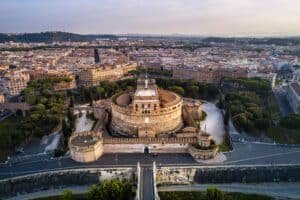
Castel Sant'Angelo
Castel Sant'Angelo, on the Lungotevere, began as the mausoleum of Emperor Hadrian, completed in AD 139, and later became a fortress, a prison and a papal residence. The visit follows the ancient helical ramp, climbs to the Renaissance courtyards, crosses the Pauline Hall frescoed by the workshop of Perino del Vaga for Paul III and reaches the terrace of the Angel, where Tosca throws herself in the last act of Puccini's opera. On free Sundays the hours are 9:00-19:30, with last entry at 18:30, and tickets are collected on site without booking.
Palazzo Barberini and the Corsini Gallery
Palazzo Barberini, at Via delle Quattro Fontane 13, is both a museum and a textbook of architecture: the facade by Carlo Maderno, Bernini's square staircase, Borromini's helical staircase, and in the grand hall the Triumph of Divine Providence frescoed by Pietro da Cortona between 1632 and 1639. The collections include Raphael's La Fornarina, Caravaggio's Judith Beheading Holofernes, and the portrait of Henry VIII by Hans Holbein the Younger. On the other bank of the Tiber, Palazzo Corsini preserves the only 18th-century installation left intact in Rome, with Caravaggio's Saint John the Baptist and Rubens's Saint Sebastian Tended by Angels, and stands opposite the Villa Farnesina by Baldassarre Peruzzi, which however belongs to Accademia dei Lincei and has its own ticket.
The National Gallery of Modern and Contemporary Art
La Galleria Nazionale, at Viale delle Belle Arti 131, occupies Palazzo delle Belle Arti built by Cesare Bazzani for the 1911 Exposition, on the edge of Villa Borghese. Inside are Antonio Canova's Hercules and Lichas, Gustav Klimt's The Three Ages of Woman, two canvases by Vincent van Gogh, the Futurists, and 20th-century Italian painting up to Burri and Fontana. It's a huge museum and almost always empty: on free Sundays you stroll through it as if it were a living room.
The Museum of Civilizations at EUR
The Museum of Civilizations, at Piazza Guglielmo Marconi 14, brings together in a single institute four historic collections: the Luigi Pigorini Prehistoric and Ethnographic Museum, the Museum of the Early Middle Ages, the Lamberto Loria Museum of Popular Arts and Traditions and the collections of the former Giuseppe Tucci National Museum of Oriental Art. It's the place where the history of Italian colonial collecting is now being questioned by the institution itself, and that makes the visit more interesting, not less.
Baths of Caracalla, Ostia Antica, Appia Antica
The Baths of Caracalla, at Viale delle Terme di Caracalla 52, were inaugurated in 216 and could serve thousands of people a day: from the 16th-century excavations came the Farnese Hercules and the Farnese Bull, now in Naples. Ostia Antica, with the theater, the Square of the Corporations and the mosaics of the Baths of Neptune, is the most legible Roman city in Italy and fills a whole day. The Villa of the Quintilii, at the fifth mile of the Appia, belonged to the two Quintilii brothers, consuls in 151, put to death by Commodus, who took possession of it: the baths overlooking the countryside are the sharpest image of imperial luxury.
Hadrian's Villa and Villa d'Este in Tivoli
Outside the city, Hadrian's Villa and Villa d'Este take part in the same free days. Emperor Hadrian's villa in Tivoli, built between 118 and 138, is the largest known imperial residence, with the Canopus, the Maritime Theater and the Poikile. Villa d'Este, commissioned by Cardinal Ippolito II d'Este from 1560, is the garden of fountains that taught Europe how to design with water. With a high number of visitors, entry may be limited, the route may change and some rooms may stay closed.
The state house museums
They are the most delicate segment and the most beautiful. The Hendrik Christian Andersen House Museum, at Via Pasquale Stanislao Mancini 20, preserves the sculptor's studio with the large plaster groups conceived for a utopian World City: hours 9:30-19:30, last entry 18:45, no booking and no groups. The Boncompagni Ludovisi House Museum, dedicated to the decorative arts, costume and fashion of the 19th and 20th centuries, opens 9:00-19:30 with last entry at 18:30. The Mario Praz House Museum receives groups of at most 12 people for 45-minute visits, booking mandatory. The National Museum of Musical Instruments, at Santa Croce in Gerusalemme, opens 9:30-19:30. The Giacomo Manzù Museum, in Ardea, opens 9:00-19:30 with last entry at 19:00. All these sites report to the Directorate of National Museums of the City of Rome, with its address at Lungotevere Castello 50.
The city museums of Rome, room by room: what awaits you when you get in free
The Capitoline Museums
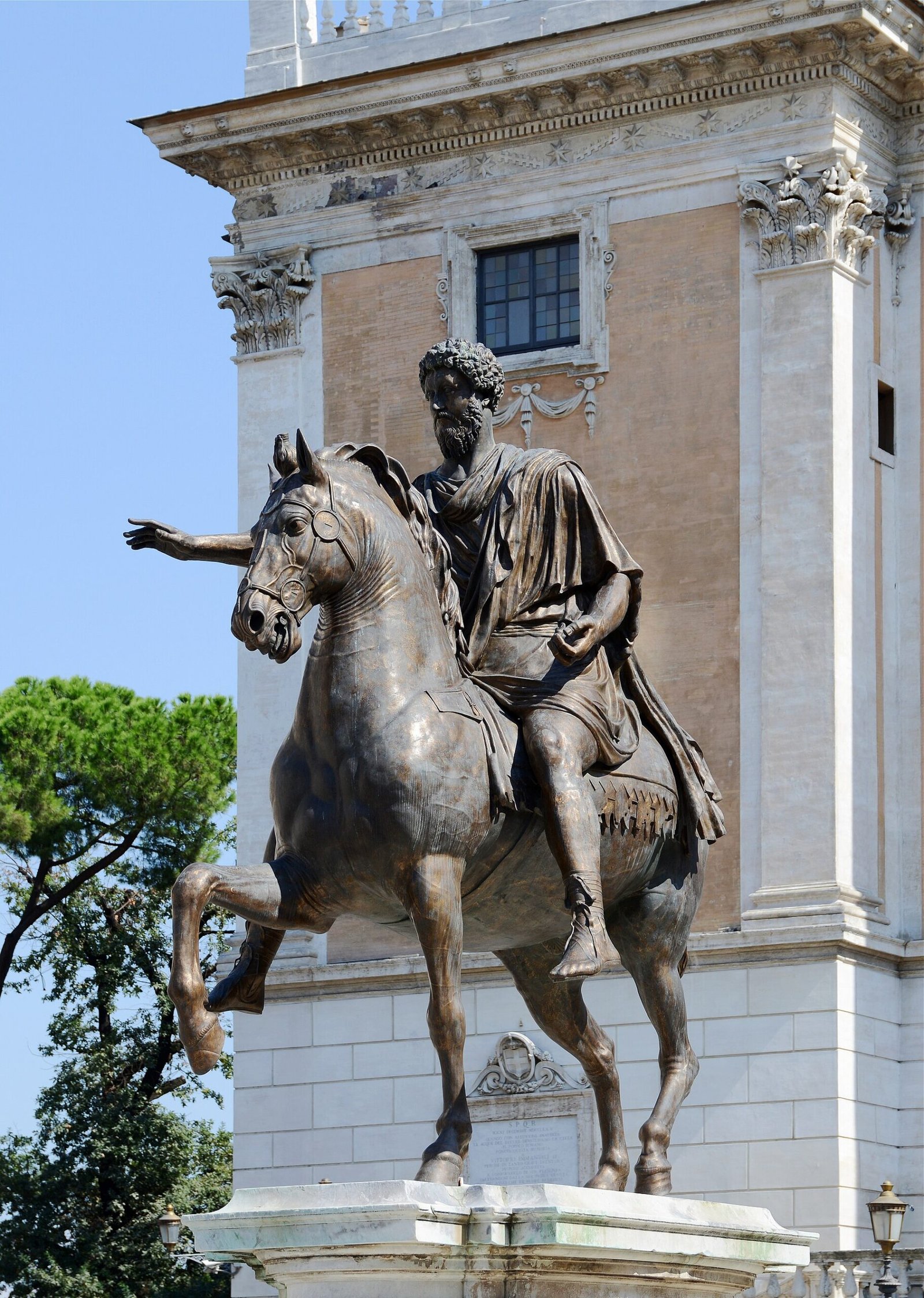
The Capitoline Museums, at Piazza del Campidoglio 1, occupy Palazzo dei Conservatori and Palazzo Nuovo, facing the square designed by Michelangelo, connected underground by Galleria Lapidaria, which comes out in the Tabularium, the state archive of Republican Rome, with the view of the Forum that is worth the whole visit. In the courtyard are the colossal fragments of Constantine. Inside are the Capitoline Wolf, the Spinario, the Capitoline Brutus, and the equestrian statue of Marcus Aurelius in the Exedra, which is the original in gilded bronze that escaped melting because for centuries it was believed to be the effigy of Constantine. In Palazzo Nuovo are the Dying Gaul and the Capitoline Venus. On the second floor of Palazzo dei Conservatori is the Pinacoteca, with Caravaggio's Fortune Teller and Saint John the Baptist, Guercino's Burial of Saint Petronilla, and Rubens's Romulus and Remus. You don't get out in under two and a half hours.
Centrale Montemartini
The Centrale Montemartini, at Via Ostiense 106, is the first public thermoelectric power plant in Rome, inaugurated in 1912 and converted into a museum in 1997 for an exhibition that was meant to last a few months and stayed. The ancient statues are displayed in front of diesel engines and boilers, and the juxtaposition of marble and cast iron works better than any traditional installation. Worth seeing are the Muse Polyhymnia, the Seated Girl, the hunting mosaics and Pius IX's train, preserved in the next room. With free admission for residents it has become the museum to go back to when you have a free hour.
The Ara Pacis Museum
The Ara Pacis museum, on Lungotevere in Augusta, preserves the Altar of Peace commissioned by the Senate for Augustus's return from the campaigns in Spain and Gaul, voted in 13 BC and consecrated in 9. The friezes with the procession of the imperial family are the most important figurative document of the Augustan age. The altar was reassembled in the 1930s and in 2006 was covered by the case designed by Richard Meier, the first contemporary architecture intervention in the historic center after decades: like it or not, it's now part of the landscape. Next door, the Mausoleum of Augustus has its own routes.
Museo di Roma at Palazzo Braschi and Museo di Roma in Trastevere
The Museo di Roma, at Piazza San Pantaleo 10, tells the story of the city from the Middle Ages to the 19th century through views, portraits, carriages, costumes and the great staircase by Cosimo Morelli. The Museo di Roma in Trastevere, at Piazza Sant'Egidio 1B, preserves Ettore Roesler Franz's watercolors of the series Roma sparita, that is, the only reliable portrait of the neighborhoods demolished after 1870 to build the Tiber embankments. Anyone who wants to understand what Rome lost in 50 years of demolitions will find the proof there.
Villa Torlonia Museums and the Gallery of Modern Art
The Villa Torlonia Museums, at Via Nomentana 70, include the Casino Nobile designed by Giuseppe Valadier and later transformed, Mussolini's rented residence from 1925 to 1943, the Casina delle Civette with the Liberty-style stained glass by Cesare Picchiarini after designs by Duilio Cambellotti and Umberto Bottazzi, and the Casino dei Principi. In the park you can visit, with a separate ticket, the air-raid shelters and the bunker. Galleria d'Arte Moderna di Roma Capitale, at Via Francesco Crispi 24, collects Italian painting and sculpture between the 19th and 20th centuries in a former Carmelite convent: small, orderly, almost never crowded.
The Forma Urbis Museum and the Caelian Hill park
The Forma Urbis Museum, in the Caelian Hill archaeological park, displays the surviving fragments of the great marble plan of Rome engraved in the Severan age, between 203 and 211, laid over the 18th-century plan of Giovanni Battista Nolli reproduced on the floor. You literally walk over the ancient city trying to make the pieces fit together. It's the most recent city museum and one of the smartest, and it's included in the free admission for residents.
The Civic Museum of Zoology and the others
The Civic Museum of Zoology, at Via Ulisse Aldrovandi 18, preserves 19th-century collections and modern educational rooms. The Museum of Via Ostiense, inside Porta San Paolo, tells the story of the road that connected Rome to the river port. The Museo Barracco, at the Piccola Farnesina on Corso Vittorio Emanuele II, lines up Egyptian, Assyrian, Cypriot, Greek and Etruscan sculpture in a 16th-century palace attributed to Antonio da Sangallo the Younger. The Napoleonic Museum, at Palazzo Primoli, preserves the memorabilia of the Bonaparte family in Rome, where Letizia Ramolino lived until her death.
The other Roman collections worth knowing
Outside the two public systems there are private galleries open to the public that are not free but complete the map, and ignoring them means having a partial idea of the city. The Galleria Doria Pamphilj on Via del Corso holds Velázquez's portrait of Innocent X and Caravaggio's Rest on the Flight into Egypt. The Galleria Colonna opens its Great Hall, where the cannonball of 1849 is still embedded. The Galleria Spada guards Borromini's solid perspective, the corridor that looks 35 meters long and measures eight. The Domus Romane of Palazzo Valentini offer a route with virtual reconstructions above two late-antique aristocratic houses.
On the religious side, the Jewish Museum of Rome, beneath the Great Synagogue, tells the story of 22 centuries of Jewish presence in the city, the oldest in the Western diaspora. The Capuchin Friars Museum on Via Veneto preserves the crypts decorated with the bones of the confreres. The Museum of the Souls of Purgatory, in the sacristy of the Sacro Cuore del Suffragio on Lungotevere Prati, collects the alleged imprints left by souls: free entry, and an involuntary lesson in religious anthropology. The Franciscan Museum on Via Boncompagni completes the group.
For the contemporary, the MACRO on Via Nizza, the contemporary art museum of Roma Capitale, and Zaha Hadid's MAXXI on Via Guido Reni hold two different poles of research. For nature, the Botanical Garden on Largo Cristina di Svezia, which belongs to Sapienza, offers 12 hectares of plant collections on the slopes of the Janiculum.
How to reach free museums in Rome without wasting time
On free days traffic gets worse and parking spots vanish: public transport is not an ideological choice, it's the only reasonable solution. Metro line A serves Barberini for Palazzo Barberini and the Trevi Fountain, Spagna for Santa Maria del Popolo and the upper part of Villa Borghese, Flaminio for the MAXXI and the Etruscan Museum with tram 3 or 19, Repubblica for the Baths of Diocletian. Metro line B serves Colosseo for the Archaeological Park and for San Pietro in Vincoli, Circo Massimo for the Circus Maximus and the Baths of Caracalla, Piramide for the Museum of Via Ostiense, Garbatella for the Centrale Montemartini, EUR Fermi for the Museum of Civilizations, Rebibbia for the Casal de' Pazzi Museum. On line A, the Manzoni stop serves the Museo storico della Liberazione on Via Tasso, five minutes on foot.
For the Campidoglio there is no convenient metro stop: you get off at Colosseo and walk back up along Via dei Fori Imperiali, or you take the buses from Piazza Venezia. The Museum of the Walls is reached with bus 118 along the Appia or 218 from San Giovanni, getting off at Porta San Sebastiano. The Museum of the Roman Republic is reached with bus 115 or 870 to Porta San Pancrazio, or on foot from the Janiculum. The Villa of the Quintilii has an entrance on Via Appia Nuova, served by the buses that run along that road, and one on the Appia Antica. Ostia Antica is reached by the Roma-Lido railway from Piramide, which is covered by the urban fare.
A warning: on free Sundays many downtown lines are diverted for demonstrations, marches or sporting events. Before leaving home it's worth checking the transit company's notices. Losing 40 minutes on a diverted bus is the stupidest way to waste a free day.
The calendar of the year: all the free admission opportunities, month by month
The fixed recurrences
12 first Sundays of the month at state sites. 12 last Sundays of the month at the Vatican Museums, with the exceptions of the liturgical calendar. 52 Wednesdays with the 50 percent reduction in the last two hours for non-residents in the city museums. And, for those who live in Rome and the Metropolitan City, 365 days of free admission in the city system.
Spring
March brings the FAI Spring Days, a weekend of extraordinary openings at normally inaccessible places: in 2026, March 21 and 22. May is the densest month: Open House Roma with nine days of open architecture, from May 16 to 24 in the 2026 edition, and the night of May 23 with the Rome Museums Night and the European Museums Night on the same evening. In spring, moreover, many normally closed municipal archaeological areas open with guided visits by booking, included in the free admission for residents.
Summer
From June to September Estate Romana fills parks and archaeological areas with events that are free or low-priced, and many museums extend their evening hours. It's the period when it pays to flip your habits: you visit at 20:00, not at 11:00, and you make use of the long light. The Baths of Caracalla and the Circus Maximus become stages, and the Villa Torlonia keeps its park open until late.
Fall and winter
September brings the European Heritage Days, with extraordinary openings and a symbolic-cost evening opening at state cultural sites. October brings the FAI Autumn Days. From November to February the city empties and the first Sundays finally become livable: those are the months when I recommend doing the big museums, the ones that are impossible in summer. A first Sunday of January at the Capitoline Museums, with rain outside and the Tabularium overlooking the wet Forum, is one of the most beautiful experiences Rome knows how to offer, and it costs nothing.
A curiosity about free museums in Rome
The very idea of a public, free museum was born in Rome, on the Capitoline Hill, and from a political gesture. In 1471 Pope Sixtus IV donated to the Roman People a group of ancient bronzes kept until then at the Lateran: the Wolf, the Spinario, the Camillus, the colossal head and the hand with globe of Emperor Constantine. He did not give them to a prince or to a private collection: he returned them to the city, that is, to those who lived in it. That gesture turned the Capitoline Hill into the symbolic repository of Roman identity and put into circulation a new principle, by which the ancient belongs to the community.
The next step came in 1734, when Pope Clement XII opened the Capitoline Museum to the public, in the palace overlooking Michelangelo's square. It's the date that historians of collecting point to as the birth of the first public museum in the world: not a private gallery that could be visited as a favor, but an institution open to visitors. A few years later Benedict XIV added the collection of paintings that became the Capitoline Pinacoteca, buying the Sacchetti and Pio di Savoia collections as a whole to save them from dispersal.
When you enter the Capitoline Museums free today with your ID card, therefore, you are not taking advantage of a promotion: you are exercising a custom that is almost 600 years old and was invented right there, at the top of those stairs. I find it's the most interesting thing you can tell a visitor as they climb the cordonata: free admission, in Rome, is a matter of origin, not of discount.
One thing nobody tells you about free museums in Rome
That free admission does not eliminate the ticket. Whoever has the right to get in without paying must still have a zero-value entry ticket issued, because it serves to count admissions and to report on visitor flows. It seems a formality but it changes the logistics of the day: it means you have to go through the ticket office or the kiosk exactly like everyone else, and that in places with limited capacity your free spot is a spot someone else won't have.
The practical corollary is harder. On the first Sundays of the month, at the Colosseum Archaeological Park the free tickets are handed out only in order of arrival, at the windows in Piazza del Colosseo, next to the Temple of Venus and Roma, and at the one in Largo della Salara Vecchia. Online booking does not exist, not even for those with the Membership Card or the Roma Pass. Whoever arrives at noon with the idea of choosing a convenient time discovers that the convenient time was taken by others at 08:00.
The second thing almost nobody tells you concerns the city museums: the 50 percent reduction for non-residents every Wednesday in the last two hours of opening. It doesn't appear in brochures, it doesn't make headlines, but it's written in the system's conditions of free admission and reduction. A Wednesday at 17:30 at the Capitoline Museums means half price and rooms already emptied: for an informed tourist it's the best window of the entire week, and very few people know it.
The advice I give you for visiting free museums in Rome
Don't use the free day for the most famous museum. Use it for the museum you would never have paid for. It's advice almost nobody follows, with the result that tens of thousands of people crowd into the Colosseum while 500 meters away the Imperial Forums Museum in the Markets of Trajan can breathe.
The logic is simple. You will see the big monument anyway, sooner or later, and it's worth the price of the ticket because it's unrepeatable. The second-tier museum, the one you would never have pulled out €12 for, is exactly what a zero-cost day makes possible: Palazzo Altemps, the Etruscan Museum of Villa Giulia, the Museum of Civilizations at EUR, the National Gallery of Modern Art. These are places you visit almost alone on a first Sunday of January.
The second piece of the advice concerns the hour. The Roman peak of the free Sunday is concentrated between 10:30 and 13:00. From 15:00 on the city deflates. If you have to choose a single window, take 15:30 and plan two nearby museums, not four scattered ones: transfers eat up more time than lines.
The third piece is the one nobody wants to hear: if you have only one day in Rome, don't make it coincide with the first Sunday of the month. Pay for the ticket and enjoy the city. Free admission is an advantage for those who have time, not for those in a hurry.
Another well-known fact, yet rarely cited
That the museums of Rome are not one, but three systems that don't communicate with each other, and that most disappointments come from this lack of communication. The civic system belongs to Roma Capitale and is governed by the Sovrintendenza Capitolina: hence the free admission for residents, the MIC card and the number 060608. The state system belongs to the Ministry of Culture and applies the ministerial decree of 1997 on fares and exemptions, with the first Sunday of the month as its symbolic day. The third system, that of the Vatican Museums, belongs to another State and has its own calendar, free admissions and hours.
The practical consequences are precise. The MIC card does not open the Colosseum. A Roman resident's ID card does not open Galleria Borghese. The first Sunday of the month does not open the Vatican Museums, which open on the last. The last Sunday of the month does not open the city museums. And the Christian catacombs, run by the Pontifical Commission for Sacred Archaeology, have their own tickets both on the first and on the last day of the month.
There is a fourth set, even more elusive, that almost no guide lines up: the museums of third-party bodies, from universities to the armed forces, from banking foundations to academies. They are often free by statute and almost always invisible in tourist communication, because nobody promotes them. Whoever learns to read this four-layer map stops considering Rome an expensive city.
The right photo to take at free museums in Rome
There are two, and they are opposites. The first is in the courtyard of Palazzo dei Conservatori, at the Capitoline Museums: the colossal fragments of the acrolithic statue of Constantine, the head more than two and a half meters high, the foot, the hand with the pointing index finger, leaning against the back wall like the remains of a giant. The best light arrives mid-morning, when the sun comes in from above and separates the marble from the wall in shadow. Get down low, at the height of the foot, and include a person in the frame: without a human figure nobody understands the scale. It's an open-air courtyard, so the photograph is technically easy and visually spectacular.
The second is the exact opposite, and I prefer it. At the Museum of the Walls at Porta San Sebastiano you climb onto the patrol walkway of the Aurelian Walls and photograph Via Appia leaving the gate and heading off to the south, framed by the battlements. Free entry, always, for anyone. The right time is late afternoon, when the road catches the raking light and the two towers cast their shadow on the paving. It's a photograph tourists don't have, because almost nobody goes to the Museum of the Walls, and it tells Rome better than 10 shots of the Colosseum.
A technical rule that holds everywhere: in Italian museums, photography for personal use is generally allowed without flash, tripod or selfie stick, but individual institutions may restrict it in specific rooms or during temporary exhibitions. The sign at the room entrance always beats the general rule.
Some important events that happened here in history
The history of free access to Rome's museums can be told through dates, and they are dates that explain the city. In 1471 Sixtus IV handed the Lateran bronzes over to the Roman People, effectively founding the Capitoline collection. In 1734 Clement XII opened the Capitoline Museum to the public, the first public museum in the world, and in the middle of the century Benedict XIV added the Pinacoteca by acquiring the Sacchetti and Pio di Savoia collections.
In 1849 the Roman Republic, in its five months of life, laid hands on the ecclesiastical heritage with the idea of assigning it to civic use: the experience lasted a very short time and ended under the French cannons on the Janiculum, but of that government there remain the papers and memories gathered today, with free entry, in the museum at Porta San Pancrazio. After 1870 Rome as capital of the Kingdom built its own municipal museum system alongside the state one, and the double administration that survives to this day was born.
On December 11, 1997, ministerial decree number 507 set the fares and exemptions of the state institutes: from it derive free admission for those under 18, the €2 ticket for young people of the Union between 18 and 25, free admission for people with disabilities and their companion, for tourist guides, for tenured teachers, for students of certain faculties.
In October 2014 Minister Dario Franceschini presented the initiative Domenica al museo, with free admission on the first Sunday of the month in state museums, monuments and archaeological sites, together with the Domenica di Carta dedicated to libraries and archives. Since then the formula has gone through corrections, suspensions and resumptions, and is today the best-known form of free access to Italian heritage.
Finally, on February 2, 2026, the new fare system of the city museums of Roma Capitale came into force: total free admission for residents of Rome and the Metropolitan City in all the museums and archaeological areas of the system, a ticket for non-residents in five previously free museums, and a €2 entry ticket at the Trevi Fountain. It's the most radical reform of access to Roman heritage in half a century, and the city has not yet fully taken its measure.
Who has passed through free museums in Rome
The rooms that can be visited today without a ticket have hosted, at different times, people who changed the European way of looking at the ancient. Johann Joachim Winckelmann, the founder of art history as a discipline, lived in Rome from 1755, worked as librarian to Cardinal Alessandro Albani and was appointed Prefect of Antiquities of Rome: his days were spent between the Capitoline, the cardinals' villas and the excavation sites. Johann Wolfgang Goethe stayed in the city between 1786 and 1788 during his Italian journey and frequented the Capitoline collections with the constancy of a student. Stendhal, French consul at Civitavecchia from 1831, filled his Roman walks with notes on the same rooms.
Then there are the people who made those museums, and who now give them their name. Giovanni Barracco, a Calabrian deputy and collector, donated to the city in 1902 his collection of ancient Egyptian, Assyrian, Cypriot and Greek sculpture. Hendrik Christian Andersen, a Norwegian-American sculptor, built his house-studio on Via Pasquale Stanislao Mancini and left it to the Italian State with the idea of a World City of the arts. Pietro Canonica, a Piedmontese sculptor, obtained from the Municipality the Fortezzuola of Villa Borghese and left there his studio, plasters and apartment. Mario Praz, an Anglicist and collector, filled his apartment in Palazzo Primoli with Empire furniture and made of it the book La casa della vita.
Carlo Bilotti, an entrepreneur and collector, donated to Rome the works now seen at the Orangery of Villa Borghese, including works by Giorgio de Chirico and a portrait of his daughter signed by Andy Warhol. Alberto Moravia lived and wrote until his death in the apartment on the Lungotevere della Vittoria, now visitable free of charge by booking. Pier Paolo Pasolini lived in Monteverde in the years when he was writing Ragazzi di vita, and the house of those years has entered the circuit of the city's state museums.
And finally the nameless Romans: the thousands of people who every first Sunday of the month climb the cordonata of the Campidoglio or enter from Porta San Sebastiano. They are, at bottom, the recipients of Sixtus IV's gesture. The fact that they now do it free is not a concession: it's the return to the starting point.
Two different free admissions, two different pages
This page covers the free admissions that apply all year round in Rome: residency, MIC Card, the fare schedule of the city museums, legal exemptions in state museums, sites that are always free to enter.
The first Sunday of the month is a separate mechanism, national and limited to state museums and archaeological parks: the list of open places, the rules and how to organize that single day are in Domenica al Museo.
Quick questions about free museums in Rome
When are museums in Rome free?
The first Sunday of every month in the museums, monuments and archaeological parks of the State. All year in the museums and archaeological areas of the Municipality for those who live in Rome and the Metropolitan City. All year for those who have the MIC card. Every day for the categories exempt by law. And always, for anyone, in some museums that have no ticket.
Does the first Sunday of the month also apply to the civic museums of Rome?
Yes: under the free admission conditions of the civic museums, on the first Sunday of every month entry is free for everyone, with the exceptions provided for some exhibition spaces with separate ticketing. After the 2026 reform, however, for residents the first Sunday has lost importance: they get in free every day.
Who gets into the civic museums of Rome free as of 2026?
Residents of Rome and the Metropolitan City, by showing their ID card at the ticket office. Free entry covers the museums of the System and the municipal archaeological areas, including the Trevi Fountain and the Sacred Area of Largo Argentina, and excludes exhibitions with a separate ticket, Planetarium shows, the Circo Maximo Experience and visits to the air-raid shelters of Villa Torlonia.
How much does the MIC card cost, and who still needs it?
It costs €5 and is valid for 12 months. It's for people who live in Rome or the Metropolitan City without being residents, for university students at the universities in the area, and for residents who want direct access without a line, the free visits of the aMICi program and a 10 percent discount in the bookshops and cafés.
Where do you buy the MIC card?
On the official website miccard.roma.it, in the MIC Card app for Android and iOS, in the museums of the Rome Capital Museum System and at the Tourist Infopoints. If you buy it online, you pick up the card at an authorized point.
Is the MIC card valid at the Colosseum?
No. The Colosseum Archaeological Park is state-run and is not part of the Rome Capital Museum System. The MIC card is not valid at the Borghese Gallery, at Palazzo Barberini, at Castel Sant'Angelo or at the Vatican Museums either.
Is the Colosseum free on the first Sunday of the month?
Yes, regular entry to the Colosseum, Roman Forum and Palatine is free. Tickets are collected in order of arrival at the ticket office in Piazza del Colosseo, by the Temple of Venus and Roma, and at the one in Largo della Salara Vecchia. Online booking is not offered. The arena, the underground, the upper levels and the other special routes remain excluded.
Is the Pantheon still free?
No. The Pantheon, in Piazza della Rotonda, has a full ticket of €7 and a reduced ticket of €2 for EU citizens between 18 and 25, with free entry for those under 18. It's free for everyone on the first Sunday of the month, when the hours extend to 23:00 with last entry at 22:30. On other days the hours are 9:00 to 19:00, with last entry at 18:30.
When are the Vatican Museums free?
The last Sunday of every month, from 9:00 to 14:00, with last entry at 12:30. Free entry does not apply when the last Sunday coincides with Easter, June 29, December 25 and 26, and December 31.
Which museums in Rome are always free for everyone?
In the civic system, the Museum of the Walls, the Casal de' Pazzi Museum, the Museum of the Roman Republic and Garibaldian Memory and the Alberto Moravia House Museum with mandatory booking. Outside the civic system, the Historical Museum of the Liberation on Via Tasso, the military and law enforcement museums, many university collections and the exhibitions of the Central Institute for Graphics.
Is it true that some civic museums that used to be free now charge admission?
Yes, for non-residents only. Since February 2, 2026, the Barracco Museum, the Carlo Bilotti Museum, the Pietro Canonica Museum, the Napoleonic Museum and the Villa of Maxentius have a ticket of €7.50 full price and €6 reduced. For residents they remain free.
Do I need to book to get in for free?
It depends on the place. At the Colosseum Archaeological Park, no, you go in order of arrival. At the Borghese Gallery booking is always mandatory, free entry included. At the Mario Praz House Museum and Casa Pasolini booking is mandatory. At Castel Sant'Angelo and the Hendrik Christian Andersen House Museum it is not offered and the free tickets are collected on site.
Do minors get into Rome's museums for free?
In state museums yes, under 18, regardless of citizenship. In civic museums full free entry applies to children under six, while from six to 25 non-residents get the reduced rate. For residents the question doesn't arise: they get in free at any age.
How much is the ticket for young people in state museums?
€2 for citizens of the European Union between 18 and 25. The age limit is considered passed from the day after the 25th birthday, so on the birthday itself the right still applies.
Do people with disabilities get in for free?
Yes, with a companion in state museums and with a family member in Rome's civic museums. It's best to bring documentation with you, because it is almost always requested at the ticket office.
Do tour guides and journalists get in for free?
Tour guides from the European Union get into state museums for free while carrying out their work, and in civic museums free entry is recognized for licensed guides and the tourist interpreters who accompany them. Journalists with a professional ID get into civic museums for free.
Is there a discount for people coming from outside Rome?
Yes, and it's little known: in civic museums non-residents get a 50 percent reduction every Wednesday during the last two hours of opening. There is also a reduction for groups of at least 20 people and for holders of the annual ATAC and Metrebus pass.
When is Museum Night in Rome?
It falls in May. In 2026 it took place on Saturday, May 23, from 20:00 to 2:00, with last entry at 1:00: €1 for residents of Rome and the metropolitan area, €2 for non-residents, free with the MIC card, with 70 spaces open and about 150 events.
What is the difference between Museum Night and European Museum Night?
Rome's Museum Night is promoted by Roma Capitale and mainly concerns the civic system and the city's cultural institutions. European Museum Night comes under the French Ministry of Culture, has involved all of Europe since 2005 and in Italian state sites translates into an evening opening at €1. In 2026 the two events fell on the same evening.
Are the FAI Days free?
Entry is by free contribution in support of the Foundation, and for many places with online booking. It's not a ticket in the technical sense, but it's right to count on making a donation. The spring 2026 edition took place on March 21 and 22.
Is Open House Rome free?
Yes, the festival opens hundreds of buildings to the public free of charge, with booking for places with limited capacity. The 2026 edition was held from May 16 to 24.
Can you take photos in Rome's free museums?
Generally yes, for personal use, without flash, tripod or selfie stick. Individual institutions may ban it in specific rooms and in temporary exhibitions: the sign posted at the room entrance always overrides the general rule.
How long does a visit to the main free museums take?
The Museum of the Walls takes 45 minutes, the Casal de' Pazzi Museum 40, the Museum of the Roman Republic one hour. Among the big ones, the Capitoline Museums can't be done in under two and a half hours, and Palazzo Massimo deserves a full two hours for the second floor of frescoes alone.
Are Rome's free museums wheelchair accessible?
Many are, some are not. The Historical Museum of the Liberation on Via Tasso is accessible to visitors with mobility disabilities and offers free audio guides in four languages. The wall walk of the Museum of the Walls, on the other hand, involves narrow stairs. The safest way to plan is to call 060608 for civic places and the numbers of the individual institutions for state ones.
What is worth seeing for free if I have only one afternoon?
Churches. In three hours, without paying anything, you can see the Caravaggios in San Luigi dei Francesi Church, Michelangelo's Moses in San Pietro in Vincoli Church, the mosaics of Santa Prassede Church and Andrea Pozzo's vault in Sant'Ignazio Church. No city in the world offers as much at no cost.
Are MAXXI and the big exhibitions included in the free days?
No. MAXXI is run by a foundation with its own pricing policy, and temporary exhibitions hosted in spaces with separate ticketing, including those in civic museums and at the Scuderie del Quirinale, keep their ticket even on free days.
Can you visit Parliament for free?
Palazzo Montecitorio and Palazzo Madama open to the public on days set by their respective administrations, with free access and regulated entrances. Dates and procedures should be checked on the official websites of the Chamber and the Senate before you show up.
Where can I find up-to-date information on free entry?
For state places, Musei Italiani portal and app and the website of the Ministry of Culture. For civic places, the Musei in Comune portal, the website of the Capitoline Superintendency and the number 060608, open every day from 9:00 to 19:00.
Is it worth buying a tourist card to save money on museums?
It depends on your pace of visiting. A multi-site card only pays off for people who enter at least four or five paid sites in a few days, and most visitors don't get there. Before buying one, write down the real list of places you'll visit, add up the full prices and compare: nine times out of 10 the numbers don't add up. For people who live in Rome or the Metropolitan City the question doesn't even arise, because the civic museums are already free and the MIC card costs €5.
Are the municipal archaeological areas included in free entry?
Yes, the areas managed by the Capitoline Superintendency are included in free entry for residents, including those that can be visited only with an escort and by booking: hypogea, mithraea, cisterns, spaces that for conservation reasons can't stay open all the time. The calendar of escorted openings can be consulted on the channels of the civic system, and spots run out fast.
What is worth seeing for free near the Colosseum?
Within a 10-minute walk there are the Imperial Forums Museum in Trajan's Markets, the San Clemente Basilica with its apse mosaic, the Santi Quattro Coronati Basilica on the Caelian Hill and the Celio Archaeological Park with the Forma Urbis Museum. If you still have the energy, climb to San Pietro in Vincoli Church for the Moses.
The final verdict on free museums in Rome
In our judgment, Rome's problem has never been the price of tickets. It's information. A resident who now gets into 23 museums for free and doesn't know it, an out-of-town student who pays full price while entitled to €5 a year, a permanent teacher who doesn't pull out their badge: these are dead losses, and they happen every day. The 2026 reform moved the barrier from the wallet to the head, and now it's up to the reader.
If I had to leave you one practical tip, it would be this: choose one small free museum, just one, and go next month on a weekday. Porta San Sebastiano, Casal de' Pazzi, Porta San Pancrazio, Via Tasso. You'll find three people and a custodian who knows every object in the room. It's the way Rome should always be visited, and it's also the only one that costs nothing.
Article written by the editorial team of TourLeaderPro, contact them for Private/Corporate/V.I.P. Tours and Experiences.
Planning a trip to Rome? The English guides to visiting the city are on ItalyPlanner.com.