Herbarium Museum of Rome
In short. The Herbarium Museum of Rome is on the second floor of the Botany Building of the Città Universitaria, Piazzale Aldo Moro 5, 00185 Rome, inside the Department of Environmental Biology of Sapienza.
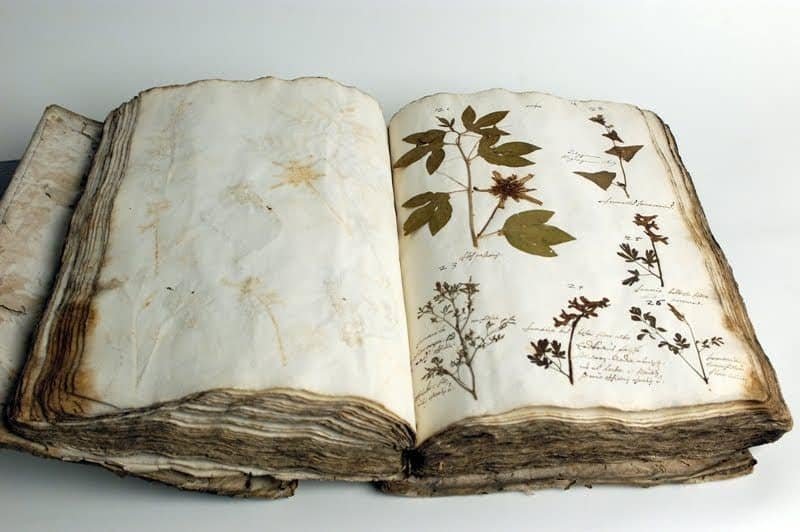
The Herbarium Museum of Rome is on the second floor of the Botany Building of the Città Universitaria, Piazzale Aldo Moro 5, 00185 Rome, inside the Department of Environmental Biology of Sapienza. First thing to know, because it changes the trip: it is not a free-entry museum in the way a picture gallery is. Entry is free, but consulting the collections and the guided visits are only by reservation, for groups of at most 20 people, and the request must be sent at least a week ahead. Second thing: in August the venues of the Sapienza Museum Hub observe the summer break and the rooms are closed, so an improvised visit on those days is not something you will get. You book by phone at 06 4991 2410 and 06 4991 2409, or by writing to erbarioro@uniroma1.it, or by filling in the visit request form published on the Sapienza Herbarium website. Public opening is Monday to Friday in the morning, with hours given as between 9.30 and 13.00. Afternoon openings are arranged case by case. It is best to confirm the time by phone when you set the appointment, because the institutional pages report slightly different windows and a university herbarium follows the academic calendar, not that of the civic museums. By metro the most convenient stop is Policlinico on line B, a five-minute walk from Piazzale Aldo Moro passing in front of the Rectorate. Alternatively Castro Pretorio, also line B. From Termini Station you can walk in about 20 minutes going up Via Marsala and Viale dell'Università. The building is CU011: ask for it that way at the front desk, because on a university campus of that size the name of the museum alone is not enough to orient anyone.
That said about the practical side, here comes the part that really matters. The Herbarium Museum of Rome holds more than a million specimens of dried plants: it is one of the largest botanical collections in Italy and one of the largest in Europe, and in the worldwide network of herbaria it goes by the code RO. Two rooms of about 70 square meters each, metal cabinets, cardboard packets tied with ribbons, sheets of white paper on which a plant collected in 1840 still says its own name. It is not a spectacular place in the vulgar sense of the term. It is a serious place, and whoever enters prepared leaves with a different idea of what it means to know nature.
What the Herbarium Museum of Rome really is
Botanical museums belong to two distinct families, and confusing them leads to disappointing visits. There is the garden, where the plants are alive, grow, bloom and die according to the seasons: in Rome it is the Rome Botanical Garden, which is part of Sapienza exactly as the Herbarium is. And there is the herbarium, where plant variability is gathered and ordered in the form of flattened, dried specimens, each accompanied by information on the locality and the moment of collection and by at least one taxonomic assessment. The first is a garden with a catalog. The second is an archive with a method.
The surprise, for whoever enters the first time, is how much information survives dehydration. An herbarium sample is dry, flat, apparently mute, and yet it preserves the shape of the leaves, the insertion of the branches, the structure of the flower, often the seeds, always the date and the place. From that sheet you can work out where that species grew in that year, in what season it flowered, with what other plants it lived. Today, with molecular techniques, DNA is extracted from a fragment of tissue two centuries old. An herbarium is the least showy and most reliable time machine that botany has built.
The herbarium as the registry of species
There is an even deeper function, and it is worth explaining well because it is the reason the Herbarium Museum of Rome exists and keeps working. The international network of herbaria constitutes the registry of known species. When a botanist describes a new species, it is not enough to describe it in words: they must designate a physical specimen, kept in a public institution and open to consultation, to which the name remains tied forever. That specimen is called the type. If in 50 years someone wants to understand what exactly that botanist meant by that name, they will go and look at the type. It is a system of guarantee that holds up the entire botanical nomenclature, and it holds because someone, in an air-conditioned room in Piazzale Aldo Moro, keeps the cardboard folders in order.
From here follows the second function: verification. No new species is accepted without comparison with the historical material, and no critical identification of an already known species is closed without opening an herbarium packet. Only in a collection of this kind do you perceive the real extent of plant variability, which photographs flatten and manuals simplify. And from the locality and date data you obtain phytogeographic and population information: how the range of a plant has shifted, when it disappeared from a pasture, when it appeared along a railway.
The code RO and the worldwide network of herbaria
Every herbarium in the world has a permanent code of one or six letters, assigned by the Index Herbariorum. Florence is FI, Kew is K, the New York Botanical Garden is NY. The Herbarium Museum of Rome is RO, and you find that code printed in scientific articles published across half the planet every time a researcher has studied material kept here. The Index Herbariorum began in 1935, when the first codes were assigned. The editorial office is hosted at the New York Botanical Garden, and in 2026 it passed to an editorial group internal to the institution. The overall numbers give the measure of the system: as of December 31, 2025 there were 4,035 active herbaria on record worldwide, for an estimated 406 million specimens documenting the vegetation of the last four centuries.
1 million out of 406 million seems little. It isn't: it means that this single Roman institution holds about 0.25 percent of the entire world botanical archive, and that in the field of Mediterranean and Lazio floras RO is one of the few possible doors of entry. The Herbarium Museum of Rome is the most underrated scientific museum in the city, and it is so for a trivial reason, that it has no shop window on the street.
How to get to the Herbarium Museum of Rome and how to get in
The Città Universitaria is a rectangle enclosed between Viale Regina Elena, Viale dell'Università, Viale del Policlinico and Piazzale Aldo Moro. It has several entrances, but the monumental one is on Piazzale Aldo Moro, with the propylaeum and the statue of Minerva in front of the Rectorate. From there you enter freely on foot during the university's opening hours.
Metro, bus and train to the Herbarium Museum of Rome
Metro line B serves the area with two useful stops. Policlinico is the closest to Viale Regina Elena entrance and to the front of the science departments. Castro Pretorio is convenient if you arrive from Termini or from Via Nomentana quadrant. From Termini you can do it all on foot in about 20 minutes, on a route that has nothing touristy about it but is very convenient. Tiburtina Station is connected to the same line B. On the piazzale and the surrounding avenues pass several surface lines and the tram that goes up toward the San Lorenzo neighborhood: the numbers change fairly often, so it is best to check them the same day on the transport company's app instead of trusting a printed list.
Whoever arrives by car must reckon with the real problem of the area: parking here is complicated on any weekday, the spots inside the university are reserved and street parking around the Policlinico is a lottery. Blunt advice: leave the car and take the metro. There is no advantage in driving here.
Booking a visit to the Herbarium Museum of Rome
Booking is mandatory for consulting the herbarium material and for the guided visits, which admit a maximum of 20 people at a time. The limit is not a whim: the storage rooms are two working rooms, not an exhibition hall, and 20 people inside an air-conditioned space where fragile sheets are handled is already a lot. The request is sent with ample notice, and the threshold given by the institution is at least a week. There are three ways: the form for visit and collection access requests published on the website, email to erbarioro@uniroma1.it, the phone at 06 4991 2410 and 06 4991 2409.
A detail that makes the difference when you write the request: state who you are and what interests you. A high school class, a group of wild flora enthusiasts, a nature photographer and a PhD student in taxonomy do not get the same visit, and the staff calibrate the route on what you ask. A generic email like "we would like to visit the museum" produces a generic visit. An email saying "we are eight people interested in the flora of Lazio and in particular in the 19th-century collections" produces an entirely different morning.
Hours, entry and closing periods
Entry is free. Public opening is Monday to Friday, in the morning, with hours that the institutional pages place between 9.30 and 13.00. Afternoon openings are arranged in advance. The museum observes the Christmas closure, indicated as December 22 to January 6, and the summer break together with the other museums of the Sapienza Museum Hub. Whoever plans the visit in August or between Christmas and Epiphany must therefore move the dates. For the rest of the year the real constraint is not the hours, it is the appointment.
The rooms of the Herbarium Museum of Rome: what you really see
Two rooms on the second floor of the building, each of about 70 square meters, are devoted to the collections. Whoever expects a row of display cases with labels will be thrown, and I do well to warn them beforehand: here the museum object is the packet, and the packet must be opened by the one who keeps it. The guided visit consists of exactly this, and is worth much more than a stroll among closed showcases.
The collection rooms of the Herbarium Museum of Rome
The specimens are mounted on sheets of rigid paper, gathered in folders, the folders in packets, the packets in cabinets, the cabinets arranged by family, genus and species. It is a hierarchical system that recalls a library, with the difference that here the volume is a plant and the shelf mark is a taxonomic position. When the curator takes out a packet and unties the ribbon, what opens in front of you is a century and a half of work: labels written in pen with iron-gall ink, successive corrections, revision labels added by different specialists in different eras. Every sheet is a layered document, and this layering is the most interesting thing one can show an adult visitor.
The two rooms also house the cabinets of the ancillary collections, those that do not have the form of the sheet: glass tubes with seeds and fruits, cardboards with glued samples, large-format folders for the old materials. The physical distribution of the material is never completely stable, because a living collection is continually reorganized, and the new acquisitions of recent years have required moves.
The working and consultation room
Between 2006 and 2007, with funds granted for the celebration of the seventh centenary of Sapienza, the museum's facilities were modernized. Two interventions matter. The first is the conservation air-conditioning system in the rooms that house the collections: controlled temperature and humidity are the difference between an herbarium that lasts and one that is lost, because the number one enemy of a dry collection is wood-boring insects and micromycetes, and the number two enemy is the humidity swing that makes the paper work. The second is the refitting of a working and consultation room with modern furnishings and multimedia stations, where the material is examined, photographed and compared with databases.
Said without rhetoric: that room is the point where a 19th-century collection becomes a 21st-century tool. Without climate control and without digital stations, a million sheets would be a warehouse. With them, it is a laboratory.
A curiosity about the Herbarium Museum of Rome
Among the collections kept here there is one that has almost nothing to do with 19th-century botany, and it is the strangest of all: the Hortus Nereidum. It is a pre-Linnaean collection of the 1700s, put together by Monsignor Antonio Baldani (1691-1765), and it consists of 592 plates kept in four large parchment folders. Fixed together on the plates are algae, seed plants and marine invertebrates. Pre-Linnaean means that it predates Linnaeus's nomenclatural reform, and indeed the organisms do not carry the binomials we study at school: they carry mythological names, taken from the repertoire of the Nereids, the nymphs of the sea. A garden of the Nereids, precisely.
You have to understand what this means. In the 1700s the boundary between the plant kingdom and the animal kingdom, for marine organisms, was anything but clear: corals, bryozoans, hydroids and algae were mounted on the same plate because to the naked eye they all look alike, and classification followed appearance and learned imagination more than anatomy. Baldani was doing something that to us looks like a collector's whim and that was instead the way, before Linnaeus, of trying to order the world: through analogy and myth. Those 592 plates are a document of the history of science even before being a document of natural history.
There is more, and it is the part that amuses those who know Rome. The Hortus Nereidum arrived at the Roman Botanical Institute in 1875, and came from the Museo Kircheriano, the famous collection of antiquities and curiosities founded in 1651 by Athanasius Kircher at the Collegio Romano, the Roman prototype of the Baroque Wunderkammer. That museum began to be dismembered after the suppression of the Society of Jesus in 1773 and was definitively dispersed in 1913, with the Etruscan antiquities ending up at Villa Giulia and the Roman ones at the Museo Nazionale Romano. Baldani's plates took another road, and ended up among the botanists. If the story of the dispersed Jesuit collections interests you, the thread picks up again by visiting the Museo Etrusco di Villa Giulia and the Museum of Etruscan and Italic Antiquities of Sapienza itself.
A clear verdict: if the Herbarium Museum of Rome permanently displayed even just 10 of the plates of the Hortus Nereidum, with a caption explaining the passage from myth to taxonomy, it would have a line outside the door. Ask to see it when you book, explaining that you are interested in the history of science: it is very delicate material and is not shown to just anyone who turns up, but a motivated request is the right way.
The history of the Herbarium Museum of Rome from 1872 to today
The history of this collection is the history of Italian botany after Unification, and it reads like a novel of academic successions, lucky purchases and moves.
1872: Giuseppe De Notaris and the convent of San Lorenzo in Panisperna
The origin of the collections goes back to 1872, when Giuseppe De Notaris (1805-1877), professor of botany at the University of Genoa, was called to fill the chair of Botany at the University of Rome. The Institute of Botany then had few rooms inside the old convent of San Lorenzo in Panisperna, on the Viminale: in practice, teaching and the collections were set up in what had been the sacristy of the church. In those rooms De Notaris was able to place his very rich library and his remarkable cryptogamic collections.
De Notaris was an illustrious cryptogamist, that is a specialist in mosses, liverworts, algae and fungi, the field that was then called cryptogamy because those plants hide their reproductive organs. In Rome he did something that was not required of a man of his fame: he went back to studying phanerogams, which he had long abandoned, and in two years put together a rich local phanerogamic herbarium. In the meantime he worked on acquiring pre-existing collections, among them the herbarium of Ettore Rolli (1818-1876), and contributed collections of his own. He died five years after his arrival in Rome. Five years, and he had already set up the skeleton of what would become one of the main herbaria in Europe.
Nicola Antonio Pedicino and the decisive purchases
At De Notaris's death he was succeeded by competitive examination by Nicola Antonio Pedicino (1839-1883), who continued his predecessor's work with a precise line: buy. Under him came the collections of Pietro Sanguinetti (1802-1868) and Elisabetta Fiorini Mazzanti (1799-1879), and above all the purchase of De Notaris's cryptogamic herbarium was carried out. This last purchase is the most important of all, and the reason is technical: those collections contain many types, that is specimens to which the first description of taxa is tied. Buying types means buying the possibility of being consulted forever by those who study those groups all over the world.
On Elisabetta Fiorini Mazzanti it is worth stopping a moment, because she is a figure who deserves more than a line in a list. Born in Terracina on June 3, 1799 and died in Rome on April 23, 1879, a countess, she was one of the very few women who in 19th-century Italy did science with public recognition. Her main work is the Specimen Bryologiae Romanae, published in 1831 and in a second edition in 1841: a census of the mosses of the Roman territory. Shortly before dying she published the Florula del Colosseo, dedicated to the plants that grew spontaneously on the ruins of the amphitheater, a subject that in the 1800s fascinated several naturalists. She was a member of the Academy of Sciences of Turin, of the Leopoldina, of the Pontifical one and of the Georgofili. At 74 she took part in a botanical congress in Florence. That part of her herbarium is here, in two rooms in Piazzale Aldo Moro, is one of the reasons it is worth asking to enter.
Pietro Romualdo Pirotta and the new Institute
In 1883, at Pedicino's death, the Minister of Public Education Guido Baccelli called Pietro Romualdo Pirotta (1853-1936), born in Pavia and then professor of Botany at the University of Modena, to succeed him. With Pirotta the scale of the project changes. In the garden of Panisperna a new Institute of Botany was built, whose transfer was approved in 1887 and carried out in 1889 in Via Milano area: the institute was already operating in the academic year 1889-90. The Herbarium was finally able to have adequate premises and experienced considerable development.
The first curators worked with Pirotta on its organization: Achille Terracciano from 1887, Emilio Chiovenda from 1896, Fabrizio Cortesi from 1904. They are names that today say little to the general public and a great deal to those who work on the Italian flora, because their labels are found everywhere in the packets. The number of specimens grew with the collections of Pirotta himself, of the institute's staff and of his students, and with intense exchange activity with Italian and foreign botanical institutes and with different scholars of the era. Exchange, then as now, is the current currency among herbaria: duplicates are sent, duplicates are received, and each collection grows by what the others have in excess.
Pirotta also founded the Annuario del R. Istituto Botanico di Roma as a tool for publishing the institute's research and the students' work. After 10 volumes the journal became the Annali di botanica, with regular publication from 1903. And it is in the Annuario, between 1900 and 1901, that the installments of the Flora Romana written with Emilio Chiovenda came out.
1885: the purchase of the Cesati Herbarium
Among the different herbaria bought in those years, the most important is that of Vincenzo Cesati, acquired in 1885. Cesati, a baron, born in Milan on May 24, 1806 and died in Vercelli on February 13, 1883, had won in 1868 the chair of botany at the University of Naples, taking over the direction of the Botanical Garden, the Orto Tenoreano. He was one of the founders of Italian cryptogamy along with De Notaris, and published works that remain in the history of the discipline: the Stirpes Italicae between 1840 and 1844, the Saggio su la geografia botanica of 1844 dedicated to Lombardy, the Compendio della flora italiana begun in 1868 and never completed because of the breadth of the project. His personal herbarium ended up in Rome, and since then it has been one of the most requested collections of the entire institution.
1904-1915: the Colonial Herbarium and the transfer to Florence
In 1904 Pirotta founded the Colonial Herbarium Museum, intended to receive the abundant materials coming from the Italian colonies of Eritrea and Somalia, and entrusted its care to Achille Terracciano. In 1913 it was planned to create in Florence, at the Botanical Institute, a National Herbarium comprising the flora of the Italian colonies. The Florentine colonial herbarium was established by Pasquale Baccarini in 1914. Pirotta, convinced of the usefulness of the initiative, voluntarily handed over the entire Colonial Herbarium, and the transfer was completed between 1914 and 1915.
It is a decision that deserves to be told well, because it overturns the commonplace about rivalry between institutes. Pirotta gave up a collection that he himself had built, in a historical phase when colonial materials were political capital as well as scientific, for the reason that a unified collection serves research better than two halved ones. It doesn't happen often, in any century.
1938: the move to the Città Universitaria
The current arrangement of the Herbarium dates to 1938, the year in which the definitive move of the collections into the premises of the Botanical Institute of the new Città Universitaria took place. From Panisperna to Piazzale Aldo Moro: barely two kilometers of road and a leap of era. Two rooms of about 70 square meters each on the second floor of the building were assigned to the collections, which is the arrangement still in use.
Giuseppe Capponi's Botany Building, the home of the Herbarium Museum of Rome
The venue deserves a chapter of its own, because it is one of the most interesting buildings of Roman rationalism and almost none of the visitors knows it. The Institute of Botany and Pharmaceutical Chemistry was designed by Giuseppe Capponi and built between 1932 and 1935, on commission from Marcello Piacentini, who coordinated the entire Città Universitaria construction site.
A building conceived around light
Capponi designed a curved central body of about 90 meters on three floors, flanked by two lower wings of two floors that define a square. The characteristic that matters, for whoever visits an herbarium, is the strategy of light. On the south side the architect placed wide glazed towers, calculated to maximize solar radiation in service of the experimental greenhouses. On the north side he arranged inclined towers, designed to give controlled lighting to the museums and herbaria. On the basement floor ran large curved glazed greenhouses.
Let's stop a second on this. In 1932 an Italian architect orients two systems of towers in opposite directions because he knows that live plants want direct sun and herbarium sheets want diffuse and stable light, without rays that fade the samples and without temperature swings. It is environmental design 80 years before it was called that, and it is the reason the collections are still on the second floor of that body of the building and not elsewhere.
What remains today of the original building
The building has undergone heavy transformations. The original brown lithoceramic cladding, the portions of green glass-concrete wall and the large iron window frames have been replaced over time by a curtain wall, by a gold-yellow plaster and by anodized aluminum frames. Whoever looks for Capponi's 1935 building finds it in the floor plan, in the curve of the central body, in the play of the towers and in the interior staircase, which follows the vertical development of the main body with essential lines and a carefully worked brass handrail.
Opinion, and I put my name to it: the remaking of the facades was a serious loss, and whoever visits the Città Universitaria today has trouble understanding how bold that building was. Look at the staircase and the towers, ignore the plaster. The position itself says something: Capponi worked in an area then marginal and little visible, behind the Rectorate, and that very marginality left him a freedom that on the monumental front nobody would have had.
The collections of the Herbarium Museum of Rome, one by one
It is worth going into the detail of the individual collections, because each has a different physiognomy and asking for the right one changes the visit. The figures that follow are those declared by the institution and should be read as updated holdings of an archive that keeps growing.
Erbario Romano
It is the regional herbarium, dedicated to the Lazio territory, and was born on the initiative of Pietro Romualdo Pirotta, who wanted to unite in a single body the already existing materials and the new collections that he promoted and organized. The geographic boundaries follow those defined by Pirotta and Emilio Chiovenda in the introduction to the first installment of the Flora Romana, which dates to 1900. The declared holding is 68,555 specimens of phanerogams, with materials from the 19th and 20th centuries.
It contains the Lazio part of the historical collections of Francesco Antonio Sebastiani, Ernesto Mauri, Elisabetta Fiorini Mazzanti, Pietro Sanguinetti and Ettore Rolli, together with the collections made specially by the collector gardener Agostino Pappi (1872-1951). Among the 20th-century collectors are Giuseppe Lusina, Alfredo Cacciato and Bruno Anzalone. The complete list of collectors also includes Chiovenda, Fabrizio Cortesi, Giuseppe Cuboni, Nicola Antonio Pedicino, A. Pelosi, Pirotta and Achille Terracciano.
A bitter and instructive note: all this material was meant to serve for the preparation of the Flora Romana, the reference work on the flora of the Roman territory. Of the Flora Romana only the first two installments saw the light, of a historical and bibliographic nature. The herbarium was built, the book was not. It happens more often than you would think that the archive outlives the project that motivated it, and in this case it was a stroke of luck: those sheets are today the documentation of the Lazio flora before the cementification of the second postwar period.
Erbario Generale
It is the largest collection, divided into two sections, phanerogamic and cryptogamic, and gathers specimens from Italy and abroad. The declared holding is about 366,000 specimens of phanerogams and about 72,000 specimens of cryptogams.
It includes the non-Lazio part of the Sebastiani, Mauri, Fiorini Mazzanti, Sanguinetti and Rolli herbaria, the collections bought or received in exchange from private individuals and from Italian and foreign botanical institutes, the collections of Pirotta and his students, and the precious cryptogamic herbarium of Giuseppe De Notaris. It is here that the international function of the Herbarium Museum of Rome is measured: a Japanese researcher working on a Mediterranean genus may need exactly these packets.
Erbario Cesati
The personal collection of Baron Vincenzo Cesati, formed during a long career of collecting in Italy, in part of Germany and in Switzerland, and enriched by a great number of specimens obtained by purchase or exchange with botanists from all over the world, including non-European ones. Divided into phanerogamic and cryptogamic sections, it includes about 32,000 species of phanerogams and 17,000 species of cryptogams, for an overall holding estimated at around 350,000 specimens.
Together with De Notaris's cryptogamic herbarium it is the most requested collection among those kept in Rome, because of the presence of many type specimens and the richness of the material. In practical terms it means that a substantial part of the loan and consultation requests that arrive from abroad concern these packets.
Erbario Montelucci
Giuliano Montelucci (1899-1983) is one of the most singular figures in this story: a chemist by training, a major general of the Air Force by career, a libero docente in geobotany out of passion and competence. His herbarium, donated to Rome in 1983, counts more than 11,000 specimens, almost exclusively phanerogams, coming mostly from Lazio and Tuscany. The contribution to knowledge of the Italian flora is remarkable, and the right word to define it is floristics: the patient work of establishing what grows where, species by species, site by site.
Those who deal with the Lazio flora know that without Montelucci a whole piece of the 20th-century documentation would be missing. An Air Force officer who spends his weekends collecting plants and ends up leaving the university an archive of 11,000 sheets is the kind of story I would like to tell more often.
Erbario Anzalone
Bruno Anzalone (1921-2007) was full professor of Pharmaceutical Botany at Sapienza from 1974 to 1996 and is considered the greatest expert on the flora of the Lazio territory of his time. His herbarium counts 41,194 specimens, divided into 40,118 phanerogams and 1,076 pteridophytes, that is ferns and related plants, with materials from the 20th and 21st centuries coming mainly from Lazio and also from Abruzzo, Marche and Trentino-Alto Adige.
It is the collection I recommend asking for to those who arrive with a hiking interest: if you walk on the Lepini, the Simbruini or the Pontine coast, in those packets you find the documentary reference for what you see in the countryside.
Erbario Bazzichelli
Collection of Giorgio Bazzichelli, with 26,290 specimens of phanerogams from Lazio, Abruzzo, Puglia and Tuscany, attributable to the 20th and 21st centuries. It is one of the collections that in recent years have changed the physiognomy of the institution, adding depth to the documentation of central-southern Italy.
Erbario Quadraccia
It is the exception to all the rest, and that is why it is worth naming: 1,444 specimens of fungi collected by Livio Quadraccia, in Italy and abroad, in the 20th century. The preservation of fungi is a different trade from that of vascular plants, because the dried fruiting body loses shape and color and must be accompanied by descriptions and drawings made on fresh material. A mycological collection in an herbarium is always the sign that someone has worked with method.
Erbario delle Piante Coltivate
About 7,000 specimens of phanerogams from Italian gardens and botanical gardens, with materials from the 19th and 20th centuries. It documents what was cultivated, where and when: a precious source for the history of gardens and for understanding how certain ornamental species then escaped cultivation and became wild. Whoever has visited the Rome Botanical Garden will find here the documentary reverse side of that garden.
Erbario Didattico
It is the collection intended for consultation by users, the one that can be handled without the fear of ruining a type. It counts about 4,005 specimens, of which 3,919 phanerogams and 86 pteridophytes, arranged alphabetically by family, genus and species according to Sandro Pignatti's Flora d'Italia of 1982, and comes from Lazio and neighboring areas. It is continually growing.
For a school group or a group of enthusiasts it is the right gateway, and asking for it explicitly at the booking stage saves everyone time.
New acquisitions
A living collection is recognized by its recent entries. Among the most recent acquisitions are the Erbario Bassani, with 3,536 specimens of phanerogams and pteridophytes collected in Italy by Paolo Bassani, the Erbario Fanelli, with 9,842 specimens collected in Italy and abroad by Giuliano Fanelli, the Erbario Lattanzi, with about 16,000 specimens of phanerogams and pteridophytes collected in Italy and abroad by Edda Lattanzi. They are collections of the 20th and 21st centuries, that is contemporary material: in 100 years they will be someone else's historical collections.
The Bonaventura Spermoteca and the ancillary collections
Alongside the herbarium sheets the museum keeps collections of a different nature. The most notable is the Bonaventura Spermoteca, which belonged to Gustavo Bonaventura (1902-1976), an agronomist who worked at the University of Pisa and at the Institute of Book Pathology in Rome. Acquired in 2004, it includes 3,411 samples of fruits and seeds kept in glass tubes and about 4,000 seeds and fruits glued on cardboard, with materials collected between 1843 and 1975 and coming from herbaria, botanical gardens and agricultural institutes all over the world. It includes genera of agronomic interest with many cultivars, and that very cultivated biodiversity is one of the reasons for its importance.
A spermoteca, that is a collection of seeds and fruits, solves a problem that the herbarium sheet doesn't solve: seeds are three-dimensional, and squashing them destroys them. Putting them in glass tubes means being able to turn them, measure them, photograph them under the microscope. For those who study historical agriculture, Bonaventura's tubes are worth as much as a land registry archive.
The cryptogamic collections of Giuseppe De Notaris
De Notaris's cryptogamic collections have a scientific value tied to the presence of many type specimens, and are accompanied by detailed descriptions and drawings of the microscopic structures. This detail is crucial: in cryptogams the diagnostic characters are often invisible to the naked eye, and the dried sample alone is not enough. De Notaris drew what he saw under the microscope and attached the drawing to the sample. It is the reason why, a century and a half later, those collections remain readable and continue to be requested, especially for rare species and for new entities.
Something nobody tells you about the Herbarium Museum of Rome
No general guide writes it, and yet it is the point that changes the way one looks at this place: the Herbarium Museum of Rome is not only a museum, it is a research infrastructure that works every day for people who will never set foot in it. The mechanism is called interlibrary loan, applied to plants. A researcher who in Uppsala or Cape Town is revising a genus asks RO for the packets he needs. The packets are prepared, insured, shipped. The scholar examines them, adds his own revision labels and sends them back. That 19th-century sheet returns to Rome with one more line of writing, and the collection is enriched with an updated determination without anyone having collected anything.
A consequence follows that visitors don't imagine. The revision labels layered on a single sheet are the history of the taxonomy of that group: the first name given by the collector, the correction by a curator of the early 1900s, the revision by a specialist of the 1970s, the recent update. Ask the staff to show you a sheet with many revisions, and in 30 seconds you understand how science really works, which is not a list of truths but a discussion centuries long written on labels.
The second little-known element concerns the digital future of the collections. In 2017 the museum joined a national coordination, called CoRIMBo, which brings together more than 40 Italian botanical museum structures, and takes part in the project for a national virtual herbarium, identified by the acronym LeGiT. The goal is the acquisition of high-definition images with the related metadata, the definition of guidelines on data accessibility with reference to the Nagoya Protocol on genetic resources, and the construction of a central data management system. The Italian herbaria involved hold in total an estimated more than 10 million specimens, and the financial effort for the operational phase has been estimated at 5 million euros. In the organization of the network Florence acts as lead and Rome is the coordination base for the center-south.
On the university front, the Sapienza Museum Hub has developed ADiMuS, the digital museum dedicated to the scientific collections of the university's museums, presented on November 28, 2024 and intended to manage a heritage estimated at about 4 million specimens, among biological and natural specimens, medical and scientific instruments, equipment, works of art, archaeological finds and historical photographic collections. The Herbarium Museum is among the collections involved. Translated: part of what today is seen only by appointment will become consultable remotely, and this takes nothing away from the value of the visit, if anything it prepares it better.
Third thing nobody tells you: the Herbarium Museum collaborates with the Orto Botanico di Roma and with the Herbarium Horti Romani on a citizen science project titled Fiori Trasteverini, promoted by the Museum Hub, in which citizens learn to recognize wild flora and contribute to making an herbarium and a seed collection. The first cycle ran from May 16 to June 20, 2026, the second is planned from September 5 to 26, 2026 at the Orto Botanico, with free entry and limited places in order of registration. Whoever wants to understand an herbarium from the inside has the most direct way here: build one.
The advice I give you for visiting the Herbarium Museum of Rome
The main advice is one and is said without detours: don't come alone and without an appointment hoping to get by with 10 minutes. The Herbarium Museum of Rome gives back in proportion to what you ask, and what you must ask for is a guided visit that is booked, motivated, with a theme.
Second piece of advice, on timing. Book at least a week ahead, as indicated, but if you are a school group or an association, move with three or four weeks: the available mornings are few, the staff is reduced and the lecture periods are the busiest. The best times of the year are the second half of September, October, and then February and March. Avoid August, avoid the week between Christmas and Epiphany, avoid the exam sessions of January and June, when the building is in an uproar.
Third piece of advice, on content. Arrive with two or three precise questions. The questions that work best are of this kind: what grew where I live 100 years ago. How do you recognize a type specimen. What happens to a sheet when an insect gets to it. How do you prepare a sample to send abroad. Each of these opens a cabinet, literally.
Fourth piece of advice, operational. Bring a paper notebook and a pencil, not just the phone: in the consultation rooms the pencil is the tool allowed everywhere, the pen sometimes not, for obvious reasons. Don't touch anything unless you are told to, and if you are told to, handle the sheet by the edges of the folder, never by the specimen. Leave bulky backpacks at the entrance and don't bring drinks.
Fifth and last piece of advice, the one that is worth the trip: combine the visit with a morning at the Orto Botanico in Trastevere, preferably a few days apart. Seeing first the living plant and then the same species dried in a packet from 1890, or vice versa, produces an effect that no explanation can give. It is the only way to truly understand the difference between a garden and an archive.
Another well-known fact, yet rarely cited
That the Herbarium Museum of Rome was born in 1872 everyone writes. That in 1904 the Colonial Herbarium Museum was born inside it, and that 10 years later it was handed over entirely to Florence, almost nobody writes, and when it is written it is dismissed in a line.
It is worth looking at it closely, because that episode contains three different stories. The first is political: between 1904 and 1914 Italy was systematically collecting botanical material from Eritrea and Somalia, and that material arrived in Rome. The colonial collections were not a learned whim, they were the tool with which the agricultural and forest resources of the occupied territories were surveyed. Behind every colonial herbarium sheet there is an expedition, an official, an administrative hierarchy.
The second story is a scientific one. In 1913 a plan was made to gather in Florence, at the Botanical Institute, a National Herbarium that would include the flora of the Italian colonies, and the Florentine colonial herbarium was established by Pasquale Baccarini in 1914. Pirotta, who had founded the Colonial Herbarium Museum and entrusted it to Achille Terracciano, became convinced of the usefulness of the initiative and voluntarily handed over the entire collection, in a transfer completed between 1914 and 1915. A voluntary renunciation, not a requisition. Anyone who knows Italian academic dynamics knows how rare such a thing is, then and now.
The third story is the one that concerns us today. Those collections are at the center of the international debate on the provenance of natural history materials collected in a colonial context, a debate that touches the Nagoya Protocol and the rules of access to genetic resources, the same issues that the Italian herbaria digitization project addresses explicitly in its guidelines. The fact that in Rome that collection is no longer here does not change the fact that it was born here, and the story of how it was born and how it left is one of the most instructive things a herbarium can tell an adult audience.
A blunt personal opinion: the 1914 transfer was the right choice on scientific grounds and made the Rome Herbarium Museum what it is today, that is, a collection with an Italian and Mediterranean vocation instead of an imperial one. Not every loss is a damage.
The Right Photo to Take at the Rome Herbarium Museum
A necessary premise: photography inside the rooms is never an acquired right. In a research collection, permission must be requested at the time of booking and granted by the staff, and it generally covers personal and educational use, not publication. Flash is always out, because direct light fades the specimens and the labels. Ask first, and in your request say whether you want to photograph for a school project, for an article or for yourself.
That said, the right photograph exists and there is only one. It is not the panorama of the room with the cabinets, which always turns out disappointing, because a row of metal furniture in a room of 70 square meters tells you nothing. The right photograph is the close-up of an herbarium sheet open on the consultation table, with the specimen on the left and the label on the right, and the hand of the person holding it barely visible at the edge of the frame. That image contains everything: the plant, the handwriting, the date, the gesture of conservation.
Technically, a few rules. Natural light from the window, which in the consultation room is plentiful and diffused precisely because of the way Capponi oriented the building. Aperture closed just enough to keep the plant and the label in focus together, because out-of-focus text ruins the photograph. Frontal shot, perpendicular to the sheet, with no oblique perspectives: here geometry matters, it's a document, not a still life. If your phone has a document mode, use it.
The second photograph to take is not inside the museum but just outside. Go out on the north side of the building and frame the slanted towers, the ones designed to give controlled light to museums and herbaria. It's an architectural detail that nobody photographs and that explains visually why the herbarium is right there. If you then walk around the 90-meter curved body and find a point where the curve can be read in full, you have the photograph of Capponi's building that almost nobody has.
Last note, and it counts as an opinion: the most beautiful photograph you can take away from here is a detail of handwriting. A nineteenth-century label with slanted script, the ink turned brown, the name of the locality written in Latin. Enlarge it and print it. It's worth more than 20 panoramas.
Some Important Events That Happened Here in History
An archive has no battles, but it has dates that changed its destiny, and this collection has quite a few.
1872, the foundation. The arrival of Giuseppe De Notaris in Rome marks the birth certificate of the collections. Rome had been the capital of Italy for two years, the state university was reorganizing, and Roman botany received in one stroke a master of European fame, his library and his cryptogamic collections. All of it inside a few rooms of the old convent of San Lorenzo in Panisperna, in what had been the sacristy of the church.
1877, the death of the founder. De Notaris dies five years after his arrival. In those five years he had acquired the herbarium of Ettore Rolli and set up, in two years, a local phanerogamic herbarium. The succession by competitive examination brings Nicola Antonio Pedicino.
1883, the double year. Pedicino dies, and Vincenzo Cesati dies in Vercelli. Minister Guido Baccelli calls Pietro Romualdo Pirotta from Modena to Rome. Two years later, in 1885, Cesati's personal herbarium is purchased and moved to Rome: about 350,000 specimens, with a quantity of types that still today drives the international traffic of requests.
1889, the new Institute. In the Panisperna garden the new Botanical Institute is built, whose relocation had been approved in 1887. The institute is operating in the 1889-90 academic year. For the first time the Herbarium has adequate premises, and from that moment growth becomes rapid.
1900, the Flora Romana. The fascicles of the Flora Romana by Pirotta and Chiovenda come out in the Annuario del R. Istituto Botanico, with the introduction that defines the boundaries of the Roman territory that the Roman Herbarium still adopts today as its perimeter. Only the first two fascicles of the work will be published, historical and bibliographic.
1904, the Colonial Herbarium. Pirotta founds the Colonial Herbarium Museum for the materials from Eritrea and Somalia, entrusting it to Achille Terracciano. Also in 1904 Fabrizio Cortesi joins as curator.
1914-1915, the transfer to Florence. The entire Colonial Herbarium passes to the Florentine Botanical Institute, where Pasquale Baccarini had established the Italian colonial herbarium in 1914. A whole collection leaves Rome by the will of the person who had built it.
1938, the move. The collections move permanently to the premises of the Botanical Institute in the Città Universitaria, in the building that Giuseppe Capponi had completed three years earlier. Two rooms of 70 square meters on the second floor: the arrangement still in use.
1983, the Montelucci donation. On the death of Giuliano Montelucci his herbarium, more than 11000 specimens, is donated to Rome. It is the beginning of the modern season of private donations, which continues to this day with Anzalone, Bazzichelli, Quadraccia, Bassani, Fanelli, Lattanzi.
2004, the acquisition of the Spermoteca Bonaventura. A collection of seeds and fruits enters the museum, with materials from 1843 to 1975, extending the museum beyond the format of the sheet.
2006-2007, making it safe. With the funds for the seven hundredth anniversary of Sapienza, conservation climate control is installed in the collection rooms and the work and consultation room is refitted with multimedia stations. In terms of conservation it is the most important intervention since 1938.
2017, joining the national network. The museum joins the CoRIMBo coordination and the project for the national virtual herbarium, with Rome as the coordination seat for the center-south.
2024, ADiMuS. On November 28 the digital platform of the Sapienza museums is presented, which will gather the data of about 4 million specimens from the 19 museums of the university, Herbarium included.
2026, citizen science. The Fiori Trasteverini project has citizens build a herbarium and a seed collection at the Botanical Garden, with the Herbarium Museum among the promoters: first cycle from May 16 to June 20, second cycle from September 5 to 26.
Who Has Passed Through the Rome Herbarium Museum
The question has a twofold answer, and it is worth keeping the two apart: there are those who passed through these rooms and their predecessors in person, and there are those who passed through the sheets, that is, those who collected or identified the material kept here.
Giuseppe De Notaris (1805-1877), the founder. Genoese by university chair, a cryptogamist of European fame, he brought his own library and collections to Rome and set them up in the sacristy of San Lorenzo in Panisperna. His cryptogamic collections, with the drawings of microscopic structures attached to the specimens, remain among the most consulted.
Nicola Antonio Pedicino (1839-1883), the successor by competitive examination, the man of the right purchases: Sanguinetti, Fiorini Mazzanti, and De Notaris's own cryptogamic herbarium.
Pietro Romualdo Pirotta (1853-1936), from Pavia, called from Modena in 1883 by Minister Guido Baccelli, died in Rome on August 3, 1936. He is the man who gave this institution the shape it still has: he founded the Roman Herbarium, promoted the Flora Romana, bought Cesati, founded the Annuario del R. Istituto Botanico later turned into the Annali di botanica, created and then handed over the Colonial Herbarium.
Achille Terracciano, Emilio Chiovenda, Fabrizio Cortesi, the first curators, in service respectively from 1887, from 1896 and from 1904. Chiovenda co-signed the Flora Romana with Pirotta. Terracciano had charge of the Colonial Herbarium. Their handwriting recurs on thousands of labels.
Vincenzo Cesati (1806-1883), baron, Milanese by birth, professor in Naples from 1868 and director of the Orto Tenoreano, author of the Stirpes Italicae and of the Compendio della flora italiana. He never worked in Rome in person, but his herbarium has been here since 1885 and it is the collection that, more than any other, brings in requests from abroad.
Elisabetta Fiorini Mazzanti (1799-1879), countess, from Terracina, author of the Specimen Bryologiae Romanae of 1831 and of the Florula del Colosseo, member of the Academy of Sciences of Turin, of the Leopoldina, of the Pontifical Academy and of the Georgofili. Her presence in this collection is the most solid trace of women's participation in nineteenth-century Roman science.
Ettore Rolli (1818-1876), Pietro Sanguinetti (1802-1868), Francesco Antonio Sebastiani, Ernesto Mauri, the Roman botanists of the first and middle nineteenth century whose collections form the historical backbone of the Roman Herbarium and of the General one.
Agostino Pappi (1872-1951), gardener and collector, and with him the category that historiography always forgets. The systematic collections of the Lazio territory that make the Roman Herbarium usable were made in large part by a gardener who walked with his case and his plant press. His name on the labels is worth as much as that of the professors.
Giuseppe Lusina and Alfredo Cacciato, among the twentieth-century collectors of Lazio, and Giuseppe Cuboni, a plant pathologist, present among the collectors of the Roman Herbarium.
Giuliano Montelucci (1899-1983), major general of the Air Force and a lecturer with a teaching license in geobotany, whose herbarium donated in 1983 documents Lazio and Tuscany.
Bruno Anzalone (1921-2007), full professor of Pharmaceutical Botany at Sapienza from 1974 to 1996 and the greatest expert on the flora of Lazio of his time.
Antonio Baldani (1691-1765), monsignor and eighteenth-century scholar, author of the Hortus Nereidum, who arrived here in 1875 from the Kircherian Museum.
Gustavo Bonaventura (1902-1976), an agronomist trained in Pisa and active at the Institute of Book Pathology in Rome, whose seed collection entered the museum in 2004.
Giorgio Bazzichelli, Livio Quadraccia, Paolo Bassani, Giuliano Fanelli, Edda Lattanzi, the contemporary donors, and Sandro Pignatti, whose Flora d'Italia of 1982 provides the taxonomic order of the Teaching Herbarium.
Today the direction is entrusted to Professor Donatella Magri, the area curatorship to Dr. Caterina Giovinazzo, and among the technical staff is Tilia Agnese. These are the names that answer the phone when you book, and it is right to know it: in a museum of this kind, the person who accompanies you is the same person who preserves the material.
The Rome Herbarium Museum with Children and Schools
It is not a museum for very small children, and anyone who says otherwise has never gone with a class. Under the age of 8 the visit risks being long and static: there are no interactive paths, no play stations, and the golden rule is don't touch. From 8-9 years old and up, though, it works well, on one condition: that the teacher prepares the class beforehand.
How to Prepare a Class for the Visit
The preparation that gives the best results is a practical one. In the two weeks before, have the kids each collect a leaf, put it between two sheets of blotting paper under a pile of books and wait. When the class arrives at the museum with their own dried leaves in their pockets, the curator's explanation stops being theory: they have done the same thing, on a tiny scale, and they understand right away what it means to flatten, dry and label.
The second lever is the date. Showing a kid a sheet collected in 1878 on the same street where he lives produces an effect that no panel can produce. Ask when booking whether it is possible to see material from the school's own neighborhood: it isn't always possible, but when it is, that's the visit they remember.
What to Ask for with a Group of Kids
The Teaching Herbarium is the right collection for a class: about 4000 specimens arranged alphabetically by family, genus and species, designed precisely for consultation. Add a request to see a few samples from the Spermoteca Bonaventura, because seeds and fruits inside glass tubes are immediately understandable and have an almost old-pharmacy look. If the group is larger than 20 people it must be split into shifts, and this must be said right away when you write.
To close the day coherently, the natural itinerary is toward the university's other museums: the Battista Grassi Museum of Comparative Anatomy and the G. Sergi Museum of Anthropology are a few steps away and complete the picture of the natural sciences at Sapienza. For the older ones, the University Museum of Earth Sciences adds the deep time that botany lacks.
Accessibility, Services and Rules of the Rome Herbarium Museum
The museum occupies the second floor of a university building from the 1930s equipped with an elevator, but the access conditions for people with mobility difficulties must be arranged in advance, because the routes and elevators of a departmental building do not always coincide with those of a public museum. When booking, state any specific needs, including any need for seating during the visit: the staff will organize accordingly.
Don't expect the services of a civic museum. There is no ticket office, because admission is free. There is no bookshop. There is no coat check in the proper sense, and it's best to arrive traveling light. The restrooms are those of the university building. The bars and canteens of the Città Universitaria are within walking distance and during class hours they are very crowded.
The rules of conduct are those of an archive: no food or drinks in the rooms, no ink pens near the materials, no flash, no hands on the specimens unless told otherwise. They seem like severe restrictions and they are simply the reason why a sheet from 1840 is still legible.
When to Go to the Rome Herbarium Museum and When to Avoid It
The calendar of a university museum follows the academic year. The best periods to get a well-run visit are the second half of September and October, when activity resumes and requests have not yet piled up, and then February and March. December is complicated by the Christmas closure indicated from December 22 to January 6. August is ruled out because of the summer break of the museums of the Polo Museale. January and June coincide with the exam sessions and the building is less available.
During the day, the best slot is the middle of the morning, around half past 10: the front desk is operating, the staff has already started work, and there is time before the closing in late midday. Arriving at 12:45 hoping for half an hour is the recipe for a truncated visit.
A warning about the climate, which seems like a detail and is not: the collection rooms are climate-controlled to conservation parameters, not to human comfort. In summer it is cooler than you expect and in winter the air is dry. A light sweatshirt in your bag, even in July, saves you from spending half an hour with your arms crossed.
What to See Around the Rome Herbarium Museum
The Città Universitaria is the largest concentration of science museums in Rome, and almost nobody uses it as such. Within a five-minute walk of the Botany Building there are collections that elsewhere would be standalone attractions.
The Other Sapienza Museums
The Polo Museale Sapienza brings together 19 museums. In the scientific quadrant, besides the Herbarium, you find the Battista Grassi Museum of Comparative Anatomy, the G. Sergi Museum of Anthropology, the Primo Levi Museum of Chemistry, the Museum of Physics, the University Museum of Earth Sciences, the Museum of Art and Mineral Deposits and the Museum of Pathological Anatomy. On the humanistic and archaeological side, the Museum of Etruscan and Italic Antiquities, the Museum of the Near East, Egypt and the Mediterranean, the Sapienza Gipsoteca, the Contemporary Art Laboratory Museum and the Museum of the History of Medicine. Almost all of them work with the same logic as the Herbarium: free and by appointment. The complete picture of opening times is on the website of the Polo Museale Sapienza.
The Surrounding Neighborhood
East of the Città Universitaria begins San Lorenzo, with the basilica of San Lorenzo fuori le Mura and the Verano Cemetery, which for a naturalist is also a remarkable urban park with monumental trees. To the west, beyond the Aurelian walls, you reach Castro Pretorio and Termini. To the north, the Civic Museum of Zoology and Villa Borghese are reachable with a few minutes by bus and complete a day of natural sciences. On the opposite side of the city, the Botanical Garden of Rome in Trastevere is the living half of this same discussion.
Quick Questions About the Rome Herbarium Museum
How much does it cost to enter the Rome Herbarium Museum?
Nothing. Admission is free, and guided visits are booked at no additional cost.
Do I need to book to visit the Rome Herbarium Museum?
Yes for guided visits and for consulting the herbarium material. The request must be sent well in advance, and the indication is at least a week before the desired date.
What are the opening hours of the Rome Herbarium Museum?
Open to the public Monday to Friday in the morning, with hours placed between 9:30 and 13:00 depending on which institutional page you consult. Afternoon openings are arranged in advance. It's best to have the exact hours confirmed when you book.
How do I book a visit to the Rome Herbarium Museum?
Three ways: the request form for visits and access to collections on the Herbarium website, email to erbarioro@uniroma1.it, or the phone at 06 4991 2410 and 06 4991 2409.
How many people can enter together?
Guided visits take a maximum of 20 people. Larger groups must be split into shifts, and this must be mentioned when you write.
Where exactly is the Rome Herbarium Museum?
On the second floor of the Botany Building, building CU011, inside the Department of Environmental Biology of Sapienza, Piazzale Aldo Moro 5, 00185 Rome.
What is the nearest subway stop?
Policlinico, on Line B, a few minutes on foot. Alternatively Castro Pretorio, also on Line B. From Termini it is about a 20-minute walk.
How many specimens does the Rome Herbarium Museum hold?
More than a million, spread across historical and contemporary collections. It is among the main Italian and European herbaria.
What does the acronym RO mean?
It is the permanent code assigned to this herbarium in the Index Herbariorum, the worldwide census of botanical collections born in 1935 and maintained at the New York Botanical Garden. Every scientific article that cites material kept here writes RO.
What collections does the Rome Herbarium Museum include?
Roman Herbarium, General Herbarium, Cesati Herbarium, Montelucci Herbarium, Anzalone Herbarium, Bazzichelli Herbarium, Quadraccia Herbarium, Herbarium of Cultivated Plants and Teaching Herbarium, besides the new Bassani, Fanelli and Lattanzi acquisitions, the Spermoteca Bonaventura and historical collections such as the Hortus Nereidum.
What is the most important collection?
On the scientific side, the Cesati Herbarium and the cryptogamic collections of Giuseppe De Notaris, for the presence of many type specimens. They are also the most requested by scholars.
What is a type specimen?
It is the physical specimen to which the first description of a species is tied. It serves as a permanent reference to establish what a scientific name corresponds to, and for this reason the herbaria that keep many of them become obligatory nodes of worldwide research.
Can I take photographs at the Rome Herbarium Museum?
Permission must be requested from the staff when booking and generally covers personal and educational use. Flash is out, because direct light damages specimens and labels.
Is the Rome Herbarium Museum wheelchair accessible?
The museum is on the second floor of a building equipped with an elevator, but the route and assistance must be arranged in advance by stating the need when booking.
Is it suitable for children?
From 8-9 years old and up it works well, especially if the class or the family arrives prepared. For the younger ones the visit risks being long and not very interactive: the Botanical Garden is better.
How long does the visit last?
A well-run guided visit takes between an hour and an hour and a half. Those who consult material for research obviously stay much longer, for the entire opening morning.
What is the difference between the Rome Herbarium Museum and the Botanical Garden?
The Garden keeps live plants in a garden. The Herbarium keeps plants dried and flattened in an archive ordered by family, genus and species. They are the two halves of the same botanical museum and both belong to Sapienza.
Can I consult the material for research?
Yes, by booking. Consulting herbarium material is one of the institution's main services, together with exchange and lending between herbaria.
Is the Rome Herbarium Museum open in August?
No. In August the museums of the Polo Museale Sapienza observe the summer break. The Christmas closure is also indicated between December 22 and January 6.
Are there visits in English?
The institution's website has an English version and the request can be made in English. The availability of a visit in a given language must be arranged case by case when booking.
How long is the wait in line at the Rome Herbarium Museum?
Zero. There is no line, because there is no free entry without an appointment: the line, if anything, is in the booking calendar.
Is there a bookshop or a cafe?
No. The bars and canteens are those of the Città Universitaria, very crowded during class hours.
Can the collections be consulted online?
Digitization work is under way, within the national project for a virtual herbarium and the ADiMuS platform of the Sapienza museums, presented in November 2024. Digital consultation complements the visit, it doesn't replace it.
Can I take part in the activities of the Rome Herbarium Museum?
Yes. The citizen science project Fiori Trasteverini, promoted with the Botanical Garden and the Herbarium Horti Romani, includes days on which participants build a herbarium and a seed collection. The second 2026 cycle is scheduled from September 5 to 26, with limited places and free admission.
Who runs the Rome Herbarium Museum?
The direction is held by Professor Donatella Magri, the area curatorship by Dr. Caterina Giovinazzo.
Is the Rome Herbarium Museum worth visiting if I'm not a botanist?
Yes, provided you arrive with curiosity and a few questions ready. Anyone expecting a stroll among display cases will stay cold. Anyone who wants to understand how knowledge of the natural world is built leaves here with something more.
The hardest places to sell are often the ones that stay with you longest. The Rome Herbarium Museum is exactly this: two rooms at the top of a rationalist building, no display cases, no recognizable masterpiece, and inside a million documents that tell what the plant world looked like before we changed it. Book, arrive with a real question, ask them to open a package for you. When the ribbon comes undone and the nineteenth-century label appears under the plant, you understand the reason for all these lines.
Article written by the editorial team of TourLeaderPro, contact them for Private/Corporate/V.I.P. Tours and Experiences.
Planning a trip to Rome? The English guides to visiting the city are on ItalyPlanner.com.