Museo Laboratorio d’Arte Contemporanea, MLAC
In short. The MLAC, the contemporary art laboratory museum of Sapienza, is inside Palazzo del Rettorato, at Piazzale Aldo Moro 5, in Rome.
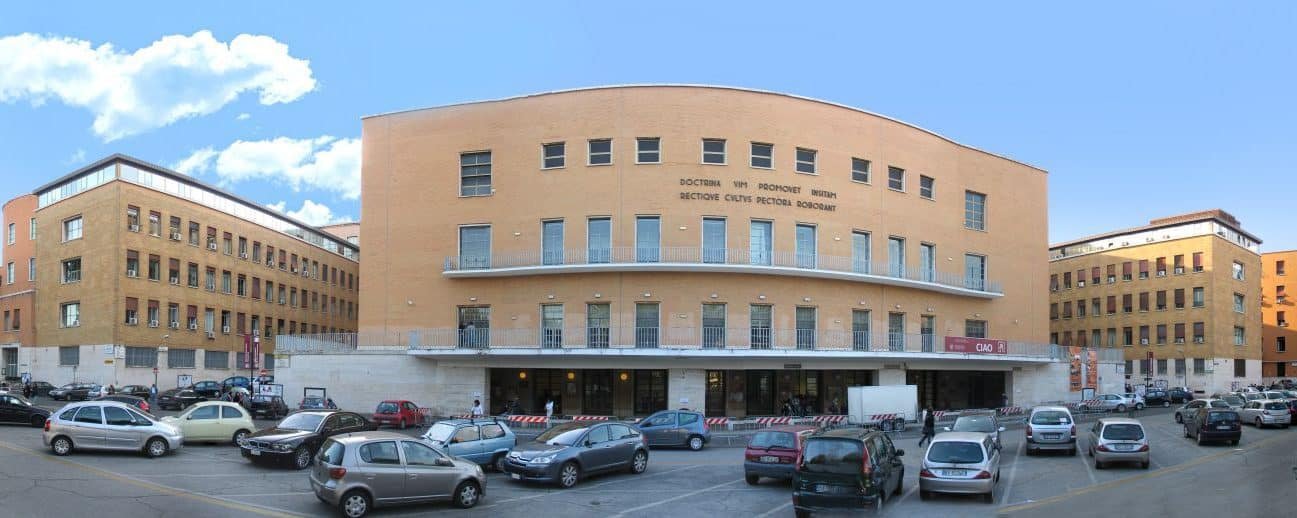
The MLAC, the contemporary art laboratory museum of Sapienza, is inside Palazzo del Rettorato, at Piazzale Aldo Moro 5, in Rome. The entrance is under the portico, next to the CIAO desk, on the back side of the building. Admission is free, with no ticket and no reservation. It opens only when there is an exhibition, in the afternoon, with indicative hours of 15:00-19:00 and a schedule of days that changes from exhibition to exhibition. Before you go it is best to check the calendar on the museum's official website or on the pages of the Polo museale Sapienza, because between one exhibition and the next the rooms stay closed, and in August the university's entire museum system observes the summer break. You get there by metro line B, Policlinico stop, or by Castro Pretorio, also line B, about a 10-minute walk away. On the surface, the Città Universitaria is served by buses 71, 310, 492 and 649 and trams 3 and 19. The pedestrian entrances of the campus are on Piazzale Aldo Moro, Viale Regina Elena, Via Cesare de Lollis and Viale dell'Università. No cloakroom, no cafeteria inside the museum, no bookshop: what you find is a university exhibition room, open to anyone, inside a building from 1935.
If you are putting together a Roman outing made of real things and not of lines, the page on tourist attractions gives you the general picture. This guide instead goes inside a place that most Romans have never seen, even though they walk past it every day.
What Museo Laboratorio d’Arte Contemporanea, MLAC really is
Let's start from the name, because here the name is not a whim. Museo Laboratorio: the two words together state a precise choice, namely that this is not a container of works to be preserved, but a research workshop where the exhibition is at once the result and the tool of university work. A classic museum acquires, catalogs, displays and guards. Here the process is reversed: first an exhibition project is built, often with students and doctoral candidates acting as curators under the guidance of professors, then it happens that some works stay, by gift of the artist or by commission, and over time those remaining works have formed a collection. The collection, in short, is a side effect of the activity, not its starting point.
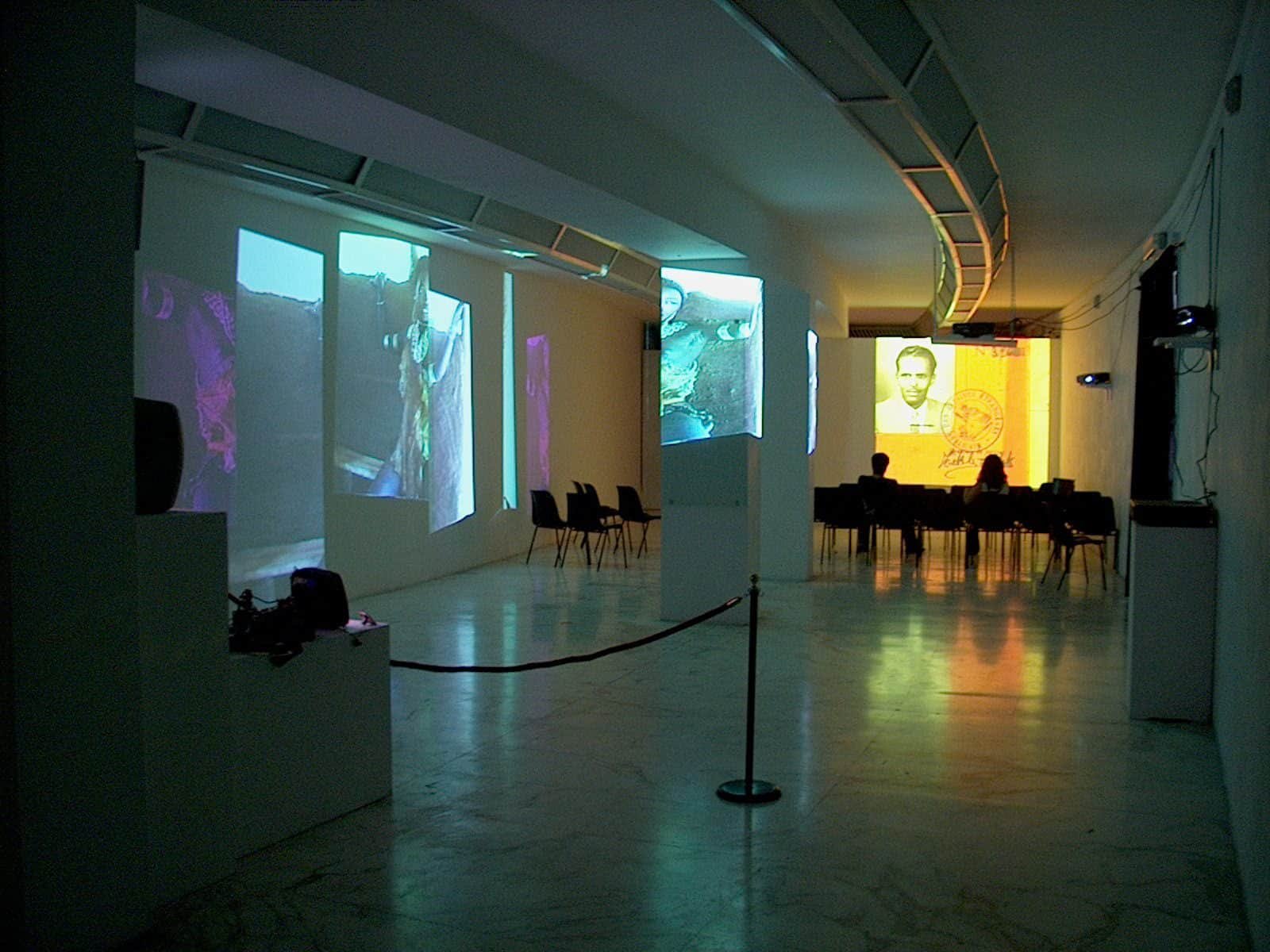
Sapienza defines its laboratory museum as a dynamic space open to the many visual, literary, plastic, museum, theatrical, cinematographic and architectural forms of art, and as a place of intersection between the educational experience and cultural production. In practice: all sorts of things have been seen inside these rooms, from reportage photography to graffiti writing, from collage to editorial graphics, from the painting of the 1950s to interactive artists' books. The programming includes exhibitions, conferences, round tables, book presentations, festivals, video reviews and music proposals, and the whole works like a gym: students of contemporary art history learn the trade by putting up real exhibitions, with living artists, real loans, a catalog to write and a public that walks in from the street.
In our judgment the MLAC is one of the very few places in the city where contemporary art is not served as entertainment. There is no immersive set design, no panel with a catchy phrase, no line for the photographable room. There is intellectual work put on display for the public, and for the adult visitor this is a privilege, not a shortcoming. Whoever looks for spectacle will be disappointed within 10 minutes. Whoever looks for an idea will leave with a note to follow up on.
Museo Laboratorio inside the university, not next to the university
The physical location explains the nature of the institution better than any programmatic statement. The museum occupies spaces that the university assigned to it in Palazzo del Rettorato, that is, in the symbolic building of the Città Universitaria, the one that closes the perspective of the central avenue and that houses the Aula Magna, Biblioteca Alessandrina and the governing offices of the university. It is not a peripheral pavilion built for the occasion: it is a portion of the administrative and ceremonial heart of Sapienza, handed over to contemporary art. In an Italian university, this is a heavy statement of intent.
From it follows a consequence that the occasional visitor underestimates: the MLAC has no audience to win over through a ticket office, so it can afford difficult exhibitions, monographs on forgotten artists, surveys of archive material, themes that no municipal museum would tackle because they bring no revenue. It is the freedom of an institution that doesn't have to sell anything. The flip side is the fragility of the calendar: when one exhibition ends and another doesn't begin, the door stays closed and nobody notices.
Where the MLAC is and how you really get in
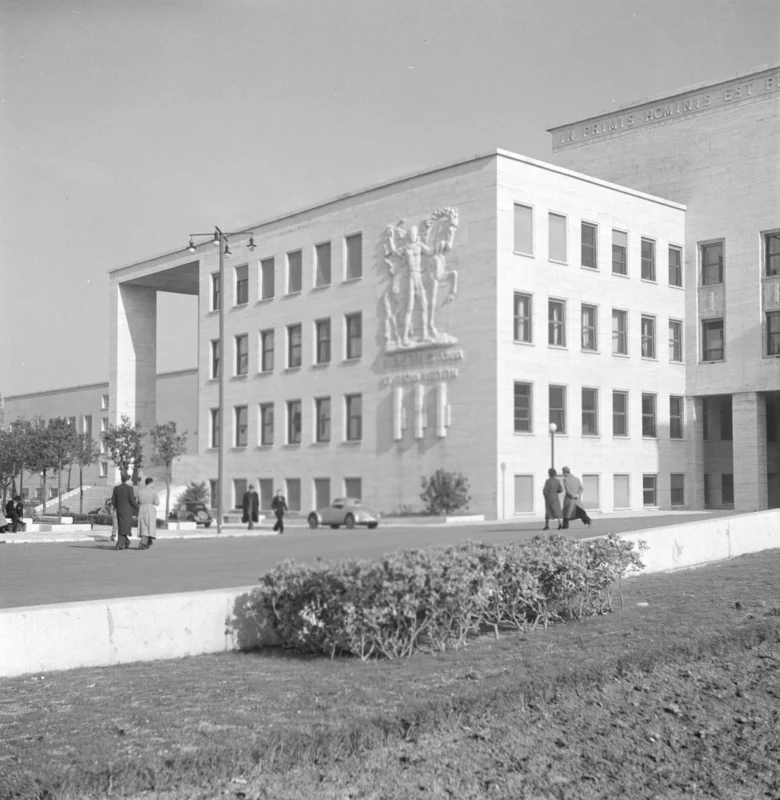
The official address is Piazzale Aldo Moro 5, but that street number indicates the entire Città Universitaria, an enclosure of over 20 buildings. The point you need is another one: Palazzo del Rettorato, the building at the end of the main avenue, recognizable by its travertine-clad facade and the bronze Minerva planted in front, in the middle of the pool. The museum does not open on the solemn front of the grand staircase, but at the back, under the portico, next to the CIAO information point for students. Thousands of students pass there every day on their way to handle administrative paperwork, and almost none of them raise their eyes to the exhibition poster.
The campus is public and can be crossed. There is no turnstile, no badge to show, no guard asking what you are going to do: the university premises are freely accessible during opening hours, and the Città Universitaria works in practice like a big square closed to traffic. Enter by the monumental gate of Piazzale Aldo Moro, the one designed by Arnaldo Foschini with the propylaea that open the perspective, continue straight along the avenue, pass the two red brick buildings that face each other and you will reach the pool of the Minerva. The Rettorato is the building in front of you. Go around it, to the side of the portico, and look for the CIAO sign.
The other entrances to the Città Universitaria
If you arrive from the Policlinico, the quickest access is the one on Viale Regina Elena, which puts you into the northern part of the campus, among the scientific institutes. Those coming from the San Lorenzo neighborhood enter from Via Cesare de Lollis, behind Casa dello Studente. Those arriving from Tiburtina station or from the Verano use the eastern accesses on Viale dell'Università. All three entrances lead to the central avenue in five or six minutes on foot. The gate on Piazzale Aldo Moro remains the most scenic, and for a visitor seeing the Città Universitaria for the first time it is worth the two extra minutes of walking: the perspective built by Marcello Piacentini is designed precisely to be walked from there.
How to get to Museo Laboratorio d’Arte Contemporanea, MLAC
Metro line B, Policlinico stop: you exit onto Viale Regina Elena and in five minutes you are inside the campus. Also on line B, the Castro Pretorio stop leaves you about a 10-minute walk away, crossing Viale Castro Pretorio and Viale dell'Università. On the surface, the lines serving the Città Universitaria are buses 71, 310, 492 and 649 and trams 3 and 19, which run along Viale Regina Elena and Viale delle Province. The 19 and the 3 are the right ones if you are coming from Trastevere, from Valle Giulia or from the Nomentano quadrant, the 492 if you come from Cipro or from Piazza Cavour, the 310 if you are coming down from the Talenti and Nomentana area.
From Termini station you can walk there in a little over a quarter of an hour: take Via Marsala, continue on Via Marghera and cut toward Via dei Mille and Viale Castro Pretorio. It is a walk without beauty, frankly, but it is the fastest and spares you waiting for a bus. By car, instead, forget it: Piazzale Aldo Moro is in the limited traffic zone during certain hours and the campus has no parking open to outsiders. The professional advice is blunt: metro B, always, and if you can plan to get off at Policlinico, which is closer and lets you in from the side of the scientific institutes, where the campus reads better.
The MLAC by bicycle and on foot from the center
The Città Universitaria is flat and the stretch from Termini station is all level: those on a bicycle or scooter arrive from the historic center in a good 20 minutes, with the only difficulty being the traffic on Viale Castro Pretorio. Inside the campus you can ride calmly and there are racks next to the buildings. Those arriving on foot from San Lorenzo cross Via dei Volsci and Via Tiburtina, and in that case it is worth allowing a stop in the neighborhood before or after the visit, because that's where you eat well, not inside the university.
Hours, admission and tickets of the MLAC
Admission is free. There is no ticket office, no reduced fare, no pass: you walk in and that's it, during the hours when the exhibition can be visited. The museum opens exclusively for temporary exhibitions, normally in the afternoon, with indicative hours from 15:00 to 19:00. On the schedule of days the information doesn't always match: some exhibitions are announced as open Monday to Saturday, others Monday to Friday with the weekend closed. The prudent rule is just one: look at the page of the current exhibition before leaving home, because that gives the exact days of that specific exhibition.
Closures are those of the university: a long Christmas break, the summer suspension, days of institutional closure. In August the museums of the Polo museale Sapienza observe the summer break, and the MLAC follows the same calendar. Anyone planning a visit between mid-July and early September has to allow for finding everything closed. It is the worst period of the year for this museum, while from October to June the activity is continuous and you run into two or three exhibitions per semester.
Why a free museum doesn't mean a minor museum
Free admission disorients the Italian visitor, used to measuring the value of a museum by the price of the ticket. Here the economic mechanism is different: the museum is a teaching structure of the university, the scientific staff is made up of professors and researchers of the university, the displays are made with research funds and with the collaboration of cultural institutes. There is nothing to sell, so there is nothing to charge. The result is that you find yourself in front of exhibitions built with the same philological rigor as a scientific publication, without the narrative shortcuts that museums with admission fees adopt to justify the price. For an adult audience it's a bargain.
The history of Museo Laboratorio d’Arte Contemporanea, MLAC
The museum was born in 1985 on the initiative of Simonetta Lux, professor of contemporary art history at Sapienza, when the university assigned some spaces of Palazzo del Rettorato to a project that at the time had almost no precedent in Italy: a university museum devoted not to the past but to the artistic production of the present. The actual exhibition activity starts in 1987, and it starts big, with an exhibition of Alberto Burri. Opening with Burri, in the 1980s, meant declaring that the university did not intend to deal with contemporary art in a minor key.
Since then the direction has changed hands several times, always remaining within the circle of professors of art history and aesthetics of the university: Maurizio Calvesi, Simonetta Lux, Marta Fattori, Giuseppe Di Giacomo and Claudio Zambianchi are the names that Sapienza indicates in its own historical reconstruction, and in recent years the scientific leadership has been entrusted to Ilaria Schiaffini and Francesca Gallo, with Claudia Carlucci as area curator. These are names that say little to the tourist and a great deal to those who know Italian art historiography: Calvesi was one of the greatest scholars of the Roman 17th century and also one of the critics who built the canon of 20th-century Italian art, and his presence at the head of a university laboratory museum gives the measure of the ambition of the project.
Simonetta Lux and the idea of the laboratory museum
Lux's intuition was to understand, 15 years ahead of the rest of the Italian museum system, that contemporary art is not taught with slides. It is taught by having students meet it in its most uncomfortable form, that is, the work that arrives in a crate, that has to be unpacked, measured, hung, lit, explained to the public and then sent back. The laboratory museum is the institutional translation of this idea: a space where teaching coincides with curatorial practice, and where the student is not a spectator but an operator.
Over the years the model has consolidated around three intertwined functions. The first is exhibition: bringing into the university Italian and foreign artists, young and established. The second is research: using the exhibition as a tool for testing a scientific hypothesis, as is done in a chemistry lab with the experiment. The third is training: building curatorial skills in young people who will then go to work in museums, galleries, superintendencies. Whoever today in Italy works professionally in contemporary art, and studied in Rome, in all likelihood passed through here.
The successive directions and the continuity of Museo Laboratorio
The handover between directors, in a university museum, is not a bureaucratic detail: every direction brings with it a field of study, and the exhibition program shifts accordingly. With Calvesi the center of gravity was the historical-critical reading of the Italian 20th century. With Fattori and Di Giacomo the museum frequented more insistently the territory of philosophical aesthetics and of the relationship between image and thought. With Zambianchi and the recent directions, attention to photography, artists' archives and contemporary documentation practices has increased. It is a story you read in the catalog of the exhibitions as you read the history of a department in its publications.
What has never changed is the scale. The MLAC has not yielded to the temptation of the big event exhibition, which would have brought audience and visibility and would have denatured the institution. It has kept doing medium-sized exhibitions, almost always monographic or thematic, almost always with a solid scientific apparatus behind them. This fidelity to its own measure is the reason the museum is still alive after four decades, while many university cultural initiatives born in the same years have disappeared.
The MLAC collection: over 100 works born from the exhibitions
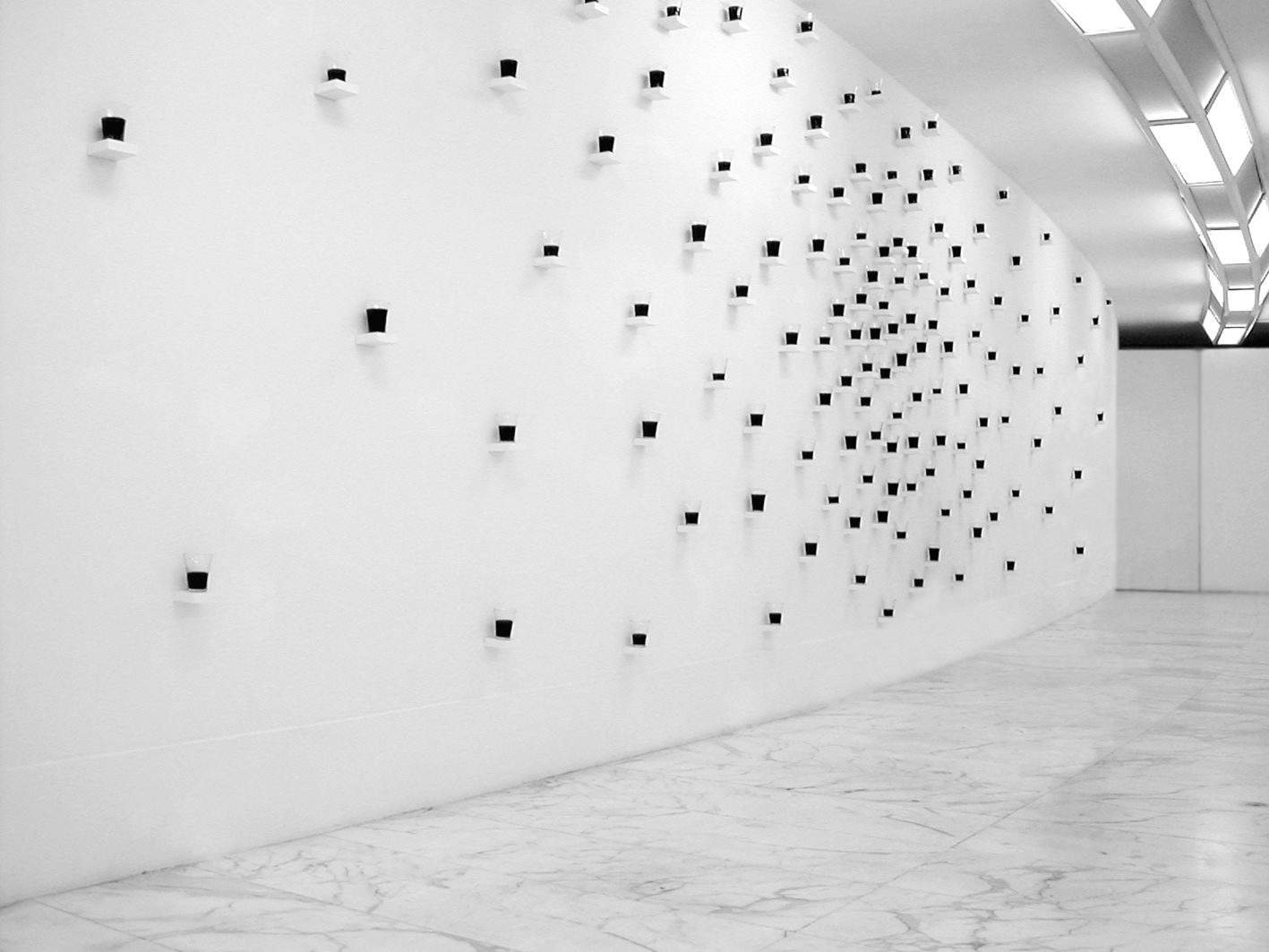
In almost 40 years of activity the museum has put together a collection that exceeds a hundred works. It is not a collection built through targeted purchases, and that is precisely what makes it interesting: it formed by stratification, with donations from the artists who had exhibited, with works commissioned for specific occasions, with materials left in storage after the exhibitions. Drawing, graphics, photography, street art: the languages represented are those the museum frequented in its programming, and the collection works like a geological core sample of the curatorial history of the institution.
A key episode in this accumulation is the 2022 campaign, when the exhibition devoted to photographed Sapienza called on leading Italian photographers to portray the campus, and the images produced entered the collection. Commissioning means making a historiographic choice: deciding which authors tell a place at a given moment. It is the operation that a municipal museum rarely carries out, for lack of funds and courage, and that a laboratory museum can afford because it is its natural function.
Why the collection is almost never on display
Anyone who arrives at the MLAC thinking they will find a permanent collection has the wrong target. The works of the collection are not on stable display: they come out of storage for thematic exhibitions, doctoral research, surveys of the university's heritage. It is a necessary choice, because the available space is that of an exhibition room, not of a permanent gallery, and every square meter occupied by a fixed collection would be a square meter taken away from living work. Said honestly, it is also a loss: the collection would deserve a catalogue raisonné and a stable place for consultation, and the scientific community has been saying so for some time.
How to visit Museo Laboratorio d’Arte Contemporanea, MLAC
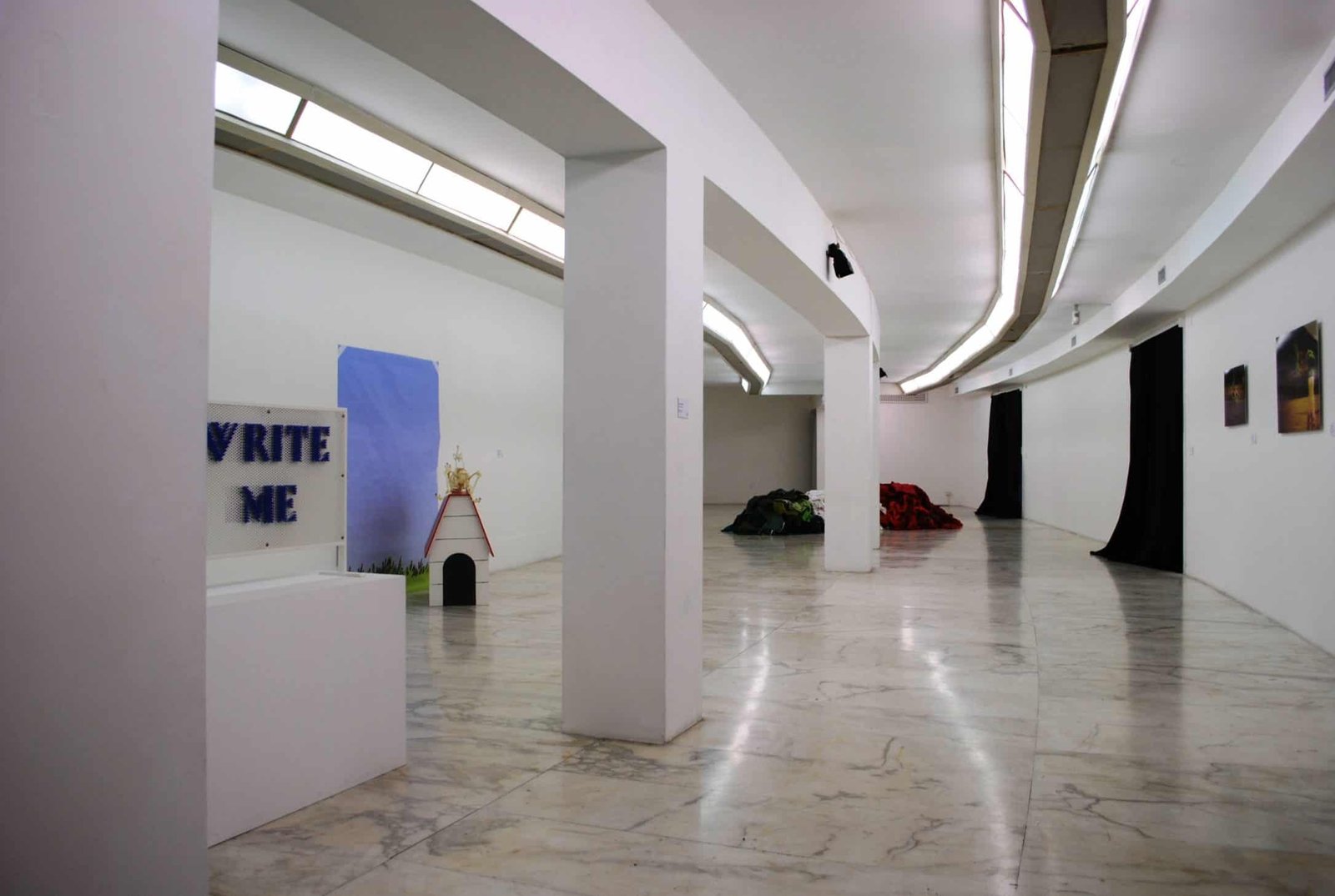
The MLAC is a museum of a handful of rooms, not a route of numbered rooms. Size, light and proportions are those of an exhibition room carved inside an institutional building of the 1930s: high ceilings, free walls, artificial lighting, no window to disturb the works. The visit lasts 40 minutes if the exhibition is dense, 20 if it is a dry monograph. There are no audioguides, no ticket office, no luggage storage. There is a desk at the entrance, almost always staffed by a student or a doctoral candidate, and that person is the museum's best resource.
The practical advice: talk to whoever is at the desk. In a municipal museum the room attendant checks that you don't touch the paintings. Here, nine times out of 10, you have in front of you someone who worked on the project, has read the bibliography, knows why that work is hung in that spot and why that sequence was chosen. A 10-minute conversation with a curator is worth more than three teaching panels. At the MLAC that conversation is free and you don't even have to ask for it in advance.
What to bring and what to leave at home
No bulky backpacks, because there is no cloakroom and the space in the rooms is what it is. No tripods. A notebook, instead, is useful: the MLAC exhibitions often work on archive material and specialist bibliographies, and it happens that you leave with three titles to look up in the library. If you are in a group, keep in mind that beyond 15 people the room becomes uncomfortable and the visit loses quality: better to split into two shifts and use the wait to look at the Città Universitaria, which is an open-air architecture museum.
How much time to give the MLAC and how to fit it into a day
The museum on its own doesn't justify crossing the city, and it would be dishonest to write otherwise. It fully justifies half a day, instead, if you place it where it belongs, that is, inside an itinerary on the Città Universitaria and the Polo museale of Sapienza. A combination that always works: arrive at the MLAC at 15:00, 40 minutes of exhibition, then the outdoor tour of the campus with the Minerva, the propylaea, the buildings by Ponti and by Pagano, and finish at one of the other university museums open in the afternoon. With this scheme you leave at 18:30 having seen something that no general guide puts in its program.
The recent MLAC exhibitions, one by one
The best way to understand what to expect from this museum is to look at what has passed through it in recent years. The recent calendar tells of an institution that alternates historical photography with archive research, the recovery of forgotten artists with the most radical contemporary practice. It is a program without complacency, and some of these exhibitions would not have been seen in a Roman municipal venue.
Morire di classe, the asylum condition photographed by Carla Cerati and Gianni Berengo Gardin
From June 10 to July 8, 2026 the museum exhibited the black-and-white photographs that Carla Cerati and Gianni Berengo Gardin took in the 1960s inside the psychiatric hospitals of Ferrara, Florence, Gorizia and Parma, together with a section of original volumes and correspondence of the period. Those images were made for the book edited in 1969 by Franco Basaglia and Franca Ongaro Basaglia, and they are one of the very rare cases in which Italian photography materially changed a country's legislation: the visual denunciation of the asylum condition is part of the chain of events that leads to the closure of the asylums. The exhibition was produced with the Polo museale Sapienza, with the support of the Archivio Basaglia and a publishing house, and accompanied by an opening round table with Alberta Basaglia and by film screenings.
Those who saw it know that it was not a photography exhibition in the usual sense. It was an act of political documentation, set up in a university, in front of students born 40 years after Law 180. This is exactly the kind of operation a university laboratory museum exists for, and for which it is worth keeping an eye on its program.
Alì Assaf, works 1973-2011
From April 21 to May 29, 2026 the museum devoted to Alì Assaf a survey covering almost 40 years of work. A retrospective of this scope, for an artist who operates between two cultures and two geographies, is the kind of operation that requires archive, time and philological competence: three things that a university museum has and a commercial gallery doesn't.
Arts and sciences in the interactive books of the Sapienza collections
From February 19 to 28, 2026, a short and conceptually beautiful exhibition: the interactive books kept in the university's collections, that is, volumes with moving parts, fold-out plates, paper mechanisms built to explain anatomy, astronomy, geometry. It is the exact point where the history of the book meets the history of science and the history of design. Only 10 days of opening: whoever wasn't following the calendar missed it, and that is the structural risk of this museum.
Astrazioni. Generazione anni Cinquanta
From May 7 to June 28, 2025 the MLAC worked on Italian abstraction of the generation of the 1950s, the moment when Italian painting comes out of the postwar period and measures itself against Informal art, against the sign, against matter. It is terrain on which the historiography of Sapienza has a long tradition, and an exhibition like this, in a university room, is at once display and lesson.
Scritture erranti and Drive me acid
In 2024 the calendar lined up two very different proposals: Drive me acid, from February 23 to March 21, and Scritture erranti, from April 4 to June 13. The second in particular, with a title that alludes to writing as a nomadic practice, belongs to that line of research on the relationship between verbal sign and visual sign that the museum has always pursued.
Szymborska and the collage world
Between November 20 and December 20, 2023 the museum exhibited the lesser-known side of Wisława Szymborska, the Polish poet and Nobel Prize winner for literature: the collages she made and sent to friends as postcards, small ironic montages built from press clippings. It is the kind of exhibition that clarifies better than any essay the difference between a laboratory museum and a consumer museum: nobody sells tickets with the collages of a poet, and for that very reason someone has to exhibit them.
Sélène de Condat, Viaggio verso la Sapienza
From September 28 to November 10, 2023, an exhibition built on the relationship between the artist and the place that hosts her, as the title itself says. It is a recurring formula here: asking an author to measure themselves against the campus, its architecture, its history, and to return the result to the university's public.
Gino Galli, the rediscovery of a painter between Futurism and the return to order
From March to May 2023 the museum brought back to light Gino Galli, a painter who lived between 1893 and 1944, a border figure between the Futurist avant-garde and the season of the return to order. Rediscoveries are the specialty of university institutions: they require combing through archives, reconstructing the catalog, checking attributions, and they produce no revenue. If an Italian painter of the early 20th century becomes visible again, it is almost always because a department has worked on him for years.
Apocrypha, the secret of the sacred in contemporary art
From December 14, 2022 to February 28, 2023, a thematic exhibition on the relationship between contemporary art and the dimension of the sacred, treacherous terrain that the museum approached in a historical-critical way rather than a devotional one. In a city like Rome, where the sacred is everywhere and almost always in Baroque form, seeing the question posed with the tools of contemporary art is a healthy exercise.
Pablo Echaurren, Neander Tales
From October 4 to November 10, 2022 the rooms hosted the recent works of Pablo Echaurren, a Roman artist who is at once painter, draftsman, collector and polemicist, one of the most recognizable figures of Italian visual culture of the last 50 years. Bringing Echaurren into the university means putting students in front of an author who has crossed comics, political militancy, the editorial cover and learned painting without ever asking permission from the hierarchies of genres.
Fabrizio Borelli, Contagion, and the photographed Sapienza
In November 2022 the solo show of Fabrizio Borelli, and before it, from May to September of the same year, the campaign on the photographed Sapienza, which called on leading Italian photographers to document the campus and brought their images into the museum's collection. If one day someone wants to study how the Città Universitaria looked in the third decade of the 2000s, those photographs will be the source.
A question of style, graffiti writing between theory and practice
In April 2022, two days devoted to graffiti writing approached with the tools of academic analysis. It is the kind of operation that divides the public and that deserves to be defended without hesitation: writing is a visual practice with a history of 50 years, a worldwide geography and a codified formal lexicon, and ignoring it out of snobbery means letting only the market tell its story.
Marcello Piacentini's Città Universitaria, the frame of the MLAC
You can't understand the MLAC without looking at the shell that contains it. The Città Universitaria is the building site that between 1932 and 1935 moves the University of Rome from the old Sapienza palace, on Corso del Rinascimento, into a brand-new campus built in three years. The body in charge is the Consorzio per l'assetto edilizio della Regia Università di Roma. The chief architect and general director of the works is Marcello Piacentini. The inauguration takes place on October 31, 1935, only three years after the consortium was set up. Three years: for a complex of this size it is a time that still leaves speechless anyone who works in public construction.
The choice that makes the campus an international case study is another one, though, and it is political before it is architectural. Piacentini, who was the man of regime architecture, calls on some of the most battle-hardened Italian rationalists to design the individual buildings, that is, the architects who in the magazines fought against monumentalism: Giuseppe Pagano, editor of Casabella, comes from Turin and Milan. Gio Ponti, editor of Domus, comes from Milan. Giovanni Michelucci, of the Gruppo Toscano, from Florence. And from Rome Pietro Aschieri, Giuseppe Capponi and Gaetano Minnucci, of the Movimento italiano per l'architettura razionale, together with Arnaldo Foschini and Gaetano Rapisardi, a collaborator of Piacentini. The result is a complex where the plan is classical, axial, hierarchical, and the individual buildings are modern, plastered, glazed, essential.
The buildings to look at on your way to Museo Laboratorio
Walking along the central avenue you have on the right and on the left an anthology of Italian architecture of the 1930s. The monumental entrance with the propylaea is by Arnaldo Foschini, who also signs the institutes of hygiene and orthopedics. The physics building is by Giuseppe Pagano, the chemistry one by Pietro Aschieri, mathematics by Gio Ponti, mineralogy and physiology by Giovanni Michelucci, botany and pharmaceutical chemistry by Giuseppe Capponi, while the buildings of law and letters are by Gaetano Rapisardi. The Rettorato, at the end of the perspective, is by Piacentini.
Look in particular at Ponti's mathematics building, with its curved body and tiered classrooms, and at Pagano's physics building, with the cleanness of volumes that made Pagano the most uncompromising of the group. Then consider that the men who signed these buildings were the same ones who in the architecture magazines quarreled furiously with each other, and that some of them would end up on opposite sides in the following decade: the Città Universitaria is also this, a place where the biographies of the authors tell the fractures of the century. This is the part that no sign on the campus explains to you, and for me it is the main reason to cross it on foot, slowly.
Palazzo del Rettorato and the project that was not built
The building that houses the MLAC was supposed to be something else. In Piacentini's original project the Rettorato was conceived as a tower with two lower wings, and that tower, the Torre del Libro, would have housed Biblioteca Alessandrina, becoming the vertical sign of the whole complex. Economic reasons and differences of taste dropped the idea: in place of the tower the horizontal block you see today was built, with the travertine-clad facade and the windows framed in red Portasanta marble. The library ended up on the fourth floor of the same building, where it still is.
Other pieces of the planned decorative apparatus also fell: two large bas-reliefs with Fame, entrusted to Arturo Martini, were never made, nor were the 20 medallions with the faces of Italian writers, artists and scientists that were to punctuate the facades. What remained were the epigraphic inscriptions in Latin, chosen by the philologist Vincenzo Ussani, and the Minerva remained. Of the grandeur imagined on paper, in short, what reached us is a plainer building and, in the judgment of many architectural historians, a better one.
The grand staircase of the Rettorato
The monumental staircase that rises from the main front of the Rettorato is the most ceremonial part of the building: a reinforced concrete structure of 1932-1935 clad in large travertine elements. In recent years it has been entirely rebuilt, with the original travertine repositioned on a new structure, to a design by the architect Giacomo Casella, with the works directed by the architect Giovanni Dibenedetto and the single procedure manager engineer Stefano Tatarelli. It is the kind of intervention nobody notices when it is done well, and that in the case of Sapienza gives the building back its original scale.
Arturo Martini's Minerva in front of the MLAC
Before going into the museum, stop in front of the pool. Arturo Martini's Minerva is the icon of Sapienza, the statue under which generations of students have arranged to meet, and its story deserves to be told in full because it is a story of commission, of talent and of remorse.
The commission dates to June 15, 1934, when Piacentini proposes entrusting the work to Martini. The 1:10 scale sketch was to be delivered by August 31 of the same year. The agreed fee is 60,000 lire. The deadline for the finished work is set for February 1935. The statue is placed in the square on April 21, 1935 and the Città Universitaria is inaugurated on October 31 of the same year. Six meters of lost-wax cast bronze, made up of 21 distinct parts assembled by welding, on a concrete base clad in porphyry.
What it represents and where its form comes from
The figure represents Italian civilization under the guise of the goddess. Martini works on precise Greek models: the frontality and fixity of the Charioteer of Delphi, the iconography of Athena Promachos and of Athena Parthenos. The arms are raised and open, the helmet is topped by a winged dragon, a serpent coils around the arm. It is not an archaeological pastiche: it is an archaizing figure that uses the Greek repertoire to build an image of authority, and anyone who knows 20th-century Italian sculpture recognizes in its silence the hand of the same artist who in the same years made terracottas of disconcerting sweetness.
Two sketches of this statue exist, one in plaster and one in bronze. The bronze one is kept at Galleria Nazionale d'Arte Moderna e Contemporanea in Rome, and seeing it next to the monumental original is an instructive exercise on the difference between idea and public work.
Beautiful, but cursed
The phrase with which Arturo Martini dismisses his own Minerva in August 1944 is one of the harshest a sculptor has ever pronounced on his own work: beautiful, but cursed. It has to be read in its historical moment, that is, the year in which Italy comes to terms with the regime that that sculpture had celebrated and in which Martini publishes the ferocious pages in which he condemns sculpture as a dead language. The Minerva is at once his public masterpiece and the monument to his remorse. In front of the pool it is the right phrase to start with: in two words it overturns the idea that a celebratory statue is always an act of serene adherence.
The 2024 restoration
The statue underwent a restoration lasting three months, with the scientific direction of the museology professor Eliana Billi, the supervision of the Soprintendenza entrusted to Mariella Nuzzo, the site direction of the architect Giovanni Di Benedetto and the execution by the restorers Stefano Lanuti and Dino Pellegrino. The intervention consisted of a careful washing with distilled water and detergent, followed by the application in successive layers of acrylic resin and wax, with the recovery of the green coloring of the oxidized bronze. Those who remember it dark and dull find it legible today: the welds between the 21 parts and the modeling of the surfaces can be distinguished again.
Mario Sironi's mural in the Aula Magna, above the MLAC rooms
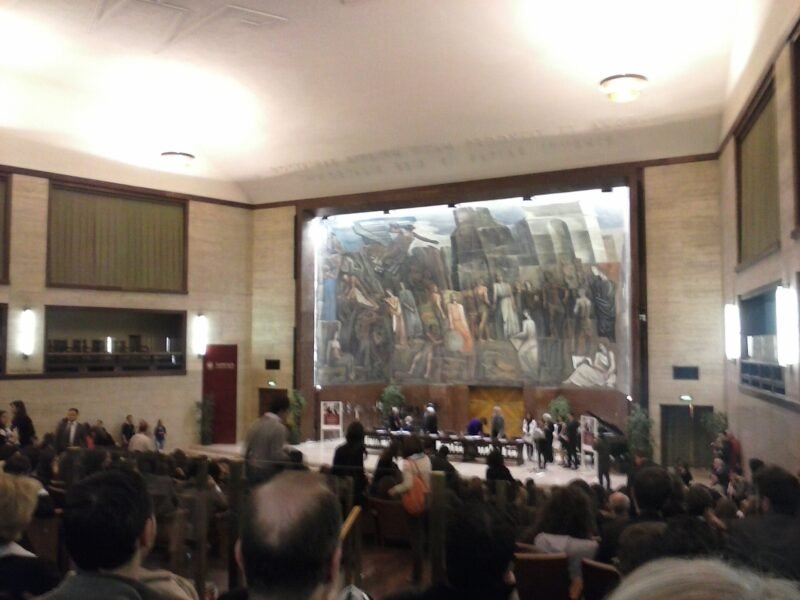
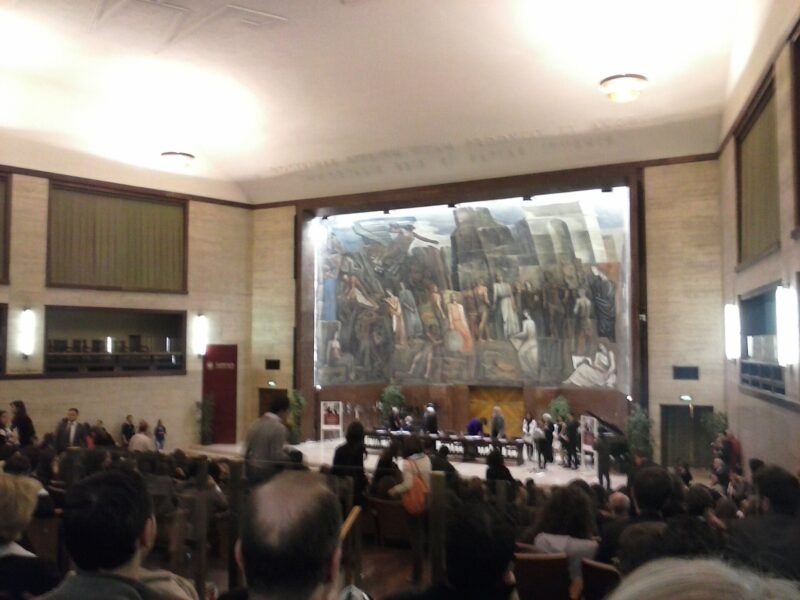
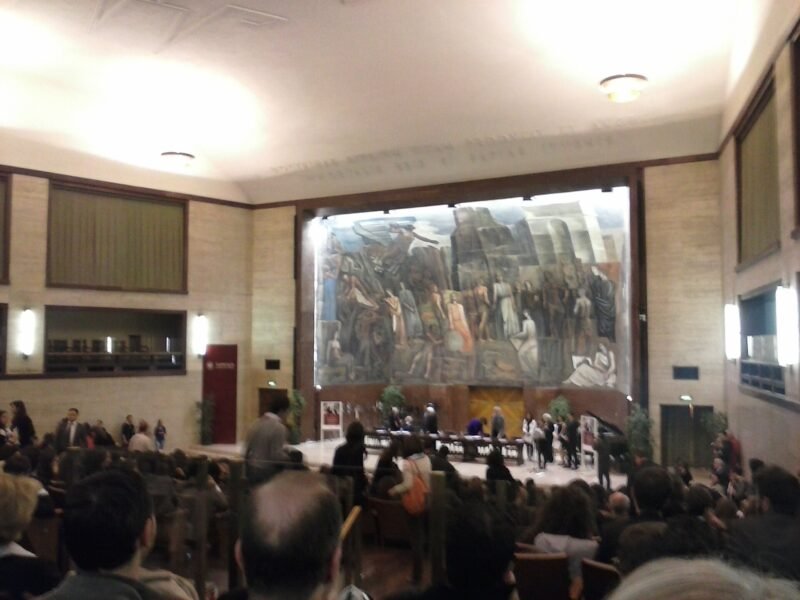
In the same building that houses the museum, behind the doors of the Aula Magna, is one of the most important and most tormented works of Italian mural painting of the 20th century: L'Italia fra le Arti e le Scienze by Mario Sironi, 1935, over 90 square meters of painted surface.
The composition puts Italy at the center, surrounded by the allegories of the Arts and the Sciences: Astronomy, Mineralogy, Botany, Geography, Architecture, Letters, Painting, History. In the background, on the left, a single-arched triumphal arch topped by an eagle. On the right, a winged victory. This is the Sironi of the great mural machines, the one who had theorized the return of painting to the wall and to public function, and who here works on a scale that few other artists of the century in Italy have tackled.
The postwar corrections
After the war damage, in the 1950s Carlo Siviero intervened on the work with a restoration that today we would call censorship. A figure on horseback, in all likelihood Mussolini, was erased. The inscription with the date of the 14th year of the Fascist era was removed. The arch and the eagle were scaled down. And the restorer's hand also intervened heavily on the faces of the figures. For decades what graduating students saw during the graduation ceremony was not Sironi's mural, but its rewritten version.
A first conservation restoration came in 1982. The decisive operation began in July 2015, with a site extended to the whole surface, coordinated by the central restoration institute together with the university and funded by the university, which gave back the legibility of the original paint material and made visible again the parts that had been covered. In 2017 the news of the work's reappearance went around the newspapers, and with the news came back the discussion, still open, on how to conserve a masterpiece that is also a propaganda document.
The position on the mural
On this point the conviction is firm: erasing the image does not erase history, it only makes it incomprehensible. A regime fresco restored correctly, with a critical apparatus explaining what was there, what was removed and why, teaches a 20-year-old far more than any civics lesson. Sapienza, after 70 years of embarrassment, chose the path of philological restoration, and it is the right choice. Whoever visits the MLAC should know that above their head, in that hall, there are 90 square meters of Italian history in all its contradiction.
How to see the Aula Magna
The Aula Magna cannot be freely visited: it is a ceremonial hall of the university, used for ceremonies, graduations, conferences and lectures. You see it on the occasion of public events open to the citizenry, extraordinary openings and guided visits organized by the university or by the Polo museale. Whoever wants to see it has to keep an eye on the calendar of university initiatives: it happens more often than you would think, and admission is free in that case too.
The other works of art of the Città Universitaria
The campus is, in fact, an open-air and diffuse museum, and not all the pieces are in view. Among the works owned by the university are a bronze group by Amleto Cataldi, a Neapolitan sculptor who lived between 1882 and 1930, made in 1920. A 20th-century gonfalone restored in 2017 by the textile artifacts laboratory. Eighteenth-century landscape paintings, restored between 2019 and 2020. Ancient urns and busts from the Rettorato. Headless marble sculptures. Many of these interventions came out of the collaboration between Sapienza and the central restoration institute, which also uses the university's heritage as teaching material for its own advanced training school.
The consequence for the visitor is simple: when you enter this campus you are not only crossing a complex of rationalist buildings, but a repository of Italian art that runs from Roman antiquity to the contemporary, managed by a university museum system. The MLAC is the most advanced tip of that system, the one facing the present.
The Polo museale Sapienza and the place of the MLAC
The laboratory museum is part of the Polo museale Sapienza, an integrated system of university museums that preserve a heritage able to illustrate fields of knowledge very different from one another, organized in five disciplinary areas. There are 19 facilities: Museo di Anatomia comparata Battista Grassi, Museo di Anatomia patologica, Museo delle Antichità etrusche e italiche, Museo di Antropologia Giuseppe Sergi, Museo dell'Arte classica, the Museo laboratorio di Arte contemporanea, Museo di Arte e giacimenti minerari, Museo di Chimica Primo Levi, Museo Erbario, Museo di Fisica, Museo della Geografia, Museo di Idraulica, Museo di Merceologia, the Orto botanico, Museo delle Origini, the Museo universitario di Scienze della Terra, Museo di Storia della medicina, Museo del Vicino Oriente and Museo di Zoologia.
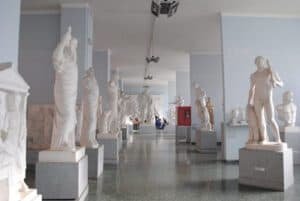
Many of these museums can be visited and almost no Roman knows them. The Museo dell'Arte classica, the plaster cast gallery of Sapienza, holds one of the most important collections of plaster casts in Europe. The Museo di Antropologia Giuseppe Sergi tells a century and a half of the history of the discipline. The Museo universitario di Scienze della Terra displays minerals and fossils in period rooms. The Physics Museum and the Museo di Chimica Primo Levi preserve historic scientific instruments. The Museo del Vicino Oriente, Egitto e Mediterraneo and the Museo delle Antichità etrusche e italiche were born from the university's excavation campaigns. Add the Museo di Storia della medicina, Museo di Anatomia comparata, Museo di Anatomia patologica and Museo Erbario and you have the picture of what the word heritage means in a university born in the Middle Ages and grown for centuries inside the city.
How to combine the MLAC with the other Sapienza museums
The hours of the university museums are the real difficulty: many facilities open by appointment, others in narrow time slots, others only for groups. The method that works is to book one or two museums of the Polo ahead of time, check that there is an exhibition on at the MLAC and build the afternoon around these appointments. With a bit of organization you put together a Roman day that no tour operator sells, and that has the advantage of costing almost nothing.
The teaching function of Museo Laboratorio d’Arte Contemporanea, MLAC
Sapienza defines its laboratory museum as a teaching structure of primary importance, aimed at the university's students and at the same time open to the public of the city. The two things are not in contradiction, and the way they coexist is the most original part of this institution. The museum is a classroom: lessons, seminars, exercises and research presentations are held in it. It is also a public exhibition room: anyone walks in, without paying and without explaining who they are. A third-year student putting up his first exhibition finds himself, on opening day, in front of a mixed audience of professors, colleagues, artists and passersby. It is a very hard and very useful school.
The activities that revolve around the exhibitions include conferences, round tables, book presentations, festivals, video reviews and music proposals. It is the typical calendar of a cultural center, with one substantial difference: here the events don't serve to fill a season, they serve to discuss the work in progress. Whoever walks in during a round table witnesses a real scientific discussion, not a debate staged for the public.
What a student learns at the MLAC
They learn the things that aren't in the textbooks. How to write a loan letter to a private archive. How to calculate the insurance of a work. How to draft a caption that doesn't lie and doesn't bore. How to arrange a sequence of photographs in a room of those dimensions. How to deal with a living artist who doesn't agree with your critical framework. These are skills that in Italy are almost always learned once the career has already started, often for free, often badly: having them inside a university course is an enormous competitive advantage.
A curiosity about Museo Laboratorio d’Arte Contemporanea, MLAC
The most beautiful curiosity concerns the two dates the museum carries, 1985 and 1987, and the reason they coexist. 1985 is the year of the institutional birth: Sapienza assigns the spaces of the Rettorato to the project wanted by Simonetta Lux, and a museum that had almost no models in Italy is born on paper. 1987 is the year the door really opens, and it opens with an exhibition of Alberto Burri. Two years between the decision and the first nail driven into the wall: anyone who has dealt with the administration of a university knows that two years, for something like this, is an almost miraculous time.
But the real curiosity is the choice of the artist with whom it begins. In 1987 Alberto Burri is a master recognized all over the world, the man of the sacks, the cretti, the combustions, the artist who had taught Europe that poor material could be painting. A newly born university museum, with a few square meters and zero budget, that opens with Burri is saying just one thing: here we don't do second-rate teaching. It is a declaration of level that has conditioned all the rest of the institution's history, and that is still read today in the quality of the program.
There is also a detail that always amuses groups. The contemporary art museum of the largest university in Europe has no facade, no monumental sign, no flight of steps: you enter through a door under a portico, next to the desk where students go to ask for information about tuition. Thousands of kids walk past it every day for bureaucratic reasons and don't know that two meters away, behind that door, there is a collection of over 100 works of contemporary art and a space that has hosted some of the biggest names in Italian art. The disproportion between the modesty of the threshold and the quality of what is behind it is typically Roman, and for me it is the reason it is worth telling about this place.
Something nobody tells you about Museo Laboratorio d’Arte Contemporanea, MLAC
That the museum, for most of the year, may be closed. Not through neglect, but by its statute: it opens only when there are exhibitions. Between the closing of one exhibition and the opening of the next, two weeks or two months can go by, and in that time the door under the portico does not open. No tourist guide writes it this clearly, and the result is that every year a certain number of visitors cross half of Rome to find a faded poster and a handle that doesn't turn.
The practical rule to keep in mind is just one: you don't go to the MLAC, you go to the MLAC to see an exhibition. First you check that there is one, then you set out. The calendar is checked on the museum's official website and on the pages of the Polo museale Sapienza, and on the institution's social profiles, which are updated punctually. If the site doesn't list an exhibition in progress, it's not a technical problem: it's that at that moment there isn't one.
There is a second thing nobody says, and it concerns the relationship between this museum and tourism. The MLAC is not designed for foreign visitors: the captions are in Italian, a bilingual apparatus is not guaranteed, the catalogs are Italian scientific publications. Those who accompany international groups must know this and must prepare the mediation, because otherwise the group stays outside the exhibition even while inside the room. At the same time, and here I speak from direct experience, a cultured foreign audience reacts very well to this place: it understands immediately the difference between a museum that sells an experience and a university that displays its own work. What not to do is bring a general-interest group looking for ancient Rome: that would be a misreading of the audience, and the museum has nothing to do with it.
Third unsaid thing: free admission doesn't mean indifferent admission. Whoever staffs the room keeps count of the visitors, and those numbers count in the administrative life of the institution. Walking in, signing the register if there is one, exchanging a couple of words, asking for the exhibition leaflet are gestures that weigh more than you imagine on the survival of a space like this.
The advice I give you for visiting Museo Laboratorio d’Arte Contemporanea, MLAC
The advice is to reverse the order of things. Don't come here for the museum and then, if time is left, take a look at the campus. Do the opposite: build the afternoon around the Città Universitaria and use the MLAC as the moment of recollection inside an outdoor route. You arrive at 15:00, enter through the propylaea of Piazzale Aldo Moro, walk slowly along the avenue looking at the buildings one by one, stop for at least five minutes in front of the Minerva, then go around behind the Rettorato and walk into the exhibition with your eyes already warmed up. The visit changes sign completely.
Second piece of advice, valid for anyone with real curiosity: ask. Ask whoever staffs the room what the previous exhibition was, who curated this one, if there is a catalog, if there are events planned. It is the only Roman museum where this question gets a long and competent answer instead of a shrug. The best information is never on the panels.
Third piece of advice, on timing. The afternoon opening, with closing at 19:00, coincides with the end of classes: between 17:00 and 18:30 the campus empties, the raking light enters under the porticoes and the Città Universitaria becomes a silent and beautiful place. It is the time slot I always choose. In the morning the campus is an anthill, and for those who don't study there it is chaotic without compensation.
Fourth, the season. From late October to mid-December and from March to June the exhibition calendar is in full swing and the probability of finding an exhibition open is at its highest. July and August are to be avoided, January is uncertain because of the exam session. If you have only one afternoon in Rome and absolutely want to see the museum, choose a Tuesday or a Wednesday in November: statistically it is the best moment.
Fifth, and I say it with the frankness I owe to the reader: if you expect a contemporary art museum in the common sense of the term, with a route, a permanent collection and a bookshop, don't come. You will be disappointed and you will blame the wrong place. If instead you are interested in seeing how thinking about art is made, that is, how an exhibition is born before it becomes an event, this is one of the three or four right addresses in all of Rome.
Another well-known fact, yet rarely cited
That the University of Rome, before 1935, was elsewhere. The fact is known to anyone who has studied architecture history, and unknown to the vast majority of Romans: Sapienza occupied the palace with the church of Sant'Ivo alla Sapienza, Francesco Borromini's masterpiece with its spiral dome, on Corso del Rinascimento, a couple of steps from Piazza Navona. The name Sapienza comes from there: it is the name of the Studium Urbis, of the ancient university palace, and it has crossed the centuries to become the name of the modern campus and then of the university itself.
The move of 1935 was not a simple relocation. It was the passage from a palace university, set into the historic fabric of the city and organized around a 17th-century courtyard, to a campus university, autonomous, outside the center, designed like a small city with its own streets and squares. Everything changes: the relationship with students, with the city, with political power. Whoever wants to understand this mutation should do the double visit in one afternoon, the campus of Piazzale Aldo Moro and the church of Sant'Ivo alla Sapienza: they are the two faces of the same institution 300 years apart, and put side by side they tell the history of the Italian university better than a textbook.
The second well-known and rarely cited fact concerns the role of the rationalists in Piacentini's building site. It is often repeated that the Città Universitaria is regime architecture, and for the plan and the axial layout that is true. It is said much less that the individual buildings were entrusted to the architects whom the regime, in the rest of Italy, kept at the margins, and that the campus is therefore also the biggest Italian rationalist building site carried out all at once. Looking at Gio Ponti's mathematics building or Giuseppe Pagano's physics building and continuing to talk generically of Littorio style means not having looked.
The right photo to take at Museo Laboratorio d’Arte Contemporanea, MLAC
Inside the rooms, the right photo often can't be taken: in historical photography exhibitions and in exhibitions with loaned works, filming is limited or forbidden, and the ban is indicated by the installers. You ask at the entrance desk and you respect the answer, which in the case of private archives and the heirs of the authors is never a whim. When it is instead allowed, the rule is the usual one: no flash, no tripod, and framings that include a portion of wall and floor, because a photograph of a work without its exhibition context is a worse duplicate of the catalog reproduction.
The photograph you really take home, though, is outside. Step out from the portico, go back to the avenue and stand on the central axis with the Minerva in the foreground and the Rettorato behind. It is the framing built by Piacentini, who drew that perspective so that it would be looked at exactly from there: the six-meter statue, the pool, the travertine, the staircase. Taken at a winter sunset, with the raking light igniting the restored green bronze, it is one of the most beautiful and least seen images of Rome.
The other framings that work
Under the porticoes of the Rettorato, with the vanishing line of the columns and the backlit figures: it is a classic exercise and it always works, especially around 18:00, when the students cross. Then there is the bronze detail: the surface of the Minerva, after the restoration, shows the welds between the 21 parts and the texture of the lost-wax casting, and up close, with a medium focal length, it becomes an abstraction. Finally, the rationalist buildings: Ponti's mathematics building and Pagano's physics building photograph well with the sun high, when the shadows draw the volumes. A professional recommendation: the people you see around are students in their place of study, not extras. You photograph the buildings, not the faces.
Some important events that happened here in history
On October 31, 1935 the Città Universitaria is inaugurated, three years after the constitution of the consortium that built it, with a ceremony of great impact in the presence of the royal family. It is the birth certificate of the campus and of Palazzo del Rettorato that today houses the museum. That day the Minerva by Arturo Martini, placed in the square on the previous April 21, is presented to the city, and Sironi's mural in the Aula Magna has just been finished.
On February 17, 1977 one of the episodes that mark Italian political history happens inside this campus. Luciano Lama, general secretary of the Cgil, enters the university at eight in the morning to hold a rally, climbs onto a truck used as a stage and begins to speak at 10 in front of the faculty of Letters. The protest of the students of the movement, with banners and ironic slogans, swells until it makes it impossible to continue the speech, which breaks off around 10:30. Violent clashes follow, with about a hundred injured treated in the faculty, at the Policlinico and in the premises of the Rome federation of the Communist Party. Bruno Vettraino, secretary of the Labor Chamber of Rome, declares the demonstration dissolved and Lama is taken away from the university. The expulsion of Lama, as it was called, marks a definitive break between the Movement of '77 and the organizations of the historic left. Lama returned to Sapienza in February 1980, for a commemoration in memory of Vittorio Bachelet, and that time the welcome was very different.
On February 12, 1980, at 11:35, on the stairs of the faculty of Political Science, two militants of the Red Brigades kill Vittorio Bachelet, professor of administrative law, 54 years old, formerly president of Italian Catholic Action in the years of the Council and at the time vice president of the High Council of the Judiciary. He was with his assistant Rosy Bindi, 29 years old, and with two students. In May of the same year Bruno Seghetti and Anna Laura Braghetti were identified and arrested, both involved in the Moro kidnapping of 1978, later sentenced to life imprisonment. The funeral, with the words of forgiveness spoken by his son, remains one of the highest civic moments of those years. Crossing this campus today without knowing what happened on those stairs means crossing it halfway.
On January 17, 2008 the visit of Benedict XVI for the inauguration of the academic year is canceled after protests from part of the university world. The text of the speech was published by the Holy See, but it was never delivered in the hall. The episode became a national case and opened a rift in the public relationship between the secular university and the Church that lasted almost 20 years.
On May 14, 2026 that rift was mended: Pope Leo XIV visited Sapienza, with a meeting in the Rettorato, a speech in the Aula Magna and a visit to the exhibition devoted to Sapienza and the popes. 18 years after the 2008 case, a pontiff spoke in the hall under Sironi's mural. For a place that hosted the expulsion of Lama, the Bachelet murder and the no of 2008, this is a date that carries weight.
Alongside the facts that end up in the newspapers, there are the events internal to the history of the museum: the foundation of 1985, the opening of 1987 with Burri, four decades of exhibitions that brought Italian and foreign artists into the university, the photographic campaign of 2022 on the campus and, in 2026, the exhibition on the asylum condition that brought back into a university the images that helped close the Italian asylums. These are quieter events, which however explain why this space matters.
Who has passed through Museo Laboratorio d’Arte Contemporanea, MLAC
A substantial part of Italian art of the last 40 years has passed through the rooms of the laboratory museum. The beginning, in 1987, bears the name of Alberto Burri, and it is not just any name: he is the artist who changed the grammar of matter in painting of the second half of the 20th century and whom the museums of half the world compete for. After him the museum hosted established artists and young ones still unknown, with the same care, because the laboratory function requires taking bets.
In recent years, to stick to what can be verified on the calendar, those who have passed through here include Pablo Echaurren, with his 2022 exhibition, a central figure of Italian visual culture from the 1970s to today. Alì Assaf, with a retrospective covering his work from 1973 to 2011. Fabrizio Borelli. Sélène de Condat. And the two photographers who changed the public perception of mental illness in Italy, Carla Cerati and Gianni Berengo Gardin, whose images of the psychiatric hospitals were exhibited in 2026. Authors who could no longer come in person have also passed through: Gino Galli, a painter between Futurism and the return to order, brought back to light by university research, and Wisława Szymborska, Nobel Prize winner for literature, with her collages.
Who has passed through Palazzo del Rettorato
If you widen your gaze to the building, the list becomes a piece of Italian history. Marcello Piacentini, Arturo Martini and Mario Sironi worked here, that is, the architect, the sculptor and the painter whom the regime chose to represent itself at its peak. Generations of scholars who made the history of their disciplines have taught here: among the museum's directors appears Maurizio Calvesi, one of the most influential critics and art historians of the Italian 20th century. Kings, heads of state and pontiffs have passed through this palace: the royal family at the inauguration of 1935, Pope Leo XIV in May 2026. And from here, every year, tens of thousands of students pass, who are the true reason for this place.
The name to always remember is that of Vittorio Bachelet. Not because he is the most illustrious, but because his story says what this university has been: a place where law was taught and where a man was killed for having taught it in a certain way. A contemporary art museum inside a building like this is not a decorative detail. It is the way an institution keeps on thinking.
What to see around the MLAC, within a 10-minute walk
The museum sits on the border between three very different neighborhoods, and this is its good fortune. To the east, beyond Viale dell'Università, begins San Lorenzo, the working-class neighborhood born at the end of the 19th century and become over the years the territory of student nightlife: 10 minutes' walk and you are on Via dei Volsci, among osterie, historic bakeries and murals. To the north, beyond Viale Regina Elena, is the complex of the Policlinico Umberto I, a monument too, with its Umbertine pavilions. To the south, beyond Piazzale Aldo Moro, you go down toward the Esquilino and Termini station.
The visit I recommend to those with a whole afternoon: you leave the museum, cross the campus and walk to the basilica of San Lorenzo fuori le mura, one of the seven Jubilee churches, with its double basilica body and the story of the bombing of July 19, 1943 carved into the memory of the neighborhood. Next to the basilica is the entrance of the monumental cemetery of Verano, which is an open-air museum of 19th- and 20th-century sculpture, free, and one of the most underrated places in Rome. With the MLAC in the middle, you have a day that holds together contemporary art, rationalist architecture, Christian archaeology and funerary sculpture.
Where to eat and where not to eat near the MLAC
Said with the brutality that is needed: inside the campus you eat like a student, that is, badly and in a hurry, and there is no reason to stop there unless you have only 20 minutes. The university canteens and cafes serve their function and serve it well, but they are not an experience. Five minutes on foot toward San Lorenzo changes everything: the neighborhood has a tradition of real osterie, bakeries and pizza by the slice, and prices stay those of a student neighborhood. Toward the Esquilino, instead, you enter another Rome, that of the world's kitchens around the market of Piazza Vittorio, and that too deserves a detour.
The other contemporary art museums in Rome
If the MLAC sparks your curiosity and you want to continue, Rome has a richer offering of contemporary art than its reputation suggests. The MACRO, the contemporary art museum of Rome on Via Nizza, is the civic reference for contemporary research and has an experimental program. The Galleria Nazionale d'arte moderna e contemporanea on Viale delle Belle Arti preserves the history of Italian art from the 19th century to today, and the bronze sketch of Arturo Martini's Minerva is also found there. The Palazzo delle Esposizioni, on Via Nazionale, is the great exhibition machine of the center. Done in the right order, these places tell three different ways of understanding the contemporary museum: civic research, the national collection, the event exhibition. The MLAC is the fourth way, the university one, and it is the one nobody talks about.
When to go to Museo Laboratorio d’Arte Contemporanea, MLAC and when to avoid it
To avoid: July, August and the first days of September, when the museums of the Polo museale Sapienza observe the summer break and the exhibition calendar is stopped. Also to avoid is the Christmas holiday period, in which the university closes for at least two weeks, and the days of strike or occupation, which in the recent history of this campus are not a theoretical possibility.
To prefer: November, when the exhibition season is in full swing and the low afternoon light makes the Città Universitaria as photogenic as ever. And the months of April and May, in which the campus is full of life and the university's cultural program fills up with conferences and presentations open to the public. On weekends the campus is almost deserted and has a metaphysical charm, but the museum is most likely closed: if you go on Sunday, go for the architecture, not for the exhibition.
The MLAC with children
I'll be honest: it is not a museum for small children. There are no educational routes for kids, no workshops on a fixed calendar, nothing to touch, and the exhibitions almost always tackle adult themes. With a child under 10 the visit runs out in five minutes and becomes a waste of time for everyone.
The discussion changes with high school students, and changes radically. A 17-year-old who is wondering what to do at university finds a concrete answer here: they see an exhibition built by university students, can talk to them, understand that behind a display there is a profession. For a kid undecided about which faculty to choose, that half hour can shift a decision. As an orientation experience it is worth more than 10 student fairs.
For families with children, the campus remains a good idea anyway: it is closed to traffic, has green spaces, benches and wide vistas to run in. The combination that works is the walk through the campus with a stop in front of the Minerva and, if the season allows, continuing to one of the other museums of the Polo with natural history collections, which work much better with children than any contemporary exhibition. The Museo civico di Zoologia, not far away at Villa Borghese, and the Orto botanico are also sensible alternatives for a family day.
Accessibility of the MLAC
Palazzo del Rettorato and the Città Universitaria are modern public structures, and the campus is flat, without steps on the main routes and with regular paving: those in a wheelchair cross the central avenue without difficulty. Access to the museum is from the portico, on the same level as the outside. For details on the accessibility of the exhibition room, on the nearest equipped restrooms and on the possible presence of barriers during particular installations, the sensible thing is to write to the museum's email address or contact the Polo museale before the visit: the university has a service dedicated to students and visitors with disabilities and answers precisely.
Those arriving by metro should consider that the accessibility of line B stations varies, and it is best to check in advance the availability of elevators at the chosen station. Alternatively, the surface lines that stop on the avenues around the campus are served by vehicles with ramps.
How much it costs to visit the MLAC and how to organize a zero-cost day
Zero. The museum has no ticket, and this is the base on which you can build one of the richest and least expensive Roman days I know. Free admission to the museum, free admission to the campus, free admission to the monumental cemetery of Verano, free admission to the basilica of San Lorenzo fuori le mura. The spending comes down to the metro ticket and lunch. Several museums of the Polo museale Sapienza charge symbolic fees or are free, some require a reservation: check case by case on the university's pages.
A piece of advice that holds for all of Rome and here holds double: the free days of the big museums attract crowds, while places like this are free all year and nobody knows them. If your goal is to see real things while spending little, the ratio between what you receive and what you pay in a university museum has no rival in the city.
Quick questions about Museo Laboratorio d’Arte Contemporanea, MLAC
How much is the ticket for the MLAC?
Nothing. Admission is free, with no ticket office and no reduced fares. The museum is a structure of the university and charges no entrance price.
Where exactly is Museo Laboratorio d’Arte Contemporanea, MLAC?
Inside Palazzo del Rettorato of Sapienza, at Piazzale Aldo Moro 5. The entrance is under the portico, next to the CIAO information desk for students, on the back side of the building relative to the monumental staircase.
What are the hours of the MLAC?
The museum opens only during exhibitions, in the afternoon, with indicative hours from 15:00 to 19:00. The days of opening change from one exhibition to the next: some exhibitions are announced Monday to Saturday, others on weekdays only. The exact calendar is the one published for the current exhibition.
Do you need to book to visit the MLAC?
No, no reservation is needed for an individual visit. For organized groups and for guided visits it is good practice to give notice in advance by writing to the museum, both for reasons of room capacity and because in that case an escort by the scientific staff may be available.
Is the MLAC always open?
No, and this is the most important information of all. Between the closing of one exhibition and the opening of the next the museum stays closed. Anyone who sets out without having checked the calendar risks finding the door barred.
Is the museum open in August?
No. In August the museums of the Polo museale Sapienza observe the summer break and the MLAC follows the same calendar. The exhibition season resumes with the academic year.
How long does the visit to the MLAC last?
Between 20 and 40 minutes, depending on the density of the exhibition. With the outdoor tour of the Città Universitaria and the stop in front of the Minerva it comfortably reaches an hour and a half.
Can you take photographs at the MLAC?
It depends on the exhibition. In shows with loaned works or archive materials, photography can be banned or limited. Ask at the entrance desk: the answer is immediate and has to be respected. Outside, on the campus, you can photograph freely.
Is the MLAC Wheelchair Accessible?
The campus is flat and the entrance is through the portico, at ground level. For details on the routes inside and the equipped facilities, it's best to contact the museum or the Polo museale before your visit.
Is There a Coat Check at the MLAC?
No. There's no coat check or luggage storage, so it's best to show up without bulky backpacks and without suitcases.
Is There a Bookshop or a Cafe?
No, the museum has neither a bookshop nor a cafe. Inside the campus there are bars and university refreshment points. The exhibition catalogs, when they exist, are scholarly publications you can find through the publishers and the libraries.
How Do You Get to the MLAC by Public Transport?
Metro line B, Policlinico stop, or Castro Pretorio on the same line, about 10 minutes on foot. At street level, buses 71, 310, 492 and 649 and trams 3 and 19 serve the Città Universitaria.
Can You Come by Car?
It's strongly discouraged. The area is subject to traffic restrictions and the campus has no parking for outside visitors. The metro remains the fastest and cheapest solution.
Is the MLAC Suitable for Children?
Not much, under age 10. Very much so, on the other hand, for high school students and for anyone choosing a university path. For families with small children, the open-air campus works better than the exhibition hall.
When Was the Museum Founded?
The museum was born in 1985 on the initiative of Simonetta Lux, who obtained the allocation of the spaces in Palazzo del Rettorato. Exhibition activity began in 1987 with a show by Alberto Burri.
Who Runs the MLAC?
The direction has always been entrusted to professors of the university. In the historical reconstruction published by the Sapienza, the names that appear are Maurizio Calvesi, Simonetta Lux, Marta Fattori, Giuseppe Di Giacomo and Claudio Zambianchi. The most recent scientific leadership is entrusted to Ilaria Schiaffini and Francesca Gallo, with Claudia Carlucci as area curator.
Does the MLAC Have a Permanent Collection You Can Visit?
No. The collection numbers more than a hundred works, built up through donations from the artists and commissions tied to the exhibitions, but it isn't on permanent display. The works come out of storage for exhibitions and research.
What's the Difference Between the MLAC and MACRO or MAXXI?
A difference of function, not of quality. MACRO and MAXXI are public museums with collections, ticket offices, press offices and a mass public to reach. The MLAC is a teaching and research facility inside a university: it shows scholarly work in progress and doesn't turn it into a product. Anyone looking for the big show goes elsewhere. Anyone who wants to see how critical thinking is built comes here.
Can You Visit the Aula Magna with Sironi's Mural?
Not freely. The Aula Magna is a ceremonial space of the university and it can be visited during public events, conferences open to the public and special openings organized by the university or the Polo museale.
Can You Always See Arturo Martini's Minerva?
Yes, it's outdoors, in front of the Rettorato, and the campus is freely accessible during opening hours. After the 2024 restoration, the bronze surface recovered the green color of the original oxidation.
How Tall Is the Statue of Minerva?
Six meters, in lost-wax cast bronze, made in 21 separate parts welded together, on a concrete base covered in porphyry. It was placed in the square on April 21, 1935.
Does the Museum Offer Guided Tours?
Visits with the scientific staff are tied to the programs of individual exhibitions and to the initiatives of the Polo museale. For a group visit, it's best to write in advance: availability depends on the academic calendar.
Are There Other Museums in the Città Universitaria?
Yes, many. The Polo museale Sapienza brings together 19 facilities, from the Museum of Classical Art to the Museum of Anthropology, from the Museum of Physics to the Museum of the Near East, from the University Museum of Earth Sciences to the Museum of the History of Medicine. Several are inside the campus, others are in separate locations.
Does the MLAC Organize Events Besides Exhibitions?
Yes: conferences, round tables, book presentations, festivals, video screenings and music events. Many of these events are open to anyone and they're the best chance to understand how the museum works.
What Can You See Around the MLAC?
The Basilica of San Lorenzo fuori le Mura and the monumental Verano cemetery to the east, the San Lorenzo neighborhood with its osterie, the historic Policlinico Umberto I complex to the north, and of course the whole Città Universitaria, which is an anthology of Italian architecture of the 1930s.
Is It a Museum for People Who Don't Know Contemporary Art?
Yes, on one condition: that you go in ready to read and to ask. There's nothing intimidating here, and whoever is looking after the room is glad to explain. The museum doesn't ask for any prior knowledge, it asks for attention.
How Do You Find Out What Exhibition Is On Now?
The updated calendar is published on the museum's official website, on the pages of the Polo museale Sapienza and on the institution's social media profiles, where openings and related events are also announced.
The Final Verdict on a Museum Unlike Any Other
You should be wary of places that present themselves well. This one presents itself very badly: a door under a portico, no sign you can see from far away, opening hours you have to decipher, a real chance of finding it closed. And yet, when it's open, the MLAC offers something the big Roman museums haven't offered in a long time: the feeling of watching a thought take shape, in a room where the person explaining the work to you is the same person who chose it and hung it.
If you have to decide if you're coming, decide like this. Check if there's an exhibition. If there is, take metro B, get off at Policlinico and give yourself three hours: 40 minutes inside, the rest outside, among the Minerva, the travertine of the Rettorato and the Rationalist buildings that nobody looks at. If there's no exhibition, come anyway, but come for the campus and know that the museum door will stay closed. Either way you'll go home with the impression of having seen a Rome that doesn't appear in any itinerary, and that is exactly the reason I write about places like this.
Article written by the editorial team of TourLeaderPro, contact them for Private/Corporate/V.I.P. Tours and Experiences.
Planning a trip to Rome? The English-language guides to visiting the city are on ItalyPlanner.com.
Contact Information
Nearby
 Museo del Vicino Oriente, Egitto e Mediterraneo100 m
- Gipsoteca – Museum of Classical Art100 m
- Sapienza University City100 m
- Aula Magna of Sapienza University100 m
- Museum of Etruscan and Italic Antiquities100 m
- Herbarium Museum of Rome100 m

Upcoming events nearby
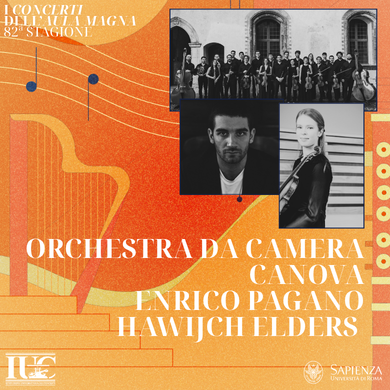
- IUC Concert Season 2026-2027 at Aula Magna della Sapienza, October 17, 2026 to May 8, 2027100 m
- Mario Brunello at the Aula Magna of the Sapienza, January 19, 2027100 m
- Marc-André Hamelin at the Aula Magna of the Sapienza, January 23, 2027100 m
- Janoska Ensemble at Aula Magna, Sapienza University, January 26, 2027100 m