Museums in Rome: The Complete List
In short. Rome has more than 120 museums open to the public, and none of them is visited well by chance.
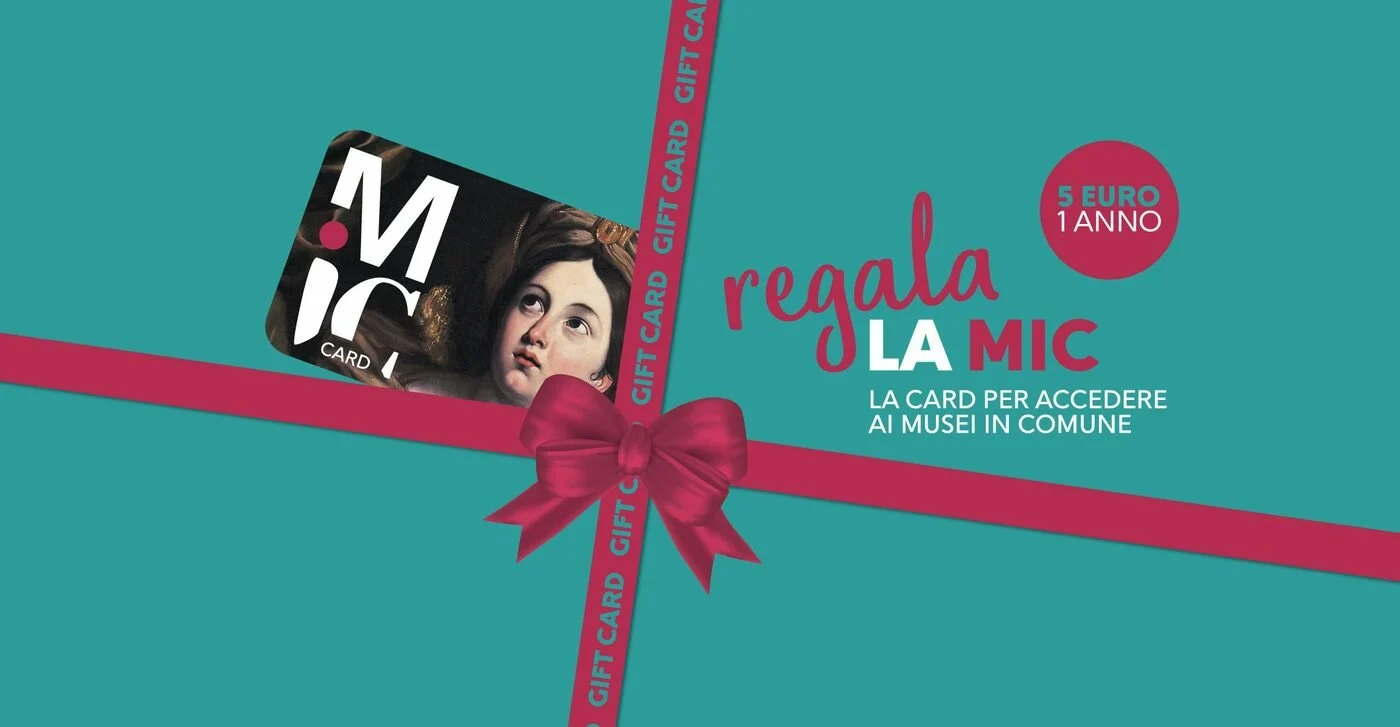
Rome has more than 120 museums open to the public, and none of them is visited well by chance. The system rests on four different administrations that don't talk to each other: the civic museums of Roma Capitale, grouped in the Musei in Comune network and run by the Sovrintendenza Capitolina. The state museums, which come under the Ministry of Culture. The private museums, owned by foundations, academies, religious orders and aristocratic families. And the Vatican Museums, which are in another State and have their own rules. Fares, closing days, free admissions and even booking channels change from one group to the next. The Capitoline Museums, at Piazza del Campidoglio 1, are open every day from 9:30 to 19:30 with last entry one hour before closing, and close only on May 1 and December 25. The standard ticket for non-residents costs €15 full price and €9.50 reduced, and goes up to €20.50 full and €15 reduced when it also includes the current exhibitions, while residents of Rome and the Metropolitan City get in free by showing an ID at the ticket desk. The state museums, from the National Roman Museum to the National Galleries of Ancient Art, are almost all closed on Mondays and open free of charge on the first Sunday of every month. The MIC card costs €5 and is valid for 12 months. If you want the complete list, museum by museum, with what you actually go to see, how much time you need and when it's best to go, you'll find it below, organized by system and by neighborhood.
To find your way around the public institutions alone, it's worth keeping the page on the state museums of Rome and the one on the free museums in Rome at hand. They cover, respectively, the ministerial perimeter and everything you can visit without a ticket. For the general picture of the city, the page on tourist attractions remains useful.
How the Museums of Rome system really works
The most frequent question isn't about Caravaggio. It's about why a ticket is valid in one place and not in the one next door. The answer is administrative and worth learning once and for all, because it governs everything else.
The civic museums of Roma Capitale
These are the city's museums, grouped in the Musei in Comune system and entrusted to the Sovrintendenza Capitolina ai Beni Culturali. They include the Capitoline Museums and their branch, Centrale Montemartini, the Trajan's Markets with the Museum of the Imperial Forums, the Ara Pacis Museum, Museo di Roma at Palazzo Braschi, Museo di Roma in Trastevere, the Napoleonic Museum, the Barracco Museum, Galleria d'Arte Moderna on Via Crispi, Villa Torlonia Museums, the Carlo Bilotti Museum, the Pietro Canonica Museum, the Museum of the Walls, the Museum of Via Ostiense, the Casal de' Pazzi Museum, the Villa of Maxentius, the Museum of the Roman Republic and Garibaldi Memorial, the Civic Zoology Museum, and MACRO. They have a shared ticket office, a single call center and a single logic of discounts. These are the museums where Romans go the most and tourists go the least, which is exactly the opposite of what should happen: at Centrale Montemartini you see masterpieces that at the Louvre would have a room named after them, and on weekdays you walk through almost alone.
The state museums of Rome
They come under the Ministry of Culture and are divided into autonomous museums, with their own director and their own budget, and institutes belonging to the Regional Directorate. The group includes the National Roman Museum in its four sites, the National Galleries of Ancient Art at Palazzo Barberini and Galleria Corsini, Galleria Borghese, the National Etruscan Museum of Villa Giulia, Castel Sant'Angelo, the Vittoriano and Palazzo Venezia, the National Gallery of Modern and Contemporary Art, the Museum of Civilizations at EUR, Galleria Spada, the Boncompagni Ludovisi Museum, the Hendrik Christian Andersen Museum, the National Museum of Musical Instruments, as well as the large archaeological parks. Almost all close on Monday, apply free admission under 18 and take part in the free first Sunday of the month.
Private museums and family collections
Here the landscape is the most varied and the most neglected. There are the great noble galleries still owned by the families that formed them, like Galleria Doria Pamphilj and Galleria Colonna, the palaces of the banking foundations, the house museums of writers and artists, and tiny themed museums kept going by associations. Fares are set freely, hours are sometimes whimsical, and the quality of the collections runs from exceptional to bizarre. Some of these places are worth a trip on their own: Galleria Doria Pamphilj displays the portrait of Innocent X painted by Velázquez, and no public museum in Rome has anything comparable.
The Vatican Museums, a legally separate chapter
They are not Italian museums. They belong to the Vatican City State, apply their own fares, their own calendar and their own access rules, and don't take part in any of the Italian free admissions. The only Vatican free admission is the last Sunday of the month, with reduced hours. Treat them as a trip of their own, never tacked onto the end of another visit.
The MIC card, the five euros that change a year of Museums of Rome
The MIC card is the pass of the Roma Capitale Museum System: it costs €5 and gives free admission for 12 months. Adults who live or are domiciled in the Metropolitan City of Rome can buy it, as can students of the public and private universities in the area. These are two much wider groups than people think: domicile counts the same as residence, and an out-of-town student enrolled at a Roman university is entitled to the card even if the registry lists them elsewhere.
With the MIC card you enter the museums of the civic system, skip the lines at the ticket desks, take part free of charge in the guided tours of the aMICi program and get a 10 percent discount in the museum bookshops and cafés. Paid exhibition spaces are left out: the temporary exhibitions at the Capitoline Museums or the Ara Pacis Museum require a separate ticket, on which the card gives a reduction. The Planetarium and multimedia experiences like the Circo Maximo Experience are also at a reduced rate, not free.
The verdict is clear: it's the best-value cultural purchase you can make in Rome, and it stays that way even now that residents get into the civic museums free, because the card covers people who are domiciled here and out-of-town students, cuts the price of exhibitions and opens up the calendar of free guided tours. If you live in Rome and don't have it, you are literally giving up a year of museums for the price of two coffees at the counter and a croissant.
Where to get the MIC card
The card is issued at the ticket desks of the civic system museums. You need a valid ID and proof of eligibility: residence or domicile in the Metropolitan City, or enrollment at a Roman university. The card is personal, activates on first entry and is valid for 12 months from that moment, not for the calendar year: getting it in September means having it active until the following September. Practical advice: get it at a small museum, not at the Capitoline Museums on a spring weekend, because the line at the desk is exactly the kind the card is meant to help you avoid afterward.
Roma Pass and the other options
Alongside the MIC card there is the Roma Pass, designed for people who don't live in the city: it combines admission to one or two museums or archaeological sites of your choice with urban public transport and discounts on other admissions. It makes sense if in three days you plan to use the metro and buses a lot and see at least one major paid site. It doesn't make sense if you get around on foot in the historic center and mostly visit churches, which are free. Check fares and duration on the official site before buying it, because they change over time.
Free admission in the Museums of Rome: who gets in without paying and when
Roman free admissions are three distinct families, and mixing them up is the most common mistake.
The first Sunday of the month in the state museums
The Ministry of Culture's Domenica al Museo initiative makes admission free, every first Sunday of the month, in the state museums and archaeological parks. Visits take place during the usual opening hours and access is by reservation, recommended or mandatory where required: information and tickets go through Musei Italiani app. It applies to Palazzo Barberini, the National Roman Museum, Villa Giulia, Castel Sant'Angelo, Galleria Borghese, the Colosseum. It doesn't apply to the civic museums, which follow municipal rules, and it doesn't apply to the Vatican Museums.
A personal opinion, and not a popular one: the first Sunday of the month is the worst time to get to know an important museum. Inside Palazzo Barberini, that day, in front of the Fornarina you stand in three lines. If the museum is small or out of the way, free admission is a gift. If it's the most famous in the city, you pay in lines and noise what you save on the ticket. If you have only one day in Rome, do the opposite of what everyone does: pay for the ticket on a Tuesday morning and take the empty rooms.
Free admission for residents in the civic museums
The civic system grants residents of Rome and the Metropolitan City free admission to the permanent collections: at the Capitoline Museums ticket desk you just show your ID card. It is the most important change in recent years for people who live here and it has changed the habit of many Romans, who now go into the Capitoline Museums for a single room and leave. Mind the perimeter: free admission covers the permanent collections, not the temporary exhibitions, which stay paid with a ticket of their own.
Free admission by law and by category
In the state museums admission is free for anyone under 18 of any nationality, and the 18-25 age group gets a symbolic reduced fare: at Villa Giulia, for example, the reduced ticket costs €2 against €13 for the full price. Free admission is provided for teachers and for students of certain faculties, for accredited journalists, for ICOM members, for people with disabilities and for one companion. The civic museums have their own list of those entitled. The practical rule: always bring your ID and the card that proves your category, because at the ticket desk your word isn't enough.
The museums of Rome that are always free
Then there is a category that almost nobody knows: museums with free access all year round. In the civic system this group includes some minor sites and some archaeological areas. Among state and private places the list is long and includes many house museums and church collections. The page on free museums gathers the up-to-date picture: it's the list to check on a rainy afternoon with no budget.
The Capitoline Museums, the starting point of every discussion of the Museums of Rome
Piazza del Campidoglio 1. Open every day from 9:30 to 19:30, last entry one hour before closing, closed on May 1 and December 25. Standard ticket for non-residents €15 full and €9.50 reduced. With the current exhibitions €20.50 and €15. Free for residents of Rome and the Metropolitan City with ID. The Capitolini Card, valid for seven days, combines the Capitoline Museums and Centrale Montemartini at €15.50 full and €11.50 reduced, and is the smartest option if you have two half days. Video guide €6, audio guide €4, audio guide for children between 6 and 12 years old €4. You get there on foot from Michelangelo's Cordonata, from the Roman Forum or from Via delle Tre Pile. The nearest bus stops are the ones at Piazza Venezia. Time needed: three hours for a serious visit, four if you also look at the Pinacoteca without rushing, 90 minutes if you go only for the bronzes.
The page dedicated to the Capitoline Museums goes into detail room by room. Here it's enough to say that this is the oldest public collection in the world and its birth certificate dates to 1471, when Pope Sixtus IV gave the Roman people the great bronzes kept until then at the Lateran: the She-Wolf, the Spinario, the Camillus, the colossal fragments of Constantine. It wasn't a museum in the modern sense, it was a political restitution: the city took back the symbols of its antiquity and displayed them on the Capitoline Hill, where civic power had its seat. The museum open to the paying public came in 1734 with Clement XII, who set aside Palazzo Nuovo for ancient statuary.
Piazza del Campidoglio and the Cordonata
The visit begins before the ticket. The piazza is Michelangelo's design, begun in 1536 and completed only in the 1600s and beyond: the trapezoid, the pavement with its elliptical star, the double order of the facades. The Capitoline Cordonata is the ramp with low steps that climbs from Piazza d'Aracoeli, designed so that horses could go up it too. At the top, the Dioscuri. In the center, the copy of the equestrian statue of Marcus Aurelius, whose original is sheltered in the Exedra inside the museum. Climbing the Cordonata at sunset, with the raking light on the travertine, is the right way to arrive.
Palazzo dei Conservatori of the Capitoline Museums
You enter from here. The courtyard holds the colossal fragments of the statue of Constantine from the Basilica of Maxentius in the Forum: the head, the hand with the index finger extended, the foot, a knee, an arm. They were parts of an acrolithic colossus, that is, with marble extremities and the rest in light materials covered in gilded bronze. The head alone is over two and a half meters tall. The best way to understand what late antique imperial propaganda meant is to stand in front of that eye and try to hold its gaze. Upstairs, the rooms of the Conservatori apartments hold the fresco cycles that tell the legendary origins of Rome. Sala degli Orazi e Curiazi, with the frescoes by Cavalier d'Arpino painted between 1595 and 1640, is also the room where on March 25, 1957 the Treaties of Rome establishing the European Economic Community were signed.
In Sala della Lupa is displayed the Capitoline She-Wolf, the bronze that is the very emblem of the city. Its dating is a matter of serious scientific debate: tradition held it to be Etruscan from the fifth century BC, while analyses carried out between the late 1900s and the early 2000s have proposed a medieval date for the casting. The twins are a Renaissance addition, traditionally attributed to Antonio del Pollaiolo. Something that often disappoints and always fascinates: looking at the She-Wolf doesn't mean looking at an object we know everything about, it means looking at an open problem.
Next come the Spinario, the Hellenistic bronze of the boy removing a thorn from his foot, the Camillus, the Capitoline Brutus with eyes of ivory and glass paste, the gilded bronze Hercules from the Forum Boarium, the large vases and altars. The Horti section holds the sculptures found in the suburban villas of the Esquiline, sumptuous and little-visited material.
The Pinacoteca Capitolina
On the second floor of Palazzo dei Conservatori, the Pinacoteca was born in 1748 with Benedict XIV's purchase of the Sacchetti and Pio di Savoia collections. Here you'll find Caravaggio's Fortune Teller and Saint John the Baptist, Pietro da Cortona's Rape of the Sabine Women, Guido Reni's Magdalene, works by Guercino, Rubens, Van Dyck, Titian, Veronese, Garofalo. There is also the room of Palazzo Rospigliosi porcelain factory and Sala di Santa Petronilla, dominated by Guercino's enormous altarpiece painted for Saint Peter's. The Pinacoteca is the part of the museum that hurried visitors skip. They're wrong, because it's where you feel best and where the works breathe.
Palazzo Nuovo and ancient statuary
You reach it from the underground Galleria Lapidaria, which passes under the piazza. Palazzo Nuovo is the museum of statues in the eighteenth-century sense of the term: the Dying Gaul, a Roman copy of a Pergamene bronze original, the Capitoline Venus, the Red Faun from Hadrian's Villa, Cupid and Psyche, the Hall of the Philosophers with the portraits of ancient intellectuals and the Hall of the Emperors with the sequence of imperial portraits. The latter is the room I recommend to anyone short on time: 70 busts in a row tell three centuries of Roman history better than any textbook, from the beards of the Flavians to the drilled curls of the Antonines to the wild eyes of the late antique portraits.
The Tabularium and the Exedra of Marcus Aurelius
The Tabularium is the ancient republican state archive, built in the first century BC against the back of the hill. From its arches one of the most beautiful views of the city opens onto the Roman Forum, and you get it with the museum ticket, with no other effort. The Exedra of Marcus Aurelius, carved out of the Roman Garden and opened in 2005, houses the bronze original of the equestrian statue, which survived the medieval meltings through a misunderstanding: for a long time it was believed to depict Constantine, the first Christian emperor. Next to it, the remains of the Temple of Jupiter Capitolinus and the colossal bronze head of Constantius II.
When to go to the Capitoline Museums
Crowds: high on weekends and on the mornings of long weekends, moderate on weekday afternoons. The best window is late weekday afternoon, between 16:30 and 18:00, when the organized groups are done and the light on the Tabularium terraces becomes memorable. Avoid Sunday mornings in spring. An unorthodox tip: going in one hour before closing and spending it only on Palazzo Nuovo is worth more than three hours of rushing through all the sections.
The civic museum system: the Museums of Rome of Roma Capitale, one by one
This is the most useful part of the list for people on their second or third trip. These are mid-sized museums, almost always in remarkable historic buildings, almost always half empty.
Centrale Montemartini, the most surprising of the Museums of Rome
Via Ostiense 106. Open Tuesday to Sunday from 9:00 to 19:00, last entry one hour before closing. Closed on Mondays, May 1 and December 25. You get there by Metro line B, Garbatella stop, or by the buses on Via Ostiense. It is Rome's first public thermoelectric power plant, which started operating in 1912 and was decommissioned over time, then reopened in 1997 as a temporary home for the Capitoline sculptures during renovation work. The show was called Le macchine e gli dei (The Machines and the Gods) and was supposed to last a few months. The result was so popular that in 2001 the site became permanent. Today the Roman statues stand in front of the boilers, the diesel engines and the turbines.
What you go to see: the Muse Polyhymnia leaning on the rock, the Seated Girl, the hunting mosaic from the Torlonia property, the terracotta pediments of the Temple of Apollo Sosianus, the statuary of the Horti of the Esquiline, Pius IX's great presidential train in the next room. Time needed: two hours. Crowds: low, almost always. It's the museum I recommend most often to people coming back to Rome for the third time who think they've already seen everything. The Centrale Montemartini has a dedicated page with the details of the rooms.
Trajan's Markets and the Museum of the Imperial Forums
Via Quattro Novembre 94. The semicircular complex built under Trajan between 100 and 112 AD along the cut of the Quirinal Hill was not a shopping center in the modern sense, as was repeated for decades: recent studies recognize in it offices, storerooms and service spaces tied to the administration of the Forum. The Great Hall, covered with cross vaults, remains one of the most impressive spaces of Roman brick architecture. The museum, set up in 2007, displays the architectural fragments of the Imperial Forums with reconstructions that make understandable what in the piazza you see only in pieces. Time needed: two hours, three if you also follow the Torre delle Milizie route. Crowds medium. Dedicated pages: Trajan's Markets and Museum of the Imperial Forums.
The Ara Pacis Museum, one of the most debated Museums of Rome
Lungotevere in Augusta, corner of Via Tomacelli. Open every day from 9:30 to 19:30, last entry one hour before closing, closed on May 1 and December 25. The altar was decreed by the Senate in 13 BC for Augustus's return from the campaigns in Spain and Gaul and was consecrated on January 30, 9 BC. The reliefs of the enclosure tell of the procession of the imperial family, the Tellus, the sacrifice of Aeneas, the acanthus scrolls: Augustan propaganda at its most refined. The monument was reassembled in the 1930s with fragments recovered in excavations carried out under Palazzo Peretti on Via in Lucina. The current case, the work of Richard Meier, dates to 2006 and split the city into two camps that still glare at each other.
In our judgment the case works very well as a museum and badly as urban architecture, because it interrupts the Lungotevere front without dialoguing with the Mausoleum of Augustus in front of it. But to see the reliefs in the right light, without smog and without pigeons, there was no alternative. Time needed: one hour. Crowds low on weekdays. See the page on the Ara Pacis and the one on the Mausoleum of Augustus, which you can visit a few dozen meters away.
Museo di Roma at Palazzo Braschi
Piazza Navona 2, with an entrance also from Piazza San Pantaleo. Palazzo Braschi is the last nepotistic palace built in Rome, commissioned by Pius VI for his nephew Luigi Braschi Onesti and designed by Cosimo Morelli at the end of the 1700s. The grand staircase, with granite columns from the portico of Caligula, is one of the most theatrical in the city. The museum tells the story of Rome from the Middle Ages to the 1900s: views, portraits, furnishings, costumes, the Braschi family's state carriage, the plaster models, the photography section. You go to understand what the city was like before the demolitions. Time needed: two hours. Dedicated page: Museo di Roma at Palazzo Braschi.
Museo di Roma in Trastevere
Piazza Sant'Egidio 1b. Housed in a former Carmelite convent, it is the museum of popular Rome: it started as the Museum of Folklore and of the Roman Dialect Poets and holds life-size scenes of Roman life, Ettore Roesler Franz's watercolors from the Roma sparita series, Trilussa's reconstructed study. Roesler Franz's watercolors are the main reason to go in: they document the alleys, the river ports and the houses on the Tiber swept away by the embankment walls built after the flood of 1870. The upper floor hosts photography exhibitions of good quality. Time needed: an hour and a half. Dedicated page: Museo di Roma in Trastevere.
The Napoleonic Museum, one of the quietest Museums of Rome
Piazza di Ponte Umberto I 1, on the ground floor of Palazzo Primoli. It holds the collection donated to the city in 1927 by Count Giuseppe Primoli, son of Charlotte Bonaparte: portraits, relics, furnishings, personal objects of the Bonaparte family in its long Roman roots. A few rooms, orderly, with a private-home atmosphere that history museums rarely keep. Time needed: 45 minutes. Crowds practically nil. In the same palace, on the top floor, you can visit the house museum of Mario Praz. Dedicated pages: Napoleonic Museum and Mario Praz Museum.
The Barracco Museum, ancient sculpture in the Museums of Rome
Corso Vittorio Emanuele II 166a, in the so-called Farnesina ai Baullari, a sixteenth-century small palace traditionally attributed to Antonio da Sangallo the Younger. Giovanni Barracco, senator and collector, donated his collection of ancient sculpture to the city in 1902: Egyptian, Assyrian, Cypriot, Phoenician, Etruscan, Greek and Roman. It is a small and very learned museum, the only one in Rome where you can follow the thread running from Egypt to the classical world in a handful of rooms. I recommend visiting it after the Capitoline Museums, not before: you understand better where Roman sculpture comes from. Time needed: one hour. Dedicated page: Barracco Museum.
Galleria d'Arte Moderna, the 1800s and 1900s in the Museums of Rome
Via Francesco Crispi 24, in a former Carmelite convent a stone's throw from Via Sistina. It holds the municipal collection of Italian art between the 1800s and the 1900s: Scipione, Mafai, Balla, Severini, De Chirico, Carrà, Casorati, Guttuso, as well as sculptures by Canonica and Rodin. The site is small and the display rotates by thematic groups. It is one of the least visited museums in the center and one of those where the rooms, in the afternoon, are really empty.
Villa Torlonia Museums
Via Nomentana 70, single ticket office at the Casino Nobile. Open Tuesday to Sunday from 9:00 to 19:00, closed on Mondays, May 1 and December 25, last entry one hour before closing. Bicycles may not circulate inside the villa. The complex includes three museum sites: the Casino Nobile, with the villa's rooms and the Scuola Romana collection. The Casina delle Civette, museum of artistic stained glass. The Casino dei Principi, home of the Scuola Romana Archive and of the temporary exhibitions. The Moorish Greenhouse and the Moorish Tower have seasonal hours and stay closed in July and August.
The Casina delle Civette is the highlight: born as a Swiss hut in 1840 to a design by Giuseppe Jappelli, transformed into an Art Nouveau villino for Giovanni Torlonia junior, it has about 60 polychrome stained-glass windows made between 1908 and 1930, many on cartoons by Duilio Cambellotti, Paolo Paschetto and Umberto Bottazzi. The Casino Nobile was Benito Mussolini's residence from 1925 to 1943, and under the park the air-raid shelters and the bunker are preserved, which can be visited only on a guided tour by reservation. Time needed: two and a half hours for the whole. Dedicated pages: Villa Torlonia, Casino Nobile, Casina delle Civette and obelisks of Villa Torlonia.
The Pietro Canonica Museum, the Museums of Rome inside Villa Borghese
Viale Pietro Canonica 2, in the Fortezzuola of Villa Borghese. It was the home and studio of the Piedmontese sculptor Pietro Canonica, who worked there from 1927 until his death in 1959 and left the building and the works to the city. On the ground floor the studios with plasters, marbles and bronzes. On the upper floor the private apartment with the original furnishings. A few rooms and no lines. People strolling in Villa Borghese usually walk past the door without noticing. They're wrong. Dedicated page: Pietro Canonica Museum.
The Carlo Bilotti Museum at the Aranciera of Villa Borghese
Viale Fiorello La Guardia 6, in the villa's former Aranciera. It houses the donation of the Italian-American collector Carlo Bilotti: works by Giorgio de Chirico, including a remarkable late series, a portrait of Bilotti's wife and daughter by Andy Warhol, sculptures by Giacomo Manzù and Larry Rivers. It is also one of the most pleasant exhibition venues in the city in summer, because you step straight out onto the tree-lined avenues. Time needed: 45 minutes. Dedicated page: Carlo Bilotti Museum.
The Museum of the Walls, the Museums of Rome on the Aurelian Wall
Via di Porta San Sebastiano 18. The museum occupies the walkways of the most monumental gate of the Aurelian Wall and lets you walk a raised stretch of the walls, something you can do in Rome almost only here. It tells the story of the republican walls and of those built by Aurelian between 271 and 275 AD, with the reworkings of Honorius and the medieval transformations. The frescoed room on the first floor was set up in the 1940s by Ettore Muti, who obtained the gate as a residence. Time needed: one hour. Crowds nil. Dedicated page: Museum of the Walls.
The Museum of Via Ostiense at Porta San Paolo
Piazzale Ostiense. Housed inside Porta San Paolo, it illustrates with models and finds the ancient route from Rome to Ostia and to the port of Claudius. The reconstruction of the imperial port system is excellent as teaching, and is very useful to anyone who then visits the excavations of Ostia Antica. 30 minutes is enough, and admission is among the cheapest in the system. Dedicated page: Museum of Via Ostiense.
The Casal de' Pazzi Museum, prehistory in the Museums of Rome
Via Egidio Galbani 6, Rebibbia neighborhood. It is a museum built over the dig: a Pleistocene river deposit, datable to about 200,000 years ago, with tusks of an ancient elephant, remains of aurochs, deer, rhinoceros and a fragment of an archaic human skull. You walk on a walkway suspended over the bed of the ancient riverbed. No other European city offers a piece of prehistory so deep inside a working-class neighborhood. It works very well with children. Dedicated page: Casal de' Pazzi Museum.
The Villa of Maxentius on the Appian Way
Via Appia Antica 153. An imperial complex from the early years of the fourth century that brings together the palace, the circus and the dynastic mausoleum where Romulus, son of Maxentius, who died in 309, was buried. The circus is the best preserved of all Roman circuses: you can read the carceres, the spina, the towers. It is visited outdoors, so better with good light and no rain. Dedicated page: Villa of Maxentius.
The Museum of the Roman Republic and Garibaldi Memorial
Largo di Porta San Pancrazio, inside the gate rebuilt by Virginio Vespignani after the fighting of 1849. It tells of the months of the Roman Republic, the French siege, the defense of the Janiculum, the figure of Garibaldi and that of the volunteers. It is a small, well-made museum, and has the advantage of being exactly where the events took place: as you leave, the bastions and the wall of the Vascello are right there. Dedicated page: Museum of the Roman Republic.
The Civic Zoology Museum among the scientific Museums of Rome
Via Ulisse Aldrovandi 18, next to the Bioparco. It holds skeletons, dioramas, entomological collections and the great suspended rorqual that children remember for years. The historic rooms have kept their nineteenth-century display cases, and this, instead of being a limit, is its charm. I recommend combining it with the Bioparco only if you have a whole day, otherwise you arrive tired at both. Dedicated page: Civic Zoology Museum.
The Planetarium and the Astronomical Museum
Rome's Planetarium has had several sites over time, from the Octagonal Hall of the Baths of Diocletian to the Museum of Roman Civilization at EUR. Openings and shows should be checked on the civic system's official site before setting out for EUR, because the program changes seasonally. The Octagonal Hall, which was its historic home, remains one of the most readable ancient bath spaces in the city.
The Museum of Roman Civilization at EUR
Piazza Giovanni Agnelli 10. The museum of casts and models, famous above all for the great model of imperial Rome made at a scale of 1:250 by Italo Gismondi, has been closed to the public for years for works. Those who saw it remember it as the most effective teaching tool ever built on ancient topography. Before planning a visit, check the reopening status: in recent years the construction site has had several phases.
The Aristaios Museum, the Museums of Rome inside the Auditorium
Viale Pietro de Coubertin 30. In Parco della Musica are displayed Giuseppe Sinopoli's collection of ancient ceramics and bronzes and the archaeological area that emerged during the excavations for Renzo Piano's complex, with the remains of a republican villa of the sixth century BC and a torcularium. It's a museum almost nobody visits, because almost nobody imagines it's there. Dedicated page: Aristaios Museum.
The National Roman Museum, four sites and a single museum
The National Roman Museum was established in 1889 to house the archaeological material that the demolitions of Rome as the capital were bringing to light at a furious pace, and the Ludovisi and Kircherian collections. Today it is divided into four sites: Palazzo Massimo alle Terme, Palazzo Altemps, the Baths of Diocletian and the Crypta Balbi. They are a few minutes from one another, except Palazzo Altemps, which is farther west, and are visited with a ticket valid for all the sites, whose duration and fares should be checked on the museum's official site before purchase. Weekly closing on Monday. Free on the first Sunday of the month.
The advice: if you have only one morning for Roman archaeology and have already seen the Colosseum and the Forums, choose Palazzo Massimo. No other museum in the world lets you see in an hour and a half Roman painting in the original, first-rate Greek and Roman statuary and a numismatic collection of that rank.
Palazzo Massimo alle Terme, the most important of the archaeological Museums of Rome
Largo di Villa Peretti 2, across from Termini station. Four floors. On the ground and first floors, sculpture: the bronze Boxer from the Baths of Constantine, found on the Quirinal in 1885, one of the most impressive original Greek bronzes in existence, with the wounds inlaid in copper. The Hellenistic Prince. The Lancellotti Discobolus, a Roman copy of Myron's bronze. The Sleeping Hermaphrodite. The portraits of Augustus as pontifex maximus from Via Labicana.
On the second floor is the reason this museum is unique: the detached wall paintings. The frescoes of the Villa of Livia at Prima Porta, with the painted garden that surrounds the whole room, are the absolute masterpiece of Roman garden painting, datable around 30-20 BC. The stuccoes and paintings of Villa della Farnesina, discovered in 1879 during the work on the Tiber embankment walls, show the decoration of an aristocratic residence of the Augustan age, perhaps linked to Julia and Agrippa. In the basement, the coin cabinet with the history of Roman coinage, and the Grottarossa mummy, a girl of the Antonine age buried with her grave goods and her jointed ivory doll.
Time needed: two and a half hours for the full route, but the second floor alone deserves an hour. Crowds: low, incredibly low for a museum of this level 200 meters from Termini. Dedicated page: Palazzo Massimo alle Terme. The origin of the frescoes is also told on the page of the Villa of Livia.
Palazzo Altemps, the noble collections in the Museums of Rome
Piazza di Sant'Apollinare 46, a stone's throw from Piazza Navona. The fifteenth-century palace, enlarged for Cardinal Marco Sittico Altemps, houses the ancient sculpture collections of the great Roman families: the Ludovisi first of all, with the Ludovisi Throne, the Gaul Killing Himself, the Ludovisi Ares restored by Bernini in 1622, the Hermes Logios, the great head of the Erinys. There is also the Ludovisi Great Sarcophagus with the battle between Romans and barbarians, a third-century AD sculpture of extreme virtuosity.
The charm of the place lies in the fact that the sculptures are displayed in the palace's frescoed rooms, not in neutral galleries: you understand how a collection of antiquities worked inside a seventeenth-century noble house. In the palace you can also visit the church of Sant'Aniceto and the seventeenth-century theater, and the Egyptian section. Time needed: an hour and a half. Crowds medium-low. Dedicated page: Palazzo Altemps.
The Baths of Diocletian, epigraphy in the Museums of Rome
Viale Enrico De Nicola 78. The baths, built between 298 and 306 AD, were the largest ever built in Rome. The complex today includes the epigraphic and protohistoric sections of the National Roman Museum, the cloister traditionally attributed to Michelangelo and linked to the Carthusian monastery of Santa Maria degli Angeli, and the great bath halls. The epigraphic section is the best in Italy for understanding how Romans really spoke: funerary inscriptions of freedmen, dedications of collegia, tablets of defixiones. In the cloister, the ancient sculptures are displayed outdoors among the flower beds, and in summer it's pleasant there even at noon.
Next door, the Basilica of Santa Maria degli Angeli e dei Martiri, carved by Michelangelo out of the tepidarium starting in 1561 and transformed by Vanvitelli in the 1700s, with Francesco Bianchini's meridian line traced on the floor in 1702. The basilica has free admission and should be seen together with the museum. Dedicated page: Baths of Diocletian.
The Crypta Balbi, the smartest of the Museums of Rome
Via delle Botteghe Oscure 31. It is the smartest museum in Rome and the least visited among the state ones in the center. It comes from the excavation of the block that occupies the area of the portico attached to the Theater of Balbus, inaugurated in 13 BC, and tells its stratigraphy from the Roman age to the 1900s: the glass factory, the early medieval monastery, the late antique houses, the refuse, the everyday objects. There are no masterpieces: there is the method. If you want to understand how the ancient city turned into the medieval one, you have to come here before anywhere else. The openings of the different sections may vary because of construction work and should be checked on the official site. Dedicated page: Crypta Balbi.
The National Galleries of Ancient Art: Palazzo Barberini and Galleria Corsini
They are a single museum with two sites, both open Tuesday to Sunday from 10:00 to 19:00 and closed on Monday. Palazzo Barberini is at Via delle Quattro Fontane 13, Galleria Corsini at Via della Lungara 10. There is a combined ticket for the two sites, also sold online: fares and validity should be checked on the official site, which updates them along with the exhibition calendar. Free on the first Sunday of the month.
Palazzo Barberini, the Baroque in the Museums of Rome
The palace is the manifesto of Roman Baroque: a building site opened in 1627 for Urban VIII Barberini, with Carlo Maderno, then Gian Lorenzo Bernini and Francesco Borromini. Bernini signs the square staircase, Borromini the helical one with paired columns, which is one of the most beautiful things you can climb in Rome without paying a surcharge. The central hall has its vault frescoed by Pietro da Cortona between 1632 and 1639 with the Triumph of Divine Providence: 45 square meters of family apotheosis, with the Barberini bees rising toward the laurel crown.
The collection runs from the 1200s to the 1700s. The pieces that justify the climb on their own: Raphael's Fornarina, the Portrait of Henry VIII by Hans Holbein the Younger, Caravaggio's Judith Beheading Holofernes, the Narcissus attributed to Caravaggio's circle, Piero di Cosimo's Magdalene, Filippo Lippi's Annunciation, works by El Greco, Tintoretto, Guido Reni, Guercino, Poussin, Canaletto, as well as the extraordinary series of portraits by Bernini and Baciccio. Time needed: two and a half hours. Crowds: medium, high on weekends with exhibitions on. Dedicated pages: Palazzo Barberini and National Gallery of Ancient Art at Palazzo Barberini.
Galleria Corsini, the eighteenth-century picture gallery among the Museums of Rome
Via della Lungara 10, across from Villa Farnesina. It is the only eighteenth-century Roman picture gallery left as it was: the paintings hang in several tiers, up to the ceiling, following the arrangement ordered by Cardinal Neri Maria Corsini around 1740. Here you'll find Caravaggio's Saint John the Baptist, works by Rubens, Van Dyck, Murillo, Guido Reni, Fra Angelico, as well as the throne room where Christina of Sweden died in 1689, who held her court in the palace, then Riario. If you love the history of collections you must see it: it's a document, not just a collection. Time needed: one hour. Crowds: low. Dedicated page: Galleria Corsini.
Galleria Borghese, the museum you have to book
Piazzale Scipione Borghese 5, inside Villa Borghese. Entry is in timed slots with limited numbers and booking is mandatory: without a reservation you don't get in, and there is no way around the rule by showing up at the door. The number of visitors admitted per slot is limited, and this, together with the shortness of the slot, is the reason Galleria Borghese remains the most concentrated museum experience in Rome. Hours, fares and purchase methods are on the museum's official site. The first Sunday of the month is free but still requires booking, and the spots sell out in a few hours.
The collection began with Cardinal Scipione Caffarelli Borghese, nephew of Paul V, the most unscrupulous collector of the early 1600s in Rome: he is the one who had Raphael's Deposition seized from the monks of Perugia and who protected the young Bernini. On the ground floor you find the marbles: the Rape of Proserpina, with Pluto's fingers sinking into Proserpina's thigh, Apollo and Daphne, David, Aeneas and Anchises, all by Bernini between 1618 and 1625, and Antonio Canova's Paolina Borghese, sculpted between 1805 and 1808. Also on the ground floor, six Caravaggios: the Boy with a Basket of Fruit, the Sick Bacchus, the Madonna dei Palafrenieri, Saint Jerome, Saint John the Baptist, David with the Head of Goliath.
On the upper floor the picture gallery: Titian's Sacred and Profane Love, Raphael's Deposition, the Lady with a Unicorn, Correggio, Antonello da Messina, Lorenzo Lotto, Domenichino. Time needed: as long as the slot lasts, and not a minute more. Tip: book the first slot of the morning and start from the upper floor, going against the flow of everyone else. You gain 20 minutes of solitude in front of Bernini. Dedicated page: Galleria Borghese.
The other state museums among the Museums of Rome
The National Etruscan Museum of Villa Giulia, the Etruscans in the Museums of Rome
Piazzale di Villa Giulia 9. Open Tuesday to Sunday from 8:30 to 19:30, with the rooms closing at 19:00 and last entry at 18:30. Closed on Monday. Full ticket €13, reduced €2. The site is the suburban villa of Julius III, built between 1551 and 1553 with the contribution of Vignola, Ammannati and, for the overall design, Giorgio Vasari: the three-level nymphaeum is a masterpiece of water architecture.
What you go to see: the Sarcophagus of the Spouses from Cerveteri, a terracotta from the end of the sixth century BC. The Apollo of Veii and the group from the Portonaccio temple attributed to the circle of Vulca. The Ficoroni Cista. The gold tablets of Pyrgi with the bilingual Etruscan-Phoenician inscription. The grave goods of the Barberini tomb of Palestrina. The museum also displays the François Tomb and allows, on set days, watching the restoration of the Sarcophagus of the Spouses in the open laboratory: it is one of the few chances in Italy to see restorers at work on a masterpiece. Time needed: two and a half hours. Crowds: low. Dedicated page: Etruscan Museum of Villa Giulia. In the same area you can also visit Villa Poniatowski, a detached site with limited hours.
Castel Sant'Angelo, the mausoleum among the Museums of Rome
Lungotevere Castello 50. The National Museum of Castel Sant'Angelo occupies the mausoleum that Hadrian had built between 123 and 139 AD, later a fortress, then a prison, then a papal residence. The route climbs from the ancient helical ramp up to the terrace of the Angel, passing through the Treasury room, Sala Paolina frescoed by Perin del Vaga and his workshop around 1545, the historic prisons, the Passetto di Borgo that connected the castle to the Vatican and that in 1527, during the Sack of Rome, saved Clement VII. The terrace offers the view everyone knows over Ponte Sant'Angelo and the dome of Saint Peter's. Time needed: two hours. Crowds: high in high season, moderate in winter. Dedicated page: Castel Sant'Angelo.
The Vittoriano, Palazzo Venezia and the Central Museum of the Risorgimento
Piazza Venezia. The autonomous institute brings together the Vittoriano, the Central Museum of the Risorgimento set up in the base of the monument, and the National Museum of Palazzo Venezia, which holds medieval wooden sculptures, decorative arts, ceramics, weapons and the great fifteenth-century rooms of the palace of Paul II Barbo. The terrace of the Vittoriano, also reachable by the panoramic elevator, is the highest point of the historic center open to the public and the only place from which you see Piazza Venezia from above without having the Vittoriano in front of you. Dedicated pages: National Museum of Palazzo Venezia and Central Museum of the Risorgimento.
Galleria Nazionale d'Arte Moderna, the 1900s in the Museums of Rome
Viale delle Belle Arti 131, in Palazzo delle Belle Arti built by Cesare Bazzani for the 1911 Exposition and enlarged in the 1930s. It is the largest Italian public collection of nineteenth- and twentieth-century art: Canova, Hayez, the Macchiaioli, Segantini, Pellizza da Volpedo with the Fourth Estate on deposit, Klimt with The Three Ages of Woman, Van Gogh, Cézanne, Monet, Modigliani, Boccioni, Balla, De Chirico, Burri, Fontana, Pollock, Twombly, Kounellis. The displays have been rethought several times around thematic rather than chronological groupings, a choice that divides the public and that convinces me only halfway. Time needed: two and a half hours. Crowds: low. Dedicated page: La Galleria Nazionale.
The Museum of Civilizations at EUR
Piazza Guglielmo Marconi 14 and Piazza Guglielmo Marconi 8, EUR neighborhood. Open Tuesday to Sunday from 8:00 to 19:00, last entry at 18:30, closed on Monday. It brings together the collections of the former Luigi Pigorini Prehistoric Ethnographic Museum, those of the Lamberto Loria Museum of Popular Arts and Traditions, the Museum of the Early Middle Ages and the Oriental art collections formerly of the Giuseppe Tucci National Museum of Oriental Art. It is the most important anthropological museum in Italy and one of the places where the problem of collections of colonial provenance is discussed most seriously today.
What you go to see: the Italian prehistoric grave goods, the Oceanic and African ethnographic collections, the materials of the Italian Archaeological Mission in Iran and Pakistan, the Lombard goldwork, the costumes and tools of peasant labor. Time needed: three hours for the whole, and it's not a museum to rush through. Crowds: very low. Dedicated pages: Museum of Civilizations, Pigorini Museum, Museum of Popular Arts and Traditions, Museum of the Early Middle Ages and Giuseppe Tucci Museum of Oriental Art.
Galleria Spada
Piazza Capo di Ferro 13, inside the palace that houses the Council of State. Four rooms with Cardinal Bernardino Spada's picture collection, kept in its seventeenth-century arrangement, and above all Borromini's Perspective: a gallery that seems 30 meters long and measures less than nine, achieved with the rising floor, the decreasing columns and the descending ceiling. The statue at the end, which looks life-size, is a little over half a meter tall. It is the most famous optical illusion of the Baroque and one of the cheapest tickets in the center. Time needed: 45 minutes. Dedicated page: Galleria Spada.
The Hendrik Christian Andersen Museum and the Boncompagni Ludovisi Museum
The first, at Via Pasquale Stanislao Mancini 20, is the home studio of the Norwegian-American sculptor Andersen, with gigantic plaster groups conceived for a utopian World City: a very strange museum, free, almost always deserted. The second, at Via Boncompagni 18, occupies the villino of the Boncompagni Ludovisi family and is devoted to decorative arts, costume and fashion of the nineteenth and twentieth centuries, with dresses by Fontana and Balestra. Two addresses for those who have already done everything else. Dedicated page: Hendrik Christian Andersen Museum.
The National Museum of Musical Instruments
Piazza Santa Croce in Gerusalemme 9a. It holds over 3,000 instruments, among them the Barberini harp, a painted and gilded Baroque harp in exceptional condition, and instruments from the collection of the tenor Evan Gorga. The site borders the Amphitheater Castrense and the Sessorium, and the area deserves half a day. Dedicated page: National Museum of Musical Instruments. For the university section see also the MUSA.
The Palatine Museum and the archaeological areas
Inside the Colosseum Archaeological Park, the Palatine Museum collects the materials from the excavations of the hill: the archaic architectural terracottas, the imperial portraits, the frescoes from the House of Augustus and the House of Livia. It is visited with the circuit ticket and almost everyone skips it because they arrive tired. It should be done at the start, not at the end. Dedicated pages: Palatine Museum and Colosseum.
Private collections and family palaces among the Museums of Rome
Rome is the only European capital where some of the greatest art collections are still owned by the families that formed them four centuries ago, and they are visited in the rooms they were bought for. It's a rare privilege and the Italian public makes little use of it.
Galleria Doria Pamphilj, the richest private collection among the Museums of Rome
Via del Corso 305, entrance from the courtyard. The picture gallery is laid out along four wings around the palace courtyard, with the multi-tier arrangement ordered in the 1700s and never dismantled. The piece that brings visitors from all over the world is the portrait of Innocent X painted by Diego Velázquez in 1650, displayed in a small room right next to the bust of the same pope sculpted by Bernini: two opposite ways of telling the same truth about a man. In the rooms there are also Caravaggio's Rest on the Flight into Egypt and Magdalene, Raphael's Double Portrait, works by Titian, Bruegel the Elder, Guercino, Annibale Carracci, Parmigianino, as well as the private apartments and the chapel. The audio guide is narrated by a member of the family: it's usually a choice that leaves you puzzled, but here it works very well.
Hours and fares should be checked on the gallery's official site, because they change with the openings of the apartments. Time needed: two hours. Crowds: medium, never unbearable. Dedicated page: Palazzo Doria Pamphilj.
Galleria Colonna, the private Baroque of the Museums of Rome
Via della Pilotta 17. It opens to the public on limited days of the week, so it needs planning. The Great Hall, built between 1654 and 1703, is the most spectacular private Baroque hall in Rome: 70 meters of mirrors, columns, vaults frescoed with the Battle of Lepanto, where Marcantonio Colonna commanded the papal fleet in 1571. Embedded in the steps of the inner staircase is a cannonball that fell in 1849 during the French siege, and the family chose to leave it where it was. The collection includes Annibale Carracci's Bean Eater, works by Bronzino, Tintoretto, Veronese, Guido Reni, Salvator Rosa. Dedicated page: Galleria Colonna.
Villa Farnesina, Raphael among the Museums of Rome
Via della Lungara 230. Open on weekdays from 9:00 to 14:00 with last entry at 13:15, and with extended opening on the second Sunday of the month from 9:00 to 17:00, with a guided tour at 12:30. The villa was built between 1506 and 1510 by Baldassarre Peruzzi for the Sienese banker Agostino Chigi, the richest man in Rome. On the ground floor the Loggia of Galatea, with the Triumph of Galatea painted by Raphael around 1512 and Peruzzi's astrological vaults that fix the patron's birth horoscope. Next to it, the Loggia of Cupid and Psyche, executed by Raphael's workshop in 1518 from his designs. On the upper floor Peruzzi's Hall of Perspectives and the bridal chamber with the Marriage of Alexander and Roxana by Sodoma. On the walls remain graffiti left by the Landsknechts during the Sack of 1527. Recent studies have identified the use of Egyptian blue in Raphael's pigments. Time needed: an hour and a quarter. Crowds: low. Dedicated page: Villa Farnesina.
Palazzo Merulana
Via Merulana 121, in the Esquilino. It houses the Cerasi collection: Scuola Romana, Sironi, Donghi, Melli, Pirandello, Mafai, Scipione, and temporary exhibitions with a contemporary slant. It is also one of the few cultural venues that have changed the life of a difficult neighborhood for the better. Open long hours, modest fare. Dedicated page: Palazzo Merulana.
The Mario Praz house museum, the most intimate of the Museums of Rome
Via Zanardelli 1, top floor of Palazzo Primoli. The apartment of the English scholar and collector Mario Praz has remained as he left it in 1982: Empire furniture, wax figures, paintings, neoclassical objects accumulated over 60 years and arranged according to a personal order. It is visited only with an escort and in small groups at fixed times. It is the most intimate experience a Roman museum offers. Dedicated page: Mario Praz Museum.
The Domus Romane of Palazzo Valentini
Via IV Novembre 119a, under the seat of the Metropolitan City. They are visited by reservation, with a multimedia route on walkways above the remains of two late antique domus of senatorial rank, with mosaics, floors, private baths. It is the visit I recommend to anyone traveling with bored teenagers: the reconstructions projected on the walls work well and the duration is short. Dedicated page: Domus Romane of Palazzo Valentini.
The Jewish Museum of Rome
Via Catalana, in the monumental complex of the Great Synagogue. The route covers 700 square meters in seven rooms and documents 2,000 years of history of the Roman Jewish community, the oldest in the Western diaspora, with particular attention to the centuries of the Ghetto, established in 1555 with the bull Cum nimis absurdum and abolished in 1870. You see synagogue textiles and silver of extraordinary quality, marbles from the Five Scholas, documents of the persecution and of the deportation of October 16, 1943. The visit includes the Synagogue, accessible with an escort. Time needed: an hour and a half, two if you take the guided tour. Dedicated page: Jewish Museum of Rome.
The contemporary art Museums of Rome
MAXXI, the contemporary in the Museums of Rome
Via Guido Reni 4a, Flaminio neighborhood. Open Tuesday to Sunday from 11:00 to 19:00, closed on Monday, ticket office closes one hour before. Full ticket €15, €14 if bought online. Reduced €12, €11 online, for the 18-25 age group, for groups of 15 people and for holders of certain cards. Free under 18 and for holders of the myMAXXI card. The national museum of 20-first-century arts occupies the building designed by Zaha Hadid on the site of the former Montello barracks, opened in 2010: the suspended ramps, the black walkways, the filtered zenithal light. The architecture is the first piece of the collection and should be looked at as such.
MAXXI holds collections of art, architecture and photography, with the archives of twentieth-century Italian architects, and works mainly through temporary exhibitions. Tip: buy online, arrive in the early afternoon, and don't expect to understand everything. A contemporary museum is visited the way you leaf through a magazine, stopping where something calls. Time needed: two hours. Dedicated page: MAXXI.
MACRO among the contemporary Museums of Rome
Via Nizza 138, Salario neighborhood. Closed on Monday. Open Tuesday to Friday from 12:00 to 19:00 and on Saturday and Sunday from 10:00 to 19:00, last entry half an hour before closing. The site is the former Peroni factory, converted and then expanded with Odile Decq's intervention, opened in 2010: the red staircase suspended in the void of the hall has become the image of the museum. The program is made of exhibitions and research projects, often on artists that no other Roman museum shows. Admission is often on special terms: check the arrangements on the official site before going. Dedicated page: MACRO.
Palazzo delle Esposizioni, the big exhibitions in the Museums of Rome
Via Nazionale 194. Open Tuesday to Sunday from 10:00 to 20:00, closed on Monday, entry allowed until one hour before closing. Pio Piacentini's palace, opened in 1883, is the largest exhibition space in the center of Rome: it has no permanent collection and lives on major exhibitions, film series, talks and workshops. The central Rotunda with its glass dome is one of the most beautiful nineteenth-century spaces in the city. Dedicated page: Palazzo delle Esposizioni.
Chiostro del Bramante
Arco della Pace 5, behind Piazza Navona. The cloister built by Donato Bramante between 1500 and 1504 for Cardinal Oliviero Carafa is today a private exhibition venue that programs modern and contemporary art shows with a very attentive eye on the public. From the café on the first floor you look, through a window, at the Sibyl painted by Raphael in the church of Santa Maria della Pace: it is one of the most elegant ways to see a fresco in Rome. Dedicated page: Chiostro del Bramante.
Palazzo Bonaparte and Palazzo Cipolla
The first, at the corner of Piazza Venezia and Via del Corso, was the residence of Letizia Ramolino, Napoleon's mother, who died there in 1836. Today it hosts major monographic exhibitions and keeps the famous closed green balcony from which the emperor's mother watched the street. The second, at Via del Corso 320, is the exhibition venue of Fondazione Roma. Both program crowd-pulling exhibitions with full-price tickets and lines on weekends: it's best to buy admission for the morning opening on weekdays. Dedicated pages: Palazzo Bonaparte and Palazzo Cipolla.
The MLAC and the university contemporary spaces
Museo Laboratorio di Arte Contemporanea of Sapienza, inside the university city, is a research space that shows young artists and experimental projects, with free admission. Anyone interested in the contemporary who doesn't want to see only the names on posters finds here the real pulse of the Roman scene. Dedicated page: MLAC Sapienza.
The MIAC and the audiovisual museum
The Italian Museum of Audiovisual and Cinema is located in the Cinecittà studios, at Via Tuscolana 1055, and is a multimedia route on the history of Italian cinema, radio and television. It is visited together with the studio tour and the permanent sets. With kids it works better than any art museum. Dedicated page: MIAC.
The minor museums and the Museums of Rome that nobody visits
This is the section I like best. These are one-hour museums, often free, almost always empty, kept open by associations or by individual stubborn people. None of them is worth a trip to Rome, but each is worth the morning of someone who lives in Rome or comes back to it.
Museo Storico della Liberazione, memory in the Museums of Rome
Via Tasso 145. It's the building that housed the headquarters of the German security police between September 1943 and June 1944, with the cells where political prisoners were held and tortured. The cells are preserved, with the graffiti on the walls. Admission is free. It's not a pleasant visit and it's a necessary one: anyone bringing high school students to Rome should put it on the program before the Colosseum. Dedicated page: Museo Storico della Liberazione.
The Museum and Crypt of the Capuchin Friars
Via Vittorio Veneto 27. The museum route tells the history of the order and ends in the ossuary crypt, where the bones of thousands of friars buried between the 1600s and the 1800s form decorations on the walls. It's the most photographed place in Rome in the mind and the least photographable: filming is forbidden. The museum also holds a painting attributed to Caravaggio showing Saint Francis in Meditation, a question still open among scholars. Dedicated pages: Museo dei Frati Cappuccini and Museo Francescano.
The Museum of the Souls in Purgatory
Lungotevere Prati 12, in a room next to the church of Sacro Cuore del Suffragio. It holds a collection of objects that, according to devotional tradition, bear the marks left by souls in purgatory: burned handprints on books, shirts, boards. As a document of 19th-century popular faith it's impressive. As proof it's worth nothing, and it should be explained to children honestly. 20 minutes, free admission. Dedicated page: Museum of the Souls in Purgatory.
Museo Diffuso del Rione Testaccio and the neighborhood museums
Testaccio has a distributed museum that links the former Slaughterhouse, Monte dei Cocci, the Non-Catholic Cemetery and the working-class memory of the district. In the same family of experiences are the ex Mira Lanza Museum in Marconi, born inside an abandoned factory, Museo delle Culture Villa Garibaldi in Garbatella and Museo Italo Africano Ilaria Alpi, which holds the collections of the former colonial museum and makes them an object of critical reflection. Dedicated pages: Museo Diffuso del Rione Testaccio, Ex Mira Lanza Museum, Museo delle Culture Villa Garibaldi and Museo Italo Africano Ilaria Alpi.
The museums of crafts and curiosities
Rome keeps a surprising number of tiny thematic museums. Museo della Zecca di Roma holds dies, punches and medals from the papal and then Italian mint. Garum, library and museum of cooking, collects cookbooks and kitchen tools from the 1500s to today. Museo delle Scritture Aldo Manuzio deals with alphabets and the history of writing. The Archivio Storico e Museo Birra Peroni keeps the industrial memory of a Roman factory. Spazio Museo Vespa shows the history of an object that in Rome is both a means of transport and a character. Museo Storico della Comunicazione tells the story of mail, telegraphs and telephones. Dedicated pages: Museo della Zecca, Garum, Museo delle Scritture Aldo Manuzio, Museo Birra Peroni, Spazio Museo Vespa and Historical Museum of Communication.
The house museums of writers and artists
Luigi Pirandello's study at Via Antonio Bosio 13b, home of Istituto di Studi Pirandelliani, keeps the writer's desk, books and objects, and is visited by appointment in a silence that no big museum can offer. The Archivio Storico e Museo di Fiume, instead, documents the history of the Istrian-Dalmatian exodus with documents, photographs and personal belongings collected from the exiles. Dedicated pages: Casa Museo Pirandello and Museo Storico e Archivio di Fiume.
The entertainment museums
There is also a tier of museums built for the tourist public: the Wax Museum in Piazza Santi Apostoli, the Museum of Illusions, the Gladiator Museum, the Roman Legionary Museum, the two exhibitions dedicated to Leonardo da Vinci's machines, the ViGaMus dedicated to video games. They are attractions, not scientific institutions, and they should be chosen knowing what you're buying: with children between eight and 13 they work, with an adult looking for real antiquity they don't. Dedicated pages: Wax Museum, Museum of Illusions, Gladiator Museum, Roman Legionary Museum, Leonardo da Vinci Museum, Leonardo da Vinci exhibition and ViGaMus.
Museums in Rome with children
The question always comes the day before: what do I do with a six-year-old in Rome when it rains. The good answer is almost never an art museum.
Explora, the Rome museum designed for children
Via Flaminia 82, a few minutes from Piazza del Popolo. Open Tuesday to Sunday, closed Monday, with four daily slots: 10-11:45, 12-13:45, 15-16:45 and 17-18:45. The visit runs in limited time slots and lasts an hour and 45 minutes. Booking is strongly recommended, and necessary on weekends. The museum works through direct experience: you touch, you operate, you build. The installations on the water supply chain and on food are the most successful. Ideal age range: three to 10. Dedicated page: Explora.
The Civic Zoology Museum and the Bioparco
The classic pairing for a day at Parco dei Daini: the blue whale and the dioramas of the museum in the morning, the zoo in the afternoon, with the Casina di Raffaello in the middle for the youngest. The Casal de' Pazzi Museum, with the tusks of an ancient elephant and the walkway above the excavation, is the alternative nobody suggests and the one children remember most.
The Sapienza science museums for kids
The Physics Museum, the Primo Levi Chemistry Museum, the Battista Grassi Comparative Anatomy Museum, the Giuseppe Sergi Anthropology Museum and the University Museum of Earth Sciences open to the public with limited hours and often by reservation, but they are free and perfect for middle schoolers. The Mathematics Museum and Museo Laboratorio della Mente, the latter in the former asylum of Santa Maria della Pietà, are two experiences unlike anything else. Dedicated pages: Physics Museum, Primo Levi Chemistry Museum, Comparative Anatomy Museum, Anthropology Museum, Earth Sciences Museum, Mathematics Museum and Museo Laboratorio della Mente.
Scientific and university museums in Rome
The Sapienza museum complex brings together some 20 collections that began as teaching tools and became heritage: the Herbarium with hundreds of thousands of specimens, the Museum of the Near East, Egypt and the Mediterranean, the Museum of Classical Art with the largest Italian collection of plaster casts of ancient statuary, the Museum of Etruscan and Italic Antiquities, the Museum of Origins, the Museum of Pathological Anatomy with its 19th-century preparations, the Museum of the History of Medicine, the Museum of Commodity Science, the Museum of Hydraulics, the Botanical Garden of Trastevere. Tor Vergata University has the Museum of Archaeology for Rome, and Roma Tre the Historical Museum of Teaching. These are museums with university hours, not tourist hours: you call, you book, you go. Dedicated pages: Herbarium, Museum of the Near East, Museum of Etruscan and Italic Antiquities, Museum of Pathological Anatomy, Museum of the History of Medicine and Museum of Archaeology for Rome.
Religious museums in Rome
Rome's church collections are a parallel world, with hours tied to the liturgical life and admission often free or by donation. The Treasury Museum of St. Peter's Basilica holds the basilica's silverwork and reliquaries. The Treasury Museum of Santa Maria Maggiore keeps vestments and goldsmith work from the Liberian basilica. The Museum of the Basilica of San Paolo displays the picture gallery and the materials of the abbey. The Franciscan Museum of the Capuchins and the Crypt on Via Veneto form a single route. The Museums of San Salvatore in Lauro and Galleria Emilio Greco occupy the complex of the same name. The Museum of Santa Maria in Cappella is one of the oldest Roman charitable institutions still working. The Museum of the Souls in Purgatory closes the list, for its strangeness. To these are added the Vatican Historical Museum at the Lateran and the Historical Technical Museum of Vatican Radio.
Military museums in Rome
The Ministry of Defense runs in Rome a network of museums that the civilian public almost entirely ignores, with free admission and visits by reservation. The Historical Museum of the Grenadiers of Sardinia in Piazza Santa Croce in Gerusalemme, the Historical Museum of the Bersaglieri at Porta Pia, the Historical and Cultural Institute of the Engineer Corps on Lungotevere della Vittoria, the Historical Museum of the Carabinieri in Piazza del Risorgimento, the Historical Museum of the Infantry in Piazza Santa Croce in Gerusalemme, the Historical Museum of the Guardia di Finanza, the Historical Museum of Military Motorization at the Cecchignola, the Museum of State Police cars and the Historical Museum of the Fire Brigade. Outside the city, at Vigna di Valle on Lake Bracciano, the Historical Museum of the Air Force holds the most important Italian aviation collection. Dedicated pages: Carabinieri Historical Museum, Infantry Historical Museum, Military Motorization Historical Museum and State Police Car Museum.
The Vatican Museums, the special case among Rome's museums
Viale Vaticano, entrance along the Leonine walls. Regular opening is Monday to Saturday from 8:00 to 20:00, with last entry at 18:00. On the last Sunday of every month it opens from 9:00 to 14:00 with last entry at 12:30, and admission is free. The official online ticket office is that of the Vatican Museums themselves, and the museum explicitly warns that there are sites with similar names that resell at inflated prices: current fares and booking fees are read on the official portal before buying.
The mandatory route runs from the Pinecone Courtyard to the Pio Clementino Museum, with the Laocoön found in 1506 on the Esquiline and the Apollo Belvedere, to the Gallery of the Candelabra, the Gallery of Tapestries, the Gallery of Maps frescoed by Ignazio Danti between 1580 and 1585, the Raphael Rooms, the Sistine Chapel. The Pinacoteca, which many skip because it's outside the main flow, holds Raphael's Transfiguration, Leonardo's Saint Jerome, Caravaggio's Deposition. It's the quietest part of the whole complex.
A firm opinion, formed over too many visits: the Vatican Museums are the worst-lived museum in Europe, not because of the works but because of the physics of crowds. The one-way flow toward the Sistine turns kilometers of masterpieces into a transit corridor. If you can, choose the evening entry in the periods when it's offered, or the first morning slot, and start from the Pinacoteca going against everyone else. The last Sunday of the month, free, is the worst occasion of all: the line begins well before opening and you lose more time in line than you spend inside. Dedicated pages: Vatican Museums, Vatican Gardens and Vatican City.
Museums in Rome outside the center and in the surroundings
The perimeter of Rome's state museums covers a vast area, reaching as far as Civitavecchia, Palestrina, Cerveteri, Sperlonga and Subiaco. Anyone with a week and a car should devote at least two days to this outer ring, which is the least crowded and most surprising part of the heritage.
Ostia Antica and the port system
The excavations of Ostia Antica are the most underrated archaeological site in Italy: you walk for hours among multi-story insulae, baths, bakeries, communal latrines, the theater, the Piazzale delle Corporazioni with the mosaics of the shipping companies. The Park also includes Museo delle Navi in Fiumicino, the ports of Claudius and Trajan and the Porto necropolis at Isola Sacra. Half a day at a minimum. Dedicated page: Ostia Antica.
Tivoli, Palestrina, Nemi
Villa Adriana is the residence that Hadrian had built between 118 and 138 AD, 120 hectares of experimental architecture: the Canopus, the Maritime Theater, the Great Baths. Villa d'Este, from the 1500s, is the most influential water garden in Europe. The National Archaeological Museum of Palestrina occupies the Colonna Barberini palace built over the sanctuary of Fortuna Primigenia and holds the Nilotic mosaic, one of the most extraordinary figurative documents of Roman antiquity. The Museum of Roman Ships in Nemi tells the story of Caligula's two ceremonial vessels recovered from the lake in the 1930s and destroyed by a fire in 1944. Dedicated pages: Hadrian's Villa, Villa d'Este, Palestrina Archaeological Museum and Museum of Roman Ships in Nemi.
The Appian Way and the Roman countryside
The Appian Way Archaeological Park brings together the Mausoleum of Cecilia Metella, the Villa of the Quintilii, the Villa of Capo di Bove, the Park of the Tombs of Via Latina, the Antiquarium of Lucrezia Romana. The Villa of the Quintilii, with its baths and the view over the countryside, is the right place for anyone who can't stand crowds. Dedicated page: Villa of the Quintilii.
How to book Rome's museums
There are three channels and they don't talk to each other.
For the civic museums of Roma Capitale, booking and purchase go through the website of the municipal museum system and the 060608 call center, open every day from 9:00 to 19:00. For most civic venues booking is not required: you buy at the ticket desk. The exceptions are guided visits, special routes and Villa Torlonia bunker.
For state museums you use the official website of the individual institute or Musei Italiani app of the Ministry of Culture, which also handles bookings for the free Sundays. Galleria Borghese requires booking. The Colosseum and the Archaeological Park have a timed-entry system. Palazzo Barberini, Museo Nazionale Romano and Villa Giulia can also be visited without booking, except on free days.
For the Vatican Museums you go through the official Vatican portal. Golden rule: buy only from the website of the body that owns the museum. Every other channel adds a markup and, in the worst cases, sells time slots that don't exist.
When to go to Rome's museums and when to avoid them
Roman seasonality has changed: there is no longer a real low season, there are weeks that are less bad. The rule is simple and it works: visit the big museums on weekdays between early afternoon and closing, and keep the small museums for Saturday, when the big ones are impossible and the small ones stay empty.
Monday is the day that ruins the most trips: almost all the state museums close, along with MAXXI, MACRO, Palazzo delle Esposizioni, Centrale Montemartini, Villa Torlonia, Villa Giulia. The Capitoline Museums, the Ara Pacis Museum and other civic venues, Galleria Doria Pamphilj and some private museums stay open. If you arrive in Rome on Sunday evening and leave Tuesday morning, organize yourself accordingly.
August is less crowded than people say in the indoor museums, and some private venues close for vacation. The worst weeks are Easter, the bridge of April 25 and May 1, and the first 10 days of October. The best time of year, for anyone who can choose, is the second half of January: empty city, very low light, museums without lines.
Accessibility in Rome's museums
The situation is very uneven. The museums renovated in the last 20 years are wheelchair accessible with complete routes: Centrale Montemartini, the Ara Pacis Museum, MAXXI, MACRO, Palazzo Massimo, Palazzo Barberini with an elevator, Museo delle Civiltà. The Capitoline Museums have an accessible route with elevators and a dedicated entrance, and Galleria Lapidaria connects the two wings without steps. Venues in historic buildings that haven't been adapted remain difficult or partly accessible, as do some house museums with narrow stairs, Museo delle Mura because of the very nature of the walkways, and the Capuchin crypt. In state museums admission is free for the person with a disability and for the companion. The civic system has similar concessions. The practical advice is to call two days ahead: in small museums the elevator is there but has to be operated by staff, and knowing you're coming changes everything.
Three itineraries through Rome's museums, for those short on time
One day only among Rome's museums
Morning at the Capitoline Museums, with a stop at the Tabularium. Quick lunch in the Ghetto. Afternoon at Palazzo Massimo alle Terme, entering at 15:00 and leaving at 17:30. If there's energy left, the basilica of Santa Maria degli Angeli. It's the day that says the most about ancient Rome and its modern fortunes.
Two days among Rome's museums
The first as above. The second: Galleria Borghese at the first slot of the morning, with booking made weeks ahead. A walk through Villa Borghese to Museo Pietro Canonica. Afternoon at Palazzo Barberini and a climb up the two staircases. Evening at Chiostro del Bramante if there's an exhibition. Anyone who prefers archaeology should swap Barberini for Palazzo Altemps.
Three days among Rome's museums that nobody does
Third day entirely outside the center: morning at Centrale Montemartini, lunch in Testaccio, afternoon at Museo delle Civiltà in EUR, or at the Crypta Balbi and Museo Barracco if you want to stay in the center. Anyone traveling with children should swap EUR for Explora or the Civic Zoology Museum.
A curiosity about Rome's museums - The complete list
The oldest public museum in the world is not in Paris, not in London and not in Florence. It's on the Capitoline Hill, and its birth date is 1471. That year Sixtus IV della Rovere donated to the Roman people a group of ancient bronzes kept until then at the Lateran palace: the She-Wolf, the Spinario, the Camillus, the colossal head and hand of Constantine. The gesture had nothing philanthropic in the modern sense. It was pure politics: the pope returned to the city the symbols of its ancient identity and in exchange consolidated the relationship with the Comune, which had its institutional seat on the Capitoline.
The collection grew through successive additions, with the arrival of the equestrian statue of Marcus Aurelius in 1538 by will of Paul III and with the purchase of the Albani collection in 1733. The decisive step came in 1734, when Clement XII opened Palazzo Nuovo to the public: from that moment anyone, by paying, could go in and see the statues. 60 years before the Louvre, 40 before the Vatican Museums in their modern form.
There's a detail that almost nobody tells and that to me seems the best part of the story. The equestrian statue of Marcus Aurelius was saved from the medieval melting down to which almost all ancient bronzes were destined, because people believed it showed Constantine, the emperor who had granted freedom of worship to Christians. A mistaken identification saved the only great Roman equestrian bronze that has come down to us. The oldest public museum in the world, in short, owes its most famous piece to a misunderstanding that lasted 1,000 years, and the rest of the collection to a pope who wanted to be forgiven by the Romans.
Something nobody tells you about Rome's museums - The complete list
That the ticket almost never covers what the visitor thinks it covers, and that the word free, in Rome, has at least four different meanings.
First: in the civic museums, the ticket for the permanent collection and the temporary exhibition are two distinct things. Anyone entering the Capitoline Museums with the ordinary €15 admission doesn't see the current exhibitions, which have their own ticket. The admission that includes exhibitions costs €20.50. Even the MIC card, which opens the permanent collections for free, grants only a discount on exhibitions. Second: free admission for residents of Rome and the Metropolitan City, obtained by showing your ID card at the ticket desk, applies to the permanent collection and not to paid exhibitions. Third: the free first Sunday of the month concerns the state museums, not the municipal ones, and in many cases still requires a booking, which for the most requested museums sells out in a few hours. Fourth: in state museums all minors under 18 of any nationality get in free, while the 18-25 age group pays a symbolic amount that at Villa Giulia is €2.
The practical corollary is that two people in line at the same ticket desk, at the same moment, can pay €0, €2, €15 or €27.50 depending on who they are, where they live and what they want to see. No sign explains it well. Anyone who arrives prepared saves a lot. Anyone who arrives unprepared almost always buys the most expensive ticket available, because it's the first one the system offers.
The advice I give you for visiting Rome's museums - The complete list
Don't do more than one big museum a day. It's the most unpopular advice I give and the one that has saved the most vacations.
The threshold beyond which the brain stops looking and only starts walking past things sits, for most adults, at around two and a half hours of visual attention. After that, you walk. The program I see most often, Vatican in the morning and Galleria Borghese in the afternoon, produces two mediocre visits and a headache. The program that works is one big museum in the morning, a long lunch, and in the afternoon either nothing or a small museum chosen for contrast: after Palazzo Massimo, the Napoleonic Museum. After the Capitoline Museums, Museo Barracco. After the Vatican, the cafe of Chiostro del Bramante and nothing else.
Second piece of advice: go in during the last hour and a half before closing. The tour groups leave, the ticket office empties, the guards are more relaxed, and in many venues you're alone in front of works that in the morning had 10 people around them. Third piece: buy the MIC card if you live or study in Rome, because it changes the very way you use the museums. A card that costs €5 a year lets you walk in for 20 minutes, look at a single room and leave. That's how you really get to know a museum, not with marathons.
Fourth and last: book only where it's really needed. Galleria Borghese must be booked weeks in advance, the Vatican Museums are best booked, the Colosseum must be booked. Everything else, on the vast majority of days of the year, you do by showing up at the ticket desk.
Another well-known fact, yet rarely cited
That the museums of Rome are largely made of the materials that came up while the foundations of the modern city were being dug. It's a fact known to insiders and almost never told to visitors, and yet it explains the very physiognomy of the Roman collections.
Between 1870 and 1900, after Rome was proclaimed capital, the city went from 200,000 to half a million inhabitants. Entire neighborhoods were built: the Esquilino over the imperial Horti, the Prati di Castello, the Quirinale, the Tiber embankments. Every foundation met something. Museo Nazionale Romano was born in 1889 for exactly this: to gather the material that was coming up at an unsustainable pace. The frescoes of Villa della Farnesina were found in 1879 during work on the embankments. The bronze Boxer was recovered on the Quirinale in 1885, in the area of the Baths of Constantine, and the man who pulled it out said he was moved. The sculptures of the Horti Lamiani and the Horti of Maecenas came out while digging the Umbertine buildings of the Esquilino and are today at the Capitoline Museums and Centrale Montemartini.
The same has happened in recent times: the excavations of the Auditorium returned an archaic villa, those of Metro Line C produced materials displayed in the stations, the construction site of a social security body in Piazza Vittorio brought to light the Horti Lamiani. The consequence is that Rome's museums are not, like those of northern Europe, the result of distant expeditions. They are the orderly deposit of what the city found under its own house. It's a substantial difference, and it changes the way you look at the display cases.
The right photo to take in Rome's museums - The complete list
The photograph I recommend is not the Colosseum from the fifth floor and it's not the Sistine Chapel, where you can't take photos anyway. It's the machine hall of Centrale Montemartini: the Muse Polyhymnia in white marble, leaning on her rock, with the black and steel of a 1920s diesel engine behind her. No other city offers this short circuit, and no image explains better what Rome is: a stratification that doesn't hide the seams.
How to do it well: the machine hall is lit artificially and the light is warm and low, so you need to rest the camera or phone on a railing and lengthen the exposure, with no flash, which is forbidden here and would flatten everything anyway. Frame from low down, with the engine filling the background and the statue slightly off center. The best moment is early afternoon on a weekday, when the hall is empty.
The other three photographs worth taking home: Piazza del Campidoglio from the top of the Cordonata at blue hour, with the elliptical paving still readable. The Roman Forum from the arcades of the Tabularium, a viewpoint nobody has from the street. The courtyard of Palazzo dei Conservatori with the colossal hand of Constantine in the foreground and the tourists blurred behind, which gives the real measure of the colossus. In civic and state museums, photography without flash and without a tripod is generally allowed in the permanent collections and forbidden in temporary exhibitions. The rule changes from venue to venue and is posted at the entrance.
Some important events that happened here in history
1471 is year zero: Sixtus IV donates the Lateran bronzes to the Roman people and the public museum is born, in effect. In 1538 the equestrian statue of Marcus Aurelius is moved from the Lateran to the Capitoline by will of Paul III, and Michelangelo, called in to arrange it, designs around it the square we know. In 1734 Clement XII opens Palazzo Nuovo to the public: it is the first museum in the world conceived to be visited by anyone.
In 1797, with the Treaty of Tolentino, Napoleon forces the Papal State to hand over a list of masterpieces: the Laocoön, the Apollo Belvedere, the Capitoline Brutus and dozens of other works leave for Paris. The return comes after the Congress of Vienna, in 1816, thanks to the mission entrusted to Antonio Canova. It is the event that founds the modern idea of an inalienable heritage of a nation. In 1889 Museo Nazionale Romano is born, in 1902 Giovanni Barracco donates his collection to the city, in 1911 the International Exposition leaves Rome Palazzo delle Belle Arti that houses Galleria Nazionale.
On March 25, 1957, in Sala degli Orazi e Curiazi of Palazzo dei Conservatori, under the frescoes of Cavalier d'Arpino, the Treaties of Rome are signed, establishing the European Economic Community and Euratom. The hall is visited with the normal ticket of the Capitoline Museums, and almost none of the visitors know they are in the birthplace of the European Union.
In 1997 the Capitoline sculptures are moved temporarily to the power plant on Via Ostiense for the exhibition Le macchine e gli dei, and the temporary solution becomes permanent in 2001. In 2005 the Exedra of Marcus Aurelius opens, in 2006 Richard Meier's case over the Ara Pacis, in 2010 Zaha Hadid's MAXXI and the new home of MACRO by Odile Decq. In 2016, after a long restoration, the complex of Museo Nazionale Romano at the Baths of Diocletian reopens to the public in its current form.
Who has passed through Rome's museums - The complete list
Johann Joachim Winckelmann, the founder of art history as a discipline, arrived in Rome in 1755 and in 1763 was appointed commissioner of antiquities of the Apostolic Chamber. He spent the last years of his life among the Capitoline and Vatican sculptures, and his History of the Art of Antiquity, published in 1764, comes from direct observation of those statues. The pages he devoted to the Apollo Belvedere shaped European taste for a century and a half.
Johann Wolfgang von Goethe stayed in Rome between 1786 and 1788 and frequented the Capitoline collections assiduously. His Italian Journey remains the most widely read testimony of how an 18th-century intellectual looked at those rooms. In the same circle of Grand Tour travelers moved Stendhal, who lived in Rome for a long time in the 1830s, and generations of northern artists who came to draw the casts.
Antonio Canova passed through these museums twice: as a sculptor, with the Paolina Borghese executed between 1805 and 1808 for Galleria Borghese, and as a diplomat, when in 1815 the Papal State charged him with recovering in Paris the works requisitioned by the French. It was he who brought the Laocoön back home.
Diego Velazquez came to Rome in 1649 and 1650 and painted there the portrait of Innocent X that can be seen at Galleria Doria Pamphilj. Caravaggio left in the Roman collections a number of works that no other city has. Gian Lorenzo Bernini worked for Scipione Borghese when very young and for Urban VIII all his life. In the 20th century Zaha Hadid, who designed MAXXI, Richard Meier with the Ara Pacis museum and Odile Decq with MACRO passed through: three foreign architects called to insert contemporary buildings into a city that doesn't forgive. Finally, on March 25, 1957, the heads of government and foreign ministers of the six founding countries of the European Community passed through Sala degli Orazi e Curiazi, and the photograph of that signing is one of the most reproduced documents of 20th-century Europe.
Quick questions about Rome's museums - The complete list
How many museums are there in Rome
More than a hundred if you count only those regularly open to the public, many more if you include the university, church and military collections that can be visited by reservation. The civic system of Roma Capitale includes some 20, the state museums of the city and the province exceed a hundred between true museums and archaeological areas, and the private ones are dozens. No list is definitive: some venues close for restoration and others open every year.
What is the most beautiful museum in Rome
If the question admits only one answer, Galleria Borghese: for density of masterpieces per square meter it has no rival in Europe. If the question is which museum leaves the strongest memory, I answer Palazzo Massimo alle Terme, for the frescoes of the Villa of Livia. If it's which museum surprises most those who think they know Rome, Centrale Montemartini.
How much does the MIC card cost and who can buy it
It costs €5 and is valid for 12 months from activation. It can be bought by adults who are residents or domiciled in the Metropolitan City of Rome and by students of the public and private universities of the area. You get it at the ticket desk of the museums of the civic system with an ID document and proof of the requirement.
Are the civic museums really free for Rome residents
The civic system provides free admission to the permanent collections for residents of Rome and the Metropolitan City, by showing the ID card at the ticket desk. Temporary exhibitions remain paid, with a separate ticket, and multimedia experiences follow their own rates.
What is the difference between civic and state museums in Rome
The civic ones belong to Roma Capitale, are run by the Sovrintendenza Capitolina, have a common ticket office and cards and for the most part stay open on Monday. The state ones depend on the Ministry of Culture, almost all close on Monday, apply free admission under 18 and take part in the free first Sunday of the month. A ticket from one system is never valid in the other.
When do you get into Rome's state museums free
Every first Sunday of the month, under the Domenica al Museo initiative of the Ministry of Culture, during the usual opening hours, with reservation recommended or required where requested. Information and tickets go through Musei Italiani app.
Does the first Sunday of the month also apply to the Vatican Museums
No. The Vatican Museums don't belong to the Italian state and have their own free day: the last Sunday of the month, with reduced hours from 9:00 to 14:00 and last entry at 12:30. On that day the line starts very early.
How much a Capitoline Museums ticket costs
Regular admission for non-residents costs €15 full price and €9.50 reduced. Admission including the current exhibitions costs €20.50 full price and €15 reduced. The Capitolini Card, valid for seven days for the Capitoline Museums and Centrale Montemartini, costs €15.50 full price and €11.50 reduced. Residents of Rome and the Metropolitan City enter the permanent collections free with an ID.
How much time you need to visit the Capitoline Museums
Three hours for a serious visit that includes Palazzo dei Conservatori, Palazzo Nuovo and the Tabularium, four if you also want to see the Picture Gallery without rushing. If you have only 90 minutes, spend the time on the bronzes of the Conservatori and the Hall of the Emperors.
Do you need to book the museums of Rome
For Galleria Borghese, yes: reservation is mandatory and without it you don't get in. For the Vatican Museums and for the Colosseum it is strongly recommended. For almost all the other museums, civic and state-run, you buy at the ticket desk with no problem, except on free days and on Sundays in high season.
What is the best museum in Rome for children
Explora, at Via Flaminia 82, for ages three to 10, with turns of an hour and 45 minutes and reservation recommended. For older kids, the Civic Museum of Zoology, the Museum of Casal de' Pazzi with the prehistoric dig under the walkway, and the MIAC at Cinecittà work well.
Which museums in Rome are open on Monday
The Capitoline Museums, the Ara Pacis Museum and several other civic sites stay open, and so do Galleria Doria Pamphilj and several private museums. Almost all the state museums close on Monday, along with Centrale Montemartini, Villa Torlonia Museums, MAXXI, MACRO, Palazzo delle Esposizioni and Villa Giulia.
Can you take photos in the museums of Rome
In the permanent collections of the civic and state museums, photography without flash, without a tripod and for personal use is generally allowed. In temporary exhibitions it is almost always forbidden, for reasons of rights on the borrowed works. In the Sistine Chapel and in the Capuchin crypt, filming is not allowed.
Are the museums of Rome wheelchair accessible
The renovated sites are, with complete routes: Centrale Montemartini, Ara Pacis Museum, MAXXI, MACRO, Palazzo Massimo, Museum of Civilizations, and the Capitoline Museums with elevators and a dedicated entrance. Still difficult are the house museums with narrow stairs, the walkways of the Museum of the Walls and some historic sites that haven't been adapted. Calling two days ahead remains the most useful move.
Is there a single ticket for the museums of Rome
No, there is no ticket that opens everything. There are partial formulas: the MIC card for the civic system, the Capitolini Card for the Capitoline and Montemartini, the ticket valid for the four sites of the National Roman Museum, the combined Barberini and Corsini, the Roma Pass that combines transport and some admissions. Anyone who promises a universal pass is selling something that doesn't exist.
What is the least crowded museum in Rome
There are many. Among the top-level ones, the Museum of Civilizations at EUR, the Barracco Museum, the Crypta Balbi, the Napoleonic Museum, the Hendrik Christian Andersen Museum, Galleria Corsini. Centrale Montemartini, although famous, remains manageable on any weekday afternoon.
How long the visit to Galleria Borghese lasts
As long as your booked slot, because access is limited and at the end of the slot you leave. The visit is very dense and doesn't lend itself to being extended: better to choose in advance two or three rooms where you will really stop.
Where to buy tickets for the museums of Rome
On the official websites of the individual museums, on the portal of the municipal museum system for the civic sites, on the Ministry's Musei Italiani app for the state-run ones, on the official Vatican portal for the Vatican Museums. Buying elsewhere almost always means paying an extra margin on an identical ticket.
Which museums in Rome are always free
Some smaller civic sites, several university museums, many church collections and the military museums of the Ministry of Defense have free admission all year. The Museum of the Liberation on Via Tasso is also free. The updated list is on the page of free museums in Rome.
What to see in Rome in just one day if I love museums
Capitoline Museums in the morning and Palazzo Massimo alle Terme in the afternoon. It's the day that best covers the arc between ancient Rome and its modern fortunes, without long transfers and without mandatory reservations.
Do the museums of Rome close for Ferragosto
Most public museums stay open on summer holidays, with regular or reduced hours. Several private venues and some foundations close for vacation, though, and Palazzo delle Esposizioni observes a summer closure. The fixed closures of the year are May 1 and December 25 for the civic museums.
Is the Roma Pass worth buying
It pays off for anyone staying three days, using public transport a lot and planning to visit at least one major paid site. It doesn't pay off for anyone who gets around on foot in the historic center, anyone entitled to free admission by law and anyone who already has the MIC card. Fares should be checked on the official website before buying.
What is the strangest museum in Rome
The Museum of the Souls in Purgatory on Lungotevere Prati, for the very nature of the collection. Next come the Historical Museum of Military Motorization, the Razor Blade Museum and the Sapienza Museum of Pathological Anatomy. Rome is a city that collects anything, and has for a long time.
One last thing
The problem with Rome's museums is not the quantity: it's the hurry with which people go through them. There are people who walk into Palazzo Massimo, photograph the frescoes of the Villa of Livia in 10 seconds and leave to go stand in line at the Colosseum. Those frescoes are 2,000 years old, they are the only Roman painted garden preserved in full, and to see them you need to stay still in that room for at least a quarter of an hour, until the eye starts to tell the botanical species apart, the pomegranates, the quinces, the birds perched on the branches. That quarter of an hour is worth more than three museums done at a run.
If I had to name three addresses for someone coming back to Rome for the second time who has already seen the obligatory monuments, I'd say Centrale Montemartini, the Crypta Balbi and Museo delle Civiltà. None of the three appears in the rankings, and all three teach something the others don't. And if you live here, get the MIC card: €5 is the price of a year in which you can walk into a museum because it's raining, because you have 20 free minutes, because you feel like seeing a single statue again. That's how you really own a city.
Article written by the editorial team of TourLeaderPro, contact them for Private/Corporate/V.I.P. Tours and Experiences.
Planning a trip to Rome? The English-language guides to visiting the city are on ItalyPlanner.com.
Nearby
 MACRO – Rome Museum of Contemporary Art100 m
- Villa Albani Torlonia400 m
- Porta Pia500 m
- Teatro Tirso de Molina500 m
- Mausoleum of Lucilius Paetus600 m
- Coppedè600 m
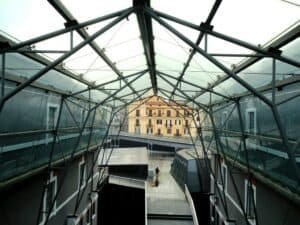

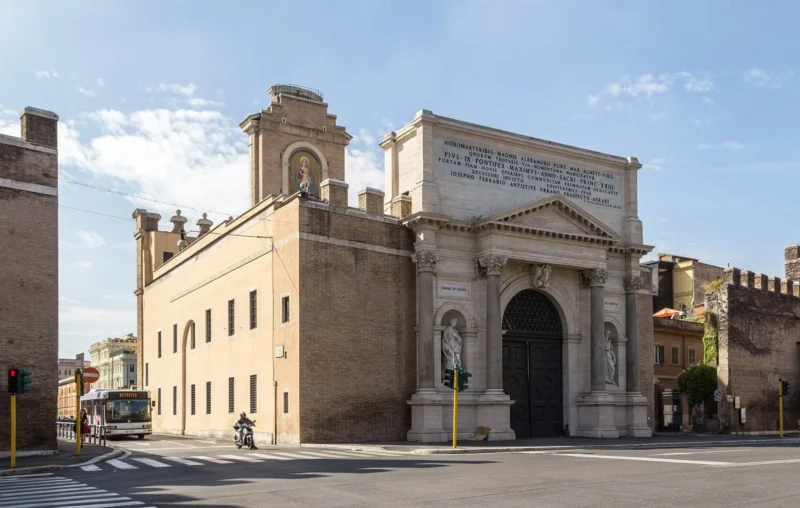

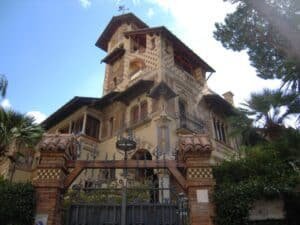
Upcoming events nearby
- 2026 Exhibition Season at MACRO: Marialba Russo and the Shows until January 31, 2027100 m
- «Noor Abed: we walk in our sleep» at MACRO, November 12, 2026 to January 10, 2027100 m
- «Palestinian Sound Archive» at MACRO, November 12, 2026 to January 10, 2027100 m
- Macrocosmo at MACRO, events from November 12 to December 13, 2026100 m