Scuderie del Quirinale
In short. The Scuderie del Quirinale are at Via XXIV Maggio 16, in Rome, on the south side of Piazza del Quirinale, directly opposite the Palazzo del Quirinale and next to the Palazzo della Consulta.
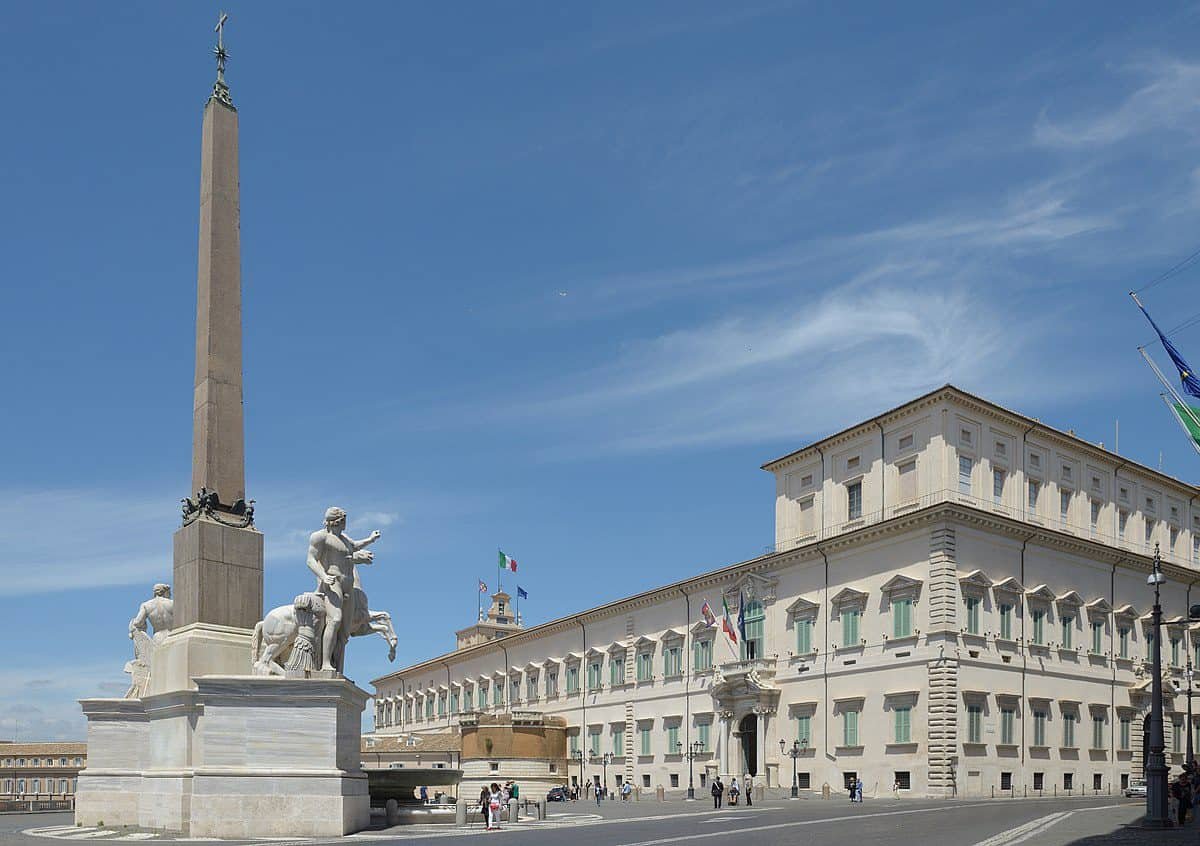
The Scuderie del Quirinale are at Via XXIV Maggio 16, in Rome, on the south side of Piazza del Quirinale, directly opposite the Quirinal Palace and next to the Palazzo della Consulta. They are an eighteenth-century building originally built to house the horses and carriages of the popes, and at the end of the twentieth century they were turned into one of Italy's most important exhibition venues. Like the palace they face, they belong to the heritage of the Presidency of the Republic, and this is why their historical name, Scuderie papali del Quirinale, was shortened: the adjective described an ownership that has not existed since 1870 and caused confusion. Those who come here won't find a museum with a permanent collection, but a space that changes its look two or three times a year, with large temporary exhibitions of international appeal occupying about 1,500 square meters spread over two floors. The visit lasts as long as the exhibition you are seeing, but the building itself, with its spiral glass staircase and the panoramic window that closes the route, is worth the ticket even apart from what hangs on the walls. To get your bearings in the area, it can also help to read the pages on the Trevi Fountain, the Galleria Colonna and the Palazzo delle Esposizioni, which are all a few minutes' walk away and which, together with the Scuderie, effectively form a single itinerary.

Where the Scuderie del Quirinale are and how you really get there
The address is Via XXIV Maggio 16, in the Trevi rione, on the highest of Rome's seven hills. It's a detail that matters more than it seems, because the Quirinal is a real hill, rising about 50 meters above sea level, and any walking route to the Scuderie involves a climb. Those arriving from the Trevi Fountain, which is a few hundred meters lower, face a flight of stairs and a sloping side street, those coming from Piazza Venezia climb along Via IV Novembre and then Via XXIV Maggio, those coming from Via Nazionale have the gentlest climb but also the longest one. None of these routes takes more than 10 or 12 minutes on foot, but with 40 degrees in July and the wrong shoes, you'll feel it.
There is no metro stop directly under the Scuderie. Line A has the Barberini station just over 10 minutes on foot, slightly downhill on the way there and uphill on the way back, and the Repubblica station about 15 minutes away. Line B has Cavour, on the Monti side, at a similar distance but with a more demanding climb. Termini, the city's major interchange hub, is about 20 minutes on foot along Via Nazionale: it's a flat, commercial walk, not especially beautiful but convenient, passing the Palazzo delle Esposizioni, and it lets you combine the two venues in the same day.
Buses are better than most people think. Via Nazionale is served by several surface lines connecting Termini with Piazza Venezia and the Vatican, and the most convenient stop is at Largo Magnanapoli or at the uphill stretch leading toward the Quirinal Palace. There is also at least one electric minibus line that climbs as far as Piazza del Quirinale, which solves the problem of the slope for anyone who struggles with hills. Rome's bus line numbers change quite casually, so it's always worth checking the current route on the transport company's app or on a real-time map before you leave, instead of trusting a number you read somewhere.
By car the situation is different, and the short answer is: better not. The area falls within the limited traffic zone of the Historic Center, with electronic gates active during daytime hours on weekdays and, at certain times, in the evening too. Piazza del Quirinale is guarded at all times for security reasons, which means parking around the Scuderie is effectively nonexistent. The nearest paid parking lots are along Via Nazionale, around Piazza della Repubblica and under the Janiculum, all at a distance that still involves a walk. Anyone arriving from outside Rome is better off leaving the car at a park-and-ride lot served by the metro and completing the trip by public transport.
What the Scuderie del Quirinale Really Are: an Exhibition Venue, Not a Museum
This is where the main misunderstanding lies. The Scuderie del Quirinale don't have a collection. They don't own paintings, they don't own sculptures, and they don't have a permanent display to visit at any time of year. They are a container, and like all containers, they are either full or empty depending on the moment. When they host a major exhibition, which happens for most of the year, they are one of the most frequented places in the city. When an exhibition closes and the next one has yet to open, the doors stay shut for weeks, the time needed to take down one display and build another, and anyone who arrives without checking finds a silent building.
This nature as an exhibition venue rather than a museum determines everything else: the ticket price, which changes from exhibition to exhibition, the opening hours, which change as well, the presence or absence of audioguides and guided tours, and the recommended length of the visit. There is no stable, forever-valid piece of information, and it would be wrong to expect one. What exists is a way of working, which is always the same, and content, which changes. Anyone who promises to tell you what you'll see at the Scuderie del Quirinale next month or next year is telling you something they cannot know. The venue itself announces its program a few months in advance, the press picks it up, and it ends up in the calendar of exhibitions and events. The only source worth checking before you go is the official website, scuderiequirinale.it, where you'll find the exhibition currently on, the one announced, and the archive of past ones.
The building has a total area of about 3,000 square meters, spread over several levels. The actual exhibition spaces occupy the first and second floors, for a total of about 1,500 square meters. They are large, high halls with controlled light, built within the volumes that once housed horse stalls and tack storage. The mezzanine level has the café. The ground floor houses the reception services, the ticket office, the coat check, the bookshop and the gift shop, plus spaces that are, from time to time, given over to side events, lectures, educational workshops and screenings linked to the current exhibition.
The Building, Gae Aulenti's Staircase and the Glass Window on the Belvedere
The restoration that turned an old garage into an international exhibition venue bears the signature of Gae Aulenti, a Friulian architect ranked among the best known of her generation, the same one who had converted the Orsay railway station in Paris into a museum and had worked on Palazzo Grassi in Venice. The works took place between 1997 and 1999 and were completed in time for the Jubilee of 2000, which was the political and financial reason behind the whole operation. The result is one of the rare Roman cases in which a contemporary intervention inside a historic building comes across as neither timid nor overbearing.
The most obvious design choice concerns the vertical connections. Aulenti built into the body of the building a stairwell clad in glass that rises the full height of the building and lets you see outside as you move from one floor to the next. It's not a decorative detail: it's the way the architect solved the problem of orienting the visitor inside a deep, enclosed building, giving back the connection with the city at regular intervals. The high point is the large window that looks downward, over the rooftops of the Historic Center, with the domes in a row and the profile of St. Peter's on the horizon on clear days. It's the piece of architecture that almost everyone photographs and that almost no one expects before going in.
The rest of the intervention is more understated. The exhibition halls were cleared of the later additions piled up in the twentieth century and returned to simple volumes, with neutral walls and continuous floors, designed to host exhibitions that are always different without imposing a character of their own. The air conditioning, lighting and security systems were brought up to the standards required by international loans, which is in fact the technical condition without which no major museum in the world lends a painting. It's invisible work for the public and decisive: the reason the Scuderie gets works that are rarely seen elsewhere is that the building has the climate control and surveillance requirements to receive them.
The exterior facade, on the other hand, was not touched in substance. The front on via XXIV Maggio keeps its eighteenth-century rhythm, with the large central portal and the regular spacing of the openings. The back, toward the Colonna garden, shows the part that is most interesting from an archaeological point of view and the least visible: the building rests on the remains of the great Roman temple dedicated to Serapis, and in some places the ancient masonry emerges within the modern body of the building. It's not a scholarly detail: it's the reason the Scuderie has the shape it has, because the eighteenth-century project had to adapt to ancient structures too massive to be demolished.
A curiosity about the Scuderie del Quirinale
The curiosity concerns the underground, that is, the thing almost no one looks at. The Scuderie sits on the remains of a Roman building of impressive size, the temple dedicated to Serapis, a deity of Egyptian origin whose cult had spread throughout the empire. The complex, built in the Severan era, occupied the flank of the Quirinal Hill with a monumental staircase that linked the top of the hill to the valley below, where via della Pilotta runs today. Renaissance sources and drawings describe columns of dimensions out of scale even for Rome, enormous capitals, a façade that must have been visible from half the city.
Very little of that temple is visible today, but the very little that remains is spectacular. Some colossal architectural fragments are still visible in the Colonna gardens, at the back, and other elements were reused elsewhere over the centuries, following the usual Roman habit of treating ruins as a quarry for materials. The foundation structures, on the other hand, stayed where they were, and they are what the eighteenth-century palace was physically set upon. When people say the Scuderie del Quirinale sits on an ancient temple, it's not a metaphor: it's a description of a structural situation.
The curiosity within the curiosity is that this continuity of level has run through the whole history of the site. The temple's staircase served to overcome the difference in height between the hill and the valley. The ramp of the papal stables, centuries later, served to bring horses and carriages up and down that same difference in level. Gae Aulenti's glass staircase, at the end of the twentieth century, still solves the same problem, that is, bringing people from the bottom to the top inside a building constructed on a slope. Three different eras, three different technical solutions, one single topographical problem that no one has ever been able to eliminate. Anyone who visits the Scuderie by climbing the panoramic staircase is repeating, without knowing it, a movement that has been repeated here for 1,800 years.
There is also an amusing detail. The full historical name of the site was Scuderie papali del Quirinale, and under that name the building was known for nearly three centuries. The adjective was dropped when the site became an exhibition venue, to keep the public from thinking it belonged to the Vatican: since 1870 the Quirinal has no longer belonged to the Holy See, first passing to the House of Savoy and then, from 1946, to the Presidency of the Republic. A word removed from a sign so as not to tell a false story is, at bottom, an exercise in historical precision that deserves to be pointed out.
The history of the palace: from the papal stables to the Jubilee of 2000
The Palazzo delle Scuderie del Quirinale was built between 1722 and 1732 on land that belonged to the Colonna family and was part of the villa attached to their palace on the side of the hill. The transfer of that land to the papal court is the first act of the story. Without it the project would not have been possible, because the space available on the square was already fully occupied. The first design is by Alessandro Specchi, who worked on commission from Pope Innocent XIII and drew a building meant to replace an earlier structure built by Carlo Fontana at the beginning of the century, which was judged insufficient for the needs of the court.
The death of Innocent XIII halted the work and changed the game. In 1730 the new pope, Clement XII, entrusted Ferdinando Fuga with the task of completing the project. Fuga, who would become one of the most influential architects of eighteenth-century Rome, brought the site to completion by 1732 and left his mark above all on the façade and on the organization of the interior spaces. The overlap between the two designs, Specchi's and Fuga's, is one of the classic themes in the history of Roman architecture of the period, and it is visible to anyone who knows how to read the proportions of the main façade.
The result completed an urban design of the first order. The Palazzo delle Scuderie, together with the Quirinal Palace and the Palazzo della Consulta, delimits the extraordinary urban space at the center of which stands the fountain with the statues of the Dioscuri, Castor and Pollux with their horses, and the obelisk that was discovered in the nineteenth century near the Mausoleum of Augustus and brought here to complete the composition. Anyone who looks at that square sees the product of three centuries of successive adjustments, not a unified design. The sculptural groups are ancient, the basin comes from the Roman Forum, the obelisk from an Augustan monument, and the architecture framing them is Baroque and late Baroque. It is one of the best Roman examples of composition by accumulation.
The Scuderie, as mentioned earlier, were placed against the wall that closes the Colonna garden and rest on the remains, partly still visible, of the grand temple of Serapis. The building kept its original function as stables until 1938, which means more than two centuries of horses, carriages, grooms, saddles and harnesses, first in the service of the popes and then, after 1870, of the Savoy court that had taken possession of the Quirinal and turned it into a royal palace. The change from one court to the other did not alter the use of the building. The horses served both.
In 1938 the building was converted into a garage, which is the technical way of saying that cars had replaced horses even at the top levels of the state. It was a heavy transformation, with the construction of ramps and mezzanines and the loss of much of the eighteenth-century interior layout. For decades the palace remained a prestige garage, practically invisible to the city that passed by it. In the 1980s came a first cultural reconversion, with the setting up of a Carriage Museum that held the carriages of the old stables. It was a sensible idea from a philological point of view and not very lucky from the point of view of the public, which never drew significant numbers.
The decisive turning point came with the Jubilee. Between 1997 and 1999 the building was completely restored to a design by the Friulian architect Gae Aulenti, in time for the Jubilee of 2000, as part of the large public works program that in those years put in order half of the Historic Center of Rome. Designed as an important exhibition space, with an area for exhibitions of about 1.500 m², it was inaugurated by President Carlo Azeglio Ciampi and granted to the City of Rome, which entrusted its operational management to its own azienda speciale.
Since then, the history of the Scuderie has been the history of its exhibitions and its changes of management. For about 15 years the venue was run by the Azienda speciale Palaexpo, an instrumental body of Roma Capitale that also looks after the Palazzo delle Esposizioni, the Casa del Jazz, the Casa del Cinema, the MACRO and the former Mattatoio di Testaccio. In 2016 the Scuderie passed under the responsibility of the ministry in charge of cultural heritage and activities, then indicated by the acronym MiBACT and now called the Ministry of Culture, with operational management assigned to a public-sector service company. It is an administrative step that visitors don't notice in any way, but it explains why the tickets, agreements and free admissions at the Scuderie follow different rules from those of the city-run venues in the same city.

One thing nobody tells you about the Scuderie del Quirinale
Nobody will tell you that the Scuderie del Quirinale can be closed. Not closed for the usual weekly day off, which is normal: closed for entire weeks, even for a month and a half, between one exhibition and the next. It is a logical consequence of the fact that the venue has no permanent collection, but it is a consequence that almost never appears in guides, in lists of things to see in Rome, or even in the prepackaged itineraries that circulate online. The result is that every year a considerable number of people climb the Quirinal Hill, reach the main door and find it locked.
The second thing nobody says concerns the relationship between the length of the visit and the price. An exhibition at the Scuderie takes an hour and a half to see, two hours if you read everything, three hours if you are a enthusiast and retrace your steps. It is not a venue you can visit in a single day, and this needs to be factored in when you plan your schedule: anyone who arrives thinking they'll fill the afternoon finds themselves outside at five with a lot of time on their hands. The good news is that the location solves the problem on its own, because within a 10-minute walk there are enough things to see to fill two days.
The third concerns attendance, and it is the most useful in practice. The major exhibitions at the Scuderie follow an extremely predictable visitor pattern, with a curve that everyone in the field knows: few people in the first two or three weeks, when the exhibition has just opened and the press has not yet had its effect. Attendance grows in the middle month. There is a rush in the last three weeks, when the psychology of the deadline kicks in and half the city suddenly remembers it needs to go. Anyone who visits in the first 15 days sees the very same exhibition that those who arrive at the end will see, but sees it with a third of the people around them. It is the practical tip that is worth more than any other, and strangely almost nobody writes it down.
The fifth, and last, concerns the bookshop. The Scuderie's bookshop is one of the best in Rome for art publishing, and not only for the catalogs of the current exhibitions. Anyone looking for scholarly volumes on Italian painting and sculpture finds here a selection that general bookstores don't have. You can enter without a ticket, because the shop is on the ground floor before the checkpoints, and this is one of the few things you can do at the Scuderie del Quirinale for free and even without seeing the exhibition.
The advice I give you for visiting the Scuderie del Quirinale
The first piece of advice is simple and decisive: check that an exhibition is open, and check it on the official website, not in a printed guide or on a third-party page that may not be up to date. It takes 30 seconds and saves you a pointless climb. If there is an exhibition, book ahead. Online booking, when available, not only avoids the queue but in many cases is the only way to get in on weekends during the final weeks of opening.
The second piece of advice concerns timing. If you can choose, go at opening time on a weekday. The Scuderie have rooms that aren't huge, and a crowded exhibition becomes tiring very quickly: in front of an important painting, clusters of 20 people form and the pleasure of the visit shrinks to a series of stolen glances between heads. The first hour of the morning, on weekdays and far from the exhibition's deadline, offers completely different conditions. As an alternative, the last hour before closing also works well, with the caveat that in that case you have to move at a certain pace.
The third tip is not to underestimate the staircase. Many visitors climb Gae Aulenti's staircase while looking at their phones and miss the best part of the building. Stop at the window, look outside, give yourself two minutes. On days with clear skies, and in Rome that often happens after a thunderstorm with a north wind, the view over the rooftops of the Historic Center is worth the climb no matter what else you do.
The fourth tip is about combining your visit with the rest of the day. The Scuderie pair naturally with three things: with the Trevi Fountain, which is a five-minute walk downhill and should be seen very early in the morning or very late in the evening if you want to avoid the crowds, with the Galleria Colonna, which is literally around the corner and has openings on only a few days, so check it in advance, and with the Palazzo delle Esposizioni on Via Nazionale, which in turn hosts major Exhibitions and lets you build a day entirely devoted to temporary Exhibitions.
The fifth tip is about shoes and water, and it's not a platitude. The Quirinal Hill is a hill, and everything around it involves climbs, steps and cobblestones. In summer, the climb from Trevi to the Quirinal, done at two in the afternoon, is one of the most unpleasant in the center. There are public drinking fountains in the area, including one at the foot of the square, and it's worth using them. A hat, in the warm months, is not an accessory for unprepared tourists: Piazza del Quirinale is completely without shade.
The sixth and last tip concerns the changing of the guard in front of the Quirinal Palace. It takes place fairly regularly and, in its solemn version with the fanfare, draws quite a few people to the square. Anyone who wants to see it should check the timing, because combining the changing of the guard with entry to the exhibition is entirely possible, but it requires knowing in advance when it happens: the days and times vary by time of year and should be checked on the website of the Presidency of the Republic.
How tickets, hours and bookings work
Clarity is needed here, because this is the point where the most wrong information circulates. At the Scuderie del Quirinale there is no general admission ticket for the building: there is only the ticket for the exhibition currently on. Prices, discounts, free admission, opening hours and closing days are set each time by the organizers of the individual exhibition and can change from one show to the next. Any specific figure quoted on a page other than the official ticket office risks being out of date, and an out-of-date figure is worse than no figure at all.
The typical setup, however, is stable and can be described. There is a full-price ticket and a reduced ticket, with reductions usually covering younger age groups, students, organized groups and certain affiliated categories. There are free admissions required by law, which in Italy typically cover children under a certain age, people with disabilities and their companion, licensed tour guides working in their profession, teachers accompanying school groups and certain categories of ministry staff. There is almost always a family ticket or a package for households with children, and almost always a special rate for schools with educational visits by reservation.
Booking deserves a separate discussion. For exhibitions that draw big crowds, booking a time slot is effectively mandatory, and not because a regulation requires it but because without one you can't get in on peak days. The system assigns an entry slot, for example 11:30, with a tolerance of a few minutes. Once inside, there is no time limit on your visit unless otherwise indicated. A booking fee usually applies to reservations, meaning a small extra amount per ticket: it's normal, all the big exhibition venues in Italy charge it, and people who only find out at the ticket desk always complain about it.
As for hours, the usual pattern is a morning opening and an evening closing, with extended hours on weekends and last entry set about an hour before closing. In the final weeks of the most successful exhibitions, special openings are sometimes announced, late-night or even non-stop: it has happened several times in the venue's history and will happen again, but these are decisions made at the last minute and communicated with only a few days' notice. The only way to know is to follow the official channels.
A warning about buying tickets. Tickets can be bought at the venue's ticket office or through the official pre-sale channel listed by the exhibition itself. Be wary of pages that sell tickets at inflated prices while presenting themselves as skip-the-line services: for a venue like this, which works with its own time slots, the advantage is zero and the markup is real. If you want a guided visit, the right way is to contact a licensed tour guide or an operator that works with licensed guides, who can arrange entry and the narrated route inside the exhibition.
Finally, the rules of conduct. At the exhibitions at the Scuderie, photography is often banned, or allowed only without flash, or banned in certain rooms. It depends on the loan contracts for the works, not on a whim of the venue. Backpacks and bags above a certain size must be left at the cloakroom, which is usually free. Umbrellas, trekking poles and tripods are not allowed in. These are standard rules for a venue that hosts international loans, and the staff apply them without room for negotiation, so it's better to arrive prepared than to argue at the entrance.
Another well-known fact, yet rarely mentioned
The fact is this: the Scuderie del Quirinale is one of two venues that changed the way exhibitions are held in Italy. The other is the Vittoriano, with its Ala Brasini. Together, starting in the late 1990s, they introduced to Rome a model that previously existed mostly abroad: the large monographic exhibition as a mass event, with a communication campaign, mandatory reservations, a catalog, merchandise and an audience measured in hundreds of thousands of people.
This model has had deep effects, not all of them positive, and that is why it's rarely discussed. On one hand, it brought works to Italy that the public would never have been able to see, it funded research, it restored visibility to neglected artists and periods, and it created professional expertise in the field. On the other hand, it shifted resources and attention away from permanent collections, which remain the true heritage, and toward the temporary event, with the risk that a museum becomes interesting only when it hosts something that is about to leave. The debate among specialists on this point has been lively for 20 years and has not yet produced a shared conclusion.
There is also a technical aspect worth knowing, because it explains quite a few things. A large exhibition at the Scuderie requires two to four years of preparatory work. Loans from major international museums are negotiated well in advance, often under reciprocity arrangements, meaning in exchange for loans in the opposite direction. Insurance on the works reaches enormous sums, and in many cases public guarantees step in. Transport takes place through procedures and escorts that no one sees. When an exhibition's ticket costs €15, the ticket covers only a part of the total cost. The rest comes from public funding, private sponsors and ancillary income.
The right photo to take at the Scuderie del Quirinale
The right photo isn't the facade. The facade of the Scuderie is correct, elegant and, to be honest, about as photogenic as an 18th-century service building can be, which is not very: a long front, regular openings, nothing that catches the eye. Try to photograph it and you'll get a wall with posters on it.
The right photo is taken inside, on the staircase. The glass atrium by Gae Aulenti, shot from below as you climb, produces a geometry of inclined planes, reflections and transparencies that works in any light. If the current exhibition allows photography in the common areas, and it usually does even when it bans it in the exhibition rooms, that's where it's worth spending your shots. The vertical works better than the horizontal, the wide-angle lens helps, and backlight should be embraced rather than fought.
The second right photo is taken from the large panoramic window, looking down and toward the west. From there you can see the rooftops of the Historic Center in sequence, the domes rising out of the urban fabric and, on clear days, the outline of St. Peter's in the background. The best time is late afternoon, when the light comes in low from the west and models the volumes instead of flattening them. At midday in summer, with the sun overhead, the same view looks washed out and hazy.
The third photo, the one almost everyone forgets, is taken outside, on the piazza, with your back to the Scuderie. From the balustrade that closes off Piazza del Quirinale on the viewpoint side, you look out over a large part of the city, and a single frame takes in the balustrade, the obelisk, the Dioscuri and the sweep of rooftops all the way to the Janiculum. It's one of the classic views of Rome, repeated by engravers and photographers for three centuries, and it has the advantage of being completely free and always accessible, even when the Scuderie is closed.
Some important events that happened here in history
The first event is the acquisition of the land from the Colonna family and the start of construction in 1722, under Innocent XIII, with a design by Alessandro Specchi. This is the birth certificate of the building, and it also marks the moment when Piazza del Quirinale took on the layout it has kept to this day, closed on three sides by three architectures of consistent scale.
The second is the handover of the project to Ferdinando Fuga in 1730, under Clement XII, and the completion of the work in 1732. The decade between 1722 and 1732 therefore covers two popes, two architects and a single building, which is far from rare in 18th-century Rome, where the death of a pope could halt or redirect any construction project.
The third event is September 20, 1870, and its immediate consequences. With the capture of Rome, the Quirinal ceased to be a papal residence and became the royal palace of the King of Italy. The stables continued to function as stables, but changed owners: the horses belonged to the Savoy family, the carriages were court carriages, and the staff was reorganized. It's the moment when the adjective "papal" stopped matching reality, although the name would stay in use for a very long time.
The fourth is 1938, with the conversion into a garage. It marks the end of over two centuries of equestrian use and the start of a period of little visibility for the building, which from an urban point of view becomes a quiet backdrop to the square. In terms of conservation, it is the most damaging phase in the history of the palace, because adapting it to a garage involved heavy structural work.
The fifth event is June 2, 1946, and the transfer of the Quirinal to the Presidency of the Republic. The complex, stables included, enters the property assigned to the highest office of the Republican state, closing a path that in 76 years saw three different institutional owners.
The sixth is the setup of the Carriage Museum in the 1980s: an attempt to give the building back to the city that, although consistent with the history of the place, did not draw enough visitors to justify the operation. It is worth recalling because it shows that the fortune of a cultural venue depends much less on the philological correctness of the project and much more on the ability to attract an audience.
The seventh, and the most important for the venue's current life, is Gae Aulenti's restoration between 1997 and 1999 and the opening of the new exhibition space at the end of 1999, ahead of the 2000 Jubilee, with President Carlo Azeglio Ciampi. From that moment the building stops being a garage for vehicles and becomes a space for exhibitions, with all that this entails in terms of international visibility.
The eighth is the long management period of the Azienda speciale Palaexpo, which built the venue's reputation through a series of high-impact solo exhibitions, and the later transfer, in 2016, to the ministry responsible for culture. This is when the Scuderie leave the municipal jurisdiction and enter the national one, with a program that since then has often moved around major anniversaries and commemorations.
The ninth event is the Raphael exhibition held from June 2 to August 30, 2020, a retrospective devoted to the work of Raphael Sanzio, curated by Marzia Faietti and Matteo Lafranconi, mounted for the 500th anniversary of the artist's death. The exhibition drew about 162,000 visitors, and in the last week the venue remained open without interruption for 132 hours, allowing access to a large number of people in full compliance with the health rules in force at the time. The success was accompanied by wide participation from young people, despite the total absence of school visits.
Who passed through the Scuderie del Quirinale
Let's start with the patrons. Pope Innocent XIII, born Michelangelo dei Conti, launched the project, Pope Clement XII, Lorenzo Corsini, brought it to completion. These are two brief and little-known pontificates that nonetheless left a lasting mark on this square. Before them, Carlo Fontana had built the earlier structure, which was replaced because it was inadequate, which puts one of the great names of late Roman Baroque among the figures in this story as well.
Then the architects. Alessandro Specchi, author of the original design, is the same man who had designed the Ripetta port on the Tiber and who was involved in the affair of the Trinità dei Monti staircase. Ferdinando Fuga, who completed the site, would later carry out major works in Rome, including the facade of Santa Maria Maggiore and the Palazzo della Consulta, which stands right next to the Scuderie: on the same square, then, Fuga's hand appears twice.
Gae Aulenti is the name that matters for the contemporary phase. Born in Friuli and trained in Milan, she was one of the few women to reach a top position in Italian architecture of the second half of the 20th century. Her work on reusing historic buildings, from the Musée d'Orsay in Paris to the Palazzo Grassi in Venice and the Roman Scuderie, defined a method: insert the new in a recognizable way, without mimicry and without erasing the ancient structure. Anyone who walks up the glass staircase of the Scuderie is walking inside that method.
Then there are the artists, though in a different sense: they didn't visit in person, but their works did. Over more than 20 years the Scuderie have hosted solo shows and surveys devoted to some of the greatest names in European art history, from ancient painting to 20th-century art, as well as archaeological exhibitions and shows built around historical and literary themes. Listing them all would take pages, and the risk of getting dates wrong would be high: the complete archive, with titles, curators and periods, is on the venue's official website and is the source to use for any specific reference.
Accessibility, services and visiting with children
On accessibility, the good news is that the restoration in the late 1990s equipped the building with elevators and routes that let visitors reach all the exhibition levels without using stairs. A venue that hosts international loans and receives hundreds of thousands of visitors has to meet precise standards, and in this case those standards are in place. Visitors who use a wheelchair or have mobility difficulties can visit the exhibitions. As always, the recommendation is to mention it when you book, because the staff can point out the most convenient entrance and arrange access that avoids the most crowded points.
On services: the ground floor has reception, the ticket office, the cloakroom, the bookshop and the shop. The mezzanine has the café. Restrooms are available and usually include one accessible stall. The cloakroom is useful and worth using, because carrying a backpack through crowded rooms is inconvenient for everyone and in many cases isn't even allowed. There is no restaurant inside. If you want to eat, you'll find options along via Nazionale and in the Trevi area, with the warning that the area right around the Trevi Fountain is one of the most touristy and least interesting parts of Rome for food.
With children, the answer depends on their age and on the exhibition. Under six years old, an exhibition of ancient painting is a test of patience for everyone. From seven or eight years old on, it can work very well, especially if the venue has set up educational programs, which at the Scuderie are a well-established tradition. Many exhibitions offer family activities on weekends, workshops and materials designed for the youngest visitors. These are announced together with the exhibition and have limited spaces, so they need to be booked. Strollers are usually allowed inside, but on days with heavy crowds they become cumbersome, and the cloakroom is the most sensible solution.
What's Around the Scuderie del Quirinale
The first thing around you is the square itself, and it is a monument in every sense. The Quirinal Palace, residence of the President of the Republic, can be visited by reservation on set days. It offers one of the most impressive ceremonial routes in Italy, with the Sala dei Corazzieri, the Cappella Paolina and the historic apartments. The visit must be booked well in advance, and spots sell out quickly, so it's not something you can improvise on the same afternoon as the exhibition. In the center of the square, the Fountain of the Dioscuri with the obelisk from the area of the Mausoleum of Augustus deserves a few minutes of your attention, because it brings together pieces from very distant eras.
Heading west, it takes five minutes to reach the Trevi Fountain, which remains the most crowded monument in the center and should be approached at the right times, that is, very early or very late. Along the way, if you keep your eyes open, you'll pass the Galleria Sciarra, an Art Nouveau courtyard covered by a glass roof and decorated with frescoes dedicated to feminine virtues. It's free, almost always open during office hours, and completely ignored by the crowds passing 100 meters away.
Behind the Scuderie, beyond the garden wall, is the Colonna complex, whose Galleria Colonna is one of the most sumptuous private galleries in Europe, with its famous grand hall and the cannonball lodged in the staircase as a reminder of the siege of 1849. Public access is limited to certain days and should be checked in advance. If you can time it with an exhibition at the Scuderie, you can build one of the fullest days in Rome within a radius of 300 meters.
Heading north, toward via delle Quattro Fontane, you reach the Palazzo Barberini in about 10 minutes. It houses the National Gallery of Ancient Art, with Borromini's spiral staircase, Bernini's rectangular staircase and a collection that includes some of the best-known paintings in Italian art. This is the visit I recommend to anyone with half a day free after the exhibition who wants to see a real permanent collection, and not another temporary event.
Heading east, along via Nazionale, you'll reach the Palazzo delle Esposizioni within a few minutes. It is Rome's other major venue for temporary exhibitions, with monumental nineteenth-century architecture and a program that ranges from contemporary art to photography to film. Continuing on, you arrive at Piazza della Repubblica, the Baths of Diocletian and Termini.
Heading south, going down Via IV Novembre, you reach the Trajan's Markets and the Imperial Forums Museum in five minutes, and right after that Piazza Venezia with the Capitoline Cordonata and the Capitoline Hill. The Vittoriano, with its Ala Brasini and the panoramic terrace reachable by elevator, closes this route downhill.
Within the tightest radius, there are two churches that architecture enthusiasts shouldn't skip and that almost no hurried tourist sees: the church of Sant’Andrea al Quirinale, a masterpiece by Gian Lorenzo Bernini with its transverse elliptical plan, and San Carlo alle Quattro Fontane, by Francesco Borromini, tiny and geometrically prodigious. They stand a few dozen meters apart along Via del Quirinale, have limited opening hours, and are free. Within 200 meters you can compare how the two great rivals of Roman Baroque solved the same problem, that is, building a small church in a narrow space. It's an architecture lesson you won't find in any book with the same clarity.
Quick questions about the Scuderie del Quirinale
Can the Scuderie del Quirinale be visited at any time?
No. The venue opens for exhibitions and stays closed in the gaps between one show and the next, which can last weeks. Before going up, it is always worth checking the calendar on the official website.
How much does a ticket cost?
The price changes from exhibition to exhibition, because there is no venue ticket, only the ticket for the single show. Tickets are usually full price, reduced, free admission as required by law, and family and school rates, with an advance-sale fee for online purchases.
Do I need to book?
For exhibitions that draw big crowds, yes, and on weekends and in the last weeks of opening it is essential. In the early weeks and on weekdays, you often get in even without booking.
How long does the visit take?
An hour and a half to two hours for an average exhibition, up to three hours for those who read every caption and go back over their steps. It is not a venue for a full day.
Can you take photographs?
It depends on the exhibition and on the loan agreements for the works. Very often photography is banned in the exhibition rooms and allowed in the common areas, including the glass staircase.
Are the Scuderie del Quirinale the same as the Quirinal Palace?
No. The Quirinal Palace is the residence of the President of the Republic and is visited by reservation on its own institutional route. The Scuderie are located opposite, are an exhibition venue, and have separate tickets, hours and reservations.
Are they accessible to people with disabilities?
Yes, the building has elevators and routes that reach the exhibition floors. The biggest difficulty is getting to the square, because all the access streets are uphill. People with mobility problems should have the taxi bring them right up to the gate.
What is the best time to visit an exhibition at the Scuderie?
The first two or three weeks after opening, on a weekday, right when it opens. The exhibition is the same, but there are far fewer people.
How do you get there by metro?
There is no stop right under the venue. The closest are Barberini and Repubblica on line A and Cavour on line B, all between 10 and 15 minutes on foot, with a climb.
Why were they called Scuderie papali?
Because they were built in the eighteenth century for the horses and carriages of the papal court. The adjective was dropped when the building became an exhibition venue, to avoid confusion about ownership, which since 1946 has fallen under the Presidency of the Republic.
Is it true that the building sits on a Roman temple?
Yes. Under and behind the Scuderie are the remains of the great Temple of Serapis from the Severan age. Some colossal fragments are still visible in the Colonna gardens, and the ancient foundations partly support the eighteenth-century building.
In our view, the Scuderie del Quirinale are where Rome shows it can do something that doesn't come naturally to it: the temporary exhibition at an international level, well organized, inside a historic building handled with intelligence. The city lives on layering and permanence, whereas here everything is temporary by definition, except the architecture. Anyone who arrives without checking the calendar risks finding a closed gate and taking it out on the city. Anyone who arrives prepared, on a weekday, at opening, with two hours to spare and the day organized around the exhibition, leaves convinced they made the best possible use of their Roman time. The difference between the two experiences isn't luck. It depends on 30 seconds of checking before climbing the hill.
Frequently asked questions about the Scuderie del Quirinale
Can you always visit the Scuderie del Quirinale?
No, the Scuderie del Quirinale are open only for exhibitions and remain closed between one exhibition and the next, which can last weeks or even a month and a half. Before you go up, it's always worth checking the calendar on the official website.
How much does a ticket for the Scuderie del Quirinale cost?
The ticket price for the Scuderie del Quirinale changes from exhibition to exhibition, because there is no ticket for the venue itself, only one for the single exhibition currently on. Price, reductions, free admission and opening hours are set each time by the organization of each exhibition.
Where exactly are the Scuderie del Quirinale?
The Scuderie del Quirinale are located at via XXIV Maggio 16, in the Trevi district of Rome, on the highest of the seven hills, at an elevation of about 50 meters above sea level. Anyone arriving on foot from the Trevi Fountain, which is lower down, has to tackle an uphill climb.
Are the Scuderie del Quirinale a museum with a permanent collection?
No, the Scuderie del Quirinale don't have a permanent collection: they are an exhibition venue that hosts large temporary exhibitions, not a museum with its own works to see at any time of year. That's why a visit only makes sense when an exhibition is open.
Are the Scuderie del Quirinale wheelchair accessible?
Yes, the restoration in the late 1990s equipped the Scuderie del Quirinale with elevators and routes that let you reach all exhibition levels without using stairs. Since it is a venue that hosts international loans and hundreds of thousands of visitors, accessibility standards are guaranteed.
Who designed the interior staircase of the Scuderie del Quirinale?
The interior staircase and glass atrium of the Scuderie del Quirinale bear the signature of architect Gae Aulenti, who oversaw the restoration between 1997 and 1999 to turn the former garage into an international exhibition venue, completed in time for the Jubilee of 2000. Aulenti had already worked on converting the Orsay station in Paris into a museum.
What is there to see near the Scuderie del Quirinale?
Near the Scuderie del Quirinale is the Quirinal Palace, residence of the President of the Republic, which can be visited by reservation on set days with a route that includes the Sala dei Corazzieri and the Pauline Chapel. Piazza del Quirinale itself, which both buildings face onto, should be considered a monument in every sense.
Article written by the editorial team at TourLeaderPro, contact them for Private/Corporate/V.I.P. Tours and Experiences. For a guided visit to the major Rome exhibitions, with a licensed tour guide and organized entry, start from the TourLeaderPro contact page. Tour operators who build cultural programs about the capital find the consulting service in the section dedicated to tour operators.
Are you planning a trip to Rome? English-language guides to visiting the city are on ItalyPlanner.com. Anyone who wants to understand how to organize their days in the city will find the full route in the guide on things to see in Rome, while those who think in terms of day trips outside the city can start with the guide to the best day trips from Rome.