Basilica of Santa Maria Maggiore
In short. Basilica di Santa Maria Maggiore, Piazza di Santa Maria Maggiore 42, 00185 Roma.
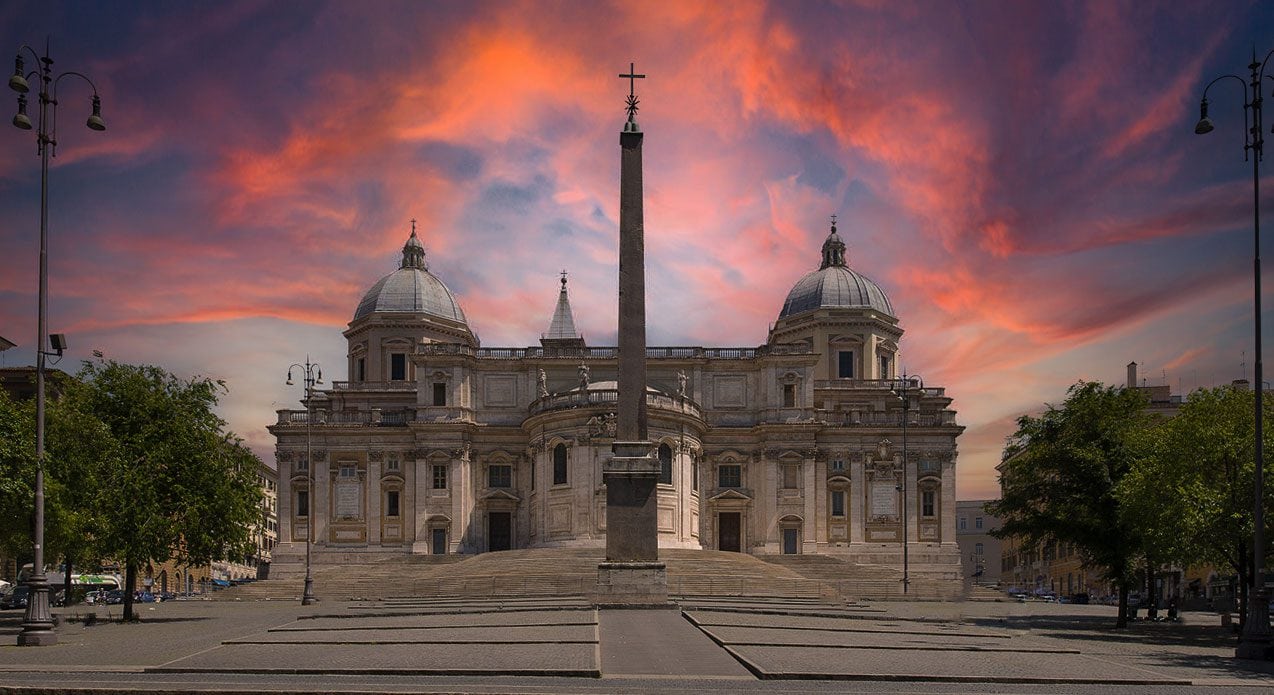

Basilica of Santa Maria Maggiore, Piazza di Santa Maria Maggiore 42, 00185 Roma. You can walk there from metro A (Termini or Vittorio Emanuele stops) or metro B (Cavour or Termini stops), five to eight minutes at a normal pace. Or take buses 40, 64, 310 and 360, which have a dedicated stop right in front, called "Santa Maria Maggiore". The basilica is open every day from 7:00 to 19:00, and entrance to the church is free, as at the other papal basilicas in Rome. Anyone who wants to go up to the Polo Museale Liberiano (Historical Museum, Loggia of the Blessings, Hall of the Popes, Bernini Staircase, panoramic terraces and archaeological excavations) will find access open from Monday to Saturday, approximately from 9:30 to 18:00, with last entry one hour earlier according to the website basilicasantamariamaggiore.va and at 17:30 according to the Turismo Roma listing. The difference is half an hour, and no official source resolves it, so plan around the tighter margin. The price of the museum ticket is not published with a clear figure on the basilica's official website. Tickets are sold at the on-site ticket office or by email at visitemuseo.smm@basilica.va. You don't need to book for the basilica, but you do for the museum, especially in high season.
Basilica di Santa Maria Maggiore | The History
The full name, the one written on official documents, is Papal Major Archbasilica Archpriestal Liberiana of Santa Maria Maggiore. In practice, everyone calls it simply Santa Maria Maggiore, Romans included, or "la Liberiana," after Pope Liberius, who was bishop of Rome from 352 to 366. Tradition holds that he had the first place of worship built on this site, but the excavations carried out under the floor in the last century found no consistent evidence for that date. Only a brief mention of the Liberian building remains in the Liber Pontificalis, where it says Liberius "fecit basilicam nomini suo iuxta Macellum Liviae."
The legend that gave the basilica its popular name, "Our Lady of the Snow," goes like this. A Roman patrician named Giovanni and his wife, who had no children, decided to leave their property to the Virgin Mary. She appeared to them in a dream and indicated that a sign would reveal where to build a church in her honor. That same night, Pope Liberius had the same dream. The next morning, the Esquiline Hill was covered in snow, in the middle of August. The Pope marked out the perimeter of the building there, financed by the two spouses.
The date often given is 352 AD, but Vatican News and the Turismo Roma listing for the historical reenactment event place the tradition in the night between August 4 and August 5, 358 AD. The 352 date is probably a mix-up with the year Liberius's pontificate began, which in fact started in 352. Two different dates, one different event, mixed up by mistake.
Every August 5, even today, the basilica reenacts the "miracle of the snowfall" during the morning Mass and the evening vespers. From the ceiling, above the crypt of the manger, a shower of white petals falls. It is one of the few Roman liturgical rites that remain truly popular, not only with devotees. The square also fills with curious onlookers and tourists.
It's also worth telling who Pope Liberius really was, because his story is more eventful than the name "Liberiana" suggests. He became bishop of Rome in 352 and immediately clashed with Emperor Constantius II, who was pushing for a compromise formula, semi-Arianism, between Nicene Christians and Arians. Liberius refused to condemn Athanasius of Alexandria, the leading defender of Nicene orthodoxy, and for this the emperor exiled him in 355, sending him to Berea, in Thrace. In his place, the archdeacon Felix was consecrated pope. Constantius recognized him, but the Roman people did not. According to ancient sources, they ignored the antipope and remained loyal to their exiled shepherd. Liberius returned to Rome before the end of 357, helped in part by the pressure of Roman noblewomen on the emperor. This episode helps us understand better the man whose name has stuck to these stones for 16 centuries.

Basilica di Santa Maria Maggiore | Sixtus III and the Reconstruction of 432
The basilica we see today, in its framework, is the work of Pope Sixtus III, who rebuilt or radically restructured it starting in 432, dedicating it to the cult of the Madonna just after the Council of Ephesus of 431, when the Church had officially recognized the divine motherhood of Mary, the dogma of the Theotokos. Vatican News, in an in-depth piece, dates the pontificate of Sixtus III between 432 and 441, while 432-440 is also found: a one-year gap on the end date, on which the sources waver.
The church preceding the Sixtine one was tied to the Creed proclaimed at the first Council of Nicaea.
The Sixtine basilica had three aisles, divided by 21 reused columns on each side, topped by Ionic capitals, with a continuous architrave above and a wooden roof with exposed trusses. The central nave was lit by 21 windows on each side, half of which were later walled up in the following centuries. If you look today at the walls above the columns, that rhythmic sequence of 21 plus 21 openings is still readable, even where the windows have been closed.
A Curiosity About the Basilica of Santa Maria Maggiore
Few know that Santa Maria Maggiore is, among the four papal basilicas, the only one to have preserved the original early Christian layout in its entirety: colonnade, proportions, three-aisled basilican plan. St. Peter's was completely rebuilt in the 1500s and 1600s, San Giovanni in Laterano underwent very heavy Baroque transformations with Borromini, San Paolo fuori le Mura was almost entirely rebuilt after the fire of 1823. Not here: under the Renaissance and Baroque overlays, the building of 432 is still the load-bearing structure, columns included.
Something Nobody Tells You About the Basilica of Santa Maria Maggiore
The gilded coffered ceiling of the central nave, the one everyone photographs looking up as soon as they enter, according to tradition was decorated with the first shipment of gold from the Americas, a gift from Isabella of Spain to the Church after Columbus's voyages. It's a tradition, not a notarial document: no source certifies it with a period receipt, but it is told consistently by art-historical sources and no refutations are recorded. The project is attributed to Giuliano da Sangallo, on commission from Cardinal Rodrigo Borgia, the future Pope Alexander VI: at the center of the ceiling, among the gilding, the Borgia heraldic coat of arms with the bull is still visible. Looking at it from below, with the light of the nave striking it from the side, the effect intended by the Renaissance patrons still works today: it looks like a roof of solid gold, even though in reality it is thin gold-leaf gilding on a wood carving, not solid plates. When you raise your eyes on entering, it is the first thing you notice, even before the mosaics.
My Advice for Visiting the Basilica of Santa Maria Maggiore
Enter by the door on Piazza di Santa Maria Maggiore, not the one on Piazza dell'Esquilino: the perspective of the central nave, with the gilded ceiling opening in front of you all at once, works better arriving from there. Go early in the morning, as soon as it opens at 7:00: at that hour the basilica is almost empty, and the light coming in from the high windows illuminates the mosaics of the triumphal arch differently from how you will see them at noon with the crowd. If you can, go back on August 5 for the re-enactment of the snowfall of white petals: it happens once a year and the people who watch, Roman or not, are truly moved. A practical piece of advice, not an aesthetic one: if you want to go up to the museum and the Loggia of the Blessings, write beforehand to the ticket office's email address or check the calendar of the Polo Museale Liberiano published on the official site, because the hours change seasonally and a fixed price is not published with certainty. Another thing: don't be talked into it by the souvenir stalls and the improvised "ciceroni" stationed outside the basilica offering "exclusive guided tours." If you want a guide, book through official channels or recognized operators: outside almost all the big monuments of Rome, Santa Maria Maggiore included, there are people who make a living selling half-truths to those in a hurry.
Another Well-Known Fact, Yet Rarely Mentioned
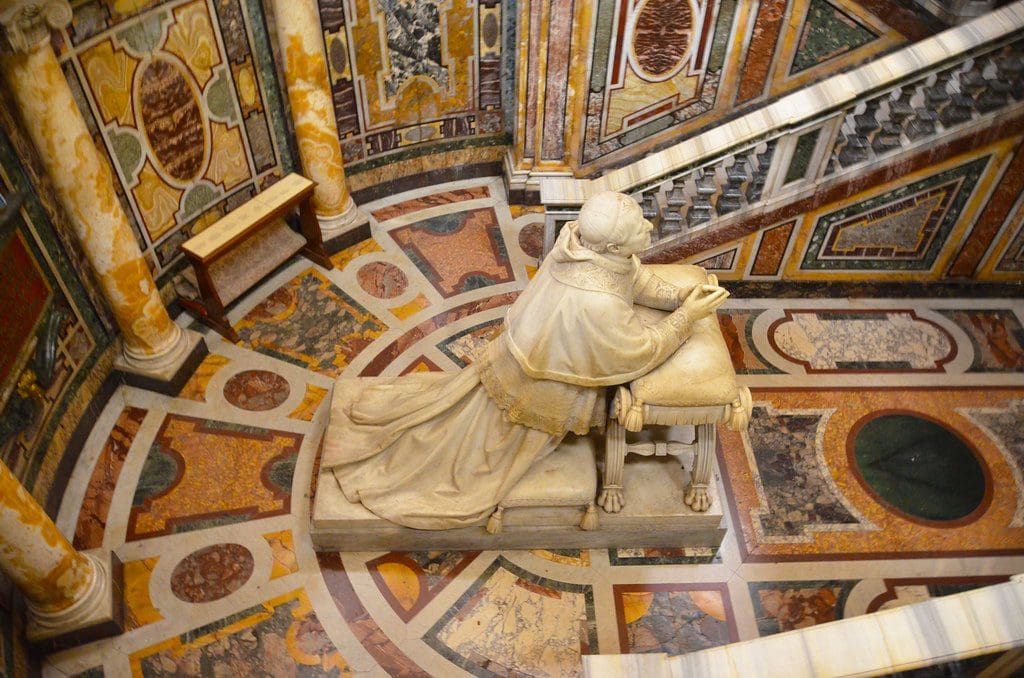
Everyone knows that the tomb of Gian Lorenzo Bernini is here, in the family chapel. Far fewer know that, according to an in-depth piece by Vatican News, before him seven other pontiffs rest in the basilica: among them are explicitly named Honorius III, who approved the Franciscan rule, Nicholas IV, the first Franciscan pope, Clement VIII and Paul V Borghese, who commissioned the Pauline Chapel where he is buried together with Clement VIII. The other names on the list of seven are not clearly specified in the source. It's a detail that says a lot about this basilica compared with the other three papal ones: it is not only a museum of sacred art, it is still today a place where the Church chooses to bury its pontiffs, with a continuity running from the 1200s to 2025.
Basilica of Santa Maria Maggiore | The Basilica in Numbers
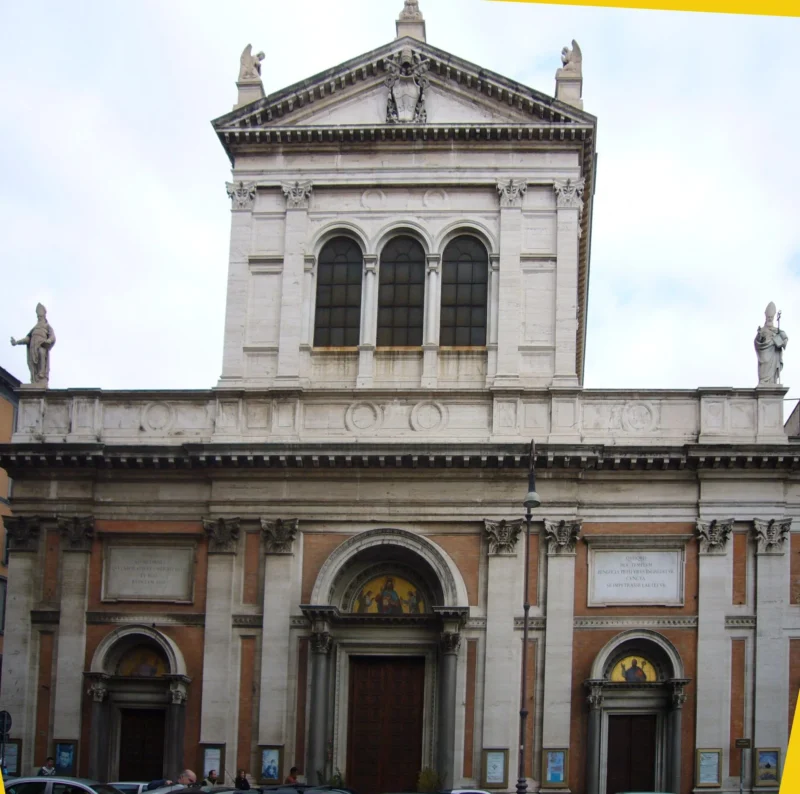
Before we get into the chapels, here are the useful numbers to get your bearings, because they help you grasp the proportions of what you are about to see. The basilica measures about 75 meters in length by 25 in width. The columns of the central nave, the original ones from 432, are 21 per side, for a total of 42, topped by Ionic capitals. The Old Testament mosaics of the nave were originally 42 panels, and 27 remain. The bell tower, the tallest in Rome, measures about 75 meters, the same figure as the length of the basilica: a numerical coincidence that the sources do not record as having any declared symbolic meaning, but that strikes anyone who notices it. There are five bells, cast between the 13th and 19th centuries. The main façade, the one on Piazza di Santa Maria Maggiore, was completed by Ferdinando Fuga between 1741 and 1743, more than 13 centuries after the founding of the Sistine church. The basilica is one of the four papal basilicas of Rome, and it is considered the oldest Marian sanctuary in the West still in active use.
Basilica di Santa Maria Maggiore | The Lenten Stations
Santa Maria Maggiore is part of the route of the Lenten Stations of Rome, the network of churches where the Bishop of Rome, who once went in person every day of Lent, still celebrates today on certain fixed dates of the liturgical year. The sources don't fully agree on the exact day historically assigned to Santa Maria Maggiore. What is certain, and multiple articles confirm it, is that the basilica appears several times in the Lenten stational calendar, being by tradition "the oldest Roman sanctuary solemnly dedicated to the worship of the Virgin." If the topic interests you, look for the calendar of the Lenten Stations published every year by the Diocese of Rome, which lists the updated dates.
Basilica di Santa Maria Maggiore | What You See When You Enter
The floor plan is that of a classic Roman basilica: about 75 meters in length by 25 in width, three naves separated by two rows of columns, a transept added in the 13th century, and a semicircular apse at the far end. The structure you see today in its current form dates largely to 1375-1376 for the upper part, with restorations and completions continuing up to Cardinal Guglielmo d'Estouteville, archpriest of the basilica between 1445 and 1483, to whom much of the medieval façade is also owed, later covered by the 18th-century reconstruction.
The floor you walk on, with geometric inlays of colored marbles, is in the Cosmatesque style: it dates to the mid-12th century, in the time of Pope Eugene III, and was later redone in some parts during Ferdinando Fuga's 18th-century restorations. It's worth looking down at it as much as up at the ceiling. They are two different eras, medieval the one, Renaissance the other, that coexist in the same building without clashing.
Basilica di Santa Maria Maggiore | The 5th-Century Mosaics
On the walls of the central nave, above the entablature, run the oldest mosaics in the basilica, commissioned by Sixtus III around 432-440 and surviving almost intact through 16 centuries of history. They were originally 42 panels with stories from the Old Testament: Abraham, Jacob and Isaac on the left side, Moses and Joshua on the right. Today 27 remain, 12 on the left and 15 on the right, because the side openings made in the 18th century destroyed some of them.
On the triumphal arch, at the entrance to the presbytery, the mosaics tell the story of Christ's childhood, drawing also on apocryphal gospels: the Annunciation, the Presentation in the Temple, the Adoration of the Magi, the encounter with the governor Aphrodisius, the Massacre of the Innocents, the Magi before Herod. The episode with Aphrodisius, in particular, is not found in any other church in Rome: according to the apocryphal account, during the flight into Egypt the pagan idols of the city of Sotine fall to the ground before the Child, and the governor recognizes him as Redeemer. At the top of the arch appears the Throne of the Etimasia with the Cross, flanked by Saints Peter and Paul, and below it the inscription "Xystus episcopus plebi Dei," the very signature of the founding pope.
In the apse, by contrast, the mosaic you see today is not the one by Sixtus III: it was executed and signed by Jacopo Torriti at the end of the 13th century, in 1295, during the pontificate of Nicholas IV, and it depicts the first Coronation of the Virgin ever made in an apse. Mary is seated on the same throne as Christ, dressed in Byzantine-style regal robes: an iconographic choice that in Rome, in those years, also carried political weight alongside the theological one. The mosaics of the medieval façade belong to the same decorative campaign. They are visible today only in part behind the 18th-century portico, the work of Filippo Rusuti commissioned by Cardinal Pietro Colonna.
Basilica di Santa Maria Maggiore | The Tallest Bell Tower in Rome
The Romanesque bell tower that you can see from all over the Esquiline Hill neighborhood is about 75 meters tall, the tallest in Rome. It was rebuilt between 1375 and 1376 and completed, with structural reinforcements and the large cross vault that divides the lower part from the first floor, under Cardinal Guglielmo d'Estouteville in the 15th century. In the early years of the 19th century a clock was added.
Inside it holds five ancient bells, cast in different eras and by different founders between the 13th and 19th centuries, tuned to precise notes: the first and second in C sharp, then D, F sharp and G. A sixth bell, donated in the 12th century by Alfano, chamberlain of Pope Callixtus II, was removed under Leo XIII and is now in the Vatican Museums.
The largest bell has a name, "la Sperduta", and rings every evening shortly after nine, in memory of a 16th-century legend. One version tells of a shepherd girl, blind according to some, lost in the meadows that then surrounded the Esquiline Hill: the basilica's bells rang to guide her home, she never came back, but the evening toll still "calls" her today. Another version speaks not of a shepherd girl but of a pilgrim, or a traveler according to other sources, who got lost while coming to Rome on foot and was saved by following the sound of the bells: out of gratitude, the pilgrim left an annuity so that the bell would ring every evening in perpetuity, originally at two in the morning, now moved up to nine. They are two different legends for the same ritual, and neither of them is supported by a document: they are part of the neighborhood's oral tradition, not of verified history.
Basilica of Santa Maria Maggiore | The Sistine Chapel
It's not the Sistine Chapel of the Vatican Museums, the one with Michelangelo's frescoes, and the confusion between the two often happens to people who book a visit without checking first: here at Santa Maria Maggiore the name refers to the chapel of the Blessed Sacrament, commissioned by Pope Sixtus V as a sumptuous burial place for himself, his family and his protector Pope Pius V. The project, entrusted to the architect Domenico Fontana in 1585, incorporated inside it the old oratory of the Nativity scene with the sculptures by Arnolfo di Cambio and the relics of the manger, moved from their original position in the right aisle to a new crypt under the altar, complete with an ambulatory, like a true confessio. For the decoration, polychrome marbles and columns from the Septizodium were reused, and the papal altar is topped by a ciborium with four gilded bronze angels, the work of Sebastiano Torrigiani, holding a model of the chapel itself. The Sforza Chapel, designed by Michelangelo Buonarroti, dates to the end of the same century: another, indirect point of contact with the artist of the Vatican's Sistine.

Basilica of Santa Maria Maggiore | The Pauline Chapel
On the other side of the nave, mirroring the Sistine in plan, is the Pauline Chapel, also called the Borghese. Pope Paul V Borghese commissioned it in June 1605 as a family chapel, in the shape of a Greek cross, as large as a small church. The architecture is by Flaminio Ponzio, the structure was completed in 1611, and the decoration with colored marbles and gold was finished in 1616. On the side walls are the tombs of Clement VIII and of Paul V himself, each in a triumphal arch architecture with the statue of the pope and bas-reliefs.
A group of different artists worked on the sculptural part between 1608 and 1615: Silla Longhi, who sculpted the two papal statues, Ambrogio Buonvicino, Giovanni Antonio Paracca known as il Valsoldo, Nicolas Cordier, Ippolito Buzio, Camillo Mariani, Pietro Bernini, father of Gian Lorenzo, Stefano Maderno, Francesco Mochi. The Cavalier d'Arpino directed the painted part of the pendentives of the dome, Ludovico Cigoli made the dome itself, and Guido Reni was the main author of the figures of saints, with contributions from Domenico Passignano, Giovanni Baglione and Baldassarre Croce. On the chapel's altar is kept the icon of the Salus Populi Romani, the object of a popular devotion that in Rome has never stopped.
Basilica of Santa Maria Maggiore | The Salus Populi Romani
The icon above the altar of the Pauline Chapel deserves a chapter of its own, because it is probably the most venerated object in the whole basilica, more than the mosaics and more than the papal chapels. It is a cedar wood panel, 117 by 79 centimeters, showing the Madonna in half-length with the Child in her arms. The basilica's official website traditionally attributes it to Saint Luke the Evangelist, patron saint of painters. It is a tradition, after all, not a certain scientific dating.
The link between the icon and Rome goes back to one specific episode. According to Cardinal Cesare Baronio, as reported by the basilica's website, Pope Gregory the Great, between 590 and 604, had it carried in procession for three days through the city's streets during a plague, asking for the intercession of the Virgin Mary. Since then, in Roman devotion, the image has remained associated with moments of collective crisis. Over the centuries, several popes gave it precious crowns as votive offerings, including Clement VIII, Gregory XVI and Pius XII. It was Pius XII who, in 1954, wanted a solemn coronation, with a procession that went from the basilica all the way to Saint Peter's. As already mentioned, Paul V built the entire Pauline Chapel as a monumental architectural frame to keep it worthily.
In more recent times, devotion to this image has become central again. The basilica's official website reports that Pope Francis visited it 126 times before leaving on his apostolic journeys, a personal ritual that made the Salus Populi Romani one of the most photographed and written-about places of his pontificate. Vatican News, in an article from May 2025, also tells of a visit by Pope Leo XIV in front of the same icon, with a prayer dedicated to those who have no home and no protection: a sign of continuity in devotion, rather than a detail from which to draw definitive conclusions.
Basilica of Santa Maria Maggiore | The 2025 Jubilee and the Holy Door
Santa Maria Maggiore was one of the four basilicas involved in the 2025 Jubilee, the one proclaimed for the ordinary Holy Year. According to the official Jubilee portal, the basilica's Holy Door was opened on January 1, 2025, with a celebration that began at 17:00. It was the first of the four papal Holy Doors to open after the one at Saint Peter's, which was opened on Christmas Eve. This was not the first time the basilica had opened a Holy Door: in 2001, as mentioned earlier, John Paul II had blessed one sculpted by Luigi Enzo Mattei. The 2025 Holy Door was later closed according to the Jubilee's liturgical calendar. If you're planning a visit tied to this specific event, check the closing dates on the official website, because they are updated periodically.
Basilica of Santa Maria Maggiore | From the 18th Century to Today
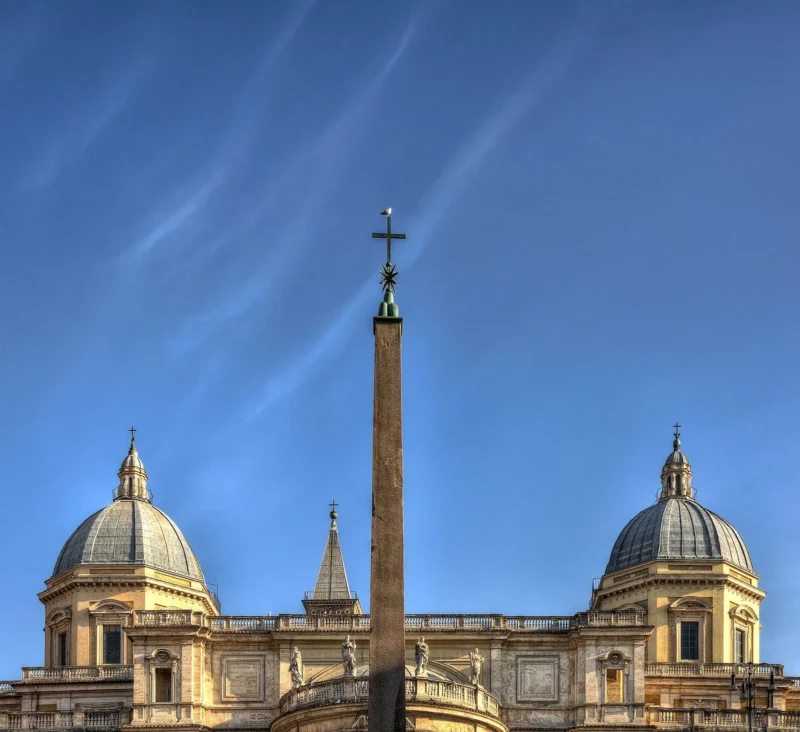
The last major works on the exterior date back to the pontificate of Benedict XIV, who entrusted Ferdinando Fuga with the remaking of the main façade on Piazza di Santa Maria Maggiore, with portico and Loggia delle Benedizioni, carried out between 1741 and 1743. The same Fuga is responsible for the baldachin over the confession, on porphyry columns, and for the remaking of the rear façade on Piazza dell'Esquilino, in front of which stands the obelisk erected during the Sistine era after it was moved from the Mausoleum of Augustus.
In the 19th century, the Confession beneath the high altar was commissioned by Pius IX and carried out by Virginio Vespignani. Here, in a crystal reliquary by Luigi Valadier, the relics of the Nativity manger are kept. In the second half of the century, the Sacristy of the Canons and the Chapter Hall were restored under the direction of architect Giovanni Battista Benedetti. The central bronze doors were modeled by Ludovico Pogliaghi and cast by the Fonderia Marinelli of Florence. In 2001, John Paul II blessed a new Holy Door, the work of sculptor Luigi Enzo Mattei.
A more recent chapter concerns the basilica as a burial place: according to an in-depth piece from Vatican News in April 2025, Pope Francis chose to be buried here, in the side aisle between the Pauline Chapel and the Sforza Chapel, near the icon of the Salus Populi Romani, becoming the eighth pope buried in the basilica. Anyone who wants details about the tomb and visiting hours can find them updated on the basilica's official website.
Basilica of Santa Maria Maggiore | The Museum and the Nativity Scene by Arnolfo
The Basilica Museum, now part of the Polo Museale Liberiano route along with the Loggia of the Blessings, the Hall of the Popes and Bernini's Staircase, holds what for centuries was considered the oldest sculpted representation of the Nativity: an Adoration of the Magi in stone, including the partial figures of the ox and the donkey. In reality, on closer examination, they are not freestanding statues but high reliefs carved on blocks of stone left flat at the back, except for the figure of the kneeling Magus and that of the Virgin with the Child, which were completed in the round at a later time by another sculptor, with the figure of the Virgin reworked in the Renaissance compared to the original.
It was Pope Nicholas IV who commissioned the work from Arnolfo di Cambio in 1288, and it was finished in 1291. The tradition of depicting the Nativity in this basilica goes back much further, though, to Sixtus III himself, who in the fifth century created a "grotto of the Nativity" in the early church, inspired by Bethlehem: hence the ancient name of Santa Maria "ad praesepem", from the Latin praesepium, manger. Pilgrims returning from the Holy Land brought fragments of the wood of the Holy Crib, still kept today in the gilded case of the Confessio.
The Historical Museum, according to the official description, is now divided into three rooms inaugurated in 2024, plus an underground Treasury. The Bethlehem of the West Room houses the nativity scene by Arnolfo di Cambio together with the so-called Chasuble of Saint Jerome, a medieval liturgical vestment. The Santa Maria della Neve Room collects paintings that tell the legend of the snowfall: frescoes by Baldassarre Croce and panels by Jacopo Zucchi on the same subject, together with works by Sodoma and Domenico Beccafumi. The third room, dedicated to the Salus Populi Romani, finally holds the original metal case with a silver cover of the Marian icon and the crowns donated over the centuries by popes, including those of Gregory XVI and Pius XII. In the underground Treasury you find liturgical objects and sacred goldwork. The museum, again according to the official source, is fully accessible to visitors with mobility disabilities.
Basilica of Santa Maria Maggiore | The Esquiline Hill before the basilica
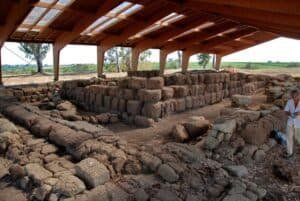
The hill on which the basilica stands, in its spur called Cispius, was already inhabited and urbanized well before the fourth century. A short distance away, just outside the ancient Esquiline Gate, stood the Macellum Liviae, a large food market inaugurated by Emperor Tiberius in 7 BC and dedicated to Livia, wife of Augustus: one of the few public monuments of a utilitarian nature on this hill, otherwise occupied mostly by private residences and horti, the patrician gardens, including the famous Gardens of Maecenas. Remains of the market, a brick building in opus reticulatum, were excavated in the late 1800s.
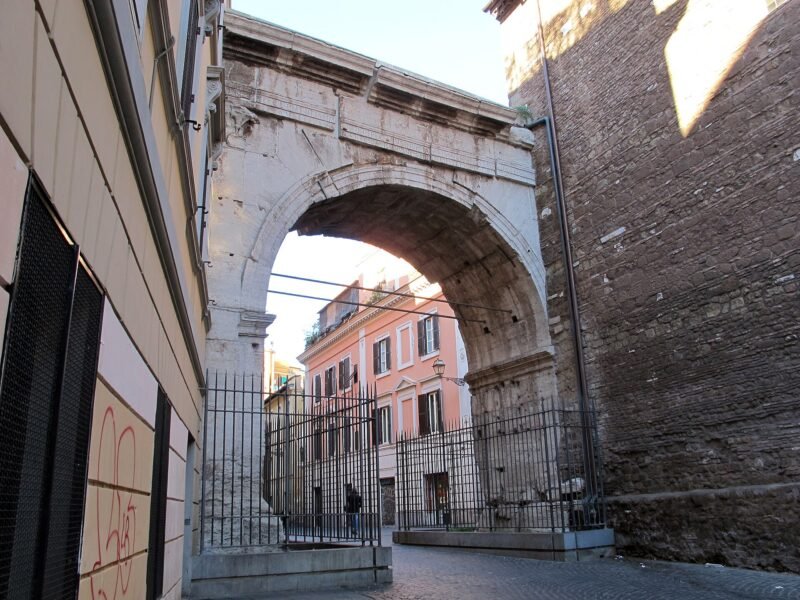
There is no direct link between the Macellum and the Basilica of Santa Maria Maggiore as far as the ancient sources show, even though the Liber Pontificalis, speaking of the building of Liberius, places it precisely "iuxta Macellum Liviae", near the market of Livia: this is probably where the age-old confusion between the two places comes from. The memory of the market survived in another way: the church of San Vito, which stands on the Arch of Gallienus, the ancient Esquiline Gate, has been called "in Macello" since the eighth century, a sign that the name of the Roman market stayed attached to that part of the neighborhood for centuries after its disappearance.
Basilica of Santa Maria Maggiore | The archaeological excavations
Between 1966 and 1971, to solve a moisture problem under the floor, excavations were carried out along the side aisles of the basilica. Under the fill accumulated over the centuries, many rooms dating to the second and third centuries AD came back to light, now turned into museum spaces and visitable from the museum route. The original purpose of that complex remains debated: it is ruled out that it had ties to the Liberian basilica, and it does not coincide with the Macellum Liviae mentioned by the ancient sources.
Walking along that underground route you come across traces of a small bath complex with mosaics and cavities for hypocaust heating, ancient roof tiles on display, remains of decorative geometric frescoes and, the find most cited by archaeologists, frescoes depicting an agricultural calendar. There is also a small semicircular room with niches, remains of frescoes and an opus sectile floor on suspensura, probably part of the same bath complex. It is one of the least known archaeological areas in Rome precisely because it is hidden under one of the most famous churches: people who look only for the mosaics and the baroque chapels often skip this part of the visit, and it's a mistake, because it helps you understand what the basilica was, literally, built on.
Basilica of Santa Maria Maggiore | How it changes with the light of the day

The Right Photo to Take at the Basilica of Santa Maria Maggiore
The photo that always works is the one from the back of the central nave, just after the entrance from Piazza di Santa Maria Maggiore, with the golden ceiling framing the view all the way to the apse and Torriti's mosaics at the far end. If you have a wide-angle lens or a phone with panorama mode, keep the frame low, almost at the level of the Cosmatesque floor, so the colored marble below and the gold above both fit in the same shot. Outside, the facade on Piazza dell'Esquilino with the obelisk in the foreground is less crowded than the main one, and the late-afternoon light shows it off better. Better to avoid flash on the 5th-century mosaics: it isn't needed, the basilica's ambient light already makes them readable, and flash reflecting off the gold ceiling ruins more photos than it saves.

Some Important Events That Happened Here in History
The year 431, one year before the start of the Sistine works, is the year of the Council of Ephesus, the one that recognized Mary as Theotokos, Mother of God: the basilica was built precisely to celebrate that dogma, and it is among the first churches in the West explicitly dedicated to the Virgin. In 1288, Nicholas IV commissions Arnolfo di Cambio to create the carved Nativity scene, completed in 1291, one of the first three-dimensional depictions of the Nativity in the history of Western art. In 1295, Torriti signs the apse mosaic with the first Coronation of the Virgin ever made in an apse bowl. In 1585, Sixtus V starts the Sistine Chapel with Domenico Fontana, a worksite that will forever change the layout of the right nave. In 1611, the Pauline Chapel, commissioned by Paul V, is completed. Between 1741 and 1743, Ferdinando Fuga redoes the main facade, the one we see today facing the square. In 2001, John Paul II opens the new Holy Door sculpted by Luigi Enzo Mattei. In 2025, according to Vatican News, the basilica becomes the burial place of Pope Francis, the eighth pope to rest here.
Who Has Passed Through the Basilica of Santa Maria Maggiore
Among the artists who worked on the basilica are names you studied in school: Jacopo Torriti for the apse mosaics, Filippo Rusuti for the facade ones, Arnolfo di Cambio for the carved Nativity, Giuliano da Sangallo for the design of the golden ceiling, Domenico Fontana for the Sistine Chapel, Michelangelo Buonarroti for the design of the Sforza Chapel, Guido Reni, Cavalier d'Arpino, Ludovico Cigoli, Passignano and Baglione for the decoration of the Pauline Chapel, Carlo Rainaldi for the rebuilding of the apse facing the Esquiline, Ferdinando Fuga for the eighteenth-century facade, Luigi Valadier for the reliquary of the crib, Ludovico Pogliaghi for the bronze doors. Among the popes, besides Liberius and Sixtus III, these have left their mark: Nicholas IV, Sixtus V, Paul V Borghese, Benedict XIV, Pius IX, John Paul II, who blessed the Holy Door of the Jubilee of 2000 here, and, for the most recent news, Pope Francis, buried in the basilica in 2025. Gian Lorenzo Bernini, who worked almost everywhere in Rome except here directly, still chose this basilica as the site for his family tomb.
Basilica of Santa Maria Maggiore | How to Visit
Ecco il dossier pratico in un punto solo. Address: Piazza di Santa Maria Maggiore 42, 00185 Rome, with a second side entrance from Via Liberiana. Basilica open every day from 7:00 to 19:00, free admission. Museum and Loggia delle Benedizioni open Monday to Saturday, approximately from 9:30 to 18:00: the sources don't agree on the exact time of the last entry, which is between 17:00 and 17:30, so don't trust the exact minute and arrive with some margin. According to the Turismo Roma listing, the museum stays closed on Sundays and public holidays: the basilica's official website does not list closures as explicitly, so this is information from a single source, not confirmed twice. The museum ticket price does not appear to be published as a certain figure: before going, check the official website or write to visitemuseo.smm@basilica.va. Metro A, stops Termini or Vittorio Emanuele, Metro B, stops Cavour or Termini, 5-8 minutes on foot. Bus 40, 64, 310, 360, dedicated stop in front of the basilica. Booking not necessary for the basilica alone, recommended for the museum.
Basilica of Santa Maria Maggiore | With Children
For a child, the basilica works well as a first "important church" to visit: it's big but not overwhelming, the story of the nativity scene carved by Arnolfo di Cambio is easy to tell, and it's a natural link to something children already know from Christmas. The rite of the white petal snowfall on August 5 is a spectacle the youngest children remember for a long time, much more than an explanation of the Ionic capitals. With slightly older children, the legend of the snow or the story of the shepherd girl "Sperduta" linked to the bell tower work as stories, before they work as historical facts.
The situation is different for the museum and the excavations, where the routes are narrower. Museo Storico is declared accessible to visitors with motor disabilities by the official website, so it is presumably manageable even with a light stroller, but for the underground archaeological area, with its changes in level, consider whether to bring the wheelchair or leave it: no specific official confirmations appear for that stretch.
Basilica of Santa Maria Maggiore | Accessibility
At the level of the main nave, the basilica is flat and has no significant steps between the main entrance and the altar: those who use a wheelchair can get through it without too many obstacles. For Museo Storico, the basilica's official website declares full accessibility for visitors with motor disabilities. One point remains without an equally explicit statement: the underground archaeological excavations, which by their nature involve changes in level and narrow passages. Anyone with specific needs for that section would do well to write to the basilica first.
Basilica of Santa Maria Maggiore | What's Around It
The Esquiline neighborhood around the basilica is one of the most multicultural in Rome, profoundly changed over the last 30 years but still readable in its nineteenth-century structure of regular blocks. A few minutes on foot you'll find the indoor market of Piazza Vittorio, today one of the most international markets in the city, with stalls selling ingredients that couldn't be found in Rome 30 years ago. In the same garden as Piazza Vittorio, the Porta Alchemica is hidden, a small 17th-century portal covered in esoteric inscriptions that most tourists pass through without noticing.
Heading down toward Termini station you come across the underground basilica of Porta Maggiore, a pagan place of worship from the 1st century excavated underground, and a little farther on runs the best-preserved stretch of the Aurelian Walls. If you want to continue the tour of Rome's great basilicas, you can reach the Basilica of San Giovanni in Laterano on foot or by metro from here, the cathedral of Rome, another of the four papal basilicas.
Farther north, also on the Esquiline, you'll find San Pietro in Vincoli, where Michelangelo's Moses is kept and the chains that, according to tradition, bound Saint Peter in prison, and Santa Prassede, with the Chapel of San Zenone and other 9th-century Byzantine mosaics that pair well, chronologically and stylistically, with those seen here at Santa Maria Maggiore. Toward the Colosseum, about a 20-minute walk away, you'll find San Clemente, with its three overlapping levels of buildings, and farther on the Colosseum itself with the Domus Aurea.
On the opposite side, toward Piazza della Repubblica, you'll come to the Baths of Diocletian
, one of the largest thermal complexes in ancient Rome. If you prefer a greener outing on the weekend, the Villa Torlonia complex with its Casino Nobile is about 10 minutes away by bus, as is the Auditorium of Maecenas, a less well-known Roman archaeological space right here on the Esquiline, which many Romans themselves have never visited. Those following a faith itinerary can continue on to Holy Cross in Jerusalem, another historic basilica not far away, linked to the tradition of the relics of the Passion brought to Rome by Saint Helena.
Quick Questions About the Basilica of Santa Maria Maggiore
How much does it cost to enter the Basilica of Santa Maria Maggiore?
Entry to the basilica is free, as it is for the other three papal basilicas in Rome (St. Peter's, St. John Lateran, St. Paul Outside the Walls). You don't need a ticket to visit the nave, the chapels, and see the mosaics.
How much is the museum and what does the ticket include?
The museum, the Loggia of the Blessings, the Hall of the Popes, the Bernini Staircase and the archaeological excavations are paid admission on a single route, but the basilica's official website does not publish a fixed price in euros that you can check online: the ticket is bought on site or booked by writing to visitemuseo.smm@basilica.va.
What are the basilica's opening hours?
Every day from 7:00 to 19:00, according to two independent sources (imuseidiroma.it and visititaly.eu).
What are the opening hours of the Polo Museale Liberiano?
Monday through Saturday, approximately 9:30 to 18:00. The sources don't agree on the last entry time: 17:00 according to one source, 17:30 according to another. Check the updated calendar on the official website before setting off.
Is there a closing day?
The basilica doesn't close, it is open every day. The museum, according to Turismo Roma, stays closed on Sundays and holidays.
Do I need to book to enter the basilica?
No, access to the church alone is free and doesn't require a reservation.
Do I need to book for the museum?
It's not mandatory but it's recommended, especially in high season, by writing to the ticket office of the Polo Museale Liberiano.
How do I get there by metro?
Take line A, stops Termini or Vittorio Emanuele, or line B, stops Cavour or Termini. In all cases the walk is about 5-8 minutes.
Which buses stop near the basilica?
Lines 40, 64, 310 and 360 have a dedicated stop, called "Santa Maria Maggiore", right in front of the main entrance.
How long does the visit take?
The basilica alone can comfortably be visited in 30-45 minutes. With the museum, the Loggia of the Blessings and the archaeological excavations, plan on an hour and a half or two.
Can I take photos inside the basilica?
Yes, in the main nave photography is generally allowed, without flash out of respect for the artworks and the ongoing celebrations. In the museum areas the rules may vary, so check at the entrance.
Is it true that Pope Francis is buried here?
Yes. According to an in-depth piece from Vatican News in April 2025, Pope Francis chose to be buried in the side aisle of the basilica, between the Pauline Chapel and the Sforza Chapel, near the icon of the Salus Populi Romani.
Who else is buried in the basilica?
Gian Lorenzo Bernini, in the family tomb, and several historical popes: among those explicitly cited by Vatican News are Honorius III, Nicholas IV, Clement VIII and Paul V Borghese. The source mentions seven popes buried before Francis, but doesn't list all their names.
What does "papal basilica" mean?
It is one of the four churches in Rome with the highest status in the ecclesiastical hierarchy, along with St. Peter's, St. John Lateran and St. Paul Outside the Walls: they have a papal altar, a holy door and particular liturgical privileges.
Why is it also called "Liberiana"?
It is named after Pope Liberius, to whom tradition attributed the founding of the first building in the fourth century. Modern excavations have not confirmed this attribution, but the popular name has stayed.
What is the miracle of the snow?
The legend says the Virgin appeared in a dream to the Roman patrician Giovanni and to Pope Liberius, indicating that a snowfall would mark where to build the church. Upon waking, the Esquiline Hill was covered in snow in the middle of August, on the night between August 4 and 5, 358 AD according to the sources.
When is the miracle of the snow celebrated?
Every year on August 5, with a re-enactment during which white petals fall from the basilica's ceiling during the morning Mass and the evening vespers.
What is the Loggia of the Blessings?
The loggia above the portico of the main façade, built by Ferdinando Fuga in the 18th century, is now part of the Polo Museale Liberiano route together with the Hall of the Popes and the Bernini Staircase.
What can you see in the archaeological excavations?
Roman rooms from the 2nd and 3rd centuries, discovered between 1966 and 1971 under the side aisles: remains of a small thermal bath, mosaics, ancient roof tiles, geometric frescoes and a rare fresco with an agricultural calendar.
Is it suitable for children?
The basilica yes, without too much difficulty: it's large but can be walked through in a short time, and the story of the carved Nativity scene is easy to explain. The museum route and the excavations are narrower and less suitable for strollers.
Is it accessible to people with mobility difficulties?
The main nave is level and has no significant steps. The Historical Museum, according to the official website, is declared fully accessible to visitors with mobility disabilities. For the underground archaeological area, because of the nature of the excavations itself, it's better to contact the basilica first.
What is the tallest bell tower in Rome?
That of Santa Maria Maggiore, Romanesque, about 75 meters tall, rebuilt in 1375-1376 and completed in the 15th century under Cardinal Guglielmo d'Estouteville.
What do the mosaics on the triumphal arch show?
Episodes from the childhood of Christ, some taken from apocryphal gospels: the Annunciation, the Presentation at the Temple, the Adoration of the Magi, the meeting with the governor Afrodisio, the Massacre of the Innocents and the Magi kings before Herod.
Where is Arnolfo di Cambio's Nativity scene?
The surviving figures, carved between 1288 and 1291, are preserved and displayed in the basilica's museum, along the Polo Museale Liberiano route.
What does the basilica's Sistine Chapel contain?
The relics of the Nativity manger and the ancient Oratory of the Nativity Scene with the sculptures by Arnolfo di Cambio, as well as the tomb of Pope Sixtus V, who wanted it as the family burial place.
What is the difference from the Sistine Chapel in the Vatican Museums?
No direct architectural or artistic connection: the Vatican Sistine Chapel, with the frescoes by Michelangelo, is a separate building inside the Apostolic Palaces. The one at Santa Maria Maggiore shares only the name, given in honor of Pope Sixtus V, while the other takes its name from Sixtus IV.
What else to see in the same neighborhood as the basilica?
The covered market in Piazza Vittorio, the Porta Alchemica, the underground basilica of Porta Maggiore, San Pietro in Vincoli with Michelangelo's Moses, Santa Prassede and, a little further away, San Clemente and the Colosseum.
Can you attend Mass?
Yes, the basilica has a regular liturgical schedule with several Masses each day. The exact times of the celebrations are published and updated on the official website, in the section dedicated to "Orari Messe".
How old is the basilica?
In its current form it dates back to 432 AD, the year of the reconstruction commissioned by Pope Sixtus III. It is one of the oldest churches in Rome still in continuous use since Late Antiquity.
Is it hot or cold inside in summer?
Like all large churches built of ancient masonry, the interior stays cool even on the hottest days of August. That is one of the reasons, together with the August 5 rite, why it's worth visiting in the middle of the Roman summer.
Who is depicted in the icon of the Salus Populi Romani?
The Madonna with the Child in her arms, half-length, painted on a cedar wood panel measuring 117 by 79 centimeters. Tradition, reported by the basilica's official website, attributes it to Saint Luke the Evangelist, but that is precisely a tradition, not a documented date.
Is it true that popes visit the Salus Populi Romani before their trips?
Yes, it is a documented devotion: the basilica's official website reports that Pope Francis visited the icon 126 times before leaving on his apostolic journeys. Pope Leo XIV, according to Vatican News, also went to pray before the same image.
When was the Holy Door of the Jubilee 2025 opened?
On January 1, 2025, with a celebration that began at 17:00, according to the official Jubilee portal. It was the first of the four papal Holy Doors to open after the one at St. Peter's.
How many columns does the central nave have?
21 per side, 42 in total, all dating back to the Sistine reconstruction of 432, with Ionic capitals.
How many Old Testament mosaics remain today?
27 of the original 42: 12 on the left wall and 15 on the right. The others were destroyed by the side openings commissioned in the 18th century.
Which is the oldest of the four papal basilicas in Rome?
In its preserved architectural structure, Santa Maria Maggiore is the one that has best kept the original early Christian layout of the 5th century, unlike St. Peter's, St. John Lateran and St. Paul Outside the Walls, which were extensively rebuilt in later periods.
Can you visit Bernini's tomb?
Yes, it is located inside the basilica, in the Bernini family tomb, and can be visited freely during the church's opening hours.
Is there a separate entrance for people with disabilities or for groups?
There is no dedicated access separate from the main entrances on Piazza di Santa Maria Maggiore and Piazza dell'Esquilino. For large groups or special needs, it's best to contact the basilica first.
What does it mean that the basilica is "ad praesepem"?
It is an ancient name of the basilica, from the Latin praesepium, manger. It goes back to the tradition that Sixtus III already created a Nativity grotto inspired by Bethlehem in the fifth century, from which the sculpted Nativity scene by Arnolfo di Cambio later derives.
Why was Pope Liberius exiled?
Because he refused to condemn Athanasius of Alexandria and to yield to the semi-Arian compromise desired by Emperor Constantius II. He was exiled in 355 and returned to Rome before the end of 357.
What does Museo Storico contain today?
Three rooms opened in 2024: Sala Betlemme d'Occidente with Arnolfo di Cambio's Nativity scene, Sala Santa Maria della Neve with paintings on the legend of the snowfall, and the room dedicated to the Salus Populi Romani with the original case and the crowns donated by popes. There is also an underground Tesoro with liturgical goldsmith work.
What was the Macellum Liviae near the basilica?
A large Roman food market inaugurated by Tiberius in seven BC, just outside the ancient Porta Esquilina. The Liber Pontificalis places Liberius's building near this market, which is probably where the confusion between the two sites comes from.
Is it better to visit the basilica in the morning or in the afternoon?
It depends on what you're looking for. Early in the morning, right after it opens at 7:00, you'll find fewer people and light that brings out the mosaics of the nave. In the late afternoon, the apse basin is lit better thanks to the sun coming in from the Esquiline side.
Is there a souvenir shop inside the basilica?
Outside the basilica, as around almost all the major monuments in Rome, you'll find stalls and souvenir shops. Be wary of anyone who offers "exclusive guided tours" on the street. If you want a guide, book one through official channels.
Does the basilica host concerts or events?
It is above all an active place of worship, with a regular liturgical calendar. For any cultural events or occasional concerts, the up-to-date reference remains the basilica's official website.
What is the difference between Santa Maria Maggiore and St. Peter's?
St. Peter's stands on the site of the tomb of the apostle Peter and is the largest and most visited basilica in the world, almost entirely Renaissance and baroque in its current appearance. Santa Maria Maggiore is smaller and less crowded, and it is the only one of the four papal basilicas to have kept the original fifth-century early Christian layout.
Can you enter wearing casual clothes?
As in all Roman churches, the basic rules apply: shoulders and knees covered, no swimsuits or beachwear. Specific official guidelines for Santa Maria Maggiore do not appear to exist.
How far is it from Piazza di Spagna or the Trevi Fountain?
On foot it's about 20-25 minutes from either one, or a few minutes by metro to Termini or Cavour and then on foot. It is in any case a different neighborhood, the Esquiline, less visited by mass tourism than the historic center.
Is it worth visiting together with the Colosseum on the same day?
Yes, they are about a 20-minute walk from each other, with San Pietro in Vincoli and San Clemente along the way: a half day on foot that covers centuries of Roman history, from antiquity to the Renaissance.
What sets the Sistine Chapel here apart from the Pauline Chapel, as seen from outside?
They are the two twin domes you see on either side of the basilica when looking at it from outside, facing each other in the plan: the Sistine, commissioned by Sixtus V, on the right side toward Via Cavour, and the Pauline, commissioned by Paul V, on the left side. They were built on purpose in mirror-image positions.
Why does the bell tower ring every evening after nine?
It is the ritual of the bell "la Sperduta," tied to a 16th-century legend about a shepherdess or a pilgrim who got lost in the area around the Esquiline. The evening toll still continues today, moved from the original two in the morning to nine in the evening.
How many popes have left a direct mark on the basilica?
Many: Liberius in the popular name, Sixtus III in the 432 reconstruction, Nicholas IV in the Nativity scene and the apse mosaic, Sixtus V in the Sistine Chapel, Paul V in the Pauline Chapel, Benedict XIV in the Fuga facade, Pius IX in the 19th-century confession, John Paul II in the Holy Door of 2000, and more recently Pope Francis, buried here in 2025.
Basilica of Santa Maria Maggiore | 16 centuries on the same hill
Santa Maria Maggiore doesn't need rhetorical embellishment: it has 16 centuries of continuity on the same stretch of hill, a miracle retold every August 5 with paper petals in place of snow, and an early Christian layout that no other papal basilica in Rome has kept intact the way this one has.
What lasts is not so much the single masterpiece, Torriti's mosaic or Arnolfo's nativity scene, as the sense of continuous layering: a building from 432 that in the thirteenth century receives a new apse, in the fifteenth a gilded ceiling, in the sixteenth and seventeenth two huge chapels facing each other, in the eighteenth a completely different facade, and in 2025 returns to the center of the news for the burial of a pope. None of these eras erased the earlier ones. Rome does this with its most important buildings, piling them up instead of replacing them, and this basilica is one of the most legible examples of this method, if you just look at it with a little patience.
If you have only one hour on the Esquiline, spend it here: enter through the right door, look up at the ceiling, look down at the Cosmatesque pavement, and before leaving, stop for a minute in front of the Salus Populi Romani. You don't need anything else, and you don't even need to hurry to the next stop on your itinerary: here, more than anywhere else, it's worth slowing down.
Contact Information
Nearby
 Esquiline Obelisk100 m
- Basilica of Santa Prassede100 m
- Museum of Illusions in Rome200 m
- Basilica of Santa Pudenziana300 m
- Palazzo Brancaccio300 m
- Arch of Gallienus300 m

Upcoming events nearby
- Gran Ballo Viennese di Roma (18th edition) at Acquario Romano: Saturday, November 7, 2026400 m
- Peter Pan by Bernstein at the Teatro Nazionale in Rome, December 18 to 23, 2026400 m
- Echoes at Teatro Nazionale in Rome: Bonachela, Eyal and Tortelli, April 20 to 24, 2027400 m
- The Nutcracker at Teatro Nazionale, November 24 to December 3, 2026400 m