Colosseum
In short. The Colosseum is in Piazza del Colosseo, between the Celio, the Oppio and the slopes of the Velia, and you can get there by Metro line B to the Colosseo stop, by Metro line C to the Colosseo-Fori Imperiali stop, by buses 51, 75, 81, 85,…
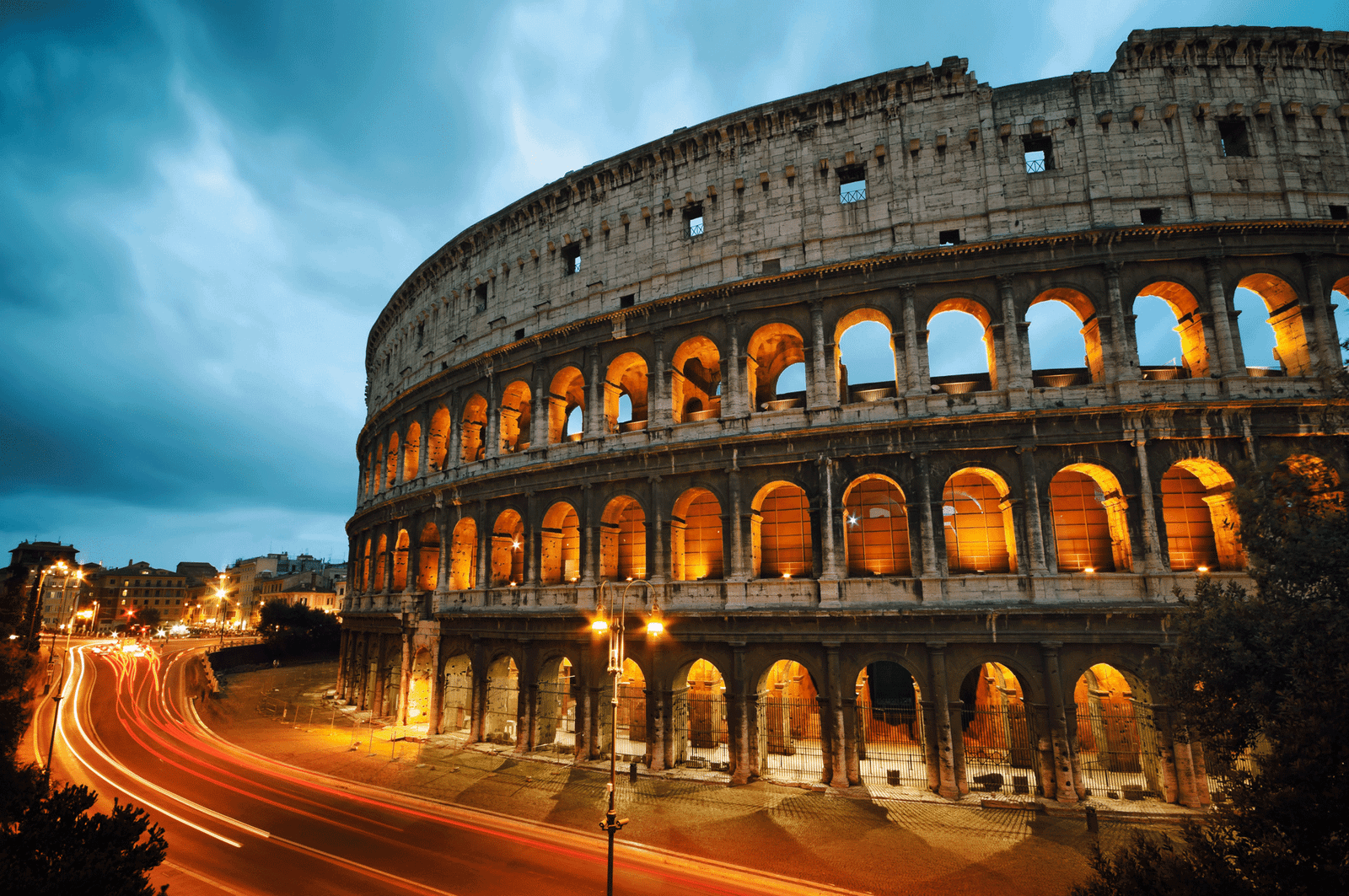
The Colosseum is in Piazza del Colosseo, between the Celio, the Oppio and the slopes of the Velia, and you can get there by Metro line B to the Colosseo stop, by Metro line C to the Colosseo-Fori Imperiali stop, by buses 51, 75, 81, 85, 87 and 118, and by tram 3. The standard ticket for the Colosseo, Foro Romano and Palatino is valid for 24 hours and costs €18 full price, €2 reduced for citizens of the European Union between 18 and 25 years old, €14 for members of the Amici del PArCo, and €11.50 with the Roma Pass. For visitors under 18, entry is free. The Full Experience with the underground areas and the arena costs €24, or €32 in the version with an educational route. It is valid for two consecutive days and has a last entry at 17:20. The Colosseum opens at 8:30, and the Roman Forum and Palatine open at 9:00. From March 29 to September 30, last entry is at 18:15 and closing is at 19:15. From October 1 to 24, last entry is at 17:30 and closing is at 18:30. From October 25 to February 28, last entry is at 15:30 and closing is at 16:30. The monument stays closed on December 25 and January 1. All tickets are named, and they go on sale 30 days before the visit date on the official website of the Parco archeologico del Colosseo. At the entrance, they will ask you for an ID that matches the name printed on the voucher. Without it, you don't get in. Time inside the amphitheater is limited: 75 minutes with the 24-hour ticket, and 90 minutes with the Full Experience.
If you want to place the Colosseum within the rest of the city, the page on tourist attractions in Rome covers all the monuments and museums we talk about, neighborhood by neighborhood.

Which Colosseum ticket is really worth it
The ticket office of the Parco archeologico del Colosseo is a little maze, and most people I meet in front of the turnstiles have bought the wrong ticket. Not because they were cheated: because the names all sound alike and nobody explains what really changes between one ticket and the next. It's worth lining them up once and for all, with what they include and what they don't.
Where to buy tickets. The official channel is ticketing.colosseo.it, the portal of the Parco archeologico del Colosseo: named ticket, with a timed entry slot, including the Roman Forum and Palatine. The morning slots sell out within a few hours of sales opening, so it's best to buy as soon as the dates are released. If you can't find any more spots on the official portal, you can still enter with an audio guide on GetYourGuide. Verified on September 28, 2026.
Colosseo, Foro Romano and Palatino 24h: the basic ticket
It costs €18, €2 reduced for citizens of the European Union between 18 and 25 years old, €14 for people with the Amici del PArCo card, and €11.50 with the Roma Pass. It gives access to the first and second tiers of the Colosseum with the panoramic terraces, the amphitheater museum, the archaeological area of the Roman Forum with its museum, and all of the Palatine. It does not include the arena or the underground areas. You book a specific time for the Colosseum and visit the Forum with the Palatine on the same day or within 24 hours before or after. That is the reason for the name, not a vague all-day validity. The maximum time inside the amphitheater is 75 minutes, set by the Park's visitor regulations, and on days with heavy crowds it is really enforced.
Only Arena: when it makes sense and when it doesn't
It also costs €18, €2 reduced, and €11.50 with the Roma Pass, and it is valid for 24 hours. It lets you step onto the rebuilt floor of the arena, with entry and exit on the Sperone Stern side, and it includes the Roman Forum and Palatine. The walk on the arena lasts 20 minutes, and the last entry to the floor is at 18:00. The point almost nobody picks up on is this: Only Arena does not include the regular route to the two upper tiers. You go in, walk on the wooden floor, and come out. For someone visiting Rome once in a lifetime, it isn't the right ticket, and I almost always advise against it.
Full Experience Underground and Arena: the six euros best spent in Rome
The ticket costs €24, or €32 for the version with an educational route. The reduced European ticket is €2. It's valid for two consecutive days, with one entry to the Colosseum and one entry to the Roman Forum-Palatine area, and the last entry is at 17.20. It includes the arena, the underground passages, the Colosseum Museum, the Roman Forum with its museum, the Palatine with the Palatine Museum, the Domus Tiberiana, Santa Maria Antiqua, the Curia Iulia, the Temple of Romulus, the Aula Isiaca with the Loggia Mattei, the House of Augustus and the House of Livia. You stay inside the amphitheater for 90 minutes. If I had to name the smartest expense of a Rome trip, I'd point to the difference between this ticket and the basic one: €6 to go down into the belly of the machine, and without the belly of the machine the Colosseum is just a silent wall.
Full Experience Arena and Full Experience Attico del Colosseo
The Full Experience Arena combines the standard route with the arena floor, without the underground passages, again over two consecutive days. The Full Experience Attico takes you where the Colosseum stops being a postcard: the intermediate gallery between the second and third levels, then the third level and finally the attico, the highest level. A panoramic elevator goes to the intermediate gallery and from there to the attico. Groups have a maximum of eight people per session, as the regulations require. From above you can grasp at once the elliptical geometry, its relationship with the valley and the layout of the Forums. The prices for these two tickets are listed on the Park's official website at the time of booking.
The Passage of Commodus, the Colosseum corridor that isn't for everyone
It's a vaulted underground corridor dug beneath the amphitheater's foundations, which connected the outside with the imperial box. It takes its name from the assassination attempt on Emperor Commodus that ancient sources place in exactly this kind of passage, and it can only be visited with a dedicated ticket. I should be frank: it's narrow, dark and short. If you suffer from claustrophobia, skip it without regret. If you have a passion for Roman architecture, you'll find it one of the 10 most memorable minutes in Rome. Here too, the current price is the one listed by the official circuit.
Forum Pass SUPER: the ticket that doesn't include the Colosseum
It costs €18, or €2 at the reduced European rate, and opens the Roman Forum, Imperial Forums and Palatine archaeological area, with the sites on the SUPER circuit: the Forum Museum, the Palatine Museum, the Domus Tiberiana, the House of Augustus, the House of Livia and the current Exhibitions. It's valid for one entry only and, once validated, only for the day of use. If bought online, it has to be used within 30 days. Watch out for two details that regularly disappoint people at the turnstiles: it doesn't give access to the Colosseum, and it can't be used on the first free Sunday of the month.
Roma Pass, Amici del PArCo and reductions for the Colosseum
The Roma Pass lowers the Colosseum ticket to €11.50. The Amici del PArCo card, the membership of the Archaeological Park, brings the standard ticket to €14, and in its unlimited-access version it pays for itself by the second visit of the year. If you live in Rome or go back often, it's the most rational choice there is. Under 18, you enter for free with an ID. School groups from the European Union enter for free subject to availability. Those from outside Europe book and pay.
Colosseum Opening Hours in 2026
The Colosseum opens its gates at 8.30. The Roman Forum, the Palatine and the Domus Aurea open at 9. Closing times follow three seasonal schedules and change quite a bit: from March 29 to September 30, the last entry is at 18.15 and it closes at 19.15. From October 1 to 24, the last entry drops to 17.30 with closing at 18.30. From October 25 to February 28, the last entry is at 15.30 and closing at 16.30. The monument is closed on December 25 and January 1.
The winter schedule is the one that trips up more people than you'd think. From late October, the last entry is at 15.30, not at 17 and not at sunset. If you arrive at 16 with your ticket in hand, you'll find the turnstiles closed, and no refund will change that. Write it down if you're coming to Rome in November or January, because a Roman winter afternoon is deceptive: at 15 it still looks like broad daylight, and the Colosseum has already stopped letting people in.
Free admission days at the Colosseum
Entry is free on the first Sunday of every month, on April 25, on June 2 and on November 4. Free admission can't be booked online. You pick up the ticket in person, and the morning line on the first Sundays between March and October is an exercise in patience I recommend only to people who live in the city and can afford to get the day wrong. My advice, plainly: if you have three days in Rome and only one of them falls on a first Sunday, pay the €24 for the Full Experience and use that Sunday for a civic museum. Saving €18 by losing two and a half hours in line is a terrible deal.
Named Tickets, Name Changes and Colosseum Purchase Rules
Since 2023 the Colosseum Archaeological Park sells only named tickets, for all ticket types, and the rule also applies to free and reduced tickets. When buying, each visitor enters their own personal details. At the entrance, staff check the name against a valid ID. If the voucher is in another person's name, you can't enter and you won't be refunded. The practical result is that the Italian habit of buying four tickets in your own name for friends who might come along no longer works.
Name changes are allowed only once, by 24:00 on the seventh day before the visit, and only in the cases set out in the regulations. Sales open 30 days before the date, not earlier, even though sites that resell packages may tell you otherwise. If you have to fit the Colosseum into a trip with fixed dates, set an alarm for the day the 30-day window opens, because the 8.30 slots and the Full Experience slots with the underground areas sell out within a few hours during peak months.
The official circuit's customer service answers emails within two or three working days, so it's not the right channel for a last-minute emergency. For that, use the phone number listed on the Park's assistance page, which answers the same day. One last piece of advice from a professional: buy your tickets on the Park's official circuit. Everything else is resale, as legitimate as you like, but it will charge you more for the same entry.
What You Can't Bring Into the Colosseum
The visitor rules are public and very clear, and they are enforced with growing strictness. Backpacks must not exceed 30 by 40 by 15 centimeters, and the Park has no cloakroom or luggage storage. If you arrive with a rolling suitcase because you have a train in the afternoon, you won't get in, and you'll have nowhere to leave it. It's the most common mistake I see people make at the metal detectors.
Firearms and bladed weapons, knives and multi-tools, glass bottles, trekking poles, oversized luggage, bicycles and scooters, spray cans, laser pointers, speakers and selfie sticks are prohibited. Professional optical and audio equipment is also prohibited: tripods, professional-grade cameras, microphones and mixers, and of course drones without formal authorization from the Park. Phones and compact cameras, on the other hand, can be used freely.
It's worth being precise about dogs, because there's a mistaken idea going around that the Colosseum is open to all animals. Inside the amphitheater, only guide dogs and certified assistance animals are allowed. In the open areas of the Roman Forum and Palatine, small dogs are allowed, roughly between five and 10 kilograms, and they must travel in a suitable carrier. Anyone arriving with a German shepherd on a leash stays outside.
How to Get to the Colosseum
Metro Line B has a stop named after the monument, and it comes out practically at its feet. It's the simplest way and remains the most used. Buses 51, 75, 81, 85, 87 and 118 stop at the loop on Piazza del Colosseo and along Via dei Fori Imperiali or Via Labicana. Tram 3 arrives from the San Giovanni and Celio side, and it's the line I recommend to anyone staying in Trastevere or around Viale Aventino, because it avoids changing trains on the metro.
Metro C and the Museum Station Under the Colosseum
On December 16, 2025, the Colosseo-Fori Imperiali and Porta Metronia stations on Line C opened to the public, after 13 years of construction. The first allows direct interchange with Line B and is, in fact, a museum you walk through while catching your train. Line C runs from 5.30 to 23.30 Sunday through Thursday, and until 1.30 on Friday and Saturday.
Inside the station, materials from the excavation are on display: Republican-era wells, the remains of a private thermal bath belonging to a high-level domus, elements of a residence with wall decoration, and a series of small objects and statuettes recovered below the level of the modern square. You can cross the atrium without a metro ticket. The exhibition area at entrance level can be viewed for free, while going down to the lower levels and platforms requires a valid travel ticket. The museum at Porta Metronia station opened a few weeks later, in February 2026.
The practical advice is simple: arrive 20 minutes before your booked time and visit the station. There is no other place in Europe where you can look at a 3rd century BC well with an escalator behind you. And from the circular opening facing outward, you can frame the Colosseum from below in a way that two years ago was not possible for anyone.
Buses, Trams and the Other Entrances to the Archaeological Area
The Colosseum ticket also covers the Roman Forum and the Palatine Hill, and their entrances are spread around a wide perimeter. You enter the Palatine from Via di San Gregorio 30, which is also the exit I recommend at the end of the day, since it leads directly toward the Circus Maximus. The Roman Forum has the entrance at Largo della Salara Vecchia, the one at Via del Tulliano below the Capitoline Hill, and Via Sacra access from Piazza del Colosseo. The Domus Aurea, which has its own ticket and a guided visit in timed slots, is reached from Viale della Domus Aurea 1, climbing into the Colle Oppio park from Via Labicana side.
Via del Tulliano entrance is usually the most convenient. On April and October mornings, when there are 200 people in line in front of the Arch of Titus, there are 20 at this one. It's worth the five-minute walk.
Recently opened areas of the Colosseum
Over the past few years, the Archaeological Park has opened a series of routes that really change the visit. It's worth knowing what they are, because none of them appear in printed guides published before 2024, and many visitors arrive with an idea of the Colosseum that's stuck 20 years in the past.
The southern ambulacra of the Colosseum
The area of the southern ambulacra, the south face of the amphitheater between the Stern buttress and the Valadier buttress, toward the Celio park, was opened on March 17, 2026. This is the sector the 1349 earthquake destroyed. There, the outer ring no longer exists, and for centuries the perimeter of the Colosseum broke off into a gap that nobody knew how to read.
The archaeological investigations began in 2021, and the works were completed in 2024, with the new paving finished in the following months. The project, signed by Stefano Boeri Interiors with Giorgio Donà under the technical and scientific direction of the Archaeological Park, covered about 1,300 square meters and cost 4 million euros. It was financed with compensation funds from the Metro C works, allocated to the Park by CIPE resolution number 67 of 2019.
The design choice deserves attention because it's a lesson in contemporary restoration. The new paving is in Tivoli travertine, the same material as the amphitheater, laid at the ancient ground level on protective screeds with adhesives based on natural lime and free of cement, following a principle of reversibility: anything that has been added can be removed without touching the ancient structure. Where the two rows of piers that supported the ambulacra once ran, there are now cubic volumes barely raised above the surface, a openly symbolic reconstruction that doesn't pretend to be Roman. Between arches 66 and 71, the foundations remain exposed, as a record of the excavation. The result is that the Colosseum has a readable perimeter again. You walk at the level where the spectators of the 1st century walked, and you understand, without any need for digital reconstructions, how wide the ring was that the earthquake carried away. For me, it's the most intelligent intervention carried out on the monument in the last 30 years.
The attic and the middle gallery of the Colosseum
The attic is the top level, where the velarium corbels ran and where the poorest part of the public sat, on the wooden tiers of the maenianum summum in ligneis. You get there with the dedicated Full Experience ticket. A panoramic elevator takes you to the middle gallery between the second and third orders, and from there to the attic, in groups of eight people at most. It's not just any panoramic view. From above, the elliptical plan stops being a fact from a book and becomes a shape your eye recognizes, and the Fori-Velia-Palatine sequence comes together all at once.
The House of the Griffins on the Palatine
In 2026, the House of the Griffins, one of the oldest houses on the Palatine, dating to the Republican era, has also reopened. It has painted cycles and mosaic floors that are among the most valuable examples of Roman Second Style painting. The stairway down is very steep, so the visit isn't suitable for everyone. For those who can't manage it, a live video link has been set up. The funding comes from the Caput Mundi plan of the PNRR. If you have a ticket for the Palatine and find an available slot, take it without hesitating.
Official Colosseum apps, free and almost ignored
The Colosseum Archaeological Park publishes three free apps, and the vast majority of visitors don't download even one, only to then pay 20 euros for a third-party audio guide in the line in front of the turnstile.
MyColosseum is the Park's official app. It contains interactive audio guides in Italian and English that automatically follow the visit route through the underground levels, the middle gallery, and the attic, and it lets you book tickets. It weighs just under 90 megabytes, and the interface is available in Italian, English, Spanish, Korean, and Ukrainian. Download it the evening before, on your home or hotel network. Inside the amphitheater the signal is unreliable, and starting a download while you're in line at the metal detector is the worst way to begin the day.
Y&Co, short for You and Colosseum, is the most ambitious of the three. It offers four different routes through the Park, an interactive map that alerts you when you approach a monument, multimedia content, and QR codes placed along the way. It is translated into nine languages, Italian, English, French, Russian, Chinese, Japanese, German, Spanish and Portuguese, and includes a route for the blind with audio descriptions in Italian and English, a route for the deaf with interpreters in Italian Sign Language and American Sign Language, and an itinerary for children guided by the mascot of the Vestal Tarpeia. The Park also has tactile panels with floor plans and three-dimensional reproductions. It is serious accessibility work, designed according to the design for all principle, and it remains almost unknown.
The third is called Il PArCo di Piranesi and it is the most beautiful, even though it doesn't help you find your way: it is a journey through the engravings that Giovanni Battista Piranesi dedicated to the Palatine, the Roman Forum and the Colosseum, with a comparison between the eighteenth-century plate and today's photograph, image galleries, and two videos on the etching technique and the restoration of the copper plates. It takes up more than two gigabytes, so download it calmly before you leave. Looking at Piranesi's Colosseum, overgrown with vegetation and inhabited by tiny figures, and then looking up at the clean travertine of the restoration, is the most effective history lesson you can give yourselves.
How much time the Colosseum needs and how to plan the day
The Colosseum, Roman Forum and Palatine, visited at a relaxed pace, need at least three and a half hours. With the underground areas, it comes to four. Anyone who thinks they can get by in 90 minutes goes home with a handful of photographs and no memories.
The recommended plan is this. Enter the Colosseum at 8.30, the first slot of the day. One and a half hours inside, underground areas included, at a relaxed pace. Exit around 10, when the outer ring starts to fill up. Then the entrance to the Forum from via del Tulliano, the Forum walked from north to south and the climb to the Palatine, until around one o'clock. Exit from via di San Gregorio, with the Circus Maximus in front of you and a trattoria 10 minutes away.
Two warnings. The first: in summer, at noon, the Colosseum arena is an oven and the Roman Forum offers not a meter of shade. If you can't go in early, move to late afternoon, never at 14 in July. The second, which is the advice I repeat most often: the Palatine is the part everyone skips out of exhaustion, and it's the only one people truly regret missing. If time is short, take half an hour off the Forum, not off the hill. And open the Palatine Museum, which is included in the ticket and which half of visitors never even walk into: inside are the frescoes of the House of Livia, the graffiti and the materials that tell the story of the Palatine from an Iron Age village to an imperial palace.
How big the Colosseum really is
The figures for the Flavian Amphitheatre are often quoted and rarely understood. The outer perimeter measures 527 meters: a good seven-minute walk at a normal pace, which I recommend doing before you go in, because it's the only way to get a sense of the building's size. The axes of the ellipse are 187.5 and 156.5 meters. The arena, that is, the inner ellipse where the combat took place, measures 86 by 54 meters, a little over 3,350 square meters: an area comparable to half a soccer field, and this is the first surprise for anyone who has in mind the scenes from the movies.
The current height is 48.5 meters on the preserved side, while the original height was meant to come close to 52 meters with the full crown. On the south side, where the outer ring collapsed, the difference in height compared to the surviving ring exceeds 50 meters of lost extent. The capacity has been debated for two centuries: serious estimates range between 50,000 and 87,000 spectators, and the gap depends almost entirely on how you count the standing places in the top sector, the wooden one, which the sources describe but which archaeology cannot measure.
The Colosseum has been on the UNESCO World Heritage List since 1980, together with the historic center of Rome, and since 2007 it has appeared among the New Seven Wonders of the World, a title that came from a popular vote promoted by a private Swiss foundation and has no scientific value at all. It's worth mentioning because tour sellers repeat it 10 times a day: it is not an institutional recognition, it is a communication operation that worked very well.
As for contemporary numbers, the latest consolidated official figure from the Ministry of Culture concerns 2024, when the Colosseum Archaeological Park recorded 14,733,395 visitors and gross revenue of over 101 million euros: the top state cultural site in Italy for both visits and revenue, with a doubling compared to the 7.6 million of 2018. Estimates for 2025 speak of 15 million, but they are not final figures, and even the counting method is debated, so I take them with a grain of salt. What matters for you is the practical consequence: every day of the year, there is an average of 40,000 people in front of that monument. Planning ahead isn't fussiness, it's survival.
Why the Colosseum is right there: Nero's Pond
The question nobody asks in front of the amphitheater is the most interesting one: why build it at the bottom of a valley, and not on a hill like the Greek theaters did? The answer is political before it is technical.
The basin between the Velia, the Oppio and the Celio was crossed by a watercourse and remained a damp area on the valley floor. After the fire of 64 AD, Nero requisitioned the area and put the artificial lake of his Domus Aurea there, the stagnum, surrounded by porticoes and by a park that occupied an enormous portion of the city. At the entrance to the complex he had a colossal statue of himself built, over 30 meters tall. Rome, in short, found itself with an imperial villa in place of its own center.
When the Flavians took power, Vespasian made a perfect propaganda choice: he drained Nero's lake and built a building for the people's shows on top of it. The message was readable by anyone, even by those who could not read: the land the tyrant had stolen returns to the Romans, and it returns in the form of entertainment. There is no gesture of restitution in the whole history of architecture more spectacular and more cynical than this.
The technical consequences of that choice are still with us today. To found a building of that mass on an alluvial valley floor, the builders constructed a concrete foundation several meters deep and as wide as the entire building, a sort of ring of ancient concrete on which everything rests. Under the north side, this foundation finds firmer ground, under the south side, it finds the sediments of the valley floor. This is exactly why, in earthquakes, the south flank collapsed and the north side stayed standing. The asymmetric shape of the Colosseum, which everyone photographs thinking it a romantic ruin, is not architecture: it is geology.
The construction of the Colosseum, worksite by worksite
The construction site opens in 72 AD, under Vespasian. It is financed by the loot from the capture of Jerusalem in 70, and this is not a modern deduction: in 1813 a block was found with the holes of the bronze letters of a dedicatory inscription, whose reconstruction gives the formula by which the emperor Caesar Vespasian Augustus ordered the new amphitheater to be built with the money from the loot. Put bluntly, the Colosseum is paid for by the Jewish War.
Vespasian and the first two orders of the Colosseum
Vespasian completes the first two levels and dedicates the building shortly before his death, in 79. It is the stretch of masonry that is easiest to read today, with the large arches of the ground floor and the first order, the travertine piers and the concrete vaults. If you look at the facing from the side of Via Labicana, you'll notice the texture changes as you go up: these are the phases of the construction site, not a whim of the restorers.
Titus and the 100 days of 80 AD
Titus adds the third and fourth orders and inaugurates the amphitheater in 80 with 100 days of games. The poet Martial writes the Liber de spectaculis for the occasion, which is both a collection of epigrams and a piece of propaganda: in the first poems he places the new amphitheater above the pyramids of Egypt and the walls of Babylon, declaring that every labor gives way to the amphitheater of Caesar. It is the first text in history in which a building in Rome is proclaimed the wonder of wonders, and it still works.
Domitian, the underground levels and the end of naumachiae
Domitian completes the work. He has the bronze shields of the opus ad clipea hung on the top order, arranges the upper sector with the wooden tiers of the maenianum summum in ligneis, and above all has the underground levels dug beneath the floor of the arena. This last decision has a definitive consequence: with the hypogeum full of corridors, cages and hoists, the Colosseum can no longer be flooded, and the naval battles that the sources attribute to the early years leave the repertoire forever. Anyone who tells you about regular naumachiae in the Colosseum is describing a building that, after Domitian, no longer existed.
The machine around the Colosseum: ludi, barracks and storerooms
A detail that turns the image upside down: the Colosseum was not an isolated theater, it was the heart of an industrial plant. Around it there were four gladiator barracks, the Ludus Magnus, the Ludus Gallicus, the Ludus Matutinus and the Ludus Dacicus, of which the first is still visible on Via Labicana with its training arena. There were the castra misenatium, the quarters of the sailors of the Misenum fleet detached to operate the awning, the summum choragium, the storehouse for the stage machinery, the armamentaria, the arms depots, the sanatorium, where the wounded were treated, and the spoliarium, where bodies were stripped and disposed of. A complete production cycle, with its logistics, its specialized labor and its disposal. When you enter the amphitheater, keep in mind that you are only looking at the main machine room.

How the Colosseum is built: orders, arches and cavea
The facade of the Colosseum is a manual of Roman architecture built vertically. The first three levels are formed by arcades framed by engaged half-columns, and the three architectural orders follow one another from bottom to top according to the canonical hierarchy: Tuscan on the first level, Ionic on the second, Corinthian on the third. The fourth level has no arcades but a solid wall marked by Corinthian pilasters and by rectangular windows alternating with bronze shields. It is the scheme that the Renaissance will study until it knows it by heart: Leon Battista Alberti transfers it to Palazzo Rucellai in Florence, and from there it enters the European repertoire for four centuries.
The 80 arches of the ground floor were numbered, and the numbers carved into them are still legible on many of them. The visitor received a ticket with the indication of the sector and the seat and knew which arch to enter through. Four arches, those on the main axes, were reserved and had no numbering: two served the honorary entrances and the emperors, two the opening processions of the games and the exit of the bodies. The rest of the population flowed out through a system of stairs and ring corridors that opened into the vomitoria, the openings from which the crowd poured into the cavea. The emptying capacity of that organism remains the thing that amazes contemporary engineers the most.
The cavea was divided by social rank, and the division was extremely rigid. At the bottom, on the podium, were the senators, on movable marble seats with their names carved into them: many of those steps still exist and bear the names of senatorial families carved on them, along with the late antique titles of clarissimi, spectabiles, illustres, that is, the small plaques marking reserved seats from the fifth century. Above, the maenianum primum of the knights. Then the maenianum secundum, divided into the imum for well-to-do citizens and the summum for the plebs. At the top, the wooden sector, standing, for women, slaves and foreigners. When you climb to the middle gallery and look down, you have the social structure of the empire laid out in plan before your eyes.
The Underground of the Colosseum
The hypogeum is the part that transforms the visit. Under the wooden floor of the arena, covered with sand, there developed a system of corridors on two levels with a central axis and a series of ring and radial galleries. There were the animal cages, the storage for stage sets, the winches and hoists that brought beasts, men and stage equipment to the surface through trapdoors opening in the planking.
The operation required dozens of coordinated workers who worked in the dark, by oil lamp, hearing above their heads the noise of 50 thousand people. The traces of the pivots, tracks and winch housings are still legible on the walls, and they are the reason I always insist that people pay the supplement: above ground you see an amphitheater, below you see a theatrical machine. The two lower levels were completed in their final form after the intervention of Domitian and were reworked several times, with brick repairs recognizable to the naked eye compared to the older concrete work.
A fact that always strikes: bones of bears, lions, horses and ostriches have emerged from the sewers that served the monument. It is not a novelistic reconstruction, it is osteological material. The machine we are talking about consumed animals on an industrial scale, and its waste deposits document it.

The Colosseum in the Imperial Age: Lightning, Fires, Earthquakes
The idea that the Colosseum arrived intact to the Middle Ages and was then ruined by barbarians is a fairy tale. The amphitheater spent all of antiquity under construction, and the sources recount it with bookkeeping precision.
Nerva and Trajan carried out maintenance work. The first documented major restoration is by Antoninus Pius. In 217 a lightning bolt sets the structure on fire: the wooden parts burn and the damage is such that the monument stays closed for five years, until 222, with the games moved to the Circus Maximus. The restorations begin under Elagabalus, continue with Severus Alexander and are completed under Gordian III. In 250 a second fire requires new work, at the expense of Decius.
In 410, after the sack of Rome, an inscription commemorates the intervention of the Honorian age. In roughly the same years, gladiator fights are banned and only the venationes remain. The earthquake of 442 causes serious damage, and the restoration is financed by the urban prefects, whose names are preserved in the inscriptions: Flavio Sinesio Gennadio Paolo and Rufio Cecina Felice Lampadio. Another construction project is recorded for 470, under the consulship of Messio Febo Severo. Between 484 and 508 a new earthquake requires work paid for by a private individual, Decio Mario Venanzio Basilio, who took care to leave his name on the stone.
This sequence tells us something important about the late Roman Empire, and I'm happy to say it because it goes against the common assumption: until the last decades of the fifth century, the senatorial aristocracy kept spending its own money to repair the amphitheater and to reserve seats for itself. The Colosseum was not abandoned: it was kept in use for as long as it had an audience.
The Colosseum from the Middle Ages to the Modern Era
The 1349 earthquake and the face the Colosseum has today
1349 is the date that shaped the monument as we see it. The earthquake of that year brings down the entire south side of the outer ring, the one set on the sediments of the valley floor. From then on the Colosseum has two faces: to the north, the complete wall on four orders, to the south, the clean cut that shows the building's section like an anatomical model. No architect could have designed a more effective teaching demonstration, and this is why Rome studies the Colosseum before any other Roman amphitheater: it is the only great example that lets you look inside.
Frangipane, fortresses and quarries: the medieval Colosseum
In the thirteenth century the Frangipane family occupies and fortifies the amphitheater, turning it into an urban stronghold, as happened in Rome to the Theater of Marcellus and to the Mausoleum of Hadrian. In the centuries that follow, the arches house shops, homes, hay stores and a church. The medieval Colosseum is not a ruin in the countryside: it is a neighborhood.
After the collapse of 1349, the travertine blocks that fell to the ground become raw material. In the fifteenth and sixteenth centuries the removal is systematic, and it continues into the Baroque age: the travertine of the Colosseum appears in the accounts of the Palazzo Barberini site in 1634 and in those of the Ripetta port in 1703. That travertine was not carried off by barbarians, but by Romans, with written permission.
Demons, jubilees and Via Crucis at the Colosseum
In the sixteenth century the amphitheater has a sinister reputation. Benvenuto Cellini, in the Vita, tells of a night spent inside the Colosseum with a Sicilian necromancer to summon demons. It is an episode to take for what it is, that is, a magnificent piece of fictionalized autobiography, but it documents well what Rome of the time thought of this place after dark.
In the seventeenth century the Church changes strategy and absorbs the monument into devotion: with the jubilee of 1675, the Colosseum enters the pilgrimage routes. The decisive turn comes in the eighteenth century with Benedict XIV, who in 1744 places it under protection and erects the 14 stations of Via Crucis, and in 1749 consecrates it, declaring it a place sanctified by the blood of the martyrs. The practical effect is immediate: the dismantling stops. And here is the most delightful paradox in the monument's history: an historically unfounded tradition, that of Christian martyrs killed in the arena, saved the Colosseum from demolition. History should be told even when it is ironic.
The Colosseum of Grand Tour travelers
Between the eighteenth and nineteenth centuries the Colosseum becomes the very image of the ancient world in ruins. Goethe visits it in 1787 and, in the Viaggio in Italia, gives a nighttime description, with fog and moon, that shaped the way two centuries of travelers saw it. Madame de Staël, in Corinne, makes it the center of the Roman scene. Lord Byron gives it to English literature as the emblem of sublime ruin in Childe Harold and Manfred. Charles Dickens, in Pictures from Italy, describes it as the most impressive ruin he had ever seen. Henry James, in Daisy Miller, sets there the night scene that decides the fate of the heroine, and not by chance: in the nineteenth century the floor of the amphitheater was overrun by vegetation, malaria was a real risk, and spending the night inside was a reckless stunt. An English botanist, Richard Deakin, went so far as to publish in 1855 a Flora of the Colosseum, cataloguing hundreds of species growing among the stones. That spontaneous garden was uprooted in the following years precisely for conservation reasons.
The nineteenth-century restorations of the Colosseum
The early nineteenth century is the moment when the Colosseum shifts from a picturesque ruin to a monument to be preserved, and it does so through a series of interventions that can still be read with the naked eye on the masonry. Carlo Fea conducts the excavations of 1811 and 1812, to him we owe, among other things, the study of the regular holes that dot the travertine. Pietro Rosa returns to excavate in 1874 and 1875.
Raffaele Stern's buttress
In 1806 an earthquake brings the east side of the outer ring to the edge of collapse. Pius VII appoints a commission, and the assignment goes to Raffaele Stern. Before him there are two options: remove the unstable part, or add something to hold it up. Stern chooses to add, and builds a brick buttress that props up the shaky blocks, an emergency support that Romans immediately nickname the crutch.
The project called for the brick to be painted travertine color so it would match the rest. The painting was never carried out, and the contrast between the red of the brick and the beige of the stone, which everyone today reads as a deliberate and instructive choice of modern restoration, is actually a job left half-finished. It's worth knowing because it's one of the cases where art history has retroactively attributed an intention to an accident.
The Arches of Giuseppe Valadier
On the opposite side, toward the Forums, Giuseppe Valadier intervenes. In 1815 he designs the railings, and in 1823 he tackles the unstable flank with a philosophy that is the reverse of Stern's: he rebuilds. The missing arches are rebuilt identical to the ancient ones, in brick, with bases and capitals in travertine. In this case too, a travertine-colored whitewash was planned and never carried out. Valadier celebrated the work in his Opere di architettura e di ornamento.
The Colosseum thus ends up with two opposing lessons at its two ends: shoring up on one side, rebuilding on the other. It is a textbook on architectural restoration theory at a 1:1 scale, and it is the reason architecture students from all over Europe are sent to walk around the amphitheater with a notebook in hand.
Gaspare Salvi and Luigi Canina
The later interventions are less well known but just as instructive. Gaspare Salvi works on the third ring on the side of via di San Gregorio, with brick arches, travertine springers, and bipedal bricks laid radially, an elegant solution that imitates ancient construction logic without pretending to be ancient.
Luigi Canina tackles the most serious problem, the overhang of the inner wall. On the north side toward via degli Annibaldi, the masonry was more than 60 centimeters out of alignment. Canina inserts iron tie rods and paired chains into the rough-cut fourth order. It isn't decoration, it's structural engineering, and it still works today. When you walk along via degli Annibaldi, look up and find the heads of the tie rods: they've been there for almost two centuries.
The Colosseum in the Twentieth Century
Between 1933 and 1936, the opening of via dell'Impero, today via dei Fori Imperiali, leads to the demolition of the Meta Sudans, the large conical fountain of the Flavian era that stood between the Colosseum and the Arch of Constantine, and of the base of the colossal statue of Nero. Today only a mark on the ground remains of the Meta Sudans, and its loss is one of the most debated wounds of twentieth-century Roman urban planning. Between 1938 and 1939, the excavation of the underground levels is completed, and they can be visited today with the Full Experience.
In 2002 the Colosseum appears on the Italian five-cent euro coin. In 2012, monitoring campaigns record more than 3,000 cracks in the structure and an overall tilt of about 40 centimeters. Between 2012 and 2016, the major restoration of the facades takes place, funded by the Tod's group. The light travertine you see today is the result of that cleaning, and anyone who has in mind the photographs from the 1980s, with the stone blackened by smog, will struggle to recognize the building.
Where the Name Colosseum Comes From
The building's proper name is Flavian Amphitheatre, after the dynasty that built it. Colosseo is a medieval nickname, and it comes from the colossal statue that Nero had erected at the entrance to the Domus Aurea, more than 30 meters tall, the Colossus. After the emperor's death, the statue was reinterpreted as an image of the Sun, and in 126 Hadrian had it moved to make room for the Temple of Venus and Rome. For the move, ancient tradition tells us, 24 elephants were needed. The base you see today next to the amphitheater is a modern reconstruction in tuff, not the original.
The name Colosseo became established in the Middle Ages by association: the colossus stood next to the amphitheater, the colossus disappeared, and the name stayed with the building. There is also an alternative etymology that derives the word from the ritual formula Colis Eum, meaning "worship him," which a late tradition attributes to Armannino da Bologna and which would connect the name to demonic rites. Philologically it is very weak and no serious scholar supports it, but it shows how strong the link between the Colosseum and the diabolical was in the medieval imagination. So strong that Benedict XIV had an exorcism performed before the consecration.
The Church of Santa Maria della Pietà al Colosseo
Inside the Colosseum there is a church, and 90 out of every 100 visitors walk right past it without seeing it. It is called Santa Maria della Pietà al Colosseo and is set into one of the arch bays of the amphitheater, on the side facing the Celian Hill: a small door, a small altar, a few dozen square meters.
The first secure references date to the sixteenth century. It already existed as a sacred aedicule during the papacy of Paul IV, between 1555 and 1559. Mariano Armellini, in his monumental work on the churches of Rome published in 1891, writes that the space originally served as a wardrobe for the company that staged the drama of the Passion in the arena, a use that continued until the time of that pope. In 1622 the Confraternita del Gonfalone acquired the small oratory and placed a hermit monk there as a permanent custodian, managing it until 1936. Since 1955 the church has been entrusted to the Circolo San Pietro, which celebrates Mass there on Saturday and Sunday. On the high altar is a nineteenth-century bas-relief of the Sorrowful Madonna.
In Counter-Reformation Rome, that arch mattered far more than its size suggests, and the devotion centered on the Colosseum drew in the great spiritual figures of the century: Ignatius of Loyola, Philip Neri and Camillus de Lellis all frequented the amphitheater area and its devotional practices. It's worth stopping for 30 seconds in front of that doorway. It holds 1,500 years of Roman religious history compressed into 20 square meters.
The games: what really happened in the Colosseum arena
The program for a day of shows was codified and divided into three moments, always in the same order. In the morning, the venationes, that is, the hunts and fights with animals. At midday, the executions of condemned prisoners, the noxii. In the afternoon, the munera, the gladiator duels, which were the main attraction and the reason people sat down.
The morning venationes
The hunts staged animals from across the known world: lions and leopards from Africa, bears from northern Europe, ostriches, deer, bulls, wild boars, and occasionally elephants and rhinoceroses. The animals came up from the hypogeum by way of hoists and appeared in the arena among mobile sets that simulated forests and rocks. The venatores were trained professionals, not condemned prisoners. The logistical cost of those displays was staggering and was one of the heaviest expenses of imperial generosity.
The midday executions
The midday slot was the least attended: many spectators left to eat. Capital executions were carried out as spectacles, sometimes with mythological staging in which the condemned man, against his will, played a character destined to die. Seneca, in a very famous letter to Lucilius, tells of having chanced upon an amphitheater at lunchtime and of leaving it worse than when he went in. It is one of the few ancient voices that express disgust at the spectacle, and it's worth remembering because it undermines the idea that no Roman found all this intolerable.
The afternoon munera
Gladiators were expensive professionals, trained in the ludi, divided into categories with complementary weapons, and the outcome of their fights was not automatic death for the loser. Killing an experienced gladiator meant repaying his price to the lanista, and prices were high. The actual mortality rate is the subject of conflicting estimates, but the cinematic image of systematic massacre is an oversimplification. The duels had rules, referees and a knowledgeable audience that followed the fighters the way people follow athletes today.
The numbers for the great occasions remain impressive. For the inauguration in 80, the sources speak of 100 days of shows with about 2,000 gladiators and 9,000 animals. For Trajan's triumph over the Dacians, they go as far as citing 10,000 gladiators. These are orders of magnitude handed down by ancient literature, not account books. They should be read as indicators of scale, not as exact figures.
When the games ended in the Colosseum
The last documented gladiator fights date to 437, and the last venationes to 519 and 523. The end was not a sudden edict but a slow economic and cultural exhaustion: the shows cost a great deal, the commissions thinned out, the city emptied. The Colosseum stopped functioning for lack of patrons, like all great machines.
Christian martyrs in the Colosseum: what the sources say
Clarity is needed here, because it's the question I get asked most often. No ancient sources attest to the martyrdom of Christians in the Flavian Amphitheatre. Executions of Christians in Rome are documented elsewhere, particularly in the circuses and imperial gardens. The tradition that places the martyrs in the Colosseum took hold in the modern age and received its official consecration in 1749. That said, the devotion has its own history, which should be respected as a historical fact: the cross in the arena and the Good Friday Via Crucis, which the popes have presided over here since the 1960s, belong fully to the biography of the monument. These are two different things, and they should be kept distinct without embarrassment.
The Colosseum with children
The Colosseum works very well with children, as long as you don't treat them like miniature tourists. Admission for those under 18 years old is free, so the family's cost drops, but the ticket must still be issued in the minor's name.
Three practical tips. First: get the Full Experience and start with the underground areas, because the corridors, trapdoors and winches capture the imagination much more than the tiered seating. Second: download the Y&Co app and activate the kids' route with the Vestal Tarpea, which is well designed and free. Third: plan for a break. The Parco del Colle Oppio, just a few steps away, has shade and benches, and after an hour and a half in the amphitheater, everyone needs it.
The least obvious tip concerns the rest of the day: if the children can manage it, the Ludus Magnus visible on Via Labicana is free, and you can see it from above the fence in five minutes. Explaining that gladiators trained there before entering the amphitheater through an underground passage is worth more than any paid three-dimensional reconstruction.
The Colosseum and Accessibility
The amphitheater is more accessible than its reputation suggests, and at the same time it has real limits that are important to know before you buy. The first and second tiers are reached by elevator, and the route is accessible by wheelchair, with some stretches of ancient paving that require assistance. A panoramic elevator serves the intermediate gallery between the second and third tiers and continues up to the attic, but the final section of the attic is reached by steep stairs and is not for everyone.
The underground areas are reached by walkways with steps and are not accessible by wheelchair. The Commodus Passage is narrow and low. The Roman Forum and the Palatine have significant changes in level and uneven surfaces: the Palatine, in particular, requires a climb.
When it comes to sensory routes, the Park has done better than almost all Italian museums: the Y&Co app includes an itinerary with audio descriptions for blind visitors in Italian and English, and an itinerary in Lingua dei Segni Italiana and American Sign Language with interpreters, and along the route there are tactile panels with floor plans and three-dimensional reproductions. Anyone accompanying a person with a visual or hearing disability should find the time to prepare the visit with the app: it changes everything.
When to Go to the Colosseum and When to Avoid It
The absolute best time is a November or February morning at 8:30, with clear skies and five degrees. There are 200 people inside instead of 6,000, the light comes in low through the arches on the east side, and the travertine takes on a color it never has in summer. The second best time is late afternoon at the end of September, when the heat lets up and the light stretches over the Forums.
Avoid these without hesitation: midday in July and August, when the arena becomes a scorching slab with not a meter of shade, the holiday bridges of April 25, May 1 and June 2, the first Sundays of the month between March and October, unless you enjoy waiting in line. And days of heavy rain are less bad than they seem for the amphitheater, which has large covered areas, but they are terrible for the Roman Forum, where the ground turns to mud.
One last note on the shoulder seasons: April and October are the months when the Colosseum receives the largest number of organized groups. If you have to choose one week, the first week of December and the second week of January remain the quietest of the year, with the not insignificant advantage that since the end of October the last entry is at 15:30, so the day needs to be planned around the morning.

A Curiosity About the Colosseum
The Colosseum was not built on rock: it was built inside a hole. The valley between the Velia, the Oppio and the Celio was the lowest point of that part of the city, crossed by a watercourse and already occupied by the artificial lake that Nero had dug for his Domus Aurea. The Flavians drained it and built the amphitheater on top.
To support a building of that mass on such ground, a foundation slab of concrete several meters deep and as wide as the entire perimeter was laid, a ring of ancient concrete that still holds the structure together today. But the subsoil is not uniform: under the north side the slab rests on compact ground, under the south side on alluvial sediments that are much more yielding. All of the later history stems from this. The earthquakes of 1231, 1349 and 1703 struck the building asymmetrically, and the collapse of 1349 entirely took away the southern face of the outer ring.
The result is that the unmistakable silhouette of the Colosseum, the one that appears on T-shirts and five-cent coins, is neither an architectural choice nor a coincidence: it is a geological map drawn by earthquakes. Anyone who looks at the monument knowing this stops seeing a picturesque ruin and starts seeing a building that has been reacting to its ground for 20 centuries. And since March 2026, the new layout of the southern ambulacra makes the point almost too clearly: on the south side, at the ancient level, the new travertine redraws on the ground the piece that is gone. Walking over it and looking up at the empty space is the most instructive experience the Colosseum offers today, and it doesn't cost a single euro more.
Something Nobody Tells You About the Colosseum
Everyone talks about the velarium of the Colosseum, and almost nobody tells the truth, which is that we don't know for certain how it worked.
Let's start with what is certain, because you can touch it. On the outer crown of the top tier there are 240 projecting travertine corbels and as many rectangular holes, about 45 by 55 centimeters, with a recess only a few centimeters deep, spaced just over two meters apart. Wooden poles that held the fabric system went into those holes. This is the archaeological evidence, and that's where it ends.
What is also certain is who operated the system. They were not just any workers: they were sailors of the imperial fleet stationed at Cape Misenum, detached to Rome and housed in a dedicated barracks, the castra misenatium. Pliny mentions them, and the Historia Augusta recalls the classiarii soldiers employed on the upper terrace. The reason is technical and wonderful: handling ropes, winches, capstans and knots on a structure of that size is shipboard work, not construction work. For an August afternoon, the Colosseum was rigged like a ship.
Everything else is reconstruction. Ancient sources describe colorful sails, and Pliny recalls that under Nero they stretched decorated ones with gold stars and the imperial quadriga. From Pompeii we know the velarium was extended in spring. But the mechanism, no. From the 1600s to today, scholars have proposed very different solutions. Desgodetz in 1687 hypothesizes a total covering without explaining the mechanics. Borgnis in 1820 imagines parallel ropes with an inner ring and a cloth hanging downward, which would however have visually crushed the cavea. Stankovich and Carli in 1822 propose crossed diametrical ropes, very difficult to assemble. Alvino in 1833 thinks of radial strips, which however would have had to be as long as 150 meters. Nibby in 1838 draws 240 converging rays on a central ellipse without saying how they were operated. Tocco in 1845 hypothesizes a central tree planted in the arena, something archaeology does not confirm. Canina in 1848 adds bracing struts to the poles. Chambon in 1982 proposes a suspended structure with a lowered inner ring, later built to scale at the Puy du Fou, which however leaves part of the cavea uncovered. Every reconstruction solves one problem and opens another: the load of the wind, the drainage of the rain, the storage of the fabric when it wasn't needed.
More recent studies, such as the work of Marco D'Anna and Carlo Molari published by the University of Bologna, propose a total covering of the cavea supported by a central metal ring of naval technology, with a double order of ropes, wooden spars 10 or 11 meters above the cornice, and sails of rectangular and trapezoidal shape, for a total surface area of around 23,000 square meters. The structural check holds up with the materials available at the time, hemp and iron. The authors add a curious observation: a suspended metal chain above the cavea would explain rather well the large lightning-caused fires that Roman sources document.
Here's the point: anyone who describes the velarium of the Colosseum to you as a certainty is selling you a reconstruction as a fact. The corbels are real, the sailors are real, and the rest is the best available hypothesis. That is actually much more interesting, because it means the building still has a secret.
My Advice for Visiting the Colosseum
Buy the Full Experience with the underground areas and the arena, and book the first slot of the morning, the 8.30 one. This isn't a comfort detail, it's the difference between two different visits. At 8.30 there are 300 people inside the amphitheater, by 11 there are 6,000. The light comes in low through the arches on the east side, and it's the only time of day when the underground areas can be photographed without the sun in your face. At noon that same arena is a scorching grid, and the photos all come out burned.
The second part of the advice concerns a piece of information almost no one uses: the ticket is valid for 24 hours in the basic version and for two consecutive days in the Full Experience. That means you can split up your visit. The Colosseum early in the morning on the first day, the Roman Forum and Palatine on the morning of the second, with the afternoon free in between. The vast majority of visitors wear themselves out in a single morning, leave the Palatine at two in the afternoon with their legs completely shot, and barely remember half of what they saw. Splitting it up costs nothing.
Third item, mundane and decisive: download MyColosseum the night before, on the hotel's Wi-Fi. Inside the Colosseum the signal is spotty, and starting to download an app in line at the metal detector, with the kids fidgeting, is the worst way to start. If you have time, add Y&Co for the Forum and the Palatine, which are the areas where orientation is hardest and where the on-site panels say less than you'd like.
Fourth and last: arrive 20 minutes early and pass through the Metro C station. Looking at the Republican wells and the remains of the domus while people rush to catch the train puts the city's stratigraphy in your head before you even enter the amphitheater. It's free, and nobody does it.
Another well-known fact, yet rarely mentioned
Everyone knows that the Colosseum was a travertine quarry for centuries. What is never said is that the dismantling was regular, authorized and accounted for. Not a looting, but an administration.
Papal licenses to take travertine from the amphitheater do exist, the blocks were assigned to specific building sites, and the accounts survive. Colosseum travertine appears in the records of the Palazzo Barberini worksite in 1634 and in those of the Ripetta port in 1703, and other destinations are recorded for buildings and works from the Renaissance era. In short, Rome built itself on top of its own amphitheater, with all the paperwork in order. It's a much less romantic story than the one about the barbarians, and a far more instructive one about how cities really work.
The worst damage, however, wasn't done by the travertine that was carried off: it was done by iron. The blocks of the outer ring were held together by metal clamps set in lead, without mortar. In the Middle Ages metal was worth a great deal, and those clamps were pulled out one by one, splitting the stone to reach them. The result is the pitted surface you see today across the entire facade and, far more serious, masonry much more fragile than it originally was: without the clamps, the blocks work only through friction and their own weight, which explains why the later earthquakes found it easy.
Every day I see tourists photographing those holes, telling each other they're cannon shots or marks from battles. They aren't. They are scars of recycling, and it was Carlo Fea, in the excavations of 1811 and 1812, who established this by studying the housings. As for the cannons, the Colosseum's enemy was not an army, it was the metals market.
The right photo to take at the Colosseum
First, the wrong photo, which is also the most common: the one taken from the Metro B plaza at 11 in the morning, with the sun in your face, 200 people in the frame and the monument looking flat. It doesn't work and never will, for reasons of light before composition.
The first right photo is taken from the Colle Oppio terrace, climbing up from Via Nicola Salvi. There you're higher than the monument, and the ellipse finally reads as an ellipse instead of as a wall. At sunset the travertine turns orange and the surviving ring casts shadow over the interior. No lines, no ticket, five minutes of climbing.
The second is taken from inside, from the second level, with an arch in the foreground acting as a frame and the underground chambers in the background. It's the only shot that captures both the scale of the building and the labyrinth under the arena, and it should be sought out toward the north side in the early morning, when the light comes in at a low angle from the other side.
The third is the most recent one you can take of the Colosseum: from the circular opening of the Colosseo-Fori Imperiali station on Metro C, which frames the monument from below through an oculus. It has been open for a little over a year, and you still see few of them around. Take advantage of it while it's still a rare shot.
A little extra: from the sidewalk on Via di San Gregorio, early in the morning, you can capture the Colosseum and the Arch of Constantine in a single shot, with the right light lasting about 20 minutes. If you can only bring home one image of ancient Rome, that's the best one.
Some important events that took place here in history
In AD 80, Titus inaugurates the amphitheater with 100 days of games, and Martial writes the Liber de spectaculis for the occasion, declaring that the new building surpasses the pyramids. It is the first great act of mass communication built around a Roman monument.
In 217 a lightning bolt sets the Colosseum on fire. The blaze destroys the wooden structures, and the monument stays closed for five years, until 222, with the games moved to the Circus Maximus. The work spans three reigns, from Elagabalus to Alexander Severus and up to Gordian III.
In 410, the day after the Sack of Rome, an inscription records the restorations of the Honorian era. Around that time gladiator fights are banned and only the hunts survive. In 442 an earthquake calls for a restoration campaign also financed by the private fortunes of the city prefects, and between 484 and 508 another quake leads to a new intervention paid out of his own pocket by a senator, Decio Mario Venanzio Basilio. In 523, under the consulship of Anicio Massimo, the last documented venatio is held: the history of the shows ends there.
In 1349 an earthquake brings down the entire south front of the outer ring and gives the world the silhouette we recognize today. In 1749 Benedict XIV consecrates the monument and installs Via Crucis, effectively ending four centuries of stone removal. In 1806 another earthquake forces Pius VII to intervene, and the buttress by Raffaele Stern is built. In 1823 Valadier rebuilds the arches on the opposite side.
In 1813 the discovery of a block with the holes of the bronze letters makes it possible to reconstruct the dedicatory inscription and to attribute the funding of the project to the spoils of the Jewish War. Between 1933 and 1936 the opening of Via dell'Impero erases the Meta Sudans and the base of the Colossus of Nero. Between 1938 and 1939 the excavation of the underground areas is completed. In 1980 the Colosseum enters the UNESCO World Heritage List together with the historic center of Rome.
In 2016 the restoration of the façades is completed, bringing back the light travertine. On December 16, 2025 the Colosseo-Fori Imperiali station on Metro Line C opens, with its integrated archaeology museum. On March 17, 2026 the southern ambulacra area is inaugurated, restoring to the monument the perimeter lost in 1349. These two dates, lined up together, say one thing: the Colosseum keeps changing.
One last event, different in nature and the most beautiful. On November 30, Cities for Life Day, promoted by the Community of Sant'Egidio, the Colosseum lights up against the death penalty together with thousands of monuments around the world. The date recalls November 30, 1786, when the Grand Duchy of Tuscany became the first to abolish the death penalty. The amphitheater where death sentences were carried out before 50,000 people now lights up to ask that they never be carried out again. If you're looking for a history lesson in a single image, this is it.
Who Passed Through the Colosseum
Emperors first of all. Vespasian, who wanted it and dedicated it in 79, Titus, who inaugurated it in 80, Domitian, who completed it and excavated its underground areas. Trajan celebrated his triumph over the Dacians there with games of extraordinary scale. Commodus, who according to the sources went down into the arena himself, has left his name to the underground passage that connected the outside with the imperial box. Antoninus Pius, Elagabalus, Severus Alexander, Gordian III, Decius, Constantius II and Honorius appear in the documentation of the restorations. Theodoric, king of the Ostrogoths, authorized the last hunts.
Then the writers. Martial, who made it the subject of the Liber de spectaculis in 80. Benvenuto Cellini, who in his Vita recounts the night of the summonings with the Sicilian necromancer. Goethe, who visited it in 1787 and gave in his Italian Journey the most quoted nighttime description ever. Madame de Staël, who in Corinne put it at the center of the Roman scene. Lord Byron, who in Childe Harold and Manfred handed it to European Romanticism as an emblem of sublime ruin. Charles Dickens, who in Pictures from Italy called it the most impressive ruin he had ever seen. Henry James, who in Daisy Miller set the decisive nighttime scene of the story there.
The religious figures. Ignatius of Loyola, Philip Neri and Camillo de Lellis frequented the area of the amphitheater and the church in the fornix. Benedict XIV placed it under protection and consecrated it. Pius VII set up the commission that saved the east side from collapse. And since the 1960s, popes have presided here over the Good Friday Via Crucis, one of the most widely followed events in the world.
The men who got their hands on it to save it deserve a place on this list as much as the emperors: Raffaele Stern with his buttress, Giuseppe Valadier with the rebuilt arches, Gaspare Salvi on the third ring, Luigi Canina with the iron tie rods, Carlo Fea with the excavations of 1811 and the study of the clamps, Pietro Rosa with those of 1874. Without them, today we would be looking at a pile of stones.
And the twentieth century, with its share of lightness: in 2003 Paul McCartney played in front of the Colosseum for an enormous audience, and for years the monument has been the backdrop for international campaigns against the death penalty. After 2,000 years, the Colosseum continues to do what it was built for: gathering people.
What's Around the Colosseum, and the Order I'd Do It In
The Colosseum sits at the center of the densest concentration of antiquities in Europe, and this creates the opposite problem to the one you might imagine: nothing is missing, what is missing is an order.
As soon as you come out, the Arch of Constantine is 20 meters away and deserves a real five minutes, not a rushed photograph. A large part of the reliefs decorating it are reused, taken from monuments of the Trajanic, Hadrianic and Aurelianic periods, and it is the clearest document we have of fourth-century Rome building itself with pieces of its own golden age.
Going up the Colle Oppio you reach the Domus Aurea, which has its own ticket and a guided visit. It's the reason the Colosseum sits exactly where it does, and seeing it after the amphitheater closes the loop. Just a little further up, San Pietro in Vincoli houses Michelangelo's Moses, and entry is free. Within 600 meters of the Colosseum, there is nothing more extraordinary at no cost.
The Palatine Hill and the Palatine Museum are already included in your ticket, so don't skip them. Across via dei Fori Imperiali are the Trajan's Markets with the Imperial Forums Museum. They have a municipal ticket and are not part of the Park's circuit.
Heading toward the Capitoline, you climb to the Michelangelo-style piazza of the Capitoline Hill and the Capitoline Museums. If you have to choose a second museum in Rome after the Colosseum, for me it's that one, without hesitation. At the foot of the hill is the Mamertine Prison, which is small and takes half an hour to visit.
On the Celio side, the Basilica of San Clemente offers three layers stacked on top of each other, from the medieval basilica to the early Christian church and down to the Roman-era Mithraeum, with almost no lines. It's the most effective lesson in urban stratigraphy in the city. Not far away, the Roman Houses of the Celio preserve late antique painted cycles of rare quality.
To the south, the Circus Maximus is where the games were moved when the Colosseum burned in 217. The Baths of Caracalla show the scale of an imperial public building when it was meant to hold not spectators but bathers.
We'll close with a recommendation that almost no one follows: Palazzo Massimo alle Terme, two metro stops away, is the most underrated museum in Rome. The frescoes of the Villa of Livia and the mosaics preserved there explain how those who sat on the podium of the Colosseum lived. Without that museum, the amphitheater remains a structure without inhabitants.
The Colosseum as a Place of Magic: Demons, Herbs and Martyrs
For centuries the Colosseum was not only an imposing ruin in the middle of Rome. It was a place that inspired fear. In the Middle Ages and for a large part of the early modern age, the amphitheater had a reputation for being inhabited by presences, and among its stones people gathered herbs considered suitable for spells and remedies. It's a story made of two materials to keep separate: beliefs on one side, and on the other, some documented facts, starting from an episode written in his own hand by one of the most famous artists of the sixteenth century.
Benvenuto Cellini's Night Inside the Magic Circle
The goldsmith and sculptor Benvenuto Cellini recounts in his autobiography, the Vita, that he took part in a necromancy rite inside the Colosseum, together with a Sicilian priest who practiced those arts. According to the account, the group entered the ruins at night, the priest drew circles on the ground and burned perfumes, and figures began to appear: first a few, then, in a second session, the amphitheater full of legions of demons. Cellini writes that he found himself a step away from panic, with his companions terrified. He also uses the scene to have it predicted when he would see again the woman he was in love with.
Here the distinction that is the heart of the matter is needed. The documented fact is that Cellini wrote this scene. The Vita was composed around the middle of the sixteenth century and printed only in the eighteenth century, and the passage on the Colosseum is among the best-known in the book. That the episode actually happened is an entirely different matter, and no one is able to prove it. The Vita is a real source, but it is an autobiography built with literary intentions, written by a man who had every interest in presenting himself as brave and protected by higher forces. Historians read it for what it is: testimony about the mentality of the time, not an official record.
What the episode really proves is that rites of this kind were practiced in sixteenth-century Rome, or at least people believed they were, and that the Colosseum was the right place for them: an abandoned, enormous building, outside the inhabited area of the time, with galleries where no one went to check.
Why the Middle Ages Considered It a Gateway to the Afterlife
The sinister reputation of the amphitheater predates Cellini and is attested in medieval sources. The guides to Rome for pilgrims, the Mirabilia Urbis Romae, interpreted the Colosseum as an ancient temple of the Sun covered by a vault: a mistaken reconstruction, which shows how illegible the building had become. From there to the belief that it was a place of pagan cults, and therefore of demons, the step was short.
On this basis a tradition took hold that identified the amphitheater as a hellish threshold, to be avoided after sunset and, at the same time, frequented by those seeking the invisible. This part is tradition, not historical fact. What is documented is the reputation, that is, the fact that Romans and visitors believed in it or talked about it. How Rome reinterpreted its ruins can also be seen in the nearby Roman Forum, reduced for centuries to pasture, and in the Domus Aurea, where in the Renaissance people went down with torches into the underground halls as if into a grotto.
Herbs gathered among the ruins and the botanists who catalogued them
People also went to the Colosseum for plants: gathering herbs considered magical or medicinal among the ruins is part of the same reputation. The belief is tradition, but the fact that the Colosseum hosted a rich and unusual flora is very well documented, because botanists began counting it plant by plant.
The first known catalogue dates to the seventeenth century: the physician Domenico Panaroli published in 1643 a list of the species growing among those stones. In the nineteenth century the work was taken up methodically: Antonio Sebastiani published the Flora Colisea in 1815, and in 1855 the Englishman Richard Deakin printed The Flora of the Colosseum of Rome, cataloguing over 400 species within a single building. These numbers can be explained by the microclimate created by the walls, the different exposures and the water that stagnated in the underground chambers. The idea that some of the seeds had arrived in antiquity with animals brought to Rome has been put forward more than once, but it remains debated and unproven.
When the greenery was torn away, and the legend lost its setting
What came next is the sharpest counterpoint imaginable. After 1870, with Rome as capital and the systematic resumption of excavations, the vegetation was uprooted: roots were damaging the masonry, and the new archaeological approach wanted the building cleaned and returned to its ancient structure. Within a few years the flora described by Deakin, that is, the very setting in which people imagined nights of necromancy and gathering herbs, almost completely disappeared. This is a historical fact, not a legend, and it has a curious consequence: Deakin's book has become the documentation of an environment that no longer exists.
Anyone who wants to see those plants up close has to go elsewhere, for example to the Rome Botanical Garden. On the amphitheater's stones something always grows back, and it is removed for conservation.
The cross, the martyrs and a question scholars have not settled
There is one final layer, and it is the one that changed the status of the building. In 1749 Pope Benedict XIV dedicated the amphitheater to the Passion of Christ and to the memory of the martyrs, having a cross and the Stations of the Cross installed there. The consecration is documented, and from then on the Colosseum stopped being a quarry of materials: it became a place protected as a religious memorial. The cross and the stations were removed during the nineteenth-century excavations. A cross returned to the amphitheater in the twentieth century. The Good Friday Via Crucis led by the pope is a custom that was resumed in a stable form in the second half of the last century.
On the historical premise, however, scholars do not agree. That death sentences were carried out in the arena, including those involving wild beasts, is attested by ancient sources. That Christians were killed there for being Christians is a different question: no ancient source explicitly identifies the Flavian Amphitheatre as the site of a specific martyrdom, and the traditional identifications, beginning with that of Ignatius of Antioch, are later. Some scholars consider it probable that Christians were among the condemned as well, given the size and role of the building. Others stress that the documentation is missing and that the tradition took shape much later. The question is open, and anyone who tells you the opposite is oversimplifying.
Quick questions about the Colosseum
How much does a ticket to the Colosseum cost?
The Colosseum, Roman Forum and Palatine ticket valid for 24 hours costs €18 full price and €2 reduced for European Union citizens aged 18 to 25, €14 for Friends of PArCo and €11.50 with the Roma Pass. The Full Experience with underground areas and arena costs €24, and €32 in the version with an educational route. Under 18, admission is free.
What time does the Colosseum open?
At 8.30 every day. The Roman Forum, Palatine and Domus Aurea open at 9 instead.
What time does the Colosseum close?
It depends on the season. From March 29 to September 30 it closes at 19:15, with last entry at 18:15. From October 1 to 24 it closes at 18:30, with last entry at 17:30. From October 25 to February 28 it closes at 16:30, with last entry at 15:30.
Is the Colosseum ever closed?
Yes, on December 25 and January 1. On the other days of the year it is always open.
Do I need to book for the Colosseum?
Yes. All tickets have a timed entry slot and they sell out, especially the first slot of the morning and the Full Experience. Sales open 30 days before the visit date.
Is the Colosseum ticket nominative?
Yes, for all types, and the name is checked against an ID document at the entrance. A name change is allowed only once, by 24:00 on the seventh day before the visit, and only in the cases set out in the regulations.
When is admission to the Colosseum free?
On the first Sunday of every month, on April 25, June 2 and November 4. Free admission cannot be booked online. You pick up the tickets in person, and in the high season the lines are long.
How long does a visit to the Colosseum take?
An hour and a half for the amphitheater with the underground areas. If you also count the Roman Forum and Palatine Hill, which are on the same ticket, you need at least three and a half hours, or four if you take your time.
Is there a maximum time you can stay inside the Colosseum?
Yes. 75 minutes with the 24-hour ticket, 90 minutes with the Full Experience, and 20 minutes for walking on the arena floor only with the Only Arena title.
How do I get to the Colosseum by metro?
By Line B, Colosseo stop, or by Line C, Colosseo-Fori Imperiali stop, which opened on December 16, 2025. The two stations are connected to each other.
Which buses go to the Colosseum?
Lines 51, 75, 81, 85, 87 and 118, plus tram 3, which arrives from the San Giovanni and Celio side.
What can you see in the Line C metro station at the Colosseum?
Republican-era wells, the remains of a private thermal bath of a domus, elements of a residence with wall decoration, and small objects found during the excavation. The display area at the level of the atrium can be visited without a metro ticket.
What are the southern ambulacra of the Colosseum?
The ring corridors on the south side, the area erased by the collapse of 1349, reopened on March 17, 2026 with a travertine paving laid at the ancient level that redraws the lost perimeter. The work covered about 1,300 square meters.
Is it worth paying for the Colosseum's underground areas?
For me, yes, no question about it. The price difference compared to the basic ticket is six euros, and it is the most useful money you can spend in Rome. Without the hypogeum, the amphitheater is still just a grandstand. With it, it becomes a theatrical machine.
Can you visit the Colosseum with dogs?
Only guide dogs and certified assistance animals are allowed inside the amphitheater. In the open areas of the Roman Forum and Palatine Hill, small dogs between five and 10 kilograms are allowed, inside a suitable carrier.
Can you take photos inside the Colosseum?
Yes, with a phone or a compact camera. Tripods, professional optical and audio equipment, selfie sticks and drones are prohibited without authorization from the Park.
Can you bring a backpack inside the Colosseum?
Only if it does not exceed 30 by 40 by 15 centimeters. The Park has no coat check or luggage storage, so you cannot enter with a trolley or a suitcase, and you have nowhere to leave them.
Why is the Colosseum called that?
Its proper name is the Flavian Amphitheatre. "Colosseo" is a medieval nickname that comes from the Colossus, the statue more than 30 meters tall that Nero had erected right beside it, and that Hadrian had moved in 126 to build the Temple of Venus and Roma.
How big is the Colosseum?
The outer perimeter measures 527 meters, the axes of the ellipse measure 187.5 and 156.5 meters, and the current height is 48.5 meters, compared with the original 52 meters or so. The arena measures 86 by 54 meters, just over 3,350 square meters.
How many people could enter the Colosseum?
Serious estimates range between 50 thousand and 87 thousand spectators. The range depends on how you count the standing places in the highest sector, the one with the wooden tiers.
Who built the Colosseum and when?
Construction began in 72 AD under Vespasian, with the spoils from the capture of Jerusalem in 70. Titus inaugurated it in 80. Domitian completed it by adding the underground areas and the top sector.
Why did one side of the Colosseum collapse?
Because the south side rests on the alluvial sediments of the ancient valley floor, which are much less stable than the base of the north side. The earthquake of 1349 brought down that entire sector of the outer ring.
What are the holes in the Colosseum walls?
They are the housings for the metal clamps that held the travertine blocks together, which were removed in the Middle Ages to recover the iron. They are not cannonball marks, as Carlo Fea established when he studied them during the excavations of 1811 and 1812.
Where did the Colosseum's travertine end up?
In half of Rome, with regular licenses. The documentation attests to it at the construction site of Palazzo Barberini in 1634 and at that of the Ripetta port in 1703.
What is the Colosseum's stampella?
It's the popular name for the brick spur built by Raffaele Stern after the earthquake of 1806 to shore up the unstable east side. It was supposed to be painted travertine color, but the painting was never carried out.
What's the difference between Stern's intervention and Valadier's?
Stern shores up, adding a openly modern buttress, Valadier rebuilds, redoing in 1823 the missing arches identical to the ancient ones in brick, with travertine bases and capitals. They are two opposing philosophies of restoration placed side by side on the same building.
Were any Christians killed in the Colosseum?
There are no ancient sources that attest to it. The tradition took hold in modern times and was made official by Benedict XIV in 1749, when he consecrated the monument. It should be said that it was precisely that devotion, historically unfounded, that stopped its dismantling.
Did they stage naval battles in the Colosseum?
The sources mention them for the very first years, but after the excavation of the underground areas commissioned by Domitian, the arena could no longer be flooded. From that point on, naumachiae were definitively dropped from the program.
What was around the Colosseum?
A true industrial apparatus: four gladiator barracks, including the Ludus Magnus still visible on via Labicana, the castra misenatium for the sailors who handled the velarium, the summum choragium with the stage machinery, the armamentaria, the sanatorium for the wounded and the spoliarium for the bodies.
Who operated the Colosseum's velarium?
Sailors from the imperial fleet at Cape Misenum, posted to Rome and housed in the castra misenatium. Handling ropes and winches on that scale was shipboard work, not construction site work.
When did the games end at the Colosseum?
The last documented gladiator fights date to 437, and the last hunts to 519 and 523. The end was a gradual economic exhaustion, not a sudden ban.
Is there a church inside the Colosseum?
Yes, Santa Maria della Pietà al Colosseo, set into one of the arched bays. Attested since the sixteenth century, it passed to the Confraternita del Gonfalone in 1622 and has been entrusted since 1955 to the Circolo San Pietro, which celebrates Mass on Saturday and Sunday.
What is the Passage of Commodus?
A vaulted underground corridor that connected the outside with the imperial box, excavated beneath the foundations of the amphitheater. It is visited with a dedicated ticket and is not recommended for those who suffer from claustrophobia.
Can you climb to the top of the Colosseum?
Yes, with the Full Experience Attico ticket, which takes you to the middle gallery, the third tier and the attic, in groups of eight people at most. A panoramic elevator serves the upper part, but the final stretch requires steep stairs.
Is the Colosseum accessible to people with mobility difficulties?
The first and second tiers can be reached by elevator and are navigable by wheelchair. The underground areas are not, as they have walkways with steps, nor is the final stretch of the attic or the Passage of Commodus.
Is the Colosseum one of the seven wonders of the world?
It is among the new seven wonders proclaimed in 2007 by a popular vote promoted by a private Swiss foundation, which has no scientific or institutional value. The recognition that counts is its inscription on the UNESCO World Heritage List, obtained in 1980 together with the historic center of Rome.
How many visitors does the Colosseum have?
The latest consolidated official figure from the Ministry of Culture concerns 2024: the Colosseum Archaeological Park recorded 14,733,395 visitors and over 101 million euros in gross revenue, the first place in Italian state culture.
Is a guided tour or an audio guide better at the Colosseum?
If you have two hours and a licensed guide who knows the monument, the guided tour always wins. If the budget is tight, the official apps from the Park are free and well made, and they're worth more than several paid audio guides sold at the entrance.
What's the difference between the Colosseum ticket and the Forum Pass SUPER?
The Forum Pass SUPER, which costs 18 euros, only opens the Roman Forum, the Imperial Forums and the Palatine with the sites of the SUPER circuit, and does not give access to the amphitheater. It can't be used on the first free Sunday of the month either.
How long is the wait in line at the Colosseum?
With a reserved ticket and your time slot respected, the wait is the time for security checks, 10 or 15 minutes on normal days. Without a reservation, in high season, you can wait more than two hours, and it isn't certain you'll get in.
Final advice
Buy the Full Experience with underground areas and arena as soon as sales open, 30 days in advance, and take the first morning slot. Download MyColosseum the evening before. Arrive 10 minutes early, passing by the Metro C station, which is free and worth a stop. Inside, before the selfies, do just one thing: look at the Stern side and then the Valadier side, one after the other. In two minutes you'll have grasped 200 years of restoration theory and 2,000 years of history of a building that never stopped being a construction site. Then save the Palatine for last, with the sun low: from up there Rome explains itself, and no one needs to tell it to you.
Article written by the editorial team of TourLeaderPro, contact them for Private/Corporate/V.I.P. Tours and Experiences.
Planning a trip to Rome? English-language guides for visiting the city are on ItalyPlanner.com.