Giuseppe Tucci National Museum of Oriental Art – Museum of Civilizations
In short. The collections of the Giuseppe Tucci National Museum of Oriental Art are no longer at Palazzo Brancaccio: the historic home on the Esquiline has been left, and today the Asian art of the Italian State is seen at EUR, inside the Museum…
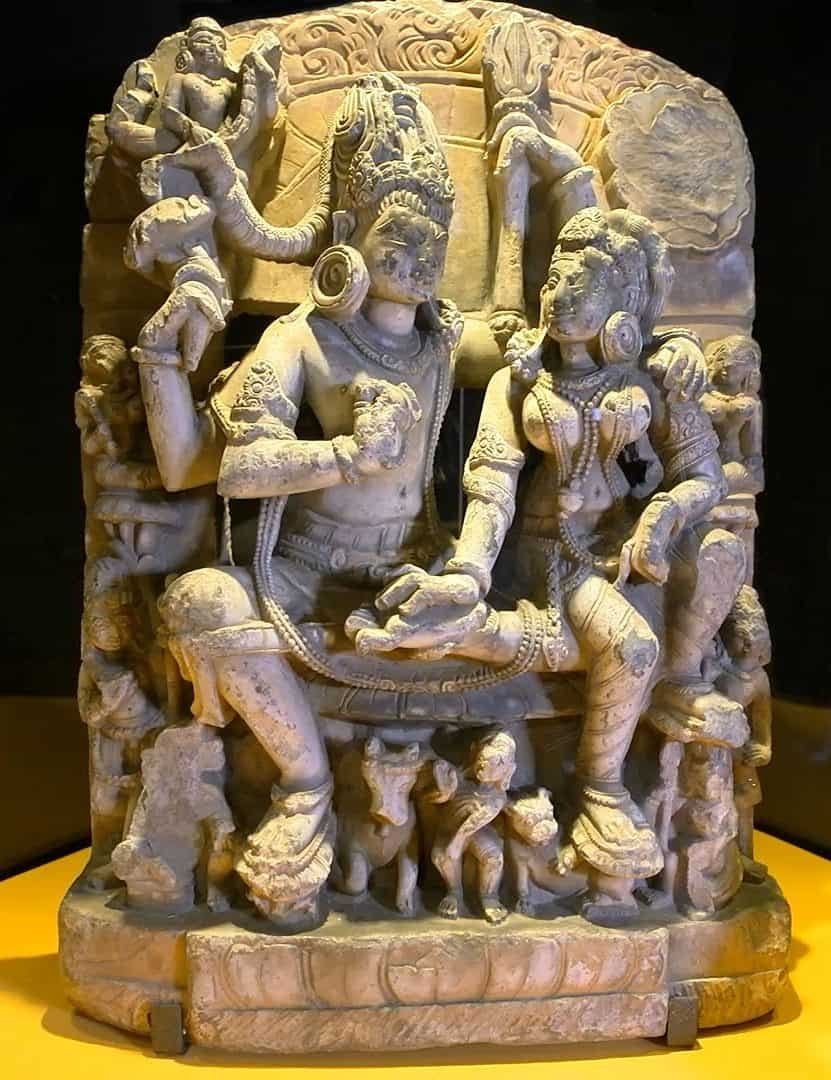
The collections of the Giuseppe Tucci National Museum of Oriental Art are no longer at Palazzo Brancaccio: the historic home on the Esquiline has been left, and today the Asian art of the Italian State is seen at EUR, inside the Museum of Civilizations, at the Palazzo delle Scienze, Piazza Guglielmo Marconi 14, 00144 Rome. Anyone who arrives on Via Merulana looking for the museum finds a private palace that hosts events and an exhibition space, no longer the display cases with Gandhara and thangkas. You get to EUR by Metro line B, EUR Fermi stop, or by buses 30, 170, 671, 714 and 791. On the adjacent streets parking is generally free. Hours are Tuesday to Sunday, 8:00 to 19:00, with last entry at 18:30 and closed on Monday: a state museum that opens at 8:00 in the morning is a Roman rarity and worth taking advantage of. The full ticket costs €10, the reduced ticket €2 for citizens of the European Union between 18 and 25 years old, free under 18 and for the other categories provided by state regulations. There is also a €5 Amico ticket and an annual museum card for €22 with unlimited entries. Entry is free on the first Sunday of every month, as in all the cultural sites of the State. Booking is not needed for individual visitors and is instead required for groups and school classes, with contingents of 25 people. Phone 06 549521, email mu-civ.info@cultura.gov.it, official site museodellecivilta.it. The museum occupies two buildings on the same square, the Palazzo delle Scienze at number 14 and the Palazzo delle Arti e Tradizioni Popolari at number 8: the Asian part is in the first.
This guide is part of the collection dedicated to the state museums of Rome, where you'll find the other state venues in the city and the free-admission rules that apply here too.

Where the collections of the Giuseppe Tucci National Museum of Oriental Art really are today
Let's start from the point that sends more visitors astray than any other. For 58 years the museum had a single address, Palazzo Brancaccio on the Colle Oppio, and that address entered the paper guidebooks, the printed maps, the memory of two generations of Romans. In September 2016 three ministerial decrees dissolved four autonomous institutes and merged them into a single body, the Museum of Civilizations. In 2017 the crates crossed the city: collections, photographic archive and library of the oriental art museum arrived at the Palazzo delle Scienze at EUR, where the prehistoric and ethnographic collections of the Pigorini had been since 1975-1977 and, since 1967, those of the Early Middle Ages.
The practical consequence is clear. If you're looking for the Giuseppe Tucci National Museum of Oriental Art as an autonomous institute, with its own ticket office and its own front door, that body no longer exists: the Museum of Civilizations exists, which owns and keeps that heritage, and which presents it today under the heading of the Asian Arts and Cultures collections. Tucci's name hasn't disappeared, it remains written on the collections and in the institution's history, but the administrative unit that carried that name has merged into a bigger one.
The second consequence is less obvious and concerns what you will see. The Asian holdings number tens of thousands of pieces. What is physically on display today is a selection, mounted inside a route that the museum itself defines as a reinstallation in progress. Anyone who arrives expecting 30 rooms in a row with the labels of a 19th-century encyclopedic museum will be thrown. Anyone who arrives knowing they are entering a declared cultural work site, with about 100 chosen works put in dialogue, leaves happy. The difference between the two experiences is all in expectation, and it's best to adjust it before buying the ticket.
An opinion, to not beat around the bush: the move to EUR took away from the museum the casual public that used to pass along Via Merulana and has not yet given back the public it deserves. It's an undervisited museum relative to the quality of what it holds, and for the attentive visitor that's an advantage, because you walk around in silence and without elbows.
What is the Giuseppe Tucci National Museum of Oriental Art - Museum of Civilizations
The technical definition: a state collection of Asian art and archaeology born in 1957 from an agreement between the Ministry of Public Education and the Italian Institute for the Middle and Far East, today part of the Museum of Civilizations. The useful definition: it's the place where you see what Italian archaeology excavated in Asia in the 20th century, and what a single scholar managed to put together by traveling where almost no European went.
The founding decree, DPR no. 1401 of 1957, justifies the creation of the museum with a formula worth remembering: to give the country an institution it lacked. Italy, which had leading orientalists and active archaeological missions, had no national Asian museum, while Paris had the Guimet and London had the British Museum's collections. The gap was closed quickly and with a precise choice: not a museum of purchases on the antiquities market, but a museum of excavation. The initial core is documented archaeology, with contexts and stratigraphy, not objects bought by a collector of taste.
This also explains the shape of the collections, which to a distracted eye look unbalanced. There are thousands of fragments from Swat and Ghazni and relatively few isolated masterpieces. There are very strong cores on Iran, Afghanistan, Pakistan, Tibet and Nepal, and thinner ones on Japan and Vietnam, grown through donation. It's not a flaw of taste, it's a snapshot of where Italy worked in the field.
Giuseppe Tucci, the man who brought the museum into being
Giuseppe Tucci was born in Macerata on June 5, 1894 and graduated in Letters at the University of Rome in October 1919. Between 1925 and 1930 he taught Italian, Tibetan and Chinese at the universities of Shantiniketan and Calcutta. Shantiniketan is the school founded by Rabindranath Tagore, and that is no ordinary biographical detail, because Tucci's orientalism was born inside an India debating itself, not inside a European library. In 1929 he was named Academician of Italy. The following year he obtained the chair of Chinese language and literature at the Istituto universitario orientale in Naples. From 1932 he taught religions and philosophy of India and the Far East at the University of Rome.
The expeditions are the heart of his biography: eight in Tibet between 1929 and 1948, six in Nepal between 1950 and 1954. He went where you arrived on foot and by mule, into regions the Tibetan administration kept closed, and came back with manuscripts, paintings on cloth, bronzes, casts, photographs and notebooks. In 1933, together with Giovanni Gentile, he promoted the founding of the Italian Institute for the Middle and Far East. It was a creature of its time, grown inside the cultural policy of the regime, and we say so because the history of institutions should be told in full. Tucci was its president from 1947 to 1978 and honorary president from 1979. He died in San Polo dei Cavalieri, in the Lucretili mountains, on April 5, 1984.
He founded the museum in 1957 with Domenico Faccenna and Guglielmo De Angelis d'Ossat, and it was named after him only on May 31, 2005, 21 years after his death. Faccenna is the name to keep in mind when looking at the Gandhara sculptures. He directed the Italian excavations in the Swat valley for decades, and most of what you see in gray schist passes through his hands and his excavation notebooks.
The man can be debated at length, and he is, in Italy and abroad. The fact remains that without that biography, half academic and half adventure, Italy would have no state Asian museum. Our verdict: in front of these display cases it pays to tell the story of the man before the objects, otherwise the thangkas remain painted cloth and don't become the result of a journey at 4,000 meters.
From 1957 to today: the history of the Giuseppe Tucci National Museum of Oriental Art
The museum opened to the public on June 16, 1958 at Palazzo Brancaccio. At first it housed the objects owned by the Italian Institute for the Middle and Far East, including those collected by Tucci in Tibet and Nepal between 1928 and 1954. Then came the materials from the excavations conducted by the Institute: Shahr-i Sokhta in Iran, Ghazni in Afghanistan, the Swat valley in Pakistan. Every campaign added crates and the building filled up.
In December 1974 the museum passed to the newly created Ministry for Cultural and Environmental Heritage, Giovanni Spadolini's creature, which for the first time placed Italian heritage under a single ministry. In 2005 came the naming after Tucci. In 2011 the Italian Institute for Africa and the Orient, heir to IsMEO, went into liquidation, and this opened a long season of uncertainty over the collections in storage and the library.
September 2016 is the date that changes everything: three decrees by the then minister Dario Franceschini established the Museum of Civilizations by merging the Luigi Pigorini Prehistoric and Ethnographic Museum, the Lamberto Loria Museum of Folk Arts and Traditions, the Alessandra Vaccaro Museum of the Early Middle Ages and the Giuseppe Tucci Museum of Oriental Art, to which the collections of the dissolved African Museum had already been added in 2011. In 2017 came the move to EUR. On October 3, 2024 EUR_Asia opened, the itinerary that for the first time brings together in one exhibition the Asian materials of the former museum of oriental art and those of the former prehistoric and ethnographic museum, with a declared horizon of December 31, 2030 and the aim of reaching a permanent installation.
A span of 67 years in a list of dates looks like bureaucracy. In fact they tell a precise arc: a museum born from state archaeological missions, grown through private bequests, left without a home when the historic home was no longer sustainable, and now relocated inside a larger container that is rethinking from scratch the way non-European cultures are displayed.
Palazzo Brancaccio, the historic home the Giuseppe Tucci National Museum of Oriental Art has left
The building is worth describing, because it is part of the history of these collections and because many visitors still end up there by mistake. Palazzo Brancaccio on the Colle Oppio is the last noble palace built in Rome, and its story says a lot about the city of the late 1800s. It was financed with the money of the American Mary Elizabeth Bradhurst Field, whose daughter married Prince Salvatore Brancaccio bringing a million dollars as dowry: one of those alliances between penniless Roman aristocracy and American wealth that would later become material for novels.
The construction sites followed one another for a long time: Gaetano Koch between 1879 and 1883, Luca Carimini between 1886 and 1890, then Rodolfo Buti and Giuseppe Sacconi between 1893 and 1922. Sacconi is the architect of the Vittoriano, and the palace shows the same idea of late-Umbertine magnificence. Inside there are frescoes, reception rooms, an alcove. In the park the Coffee House was decorated by the Roman painter Francesco Gai.
Today the property is divided. The larger part works as a venue for weddings and society events. One floor houses a private exhibition space of about 1,800 square meters. The end of the block is occupied by the Teatro Brancaccio. If you want to see those rooms, the way in is a temporary exhibition or an event: the page on Palazzo Brancaccio collects what can be visited today.
Blunt opinion: the museum at Palazzo Brancaccio was beautiful to walk through and very hard to manage. Stately rooms, difficult light, humidity, routes dictated by a building designed to receive and not to preserve. Those who miss it, and there are many, rightly miss the atmosphere. But a Butkara relief in a room with 19th-century stuccoes was also a conservation problem nobody talked about.
The Palazzo delle Scienze and EUR: where the Giuseppe Tucci National Museum of Oriental Art lives now
The Museum of Civilizations occupies two rationalist buildings facing Piazza Guglielmo Marconi and connected by an imposing colonnade. They were designed, like the whole district, for the 1942 world's fair that was never held because of the outbreak of the Second World War. The Palazzo delle Scienze was meant to host the Exhibition of Universal Science. The Palazzo delle arti e tradizioni popolari was meant to host the exhibition of the same name and was inaugurated only in 1956, 14 years late for its purpose.
The Museum of the Early Middle Ages has been in the Palazzo delle Scienze since 1967, the prehistoric and ethnographic museum since 1975-1977. The Asian collections arrived in 2017. The result is a condominium of disciplines inside an architecture of travertine and giant orders, with monumental staircases that the current installation uses as exhibition space instead of treating them as a mere passage.
If you want to understand the district before going in, find half an hour for a walk: the page on EUR explains how it came about, the one on the EUR lake tells you where to sit afterward, and a short distance away are the Palazzo dei Congressi, the Palazzo dello Sport and the Fuksas Cloud.
How to get to the Giuseppe Tucci National Museum of Oriental Art at EUR
The simplest way is Metro line B, EUR Fermi stop: you exit, walk up the avenues toward the square, and in a few minutes on foot you are in front of the colonnade. If you prefer the surface, use lines 30, 170, 671, 714 and 791, which serve the square and the adjacent streets. From Termini the most direct route is Metro B toward Laurentina, with no changes.
By car you arrive from Via Cristoforo Colombo or from the Pontina. On the streets around the square parking is generally free, and on weekdays, outside office hours, you find a spot without circling for long. It's one of the rare Roman museums where coming by car is not a sentence, and for those with small children or mobility problems this changes the day.
A practical warning that no map gives you: Piazza Guglielmo Marconi is vast and the museum's two buildings look alike. The entrance for the Asian collections is at the Palazzo delle Scienze, number 14. The Palazzo delle Arti e Tradizioni Popolari is at number 8. If you pick the wrong door you lose a good 10 minutes crossing the square.
EUR_Asia: how to visit the Giuseppe Tucci National Museum of Oriental Art today
The itinerary you see today is called EUR_Asia and opened on October 3, 2024. It is not a temporary exhibition in the usual sense, with three months of life and then dismantling. The museum lists it as running until December 31, 2030 and presents it as the start of the permanent re-installation of the Asian collections. Put differently, what you walk through is the first chapter of a museum that is rewriting itself while you visit it.
The curatorial choice deserves explaining, because it is unusual and because without an explanation it can look like a stopgap. For the first time the Asian materials that came from the former National Museum of Oriental Art and those that came from the former National Prehistoric and Ethnographic Museum are displayed together. Until yesterday they were two worlds separated by a disciplinary wall: on one side art and archaeology, on the other ethnography. A Chinese wooden Buddha ended up in the first category, a ritual mask in the second, and nobody asked if that border made sense. EUR_Asia erases it and puts the objects in dialogue by theme.
The project is coordinated by the director of the Museum of Civilizations, Andrea Viliani. Scholars of the Asian collections collaborated on the curatorship and scientific research, among them Paola D'Amore, Maria Luisa Giorgi, Laura Giuliano and Michael Jung, and the museum worked in dialogue with the Museo d'Arte Orientale in Turin, with Davide Quadrio, Anna Musini and Francesca Filisetti, and with Laura Vigo for the Auriti core.
Chronicles and specters of restoration
The first section is titled "Chronicles and Specters of Restoration: Scientific Research for a Critical Museology" and occupies the entrance and the monumental staircase. It's the part hurried visitors walk through without looking, and it's the one that explains everything else. Here the museum displays scientific analyses next to the works: X-rays, pigment investigations, reconstructions of conservation histories. The stated aim is to show that a museum object is not a given of nature, but the result of a chain of interventions, restorations, additions, later readings.
Accompanying the section is a sound installation by Valentina Ciardelli, "Oro" in its Italian version and "Huángjin" in Chinese, written for a trio of harp, double bass and guqin, the seven-string Chinese zither. Hearing the guqin while climbing a rationalist staircase is an experience worth the ticket on its own, and those in a hurry miss it.
The porticoes and the 16 narratives
The central body of the installation is in the porticoes, in the spaces of the loggias that run around the monumental staircase. The stated reference is Buddhist cave architecture: the niches and corridors of the caves dug along the caravan routes of Central Asia and China, where images stood inside cavities and were viewed while walking. Here about 100 works are displayed, arranged in 16 cross-cutting narratives that cut across geographic borders.
The themes the narratives take on are the big ones: visions of death and immortality, care of the body and the spirit, contemplative techniques, shades of gender, cosmologies, bestiaries, calligraphy, the symbolism of colors. So you'll see a 19th-century Korean white porcelain next to a Sasanian silver of the 6th-7th century, and a Gandhara schist relief of the 2nd-4th century beside a Chinese bronze of the 5th-6th. It's not confusion, it's a choice.
Two pieces to keep an eye on in particular. The seated Buddha in lacquered and gilded wood, 16th-17th century, Ming dynasty, from Fujian, 117 centimeters tall, which carries the inventory number of the old prehistoric and ethnographic museum. And the standing Guanyin, 10th-12th century, Liao dynasty, northern China, in wood, 124 centimeters tall, which carries the inventory number of the former museum of oriental art. They are two images of compassion, arrived in Rome by different roads and for different reasons, and today they look at each other.
The central installation and the contemporary artists
At the center of the itinerary is a work by Gala Porras-Kim, an artist born in Bogotá in 1984, titled "A Recollection Returns With a Soft Touch". The theme of her work is exactly the question a museum like this carries with it: what it means for a ritual object to be kept in a display case, far from the context it was made for, and what we owe to those who produced it. At the center of the installation a figure of Buddha in the abhayamudra gesture, the raised hand meaning absence of fear, shelters under a chatra, the ritual umbrella, designed for the occasion by Andrea Anastasio.
Heba Y. Amin, an artist born in Cairo in 1980, also contributed to the project. The presence of contemporary authors inside an archaeological collection is not decoration. It's the way this museum declares that it does not want to reconstruct the 19th-century narrative of civilizations in display cases.
Giulio Rosso's stained glass and the future installation
One section places the objects next to the architectural testimonies and the ethnographic objects of the former prehistoric and ethnographic museum that had not been on display for decades, in view of the permanent arrangement. The visual point of reference is Giulio Rosso's stained glass window, which belongs to the building of the 1930s: a piece of rationalist decoration that today works as a backdrop for Asian works, with a short circuit worth noticing.
The fifth section is not physical: a QR code opens the digital in-depth materials, brochures and sheets. Bring headphones and a charged phone, because the texts in the rooms are deliberately dry and the long part is online.

The collections of the Giuseppe Tucci National Museum of Oriental Art, area by area
What follows is the complete picture of the collections, organized as the museum presents them: a geographic and cultural route running from the eastern Mediterranean to the Pacific. Not everything is visible at any given time, and further on I explain what is on display and what is in storage. But knowing the whole matters, because when a single Sasanian plate is in front of you, you understand it is the tip of a core, not an isolated object that happened to land there.
The ancient Near and Middle East in the Tucci collections
This is the section where Italy worked the most. It starts from the 4th-2nd millennium BC with the materials of Shahr-i Sokhta, the "burnt city" of Iranian Sistan, one of the great sites of Italian archaeology in Asia. There are the pottery productions of Tepe Siyalk, in central Iran, and Tepe Giyan, in western Iran: ceramics painted with ibexes, water birds, geometric motifs that look modern and are 5,000 years old.
The Iron Age, between the 15th and 6th century BC, is told through Iranian pottery and metalwork and the materials of the Eurasian nomadic cultures. Then come the empires: Achaemenids, Parthians, Sasanians, from the 6th century BC to the 7th AD, 1,300 years of power over the Iranian plateau.
The pieces worth seeking out: a jar from Haçilar, in southwestern Anatolia, from the end of the 6th or the beginning of the 5th millennium BC. A gold diadem from northern Iran, 2100-2000 BC. A silver rhyton in the shape of a bull's head, also from northern Iran, of the 4th century BC. And a Sasanian plate in niello silver of the 6th-7th century. The Sasanian plate is the kind of object that explains by itself how late-antique Persia talked with Byzantium and with China along the same road.
Shahr-i Sokhta and why the Italian excavations happened
Shahr-i Sokhta deserves a paragraph of its own, because it is the site that a considerable part of the oldest material comes from and because its name recurs in the captions without almost anyone explaining what it was. It was an enormous Bronze Age settlement in Sistan, in eastern Iran on the border with Afghanistan, in an area that is desert today but was then crossed by the waters of the Helmand. The Italian excavations documented an urban settlement there, a craft area and a vast necropolis.
The reason the finds are in Rome is the 20th-century practice of excavation concessions, which provided for the division of the materials between the host country and the mission. It's a topic that is debated today, and it's right that it is debated. The museum tackles it explicitly in the section dedicated to critical museology, and in the captions it warns that the information derives from historical documentation and from cataloguing that do not necessarily reflect the current state of knowledge. The revision of the database and the provenance studies are declared to be under way.
Archaeology and art of the Islamic world
The Islamic collection covers 11 centuries, from the 8th to the 19th, and includes ceramics, metalwork, and decorative architectural elements in marble and terracotta from Iraq, Moorish Spain, India, Pakistan, Ottoman Turkey. The Iranian core is the strongest, with oil paintings and paintings on papier-mâché from the Qajar period, the Persian 19th century of court portraits with joined eyebrows and embroidered robes.
Among the notable pieces: a cup from Nishapur, in eastern Iran, with a cheetah hunting scene, 9th-10th century. A metallic luster plate from Kashan with an inscription in naskhi script, early 13th century. A fired-clay decoration from the palace of Sultan Mas'ud III at Ghazni, datable between 1099 and 1115. A copper incense burner with openwork decoration, Iran, 19th century.
The metallic luster of Kashan deserves a long stop. It is a technique in which metal oxide is applied over the glaze and fixed in a second firing in a reducing atmosphere. The result is a surface that changes color with the angle of the light, golden in one spot and coppery two centimeters further on. Try moving sideways while looking at it: it's the only way to understand why those potters were paid like goldsmiths.
Ghazni and Afghanistan
Ghazni, in eastern Afghanistan, was the capital of the Ghaznavids, the Turkic dynasty that between the 10th and 12th century ruled an empire extending from eastern Iran to northern India. The Italian archaeological mission worked there for a long time and brought back to Rome the materials of the palace of Mas'ud III, with its extraordinary decoration in marble and fired clay. The bands inscribed in Persian that ran along the palace courtyard are among the most important documents for the history of the language and art of that world.
Look at the terracottas carefully: Ghaznavid plant ornament is a vocabulary that comes from the Abbasid repertoire and ends up, centuries later, in the mosques of Mughal India. Those who know Delhi or Lahore recognize here the ancestor of forms they have already seen 4,000 kilometers away.
The South Arabian antiquities
A smaller and little-visited section concerns ancient Yemen, with works ranging from the 8th century BC to the 7th AD. It is the world of the South Arabian kingdoms, Saba, Ma'in, Qataban, Himyar, that of incense and myrrh, of dams and inscriptions in monumental alphabet. The South Arabian funerary stelae have a stylization of the face that strikes anyone: big eyes, straight nose, barely sketched mouth, and an air of abstraction that interested European sculptors in the 20th century.
Gandhara and the Swat valley, the heart of the Tucci collections
This is the heart of the collection and the reason scholars come to Rome. Gandhara is the region of the ancient Indian northwest, today divided between Pakistan and Afghanistan, where between the 1st and 5th century AD the Buddhist art took shape that for the first time represented the Buddha in human form. Before then he was indicated with symbols: a footprint, a tree, a wheel, an empty throne.
The gray schist reliefs on display in Rome come largely from the excavations of the Italian archaeological mission in the Swat valley, in Pakistan, and in particular from the sanctuaries of the Saidu Sharif and Butkara area. They tell scenes from the life of the Buddha, processions of donors, bejeweled bodhisattvas, princely figures inside architecture with columns, arches and brackets.
Among the pieces to look for: a schist statue of Maitreya, the Buddha of the future, of the 2nd-3rd century AD. A slab of architectural decoration with acanthus and palmettes. And a relief with a Hercules recognizable by the club and the lion skin. This last one is the piece that explains by itself what Gandhara is: the Greek hero gets there with the conquest of Alexander and with the Indo-Greek kingdoms, and is absorbed into Buddhist iconography as Vajrapani, the thunderbolt bearer, the armed companion of the Buddha. If it comes up in front of you, stop: you are looking at the Hercules of Lysippos turning into an Indian protective deity.
India in the collections of the Giuseppe Tucci museum
The Indian section covers the 9th to the 20th century and holds together the "great tradition" and the folk tradition: sculptures, temple stelae, bronzes, folk paintings, miniatures. The stone stelae come from temples of central and eastern India and keep that density of bodies, limbs and attributes that to a European eye looks like crowding and to an Indian eye is theology legible line by line.
The southern bronzes, when they are on display, are the part I recommend looking at longest: the lost-wax technique in South India reaches such perfection that the figures seem to weigh half of what they weigh. The Shiva of the Roman collection is one of those images that, once seen, stay with you.
Tibet and Nepal, the core collected by Giuseppe Tucci
Here we are in the core collected personally by Giuseppe Tucci. There are furnishings, ritual objects, statues in metal alloy, scroll paintings on cloth, the thangkas, votive clay tablets called tsha tsha, detached frescoes, furniture and jewelry. A selection of it is on view, and this is one of the points where the visitor clearly perceives the gap between what is owned and what is visible.
The main pieces: a bronze statue of the bodhisattva Padmapani, Kashmir and western Tibet area, 11th-12th century. A bronze statue of the Buddha Shakyamuni of the 14th century. A painting with Yama dancing on a corpse, western Tibet, 15th-16th century. A painting from eastern Tibet of the 17th century. Yama is the lord of death and his terrifying look is not malice: in Tibetan Buddhism wrathful deities are protective forces, and their figurative violence serves to frighten obstacles, not the faithful.
A technical recommendation on thangkas: they are painted on fabric, they fear light, and that's why they are rotated. If you see three on display today, in six months they could be another three. It's the best reason to come back.
Southeast Asia
A varied and underrated section. It includes Khmer finds from Cambodia and Thailand, small bronzes, ceramics, sandstone sculptures and Buddha heads datable between the 9th and 18th century. Gilded wooden statues from 19th-century Myanmar. Texts on lacquered palm leaves. Figurines linked to the Ramayana. Musical instruments. A collection of goldsmith art from Indonesia datable between the 4th and 15th century. Life-size terracotta statues. And the puppets of Javanese shadow theater, the wayang.
The Khmer sandstone heads are what will stop your companions even if they know nothing about Asia: that barely sketched smile, the closed eyes, the broad forehead are a formal invention with few parallels in world art. And the Javanese puppets, cut out of leather and perforated, should be looked at remembering that the original audience saw only their shadow projected on a cloth.
China in the collections of the Giuseppe Tucci museum
The Chinese collection runs from the Neolithic to the 20th century and includes jades, bronzes, textiles, ceramics. There are four stone heads of Buddha and bodhisattvas from the cave temples of Tianlongshan, in Shanxi. Tang dynasty funerary figurines, 618-907. Monochrome vases of the Qing dynasty, 1644-1911.
Pieces to look for: a bronze fitting with a zoomorphic mask of the Shang dynasty, 12th-11th century BC. A terracotta funerary statue depicting a storyteller, from Sichuan, datable to the Eastern Han dynasty, 25-220 AD, or to the Three Kingdoms period, 220-280. A painted and gilded wooden statue of Guanyin, Northern Song, 960-1127, or Jin, 1115-1234. A funerary procession in sancai glazed ceramic of the Ming dynasty, 1368-1644.
The terracotta storyteller is the piece I recommend to those who bring kids: it's a figure laughing with its mouth wide open, belly uncovered and a drum under its arm, and it belongs to a genre of funerary figurines meant to entertain the dead in the afterlife. 2,000 years later it still works, and people smile looking at it.
Korea in the collections of the Giuseppe Tucci museum
The Korean core largely comes from a donation by the Republic of Korea in 1960, with ceramics of the Goryeo and Joseon dynasties, and covers from the Three Kingdoms, 300-668, to the end of the Joseon dynasty in 1910, with the addition of contemporary works donated by artists of the 20th and 21st century.
Pieces to look for: a funerary urn in the shape of a building of the 10th century. A mallet-shaped bottle in glazed ceramic, Goryeo, late 12th century. A porcelain sweets dish, Joseon, 18th century. Porcelain gourd bottles with plant decoration, Joseon, 19th century. Korean celadon of the Goryeo era, with that blue-green the Chinese themselves considered unsurpassable, is a chapter you can see in very few places in Italy.
Japan in the collections of the Giuseppe Tucci museum
The Japanese collection includes mirrors and liturgical objects in bronze from the Heian, 794-1185, and Kamakura, 1185-1333, periods, archaeological materials, a wooden statue of Buddha from the Edo period, 1615-1868, and ceramics including the donation made to IsMEO by Kitaoji Rosanjin, 1883-1959.
Rosanjin is a character who deserves two lines: ceramist, calligrapher, restaurateur, theorist of cuisine, he maintained that the plate and the food were a single work and made his own tableware for his own restaurant. His ceramics are not museum objects by purpose. They are utensils, and should be looked at imagining fish inside them.
Vietnam in the collections of the Giuseppe Tucci museum
The Vietnamese section comes from a selection of the bequest of Ivanoe Tullio Dinaro and includes glazed ceramics from the 12th to the 18th century. It is the smallest core and one of the most instructive, because it shows a production that absorbed Chinese models and reinterpreted them with greater decorative freedom, with quick brushstrokes and barely sketched figures.
The donations that made the Giuseppe Tucci National Museum of Oriental Art grow
Alongside the excavations, the museum grew through private generosity and cultural diplomacy. The State pursued a policy of acquisitions made of negotiations with the export offices, purchases on the antiquities market, international exchanges, in particular with Thailand and Pakistan, and donations. The list of donors is a small social history of Italian collecting.
Giovanni Andreino left a collection of Burmese art. Giacomo Mutti donated objects from different Indian contexts. The Republic of Korea, in 1960, gave ceramics of the Joseon and Goryeo dynasties. Antonia Gisondi and Manlio Flacchi, in 1970, handed over objects of the Chinese world. Pompeo Carotenuto, in 2017, donated Iranian ceramics ranging from the Iron Age to the imperial period. Ivanoe Tullio Dinaro left the Vietnamese ceramics.
The most important bequest is that of Francesca Bonardi, wife of Giuseppe Tucci. The donation came in 2000 and upon her death the inheritance was added, because Mrs. Bonardi had named the National Museum of Oriental Art her universal heir: overall about 5,000 objects. It is the gesture that in effect doubled the Tibetan and Nepalese holdings and that also brought into the museum the documentary material of the expeditions.
An observation: in a museum of excavation the private donation is the indispensable counterweight. The missions bring what is found underground, always fragmentary and often funerary. The collectors bring what stayed alive above ground, objects of use, paintings, textiles, tableware ceramics. Without the donations this museum would be a sequence of archaeological potsherds. Without the excavations it would be a parlor of curiosities. It's the crossing that makes it serious.
What is on display and what is in storage at the Museum of Civilizations
The number you need to understand: the Asian collections of the Museum of Civilizations, adding up the two cores of origin, count about 55,000 objects, of which over 15,000 from the former prehistoric and ethnographic museum and about 40,000 from the former museum of oriental art. The works of the EUR_Asia itinerary are about 100. The ratio is merciless and should be said without hedging: what you see is a tiny fraction of what there is.
It's not a Roman anomaly. All the great encyclopedic museums of the world display a very small percentage of their collections, and in the case of fragile materials like paintings on cloth, textiles and papers, permanent display would be a death sentence. But here there is one more element: the 2017 transfer involved a complete relocation of storage, photographic archive and library, and the final re-installation is multi-year work.
The current phase has a reference date declared by the museum: the progressive re-installation of the Asian collections is aimed at the ground floor of the Palazzo delle Scienze, with 2026 as the horizon for merging the two cores into a single permanent itinerary. Those who want to be sure of what they will find open on the day of the visit should do the simplest thing in the world: a phone call to 06 549521 or a check on the official website.
The rooms closed for works at the Museum of Civilizations
A practical fact that changes the day for those who don't know it. On the first floor of the Palazzo delle Scienze the collections of African, American and Oceanian Arts and Cultures are temporarily inaccessible, for checks on the anti-seismic devices, for the construction of new fire-prevention and air-conditioning systems, for the restoration of the historic window frames and for the re-installation. The reopening is indicated at the end of the works, expected in winter 2026. In the meantime, at the entrance of the Palazzo delle Scienze the museum presents "In corso d'opera", a rotating selection of masterpieces from the closed collections.
Translated into visit terms: if you come for Asia, what interests you is open. If you were counting on doing Africa and Oceania in one go as well, adjust the schedule. The rotating selection at the entrance is a good compensation, but it's a display case, not a plan.
The rest of the Museum of Civilizations: what you see with the same ticket
The Giuseppe Tucci National Museum of Oriental Art is now one of the parts of a much larger organism, and anyone arriving at EUR would be making a mistake to consider the other collections a side dish. Here is what is in the same complex.
Prehistory and protohistory, the legacy of Luigi Pigorini
In 1875 the archaeologist Luigi Pigorini founded the Royal National Prehistoric and Ethnographic Museum at the Collegio Romano, with the aim of documenting the prehistoric cultures of Italy, Europe and beyond Europe. The first core came from the collection of the Jesuit Athanasius Kircher, the famous Kircherian Museum. The museum hosted the first university chair of paleoethnology in Italy and coordinated the prehistoric excavations of the peninsula.
Between 1975 and 1977 the collections moved to the Palazzo delle Scienze, where they are now on the second floor with a re-installation titled "Prehistory? Stories of the Anthropocene", which reopens the very notion of prehistory. The holdings exceed 150,000 finds. Among the famous pieces: the Neanderthal skull Guattari 1 from the Guattari Cave at Circeo, three Paleolithic female statuettes from Savignano, from Lake Trasimeno and from La Marmotta, the dugout canoes of Lake Bracciano, the materials of the Neolithic village of La Marmotta, the finds of the Eneolithic necropolis of Gricignano d'Aversa, the Nuragic bronzes and the Praeneste Fibula in gold. The page dedicated to the Pigorini Prehistoric Museum goes into detail.
Early Middle Ages
The Early Middle Ages collection has been in the Palazzo delle Scienze since 1967 and preserves the materials of the centuries between the fall of the Western empire and the year 1000, with Lombard grave goods and goldsmith works that are the most eloquent document of that period. Those who skip it lose the piece that holds together ancient Rome and medieval Rome: the page on the Museum of the Early Middle Ages tells the route.
African, American and Oceanian arts and cultures
These are the non-European ethnographic collections, temporarily closed for works as mentioned. They contain materials collected by missionaries, travelers, colonial officials, scientific expeditions, and are at the center of the critical review work the museum is conducting on provenance.
Former Colonial Museum
The collections of the dissolved African Museum merged here in 2011 and today the museum presents them under the name Ex Museo Coloniale, with a critical re-installation of the materials. The project of an Italo-African Museum named after Ilaria Alpi has been announced and long discussed. To date the collections are presented within the Museum of Civilizations as the collection of the Ex Museo Coloniale. Those who want to follow the story will find updates on the page about the Italo-African Museum Ilaria Alpi.
Paleontology and lithomineralogy
One of the lesser-known novelties: among the collections of the Museum of Civilizations there are now those of paleontology and lithomineralogy from ISPRA, that is, the historic holdings of the national geological service. It is the core that for years was indicated as the future museum of Italian geopaleontology named after Quintino Sella, with the collections of the National Geological Museum that from 1885 to 1995 were at Palazzo Canevari, in the Sallustiano district.
Italian folk arts and traditions, at the Palazzo delle Arti
On the other side of the square, at number 8, the Palazzo delle Arti e Tradizioni Popolari holds the Italian ethnographic collections gathered starting from the enterprise of Lamberto Loria. Sicilian carts, costumes, work tools, ex votos, nativity scenes, textiles: it's the museum of peasant and artisan Italy before industry, and in Italy it has no equal. The page on the Lamberto Loria Museum of Folk Arts and Traditions tells of its rooms, and the general page on the Museum of Civilizations holds the picture together.
What it costs and how to save at the Giuseppe Tucci National Museum of Oriental Art
The full ticket is 10 euros. The reduced ticket at 2 euros is for European Union citizens between 18 and 25. Under 18, admission is free for European Union citizens. Free entry extends to the categories provided by state regulations, including people with disabilities and their companion, European Union tourist guides and interpreters practicing their profession, ICOM members, students of certain university courses, teachers of art subjects, working journalists, European Union school groups with a reservation. There is a Friend ticket at 5 euros reserved for some agreements.
The smartest way to save, if you think you'll come back, is the annual card of the Museum of Civilizations: 22 euros for 12 months of unlimited entries, with invitations to events and discounts on the bookshop and courses. With two and a half visits you break even, and in a museum that changes its installation piece by piece it's a choice that makes sense.
Then there's the first Sunday of the month, free in all state cultural sites. It applies here too. The page on free museums in Rome collects the calendar of openings without a ticket.
The MIC card is not valid at the Museum of Civilizations
A point to clear up, because it creates misunderstandings every week at the ticket office. The MIC card, the 5-euro annual card reserved for those who live or study in the Metropolitan City of Rome Capital, gives access to the Civic Museums System, that is, to the museums owned by the city. The Museum of Civilizations is a state museum, depends on the Ministry of Culture and does not belong to the civic circuit: the MIC card does not allow entry here. If you hold one, use it for the Capitoline Museums and for the other city venues, and for EUR plan on the museum's ticket or card.
Guided tours and educational programs
The museum organizes guided tours: for individuals on weekends with a per-person fee, for groups with a flat rate and an English-language version at a higher cost, and reservations are made a few days in advance. Rates change over time: the exact numbers and the contacts of the educational service are on the museum's official website. Anyone bringing a school group must book in any case.
A curiosity about the Giuseppe Tucci National Museum of Oriental Art - Museum of Civilizations
Asian art arrived in Rome long before 1957, and not by way of an archaeologist but by way of a Jesuit. Athanasius Kircher, who lived between 1602 and 1680, taught at the Collegio Romano and put together one of the most famous collections in Europe, the Kircherian Museum, fed by the worldwide network of the Society of Jesus's missions. Among the objects that flowed into it were some from the Congo and Angola, from Brazil and Canada, and from China. When in 1875 Luigi Pigorini founded the Royal National Prehistoric and Ethnographic Museum, the first core of its collections came precisely from there.
The curiosity is that those objects and the ones Tucci brought almost three centuries later traveled by two opposite roads, the religious mission and the scientific expedition, and ended up in the same building at EUR. Until 2016 they remained divided by an administrative border that kept them in two different museums: the Kircherian objects were ethnography, Tucci's were art. The EUR_Asia itinerary is the first time they face each other in the same display case.
Anyone with a feel for the history of culture notices right away how much less technical the matter is than it seems. The distinction between art and ethnography doesn't describe the objects, it describes us, and the way 19th-century Europe decided which cultures had produced art and which had produced craft or costume. A Chinese Song bronze ended up on the left, an Oceanian mask on the right, and nobody asked for the criterion. Seeing that border fall inside a palace built for a 1942 world's fair has something paradoxical about it, and is worth the trip to EUR.
It's the strongest cultural reason to come to this museum today. You don't come for the number of pieces on display, which is modest. You come to witness a museographic change of paradigm live, with the works as the occasion.
Something nobody tells you about the Giuseppe Tucci National Museum of Oriental Art - Museum of Civilizations
Almost nobody will tell you that the museum opens at eight in the morning. In the Roman imagination museums open at nine or half past nine. Here the door opens at 8:00 and closes at 19:00, with last entry at 18:30, Tuesday to Sunday. A full hour's head start on the whole city, in a district where at eight in the morning only ministry employees are about. If you have an afternoon flight from Fiumicino, this museum is halfway and opens when the others are asleep.
The second thing nobody says concerns the relationship between what is owned and what is displayed. The museum's Asian collections overall exceed 50,000 units. The current itinerary shows about 100. There is no intention of hiding it, the museum declares it openly, but the visitor who doesn't know arrives with the idea of an encyclopedic museum and finds a reasoned selection. Knowing in advance the ratio between the two numbers completely changes the mood of the visit.
The third is that the museum's captions contain a notice that almost no Italian museum has the courage to write: the information derives from historical documentation and from cataloguing that do not necessarily reflect the current state of knowledge, and the revision of the database, with particular attention to provenance studies, is under way. Translated: some attributions and some provenances written in the 1960s are now under discussion, and the museum prefers to say so rather than pretend nothing is happening.
The fourth, the most practical: the African, American and Oceanian collections on the first floor are closed for works until the end of the construction site, indicated for winter 2026, with a rotating selection of masterpieces at the entrance. Anyone planning a complete visit of the whole Museum of Civilizations needs to know this before leaving home.
The advice I give you for visiting the Giuseppe Tucci National Museum of Oriental Art - Museum of Civilizations
Come early in the morning, and on a weekday. At a quarter past eight you'll have the porticoes all to yourself, the raking light on the loggias and the sound installation coming through clean, without the buzz of groups. At 11 the museum fills with school classes headed to the Pigorini and the silence ends. In an itinerary built on details and on relationships between objects, silence is not a luxury, it's a working tool.
Second piece of advice: ask at the ticket office what is open that day. In a structure in permanent re-installation the sections rotate, and knowing at the outset what you can see avoids wandering aimlessly. It's 30 seconds of conversation worth half an hour of visit.
Third: don't make the mistake of considering EUR_Asia an appetizer and rushing to the second floor for prehistory. The Asian itinerary asks for at least an hour and a half if you really look at it, with the 16 narratives to read and the works to compare. If you have three hours, split them into an hour and a half for Asia, an hour for prehistory, half an hour for the rest. If you have two hours, do only Asia and come back.
Fourth, and here I go against the grain of many guides: download the digital materials from the QR code before going in, not during. In the room the phone breaks up the visit, and the long texts are better read afterward, maybe sitting by the EUR lake 10 minutes away on foot. The room is for looking, not for reading on a screen.
Fifth: bring a light jacket even in summer. The Palazzo delle Scienze is a travertine building with enormous volumes and the air conditioning, calibrated for conservation, keeps temperatures that feel cool to a visitor standing still in front of a display case. You notice the problem at the 40th minute, when it's already too late.
Another well-known fact, yet rarely cited
That EUR was born for a world's fair never held, many people know. What is cited less is the delay with which the buildings meant for museums actually began to function as museums, and the chronology is worth laying out because it's almost comic.
The Palazzo delle Scienze was designed and built for the Exhibition of Universal Science of the 1942 fair. The fair was not held, because of the outbreak of the Second World War. The Palazzo delle arti e tradizioni popolari, a building of the same period, was conceived to host the Exhibition of Folk Arts and Traditions and was inaugurated only in 1956, 14 years after the date it was designed for. The Museum of the Early Middle Ages entered the Palazzo delle Scienze in 1967, 25 years later. The prehistoric and ethnographic collections of the Pigorini arrived there between 1975 and 1977, after a century spent at the Collegio Romano. The Asian collections arrived there in 2017, 75 years after the missed inauguration.
There's more. The two palaces are connected by an imposing colonnade, and that colonnade was not built to join two museums but to articulate a scenic axis of the fair. That today it works as a hinge between the Italian ethnographic collections and the world ones is an urbanistic coincidence nobody had planned.
The detail I prefer concerns Giulio Rosso's stained glass, a decoration of the 1930s conceived for a building of Fascist science, which today serves as a backdrop for Buddhist works and for a work by a Colombian artist born in 1984. A building constructed to celebrate an idea of civilization now hosts a museum that takes that idea apart piece by piece. It doesn't often happen that architecture and its content disagree so explicitly, and you can see it with the naked eye.
The right photo to take at the Giuseppe Tucci National Museum of Oriental Art - Museum of Civilizations
The photograph you take home from this museum is not the close-up of a statue. It's the monumental staircase shot from below, with the loggias of the porticoes rising on the sides and the works placed inside the niches: the reference to Buddhist cave architecture can only be read in a wide shot, and in a tight frame it's lost completely. Stand at the foot of the first flight, hold the camera low and vertical, and let in the whole height of the building.
The second photograph is the wooden Guanyin of the Liao era, 10th-12th century, shot three-quarter and slightly from below. It is 124 centimeters tall, which means that from a distance of a meter and a half you frame it whole without distorting it, and the wood with its traces of polychromy gives back a surface that under raking light becomes living matter. Don't use the flash: besides generally being forbidden, it flattens exactly what makes this sculpture beautiful.
The third is outside and doesn't cost the ticket: the colonnade joining the two palaces, photographed against the light in the first half hour after opening or in the last hour of the afternoon, when the shadows of the columns draw a regular sequence on the travertine and the square. It's the photograph that explains EUR better than any caption.
Two warnings. The first: the rules on filming change from section to section and in some display cases the loans have their own restrictions. The staff in the room are the authority on the matter and it pays to ask before shooting. The second: tripods and additional lights in a state museum require authorization, and it's not a formality you can get around with a smile. For a handheld photograph, without flash, in the great majority of cases there are no problems.
Some important events that happened here in history
On June 16, 1958 the National Museum of Oriental Art opened to the public at Palazzo Brancaccio. It was an opening loaded with political and cultural meaning: republican Italy, out of the war and the loss of the colonies, chose to give itself an Asian museum founded on archaeological research instead of on plunder. The first display cases showed the material of the Italian Institute for the Middle and Far East and Tucci's Tibetan and Nepalese collections.
In December 1974 the museum was transferred to the newly established Ministry for Cultural and Environmental Heritage. It was the step that brought all the state collections under a single ministry and gave protection an autonomous profile. On May 31, 2005 the museum received the naming after Giuseppe Tucci, 21 years after his death.
In 2011 the Italian Institute for Africa and the Orient went into liquidation, and in the same year the collections of the dissolved African Museum merged into EUR. In September 2016 the decrees that established the Museum of Civilizations ended the autonomy of four institutes and made them a single organism. In 2017 came the physical transfer of the Asian collections from the Esquiline to the Palazzo delle Scienze: crates, packing, handling of thousands of fragile objects across Rome, one of the most delicate logistical operations carried out on an Italian museum in that decade.
On October 3, 2024 EUR_Asia opened, and with it the progressive re-installation that the museum lists as running until December 31, 2030. In the same phase falls the construction work that closed the first floor of the African, American and Oceanian collections for anti-seismic and systems upgrades, with reopening expected at the end of the works in winter 2026.
In the building, it should be added, something else of historical importance has happened that concerns the neighboring collections: the Neanderthal skull Guattari 1, found at Circeo, one of the most debated finds of 20th-century European paleoanthropology, is kept and displayed here, and here are the dugout canoes of Lake Bracciano and the materials of the Neolithic village of La Marmotta, one of the best-preserved wetland sites in the Mediterranean.
Who has passed through the Giuseppe Tucci National Museum of Oriental Art - Museum of Civilizations
The first name is obvious and should be given in full: Giuseppe Tucci, 1894-1984, who was the originator of this museum, the material supplier of a good part of the collections and the president of the institute that deposited them. But with him came people who deserve more than a footnote.
Domenico Faccenna, an archaeologist, founded the museum together with Tucci in 1957 and directed the Italian excavations in the Swat valley for decades: the Gandhara reliefs you see bear his scientific signature. Guglielmo De Angelis d'Ossat, an architect and historian of architecture, director general of antiquities and fine arts, was the third founder and the man who made its administrative existence possible.
Giovanni Gentile, a philosopher, promoted the founding of IsMEO with Tucci in 1933: the institute the collections come from was born in the cultural climate of the regime, and leaving that out would be a historiographical convenience we cannot afford. Francesca Bonardi, Tucci's wife, was the decisive donor: in 2000 the donation, then the universal inheritance, for a total of about 5,000 objects.
Among the donors were Giovanni Andreino with Burmese art, Giacomo Mutti with Indian materials, Antonia Gisondi and Manlio Flacchi in 1970 with Chinese objects, Pompeo Carotenuto in 2017 with Iranian ceramics, Ivanoe Tullio Dinaro with Vietnamese ceramics. In 1960 it was the Republic of Korea that donated the Goryeo and Joseon ceramics, and the Japanese ceramist Kitaoji Rosanjin, 1883-1959, a legendary figure of 20th-century Japanese culture, donated his own works to IsMEO.
In the history of the building and of the neighboring collections pass Luigi Pigorini, founder in 1875 of the prehistoric and ethnographic museum, and, through the collection, the Jesuit Athanasius Kircher, 1602-1680, whose museum at the Collegio Romano formed its first core. Today the Museum of Civilizations is directed by Andrea Viliani, who coordinated the EUR_Asia project, and in its rooms contemporary artists have worked such as Gala Porras-Kim, born in Bogotá in 1984, Heba Y. Amin, born in Cairo in 1980, the composer Valentina Ciardelli and the designer Andrea Anastasio.
Those who expected a procession of emperors and popes, bear with me a moment: the value of this list is precisely that it contains no sovereigns. It contains scholars, generous widows, ceramists, 17th-century Jesuits and contemporary women artists. It's a history made by people who work, and in a city used to telling itself through the powerful it's a refreshing variation.
The Giuseppe Tucci National Museum of Oriental Art with kids
It works, on two conditions. The first is not to present it as a museum of oriental art, a formula that means nothing to an 8-year-old. The second is to choose four or five objects and build a story on them, instead of going through everything.
The objects that keep kids glued to the display case are always the same and I list them from direct experience. The Chinese terracotta storyteller laughing with his mouth wide open, with the drum under his arm: he was there to amuse a dead man, and this explanation produces half an hour of questions. The Javanese shadow theater puppets, because you can tell them the audience saw only their shadow on a cloth. The relief with Hercules who in Gandhara becomes an Indian deity, because it's proof that gods travel. The wrathful figures of Tibet, which are scary and need to be explained as guardians and not as monsters. And, upstairs, the dugout canoes of Lake Bracciano and the Neanderthal skull, which win over everything.
The most effective combination for a family is a good half hour on Asia and then the second floor with prehistory: the Pigorini museum, with its 150,000 finds and the re-installation "Prehistory? Stories of the Anthropocene", is one of the places in Rome where kids really have fun. Under 18, European Union citizens get in free, so the operation costs the adults' ticket and nothing more.
A last piece of advice from someone who's been there: the square in front of the museum is huge and has no traffic on the inner sides, and the EUR lake is a short distance away. A museum visit followed by half an hour of running around outdoors is the formula that saves the afternoon.
Accessibility and services at the Giuseppe Tucci National Museum of Oriental Art
State regulations provide free entry for people with disabilities and for one companion, and this free entry applies here too. On the physical accessibility of the routes, that is ramps, elevators, equipped restrooms and the connection between the floors of the Palazzo delle Scienze, the right way to proceed is a phone call in advance to 06 549521 or a message to mu-civ.info@cultura.gov.it, stating your specific needs: in a building with construction under way the routes can change from one month to the next.
The museum has a bookshop and organizes educational activities and guided tours with a dedicated service. Information on luggage storage, coat check and public services is given on the visit page of the official website, and it pays to look at it the day before if you arrive with suitcases or travel backpacks, not unlikely since EUR is on the road to Fiumicino.
On the parking front, the situation is the best among Roman museums: the streets around Piazza Guglielmo Marconi have free parking for the most part, and on weekdays outside office hours you find a spot without effort. Those with walking difficulties can therefore arrive by car to within a few dozen meters of the entrance, unthinkable in the center.
When to go to the Giuseppe Tucci National Museum of Oriental Art and when to avoid it
The best time is early morning on a Tuesday, Wednesday or Thursday, between 8:00 and 10:00. The museum has just opened, the school groups haven't arrived yet, the light in the loggias is the good kind, and in the silence you hear the sound installation as it was conceived.
The time to avoid, if you're after concentration, is the first Sunday of the month. Free entry brings a lot of people, EUR is easy to reach by metro and families arrive en masse. If your goal is to save 10 euros, fine. If your goal is to look at the thangkas in peace, pick another day and pay for the ticket. It's one of the cases where free costs you in quality of experience.
Late spring and early autumn mornings are ideal for the outdoor part too: the colonnade, the perspectives of the square, the walk toward the lake. In the middle of August the district empties and the museum becomes an air-conditioned refuge almost deserted, which in Rome is no small thing. In January and February, with the low light, the photographs of the square are the best of the year.
Last calendar note: it's closed on Monday, and on exceptional weekday closures the museum announces them on its own website. Don't show up on a Monday counting on an exception: there isn't one.
What to see around the Giuseppe Tucci National Museum of Oriental Art
EUR is visited on foot and in an afternoon. A few minutes from the square are the Palazzo dei Congressi by Adalberto Libera, with its pavilion vault, and the Palazzo della Civiltà Italiana that everyone calls the Square Colosseum. The EUR lake is the right place for a break, with the Japanese cherry trees donated by the city of Tokyo that in March put on a bloom worth a walk of its own.
A little farther are the Palazzo dello Sport by Nervi and Piacentini, built for the 1960 Olympics, and the Fuksas Cloud, which is the only contemporary building in the district able to stand up to the rationalism around it. The general page on EUR puts the whole itinerary in order.
Those who instead want to stay on the Asian and antiquities theme have two natural stops in the city: the Museum of the Near East, Egypt and the Mediterranean of the Sapienza, which covers the same geographic arc with university excavation materials, and the Etruscan Museum of Villa Giulia, to understand how a civilization tells its story through funerary goods. Those passing through the Esquiline for other reasons find two steps from Palazzo Brancaccio the Domus Aurea, the Palazzo Merulana and the basilica of Santa Maria Maggiore. The complete picture of the city's museums is on the page on museums of Rome.
Quick questions about the Giuseppe Tucci National Museum of Oriental Art - Museum of Civilizations
Where is the Giuseppe Tucci National Museum of Oriental Art today?
At EUR, inside the Museum of Civilizations, at the Palazzo delle Scienze, Piazza Guglielmo Marconi 14, 00144 Rome. The collections left Palazzo Brancaccio and arrived here in 2017.
Is the museum at Palazzo Brancaccio on Via Merulana still open?
No, as a museum of oriental art it no longer exists at that location. Palazzo Brancaccio, on the Colle Oppio, is now largely a private venue for events, with an exhibition space on one floor and the Teatro Brancaccio at the end of the block.
How much is a ticket to the Giuseppe Tucci National Museum of Oriental Art?
The ticket to the Museum of Civilizations costs 10 euros full price and 2 euros reduced for European Union citizens between 18 and 25. There is a Friend ticket at 5 euros reserved for some agreements and an annual museum card at 22 euros.
What are the opening hours of the Giuseppe Tucci National Museum of Oriental Art?
Tuesday to Sunday, from 8:00 to 19:00, with last entry at 18:30. Opening at eight in the morning is among the earliest of the Roman museums.
What day is it closed?
Monday. On other days any extraordinary closures are announced on the museum's official website.
Do I need to book the visit?
For individual visitors, no. Booking is required for groups and school classes, with contingents of 25 people, and for the guided tours of the educational service.
Is entry free on the first Sunday of the month?
Yes. The Museum of Civilizations is a state cultural site and applies free entry on the first Sunday of every month.
Is the MIC card valid at the Giuseppe Tucci National Museum of Oriental Art?
No. The MIC card gives access to the Civic Museums System of Roma Capitale, that is, to the city-owned museums. This is a state museum and the city card is not valid for entry.
How long does a visit to the Giuseppe Tucci National Museum of Oriental Art take?
For the Asian itinerary alone, an hour and a half is the right measure. For the whole Museum of Civilizations, including prehistory on the second floor, allow three hours.
Can I take photographs?
Handheld photography, without flash, is generally allowed, but the rules change from section to section and some works on loan have their own restrictions: the staff in the room are the authority on the matter. Tripods and additional lights require authorization.
Is it accessible to people with disabilities?
Entry is free for people with disabilities and for one companion. For the physical accessibility of the routes, which in a structure with open construction sites can vary, it's best to contact the museum first at 06 549521.
Is it suitable for children?
Yes, if you choose a few objects and build a story on them. The Chinese funerary figurines, the Javanese puppets and, on the upper floor, the Bracciano dugout canoes and the Neanderthal skull always work. Under 18, European Union citizens get in free.
Does the same ticket also cover the Pigorini prehistoric collections?
The collections are part of the same institute, the Museum of Civilizations, and are in the same Palazzo delle Scienze. For the validity of the ticket on the two sites of Piazza Guglielmo Marconi, confirmation is at the ticket office or on the official website.
What is the difference between the Museum of Civilizations and the Giuseppe Tucci National Museum of Oriental Art?
The Museum of Civilizations is the institute born in 2016 from the merger of four state museums. The museum of oriental art named after Tucci is one of those four: today its holdings are presented as the Asian Arts and Cultures collection of the Museum of Civilizations.
What is EUR_Asia at the Museum of Civilizations?
It is the exhibition itinerary opened on October 3, 2024 that for the first time brings together the Asian materials of the former museum of oriental art and the former prehistoric and ethnographic museum. The museum lists it as running until December 31, 2030 and presents it as the start of the permanent re-installation.
How many works of the Giuseppe Tucci National Museum of Oriental Art are on display?
The EUR_Asia itinerary presents about 100 works, arranged in five sections and 16 narratives. The museum's Asian collections overall exceed 50,000 units.
Are there rooms closed to the public at the Museum of Civilizations?
Yes. The collections of African, American and Oceanian Arts and Cultures on the first floor of the Palazzo delle Scienze are closed for anti-seismic upgrades, fire-prevention and air-conditioning systems, restoration of the window frames and re-installation, with reopening expected at the end of the works in winter 2026. A rotating selection of masterpieces is visible at the entrance.
Is there a line to get in?
On normal weekdays no, you get in right away. On the first Sunday of the month and on days with events the crowds are much greater.
How do I get to the Giuseppe Tucci National Museum of Oriental Art by metro?
Metro B, EUR Fermi stop, then a few minutes on foot. From Termini it's a direct line with no changes toward Laurentina.
Which buses serve the museum?
Lines 30, 170, 671, 714 and 791 serve Piazza Guglielmo Marconi and the adjacent streets.
Can I arrive by car?
Yes, from Via Cristoforo Colombo or from the Pontina, and on the streets around the square parking is generally free. It's one of the few Roman museums where the car is not a problem.
Is there a bookshop?
Yes, the museum has a bookshop, and the 22-euro annual card entitles you to discounts on purchases and courses.
Are there guided tours?
Yes, the museum organizes guided tours for individuals on weekends and for groups, also in English, with advance booking. Rates and contacts of the educational service are on the official website.
Is it worth it if I only have three days in Rome?
Honestly, no: with three days the time should be spent in the center. It is worth it, instead, for those returning to Rome, for those with Asian or archaeological interests, for those with an afternoon flight from Fiumicino and a free morning, and for those who want to see EUR.
What is the difference with the Museum of the Near East at the Sapienza?
The Sapienza university museum displays the materials of the university's archaeological missions in the Near East, Egypt and the Mediterranean, with an educational focus and on a smaller scale. Tucci's collections cover a wider geographic arc, from Iran to Japan, and come from the IsMEO missions.
Has the official name of the Giuseppe Tucci National Museum of Oriental Art changed?
The autonomous body Giuseppe Tucci National Museum of Oriental Art has not existed since 2016: the holdings belong to the Museum of Civilizations, which presents them as the Asian Arts and Cultures collection. Tucci's name remains tied to the collections and to the history of the institution.
Are there works by contemporary artists?
Yes. The EUR_Asia itinerary includes works by Gala Porras-Kim and Heba Y. Amin, a sound installation by Valentina Ciardelli for harp, double bass and guqin, and a ritual umbrella designed by Andrea Anastasio.
How much is the museum's annual card?
22 euros for 12 months, with unlimited entries, invitations to events and discounts on the bookshop and courses. With two and a half visits you recover the expense.
One last word. This museum gives nothing away: it has no postcard facade, it isn't in the center, it doesn't display 30 rooms of masterpieces in a row. It asks you to arrive informed and to look slowly, and in exchange it gives something that almost no other place in Rome gives, namely the chance to see Asia told through the work of Italian archaeologists and through the biography of a man who went to Tibet eight times when you went on foot. Go early in the morning, get the card if you think you'll come back, and take the closed rooms for what they are: the sign that someone is really working on it.
Article written by the editors of TourLeaderPro, contact them for Private/Corporate/V.I.P. Tours and Experiences.
Planning a trip to Rome? The English guides to visiting the city are on ItalyPlanner.com.