Catacombs of Rome
In short. The Catacombs of Rome are the ancient underground burial areas dug by the Christian and Jewish communities on the outskirts of the city, starting from the end of the 2nd century.
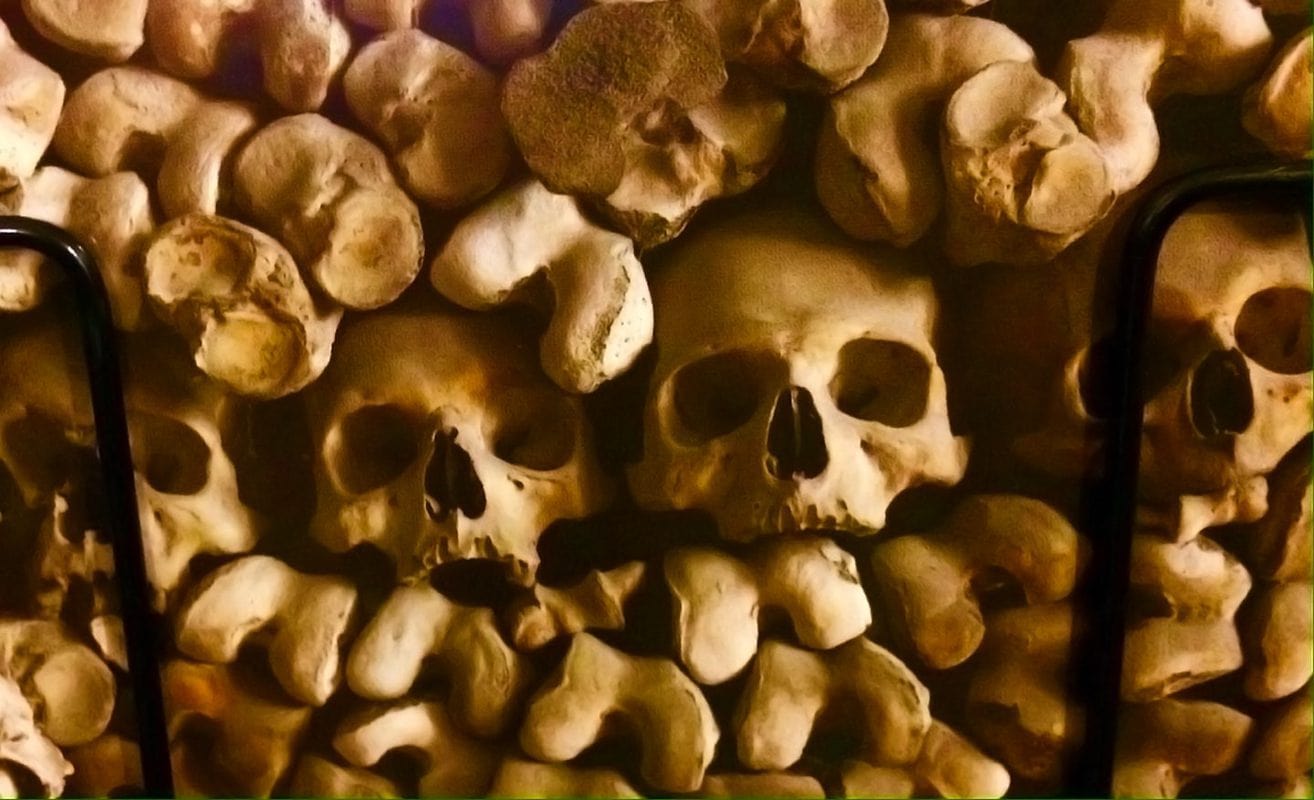
The Catacombs of Rome are the ancient underground burial areas dug by the Christian and Jewish communities on the outskirts of the city, starting from the end of the 2nd century. Beneath Rome there are more than 50 of them, for a total of about 150 kilometers of galleries, and the largest, the Catacombs of San Callisto, alone extend around 20 kilometers across about 30 hectares. The Christian catacombs are looked after by the Pontifical Commission for Sacred Archaeology, under the Lateran Pacts of 1929. That is why, even though they stand on Italian territory, they are visited under the rules of the Holy See, always and only with a guided tour. Practical information on the main ones, from the official channels: at San Callisto the ticket is €10.00 full price and €7.00 reduced (ages 7-16, student groups, archaeology and architecture students up to age 25), free under 6. Hours are 9:00-12:00 and 14:00-17:00, closed on Wednesday, with guided tours every half hour lasting about 40 minutes, online booking handled by the Opera Romana Pellegrinaggi, and a winter break of a few weeks between January and February. The other catacombs open to the public use similar formulas, but hours and closing days change from site to site. Always check them on the official pages before going down. Here is the complete map of the system: all the catacombs of Rome, street by street, plus the history, how they work and practical tips for the visit.

What the Catacombs of Rome Are
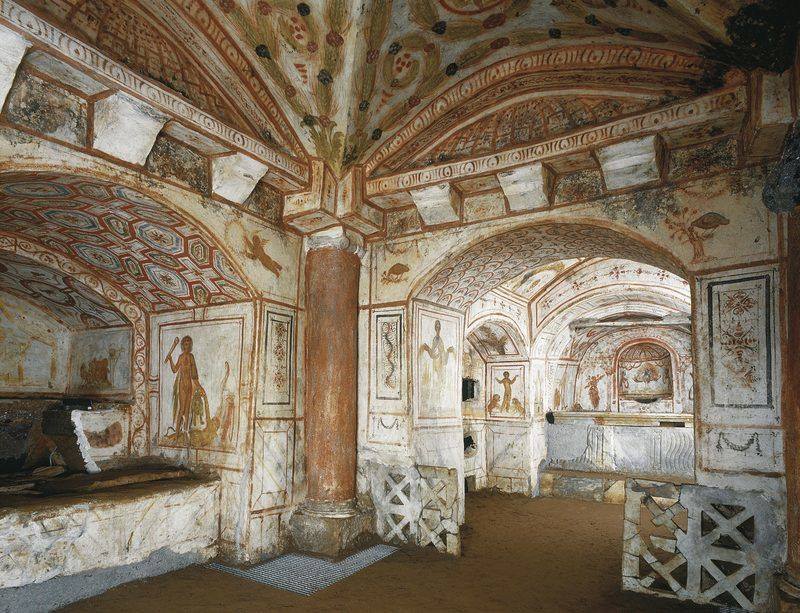
Technically they are networks of galleries dug into rock, almost always tufa, the Roman material that is easy to cut and hardens in the air, sometimes arranged on several stacked levels connected by stairs. In the gallery walls open the loculi for burials, more rarely tombs dug into the floor. At intervals, openings lead to private chambers called cubicula, often frescoed, meant for wealthier families or groups. The Jewish catacombs have their own features, such as the kokhim (oven tombs) of the Palestinian tradition, almost absent from the Christian ones. Similar spaces dug by private pagans also existed. They are called hypogea of private right, because they were made by one or more citizens and not by religious communities, and for some minor catacombs with no historical or epigraphic documentation it is not possible to establish with certainty whether they are Christian. The census is still open. More are still being found under the foundations of the city, starting with the hypogeum that emerged in Pigneto under a neighborhood bar. Underground, Rome has never stopped surprising.
All the Catacombs of Rome, Street by Street
The Roman catacombs, about 50 on the outskirts, were built along the consular roads, because Roman customs and laws required burial outside the town for reasons of hygiene. The list below sorts them by the road they belong to, starting from the Vatican Hill and going counterclockwise, with their accessibility status. "Visitable" means open to the public, "on request" through the Pontifical Commission or the custodian bodies, "for study purposes" reserved for scholars. The status is the one recorded in the most recent literature, and openings change. For the visitable ones you will find links to our dedicated pages.
Via Aurelia and Via Vitellia
On the Aurelia: the anonymous catacomb of Sant'Onofrio on the Janiculum (inaccessible), the anonymous ones of Villa Pamphili and Vigna Franceschini and the catacomb of Calepodius (all accessible for study purposes), plus two never identified, the catacomb of the Due Felici and the one of Saints Processus and Martinian. On the Vitellia: the catacomb of San Pancrazio, or of Octavilla, visitable at the basilica of the same name.
Via Portuense and Via Ostiense
On the Portuense: the catacomb of Pontian and the Jewish one of Monteverde (for study purposes) and the Catacombs of Generosa, visitable on request, overlooking the bend of the Tiber at Magliana.
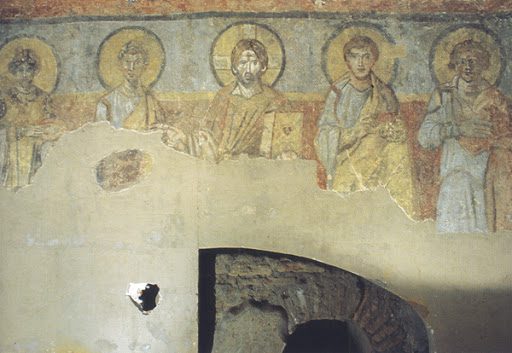
On the Ostiense: the Catacombs of Commodilla, on request, with one of the oldest images of a bearded Christ, and the Catacombs of Santa Tecla, on request, famous for the oldest icons of the apostles.


Via Ardeatina and Via Appia
On the Ardeatina: the catacomb of Balbina and the one of Saints Mark and Marcellian, or of Basileus (study), the great catacomb of Domitilla, visitable, with the underground basilica of Saints Nereus and Achilleus, and the anonymous one of Nunziatella (study). On the Appia, the golden kilometer of the underground: the Catacombs of San Callisto, visitable (the Vigna Chiaraviglio nucleus on request), the mixed hypogeum of Vibia (on request), the catacomb of Santa Croce (study), the catacomb of Praetextatus (on request), the two Jewish ones of Vigna Randanini (on request) and Vigna Cimarra (study), and the Catacombs of San Sebastiano, visitable, the place the name "catacomb" rightfully belongs to, as I tell you further down.
Via Latina and Via Labicana
On the Latina: the catacomb of Saints Gordian and Epimachus, or of Acqua Mariana, the hypogeum of Trebius Justus, perhaps syncretic, the catacomb of Apronian, the famous anonymous hypogeum of Via Dino Compagni, perhaps syncretic, with frescoes that mix the Bible and pagan myth, and the anonymous one of Via Latina (all for study purposes), plus the never identified catacomb of Tertullinus. On the Labicana: the hypogeum of the Aurelii, perhaps Gnostic, visitable on request, the catacomb of San Castulo and the Jewish one of Vigna Apolloni (inaccessible), the great catacomb of Saints Marcellinus and Peter, called ad duas lauros, visitable, and the one of San Zotico (study).

Via Tiburtina and Via Nomentana
On the Tiburtina: the San Lorenzo catacomb, or of Cyriaca, visitable on request next to the Verano, those of Novatian and Sant'Ippolito (study) and Santa Sinforosa, now in the territory of Tivoli, inaccessible. On the Nomentana: San Nicomede, or of Villa Patrizi (inaccessible), the anonymous one of Via dei Villini and the Jewish one of Villa Torlonia (study), the Sant'Agnese catacomb, visitable beneath the basilica of the same name, the Cimitero Maggiore (on request), the Cimitero Minore (study) and Sant'Alessandro (on request).
Via Salaria Nova, Salaria Vetus and Via Flaminia
On the Salaria Nova: Santa Felicita, or of Maximus (on request), Thrasonis, the Giordani and Sant'Ilaria (study), the anonymous one of Via Anapo (on request) and the Catacombs of Priscilla, visitable, the "regina catacumbarum" with the oldest known image of Mary. On the Salaria Vetus: San Panfilo and Sant'Ermete, or of Bassilla (on request), the hypogeum of Via Paisiello (study) and the never identified ad clivum Cucumeris. On the Flaminia: the catacomb of San Valentino (study), plus two famous underground tombs that are not catacombs: the Tomba dei Nasoni at Saxa Rubra, discovered in 1674, which despite its misfortunes remains, for its size, stuccoes and wealth of mythological depictions, a major testimony of the Antonine age, and the Tomba di Fadilla (2nd century), discovered in 1923 with its decorations practically intact, from the floor mosaic to the paintings of the vault.
The Hypogea of Private Right
The census closes with the hypogea not attributed to the Jewish or Christian communities: the anonymous hypogeum of Villa Pamphili, the one of Scarpone, the hypogeum near the Tomb of the Scipios in the park of the same name, the hypogeum of the Hunters, the anonymous one of Via Appia Antica 81, Villa Cellere (or Vigna del Grande) and the hypogeum of Centocelle. On the Prenestina, the hypogeum of Acqua Bullicante, the one of Villa Gordiani and the one of Piazzale del Verano. On the Salaria, the hypogeum near the Mausoleum of Lucilius Peto. On the Trionfale, the catacomb of Sant'Onofrio in Campagna, or of Sant'Agata. Left off the list, because they lack the typical galleries with loculi or a funerary character, are the hypogeum of Via Livenza and family tombs such as Villa Glori and the Ottavi. More than 50 names: no other city in the world has an underground catalog like it.
The History of the Catacombs of Rome: The Origins
The oldest nuclei date to the end of the 2nd century: the first layout of the San Callisto catacomb and the sand-pit area in the Catacombs of Priscilla, which reuses an existing quarry. Before then Christians were buried together with pagans, with no distinctions based on belief. Burying underground, in itself, was nothing new. Underground burial had been common for centuries in the Mediterranean, from the Sardinians of the late Neolithic to the Etruscans from the 7th century BC, and Rome itself had illustrious underground tombs such as the Tomb of the Scipios from the early 3rd century BC. But those hypogea served single individuals or family groups. The catacombs extended the practice to entire communities bound by faith, developing as true underground necropolises, of a size and complexity never reached before.
The causes were first of all religious. Christianity and, in part, Judaism profess the resurrection of the flesh, incompatible with traditional Roman cremation, which in the 2nd century was in any case already giving way to inhumation even among pagans. Open-air cemeteries were no longer enough for the bodies of the growing mass of believers, and digging deep was the natural solution to guarantee a dignified burial to those awaiting a resurrection that in the early centuries many considered imminent. The very word cemetery, coemeterium, from the Greek koimeterion, "dormitory," was born precisely for the catacombs: a place of temporary rest, while waiting. Then there were reasons of solidarity. In the long economic crisis of the military anarchy of the 3rd century, many Christian and Jewish families fell into absolute poverty, and the ethics of the two communities required guaranteeing poor fellow believers low-cost burials. The catacombs are also this: the greatest funeral welfare project of antiquity.

From the 3rd Century to Abandonment: A Thousand Years of Underground History
In the 3rd century the outskirts already counted 25 cemeteries, some owned and run directly by the Church. Hippolytus of Rome writes in the Philosophumena that Pope Zephyrinus appointed the deacon Callistus, not yet pope, as custodian and administrator of the catacomb on the Appia that would take his name. In the first half of the century Rome was divided into seven ecclesiastical regions, each with its own places of worship and its own catacombs. In 313 Christianity became a legitimate religion, mass conversions exploded and the catacombs expanded and deepened over several levels. In the second half of the 4th century new burials slow down, with one striking exception: those ad sanctos, next to the tombs of the martyrs, highly sought after thanks to the cult promoted by Pope Damasus I (366-384), who restored the catacombs, made the venerated tombs monumental and had his poems engraved there by the calligrapher Furius Dionysius Filocalus. A privilege "quod multi cupiunt et rari accipiunt," which many desire and few obtain, as a famous inscription of 382 says.
Then the downward curve. In the 5th century new burials become rare but pilgrims keep coming down. In the 6th, with the Gothic Wars and the sieges, the outskirts empty out and the sanctuaries are plundered. Between the 8th and 9th centuries the relics of the martyrs are moved to the churches of the city and the catacombs, emptied of their treasure, sink into oblivion. Landslides and vegetation erase their entrances, and in the late Middle Ages even the memory of where they were is lost, with only three exceptions remembered, San Sebastiano, San Lorenzo and San Pancrazio. The rediscovery is a modern-age novel. Chance brings them back to light in the 16th century, systematic exploration begins with Antonio Bosio (1575-1629), the "Columbus of Underground Rome," whose posthumous book Roma Sotterranea came out in 1634, and it becomes a science with Giovanni Battista de Rossi (1822-1894), the father of Christian archaeology. And the hunt is not over. From the 1950s onward, catacombs around Rome continue to be found and identified.

How a Catacomb Works: Gravediggers, Loculi and Cubicula
A Roman Christian cemetery normally had two levels of existence: an outer part, called sub divo, under the sky, with single burials and mausoleums, similar to a modern cemetery. Below it was the network of galleries, the ambulacra, dug by skilled workers, the fossores, with a pickaxe, the dolabra, with access by one or more staircases. There was even a zoning constraint: Roman law extended property to the subsoil as well, so the fossores could not cross the limits of the land of the community, usually acquired by bequest or donation. Out of gratitude to benefactors, many catacombs took their names, such as Priscilla or Octavilla, later renamed San Pancrazio after the most illustrious martyr it housed. The major catacombs are in reality federations of nuclei that were born independent and were connected only at a late date. The nuclei are called regions, like the region of the cathedrae in the Coemeterium Maius. In the ceilings opened the luminaria, shafts that gave air, light and a way out for the excavated material, and some galleries were plastered white to multiply the light of torches and oil lamps, set in niches and shelves at regular intervals. Precise funerary engineering: down there, nothing is left to chance.
The burials have their own grammar. The mass of the faithful rested in rectangular loculi, arranged in vertical rows called pilae, sometimes double or triple (bisomi and trisomi), closed by roof tiles, bricks, reused architectural fragments or marble slabs with the name of the deceased, the age, the trade, the date of death or of the dies natalis, the "day of birth" into new life, engraved or painted on them, often with Christian or Jewish symbols. Around some loculi the mortar enclosed objects of the deceased, such as the precious gold glass. The luxury step up is the arcosolium, the arched niche with a horizontal slab, single or for a family. Then come the cubicula, square or polygonal chambers for families and groups, and the larger ones, the crypts, like the Crypt of the Popes at San Callisto, which could also hold terracotta or marble sarcophagi. To use every meter, tombs were even dug into the floors, the formae. And in the Jewish catacombs the kokhim recur, the oven tombs perpendicular to the wall, of the Palestinian tradition. When you go down, you will find this grammar around you in thousands of examples. Knowing how to read it turns the visit from atmosphere into a story.

A Curiosity About the Catacombs of Rome
The word "catacomb" was born by mistake, and for a single place. Originally ad catacumbas, "near the hollows," was the place name of the basin on the Appia where San Sebastiano stands. It indicated that locality and nothing else. Since in the Middle Ages that was one of only three catacombs that remained known and visited, the name of the place became the name of the thing, and from there it spread to all the underground cemeteries in the world. Every "catacomb" of Paris, Naples or Malta borrows the name of a hollow in the Roman countryside. It is a perfect example of how much chance governs language. If the Middle Ages had remembered San Pancrazio instead of San Sebastiano, today you would be visiting the "pancrazie." Under Rome, even etymology has its galleries.
Something Nobody Tells You About the Catacombs of Rome
The system has a three-level hierarchy of access, and the second level is a secret in plain sight. Everyone knows the catacombs that are visitable without formalities: San Callisto, San Sebastiano, Domitilla, Priscilla, Sant'Agnese, Marcellinus and Peter, San Pancrazio. Very few know that about 15 others, including absolute wonders like Praetextatus, the hypogeum of the Aurelii, the Jewish one of Vigna Randanini, Commodilla or Santa Tecla, are visitable on request. You write to the Pontifical Commission for Sacred Archaeology or to the custodian bodies, you wait for the permit, and you go down in tiny groups, often with the archaeologist. That is the difference between a tour and a privilege. In the catacomb of Via Dino Compagni, for example, the frescoes where Hercules and the prophets live side by side on the same walls can be seen in conditions the "famous" sites can only dream of. Vatican bureaucracy, for once, works for those who have patience. Use it.
The Tip I Give You for Visiting the Catacombs of Rome
Choose one catacomb and do it well, instead of collecting three in a day. Underground, you get your fill quickly, and the 40 minutes of the guided tour are calibrated for exactly that. A useful grid: San Callisto for the first time, the largest and most educational, with the Crypt of the Popes. Priscilla for the frescoes and for art lovers. Domitilla for the underground basilica and the galleries where the atmosphere is most intense. San Sebastiano for the story of the name and the preserved pagan mausoleums. Go on the first morning slot, when the buses have not arrived yet, and remember three practical things: down there it is 16 degrees all year, so bring a jacket even in August, which is why the catacombs are the best Roman visit during the heat of the dog days. San Callisto is closed on Wednesday. And the Appia area is best enjoyed without a car, combining the catacomb with a walk in the Appia Antica Park, maybe on a Sunday when the road is pedestrian. Bus 118 from Circo Massimo serves San Callisto and San Sebastiano. It is the archaeological line par excellence.
Another Well-Known Fact, Yet Rarely Mentioned
The catacombs were never hideouts. The image of Christians holed up in the galleries during the persecutions is a 19th-century myth out of a novel. The cemeteries were public and registered places, dug on land legally owned by the community, known to the authorities to the point that Pope Zephyrinus could officially appoint their administrator. Nobody lived down there, and hiding in a place the State knew by its address would have been a terrible idea. The truth is more interesting than the myth: the catacombs tell of an organized community, with funeral welfare, a bureaucracy and a land registry, that buried its dead in broad daylight, or rather, just below it. All of which makes what the galleries really hold even more remarkable: the first great Christian art, born on tufa walls to console those who remained.
The Right Photo to Take at the Catacombs of Rome
In the catacombs looked after by the Pontifical Commission, photography is normally forbidden inside, for conservation and respect. Take that into account, and it is a relief, because for once you just look. So the right photo is taken outside: on the Appia Antica, the entrance avenue of San Callisto among the cypresses and umbrella pines is one of the most photogenic perspectives of the Roman countryside, early in the morning with the low light. At San Sebastiano the reverse shot works, from the basilica toward the paved road. And the conceptual photo, the one that tells the story of the system, is the luminarium seen from the lawn: a square shaft sinking into the green, with darkness below. If you want a souvenir of the interior, aim for the catacombs outside the Commission or the dedicated pages. Here the rule is that the treasure is carried away in your eyes.
Some Important Events That Happened Here in History
End of the 2nd century: the first nuclei are born, San Callisto and the sand-pit of Priscilla. First half of the 3rd century: 25 cemeteries on the outskirts, Zephyrinus entrusts the administration to Callistus, Rome divided into seven ecclesiastical regions. 313: the legalization of Christianity, the catacombs explode in extent and depth. 366-384: Damasus I promotes the cult of the martyrs, restores, makes monumental, and Filocalus engraves his poems. 382: the inscription on the privilege "that many desire and few obtain." 5th-6th century: burials cease, pilgrims remain, then wars and plundering. 8th-9th century: relics moved into the city, oblivion begins. Late Middle Ages: only San Sebastiano, San Lorenzo and San Pancrazio are saved from memory. 16th century: the accidental rediscovery. 1634: Bosio's Roma Sotterranea comes out posthumously. 19th century: de Rossi founds Christian archaeology. 1929: the Lateran Pacts entrust the Christian catacombs to the Pontifical Commission for Sacred Archaeology. From the 1950s to today: continuous new finds, from the Pigneto hypogeum to the excavations under way.
Who Has Passed Through the Catacombs of Rome
The fossores, first of all, the workers who in a century and a half dug a city of galleries with a pickaxe. The popes of the 3rd century buried in the Crypt of the Popes, and Damasus, who in his lifetime turned the tombs of the martyrs into pilgrimage destinations. Millions of medieval pilgrims, as long as there was memory. Then the explorers, Bosio lowered with ropes in the 16th century and de Rossi with a notebook in the 19th, up to the archaeologists of the Pontifical Commission who still open new galleries today. And the modern visitors, who go down at 16 degrees in summer and always come back up a little changed. The Catacombs of Rome are the only monument in the city where silence is part of the heritage. Add yourself to the list with a jacket on your shoulders and a low voice: down there you are a guest, for 1,800 years now.
Quick Questions About the Catacombs of Rome
How many Catacombs of Rome are there and how long are they?
More than 50, with about 150 kilometers of galleries in total beneath the outskirts. The largest are the Catacombs of San Callisto: around 20 kilometers across about 30 hectares between the Appia and the Ardeatina. And the census is not closed: more are still being discovered.
Which catacombs of Rome can be visited without permits?
San Callisto, San Sebastiano, Domitilla, Priscilla, Sant'Agnese, Saints Marcellinus and Peter and San Pancrazio, all with a mandatory guided tour. Many others, from Praetextatus to Commodilla, open on request through the Pontifical Commission for Sacred Archaeology or the custodian bodies.
How much does it cost to visit the catacombs in 2026?
At San Callisto the ticket is €10.00, reduced €7.00 (ages 7-16, students), free under 6, with a guided tour included. The other open catacombs use similar formulas. Book online through the official channels. Prices checked in August 2026, check them again before you go.
What are the opening hours of the Catacombs of San Callisto?
From 9:00 to 12:00 and from 14:00 to 17:00, with tours starting every half hour and lasting about 40 minutes. Closed on Wednesday, on Christmas, on New Year's Day, on Easter and for a winter break between January and February. Each catacomb has its own calendar, though, so always check the website of the individual site.
What is the temperature in the catacombs?
Around 16 degrees constant all year, with high humidity. Bring a jacket even in midsummer. That is why the catacombs are the perfect visit in the hottest hours of Roman July and August days.
Were the catacombs hideouts for persecuted Christians?
No, that is a 19th-century myth. They were legal cemeteries, dug on land owned by the community and known to the authorities. Nobody lived or hid there. They served to guarantee a dignified burial, even a free one, to a community that believed in the resurrection of the flesh.
Why are they called "catacombs"?
From "ad catacumbas," the place name of the basin on the Appia where San Sebastiano stands, one of the few catacombs never forgotten in the Middle Ages. The name of the place was extended to all the underground cemeteries in the world. Originally they were simply called coemeteria, "dormitories."
Are there still bodies in the catacombs?
The loculi you see are almost all empty and open. The relics of the martyrs were moved to the churches between the 8th and 9th centuries, and plundering and the centuries did the rest. Intact burials remain in areas closed to the public, treated with due respect. The catacombs are still sacred places.
Are the catacombs suitable for children and claustrophobic people?
Children from 6-7 years old and up usually love them, with the galleries and the stories of martyrs. For those who seriously suffer from claustrophobia, the narrow corridors and the depth can be heavy, even though the tourist routes are ventilated and lit. Stairs yes, strollers no. Assess honestly before going down.
What is the difference between a catacomb and a hypogeum?
A hypogeum is a private underground tomb, of an individual or a family. A catacomb is a communal cemetery of galleries with hundreds or thousands of loculi. The "hypogea of private right" on the outskirts, from Villa Gordiani to the Scipios, did not belong to religious communities.
What are ad sanctos burials?
Tombs dug next to the venerated ones of the martyrs, highly sought after from the 4th century because proximity to the saint was believed to favor his intercession at the judgment: "a privilege that many desire and few obtain," as the inscription of 382 says. Pope Damasus made it a mass phenomenon.
What other underground sites are worth seeing in Rome?
The Underground Basilica of Porta Maggiore, the most enigmatic Neopythagorean hypogeum in the city, the ossuary crypt of the Museum of the Capuchin Friars on Via Veneto, and the individual pages of the catacombs: San Callisto, San Sebastiano, Priscilla, Commodilla, Santa Tecla and Generosa.
How to Get to the Catacombs of Rome
The main hub is the Appia Antica: San Callisto is at Via Appia Antica 110 and San Sebastiano at 136, served by bus 118 from Circo Massimo/Terme di Caracalla and by the 218 from San Giovanni. Domitilla is at Via delle Sette Chiese 282, 10 minutes on foot from the other two. Priscilla is at Via Salaria 430 (buses 63 and 92, northern quadrant), Sant'Agnese at Via Nomentana 349, Marcellinus and Peter on the Casilina. On Sunday, with the Appia closed to cars, a catacomb plus a walk in the Appia Antica Park is the most beautiful "out of town" day you can have while staying inside Rome. You can build the program with My Trip and the other destinations are in the Tourist Attractions section.
To close, from the stairs of any catacomb: Rome above is the most talked-about city in the world, but it is below that it keeps its most moving archive, 150 kilometers of names, dates and symbols scratched into the tufa by people who thought they were sleeping, not dying. Go down once with a guide, learn to read a loculus, and the city above will no longer seem the same. From that day on, every basilica will appear to you for what it is, the visible tip of an underground Rome that has never stopped being there.