Capuchin Friars Museum and Ossuary Crypt
In short. The Capuchin Friars Museum and Ossuary Crypt is at Via Vittorio Veneto 27, 00187 Rome, inside the convent built against the church of Santa Maria della Concezione, a few dozen meters from Piazza Barberini.

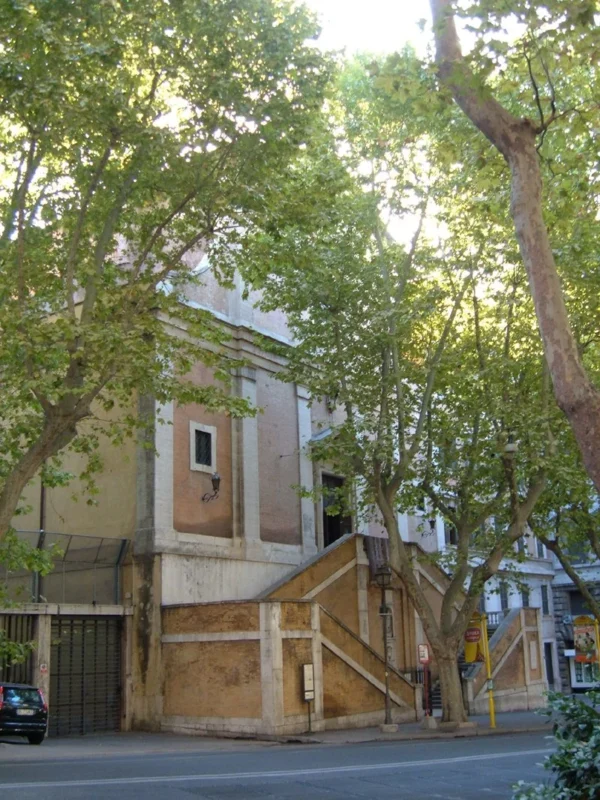
The Capuchin Friars Museum and Ossuary Crypt is at Via Vittorio Veneto 27, 00187 Rome, inside the convent built against the church of Santa Maria della Concezione, a few dozen meters from Piazza Barberini. The metro stop is Barberini, Line A: from the exit you walk up Via Veneto on the right side for just under three minutes, and the entrance is a glass door under the church's scissor staircase. The surface lines that serve Piazza Barberini and the lower stretch of the street are 52, 53, 63, 80, 95, 116 and 630, with the warning that the Roman network changes often and it's best to check the route the same day. The full ticket costs €10.00 and includes the audio guide, the reduced ticket €6.50, the rate for groups of at least 10 people €7.50 each. Buying online adds a €1.50 fee for each ticket. It is open every day, from 9:30 to 13:30 and from 14:30 to 18:30, with last entry at 12:30 in the morning and at 17:30 in the afternoon. It is fully closed on December 25, January 1 and Easter Sunday, and closes early at 13:30 on Holy Saturday, November 2, December 24 and December 31, but for special days you should check the hours on the official website before leaving the house. For a self-guided visit you don't need to book: you buy at the ticket office or online. Guided tours, groups, school groups and evening openings, however, must be arranged by email. Phone 06 88803695, email info@museoecriptacappuccini.it, official website museoecriptacappuccini.it.
If you're putting together a tour of the museums of Rome and are looking for the place that will stay with you longest, our opinion is clear: it's not the richest museum in the city, but it's the one visitors remember best years later, and the credit goes not to the macabre, but to the five minutes of silence it imposes.

What you actually visit at the Capuchin Friars Museum and Ossuary Crypt
Many people arrive on Via Veneto convinced they're buying a ticket for a crypt and nothing else. The route is something else, and it's good to know it before going in: it is a real museum, divided into seven exhibition sections spread along the first floor of the convent, at the end of which you go down into the friars' old cemetery. The crypt is the last room of the story, not the first. Whoever walks through it without having seen the earlier rooms takes home half the meaning, and almost always the wrong half.
The museum opened to the public in 2012, with the stated aim of safeguarding and promoting the historical and artistic heritage of the Friars Minor Capuchin. The house on Via Veneto today belongs to the Seraphic Province of the Immaculate Conception of the Friars Minor Capuchin, established in 2022 from the union of several Italian districts and with its curia in L'Aquila. The director is Pietro Costantini, and the structure keeps the look of a religious order's museum: small in area, very dense in meaning, with a community of friars living in the same building who still go down into the crypt on November 2 for the Mass for the dead.
The real sequence of the visit is this: ticket office and coat check on the ground floor, elevator or stairs up to the museum floor, seven thematic sections, descent to the crypt, exit through the bookshop. In between, if time allows, there's the upper church, which is a place of worship with its own hours and which is worth the trip by itself even for those who don't want to see the bones.
Tickets, rates and reservations at the Capuchin Friars Museum and Ossuary Crypt
How much a ticket to the Capuchin Friars Museum and Ossuary Crypt costs
The full rate is €10.00 and includes the audio guide, which here is not a commercial accessory but the real teaching apparatus of the route: the wall captions are deliberately sober, and without headphones you walk through many rooms understanding half. The reduced rate costs €6.50. Groups of at least 10 people pay €7.50 each. Whoever buys online pays an additional €1.50 fee for each ticket, so a single adult booking from home ends up at €11.50. For a couple or a family it's worth showing up directly at the ticket office and saving the fees: the line here is never the line of the Vatican Museums, and the museum, by its structure, is never sold out.
Who is entitled to the reduced ticket
The reduction to €6.50 applies to visitors from 7 to 17 years old and people over 65, students who show valid documentation, international guides with a badge, members of Catholic religious orders and FAI members. I point out a detail that often gets overlooked: the museum does not take part in the free-admission schemes of the state and city museums, so neither the first Sunday of the month nor the municipal museum cards work. It's a private religious institution, it funds itself with tickets, and the people who work there have good reasons to remember it.
Who gets in free at the Capuchin Friars Museum and Ossuary Crypt
Free entry goes to visitors with disabilities and, when declared, their companion, to national tourist guides with a badge, to the Friars Minor Capuchin, and to children up to six completed years of age. For free entry linked to disability you don't need to book, you just show the documentation at the ticket office. On this point the museum is more generous than many Roman public museums, and I say it knowingly.
Guided tours at the Capuchin Friars Museum and Ossuary Crypt
There are two ways, and they're different. The first is the visit with a museum guide: it costs €90.00 paid by bank transfer, or €95.00 by card with fees included, in addition to the admission ticket of each participant. You book by writing to info@museoecriptacappuccini.it at least a week in advance, and a cancellation communicated within four days carries a 50 percent penalty on the guide's fee. The second way is for those who arrive with their own guide: booking by email is still mandatory, no surcharge is paid, the group cannot exceed 10 people, and the guide must show the national or international license. It's a rule that comes from the size of the spaces, not from a commercial choice: in the crypt corridor 11 people in front of a niche don't fit, and whoever has tried knows it.
Evening visits to the Capuchin Friars Museum and Ossuary Crypt
The museum organizes evening openings by reservation, in two time slots: from 18:45 to 19:45 and from 20:00 to 21:00, lasting about 50 minutes. You book at least two weeks in advance and with advance payment by bank transfer. The penalties are severe and worth reading before committing: 50 percent up to four days before, 100 percent within three days or in case of no-show, with the cancellation to be communicated in writing. If I had to name the best moment of all to go down into that crypt, I would name without hesitation one of these two evening slots, when the museum is empty, the traffic on Via Veneto has calmed down and the lightbulbs take all the darkness they need.
The Night of the Museums at the Capuchin Friars Museum and Ossuary Crypt
The museum takes part in the Night of the Museums. For the edition on Saturday, May 23, 2026, it opens from 19:00 to 24:00, with last entry at 23:00, and admission is at the reduced rate of €6.50. It's the only occasion of the year when the crypt can be visited late without a reservation, and it's also the only one where you'll find yourselves in line: expect a wait, and aim for the first two hours.
How to get to the Capuchin Friars Museum and Ossuary Crypt
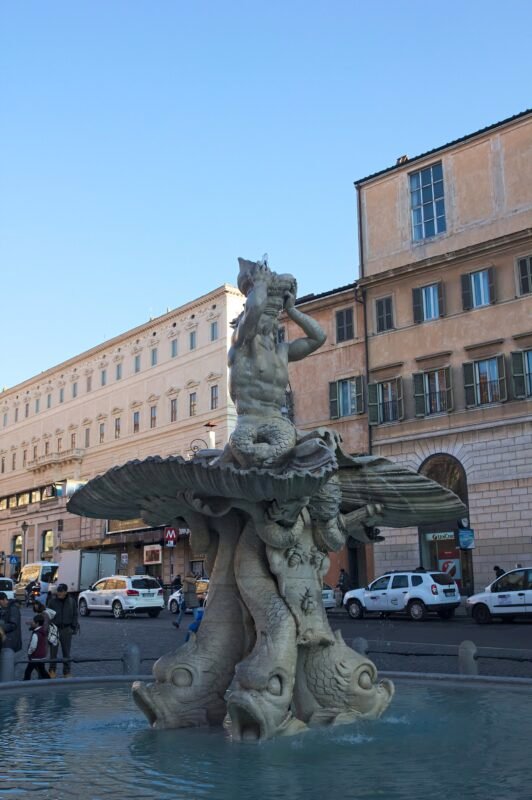
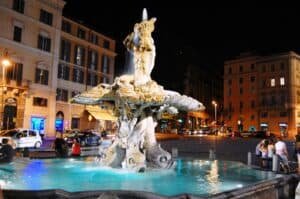
The simplest solution is the metro. Line A, Barberini stop, drops you exactly in the square of the Triton Fountain by Bernini. From there you take Via Veneto, and after three minutes of moderate climb you are in front of number 27, on the right, recognizable by the double staircase that leads to the church. Whoever arrives by bus gets off at Piazza Barberini or at the stops of the initial stretch of Via Veneto: the lines indicated as serving this hub are 52, 53, 63, 80, 95, 116 and 630, and I repeat the warning to check updated routes, because the center of Rome is subject to continuous detours.
On foot, the museum can be reached in 10 minutes from Trevi Fountain, in 12 from Piazza di Spagna and in five from Palazzo Barberini, which is the natural cultural complement to the visit for reasons I will explain further on. By car, forget it: Via Veneto is inside the Tridente limited traffic zone during the control hours, the surface parking is paid and almost always full, and the most convenient parking remains the one at Villa Borghese, from which, however, you walk down in about 10 minutes passing through Porta Pinciana.
The church of Santa Maria della Concezione above the Capuchin Friars Museum and Ossuary Crypt
Before the bones there is the church, and the church deserves a full half hour. It is called Santa Maria della Concezione dei Cappuccini, or Santa Maria Immacolata a Via Veneto, and it came about at the wish of Cardinal Antonio Barberini the Elder, a Capuchin friar and brother of Pope Urban VIII. The pope blessed the first stone on an October 4, the feast of Saint Francis, and celebrated the first Mass on September 8, 1630. Construction was completed in 1631, and on April 16 of that year the Capuchins took possession of the house along what would become Via Vittorio Veneto. The architect was Brother Michele da Bergamo, who died in 1641, assisted, according to part of the critics, by Antonio Casoni.
The plan is that of the most rigorous Capuchin architecture: a single nave, 10 side chapels raised by a few steps, five per side, no dome, no transept, no Baroque vertigo. It is a church that programmatically rejects spectacle, built by an order that had made poverty a constitutional rule, and which nonetheless keeps on its walls a first-rate picture gallery. The contradiction is only apparent: the paintings are almost all gifts from noble families and cardinals, and the Capuchin did not commission them, he received them.

Guido Reni's Archangel Michael, the most debated painting in the church
In the first chapel on the right is the painting that made this church famous among art historians long before it did among tourists: the Archangel Michael Driving Out Lucifer, by Guido Reni, dating to around 1635. It is a work that anyone who has studied the 1600s has seen reproduced at least 100 times, and in person it changes level: the archangel's armor has a cold, almost metallic light that reproductions flatten. On the face of the devil crushed under his foot runs an old legend, repeated for centuries by Roman guides, according to which Reni lent the devil the features of Cardinal Giovanni Battista Pamphilj, the future Pope Innocent X, with whom he had fallen out. It is a tradition, not a documented fact, and as such it should be told: whoever passes it off to you as certain is selling you an anecdote, not a piece of news. Look at it anyway, and judge for yourselves.
The other chapels on the right
In the same first chapel there is a Christ Mocked assigned to Gerard van Honthorst, the Dutch painter whom everyone in Rome called Gherardo delle Notti for his obsession with candlelit scenes. The second chapel pairs the Transfiguration by Mario Balassi with a Nativity by Giovanni Lanfranco dating to around 1632, the work of an artist who in those same years was working on the great illusionistic machines of Sant'Andrea della Valle. The third holds the Stigmata of Saint Francis by Domenichino, and it is the point where the Franciscan theme of the church emerges in all its harshness: no sugary ecstasy, a man shaken by an event that exceeds him. The fourth houses a Prayer in the Garden attributed to Baccio Ciarpi, the Tuscan master in whose workshop Pietro da Cortona trained. The fifth keeps a Saint Anthony attributed to Andrea Sacchi.
The left chapels and the high altar
On the left side the first chapel holds Ananias Restoring Sight to Saint Paul, a work assigned to Pietro da Cortona and dating to around 1631: we are at the master's Roman beginnings, and you can see a painting still tense, not yet exploded into the decorativism of the Barberini vaults. The second chapel is dedicated to Saint Felix of Cantalice, the illiterate alms collector who went around Rome with his bag and to whom the Romans of the 1500s answered Deo gratias, and the painting is attributed to Alessandro Turchi, called l'Orbetto. The third pairs a Deposition by Andrea Camassei with a Stigmata of Saint Francis by Girolamo Muziano, older, dating to around 1570 and therefore earlier than the church itself: they came here from another location, as often happens in convent churches. The fifth chapel keeps the Apparition of the Virgin to Saint Bonaventure by Andrea Sacchi, dated 1645.
At the high altar, which Urban VIII wanted in marble against the Capuchin custom of poor stone, and at whose bases you can still read the Barberini coat of arms with the bees, the altarpiece is an Immaculate Conception by Gioacchino Bombelli from 1814. Behind the altar the choir keeps seats from 1739. The vault of the nave was frescoed in 1796 by the neoclassical Liborio Coccetti with the Assumption of the Virgin: it is the only truly eighteenth-century episode of the decoration, and its clear coldness deliberately jars with the warmth of the seventeenth-century altarpieces below.
The tombs of the church: Barberini, Sobieski and the Capuchin saints
In front of the high altar, under the first central slab, lies Cardinal Antonio Barberini the Elder, founder of the church. His epitaph is the most famous phrase of the whole complex, and even people who have never set foot on Via Veneto know it: Hic iacet pulvis cinis et nihil, here lie dust, ash and nothing. A cardinal, brother of a pope, member of the most powerful family in the Rome of the 1600s, has it written on his tomb that he is nothing. From that slab, and not from the bones below, the discourse of this place truly begins.
To the left of the main altar is the marble tomb of the Polish prince Aleksander Benedykt Sobieski, who died in Rome in 1714, son of that John III Sobieski who in 1683 had routed the Ottoman army under the walls of Vienna. The monument is the work of Camillo Rusconi, one of the greatest sculptors of the late Roman Baroque. It is worth knowing that the complex probably owes its survival to this tomb: when, after Unification, there were plans to raze the area for the subdivision of Villa Ludovisi into lots, the presence of the burial of a foreign prince was the argument that stopped the bulldozers. Rome is full of monuments saved by diplomatic reasons, and this is one of the clearest cases.
Also buried in the church are Saint Felix of Cantalice, the first Capuchin raised to the altars, to whom the Church of San Felice da Cantalice on the outskirts is also dedicated, Saint Crispin of Viterbo, the venerable Father Francesco da Bergamo, and Father Mariano da Torino, who died in 1972, the friar who in the 1950s and 1960s spoke to Italians from the screen of national television with the program that opened with the formula peace and good to all. The tombstone of Cardinal Agapito Mosca, who lived between 1678 and 1760, is also present.
What has disappeared around the church
The complex you see today is a fragment. Originally the church stood in open countryside, in front of an open space, with a bell tower and a vast convent surrounded by the friars' vegetable garden. The bell tower was torn down at the end of the 1800s to open Via Veneto, the prestigious artery of Villa Ludovisi development. The seventeenth-century convent was demolished in the 1920s to make room for the new Ministry of Corporations, the building that today houses the Ministry of Economic Development at the corner of Via Molise. In 1925 the first stone of the present convent was laid, on land donated by the City of Rome, built against the church. Of the 1600s settlement only two things remain intact: the church and the cemetery crypt. The fact that the ossuary survived two demolitions is not a detail: it is the reason it still exists.
The sections of the Capuchin Friars Museum and Ossuary Crypt, room by room
The museum route runs along the first floor of the convent in seven thematic sections, before the descent to the crypt. The overall formula is usually described as an itinerary of eight exhibition rooms, and the difference between the two ways of counting depends simply on the fact that some sections occupy more rooms and that the crypt is sometimes counted as the final stop of the route. What follows is the real order of the visit.

Section one: the convent
The first room tells the story of the building that hosts you. The convent was built on commission from the Barberini family starting in 1626 and completed in 1631, with the church dedicated to the Immaculate Conception. Here you understand the settlement logic of the order: the Capuchins settled outside the walls of inhabited areas or at the edges of the built-up area, in airy and poor places, and this hill above the Quattro Fontane, then vineyards and vegetable gardens, met the criterion perfectly. The room shows the old plan, the extent of the vanished garden and the relationship with the nearby Barberini palace, which was both the patron and the next-door neighbor. The advice is to give this room more time than you would instinctively want: without the ancient topography, all the rest of the visit loses depth.
Section two: the Order of Friars Minor Capuchin
The second section tells of the birth and spread of the order. The Capuchins were born in the Marche in 1528, as a rigorist reform of the Friars Minor that sought to return to the letter of the Franciscan rule: eremitism, severe material poverty, preaching to the people, the long beard and pointed hood from which comes the popular name that then became official. In less than a century the order goes from a few dozen men to one of the most widespread religious families in Europe, with a pervasive role in epidemics, famines and in assisting those condemned to death. The section documents this expansion with papers, prints and objects, and it is worth observing it carefully because it explains a fact that would otherwise be incomprehensible: how a community so poor could build, in the very center of Rome, a complex of these dimensions. The answer is that it did not build it.
Section three: Capuchin sanctity
The third section presents images and stories of some saints of the order. The approach is not hagiographic in the worse sense: these are portraits, reliquaries and objects of daily use that give back concrete figures, often of peasant origin, almost never learned, often extremely stubborn. Felix of Cantalice, who worked as an alms collector and went around Rome with the sack on his shoulders. Crispin of Viterbo, who was a cobbler before entering the convent. These are biographies that say a lot about the social recruitment of the order, and that explain why Roman popular devotion toward the Capuchins was, for centuries, of an intensity that today we struggle to imagine.
Section four: Capuchin culture and spirituality
This is the room that enthusiasts of applied sacred art find richest: liturgical vestments, objects of religious and everyday use, work tools, books. It is also the section where the museum takes up precise iconographic themes, among them that of the bleeding crucifix, a devotional type that in Counter-Reformation Italy had enormous success and a precise function: to make the contemplation of the passion physically unbearable, to move the believer from aesthetic consideration to literal compassion. Whoever has in mind the image of the Franciscan as a gentle and light figure finds here the necessary corrective. Capuchin spirituality is rough.
Section five: the Saint Francis in Meditation
An entire room is dedicated to the painting that the museum presents as a work by Caravaggio made for the Capuchin convent: the Saint Francis in Meditation, the saint kneeling with the skull in his hands, the rough habit, the darkness that devours everything except the face and the fingers. It is the piece many visitors come all the way here for, and it is also the piece critics have been arguing about for half a century. A dedicated chapter further below is given to the case, because it deserves to be told in full and not dismissed in three lines.
Section six: the Capuchins in the twentieth century
The sixth section brings the history of the order into the last century, through four figures. Padre Pio da Pietrelcina, the Capuchin of the Gargano, the most imposing devotional phenomenon of contemporary Italian Catholicism. Father Mariano da Torino, who in his cassock was one of the first religious men to understand television, and who rests in the church above. Gianfranco Maria Chiti, a general of the Italian army who at 62 left the military stars for the habit and ended his life restoring a convent in Umbria. Ugolino da Belluno, friar and painter. It is the section Italian visitors walk through most slowly, because it is the only one where they recognize faces seen alive.
Section seven: the Capuchins in the world
The last section before the descent documents the spiritual, cultural and missionary activities of the order in the twentieth century on a world scale. It is the most documentary part of the route, with photographic and archival materials, and it has a precise function in the economy of the visit: to remind you that the friars whose bones you are about to see did not belong to an isolated Roman curiosity, but to a network of men spread over five continents. If you have little time it is the room you can go through most quickly, but don't skip it entirely: the passage from the light of these rooms to the darkness of the stairs is constructed, and is part of the museum design.
The case of the Saint Francis in Meditation: how many canvases, and which Caravaggio
This is the story that makes the Capuchin Friars Museum and Ossuary Crypt an interesting place even for those who want to know nothing about the bones. There are two nearly identical canvases of the Saint Francis in Meditation, both datable between 1605 and 1606. One is the one belonging to the Capuchins of Via Veneto, found in the sacristy of the convent and donated, according to the known documentation, by Francesco Rustici between 1617 and 1619. The other comes from the church of San Pietro in Carpineto Romano, commissioned by Cardinal Pietro Aldobrandini around 1606 and donated to the church in 1609. Today it is on deposit at Galleria Nazionale d'Arte Antica in Palazzo Barberini, a five-minute walk from here.
Until the early 1800s the question did not exist: the only known version was the Roman one of the Capuchins, and it was considered autograph. Then, in 1967, Maurizio Marini identified in the sacristy of Carpineto an identical painting, published the following year by Maria Vittoria Brugnoli, and from that moment the critics have been divided. Rossella Vodret and Fabio Scaletti have supported the autograph status of the Carpineto version, citing as arguments the pentimenti visible in radiographic examinations, absent in the Roman canvas, and the presence of malachite granules consistent with Caravaggesque practice. Ferdinando Bologna has held a more radical position: the original prototype would not yet have been found, and the two known canvases would both be copies. In September 2010, for the fourth centenary of Caravaggio's death, an exhibition at Palazzo Aldobrandini in Carpineto Romano, curated by Rossella Vodret, put the two versions in direct comparison, with a title that openly declared the question unresolved.
Without claiming to settle the attribution question: the Capuchins' canvas should be looked at knowing all this, and not in spite of it. A contested painting is more interesting than an uncontested one, because it forces you to really look at it instead of just recognizing it. Whoever wants to play all the way should do this: see the Saint Francis here, then go down to Palazzo Barberini and look for the other, and in the half hour between the two try to decide alone. Rome offers very few occasions for a close comparison like this, and it is worth more than 10 audio guides. Whoever then wants to measure what an uncontested Caravaggio is can continue to the Contarelli Chapel in San Luigi dei Francesi.
The Ossuary Crypt of the Capuchin Friars Museum, space by space
You go down a staircase, and pass from the electric light of the rooms to a warm half-light of low bulbs. At the entrance a plaque in several languages carries the most quoted memento mori in Rome: what you are we once were, what we are you will be. It is an ancient formula, widespread across Europe in the iconography of the danse macabre, and here it is not a stage effect: it is the theological caption of the entire space.

The structure: a corridor and six spaces
The crypt is a corridor about 30 meters long, on whose side six spaces currently open. The traditional description, repeated for a century and a half by guides, speaks of five chapels, and the origin of the misunderstanding is simple: one of the spaces, the chapel used for Mass, has no bone decoration and for a long time was not counted among the actual crypts. Whoever counts five counts the decorated rooms, whoever counts six counts the rooms. Mark Twain, who came down here in 1867, counted six and called them parlors, drawing rooms, with a choice of words that says a lot about his humor.
In the different spaces are gathered the mortal remains of about 3,700 dead, for the most part Capuchin friars of the Roman community, along with lay benefactors tied to the convent. The figure of 3,700 is the one given by the museum, while the figure of 4,000, repeated by very many publications and already reported by nineteenth-century visitors, is a traditional rounding, and is exactly the number the accompanying friar gave Twain. The burials cover the span from the transfer of 1631 to 1870, when the end of the Papal States and the new health rules of the Kingdom definitively closed the practice of convent burial in the city.
Crypt of the Three Skeletons
It is the most photographed space in the world of the whole complex, although photography here is a delicate matter I return to further on. On the ceiling three complete children's skeletons make up an allegorical scene: one holds a scythe, another a scale, inside an oval of shoulder blades and vertebrae. The scythe is time that reaps, the scale is judgment that weighs. It is not a decorative whim: it is a picture, built with the same compositional rules as an altarpiece, only made of a different material. The memento mori epigraph is also placed here, which appears in several languages.
Crypt of the Tibias and Femurs
The long bones of the lower limbs are the most regular in the human body and the most suited to architectural use: here they make up arches, pilasters, cornices and scrolls, and the wall takes on the look of stucco decoration seen from afar. It is the space where the logic of the whole is best understood, because it is the one where the hand that worked is most evidently the hand of a craftsman with a plan, and not of a gravedigger with a space problem. Twain described exactly this effect: well-proportioned arches, built entirely of thigh bones.
Crypt of the Pelvises
The iliac bones, wide and concave, lend themselves to a different use: they serve as shell, as rose window, as background element. The wall of this space works in fields and not in lines, and the visual result is that of a damask fabric. If you have only one minute to understand how the decorator reasoned in terms of materials, spend it here.
Crypt of the Skulls
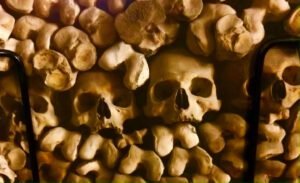
Niches and pyramids of skulls, with whole skeletons dressed in the Capuchin habit arranged standing along the walls. It is the space that strikes first, and it is also the one that is exhausted fastest: after 30 seconds the eye stops registering the accumulation and starts looking for details. Look for them. The jaws, the cranial sutures, the differences in age. The skull of an old man and the skull of a 20-year-old boy do not look alike at all, and in this room you have them half a meter from each other.
The Chapel of the Mass
It is the only space without bone decoration, and it is the only one in which the crypt stops being a monument and goes back to being what it has always been: a consecrated cemetery. Here the friars celebrate Mass, in particular on November 2, the commemoration of the dead. The chapel keeps memorials and particular burials linked to the history of the convent, including those referring to the papal soldiers who fell in the last years of the Papal States. If you're looking for the moment to stop for 30 seconds in silence, it is this one, and not the skull room.
Crypt of the Resurrection
The final space brings to the center a painting of the resurrection of Lazarus framed by bones. It is the keystone of the entire project, and whoever skips it leaves here having understood the opposite of what the friars wanted to say. The whole ossuary converges on a man coming out of the tomb. The message is not death: it is that death is not the last word. It will be persuasive or not depending on your beliefs, but the project is that, and it is consistent from the first niche to the last.

Why the Capuchins decorated the crypt with bones
The question always comes, and it deserves a serious answer instead of the usual joke about the macabre taste of the friars. At the origin there was a practical problem. The convent's cemetery was small and the community produced dead at a constant rate. The solution, common to half of Catholic Europe, consisted of exhuming after a certain number of years, given as about 30, and relocating the remains in an ossuary to free the grave. So far there is nothing Roman or Capuchin about it: it is the normal management of cemetery space under conditions of scarce land.
The difference begins afterward. Instead of piling the remains in a storage place, someone decided to arrange them. The artistic arrangement we see today took shape around the middle of the 1700s and appears at least in part completed by 1764. It is therefore not a work of the 1600s, as many visitors assume looking at the date of the church: between the founding of the cemetery and its transformation into a decorative composition more than 100 years pass. It is a chronological clarification that changes the sense of the whole, because it places the work inside the sensibility of the century of the Enlightenment and not inside Counter-Reformation fervor.
As for the meaning, the logic is the one the friars themselves have always declared: the body is the container of the soul, and once the soul has left it the container can be used otherwise, because the person is not there. Decorating with bones, from this perspective, is not profaning, it is demonstrating in action that the identity of the person is not attributed to the body. One remark: if you think it's a barbaric position, consider that our contemporary culture has moved the same taboo, not resolved it, and that a society that moves its dead outside the city into enclosures it almost never visits does not have, on this ground, many lessons to give.
A curiosity about the Capuchin Friars Museum and Ossuary Crypt
The curiosity that is truly worth it, in this place, is not about the bones: it is about the earth they rest on. The convent tradition, which the museum itself reports, holds that the soil of the cemetery is holy earth transported to Rome from Palestine, and according to some versions directly from Jerusalem, so that the friars would rest in the same earth in which Christ had been buried. This must be said for what it is, that is, a tradition and not a documented fact, but it is the key that explains all the rest: if that earth is holy, then being in it for 30 years is a liturgy, and leaving it to end up in a wall is not a degradation but a change of state. Without this premise, the crypt is an oddity, with this premise, it is a line of reasoning.
There are two other elements that complete the curiosity, and that are rarely heard told together. The first concerns the scale of the move of 1631: when the community moved from the old convent located in the area between the Quirinal and the Trevi Fountain, the remains of the confreres were brought up here on a convoy that the sources describe as on the order of 300 cartloads. Imagine that procession along the not yet asphalted streets of the Rome of Urban VIII, at night, so as not to disturb the city. The second element concerns the rotation: the crypt was not filled all at once, but fed for two and a half centuries, with periodic exhumations, until the closure of 1870. The bones you see are not a collection, they are a sedimentation.
One last note: this crypt set a trend. The Sedlec ossuary in Bohemia, the one with the chandelier that uses every bone of the human body, was rearranged into its present form in 1870, and the literature on the subject links it directly to the Roman model. If you have seen Sedlec and were amazed, know that the idea was born down here, on Via Veneto, a century earlier.
One thing nobody tells you about the Capuchin Friars Museum and Ossuary Crypt
Nobody knows who decorated the crypt. There is no signature, no contract, no payment note known to scholars: the most impressive work of lesser eighteenth-century Rome is anonymous, and almost certainly by choice. A Capuchin does not sign. The only old clue is the testimony of a visitor in 1775, the Marquis Donatien Alphonse François de Sade, who passed through here during his trip to Italy and noted, with a formula reported by the museum, that a German priest of this house had executed a funerary monument. A German priest: that is all we have. No name, no precise date, no supporting document.
The fact that the only trace of the author comes to us from the Marquis de Sade, that is from the writer who shortly after would build an entire literature on the profanation of the body, is one of those coincidences that history produces without asking permission. De Sade left here declaring that he had never seen anything more impressive, and the phrase, coming from him, must be weighed.
The second thing nobody says concerns the economy of the visit. The ticket is valid for the museum and the crypt, and it is the museum that takes up most of the time: the crypt is walked in 10 minutes, 15 if you really stop. Many visitors arrive with the idea of paying €10 for an ossuary and are thrown off by the seven sections that precede it. The upper church, on the other hand, is a place of worship and follows its own hours of opening for worship, independent of the museum's. Whoever has little time should do the right math: an honest 40 minutes for the museum, 15 for the crypt, 20 for the church if you find it open. An hour and a quarter is the minimum to avoid rushing.
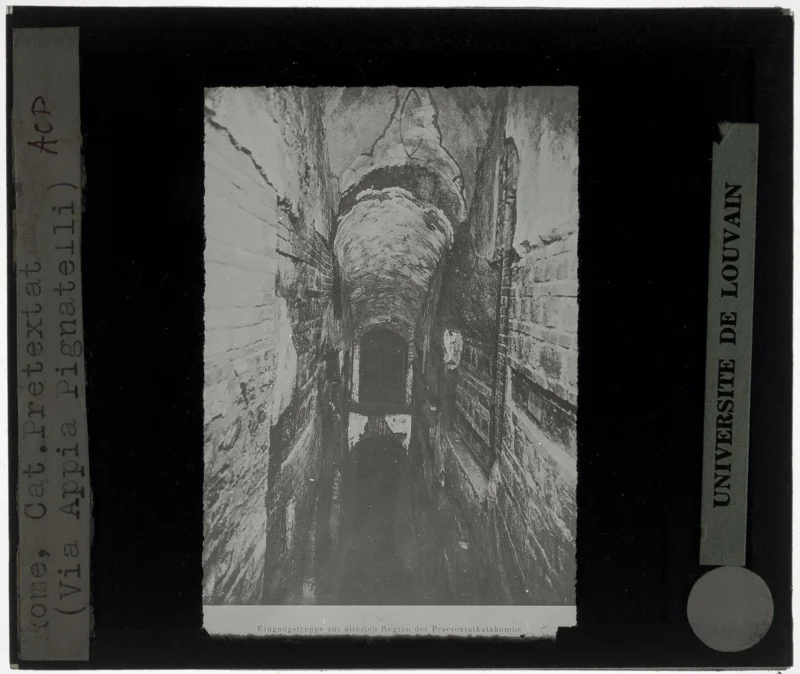
The third, and I say it because it avoids disappointment: there are no catacombs here. The crypt is a modern ossuary of the Baroque and eighteenth-century age, not an early Christian cemetery dug into tuff. Whoever is looking for the underground corridors of the first Christians has to go outside the city gates, to the Catacombs of San Callisto or the Catacombs of Priscilla. They are two different experiences, and confusing them is the surest way to be dissatisfied with both.
The advice I give you for visiting the Capuchin Friars Museum and Ossuary Crypt
Go first thing, as soon as it opens, at 9:30 on a weekday, and get the audio guide even if you usually can't stand them. The reason for the first piece of advice is banal and decisive: the crypt is a narrow corridor with six niches, and its quality depends entirely on how many people are in there with you. With 12 visitors it becomes a line, with three it becomes a place. After 11 in the morning, and on weekends, the probability of finding it empty collapses. The reason for the second piece of advice is that here the captions are deliberately sparse and the audio guide is included in the ticket price: giving it up means paying for a service and not using it.
The route advice is this: don't rush to the crypt. I know the temptation is strong, I know you came for that. Do exactly the opposite of what instinct asks of you, walk through the seven sections calmly, look at the Saint Francis, read the biographies of the twentieth-century friars, and go down at the end with the faces of real people in your head. The crypt read after the museum is a monument to men you have just met, the crypt read before is a sideshow. The museum is designed with that sequence, and ignoring it means ruining the visit for yourself.
The practical advice concerns clothing and conduct. We are inside an inhabited convent and above there is a church: shoulders and knees covered are the common-sense rule, and in the crypt you keep your voice low because it is a consecrated cemetery in which the community still celebrates. On photography, ask the room staff before taking out your phone: the rules of conduct are communicated at the entrance, and the courtesy of asking will spare you a reprimand in front of 20 people.
One last tip that almost nobody follows: keep a quarter of an hour free after you leave and walk up Via Veneto to Porta Pinciana, instead of diving straight back into the metro. The contrast between the ossuary and the street of the dolce vita, 200 meters away, is the most Roman thing that will happen to you that day.
Another Well-Known Fact, Yet Seldom Cited
Almost everyone knows that the Capuchins gave their name to the cappuccino, the drink, and it gets repeated everywhere. What gets said far less is the rest of the chain, which is more interesting than the anecdote. The reference color is not that of coffee with milk in general, but the precise color of the order's habit, a brown tending toward hazelnut that in the 17th century had a commercial name of its own and that dyers recognized at a glance. The drink we now call cappuccino was born as the Kapuziner in the Viennese cafés of the 19th century, that is, in Habsburg territory, and the name refers exactly to that color, obtained by adding cream or milk to black coffee until it reaches the shade of the habit. The term then comes back to Italy and settles on the drink we know. So it is not a Roman invention: it is a loan that came back.
There is a second etymological chain that directly concerns this convent and that hardly circulates at all. The capuchin monkey too, the small South American primate, owes its name to the friars: the European naturalists who classified it saw in the dark patch on its head, surrounded by light fur, the image of a lowered hood. It is a rare case in which a religious order lends its name to a drink and to a zoological genus. The third loan, even lesser known, concerns the flower that in some parts of Italy is called cappuccina, that is, the nasturtium, because of the shape of its spur.
Why am I telling this in a guide to the museum, instead of the usual anecdotes about skulls? Because the conclusion says something serious about the order: the Capuchins were so visible in everyday European life, so present in the streets, the markets, the hospitals and the prisons, that their image entered common vocabulary as a unit of measure for color and shape. It didn't happen to the Jesuits, it didn't happen to the Dominicans. It is the sign of a widespread popularity that today we struggle to imagine, and of which the church on Via Veneto, with its picture gallery received as a gift, is the material testimony.
The Right Photo to Take at Museo dei Frati Cappuccini e Cripta ossario
The point that matters: the right photo, in this place, starts with deciding where not to photograph. The crypt is a consecrated cemetery and the remains it holds are people identified as such by the community that keeps them. For filming inside, ask the hall staff about the rules before you shoot, and accept the answer without arguing. It is a matter of good manners, even before it is a matter of regulations. Anyone who arrives here with the idea of taking home a social media trophy has come to the wrong address.

The photograph that is really worth it, and that almost nobody takes, is shot outside and is called the staircase. The facade of the church of Santa Maria della Concezione is preceded by a double scissor ramp that climbs from Via Veneto. Stand on the opposite sidewalk, level with number 30, and frame the staircase at three quarters, keeping the cut of the Umbertine buildings of the street at the top right. You get in a single image the two phases of this piece of city: the Baroque convent that survives and the 19th-century subdivision that grew up around it. No other framing tells better what happened here.
The right time is late afternoon, when the sun hits the side with the odd numbers and the facade, which in the morning stays in flat shadow, warms up. In winter the useful time moves toward 15.30, in summer toward 18.30, when the raking light picks out the steps one by one. If you have a fast lens, the second photo to try is from the top of the staircase looking down, with the traffic of Via Veneto blurred in the background and the handrail in the foreground: it is the image of a threshold, which is exactly what this place is.
Inside the church, during the hours when it is open for worship, the rule is the same as in all Roman churches: no flash, no tripods, absolute respect for those who are praying. The single nave and the raised chapels offer a clean perspective toward the Barberini altar, and if you have the patience to wait for someone to switch on the lighting of the first chapel on the right you can try the Archangel by Guido Reni: it is a difficult painting to photograph, protected and in half-light, and the best result comes from resting your elbows on the back of a pew and shooting with a steady hand.
Some Important Events That Took Place Here in History
The first event is the founding, and it has a precise date worth keeping in mind because it is a programmatic statement: the first stone of the church was blessed by Pope Urban VIII on October 4, the feast of Saint Francis. Not just any day. The pontiff returned for the first mass on September 8, 1630, the feast of the Nativity of Mary, and the construction site closed in 1631. On April 16 of that year the community of Capuchins entered the new home along the present-day Via Vittorio Veneto. These are three dates chosen with liturgical care, and they show how much the project was political as well as devotional: the Barberini pope was installing the most popular order in Italy next to the family palace.
The second event is the move of the dead, in 1631, from the old convent in the area between the Quirinal and the Trevi Fountain. It was Cardinal Antonio Barberini who ordered the exhumation and transfer of the remains of his confreres, and tradition speaks of a convoy on the order of 300 cartloads. It is the birth certificate of the crypt: without that transfer, the ossuary would not exist.
The third event is the transformation of the crypt into a decorative composition, around the middle of the 18th century and at least in part completed by 1764. It is the moment when a problem of cemetery management becomes a work of art, by the hand of an author we do not know.
The fourth event is the visit of the Marquis de Sade in 1775, who on his trip to Italy left the first significant outside description of the place and the only clue about the author of the decoration. From that moment the crypt enters the Grand Tour itineraries for good, and stays there for a century and a half.
The fifth event is the fresco on the vault of the church, painted in 1796 by Liborio Coccetti with the Assumption of the Virgin, the last significant decorative work before the Napoleonic turbulence.
The sixth event is the season of 19th-century literature. In 1851 Jean Baptiste de Chatelain publishes a very harsh judgment, calling the spectacle revolting and accusing the friars of profiting from the credulity of the living. In 1860 Nathaniel Hawthorne publishes The Marble Faun, the novel written after his long stay in Rome, in which the Capuchin church and its crypt have a central narrative role. In 1867 Mark Twain comes down here and in 1869, in The Innocents Abroad, devotes to the convent one of the most famous and most ferocious pages of his book.
The seventh event is the end of burials in 1870, the year the Papal States ended. From that date no one is buried in the crypt anymore, and the ossuary crystallizes in the form we see.
The eighth event, or rather the series of events, concerns the demolitions. Late 19th century: down comes the bell tower, to open Via Veneto inside the subdivision of Villa Ludovisi. The 1920s: down comes the 17th-century convent, to build the ministerial building. 1925: first stone of the current convent, on land donated by the City of Rome. In 40 years the complex loses almost everything and keeps the essential.
The ninth event belongs to the history of art: in 1967 Maurizio Marini identifies in Carpineto Romano a second version of the Saint Francis in Meditation, published by Maria Vittoria Brugnoli the following year. Since then the Capuchins' canvas has lived inside an attribution debate that on September 4, 2010, with the Carpineto exhibition curated by Rossella Vodret for the Caravaggio fourth centenary, reaches the direct comparison between the two works.
The tenth event is recent: in 2012 the museum opens, which reorganizes the visit, removes the crypt from the condition of an isolated curiosity and returns it to its context. In 2022 the house on Via Veneto joins the new Provincia Serafica Immacolata Concezione dei Frati Minori Cappuccini, born from the union of several Italian circumscriptions.
Who Has Passed Through Museo dei Frati Cappuccini e Cripta ossario
Let's begin with the patrons, because without them there would be nothing. Pope Urban VIII, born Maffeo Barberini, blessed the first stone and celebrated the first mass: his bees are still at the bases of the columns of the high altar. His brother, Cardinal Antonio Barberini the Elder, a Capuchin himself, wanted the church and ordered the transfer of the dead. He is buried in front of the altar under the epitaph that calls him dust, ashes and nothing. They are the couple who made this place, and they are also proof that Capuchin rigor and Barberini power coexisted for a generation.
Among the illustrious burials, the Polish prince Aleksander Benedykt Sobieski, son of King John III who stopped the Ottomans at Vienna in 1683. He died in Rome in 1714 and Camillo Rusconi sculpted his monument to the left of the altar. His presence, as mentioned, physically saved the complex from demolition.
Among the saints, Saint Felix of Cantalice, the alms collector who walked Rome for 40 years with his bag on his shoulders and who rests here, and Saint Crispin of Viterbo, a cobbler who became a friar. Among the moderns, the Venerable Gianfranco Maria Chiti, a general of the Italian army who took the habit at 62, and Father Mariano da Torino, who died in 1972, the Capuchin who entered Italians' homes through television and whose burial is in the church. The 20th-century section of the museum also gives space to Padre Pio da Pietrelcina and to the painter friar Ugolino da Belluno.
Among the artists, the list alone tells the rank of the place: Guido Reni, Domenichino, Giovanni Lanfranco, Pietro da Cortona, Andrea Sacchi, Alessandro Turchi, Andrea Camassei, Girolamo Muziano, Baccio Ciarpi, Mario Balassi, Gerard van Honthorst. And Caravaggio, with that Saint Francis in Meditation that has held critics in check for half a century. Not all of them set foot in this church, but all of them sent it something.
Among the famous visitors, the first in order of time is the Marquis Donatien Alphonse François de Sade, who passed through here in 1775 during his trip to Italy and left declaring he had never seen anything more impressive. Then Nathaniel Hawthorne, who stayed in Rome in the late 1850s and brought the Capuchin church into The Marble Faun, published in 1860, where the crypt becomes one of the turning points of the novel. Then Jean Baptiste de Chatelain, who in 1851 panned it in words worth remembering because they are the only openly hostile voice among the old sources: a revolting spectacle, in his view, and all the more disgusting in that those remains would be displayed only to collect a tax on the imbecility of the living.
And then there is Mark Twain, who in 1867 came down here with the Quaker City party and in 1869 made it one of the most-read chapters of The Innocents Abroad. Twain described well-proportioned arches built entirely of thigh bones and impressive pyramids made only of grinning skulls, asked the friar how many men it took to upholster those six parlors and was told it was the bones of 4,000. Then he noted, with his deadly coolness, that the prospect of being taken apart one day like an engine or a watch and reused in arches, pyramids and friezes did not trouble his companion in the slightest. The friar also told him the story of a young confrere, and Twain, who had come to laugh, left here more serious than he had entered. It still happens, with surprising regularity.

Accessibility of Museo dei Frati Cappuccini e Cripta ossario
The museum is on the first floor of the convent building and is reached by an elevator. The reception staff helps with opening the connecting door to the exhibition floor. In the corridors and rooms, wheelchair circulation is easy, thanks to the width of the spaces and the absence of level changes. Admission is free for people with disabilities and for one companion, with no reservation required: just show the documentation at the ticket office.
The crypt has a limit that should be known before setting out. Access involves three steps of modest height, and the original historic flooring has prevented the installation of ramps, which would compromise its integrity. Passage is allowed with a companion, while access with motorized wheelchairs is not permitted, to protect the site. For specific needs the museum invites you to contact it in advance, at info@museoecriptacappuccini.it or at 06 88803695, so that a suitable solution can be prepared. Here the staff's willingness is real and not just for show: a phone call almost always solves it.
Museo dei Frati Cappuccini e Cripta ossario with Children
The question I get most often concerns the right age. I'll answer plainly: under 10 the crypt is a gamble, and it depends much more on the parents than on the child. A kid prepared in advance, who has been told they will be going down into a cemetery and not a house of horrors, usually reacts with healthy curiosity and asks better questions than adults. A child brought in by surprise may get frightened, and there is nothing strange in that. From 12 on the problem almost never comes up.
The museum has an offer designed precisely for families, the Kids Tour, a path dedicated to the little ones with informative content and activities, which lets parents visit on their own while the children follow their own itinerary. For schools there are educational paths calibrated by age and interests, hands-on workshops tied to the artistic techniques of the Capuchin tradition, and projects that can be customized with the schools. Reservations for school groups must be made at least 10 days in advance. The time slots reserved for school groups are every day from 8.30 to 9.30, and on Sunday from 9.30 to 10.30 and from 14.30 to 15.30. Cancellation penalties are 50 percent between 10 and three days before, and 100 percent within two days.
The advice I give parents is to tell the children the phrase on Antonio Barberini's slab before going down. Hic iacet pulvis cinis et nihil, said to an 11-year-old, almost always produces a conversation worth the ticket.
How Long the Visit Takes and When to Go to Museo dei Frati Cappuccini e Cripta ossario
The real duration, for an attentive visitor with an audio guide, is about an hour and a quarter: 40 minutes for the seven sections, 10 or 15 for the crypt, the rest at the ticket office, coat check and bookshop. Anyone who wants to add the upper church should allow another 20 minutes, and check the hours when it is open for worship, which are independent of those of the museum. Anyone who arrives with their own guide and a group of 10 people will hardly get under an hour and a half, because in the crypt corridor you move in stages.
The best time of day is the morning opening, at 9.30, on a weekday. The worst time is Saturday afternoon and Sunday afternoon, when Via Veneto fills up and the museum gets the foot traffic. In the high-season months, from April to June and in October, add half an hour of margin. In winter the museum is one of the best refuges in the city in case of rain, and it is also the period when you are most likely to have the crypt all to yourself. If the liturgical tone of the place interests you, November 2 is the day when the crypt goes back to being what it was born for, with the mass for the dead celebrated by the community.
What to See Around Museo dei Frati Cappuccini e Cripta ossario
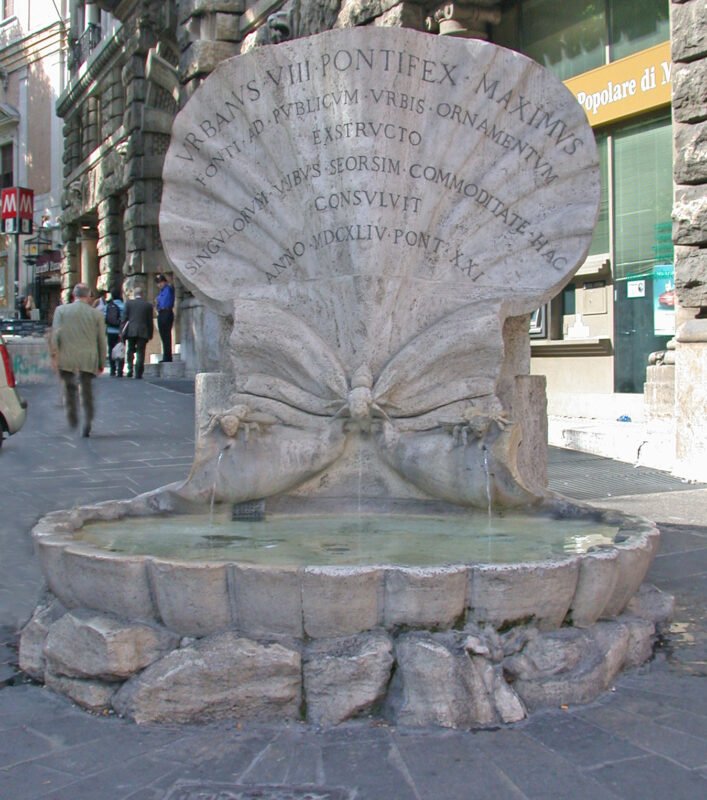
Within a 10-minute walk there is a concentration of things that few areas of Rome can match. Going down 50 meters you reach Piazza Barberini with the Triton Fountain by Gian Lorenzo Bernini, from 1643, and at the start of Via Veneto the small Fountain of the Bees, by the same artist. Another 200 meters on, Palazzo Barberini with Galleria Nazionale d'Arte Antica: the same family, the same decade, the exact other side of the coin. On one side the Capuchins who have it written on their tomb that they are nothing, on the other the hall where Pietro da Cortona painted the Triumph of Divine Providence to celebrate the glory of the Barberini. Seeing both in the same morning is, in our opinion, the best exercise in Roman history you can do without opening a book.
Going up Via Veneto you reach in 10 minutes Porta Pinciana and the entrance to Villa Borghese, with the Galleria Borghese a quarter of an hour's walk inside the park, for those who have booked. Going down toward the west, 10 minutes bring you to the Trevi Fountain, and in a quarter of an hour you are at Piazza di Spagna, below the staircase that climbs to Trinità dei Monti and, a little farther on, to Villa Medici. To the southeast, the hill of the Quirinal with the Scuderie is barely a quarter of an hour away, and it is precisely in that area that the old convent stood from which, in 1631, the bones came.
Underground and Funerary Rome: Where to Continue After Museo dei Frati Cappuccini e Cripta ossario
Anyone who leaves here wanting to understand how Rome treated its dead has a long itinerary ahead, and it is best to order it by era rather than by geographic proximity. For the early Christian age there are the catacombs of Rome as a whole, with the Catacombs of San Callisto and the Catacombs of San Sebastiano on the Appia Antica, the Catacombs of Priscilla on the Salaria, and the smaller complexes that can be visited only on request: the Hypogeum of Via Dino Compagni, the Catacombs of Santa Tecla, the Catacombs of Commodilla and the museum of the Catacombs of Generosa.
For the modern age and the relationship between devotion and death, the Museum of the Souls of Purgatory on Lungotevere Prati is the most logical complement to the crypt on Via Veneto, and on top of that it is free. For the Romantic 19th century there is the Non-Catholic Cemetery in Testaccio, where Keats and Shelley rest, which is the exact stylistic opposite of this ossuary and sheds light on its meaning by contrast. For the history of the order, finally, the Museo Francescano of the Capuchin Historical Institute holds study materials on the same religious family.
Memento Mori, Not a Museum of Horrors: What the Capuchin Crypt Means
The Ossuary Crypt of Museo dei Frati Cappuccini e Cripta ossario, beneath Santa Maria della Concezione on Via Vittorio Veneto, is the worst-told place in Rome: almost always as a macabre attraction, almost never for what it is: a cemetery of friars turned into a visual sermon on death. The difference is not a shade of taste: if you go in thinking of a house of horrors you understand nothing of what is in front of you. Here I separate three things that are usually stuck together: what the sources document, what nobody knows for certain, and what is legend grown up around the place.
Where Those Bones Come From: A Move, Not a Set Design
The starting point is banal and changes everything: the bones in the crypt were not gathered for effect, they came here because the friars had to take their dead with them. This is documented by the sources. In the 17th century the Capuchin community moved to the new convent next to Palazzo Barberini, commissioned under the patronage of that family (Cardinal Antonio Barberini was himself a Capuchin) and completed around 1631. With the convent the cemetery moved too: the remains of the confreres buried in the old seat were exhumed and transferred here, together with the earth of the old graveyard. Burials then continued for more than two centuries, until the 1870s, when the laws on urban cemeteries ended the practice.
What follows comes from a practical problem. A Capuchin ossuary is not a monumental necropolis: the order's rule excludes individual burials, family tombs, personal gravestones. The friars' bones, taken out of the earth after years, end up mixed and anonymous by choice, not by neglect. Someone decided that instead of piling them up they could be arranged: from there come the rosettes, the vaults and the ornamental motifs you see today. You find this logic again on a different scale in the Christian underground cemeteries of the Catacombs of San Callisto, where too the body of the deceased counts as a sign and not as a personal monument.
The Baroque Memento Mori: Why It Seemed Normal to a Capuchin
The second point is cultural. In the 17th and 18th centuries death was not the taboo it is for us: it was a domestic presence, depicted everywhere. Skulls and hourglasses stand on the funerary monuments of the most elegant churches in Rome, gilded bronze skeletons appear on papal tombs, the confraternities accompanied the condemned and buried the poor as an act of devotion. The crypt on Via Veneto is not an extravagant exception: it is an extreme example of a common language, the memento mori, that is, the invitation to remember that you must die.
Onto this is grafted the specific spirituality of the Capuchins, made of radical poverty and meditation on transience. For a friar who has spent his life considering his own body a provisional thing, seeing the bones of his confreres mounted to decorate a chapel is not an outrage: it is consistency. Those bones say that the body is a garment and that the garment wears out. The right tone for visiting it is not the thrill, it is seriousness.
The final inscription and what it asks of those who enter
At the end of the route a plaque puts the meaning of everything else in writing. The content is the classic one of the genre: the dead address the viewer and remind him that they were once what he is now, and that he will become what they are now. The exact text circulates in several versions and in several languages, and I don't quote it word for word because the transcriptions out there don't all match. You read the precise wording on the spot, which is how it was meant to be read anyway.
Note that the sentence doesn't speak of the friars and doesn't speak of Rome. It speaks to the visitor, whoever he is, and it changes the subject of the visit. Until a moment before, you were looking at the dead. From that moment, the dead are looking at you. It's a precise rhetorical device, and it's the reason the inscription is at the end and not at the entrance.
Who composed them and when: here history ends and legend begins
Now the honest part. Who physically composed the decorations is not documented. There is no name, no contract, no signature, and the sources that give you an author elsewhere are guessing. The most widespread hypothesis among scholars is that the work was done by one or more friars of the community itself, spread over many years and not in a single campaign. There is also a conjecture that French friars who had taken refuge in Rome during the Revolution had a hand in it, but it remains a conjecture, not verified news.
The dating wavers too. Some sources place the arrangement of the bones around the beginning of the 1700s, others around the middle of the century. The reason for the difference is simple: the display wasn't created all at once but grew through additions and remakings as new burials arrived. Saying "the crypt was built in year X" is convenient for a caption and wrong in substance.
The stories about individual skeletons fare worse: the friar who supposedly was a repentant nobleman, the child of the Barberini family, the body placed there as punishment. These are oral tradition and tourist anecdote, not historical facts. None of them has a verifiable documentary basis. The same goes for the esoteric readings, the numerical "codes" and the supposed occult meanings of the arrangements. They have no foundation in the order's sources and mistake a work of devotion for a puzzle.
How many friars are there: the figures don't match, and that needs saying
On the number of remains the sources differ, so I don't give a flat number. The figure that circulates most often is about 3,700 friars. Other institutional sources speak of almost 4,000 religious, who lived between the 1500s and the 1800s. The difference doesn't come from sloppiness. The bones are mixed and taken apart, so the count is necessarily an estimate, and different estimates start from different criteria. If you read a number, take it as an order of magnitude: a few thousand friars, the entire community of a convent over about three centuries.
How to visit it without turning it into an amusement park
The visit is paid. The museum and the crypt are seen with a single ticket, with reduced rates for young people, over-65s, students and groups, and free admission for small children and for people with disabilities with a companion. Hours and prices change over time, so check the museum's official website before leaving home. According to the official website, photos and videos are allowed only for private, non-profit use. In the crypt, ask the staff anyway before taking pictures.
Quick questions about the Capuchin Friars Museum and Ossuary Crypt
How much is a ticket for the Capuchin Friars Museum and Ossuary Crypt
Full price is €10.00 with audio guide included, reduced is €6.50, and groups of at least 10 people pay €7.50 per person. Buying online adds a €1.50 fee per ticket.
What are the opening hours of the Capuchin Friars Museum and Ossuary Crypt
Every day from 9:30 to 13:30 and from 14:30 to 18:30, with last entries at 12:30 and 17:30.
When is the museum closed
Fully closed on December 25, January 1 and Easter Sunday. Early closing at 13:30 on Holy Saturday, November 2, December 24 and December 31. For special days it's best to check the official website.
Do I need to book to visit the Capuchin Friars Museum and Ossuary Crypt
Not for a self-guided visit. You buy at the ticket office or online. Booking by email is required for guided visits, for groups accompanied by their own guide, for school groups and for evening openings.
How long does the visit take
About an hour and a quarter for an attentive visitor with the audio guide. Add 20 minutes if you also want to see the upper church.
Can you take photographs in the crypt
The crypt is a consecrated cemetery and the rules of conduct are given at the entrance. Ask the hall staff before taking pictures and follow the instructions you get. In the church, the rules common to all Roman places of worship apply, so no flash and no tripods.
Is the Capuchin Friars Museum and Ossuary Crypt wheelchair accessible
The museum floor can be reached by elevator and getting around the rooms is easy. The crypt has three steps of modest height and no ramps, to protect the historic flooring. Access is possible with a companion, while motorized wheelchairs are not allowed. For special needs it's best to call 06 88803695 first.
Who gets in free
People with disabilities and, if declared, their companion. National tourist guides with a badge. Capuchin Friars Minor. Children up to six years old.
Who is entitled to the reduced price
Visitors from 7 to 17 years old, over-65s, students with valid documentation, international guides with a badge, members of Catholic religious orders, FAI members.
Is the Roma Pass or the first Sunday of the month valid
No. The museum is a private religious institution and is not part of the free-admission schemes of the state and city museums.
How many friars are buried in the crypt
The museum gives about 3,700 deceased, for the most part Capuchin friars, with the presence of a few benefactors. The figure of 4,000, repeated by very many publications, is a traditional rounding that has circulated since at least the 1800s.
How many chapels does the crypt have
A corridor of about 30 meters with six rooms: the crypt of the three skeletons, the crypt of the shin bones and thigh bones, the crypt of the pelvises, the crypt of the skulls, the chapel for Mass and the crypt of the resurrection. The descriptions that speak of five chapels count only the rooms decorated with bones.
When were the bones collected
The burials cover the span between the transfer of 1631 and 1870, the year the practice ended. The decorative arrangement we see took shape around the middle of the 1700s and appears to be at least partly complete by 1764.
Who decorated the Capuchin crypt
It isn't known. The only early clue is the testimony of the Marquis de Sade, who in 1775 attributed the work to a German priest of the house, without giving his name.
Is the Capuchin Friars Museum and Ossuary Crypt suitable for children
From age 12 up, usually yes. Under 10 it depends on the child and above all on how you prepare them. The museum offers a Kids Tour for the youngest, while the parents visit on their own.
Is there a coat check and a bookshop
Yes, the museum has a coat check, a bookshop and audio guides, the latter included in the ticket price.
What is the difference between the Capuchin crypt and the catacombs
They are different things in era and in nature. The catacombs are early Christian cemeteries dug into the tuff outside the walls between the 2nd and 5th centuries. The crypt on Via Veneto is a Baroque-era convent ossuary in the city center, with an 18th-century decoration.
Can you visit the church without a ticket
The church of Santa Maria della Concezione is a place of worship and keeps its own opening hours, separate from those of the museum. The ticket covers the museum route and the crypt.
Are there evening visits to the Capuchin Friars Museum and Ossuary Crypt
Yes, by reservation at least two weeks in advance and with advance payment by bank transfer, in the time slots 18:45-19:45 and 20:00-21:00, lasting about 50 minutes.
How much is a guided visit with the museum's guide
€90.00 by bank transfer or €95.00 with electronic payment and fees included, in addition to each participant's entrance ticket. Booking is required at least one week in advance.
Can you come with your own tour guide
Yes, by booking by email, at no additional cost, with a maximum of 10 people and with a guide holding a national or international license.
Is the Caravaggio on display authentic
The museum displays the Saint Francis in Meditation as a work by Caravaggio made for the convent. Since 1967 critics have debated its relationship with the version from Carpineto Romano, now in storage at Palazzo Barberini, and scholars' positions remain divided.
Where exactly is the entrance
Via Vittorio Veneto 27, on the right side going up from Piazza Barberini, under the double staircase of the church. The metro stop is Barberini, line A.
Does the museum take part in Museums Night
Yes. For the edition of Saturday, May 23, 2026, it is open from 19:00 to 24:00, last entry at 23:00, with reduced admission at €6.50.
How do you contact the museum
Phone 06 88803695, email info@museoecriptacappuccini.it, official website museoecriptacappuccini.it. The director answers at direttore@museoecriptacappuccini.it.
To close, one observation to make on the threshold, before you go down. Don't look at the bones. Look at the design. Someone, on an afternoon in the 1700s, picked up the femur of a confrere he had known alive and decided at what height to place it so the arch would come out symmetrical. That gesture, not the skull, is what you'll take home. And if on your way out you notice you're walking more slowly along Via Veneto, looking at the shop windows with less appetite and suddenly feeling like calling someone, then the crypt has worked exactly as the friars planned three centuries ago. 10 euros for an effect like that is the best cultural purchase possible in this part of Rome.
Capuchin Friars Museum and Ossuary Crypt - buy your ticket online HERE - skip-the-line ticket
Article written by the editorial team of TourLeaderPro, contact them for Private/Corporate/V.I.P. Tours and Experiences.
Planning a trip to Rome? The English guides to visiting the city are on ItalyPlanner.com.
Contact Information
Nearby
 Santa Maria della Concezione dei Cappuccini100 m
- Catacombs of Rome100 m
- Fontana delle Api100 m
- Piazza Barberini100 m
- Triton Fountain100 m
- Teatro Sistina100 m
Upcoming events nearby
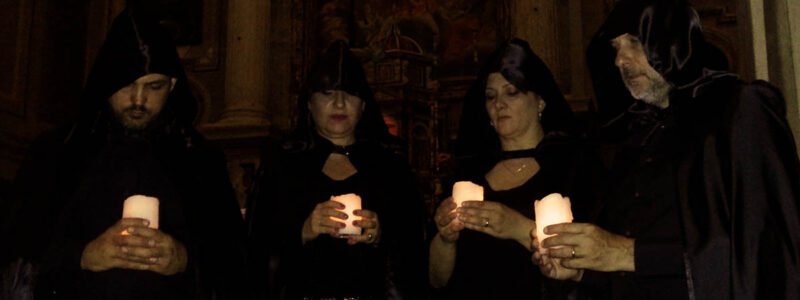
- Sacred Music Concerts at Cripta dei Cappuccini, Rome, through December 17, 2026100 m
- Mamma Mia! the Musical at Teatro Sistina, December 17 to 31, 2026100 m
- Priscilla, La regina del deserto, the musical at Teatro Sistina, from February 10, 2027100 m
- Belle Ripiene at Teatro Sistina in Rome, from April 8, 2027100 m