Villa Medici: French Academy in Rome
In short. Villa Medici stands on the Pincio, next to the Trinità dei Monti church, at the exact address of Viale della Trinità dei Monti 1, 00187 Rome.
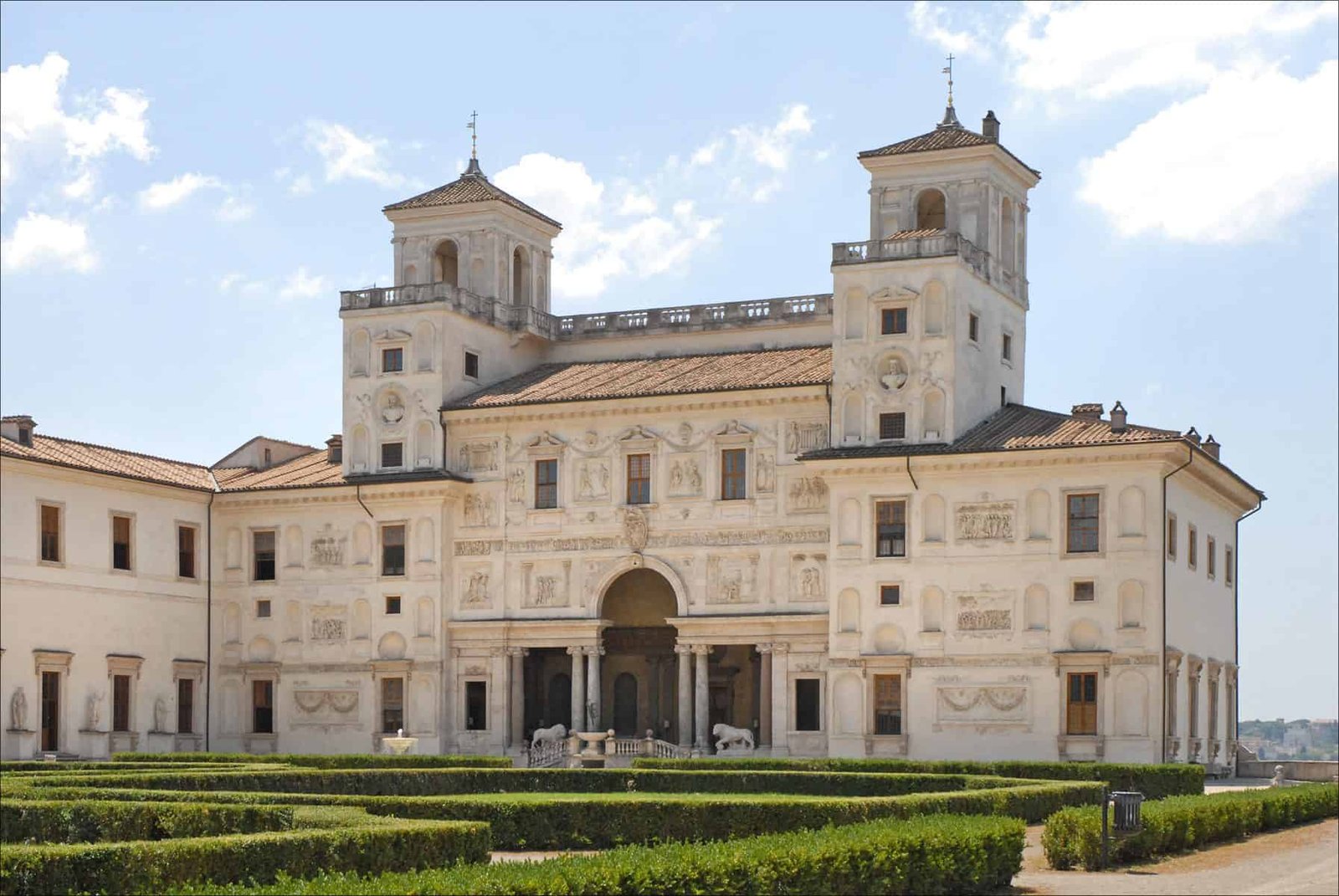
Villa Medici stands on the Pincio, next to the Trinità dei Monti church, at the exact address of Viale della Trinità dei Monti 1, 00187 Rome. Since 1803 it has housed the French Academy in Rome, and you visit it on a guided tour of about an hour and a half that takes you through the historic gardens and the cardinal's apartment. The full ticket costs €18, the reduced ticket €15, and you book on the official website villamedici.it, where you'll also find the updated schedule. The Academy opens to the public every day except Tuesday. The schedule given by the official website is approximately from 9:30 to 19:00, with the last entry set according to the tour slot, so it's best to check it before going up. You get there by Metro Line A, Spagna stop: from the square you climb the Trinità dei Monti Steps and the entrance is a few steps from the church. Alternatively, you come down from above, from the Pincio and the gardens of Villa Borghese. The electric minibuses that serve the Tridente and Piazza di Spagna, lines 117 and 119, drop you in the area. Check which runs are active before leaving, because the downtown minibus service changes often.
To place Villa Medici within the fabric of the city's other cultural sites, you'll find an annotated index on the page of the museums of Rome, useful for building an itinerary that holds together the Pincio and the rest of the center.

Villa Medici and the French Academy: What You See Today
Whoever arrives at Villa Medici expects a museum with rooms in a row and a ticket office that lets people in on a free flow: it doesn't work like that, and it's good to know before. Villa Medici is the seat of a living institution, the French Academy in Rome, which hosts artists and researchers in residence here and at the same time safeguards a 16th-century monumental complex. You enter accompanied, in a group, with a guide who opens the historic apartment of Cardinal Ferdinando de' Medici and leads you along the gardens, from the 16 boxwood squares to the belvedere that closes the park to the north. It's a visit that lasts about 90 minutes and deserves to be taken for what it is: not a race among masterpieces, but the story of a Renaissance pleasure villa that has crossed four centuries without losing its design.
The thing that strikes you right away, once past the entrance, is the double nature of the place. From outside, toward the city, the facade is sober, almost fortress-like. From inside, toward the park, it bursts with ancient bas-reliefs set into the wall as in an open-air collection. This asymmetry is not a whim: it tells of the taste of the patron, a prince of the Church who wanted to show his collection of antiquities to guests strolling the avenues, and keep instead a severe front on the urban side. In our view Villa Medici is one of the most underrated visits in the center of Rome: people crowd the Steps below for the photograph and don't imagine that, climbing a few meters, there is one of the best-preserved gardens of 16th-century Rome.
How to Get to Villa Medici
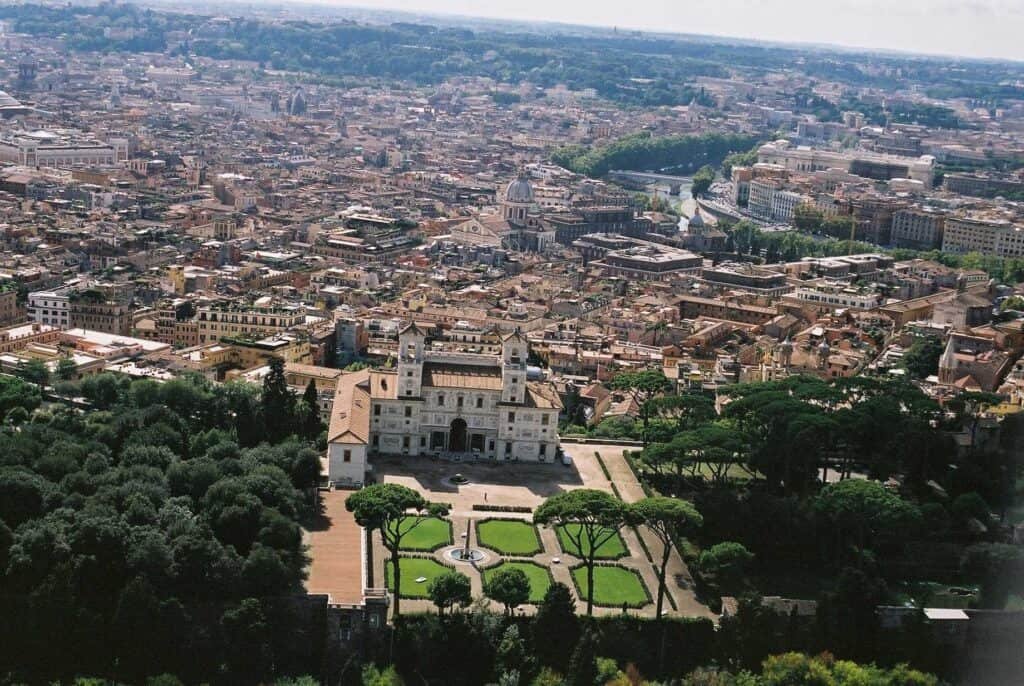
The address is Viale della Trinità dei Monti 1, at the top of the Pincio. The simplest way up is the metro: Line A, Spagna stop, which comes out right at the foot of the Trinità dei Monti Steps. From there you take on the steps up to the French church at the top, and the entrance of the Villa is next to it, on the side of the panoramic avenue. If you don't feel up to the climb on foot, you can take the elevator inside Spagna station that goes toward the Pincio, or arrive from above by crossing the gardens of the Pincio and Villa Borghese, a flat route much more restful, with a view that repays the longer way around.
On the surface, Piazza di Spagna area is served by the downtown electric minibuses, historically lines 117 and 119, which slip into the maze of the Tridente where big buses don't go. The Roman minibus service, however, is reorganized frequently, so the practical advice is to check the active lines on the day of your visit and not take them for granted. If you're arriving by car, forget it: the whole area is a limited traffic zone and the parking lots are far and expensive. A taxi leaves you in Piazza della Trinità dei Monti, but at peak hours the climb by car toward the Pincio is very slow, and it's often quicker on foot from the square below.
A warning: allow time for the climb. Between the metro stop, the Steps and getting to the entrance, a good 10 or 15 minutes go by, and the guided tours start on time. Showing up out of breath at the last second, with the group already underway, is the worst way to begin.
Hours, Tickets and Guided Tours at Villa Medici
Villa Medici is visited almost exclusively with the guided tour. The free, disorderly entry found in so many museums isn't available here, and the reason is simple: the spaces are still those of a residence, with the historic apartment and the studiolo that couldn't withstand a continuous flow. The standard tour lasts about an hour and a half, includes the gardens and the cardinal's apartment, and is offered in several languages, Italian, French, English and Spanish, with slots spread across the day. The full ticket costs €18, the reduced ticket €15. The categories entitled to the reduction and any free admissions are listed on the official website, and it's best to read them beforehand because they differ from Italian state museums.
Booking is done online, on the ticket office indicated by the official website villamedici.it. On weekends and during exhibition periods the slots in your own language sell out some time ahead, so booking a few days before avoids the disappointment of finding a place only in a language you don't understand. It is open to the public every day except Tuesday, a fixed closing day, with approximate hours from 9:30 to 19:00. Since the times of the individual guided slots and any extraordinary closures tied to events vary, the golden rule is to check the tours page the day before.
A clear opinion: the guided tour here is not a fallback, it's the right way to see the place. Without someone to open the frescoed studiolo and explain what the garlands set into the facade are, Villa Medici risks seeming just a nice garden with a view. With the guide it becomes the story of a collector prince and 350 years of French artists in Rome.
The History of Villa Medici: From the Horti Luculliani to the Medici
The land on which Villa Medici stands has a history that begins long before the Renaissance. Here, in antiquity, stretched the Horti Luculliani, the gardens that the general Lucius Licinius Lucullus had created on the hill after his campaigns in the East, bringing to Rome a taste for large terraced parks and exotic plants. They were gardens of legendary fame, a byword for luxury and refinement, and it is not a minor detail that the French Academy ended up settling on the very ground the ancients considered the most elegant belvedere of the city.
The Horti Luculliani and the Death of Messalina
The Horti passed from hand to hand several times and ended up at the disposal of Valeria Messalina, the wife of Emperor Claudius. Ancient tradition ties the violent end of Messalina to these very gardens, killed here in 48 AD at the height of the political scandal that overwhelmed her. Later the hill hosted late-antique residences linked to the names of Honorius and Belisarius. After the empire fell, the peripheral and high position of the site, once an asset, sealed its abandonment: for centuries it remained vineyard and countryside inside the walls, like so much of emptied medieval Rome.
The Casina Crescenzi and the Lippi
In 1564 the nephews of Cardinal Giovanni Ricci of Montepulciano bought the land on the hill, which the ancients called collis hortulorum. The only civil building present was the casina of Cardinal Marcello Crescenzi, who kept a vineyard there and had started enlargement works, entrusting them to the Florentine Nanni Lippi, but died before seeing them completed. The new owners resumed the work and entrusted it to Lippi's son, Annibale, who gave the villa the form of building we still recognize today. Tradition has it that Michelangelo also had a hand in the project, an attribution to be taken for what it is, a suggestion handed down rather than a documented fact.
Cardinal Ferdinando de' Medici and Bartolomeo Ammannati
The leap in quality came in 1576, when the property passed to Cardinal Ferdinando de' Medici, son of Cosimo I, grand duke of Tuscany. He is the real patron of the villa as we see it: he had the works completed by Bartolomeo Ammannati, designed the front toward the garden with the central serliana loggia, and above all transformed the facade and the park into an open-air museum of his collection of antiquities. According to the taste of the time, part of the ancient ruins was buried, while Roman bas-reliefs and statues that re-emerged from the surrounding vineyards were set into the facade toward the gardens and distributed among the avenues. The park recalled the botanical gardens his father Cosimo had created in Pisa and Florence, rich in pines, cypresses and oaks but also in rare plants, and the interior kept an antiquarium with the most precious pieces.
The Grand Duchy, the Lorraines and the Despoiling of Villa Medici
For a century and a half Villa Medici was one of the most worldly places in Rome, seat of the ambassadors of the Grand Duchy of Tuscany to the papal court, a function it had inherited from Palazzo Firenze. When in 1737 the grand ducal line of the Medici died out, the villa passed to the Lorraine along with the Grand Duchy. The actual despoiling came by the will of Grand Duke Peter Leopold of Lorraine, determined to gather in Florence all the Medici collections. So everything that could be transported was packed and shipped by sea: the Roman statues that today adorn the Loggia dei Lanzi, the Venus de' Medici at the Uffizi, the Medici Vase, an enormous neo-Attic krater also at the Uffizi, the gray granite basin perhaps coming from the baths, and a very long list of antiquities that today are distributed among the Uffizi, Palazzo Pitti and the Archaeological Museum of Florence. Once the transfer was complete, in 1787 Peter Leopold put the villa up for sale.
Galileo Galilei at Villa Medici
There is a chapter that they always tell at the Villa, and rightly so. In 1633 Galileo Galilei stayed here as guest of Ferdinando II de' Medici, first freely and then in a very different condition, during the trial before the Tribunal of the Inquisition that would lead him to abjuration. The Medici villa, extraterritorial as the diplomatic seat of the Grand Duchy, offered the scientist a refuge halfway between hospitality and surveillance. Imagining Galileo strolling along these avenues while a short distance away his fate was being decided gives the measure of how much this hill has been crossed by great history, and not only by art.
The French Academy in Rome: the Prix de Rome and the pensionnaires
The second life of Villa Medici begins with France. The French Academy in Rome had been founded in 1666 by Jean-Baptiste Colbert, the powerful minister of Louis XIV, to host the winners of the Prix de Rome and the artists protected by the great French nobles, who could complete their training in direct contact with Rome and Italy. At that time the stays lasted from three to five years, depending on the discipline. The institution was based first on the Janiculum, then in Palazzo Mancini on Via del Corso, until 1799, when that seat was occupied and the furnishings dispersed in the heated climate of the end of the century.
Napoleon and the transfer of 1803
In 1803 Napoleon Bonaparte signed the contract to purchase Villa Medici and moved the Académie de France à Rome there, intending to safeguard an institution already threatened by the Revolution. The young artists were thus given back what they really needed: the possibility of studying the masterpieces of antiquity and the Renaissance in person. From that moment Villa Medici and the Academy become one thing, and the Pincio hill turns into the Roman home of French artists.
The envois de Rome and the pensionnaires
The heart of the system was the envois de Rome, the annual essays that the scholarship holders had to send to Paris to be judged: copies, studies, original works that were the mandatory exercise of every pensionnaire. Living at the Villa meant working under the gaze of the ancient, drawing the marbles, measuring oneself against Raphael and the ruins, and accounting for one's progress to a distant academy. This mechanism, strict and fruitful, trained generations of French painters, sculptors, architects, engravers and musicians for almost three centuries.
The end of the Prix de Rome
The history of the prize has major fractures. After a first interruption of the competition during World War I, the story gets complicated with the Second: in 1941 the Academy had to leave Rome temporarily and moved first to Nice and then to Fontainebleau. The Prix de Rome was finally abolished in 1968 by André Malraux, then Minister of Culture, who had already tried to abolish it in 1962. The last Grand Prix in architecture was awarded in 1967, because the events of May 1968 prevented it from being held afterward. With that reform the Académie des beaux-arts of Paris and the Institut de France lost the guardianship of Villa Medici in favor of the Ministry of Culture and the French State.
Today's pensionnaires
Since then the scholarship holders no longer come only from the traditional disciplines, painting, sculpture, architecture, engraving of medals or gems, musical composition, but also from fields until then neglected or entirely new: literature, set design, photography, cinema, art history, restoration. Today the French Academy in Rome, under the authority of the French Ministry of Culture, is open to artists and researchers of every nationality, aged between 20 and 45, selected by an independent jury through a competition, for stays from 12 to 18 months. A 2013 reform introduced other types of residency, with different goals and durations, opening the Villa also to guests invited for shorter periods.
The facade of Villa Medici toward the gardens
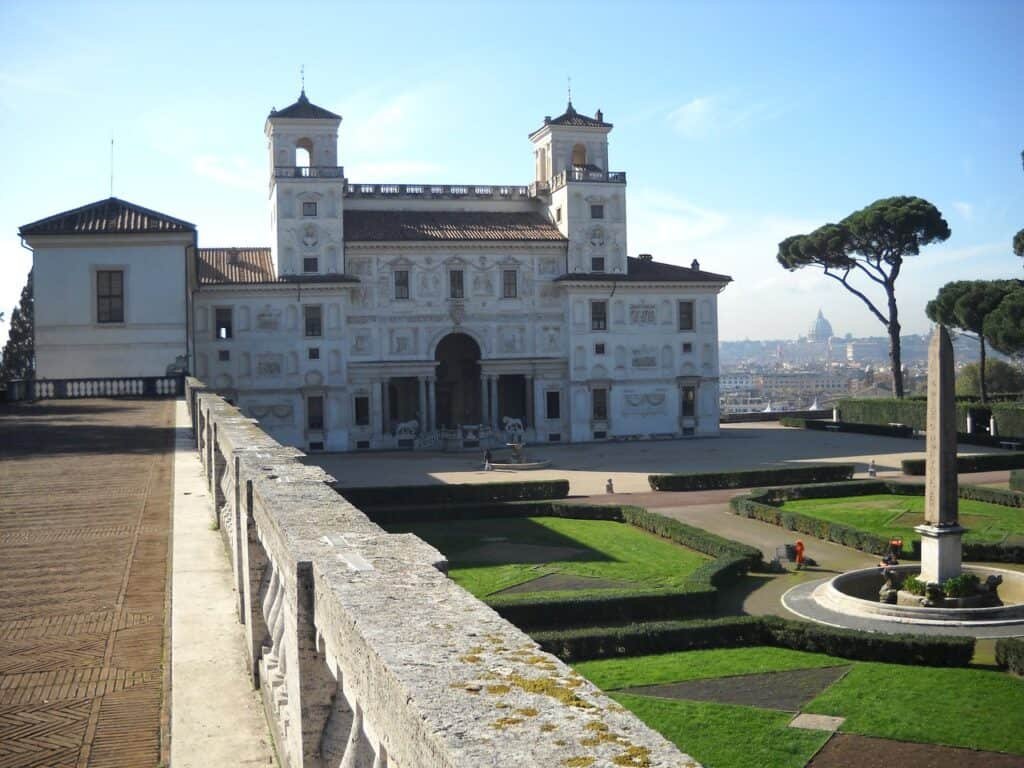
The inner facade, the one facing the gardens and designed by Ammannati for Ferdinando de' Medici, is the highlight of the visit and is worth the ticket on its own. In the center opens a Serlian loggia. All around, arranged in order over the four levels, crowd ancient bas-reliefs set into the wall like tesserae of an enormous archaeological mosaic. The cardinal had bought them starting in 1584 to enrich his collection, and the choice to display them on the facade rather than shut them in a gallery says a lot about his way of understanding collecting: the ancient had to be seen, it had to impress anyone strolling in the park.
Among these reliefs are pieces of the first rank. The large garlands, the festoons with ox skulls, the so-called bucrania, come from the Ara Pacis, Augustus's altar of peace: recognizing them here, set into the facade of a 16th-century villa, is one of those discoveries that change how you look at Rome. Alongside appear scenes from Trajan's wars against the Dacians, episodes tied to the temples of Cybele, Hercules's fight against the Nemean lion, and a series of sculpted theatrical masks. At the sides, two sculpted lions allude both to the cardinal's zodiac sign and to the emblem of Florence. It's a decorative program that interweaves mythology, Roman history and dynastic self-celebration, and that deserves to be read slowly, panel by panel.
My advice in front of this facade is not to settle for the whole. Ask the guide to point out the Ara Pacis festoons and compare them mentally with those you see in the Ara Pacis museum: understanding that pieces of the same Augustan monument ended up in two different places in the city is the kind of historical short circuit that makes Rome inexhaustible.
The cardinal's studiolo and the Hall of Birds
Inside the historic apartment is preserved the most delicate and precious room of Villa Medici: the studiolo of Cardinal Ferdinando, a small cabinet facing the garden and entirely frescoed. The walls and vault are covered by a painted pergola populated with birds, flowers and plants, so much so that the room is known as the Hall of Birds or Bird Room. The decoration is the documented work of Jacopo Zucchi and his collaborators, the Florentine painter whom Ferdinando had brought with him to Rome and who here staged an illusory garden, a painted continuation of the real park seen from the windows.
Among the species portrayed, tradition points to what is considered one of the first depictions of a turkey in European painting, an animal then exotic, arrived from the Americas only a few decades earlier and still little more than a naturalistic curiosity for the courts. That it is absolutely the first is debated, and should be said with caution. That it is an early and fascinating testimony to the way the New World was entering the European imagination, that is certain. The studiolo is small, only a few people enter at a time, and anyone lucky enough to see it understands why the visit to Villa Medici is limited in numbers: a room like this couldn't bear a crowd.
It's worth, as soon as you enter this room, stopping photographing and just looking for a few minutes. It's one of those places where haste ruins everything, and where three minutes spent looking for the birds among the painted fronds leave more memory than 20 shots.
The Gypsotheque of Villa Medici
A chapter that almost nobody knows before arriving is the Gypsotheque, the collection of plaster casts of Villa Medici. It holds about 600 plaster casts that served as study models for generations of the Academy's scholarship holders. Among the most notable pieces are the cast of the Belvedere Torso, that of the head of one of the Dioscuri of Montecavallo, today at the Quirinal, and the oldest existing casts of fragments of Trajan's Column, made in the time of Louis XIV. The collection, in its current arrangement, was inaugurated in 2009.
The meaning of these plaster casts is what today we risk forgetting. Before photography and resin casts, a young French sculptor could study ancient statuary only by copying from the real thing or from casts. Owning in Rome a collection of plasters taken from the originals meant giving the pensionnaires an irreplaceable training ground. Looking today at those fragments of Trajan's Column, taken when the monument was still legible in spots that time has later eroded, also has documentary value: they are the memory in plaster of surfaces that are being lost on the original. It's not a scenic room, it's a room for those who love understanding how one learned to make art.
The gardens of Villa Medici: seven hectares on the Pincio
The garden of Villa Medici runs from north to south for more than seven hectares and still largely keeps its 16th-century layout, which is very rare in Rome. When Cardinal Ricci bought the Casina Crescenzi on the collis hortulorum in 1564, the estate included a farm in the middle of vineyards. Major terracing works were started, and a walled garden was born, adjoining the Santa Maria del Popolo vineyard to the north. The current layout can still be read in three large parts: the esplanade with the adjacent squares, the woodland and the braccheria.
The 16 Squares and Flowerbeds of Villa Medici
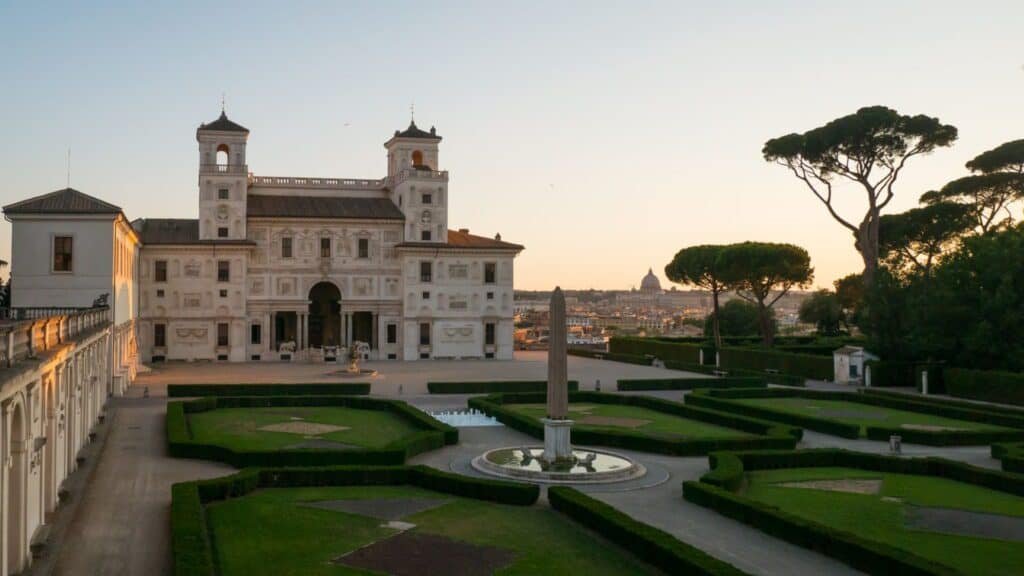
The garden plan is divided into 16 squares and six flowerbeds, a simple and clear geometric scheme, in keeping with the composition principles of the time. The squares are bordered by hedges, and this regular grid is what gives the park its serene order, very different from the romantic picturesque that would invade gardens two centuries later. Walking along these orthogonal axes means walking inside the Renaissance idea of nature tamed by reason, where every perspective is calculated to end on a statue or a fountain.
The Woodland and the Parnassus
Starting around 1570, a silva, that is a woodland, was laid out south of the garden, between the avenue of Via Pinciana to the west, the Aurelian Walls to the east and the terrace that closes the park to the north. This area still holds the buried remains of a Roman temple, probably dedicated to Fortuna. Having also bought the vineyard of Giulio Bosco south of the silva in 1580, Ferdinando de' Medici was able to close the perimeter of the villa for good between the Aurelian Walls and Via Pinciana. He then created a new north-south axis, the long avenue that links the garden to the Parnassus, and on top of the ruins of the ancient temple he built an artificial hillock. By placing the site under the protection of Apollo, with the Parnassus, Ferdinando presented himself as a protégé of the god and a beneficiary of Fortuna: a refined symbolic program that weaves together archaeology and dynastic mythology.
The Niobids
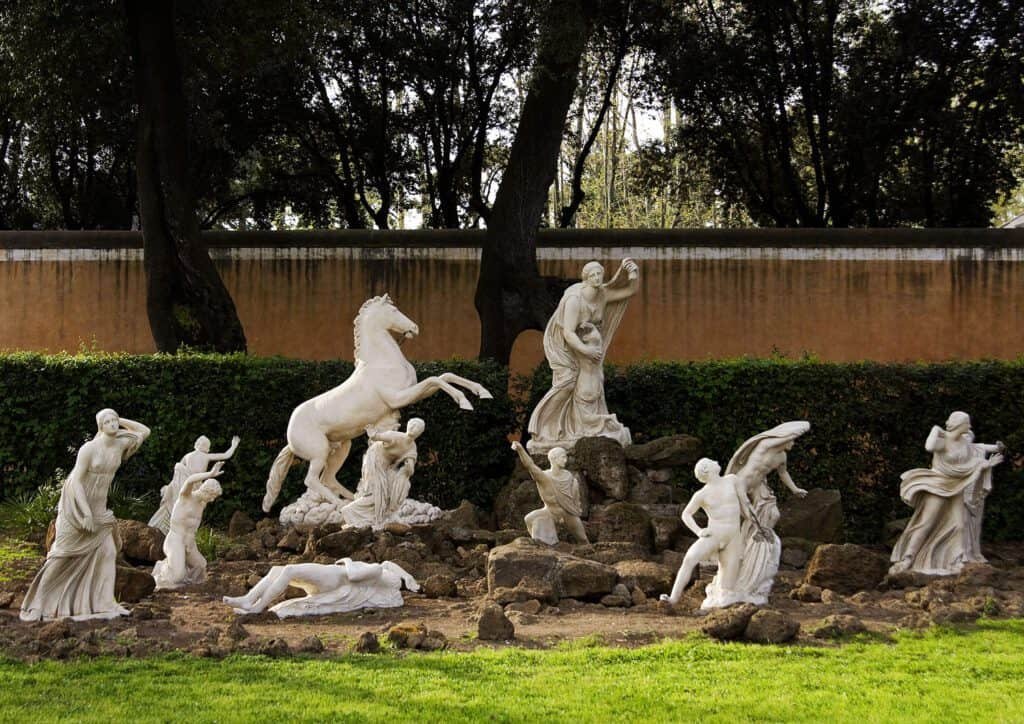
At the end of the 16th century, during some archaeological excavations, the group of the Niobids was brought to light. It depicts the children of Niobe struck by the arrows of Apollo and Diana, together with a horse, a messenger of death. Ferdinando de' Medici bought it and placed it in the square in front of the studiolo. The originals followed the fate of the rest of the collection and ended up in Florence, in the Uffizi, where they have a room of their own. In the garden of Villa Medici today you see the copies, a group of sculptures made in 1976 by the sculptor Michel Bourbon from the originals. Knowing they are casts takes nothing away from the scene: the arrangement among the greenery restores the theatrical effect the cardinal had sought.
Camillo Agrippa's Fountains and the Pines of Villa Medici
The garden owes its water to the ingenuity of Camillo Agrippa, a Milanese mathematician and engineer, who designed the irrigation system thanks to which the site was enriched with basins and fountains. After the terracing works and the plantings, from the end of the 17th century the north garden and the woodland underwent only partial changes. Stripped of most of their sculptures at the end of the 18th century, the gardens nevertheless kept their original plan until the early 19th century. Under the directorship of Ingres the layout of the flowerbeds in front of the villa was slightly modified, and many of those umbrella pines that today make up the particular character of the place were planted. Later the painter Balthus, director of the Villa, rearranged the flowerbeds in front of the building to give the park a more ancient look, thus erasing the 19th-century layout. Because of the phytosanitary decline of the large pines and of the flowerbeds, a restoration of the gardens was started in 2000, directed by the architect Giorgio Galletti, a specialist in Medici gardens, with the aim of bringing them back to their original appearance.
The Obelisk of Villa Medici
In the garden stands out an obelisk of pink granite from the Aswan quarries, 6.27 meters high. It was raised in Egypt, probably in Heliopolis, during the reign of Ramses II, in the 13th century BC, and transported to Rome in the imperial age. Found in the 16th century in the area of the sanctuary of Isis in the Campus Martius, it was bought by Cardinal Ferdinando de' Medici for his collection and placed in the garden of the villa. In 1790 it was moved to Florence to adorn the Boboli Gardens, where it still stands. What you admire at Villa Medici is a faithful reconstruction that took its place. It is the fate of this place, repeated in miniature: the originals in Florence, and in Rome faithful copies that tell of a lost splendor.
The Goddess Roma and the Loggia of Cleopatra
The long avenue of the park culminates in the view of a monumental statue of the Goddess Roma, a colossal marble more than five meters high, found on the Quirinal and given to the cardinal by Pope Gregory XIII. The Loggia of Cleopatra, named after the statue that was placed there, also overlooks the garden, a lookout designed for pausing and contemplating the park. Among ancient columns, capitals and stelae scattered through the greenery, the garden of Villa Medici remains one of the few places in Rome where the Renaissance idea of the villa-museum can still be read almost intact.
Balthus and Ingres, the Artist Directors of Villa Medici
The directorship of the French Academy in Rome has been entrusted over time to leading artists, and two names always come back in the story of the Villa. Jean-Auguste-Dominique Ingres, the supreme Neoclassical painter, was director between 1835 and 1840, and in those years he left his mark on the gardens too, as mentioned. Far deeper and more debated is the legacy of Balthus, born Balthasar Klossowski de Rola, who directed Villa Medici from 1961 to 1977. He pushed for an imposing restoration of the interiors and redesigned the flowerbeds in front of the facade, with a very personal taste for colors and atmospheres. Some reproach him for having erased later layers. And yet without his intervention we would not have today the coherent and noble image that the Villa gives back. Among the great directors, history also remembers the tenures of Ingres and Balthus as a double watershed, the first nineteenth-century, the second twentieth-century, in the care of this place.
The Exhibitions and Cultural Program of Villa Medici
Villa Medici is not a crystallized museum: it is an art center that produces exhibitions, festivals, concerts, screenings, literary meetings and conferences, often in collaboration with the fellows or former fellows. Since 2000 the Academy has stepped up its presence on the Roman cultural scene, bringing major exhibitions and events to the Villa. In 2003, for the 200 years since the French Academy settled on the Pincio, the great exhibition Le Maestà di Roma was staged, with three venues at Villa Medici, the Scuderie del Quirinale and the National Gallery of Modern Art: an imposing show that brought back to Rome many masterpieces now scattered across Europe. Visitors today often find a contemporary art exhibition in the exhibition spaces, a film festival in summer, or temporary installations in the gardens. It's worth checking the program before your visit, because an event in progress can add a lot, or in rare cases limit access to some areas.
Villa Medici with Kids
Villa Medici with kids works better than you'd think, as long as you have the right expectations. The visit is guided and lasts an hour and a half, a serious commitment for the little ones, but the gardens offer space, air and an extraordinary natural treasure hunt: looking for the painted turkey in the studiolo, counting the statues along the avenues, spotting the animals among the festoons of the facade are activities that keep kids' attention alive. On some occasions the Academy offers visits dedicated to families, with an approach designed for the children's age: it's worth checking the official website to see if they're on the calendar for the time of your visit. The practical advice is to choose a morning slot, when the kids are fresher and the heat of the Pincio is still bearable.
Accessibility at Villa Medici
On accessibility we have to be honest: Villa Medici is a historic building on a hill, with differences in level and old paving. The gardens are partly reachable by sloping paths, while some interior rooms, by their nature, have barriers. Anyone with specific mobility needs should contact the Academy in advance, through the contacts on the official website, to be shown the passable route and any available accommodations. Better a phone call than a bad surprise at the entrance. The climb from Spagna station should also be considered: for those who struggle with steps, arriving from above through the Pincio is a much more comfortable alternative on the flat.
When to Go to Villa Medici and What's Around
The best time for Villa Medici is early morning or late afternoon, when the light on the Pincio is soft and the gardens are at their best. In summer a morning visit avoids the worst heat. In spring and autumn the park is at its peak. If possible, avoid the middle hours of weekends in high season, when the Spanish Steps below are a river of people. All around is one of the densest concentrations of beauty in Rome: a short walk away is the church of Trinità dei Monti with its double staircase, and below is Piazza di Spagna with the Barcaccia. Going up the hill, the gardens of the Pincio open up with the panoramic terrace over Piazza del Popolo, and beyond is the immense park of Villa Borghese with the Galleria Borghese and the Museo Carlo Bilotti in the orangery. A little farther, downhill, the Etruscan Museum of Villa Giulia and the Mausoleum of Augustus complete a day that weaves together Renaissance, antiquity and walks. Whoever wants to finish in style can then head down to the Trevi Fountain, about 10 minutes on foot.
A Curiosity About Villa Medici: Academy of France
The curiosity few people know concerns a detail of the facade toward the gardens. The large garlands of flowers and fruit tied by ox skulls that you see set into the wall up there are not 16th-century decorations imitating the antique. They are authentic fragments of the Ara Pacis Augustae, the altar of peace that the Senate dedicated to Augustus in 9 BC. Cardinal Ferdinando de' Medici, a voracious collector, bought them in 1584 and had them set into the front of his villa as archaeological trophies. It means that when the Ara Pacis was later reassembled in the 20th century and placed in the museum along the Tiber, some of its pieces had already ended up, centuries earlier, on the facade of Villa Medici, where they remain to this day. It is one of those cases where Rome dismembers and recycles itself: an Augustan monument that lives in two different places of the city, one in its museum and one set into a Medici villa. Few curiosities tell better how Renaissance collecting made use of the antique, taking it wherever it turned up and using it to celebrate its own name. Whoever visits with this awareness looks at the facade in a completely different way, searching for the original festoons among the dozens of reliefs and feeling the small thrill of recognizing a piece of imperial history set at eye level.
Something Nobody Tells You About Villa Medici: Academy of France
Here is the practical information that changes the visit and that almost nobody will tell you: at Villa Medici, as a rule, you can't just walk in freely as in any ordinary museum, and most of the historic rooms, the frescoed studiolo first of all, can only be seen on the guided tour, in limited groups and on booked slots by language. Whoever arrives on the Pincio thinking of buying a ticket at the entrance and wandering at will risks finding themselves in front of a gate with the slots for their language already sold out, especially on weekends and during exhibitions. The consequence is simple: booking online, a few days ahead and in the language you understand, is not optional, it is the difference between seeing Villa Medici and seeing only the front door. There is also a second little-known aspect: the entry and free-admission conditions do not follow those of the Italian state museums, because the Villa is the seat of a French institution and has its own rules. The free admission on the first Sunday of the month, which applies to so many public museums in the city, doesn't work the same way here, and whoever counts on it is disappointed. Knowing in advance that this is an organized visit, and not free entry, avoids the worst surprise and lets you truly enjoy the historic apartment and the gardens.
My Advice for Visiting Villa Medici: Academy of France
My advice is to choose your slot carefully and take the right amount of time. Book an early morning slot, right at opening, in your language: the light on the gardens is the best, the groups are less crowded and the studiolo can be enjoyed without a crush. Arrive a quarter of an hour early, because the climb from Spagna station via the Steps takes more time than you'd believe and the tours start on time. During the visit, resist the temptation to photograph everything: in the frescoed studiolo, the Sala degli Uccelli, put your phone away for a few minutes and look for the painted animals among the foliage, because that's where the place is at its best. Ask the guide to point out precisely the festoons of the Ara Pacis on the facade and the oldest casts of Trajan's Column in the Gypsotheque: these are two details that a hurried visit lets slip and that instead tell the soul of the place. Finally, don't leave right away: on your way out, treat yourself to the terrace and the view, which from the top of the Pincio takes in Rome from Monte Mario to the outlines of the EUR. If you still have energy, extend the walk into the gardens of the Pincio and Villa Borghese, which begin a few meters from the gate. Villa Medici rewards those who visit it slowly and punishes those who rush through it.
Another Well-Known Fact, Yet Rarely Cited
That Galileo Galilei stayed at Villa Medici is a historically documented fact, yet it is rarely cited, and almost never with its real significance. In 1633 the scientist from Pisa was a guest of the villa, then the diplomatic seat of the Grand Duchy of Tuscany, during the dramatic months of the trial before the Tribunal of the Inquisition. A guest of Ferdinando II de' Medici, Galileo found here an arrangement halfway between hospitality and supervised custody: the Medici villa, as territory of the Grand Duchy, offered him relative protection while a short distance away his fate was being decided. A few weeks later the famous abjuration would come. Walking today in these gardens knowing that Galileo strolled here in the very days when modern astronomy was put on trial gives the visit a density that no fresco can give by itself. It is the sign of a place that was not only a gathering of French artists, but a crossroads of great European history, where science, faith and diplomacy brushed against each other on a Roman hill. It's worth keeping in mind and, in front of the facade, remembering that these same avenues were, for a few months, the uneasy refuge of the man who had pointed the telescope at the sky.
The Right Photo to Take at Villa Medici: Academy of France
The photo I recommend is not the one everyone takes. Hit-and-run tourism is content with the outer facade seen from the square, which however is the least interesting. The right photograph at Villa Medici is the one of the inner facade, toward the gardens, taken from the far end of the esplanade so as to frame together the central Serliana loggia and the row of ancient bas-reliefs set into the wall on the four levels: it is a front unlike any other in Rome, and in a single image it tells the cardinal's collecting. The best light is the morning one, when the raking sun carves out the reliefs and makes them stand out. A second photo not to miss is the long avenue of the garden running toward the statue of the Goddess Roma, with the umbrella pines closing the perspective: it is the visual summary of the 16th-century park. And then there is the view, of course: from the Academy's terrace the gaze takes in all of Rome, and on certain clear days the photo toward sunset, with the domes backlit, is among the most beautiful you can bring home from the Pincio. An honest warning: the interiors, and in particular the frescoed studiolo, follow precise rules on shooting, which may vary, so the best thing is to ask the guide before taking a shot and, where it's not allowed, rely on memory.
Some Important Events That Happened Here in History
The hill on which Villa Medici stands has seen some of the densest episodes of Roman and European history. In antiquity, when the Horti Luculliani stretched here, tradition places in these very gardens the violent death of Valeria Messalina, wife of the emperor Claudius, killed in AD 48 at the height of the scandal that overwhelmed her. Ancient historians tell it as one of the darkest episodes of Claudius's principate. Many centuries later, in the 16th century, Cardinal Ferdinando de' Medici transformed the place into one of the great pleasure villas of papal Rome, and in the garden, at the end of the century, the sculptural group of the Niobids was brought to light by excavations, one of the most famous antiquarian finds of the age. In 1633 the villa hosted Galileo Galilei during the Inquisition trial. In 1803 Napoleon Bonaparte moved the French Academy here, saving an institution threatened by the Revolution and tying the hill forever to French culture. In 1941, in the midst of World War II, the Academy had to leave Rome temporarily, moving to Nice and then to Fontainebleau. In 1968 the reform of André Malraux ended the Prix de Rome, closing the chapter of the centuries-old competition. In 2003, finally, the bicentenary of the settling was celebrated with the great exhibition Le Maestà di Roma. Every stone of this place carries one of these stories.
Who Has Passed Through Villa Medici: Academy of France
The list of those who have passed through Villa Medici is a catalog of French culture and beyond. As the seat of the Academy, the Villa hosted as pensionnaires some of the greatest names in art and music: the painter Jean-Auguste-Dominique Ingres, who was here first a fellow and then director. The sculptor Jean-Baptiste Carpeaux. The architect Charles Garnier, future author of the Paris Opéra. And the musicians Claude Debussy and Georges Bizet, who matured in Rome as young winners of the Prix de Rome. Among the directors, besides Ingres, the painter Balthus stands out, who ran the Villa from 1961 to 1977 and deeply marked its appearance. In more recent times leading artists and scholars have passed through as residents, among them the painter Yan Pei-Ming, the composer Pascal Dusapin, the artist Laurent Grasso, and writers such as Marie NDiaye and Valérie Mréjen, together with the director Xavier Beauvois and the writer François Bon. But the villa, even before being French, had welcomed the greats of its own time: Cardinal Ferdinando de' Medici, who wanted it and filled it with antiquities, and Galileo Galilei himself in the months of the trial. Walking along these avenues means walking on the same stones trodden by three centuries of French artists in Rome, and before them by princes, scientists and ambassadors. Few places in the city concentrate such a density of presences.
Quick Questions About Villa Medici: Academy of France
How much does a ticket for Villa Medici cost?
The standard guided tour, which includes the gardens and the historic apartment, costs 18 euros for the full ticket and 15 euros for the reduced one. The categories entitled to the reduction and any free admissions are listed on the official website villamedici.it, and it's best to check them because they don't match those of the Italian state museums.
How long does the visit to Villa Medici last?
The guided tour lasts about an hour and a half. It is a route that takes you through the gardens and the apartment of Cardinal Ferdinando de' Medici, including the frescoed studiolo, and it is led by a guide in limited groups.
Do I need to book to visit Villa Medici?
Yes, it's strongly recommended. Villa Medici can almost only be visited with the guided tour, on slots divided by language, and on weekends and during exhibitions the places sell out. Booking is done online, on the ticket office indicated by the official website.
When is Villa Medici closed?
The fixed closing day is Tuesday. On other days it is open to the public roughly from 9:30 to 19:00, with tour slots spread through the day. Hours may vary because of events or extraordinary closures, so it's best to check them on the official website before going.
How do I get to Villa Medici by public transport?
The quickest way is metro line A, Spagna stop, then the climb up the Trinità dei Monti Steps to the top, where the entrance is at Viale della Trinità dei Monti 1. Alternatively you can arrive from above, on the level, through the gardens of the Pincio. The electric minibuses of the center, historically lines 117 and 119, serve Piazza di Spagna area, but it's best to check which runs are active.
Can I visit Villa Medici without a guide?
Generally no: the historic rooms, starting with the studiolo, can only be seen on the guided group tour. During some exhibitions or events, spaces that can be visited on your own may open, but the heart of the villa and the gardens are discovered accompanied.
Can I take photographs at Villa Medici?
In the gardens, as a rule yes. For the interiors, and in particular for the frescoed studiolo, stricter rules apply that can change. The best thing is to ask the guide at the start of the visit and follow what they say.
Is Villa Medici suitable for children?
Yes, with the right expectations. The visit lasts an hour and a half, a commitment for little ones, but the gardens offer space and the many painted and sculpted animals lend themselves to a treasure hunt. On some occasions the Academy offers visits designed for families. It's worth checking the calendar.
Is Villa Medici wheelchair accessible?
Accessibility is partial, since it is a historic building on a hill with differences in level and old paving. Those with mobility needs should contact the Academy in advance, through the contacts on the official website, to be told the usable route.
Is Villa Medici free on the first Sunday of the month?
No, not in the same way as the Italian state museums. Villa Medici is the seat of a French institution and has its own rules. The conditions for free admission and reductions are listed on the official website, and that's where they should be checked.
What is the difference between the gardens of Villa Medici and the Pincio?
The gardens of Villa Medici are a private 16th-century park, closed by walls, that can only be visited with the guide and that keeps the layout of 16 squares wanted by the Medici. The Pincio, next door, is instead a public 19th-century garden, with free access, famous for the panoramic terrace over Piazza del Popolo. They are two nearby places but different in history and in how you visit them.
What is the Gypsotheque of Villa Medici?
It is the Villa's collection of plaster casts, about 600 pieces that served as study models for the Academy's fellows. It includes the cast of the Belvedere Torso, that of a Dioscurus of the Quirinal and the oldest existing casts of fragments of Trajan's Column, made in the time of Louis XIV. The current display was inaugurated in 2009.
Why is the obelisk of Villa Medici a copy?
The original, an Egyptian obelisk of pink granite 6.27 meters high, was bought by Ferdinando de' Medici and placed in the garden, but in 1790 it was moved to Florence to adorn the Boboli Gardens, where it still stands. At Villa Medici today you admire a faithful reconstruction that took its place.
Who designed Villa Medici?
The works were started for Cardinal Ricci by Nanni Lippi and continued by his son Annibale Lippi. Tradition suggests a contribution by Michelangelo, which is not documented. The present face of the villa and of the facade toward the gardens is however due to Bartolomeo Ammannati, who completed the building for Cardinal Ferdinando de' Medici after 1576.
How much time do I need to visit Villa Medici?
The guided tour lasts about 90 minutes. Adding the climb, the wait for your slot and a stop on the panoramic terrace at the end, you should allow at least two and a half hours for the whole experience, without rushing.
Is there a coat check at Villa Medici?
Since it is a guided visit in a historic building, services such as luggage storage may be limited and not always available. The practical advice is to show up without bulky luggage and to check the conditions when booking or at the entrance.
What is there to see around Villa Medici?
A great deal, and it's all close. A few steps away are the church of Trinità dei Monti and the Steps, below is Piazza di Spagna with the Barcaccia, and going up are the gardens of the Pincio and the immense park of Villa Borghese with the Galleria Borghese. Downhill you can reach the Trevi Fountain and the Mausoleum of Augustus in a walk.
Does Villa Medici host exhibitions and events?
Yes. Besides the visit to the historic complex, the Academy of France organizes contemporary art exhibitions, festivals, concerts, screenings and meetings, often tied to the fellows. It's best to consult the program on the official website before the visit, because an event under way can enrich the experience.
One Last Word on Villa Medici
If I had to say which place in the center of Rome I recommend to someone who thinks they have already seen everything, I often name Villa Medici. It is not the most convenient visit, it has to be booked, you climb on foot, you enter only with the guide. That is exactly why it stays out of the big flows and keeps a silence that has been lost elsewhere. You take home the most unusual facade in the city, a frescoed studiolo that is a marvel in miniature, an almost intact 16th-century garden and a view that from the top of the Pincio pays you back for every step. Go in the morning, without hurry, in your language, and leave your phone in your pocket at least in the studiolo. Here Rome doesn't show itself, it lets itself be discovered by those with the patience to climb.
Article written by the editorial team of TourLeaderPro, contact them for Private/Corporate/V.I.P. Tours and Experiences.
Planning a trip to Rome? The English guides for visiting the city are on ItalyPlanner.com.