Borghese Gallery
In short. Museo e Galleria Borghese is located at Piazzale Scipione Borghese 5, 00197 Roma, inside the park of Villa Borghese, on the side of the park closest to via Pinciana.
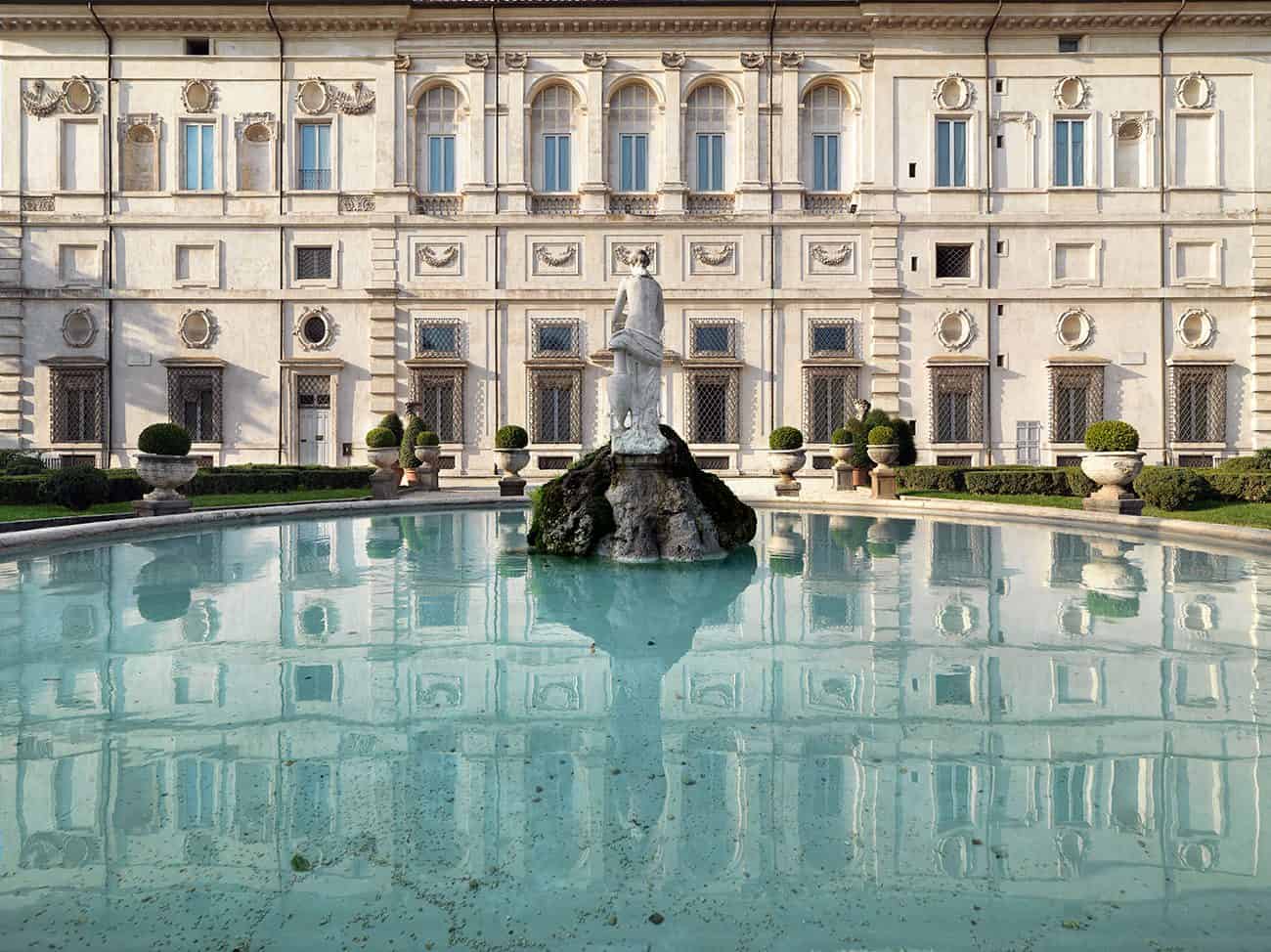
Museo e Galleria Borghese is located at Piazzale Scipione Borghese 5, 00197 Roma, inside the park of Villa Borghese, on the side of the park closest to via Pinciana. The full-price ticket costs 16,00 euro. The reduced ticket for European Union citizens aged 18 to 25 costs 2,00 euro, and entry is free for those under 18. A 2,00 euro booking fee is added for everyone, and it is mandatory even for those who enter for free. The last slot, at 17.45, costs 11,00 euro instead of 16,00. The museum is open Tuesday to Sunday from 9.00 to 19.00, with staggered entries in two-hour slots at 9.00, 10.00, 11.00, 12.00, 13.00, 14.00, 15.00, 16.00, 17.00 and 17.45. It is closed on Mondays, December 25 and January 1. Booking is mandatory for everyone and is made through the official ticket office gebart.it or by calling 06 32810, open Monday to Friday from 9.30 to 18.00. On the first Sunday of the month, entry is free, but the 2,00 euro booking fee still applies. There is no subway stop in front of the museum. From Termini station, lines 910 and 92 run here. From the Flaminio stop on Metro A, lines 89, 490, 495, 61 and 160. From Barberini, lines 63, 83, 52 and 53. A taxi can drop you off on via Pinciana, a few steps from the gate. Without a booking, you cannot enter. This is the rule that holds up the entire operation of the site.
If you're putting together an itinerary of museums in Rome and need to choose just one devoted to art, this is the densest concentration of masterpieces per square meter the city has to offer, and within two hours of visiting you'll see that for yourself.

Tickets, slots and booking at Museo e Galleria Borghese
The pricing system is simple once you understand how the booking fee works. An adult pays 16,00 euro for the ticket plus 2,00 euro for booking, so 18,00 euro in total. A European citizen aged 18 to 25 pays 2,00 euro for the ticket plus 2,00 for booking: 4,00 euro for two hours among Bernini and Caravaggio remains the best cultural purchase possible in Rome. A minor under 18 doesn't pay for the ticket but pays the 2,00 euro booking fee, because their spot also has to be limited. Exemptions from the booking fee cover a few categories, including visitors with disabilities accompanied by a family member and journalists with a press card. Anyone who chooses the 17.45 slot pays 11,00 euro instead of 16,00, plus the 2,00 booking fee. It's the shortest slot of the day, and the price reflects that.
Where to buy tickets. At the Galleria Borghese, you can only enter in two-hour slots and always with a booking. The official channel is galleriaborghese.cultura.gov.it, and slots open several weeks in advance. Ticket with audio guide on GetYourGuide. Verified on September 28, 2026.
How the two-hour slots work
What sets Museo e Galleria Borghese apart from any other Roman museum is the strict capacity limit. Entries start every hour, from 9.00 to 17.00, plus the shortened 17.45 slot, and each slot admits a maximum of 180 people for a two-hour stay. When the two hours are up, staff escort the group out and prepare the rooms for the next one. It isn't a formality printed on the ticket and ignored in practice: the call-out happens for real, room by room. The reason is architectural before it is organizational. The seventeenth-century palazzina is small, the rooms open to the public are 20 frescoed halls plus the portico and the Salone d'ingresso, and the artworks share space with stucco, ancient marble and floors that cannot withstand the pressure of crowds. The result is that you will never find yourself in the crush of the big museums inside. 180 people spread across two floors is a civilized density, one that lets you actually look.
Where to book Museo e Galleria Borghese
The official channel is the online ticket office gebart.it, which you can also reach from the museum's website, galleriaborghese.cultura.gov.it. Alternatively, you can book by phone at 06 32810, Monday to Friday from 9.30 to 18.00. The museum itself recommends buying only through official channels, and authorized resellers include Vivaticket. Take that recommendation seriously. Around this museum there's a whole underbrush of resellers who mark up the ticket price by as much as double, selling exactly the same time slot you can book yourself in five minutes. In high season, from April to June and then in autumn, the central weekend time slots sell out weeks in advance. Booking the slot first and building the rest of your day around it is the only sensible order of operations. The physical ticket office opens at 8.30 and closes one hour before the museum, but showing up without a reservation and hoping for a free spot is a gamble you almost always lose in the nice season.
The first Sunday of the month
Every first Sunday of the month, admission to the museum is free, under the ministerial formula that applies to state museums. Watch out, though, for this museum's quirk: the free admission covers the ticket, not the reservation, which is still mandatory and costs €2,00. The slots are the same 180 per time slot as always, so the free Sunday has to be booked well in advance, and all the more so. A counterintuitive tip: if you can afford the €18,00, choose any Tuesday or Wednesday instead of the free Sunday. You pay, but you visit with a calmer crowd, and the difference in experience is well worth the difference in price.
How to get to Museo e Galleria Borghese
The first misconception to clear up concerns the metro. There is no stop under the museum, and anyone planning the day around a nonexistent metro line arrives late for their slot. The closest stops on Line A are Flaminio, near Piazza del Popolo, and Barberini. From either one, the museum is a walk of 20 or 25 minutes, or a stretch by bus. The useful bus lines are: from Termini station, buses 910 and 92, from Flaminio, lines 89, 490, 495, 61 and 160, from Barberini, lines 63, 83, 52 and 53. Anyone arriving by taxi would do well to be dropped off on Via Pinciana, behind the park. The museum's forecourt is inside Villa Borghese, and private cars can't reach it.
The practical truth, however, is that you can get to Museo e Galleria Borghese well on foot, and the walk is part of the pleasure. From Piazza di Spagna, climb the steps of Trinità dei Monti, take Viale del Pincio, and cross the park among the pines: just under half an hour, uphill only at the beginning. From Piazza del Popolo the route is similar and even more scenic. Better to allow a good 30 minutes, not the 20 your phone's map promises. Villa Borghese is a park of 80 hectares, the internal signage is sparse, and arriving breathless at ticket control after your slot has already entered is the silliest way to ruin your day. A missed time slot can't be made up, and it isn't refunded.
Entry rules for Museo e Galleria Borghese: bags, cloakroom, strollers
Luggage rules are strict and enforced to the letter, so it's worth knowing them in advance. For security reasons, medium and large bags, tote bags and backpacks of any kind are not allowed in. Only small fanny packs and pochette-style bags up to 21 by 15 centimeters are admitted, a precise measure, not a rough guideline. Everything else must be left at the mandatory cloakroom, located in the entrance services area together with the ticket office, bookshop and café. Umbrellas and selfie sticks also end up in the cloakroom. Strollers are allowed only for children up to two years old. Beyond that age, the stroller stays at the cloakroom, a detail families need to plan for in advance.
The arithmetic consequence of these rules is just one: arrive at the forecourt half an hour before your slot time. Between the queue at the cloakroom, picking up your ticket and the line at control, minutes go by fast, and every minute you're late is a minute taken from your two hours, because the slot's exit time doesn't move. Anyone arriving at 10.55 for the 11.00 slot starts the visit already behind.

The villa that became a museum: why Museo e Galleria Borghese exists
The Villa Borghese Pinciana, which houses the Museo e Galleria Borghese, belongs to a very rare category: it is not a family palace converted into a museum in the 19th century. It was designed from the start to display art. Cardinal Scipione Borghese, nephew of Pope Paul V, had it built outside the Porta Pinciana between 1607 and 1613, to a design by Flaminio Ponzio, the pope's trusted architect. After Ponzio's death, the project passed to the Flemish-born Giovanni Vasanzio, who designed the facade covered in reliefs and ancient statues that still welcomes visitors. The purpose was declared: a place to display exemplary images of ancient and modern art, for music, for study in a small library, for contemplating nature with rare plants and animals, for fossil collections and even for the technology of the time, automata, mirrors, strange lenses, eccentric clocks with which the cardinal loved to amaze his guests.
A real farm operated around the small palace: vineyards, vegetable gardens, hunting reserves, stables, sheds, dovecotes built into the towers, whose entrances can still be seen, a large aviary, an ice house, the wine cellar and even a silkworm farm. The rarest plants came from the Netherlands and the Indies, and a zoo completed what Scipione called his Theater of the Universe, a microcosm in which art, nature and technical wonder were meant to recall a new golden age. Anyone who crosses the park today to reach the museum walks through the remains of that project.
A century and a half later, starting around 1770, Prince Marcantonio IV Borghese commissioned the architect Antonio Asprucci to radically renovate the interiors, and that is the version you see today. Each room was rethought as a unified story, with ceiling frescoes that comment on the sculpture placed at the center. In the Sala di Apollo e Dafne the ceiling tells the myth of Apollo, and in the Sala del David it tells episodes from the story of David. This is not a detail for specialists. It is the reason a visit to the Museo e Galleria Borghese is unlike any other, because floor, walls, ceiling and masterpiece speak the same language, and the eye senses it even without being able to explain it.
Scipione Borghese and the Building of the Collection
The core of the collections of the Museo e Galleria Borghese goes back to the collecting of Cardinal Scipione, whom the museum dates 1579-1633, the son of Ortensia Borghese, sister of Pope Paul V, and of Francesco Caffarelli. Made a cardinal by his uncle in 1605, Scipione concentrated enormous power and financial resources within a few years, and used them with a determination that we would today call ruthless. His interest embraced ancient art, Renaissance art and the art of his contemporaries. Medieval art left him indifferent, while ancient sculpture he sought out with real hunger, and his most original ambition was to commission new marble groups, designed to stand up to direct comparison with the ancients in the same rooms. This is why the young Bernini is still found beside Roman marbles today.
The ways the collection was built up were often brutal, and they should be described for what they were. In 1607 the pope had 107 paintings confiscated from the painter Giuseppe Cesari, the Cavalier d'Arpino, on a tax pretext, and had them assigned to his nephew. That block included early works by Caravaggio, and this is where the Caravaggio core of the collection begins. The following year, Raphael's Deposition was removed secretly at night from the Baglioni Chapel in the church of San Francesco al Prato in Perugia and taken to Rome for the cardinal. The people of Perugia noticed only after the fact, and a copy remains in the chapel today. In those same years Scipione bought entire collections in one go, including that of Cardinal Sfondrati, from which, according to the established scholarly reconstruction, Titian's Sacred and Profane Love comes. Tradition also tells that Domenichino, reluctant to hand over his The Hunt of Diana, was imprisoned before he gave up the painting. This episode, recorded in 17th-century sources, captures the climate well.
In 1682, part of the estate of Olimpia Aldobrandini flowed into the collection, with works from the collections of Cardinal Salviati and Lucrezia d'Este. Then came the wound. In 1807 Prince Camillo Borghese, husband of Paolina Bonaparte, sold 154 statues, 160 busts, 170 reliefs, 30 columns and several vases to his brother-in-law Napoleon. That block still forms the Borghese collection at the Louvre today. By the third decade of the 19th century the gaps were being filled, with material from new archaeological digs on the family's estates and works recovered from cellars and other homes. In 1827 Camillo himself bought Correggio's Danaë in Paris, a gesture that looks like a repair. The collection remains, in the number and importance of its Bernini sculptures and Caravaggio canvases, unmatched in the world, and critics do not disagree on this.

The ground floor of Museo e Galleria Borghese, room by room
The standard route begins in the Entrance Hall and continues clockwise through eight rooms. I describe the usual layout: temporary exhibitions, such as the one dedicated to Ovid's Metamorphoses running until September 20, 2026, may move a few works, and it's worth checking at the ticket office where a piece you care about in particular is located.
The Entrance Hall
The Salone is the calling card of the Asprucci taste: the vault, frescoed by Mariano Rossi between 1775 and 1779, celebrates Marcus Furius Camillus in a perspective machine that seems to break through the ceiling, while the mosaics of the gladiators are set into the floor. They are 4th-century works found in 1834 on the Borghese estate of Torrenova, along Via Casilina. They are combat scenes with the gladiators' names inscribed beside the figures and the sign that marks the fallen: a raw and fascinating document of ancient spectacle. On the wall dominates the equestrian relief of Marcus Curtius throwing himself into the chasm, a composition in which an ancient horse torso was integrated at the beginning of the 17th century with the horseman by Pietro Bernini, father of Gian Lorenzo. Already here, before even entering the rooms, the Borghese method of dialogue between ancient and modern is declared.
Room I: Canova's Paolina Borghese
The first room belongs to a single work: Paolina Bonaparte Borghese as Venus Victrix, sculpted by Antonio Canova between 1805 and 1808 and permanently in the villa since 1838. Napoleon's sister, who married Camillo Borghese, is reclining seminude on an agrippina whose marble even imitates the softness of cushions, with the apple of victory of Venus in her hand. It caused a scandal then and it keeps its charge intact. To the famous question of how she could have posed so undressed, tradition attributes to Paolina the answer that there was a stove in the studio. An anecdote perhaps smoothed by time, but the substance is true: the statue was a private object, shown by Camillo by torchlight to a few chosen guests, and that nocturnal theatricality explains the almost liquid polish of the marble. Look at it while walking slowly around it: Canova calculated every point of view.
Room II: Bernini's David
The David, sculpted by Gian Lorenzo Bernini between 1623 and 1624, is the manifesto of the Baroque revolution in the most direct comparison possible with the Renaissance: where Michelangelo's David waits motionless, Bernini's is caught in the exact moment of the twist before the throw, lips pressed tight, brow furrowed. That concentrated face is a self-portrait. Tradition, reported by 17th-century biographies, tells that Cardinal Maffeo Barberini, the future Urban VIII, held the mirror for the young sculptor while he studied his own expression. Stand in front of the sling and you'll feel the urge to dodge: that's the effect Bernini wanted, pulling the viewer into the action. The ceiling of the room, with the stories of David painted in the Asprucci period, closes the circle of the narrative.
Room III: Apollo and Daphne
Apollo and Daphne, executed between 1622 and 1625, is the work that alone justifies the trip to Rome. Bernini freezes Ovid's myth at the instant of metamorphosis: Daphne's fingers fray into laurel leaves, the bark climbs up the leg, the hair becomes foliage, and the marble reaches thicknesses so thin that against the light it becomes translucent. The work was designed to be seen obliquely by whoever entered through the door of the room, catching Apollo from behind first and then, walking around, the transformation that is taking place. Make that circuit in the right order and the sculpture will tell its own story. On the scroll of the base runs the moral couplet composed by Cardinal Maffeo Barberini, which turns the pagan fable into a Christian warning about pleasure turning to bitterness: a theological safe-conduct for a sensual subject in a cardinal's house.
Room IV: the Hall of the Emperors and the Rape of Proserpina
The Hall of the Emperors, marked by the porphyry and alabaster busts of the Caesars, houses the Rape of Proserpina, sculpted by Bernini between 1621 and 1622, when he was 23. It is the work in front of which visitors to Museo e Galleria Borghese linger longest, for a detail that no photograph truly conveys: Pluto's fingers sink into Proserpina's thigh and side, and the marble yields like pressed flesh. Approach the right side of the group and look for the exact point of the grip. Then walk around to the back and find Cerberus, three-headed and snarling. The group was given almost immediately by Scipione to Cardinal Ludovisi, a political calculation toward the family of the new pope, and returned to the collection only in 1908, when it was purchased by the State. For nearly three centuries the villa was deprived of it, and that thought makes the room even more precious.
Room V: the Sleeping Hermaphrodite
The fifth room houses a Roman marble copy of the Sleeping Hermaphrodite, after a Hellenistic original: the reclining figure that shows a feminine back from one side and reveals its dual nature from the other. The most famous example of the series, the one for which Bernini sculpted the marble mattress that seems stuffed in 1620, was sold in 1807 with the rest of the holdings and today is in the Louvre. The one displayed here recalls both the antiquarian taste of Scipione and the chasm opened by the Napoleonic sale. The room, with its ancient mosaics of marine subjects and the aspruccesca decoration, is one of the most compact on the route and deserves more than the minute the public usually gives it.
Room VI: Aeneas and Anchises and Truth
Here the entire arc of Bernini's career can be measured in two works. Aeneas and Anchises, from 1618-1619, is the first great Borghese group, executed at 19 with the documented collaboration of his father Pietro: Aeneas carries the old Anchises on his shoulders out of burning Troy, while little Ascanius follows with the sacred fire, three ages of man stacked in a column of still Mannerist marble, with anatomies that are already astonishing. Beside it, Truth Unveiled by Time, begun in 1645 and worked on until 1652, belongs to the mature and wounded artist. Bernini carved it for himself during the years of disgrace that followed the failure of the bell tower of St. Peter's, and kept it at home as a declaration of confidence in his own redemption. The Time who was to lift the veil was never carved. It stayed with the heirs for generations before reaching the museum. Seeing them a few meters apart is a lesson in art history more effective than any textbook.
Room VII: the Egyptian Room
The Egyptian Room takes its name from the aspruccesca decoration with a Nile theme, with sphinxes, deities and landscapes of Egypt painted when the taste for ancient Egypt was 20 years ahead of Napoleon's expedition. At the center, according to the usual display, is a Roman-era Satyr on a dolphin. Around it are statues and colored marbles that document the family's antiquarian collecting. For most visitors it is a passage room, and for that very reason a good place to catch your breath for a moment before the next room, which demands concentration.
Room VIII: the Caravaggio room
No other place in the world brings six paintings by Caravaggio together in a single space, and it's good to arrive knowing what you're about to see. The Boy with a Basket of Fruit, from around 1593-1595, and the Sick Bacchino, a self-portrait with a livid complexion painted in the same years, both come from the 1607 confiscation from the Cavalier d'Arpino, in whose studio the young Lombard had worked. They are the dress rehearsal of the naturalism that would change European painting, with that real fruit down to the signs of decay. The Madonna dei Palafrenieri, from 1605-1606, had a very brief life on the altar of the confraternity in St. Peter's. Removed within a few weeks, it immediately passed into the hands of Scipione. The Madonna and St. Anne assist the Child, who with his foot crushes the serpent's head together with his mother, in a painted theology with popular models that caused controversy. The St. Jerome Writing, from around 1605-1606, is a direct commission from the cardinal. The David with the Head of Goliath, painted around 1609-1610, is the farewell. In the severed head of the giant, Caravaggio portrayed himself, and the most credited reading sees in it a plea for mercy sent precisely to Scipione, who was the intermediary for papal clemency, while the painter fled Naples toward a death that caught up with him on the beach at Porto Ercole in 1610. Beside it, the St. John the Baptist from those same final months. Before this wall the two hours of your slot show their limit. This is the room where time must be spent without holding back.

The picture gallery on the upper floor of Museo e Galleria Borghese
The staircase leads to the picture gallery floor, where the register changes: more compact rooms, lower light, and a density of masterpieces of Italian and European painting that holds up to comparison with any great gallery on the continent. Above this floor, in the Depositi arranged like a picture gallery, more than 260 paintings are kept that complement the displayed collection. A firm opinion: the ground floor wins over anyone at first glance, but it is up here that you understand the stature of the cardinal collector, and up here the two-hour slot is decided. Go up early.
Room IX: Raphael and the Deposition
The room holds the core of Raphael's work. The Deposition, signed and dated 1507, was commissioned by Atalanta Baglioni in memory of her son Grifonetto, who was killed in family feuds in Perugia. The carrying of Christ's body is built on cartoons studied and restudied, with a quotation from an ancient sarcophagus in the group of bearers, and it is the work in which the young Raphael says he absorbed Michelangelo. You read its story above, the night removal from Perugia in 1608 and the assignment to the cardinal. In front of the painting, that story of power is quickly forgotten. In the same room, according to the usual setup, is the Lady with a Unicorn, a portrait from the Roman years with a revealing restoration, along with other works from the Quattrocento and Cinquecento, with Perugino and the masters of the previous generation providing context.
Room X: Correggio's Danae
The Danae, painted by Correggio around 1531 for Federico II Gonzaga as part of the series of Jupiter's loves meant for Charles V, is one of the most delicately sensual images of the Cinquecento: the golden rain received among the sheets, the cupids testing the tip of the arrow, a soft light that eighteenth-century Europe would have adored. The painting traveled half of Europe, from Mantua to Madrid, from Prague to Stockholm and Paris, until Camillo Borghese bought it in 1827, bringing a peak of Emilian painting into the collection. In the same room, the usual setup places Lucas Cranach the Elder's Venus and Cupid, who holds a honeycomb, Gothic and ironic. The comparison between the two nudes, a few meters apart, is one of the smart pleasures of Museo e Galleria Borghese.
The central rooms: Bernini the painter, the busts of Scipione, Lanfranco's Loggia
The upper floor also houses the lesser-known Bernini: the self-portraits he painted as a young man and in mature age, proof of a painterly talent that he himself considered a private exercise, and the terracotta sketches. In the loggia room, frescoed by Giovanni Lanfranco in 1624-1625 with the Council of the Gods, you will usually find the two busts of Scipione Borghese sculpted by Bernini in 1632, whose story I tell further on, which is one of the most beautiful workshop stories of the Seicento. Stop at the cardinal's portrait: half-open mouth, heavy flesh, greedy vitality. No document describes Scipione better than that marble.
Room XIX: Domenichino and the Hunt of Diana
The Hunt of Diana, painted by Domenichino in 1616-1617, shows the nymphs engaged in an archery contest under the gaze of the goddess, with two hunters hidden and spying: a clear, athletic Bolognese classicism built on Titian. It had been commissioned by Cardinal Aldobrandini, but Scipione wanted it for himself, and the seventeenth-century tradition tells of the painter's brief imprisonment for being recalcitrant. In the nearby rooms, according to the usual setup, Rubens's Lamentation over the Dead Christ and works from the period between the Cinquecento and Seicento complete the passage from the Renaissance to the Baroque.
Room XX: Titian, Sacred Love and Profane Love
The last room of the usual route holds the highest farewell: Sacred and Profane Love, painted by Titian around 1514 for the wedding of the Venetian Niccolò Aurelio, whose coat of arms appears on the sarcophagus-fountain. The two twin women, one clothed and one nude, sit on either side of the fountain in a golden landscape. Readings have multiplied over the centuries, and the most widely followed sees in them celestial and earthly Venus, conjugal happiness and eternal love. The painting entered the collection in 1608 with the bulk purchase of the Sfondrati collection. In the late 1800s, a rumor spread, repeated in every guide since then, of an offer from the Rothschilds higher than the value of the entire villa with all its works. The exact figure belongs more to anecdote than to documents, but it captures a true fact: this painting alone is worth a fortune. Nearby, as usual, Antonello da Messina's Portrait of a Man and Giovanni Bellini's Madonna and Child close the circle of great Venetian and southern Italian painting of the Quattrocento.

From the Borghese Fidecommisso to the Public Museum
The handover to the State has a precise date: in 1902 Italy acquired the collections included in the Borghese Fidecommissum, the entail that from the eighteenth century held the collection together and prevented its dispersal, and the Villa Borghese Pinciana became a public museum. The first director was Giovanni Piancastelli, born in 1845 and died in 1926, who was succeeded in 1906 by Giulio Cantalamessa, coming from the directorship of the Gallerie dell'Accademia in Venice. It was they who set up the scientific arrangement of the collections. The museum's twentieth century culminates in an episode that many Romans remember well: the closure in 1983 for a full restoration that lasted 14 years, with the restoration of the exterior plasterwork, the statues and the two-flight staircase, until the reopening in June 1997, hailed as a national event. Since 2014 the museum has been among the state institutions with special autonomy, with its own ticket office, budget and programming. It is this autonomy that makes possible the shift system and an ambitious exhibition policy. In 2013, to give a sense of scale, it was the ninth Italian state site by visitors, with 498,477 entries, a figure deliberately kept low by the entry quotas. Leading the museum, after the long tenure of Anna Coliva, appointed in 2015, since 2020 is art historian Francesca Cappelletti, a scholar of Caravaggio and curator of the exhibition on Ovid's Metamorphoses running through September 20, 2026.
The Secret Gardens of the Borghese Museum and Gallery
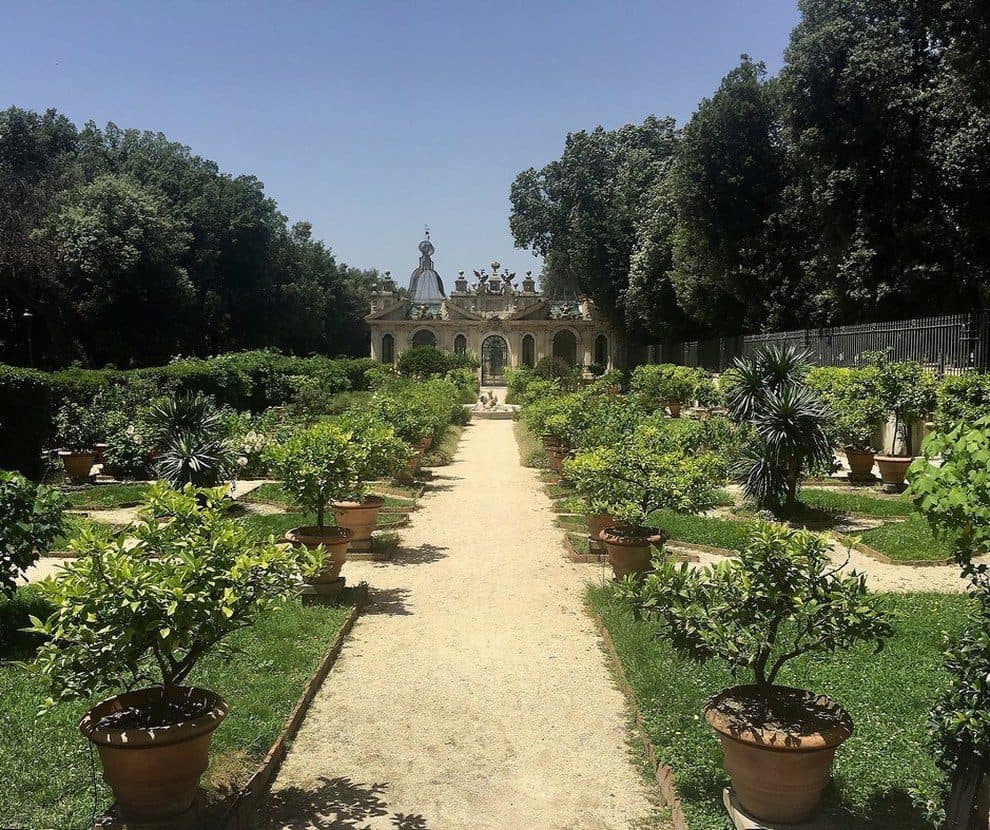
On the sides of the palazzina survive the Secret Gardens, created with the seventeenth-century fashion of carving out, inside the great aristocratic parks, hidden enclosures where rare flowers were displayed, mostly bulbous plants. The original nucleus dates to the early 1600s, with a pair of side gardens flanking the Casino. In 1680 a third was added, together with the Casino della Meridiana, rich in stucco work, by Carlo Rainaldi. The most spectacular showcase remained the Aviary Garden, where narcissi, hyacinths and tulips were displayed, which in those years reached dizzying prices, next to the pavilion with two frescoed rooms imitating a pergola, covered by a net, where the cardinal kept his rare birds on display. Between 1617 and 1619 the Aviary was built, and around 1620 the overall layout of the gardens was completed. Those who imagine them as corners of quiet get the tone wrong. They were showcases of power, where a tulip bulb was worth as much as a painting. Access to the gardens follows its own calendar, separate from the museum ticket, to be checked at the ticket office. For the full history and visiting details, the dedicated page is that of the Giardini Segreti di Villa Borghese.
Borghese Museum and Gallery with Kids
The written rule, first of all: strollers are allowed inside only for children up to age two. Beyond that, strollers stay at the cloakroom, and a tired three-year-old has to be carried for two hours. There is also an unwritten rule: under six, this museum is a struggle for everyone, because the rooms require silence, nothing may be touched and there are no permanent play areas. The museum does organize family workshops on weekends, though, and it's worth checking their schedule on the official website. Between eight and 14, by contrast, the ground floor works wonderfully. Bernini's sculptures tell violent stories that are immediately readable, an abduction, a flight that turns into a tree, a decapitated giant, and the kids follow them without needing captions. The cost for a family: two adults and two minors spend €40,00 in total, tickets and reservations included. After the visit, the Bioparco di Roma (Rome Zoo) is inside the same park, reachable on foot, and completes the day better than anything else.
When to go and how long to stay
The best time, from experience, is the mid-season: April, May and October give the park its best and a pleasant approach walk, while in full summer the palazzina stays cool but the walk in the sun is noticeable. The 9.00 slot is the quietest, with morning light on the marbles of the ground floor. The last slot costs less but lasts a little over an hour, and for a first visit it's a compromise I advise against, because the picture gallery would end up sacrificed. In summer 2026 the museum has scheduled special evening openings on Fridays and Saturdays from July 17 to August 8, closing at 23.00. Bernini's rooms at night are a rare experience, and if your stay falls in those weeks, that is the choice to make. As for duration, the answer is already in the mechanism: two hours, neither more nor less. They are enough to see everything once. They are never enough to stop wanting to come back.
A curiosity about the Borghese Museum and Gallery
The story of the two busts of Scipione Borghese is the most beautiful curiosity in the entire museum, because it tells both the genius of Bernini and the character of the man who commissioned them. In 1632 the cardinal, by then elderly, commissioned the already famous sculptor to make his portrait in marble. Bernini delivered an extraordinary bust, as lifelike as few portraits in the history of art: the cardinal caught in the instant he turns, his mouth slightly open as if in the middle of a sentence, the mozzetta unbuttoned across his chest. But during the work, or according to other versions when the piece was almost finished, a vein in the marble showed up as a crack running across the forehead. Seventeenth-century sources report that Bernini, without saying anything to the patron, carved a replica in very little time, according to tradition just 15 days, so he could show the cardinal first the cracked bust and then, enjoying his disappointment, the perfect twin. Both marbles belong to the museum and are usually viewed side by side on the picture gallery floor. Look for the crack on the forehead of the first one and compare the two surfaces. The replica is only slightly more hurried in its details, and it is precisely this difference that makes the pair a unique record of how the greatest sculptor of the century worked, and how fast. A museum that keeps the mistake next to the masterpiece teaches more than 100 perfect rooms.
Something nobody tells you about the Museo e Galleria Borghese
Nobody tells you that the problem with this museum isn't getting in: it's getting out. The two-hour time slot is binding, and the vast majority of visitors handle it badly in exactly the same way: they stop for 40 minutes in the first three rooms on the ground floor, captivated by Canova and the David, and then rush through the picture gallery in the last 20 minutes, at a hurried pace, with the closing announcement ringing in their ears. Raphael, Titian and Correggio get dispatched in a quarter of an hour. This happens at every time slot, every day. The countermove is simple: go up to the upper floor first, while the rest of your time slot is still crowding in front of the Paolina. Enjoy the almost empty picture gallery for three quarters of an hour, then come down to the Berninis, which clear out toward the end of the time slot. Second thing nobody says: the sculptures on the ground floor have an entry viewpoint chosen by the artist, and the current arrangement, which has moved them to the center of the rooms, lets you find it. With Apollo and Daphne, it works if you enter through the room's doorway and turn clockwise, and the metamorphosis unfolds in front of you like a sequence. Third: the size limit for bags, 21 by 15 centimeters, is enforced with the rigor of a customs office, and the line at the bag check at peak times eats up a quarter of an hour of your time. The time slot waits for no one: it is the only real rule of the place.
The advice I give you for visiting the Museo e Galleria Borghese
Book your time slot first, then everything else. It sounds obvious, yet it is the advice almost nobody follows: most travelers plan their Rome day and leave this museum for last, only to discover that the good time slots sold out weeks ago. The time slot is the fixed element of your day, the only one that doesn't move: lock it in first, well in advance, through the official channel, and build lunch, walks and the rest of the program around it. A few steps from here, the Pincio and the entire park are waiting. Second tip, already mentioned but crucial: picture gallery right away, Berninis after. Third: arrive at the forecourt 30 minutes before the time printed on your ticket, the time needed for the mandatory bag check, pickup and security check, because being late costs you visiting minutes that are lost and not refunded. Fourth: on your first visit, skip the audio guide. Two hours is not much, and occupied ears slow down the eyes. In front of The Rape of Proserpina, you don't need a voice explaining what the marble is already saying. You can look up the information later, at home. The wonder you can't recover. Fifth and last: leave the museum and stay in the park. The temptation to rush back toward the center is strong, but the Villa Borghese around you holds museums, terraces and avenues that tourists overlook, and the most expensive ticket of the day is already spent: make it pay off by staying.
Another well-known fact, yet rarely mentioned
Everyone knows the Caravaggios are here. What gets mentioned less is the personal relationship between the painter and the owner of the house, ambiguous and ultimately dramatic. Scipione Borghese was not a collector of Caravaggio the way the dealers of the following century were, at a safe distance from the legend. He was a contemporary, who bought the works of a living, controversial, prosecuted man, and who sensed his greatness before it became common opinion. The Borghese core was born in 1607 from a confiscation, the 107 paintings taken from the Cavalier d'Arpino for tax reasons, among which were the Boy with a Basket of Fruit and the Sick Bacchus. These were works by the young Lombard left in the studio of his former employer. The Madonna of the Palafrenieri, however, came from a rejection. Removed within a few weeks from the confraternity's altar in the Vatican, it immediately found a buyer in the cardinal, who used the outstanding castoffs of the others to build an unrepeatable wall. But the chapter that truly links the two names is the last one. The David with the Head of Goliath, sent by the painter while he was on the run, with his own face on the beheaded giant, is read by scholars as a figurative plea addressed precisely to Scipione, the go-between for the papal pardon that was supposed to reopen the doors of Rome to Caravaggio. The pardon arrived, but the painter did not. He died in Porto Ercole in July 1610, before seeing the city again. The painting remained with the cardinal. Look at it while thinking about this story. It is a very rare case of a museum that shows, in the same room, the beginning and the end of a life.
The right photo to take at the Museo e Galleria Borghese
Rules on photography inside the rooms are the ones announced at the entrance, and they may change with the exhibitions on display. Ask staff before you raise your phone, and in any case forget flash and tripods, as in all state museums. That said, the photo you'll take home isn't taken inside. It's taken outside. Leave the palazzina, go down the two-flight staircase, cross the forecourt and turn around. Vasanzio's facade, with the statues and ancient reliefs in the niches and framed by the park pines in the low light of late afternoon, is the most complete image of the entire Villa Borghese, and no regulation can ever forbid it to you. The best moment coincides with the last time slot, when the sun sets behind the trees and the forecourt empties. For once, the cheapest time and the photographically perfect one coincide. If instead you're after the mental image, the one that doesn't need a lens, here it is precisely: the point where Pluto's fingers sink into Proserpina's thigh. Stand on the right side of the group, crouch about 20 centimeters and look at the grip: marble that behaves like flesh, carved by a 23-year-old. Anyone who claims Baroque sculpture is cold rhetoric has never bent down to look at that detail. And one last note for patient photographers: from the approach road, early in the morning, the palazzina emerges from the park mist with the vases on the balustrade backlit. It's a shot almost no one takes, because everyone rushes toward the entrance.

Some important events that happened here in history
Here, in order, are the dates that made this place. Between 1607 and 1613 the villa is built to a design by Flaminio Ponzio, completed by Giovanni Vasanzio. In 1607 the 107 paintings confiscated from the Cavalier d'Arpino reach the cardinal. In 1608 Raphael's Deposition is taken from Perugia and, with the purchase of the Sfondrati collection, Titian's Sacred and Profane Love arrives. Between 1617 and 1619 the Aviary is built, and around 1620 the gardens are laid out. Between 1618 and 1625 the young Bernini delivers, one after another, Aeneas and Anchises, The Rape of Proserpina, David and Apollo and Daphne. Seven years that change European sculpture, all spent on this house. In 1632 come the two busts of Scipione. In 1633 the cardinal dies. In 1680 come the third secret garden and the Casino della Meridiana by Rainaldi. In 1682 the Aldobrandini inheritance arrives, with the Salviati and d'Este works. From about 1770 Antonio Asprucci redesigns the interiors for Marcantonio IV, creating the current themed rooms. Between 1805 and 1808 Canova sculpts the Paolina, which has been permanently in the villa since 1838. 1807 is the year of the wound. Camillo sells Napoleon 154 statues, 160 busts, 170 bas-reliefs and 30 columns, today part of the Borghese collection at the Louvre. In 1827 Camillo himself buys back Correggio's Danaë in Paris. In 1902 the State acquires the Fidecommisso collections and the villa becomes a public museum, first directed by Piancastelli and from 1906 by Cantalamessa. In 1908 The Rape of Proserpina returns. In 1983 the closure begins for a complete restoration lasting 14 years, until the reopening in June 1997. In 2014 came special autonomy. In 2020 management passes to Francesca Cappelletti. In 2026 the exhibition on Ovid's Metamorphoses returns the museum to its founding theme, transformation carved in marble.

Who has passed through the Museo e Galleria Borghese
The first name is the master of the house: Scipione Borghese, cardinal nephew of Paul V, the man who invented the place and the very way of living in it, receiving here ambassadors, men of letters and princes of the Church among automatons, tulips and ancient marbles. Young Gian Lorenzo Bernini passed through here for years, almost every day, and in these rooms he built his own legend before the age of 30, returning here as an old man with his Truth left without its Time. Caravaggio entered here more through his paintings than in person, but his fate was also decided here, in the hands of the cardinal who guarded his works and negotiated his pardon. Maffeo Barberini, the future Urban VIII, frequented the villa as a cardinal and man of letters, to the point of composing the couplet engraved under Apollo and Daphne and, according to tradition, of holding the mirror for Bernini as he carved his own face into the David. In the 19th century, Paolina Bonaparte passed through, and she has remained here forever in Canova's marble. Prince Camillo showed the statue of his wife by torchlight to select guests. Napoleon's shadow runs through the history of the collection even though the emperor never visited the villa, and it is an absence that weighs as much as a presence. Throughout the century of the Grand Tour, the villa was a regular stop for Europe's educated travelers, open with a generosity that contemporaries noted with wonder in their diaries and travel guides. In the 20th century, the directors who built the modern museum passed through here, from Giovanni Piancastelli and Giulio Cantalamessa to Anna Coliva and Francesca Cappelletti, along with generations of art historians for whom these 20 rooms remain a required place of training. Going there today, among 180 people per time slot, means entering a guest list four centuries long.
Things to see around Museo e Galleria Borghese
The advantage of the location is that when you step out, you're already inside the most beautiful urban park in Rome. Without leaving the greenery, you can reach on foot the Museo Pietro Canonica, the studio house of a sculptor inside the Fortezzuola, the Museo Carlo Bilotti in the Aranciera with its de Chiricos, the Casa del Cinema at Villa Borghese, and, on the northern edge of the park, the Museo Etrusco di Villa Giulia, which with the Sposo and Sposa of Cerveteri deserves half a day of its own. Heading south, the park culminates in the Pincio terrace above Piazza del Popolo, next to Villa Medici, seat of the Accademia di Francia. And if the two hours among the Caravaggios have whetted your appetite for the painter, the natural continuation of the day is downtown: the Contarelli Chapel inside San Luigi dei Francesi and the two canvases of the Cerasi Chapel at Santa Maria del Popolo, where the masterpieces are still seen in the place they were painted for, and free of charge. To fit all of this around your time slot, the right tool is Il mio viaggio.
Quick questions about Museo e Galleria Borghese
How much is the ticket for Museo e Galleria Borghese?
Full price is 16,00 euro plus a mandatory 2,00 euro booking fee: 18,00 euro in total per person.
Is booking really required for Museo e Galleria Borghese?
Yes, for everyone, including children and those entitled to free admission. Without a booking, you don't get in.
Where do I book Museo e Galleria Borghese?
Through the official online ticket office gebart.it, reachable from the museum's website, or by phone at 06 32810, Monday to Friday from 9.30 to 18.00. Vivaticket is also among the authorized channels. Be wary of resellers that mark up the price.
What are the opening hours of Museo e Galleria Borghese?
From Tuesday to Sunday, from 9.00 to 19.00, with last entry at 17.45 and the ticket office open from 8.30.
What is the closing day?
Mondays, as well as December 25 and January 1.
How long does the visit to Museo e Galleria Borghese take?
Exactly two hours. The visit is organized in time slots with entries every hour from 9.00 to 17.00, plus the shortened slot at 17.45, and when time is up, staff escort the group out.
How many people enter per time slot?
At most 180 people per time slot. That is why you never find the crowds of the big museums inside, and also the reason tickets sell out fast.
Is the last slot cheaper?
Yes: the 17.45 slot costs €11.00 instead of €16.00, plus the €2.00 booking fee. It is, however, shorter than the others.
Are there discounts or free admission?
EU citizens between the ages of 18 and 25 pay €2.00, and visitors under 18 enter for free. Everyone still pays the €2.00 booking fee, except for a few exempt categories, such as visitors with disabilities accompanied by a family member.
Is Museo e Galleria Borghese free on the first Sunday of the month?
Yes, admission is free, but booking is still mandatory and costs €2.00. There are always 180 spots per slot, so book well in advance.
Where exactly is Museo e Galleria Borghese?
At Piazzale Scipione Borghese 5, 00197 Roma, inside the Villa Borghese park, on the side of via Pinciana. The ticket office also lists the same location as Piazzale del Museo Borghese.
Is there a metro stop near Museo e Galleria Borghese?
No. The closest stops on Line A are Flaminio and Barberini, a 20 or 25 minute walk away. From Termini station, buses 910 and 92 run there. From Flaminio, lines 89, 490, 495, 61 and 160 run there. From Barberini, lines 63, 83, 52 and 53 run there.
Can you walk there?
Yes, and it's the best way: from Piazza di Spagna or Piazza del Popolo, through the Pincio and the park. Plan on 30 minutes, not 20.
Can you bring a backpack into Museo e Galleria Borghese?
No. Only waist bags and clutches up to 21 by 15 centimeters are allowed. Backpacks, medium and large bags, umbrellas and selfie sticks must go to the mandatory, free cloakroom at the entrance.
Can you bring a stroller?
Only for children up to two years old. Beyond that, the stroller stays at the cloakroom.
How early should you arrive?
30 minutes before the slot time, to check bags, pick up tickets and go through security. The time slot won't wait, and lost minutes can't be made up.
What are the most important works at Museo e Galleria Borghese?
On the ground floor: Canova's Paolina Borghese and Bernini's four large groups, David, Apollo and Daphne, The Rape of Proserpina, and Aeneas and Anchises. There are also six Caravaggios in the same room. On the upper floor: Raphael's Deposition, Correggio's Danaë, and Titian's Sacred and Profane Love.
How many Caravaggios are there at Museo e Galleria Borghese?
Six: Boy with a Basket of Fruit, Sick Bacchus, Madonna dei Palafrenieri, Saint Jerome Writing, David with the Head of Goliath, and Saint John the Baptist. No other museum brings together this many in a single room.
How many rooms does the museum have?
20 frescoed rooms across two floors, plus the portico and the entrance hall. More than 260 paintings are kept in the storerooms above the picture gallery, arranged like a picture gallery.
Should you start on the ground floor or in the picture gallery?
Start in the picture gallery, on the upper floor. Your slot will be focused on the ground floor during the first hour, and you'll have Raphael and Titian almost to yourselves.
Can you take photos inside?
The rules are announced at the entrance and can change with the exhibitions, so ask the staff. Flash and tripods are in any case not allowed, as in all state museums.
Is Museo e Galleria Borghese accessible to people with disabilities?
The museum publishes an accessibility page on its official website and exempts visitors with disabilities and a family member from the booking requirement. For specific needs, it's best to call the museum at 06 8413979 beforehand, because the main entrance is reached by a staircase with two flights.
Is there a cloakroom? And a café?
Yes: the mandatory cloakroom, the bookshop and the café are in the services area at the entrance, before the visit route. There are no refreshment points inside the rooms.
What is the difference between Museo e Galleria Borghese and Villa Borghese?
Villa Borghese is the large public park. The museum is the 17th-century palazzina inside it, which houses the collection. The park is free and always open, while the museum can only be visited by booking a time slot.
Is a guided tour worth it?
The museum offers guided tours and workshops through its official channels, with a changing schedule to check on the website. The first time, two free eyes are worth more than any headset. Take the guide on your second visit.
Let's close with one piece of advice. Book the first morning slot, go straight up to the picture gallery while everyone stays downstairs, and keep the last 20 minutes to return, in silence, to a single work. The day you choose David with the Head of Goliath over The Rape of Proserpina, it means this museum has stopped entertaining you and started speaking to you. That day the two hours will feel both very long and over far too soon, and that is exactly the measure of what the €18.00 ticket is worth.
Article written by the editorial team at TourLeaderPro. Contact them for Tours and Private/Corporate/V.I.P. Experiences.
Planning a trip to Rome? English-language guides to visiting the city are available at ItalyPlanner.com.