Via Veneto
In short. Via Veneto, officially Via Vittorio Veneto in the city registry, climbs from Piazza Barberini to Porta Pinciana in the Ludovisi rione, inside Rome's Municipio I: about 700 meters of elegant uphill street that you walk in about 10 minutes without hurrying.
Via Veneto, officially Via Vittorio Veneto in the city registry, climbs from Piazza Barberini to Porta Pinciana in the Ludovisi rione, inside Rome's Municipio I: about 700 meters of elegant uphill street that you walk in about 10 minutes without hurrying. You can enter at any hour of the day and night and you pay nothing, because the street is public, the sidewalks are wide and access is free. The metro stop is Barberini-Fontana di Trevi on line A, at the start of the street: from the turnstile to the first street number it's less than 200 meters. By bus you get off at the Veneto/Emilia stop, on the street itself, or at Piazza Barberini. The two real museums that open onto this axis are the Museo e Cripta dei Frati Cappuccini at number 27, inside the church of Santa Maria della Concezione, open every day from 10:00 to 19:00 with the ticket office closing half an hour earlier, and, a short walk from the start of the street, at Via delle Quattro Fontane 13, Palazzo Barberini with the Gallerie Nazionali di Arte Antica, open Tuesday to Sunday from 10:00 to 19:00, closed Monday, full ticket €15 and reduced €2 for European Union citizens between 18 and 25. The updated fares for the Crypt are on the official website of the Cappuccini of Via Veneto, which handles ticket sales itself. For the rest, you visit Via Veneto the way you visit a street: walking, looking up and knowing what you're looking at.
If you want to build your day around this quadrant, you'll find the other places on the tourist attractions page for Rome, and you can walk up to Villa Borghese, which begins exactly where Via Veneto ends.
Where Via Veneto Is and How to Get There
The most common mistake of people looking for Via Veneto on the map is imagining it straight. It isn't: the street draws two wide curves, almost a reversed S, and for this very reason you never see all of it at once. From Piazza Barberini you glimpse the first uphill stretch as far as the church of the Cappuccini. Then the street bends, widens, and only after the central elbow does the bulk of Palazzo Margherita appear. The second elbow hides Porta Pinciana until the very last moment. Anyone walking it for the first time always feels it's longer than the map says, and the reason is entirely in those two curves.
The Two Ends of Via Veneto: Piazza Barberini and Porta Pinciana
The low end is Piazza Barberini, at about 40 meters above sea level, where Via del Tritone, Via Sistina, Via Barberini and Via delle Quattro Fontane meet. The high end is Porta Pinciana, opened in the Aurelian Walls, beyond which you enter Piazzale Brasile and then the park of Villa Borghese. Between the two ends the difference in height is noticeable: you climb, and if your legs are tired you'll do well to walk Via Veneto downhill, from Porta Pinciana toward Piazza Barberini, reversing the direction almost everyone takes. It's an obvious piece of advice that no guide writes, and it changes your day.
In the first stretch the street marks the boundary between two rioni: on the right going up the Ludovisi rione, on the left the Colonna rione. It's one of those invisible administrative lines that explain why the buildings on the two sides don't look alike.
How to Get to Via Veneto by Metro
The station is Barberini, which the Atac signs call Barberini-Fontana di Trevi, on line A. It opened on February 16, 1980 with the first section of the line. When you come out, the start of Via Veneto is less than 200 meters away: you cross the piazza keeping the Triton Fountain on your left, and the Fontana delle Api marks the right corner.
It's worth remembering that this station has had a troubled history with its escalators: closed on March 21, 2019 after a breakdown, it went back into service on a temporary basis on February 4, 2020 in the exit direction only and started working in the entry direction too on May 15, 2020. If you have trouble walking, check first whether the equipment is available: down here the ramps are long.
The second option is the Spagna stop, also on line A, about 700 meters from the low start of the street. It only makes sense if you arrive from the Tridente and want to go up to the Pincio before coming down onto Via Veneto.
How to Get to Via Veneto by Bus
The stop on the street is called Veneto/Emilia and is at the intersection with Via Emilia, that is, just above Palazzo Margherita. The lines serving the Barberini-Veneto axis change with the service schedules and with roadworks: it's best to check the line number on the panel at the stop or on the transport company's official app the same day, because in recent years detours in the Historic Center have been frequent.
A practical detail nobody mentions: the stop is on a slope and the sidewalks are high. If you're traveling with a stroller, get off at Piazza Barberini and walk back up the street, where the ground is more even.
Walking to Via Veneto from the Center
From Piazza di Spagna it's a good 10 minutes on foot, passing through Via Sistina and Piazza Barberini. From the Trevi Fountain it's 8 minutes, always uphill, taking Via del Tritone. From the Quirinale it takes 12. From Stazione Termini, at a normal pace, it takes 20. These are distances you can walk in Rome without any drama, as long as you avoid the early afternoon in August. On this uphill stretch, with the sun overhead and little shade, the central 400 meters are the most tiring part of the Historic Center.

How Via Veneto Came to Be: the End of Villa Ludovisi
To understand Via Veneto, you have to accept an unpleasant truth: this street exists because one of the most extraordinary gardens in Europe was destroyed. Until the 1880s, the whole area between Piazza Barberini and the Aurelian Walls was occupied by the villa of the princes Boncompagni Ludovisi, an enormous park of avenues, groves, fountains, ancient statues and casini di delizia. It was built starting in 1621 by Cardinal Ludovico Ludovisi, nephew of Pope Gregory XV.
The Ludovisi Villa Before Via Veneto
Cardinal Ludovisi had bought and merged land and vineyards on the Pincio hill, in the area of the ancient Horti di Sallustio, and he had placed inside it one of the most famous collections of ancient sculpture in the history of Roman collecting: the Galata suicida, the Trono Ludovisi, the Ares, the Ermes Loghios. Anyone who visits Palazzo Altemps today sees a large part of that collection on display there. It is the most direct way to get an idea of what the villa erased by Via Veneto was like.
The park covered almost 24 hectares. Grand Tour travelers did not give up on seeing it, and in the 19th century the villa was still one of the places foreigners asked to see as soon as they arrived in Rome. Then Rome became the capital of the Kingdom of Italy. In 1871 the city filled with ministries and clerks, and the land inside the walls began to be worth more than the gardens growing on it.
The Land Division: 1883, the Agreement and the Società Generale Immobiliare
After the death of Don Antonio Boncompagni Ludovisi, his sons Rodolfo and Ignazio began the sale. In 1883 the Società Generale Immobiliare bought about 240,000 of the estate's 247,000 square meters. In 1886 the Rome city council approved the opening of Via Vittorio Veneto and Via Boncompagni, declaring them of public utility. In the same year the family signed the agreement with the real estate company that gave rise to the Ludovisi quarter. The autonomous rione came later, in 1921.
The building project did not include public housing: only villini and palazzine of three or four floors surrounded by greenery, intended for the upper middle class and the aristocracy moving out of the old center. The peak of activity was the two-year period 1888-1889. Refined buildings such as the Villino Folchi of 1895 and the Villino Florio of 1902 remain as evidence of that period, on the side streets.
Only two things survive of the old park: the Casino dell'Aurora, at Via Lombardia 46, and the facade of Palazzo Grande, today inaccessible because it is enclosed within the grounds of the United States embassy. Everything else, the avenues, woods and fountains, lies under the asphalt and the buildings.
The Layout of Via Veneto and the Hand of Gaetano Koch
The choice to make the street climb with two curves was not a whim. It was the way to make the difference in height between the square and the gate bearable, and to give those walking up a sequence of views instead of a straight corridor. Gaetano Koch, the Roman architect who in those years was reshaping half the city, from the arcaded palazzi of the Esedra to the headquarters of the Banca d'Italia on Via Nazionale, is the name tied to the most important building on the street, Palazzo Margherita, built between 1886 and 1890. The common reading holds that the overall design of the new quarter and the staging of the street bear his mark. It is prudent to say that the documented authorship concerns the palazzo, while the unified character of the architectural backdrops is the outcome of the urban planning agreement and the taste of the time.
From Via Veneto to Via Vittorio Veneto: the 1919 Resolution
At first the street simply bore the name of the Veneto region, as the side streets of the quarter still do today, all named after Italian regions and provinces: Via Lombardia, Via Emilia, Via Toscana, Via Sardegna, Via Sicilia, Via Campania, Via Piemonte, Via Liguria, Via Calabria, Via Abruzzi, Via Friuli, Via Molise, Via Marche, Via Puglie, Via Basilicata, and Via Veneto itself. After World War I, by resolution number 37 of the Giunta Municipale of October 25, 1919, the name was changed to Via Vittorio Veneto in memory of the battle that in the autumn of 1918 had ended the conflict on the Italian front.
The official name never caught on in everyday speech. No Roman says Via Vittorio Veneto: you say Via Veneto, period. It's one of the few cases where patriotic street naming lost out to common usage.
The Casino dell'Aurora, What's Left of Villa Ludovisi
A few dozen meters from Via Veneto, at Via Lombardia 46, the Casino dell'Aurora Ludovisi survives, the only surviving building of the sixteenth-century villa where it all began, which had belonged to Cardinal Francesco Maria Del Monte, Caravaggio's patron and a friend of Galileo.
Inside is something with no equal in the world: the Jupiter, Neptune and Pluto painted by Caravaggio around 1597 on the ceiling of a small room on the upper floor. It's the artist's only known mural painting, done in oil on plaster, with an allegorical structure that alludes to the alchemical tradition the cardinal was fond of. On the piano nobile, instead, there's the Aurora frescoed by Guercino in 1621, which gave the building its second name, Villa Aurora.
The recent story is a textbook Roman one. After Prince Nicolò Boncompagni Ludovisi died in 2018, an inheritance dispute began between his widow and his three children from his first marriage, and the property went to a judicial auction starting in January 2022, with a base price that fell from the initial figure of €471 million to €145 million in later rounds, always without bids. In April 2023 the princess was evicted. The building needs restoration work estimated at several million, and what it will be used for hasn't been decided yet. You can't visit it with a ticket: if you're passing by Via Veneto, all you can do is look onto Via Lombardia and gaze at the perimeter wall, knowing what's under that roof.
Our opinion: it's the biggest missed opportunity in contemporary Roman heritage. A unique Caravaggio shut inside an empty house, while 200 meters away people line up to see copies and reconstructions.
Palazzo Margherita on Via Veneto: The Queen, Then the United States Embassy
The most important building on the street is at number 119 and has a long, severe facade of travertine and brick, which closes off the right side as you walk up. It's Palazzo Margherita, and today it houses the Embassy of the United States of America in Italy.
Rodolfo Boncompagni Ludovisi and Koch's Palace
Prince Rodolfo Boncompagni Ludovisi had it built between 1886 and 1890. He had lost the family residence on the Corso to expropriation during the post-unification demolitions, and he wanted a new house on his own land. The architect was Gaetano Koch. The palace stands within the perimeter of the old villa and incorporates its oldest core, the so-called Palazzo Grande of 1622, as well as a few trees from the original park, the last plant remnant of that garden.
The venture was a financial cathedral in the desert: the building crisis of the late 19th century swept away the Società Generale Immobiliare and the family itself, who ended up with a huge palace and their accounts in disarray. Anyone looking at that facade is also looking at a monument to a speculative bubble.
Margherita of Savoy on Via Veneto
In 1900 the royal house bought the building. After the assassination of Umberto I in Monza on July 29 of that year, the widowed queen Margherita of Savoy left the Quirinal to her son Vittorio Emanuele III and made this palace her official residence. She lived here until her death in 1926. Since then the palace has carried her name.
In the queen's 26 years there, Via Veneto was a court street: carriages, receptions, literary salons, the so-called Umbertine high society. Its reputation as an elegant street was born there, decades before the movies.
The American Embassy Today and What You Can See From Outside
Since 1931 the palace has been the seat of the United States embassy. The American government acquired full ownership in 1946. The complex also includes Villino Piombino, and within the grounds is the Fontana del Tritone, which was relocated here.
A practical detail that spares you some embarrassment: in front of the embassy there's a permanent armed guard post, and there are restrictions on parking and traffic. Photographing the facade from the opposite sidewalk isn't forbidden, but framing the gates, the soldiers or the service vehicles up close almost always gets you a reprimand. You shoot from a distance, you keep walking, you don't argue. The interior rooms and the garden can't be visited: the very rare special openings are announced by the embassy itself and are booked well in advance, with security checks.
The Grand Hotels of Via Veneto
For over a century, Via Veneto has been the street of Rome's luxury hotels. The reason is historical: when the Ludovisi neighborhood was built, international clients were looking for rooms near Villa Borghese and far from the chaos of the station, and the new buildings, tall and airy, lent themselves to conversion into hotels better than the old palaces of the center.
The Excelsior, the Dome of Via Veneto
The most famous is the Excelsior, at number 125, inaugurated on January 18, 1906, designed by the Swiss architects Emil Vogt and Otto Maraini. You recognize it by the corner dome, which is the most recognizable mark of the street's skyline and still earns it the label of Rome's most Parisian hotel.
Today it has 281 rooms and 35 suites. Under the dome, extending across the fifth and sixth floors, is Villa La Cupola suite, with hand-painted frescoes, up to seven bedrooms and a private screening room. It is regularly cited as one of the most expensive hotel rooms in the world. The property passed from the Swiss to CIGA in 1923, then to international groups, until Katara Hospitality bought it in 2015 for 222 million euros.
The Excelsior hosted the crew of Ben Hur in 1958 and has appeared in dozens of films, from La Dolce Vita in 1960 to The Exorcist in 1973. Anyone who isn't staying there can still go into the lobby. No one stops them, as long as they have the good manners to order something and don't treat the atrium like a photo set.
The Other Historic Hotels on Via Veneto
Going up, you pass, one after the other, the buildings built or converted for hospitality: the Hotel Majestic, the Hotel Balestra, the Hotel Palace, the Regina Baglioni, and at the top, close to Porta Pinciana, the Hotel Flora. The Grand Hotel Via Veneto, now under an international brand, occupies one of the most imposing buildings on the upper stretch.
They're worth looking at as architecture and not just as hotels. The facades tell three different stories: the Umbertine eclecticism of the late 1800s, the Liberty taste of the early 1900s and the rationalist inserts of the 1930s. Over 200 meters of climb, 50 years of Italian taste pass by.
One observation: the doormen in uniform on Via Veneto are, in most cases, the best-informed people on the street. Asking them where you can really eat well within 300 meters works better than any online ranking.

The Cafés of Via Veneto: Doney, Café de Paris, Harry's Bar
The street's myth starts with the sidewalk tables. In the 1950s and 1960s, the cafés on Via Veneto were at once living room, employment agency and newsroom: contracts were negotiated, extras were recruited, and scandals were built. Three names above all.
The Café de Paris and Its Trajectory
The Café de Paris is the venue that the movies made immortal and that the news reports later dismantled piece by piece. Its international fame is documented at least since 1959, when the American press described Via Veneto as the center of Rome's nightlife. The founding date that circulates, 1948, has no confirmation in verifiable administrative records, so I'll take it for what it is: a tradition.
Its later trajectory is staggering. On September 16, 1985, the venue was hit by a dynamite attack. On July 22, 2009, it was seized as part of a large operation targeting assets attributed to organized crime, and it reopened shortly after under judicial administration, in 2011, also serving products from confiscated land together with an anti-mafia association. Very heavy labor disputes followed between 2013 and 2014. On February 18, 2014, the venue closed for good, after a fire and an eviction for arrears. In 2016, the interiors were demolished. Between 2019 and 2020, the confiscation orders were reversed in court, and the mafia-related charges were dropped.
Today, anyone looking for the Café de Paris finds a blind storefront. It is the saddest spot on Via Veneto, and to be honest, it has to be said to those who arrive here convinced they'll sit at the table from the movie: that table is gone.
Harry's Bar, at Number 150
Harry's Bar is at number 150, on the upper part of the street, and it is the most solid survivor of the golden era. The venue was founded in 1918 as the Golden Gate by an American woman living in Rome who took inspiration from her San Francisco. It operated as a tea room. It changed owners and name in 1950, becoming Harry's Bar Roma. It has no corporate ties to the Harry's Bars in Venice, Florence, Paris or London: it's a misunderstanding that has been repeated for decades.
Between the late 1950s and the early 1960s, Jean-Paul Belmondo, Ava Gardner, Lana Turner, Marlon Brando, Audrey Hepburn, Sophia Loren and Anita Ekberg all passed through. Frank Sinatra sat at the bar's piano and played for the customers. It's the most repeated anecdote on the street, and for once it's documented. In the 1980s the venue passed to the Cremonini group, then, in the early 2000s, to the Lepore family, who renovated it.
It still operates as an American bar and restaurant, with Mediterranean cuisine, paneled woodwork and live piano in the evening. The hours posted by the business are Monday to Saturday from 10.00 to 1.30 a.m., with the kitchen closing at 1.00 a.m., and Sunday from 10.00 to 17.30. Check them before you show up late: the venues on Via Veneto change shifts more often than they update their website.
Il Doney
Doney is the historic café linked to the Excelsior. Before moving to Via Veneto, the Doney brand was one of the oldest in Italy in its field, with nineteenth-century Florentine roots. After the war it became the meeting place of intellectuals and film directors: Federico Fellini was a regular there, and with him the poet Vincenzo Cardarelli, who made this street one of his daily ports of call. Doney is the place where the adjective mondano stops being a cliché and becomes a matter of news reporting: people went there to be seen, and to be photographed.
Today the name still lives on, tied to the hotel. But if you really want to catch the atmosphere, don't look for the café itself: sit down on the opposite side of the sidewalk, order a coffee, and watch the street. That's the scene, not the furniture.
La Dolce Vita: the Film That Invented Via Veneto
No street in the world owes as much to a film as Via Veneto owes to Federico Fellini's La Dolce Vita.
The 1960 Film
La Dolce Vita was shot between March and August 1959 and previewed in Rome on February 3, 1960, at the Fiamma cinema, then at the Capitol in Milan on February 5. The stars are Marcello Mastroianni, as the journalist Marcello Rubini, and Anita Ekberg. Annibale Ninchi played the protagonist's father, and the scene where the two meet takes place right at an outdoor table on Via Veneto. The film won the Palme d'Or at the 13th Cannes Film Festival, received four Oscar nominations, and won one, for the costumes by Piero Gherardi. The initial cut ran over four hours and was reduced to about three.
Via Veneto Rebuilt at Cinecittà
And here is the paradox every guide should say out loud: Via Veneto of La Dolce Vita is not Via Veneto. Fellini had the street rebuilt in the studio, at Teatro 5 of Cinecittà, within a production that set up about 80 sets. The reconstruction was faithful in its signs and tables, but the slope was removed: the set was flat, because the real incline would have complicated the camera movements. Anyone who comes here looking for the film's shots will never find them, and not because of the passing of time.
The same goes for the most quoted scene in Italian cinema, the bath in the Trevi Fountain with Anita Ekberg and Marcello Mastroianni in evening wear: that one was shot on location, at the Trevi Fountain, a few minutes from here, and not on Via Veneto.
Paparazzo: How the Word Was Born
The photographer who chases celebrities in the film is named Paparazzo and is played by Walter Santesso. That character gave birth to a word that today exists in every language in the world. The origin of the name has at least three versions, and it's worth knowing all three because none has ever been conclusively settled.
The first comes from Ennio Flaiano, the co-screenwriter: he recounted that the name came up when he opened at random a travel book by the Englishman George Gissing, By the Ionian Sea from 1901, in which a hotelier from Catanzaro named Coriolano Paparazzo appears. The second is from Fellini himself, who spoke of an opera libretto with a character by that name, without being able to say which one. Some scholars have proposed a blend of Papageno and Sarastro from Mozart's The Magic Flute. The third is dialectal: in Abruzzese, Flaiano's language, paparazza refers to a mollusk whose valves, when they close, make the same sharp snap as a shutter. Fellini, asked by an American weekly, said the name suggested to him a buzzing insect that flies around, darts in, and stings. The word entered English in April 1961.
What Remains of La Dolce Vita on Via Veneto
Not much, and it has to be said plainly. The little world of actors, directors, extras, and photographers that revolved around these tables ended between the late 1960s and the early 1970s, when Italian cinema changed the way it was produced and Rome's nightlife moved elsewhere. The hotels remain, a few cafés remain, the architecture remains. And the fact remains that, for a handful of years, this slope was the most photographed place in Europe.
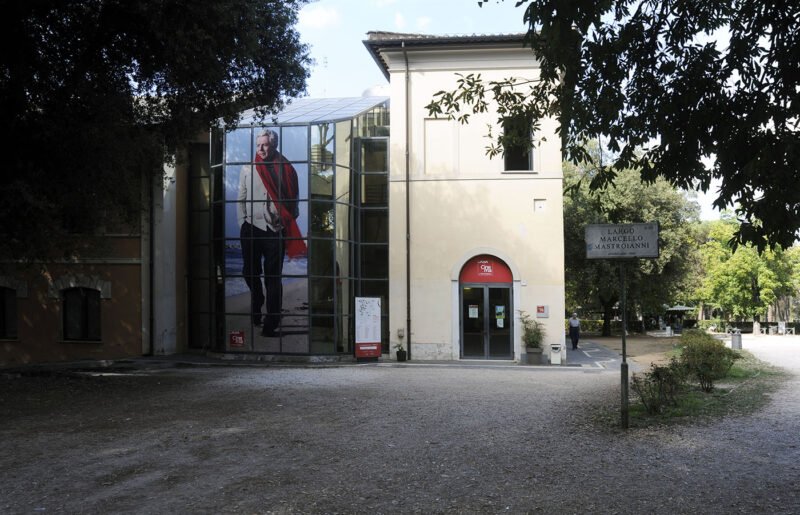
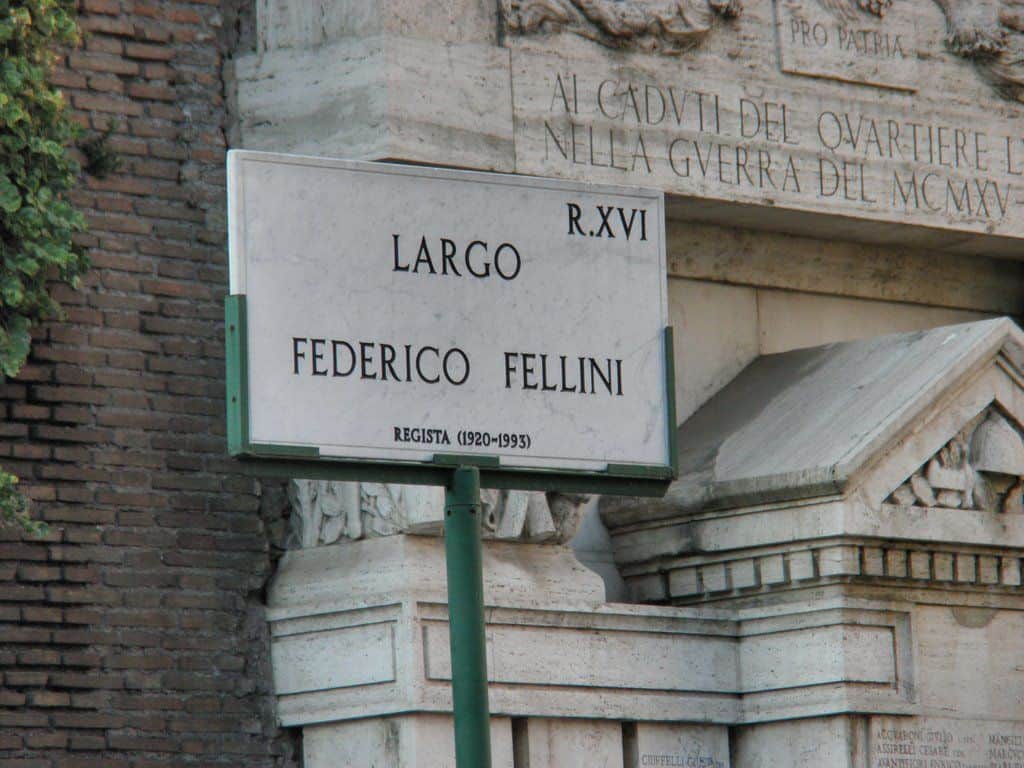
If you really want to see those years, do something different: head up to the Casa del Cinema, inside Villa Borghese, a 10-minute walk from here, where film series are screened and the history of Italian cinema is preserved. Largo Marcello Mastroianni is also nearby, named for the actor who was the face of Via Veneto.

Santa Maria della Concezione dei Cappuccini and the Crypt, at number 27
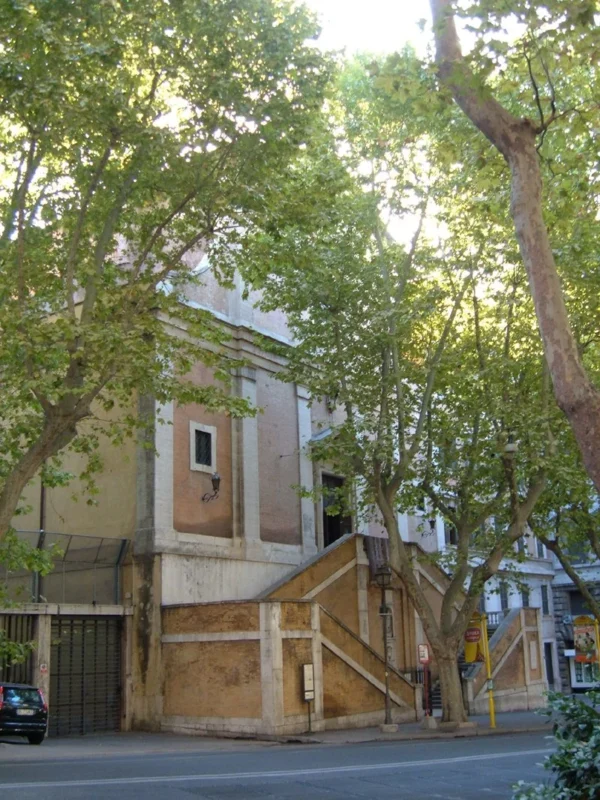
The oldest monument overlooking Via Veneto is also the most unsettling, and it sits at the lower end, where there used to be Piazza dei Cappuccini. The Church of Santa Maria della Concezione, known as dei Cappuccini or also Santa Maria Immacolata, is at number 27 and is reached by climbing a pincer-shaped staircase that separates the forecourt from the street level.
The Church of 1626
Pope Urban VIII Barberini blessed the first stone on October 4, 1626. The construction site was overseen by the pope's brother, Cardinal Antonio Marcello Barberini, who was a Capuchin friar. The design is due to Felice Antonio Casoni and Michele da Bergamo. The first service was held on September 8, 1630, and the works were completed in 1631, the year the Capuchin community moved here from the previous convent.
The layout is a single nave with five chapels on each side, and the high altar in marble was commissioned by the pope. The sobriety is deliberate: the Capuchin order was born in 1525 from a group of Franciscans who wanted to return to the original rule, and the name comes from the pointed hood of the habit. A Capuchin church was not supposed to show wealth.
The Artworks to See in the Church on Via Veneto
In the first chapel on the right is Guido Reni's Saint Michael the Archangel Defeating Satan, dated to around 1635: one of the most debated paintings of seventeenth-century Roman art, because tradition holds that the face of the devil reproduces the features of Cardinal Giovanni Battista Pamphilj, future Pope Innocent X, an enemy of the Barberini. It is a tradition, not a documented fact, and it should be told as such. Still, people always stop in front of that painting.
The other chapels hold works by Pietro da Cortona, Giovanni Lanfranco and Andrea Sacchi. The convent museum displays a Saint Francis in Meditation whose attribution to Caravaggio is debated and not unanimously accepted. The cautious wording is that it is a painting attributed to Caravaggio or to his circle, and that is how it should be presented.
In front of the high altar is the tomb slab of Cardinal Antonio Barberini, with the epitaph stating that here lies dust, ash and nothing. A cardinal who has himself buried under a line like that deserves at least 30 seconds of silence.
The Capuchin Friars Museum in Eight Rooms
Since 2012 the complex has had a museum route organized across eight rooms, which comes before the descent to the crypt. The story is that of the order: the history of the convent wanted by the Barberini and completed in 1631, Franciscan spirituality through the lives of the Capuchin saints, liturgical vestments and objects of worship, documents, and the missionary and artistic activity of the twentieth century. Two figures keep coming back: Saint Felix of Cantalice, who lived between 1515 and 1587, the first saint of the order and an alms collector among the poor of Rome, and Saint Crispin of Viterbo, 1668-1750, remembered for his cheerful character.
It's a small and serious museum, which many rush through just to get to the bones. They're wrong: without the eight rooms, the crypt becomes nothing more than a macabre amusement park.
The Five Chapels of the Capuchin Crypt
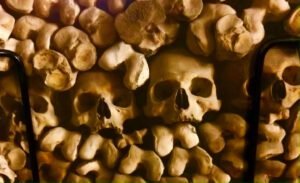
The Cripta dei Cappuccini occupies an underground corridor overlooking five chapels, fitted out starting in the mid-18th century with the remains of nearly 4,000 friars, together with those of some lay benefactors. The bones are not piled up: they were used as decorative and architectural material, arranged in rosettes, arches, frames, chandeliers, hourglasses and crosses. Each chapel, according to tradition, contains holy earth brought from Jerusalem.
You pass, one after the other, through the Resurrection chapel, the skull chapel, the basins chapel, the femurs and tibias chapel, and the three skeletons chapel. At the exit you can read the inscription that has become the motto of the place: what you are, we once were, what we are, you will be. It is the most direct memento mori that exists in Rome, and it still works.
One point that causes confusion needs clarifying: the friars were not killed, nor were they displayed as a spectacle. The bodies were moved from the old convent in 1631, and the ornamental arrangement was the work of the friars themselves, within a religious culture in which death was faced head-on. The cemetery remained in use until 1870.
How to Visit the Capuchin Crypt on Via Veneto
Entrance at number 27 on via Vittorio Veneto, phone 06 88803695. The museum lists its opening hours as every day from 10.00 to 19.00, with the ticket office closing half an hour earlier. The ticket covers the museum and the crypt, and you can buy it on site or through the sales channel listed on the museum's official website. Prices should be checked there, because they change with the annual rates and the available reductions.
Photography and filming are forbidden inside the crypt, the ban is enforced firmly, and silence is required: it is a consecrated cemetery, not an attraction. The full visit, museum plus crypt, takes between 40 and 60 minutes. Groups enter by reservation.
In our view it is the first visit to make for anyone with just one hour in this area who wants to take away something they won't forget. It's worth more than 10 photos taken in front of a hotel.
Piazza Barberini, the Lower End of Via Veneto
Via Veneto begins where Palazzo Barberini ends, and the square that serves as its threshold is one of the quintessential Bernini sites.
The Fontana del Tritone
In the center of the square is the Fontana del Tritone, sculpted by Gian Lorenzo Bernini between 1642 and 1643 at the wish of Urban VIII, who wanted it as a public ornament for the city. It is made of travertine and is fed by the Acqua Felice. The Triton sits on a large bivalve shell, with an upright torso and scaly legs like a sea creature. He leans his head back and blows into a conch shell that he holds with raised arms, and the jet of water comes out of the conch. At the base, four dolphins intertwine their tails and hold the papal keys and the Barberini coat of arms with the bees. The fountain was restored between 1987 and 1988, with extraordinary work in 1990, maintenance in 1991-1992 and in 1998, and a new intervention in 2013.
The entry dedicated to the Triton Fountain goes into detail about Bernini's building site. Suffice it to say here that it is the first Roman fountain in which the human figure alone supports the entire water mechanism, without any surrounding architecture: a radical break from the sixteenth-century tradition.
The Fontana delle Api, at the Corner of Via Veneto
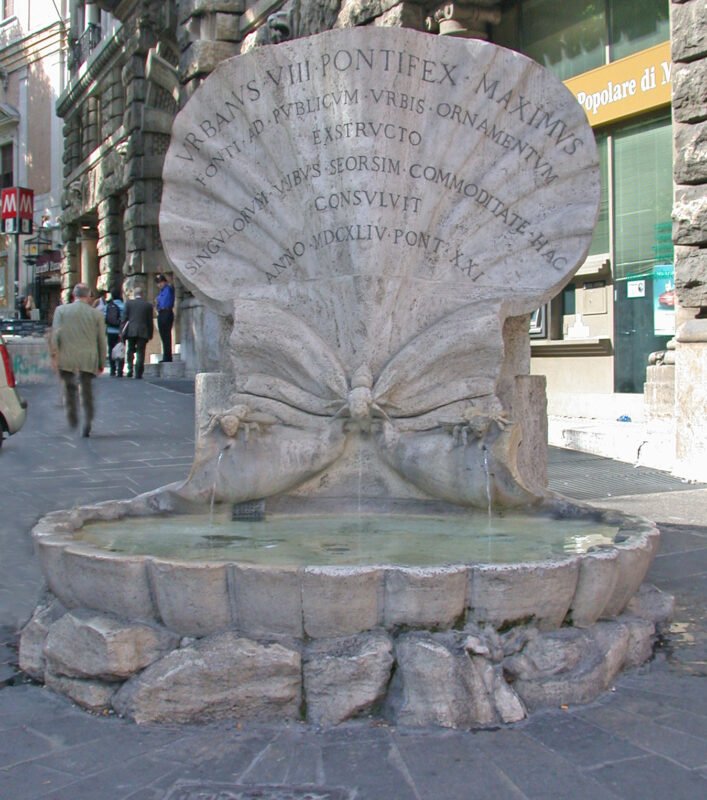
At the entrance to Via Veneto, on the corner with the square, is the small Fontana delle Api: an open bivalve shell with three bees, the heraldic emblem of the Barberini. Bernini made it, and it was completed in April 1644 as a horse trough and drinking fountain for passersby, that is, a work of public utility, as the inscription dedicated to Urban VIII states.
Its history is more eventful than it seems. Originally placed at the corner with Via Sistina, near Palazzo Soderini, it was dismantled in 1880 to make room for traffic, and most of the original pieces were lost. The sculptor Adolfo Apolloni made a reconstruction in 1915, in travertine instead of the original Luni marble, and the fountain was reassembled in its current position on January 28, 1916. What you are photographing is therefore, for the most part, an early 20th-century replica: and knowing that the original piece disappeared because of traffic says more about nineteenth-century Rome than any essay could.
Palazzo Barberini, a Short Walk from Via Veneto
Palazzo Barberini is at Via delle Quattro Fontane 13, just over 100 meters from the entrance to the street. It houses the Gallerie Nazionali di Arte Antica, which together with Galleria Corsini hold more than 5,000 works, including paintings, sculptures and decorative arts from the 13th to the 18th century: Caravaggio, Raphael, Filippo Lippi, Guido Reni. The palace itself is a masterpiece, built by a site where Carlo Maderno, Gian Lorenzo Bernini and Francesco Borromini worked, and the salon ceiling was frescoed by Pietro da Cortona with the Triumph of Divine Providence.
Hours: Tuesday to Sunday from 10.00 to 19.00, closed on Monday. Full ticket €15, reduced €2 for citizens of the European Union between the ages of 18 and 25, free for those under 18 and in other cases provided for by law. Booking is mandatory on the first Sunday of the month and on some holidays, and always for groups, which may not exceed 25 people. Phone 06 4814591.
Porta Pinciana and the Aurelian Walls at the Top of Via Veneto
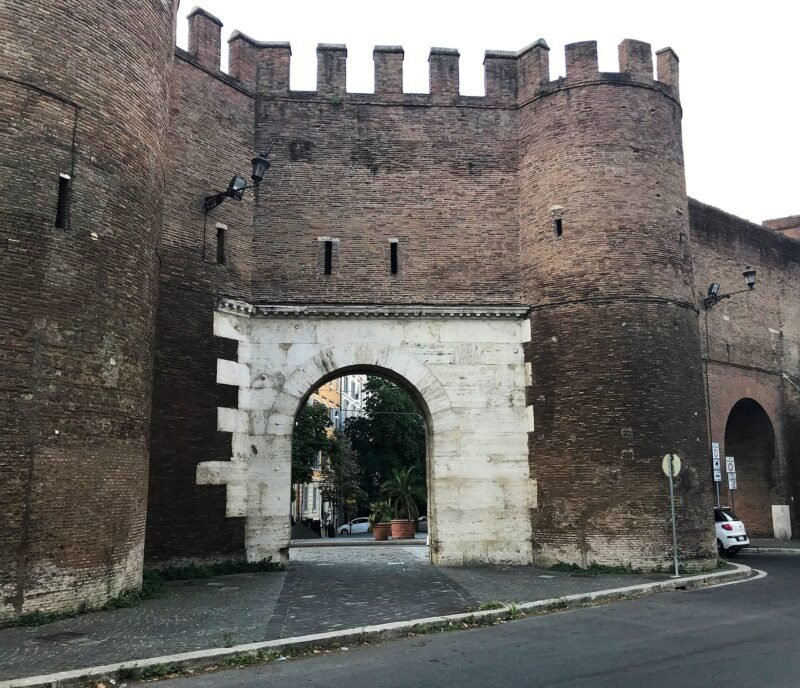
At the top of the climb, Via Veneto runs straight into a wall that is 17 centuries old. It is the stretch of the Aurelian Walls that closes off the Pincio, and the gate that pierces it is Porta Pinciana.
In its current form, the gate dates to 403 AD, when Emperor Honorius enlarged an existing smaller opening and incorporated it into the great strengthening of the circuit. The central arch is made of travertine and preserves the covered gallery and the chamber for the portcullis mechanism. Two semicircular towers flank it. The name comes from the Pincii family, owners of the hill. Even earlier, the gate was called Salaria vetus because the ancient route of the salt road left from here.
In the Middle Ages it was called Porta Belisaria, after the Byzantine general Belisarius, who repelled the attack of the Goths of Vitiges here in 537 and had restorations made to the walls. Another popular name was Porta Turata, because between the 8th and 19th centuries it was walled up several times. The last closure was in 1808, and it wasn't reopened until the early 20th century, when the new Ludovisi neighborhood needed an exit to the park. Under the arch is a monument to the fallen of the Ludovisi district in World War I.
Once through the gate, you are in Piazzale Brasile and a few steps from the avenues of Villa Borghese. From here it takes 10 minutes to reach the Galleria Borghese, 15 minutes to the terrace of the Pincio, 5 minutes to the Museo Carlo Bilotti in the orangery, and roughly 10 minutes to the entrance of the Bioparco.
The Two Ministries of Via Veneto
Via Veneto is not just hotels and movie memories: it is also a street of government. Two ministries of the Republic have their headquarters here.
At number 33 stands the building designed by Marcello Piacentini that houses the Ministry of Enterprises and Made in Italy, the ministry that until 2022 was called the Ministry of Economic Development and that also keeps offices at via Molise 2, at the back of the same block. The switchboard number is 06 47051.
At number 56 is the Ministry of Labor and Social Policies, in the building named after Marco Biagi, the labor law expert murdered in 2002. The switchboard number is 06 48161. These buildings date from the 1930s, with the monumental and austere style of that era, and they clash with the Umbertine eclecticism of their neighbors. It is precisely this contrast that gives the street its layered character.
Practical consequence for visitors: on weekdays the stretch between 33 and 56 is full of official cars, union pickets and barriers. If you're looking for a quiet Via Veneto to photograph, come on Sunday morning.
Other buildings and details to look for along Via Veneto
Walking from Piazza Barberini toward Porta Pinciana, you pass, in order, the monuments and buildings of interest on the street: the Fontana delle Api from the 1600s, Palazzo Coppedè at number 7, the church of Santa Maria Immacolata with the Capuchin crypt, Palazzo Piacentini, home of the Ministry of Enterprises, Palazzo Marco Biagi, home of the Ministry of Labor, the buildings of the Majestic, Balestra and Palace hotels, the Fontana del Cane, Palazzo Margherita, home of the United States embassy, with the attached Villino Piombino and the Fontana del Tritone within its enclosure, the building of the Excelsior hotel, that of the Flora hotel and finally Porta Pinciana.
Palazzo Parlante at number 7
The building at number 7, a work by Gino Coppedè from 1927, is known to Romans as Palazzo Parlante because of the number of inscriptions and mottoes running across its facade. Coppedè is the architect of the fantastical neighborhood around Piazza Mincio, and here, on a smaller scale, he displays the same repertoire: carved bestiary, coats of arms, Latin inscriptions set into the walls. Look up to the second floor and read: it is a five-minute read, and it changes the way you'll look at the rest of the street.
The Fontana del Cane and the smaller details
Halfway up the slope, set against a wall, is the small Fontana del Cane, a corner fountain that almost no one notices and that Romans have been using for generations. These are the details that set apart those who walk Via Veneto knowing what to look for from those who travel it because they were told about it at the hotel: the manhole covers marked with the initials of the comune, the original streetlight poles, the sampietrini paving replaced in sections, the brass signs of the doormen.
A curiosity about Via Veneto
The best-known curiosity concerns the little tables. In the popular imagination, Via Veneto is the street of outdoor cafés, and indeed the look of the Dolce Vita grew out of the dehors facing the sidewalk. But those dehors weren't there from the start: the Ludovisi district had been designed, in the 1880s, as a residential area of villas and small apartment buildings for well-off families, not as an area of public venues. The commercial vocation came later, with the conversion to hotels in the early 1900s, and became dominant only in the postwar period.
There's more, and here the curiosity becomes a perfect short circuit. Via Veneto the whole world has seen and loved, the one with tables crowded with actors and photographers in La Dolce Vita, was not filmed here. Fellini had it rebuilt inside Teatro 5 at Cinecittà, in a production that built about 80 sets. And the set was flat, while the real street climbs. Millions of people have fallen in love with a Via Veneto that doesn't exist, and when they reach the one made of travertine and asphalt they feel a vague disappointment without understanding why: the reason is the slope.
The second curiosity is about street names, and you can check it yourselves in 30 seconds. All the side streets in the district bear the names of Italian regions and provinces, and the main street was supposed to be called simply via Veneto, like via Lombardia or via Toscana. The patriotic name, via Vittorio Veneto, came only with Municipal Giunta resolution number 37 of October 25, 1919, after the war had ended. A century later nobody uses it: the street is still called Via Veneto by everyone. Official street naming has won on the sign and lost on the tongue.
Something nobody tells you about Via Veneto
Few people know it, but beneath your feet, as you walk Via Veneto, the layout of a garden is still there. The street was not opened in an empty area: it was cut through the park of Villa Boncompagni Ludovisi, 24 hectares of groves, avenues, nymphaeums and ancient statues that Cardinal Ludovico Ludovisi had assembled from 1621 on the remains of the ancient Horti of Sallust. In 1883 the Società Generale Immobiliare bought about 240,000 of the estate's 247,000 square meters. In 1886 the Comune declared the opening of via Vittorio Veneto and via
Only two fragments of the park remain. The first is the Casino dell'Aurora, at via Lombardia 46, with a ceiling painted by Caravaggio around 1597, Jupiter, Neptune and Pluto, the artist's only known mural painting, and with Guercino's Aurora of 1621 on the piano nobile. The second is the facade of Palazzo Grande from 1622, incorporated into the grounds of the United States embassy and therefore invisible.
The second thing nobody says is that the operation was an economic disaster. Rome's construction crisis of the late 1800s swept away the real estate company and also put the princely family itself in trouble. The family found itself with a gigantic palace just finished, Palazzo Margherita, and without the resources to maintain it: it sold it to the House of Savoy in 1900. The most elegant street in Rome was born from a failed speculation, and anyone who knows this backstory looks at those facades with different eyes.
Third piece of practical information you won't find in the guidebooks: the collection of ancient sculptures that made the villa famous has not been lost. A large part is on display at Palazzo Altemps, home of Museo Nazionale Romano, on the other side of the center. Anyone who really wants to understand what was erased to make Via Veneto has to go there, not stay here.
The advice I give you for visiting Via Veneto
There's one piece of advice, and it goes against everyone's instinct: walk it downhill and early in the morning. Take the metro to Barberini, but don't start the climb right away. Instead, go up via Sistina and via Francesco Crispi toward the Pincio, or take a bus to Porta Pinciana and start the walk from the top. Going down, Via Veneto opens up in front of you like a stage set: the curves unroll, the dome of the Excelsior appears in the right spot, the facade of Palazzo Margherita comes toward you instead of slipping away behind you, and at the bottom the piazza with the Fontana del Tritone opens up. Going uphill, on the other hand, you'll look only at the asphalt and sweat.
On timing: between eight and 10 in the morning the street is clean, the shutters go up, waiters set up the dehors, and the raking light hits the facades from the right side. From 11 onward, the coaches arrive, the sidewalks fill up, and the atmosphere becomes that of any commercial street in the world. Sunday morning is the absolute best time: the two ministries are closed, traffic is cut in half, and for the first time you can hear footsteps.
On how: give Via Veneto 90 minutes, not 20. 20 minutes is enough to walk through it and be disappointed. 90 minutes allow you to do the right thing, that is, break up the walk with a real visit. One possible itinerary is this: Fontana delle Api and Fontana del Tritone in piazza Barberini, climb up to number 27, the museum and crypt of the Cappuccini at a leisurely pace, climb back while looking at the buildings, Palazzo Margherita from a distance, the Excelsior, Porta Pinciana, and then the entrance to Villa Borghese for a coffee. If there's time left, Palazzo Barberini deserves half a day on its own.
One last recommendation concerns your wallet. Sitting at the sidewalk tables on Via Veneto costs money, and a lot of it: it's a legitimate choice if you want to pay for the view, and a terrible idea if you're looking for a good coffee. Good coffee in Rome is ordered at the bar and in a side street. Anyone who still wants the sidewalk-table experience should have it once, in the evening, with the bill budgeted in advance and without pretending to be surprised.
Another well-known fact, yet rarely mentioned
Everyone knows there's a United States embassy on Via Veneto. Almost no one knows that the building was a queen's home for 26 years, and that its name is not a generic tribute but the name of that woman.
Palazzo Margherita was built between 1886 and 1890 by Gaetano Koch for Prince Rodolfo Boncompagni Ludovisi, who had lost the family residence on the Corso through expropriation. In 1900 the House of Savoy bought it. On July 29 of that year, Umberto I was assassinated in Monza. His widow, Margherita di Savoia, left the Quirinale to her son Vittorio Emanuele III and moved here, making it her official residence until her death in 1926. Since 1931 the building has been the American embassy, and since 1946 it has been owned by the American government.
The little-mentioned fact is the cultural consequence of this succession. Via Veneto's social fame does not begin with the cinema: it begins with the court of the widowed queen. For a quarter century, the street was traveled by carriages carrying courtiers, ambassadors, musicians and writers heading to Margherita's salon. She was among the first European sovereigns to make her residence a place of cultural patronage. When actors and photographers arrived in the 1950s, they found a street that had already been, for half a century, the place to be seen.
A second well-known fact that is rarely mentioned concerns the name of the street: it commemorates the battle fought between October 24 and November 3, 1918, and was adopted in 1919, when that memory was still very fresh. The third concerns Porta Pinciana, which everyone photographs without knowing that it was walled up for centuries and reopened only in the early 1900s, precisely to serve the new neighborhood rising along Via Veneto. Without the subdivision of Villa Ludovisi, that gate would still be closed.
The right photo to take on Via Veneto
The wrong photo, the one everyone takes, is the head-on shot from the middle of the roadway with the hotels in the background. It comes out flat, the street doesn't read, and on top of that you take a real risk with the traffic.
The right photo is taken from the sidewalk on the right going uphill, just above the intersection with via Ludovisi, around nine in the morning. From there the curve of the street composes itself. The sequence of facades enters on a diagonal, the dome of the Excelsior closes the view at the top right, and the trees on the opposite side put a band of green in the lower third of the frame. You need a lens around 35 or 50 millimeters. A wide angle pushed here ruins everything, because it widens the street and cancels the climb, which is the only thing that makes Via Veneto recognizable.
The second shot I recommend is from the top of the pincer-shaped staircase of the Church of the Cappuccini, at number 27. Climbing those steps you gain three or four meters of height, and you take in the street from above, with the tables in the foreground and the climb running toward Porta Pinciana. It is the only public, free spot that offers an elevated view of Via Veneto.
Inside the Cripta dei Cappuccini, photography is forbidden, without exceptions and without negotiation. The staff step in right away, and they're right, because it's a cemetery. In front of the United States embassy, keep to the opposite sidewalk and don't frame the gates, the soldiers or the service vehicles. Otherwise the street is public and you can photograph it freely.
If you want night photography, the best moment is the dusk of November or January, around 17:30. The hotel signs are lit, the sky is still blue and not black, and the street, wet from the rain, gives back that reflection that in the black-and-white images of the 1960s did half the work.

Some important events that took place here in history
The first event dates to 537 AD and concerns the upper end of the street. During the siege of the Goths under Vitiges, the Byzantine general Belisarius repulsed the attackers in the northern sector of the walls, and from that episode Porta Pinciana was called Porta Belisaria for centuries. In that moment, the walls of Rome functioned for the last time as a truly decisive military work.
The second is from October 4, 1626. Urban VIII blesses the first stone of the Church of the Cappuccini, which will be consecrated for use on September 8, 1630 and completed in 1631, the year in which the friars also transfer here the remains of their brothers from the old convent. From that move, a century later, the crypt ossuary is born.
The third is from 1883-1886 and it is the most radical: the sale and subdivision of Villa Ludovisi. In 1883 the Società Generale Immobiliare acquires about 240,000 square meters out of 247,000. In 1886 the city council declares the opening of via Vittorio Veneto and via Boncompagni to be of public utility. The Ludovisi neighborhood is born with the agreement of the same year and becomes a rione in 1921. Within a few years one of the most famous gardens in Europe disappears.
The fourth is from July 29, 1900. The assassination of Umberto I in Monza leads Margherita di Savoia to leave the Quirinale. The queen dowager settles in the palazzo on Via Veneto, which has carried her name ever since, and she stays there until her death in 1926.
The fifth is from January 18, 1906: the Excelsior opens, and with it begins the street's international hotel calling.
The sixth is from October 25, 1919, with the resolution that renames the street in memory of the Battle of Vittorio Veneto.
The seventh, the most famous, is from February 3, 1960. The preview of Federico Fellini's La Dolce Vita is held at the Fiamma cinema in Rome, two days before the Milan premiere at the Capitol. The film triggers harsh controversy. It is attacked by sectors of the Catholic world and defended by others, it wins the Palme d'Or at Cannes and an Academy Award for costume design by Piero Gherardi. From that moment Via Veneto becomes a name known all over the world, and April 1961 hands English, and from there every other language, the word paparazzo.
The eighth is tragic: on September 16, 1985, a dynamite attack hits the Café de Paris, in the middle of the Years of Lead and of international terrorism in Italy.
The ninth belongs to the legal news. On July 22, 2009, the Café de Paris is seized as part of an operation on assets attributed to organized crime. It reopens under judicial administration in 2011, closes for good on February 18, 2014 after a fire and an eviction, and in 2016 the interiors are demolished. Between 2019 and 2020 the measures are reformed and the charges of mafia origin fall. The display window stays dark.
The 10th concerns mobility: on February 16, 1980, the Barberini station on Line A enters service, bringing Via Veneto closer to the rest of the city. In March 2019 the station is closed due to an escalator failure, and it doesn't fully reopen until May 15, 2020, after a closure of more than a year that heavily hurt business in the area.
The 11th is very recent and concerns the legacy of Villa Ludovisi. From January 2022 the Casino dell'Aurora, with the ceiling by Caravaggio, is repeatedly put up for auction without finding buyers, starting from a base of 471 million euros and dropping to 145 million. In April 2023 the building is vacated. The story of the villa that gave birth to Via Veneto is not over yet.
Who Passed Through Via Veneto
The list of distinguished passersby on Via Veneto is long, and it's best to sort it by season rather than by fame.
The first season belongs to the Barberini, in the 1600s, and concerns the lower part of the street. Urban VIII, born Maffeo Barberini, blessed the first stone of the Capuchin church in 1626 and commissioned Gian Lorenzo Bernini to create the Triton Fountain and the Fontana delle Api. The pope's brother, Cardinal Antonio Marcello Barberini, a Capuchin friar, oversaw the construction of the church and is buried beneath a slab stating that nothing lies here but dust and ashes. In those same years, Guido Reni, Pietro da Cortona, Giovanni Lanfranco, Andrea Sacchi and Francesco Borromini all worked a few meters away.
The second season belongs to the Ludovisi and the Grand Tour travelers. Before the street existed, the garden that occupied this space was a stop for educated foreign visitors to Rome, and the Ludovisi collection of ancient sculpture was among the most admired on the continent. Cardinal Francesco Maria Del Monte, protector of Caravaggio and Galileo Galilei, was the first owner of the casino that still survives on Via Lombardia.
The third season is the royal one. Margherita di Savoia lived here from 1900 to 1926, and her court brought ambassadors, musicians and writers to Via Veneto. This is the phase that establishes the street's social reputation, long before the movies.
The fourth season is that of La Dolce Vita, and it's the most crowded. Federico Fellini frequented the Doney, and he is the figure who made this street a myth. Marcello Mastroianni became its face, to the point that a square was named after him nearby, inside Villa Borghese. Anita Ekberg, Annibale Ninchi and Walter Santesso, the Paparazzo of the film, belong to the same story. Elizabeth Taylor, Ava Gardner, Burt Lancaster, Marlon Brando, Audrey Hepburn, Sophia Loren, Lana Turner and Jean-Paul Belmondo passed through the sidewalk tables and lobbies. Frank Sinatra played the piano at Harry's Bar. The poet Vincenzo Cardarelli was a regular at the Doney, and his presence reminds us that Via Veneto was not only movies. It was also journalism and literature, with the editorial offices of the illustrated weeklies a short walk away and the writers who worked inside them.
The fifth season belongs to the hotel guests. The Excelsior hosted the crew of Ben Hur in 1958, and since then it has appeared in dozens of films, from La Dolce Vita in 1960 to The Exorcist in 1973. More recently, Harry's Bar has welcomed Mel Gibson, Woody Allen and Hillary Clinton.
The sixth season is the institutional one, and it continues today. The ambassadors of the United States of America have lived and worked at Palazzo Margherita since 1931, and two ministers of the Republic have their offices at numbers 33 and 56. Via Veneto is still, every weekday morning, a street where things get decided.
Via Veneto with Children
Via Veneto is not a street designed for children, and it would be dishonest to pretend otherwise. There are no playgrounds, the traffic is constant, and the shop windows aren't meant for them. But it's an excellent transit corridor to something children love very much, namely Villa Borghese, and the uphill stretch becomes a sensible walk if you give them something to look for.
What works: counting the Barberini bees. There are some on the small fountain at the corner, on the coat of arms of the Triton Fountain, and they show up all over half of Rome. Another game is looking for the inscriptions on the facade of Palazzo Parlante at number 7. Yet another is spotting the dome of the Excelsior from different points along the climb.
On the Cripta dei Cappuccini, the verdict is clear and goes against the grain: it isn't suitable for young children, so skip it under 10, and over 10 take them only if you've prepared them. It's not a horror site, and it's wrong to present it that way, but it is a cemetery and the bones are real. A kid who is first told about the meaning of memento mori comes away impressed and enriched. A small child brought there by surprise comes away only frightened.
Past Porta Pinciana, however, everything changes: Villa Borghese offers the little lake, bike rentals, the Bioparco, and the Etruscan museum at Villa Giulia for the older kids. The practical advice is to walk Via Veneto in 20 minutes and spend the rest of the morning inside the park.
Accessibility of Via Veneto
The street itself is wheelchair accessible: the sidewalks are wide, the surface is even for long stretches, and curb ramps exist at almost every intersection. The problem is the grade, which is constant and far from trivial in the central stretch. Anyone pushing a manual wheelchair uphill will have a very hard time, which is one more reason to tackle the street downhill from Porta Pinciana.
The Barberini metro station has a complicated history with its lifts: check on the day itself that the elevators and escalators are running before you count on them. The Cappuccini church has a split staircase at its main entrance, which is a serious obstacle. For access conditions to the museum and the crypt for people with motor disabilities, it's best to call the museum first at 06 88803695, because the underground route spans different levels.
Palazzo Barberini has dedicated entrances and services for visitors with disabilities, with free admission for the person with a disability and their companion in the cases provided for by national regulations. For specific details, ask the museum at 06 4814591.
When to Go to Via Veneto and When to Avoid It
The best time is early in the morning, between 8 and 10, in any season. The second best time is dusk, when the signs light up and the facades take on the right color.
Avoid: summer early afternoons, because the climb is exposed and there is little shade, weekday mornings between 9 and 10 in the stretch with the ministries, when service cars and security posts take over the sidewalks, and December Sunday afternoons, when the Christmas shopping crowds from the Tridente reach this far.
The ideal season is autumn, between October and November. The damp facades bring back the warm gray of the travertine, the plane trees on the upper side turn yellow, and the low light enters the street from the right direction. The worst month is August: half the street is closed, the historic venues go on vacation, and all that's left is the heat.
Frequently Asked Questions About Via Veneto
How much does it cost to visit Via Veneto?
Nothing. Via Veneto is a public Roman street, open 24 hours a day, with no ticket and no turnstiles. You only pay for the museums along it, such as the museum and crypt of the Cappuccini at number 27 and, a short walk away, Palazzo Barberini.
How long is Via Veneto, and how much time does it take to walk it?
Via Veneto is about 700 meters long between Piazza Barberini and Porta Pinciana, laid out in two wide curves that never let you see the whole of it at once. At a tourist pace, with stops at the main monuments, a complete itinerary takes about four hours.
What is there to see along Via Veneto?
Walking up from Piazza Barberini along Via Veneto, you'll pass the church of Santa Maria della Concezione dei Cappuccini with its crypt at number 27, Palazzo Margherita, which today houses the United States Embassy, the great historic hotels such as the Excelsior and, at the top, Porta Pinciana in the Aurelian Walls.
Is Via Veneto accessible by wheelchair?
The street itself is wheelchair accessible: the sidewalks are wide, the surface is even for long stretches, and curb ramps exist at almost every intersection along Via Veneto. The problem is the constant grade in the central stretch, which is one more reason to tackle the street downhill from Porta Pinciana.
When is the best time to take a walk on Via Veneto?
The best time for Via Veneto is early in the morning, between 8 and 10, in any season. The second best time is dusk, when the signs light up and the facades take on the right color, while it's best to avoid summer early afternoons, when the climb is exposed and there is little shade.
Why is Via Veneto famous in film?
Via Veneto is famous in film above all for Federico Fellini's La Dolce Vita, shot between March and August 1959 and previewed in Rome on February 3, 1960, starring Marcello Mastroianni and Anita Ekberg. The film fixed forever the image of café tables facing the sidewalk.
Is the food good on Via Veneto?
Via Veneto is one of the most expensive streets in Rome, and the value for money at the tourist outdoor seating areas on the central stretch is often terrible. That doesn't mean the food is bad everywhere, but it's worth choosing with care and treating a table on the street more as the ticket to a show than as a meal.
What's Around Via Veneto Within 10 Minutes on Foot
Via Veneto is one of the best-connected spots in the Historic Center, and that is its most solid practical advantage.
Uphill, past Porta Pinciana: Villa Borghese right away, the Galleria Borghese in 10 minutes with mandatory reservation, the Museo Carlo Bilotti in the orangery, Casa del Cinema, the Bioparco, and the Pincio terrace a little over a quarter hour away.
Downhill, from Piazza Barberini: Palazzo Barberini is two minutes away, the Trevi Fountain is eight, piazza di Spagna is 10 minutes away via Via Sistina, the church of Trinità dei Monti sits at the top of the staircase, and the Quirinal Palace is 12 minutes away via via delle Quattro Fontane.
It's a radius that lets you build a full day without taking public transport. If you want an itinerary built by professionals, with timing and bookings already arranged, you can turn to TourLeaderPro a Roma, which works in this area with groups and private clients.
Eating and Drinking on Via Veneto Without Getting Ripped Off
Let's be clear: Via Veneto is one of the most expensive streets in Rome, and the value for money in the tourist outdoor seating areas along the central stretch is often terrible. That doesn't mean you eat badly everywhere, it means you have to choose carefully.
Three rules. First: if you want a table facing the street, count it as the price of a show, not a meal, and order little. Second: to really eat, go down into the side streets, via Sardegna, via Lombardia, via Boncompagni and via Sicilia, where prices drop a notch and the customers include ministry employees, who are the best measure of approval there is. Third: have your coffee at the counter, the way Romans do, and it costs a fraction of what it costs sitting down.
Among the historic places, Harry's Bar at number 150 still has its own identity, with wood paneling, classic cocktails and a piano in the evening. It's expensive, but it's expensive for what it is, not for where it is. Doney, linked to the Excelsior, keeps the name that once belonged to Fellini and Cardarelli. Café de Paris, on the other hand, no longer exists: anyone who recommends it to you as a destination is describing a city from 60 years ago.
A Half-Day Itinerary Starting from Via Veneto
Here's a route that works in about four hours, without rushing.
Start at 09:00 in Piazza Barberini: Triton Fountain, Fountain of the Bees, and a couple of words about the Barberini and the heraldic bees. At 09:20 you start up the climb, and at 09:30 you reach number 27, the Chiesa dei Cappuccini: church, museum, crypt, 50 minutes. At 10:30 you resume the climb, looking at the buildings, Palazzo Parlante by Coppedè, the two ministries, and you reach Palazzo Margherita around 11:00, with a photo stop from the opposite sidewalk. At 11:15 you're at the Excelsior and its dome, and at 11:30 at Porta Pinciana, where the Aurelian Walls and Belisarius are explained.
At noon you enter Villa Borghese, and here you choose: Galleria Borghese if you booked ahead, or a stroll to the little lake and Casa del Cinema, or the climb up to the Pincio for the view over piazza del Popolo. You finish at 13:00 with lunch in a side street, and the morning has done more than many full days spent standing in line.
For those planning the trip in English, the complete three-day Rome itinerary is laid out in the guide Rome in 3 days from ItalyPlanner, and the list of things to do in the city is on the page best things to do in Rome.
Quick Questions About Via Veneto
How much does it cost to visit Via Veneto?
Nothing. Via Veneto is a public street, open 24 hours a day, with no ticket and no turnstiles. You only pay for the museums along it, the museum and crypt of the Cappuccini at number 27 and, a short walk away, Palazzo Barberini.
How long is Via Veneto and how long does it take to walk it?
About 700 meters between Piazza Barberini and Porta Pinciana. At a tourist pace it takes 10 minutes to walk, but to really see it you need at least 90 minutes, including the Cappuccini crypt.
What is the nearest metro stop to Via Veneto?
Barberini, on line A, also listed as Barberini-Fontana di Trevi: the exit is less than 200 meters from the start of the street. Alternatively, the Spagna stop, also on line A, about 700 meters away.
Is Via Veneto really called that?
The official name is via Vittorio Veneto, assigned by Giunta Municipale resolution number 37 of October 25, 1919, in memory of the 1918 battle. In everyday use in Rome, it's always and only called Via Veneto.
Where exactly is Via Veneto?
In the Ludovisi district, I Municipio, between Piazza Barberini and Porta Pinciana. The initial stretch borders the Colonna district.
Can you visit the U.S. embassy on Via Veneto?
No. Palazzo Margherita, at number 119, is a diplomatic office and is not open to visitors. The very rare extraordinary openings are announced by the embassy and require a reservation and security checks.
Can you take photos on Via Veneto?
Yes, the street is public. Photography is strictly forbidden inside the Capuchin Crypt, and it's best to avoid framing the gates and the embassy's security staff up close.
What is the Capuchin Crypt on Via Veneto?
An underground cemetery of five chapels, set up from the mid-1600s with the remains of almost 4,000 friars, arranged in architectural decorations. It lies beneath the church of Santa Maria della Concezione, at number 27.
What are the opening hours of the Capuchin Crypt?
The museum lists opening hours every day from 10.00 to 19.00, with the ticket office closing half an hour earlier. Ticket prices and any special closures should be checked on the museum's official website or by calling 06 88803695.
Is the Capuchin Crypt suitable for children?
I'd advise against it for children under 10. Above that age, it's fine as long as you explain beforehand what it is: it's not a horror site, it's a consecrated cemetery with a specific religious message.
How much does Palazzo Barberini cost, near Via Veneto?
Full price is €15, reduced price is €2 for citizens of the European Union between the ages of 18 and 25, and free for those under 18 and in the other cases provided for by law. Open Tuesday to Sunday from 10.00 to 19.00, closed on Monday.
Was La Dolce Vita really filmed on Via Veneto?
No. Federico Fellini had the street rebuilt at Teatro 5 of Cinecittà, on a flat set that removes the real slope. Filming took place between March and August 1959.
Where does the word paparazzo come from?
From the character of the photographer in La Dolce Vita, played by Walter Santesso. Ennio Flaiano said he found the name in the travel book By the Ionian Sea by George Gissing, which features a hotel keeper from Catanzaro named Coriolano Paparazzo. There are two other explanations, one operatic and one from the Abruzzese dialect.
Is the Café de Paris on Via Veneto still open?
No. It closed permanently on February 18, 2014, and in 2016 the interiors were demolished. Today the venue no longer exists.
Is Harry's Bar on Via Veneto the same as the one in Venice?
No, there's no connection between the two. The Roman one is at number 150. It opened in 1918 under the name Golden Gate and took on its current sign in 1950.
What is the most famous hotel on Via Veneto?
The Excelsior, at number 125, opened on January 18, 1906, designed by Emil Vogt and Otto Maraini, and recognizable by its corner dome. It has 281 rooms and 35 suites, including the famous Villa La Cupola.
Can you go into the hotels on Via Veneto without being a guest?
In the lobbies and bars, yes. No one forbids it, as long as you order something and behave accordingly. The rooms and upper floors are reserved for guests.
What remains of La Dolce Vita on Via Veneto?
The hotels, a few historic signs, the architecture, and the names. The world of actors, directors, and photographers that once filled the street dissolved between the late 1960s and the early 1970s.
Is Via Veneto wheelchair accessible?
The street is, with wide sidewalks and curb ramps at intersections, but the slope is constant. It's best to walk it downhill from Porta Pinciana. The Capuchin church has a pincer-shaped staircase at the entrance, and the crypt route is spread across different levels, so call ahead.
What is the best time to visit Via Veneto?
Early in the morning, between 8 and 10, and especially on Sunday morning. Dusk is the best time for night photos. Avoid the early afternoon in summer.
What was there before Via Veneto?
The park of Villa Ludovisi, almost 24 hectares of gardens created by Cardinal Ludovico Ludovisi starting in 1621 on the ancient Horti di Sallustio. It was divided into building lots after 1883 and wiped out between 1888 and 1889.
Can you see the Caravaggio at the Casino dell'Aurora near Via Veneto?
Not at the moment. The building at via Lombardia 46, which holds the ceiling painted by Caravaggio around 1597 and the Guercino's Aurora from 1621, is at the center of a legal dispute, with auctions failing since 2022, and it has no open-to-the-public visiting arrangement.
Is Via Veneto dangerous at night?
No. It's one of the most watched streets in Rome because of the embassy and two ministries, and it's lit and busy until late. The usual precautions against pickpockets in tourist areas apply.
How much does a coffee cost on Via Veneto?
At the bar, the price is the ordinary one for a Roman bar. At a sidewalk table, the service charge adds up considerably, and you end up paying several times the bar price. It's a legitimate choice, but make it knowing that.
What's the difference between Via Veneto and Via Condotti?
Via Condotti is the street of the great fashion houses, flat, pedestrian, and extremely crowded. Via Veneto is an uphill street, open to traffic, made up of hotels, ministries, and cinema history. If you want luxury shopping, go to the Tridente. If you want the history of twentieth-century Rome, come here.
Do you need a guide to visit Via Veneto?
Not for walking. For understanding it, yes, because almost everything that matters here is invisible: the vanished villa, the queen, the set rebuilt somewhere else, the bones under the church. Without someone to tell you about it, Via Veneto is just a pretty street with expensive hotels.
Where does Via Veneto begin and end?
It begins at piazza Barberini, at the corner marked by the Fontana delle Api, and ends at Porta Pinciana, in the Aurelian Walls, in front of the entrance to Villa Borghese.
My final advice is not to come to Via Veneto looking for La Dolce Vita, because you won't find it. That street was taken apart at Cinecittà more than 60 years ago. Come instead looking for what is really there, and that is much more: a princely garden wiped out by property speculation, a queen's palace turned into an embassy, a church with 4,000 friars underground, two Bernini fountains at the entrance and an imperial gate at the top. Walk it downhill, in the morning, with 90 minutes to spare. It will give back a piece of Rome that no film has ever managed to tell.
Those who work with groups or want to build a tailor-made itinerary in this area can look at the working method described on the tailor-made tour design page of TourLeaderPro.
Article written by the editorial team of TourLeaderPro, contact them for Tours and Private/Corporate/V.I.P. Experiences.
Planning a trip to Rome? English-language guides for visiting the city are on ItalyPlanner.com.
Contact Information
Nearby
 Porta Pinciana200 m
- Christuskirche, Evangelical Lutheran Church of Rome200 m
- Sant’Isidoro a Capo le Case300 m
- Catacombs of Rome300 m
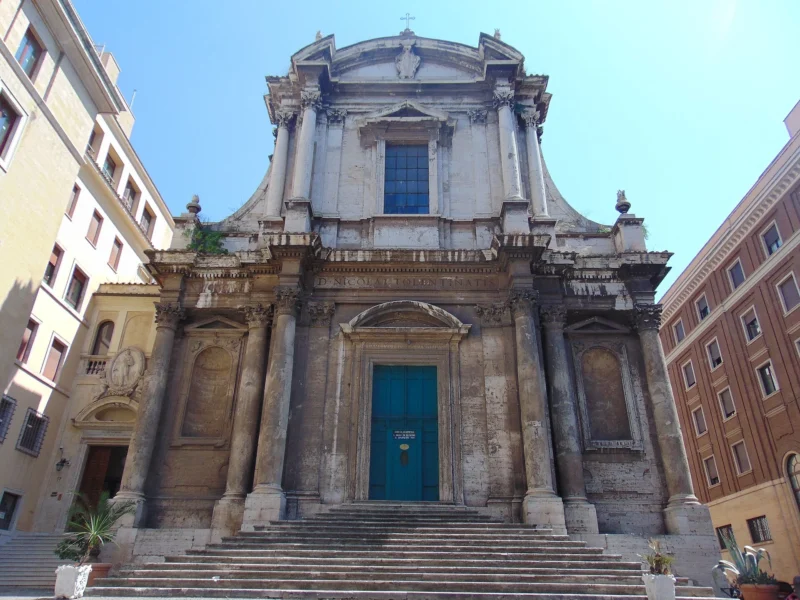
- San Nicola da Tolentino300 m
- Santa Maria della Concezione dei Cappuccini300 m
Upcoming events nearby
- Outlaws at Istituto Svizzero di Roma, from October 16, 2026 to February 7, 2027200 m
- Sacred Music Concerts at Cripta dei Cappuccini, Rome, through December 17, 2026300 m
- Spread Over the Ocean Bed by Nirveda Alleck at the Black Liquid Art Gallery, from October 10 to December 5, 2026400 m
- Scoprir, 14th Ibero-American Film Showcase at Casa del Cinema, November 26 to 28, 2026400 m