Santa Maria della Concezione dei Cappuccini
In short. Santa Maria della Concezione dei Cappuccini is at via Vittorio Veneto 27, about 50 meters from piazza Barberini, and almost nobody goes in.
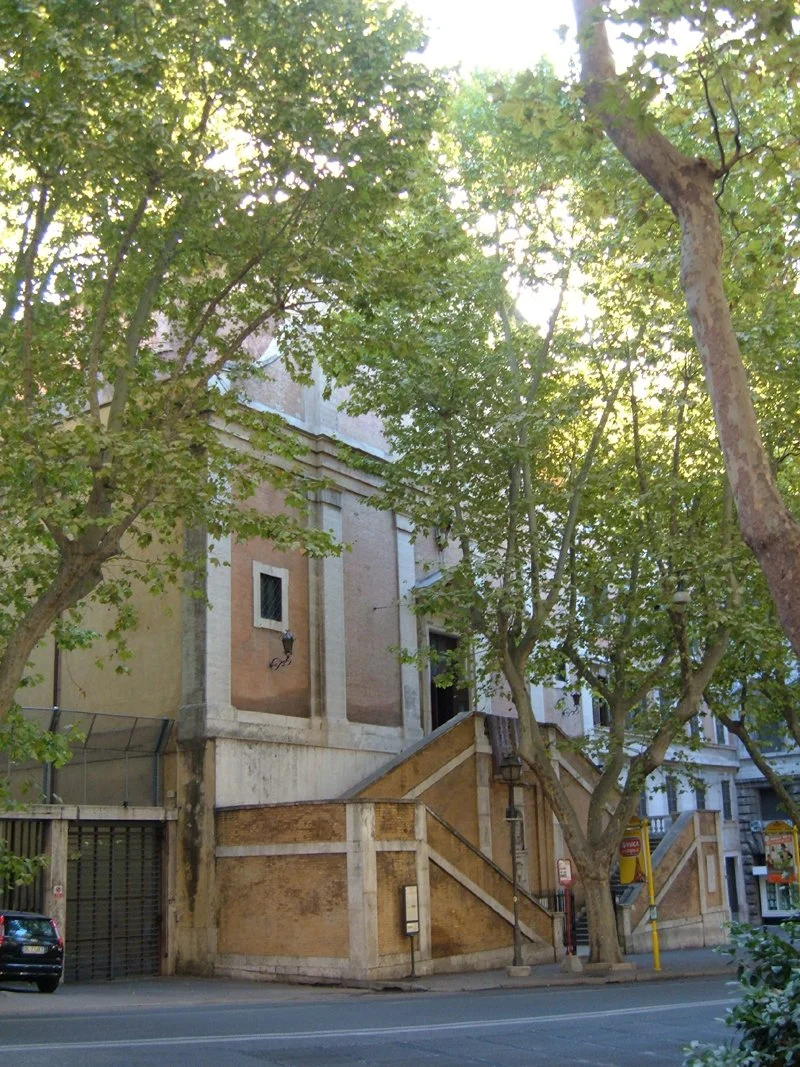
Santa Maria della Concezione dei Cappuccini is at via Vittorio Veneto 27, about 50 meters from piazza Barberini, and almost nobody goes in. Whoever climbs the scissor staircase almost always does so to buy the ticket for the crypt, which however has another entrance, a glass door under the staircase itself. The church is above, it's free, it's open almost all day, and it contains one of the densest collections of 17th-century painting in Rome in a building that the Capuchins built with the explicit instruction not to cut a fine figure. This page is about the church: who wanted it, how it is made, what is hanging on the walls, what the sources say and don't say about the stories that circulate around it. The ossuary crypt and the museum are discussed elsewhere, because they are a paid route with rules of its own.
Church, crypt and museum: three different things at the same street number
At number 27 of via Veneto three realities coexist that visitors constantly confuse. The church of Santa Maria della Concezione is a place of worship, you enter from the staircase, you pay nothing and there is no need to book. The Museo dei Frati Cappuccini and the ossuary Crypt are a paid museum route with ticket office, audio guide and hours of their own, and you get there through a glass door under the staircase.
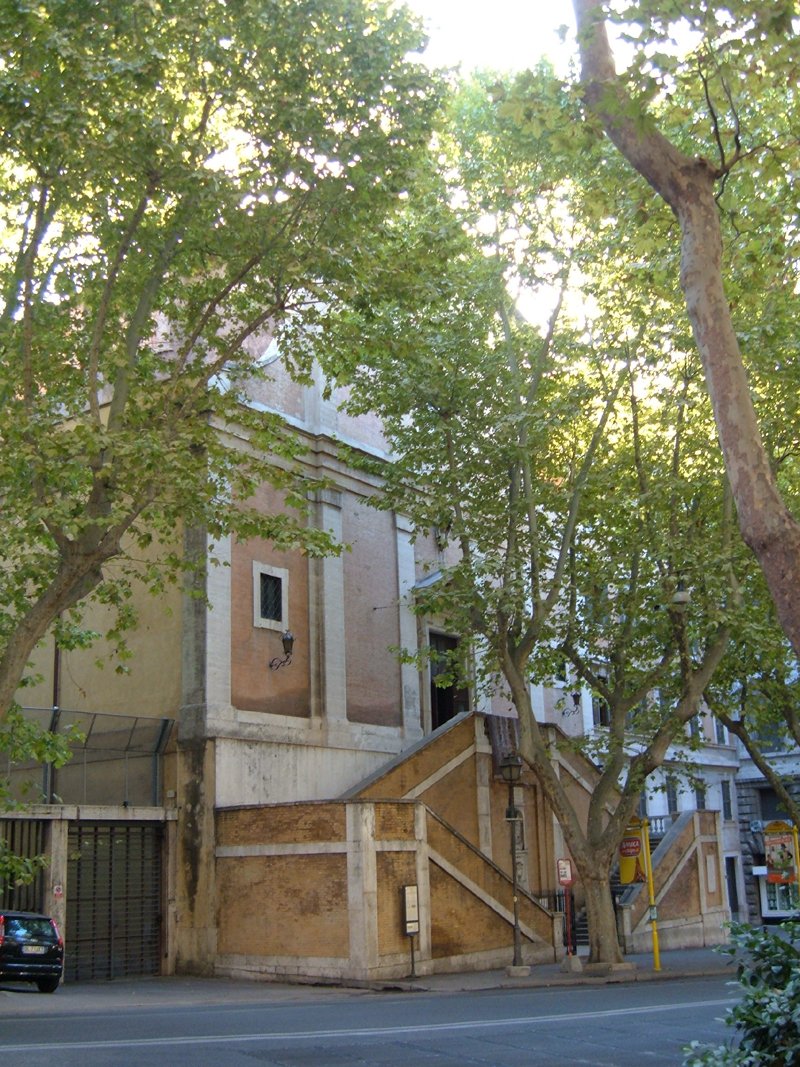
The distinction matters more than it seems, because it changes how you organize the day. Whoever wants to see only the 17th-century altarpieces goes into the church, stays half an hour and leaves without spending anything. Whoever wants to see the bones has to allow for a ticket, a line and at least an hour. The museum route and its crypt we have told in full on the page devoted to the Museo dei Frati Cappuccini and ossuary Crypt, with rates, discounts and photography rules.
There is then a third Capuchin institution in Rome that bears a similar name and that nobody connects with this one: the Franciscan Museum of the Historical Institute of the Capuchins, which is in an entirely different quadrant of the city, on the Circonvallazione Occidentale, and keeps the study material of the order. Whoever looks for the Capuchins for research reasons ends up there, not on via Veneto.
Where it is and how to get there
The address is via Vittorio Veneto 27, rione Ludovisi, in the first stretch of the street, the one that climbs from piazza Barberini toward the first curve. The church can be recognized from afar for a simple reason: it is the only building on the street that is not a Umbertine palace or a hotel, and its red brick facade sits half a story higher than the sidewalk.
By metro
The stop is Barberini, on line A, and the exit leads directly onto piazza Barberini in front of the Triton Fountain. From there you take via Veneto on the right side and walk barely three minutes slightly uphill. It is one of the few Roman monuments where the route from the metro holds no surprises, without stairs, without complicated crossings, without detours.
Those arriving from Termini take line A in the direction of Battistini and get off at the second stop. Those coming from San Giovanni or the southern quadrant make the same route in reverse. For the general picture of Roman transport, with the things that work and those that don't, we have a dedicated page on how to get around Rome.
On foot
The walk that works best starts from piazza di Spagna and climbs via Sistina to piazza Barberini, or descends from the Pincio passing through Porta Pinciana and joining via Veneto from above. The second option is the best of all: you arrive at the church from the opposite side to the tourist flow, you see the street gradually empty out and you understand that the road runs down toward the old city instead of up into it.
From the historic center it takes 20 minutes at a normal pace from the Trevi Fountain, less than 15 from piazza di Spagna. The final stretch of via Veneto has no shade in the middle hours and in summer you feel it. Whoever walks in August should make the trip early in the morning or after six in the afternoon.
Hours, Masses and entrance to the church
Entrance to the church is free and costs nothing, as in all Roman churches open for worship. There is no ticket office, no turnstile, no check. The website of the Capuchin friars of via Veneto indicates opening Monday to Saturday from 7.00 to 13.00 and from 15.00 to 18.00, while on Sunday and holidays the hours are reduced to the slots 9.30-12.00 and 15.30-18.00, with the explicit warning that it depends on the availability of the friars.
The Masses indicated are at 7.30 on weekdays and at 11.00 on holidays. During the celebrations wandering around the chapels with your head tilted up is out of place, and in a small church like this one it is noticed immediately. The best window is late weekday morning, after the 7.30 Mass and before the lunchtime closing. The hours should be rechecked on the website of the Capuchin community of via Veneto before leaving, because a religious house is not a civic museum and changes its openings without notice.
The difference from the museum ticket
The ticket for the museum route is not needed to enter the church and includes nothing of what you see above. The opposite holds: whoever buys the museum ticket and does not go up into the church misses the free part, which from the point of view of art history is the more important of the two. The rates, discounts and conditions of the paid route are given on the official website of the Capuchin Museum and Crypt and in our dedicated listing.
Cardinal Antonio Barberini and the foundation
The church comes from a family that at that moment owns Rome. Antonio Marcello Barberini, who lived between 1569 and 1646, was the younger brother of Maffeo Barberini, that is, of Pope Urban VIII. He had entered the Capuchins in 1585 as a very young man, and when his brother became pope in 1623 he made him cardinal the following year. In the Rome of the time they called him the cardinal of Sant'Onofrio, from his cardinal's title.
The dates, and which ones hold
The first stone was blessed by Urban VIII on October 4, 1626, the feast of Saint Francis, and the date appears in agreement in the Capuchin sources, in the listing of the Diocese of Rome and in the current literature. The first Mass was celebrated on September 8, 1630, the feast of the Nativity of Mary, and the building site was concluded in 1631. Whoever reads somewhere that the church is from 1624 is reading an imprecise datum, probably referring to the cardinal's creation of Antonio Barberini.
Why right here
The Capuchins were previously in another part of the city, at the church of San Niccolò de Portiis, in a house by then too small for a community that had grown quickly. Urban VIII made available a plot of his own in what was then open suburban countryside, at the foot of the Pincio, outside the compact urban fabric. The choice was not random: a mendicant order wanted to be on the margins, not in the middle of the court's traffic.
The first Roman church dedicated to the Immaculate One
The dedication to the Immaculate Conception of the Virgin is the fact that the friars put first when they tell about their church, and it has a weight that escapes us today. In 1626 the Immaculate Conception was not yet dogma, and it would become so only in 1854 with the bull of Pius IX. Building in Rome the first church named for that mystery, two centuries before the dogmatic definition, was a declared theological stance.
Who actually built it
The sources attribute the design to Fra Michele da Bergamo, Capuchin and architect, who died in 1641, who personally directed the building site and left documentation of it. Part of the literature places alongside him the name of Antonio Casoni, who lived between 1559 and 1634, as designer of the layout. The two versions do not exclude each other and coexist in the reference works: some give Casoni as designer and Michele da Bergamo as director of works, others assign everything to the friar. The point remains open.
Capuchin architecture: a rule before a style
Understanding this church means understanding one thing only: the austerity you see is not lack of money, it is a written norm. The Capuchins were born in 1525 as a rigorist reform of the Franciscans, and the poverty of the buildings is part of their constitutional framework. The order's constructions follow precise rules on size, materials and decoration, and whoever compares them with each other recognizes them from Rome to Sicily.
The facade
The facade is of exposed brick, with light stone pilasters, ordered in two superimposed registers. Below a central portal with a triangular pediment, above a large arched window between pairs of pilasters and a crowning pediment with the cross. No statue, no marble ornament, no theatricality: whoever arrives from the Baroque of the churches of the center finds it almost anonymous, and that is exactly the intended effect.
In front of the facade runs the scissor staircase, which leads to the raised churchyard and under which opens the entrance to the museum route. That staircase is not an original element of the 17th-century composition: it arose from the fact that the opening of via Veneto, in the late 19th century, lowered the street level and left the church suspended with respect to the new grade. The relationship between building and street today is the result of an urban-planning accident.
The nave
The interior is a single rectangular nave with a barrel vault and 10 side chapels raised by a few steps, five on each side, communicating with one another. There is no dome, no transept, no curved apse: behind the high altar opens a deep quadrangular choir, separated from the nave, following the scheme that scholars of Capuchin architecture describe as standard for the order.
The original decoration was white and bare. The gilded stuccoes seen today are 19th-century additions, and this explains the strangeness that many feel without being able to name: a church designed to be bare and then covered, two centuries later, with a taste that was not its own. Looking at the walls between one chapel and the next the overlay is easy to read.
Why there is no monumental bell tower
The question is a good one and the answer has two layers. The first concerns the rule: Capuchin building excludes monumental bell towers, because a tower costs money, can be seen from afar and declares a presence that the order does not want to declare. The order's churches, when they have a bell, put it in a minimal structure on the roof or on the side, not in a Roman-style bell tower like the medieval ones of Santa Maria Maggiore or of the titular basilicas.
The second layer concerns urban history. The sources report that a bell tower existed and was torn down at the end of the 19th century to make room for via Veneto. The fact recurs in the current literature, including the Italian encyclopedia entry, but we have not found it confirmed by a direct archival or institutional source, so we report it for what it is: a widespread and plausible piece of news, not a documented acquisition.
What was around and is no longer there
The church you visit today is a fragment of a much larger complex. Around it were the 17th-century convent and the friars' vegetable garden, in open countryside, with a clearing in front of the facade. The subdivision of Villa Ludovisi, begun in the 1880s, erased that landscape in a few years and turned the zone into the rione Ludovisi, with via Veneto as its showpiece artery.
The original convent was demolished in the 20th century to make room for a ministerial building, and the community was relocated to a new building attached to the church. Of the 17th-century structures only two things remain intact: the nave of the church and the underground cemetery. Seen this way, the survival of that crypt stops being macabre and becomes a matter of building luck.
Guido Reni's Archangel Michael
The first chapel on the right as you enter contains the painting for which this church appears in all the art history manuals of the 17th century: Guido Reni's Archangel Michael Defeating Satan, datable to around 1635 and commissioned by Cardinal Antonio Barberini, the founder. It is one of the most reproduced images of Italian painting, and its iconographic fortune has far overstepped the place that holds it.
A technical fact that almost nobody knows
It is not painted on canvas. Reni executed it in oil on ermisino silk, a light fabric, and the sources report that the choice answered a conviction of the painter about the greater durability of the support. The fact can be verified in the catalog entries and is the kind of information that changes the way you look at a painting: the cold, almost metallic light of the archangel's breastplate depends also on how that support renders color.
The legend of the devil's face
On the face of the devil crushed under the archangel's foot a story has run for centuries that Roman guides repeat as if it were established: Reni supposedly lent the devil the features of Cardinal Giovanni Battista Pamphilj, later Pope Innocent X in 1644, to take revenge for a criticism received. The broad forehead, the baldness, the sparse beard of the crushed figure are said to resemble the portrait of the future pontiff.
It must be said clearly where the boundary lies. The news goes back to the erudite tradition, with Carlo Cesare Malvasia among the first to report it, and is repeated from then on. The sources add, however, that Reni denied having had that intention, maintaining that he had simply looked for the most horrible face he could imagine. No contemporary document exists proving a satirical purpose.
The rest of the chapel
In the same chapel is a Christ Mocked by Gerard van Honthorst, the Dutch painter whom they called Gherardo delle Notti in Rome for his obsession with scenes lit by a candle. The current dating places it around 1620, so it predates the church and arrived here at a later time. The vault keeps tempera paintings attributed to Niccolò Martinelli. Also in this chapel is commemorated Father Mariano da Torino, who died in 1972.
The chapels on the right side
The chapels should be walked starting from the entrance and keeping to the right. The sequence is covered in a quarter of an hour, but it's worth knowing beforehand what you are looking at, because the captions in the church are minimal and the light doesn't help. They are rooms raised by two or three steps, communicating with one another.
The second chapel
The second chapel pairs two works of different provenance. The altarpiece is a Transfiguration by Mario Balassi, a Florentine painter, and the sources date it to 1667. On the wall is a Nativity by Giovanni Lanfranco datable to around 1632, the work of an artist who in those same years was working on the great illusionistic vaults of Rome. In this chapel is also kept a Roman sarcophagus of the imperial age reused for the remains of the venerable Father Francesco da Bergamo.
The third chapel
The third holds the work of Domenichino, and here the sources diverge on the title and the date. Some speak of Stigmata of Saint Francis, others of Ecstasy of Saint Francis with a dating to 1641. The discrepancy concerns the name more than the attribution, which is not in question. In the same chapel are a painting on Saint Crispin of Viterbo attributed to the circle of Domenichino and a 19th-century canvas by Brother Luigi da Crema.
The fourth chapel
The fourth chapel is dedicated to Christ in the garden of olives and the altarpiece is assigned to Baccio Ciarpi, a Tuscan master in whose workshop Pietro da Cortona trained, with a dating around 1632. A neoclassical relief by Antonio Biset of 1853 and a 19th-century canvas by Peter Herzog complete the space.
The fifth chapel
The fifth chapel on the right is dedicated to Saint Anthony of Padua and the altarpiece is by Andrea Sacchi, protagonist of 17th-century Roman classicism, with a dating given as 1661 and the subject of the saint raising a dead man. There are then a 17th-century Fidelis of Sigmaringen and an 18th-century devotional statue of the Infant Jesus.
The chapels on the left side
The left side is walked going back toward the entrance from the altar, and it is the one that contains the most surprising piece for those who follow early 17th-century Roman painting. Here too the rooms are raised and communicating, and here too the light is what passes through the high windows, that is, little on overcast days and a lot on a spring afternoon.
The chapel of Saint Paul
The first chapel to the left of the altar keeps Ananias Restoring the Sight of Saint Paul by Pietro da Cortona, datable to around 1631. It is a painting worth the trip by itself: we are at the master's Roman beginnings, before the great decorative machines, and the painting is still taut and built by masses. Whoever knows the Pietro da Cortona of the vaults struggles to recognize him, and that is precisely what makes it interesting.
In the same chapel are a vault fresco assigned to Jean François Courtois and a wooden crucifix of the late 16th century whose setup recalls Michelangelesque models. Whoever wants to reconstruct the Roman career of the painter from Cortona, from the churches to the palaces, finds the general picture on our page on Baroque Rome.
The chapel of Saint Felix of Cantalice
The second chapel is dedicated to Saint Felix of Cantalice, the illiterate beggar who went around Rome with his sack and to whom the Romans of the 16th century answered Deo gratias, so much so that they nicknamed him Brother Deo gratias. He was the first Capuchin raised to the altars. The altarpiece is attributed to Alessandro Turchi called l'Orbetto and shows the saint receiving the Child from the Virgin. Under the altar a Roman sarcophagus keeps his remains.
The chapel of the Redeemer
The third chapel pairs a Deposition by Andrea Camassei, dated by the sources between 1630 and 1631, and Stigmata of Saint Francis by Girolamo Muziano datable to around 1570 or 1575. The Muziano is therefore older than the church by half a century and arrived here from another location: it is the usual mechanism of convent churches, which inherit paintings from suppressed houses or from bequests. In the same chapel is the funerary monument of Cardinal Gabriele Ferretti, of 1860.
The fourth and fifth chapels
The fourth chapel, dedicated to the Virgin, has a stone aedicule with Corinthian columns and a marble altar remade in the 20th century, indicated by the sources as 1931. The fifth keeps the Apparition of the Virgin to Saint Bonaventure by Andrea Sacchi, dated 1645, together with a Communion of Saint Lawrence of Brindisi and an 18th-century Saint Joseph of Leonessa by Brother Serafino da Belluno.
The high altar and the vault
The high altar is of marble, and for a Capuchin church it is a conspicuous anomaly. The rule of the order prescribed wooden altars and very poor furnishings, and here instead there are fluted Corinthian columns, a broken pediment and shields with the bees of the Barberini family at the base. The current explanation is that the altar was wanted by Urban VIII, and a paying pope wins out over an order's custom.
The altarpiece and the painting that is no longer there
The current altarpiece is an Immaculate Conception by Gioacchino Bombelli, dated by the sources to 1813 or 1814, and it is not an original work: it is the copy of a painting by Giovanni Lanfranco destroyed in a fire. On this point the sources diverge sharply, because at least one Catholic reference work instead attributes the altarpiece of the high altar to Terenzio Terenzi with the date 1578, that is, before the church existed. The Bombelli version after a Lanfranco model is the one that recurs in the largest number of independent sources.
The vault
The barrel vault of the nave carries at the center a fresco of the Assumption of the Virgin executed in 1796 by Liborio Coccetti, a painter of neoclassical taste. The pale coldness of that scene contrasts openly with the warmth of the 17th-century altarpieces below, and the contrast works as a lesson: two centuries separate the ceiling from the walls, and neither has tried to resemble the other. At the sides of the chancel arch the friars point out paintings of Saint Francis and Saint Clare by the Capuchin Paolo Piazza.
Cardinal Barberini's tombstone
In front of the high altar, on the floor, there is a plain marble slab that most visitors tread on without lowering their gaze. Under that slab rests Antonio Marcello Barberini, the founder, cardinal, brother of a pope, member of the most powerful family of 17th-century Rome. On the stone there are no name, titles, dates, coats of arms. There is a single sentence.
The sentence is Hic iacet pulvis, cinis et nihil, that is, here lie dust, ashes and nothing. It is the most quoted inscription of the whole complex, reported in agreement by the Capuchin sources, the listing of the Diocese of Rome and the reference works on Roman churches, and known even by people who have never set foot on via Veneto. It is worth more than any Baroque funerary monument in the city.
It's worth stopping for 30 seconds at that slab before going on, because it holds the key to the whole building. The ossuary crypt beneath, with the bones arranged as decoration, is not a macabre invention for its own sake: it is the same sentence translated into matter. An order that builds a church without a bell tower and buries a cardinal under an anonymous stone then decorates a cemetery with its own dead to say the same thing.
The other burials in the church
Several figures worth a pause are buried in the church. Saint Felix of Cantalice, the first canonized Capuchin, who died in 1587, rests in a Roman sarcophagus under the altar of the chapel dedicated to him. Saint Crispin of Viterbo also rests here. Father Mariano da Torino, who died in 1972, was the friar who in the 1950s and 1960s spoke to Italians from the screen of national television.
Prince Sobieski
To the left of the high altar is the marble monument of the Polish prince Aleksander Benedykt Sobieski, who died in Rome in 1714, son of that John III Sobieski who in 1683 had routed the Ottoman army under Vienna. The work is by Camillo Rusconi, among the greatest sculptors of the late Roman Baroque, who is himself buried in this church. The presence of a foreign prince in a mendicant church is an oddity explained by the relations between the Sobieski family and papal Rome.
The Saint Francis in Meditation and the Caravaggio question
This is the most delicate matter of the whole complex and has to be reported precisely, because all sorts of things are read around. There are two almost identical canvases of the Saint Francis in Meditation, both attributed to the years 1605 and 1606. One belongs to the Capuchins of via Veneto and is now displayed in the museum route, not in the church. The other comes from Carpineto Romano and ended up in Palazzo Barberini.
The chronology of the question
Until well into the 20th century the only version known was the Roman one of the Capuchins, found in the sacristy at the beginning of the 19th century. In 1967 Maurizio Marini identified in Carpineto Romano an identical painting, published the following year by Maria Vittoria Brugnoli, and from that moment the critics have been divided. The Carpineto version is recorded as commissioned by Cardinal Pietro Aldobrandini around 1606 and donated to the local church in 1609.
The positions in the field
The majority of critics today lean toward the autograph status of the Carpineto version, citing as arguments the pentimenti visible in X-ray investigations and absent in the Roman canvas, and material findings on the pigments. Rossella Vodret and Marini himself are on this line. Fabio Scaletti has proposed that the Capuchins' canvas is a workshop replica executed under the master's supervision.
Ferdinando Bologna has argued a more radical thesis: the original prototype has not yet been found and the two known canvases would both be copies, though of high quality. In 2010, for the fourth centenary of Caravaggio's death, an exhibition in Carpineto Romano set the two versions in direct comparison without closing the question. Whoever declares the matter settled one way or the other is oversimplifying.
What to do with it, in practice
The most honest way to enjoy the matter is to turn it into an itinerary. You see the Capuchins' canvas in the museum route, walk down to Palazzo Barberini, which is a few minutes away, and look for the other. In between you try to decide for yourself. Whoever then wants to measure what an uncontested Caravaggio is goes on toward the Contarelli Chapel in San Luigi dei Francesi, and for the full picture we have a page on where to see Caravaggio in Rome.
The ossuary crypt, in a few words
Under the church is the historic cemetery of the Capuchins, a corridor with a series of rooms in which the friars' bones have been arranged as decoration of the walls and vaults. The sources speak of remains collected between the 16th century and 1870 and of a number of friars that ranges, depending on the reference work, between 3,700 and 4,000 units.
We don't go on at length here because that route is paid, has its own rules on photographs and deserves a separate treatment, which we have already written: all the detail room by room, with rates, discounts, hours and evening visits, is in the listing for the Museo dei Frati Cappuccini and ossuary Crypt. Whoever instead wants to frame the theme in the city context finds the general overview in Underground Rome and in the page on the catacombs of Rome.
The church and via Veneto: from countryside to the Dolce Vita
In the 17th century this church stood in the countryside. Today it faces the beginning of the most cinematic street in Italy, and the leap happened in a little more than a century. Via Veneto was born from the subdivision of Villa Ludovisi in the 1880s, after Rome became capital of the Kingdom, and took its current name after the First World War, in memory of the battle of Vittorio Veneto.
The 1950s and 1960s
Between the 1950s and 1960s the street becomes the international salon of the city: luxury hotels, cafes with tables on the sidewalk, American actors on assignment at Cinecittà, photographers lying in wait. The word paparazzo was born right there, from the surname of a character in the Federico Fellini film released in 1960, inspired by a Roman photojournalist who really existed. The term then entered dozens of languages.
The detail that flips the postcard
Via Veneto as everyone has it in mind from the images of the film is almost never the real street. The sequences of the street were shot largely on a reconstruction set up on Stage 5 at Cinecittà, with set design by Piero Gherardi. The most photographed street in Rome owes its image to a set. Whoever arrives on via Veneto today looking for that atmosphere is looking for something that, in that form, never existed on the spot.
A curiosity about Santa Maria della Concezione dei Cappuccini
The church is dedicated to the Immaculate Conception and is, according to the friars and according to the listing of the Diocese of Rome, the first built in Rome in honor of that mystery. The curious thing is the date: 1626. The dogma of the Immaculate Conception would be proclaimed only in 1854, 228 years later. The Capuchins built a church named for a truth of faith that the Church had not yet defined as such.
It was not an isolated gamble: Immaculist devotion was ancient, deeply felt in the Franciscan world, and fiercely debated in the preceding centuries. Dedicating their Roman church to it, with a pope in the family blessing the first stone, was a way of putting their own weight on one pan of the theological scale. The church, in that sense, is a document more than a building.
Something nobody tells you about Santa Maria della Concezione dei Cappuccini
The walls of this church contain a small picture gallery of Roman 17th-century painting: Guido Reni, Domenichino, Pietro da Cortona, Andrea Sacchi, Lanfranco, Honthorst, Alessandro Turchi, Camassei, Muziano. In a church built by an order that had made poverty a constitutional norm. The contradiction is only apparent, and the explanation is as simple as it is little told.
The Capuchins did not order those paintings: they received them. They were gifts from cardinals, from noble families, from devotees, and in some cases inheritances from suppressed religious houses. The rule forbade spending, not accepting. The result is that the architecturally barest church of the quadrant is also the one with the highest density of signatures per square meter of wall.
The practical corollary is that the works are not arranged according to a coherent iconographic program, as happens in churches designed with a single patron. They are sedimented. Some are older than the building, like the Muziano of around 1570, others are 19th-century. Looking at the chapels as a stratified deposit instead of as a project makes the visit much more readable.
The advice I give you for visiting Santa Maria della Concezione dei Cappuccini
Go into the church before buying the crypt ticket, not after. Whoever does the museum route first comes out with the bones in their eyes and goes up into the church listless, looking at the altarpieces as a side dish. Whoever does the opposite arrives below having already read the cardinal's tombstone and understands what they are looking at instead of just photographing it.
On the light
The church has no artistic lighting worthy of the name and lives on natural light from the high windows. The chapels on the left work better in the early afternoon, those on the right in the morning. On overcast days the Domenichino and the Muziano become almost unreadable. Whoever comes specifically for the paintings should choose a clear day and a central hour, and allow for the fact that the comparison with a printed reproduction will be merciless in both directions.
On time
30 minutes for the church alone, done well, are more than enough. An hour and a half if you add the museum route. Half a day if you string together the descent to Palazzo Barberini for the comparison between the two Saint Francises. Whoever has a free afternoon and wants a sensible day should start from here, go down to piazza Barberini and continue toward the Quattro Fontane.
Another well-known fact, yet rarely mentioned
Everyone knows that via Veneto erased the Capuchin convent. Almost nobody says the most concrete consequence, which you can see with the naked eye every time you pass: the scissor staircase in front of the church exists because the 19th-century street was laid out at a lower level than the one on which the building had been constructed.
That difference in level tells the whole relationship between papal Rome and capital Rome better than any commemorative plaque. The church was not raised: it is the city that dropped around it. The result is a 17th-century building that floats half a story above the sidewalk of a street from 1890, with a connecting staircase that was not in anyone's drawings.
The right photo to take at Santa Maria della Concezione dei Cappuccini
Inside the crypt photographs are forbidden, and the rule always applies. In the church the situation is different, there is no general ban, but flash is to be excluded out of respect and for conservation, and during celebrations the camera is put away. That said, the good photograph of this place is not the one everyone tries to take.
The photo that counts
The photograph that tells this place is the slab on the floor in front of the altar, shot from above, with the inscription legible and perhaps the tips of your own shoes in the frame. Dust, ashes and nothing, under the feet of those who pass. It is a photo that requires no equipment, disturbs nobody, and says more about the church than any panorama of the nave.
Some important events that happened here in history
On October 4, 1626, the feast of Saint Francis, Pope Urban VIII blessed the first stone of the church wanted by his cardinal brother. It is the birth date of the complex and the Capuchin source reports it precisely, together with the detail that the choice of the day was not random but declared the Franciscan belonging of the enterprise.
The first Mass
On September 8, 1630, the feast of the Nativity of Mary, the first Mass was celebrated in the new church, with the pope present according to the order's sources. The building site would be concluded the following year. Four years between the first stone and the first Mass is a short time for a Roman building of the 17th century, and says how much weight lay with the patron behind the operation.
The death of the founder
Antonio Marcello Barberini died in Rome in 1646, at 76, two years after the death of his pope brother and in the midst of the political fall of his family under Innocent X. He was buried under the anonymous slab in front of the altar of the church he had wanted. The coincidence between the decline of the Barberini and that epigraph of total stripping is the kind that makes you think.
Who has passed through Santa Maria della Concezione dei Cappuccini
Those who passed through here first of all are those who made it: Urban VIII, who blessed the first stone and celebrated the first Mass, and Cardinal Antonio Marcello Barberini, who wanted it and rests in it. In the Rome of the 17th century a building site blessed by the reigning pope and directed by his cardinal brother was a political fact as well as a religious one, and the whole court knew it.
The painters
Guido Reni, Domenichino, Pietro da Cortona, Andrea Sacchi, Giovanni Lanfranco, Gerard van Honthorst, Alessandro Turchi, Andrea Camassei, Mario Balassi, Baccio Ciarpi, Girolamo Muziano, Liborio Coccetti. This list is a sample of Roman painting between the late 16th century and the 18th, and it all fits in a building as wide as a house. Whoever follows Roman 17th-century painting finds the same names in the church of the Gesù, in Santa Maria della Vittoria and in Santa Maria del Popolo.
The sculptors
Camillo Rusconi worked here on the monument of Prince Sobieski and is recorded as buried in this church. He was one of the protagonists of Roman sculpture straddling the 17th and 18th centuries, in the generation that picked up the legacy of Bernini and Borromini without having their historiographic weight.
The saints and the friars
Saint Felix of Cantalice, who had gone around Rome for 40 years with his sack, rests under an altar of this church. With him Saint Crispin of Viterbo. And then Father Mariano da Torino, the television Capuchin of the 1950s and 1960s, who wore the habit in prime time when Italian television was only one channel. They are three different ways of being Capuchins in Rome, four centuries apart.
Accessibility
The church is reached by climbing the scissor staircase from the sidewalk of via Veneto, and this is the first obstacle for those moving in a wheelchair or with mobility difficulties. No alternative access to the church alone is publicly declared, while the museum route has its own management and should be contacted directly to find out which rooms can be reached.
Those who need certainty should write or phone beforehand, explaining the situation. It's the advice we give for any Roman church run by a religious community: the answer is never a given and is worth far more than any information found on an aggregator. The interior, once past the staircase, is on a single level apart from the steps up to the chapels.
How much time you need and when to go
The best moment is late morning on a weekday, after the 7.30 Mass and before the lunch break. The afternoon works for the chapels on the left, which get the light better. On Sunday the opening is shorter and tied to the friars' availability, so it is the day to avoid for those coming specifically.
The seasons
In summer via Veneto is hot and without shade in the middle hours, and the inside of the church is one of the few cool shelters on the stretch. In winter the light fades early and after four the altarpieces become difficult. On rainy days this is one of the Roman stops that work best, and we have a page specifically on what to do in Rome when it rains.
With children
The church alone offers little to small children: no educational routes, no panels, high and dark paintings. The crypt is another matter and should be evaluated case by case knowing your own child, because it makes an impression on some. For Roman ideas better suited to the little ones we have a dedicated page on Rome with children.
What to see around
The quadrant around piazza Barberini is one of the densest in the city and is covered on foot without ever taking a vehicle. Going down from the church you reach the Triton Fountain in two minutes and Palazzo Barberini in five, which houses the Galleria Nazionale d'Arte Antica.
Inside and under Palazzo Barberini
In the same complex are two things that almost nobody connects with the palace: the Mithraeum Barberini, a Mithraic sanctuary of the imperial age with limited-entry visits, and the Chapel of Santa Rosalia. They are two short visits that very few put on their program and that raise the value of a day in this quadrant a great deal.
Toward the Quirinale
Going up via delle Quattro Fontane you reach the intersection of the Quattro Fontane, with Borromini's San Carlo alle Quattro Fontane and, a little farther down, Bernini's Sant'Andrea al Quirinale, two very small churches that together explain 17th-century Rome better than a basilica. From there you continue toward the Quirinal Palace.
Toward the Pincio
Going up via Veneto all the way you come out at Porta Pinciana and enter the greenery: Galleria Borghese, the Secret Gardens, the Casa del Cinema, and then the Pincio with the obelisk, Villa Medici, Trinità dei Monti and the descent to piazza di Spagna with the Barcaccia.
Eating in the area
Here the discussion has to be frank, because via Veneto and the rione Ludovisi are one of the Roman settings where the price depends less on the cooking and more on the address. A street of five-star hotels, embassies and representation offices produces a restaurant trade calibrated for a clientele that doesn't come back and doesn't compare. The position rent is 70 years old and nobody has an interest in dismantling it.
The signs to read before sitting down
The first sign is the menu with photographs of the dishes. In a city where cooking is handed down in families, illustrating the dish means speaking to those who don't know what they're ordering, and those who don't know are also those who don't come back. It also holds for menus translated into six languages with the little flag next to them: it isn't hospitality, it's a funnel.
The second sign is the staging: the woman rolling out the pasta sheet behind a window or directly on the sidewalk is a studied visual lure, not a clue to the cooking. Fresh pasta made well is prepared in the kitchen, not in the window. When the preparation is on stage the message is addressed to passersby, and the cost of that scenery ends up on the bill.
The third sign is the person at the entrance who invites you to sit, perhaps with the price list in hand and a professional smile. A place that has to stop you on the street is a place that doesn't have enough customers who go there on purpose. In Rome the places that work have the opposite problem and almost always ask you to wait.
The hours tell the truth
A venue open continuously from morning to night, with no break between lunch and dinner, doesn't have a kitchen working in shifts: it has a continuous service designed to intercept anyone passing at any time. The afternoon break is inconvenient and costs takings, and for this reason only the places that live on food and not on foot traffic keep it.
Prices adjusted to the customer
In the most exposed stretches of the area, especially at the outdoor tables, different price lists circulate between the indoor room and the dehors, unpriced items like fish or a cover charge per service, supplements that appear only on the bill. The self-defense rule is only one: if the price of what you order is not written, you ask first. Asking isn't rude, it's normal, and whoever takes offense has just answered the question.
The chains with a repeated sign
In the center of Rome there are restaurant chains with several locations and the same sign repeated a few hundred meters apart, often at the points of maximum foot traffic. They work like tourist attractions: they offer predictability, long hours, multilingual staff and an identical menu everywhere. There is nothing scandalous in it, it's a legitimate model that answers a real demand.
The point is another, and it is statistical: Romans don't go to those places, and so those places are not subject to the daily verification of a returning clientele. Whoever travels to eat well simply needs to know it. Whoever travels with tired children and wants predictability has every right to choose them without feeling judged.
The criterion, just one
Look at who is seated and in what language they order. If at the tables there are people speaking Italian, ordering without opening the menu and discussing with those who serve, the place holds up. If there are only customers with a map and a backpack, you move on. In this quadrant it's best to move away from the main axis and go down toward the side streets, where prices change considerably within 200 meters.
Whoever wants an already filtered reference can consult Daniele Dezi's personal list on Google Maps, a curated and unsponsored collection. The complete reasoning on how to choose in Rome remains in our page on where to eat in Rome, and for the historic venues the one on the historic cafes and shops of Rome. For overnight stays in the area, which here cost quite a lot, we have a page on where to sleep in Rome.
Frequently asked questions about Santa Maria della Concezione dei Cappuccini
How much does it cost to enter the church of Santa Maria della Concezione dei Cappuccini?
Entrance to the church of Santa Maria della Concezione dei Cappuccini is free and costs nothing, as in all Roman churches open for worship. There is no ticket office and no need to book. The paid ticket concerns only the Museo dei Frati Cappuccini and the ossuary Crypt, which have a separate entrance under the staircase and hours of their own.
What are the hours of the Capuchin church on via Veneto?
The website of the Capuchin community of via Veneto indicates opening Monday to Saturday from 7.00 to 13.00 and from 15.00 to 18.00, and on Sunday and holidays from 9.30 to 12.00 and from 15.30 to 18.00, depending on availability. Masses are at 7.30 on weekdays and at 11.00 on holidays. The hours of a religious house change without notice: it's best to recheck them before leaving.
Are the Capuchin church and the crypt the same thing?
Church and crypt are two distinct visits at the same address. The church is above, free, with entrance from the staircase on via Veneto. The ossuary Crypt is part of a paid museum route, with entrance from a glass door under the staircase, ticket office, audio guide and rules of its own on photographs. You can do both or only one.
Who founded Santa Maria della Concezione dei Cappuccini?
The church was wanted by Cardinal Antonio Marcello Barberini, a Capuchin, who lived between 1569 and 1646 and was the brother of Pope Urban VIII. The pope blessed the first stone on October 4, 1626 and celebrated the first Mass on September 8, 1630. The works were concluded in 1631. The design is attributed to the friar-architect Michele da Bergamo, with the name of Antonio Casoni appearing in part of the literature.
Is it true that the devil in Guido Reni's painting has the face of a pope?
The story that Guido Reni gave the devil of his Archangel Michael the features of Cardinal Giovanni Battista Pamphilj, later Pope Innocent X, is an erudite tradition repeated for centuries, not a documented fact. The sources report that Reni denied that intention, saying he had simply looked for the most horrible face possible. It should be told as a tale, not as news.
Is the Capuchins' Saint Francis in Meditation an authentic Caravaggio?
The attribution of the Saint Francis in Meditation is debated and unresolved. There are two almost identical versions: the one of the Capuchins of via Veneto and the one from Carpineto Romano, now in Palazzo Barberini. The majority of critics today lean toward the autograph status of the Carpineto version on the basis of the X-ray investigations. Ferdinando Bologna has argued that the prototype has not yet been found and that both are copies.
Why doesn't the Capuchin church have a bell tower?
Capuchin building excludes monumental bell towers by rule, because a tower costs money, can be seen from afar and declares a presence that the order does not intend to declare. The current sources also report that a bell tower existed and was torn down at the end of the 19th century for the opening of via Veneto: it is a widespread piece of news that we have not found confirmed by a direct archival source.
What is written on Cardinal Barberini's tomb?
On the floor slab in front of the high altar, with no name, titles or dates, is carved the sentence Hic iacet pulvis, cinis et nihil, that is, here lie dust, ashes and nothing. It is the most quoted inscription of the complex and is reported in agreement by the Capuchin sources, the listing of the Diocese of Rome and the reference works on Roman churches.
How much time do you need to visit the church?
For the church alone 30 minutes at an easy pace are enough, sufficient to walk through the 10 chapels, look at the Reni and pause at the founder's tombstone. With the museum route and the crypt it comes to an hour and a half. Adding the descent to Palazzo Barberini to compare the two versions of the Saint Francis takes up half a day.
Can you take photographs inside the church?
In the church there is no general ban on photography, but flash is to be excluded out of respect and for conservation, and during celebrations the camera is put away. In the ossuary crypt photographs are instead forbidden and the rule is enforced. Whoever wants certainty should ask in the sacristy or the museum staff before shooting.
Who wrote this page
This page is curated by the editorial team of Tour Leader Pro, a Rome-based project office that designs and coordinates visits, itineraries and cultural events in Rome and Lazio. The hours, rates and access conditions given here are checked at the date of publication against the official sources cited in the text: it's worth checking them again before leaving, because they change often and without notice. Reports of outdated data are welcome.
Lining up a Roman day made of churches run by religious communities and not by tourist bodies, museum routes with a separate ticket office at the same street number, openings tied to the friars' availability and distances that look like nothing on paper and are not so uphill, for yourself or for a group, requires planning tools that on Tour Leader Pro we gather for those who guide visits and for those who organize on their own.
For the wider picture on trains, rentals, airport connections and destinations in Lazio outside central Rome, from the Castelli to the lakes and the coast, a useful resource is Italy Planner.