Getting Around Rome: Metro, Buses, Trams, Tickets and Apps
In short. Getting around Rome is a problem of expectations before it is a problem of vehicles.
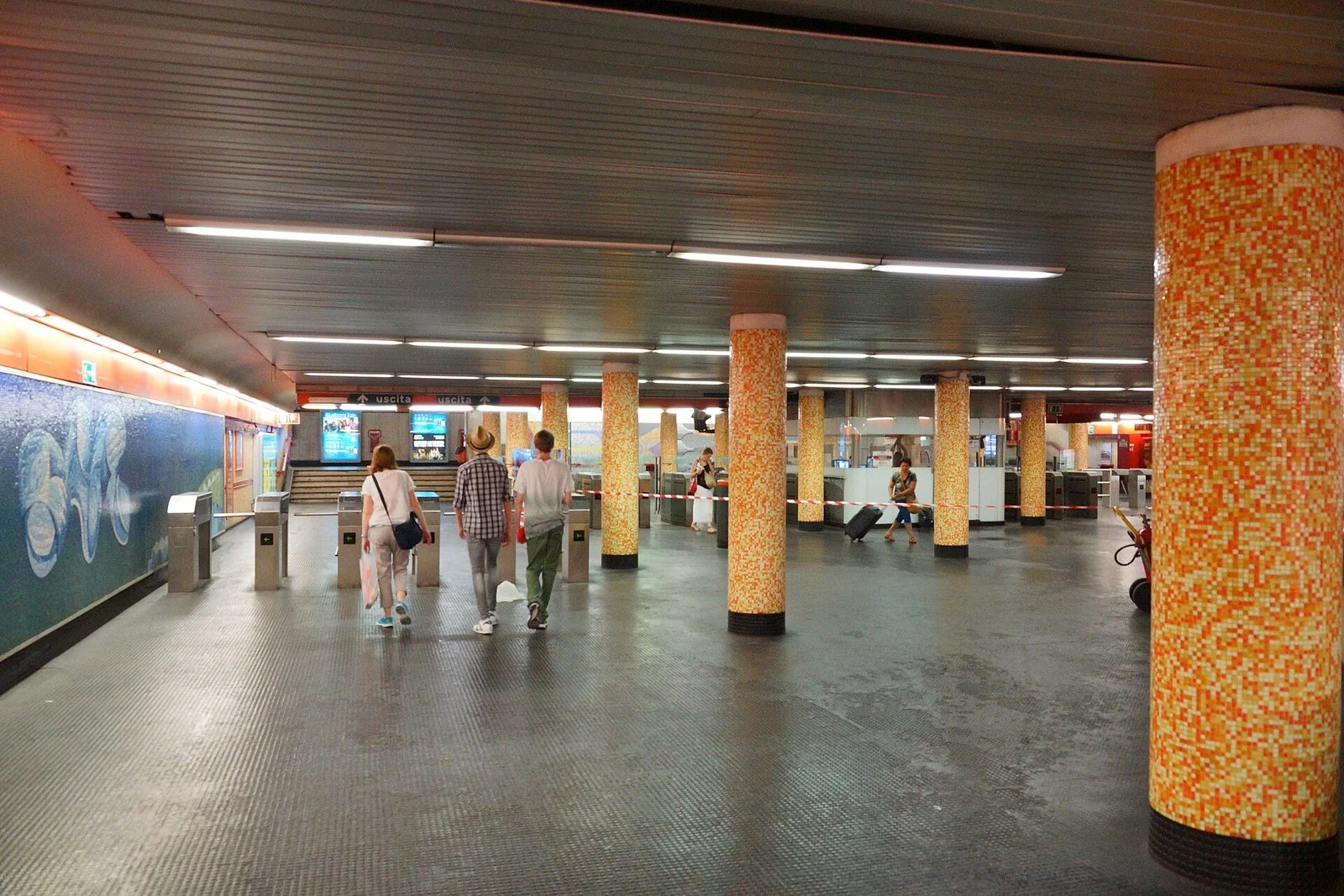
Getting around Rome is a problem of expectations before it is a problem of vehicles. Whoever arrives from a capital with a dense metro network quickly discovers that Rome's has three lines for around 60 kilometers, that in the Historic Center it passes only at the edges and that the Pantheon, Piazza Navona, Campo de’ Fiori and the Trevi Fountain have no stop nearby and won't for years. The Roman system works, but in its own way: the metro serves the long axes toward the periphery, buses cover everything else while going slowly, trams are six lines in perpetual construction, regional railways lead to the sea and toward the north, and the Historic Center is crossed on foot because it is the only sensible way. The lines that follow explain how this system is made, how much it costs, which tickets pay off, where they are bought and how they are validated, which apps work, how to take a taxi, what happens at night and on strike days, and how to get around with a wheelchair or a stroller. The fares indicated are those in force since July 1, 2025 published by Atac: they change by resolution and should be rechecked on the official site before leaving.
The golden rule: you do central Rome on foot
The Historic Center of Rome covers a few square kilometers and almost all trips between its monuments are solved in 20 or 30 minutes of walking. It is the fact that matters more than any timetable: between the Colosseum and Piazza Venezia you walk along Via dei Fori Imperiali in under a quarter of an hour, from Piazza Venezia to the Pantheon in 10 minutes, from the Pantheon to Piazza Navona in five, from Piazza Navona to Castel Sant'Angelo in 10. Whoever looks for a vehicle for these distances loses more time waiting than walking.
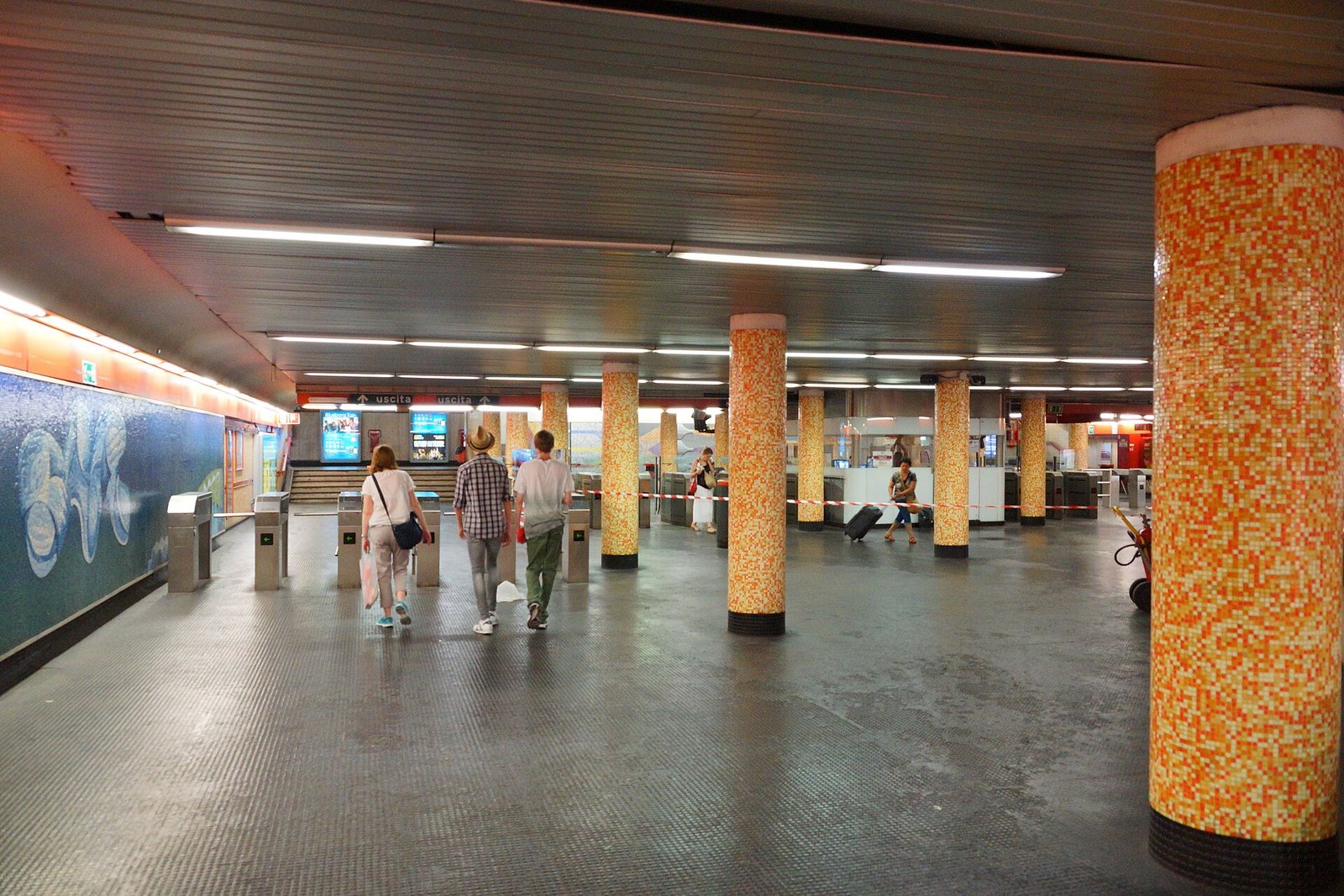
The real distances between the places everyone wants to see
A few concrete distances: from Termini station to the Colosseum it is about 20 minutes downhill along Via Cavour and the Monti district. From the Trevi Fountain to Piazza di Spagna just under 10 minutes. From Piazza di Spagna to Piazza del Popolo a quarter of an hour along Via del Babuino. From the Vatican to Piazza Navona 20 minutes crossing the bridge. The only stretch where a vehicle really pays off, inside the historic perimeter, connects the Vatican to Trastevere and the Janiculum, where the climb makes itself felt.
Sampietrini, slopes and shoes
The paving of the center is largely sampietrini, the leucitite cubes that make walking pleasant to the eye and tiring to the feet: whoever walks eight hours in stiff shoes notices on the second day. Rome moreover is not flat: the climbs toward the Aventine Hill, toward the Janiculum, toward the Quirinal and toward Villa Borghese are short but steep. We recommend shoes with a cushioned sole and a water bottle: the nasoni, the cast-iron drinking fountains scattered around the city, deliver free drinking water.
When it still pays to take a vehicle
A vehicle is needed when you leave the central quadrilateral: to reach Ostia Antica, the Appia Antica Park, EUR, the Basilica of St. Paul Outside the Walls, Cinecittà, the Aqueducts Park or the MAXXI. These are destinations where the metro or the tram save an hour. Inside the center the calculation reverses almost always in favor of the legs.
The metro: three lines and what they really serve
The Rome metro has three lines, A, B with the B1 branch, and C, for about 60 kilometers in total: it is one of the shortest networks among those of the great European capitals, and the reason is the archaeological stratification, which turns every building site into a scientific excavation lasting years. The practical result is that it serves the radial axes toward the periphery well and the monumental center poorly.
Line A, the tourists' line
Line A connects Battistini to Anagnina with 27 stations over a little more than 18 kilometers and has been in service since 1980. It is the one that interests those visiting the city most, because it touches Ottaviano (exit for the Vatican Museums and for St. Peter's Basilica), Lepanto, Flaminio (Piazza del Popolo and Villa Borghese), Spagna (Piazza di Spagna and Trinità dei Monti), Barberini (Palazzo Barberini and, on foot, the Trevi Fountain), Repubblica, Termini, Vittorio Emanuele, San Giovanni (St. John Lateran) and, farther on, Cinecittà. In rush hours the trains are full and the central stations saturate quickly.
Line B and the B1 branch
Line B is the oldest: the first stretch entered service in 1955, ahead of A, using tunnels dug in the 1930s to connect Termini to the Universal Exposition district. It runs from Rebibbia to Laurentina and serves Termini, Cavour, Colosseo, Circo Massimo, Piramide, Basilica San Paolo and the EUR stations. It is the line of archaeology and of the south: it leads to the Roman Forum, the Circus Maximus, the Pyramid of Cestius, the ex Mattatoio of Testaccio and the Palazzo della Civiltà Italiana at EUR. The B1 branch, opened in 2012, splits off at Bologna and continues to Jonio. Watch out for the fork: at Bologna the trains divide and the destination must be read on the train's display, not only on the platform.
Line C and the new Colosseo station
Line C reached the Colosseum on December 16, 2025, with the inauguration of the Colosseo/Fori Imperiali and Porta Metronia stations. Since then the line, which starts from Monte Compatri/Pantano on the far eastern periphery, has a terminus inside the central archaeological area and a direct interchange with line B. It is the newest and the most automated, with driverless trains, and the central stations are also exhibition spaces: at Colosseo station are displayed finds and structures of the Republican era that emerged during the excavation. The extension toward Piazza Venezia is a long-term building site, with estimated times of 10 or 11 years: anyone planning a trip in the coming years should not count on it.
Where the metro doesn't reach
It is the point that surprises almost everyone: there is no metro stop at the Pantheon, at Piazza Navona, at Campo de’ Fiori, at the Ghetto, at Trastevere, at the Tiber Island, at Via Giulia. The Trevi Fountain is reached by getting off at Barberini and walking seven or eight minutes. Trastevere by tram 8 from Piazza Venezia or by regional train to Trastevere station. The Tiber Island on foot from the Ghetto. Whoever plans by stops gets stuck: it is better to think in terms of neighborhoods and walks between one hub and another.
Hours, last trains and days when it runs later
All three lines open at 5:30 and close with the last departure from the termini at 23:30 from Sunday to Thursday. On Friday and Saturday the last departure slides to 1:30. On the B1 the hours are slightly staggered: first departure at 5:33 and last around 23:27 on weekdays. The departure time from the terminus does not coincide with the passing time at the station where you are: whoever returns late should calculate the travel time. Updated hours are published by Roma Servizi per la Mobilità and should be verified, because they change during construction work.
The interchange hubs
Interchanges are made at Termini between A and B, at San Giovanni between A and C, at Colosseo between B and C since December 2025 and at Bologna between B and B1. Termini is also the main railway hub and the terminus of dozens of surface lines: the greatest number of passengers and the attention of pickpockets are concentrated there. We recommend keeping backpacks and bags in front, not behind, in crowds and on escalators.
Buses: the network that covers everything and goes slowly
The Rome bus network counts about 360 lines and more than 2,000 vehicles and is the real backbone of city transport: where the metro doesn't arrive, that is almost everywhere, a bus does. The service is run by Atac and, in the periphery, by external contracted operators, but the ticket is the same.
How to read the line numbers
The numbering follows a logic worth knowing. Ordinary urban lines have a simple number. Express lines, marked with the letter X in the official lists, have more widely spaced stops and are the 20, 30, 40, 51, 60, 80, 90, 91, 120F, 150F, 180F and 190F. The F at the end indicates a fast route on main corridors. Night lines carry the letter n in front of the number and the owl symbol on the stop signs, cemetery lines the letter C, while the 062 is seasonal and serves the coast in summer.
Why Roman buses are slow
It is not a perception, it is a structural consequence: a tight-knit Historic Center, with streets born for carts and not for 12- or 18-meter vehicles, one of the highest private motorization rates in Europe, bus lanes that cover only part of the network, widespread construction sites. Add the length of the lines, many of which run 15 or 20 kilometers from the peripheral terminus to the center, accumulating delay at every traffic light. The result is an unpredictable travel time and irregular intervals, with two vehicles of the same line arriving together after 20 minutes of nothing. The city has planned the extension of the bus lanes, but it is a process under way.
The lines a visitor really uses
A few lines solve most problems. The 64 connects Termini to St. Peter's station via Piazza Venezia and Corso Vittorio Emanuele II: it is the most direct toward the Vatican, the most crowded and the most worked by pickpockets. The 40 covers the same corridor with fewer stops. The 8, which is a tram, connects Piazza Venezia to Trastevere and Casaletto. The 19 goes from San Pietro to Porta Maggiore passing through Villa Borghese and the Coppedè district. Before fixing a number in your head it is still best to check the updated route on the official app, because detours for construction and demonstrations last even for months.
Getting on, getting off and behaving on board
On Roman buses you board by the front and rear doors and exit by the central one, but in rush hours you enter wherever you can. The ticket is not sold on board: it must be bought beforehand and validated as soon as you get on. It is best to press the request button and move toward the exit in time, because with the vehicle full reaching the door takes a good minute.
Trams: six lines and many construction sites
Rome has six tram lines in operation, the 2, 3, 5, 8, 14 and 19, on about 36 kilometers of track that support a little over 50 kilometers of routes. It is a residual network compared with that of the 1920s, when the tram was the main vehicle of the city, and today it is crossed by a long season of track renewal works.
The lines and what they connect
Tram 2 connects Piazzale Flaminio to Piazza Mancini along Via Flaminia: it is the vehicle for the Auditorium Parco della Musica, for the MAXXI and for the Ponte della Musica. The 3 joins Valle Giulia to Trastevere station diagonally, passing in front of the Colosseum. The 5 and the 14 leave Termini toward the east. The 8 connects Piazza Venezia to Casaletto via Santa Maria in Trastevere and Viale Trastevere and is the most useful tram for those visiting the city. The 19 goes from Risorgimento, near St. Peter's, to Gerani via Villa Borghese and Porta Maggiore.
The construction sites under way and how to read them
The tram network is largely affected by works and the changes vary from month to month. Active at the publication date are the works at the Parco del Celio, which on weekdays end the tram service of lines 3 and 8 in the afternoon with continuation by bus, while on weekends the tram is restored, and the works on Via Giacomo Bresadola, which replace with a dedicated bus the stretch of lines 5 and 19 between Piazza dei Gerani and Largo Preneste, and the building site of the tramway on Viale Palmiro Togliatti, which limits tram 14 to the Termini-Largo Preneste stretch. These arrangements are provisional by definition: before counting on a tram it is best to open the service status page of Roma Servizi per la Mobilità or the Atac app and check if that day the tram is a tram or a replacement bus.
Why the tram is still a good vehicle
When it runs, the tram has two advantages over the bus: it travels on its own right-of-way for a good part of the route and it has more regular frequencies. The fleet is 70 percent low-floor, with level boarding. To cross Trastevere, reach the Testaccio market from Porta Portese or get to the Auditorium from Flaminio, the tram is almost always the best choice.
Urban railways: Metromare, Roma-Viterbo, Termini-Centocelle
Besides the metro, Rome has three urban and suburban railways, historically called ferrovie concesse, which on the stretches within the Comune operate under the same urban fare system. Visitors use them little, but they solve trips that no other vehicle covers, starting with the one toward the sea.
Metromare, the former Roma-Lido
The railway connecting Rome to Ostia has been called Metromare since January 1, 2022 and is no longer run by Atac: since July 1, 2022 the infrastructure belongs to Astral and the operation to Cotral. It runs for about 28 kilometers from Porta San Paolo, next to the Piramide station of metro B, to Cristoforo Colombo, at Lido di Castel Fusano, with 13 stations. It serves Ostia Antica, the village and the beaches of the coast, and the route is within the municipal territory, so the urban ticket is enough. The line is being renewed: at the publication date the night works mean, Monday to Friday, the last run from both termini at 22:30 with replacement buses. Before an evening return from the sea it is best to check the timetable in force on the Cotral site.
The Roma-Civita Castellana-Viterbo
The second Cotral railway leaves from Flaminio station, connected to metro A. The urban stretch reaches Montebello touching La Giustiniana, Prima Porta, Saxa Rubra and Centro RAI, the extra-urban one continues toward Civita Castellana and Viterbo. On the urban stretch the tickets of the Roman integrated system are valid. Beyond Montebello a regional ticket is needed. Here too renewal works are under way with replacement buses in some time bands: the hours in force are published by Cotral.
The Termini-Centocelle, now suspended
The Termini-Centocelle railway is the last surviving stretch of the Roma-Fiuggi-Alatri-Frosinone, the narrow-gauge line that Romans for decades called the little train of the Casilina. Service is suspended: on March 4, 2026 two trains came into contact on the single-track stretch between Ponte Casilino and Piazzale Labicano, with no injuries, and since then traffic has been stopped awaiting the outcome of the technical commission. The connection is guaranteed by bus line 105. Atac has announced the reconstruction of the line as a modern tramway in the Termini-Tor Vergata project: for now, whoever moves along that corridor should consider the railway unavailable and check with Roma Servizi per la Mobilità.
Trenitalia's FL lines inside the city
To these are added the regional lines with the FL code, run by Trenitalia, which inside the municipal territory work as a suburban network: the FL1 connects Fiumicino to Fara Sabina passing through Trastevere, Ostiense, Tuscolana, Tiburtina and Nomentana. Others reach the Castelli Romani, Tivoli, the northern coast and Bracciano. On the urban stretch the ordinary integrated ticket is valid for one ride. Outside the municipal boundary regional tickets are needed.
The integrated fare system: which ticket pays off
Rome and Lazio have an integrated fare system called Metrebus: with a single ticket you use buses, trams, trolleybuses, the metro and regional railways within the validity area. The fares in force are those applied since July 1, 2025, when the tourist tickets were updated while the ordinary ticket remained unchanged. Tickets sold before remained usable until October 31, 2025. Since fares change by resolution, the reference to consult before the trip remains the tickets and passes section of the Atac site.
The BIT, the basic ticket
The BIT, short for integrated timed ticket, costs 1.50 euros and is valid for 100 minutes from the first validation: unlimited trips on buses, trams and trolleybuses but only one entry to the metro, with changes at interchange hubs not counting as a new entry because they happen inside the turnstiled area. It is also valid for one ride on regional railways on urban stretches, Metromare included, and on lines 520 and 720 toward Ciampino, while it does not cover special services and airport shuttles. It is the right ticket for those making one or two trips a day.
Tourist tickets: Rome 24, 48 and 72 hours
Timed tickets cost 8.50 euros for 24 hours, 15 euros for 48 and 22 euros for 72, and validity runs from the first validation, not from midnight. These are the tickets Atac indicates as the most convenient for those visiting the city. The calculation is simple: the daily ticket pays off from the sixth trip onward in 24 hours. Whoever walks a lot and takes one vehicle in the morning and one in the evening spends less with single tickets.
CIS weekly and monthly pass
The CIS, integrated weekly card, costs 29 euros and is valid for seven days from the first validation: it is the choice for a long stay. The personal monthly pass costs 35 euros and is valid for the calendar month, not for a rolling 30 days: bought on the 20th it expires anyway on the last day of that month. The urban annual pass costs 250 euros. Monthly and annual are named and require the Metrebus card.
BIRG, BTR and CIRS for the rest of Lazio
Outside the municipal territory Metrebus Lazio comes into play, divided into concentric zones. The BIRG is the regional integrated daily ticket, valid until midnight on the day of validation, and costs from 4 to 16.50 euros depending on the zones. The BTR is the tourist equivalent over three days, from 10.80 to 46.50 euros. The CIRS is the regional integrated weekly card, from 16.50 to 70 euros. With these tickets you use regional trains, Cotral buses and, inside Rome, the urban network. They are the right tickets for a day at Tivoli with Hadrian's Villa and Villa d’Este, for Frascati and the Castelli, for Cerveteri and the Banditaccia necropolis, for Palestrina or Anzio. The number of zones depends on the destination and is calculated on the Cotral site or at the ticket office.
The Roma Pass and when it pays off
The Roma Pass is the official tourist card of Roma Capitale: the 48-hour version costs 38 euros and includes one free entry to a participating museum or site, the 72-hour one costs 62.90 euros and includes two entries. Both include unlimited use of urban transport for the duration of the card and discounts on other museums. It pays off for those who plan at least two paid museums of the circuit and use transport a lot, not for those who focus on churches, squares and free sites, for which our page on free Rome is more useful than a card, as is the one on free museums in Rome. Conditions and participating museums should be checked on the Musei in Comune portal.
Tap and Go: paying by card without buying anything
Tap and Go lets you pay by holding a contactless card or smartphone to the reader, without buying anything in advance. It works on surface lines, on metro lines A, B, B1 and C, on regional railways and on Cotral services. Each tap charges 1.50 euros and opens a 100-minute validity: changes within that window do not generate a new charge. The most useful mechanism is the daily cap: once you exceed five single rides in 24 hours, the sixth converts the charge into the 24-hour ticket at 8.50 euros and the rest of the day costs nothing more. Two warnings: always use the same card for the whole trip and do not share it among several passengers.
Where to buy tickets and how to validate them
In Rome the ticket is not bought on board buses: it must be purchased before boarding, and it is the first cause of fines for those arriving from cities where on-board sale exists. The channels are many and it is best to choose one in advance.
Physical channels
Tickets are bought at the ticket offices and machines of the metro and urban railway stations, at tobacconists, newsstands and bars that display the Atac sticker. The machines accept cash and cards but not all give change on large banknotes, and in peripheral stations they are sometimes out of service: we recommend a spare ticket or contactless payment.
Digital channels
The official Atac Roma app sells all urban tickets, stores them on the phone and validates them with a tap. Several authorized channels resell Metrebus tickets: among those listed by Atac are the apps of Trenitalia, MooneyGo, Wetaxi, Telepass, DropTicket, TicketAppy, Tabnet and Urbi, as well as purchase by SMS. A ticket bought in an app must still be activated before boarding: holding it unactivated is the same, for the inspector, as not having one.
How to validate
On buses and trams you validate by inserting the paper ticket into the validator, which prints date and time, or by holding a card or phone to the contactless reader and waiting for the green light. In the metro the ticket is passed through the turnstile. It must be done at the start of the trip and the ticket is kept until the end. Whoever travels without a valid ticket incurs a penalty: Atac indicates 54.90 euros if payment is made within five days and 104.90 euros from the sixth to the 60th day. Inspectors do not accept cash on board: you pay with a mobile POS or on the PagoMulte portal with PagoPA.
The apps that work and those that are of little use
In Rome the decisive variable is not the route but the waiting time at the stop. We recommend two apps: an official one for service data and one for itinerary calculation.
The official sources
The Atac Roma app is the official channel for purchase, validation and waiting times. The Roma Servizi per la Mobilità site publishes real-time service status, detours, construction notices and the strike calendar: it is the source to check the evening before a busy day. Every Roman stop has a numeric code printed on the stop sign: typing it into the app is the fastest way to know how long until the next one.
Third-party apps
Itinerary-calculation apps work well in Rome because Atac publishes service data in open format. They are reliable in the combination of lines, less so in the times, which remain estimates: use them to choose the line and verify the real wait on the stop sign or on the official app.
What not to expect from any app
No app predicts in advance a traffic block, a demonstration in the center, a breakdown in a tunnel or a detour decided that same morning. Rome hosts marches with high frequency, often on Via dei Fori Imperiali, in Piazza Venezia and between San Giovanni and Termini, and every march diverts dozens of lines. When the app says seven minutes and nobody arrives for 20, the problem is upstream: if the distance allows, it is best to start walking.
Taxis: fixed fares, single number and ranks
Roman taxis are white, carry the TAXI sign on the roof and the symbol of the Comune with the license number on the front doors, plus a second internal number on the rear left door. A vehicle lacking these elements is not a taxi: in the arrivals areas of the airports and at Termini unlicensed operators exist and should be avoided on principle.
Fixed fares to and from the airports
The ride between Fiumicino airport and any destination inside the Aurelian Walls has a fixed fare of 55 euros, valid in both directions, including all surcharges and referring to the vehicle and not the passenger: luggage and number of occupants do not change the amount. From Ciampino to the center within the Aurelian Walls the fixed fare is 40 euros. Aeroporti di Roma publishes other predetermined fares from Fiumicino: 55 euros for Ciampino, 60 for Tiburtina station, 50 for Ostiense, 130 for the port of Civitavecchia. For destinations without a predetermined fare within the Grande Raccordo Anulare a maximum of 80 euros is indicated. The amounts should be checked against the table displayed on board and the Comune site.
Metered fares in the city
For urban rides the meter applies. Roma Servizi per la Mobilità indicates a starting fare of 3.50 euros on weekdays between 06:00 and 22:00, 5 euros on holidays in the same band and 7.50 euros between 22:00 and 06:00, with a per-kilometer charge between 1.33 and 1.73 euros depending on speed and duration. Discounts of 10 percent are provided for those who have turned 70 and for people with disabilities and 15 percent for women alone at night. The full fares are displayed on board.
How to take a taxi in Rome
In Rome you don't hail a taxi by raising your hand in the street, except by chance: you take it at the ranks, recognizable by the orange sign with the word TAXI, or you call. The single number is 060609, which routes the call to the nearest rank or vehicle, and it is also available in an app, alongside those of the cooperatives and the intermediation services. The main ranks in the center are at Termini, Piazza Venezia, Largo Argentina, Piazza del Popolo, Piazza di Spagna, Piazza San Silvestro, Trastevere and Piazza del Risorgimento. Chauffeured hire services are another thing: they are booked in advance, apply agreed fares and do not wait at taxi ranks.
Scooters, bicycles and shared vehicles
Rome has a wide offer of shared mobility: e-scooters, pedal-assist bicycles, motor scooters and cars. Roma Servizi per la Mobilità indicates three operators for e-scooters, Bird, Dott and Lime, and two for electric bicycles, Dott and Lime, while car sharing divides between a fixed-station service and a free-floating one. Operators change with the award procedures of the Comune.
The rules in force
E-scooters have a limit of 20 kilometers per hour, electric bicycles 25, and in pedestrian areas speed is automatically reduced to 6. The minimum age is 18. In August 2026 the Capitoline city executive approved new guidelines: helmet mandatory for everyone, identification plate and civil liability insurance in application of national legislation, parking only in dedicated bays and numerical caps in central zones, with a maximum of 30 vehicles in the Tridente, 300 in the Historic Center and 70 in Trastevere, against guaranteed minimum densities in the periphery. Fare discounts are provided for those with an annual Metrebus pass. Since these are recent measures, the concrete conditions depend on the resulting tender and should be verified with the operators.
Cycling in Rome: an honest assessment
Rome is not a bike city like the capitals of northern Europe: discontinuous network, heavy traffic, sampietrini slippery in the rain, real slopes. There are however routes where the bicycle is the best choice: the path along the Tiber, away from traffic, the Appia Antica Park, where the consular road is closed to private traffic on Sunday and where you reach the Villa of the Quintilii, the internal avenues of Villa Doria Pamphilj, of Villa Ada and of Villa Borghese, and the coast of Ostia. In the Historic Center it is of little use: short distances and scarce parking spots.
Night service
Rome's night network counts about 30 bus lines, marked by the letter n in front of the number and recognizable on the stop signs by the owl symbol, active roughly between 23:30 and 5:30. It is a historic network, born in the 1920s with some tram lines and reformed several times.
The lines that replace the metro
The most useful lines follow the route of the metros when these are closed: the nMA follows line A from Anagnina to Battistini, the nMB line B from Rebibbia to Laurentina, the nMB1 connects Termini to Viale Jonio and back, the nMC follows line C from Piazza Venezia toward Pantano and Montecompatri. You retrace the same itinerary on the surface, with longer times. The main night termini are Termini and Piazza Venezia.
The Roma Notte Plan
In July 2026 the Comune and Atac made operational a plan to strengthen the night service on Thursday, Friday and Saturday nights: doubling of runs on Saturday, with declared frequencies of 8-10 minutes on the four metro night lines and 72 additional runs, and Atac assistants on board nMA, nMB, nMB1 and nMC and in 10 stations, among them Termini, Battistini, Anagnina, Flaminio, Colosseo, Piramide, Bologna, Tiburtina, San Giovanni and Vittorio Emanuele. From the night between June 3 and 4, 2026, 15 daytime lines, among them the 38, 44, 61, 86, 170, 246, 301, 314, 404, 444, 451, 664, 881, 916 and 980, have been extended until 2:00 to serve neighborhoods that had no night connections.
Metro on Friday and Saturday
On the nights between Friday and Saturday and between Saturday and Sunday the three metro lines extend service with the last departure from the termini at 1:30 instead of 23:30. It is the fact that changes the logistics of an evening: whoever goes out on Friday or Saturday can count on the metro until late at night, whoever goes out midweek must plan the return on the night lines or by taxi. Our page on Rome at night cross-references vehicle hours with the places that stay open, and those traveling with children will find times calculated at a slower pace on the page on Rome with kids.
Accessibility: wheelchairs, strollers, luggage
Getting around Rome with a wheelchair or a stroller requires planning, because the level of accessibility is uneven between vehicles and between stations. Atac declares that 100 percent of the bus fleet has a fold-down ramp and a space reserved for wheelchairs and that 70 percent of trams are low-floor with level boarding.
The metro, station by station
The metro is more complex. Atac notes that on line A four stations, Spagna, Barberini, Repubblica and Vittorio Emanuele, do not have elevators or escalators usable by people with reduced mobility: they are among the most central and busiest. In other stations access requires the presence of company staff. On lines A and B a stairlift booking service is available. Lines B1 and C, being more recent, have better standards. Since elevators and escalators may be out of service for maintenance, the data of the day counts: Atac's accessible services page and the company number are the references to use before leaving.
The stations have tactile paths and maps for people with visual disabilities, the elevators have braille keypads and voice synthesis, and some ticket offices have a sign language interpreting service. During strikes, however, elevators, escalators and stairlifts do not work.
Strollers and luggage
With a stroller the problem is not the vehicle but the pavement: sampietrini are tiring for small wheels, and we recommend large wheels for those planning long walks among Monti, the Ghetto and Trastevere. On buses ramp and reserved space exist but in rush hours they are occupied. With large suitcases, between Termini and a place in the center a taxi or a walk is better than a crowded metro.
Strikes: how they work and how to get informed
Public transport strikes in Rome are frequent and should be considered an ordinary variable, not an exceptional event. The law, however, imposes time bands in which service is guaranteed anyway, and this makes the effects manageable for those who get informed in advance.
The guarantee bands
On strike days service is normally guaranteed from the start of runs until 8:29 and then from 17:00 to 19:59, while outside these bands metros, buses and trams may stop. The exact bands are indicated in the official communication of Atac for that individual strike, because they vary according to the type of abstention and the union that calls it, and the night services of the preceding or following night may be canceled. Some lines run by external contracted operators sometimes remain regular: the list is published case by case.
Where to look before leaving
Scheduled strikes are published by the Ministry of Infrastructure and Transport in the table of the labor conflicts observatory, filterable by sector and geographic area. For Roman detail, the Roma Servizi per la Mobilità site and the notices section of Atac publish hours, guaranteed bands and lines involved in the preceding days. We recommend checking both sources the evening before and planning, on those days, a walking itinerary for short trips in the center.
Arriving from the airports
Rome has two airports, Fiumicino to the west and Ciampino to the southeast, reached in different ways: the choice depends on arrival time, luggage and the number of people.
Fiumicino
Fiumicino is connected to the center by rail: the direct service to Termini takes a little over half an hour, while the regional line FL1 reaches Trastevere, Ostiense, Tuscolana, Tiburtina and the stations to the north without passing through Termini, and is the best choice for those staying in those quadrants. There are also buses to and from Termini run by several companies. By taxi the fixed fare within the Aurelian Walls is 55 euros. Train prices and frequencies are published by Trenitalia and should be verified, because they change with seasonal timetables.
Ciampino
Ciampino has no railway station inside the terminal: you use the bus to Termini or the shuttle to Ciampino città station and from there the regional train. Atac lines 520 and 720 connect the airport to the urban network and are included in the validity of the ordinary integrated ticket. By taxi the fixed fare to the center within the Aurelian Walls is 40 euros. For late-night flights, when public connections thin out, there remain the taxi or a booked transfer.
Leaving Rome by public transport
Metrebus Lazio lets you reach a good part of the region without a car, combining regional trains and Cotral buses: it is the reason BIRG and BTR deserve to be known even by those staying a few days. Whoever wants to build two full days in the city can instead start from our page on a weekend in Rome.
Destinations reachable by train
By regional train you reach Tivoli, with Villa d’Este in town and Hadrian's Villa below, then by city bus, Frascati and the other towns of the Castelli Romani, Anzio and Nettuno on the southern coast, Bracciano with its castle and the lake, Cerveteri and Tarquinia on the northern Tyrrhenian line, and Viterbo both from the Cotral line and from the regional railway.
Destinations reachable by bus
Cotral buses generally leave from termini located at metro stations, which makes interchange simple: from Anagnina, terminus of line A, depart the connections toward the Castelli Romani Park, among them Castel Gandolfo, Ariccia and Nemi, and toward Palestrina and Subiaco. From Ponte Mammolo, on line B, depart the runs toward the Aniene valley and Tivoli. From Cornelia and Saxa Rubra depart those toward the northern quadrant. Cotral hours thin out on holidays and in summer: they should be verified on the company site before leaving, especially for the return.
The sea with the urban ticket
The most convenient case remains the Roman coast: Ostia and the beaches of Castel Fusano are within the municipal territory, so they are reached with the normal urban ticket using metro B to Piramide and then the Metromare. With the same daily ticket you visit Ostia Antica in the morning and go down to the beach in the afternoon.
Frequently asked questions about getting around Rome
How much is a bus ticket in Rome?
The ordinary ticket for Rome's public transport, called BIT, costs 1.50 euros and is valid for 100 minutes from validation. Within the 100 minutes it allows unlimited trips on buses, trams and trolleybuses and one entry to the metro, as well as one ride on regional railways on urban stretches. Fares are set by resolution and should be verified on the Atac site before the trip.
Which ticket pays off for someone visiting Rome for three days?
For three days in Rome the most convenient ticket is normally the 72-hour ticket, which costs 22 euros and is valid from the first validation, or contactless payment with Tap and Go, which charges 1.50 euros per ride and automatically converts the charge into the 8.50-euro daily ticket from the sixth ride on. Whoever walks a lot and uses two vehicles a day spends less with single tickets.
How many metro lines are there in Rome and where do they go?
The Rome metro has three lines, A, B with the B1 branch, and C, for about 60 kilometers in total. The A goes from Battistini to Anagnina and serves the Vatican, Piazza di Spagna and San Giovanni. The B goes from Rebibbia to Laurentina and serves the Colosseum, Circus Maximus, Piramide and EUR. The C arrives from the eastern periphery as far as Colosseo since December 2025. The monumental Historic Center remains largely outside the network.
What time does the Rome metro close?
The Rome metro closes with the last departure from the termini at 23:30 from Sunday to Thursday and at 1:30 on Friday and Saturday, while the first departure is at 5:30 every day. The time refers to departure from the terminus, not to passing at the individual station. After closing, the night bus lines marked with the letter n go into service.
Is the Roma-Lido still called that?
The Roma-Lido railway has been called Metromare since January 1, 2022 and passed from Atac to a shared management between Astral, which has the infrastructure, and Cotral, which runs the operation, from July 1, 2022. It connects Porta San Paolo, next to the Piramide station of metro B, to Cristoforo Colombo with 13 stations over about 28 kilometers, and lies entirely within the municipal territory, so the urban ticket is valid.
How much is a taxi from Fiumicino to the center of Rome?
The taxi between Fiumicino airport and any destination inside the Aurelian Walls has a fixed fare of 55 euros, valid in both directions, including all surcharges and referring to the vehicle and not the individual passenger. From Ciampino to the center within the Aurelian Walls the fixed fare is 40 euros. Fares are displayed on board and published by Aeroporti di Roma and the Comune.
Is the Rome metro wheelchair accessible?
The Rome metro is only partly accessible: Atac notes that four stations of line A, Spagna, Barberini, Repubblica and Vittorio Emanuele, have no elevators or escalators usable by people with reduced mobility, and that in several other stations access requires the presence of staff. On lines A and B there is a stairlift booking service. All buses have the ramp, and 70 percent of the trams.
What happens to Rome's transport during a strike?
During a transport strike in Rome service is normally guaranteed from the start of runs until 8:29 and then from 17:00 to 19:59, while outside these bands metros, buses and trams may stop and station elevators remain stopped. The exact bands and the excluded lines are indicated in the official notice of each individual strike, published by Atac and by Roma Servizi per la Mobilità.
Is it worth renting a car to visit Rome?
For visiting Rome a car is not worth it: the Historic Center is closed by limited traffic zones active in wide time bands, with the ZTL Centro operating on weekdays from 6:30 to 18:00 and the Tridente one until 19:00, plus the weekend night ZTLs, and parking in the center is scarce and expensive. A car makes sense only for excursions outside the region, picking it up on the day of departure.
Who wrote this page
This page is edited by the editorial team of Tour Leader Pro, the Roman project office that designs and coordinates visits, itineraries and cultural events in Rome and Lazio. Hours, fares and access conditions reported here are verified at the publication date against the official sources indicated in the text: it is best to recheck them before leaving, because they change often. If you find an outdated figure, let us know.
Anyone building a multi-day itinerary, alternating central stops reachable on foot with destinations served by the metro or regional railways, will find planning tools on Tour Leader Pro, which works every day on the fit between vehicle hours, opening hours and visit times.
For those looking beyond the Comune of Rome who want to understand how regional trains, intercity buses and integrated fares combine toward the Castelli, the coast, the Tuscia and southern Lazio, a broader picture of the region's destinations is on Italy Planner.