Anzio (RM)
In short. Anzio (RM) is on the Tyrrhenian Sea, about 50 kilometers as the crow flies from Rome and a little under 60 by road.
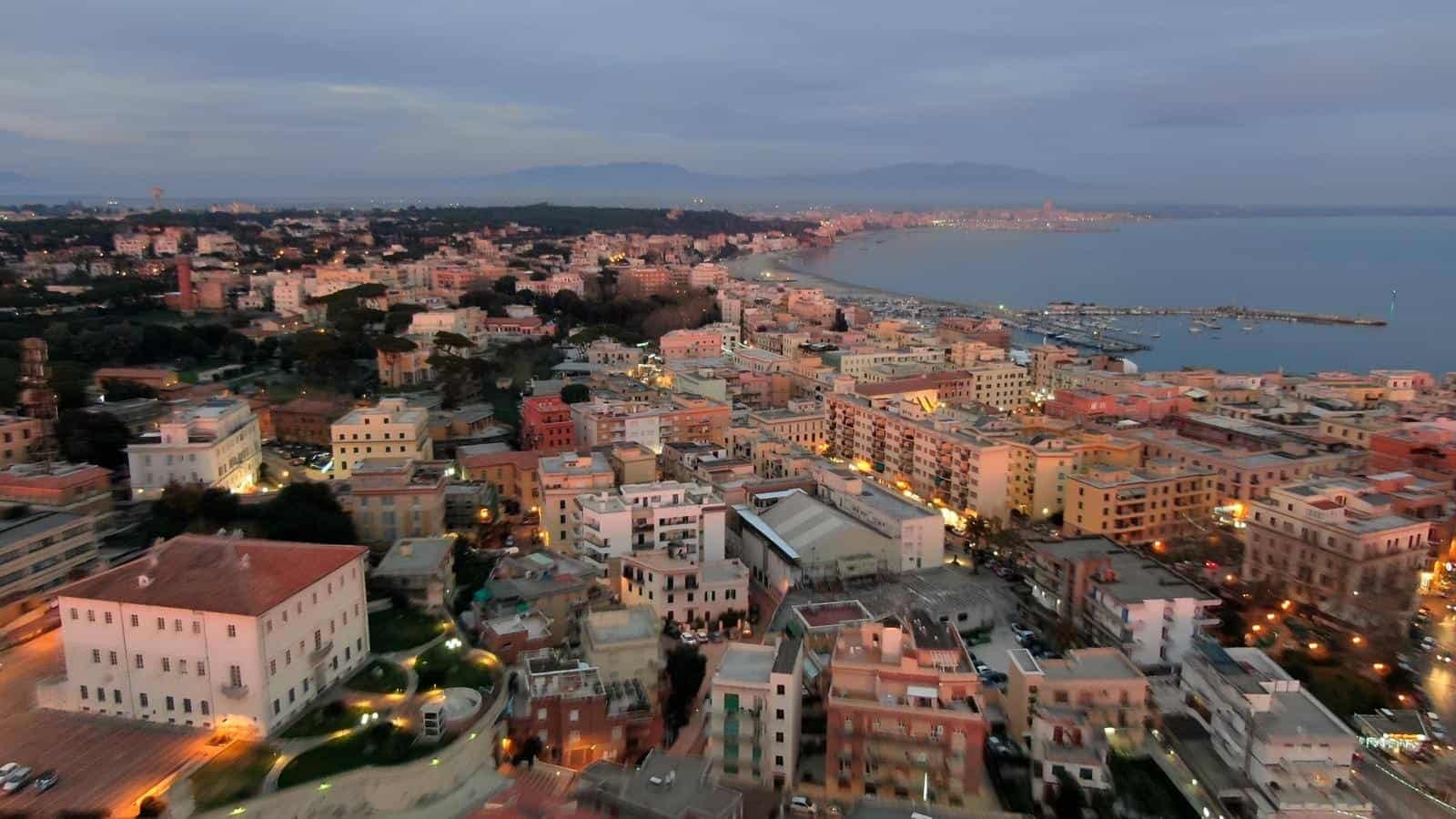
Anzio (RM) is on the Tyrrhenian Sea, about 50 kilometers as the crow flies from Rome and a little under 60 by road. The smartest way to get there is still the train: the regional line FL8 leaves from Roma Termini and in about an hour drops you at Anzio station, 10 minutes on foot from the port. By car, take Via Pontina to the Aprilia junction and then state road 207 Nettunense, or state road 601 Ostia-Anzio along the coast. The town hall is at Piazza Cesare Battisti 25, switchboard 06984991. The Museo Civico Archeologico and the Museo dello Sbarco are both inside Villa Adele, Via di Villa Adele 2, phone 06 98499427. Admission is free at both. The archaeology museum is open Monday to Sunday with a split schedule: 10:30-13:00 in the morning and 15:00-17:00 in the afternoon from November to March, 17:00-19:00 from April to October, with the afternoon closed on Mondays and Wednesdays. For the Museo dello Sbarco, call 349 4556241 before setting out, because opening depends on the volunteers of the association that runs it. The archaeological area of the Villa Imperiale on the promontory is not currently open to visitors. The closure is ordered by ordinance and should be checked on the civic museum's website before you set out. For the islands, hydrofoils leave from the Porto Innocenziano. The Vetor ticket office is at Via del Porto Innocenziano 40, phone 06 9845083.
If the trip is part of a larger tour along the Lazio coast, the page on the Roman coastline covers the rest of the seafront.

Anzio (RM) in Numbers: What's Really Here
Anzio is a municipality in the Metropolitan City of Rome Capital, with a little under 60,000 residents and flat terrain that doesn't rise above 80 meters above sea level. It faces the Tyrrhenian with a promontory, Capo d'Anzio, the only real rise on a coastline that is otherwise low and sandy. 26 kilometers to the east is Latina, and right next to it to the east is Nettuno, which shared the same history with Anzio for centuries and, for five and a half years between 1939 and 1945, even the same name. The southern edge of the Agro Romano runs through here, marked by the Astura River.
The geography explains almost all the rest. The promontory is the reason the Volsci put their capital here, why the emperors built their summer residence here, why Innocent XII rebuilt the port and why in January 1944 the Allied command chose it as the beachhead. A piece of tufa jutting into the sea, on a flat coast 80 kilometers long, is worth more than any abstract strategic consideration.
The port today has about 60 fishing boats and handles over 800 tons of fish a year. It is the main fishing port in Lazio, and that is not a folksy detail. Anyone eating fish in Anzio is eating fish landed that morning 200 meters from the table, something that has become a commercial legend elsewhere on the Lazio coast. Our firm opinion: Anzio is the place where the ratio between what you pay and what they bring to the table is still honest, as long as you choose the trattorias by the port and not the places on the promenade.
How to Get to Anzio (RM) from Rome
The FL8 Train from Rome Termini to Anzio (RM)
The regional line FL8 connects Roma Termini to Nettuno via Anzio. It's the option I recommend without hesitation on summer weekends, when the Nettunense gets jammed and parking downtown turns into a treasure hunt. Trains run frequently throughout the day, and in the final stretch the line stops at the stations serving the coastal hamlets: Padiglione, Lido di Lavinio, Villa Claudia, Marechiaro, Anzio Colonia and finally Anzio. Anyone heading to the beach in one of the settlements north of the main town can get off earlier and skip the bus.
Anzio station is conveniently located. The port and Villa Adele are a few minutes' walk away, and the downhill walk to the sea is short. Exact times change with the railway timetable and should be checked on the operator's website the day before, especially for the last evening train back, which in the low season leaves earlier than you'd expect.
By Car and Bus to Anzio (RM)
From Rome, the two routes are Via Pontina with a connection to state road 207 Nettunense, and state road 601 Ostia-Anzio, which runs parallel to the coast. The first is faster, the second more beautiful and slower. In the warm months, the Sunday afternoon return traffic on the Nettunense is constant. If you're going for the day, it's best to head back before 17:00 or after 20:00.
Buses are run by Cotral, with city and intercity routes that also serve the outlying hamlets. For parking, in high season the areas near the port fill up by 10 in the morning, and paid parking along the seafront lasts until evening. A practical tip: leave your car in the upper area, above the station, and walk down. It's 10 minutes downhill and 20 minutes uphill on the way back, but it saves an hour of driving around in circles.
Getting to Anzio (RM) by sea
The Innocenziano port is a regular scheduled stop for the Pontine Islands. If you come from Ponza by hydrofoil, you land 200 meters from the center, and the combination of ferry and regional train is the most civilized way to get back to Rome from an island in August, without the Formia bottleneck.
The Imperial Villa of Anzio (RM): Nero's palace by the sea
On the promontory, between the lighthouse and the Arco Muto, the remains of the imperial residence line up along the coast. The city museum puts the coastal strip at over 700 meters in linear length, with the facade running straight into the sea without any beach in between. It is Anzio's most important monument and, paradoxically, the least visited by day-trippers, who stop at the port and the beaches.
The construction phases of the Imperial Villa of Anzio (RM)
The sequence is documented by excavations, and it is more complex than the tourist formula "Nero's villa" suggests. Between the 2nd and 1st centuries BC, the area was not a single residence. It held a series of private domus used for the otium of the Roman aristocracy, at least five separate houses overlooking the sea. Anzio was already the prestige seaside retreat of senators back then, and each of them wanted his own stretch of coast.
Between the late 1st century BC and the middle of the 1st century AD, the private domus were replaced by a long curved portico that unified the frontage. This is the archaeological sign of the property passing to the emperor. You don't need a notarial deed. The floor plan tells you so. When an entire residential district is demolished to make room for one continuous portico, it means a single owner bought everything.
The Neronian phase expanded and monumentalized the complex with pavilions, nymphaeums, fountains, and terraces sloping down toward the water. Domitian worked on the isolation and drainage systems, because a villa built on the water has a constant problem with rising damp and drainage. Hadrian, consistent with what he did at Villa Adriana, added embellishments in the style of his Tiburtine residence. Under the Severans, between the 2nd and 3rd centuries AD, the complex became a true palace, with double porticoes, a thermal complex developed over four floors, rooms with figured mosaics, and an atrium with eight columns.
The northern sector and the Arco Muto
The complex can be read in two nuclei. The northern sector has porticoes at sea level with an internal criptoportico, that is, a covered corridor that allowed people to walk in the cool when the upper terrace was baked by the sun. The southern sector, the Arco Muto sector, preserves the monumental thermal complex and the residential part. Recent archaeological surveys have expanded the known extent of the complex by about a third. This means what you see from the coast is only a portion, and the rest is under the sand, under houses, or under the sea.
Part of the structures is in fact submerged. Coastal erosion and the relative rise of sea level have pushed the lower floors underwater. On clear days, from the cliff, you can make out the lines of the walls beneath the surface of the water. The mosaics fared better. Some are in the Museo delle Terme in Rome, including one with Hercules and Achelous.
Visiting the Imperial Villa of Anzio (RM) today
The remains are part of the municipal archaeological park, administratively linked to the Museo Civico Archeologico at via di Villa Adele 2. Access to the Imperial Villa area is currently suspended by ordinance, however. Before planning a visit, check the opening status on the city museum's website or call 06 98499427. The view from outside, from the scenic road and the cliff, is still remarkable, and it's free.
The port of Anzio (RM): two emperors and a pope
The Neronian port
Nero had a large technically demanding artificial port built at Anzio, with moles reaching out into the sea to enclose a basin. It served the colony of veterans that the same emperor had founded in the city, and it gave a decent landing point to an imperial residence that would otherwise depend on Ostia. By the 6th century the port was already in decline. Procopius writes about it, describing it as out of use in 537 AD.
The Neronian structures did not disappear. The ancient arms are incorporated into modern works, and stretches of Roman masonry surface along the mole. Anyone walking the mole with a trained eye can recognize the Roman opus caementicium beneath the repairs. It is one of the few ancient ports in Italy where continuous use did not erase the original structure but built around it.
The Innocenziano port
The modern rebuilding has a date and a name. On February 2, 1691, Cardinal Antonio Pignatelli, caught by a storm, finds shelter in the port of Anzio. On July 12 of the same year he is elected pope with the name Innocent XII. In April 1697 he returns to Capo d'Anzio in person to decide the reconstruction of the port, and the works are completed in 1700. The same pope is credited with the large fountain in Piazza Pia, the chapel of Sant'Antonio on the Neronian Mole, and the route of Via Nettunense, that is, the road that still today takes Romans to the sea.
The link between the storm and the port is not a pious tale: it is the logic of papal government in the seventeenth century, which invested where a cardinal had seen a problem first-hand. The Innocentian port started an economic recovery that lasted through the whole eighteenth century, and the name has stayed ever since.
The Port of Anzio (RM) Today
Today the port serves three functions: fishing, tourism, and scheduled services to the islands. Since June 2025 management of the marina has passed directly to the Comune, with a portal dedicated to berth requests. Early in the morning, when the boats come back in, the pier is the most interesting spot in Anzio: you can watch the catch being unloaded and see why the restaurants here have a structural advantage over those on the Lazio hillsides.
The Grotte di Nerone and the Arco Muto in Anzio (RM)
The Grotte di Nerone is the popular name for the large vaulted spaces that open at the base of the cliff, below the Villa Imperiale. They are not natural caves: they are substructures, that is, the supporting and service structures that held up the villa's terraces, and which today, now that the upper part has collapsed, look like artificial caverns open to the water. The name is late and popular, as almost always happens when a Roman ruin is named by the locals.
The Arco Muto, by contrast, is the name for the southern sector of the complex, where the monumental baths stood. Here too the name comes from local tradition and refers to a large surviving arched structure. The two sites can be reached along the coast, and they are what remains visible without a ticket of the imperial residence: storm surges and erosion have changed their appearance over the course of the twentieth century, and the approach should be made with caution, never with a rough sea.

The Museo Civico Archeologico di Anzio (RM) at Villa Adele
The museum opened in 2002 inside Villa Adele, at via di Villa Adele 2. It holds the main material evidence of ancient Anzio, from its origins up to the period of its greatest splendor under imperial rule. Entry is free, the phone is 06 98499427, and the email is museoarcheologico@comune.anzio.roma.it.
Opening Hours of the Museo Civico Archeologico di Anzio (RM)
The schedule is seasonal and split. From November to March: morning 10:30-13:00, afternoon 15:00-17:00. From April to October: morning 10:30-13:00, afternoon 17:00-19:00. It is open Monday through Sunday, with the afternoon closed on Monday and Wednesday. In practice, this means that if you arrive at 14:00 in June, you'll find the door closed and have to wait until 17:00. It's the most common mistake of people visiting for the day, and a phone call avoids it.
What You See in the Archaeological Museum of Anzio (RM)
The route follows the stratigraphy of the territory: prehistory, with materials dating very far back, including an Acheulean amigdala attributed to about 150,000 years ago, protohistory, with materials from the Cavallo Morto necropolis, discovered in 1981, which yielded the oldest evidence of cremation in Lazio, from the Late Bronze Age, the Volscian and Latin phase, and finally the Roman material, with architectural decorations, marbles and finds recovered from the coastal villas.
The museum also serves as a reference center for the archaeological sites scattered around the area: the Roman Theater in the Santa Teresa area, the Vallo Volsco, the Tomba Mulakia, the Cisternone and the Villa Imperiale. If you want to understand Anzio, start here, not at the port: without the room of Volscian finds, you can't understand why this city was, for two centuries, Rome's number one military problem.
Villa Adele, Container and Monument
The building has its own history and is worth a visit even apart from the collections. It was built starting in 1594 by Cardinal Bartolomeo Cesi, the same man to whom Pope Clement VIII had given the task of looking after the building stock of the settlement after the purchase of the lordship. It was therefore called Villa Cesi. In 1648 it passed to Cardinal Camillo Pamphili. The current name came much later: in 1834 Francesco Borghese Aldobrandini renamed it Villa Adele in honor of his wife. The park around it is public and shady, which in July is not a minor detail.
The Masterpieces Taken from Anzio (RM) and Where They Are Today
This is the chapter that surprises groups the most. Anzio exported some of the most famous ancient sculptures in the world to Rome, Paris and the Vatican, and not one of them remains in town. The patrician and imperial villas along the coast were art galleries, and when digging began between the Quattrocento and Ottocento, the results ended up elsewhere.
The Girl of Anzio
The statue was found in 1878 in a niche of the double portico overlooking the sea at the imperial villa. It is 170 centimeters tall and uses two different marbles: Parian for the bare shoulder, Pentelic for the garments. The current dating places it in the Hellenistic age, probably in the 3rd century BC, with a comparison proposed to the figure of Doidalsa. The quality of the drapery favors an original Hellenistic work over a Roman copy, which multiplies its value.
The young woman rests her weight on her left leg and holds a tray with a partially unrolled scroll, a laurel branch and an object with beast-like feet. The two current readings identify her either as the Pythia, the priestess of Apollo at Delphi, or as a girl carrying objects for a Dionysian cult. The laurel, sacred to Apollo, is the clue that keeps the first hypothesis standing. These are interpretations, not certainties, and they should be presented as such.
The story of its acquisition deserves to be told. The sculptor Leonardo Bistolfi led a public campaign that brought about, in 1908, parliamentary approval of the State's purchase, preventing the work from ending up abroad at a time when heritage protection did not yet have effective tools. Today the Girl is at the Palazzo Massimo alle Terme in Rome, the Museo Nazionale Romano, where it holds a prominent position in the sculpture trail.
The Apollo Belvedere
The statue is in white marble, 224 centimeters tall, and reproduces a bronze original made between 330 and 320 BC by the Greek sculptor Leochares, who was also active at the Mausoleum at Halicarnassus. The marble copy was placed in the second half of the 2nd century AD. The discovery is traditionally linked to around 1489. The literature debates the exact site, with some sources indicating Grottaferrata and others Anzio, and caution requires reporting both without choosing on behalf of the scholars.
Between 1532 and 1533 the sculptor Giovanni Angelo Montorsoli, a collaborator of Michelangelo, reconstructed the missing right forearm and left hand. In 2024 that integration was replaced with a cast made from Roman plaster fragments found in the 1950s in the imperial palace at Baia. Taken to France after the Treaty of Tolentino, the Apollo returned to the Papal States in 1816 thanks to Antonio Canova. Johann Joachim Winckelmann, in 1763, made it the absolute summit of ancient sculpture, a judgment that shaped European taste for a century and a half. The statue is in the Vatican Museums, in the Cortile del Belvedere, a few steps from the St. Peter’s Basilica.
The Borghese Gladiator and the Others
The so-called Borghese Gladiator, one of the most studied nudes of antiquity, comes from the Anzio area and is now in the Louvre in Paris, where it arrived with the Napoleonic sale of the Borghese collection. Smaller but significant materials also come from the villas of Antium, including a statuette of Aesculapius in ancient black marble, held at the Capitoline Museums. Part of the mosaics from the imperial villa are at the Museo Nazionale Romano, in the Terme di Diocleziano and the Aula Ottagona.
A clear opinion: the visit to Anzio should be made after Palazzo Massimo, not before. Anyone who has seen the Girl in the hall looks at the promontory with different eyes, because they know what came out of that niche. Anyone who arrives with no prior knowledge sees a ruin by the sea and moves on.

Antium Before Rome: The Volsci and the Origins of Anzio (RM)
The founding of the settlement is placed around the 9th century BC, by Latin peoples. The ancient legends about the founding, the one involving Ascanius, son of Aeneas, and the one naming Anteas, son of Ulysses and the sorceress Circe, belong to literary tradition and to the self-promotion of coastal cities in Roman times. Telling them is fine, passing them off as history is not.
The Capital of the Volsci
In the 5th century BC the Volsci settled here and made Antium their main capital. They were a real power, not a fortified village: in 484 BC the Volsci inflicted a harsh defeat on the Roman army led by Lucio Emilio Mamercino. In 468 BC the Antiates had to surrender to Rome after a defeat in a naval battle. The cycle ended in 338 BC with the naval battle off Cape Astura, after which the Romans destroyed the Cenone, the Volscian port.
The Vallo Volsco, today a free-access archaeological park opened in 2017, preserves a stretch of that city's defenses. It is little visited, and that makes it one of the best spots in Anzio for anyone who loves archaeology: you walk along a defensive embankment that for two centuries was the main military problem of the Roman Republic.
Cavallo Morto and the Prehistory of Anzio (RM)
The Cavallo Morto necropolis, identified in 1981, has yielded the oldest evidence of cremation in Lazio, dating to the Late Bronze Age. Earlier still, the Acheulean amygdala kept in the civic museum pushes human presence on this stretch of coast back to an order of magnitude of 150,000 years. The Anzio area has been inhabited long before anyone thought of Rome.
Imperial Anzio (RM): Caligula, Nero, Cicero
Being the birthplace of emperors is a title Anzio carries with full right. Caligula was born here and, according to ancient tradition, entertained the idea of making it the capital of the empire. Nero was born here on December 15, 37 AD, founded a colony of veterans here, expanded the imperial villa and built the port. After them the residence continued to be used: Domitian, Hadrian and Septimius Severus worked on the complex and lived in it.
Cicero had a villa here and took refuge in it after returning from exile, when he reorganized what remained of his libraries, looking for a safe place for the books. Among the illustrious owners of villas in Anzio, tradition counts Maecenas. The Julio-Claudian emperors visited this stretch of coast regularly. The reason is simple and still valid today: 60 kilometers from Rome was then, with a good carriage and a decent road, the right distance for a seaside residence reachable in a day.
There is a fact worth lining up. From the Republican aristocracy's domus of the 2nd century BC, the Neronian colony, the Hadrianic restorations and the Severan palace, Antium was a prestigious residence without interruption for at least four centuries. Few Italian coastal towns can say the same.
Middle Ages and Coastal Towers Around Anzio (RM)
Between the 5th and 6th centuries, invasions by the Vandals and Ostrogoths struck the city. Between the 8th and 10th centuries, Saracen raids led to the abandonment of the coastal settlement: the population withdrew inland or toward the core that would become Nettuno. Between the 9th and 10th centuries, a colony from Naples settled near the ancient temple of Neptune, giving rise to the castle of the same name. The name Antium itself was lost, replaced by that of the sea god to whom the sanctuary was dedicated.
Torre Astura and the Other Towers
The coastal defense system is the hallmark of the Middle Ages and the 16th century along this coast. Torre Astura, dating to the 12th century, stands on a Roman platform in the sea connected by a bridge and is one of the most photographed structures on the Lazio coast, today located in a military area and open to visitors only on scheduled occasions. The Torre Astura grove completes its natural setting. On the headland stands the Torre di Capo d'Anzio, of Frangipane origin. Inland is the Torre Sant'Anastasio. To the north is Tor Materna, belonging to the Colonna family and named in honor of the mother, Giovanna d'Aragona. Finally, there is the Tor di Caldano, built to defend the sulfur mines.
In 1348, not far from the town of Nettuno, a celebrated naval battle was fought between the Genoese and the Venetians, won by the Venetians. In 1571 Marcantonio Colonna, lord of these lands, commanded the papal galleys at Lepanto. The link between the Anzio coast and the great Mediterranean war of the 16th century runs through here.
Popes and Anzio (RM): from Clement VIII to Pius IX
The Purchase by Clement VIII
On September 23, 1594, Pope Clement VIII bought lordship over the territory for the Apostolic Camera, for 400,000 scudi, and assigned Monsignor Bartolomeo Cesi the task of safeguarding the scarce building stock of the settlement. From that assignment came Villa Cesi, that is, today's Villa Adele.
The Cardinals' Villas of the 18th Century
With the Innocenziano harbor, Anzio becomes a fashionable address for the Roman court. The first patron of Porto d'Anzio was Cardinal Benedetto Pamphili. From 1735 the role passed to Cardinal Neri Maria Corsini. Between 1726 and 1733 Cardinal Alessandro Albani had Villa Albani built. Between 1732 and 1735 Cardinal Corsini built Villa Corsini Sarsina. Villa Albani has been used for health services since 1881 and today houses functions of the ASL Roma 6. Villa Corsini Sarsina is the seat of the comune. Walking through Anzio and looking at these buildings means reading between the lines of the Curia's map of power in the 18th century.
Pius IX and the Birth of the Modern Town
In 1827 an administrative reform merged Porto d'Anzio with Nettuno, with a total population of 1,565 inhabitants. Around 1850 Pius IX promoted the development of the area and acquired Villa Albani as a summer residence. In 1857 the Comune of Anzio was created, separated from Nettuno, on about a quarter of the previous territory. The same pontiff is responsible for the church of Santi Pio e Antonio, in Neoclassical forms, which replaced the Innocenziana church on the pier, and for the lighthouse at Capo d'Anzio. In 1870, with the capture of Rome, the territory was incorporated into the Kingdom of Italy.
The moment Anzio stops being a beach where fishing boats were hauled up and becomes a town is these 20 years in the mid-19th century. Before, there is a landing place with a few houses. After, there is a comune with a lighthouse, a parish church and a seaside vocation.
Anzio (RM) Between the 19th and 20th Centuries: the Railway, the Villini, the Paradiso sul Mare
On March 26, 1884, the Albano-Anzio-Nettuno railway line was inaugurated. In 1889 a direct connection with Rome arrived, which boosted freight traffic and opened the way to mass tourism ante litteram. Between 1910 and 1930 a tram line ran between Anzio and Nettuno. It was later replaced by a trolleybus line, discontinued in 1944. The original 1884 coastal route was joined in 1934 by an inland variant built by the Ferrovie dello Stato.
Aristocratic and upper-middle-class families from Rome arrived by train. The Liberty and Umbertine villini that still dot the seafront and the upper streets date from those years. Above all, there is the Casinò known as the Paradiso sul Mare, a Liberty building by Cesare Bazzani completed in 1924 and today owned by the comune. It is the building that tells the elegant season of Anzio better than any other: an architectural machine facing the sea, designed for gambling, dancing and society life.
A technological detail almost no one knows: on March 16, 1925, the cable station was inaugurated at Anzio, the terminal of the first Italian submarine cable to New York, later extended to connections with Argentina, Brazil and Uruguay. For several decades a substantial share of communications between Italy and the Americas physically passed under this beach.
The Churches and Sacred Sites of Anzio (RM)
The church of Santi Pio e Antonio, commissioned by Pius IX, is the historic parish church of the port. It has sober Neoclassical forms and a central position, and it took over from the ancient Innocenziana church that stood on the pier. The Basilica di Santa Teresa, in Romanesque forms, had its first stone laid on August 8, 1926, and was inaugurated on August 6, 1939. It was granted the title of minor basilica around 1960. In Nettuno, the basilica of Nettuno completes the devotional picture of the area.
In the Santa Teresa area, on December 27, 1938, the hypogeum of the gens Mulakia was discovered, a Roman-era tomb. In the same area stands the Roman theater, dated to the first century AD. The Cisternone, a large ancient hydraulic structure, completes the repertoire of Roman monuments scattered through the urban fabric.
The Anzio (RM) Landing of January 22, 1944
Operation Shingle is the event for which the name of Anzio is known around the world. It's worth setting out the facts before telling the story.
Forces and Beaches
The landing began at 02:45 on January 22, 1944. The US VI Corps, under Major General John Lucas, landed in the area of Anzio's port. Overall, the forces involved came to about 110,000 men. By midnight on the day of the landing, 27,000 Americans, 9,000 British troops and 3,000 vehicles were ashore, with 88 LSTs available for transport. The assigned beaches were Peter Beach, about eight kilometers north of Anzio in the Lido dei Gigli area, where the 1st British Division landed with the Loyal Regiment, the North Staffordshire and the Gordon Highlanders, and X Ray Beach to the south, near Nettuno, where the 3rd American Division landed. Air cover included 465 fighter passes by the XXII ASCO and 165 passes to protect the shipping. The stretch of coast involved in the landing ran from Tor San Lorenzo to Torre Astura, and Anzio was its pivot.
Why the Landing Did Not Break Through
By January 31, 1944 the landing could be considered complete, with more than 100,000 men ashore. But the beachhead was not exploited in depth right away, and the Germans had time to react: from an initial 12 battalions they went to 29 in a week and to more than five divisions in 16 days. Albert Kesselring and the 14th Army of Eberhard von Mackensen organized the counteroffensive, which culminated in Operation Fischfang between February 3 and 19. On February 23 Lucas was replaced by Lucian Truscott in command of the VI Corps. At the top remained General Mark Clark at the 5th Army and Field Marshal Harold Alexander in supreme command. After a month of fighting the overall losses among dead, wounded, missing and prisoners on both sides stood at about 40,000. The VI Corps alone exceeded 5,000.
The city paid a frightening urban price. The German bombardments, including those of a railway gun that fired from 30 kilometers away, struck the Paradiso sul Mare, Palazzo Sinimberghi with the graffiti of Luigi Fontana and the papal military structures. Rome was liberated on June 4, 1944, four and a half months after the landing: the disproportion between that distance and that time is the harshest historical judgment on the operation.
The Final Cut and the Memory of Anzio (RM)
The memory of the landing also had a musical coda. The twelfth album by Pink Floyd, The Final Cut, written and sung by Roger Waters, revolves around the rejection of war and the figure of the author's father, who fell in the fighting that followed the landing at Anzio. For a generation of European listeners the name of this city came from a record before it came from a history book.

The Memory of the War at Anzio (RM): Museums and Cemeteries
The Anzio Landing Museum (RM)
The Anzio Landing Museum, also known as the Anzio Beachhead Museum, is housed in Villa Adele, Via di Villa Adele 2, five minutes from the train station. Admission is free. It displays American, British, German and Italian uniforms, weaponry recovered from the land and from the sea floor, military decorations, soldiers' personal objects, period photographs and films, historical publications. The facility has a wheelchair ramp, a coat check and restrooms. The phone number is 349 4556241, the email info@sbarcodianzio.it.
The museum's approach is not that of abstract military history: it is the personal stories of soldiers of several nationalities, courage, sacrifice, hope. In our judgment it is a small museum that works better than many large museums, because the objects are few and they speak. One hour is the right time, two if you are traveling with someone who has a family connection to those events.
The War Cemeteries Between Anzio (RM) and Nettuno
The area hosts the British war cemetery, often indicated by the place name Le Falasche, and the Beach Head War Cemetery, both maintained by the Commonwealth War Graves Commission. Precise data on the burials should be taken from the Commission's website, which is the only authorized source on the matter.
A little farther on, in the territory of Nettuno, is the Sicily-Rome American Cemetery, at Piazzale Kennedy 1: 77 acres, 7,845 burials of U.S. servicemen of the Second World War and 3,095 names of the missing engraved on the walls of the memorial, with a large pool, an island and a cenotaph framed by groups of Italian cypresses. The visitor center, opened in May 2014, covers about 2,500 square feet and offers interactive exhibits, personal stories, photographs and films. It is open every day from 9 to 17, closed on December 25 and January 1. It can be reached by car from Via Cristoforo Colombo and the Pontina, or by the hourly trains from Rome, about 10 minutes on foot from the station.
Angelita of Anzio (RM)
On the seafront you come across the monument to Angelita, the little girl who, according to the story handed down by veterans, was found on the beach during the landing and did not survive. The story belongs to oral memory and not to certain documentation: it should be told as tradition, not as chronicle. The fact remains that the monument is the place where the people of Anzio bring flowers, and this says something about the way a community works through a catastrophe.
The Beaches of Anzio (RM): Riviera di Ponente and Riviera di Levante
The coastline divides ideally into two with respect to the promontory. The Riviera di Ponente faces toward Rome and includes the longest and sandiest stretches, with a succession of beach clubs and free access points that reaches the hamlets of Lavinio and Lido dei Pini. The Riviera di Levante, toward Nettuno, is more compact, with coves and stretches under the cliff of the cape.
Where to Swim in Anzio (RM)
The seabed is sandy and slopes gently along almost the entire shoreline, which makes these beaches suitable for families. The exceptions are below the headland, where the rocky cliff and ancient remains make entering the water uncomfortable and, when the sea is rough, inadvisable. The coastal settlements north of the center are Lido di Lavinio, Lido dei Pini, Marechiaro and Villa Claudia. All of them have a train station or a nearby stop, and they're the right choice for anyone who wants wide beaches without the crowds of the center.
Professional tip: the stretch between the Tor Caldara reserve and Lido dei Pini is the most beautiful and least built-up in the whole municipality. You get there on foot from the reserve's parking lot, and compared with the seafront in the center, you get a landscape that resembles what this coast looked like before 1960.
Water Sports in Anzio (RM)
Sailing is the traditional discipline, with active clubs and a long season, followed by windsurfing and kitesurfing, which take advantage of the afternoon ponente wind typical of this stretch of the Tyrrhenian Sea. The harbor also hosts sport fishing and boat trips. Among team sports, Anzio has a baseball tradition with the Renato Reatini stadium and a water polo team, the Anzio Waterpolis, a detail that says a lot about this city's relationship with the water.
Tor Caldara, the Natural Reserve of Anzio (RM)
The Tor Caldara natural reserve covers 44 hectares on the coast between Anzio and Lavinio and was established by regional law on August 26, 1988. It is managed by the Ente Parco dei Castelli Romani. The contact numbers are 06 39918458 and, for the park ranger, 331 2346944, with email torcaldara@regione.lazio.it.
The name comes from the 16th-century tower built to watch for Saracen pirates, which still dominates the protected area today, and from the sulfur springs that bubble in the undergrowth: the caldara is precisely the sulfurous pool. The area preserves a rare testimony to the ancient coastal forests that once covered the entire coastal sector of southern Lazio, so much so that it has been recognized at the European level as a Zona Speciale di Conservazione. In a small area, fossil dunes inhabited by bee-eaters, Mediterranean scrub and patches of moisture-loving woodland coexist. The main trail is the Sentiero della Torre, to be done on foot.
The tower's old defensive role and its proximity to the sulfur mines explain why this stretch of coast was kept out of beach construction. Lucky for us, if you look at what happened to the north and south. The visit calls for closed shoes and two hours. The smell of sulfur on humid days is strong, and for children it is one of the most memorable parts of the day trip. The page dedicated to Tor Caldara gathers the practical information on how to get there.
Eating in Anzio (RM): the Harbor Cuisine
Anzio's cuisine is seafood cooking made with local catch, and it has a recognizable repertoire: pasta with seafood and risotto alla pescatora in their most classic versions, spaghetti with fresh anchovies, and vermicelli with anchovies and pecorino, which is the dish I recommend to anyone who wants to understand the difference between the cooking of the Lazio coast and that of Campania. And then there is the zuppetta, once made with poor fish or with the leftover parts of the catch. It is the dish born of necessity that today, when done well, costs as much as a main course of prized fish.
An honest warning: the harbor promenade has restaurants of very different quality, and price isn't always a reliable indicator. Historic signs, the ones that stay busy even in January, are generally the most reliable. The season of the catch matters: anchovies in spring, squid and cuttlefish in fall, and oily fish almost all year round.
Anzio (RM) with Children and Accessibility Issues
Anzio works well with children, and the reason is that everything is concentrated in one area: the train station, Villa Adele with two free museums, the park, the harbor and the beach are all within walking distance. The two museums take an hour and a half in total to visit, the Villa Adele park offers shade, and the harbor in the morning is a free show as the boats come back in.
On accessibility: the Museo dello Sbarco states it has a wheelchair ramp, a cloakroom and restrooms. The center's seafront is passable, while the headland and the Tor Caldara trails have elevation changes and natural ground. For the beach, the presence of walkways and dedicated facilities varies from one beach establishment to another and should be checked directly with the operator before you go.
Ferries and Hydrofoils from Anzio (RM) to the Pontine Islands
Anzio is one of the two main departure points for the Pontine Islands, and in summer it is the most convenient for those leaving Rome by train. Vetor runs the hydrofoil service between Anzio and Ponza, with a crossing of about 70 minutes. The vessels carry up to 145 passengers, sail at 34 knots, measure 35 meters, and have air conditioning, anti-roll stabilizers, access for people with disabilities and wireless connection. The Anzio office is at Via del Porto Innocenziano 40, phone 06 9845083. The dock in Ponza is at Molo Musco.
Laziomar provides the regular public ferry service to the islands, with summer seasonal connections from Anzio to Ponza. The call center answers at 0819631333. For Ventotene, the year-round connection departs from Formia, and it's worth checking whether the direct runs are seasonal before you plan the trip. If you're planning a wider tour of the archipelago, the page on Palmarola will also be useful.
Practical rule: in August, book the hydrofoil several weeks ahead and allow for cancellation due to rough sea. The hydrofoil is fast but sensitive to waves. With a strong libeccio wind, the runs get canceled.
What's Around Anzio (RM)
Nettuno is right next door and takes just a few minutes to reach: a walled medieval village, the Santa Maria Goretti sanctuary, and the Sangallo fort. Heading north along the coast, Ardea holds very ancient Latin remains and the museum dedicated to Giacomo Manzù. Further north still, you reach Ostia Antica, which shares with Anzio the history of Rome's ports. Heading south, the coast continues toward the Riviera di Ulisse, the stretch between Circeo and Gaeta with Sperlonga and its imperial grottoes.
If you want to pair Anzio with a day of Roman archaeology, the itinerary is ready to go: in the morning, the civic museum and the headland, then in the afternoon, return to Rome on the FL8 and visit Palazzo Massimo. It's one of the best-planned days you can spend in Lazio, and it costs about the same as a regional train ticket plus one entrance fee.
A Curiosity About Anzio (RM)
Between November 17, 1939 and May 3, 1945, Anzio didn't exist as a name. An administrative decree joined the two neighboring towns into a single entity called Nettunia: Anzio became Nettunia Porto, and Nettuno became Nettunia Centro. Five and a half years after the merger, it was dissolved and the two towns went back to being separate. Right in the middle of that parenthesis came the Allied landing, with the odd result that in the military documents of January 1944, the official Italian place name was not the one the whole world was learning to pronounce.
The story isn't an isolated administrative anecdote. It belongs to the period of municipal mergers in the 1930s, when Italy's administrative map was redrawn according to rationalization criteria that lasted only as long as the governments that had devised them. But in Anzio and Nettuno, the episode left a specific emotional mark. The two towns look alike, they shared the name, the sanctuary, the railway and the bombs, and they spend their time setting themselves apart. Anyone who comes from outside and treats them as one thing makes a mistake the people of Anzio notice right away.
There's a second layer of curiosity, for those who love words. Antium lost its own name as early as the High Middle Ages, replaced by that of the Temple of Neptune, around which the surviving settlement had gathered. So the name Anzio, which today seems the older of the two, is really a scholarly revival: a modern restoration of the classical place name for a town that had called itself something else for centuries. And in 1939, it was once again the god's name that swallowed it, for five and a half years. Twice in 2000 years, Nettuno has swallowed Antium.
Something Nobody Tells You About Anzio (RM)
The thing that's almost never mentioned is that Anzio's two museums, the Civic Archaeological Museum and the Museum of the Landing, both have free admission and are in the same building. Villa Adele houses both, plus the municipal library and a public park. A complete cultural day in Anzio costs zero euros in tickets, which in a Lazio where museums charge 15 euros is news that no travel site puts at the top of the page, because there's nothing to sell.
The practical corollary is less cheerful and needs to be known: free admission is paid for with opening hours. The archaeological museum has a split schedule, with the afternoon closed on Mondays and Wednesdays, and the time slots change between winter and summer, with the summer afternoon shifting to 17:00-19:00. The Museum of the Landing depends on the availability of volunteers. Anyone who arrives without calling risks finding the door barred just when the beach is too hot to stay on.
There's also a second piece of information that usually gets missed: the Villa Imperiale archaeological area, the most important monument in the town, is currently closed by ordinance. This changes how you plan a day, and it should be checked at the civic museum before you leave. If you're hoping to walk among the ruins of Nero's palace and find a fence, you'll leave disappointed. If you know in advance, plan the visit from the rocky shore and from the sea, which is anyway the best viewpoint on a complex designed to be seen from the water.
One last little-known detail: the port of Anzio is the top fishing harbor in Lazio by volume of catch, over 800 tons a year with about 60 boats. It's not a food curiosity, it's an economic explanation. It's the reason a town of 60,000 residents has a density of fish restaurants worthy of a major tourist center, and it's also the reason the prices at the fish market counter hold up well against those in the inland areas.
Frequently asked questions about Anzio (RM)
How far is Anzio from Rome and how do you get there by train?
Anzio (RM) is about 50 kilometers from Rome as the crow flies and a little under 60 by road, south along the Tyrrhenian coast. By train, the FL8 regional line from Roma Termini to Nettuno takes about an hour, and it's the recommended option on summer weekends, when the Nettunense gets clogged and parking in the center becomes difficult.
Is Anzio suitable for a day trip with children?
Yes, Anzio works well with children, mainly because of how many attractions are concentrated together: the station, Villa Adele with two free museums, the park, the harbor, and the beach are all within walking distance in a small area. The two museums take about an hour and a half in total, the park at Villa Adele offers shade, and in the morning the harbor puts on the free show of boats coming back in.
Do the museums in Anzio charge admission?
No, the two museums in Anzio, the Civic Archaeological Museum and the Museo dello Sbarco, are both free, and they're in the same building, Villa Adele, at via di Villa Adele 2, together with the municipal library and a public park. A full cultural day in Anzio therefore costs zero euros in tickets.
What should you see in Anzio?
In Anzio, the most important monument is the Imperial Villa of Nero, on the promontory between the lighthouse and the Arco Muto, with over 700 meters of linear development and a facade that is founded directly in the sea. At the base of the cliff are the so-called Grotte di Nerone, actually substructures of the villa, and within the Villa Adele complex the Civic Archaeological Museum and the Museo dello Sbarco tell the story of ancient Antium and the Allied landing of 1944, respectively.
How do you get from Anzio to the Pontine Islands?
From Anzio you can reach Ponza by hydrofoil with the Vetor company, on a crossing of about 70 minutes. The boats carry up to 145 passengers, travel at 34 knots, and have air conditioning and anti-roll stabilizers. Anzio, together with Formia, is one of the two main departure points for the Pontine Islands, and the most convenient for those leaving Rome by train.
Is Anzio accessible for people with mobility difficulties?
In Anzio, the Museo dello Sbarco states that it has a wheelchair ramp, useful information for anyone planning a visit to the two free museums at Villa Adele. For the rest of the city, as with any seaside town, it's best to check conditions case by case for the seafront, the harbor, and the beach establishments before planning your day.
What do you eat in Anzio?
Anzio's cuisine is seafood cooking based on the local catch: seafood pasta and risotto alla pescatora in their most classic versions, fresh anchovy spaghetti and vermicelli with alici and pecorino, a dish that marks the difference between the cuisine of the Lazio coast and that of Campania. There's also the zuppetta, once made with cheap fish or market leftovers.
Why aren't the artworks found in Anzio still in the city?
In Anzio, even though the patrician and imperial villas along the coast were true ancient art galleries, today not one of the most famous sculptures remains in the city: the Girl of Anzio, found in 1878, is now in the Palazzo Massimo in Rome, while the Apollo Belvedere is in the Vatican Museums and the Borghese Gladiator is in the Louvre. When digging began between the 15th and 19th centuries, the finds almost always ended up elsewhere.
My advice for visiting Anzio (RM)
The advice is blunt: go to Anzio by train and go early in the morning, even in summer. The first useful FL8 train gets you into town when the harbor is working, the fish market is lively, and the air is still breathable. At 10:30 the archaeology museum opens, and it takes 40 minutes to see, followed by the Museo dello Sbarco. At noon you're at the table with the night's catch. Spend the afternoon on the promontory, the cliffs, and a swim, then head back on an evening train, avoiding the Nettunense on the Sunday return trip.
The second piece of advice concerns the season. In July and August Anzio is crowded enough to spoil the visit: parking full by 10:00, beaches packed, restaurants struggling. The best months are May, June, and September, with the note that in September the water is warmer than in June and the town has already caught its breath. In winter Anzio has a different, underrated charm: rough sea on the promontory, the harbor at work, empty museums, and the chance to talk with people who live there without the rush of high season.
Third: call ahead. The number for the civic museum is 06 98499427, and the one for the Museo dello Sbarco is 349 4556241. A 30-second phone call prevents a wasted trip, and with this city's split, seasonal opening hours, it's an investment that always pays off. If you're traveling with a group, or want to combine Anzio with a well-planned day in Rome, you can rely on the professionals at the TourLeaderPro network, who have been working on this coast for years.
Fourth and last, the unpopular part: forget the idea of doing everything. One day in Anzio means the two museums, the headland and the harbor, or the beach and Tor Caldara. Trying to combine the two means rushing and enjoying nothing. If you have to choose, for a first-time visitor it's best to skip the beach and keep the archaeology. You can find sea anywhere on the Tyrrhenian, but Nero's palace on the sea you can't.
Another well-known fact, yet rarely mentioned
Many people know that two emperors were born in Anzio. That the villas along the Anzio coast supplied museums around the world with some of the most famous ancient sculptures is something you'll read in every guide. What almost no one mentions is the consequence: today, there is nothing left in Anzio of those masterpieces. The Fanciulla is at Palazzo Massimo, the Apollo Belvedere is in the Vatican Museums, the Borghese Gladiator is in the Louvre, the mosaics are at the Baths of Diocletian, and the statuette of Aesculapius is in the Capitoline Museums. The city that produced them saw them all leave.
The dynamic is the same one that emptied half of Italy between the 15th and 19th centuries, and it should be understood without retrospective moralizing. Excavation was largely a private initiative of the landowners. A find was a tradable commodity. The great cardinal and princely collections, and later the national museums, were the natural buyers. In the case of the Fanciulla di Anzio, the story can be dated precisely: found in 1878, it risked being exported abroad and was saved only in 1908 by a State purchase, promoted by a public campaign led by the sculptor Leonardo Bistolfi. 30 years of uncertainty for a Hellenistic statue of that caliber.
The other little-cited fact concerns the Apollo. The literature has always debated where it was found, with sources pointing to Grottaferrata and others to Anzio. It's a classic case where historians don't have a single answer, and the writer has to say so rather than pick the more convenient version. What is not disputed is the rest: a bronze original by Leochares from 330 to 320 BC, a marble copy from the second half of the 2nd century AD, restorations by Montorsoli from 1532 to 1533, replaced in 2024 with a cast made from Roman plaster fragments found in the 1950s at Baia.
For visitors, the consequence is practical. In Anzio you visit the context, in Rome you visit the objects. Anyone who treats the two as alternatives gets the trip wrong. Anyone who sequences them has the best experience this area can offer.
The right photo to take in Anzio (RM)
The photo you bring home from Anzio is just one: the headland seen from the sea, with the remains of the imperial villa running down into the water and the lighthouse above. You take it from the hydrofoil leaving for Ponza, in the first few minutes of the trip, or from a boat. It's the only viewpoint that conveys the meaning of the Severan complex, which was designed to be admired by those arriving by sea and which is hard to read from land.
If there's no boat, the fallback is the rocky shore below the scenic road, toward late afternoon. The sun sets to the right of the headland, and the raking light brings out the courses of concrete masonry that vanish into white during the day. The right timing is the hour before sunset, with a calm sea. With a storm surge, skip it, because the rocks become dangerous and the sea spray ruins any lens.
The second photo in Anzio is the harbor at dawn, when the fishing boats come back in. Low light, saturated colors, the pier at work. Anyone photographing people should ask permission, as you should everywhere. The harbor is a workplace, not a set.
The third, for architecture lovers, is the Paradiso sul Mare by Cesare Bazzani, completed in 1924. Frame it from below, from the promenade, so the Liberty volume rises against the sky. One note: the building suffered bombing in 1944 and later conservation history, so it isn't the intact monument that vintage postcards suggest. Photographing it well means showing this too, not hiding it.
Better to skip the photo of the crowded August beach. It says nothing about Anzio and says everything about the month.
Some important events that happened here in history
The first is military and ancient: the battle of 484 BC, in which the Volsci of Antium severely defeated the Roman army led by Lucius Aemilius Mamercinus. The second is the reversal of 468 BC, when the Antiates surrendered to Rome after a naval defeat. The third closes the cycle: in 338 BC, after the naval battle near Cape Astura, the Romans destroyed the Cenone, the Volscian harbor, and Antium definitively entered the Roman orbit.
The fourth event is a birth: on December 15, 37 A.D., Nero was born here, and Caligula had been born in Anzio before him. It doesn't happen often that a provincial town gives the empire two emperors in one generation.
The fifth is maritime and late: in 537 A.D., Procopius describes the Neronian harbor already in decline, a sign of the end of the imperial coastal system along this stretch of the Tyrrhenian Sea.
The sixth is medieval: in 1348, not far from the built-up area of Nettuno, Genoese and Venetians fought a famous naval battle, won by the Venetians. The seventh bears the name of Marcantonio Colonna, lord of these lands, who in 1571 commanded the papal galleys at the Battle of Lepanto.
The eighth is curial: on September 23, 1594, Clement VIII bought the lordship for 400,000 scudi. The ninth is the storm of February 2, 1691, which drove Cardinal Pignatelli to take shelter in the harbor. Elected pope on July 12 of that same year as Innocent XII, he returned to Anzio in April 1697, and in 1700 he handed over the rebuilt harbor.
The tenth is nineteenth-century: in 1857 the Comune of Anzio was established, separate from Nettuno, and in 1870 the territory entered the Kingdom of Italy. The eleventh is technological: on March 26, 1884, the Albano-Anzio-Nettuno railway opened, and on March 16, 1925, the cable station, terminus of the first undersea cable to New York.
The twelfth, and best known, is the Allied landing of January 22, 1944, which began at 02:45, followed by the German counteroffensive Fischfang between February 3 and 19, and concluded, after four and a half months of fighting, with the liberation of Rome on June 4, 1944. The thirteenth, less dramatic but not negligible, is the parenthesis of Nettunia between November 17, 1939, and May 3, 1945.
If I had to choose which of these events best explains Anzio, I wouldn't choose the landing. I'd choose 338 B.C.: the destruction of the Volscian harbor and the end of the independence of Antium are the moment when this coast stops being a political subject and becomes someone else's summer getaway. Everything that comes after, emperors included, follows from there.
Who Has Passed Through Anzio (RM)
The list starts with the emperors. Caligula and Nero were born here, Nero founded a veterans' colony here, expanded the palace and built the harbor. Domitian, Hadrian and Septimius Severus used and transformed the imperial villa, each with their own idea of a seaside residence: Domitian solving hydraulic problems, Hadrian decorating in the style of his Tiburtine villa, and the Severans transforming the complex into a palace with baths on four levels.
Then come the writers and politicians of the Republic. Cicero had a villa here and retreated to it after returning from exile to put in order what remained of his libraries, looking for a safe place for the books: a human detail worth many pages of political history. Tradition also counts Maecenas among the owners of villas in Anzio.
The modern era brings the popes. Clement VIII bought the lordship in 1594. Innocent XII took refuge in the harbor during a storm in February 1691, returned in person in 1697 and rebuilt the port. Pius IX made Villa Albani his summer residence around 1850 and wanted the church of Santi Pio e Antonio and the lighthouse. Around them, the court of cardinals: Bartolomeo Cesi, builder of the future Villa Adele in 1594, Camillo Pamphili, who acquired it in 1648, Benedetto Pamphili, the first protector of the harbor, Neri Maria Corsini, protector from 1735 and the one who commissioned his villa, and Alessandro Albani, who commissioned his own between 1726 and 1733. In 1834 Francesco Borghese Aldobrandini renamed the sixteenth-century villa after his wife, Adele.
The twentieth century brings the military men and the filmmakers. John Lucas led the VI Corps in the landing of January 22, 1944, and was replaced by Lucian Truscott on February 23. Above them, Mark Clark commanded the 5th Army and Harold Alexander the supreme command, while on the opposite front Albert Kesselring and Eberhard von Mackensen were operating. Federico Fellini shot the scenes of the Grand Hotel di Rimini for Amarcord in Anzio, and Alberto Sordi shot some interiors of Polvere di stelle here, a film in which he starred alongside Monica Vitti. The Casinò liberty, the Paradiso sul Mare, was the set for those shoots.
The list closes with a distinguished absentee: Roger Waters, who never came to Anzio as a child but lost his father there in the fighting that followed the landing, and made that loss the subject of The Final Cut. A person's presence in a place is sometimes entirely in the way that place keeps working on it.
Quick Questions About Anzio (RM)
How far is Anzio (RM) from Rome?
About 50 kilometers as the crow flies and a little under 60 kilometers by road, south along the Tyrrhenian coast. By train on the FL8 line from Roma Termini, the trip takes about one hour.
How do you get to Anzio (RM) by train?
On the FL8 regional line, Roma Termini-Nettuno. The stations on the last stretch are Padiglione, Lido di Lavinio, Villa Claudia, Marechiaro, Anzio Colonia and Anzio. From Anzio station, the harbor and Villa Adele are a few minutes' walk away.
How much does it cost to enter the museums of Anzio (RM)?
Nothing. Both the Museo Civico Archeologico and the Museo dello Sbarco, which are both in Villa Adele, have free admission.
What are the opening hours of the Museo Civico Archeologico di Anzio (RM)?
From November to March 10:30-13:00 and 15:00-17:00, from April to October 10:30-13:00 and 17:00-19:00. Open Monday to Sunday, with the afternoon closed on Monday and Wednesday. Phone 06 98499427.
Can you visit the Villa Imperiale di Nerone in Anzio (RM)?
At the moment the Villa Imperiale archaeological area is closed by order. Check the opening status with the Museo Civico Archeologico, at via di Villa Adele 2, phone 06 98499427.
Where is the Fanciulla di Anzio today?
At the Museo Nazionale Romano di Palazzo Massimo alle Terme, in Rome. It was found in 1878 in a niche of the double seafront portico of the imperial villa and purchased by the State in 1908.
Does the Apollo del Belvedere come from Anzio (RM)?
Sources disagree: some point to Anzio as the place of discovery, which took place around 1489, others to Grottaferrata. The statue is today in the Vatican Museums, in the Cortile del Belvedere.
When did the Anzio landing take place?
On January 22, 1944, starting at 02:45. The operation was called Shingle and involved a total of about 100 10 thousand men.
Where are the war cemeteries near Anzio (RM)?
In the Anzio area there are the British war cemetery, also known as Le Falasche, and the Beach Head War Cemetery, maintained by the Commonwealth War Graves Commission. In Nettuno, at piazzale Kennedy 1, is the Sicily-Rome American Cemetery, with 7,845 burials and 3,095 names of the missing.
Is the American cemetery in Nettuno open to visitors?
Yes, every day from 9 to 17, closed on December 25 and January 1. The visitor center has been open since May 2014.
Do ferries run from Anzio (RM) to Ponza?
Yes. Vetor operates the hydrofoil service, with a crossing of about 70 minutes. The office is at via del Porto Innocenziano 40, phone 06 9845083. Laziomar provides the scheduled service, with seasonal summer connections.
Can you also get to Ventotene from Anzio (RM)?
The year-round connection to Ventotene departs from Formia. From the Anzio coast, you need to check the seasonality of any direct runs with the carriers before planning your trip.
What are the best beaches in Anzio (RM)?
The coastline is divided between the Riviera di Ponente, longer and sandier toward Rome, and the Riviera di Levante toward Nettuno. The stretch between the Tor Caldara nature reserve and the Lido dei Pini is the least built-up and the most beautiful.
Is Anzio (RM) suitable for children?
Yes. The station, free museums, Villa Adele park, harbor and beach are all concentrated within a walkable radius, and the sandy seabed slopes gently along almost the entire seafront.
How much time do you need to visit Anzio (RM)?
A full day is enough for the two museums, the promontory, the harbor and a seafood lunch. If you want to add the beach and Tor Caldara, plan on two days or give up one of the two.
What is there to eat in Anzio (RM)?
Local fish: seafood pasta, risotto alla pescatora, spaghetti with fresh anchovies, vermicelli with alici and pecorino, and the zuppetta, which originated as a poor fisherman's dish.
What is Tor Caldara?
A regional nature reserve of 44 hectares established on August 26, 1988, managed by the Ente Parco dei Castelli Romani, with a 16th-century tower, sulfur springs and patches of ancient coastal forest. The main trail is the Sentiero della Torre.
Why were Anzio (RM) and Nettuno called Nettunia?
Because of an administrative union in force from November 17, 1939 to May 3, 1945: Anzio was Nettunia Porto, and Nettuno was Nettunia Centro.
Who was born in Anzio (RM)?
The emperors Caligula and Nero. Nero was born on December 15, 37 AD.
What films were shot in Anzio (RM)?
Federico Fellini shot scenes there for Amarcord, set in the Grand Hotel of Rimini, and Alberto Sordi shot some interiors for Polvere di stelle, with Monica Vitti. The main set was the Liberty-style casino known as the Paradiso sul Mare, designed by Cesare Bazzani and completed in 1924.
Is the port of Anzio (RM) important for fishing?
It is the main fishing port in Lazio: about 60 fishing boats and over 800 tons of catch per year.
What is the best time to go to Anzio (RM)?
May, June and September. July and August are crowded, and the central parking fills up by mid-morning. Winter offers empty museums and rough sea on the promontory.
What are the Grotte di Nerone in Anzio (RM)?
Not natural caves but the substructures that supported the terraces of the imperial villa, at the base of the cliff. The name comes from popular tradition.
Where do you buy tickets for the hydrofoils in Anzio (RM)?
At the ticket office at the Porto Innocenziano or online on the carriers' websites. In August it's best to book well in advance, because the runs fill up and departures can be canceled when the sea is rough.
Can you visit Anzio (RM) as a day trip from Rome?
Yes, and the regional train makes it one of the easiest day trips in Lazio. Leave Termini early in the morning and return in the evening.
One last thing. Anzio isn't judged by its seafront in August. It's judged from the cliffs of the promontory on a March morning, with the sea breaking under the substructures of the imperial villa and the lighthouse above. Anyone who arrives thinking of it as just another seaside resort leaves without having seen anything. Anyone who arrives knowing they are looking at the seaside residence of Roman emperors, the harbor rebuilt by a pope, and the beach where 110,000 men landed in 1944, takes home one of the densest days that Lazio can offer. Go early, call ahead, and eat at the harbor.
For those planning an itinerary in English along the Lazio coast and Italy's beaches, the ItalyPlanner guide to the best beaches in Italy and the guide to things to see in Rome are the natural complement to this page. For professional guiding in the area, the reference is TourLeaderPro's contact details.
Article written by the editorial team of TourLeaderPro. Contact them for Tours and Private/Corporate/V.I.P. Experiences.
Planning a trip to Rome? English-language guides for visiting the city are on ItalyPlanner.com.