Litorale Romano State Nature Reserve
In short. The Litorale Romano State Nature Reserve is a protected natural area established by the Ministry of the Environment by ministerial decree of March 29, 1996, in application of Article 17 of framework law 394 of 1991 on protected areas,…
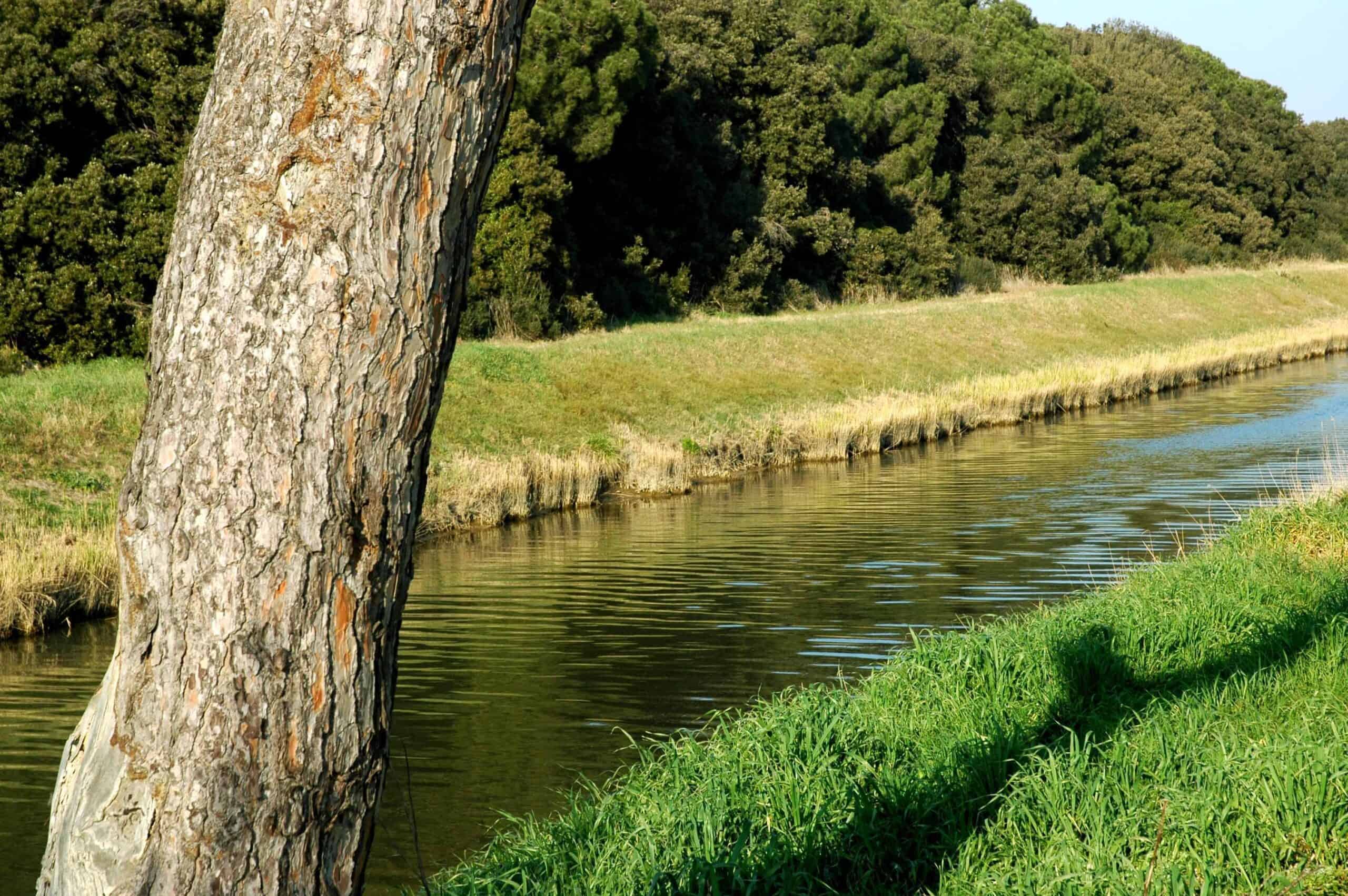
The Litorale Romano State Nature Reserve is a protected natural area established by the Ministry of the Environment by ministerial decree of March 29, 1996, in application of Article 17 of framework law 394 of 1991 on protected areas, and it is spread discontinuously along the Lazio coast between Palidoro to the north and Capocotta to the south, within the administrative boundaries of the municipalities of Rome and Fiumicino. It has no entrance, no ticket, no gate: you cross it without noticing while going to the sea, while catching a plane, while driving Via del Mare or the Roma Fiumicino. The overall area is given by the managing body as about 15,900 hectares, while other popular sources speak of over 16,000 hectares and go as far as citing 16,327 hectares: the difference depends on how adjoining areas, buffer zones and state-owned stretches are counted, and on this point it's best to be cautious. What doesn't change is the order of magnitude, and it's an enormous order of magnitude: we're talking about one of the largest protected areas facing the Mediterranean, wedged inside the metropolitan area of a European capital. Management appears to be entrusted to the two municipalities in their respective stretches of competence, and some nature areas have been granted for management to environmental organizations such as LIPU and WWF Italia. From the hydrographic point of view the reserve faces the Tyrrhenian Sea and is crossed by the Tiber, whose valley and mouth are among the protected areas, and by the Arrone, the small outflow of Lake Bracciano that empties between Fregene and Maccarese. Anyone who wants a concrete idea of the individual pieces can start from the pages devoted to Ostia Antica, the Castel Fusano Pine Forest, the WWF Macchiagrande Oasis and the Castelporziano Estate.

Where the Litorale Romano State Nature Reserve Is and How to Really Get There
The first thing to make clear concerns geography, because here geography is not a detail but the key to reading everything else. The reserve occupies the coastal strip to the west and southwest of Rome, in a stretch that starts from the mouth of the Palidoro ditch, just south of Ladispoli, and runs down to the dunes of Capocotta, at the gates of Torvaianica. In between are Fregene, Maccarese, Focene, Fiumicino, Isola Sacra, the mouth of the Tiber, Ostia Antica, Lido di Ostia, Castel Fusano and Castelporziano. These are names that anyone living in Rome pronounces with the ease of someone talking about their own backyard, and for that very reason almost nobody realizes they belong to a single national protected area.
The boundary, on paper, is a broken line that goes in and out of built-up areas with a freedom that at first sight seems arbitrary. It follows the banks of the drainage canals, slips into the pine forests, cuts out the built-up neighborhoods, stretches along the Tiber almost as far as the Grande Raccordo Anulare, and climbs for a stretch inland to take in the Macchiagrande di Galeria and the woods of Castel di Guido. The result is a perimeter of remarkable length: the figure most often cited is over 140 kilometers, a number that makes sense if you think how many times the line has to go around a road, a warehouse, a residential complex, a cultivated field. No Italian reserve of similar size has such a tortured outline.
By Train: the Two Lines That Cut Through the Reserve
The regional rail network serves the reserve better than you'd imagine. The FL5 Roma Civitavecchia line runs parallel to the coast in the northern stretch and stops at Maccarese Fregene and Torre in Pietra Palidoro: from these two stations you can reach on foot or with a few minutes of bus the Macchiagrande Oasis, the mouth of the Arrone, the Fregene holm oak wood and the dunes of Palidoro. The Roma Lido railway, now called the Metromare line, connects Porta San Paolo with Ostia and stops at Ostia Antica, Lido Centro and Stella Polare: from the Ostia Antica station you reach the Excavations in five minutes on foot, while from Cristoforo Colombo you enter the Castel Fusano Pine Forest. The Fiumicino Aeroporto railway station, finally, is a few hundred meters from the Maccarese Ponds and the Porto Oasis, even though almost none of the 40 million passengers a year suspects it.
By Car: the Three Historic Routes
Drivers have three main roads. Via Aurelia serves the northern sector, with exits for Fregene, Maccarese, Palidoro and Castel di Guido. The A12 highway runs parallel and lets you exit at Fiumicino or Torrimpietra. Via Portuense and the Roma Fiumicino serve the heart of the reserve, that of the imperial ports and Isola Sacra. Via del Mare and Via Ostiense, finally, lead to Ostia Antica and the Lido, while the coastal road continues toward Castel Fusano, Castelporziano and Capocotta. Parking is the real summer problem: on July and August weekends the whole stretch between Castel Fusano and Capocotta clogs up from nine in the morning, and the same thing happens at Fregene and Maccarese. Those who travel in the off-season have no difficulty.
What the Litorale Romano State Nature Reserve Really Is: a Mosaic, Not a Compact Park
The most widespread misunderstanding concerns the shape. Whoever hears the word reserve imagines a continuous, delimited area with a visitor center at the entrance and a network of numbered trails. Here the reality is different: it is a mosaic of surviving fragments, held together by a decree and by a map more than by physical continuity. Between one piece and the next you cross built-up towns, industrial zones, Fiumicino airport, intensive farmland, fast roads. The reserve has the shape of what was left after a century of land reclamation, subdivision and building speculation, and for that very reason it has documentary value as well as natural value.
The environments represented, however, are surprisingly complete. There are evergreen holm oak woods that come down almost to the waterline, as in the Fregene holm oak wood and in some sectors of Castel Fusano. There are stone pine forests planted by people between the 17th and 19th centuries, which today work as woodland in every respect and host woodpeckers, jays and nocturnal raptors. There are dune ridges with their sand-loving vegetation, from sea daffodil to sea rocket, preserved mainly between Capocotta and Castelporziano and in the Palidoro stretch. There are back-dune wetlands and drainage ponds converted into oases, where herons, flamingos, ducks and waders stop over. There are riverbanks and river mouths, with the Tiber reaching the sea by splitting into the two branches of Fiumara Grande and Trajan's Canal. There are expanses of tall and low Mediterranean scrub. And there are stretches of residual Roman Campagna, with pastures, isolated oaks and farmhouses, of a beauty that surprises those who don't expect it 20 kilometers from the Colosseum.
Alongside all this extend the agrarian landscapes of the land reclamation, dominated by the straight lines of the canals, the collectors, the pumping stations built from the end of the 19th century on. They are not natural landscapes and nobody claims they are, but they are fully part of the system: the Maccarese ponds, for example, were born as a hydraulic work and have become one of the best sites in Lazio for watching waterbirds. The same goes for the Porto Oasis, which occupies the hexagonal basin of Trajan's port and for two millennia has been first a port infrastructure, then a malarial swamp, then a hunting estate and finally a protected area.
Completing the picture are the archaeological sites, and here the reserve plays a game that no other Italian protected area can play. Inside the perimeter are Ostia Antica, the ports of Claudius and Trajan, the necropolis of Isola Sacra, Via Severiana, dozens of Roman villas, medieval and modern coastal towers, fifteenth-century fortified villages. Environmental protection and archaeological protection overlap over hundreds of hectares, and this overlap has saved from concrete surfaces that would otherwise have been built on.
The Beaches Inside the Litorale Romano State Nature Reserve: What Is Public and What Is Not
The coastline within the reserve's perimeter measures several dozen kilometers and presents very different situations. It helps to clarify the general principle: the maritime shoreline in Italy is public property, and therefore in law accessible to everyone. What varies is the presence of beach concessions, which occupy portions of that public land with beach clubs, and the presence of further restrictions tied to nature protection or to the ownership of the land behind.
In the northern sector, between Palidoro and Focene, wide free stretches alternate with beach clubs. Fregene is the place with the greatest density of concessions, and the free beach is concentrated at the northern and southern ends of the town. The Lido di Maccarese, just to the north, keeps more generous free stretches and a hinterland of pine forest and fields that has kept a less urban character. Focene, wedged between the town and the airport runway, offers a narrow, windy beach, much frequented by those who practice sailing sports precisely because of the constancy of the wind.
In the central sector the mouth of the Tiber interrupts the continuity of the shoreline. Here, between the Fiumara Grande and the Idroscalo di Ostia, the beach is discontinuous and partly closed for reasons of hydraulic safety. The Lido di Ostia stretch is the most urbanized of the entire Roman coast, with an almost continuous front of beach clubs interrupted by a few equipped free beaches.
In the southern sector is the best part. The Castel Fusano Pine Forest comes within a few hundred meters of the sea, and the stretch of coastal road alongside it alternates historic beach clubs and free openings. Farther south opens the dune system of Capocotta, where numbered gates give access to a succession of free beaches and kiosks under light concession, with the only coastal dune of the Roman coast left in decent condition. In this stretch is also the naturist area of Capocotta, signposted and regulated. Behind it, the Presidential Estate of Castelporziano closes off access to an enormous sector of coast and woodland: it is State property assigned to the Presidency of the Republic, visited only on scheduled occasions and in ways set from time to time, and this closure is the main reason that piece of coast has been preserved as it has.
A Curiosity About the Litorale Romano State Nature Reserve
The curiosity concerns a paradox of scale. If you compare the areas, this reserve is about twice the size of the Circeo National Park, which is a national park in every respect, with its own authority, staff, international visibility and a historic visitor center. The Litorale Romano, with almost 16 thousand hectares, has no park authority of its own: management appears to be divided between the Municipality of Rome and the Municipality of Fiumicino in their respective stretches of competence, with coordination by the Ministry and with an important role given to the environmental associations that hold some areas in concession. It means that one of the largest coastal protected areas of the Mediterranean is administered, in practice, by two municipal offices.
Then there's a third detail, which concerns the numbers. Sources diverge on the area: the managing body gives about 15,900 hectares, other popular sources go up to 16,327. The discrepancy doesn't come from carelessness but from the very nature of the area, made of separate polygons, of adjoining areas added at different times and of maritime state-owned stretches whose attribution has changed over time. Whoever looks for a single, definitive figure will be disappointed, and the honest thing to say is that the order of magnitude is certain while the decimal is not.

The Areas of the Reserve: the Full Picture of What the Decree Protects
The founding decree covers large portions of land both on the coast and at some points inland. The list that follows is not a bureaucratic catalog: it's the mental map you need to find your way, because each of these places has a personality of its own and deserves a separate visit. It's best read as a menu to choose from, not as a checklist.
Litorale Romano State Nature Reserve | Areas of Natural Interest
- Tiber Embankment from Ostia Antica, the embankment path that accompanies the river from the Excavations area to the mouth, usable on foot and by bike and crossed by a band of riparian vegetation with willows, poplars and reed beds.
- LIPU Mediterranean Habitat Center, the urban oasis overlooking the port of Ostia, born from the recovery of a degraded area and become one of the best birdwatching points on the Lazio coast.
- Dune and Tower of Palidoro, the northern end of the reserve, where a surviving dune ridge sits alongside a coastal tower and the mouth of the ditch of the same name.
- Dunes of Castelporziano and Capocotta, the best-preserved dune system of the whole Roman coast, with sea daffodil, marram grass, sea holly and the complete succession from the waterline to the back-dune scrub.
- Fregene Holm Oak Wood, a patch of evergreen forest of great phytosociological value, testimony to what the coastal forest cover looked like before the land reclamation.
- Macchiagrande di Galeria, the inland sector of the reserve, far from the sea, where the landscape becomes that of the Roman Campagna with oaks, pastures and sunken ditches.
- Spinaceto Meander, a river bend of the Tiber at the gates of the city, an example of how the river keeps natural dynamics even inside the urban area.
- Porto Artificial Oasis, in the territory of Fiumicino, where the hexagonal basin of Trajan's port is now a wetland with one of the most important heronries in Lazio.
- Bosco Foce dell'Arrone Oasis, at the mouth of the outflow of Lake Bracciano, with riparian woodland, reed beds and a little-visited stretch of beach.
- Oasis of Castel di Guido, managed by WWF, with Turkey oak and cork oak woods, pastures and a long tradition of wildlife reintroduction.
- WWF Oasis of Macchiagrande, behind Fregene, where pine forest, scrub, wet meadows and an equipped trail that takes just under an hour coexist.
- Vasche di Maccarese Oasis, near the Lido di Maccarese, converted drainage ponds that host black-winged stilts, herons, pochards and, during migration, even flamingos.
- Urban park Castel Fusano Pine Forest, the largest green area of the Municipality of Rome, with stone pine, holm oak and an undergrowth of scrub slowly recovering after the fires.
- Fregene Pine Forest, a historic planting that works as a lung and a windbreak for the coastal town.
- Acqua Rossa Pine Forest, a wooded area right up against the town of Fiumicino.
- State Nature Reserve Estate of Castelporziano, the presidential estate, a state reserve in its own right and at the same time part of the coastal system, with one of the best-preserved lowland forests in Europe.
- Coccia di Morto Pine Forest, between Focene and the airport, a coastal wood squeezed between the runway and the sea.
- Trail of the 100 Oaks, a signposted route in the inland sector, suitable for families and school groups.
- Procoio Estate, an agricultural and wooded area in the Fiumicino hinterland.
- Tumuleti di Bocca di Leone, fossil dune formations of great geomorphological interest.

Litorale Romano State Nature Reserve | Areas of Historical and Archaeological Interest
- Ancient city of Ficana, a protohistoric settlement on the hill of Monte Cugno, mentioned by the sources among the Latin centers conquered by Rome in the regal age
- Ostia Antica Village, the 15th-century Gregoriopoli that grew up around the castle of Julius II, one of the best-preserved fortified villages in Lazio
- Castello Rospigliosi in Maccarese, also called Castel San Giorgio, the original core of the farming estate that led the land reclamation of the northern sector
- Episcopio di Porto, a very ancient episcopal seat near the imperial ports
- Idrovore di Ostia Antica, industrial archaeology of the land reclamation, with the machines that drained the Ostia pond
- Museo delle Navi di Fiumicino, where the wrecks found during the airport works are displayed, direct evidence of river and coastal navigation in the imperial age
- Necropolis of Isola Sacra, which came to light starting in 1925, with the chamber tombs of the middle classes of Portus and the mosaics that tell the trades of the deceased
- Oasi Naturantica, an area linking archaeological protection and environmental protection in the Ostia Antica district
- Excavations of Ostia Antica, Rome's river port, with the insulae, the mosaics of the baths, the theater, the Square of the Corporations and the decumanus that crosses the city for over a kilometer
- Remains of the port of Claudius, begun in the Claudian age between 42 and 54 AD, and of Trajan's hexagonal port, built in the first decade of the second century
- Tor Boacciana, a watchtower that rose on a Roman core at the old mouth of the Tiber, together with Tor San Michele, the Primavera tower of Maccarese and the tower of Palidoro
- Villa Chigi Sacchetti in Castel Fusano, a 17th-century residence set in the pine forest, with painted decorations from Baroque circles
- Villa Guglielmi and the Fiumicino canal waterfront, a historic urban park overlooking the Trajan canal
- Via Severiana in Castel Fusano, the road route of the Severan age that linked Porto to Terracina along the coast and that you can still follow in the pine forest for hundreds of meters
- Villa della Palombara, a Roman rustic complex in the Ostia sector
- Roman Villa of San Nicola and fosso Cupino, in the northern sector, right up against the border with the territory of Ladispoli.

One thing nobody tells you about the Litorale Romano State Nature Reserve
What the guides don't tell you is the relationship between this reserve and the airport. Fiumicino airport takes up an enormous area right in the geographic heart of the protected area, between Focene, Isola Sacra and the Maccarese ponds. The apparent paradox is that this airport fence, impassable and guarded, has had a side effect of conservation: inside the airport grounds, on the grassy areas between the runways and the taxiways, Mediterranean grasslands survive that are mowed but never plowed, never fertilized, never built on. These are habitats that have almost disappeared outside the fence, and that ornithologists know well because they host species tied to open environments.
The second little-told aspect concerns the dynamics of the coast. The mouth of the Tiber has been receding for decades, and the reason is explained by the hydraulic history of the basin: the dams built along the river and its tributaries hold back the sediment that once reached the sea and fed the beaches, while the extraction of aggregates from the riverbed has reduced the solid transport even further. The result is visible to the naked eye at Fiumicino and Focene, where the breakwater reefs and the groynes defend a shoreline that without those works would retreat by meters every year. The phenomenon also has an archaeological reading: in some stretches the Roman coastline lay hundreds of meters farther inland than today, and in others farther out, which is why Tor Boacciana, built near the ancient mouth, now stands far from the sea while some stretches of Via Severiana end up underwater.
The advice I give you for visiting the Litorale Romano State Nature Reserve
The advice is to stop thinking of it as a single destination. Anyone who tries to see the whole reserve in one day goes home with the feeling of having driven a lot and seen little, because the fragments are far from each other and the connecting roads are the ones of metropolitan traffic. It's better to pick one sector at a time and give it a full half day.
The northern sector is built around Fregene and Maccarese: you park just once, visit the Oasi WWF di Macchiagrande early in the morning, go down to the mouth of the Arrone, head back up toward the Maccarese ponds for bird watching and finish with the free stretch of the Lido di Maccarese. You need binoculars, you need closed shoes for the wet trails and you need insect repellent between May and September.
The central sector is built around Fiumicino and Isola Sacra: the ports of Claudius and Trajan, the Oasi di Porto with its heronry, the Museo delle Navi, the Isola Sacra necropolis, the canal waterfront with Villa Guglielmi. Here the archaeological side weighs more than the nature side, and the opening hours of the individual sites shape everything: some open only by reservation, and the openings change from season to season.
The southern sector is built around Ostia Antica and Castel Fusano: the Excavations alone take a good half day, the village of Gregoriopoli with the castle of Julius II is worth an hour, the Tiber embankment and the pine forest round out the picture, and anyone who still has energy goes down to the gates of Capocotta for sunset on the dunes. This is the easiest sector to do without a car, thanks to the Metromare.
Two indications always hold. The first concerns the period: March, April, May, September and October are the right months, because the light is good, the temperature allows walking, bird migration is under way and the beaches aren't crowded. The second concerns water: in the pine woods and on the embankments there are no fountains, and on windy days dehydration arrives without your noticing the heat.
The Green Areas, the Pine Woods and the Oases Run by LIPU and WWF
The most accessible part of the reserve, the one that offers marked trails, educational panels and staff on site, is entrusted to environmental associations. This is not an organizational detail: without this delegated management, use of the protected area would be almost nil, because the two municipalities don't have widespread visitor facilities.
LIPU's Centro Habitat Mediterraneo, in Ostia, occupies a reclaimed area right next to the tourist harbor. It is an example of successful renaturalization: where there was a quarry and then a materials depot there are now bodies of water, reed beds, observation hides and a ring trail. The species observed over the years number in the dozens and include gray herons, little egrets, cormorants, kingfishers, moorhens, black-winged stilts and many reed-bed passerines. For anyone approaching birdwatching for the first time it's the right place, because the observation distance is short and the animals are used to human presence.
The WWF Macchiagrande Oasis has a different structure: a route that crosses in succession pine woods, Mediterranean scrub, wet meadows and a stretch of hygrophilous woodland, with the possibility of reaching right up to the dune system. Walking it takes a little under an hour at a comfortable pace and the elevation change is negligible, which makes it suitable even for small children.
The Castel di Guido Oasis, also WWF, sits in the interior sector and offers the landscape most different from the coastal one: Turkey oak and cork oak woods, pastures, sunken ditches, and a long tradition of work on wildlife, with reintroduction and monitoring projects that have lasted for decades. Anyone who wants to understand how the Roman Campagna looked before land reclamation and lot subdivisions will find the best reference here.
The Castel Fusano Pine Forest, finally, is the largest urban park of the Municipality of Rome and works as a lung for the whole coast. The great fire of summer 2000 destroyed a significant portion of the tree cover, and recovery has been slow and uneven: in the areas swept by fire the pine forest has been partly replaced by holm oak and scrub, which are the species naturally suited to that sandy soil. From an ecological point of view this replacement is not a loss, because the stone pine is a cultivated species while the holm oak woodland is the potential vegetation: from a landscape point of view, however, those who remember the 19th-century pine forest find it hard to accept.
Another Well-Known Fact, Yet Rarely Cited
The fact is this: the Litorale Romano reserve was born from a battle, not from a concession. In the 1980s the coast between Fiumicino and Ostia was subject to building pressure that had already wiped out entire sectors of dune and pine wood, and the concrete risk was the continuous welding of built-up area from Palidoro to Torvaianica. Environmental associations, neighborhood committees and some local administrations conducted a campaign lasting years, made of complaints, appeals, symbolic occupations and signature drives. The 1996 decree comes at the end of that path and incorporates, in large part, the boundary that the environmental movement had proposed.
The consequence can still be read today in the jagged shape of the boundaries. That tormented perimeter is not the product of an abstract naturalistic study: it is the photograph of how much could be saved, polygon by polygon, after losing the rest. Every indentation corresponds to an already approved subdivision, every protrusion to a piece of woodland successfully defended. Anyone who looks at the cartography with this key reads it as a historical document and not only as a technical tool.
There is a second aspect just as well known and just as rarely cited: archaeological protection has protected nature more than nature protection. The restrictions imposed by the superintendencies on the area of Ostia Antica, on the imperial ports, on the Isola Sacra and along the route of Via Severiana prevented for decades any construction on extremely extensive surfaces. When the 1996 decree arrived, those surfaces were still free precisely because they were archaeologically restricted, and they entered the reserve without conflict. Without the Roman ruins, a large part of this protected area wouldn't exist today.
The Right Photo to Take at the Litorale Romano State Nature Reserve
The photograph that tells this place better than any other is taken from the Capocotta dune at sunset, looking north. In the foreground, the dune ridge with tufts of marram grass and, in summer, the white flowers of the sea daffodil. Behind it, the dark, compact outline of the Castelporziano forest. Far off, softened by sea haze, the distant shape of the buildings of Lido di Ostia. In a single frame you can read the three levels of the Roman coast: the natural dune, the protected forest, the built city. You need a moderate telephoto lens to compress the planes, you need the boardwalks so you don't trample the vegetation, and you need patience, because the good light lasts 20 minutes.
The second photograph is taken at the Oasi di Porto, from the edge of Trajan's hexagonal basin, in the early morning. The still water, the heronry in the trees on the opposite bank, herons in flight and, in the background, the detail that makes the scene unmistakable: the tail of a plane taxiing past the vegetation. A port built 19 centuries ago, a colony of herons and an Airbus in the same frame are the exact portrait of what this reserve is.
Some Important Events That Happened Here in History
Few Italian coastal strips have a layering of events comparable to this one. The literary tradition attributes the founding of Ostia to King Ancus Marcius, in the seventh century BC, while the archaeological evidence known so far dates the quadrangular castrum to the fourth century. The gap between legend and excavation remains one of the open questions of Ostian studies, and anyone who presents the traditional date as an established fact oversimplifies. What is certain is that from that point Rome controlled the mouth of its river and the salt supply from the coastal salt pans.
Between 42 and 54 AD the emperor Claudius began building an artificial port north of the river mouth, a colossal work with two curved moles and a lighthouse set on the sunken hull of the ship that had carried the Vatican obelisk from Egypt. The basin turned out to be too exposed to the winds, and in the first decade of the second century Trajan had the famous hexagonal basin dug inside it, sheltered and stable, around which the city of Portus grew. That hexagonal outline can still be read on the ground and is one of the most impressive hydraulic monuments of antiquity.
In the early Middle Ages the coast became frontier land. Raids from the sea followed one another for centuries, and the papal response took the form of fortified settlements. In the eighth century, around the basilica of Sant'Aurea in Ostia, Pope Gregory IV had the walled village built that took the name Gregoriopoli from him. In the middle of the ninth century the waters off Ostia were the scene of the naval battle between the fleet of the league of the Tyrrhenian maritime cities and a Saracen expedition, an episode that papal memory celebrated for a long time and that Raphael and his workshop painted in the Vatican Rooms.
Between 1483 and 1486 Cardinal Giuliano della Rovere, the future Pope Julius II, had the castle that bears his name built in Ostia, a work with a modern military layout designed to withstand artillery fire. The 1557 flood of the Tiber changed the course of the river and moved the castle away from the bank, taking away in one stroke its function of controlling the river mouth. From then on the village entered a long decline, made worse by the malaria that in the following centuries made the coast almost uninhabitable in the warm months.
The land reclamation is the great event of the contemporary age. Starting in 1884 the cooperatives of farm laborers from Ravenna, led by Nullo Baldini, began draining the Ostia marsh with extremely hard labor, paid for with hundreds of cases of malaria and many deaths. In the following decades the work continued at Maccarese, Fregene, Isola Sacra and Coccia di Morto, and produced the landscape of straight canals and pumping stations that you cross today without recognizing its origin. On those lands wrested from the water arose the rural villages and farms that still characterize the northern sector today.
On September 23, 1943, at Palidoro, the carabiniere Salvo D’Acquisto accused himself of an attack he had not committed and was shot by the Germans to prevent reprisals against 22 civilians who had been rounded up. The place of the execution, at the northern end of the protected coastal strip, is marked by a commemorative shrine and is one of the most visited sites of civil memory on the coast.
On November 2, 1975, at the Idroscalo of Ostia, at the mouth of the Tiber, the body of Pier Paolo Pasolini was found. That place, at the far edge of the built city and inside the perimeter of what would become the reserve, has become a reference point of Italian cultural memory and is marked today by a monument.
In the summer of 2000 a vast fire devastated the Pineta di Castel Fusano, destroying a significant portion of the tree cover and forcing a complete rethinking of the forest management of the coast. Finally, on March 29, 1996, the ministerial decree established the reserve. It is a date remembered on the coast with initiatives by environmental associations and which in 2026 marked its 30th anniversary.
Who Has Passed Through the Litorale Romano State Nature Reserve
The list is long and spans 25 centuries. On the ancient side we can cite the emperors who built here: Claudius with the first port, Trajan with the hexagonal basin, Septimius Severus and Caracalla with the reorganization of the coastal road network that gave Via Severiana its name. Ostia was also the place where, according to the Confessions, Augustine and his mother Monica had their famous conversation looking out of a window over the garden, shortly before her death. The basilica of Sant'Aurea, in the village, preserves the memory of her burial.
On the Renaissance and modern side the protagonist is Giuliano della Rovere, who as cardinal bishop of Ostia wanted the castle and the arrangement of the village. The Roman aristocratic families left their mark on the coastal hinterland: the Sacchetti and then the Chigi at Castel Fusano, with the 17th-century villa and the layout of the pine forest. The Rospigliosi at Maccarese, with the castle that became the center of the farm. The Odescalchi at Palo, on the northern border, with the castle facing the sea and the woods that still bear their name, adjacent to the Bosco di Palo and to the territory of Ladispoli.
In the cultural 20th century the coast was a second home for Italian cinema. Federico Fellini and Giulietta Masina had a villa in the pine forest at Fregene, and the town appears in the imagery of many films of the period. The coast between Fregene and Ostia was for decades the natural set of Italian-style comedy and auteur cinema, also thanks to the proximity of the Cinecittà studios. Pier Paolo Pasolini spent a lot of time in Ostia, the Lido and the coastal borgate, and set pages and scenes there. His story ended at the Idroscalo. The memory of this passage is intertwined with the social history of the coast, made of working-class summer holidays, unauthorized borgate and a conflicted relationship between city and sea.
When to Go to the Litorale Romano State Nature Reserve and When to Avoid It
Spring is the best season by far. Between March and May the scrub blooms, the wet meadows of the ponds fill with passing shorebirds, temperatures allow you to walk for hours and the mosquitoes have not yet taken over the wetlands. April, in particular, concentrates the peak of the spring migration. If you bring binoculars to the Maccarese ponds or the Oasi di Porto on a clear April morning, you see more species in three hours than in a month of winter outings.
Autumn works almost as well. September and October offer a sea that is still warm, emptied beaches, low warm light for photography, and the autumn migration that brings herons, raptors and passing songbirds to the coast. It is also the time when the pine forests are at their best, with the scents of resin and undergrowth after the first rains.
Winter deserves a defense. From December to February the coast empties out, the parking lots are free, the Ostia excavations can be visited without lines and the days of north wind give a clarity of air that does not exist in summer. The cold is rarely severe and the main problem is rainy days, which make the dirt tracks impassable.
July and August are the period to handle with care. The humid heat makes any excursion tiring between 10:00 and 17:00, the mosquitoes in the wet areas become unbearable at dusk, traffic on the coast road and on the Roma Fiumicino jams up on weekends and the fire risk imposes closures and bans. Anyone coming in summer has only one sensible window: from 6:00 to 9:00 in the morning. In those three hours the reserve is perfect, cool, quiet and almost empty. After that, it's better to move onto the water or head back.
What Is Around the Litorale Romano State Nature Reserve
The territory around the reserve offers natural continuity to the north and toward the interior. Going up the coast you come across the Bosco di Palo and the Torre Flavia Marsh, two regional protected areas that complete the picture of the coastal environments of Lazio, the first with a relict lowland forest and the second with a back-dune wetland of great importance for birdlife. A little farther on are Ladispoli and the Cerveteri coast, while farther north the Macchiatonda Nature reserve closes the system of coastal wetlands of the province.
Toward the interior, the system of Roman protected areas offers alternatives for rainy or windy days. The Decima Malafede Nature Reserve preserves the largest forest in the Municipality of Rome, the Laurentino Acqua Acetosa Nature Reserve and the Valle dei Casali Nature Reserve protect strips of Roman Campagna absorbed into the city, the Monte Mario Nature Reserve offers the best panorama of the capital and the Valle dell’Aniene Nature Reserve follows the other river of Rome. The Appian Way Park, on the opposite side of the city, offers the same combination of archaeology and landscape that makes the coast special.
Going down the coast you reach Anzio, Torre Astura and then the Circeo National Park, the natural yardstick for anyone who wants to understand the size and management choices of the Litorale Romano. Going up the Tiber instead you come to the Nazzano Tevere Farfa Nature reserve, which protects a stretch of river upstream of the capital and completes the reading of the river from the inland basin to the mouth.
On the archaeological side, those who stay in the Ostia sector can add the Ostia Antica Village to the visit to the excavations, while in the urban sector the Via Portuense Necropolis documents the same funerary world you meet at Isola Sacra, but from the city side.
Quick Questions About the Litorale Romano State Nature Reserve
Do you pay a ticket to enter the reserve? No. The reserve has no entrances or ticket office. You do pay for the tickets of the archaeological sites and museums that fall within the perimeter, such as the Ostia Antica excavations and the Museo delle Navi, and in some cases an access contribution to the oases run by associations.
How big is it, really? The managing body indicates about 15,900 hectares. Other popular sources report figures that reach 16,327 hectares. The difference depends on the count of adjacent areas and state-owned stretches. In any case it is one of the largest protected coastal areas in the Mediterranean.
When was it established? By decree of the Ministry of the Environment of March 29, 1996, in application of article 17 of framework law 394 of 1991. Later measures adjusting the perimeter are also cited, on which the popular sources do not entirely agree.
Who manages it? The municipalities of Rome and Fiumicino in their respective areas of competence, with some areas entrusted to LIPU and WWF.
Can you visit Castelporziano? Only on scheduled occasions, with procedures and calendars set by the body that administers the presidential estate. There is no free access.
The Litorale Romano State Nature Reserve asks only one thing of those who visit it: the willingness to look at it for what it is, that is a set of surviving fragments inside a metropolis, and not for what it will never be, that is an intact park. Once you accept this premise, it gives back much more than it promises.
Frequently Asked Questions About the Litorale Romano State Nature Reserve
Do you pay a ticket to enter the Litorale Romano State Nature Reserve?
No, the Litorale Romano State Nature Reserve has no entrances or ticket office of its own. You do pay for the tickets of the archaeological sites and museums that fall within its perimeter, such as the Ostia Antica excavations and the Museo delle Navi, and in some cases an access contribution to the oases run by associations.
How big is the Litorale Romano State Nature Reserve?
The managing body indicates an area of about 15,900 hectares for the Litorale Romano State Nature Reserve, which is thus about twice the size of the Circeo National Park even though it has no park authority of its own, with management divided among several parties.
Is the Litorale Romano State Nature Reserve a single park to visit in one day?
No, the Litorale Romano State Nature Reserve is a mosaic of fragments separated from one another, not a continuous area with a single visitor center. The advice is to choose one sector at a time and give it a full half day, because the different pieces are far from each other and connected by roads with metropolitan traffic.
Where is the Litorale Romano State Nature Reserve?
The Litorale Romano State Nature Reserve occupies the coastal strip west and southwest of Rome, from the mouth of the Palidoro ditch, a little south of Ladispoli, to the Capocotta dunes at the gates of Torvaianica, including among others Fregene, Maccarese, Focene, Fiumicino and Ostia.
Are the beaches of the Litorale Romano State Nature Reserve free?
In terms of law, yes, because the maritime shoreline in Italy is public property and therefore accessible to everyone, even inside the Litorale Romano State Nature Reserve. What varies along the coast is the presence of beach concessions that occupy portions of the public property with beach clubs, in addition to any further restrictions.
When is it best to visit the Litorale Romano State Nature Reserve?
Spring is the best season for the Litorale Romano State Nature Reserve: between March and May the scrub blooms, the wet meadows of the ponds fill with passing waders and the temperatures let you walk for hours without the annoyance of mosquitoes, which in summer become a problem in the wetlands.
Are there routes with guides and educational panels in the Litorale Romano State Nature Reserve?
Yes, the most accessible part of the Litorale Romano State Nature Reserve, with marked trails, educational panels and staff on site, is entrusted to environmental associations such as LIPU and WWF, which run oases such as the LIPU Centro Habitat Mediterraneo in Ostia.
Article written by the editorial team of TourLeaderPro, contact them for Private/Corporate/V.I.P. Tours and Experiences. For an organized day on the Roman coast, among Ostia Antica, the imperial ports and the coastal oases, with a licensed tour leader, start from the TourLeaderPro contact page, while tour operators who build nature and archaeology itineraries on the Lazio coast will find the consulting service in the section dedicated to tour operators.
Planning a trip to Rome? The English guides for visiting the city are on ItalyPlanner.com. For anyone thinking in terms of days out of town, the guide to the best day trips from Rome is useful, while anyone who wants to understand how Italy's free beaches really work, concessions included, will find the explanation in the guide to free beaches in Italy.