Valle dei Casali Nature Reserve
In short. The Valle dei Casali Nature Reserve is in the western quadrant of Rome, inside the Grande Raccordo Anulare, in that band of the city that begins where the apartment buildings of Monteverde end and continues between Bravetta, Casaletto, Pisana and Portuense.
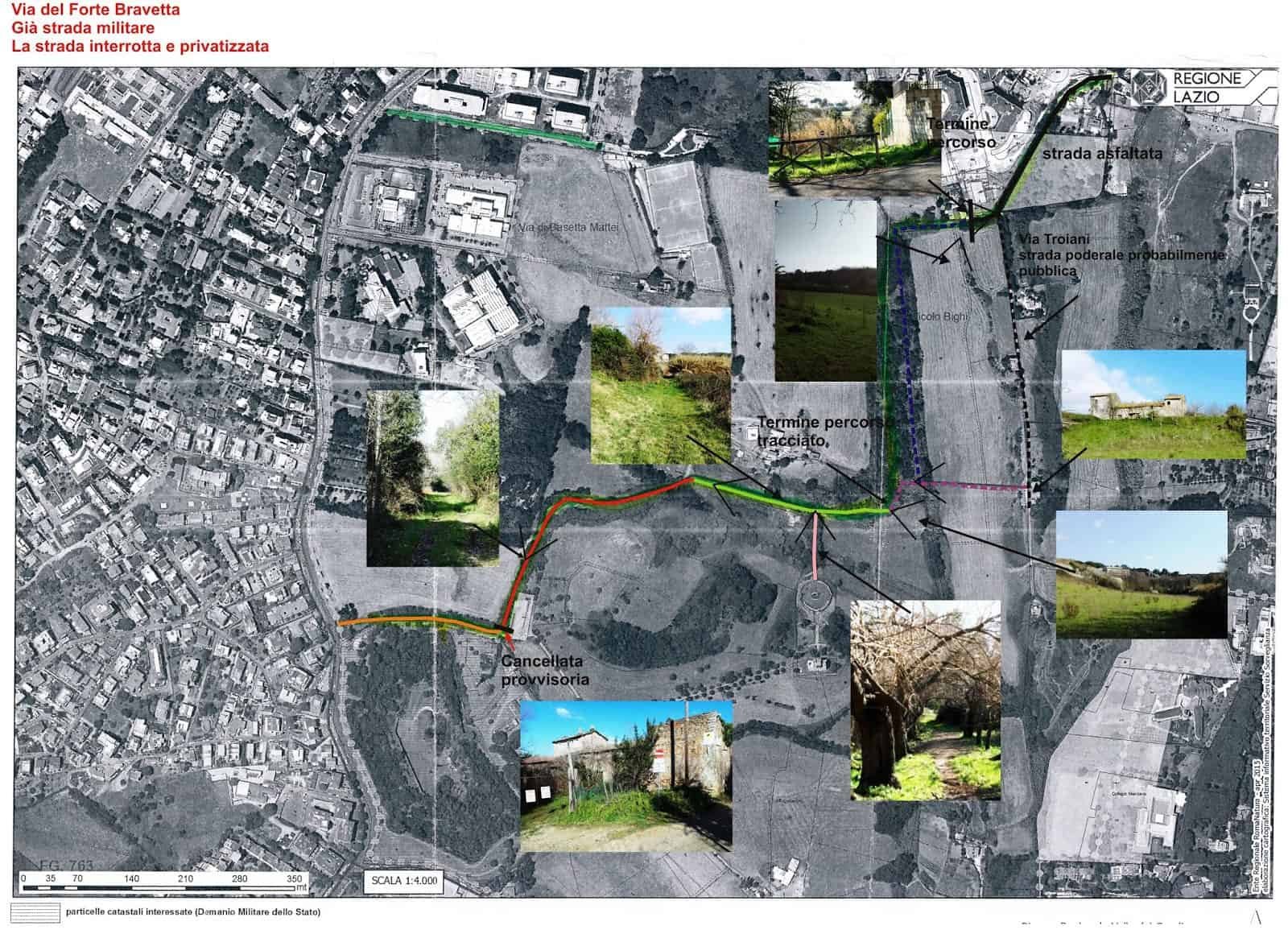
The Valle dei Casali Nature Reserve is in the western quadrant of Rome, inside the Grande Raccordo Anulare, in that band of the city that begins where the apartment buildings of Monteverde end and continues between Bravetta, Casaletto, Pisana and Portuense. It is a protected natural area of the Lazio Region, established by the regional law of October 6, 1997, number 29, the same law that gave order to almost the whole system of protected areas of Lazio, and entrusted to the management of the Regional Body RomaNatura. The surface is 466 hectares, a number that on paper sounds enormous and that on site turns out even bigger, because the valley never presents itself all at once: it shows up in pieces, one piece at a time, and every piece seems like a different place.
The perimeter of the protected area is bounded broadly by Via del Casaletto, Via dei Silvestri, Via di Bravetta and Via Portuense. Anyone who knows Rome understands right away what we are talking about: they are four neighborhood streets, busy, with dumpsters, bars, workshops and 1960s buildings, and inside that quadrilateral opens an agricultural plateau with ditches, olive groves, 17th- and 18th-century farmhouses, foxes and parrots. The Valle dei Casali is exactly this: a piece of Roman countryside that survived building expansion, stuck between the Gianicolense and Portuense neighborhoods and turned into a nature reserve when the city had already surrounded it on every side.

Where the Valle dei Casali Nature Reserve Is and How You Really Get There
The question everyone asks around here is the same: where does the reserve begin. The honest answer is that it doesn't begin anywhere in particular, because the Valle dei Casali has no monumental entrance with a gate, a ticket office and a big sign. It has instead a series of neighborhood entrances, some very obvious and others you notice only if you know they exist, distributed along the whole urban perimeter.
The best-known and most-trodden sector is Torre Righetti, on the Monteverde side, where the public park of the same name works in practice as the northern gateway. You arrive from Via di Monteverde and from the streets that descend toward Casaletto, and as soon as you enter you understand the geography of the area: an uphill meadow, a hill, the tower at the top and then the emptiness toward the Tiber. From there, looking south, you see the whole valley.
The second important access is from Via di Bravetta side, with the area of Villa York and the former farmland that opens behind the Forte. Here the landscape changes completely: less meadow and more real countryside, with rows of vines, dry-stone walls, inhabited farmhouses and abandoned farmhouses, little white roads. A third, less organized sector is reached from the Portuense side, where the valley descends toward the river through a series of ditches and terraces that today are largely cultivated or fallow.
By public transport the Valle dei Casali is served indirectly but continuously: the quadrant is covered by the surface lines that climb from Trastevere and Porta Portese toward Monteverde and Bravetta, and by the regional railway that runs along the Portuense with the Villa Bonelli stop and the Magliana one. None of these stops takes you inside the reserve, but all leave you a reasonable walk from one of the entrances. By car the problem is not arriving, it's parking: these are dense residential neighborhoods, with contested parking spots, and the practical advice is to leave the car along the wider streets and do the last stretch on foot.
The distance from the historic center is deceptive. As the crow flies from the Janiculum to the Valle dei Casali it is a few kilometers, and from the dome of St. Peter's, on clear days, you can glimpse this green band descending toward the southwest. And yet almost no tourist gets there, and even many Romans who live on the other side of the river don't know it exists. It's one of the strongest contradictions of Rome: 466 hectares of protected countryside 20 minutes from the Vatican, and visitation almost exclusively from the neighborhood.
What the Valle dei Casali Really Is: An Agricultural Mosaic, Not an Urban Park
Anyone who arrives here expecting a city park, with paved paths, aligned benches, trash cans every 50 meters and the ice cream kiosk, is thrown off. The Valle dei Casali is not that and was never meant to be that. It is a protected area built around a remnant of agrarian landscape, that is around lands that for centuries were farmed, grazed, divided into estates and vineyards, and which the establishment of the reserve froze before they became apartment blocks.
The difference is substantial and has to be said right away, because it completely changes the kind of visit. In an urban park you stroll. Here you walk. In an urban park the routes are marked. Here some stretches are marked, others are paths of spontaneous use, others still are farm roads that serve the agricultural land still in operation. In an urban park the greenery is ornamental. Here the greenery is largely productive or post-productive, that is olive groves, mulberries, vegetable gardens, hay meadows, boundary hedges between properties.
The physical structure of the territory helps to understand. It is a plateau that reaches 80 meters in elevation and slopes toward the Tiber through a succession of rounded hills and incised ditches. This alternation of humps and incisions is the reason the valley is never seen in full: you climb a hump, you see a piece of panorama, you go down into a ditch and the panorama disappears, you climb back up and the panorama has changed. The result is a sense of depth that in no Roman city park is felt with the same intensity.
The second structural element is position. The Valle dei Casali works as a green wedge that insinuates itself from the southwest into the built fabric, connecting the great alluvial plains toward the coast with the central band of the city. In ecological terms this means corridor: a passage through which fauna moves, seeds travel, animal populations don't remain isolated. In practical terms, for those who walk, it means you can cross a substantial piece of Rome almost without ever seeing a road, which in the capital is a rare luxury.
The third element, the most evident of all, is the farmhouses. The name of the reserve comes exactly from there: from the quantity of historic farmhouses, largely late 17th- and 18th-century, scattered across the territory. These are not monuments isolated in the middle of nowhere, but the functional network of an agricultural system that organized this piece of countryside for at least three centuries: the farmhouse as the farm's center, the tower as a control point, the villa as the owner's formal residence.
The Administrative Picture in Brief
For those who like orderly data, here is the fact sheet of the protected area, with the values that result from the official sources of the Lazio Region.
- Name: Riserva Naturale della Valle dei Casali.
- Type: regional nature reserve.
- Territorial area: Rome.
- Size: 466 hectares.
- Founding law: regional law of October 6, 1997, number 29.
- Managing body: RomaNatura, the regional body that administers the system of protected areas within the territory of Roma Capitale.
- Municipalities: Rome.
- Neighborhoods involved: Gianicolense and Portuense, with offshoots toward Bravetta, Casaletto and Pisana.
It's worth pausing a moment on regional law number 29 of 1997. It is not a law written specifically for the Valle dei Casali: it is the framework law with which Lazio reorganized its whole system of protected natural areas, and in doing so it established in one stroke a series of reserves in and around Rome. This explains why the Valle dei Casali shares the same administrative birth date with other areas that today are part of the same system managed by RomaNatura, and it also explains the somewhat particular character of these urban reserves: they were born as an instrument for defending land against building, more than as parks equipped for leisure.

Continuity With Villa Doria Pamphilj and the Green System of the Western Quadrant
The Valle dei Casali reads much better if you consider it the ideal continuation of Villa Doria Pamphilj, the great historic park that lies a very short distance away. Between the southern boundary of the villa and the northern edge of the reserve there is little more than an urban diaphragm: a few blocks, a couple of streets, and then the green resumes. From the historical point of view the two are close relatives, because they belong to the same system of villas and vineyards that from the 1600s onward occupied the hilly band outside Porta San Pancrazio and outside Porta Portese.
The difference between the two concerns destiny. Villa Doria Pamphilj was acquired by the Municipality and turned into a public park, with its paths, the little lake, the Casino del Bel Respiro, the restorations, the bike routes and the thousands of people who run there every morning. The Valle dei Casali took the opposite road: it stayed fragmented into dozens of properties, kept agricultural use over large portions, did not have a unified redevelopment and obtained protection only in the late 1990s. The result is that today you find two models of Roman green side by side: the monumental and heavily visited one, and the agricultural and little-known one.
Widening the view, the valley is part of a broader system. RomaNatura manages within the municipal territory a set of protected areas that includes, on the north and west side, the Insugherata Nature Reserve, the Monte Mario Nature Reserve and the Parco regionale urbano del Pineto. Toward the southwest the Tenuta dei Massimi Nature Reserve and the vast Decima Malafede Nature Reserve. To the northeast the Marcigliana Nature Reserve and the Aniene Valley Nature Reserve. Put together these areas form a green crown that no other European capital possesses with this extent.
Among all of them, the Valle dei Casali has the characteristic of being both the most urban and the most agricultural at once. The Tenuta dei Massimi, which borders it to the south, has more open landscapes and less built-up surroundings. Decima Malafede has the real woods. The Insugherata has the gorges and the cork oak groves. The Valle dei Casali has the farmhouses, the historic vineyards, the mulberries and the city pressing on the edges. It's the piece of the system where the relationship between countryside and metropolis is the closest, the most conflicted and, for those who know how to look at it, the most interesting.
The Historic Farmhouses, Villa York and the Buildings That Give the Valley Its Name
The built heritage of the Valle dei Casali is the reason this reserve is not exhausted by a nature walk. The historic buildings are divided by administrative sector, and it's best to keep them separate as the official documents keep them separate.
Valle dei Casali Sector, S.VIII Gianicolense
- Villa York, 18th-century, belonging to Cardinal Henry Benedict Stuart, Duke of York, last direct descendant of the House of Stuart and a central figure of 18th-century Rome. The villa is a typical example of a Roman vigna built according to the English conception of the natural landscape: not the geometric Italian garden with trimmed hedges and obligatory perspectives, but a layout that follows the lie of the land, with groups of trees, meadows and views constructed like paintings. It is the most important building in the entire reserve and the one most loaded with European history.
- Villa Consorti, identified in relatively recent times as the "Casino Lanfranco", a building designed and frescoed by the painter Giovanni Lanfranco, one of the great protagonists of the Roman Baroque. An attribute of this weight, recognized for a building that remained for centuries in a peripheral and little-studied zone, says a lot about the hidden historical density of this quadrant.
- The Complesso del Buon Pastore, a monumental work by Armando Brasini, one of the most singular architects of 20th-century Rome. The bulk of the complex, with its imposing layout and its silhouette recognizable from afar, works as an architectural backdrop for the whole northern sector of the valley.
- Forte Bravetta, part of the system of 19th-century forts built to defend Rome as capital, and later, in the 20th century, one of the most tragic places in the recent history of the city.
- Casal Ninfeo, a historic monumental nymphaeum, testimony to the taste for water architecture that from the Renaissance onward characterized Roman suburban residences.
Valle dei Casali Sector, S.VII Portuense
- The Torre Righetti, a belvedere or hunting lodge built on the summit of the hill of Monte Cucco, from which you dominate the Tiber valley. It is the most photographed structure in the reserve and the one that best explains the settlement logic of this landscape: you build on top, you look down, you control the territory and the river.
A necessary warning. These buildings are in very different legal and material conditions from one another: some are private property, others are in use by bodies or institutions, others are in a precarious state of conservation. The fact that a building is inside the perimeter of a protected area doesn't mean it can be visited, nor even approached. Those who walk in the valley see these buildings mostly from outside, from the farm roads and the trails, and that is already a visit full of meaning.
A Curiosity About the Valle dei Casali Nature Reserve
The curiosity concerns the name of the most illustrious owner of this countryside. Villa York takes its name from Henry Benedict Maria Clement Stuart, cardinal and Duke of York, younger brother of Charles Edward Stuart, the "Bonnie Prince Charlie" of the Scottish ballads. The Stuart family, driven from the throne of England, lived in exile in Rome for generations under papal protection, and its members are buried in the Vatican Grottoes, under St. Peter's Basilica, with a funerary monument sculpted by Antonio Canova.
The curious fact is precisely this: the last legitimist pretender to the British throne, the man the Jacobites called King Henry IX, owned a vineyard with a farmhouse in what is today a nature reserve between Bravetta and Casaletto, 200 meters from a supermarket and a bus stop. Walking through the Valle dei Casali you cross, almost without noticing, a piece of European dynastic history that ended up as the backdrop to the neighborhood life of western Rome.
There is a second curiosity inside the first, and it concerns the character of the garden. The official description speaks of a Roman vigna built according to the English conception of the natural landscape. Translated: while in half of Europe they kept building geometric gardens on the French model, here a cardinal of Scottish blood applied to a vineyard in the Roman countryside the taste of the British landscape garden, with deliberate irregularity, groups of isolated trees on the meadows and views constructed like landscape canvases. The result is that a piece of 18th-century English visual culture is imprinted in the very shape of the ground on the western outskirts of Rome.
Torre Righetti, Monte Cucco and the Belvedere Over the Tiber Valley
As for where to begin, the answer is always the same: from Torre Righetti. Not because it is the most beautiful part of the reserve, but because it is the part that explains all the others. The tower is on the top of the hill of Monte Cucco, which is the high point of the northern sector, and from up there you read the geography of the whole valley as on a relief map.
The structure is a belvedere, or a hunting lodge, depending on the reading. The two functions in fact almost always coincided in Roman estates: a tall, isolated building was built on top of a rise and used to watch over the lands, to house the beaters during hunts, to receive guests on feast days and to enjoy the panorama. The tower shape served all these things together, and in addition it set a visual signal: from here down, the land belongs to someone.
From the meadow surrounding the tower, looking northeast, you see the high city: the dome of St. Peter's, the profile of the Janiculum, the buildings of Monteverde Vecchio. Looking south and southwest, instead, the real valley opens, with the succession of humps and ditches that descend toward the Tiber and, on clear days, the distant line of the Colli Albani closed on the right by the profile of the coast. It is one of the very few points in Rome where the city is seen from behind, that is from the side from which it is never represented on postcards.
The Torre Righetti area works today as a public neighborhood park, with the typical use of these places: people walking the dog, running, bringing kids, sitting on the meadow at sunset. On weekends the climb to the summit meadow becomes a small local ritual. What makes the difference from any ordinary municipal garden is the panorama, which has no equal in the quadrant, and the feeling, when you turn toward the south, that the city ends all at once.
Something Nobody Tells You About the Valle dei Casali Nature Reserve
The thing that is almost never said is that the Valle dei Casali is not a compact reserve. On paper, when you look at the colored perimeter, it seems like a single green patch of 466 hectares. On the ground the situation turns out completely different: the perimeter includes dozens of private properties, working farmland, fenced areas, vegetable gardens, sports facilities, inhabited farmhouses, stretches of neighborhood roads and portions in a state of abandonment. The part actually walkable freely and continuously is a fraction of the total.
This is not a flaw of the reserve, it's its nature. The urban protected areas of Lazio were born as a planning instrument: they placed restrictions on land that would otherwise have been built on, without expropriating it. The restriction saved the landscape, it did not create a park. Those who arrive without knowing this find themselves facing unexpected fences, trails that end against a gate, farm roads that enter a property, and get the wrong impression of a poorly kept place.
The practical consequence is that the Valle dei Casali is visited by sectors, not by crossings. You choose an entrance, you explore that sector, you come back. The continuous link from one end of the reserve to the other, which on paper seems obvious, in reality requires stretches on urban roads. Those who expect to enter from Monteverde and exit on the Portuense always walking in the green are disappointed. Those who accept the mosaic logic find instead, inside each sector, walks of great quality.
The second thing little said concerns noise. However green and however agricultural, this remains a reserve squeezed between dense neighborhoods and crossed by the paths of urban traffic. In many spots the silence is not silence: it is a continuous background of city, with distant traffic, sirens, construction sites. In the more sunken ditches the noise almost completely disappears, and those are the places where the valley really keeps its promise. On the open humps, instead, Rome is always audible.

My Advice for Visiting the Valle dei Casali Nature Reserve
The advice is to treat it as countryside and not as a garden, and to organize yourself accordingly.
First point: choose only one sector. Torre Righetti and the Monteverde side if you want the panorama and a short walk with a spectacular finish. The Bravetta and Villa York side if you are looking for the agrarian landscape, the farmhouses and the white roads. The Portuense side if you are interested in the descent toward the river and in reading the system of ditches. Three different outings, three different experiences, and none of the three replaces the others.
Second point: shoes. Natural terrain, tall grass in spring, mud after the rains, gravel on the farm roads. A light hiking shoe or a sneaker with a lugged sole completely changes the day.
Third point: water. This is not a developed park, and drinking fountains aren’t as regular as Rome gets you used to in the center. Bringing a water bottle is an elementary precaution, especially from May to September, when the open meadows beaten by the sun become harsh.
Fourth point: timing. The best light is in the first hours of the morning and in the last hour before sunset, for two different reasons. Early in the morning the wildlife is active and the valley is almost deserted. At sunset the raking light draws the knolls and the ditches, and the view from Monte Cucco toward the Tiber becomes the best thing the western quadrant of Rome has to offer. The middle hours of the hot months are to be avoided instead: little shade on the open paths and no comfort.
Fifth point, and perhaps the most important: respect for property. Inside the perimeter of the reserve there are cultivated fields, inhabited houses and working farms. A closed gate is a closed gate, a fence is a fence, a sown field is not a trail. Coexistence between those who walk and those who work this land holds only if this rule is respected, and in the recent history of Rome’s peri-urban protected areas, this is exactly the point where conflicts arise.
Sixth point: the dog. The valley is one of the favorite places of the area’s dog owners, and that is entirely legitimate. The leash, however, is not a bureaucratic formality here: this is an area with wildlife nesting on the ground and with domestic animals in the neighboring farmland. The rules on handling animals in regional protected areas are set by the managing body, and it is worth checking them on the official RomaNatura channels before heading out.
The vegetation, the fruit trees and the wildlife of the valley
The vegetation of Valle dei Casali is explained by three factors acting together: mostly agricultural land use, a dense network of ditches, and the proximity of the Tiber on one side and of urbanized areas on the other. None of these conditions alone produces the landscape you see. It is their combination that generates an unusual plant mosaic.
The flora includes Mediterranean pines, maples, palms, poplars, willows and broom. It is worth reading this list carefully, because it tells a story. The stone pines and the palms are the sign of the ornamental plantings of the villas and farmhouses: plants set in place by someone, with a decorative intention. The poplars and willows, on the other hand, indicate water, and they concentrate along the ditches and in the damp hollows. Broom signals the poorest and sunniest soils, the ones agriculture abandoned first. The maples occupy the transition strips. Within a radius of a few hundred meters you thus pass from the ornamental to the water-loving to the pioneer.
Along the paths you meet olive trees and mulberry trees, and they are perhaps the most eloquent plants in the entire reserve. The olive tree tells of the traditional agricultural vocation of the area, with groves that in some cases are decades old or more. The mulberry tree tells instead of a piece of forgotten economy: the mulberry served silkworm farming, the raising of the silkworm, and its presence in the Roman countryside points to an activity that had its importance in Lazio and has now completely disappeared. A row of mulberry trees in the middle of an uncultivated meadow is a historical document that keeps putting out leaves.
The fauna includes hedgehogs, foxes, weasels, kestrels, buzzards, crows, pheasants, starlings, blackbirds and a large number of passerines. The presence of predators like the fox and the weasel, and of raptors like the kestrel and the buzzard, is the clearest sign that the ecosystem holds up: predators at the top of the chain exist only where there is a sufficient base of prey and where the territory has a continuity that lets them move.
In recent years the presence of several nesting colonies of parrots has consolidated in the area, specifically the rose-ringed parakeet and the monk parakeet. They are two non-native species, originally from the Afro-Asian belt and from South America respectively, which arrived in Europe through the pet trade and naturalized from escaped or released individuals. In Rome their populations have grown conspicuously, and Valle dei Casali, with its mature trees and its continuous green areas, offers favorable conditions.
The rose-ringed parakeet nests in tree cavities. The monk parakeet instead builds large communal nests of interwoven branches, bulky structures that you notice immediately in the crowns of pines and palms. The ecological judgment on these presences is complex and shouldn't be trivialized: on one hand these are species that compete for nesting cavities with native species, on the other they are by now a stable part of Rome's urban birdlife. For anyone walking, the effect is memorable anyway: green, noisy flocks crossing a sky above a 17th-century olive grove, a few kilometers from the Colosseum.
Another Well-Known Fact, Yet Rarely Cited
The well-known fact is that inside the perimeter of the Valle dei Casali, in the Janiculum sector, stands Forte Bravetta. All Romans know it, the name is in the history books and in the place names, and yet when people talk about the reserve as a place for walks this fact almost never appears.
Forte Bravetta belongs to the system of 15 forts and batteries built between 1877 and 1891 to defend Rome, now the capital of the Kingdom of Italy. They were fortifications conceived according to the military doctrine of the time: a ring of detached works, placed a few kilometers from the center, able to hit the access routes to the city with artillery. They were overtaken by the evolution of weapons almost before they were finished, and never fired a shot for the purpose they were born for.
Their later history, however, is anything but harmless. Forte Bravetta was used as a place of execution, and during the Nazi occupation of Rome, between September 1943 and June 1944, many anti-Fascists, partisans and political prisoners were shot there. It is one of the places of memory of the Roman Resistance, along with the Fosse Ardeatine and Via Tasso, and it has the status of a civic monument even before that of a military structure.
The rarely cited fact is the overlap. The same area that on the regional map appears as a nature reserve, with its list of brooms and kestrels, contains a place of memory of this weight. Walking in the Valle dei Casali means crossing, in the same afternoon, a cardinal's vineyard from the 1700s, an olive field, a ditch with willows and the perimeter of a fort where people were shot. Rome often plays this trick, and here it does so in a particularly sharp way.
The second fact of the same family concerns the Complesso del Buon Pastore by Armando Brasini. Brasini is a controversial architect, tied to the Fascist regime by commissions and by career, and for this very reason long removed from historiography. The Buon Pastore is considered his most ambitious work and is cited regularly in 20th-century architecture textbooks, and yet in tourist descriptions of the quadrant it rarely appears. It stands there, enormous, visible from half the valley, and almost nobody goes to look at it on purpose.
The Right Photo to Take at the Valle dei Casali Nature Reserve
The right photo is taken from the summit meadow of Monte Cucco, with Torre Righetti in the foreground and the valley opening up behind it, in the last hour before sunset.
The reasons are technical and compositional together. In the raking light of the end of the day the bumps and ditches of the valley gain volume: the crests light up, the incisions stay in shadow, and the structure of the terrain, which at noon looks flat and indistinct, becomes readable. The tower, a dark vertical silhouette in the middle of a horizontal horizon, provides the compositional anchor that a landscape view alone would not have. In the background, toward the right, the profile of the upper city with the dome of St. Peter's closes the frame and gives the scale.
There are three alternative photos that work. The first is a row of olive trees backlit in the early morning hours, with the low mist that forms over the ditches in autumn and winter: it's the image that best tells the agricultural nature of the reserve. The second is a farmhouse detail, with the peeling plastered wall, the window and the mulberry branch entering the frame: more a document photograph than a landscape. The third, the hardest, is a green parakeet on a pine branch: it takes patience, a long focal length and the willingness to go back several times.
One thing not to do: photographing inside private properties. The inhabited houses, courtyards and fenced spaces of the farmhouses are not subjects for a shot, and basic courtesy applies here as everywhere.

Some important events that happened here in history
The history of this piece of Roman countryside is not told with a single date, but with a sequence of passages that each left their mark on the land.
Roman era. The quadrant between Via Portuense and Via Aurelia was crossed by the roads that connected Rome to the river and sea port and to the Tyrrhenian coast. Along these routes stood tombs, suburban villas and farm properties that supplied the city. The proximity of the Tiber, navigable up to Rome, made this strip a logistically strategic zone. In the neighboring district the Via Portuense Necropolis is preserved, direct testimony of this ancient arrangement.
Middle Ages. With the contraction of the city inside the walls, the surrounding countryside returns to a regime of extensive farming, with fortified farmhouses and watchtowers dotting the territory. The properties pass largely to ecclesiastical bodies and to Roman baronial families. The land structure that resulted, made of large estates with a farm center, survives essentially until the 1800s.
The 1600s and 1700s. This is the season that gives the reserve its name. The Roman nobility and patriciate build in the vineyards outside the gates a dense network of farmhouses, pleasure lodges, nymphaea and belvederes. The historic cores now included in the protected area date from this period: Villa York, Villa Consorti with its Casino Lanfranco, Casal Ninfeo, Torre Righetti. The Roman vineyard, which is not a vineyard in the strict sense but a mixed property with vegetable garden, orchard, arable land and a country residence, becomes the dominant settlement model.
The 1800s, after 1870. Rome becomes the capital of the Kingdom of Italy and the military engineers build the belt of detached forts. Forte Bravetta arises in this context, between the 1870s and 1880s. The countryside begins to be crossed by new roads and by the railway infrastructure that runs along the Tiber valley.
1943 and 1944. During the Nazi occupation of Rome, Forte Bravetta becomes a place of execution of anti-fascists and partisans. It is the most painful chapter in the history of this area and the one that definitively marked its civic meaning.
The 1950s, 1960s and 1970s. The postwar building expansion hits the western quadrant with violence. Monteverde Nuovo, the Casaletto, Bravetta and Portuense fill up with apartment blocks and housing developments. The countryside retreats everywhere, and what is today Valle dei Casali is what remained standing of that assault: not a conservation project, but a remnant.
The 1980s and 1990s. A mobilization to defend the last green spaces grows in the neighborhoods. During this period Torre Righetti becomes a symbolic case of the demand for a public park by the residents of Monteverde. It is in this climate that the regional decision to establish the urban protected areas matures.
October 6, 1997. Regional Law No. 29 reorganizes the system of protected natural areas of Lazio and establishes the Riserva Naturale della Valle dei Casali, with an area of 466 hectares, entrusting it to the management of the Regional Body RomaNatura. It is the date that closes the phase of urban planning uncertainty and opens the one, still ongoing, of managing a fragmented protected area surrounded by the city.
Who has passed through Valle dei Casali Nature Reserve
The most illustrious figure tied to this territory is without doubt Henry Benedict Stuart, Cardinal Duke of York. Son of James Francis Edward Stuart and brother of Charles Edward, he was created cardinal in 1747 and lived most of his life in Rome and in Frascati, of which he was bishop. On the death of his brother he was considered by the Legitimists the rightful sovereign of England and Scotland under the name of Henry IX, a title he himself never claimed politically. The villa that bears his name, inside the present reserve, is the material trace of the Stuarts’ presence in the Roman countryside.
Giovanni Lanfranco, a painter from Parma trained in the school of the Carracci and among the great protagonists of Baroque decoration in Rome and Naples, is tied to this area through the building identified as Casino Lanfranco, today Villa Consorti, of which he is indicated as designer and author of the frescoes. That an artist of this rank left a work in what was then suburban countryside says how integrated the system of vineyards outside the gates was in the artistic culture of the city.
Armando Brasini, a Roman architect active between the two wars, signs the Complesso del Buon Pastore, which dominates the northern sector of the area. Brasini is the author of a series of large-scale Roman works with a strong personality, and the Buon Pastore is generally considered his masterpiece. His presence makes Valle dei Casali a place where the Baroque, the cardinals’ 18th century and 20th-century monumentalism meet, a short distance from one another.
Alongside these documented names there is an anonymous crowd that has crossed these fields with more continuity than anyone else: the vineyard workers, the sharecroppers, the transhumant shepherds who came down from the interior, the carters who carried wine from the Castelli toward the city, the farming families who lived in the farmhouses for generations and the workers who built the walls, dug the ditches and planted the mulberry trees. The present form of the landscape is their work far more than that of the illustrious owners, and it is worth remembering as you walk among the rows.
Finally, we must remember the involuntary presence of those who lost their lives at Forte Bravetta. Their names are found in the lists of the memory of the Roman Resistance, and they make up the gravest and most civic part of the history of this place.
When to go to Valle dei Casali and when it is better to avoid it
The best season by far is spring, between the second half of March and the first half of May. The meadows are tall and in bloom, the olive trees have new leaves, the ditches still carry water, the raptors are in breeding activity and the temperature allows walking even in the middle hours. It is also the moment when the agricultural landscape reads best, because the cultivated fields stand out clearly from the uncultivated ones.
Autumn is the second choice, and in some ways the most refined. From mid-October to the end of November the valley takes on warm colors, the light drops early and the first morning mists over the ditches produce scenes that nobody expects 15 minutes from the Janiculum. After the first major rains, however, the ground becomes heavy, and the paths on the clay slopes require care.
The Roman winter is mild and the valley remains perfectly walkable. The clear days of January and February, with the tramontana wind cleaning the air, offer from the top of Monte Cucco the best visibility of the year: in those conditions the Colli Albani stand out sharply and the profile of the city can be made out in every detail. The limit is the shortness of the day and the mud after storms.
Summer is the season to handle with judgment. From mid-June to mid-September the open meadows are parched and shade is scarce along a large part of the paths. The valley remains beautiful at dawn and in the last hour of light, when the temperature drops and the landscape lights up, but the middle hours are to be avoided without hesitation. In that period it is also wise to keep in mind the fire risk, which in the peri-urban areas of Lazio with dry grassy vegetation is real: any sign of smoke must be reported to the emergency numbers.
In terms of crowds, the weekend concentrates the visitors in the Torre Righetti sector, which on sunny Sundays becomes a very lived-in neighborhood park. Those looking for solitude should choose a weekday and one of the southern sectors. Those looking instead for the authentic Roman atmosphere, the one of children on the grass and families with folding tables, should do exactly the opposite.
What there is around Valle dei Casali
The area offers enough to build a whole day without moving around too much, and the combination of nature reserve and historical heritage is the best card to play.
Right next to the reserve, toward the north, is Villa Doria Pamphilj, the largest public park in Rome, with the Casino del Bel Respiro, the water theater, the avenues and the little lake. Combining the morning in the villa and the afternoon in the valley lets you compare two opposite ways of preserving Rome’s historic greenery.
Going up toward the center you reach the Janiculum, with the panoramic promenade, the busts of Garibaldi’s followers and the terrace from which Rome can be seen in its entirety. On the slope of the hill are the Bosco Parrasio of the Arcadian Academy and the Janiculum Ossuary Mausoleum, dedicated to those who fell defending the Roman Republic of 1849.
Going down toward the river you enter Trastevere, with the Basilica of Santa Maria in Trastevere and its mosaics, the Museo di Roma in Trastevere and, a little farther down, the Botanical Garden of Rome on the slopes of the Janiculum. Toward the south, along the Tiber, you come to Porta Portese, whose Sunday market is a city institution.
For those who want to stay on the theme of protected areas, there is a convenient choice: the Tenuta dei Massimi Nature Reserve almost borders Valle dei Casali on the southern side and offers wider and less urbanized landscapes. A little farther on extends the Decima Malafede Nature Reserve, the largest in the entire RomaNatura system. On the opposite side of the city are the Insugherata Nature Reserve, the Monte Mario Nature Reserve and the Pineto Regional Urban Park. Those looking for the archaeological landscape can instead aim for the Appian Way Regional Park and the Caffarella Park, which on the opposite side of Rome serve a function similar to that of Valle dei Casali.
Quick questions about Valle dei Casali
How big is Valle dei Casali Nature Reserve?
The area is 466 hectares, as stated by the official sources of the Lazio Region. It is one of the largest urban protected areas in the system managed by RomaNatura.
When was it established?
With the regional law of October 6, 1997, No. 29, the law with which the Lazio Region reorganized its system of protected natural areas.
Who manages it?
The Regional Body RomaNatura, which administers the protected areas within the territory of Roma Capitale.
In which neighborhoods is it located?
Mainly in the Gianicolense and Portuense neighborhoods, with extensions toward Bravetta, the Casaletto and the Pisana. The perimeter is bounded broadly by Via del Casaletto, Via dei Silvestri, Via di Bravetta and Via Portuense.
Do you pay a ticket?
The reserve appears to be freely accessible in the sectors open to the public, like the other regional protected areas of the RomaNatura system. The individual private properties within the perimeter follow their own rules instead.
Can you visit the farmhouses and Villa York?
The historic buildings of the reserve have very different ownership and conservation situations, and they do not make up an organized museum circuit. To find out if and when openings or guided visits are planned, it is best to consult the official channels of RomaNatura and the Lazio Region.
What is the difference compared to Villa Doria Pamphilj?
Villa Doria Pamphilj is a public historic park, unified, equipped and heavily visited. Valle dei Casali is a mosaic-type protected area, with large agricultural and private portions, little equipment and mostly local visitors. They are two different things a few meters apart.
Is it suitable for children?
The Torre Righetti sector works well with children: grass, a gentle slope, a view and room to run. The inner agricultural sectors instead require a more demanding walk on natural terrain and greater attention to property boundaries.
Are there really parrots?
Yes. Nesting colonies of rose-ringed parakeet and monk parakeet are established in the area, two non-native species by now firmly naturalized in Rome. The communal nests of the monk parakeet, large masses of branches on the crowns, are the easiest to spot.
How much time does a visit take?
For the Torre Righetti sector alone, an hour and a half is enough. To explore one of the agricultural sectors at an easy pace, plan on half a day. To get an overall idea of the reserve you need at least two outings on different days, from different entrances.
Valle dei Casali is one of the places in Rome that best repays those who accept giving up comfort. It offers no services, no impeccable paths, no monument to check off. It offers instead something that in the rest of the city is by now almost impossible to find: the chance to walk for hours inside a real agricultural landscape, with 17th-century farmhouses, olive trees, mulberry trees, ditches and raptors, and to raise your eyes and find the dome of St. Peter’s on the horizon. Those looking for a park will be perplexed. Those looking for Rome as it was before becoming a metropolis will find here one of the last legible documents.
Frequently asked questions about Valle dei Casali Nature Reserve
How big is Valle dei Casali Nature Reserve?
Valle dei Casali Nature Reserve has an area of 466 hectares, as stated by the official sources of the Lazio Region, and it is one of the largest urban protected areas in the system managed by RomaNatura. It was established by the regional law of October 6, 1997, No. 29, with which the Lazio Region reorganized its system of protected natural areas.
Where are the entrances to Valle dei Casali Nature Reserve?
Valle dei Casali Nature Reserve does not have a single monumental entrance with a gate and ticket office, but a series of neighborhood access points, some very obvious and others recognizable only if you already know where to look. It is best to choose one sector at a time, for example Torre Righetti and the Monteverde side, or Villa York and Bravetta, instead of looking for a single entrance.
What can you see at Villa York in Valle dei Casali Nature Reserve?
Villa York, from the 18th century, is in the Gianicolense sector of Valle dei Casali Nature Reserve and belonged to Cardinal Henry Benedict Stuart, Duke of York, younger brother of Charles Edward Stuart. The Stuart family, driven from the throne of England, lived in exile in Rome for generations under papal protection.
What can you see from Torre Righetti in Valle dei Casali Nature Reserve?
Torre Righetti stands on the top of the hill of Monte Cucco, the high point of the northern sector of Valle dei Casali Nature Reserve, and it is the recommended starting point for understanding the geography of the entire valley as on a relief map, with a view over the Tiber valley.
Is Valle dei Casali Nature Reserve a developed park like Villa Doria Pamphilj?
No. Those who arrive at Valle dei Casali Nature Reserve expecting a city park with paved paths, aligned benches and kiosks are left disoriented: it is a protected area built around a remnant of agricultural landscape, with land that is cultivated, grazed and divided into estates, not a garden cared for in every detail.
When is the best time to visit Valle dei Casali Nature Reserve?
The best season for Valle dei Casali Nature Reserve is spring, between the second half of March and the first half of May, when the meadows are tall and in bloom, the olive trees have new leaves, the ditches still carry water and the temperature allows walking even in the middle hours of the day.
What to see near Valle dei Casali Nature Reserve?
Right next to Valle dei Casali Nature Reserve, toward the north, is Villa Doria Pamphilj, the largest public park in Rome, with the Casino del Bel Respiro, the water theater, the avenues and the little lake: combining the morning in the villa and the afternoon in the valley lets you build a complete day.
Article written by the editorial team of TourLeaderPro, contact them for Private/Corporate/V.I.P. Tours and Experiences. For a guided walk in the protected areas of western Rome, with a licensed tour leader, start from the TourLeaderPro contact page. Tour operators who build nature and history itineraries inside Rome will find the consulting service in the section dedicated to tour operators.
Planning a trip to Rome? The English-language guides to visiting the city are on ItalyPlanner.com. If you think in terms of out-of-town trips, you can start with the best day trips from Rome.