Pineto Regional Urban Park – Pineta Sacchetti
In short. Within 10 minutes you find yourself inside a valley of meadows and pines that you would never imagine finding at that point of the city, with the noise of traffic fading behind you the way a radio goes quiet when you leave the room.

Why love Pineto Regional Urban Park - Pineta Sacchetti
Within 10 minutes you find yourself inside a valley of meadows and pines that you would never imagine finding at that point of the city, with the noise of traffic fading behind you the way a radio goes quiet when you leave the room. This is how the Pineto enters the life of those who live around it: not with a monumental entrance, but almost by chance, from a shortcut, from a gap between two buildings.
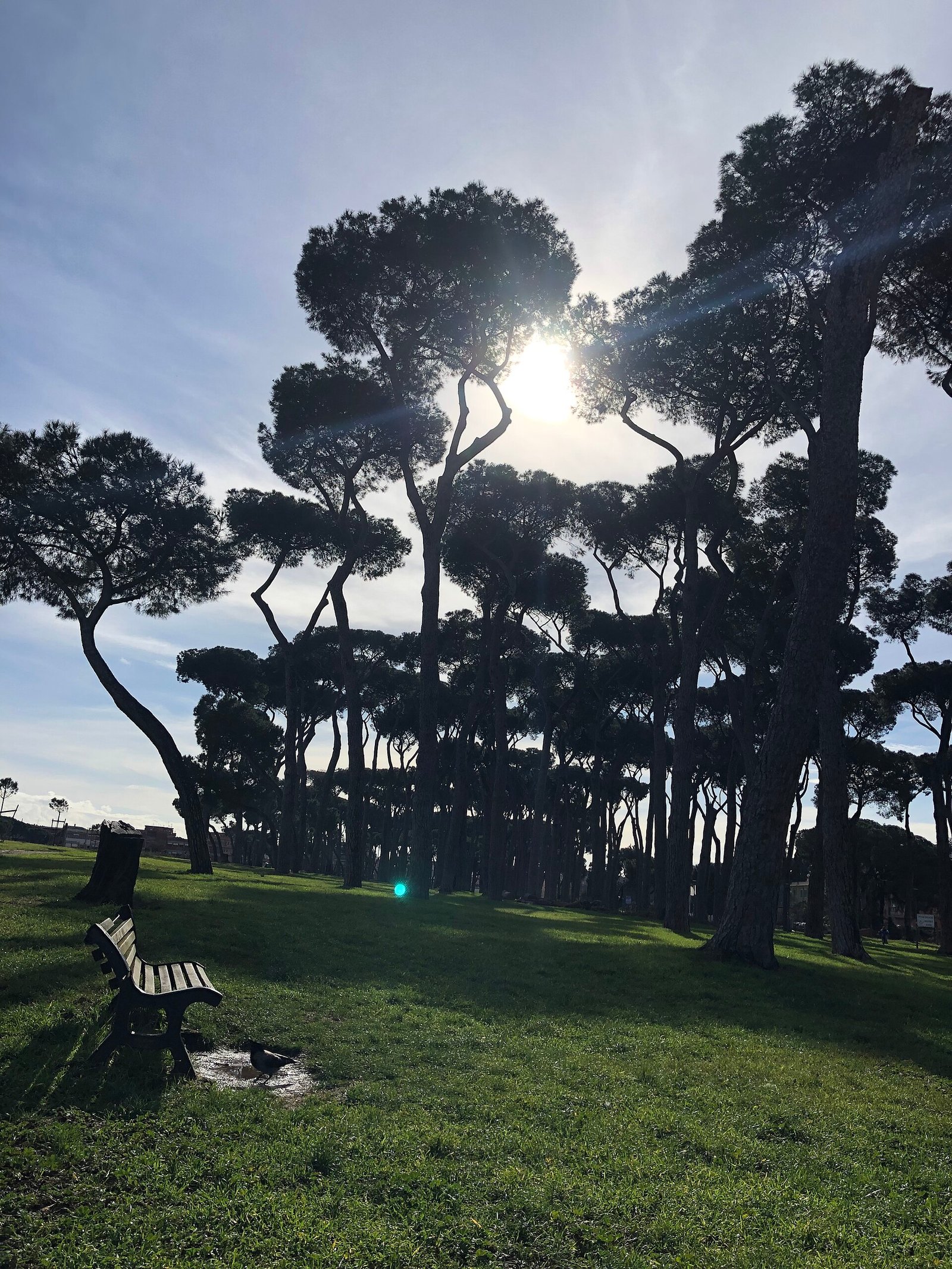
It is one of those places that in Rome are called "green lungs" without those who say it really realizing how precise the definition is. Pineto Regional Urban Park - Pineta Sacchetti occupies a portion of countryside that survived in the heart of the northwestern quadrant of the city, wedged between neighborhoods that in the years of the building boom devoured hectare after hectare of farmland. That this valley stayed green is no accident: it is the result of a civic battle lasting decades, and walking inside it means walking inside a victory that few remember.
You won't find here the list of things to see, which would be short anyway, but the character of a place. Because Pineto Regional Urban Park - Pineta Sacchetti is not visited: it is frequented. And like all things that are frequented, it needs someone to introduce it to you properly.
Where exactly Pineto Regional Urban Park - Pineta Sacchetti is
Geographically we are in the northwestern sector of Rome, in a natural amphitheater bounded by some of the most populous neighborhoods of this part of the city. To the north and east is Balduina, with its buildings climbing the slopes of Monte Mario. To the west stretches Pineta Sacchetti, which lends the park half its name. Further on is Primavalle, with its history as a working-class borgata, and the Val Cannuta that slides toward the Aurelia valley. It is an irregularly shaped, elongated handkerchief of green, following the course of the small valleys carved over the centuries by the waters.
The total area is around 240 hectares, a figure that on paper says little but that on the ground becomes enormous, because Pineto Regional Urban Park - Pineta Sacchetti is not a flat surface: it is all ups and downs of clay hills, ridges and valley floors, so that the perceived distance multiplies compared with the real one. When you walk from one end to the other you have the feeling of crossing a piece of the Agro Romano much larger than it is.
The best way to get your bearings is to keep two reference points in mind: the great ridge of Monte Mario, which closes the horizon to the east like a wooded backdrop, and the route of Via Trionfale, the ancient consular road that climbs from Rome toward the north passing not far from the edges of the park. Anyone who knows these two cardinal points never gets lost, even though, I'll say it right away, the internal signage of Pineto Regional Urban Park - Pineta Sacchetti has never been its strong point.
The boundaries and the urban fabric around Pineto Regional Urban Park - Pineta Sacchetti
One of the characteristics that makes this park special is the way its boundaries intertwine with the built city. There is no continuous fence, there is no clear perimeter: the green slips between the buildings, climbs the slopes almost up to the balconies, looks out behind schools and sports fields. For many residents of the surrounding neighborhoods Pineto Regional Urban Park - Pineta Sacchetti begins literally behind the house, and it is this extreme proximity that determines its character: it is a neighborhood park and a nature reserve at once, two things that usually don't go together.
This hybrid condition is also its fragility. A park so exposed to the city is subject to continuous pressures: rubbish dumped at the edges, illegal dumping that every so often reappears in some hidden valley floor, the erosion of the borders by those who would like to gain a meter of land. Those who love this place have learned to consider it an asset to guard, not only to enjoy.
The great pine wood of stone pines, green heart of the Pineto
The name doesn't lie: the most famous and most photographed stretch of Pineto Regional Urban Park - Pineta Sacchetti is its pine wood, an expanse of stone pines, the ones Romans simply call "pini", with the umbrella-shaped crowns that are by now a symbol of the city's landscape. They are majestic trees, many of them decades old, forming a discontinuous canopy on the slope that gives the park its name, toward Pineta Sacchetti indeed.
Walking under those pines on a scirocco day, when the wind makes the crowns rustle with that sound that resembles the sea, is one of the most beautiful experiences in the park. The stone pine, Pinus pinea, is a plant that in Rome has a very long history: introduced and spread since antiquity for its edible pine nuts and its ornamental value, it became the tree of monumental avenues and historic villas, and here at the Pineto it plays a different role, almost wild, of scrub that has taken back possession of land once cultivated.
It has to be said honestly: the pine wood of Pineto Regional Urban Park - Pineta Sacchetti is not an ancient, intact forest. It is largely a planting that is relatively recent in natural time, grown on soils that had a completely different purpose, and for this reason it needs care. Over the years the oldest trees have suffered from drought, insect attacks and, like all of Rome's pines, the dreaded pine tortoise scale that has decimated entire rows in other parts of the city. But the pine wood holds on, and remains the unmistakable signature of the place.
It is worth pausing a moment on what the presence of these pines means for the landscape. The stone pine is not a tree of dense forest: it grows spaced out, with the trunk rising bare and straight to open only high up in the characteristic umbrella, and this creates under the crowns an airy, bright, walkable space, very different from the darkness of a holm oak wood. Walking in the pine wood of Pineto Regional Urban Park - Pineta Sacchetti means moving through a sort of great natural colonnaded hall, where the light comes down filtered and the ground is carpeted with needles that muffle footsteps and scent the air with resin.
This open character of the pine wood is also what makes it so loved by families and children: it is a space where you can sit, play, spread a blanket, without the sense of enclosure of a dense wood. In summer it becomes the most frequented part of the park precisely because it offers shade without suffocating, and in every season its bright, fragrant atmosphere is what many visitors remember first when they think of Pineto Regional Urban Park - Pineta Sacchetti.
Hills, valleys and clays: the geology of Pineto Regional Urban Park - Pineta Sacchetti
To really understand why this park has the shape it has, you have to look under your feet. The territory of Pineto Regional Urban Park - Pineta Sacchetti is modeled on the sediments that make up a good part of the hills of northwestern Rome: clays and sands of marine origin, deposited when this area was the floor of a sea that millions of years ago lapped what would become Lazio, then uplifted and cut by the waters.
These clays are responsible for two characteristics that anyone who frequents the park soon learns to know. The first is the gentle, rolling shape of the hills, free of outcropping rocks and covered with meadows that in winter turn an intense green and in summer yellow like the stubble of the countryside. The second is mud: after a significant rain, the clay paths of Pineto Regional Urban Park - Pineta Sacchetti become slippery and sticky, and soles load up with that fat, heavy earth typical of the Agro Romano. It is no small detail for those who want to walk there, and I will come back to it further on.
The incisions dug by ditches and small watercourses created the system of small valleys that gives the park its secluded, sheltered look. They are shallow but sharp valleys, which hide those walking in them from the sight of the city, and this is perhaps the main reason for the sense of isolation you feel as soon as you come down from the ridges. It takes only a few meters below the ridge line for the city to vanish from sight and the noise to fade, and this tucked-away geography is the secret of the park's intimate and surprising atmosphere.
The Valle dell'Inferno and the springs of Pineto Regional Urban Park - Pineta Sacchetti
There is, inside Pineto Regional Urban Park - Pineta Sacchetti, a place that bears an ancient and evocative name: the Valle dell'Inferno. It is the most characteristic valley floor of the whole park, a tongue of damp land crossed by small watercourses that rise from the water tables trapped between the clay layers. Water, here, is the element that decides everything: where it surfaces, the ground turns green and lush even in the driest months, and the vegetation changes radically compared with the arid meadows of the ridges.
The springs and veins of water that run through the valley feed a riparian vegetation made of reeds, willows, poplars and that hygrophilous flora that loves wet feet. They are precious microenvironments, because in a city like Rome wetlands of this kind are by now rare, and they host a specific fauna: amphibians, insects tied to water, birds that come to drink. Whoever passes through in silence, at dawn, can surprise movements that in the rest of the park they would never see.
Going down into the Valle dell'Inferno in the first light of morning it is worth stopping a few minutes just to listen to the water. In a city where natural watercourses are almost all covered over, cemented or polluted, hearing the gurgle of a spring flowing freely from the earth is an experience with something moving about it, almost sacred. It is an ancient sound, the same one that the shepherds and farmers who for centuries watered their animals here must have heard, and it is one of the most discreet and least known treasures of Pineto Regional Urban Park - Pineta Sacchetti.
The valley, according to RomaNatura, once extended all the way to the Vatican Walls and was marked by the kilns that worked for the Fabbrica di San Pietro. Today it is among the most natural and least frequented portions of Pineto Regional Urban Park - Pineta Sacchetti. Precisely for this reason it must be respected: these are delicate environments, where excessive trampling and dogs let off the leash can do serious damage. It pays to enter with the same caution with which you enter a fragile room.
The RomaNatura system and the protection of Pineto Regional Urban Park - Pineta Sacchetti
Pineto Regional Urban Park - Pineta Sacchetti is not just any municipal garden: it is a protected natural area, and is part of the system managed by RomaNatura, the regional body that administers the protected areas of the city of Rome. Under RomaNatura fall well-known realities such as the Valle dei Casali Reserve, the Marcigliana, the Tenuta dei Massimi, the Insugherata, the Monte Mario Reserve and several others: an archipelago of green that surrounds and crosses the city, of which the Pineto is one of the most urban pieces.
Being part of this system means that the park enjoys, at least on paper, a protection status that forbids building on it and directs its management toward nature conservation and public use. It is thanks to this status, formally established in the 1990s when the Lazio Region gave legal form to the network of Roman protected areas, that today we can walk in a green valley instead of among the buildings that would certainly have risen in its place.
That said, protection on paper and care on the ground do not always coincide, and those who frequent Pineto Regional Urban Park - Pineta Sacchetti know it well. Resources for maintenance have always been scarce, surveillance intermittent, and much of what works in the park is owed to the commitment of associations, neighborhood committees and simple citizens who have adopted this piece of green as their own. It is a protection from below that coexists with the institutional one, and without which the park would be in much worse shape.
Agricultural history and the estate: the farming roots of the Pineto
Before being a park, this land was cultivated countryside, and the traces of that agricultural past are everywhere, for those who know how to read them. The landscape of Pineto Regional Urban Park - Pineta Sacchetti is the classic landscape of the Agro Romano: meadows used for grazing, arable fields that followed the course of the hills, rows of trees and scattered farmhouses that guarded the holdings. Until a few decades ago, when the city was still far away, here they plowed, grazed and harvested as in any countryside of Lazio.
Tied to the name of the park is the memory of the Sacchetti family, one of the great houses that over the centuries owned vast estates in the Roman countryside. The place names of the area, Pineta Sacchetti indeed, preserve the memory of these noble properties, of the villas and estates that organized the agricultural exploitation of the territory. It was the latifundium system of the Agro Romano, made of large expanses owned by a few families and worked by day laborers and sharecroppers who often came from far away for the harvest season.
Walking in Pineto Regional Urban Park - Pineta Sacchetti you still come across remains of this organization: low walls, traces of old fences, the pattern of the fields that time has not entirely erased. It is a landscape that seems natural but is in reality deeply human, shaped by centuries of peasant labor, and this layering between nature and history is one of the things that makes it fascinating to walk with an attentive eye.
Cinema and Pineto Regional Urban Park - Pineta Sacchetti as countryside near the center
There is a little-told chapter of this park that concerns cinema, and it is one of those I love most. For decades the hills and small valleys of this area represented, for Roman film crews, a very convenient "countryside within reach": a piece of rural landscape, with its meadows, its pines, its isolated valley floors, located a few minutes by car from the studios and from the center of the city.
In the golden season of Italian cinema, when Rome was the capital of the seventh art and Cinecittà worked at full capacity, having rural settings available without having to move the whole production out of town was an enormous advantage. Areas like what is now Pineto Regional Urban Park - Pineta Sacchetti offered exactly this: country backdrops, horizons of green hills, bucolic glimpses where it was enough to frame without too much care to forget that the metropolis was a step away.
No film titles shot in the park itself are documented with certainty, so it pays to limit ourselves to the phenomenon for what it is: this northwestern strip of countryside was, as a whole, a diffuse set, a service landscape of Roman cinema. Walking among the pines you think about how many cameras must have pointed their lens at these same hills, and about the extras in costume who came down into the valley floors to shoot a countryside scene with the city waiting behind the ridge.
This cinematic vocation of the landscape is not a marginal detail, but says something profound about the nature of the place: Pineto Regional Urban Park - Pineta Sacchetti is, literally, a piece of countryside that knew how to pretend to be more remote than it was, offering lenses an illusion of distance that was actually within reach. And it is the same illusion that anyone still lives today who comes down into these valley floors and for an instant forgets the metropolis: the park continues to play, for each of us, the part of the lost countryside at the gates of Rome.
The fauna of Pineto Regional Urban Park - Pineta Sacchetti
Don't expect a safari, but Pineto Regional Urban Park - Pineta Sacchetti is far from poor in animals. The variety of environments, arid meadows, damp valley floors, pine wood, scrub, creates a series of niches that host a surprisingly rich fauna for such an urban context. Birds are the most visible protagonists: you see and hear buzzards soaring on the thermals that rise from the ridges, kestrels hanging motionless in the air to hunt, and a great number of small passerines that enliven the hedges.
In the wetlands of the Valle dell'Inferno and along the ditches live amphibians such as frogs and toads, which in the mating season fill the evenings with song, together with dragonflies and the whole population of insects tied to water. On the meadows it is not rare to cross the tracks of small mammals: hedgehogs, weasels, foxes that come down at night from the wilder areas, and the ever more widespread presence of wild boar, which in Rome have colonized many peripheral green areas and which here too, now and then, leave the mark of their passage by turning over the earth of the meadows.
This fauna coexists at extremely close range with the city, and this is precisely the miracle of Pineto Regional Urban Park - Pineta Sacchetti: a few hundred meters from thousands of apartments, nature continues to do its job. A little silence, a little patience and the willingness to get up early are enough to realize how much life this strip of green hides.
The flora and meadows of the Pineto through the seasons
The flora of Pineto Regional Urban Park - Pineta Sacchetti follows the rhythm of the seasons with a theatricality that deserves to be observed. In spring the meadows explode: the hills are covered with blooms, carpets of daisies and wild chrysanthemums, the wild orchids that those with a keen eye manage to find in the untrodden meadows, the poppies that light the edges of the fields with red. It is the most beautiful time of year to come here, when the air is mild and the green has a freshness that lasts a few weeks.
With the arrival of the Roman summer, hot and relentless, the landscape changes face: the meadows turn yellow, the grass dries in the sun, and the pine wood becomes the most precious refuge, the only place to find shade and a bit of coolness. It is the landscape of the scorched countryside, the one nineteenth-century painters portrayed so many times, describing the Agro Romano as a land both severe and poetic.
Autumn brings back the rain and with it the green in the meadows, while winter gives clear days in which, from the ridges of Pineto Regional Urban Park - Pineta Sacchetti, the crisp air lets the gaze range far. Every season has its character, and those who frequent the park all year learn to read it like a living calendar, in which every bloom and every change of color marks the passing of the months.
The relationship with Monte Mario and the nature reserve
Pineto Regional Urban Park - Pineta Sacchetti is not an island: it is part of a wider system of green that characterizes the northwestern quadrant of Rome, and its most illustrious neighbor is without doubt Monte Mario, the highest hill in the city, also covered by a nature reserve managed by RomaNatura. The two parks look at each other closely, separated by the urban fabric but tied by an affinity of landscape and a shared history of protection.
Monte Mario, with its holm oak woods and its panoramic terraces looking over the city, offers a more wooded and shady environment than the open meadows of the Pineto, but together the two form a precious ecological corridor, a route along which fauna can, at least in part, move. Those who love walking can conceive this corner of Rome as a mosaic of green to explore by degrees, passing ideally from the rural character of Pineto Regional Urban Park - Pineta Sacchetti to the more forest character of Monte Mario.
This ideal continuity is also a hope for the future: creating and defending green corridors that connect the protected areas is one of the challenges facing the Rome of the coming decades, and the Pineto, because of its position, is a strategic piece. Defending it means defending not just 240 hectares, but the very possibility that nature can keep breathing inside the city.
Everyday Life in the Pineto Regional Urban Park - Pineta Sacchetti
The best thing about the Pineto Regional Urban Park - Pineta Sacchetti is that it's a lived-in park, not an open-air museum. At the right times, early in the morning, late in the afternoon, on weekends, it fills with a varied and pleasant crowd: runners racking up kilometers on the ups and downs of the trails, cyclists tackling the muddy climbs on mountain bikes, families with children coming down from the neighborhoods for a breath of fresh air, and of course dog owners, who find here one of the largest spaces in the area to let their animals run.
Over the years it has become the kingdom of urban trekking: the practice of walking for exercise and for pleasure, using the city's green spaces without having to go far from home. The Pineto Regional Urban Park - Pineta Sacchetti is perfect for it, because it offers real elevation changes, respectable distances and the authentic feeling of being in the countryside while being within walking distance of tens of thousands of people. Anyone who wants to train seriously finds a real challenge here, with climbs that put the legs to the test.
There's also a quieter side, for those who simply come to sit on a lawn, read in the shade of a pine, watch their kids play. The park is open and free of charge, with no barriers or fixed hours at most of its entrances, and this freedom is its greatest gift in a city where open, free spaces are increasingly precious.
Entrances and Accessibility at the Pineto Regional Urban Park - Pineta Sacchetti: Let's Be Honest About It
I have to be honest with you, because it would be wrong to tell you only the idyllic side. Accessibility at the Pineto Regional Urban Park - Pineta Sacchetti is its Achilles' heel. The entrances are many but scattered, often poorly marked, and some open in spots that people from outside the neighborhood struggle to find: a gap between buildings, the end of a residential street, a gate that looks private but actually leads into the park. Don't expect a monumental main entrance with a parking lot and an information board: you enter this park from the side, almost on the sly.
Some entrances, moreover, are steep and awkward, with stairways or dirt tracks that make it hard to get in for people with mobility problems, for anyone pushing a stroller, for anyone who isn't especially fit. It's not a park designed for universal accessibility, and that's an objective limit you should know about before you come. The condition of the trails, as I said, depends a lot on the weather: when it's dry you can walk them without any problem, after rain they become muddy and treacherous.
That said, with a little advance information and the right shoes, the Pineto Regional Urban Park - Pineta Sacchetti is thoroughly enjoyable. My advice is to work out in advance, maybe with a map, the most convenient entrance for the side you want to visit, and to allow for the fact that discovering this park takes a touch of adventurous spirit, which, frankly, is part of its appeal.
Dogs, Bikes and Sports: Good Rules for the Pineto
The Pineto Regional Urban Park - Pineta Sacchetti is dearly loved by people with dogs, and rightly so: few other places in this part of Rome offer so much open space where an animal can run. But precisely because it's a protected natural area, and not a simple garden, it's worth remembering a few good rules for sharing it. In the most delicate zones, the Valle dell'Inferno, the damp valley bottoms, the meadows in bloom, keeping your dog under control isn't nitpicking: it's respect for the wildlife that finds refuge here, for the amphibians that nest in the water, for the birds that sit on their eggs on the ground.
The same goes for bicycles. The park is ideal terrain for mountain biking, with its ups and downs and its dirt tracks, but speed mixes poorly with pedestrians, children and animals, and the clay trails suffer erosion when they're ridden in the mud. A bit of common sense, slowing down at intersections, avoiding the wettest trails after rain, lets everyone share the place without spoiling it.
Anyone who does sports in the Pineto Regional Urban Park - Pineta Sacchetti, in short, would do well to remember that they're using a nature reserve, not an open-air gym. It's a subtle but important difference, and those who get it help keep this place beautiful for everyone who comes after.
On this subject, a little sermon is in order: coexistence among the different visitors to the Parco regionale urbano del Pineto - Pineta Sacchetti works only if everyone gives up a bit of ground to the others. The runner slows down next to the child, the cyclist rings the bell at the curve, the dog owner calls the animal back when passing someone who is afraid of dogs, and everyone together takes care not to leave traces of their passage. No dense regulations or threatening signs are needed: all it takes is that tacit pact of mutual respect which, when it's there, makes the park a civil and welcoming place, and when it's missing turns it into a field of small daily conflicts.
The Associations and the Civic Defense of the Parco regionale urbano del Pineto - Pineta Sacchetti
If we can walk in the Parco regionale urbano del Pineto - Pineta Sacchetti today, we owe it, in large part, to a long season of civic mobilization. Ever since the years when building speculation threatened to wipe out this valley, groups of citizens, neighborhood committees and environmental associations fought to have the green space protected instead of paved over. It's a typically Roman story, that of a piece of nature saved not by a decision from above but by pressure from below, made of petition drives, demonstrations, appeals and stubbornness.
Even today the life of the park is driven by this associative energy. There are groups that organize guided walks, trail cleanup days, environmental education initiatives for schools, surveys of flora and fauna. These groups often make up for the shortcomings of the official management, and keep alive the bond between the neighborhood and its park.
Visiting the Parco regionale urbano del Pineto - Pineta Sacchetti with an awareness of this history changes the way you walk in it. It's not green space that fell from the sky, but a conquest wrested from concrete through years of civic battles, and like all conquests it must be defended every day with the same stubbornness with which it was won. Anyone who loves it ends up, sooner or later, feeling part of this large extended family of people who consider the park their own.
The Agro Romano Landscape the Pineto Preserves
There is a value in the Parco regionale urbano del Pineto - Pineta Sacchetti that goes beyond greenery and nature: it is the preservation of a historic landscape that has almost vanished elsewhere. The gentle hills, the grazing meadows, the isolated pines on the ridges, the hidden valley floors make up the classic picture of the Agro Romano, the countryside that for centuries surrounded the city and that Grand Tour travelers described in words of melancholy beauty.
This landscape, once boundless, was gradually eroded by the urban expansion of the twentieth century, until it was reduced to a few surviving islands. The Pineto is one of these islands, and walking in it means taking a trip back in time, seeing with your own eyes how the countryside at the gates of Rome looked before buildings erased it. It is a cultural heritage as well as a natural one, and perhaps it is precisely this double nature that makes it so moving.
From the ridges of the Parco regionale urbano del Pineto - Pineta Sacchetti, turning to look at the hills sloping down toward the valley, with the pines standing out against the sky, you get the distinct feeling of looking at a piece of ancient Rome that survived by miracle. It's an image worth the trip, and one that no postcard could ever truly capture.
This link with landscape painting is no accident. In the nineteenth century, when flocks of foreign artists came to Rome for their apprenticeship, the countryside of the Agro was one of the favorite subjects: those painters left the city with easel and paints to portray the hills, the ruins scattered among the meadows, the isolated pines against the sky, the shepherds with their flocks. The landscape that the Parco regionale urbano del Pineto - Pineta Sacchetti preserves today is, in essence, the same one those artists painted, and walking in it means stepping inside one of those paintings, breathing the air that inspired generations of landscape painters in love with the Roman countryside.
When to Go to the Parco regionale urbano del Pineto - Pineta Sacchetti
The answer to when to come depends on what you're looking for. If you want the most beauty, spring is unbeatable: from March to May the meadows bloom, the temperatures are ideal and the light has that golden quality that makes every shot perfect. It's the time when the Parco regionale urbano del Pineto - Pineta Sacchetti is at its best, with bright colors and fragrant air.
Autumn is the second season to prefer, with its clear days, the green that returns after the first rains and the warm colors that soften the landscape. The Roman summer, with its scorching heat, makes the park a place to visit only in the cool hours of early morning or late afternoon, seeking the shade of the pine grove. The sun beating down on the yellow, unsheltered meadows can be merciless.
Winter, finally, gives the Parco regionale urbano del Pineto - Pineta Sacchetti a severe, silent charm, with few visitors and those crisp days when the clean air after a storm lets you see far. In every season the practical advice stays the same: check the weather of the previous days, because how passable the clay trails are depends almost entirely on how much rain has fallen recently.
As for the time of day, if I may allow myself a personal preference, there's nothing like first thing in the morning. Coming to the Parco regionale urbano del Pineto - Pineta Sacchetti at dawn, when the grass is still wet with dew and the light is soft and low, means having the park almost to yourself, sharing it only with the earliest runners and with the wildlife, which is most active at that hour. It's the moment when the place shows its most authentic and most poetic face, and anyone who manages to wrest an extra hour from sleep is always rewarded.
How to Get to the Parco regionale urbano del Pineto - Pineta Sacchetti
Reaching the Parco regionale urbano del Pineto - Pineta Sacchetti by public transport is possible, because the neighborhoods around it, Balduina, Pineta Sacchetti, Primavalle, are served by several bus lines that climb up from the north Rome area. If you arrive by metro, you can rely on the nearest stations of the network and then continue on the surface, keeping in mind that the last stretch has to be done on foot anyway, often uphill.
By car the area is reachable but parking, as everywhere in this densely populated part of the city, is a problem: you park on the streets of the surrounding neighborhoods, with all the difficulties that this entails at peak hours. My advice, if you can, is to come without a car, perhaps taking advantage of the fact that the Parco regionale urbano del Pineto - Pineta Sacchetti is, for a great many Romans, literally within walking distance from home.
Once you're nearby, the only real difficulty is finding the right entrance, for the reasons of poor signage already described. It's worth studying on a map in advance where the gaps are in relation to the part of the park you want to visit, so you don't end up circling a block looking for the right gate, something that, I confess, has happened to me more than once too.
The Trails and Routes of the Parco regionale urbano del Pineto - Pineta Sacchetti
Anyone who wants to really get to know the Parco regionale urbano del Pineto - Pineta Sacchetti has to be ready to walk, and quite a lot, because it's by walking its trails that the character of the place is revealed in full. The network of paths is not formalized as in a mountain park, with numbered trail markers and signs at every junction. It is rather a tangle of paths worn by use, which follow the ridges, drop into the valley floors and climb the opposite slopes, forming loops and branches that you learn with repeated visits. You get a little lost at first, but it's a pleasant kind of lost, because the park is small enough not to frighten and varied enough to surprise at every turn.
The route I recommend most to first-time visitors is the one that goes down from the panoramic ridges toward the Valle dell'Inferno and then climbs back up toward the pine grove. In a couple of hours of easy walking it passes through all the environments that make the Parco regionale urbano del Pineto - Pineta Sacchetti unique, from the open, sunbaked meadows to the damp areas of the valley floor, to the fragrant shade of the stone pines. It's an itinerary that packs an extraordinary variety of landscapes into a small space, and lets you understand in a single walk why this strip of green is worth so much.
A practical tip for walkers: always keep in mind where the city is in relation to the park. From the ridges you can see the buildings of the surrounding neighborhoods, and this helps you orient yourself even when you drop into the valley floors, where the view closes in and your sense of direction can get lost. With a little attention you never really get lost, but the feeling of isolation you get in the heart of the Parco regionale urbano del Pineto - Pineta Sacchetti is so intense that for a few minutes you forget you are in the middle of Rome.
The Silence and the Sounds of the Pineto
One of the finest discoveries you make visiting the Parco regionale urbano del Pineto - Pineta Sacchetti has to do with sound, or rather its absence. In the most sheltered valley floors, when the wind drops, a silence forms that seems impossible in Rome: a full silence, made not of emptiness but of the subtle noises of nature, the buzzing of insects, the rustle of a lizard in the dry grass, the distant song of a bird. It's a silence you have to look for, because in the areas closer to the edges the hum of the city always filters through, but in the right spots, at the right hours, you can still find it intact.
This sound contrast is, for me, one of the strongest experiences the park offers. Coming down from a ridge where you can still hear the traffic and finding yourself, a few dozen meters lower, immersed in an almost total quiet, produces an almost physical effect of decompression, as if your ears and your mind were relieved of a weight. It's the same reason so many residents of the surrounding neighborhoods come here not to do sports, but simply to switch off, to find a few minutes of peace in the middle of their days.
The most characteristic sound of the Parco regionale urbano del Pineto - Pineta Sacchetti remains, however, that of the wind in the pines. When the scirocco or the tramontana moves the big umbrella-shaped crowns, the rustling that results has a marine, oceanic quality, which fills the air and accompanies your walk like a natural soundtrack. It's a sound I always carry with me when I return to the city, and it's enough to make me want to come back.
Environmental Education and Schools in the Parco regionale urbano del Pineto - Pineta Sacchetti
One aspect of the Parco regionale urbano del Pineto - Pineta Sacchetti that deserves to be told, because it often stays invisible to those who visit only for a stroll, is its educational function. For the many schools of the surrounding neighborhoods, this park is an irreplaceable outdoor classroom: a place where children and teenagers can experience nature firsthand without having to leave the city, learn to recognize trees and flowers, observe insects and birds, understand how an ecosystem works by seeing it live instead of in books.
The environmental associations and volunteer groups that animate the park have been organizing educational activities for years, guided visits for school groups, field workshops that bring the new generations closer to the value of protected nature. It's precious, patient work, which sows awareness in those who will one day inherit the responsibility of defending these places. Anyone who has seen a class of children go down eagerly into the Valle dell'Inferno to look for frogs knows how much this aspect matters, and how much the Parco regionale urbano del Pineto - Pineta Sacchetti is, in fact, a great scattered school.
In all this there is also a deep emotional dimension. The children who learn to love the park when they're small become the adults who will defend it when they're grown, and this passing from one generation to the next is perhaps the best guarantee of survival for a place so fragile and exposed. Every time I see a group of kids walking among the pines with a naturalist explaining what they're looking at, I think that the future of the Parco regionale urbano del Pineto - Pineta Sacchetti is, in some way, in good hands.
The Ecological Value of the Parco regionale urbano del Pineto - Pineta Sacchetti for the City
Beyond the beauty and the pleasure it offers to those who visit, the Parco regionale urbano del Pineto - Pineta Sacchetti performs for Rome a series of ecological functions that are rarely recognized but are of capital importance. The first is that of a reservoir of biodiversity: in the middle of a sea of concrete, these 240 hectares of different environments host a variety of plant and animal species that would find no more room elsewhere in the city, and serve as a refuge and a reserve for wildlife.
The second function is climatic and hygienic. A green mass of this size mitigates the summer heat of the surrounding neighborhoods, counters the "heat island" effect that afflicts densely built cities, filters dust and improves air quality, absorbs rainwater and reduces the risk of flooding. These are the so-called "ecosystem services," concrete benefits that a park like the Parco regionale urbano del Pineto - Pineta Sacchetti offers free of charge to tens of thousands of people, and that would have an enormous economic value if only one tried to quantify them.
Then there is the psychological and social function, less measurable but no less real: having a free green space nearby, at no cost, contributes to the mental health and quality of life of those who live in the neighborhoods around it. In an age when the link between nature and well-being is increasingly recognized, the Parco regionale urbano del Pineto - Pineta Sacchetti is, for this part of Rome, an open-air public health resource, whose value goes far beyond the perimeter of its meadows.
The Threats and the Future of the Parco regionale urbano del Pineto - Pineta Sacchetti
It would be dishonest to close this account without talking about the shadows that weigh on the Parco regionale urbano del Pineto - Pineta Sacchetti, because such a precious place is also a place under perpetual threat. The urban pressure on its edges has never fully subsided: every so often projects resurface that would like to erode some piece of green space, building requests, attempts to shrink the protected area. The vigilance of citizens and associations is what, time after time, has beaten back these threats, but the game is never closed once and for all.
Then there are the problems tied to management and maintenance. The resources allocated to the Pineto - Pineta Sacchetti Regional Urban Park have always been insufficient, and this shows in the state of the trails, in the lacking signage, in the difficulty of countering the dumping of waste and the illegal discharges that periodically appear in some hidden corner. The health of the pine wood itself, threatened by drought and by parasites such as the scale insect that has struck the pines of all of Rome, would require constant interventions that do not always arrive.
Yet I am optimistic, and I'll explain why. The future of the Pineto - Pineta Sacchetti Regional Urban Park is tied to the affection of the community around it, and that affection is alive and deep like few others. As long as thousands of people continue to consider it their own home, to walk its trails, to defend it from threats and to pass on the love of it to their children, this strip of surviving countryside will keep resisting in the heart of the city. And that is why I write about it: because knowing it is the first step to loving it, and loving it is the first step to saving it.
A curiosity about the Pineto - Pineta Sacchetti Regional Urban Park
The most beautiful curiosity concerns the name itself, and the fact that the Pineto - Pineta Sacchetti Regional Urban Park is one of the very rare parks of Rome to officially bear the designation "regional urban park". It is a particular legal category, conceived precisely for those natural areas that are completely enclosed within the fabric of the city and that therefore require a different type of protection from that of reserves located in open countryside.
In practice, the definition acknowledges that this is a piece of nature that lives inside the city, with the city pressing against it, and that it must be defended precisely as such. It is a subtlety for insiders, certainly, but it says a lot about the singularity of the place: not an urban park in the sense of a public garden, and not a remote reserve either, but something in between and precious, a hybrid that holds together the wild and the metropolitan.
It is curious that, while thousands of people simply call it "il Pineto" or "the park behind my house", its full name instead keeps this almost solemn designation. It is as if the place had two identities: the familiar, everyday one of those who live it, and the official, slightly lofty one of documents. Both, in their way, are true.
Something nobody tells you about the Pineto - Pineta Sacchetti Regional Urban Park
What nobody tells you is that the Pineto - Pineta Sacchetti Regional Urban Park changes character completely depending on the time of day, and not only because of the light. In the middle hours of weekdays, when runners and dog owners are at work, some parts of the park, especially the most isolated valley bottoms, can be very solitary, to the point that a woman alone, or anyone who does not feel at ease, would do well to choose the busier hours and routes.
I don't mean to alarm you: the Pineto is not a dangerous place, and it is loved and watched over by a vast community of regular visitors. But its nature as an extensive, articulated park with little official surveillance means the sense of safety depends a lot on the presence of other people. At peak hours (early morning, late afternoon, weekends) it is very lively and serene. In certain dead moments of the day, in certain remote corners, the solitude can make itself felt.
The flip side is that this very solitude, if sought with judgment and perhaps in good company, is what makes the Pineto - Pineta Sacchetti Regional Urban Park so special: the possibility of finding yourself, a stone's throw from a million people, in a valley where you hear nothing but the wind among the pines. It is up to you to balance the two with a bit of common sense, choosing carefully the hour and the corner right for what you are looking for at that moment.
The advice I give you for visiting the Pineto - Pineta Sacchetti Regional Urban Park
The most important advice I can give you is banal and decisive at once: come with the right shoes and after a few days of dry weather. Arriving at the Pineto - Pineta Sacchetti Regional Urban Park in city shoes, the day after a storm, means ending up stuck in clayey mud, with the walk ruined and the shoes fit for the trash. The trails of this park, when it rains, become slippery clay slides, and nothing spoils a visit like spending the time worrying about where to put your feet.
The second piece of advice is to choose the access intelligently. Given the lacking signage and the dispersion of the entrances, identify beforehand on a map the gap nearest to the side that interests you (the pine wood toward Pineta Sacchetti, the Valle dell'Inferno, the panoramic ridges) and enter from there, instead of trusting to chance. You will save yourself aimless circling around the blocks and arrive directly in the heart of the part you want to see.
The third, and perhaps the most precious, is to slow down. The Pineto - Pineta Sacchetti Regional Urban Park is not a place to cross in a hurry to tick a box: it is a place to savor, where the value lies in the detail, in the silence, in the changing light. Bring water, maybe something to eat, sit down on a lawn and give yourself time to listen. That is how the park reveals itself, and no shortcut will do.
I add a fourth piece of advice, almost a philosophy: come back several times, in different seasons. The Pineto - Pineta Sacchetti Regional Urban Park is not exhausted in one visit, because it is a place that changes face radically between the flowering spring and the parched summer, between the rainy autumn and the clear winter. Anyone who knows it only at one time of year knows just one face of it. Anyone who returns after months discovers a new park each time, and ends up building a relationship with the place made of layered memories, of overlapping seasons, of small discoveries that accumulate. That is how a park stops being a destination and becomes a presence in one's life.
Another well-known fact, yet rarely cited
A fact that many know but almost nobody explicitly links to the Pineto - Pineta Sacchetti Regional Urban Park is that this green space is part of one of the largest belts of protected areas of any European capital. Rome, with its RomaNatura system and with the whole of the regional and state parks surrounding it, possesses an amount of protected nature inside and around its borders that few other metropolises on the continent can claim. The Pineto is one of the tiles of this extraordinary mosaic.
It is taken for granted, as the things you have under your own house are taken for granted, but it is a heritage of inestimable value. While other big cities struggle to create a few hectares of new green, Rome possesses thousands already existing, inherited from its particular history as a city grown in the middle of the countryside and not yet fully able to devour it. The Pineto - Pineta Sacchetti Regional Urban Park is living proof that nature, in Rome, has managed to resist right into the inhabited fabric.
Remembering this gives the walk a different perspective. You are not simply crossing a neighborhood park: you are walking in one of the links of an immense green network, which wraps around the city and which represents one of its least celebrated treasures. It is a well-known fact, yet it seems almost incredible, and it makes you look at the pines with different eyes.
It is worth adding that this green network is made up not only of large famous parks but also of small tiles like the Pineto - Pineta Sacchetti Regional Urban Park, which precisely because of their position inside the inhabited fabric have a particular value. They are the places where most citizens truly meet protected nature, without having to move to the outskirts or out of town: the daily front door, so to speak, to a far larger heritage. Defending and enhancing these urban tiles means bringing nature closer to people's real lives, and it is perhaps the most concrete environmental challenge that a city like Rome has ahead of it.
The right photo to take at the Pineto - Pineta Sacchetti Regional Urban Park
If I had to point out a single image to take away from the Pineto - Pineta Sacchetti Regional Urban Park, I would tell you to look for the classic backlight of the pines on the ridges at sunset. In late afternoon, when the sun sinks toward the west, the umbrella crowns of the stone pines stand out black against a sky that passes from gold to orange, and the silhouette of those isolated trees on the hills becomes the quintessence of the Roman landscape. It is the photo that tells the park in a single shot: the countryside, the pines, the evening light.
To succeed, climb one of the ridges that overlook the valley bottoms and position yourself so that the pines are between you and the setting sun. Wait for the moment when the light turns raking and warm, the one photographers call the golden hour, and let the hills in the background get lost in a golden haze. A lone pine in the foreground, the descending valley, the fiery sky: nothing else is needed.
An alternative, for those who love details, is the photograph of the flowering meadows in spring, with the carpet of daisies and poppies in the foreground and the pine wood in the background. In this case the best time is the morning, with the fresh light and the dew still on the grass. In both cases, the secret of the right photo at the Pineto - Pineta Sacchetti Regional Urban Park is patience: wait for the light, don't chase it, and let the landscape offer itself.
Some important events that happened here in history
The history of the Pineto - Pineta Sacchetti Regional Urban Park is above all a recent history, and it is the story of its own salvation. The most important event is without doubt the establishment, in the 1990s, of the regional system of protected natural areas of Rome, which gave legal form to the protection of this and many other portions of green. That was the moment when the Pineto valley officially stopped being buildable land and became, by law, a park to be defended.
But even before that came the years of the battles, decisive even if less precisely documentable: the mobilizations of the neighborhood committees, the opposition to building plans that wanted to subdivide the hills into lots, the growing awareness that the remaining green space had to be saved before it was too late. These are events made of meetings, flyers, packed city council sessions, of that grassroots politics that rarely ends up in history books but that changed the face of the city.
Further back in time, the history of the place merges with that of the Agro Romano: the centuries of agricultural use, the system of the great estates, the labor of the farmhands, the advance of the city that from the Second World War onward climbed the hills until it reached the edge of this valley. Every era left its trace, and the Parco regionale urbano del Pineto - Pineta Sacchetti that we walk through today is the layered result of all these events, the last of which, and the most important, was simply that of not having been destroyed.
Who Has Passed Through the Parco regionale urbano del Pineto - Pineta Sacchetti
Those who have passed through these hills over the centuries are above all the humble people of the Agro Romano: the shepherds who led their flocks to graze on the meadows, the farmhands who came down from the mountains for the harvest season, the farmers of the estates who plowed and sowed this land. They are nameless figures, the true protagonists of the long agricultural history of the Parco regionale urbano del Pineto - Pineta Sacchetti, and their silent presence is imprinted in the landscape they shaped with the labor of generations.
Film crews have also passed through here, as we have seen: directors, camera operators, extras and actors who in the great era of Roman cinema used this countryside as a natural set, seeking in this north-western strip of green the rural scenery their stories needed. And there have passed, and still pass today, the scientists and naturalists who study the flora and fauna of the park, the volunteers of the associations, the teachers who bring school groups to discover nature in the city.
But above all, every day an anonymous and devoted crowd of ordinary Romans passes through here: the dawn runners, the weekend families, the elderly people taking their daily walk, the kids from the neighborhoods who have their space of freedom here. They are, at bottom, the true "characters" of the Parco regionale urbano del Pineto - Pineta Sacchetti: the living community that inhabits it, defends it and loves it, and that makes it not a monument to visit, but a place pulsing with daily life. And it is to them, more than to any famous name, that this park truly belongs. Because the Parco regionale urbano del Pineto - Pineta Sacchetti is not famous, and maybe that's for the best: its greatness lies precisely in being a neighborhood treasure, a place that doesn't appear in tourist guides and yet is worth, for those who live it, as much as and more than many celebrated destinations. It is the park of those who walk it every day, and anyone who gets to know it becomes part, without realizing it, of this long chain of people who have been passing through here for centuries and falling in love with it.
Quick Questions
Where is Parco del Pineto
Parco del Pineto is in the north-western sector of Rome, in a valley enclosed between the Balduina, Pineta Sacchetti and Primavalle neighborhoods, with the Val Cannuta running down toward Via Aurelia. It covers about 240 hectares of clay hills, meadows and pine grove. To get your bearings, keep two reference points in mind: the ridge of Monte Mario, which closes the horizon to the east, and Via Trionfale, which runs a short distance from the edges of the park.
Do you have to pay to enter Parco del Pineto
No, the park is free and open. At most of its entrances it is open with no barriers and no strict hours, and there is no continuous fence. It's a protected natural area of the RomaNatura system, not a city garden, so a few rules of respect apply: in the Valle dell'Inferno and on the damp valley floors keep your dog under control, and on a bicycle avoid the wettest trails after rain.
How do you get to Parco del Pineto
By public transport you get there by bus: Balduina, Pineta Sacchetti and Primavalle are served by several lines. From the nearest metro stations you still have to continue on the surface, and the last stretch is on foot, often uphill. By car, parking is a problem, because you park on the streets of the surrounding neighborhoods. Study on a map beforehand which entrance you need: the gaps are scattered and poorly signposted.
Is Parco del Pineto accessible with a stroller or wheelchair
With difficulty, and it's best to know that beforehand. Accessibility is the park's weak point: some entrances are steep and awkward, with stairways or dirt paths that complicate entry for people with mobility problems or anyone pushing a stroller. It's not a park designed for universal accessibility. The trails are clay: when it's dry you can walk them without problems, after rain they become muddy and slippery.
What is the best time to go to the Pineto
Spring, from March to May, when the meadows bloom and the temperatures are ideal. Autumn is the second choice. In summer go only early in the morning or in the late afternoon and look for the shade of the pine grove, because on the meadows the sun offers no shelter. In every season check the weather of the previous days: it's best to go after a few days of dry weather and with shoes suited to mud.
How long does a walk in the park take
The route recommended for a first visit takes a couple of hours of easy walking. It starts from the panoramic ridges, goes down into the Valle dell'Inferno and climbs back up toward the pine grove, so you pass through the open meadows, the damp areas of the valley floor and the shade of the stone pines. The trails have no numbered markers or signs at the junctions. To keep your sense of direction, keep an eye on the buildings of the neighborhoods that you can see from the ridges.
Article written by the editorial team of TourLeaderPro, contact them for Private/Corporate/V.I.P. Tours and Experiences.
Planning a trip to Rome? The English-language guides for visiting the city are on ItalyPlanner.com.