Tenuta dei Massimi Nature Reserve
In short. The Tenuta dei Massimi Nature Reserve covers 774 hectares in the western quadrant of Rome, between the Corviale, Trullo, Bravetta and La Pisana neighborhoods, and it runs right up against the Grande Raccordo Anulare.
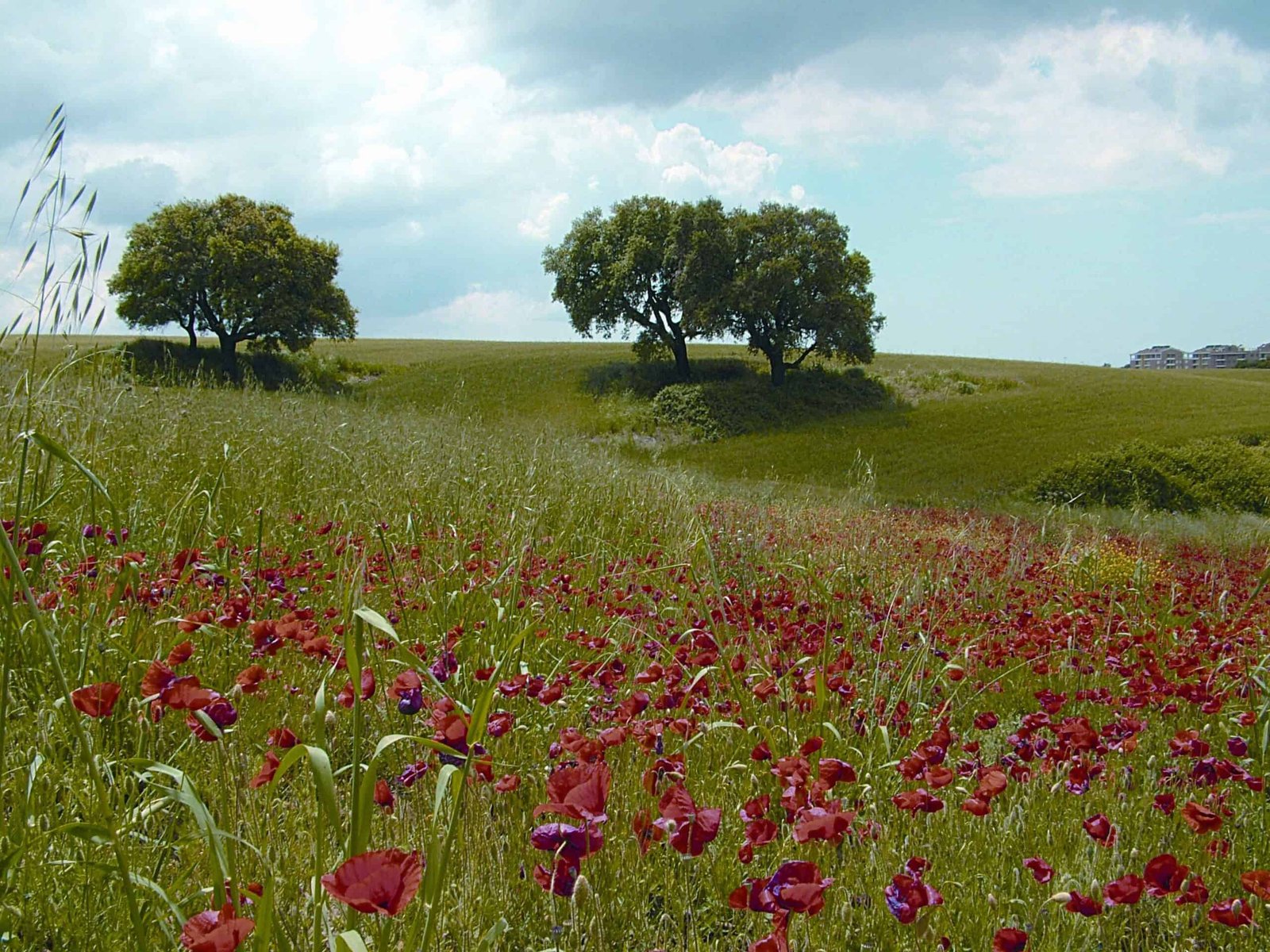
The Tenuta dei Massimi Nature Reserve covers 774 hectares in the western quadrant of Rome, between the Corviale, Trullo, Bravetta and La Pisana neighborhoods, and it runs right up against the Grande Raccordo Anulare. The managing body is RomaNatura, based at Villa Mazzanti at Via Gomenizza 81, phone 06 35405310, while the reserve contact given by the manager is La Pisana 00163 Roma, phone 06 65746519. The area was established by regional law no. 29 of October 6, 1997 and has no ticket: access to the public roads and dirt tracks is free, with no opening hours and no reservation. The sore point, as anyone who walks there knows, is that a large part of the land remains private agricultural property. The routes inside the woods are done only on guided visits organized by RomaNatura and local associations. The rest is covered on Via di Brava, Via di Ponte Pisano, Via del Fosso della Magliana and the side roads that come down from Via di Bravetta. You get there by bus 808 and the terminus of line 881 on the Portuense side, or by tram 8 to the Casaletto terminus and then on foot from Via del Forte Bravetta. By car you leave the car along Via della Pisana or Via Portuense, with no dedicated parking. For the calendar of guided hikes, it's best to contact RomaNatura directly, which publishes the seasonal outings on its website.
If you want to understand how this reserve fits into Rome's green system, the natural comparison is with the nearby areas: the Valle dei Casali Nature Reserve to the northeast and the Tenuta di Acquafredda to the north, both run by the same body. You'll find the full picture of Rome's destinations on the tourist attractions page.

Where the Tenuta dei Massimi Nature Reserve is
Take a map of Rome and look for the triangle between Via Portuense to the south, Via della Pisana to the north and the Grande Raccordo Anulare to the west. That green void, the largest in the western sector of the city inside the ring road, is the Tenuta dei Massimi Nature Reserve. Administratively it falls within the La Pisana and Ponte Galeria urban zones, in Municipio XI. To the east it is bounded by the buildings of Corviale, Trullo, Pino Lecce and Bravetta, to the south by the floodplain of the Tiber, and to the west by the barrier of the Raccordo, which here runs a few hundred meters from the fields.
The terrain is the classic Agro Romano between the river and the sea: a tuff plateau that erosion has cut into and broken up into ridges and small valleys. The work was done by the Tiber and its minor tributaries, the Brava, Acquafredda, Bravetta and Maglianella streams, and above all the Fosso della Magliana, which collects the whole basin and carries it to the river. Toward the north, where the reserve borders the Valle dei Casali plateau, the land is decidedly hilly. Going south toward the Tiber, the ground flattens out and becomes plain.
The access from Via di Bravetta and the eastern side
The side that Romans reach most easily is the eastern one, that is, Via di Bravetta side. It is the road that climbs from the Casaletto toward Forte Bravetta and continues toward the countryside. Here the built-up city frays, the last apartment buildings give way to vegetable gardens, and from some side roads you can see the woods and plateaus of the reserve opening up. The classic route starts from Via del Forte Bravetta, near the terminus of tram 8 at the Casaletto, crosses the Valle dei Casali past the recently restored 17th-century villa of Villa York, touches the perimeter of Forte Bravetta and descends west to the cork oak grove of the Torretta dei Massimi on Via della Pisana. It is about five kilometers with a total elevation change of about 100 meters. An easy walk, but a long one, with a whole day to allow for if you stop to eat.
Watch out for a misunderstanding I hear repeated often. From Via di Bravetta you don't enter a fenced reserve with a gate and a ticket office. You enter a landscape, walking on dirt roads and paths that cross agricultural properties still in use. Respecting fences and closed gates is not a matter of good manners, it's the only way the owners will keep tolerating people passing through.
The entrances from Via della Pisana, Via Portuense and Via della Magliana
The entrances recognized by the reserve's maps are four: Via della Vignaccia at the corner with Via A. Foschini, Via della Magliana at the corner with Via L. Candoni, Via della Pisana and Via Portuense. All four fall on private land, so they are regularly used only during guided visits. Outside the organized outings, the public roads that let you cross the Tenuta dei Massimi Nature Reserve and see its woods up close are Via di Brava, Via di Ponte Pisano and Via del Fosso della Magliana, plus the stretch of Via Portuense between Corviale and the Raccordo.
How to get to the Tenuta dei Massimi Nature Reserve by public transport
The useful surface lines are the 808, which goes up the Portuense and has its reference stop on the south side of the reserve, and the 881, whose terminus serves the same side. From the center the most convenient way is still tram 8 to the Casaletto terminus, then on foot along Via del Forte Bravetta. If you come by car, take exit 31 of the Raccordo toward La Pisana or the Magliana exit and park along the street. There are no dedicated parking areas, and on spring weekends the edges of Via di Brava fill up. Check the schedules and frequencies on the transit company's website, because in the Portuense quadrant holiday service thins out a lot.
What the Tenuta dei Massimi Nature Reserve really protects
Different numbers circulate for the surface area of the reserve. The managing body gives 774 hectares in its official sheet, while other publications speak of figures between 850 and 870 hectares, probably because they include adjacent areas and properties merged at different times. The prudent figure, the one worth keeping, is the manager's: just under 800 hectares. To give you an idea, it is an area close to that of Villa Doria Pamphili multiplied by four. We are talking about the largest reserve in the western sector of Rome.
The founding law is regional law 29 of October 6, 1997, the same one that in a single stroke created the system of urban protected areas entrusted to RomaNatura. The Valle dei Casali, Insugherata, Marcigliana, Decima Malafede and Aniene Valley came in the same package. The criterion was not scenic beauty. It was ecological function. The Tenuta dei Massimi works as a corridor, that is, a biological link between the built-up city and the Tiber floodplain, and from there toward the coastal plains. Interrupting that corridor with more concrete would mean isolating the animal populations of the western quadrant into fragments too small to survive.
The mosaic of the soil says it better than any adjective: 56 percent is agricultural, 18 percent forest, the rest Mediterranean scrub, pasture meadows and wetlands. It is not a park, it is a countryside that survived inside the Raccordo, and the difference weighs on everything: on its look, its use, its rules.
The Fosso della Magliana, the backbone of the Tenuta dei Massimi
The protagonist of the landscape is not a forest, it is a watercourse. The Fosso della Magliana runs for about 19 kilometers before handing itself over to the Tiber, and its drainage network drew everything you see: the gentle rises, the side valleys, the steep slopes that stayed wooded because the plow couldn't reach them.
A valley floor as wide as no other in the Agro Romano
There is a geomorphological detail worth noting, and you can see it with the naked eye: the floor of the Fosso della Magliana valley, between Via della Pisana and the mouth, is unusually wide compared to the other valleys of the Agro. The valleys of Rome's streams are normally narrow, sunken, almost gorges. This one opens into a grassy plain that in places exceeds 200 meters in width. The practical consequence is that water has always stagnated here, and that for centuries this was a land of marshes.
The wetlands and the Stagno del Cinerino
The reclamation works channeled the stream and drained the marshes, but the water did not go away entirely. Natural and artificial surface pools of modest size remain, with reed vegetation, and above all the seasonal astatic pools, that is, those bodies of water that appear with the autumn rains and dry up in summer. The most important has a name worth remembering: the Stagno del Cinerino, which in the winter months reaches about 650 square meters. Around it grow willows, rushes, vervain, speedwell and cattails. Inside, newts and frogs breed.
Astatic pools are a fragile and underrated environment. Precisely because they dry up, they host no fish, and without fish amphibians can lay their eggs with some chance of success. Every time one of these pools is filled in or turned into a permanent drinking trough, a newt population disappears in silence. In the Tenuta dei Massimi Nature Reserve several survive, inside the Bosco Somaini and in the cultivated areas.
The woods of the Tenuta dei Massimi Nature Reserve
The wooded areas have been preserved mainly along the edges of the hill slopes, where the gradient discouraged plowing, while the valley floors stayed as pasture and extensive cropland. The result is a pattern of bands: dark strips of woodland following the contour lines, and below them the light green of the fields. Whoever arrives from the Corviale side, from the panoramic hill above the Serpentone, sees exactly this, and it is one of the least known and most beautiful views of western Rome.
The Sughereta della Pisana, the densest woodland in the city
40 hectares of cork oaks and Turkey oaks between Via di Brava and Via della Pisana, in the Tenuta della Torretta dei Massimi: the Sughereta della Pisana is the densest and largest woodland in the entire municipal territory of Rome. The fact always surprises anyone hearing it for the first time, because in the popular imagination the cork oak belongs to Sardinia or the Maremma, not to the Roman periphery. In reality the cork oak and Hungarian oak series is the potential vegetation of a good part of the acidic soils of volcanic origin in the Agro, and these 40 hectares are its most compact remnant.
In front of a mature cork oak, look at the bark: the cork comes off in thick plates and leaves the trunk reddish, a color no other Roman oak has. It is an adaptation to fire, which in the Mediterranean basin has selected species able to survive ground fires.
The pseudo-cork oak, the hybrid that exists in Rome only here
The real rarity of the reserve is a plant that almost nobody can recognize: the pseudo-cork oak, scientific name Quercus crenata, a hybrid between the Turkey oak and the cork oak. It has the leaf of the Turkey oak with some features of the cork oak and an intermediate bark, only slightly corky. In the Massimi cork oak grove a few large specimens survive, and they are the only ones identified in the whole Rome area. A spontaneous hybrid between two oaks that have lived together for millennia on the same soil: it is a living document of the plant history of this piece of Agro, and it is worth more than many things you photograph in the center.
The Bosco Somaini and the Bosco dell'Infernaccio
On the Portuense side stretches the second forest lung, about 30 hectares of Turkey oak woodland mixed with cork oaks and Mediterranean scrub that crosses Via Portuense and is called Bosco Somaini, or Bosco dell'Infernaccio in local place names, or Casetta Mattei Somaini on the manager's maps. The name comes from the property that the farm of the same name ran here. Turkey oak and Hungarian oak dominate, chestnut, laurel and hackberry appear sporadically, and in the understory you find the strawberry tree, a Mediterranean shrub that in late autumn bears white flowers and red fruit at the same time.
The Bosco Somaini is also the sector of the reserve richest in small basins and springs, and it is also the place where the presence of the badger is reported with the greatest continuity. If I had to point to a single spot in the Tenuta dei Massimi Nature Reserve to understand what the Roman countryside was before building expansion, I would point to this one.
The surviving Roman countryside inside the Tenuta dei Massimi Nature Reserve
Vast flat areas occupied by cropland and pasture meadows, hills and small side valleys covered with woodland on the steeper slopes: this is the typical look of the Roman countryside, the one that the 18th and 19th century landscape painters painted thousands of times and that today survives in very few places inside the Raccordo. Here it survives across 800 hectares.
Vigne, farmhouses and fountains: what was here before
In past centuries this land offered the eye woods, marshes, streams, monuments, farmhouses, fountains and lookout towers. On this land people have always practiced farming and livestock raising. In the Renaissance the flowering of urban villas encouraged the settlement of the vigne, the Roman garden where fruit, vegetables in quantity and grain were grown. A Roman vigna was not just a vineyard, it was a peri-urban estate with a main house, vegetable garden and orchard, which supplied the town house of the owning family.
Malaria, depopulation and the latifundium
Then came malaria. In the centuries after the Renaissance the fever caused the depopulation of part of the countryside: the marshes of the Magliana valley floor were exactly the kind of environment where the Anopheles mosquito thrived, and people withdrew to the high ground and to the city. On the higher, less exposed areas, however, suburban villas continued to be built as vacation places, and the structure of the latifundium consolidated.
That structure has remained unchanged to this day, and so has the agricultural use of the soils. It sounds like a land registry detail, but it is the reason the Tenuta dei Massimi Nature Reserve exists today: a few owners with large holdings meant few subdivisions, no small-scale fragmentation, and so a landscape that arrived intact to the 1997 law. Where the latifundium was broken up, as along the Portuense, concrete moved in right away.
The reclamation of the Agro and the Somaini farm
A lesser-known chapter concerns the reclamation works of the early 20th century. Between the 1920s and the 1930s, as part of the reclamation of the Agro Romano, a landholding of about 600 hectares arose here, to which dozens of farming families from the Veneto were called to work, moved to Rome to set up a farm of grain, vegetables and cattle raising. The farm was dissolved in the middle of the 20th century. The rural buildings of the hamlet were later converted into apartments. Local sources place the end of operations at slightly different times, between the 1950s and the 1960s, and on this point it's best to stay cautious. The fact remains that the place name Somaini, now attached to a protected woodland, comes from a 20th-century agricultural enterprise and not from a baronial family of the Renaissance.

The flora of the Tenuta dei Massimi Nature Reserve
The plant mosaic is made up of forest areas for 18 percent, agricultural areas for 56 percent and Mediterranean scrub for the remaining share. Within this frame very different environments live side by side.
The oaks: Turkey oak, cork oak, downy oak, Hungarian oak
The woodland formations are dominated by the Turkey oak, a deciduous oak with an acorn whose cup is curly, accompanied by the cork oak, the downy oak on the drier slopes and the Hungarian oak, which in Rome finds one of its last urban refuges. In the northern zone of the reserve the plant communities clearly belong to the cork oak and Hungarian oak series. Where the woodland thins out, broom and tree heath appear, and in the clearings low scrub.
The flowerings of the Tenuta dei Massimi: tazetta narcissus and gladiolus
Among the herbaceous species, it's worth coming here in the right season for two flowerings. The tazetta narcissus opens its white flowers with a yellow corona between late winter and early spring, in clusters along the damp edges of the meadows. The wild field gladiolus, with magenta-pink flowers, dots the cropland around May. These are two flowerings that have died out in many Roman neighborhoods with the paving over of the outlying meadows, and here they hold on. Personal opinion, no beating around the bush: an April afternoon along Via di Brava with gladioli in the wheat is worth more than an hour in line for a museum in the center.
Wetland vegetation
Along the Fosso della Magliana and around the pools a completely different vegetation develops: marsh reed, cattails, willows and poplars, and in the more stable spots rushes, vervain and speedwell. It is a thin band, often only a few meters wide, but it supports the entire food chain of the reserve's amphibians and water birds.
The fauna of the Tenuta dei Massimi Nature Reserve
The fauna reflects that typical of farming systems, with a few presences you wouldn't expect on the outskirts of a European capital.
Mammals: the badger, the porcupine, the hazel dormouse
The most interesting case is the badger, a medium-sized mammal reported in the Bosco Somaini. Its presence is known in the immediate vicinity of the area, on the Arrone, at Castel di Guido and on the coast north of Rome, but much less often this close to the city. It is indirect signs that prove its presence: tracks, droppings left in latrines dug on purpose, dens with several entrances. Seeing one is almost impossible, because it is a nocturnal and elusive animal.
Alongside the badger live the porcupine, which has come to colonize almost all of Rome's green areas and is recognizable by the quills lost along the paths, the fox, the hazel dormouse, a small arboreal rodent that builds spherical nests in shrubs, and, among the common rodents, the wood mouse. In open areas wild rabbits appear, and at dusk bats hunting over the fields.
Birds: barn owl, woodpeckers, raptors
Over the fields hunt the kestrel, which stops in beating flight above the stubble, and the black kite, a migratory raptor with a slightly forked tail that in spring scouts the Magliana valley floor. In the woods you can hear the great spotted woodpecker and, at night, the barn owl, which here finds in the farmhouses and abandoned rural buildings the nesting sites it has lost in the rest of the city. In summer the bee-eaters arrive, which dig their nests in the earth walls of the streams and are recognized by their liquid call even before their colors. Buzzards, starlings, goldfinches and larks complete the picture, and along the waters little egrets and gray herons.
The amphibians of the Tenuta dei Massimi: toads, frogs and newts
The small wetlands provide habitat for the common toad and the green toad, the green frog and the Italian tree frog, and the crested and spotted newts. The list seems trivial to whoever doesn't work with them. For people who study amphibians it is a small piece of news, because in urban environments these species have been in steep decline for decades. The Italian crested newt, in particular, is a species of Community interest.
The Casale di Massimi and the historic buildings of the Tenuta dei Massimi
The name of the reserve comes from a landed estate, not from a monument, and this explains why anyone arriving in search of a castle is thrown off. The Tenuta dei Massimi was one of the great holdings that divided the Agro west of Rome, and its hub was the manor farmhouse with its agricultural outbuildings, the tower and the service buildings. The Massimo family, one of the oldest of the Roman patriciate, left its name to several places in the western quadrant of the city, from the Massimina onward. The ownership history of the complex, which according to local reconstructions also passed through Riario and Lancellotti hands, needs to be checked against archive sources before being taken as certain, and here I prefer to stop at the sure fact: the place name indicates an estate, and the estate gave its name to the reserve.
The Torretta de' Massimi and the cork workshop
The building you can most easily approach today is the Torretta de' Massimi, at Via della Pisana 600, inside the estate that holds the cork oak grove. A farm operates here that organizes walks along the cork trail, workshops and activities in the organic vegetable garden, phone 06 45422645. It is the best place to understand how a cork oak is worked: the stripping is done by hand, with an ax, at intervals of years, and a badly stripped tree dies. Seeing the gesture explains the species better than any sign.
Casetta Mattei
Toward the Portuense the historic reference is Casetta Mattei, a villa farmhouse datable to around 1700 that gave its name to the whole surrounding neighborhood. The name refers to the great Roman Mattei family, owner of estates and palaces in the city. The building is now absorbed into the urban fabric, and its presence marks the boundary between the built-up city and the woods.
The Somaini hamlet
The hamlet of the former Somaini farm, born with the 20th-century reclamation, has been converted into a residential area: the stables and warehouses have become homes. In the reserve, along the Portuense, a few farms remain active that sell their products directly, among them the farm at Via della Magliana 854, phone 06 6553124, specialized in grain, legumes and flours, and the organic farm at Via della Pisana 950, with seven hectares of vegetables.
The relationship with the papal villa of the Magliana
South of the reserve, where the stream reaches the Tiber plain, stands the Castello della Magliana, the hunting villa of the Renaissance popes that takes its name from that stream. It does not fall within the boundaries of the Tenuta dei Massimi Nature Reserve, but it belongs to the same story: it is there that the pontiffs came to hunt in the countryside the reserve protects today, and it is that hunting custom that preserved for centuries the woods from which the present Turkey oak woodlands descend. The relationship between papal hunting and the survival of the woodland is the great conservation paradox of the Agro Romano.
The Tenuta dei Massimi, the Valle dei Casali and the Parco del Pineto
Confusing the RomaNatura reserves with one another is very easy, and it happens even to people who live in the area. It is worth lining up the three names, because they are different things.
The Valle dei Casali, the border sister
The Valle dei Casali extends over 466 hectares, was established by the same 1997 law and occupies the strip immediately to the northeast, between Villa Pamphili and the Tiber. The heights that the Tenuta dei Massimi includes along its northern edge are the immediate offshoot of the Valle dei Casali plateau: geologically they are the same body, divided by an administrative boundary and a few roads. The Valle dei Casali preserves a system of villas and farmhouses, among them the 18th-century Villa York and the monumental complex of the Buon Pastore. The Tenuta dei Massimi preserves the woods instead. The walking route that links the two reserves, about two kilometers from the Casa del Parco at Via del Casaletto 400 to the plateaus with the cork oaks, is the most instructive walk you can do in this sector of Rome.
The Parco del Pineto, something else
The Parco del Pineto does not border the Tenuta dei Massimi at all. It is an urban regional park of 243 hectares established in 1987, in the northwestern quadrant between Via Trionfale and Valle Aurelia, and it occupies the valley once called Valle dell'Inferno, the one of the kilns that fired the bricks for the Fabbrica di San Pietro. Only the managing body links it to the Tenuta dei Massimi. If someone tells you the cork oak grove is at the Pineto, correct them: at the Pineto there are stone pines and an industrial history, at the Massimi the grain countryside and the cork oaks.
The other reserves of the same system
To complete the picture: to the north the Tenuta di Acquafredda and the Tenuta di Mazzalupetto Quarto degli Ebrei, to the west beyond the Raccordo the Castel di Guido Oasis, to the south the Tenuta di Castelporziano and Laurentino Acqua Acetosa. On the Portuense, a short distance away, there is also Via Portuense Necropolis, which tells the story of the same road in Roman times.
A curiosity about the Tenuta dei Massimi Nature Reserve
The curiosity is not the cork oaks: it is the trees that grow among the cork oaks and Turkey oaks without being either one or the other. In the Massimi cork oak grove a few large specimens of Quercus crenata survive, the pseudo-cork oak, a spontaneous hybrid between the Turkey oak and the cork oak. They are the only ones identified in the whole Rome area. There are no others: not at Castel di Guido, not at the Marcigliana, not at Decima Malafede. Only here.
What does it mean, for someone who hasn't studied botany? It means that two species of oak, one deciduous and one evergreen, which in the rest of Italy cross rarely and only where they have lived together for a very long time, here have lived together long enough to produce offspring. The pseudo-cork oak has an intermediate leaf, slightly leathery, which falls late or stays dry on the tree all winter, and a barely corky bark, thick but not workable. It was described as a separate species in the 19th century and for a century botanists have debated its status as species or hybrid: today the hybrid interpretation prevails, but the taxonomic debate is not closed.
The practical consequence is that the Tenuta dei Massimi Nature Reserve holds a genetic heritage that cannot be reproduced elsewhere in the municipality of Rome. A fire in those 40 hectares would not burn just a woodland: it would erase a document. And this, much more than the view, is the reason the reserve exists.
Something nobody tells you about the Tenuta dei Massimi Nature Reserve
It needs to be said clearly, because no brochure writes it: the Tenuta dei Massimi Nature Reserve, after its establishment in 1997, never received the work that would have made it truly usable. There is no network of numbered and marked trails, no equipped rest areas, no visitor center open to the public with fixed hours. The four entrances shown on the maps fall on private land and are used only during accompanied visits. Whoever arrives expecting an urban park with gates and signs goes home disappointed.
This doesn't mean the reserve is inaccessible. It means you visit it in another way: by walking the public roads that cross it, that is Via di Brava, Via di Ponte Pisano, Via del Fosso della Magliana and the stretch of Portuense between Corviale and the Raccordo, and by booking the guided outings into the woods. Local associations and the managing body itself organize seasonal walks, often for a token fee.
There is a second aspect nobody mentions: the reserve is crossed by real vehicle traffic. Via di Brava and Via della Pisana are connecting roads, used by cars at high speed, without continuous sidewalks. Walking with children along those edges requires constant attention. Whoever wants a quiet stroll in the greenery, with small children and a stroller, won't find it in this reserve: they'll find it at Villa Pamphili. Better to know before loading the family into the car.
The advice I give you for visiting the Tenuta dei Massimi Nature Reserve
There is only one piece of advice and it is worth more than all the others put together: don't come to improvise, book a guided visit and choose it in spring. Between March and May the reserve shows everything it has to show, that is the flowerings of the tazetta narcissus and the gladiolus, the pools still full with newts in the water, raptors in breeding activity and green fields. In July and August the same landscape is yellow, dusty and without shade outside the woods, and the pools are dry.
Second piece of advice, on method: build the outing as a loop between two reserves. Start from the tram 8 terminus at the Casaletto, take Via del Forte Bravetta, cross the Valle dei Casali, descend west and finish at the Torretta dei Massimi on Via della Pisana. Five kilometers, 100 meters of elevation change, no difficulty, but allow the whole day and a packed lunch. The return is by bus.
Third: closed shoes and long pants, always. The valley floors are clayey and become slippery after rain. In tall grass, from April on, there are ticks, and this is a concrete problem in all the grazed areas of the Agro. Check yourselves when you get back. Bring water, because you won't regularly find drinking fountains along the route. And forget the road bike: here you need fat wheels or nothing.
Last recommendation, which is also a firm opinion: if you have only one afternoon and want to see the best piece, head straight for the cork oak grove between Via di Brava and Via della Pisana and give up on the rest. The Bosco Somaini turns out to be just as beautiful but much harder to approach without a guide.
Another well-known fact, yet rarely cited
Everyone knows that Rome is the greenest city in Europe for agricultural land within its municipal boundaries. Almost nobody connects that record to a precise function, which the Tenuta dei Massimi Nature Reserve performs better than almost any other Roman protected area: acting as an ecological corridor.
The concept is simple and is repeated in the documents of the managing body without anyone explaining it to the public. An animal population closed inside an isolated green fragment, surrounded by roads and buildings, dies out: too few individuals, too much inbreeding, no genetic exchange. For it to survive, continuous links between fragments are needed. The Tenuta dei Massimi, with its 800 hectares laid out diagonally between the built-up city and the Tiber floodplain, is exactly that link: it joins the Pamphili and Valle dei Casali system, upstream, to the countryside of the coast, downstream. The badger of the Bosco Somaini exists because that corridor exists. The day the corridor were interrupted, it would disappear within a few years.
The second little-cited fact concerns the Fosso della Magliana: 19 kilometers of watercourse that collect the waters of a largely paved urban basin. When it rains hard, that water has to go somewhere, and the agricultural valley floors of the reserve work as a natural flood basin. The service they render the city appears in no budget, but it is certainly measurable in years of heavy rain. Whoever considers these countrysides an empty space waiting for a use should do the math on the cost of the reinforced-concrete alternatives.
The right photo to take at the Tenuta dei Massimi Nature Reserve
The best photograph isn't taken inside the reserve, it's taken looking at it from above. The spot is the panoramic hill reached from the public garden at the end of Via Vincenzo Vela, behind the Serpentone of Corviale: continue west for about one kilometer and you arrive at an open rise from which you dominate the whole expanse of woods and plains of the Tenuta dei Massimi Nature Reserve. In the foreground the longest building in Italy, in the background the Roman countryside. That contrast, which tells in a single frame 60 years of Rome's urban history, is the strongest image you can take home from here.
Light and time: late afternoon, with the sun going down toward the Raccordo and lighting the wooded ridges from the side. In the morning the same scene is backlit and flat. Bring a medium lens, between 35 and 85 millimeters equivalent: an extreme wide angle shrinks everything and loses the depth of the woodland bands.
The second shot to try is a close one: the trunk of a stripped cork oak along Via di Brava, with the bark peeled off in plates and the reddish wood underneath. You need diffuse light, so a slightly overcast day. In full sun the contrast between light and dark burns everything. The third, for those with patience, is the Stagno del Cinerino in winter, when the sheet of water reflects the willows. You shoot it from the bank, without going in, because there are newt eggs in that water.
A practical warning: many beautiful views are seen from inside private properties. Photographing from the road is legitimate, entering is not. And drones, over a protected area, require authorizations that almost nobody has.
Some important events that happened here in history
No famous battle, no coronation: the history of this piece of the Agro is made of slow processes, which however changed the face of the territory more than a single event would.
The first is the Renaissance settlement. Between the 15th and 16th centuries, with the return of the papacy to Rome and the growth of the baronial families, the countryside west of the city fills up with vigne, that is peri-urban estates with a house, vegetable garden and orchard. The papal villa of the Magliana, a little to the south, becomes the center of gravity of the pontifical hunts: the popes and their courts frequent these lands for hunts lasting days. It is the period of greatest splendor of the agrarian landscape described by the sources, with woods, marshes, streams, monuments, farmhouses, fountains and lookout towers.
The second is malaria. From the 17th century on the fever empties the valley floors: whoever can moves away, whoever stays works by the day and goes back to sleep far from the waters. The countryside is depopulated, the woodland regains ground on the slopes, the latifundium consolidates. Paradoxically it is this sanitary misfortune that saved the woods the reserve protects today.
The third is the reclamation of the early 20th century. Between the 1920s and the 1930s the sanitation works of the Agro Romano bring here a large farm of about 600 hectares and dozens of farming families from the Veneto, moved en bloc to set up grain growing, vegetable growing and cattle raising. The stream is channeled, the marshes drained. The farm is dissolved in the middle of the century and the rural hamlet is later converted to housing: an entire cycle of industrial farm life, opened and closed in one generation.
The fourth is the building expansion after World War II, with the borgate of the Portuense and La Pisana and, in the 1970s, the construction site of Corviale on the edge of the plateau. The city reaches the border of this countryside and stops there, for reasons that are partly orographic and partly about land ownership.
The fifth event is entirely administrative, and for the survival of the area it is worth as much as all the others: regional law 29 of October 6, 1997, published in the official bulletin on November 10, 1997, which establishes the Tenuta dei Massimi Nature Reserve and entrusts it to RomaNatura. From that day building was no longer allowed. Without that signature, today there would be a neighborhood here.
Who passed through the Tenuta dei Massimi Nature Reserve
The first name is the one the reserve carries: the Massimo, one of the oldest families of the Roman patriciate, whose name remains attached to several places in the western sector of Rome and to the estate that the reserve inherited as a place name. The second is that of the Mattei, another great Roman house, which left its name to Casetta Mattei, the 18th-century villa farmhouse by the Portuense from which the whole neighborhood takes its name.
Then there are the popes. They didn't enter this reserve, which didn't exist, but they traveled these countrysides: the papal villa of the Magliana, a little downstream, was a hunting residence of the Renaissance pontiffs, and the hunts took place in the estates around, among the woods and marshes of the stream. For a couple of centuries the papal court passed through here on horseback, with dogs and falconers, and that custom protected the woodland more than any restriction.
In the 20th century very different people passed through: the Veneto farming families who arrived with the reclamation, about 90 households moved from the Veneto to make the farm work. They left surnames, farming techniques and an orderly landscape of fields that can still be partly read. They are the real human protagonists of this countryside in the last century, and nobody has ever dedicated a plaque to them.
Finally, the filmmakers pass through. The reserve is listed as a location by the regional film commission, with access on a paved road, water and electricity available: the countryside near Corviale and the Portuense was for decades the natural backdrop of a certain Roman suburban cinema, and it continues to be. If while watching an Italian film set in the borgata you think you recognize a plateau with cork oaks, you probably really did recognize it.
And every week the groups of the nature associations and hiking environmental guides pass through, who are the only ones who truly know the interior trails. If you want to enter the woods, it's with them that you enter.
Frequently asked questions about the Tenuta dei Massimi Nature Reserve
How much does it cost to enter the Tenuta dei Massimi Nature Reserve?
Entering the Tenuta dei Massimi Nature Reserve costs nothing, because there is no ticket: the public roads and dirt tracks that cross the reserve can be freely walked. You pay only the contribution that may be requested for the organized guided visits, which remain optional anyway.
Where is the Tenuta dei Massimi Nature Reserve?
The Tenuta dei Massimi Nature Reserve is in the triangle between Via Portuense to the south, Via della Pisana to the north and the Grande Raccordo Anulare to the west, in Rome's Municipio XI, in the La Pisana and Ponte Galeria urban zones. It is the largest green void of the western sector of the city inside the ring road.
What are the opening hours of the Tenuta dei Massimi Nature Reserve?
The Tenuta dei Massimi Nature Reserve has no fixed hours, because there are no gates and no single entrance: the public roads that cross it, such as Via di Brava and Via di Ponte Pisano, can be walked freely at any time of day, with the sole warning to move around in daylight.
Is the Tenuta dei Massimi Nature Reserve wheelchair accessible?
No. As it stands today the Tenuta dei Massimi Nature Reserve does not offer equipped routes for people with mobility disabilities, because the tracks are unpaved dirt roads, often muddy, with slopes and uneven surface. Some adjacent lodging facilities, such as an agriturismo at Via della Pisana 950, declare themselves accessible instead.
Is the Tenuta dei Massimi Nature Reserve suitable for children?
With children the simplest choice in the Tenuta dei Massimi Nature Reserve is a guided visit, or the estate of the Torretta de' Massimi at Via della Pisana 600, where a farm offers the cork trail, workshops and activities in the organic vegetable garden, an offering designed for school groups that works well up to age 12.
When is the best time to visit the Tenuta dei Massimi Nature Reserve?
The best period for the Tenuta dei Massimi Nature Reserve is spring, without hesitation: from March to late May you get the flowerings of the tazetta narcissus and the gladiolus, the full pools with newts and the activity of the raptors. Late autumn, from late October to December, is the second good moment, with the strawberry tree in bloom and the colors of the woods at their peak.
How big is the Tenuta dei Massimi Nature Reserve?
The managing body gives the Tenuta dei Massimi Nature Reserve a surface of 774 hectares, although other publications report figures between 850 and 870 hectares, probably because they include adjacent areas merged at different times. The prudent figure to keep is the manager's, just under 800 hectares.
Where does the name of the Tenuta dei Massimi Nature Reserve come from?
The name of the Tenuta dei Massimi Nature Reserve comes from a landed estate, not from a monument: the estate was one of the great holdings that divided the Agro Romano west of the city, and its hub was the manor farmhouse with the tower and the service buildings, which belonged to the Massimo family, one of the oldest of the Roman patriciate.
How to really visit the Tenuta dei Massimi Nature Reserve
Let's line up the options, because there are few and they need to be chosen well.
On your own, along the public roads
You walk Via di Brava, Via di Ponte Pisano, Via del Fosso della Magliana and the stretch of Via Portuense between Corviale and the Raccordo. You see the woods from the outside, the cropland, the ridges, a few farmhouses. Reasonable duration: two to four hours, on foot or by bike with suitable wheels. Cost zero. Limit: you don't enter the cork oak grove or the Bosco Somaini.
With guided visits to the Tenuta dei Massimi
It is the only way to cross the woods and reach the wetlands. The outings are organized by RomaNatura and local associations, with contributions starting from token amounts, and they must be booked. Typical duration is a whole day with a packed lunch. For the updated calendar it's best to contact the body directly at 06 35405310.
With a guide or a professional escort
For organized groups, school classes and companies, the simplest route is to turn to licensed professionals who know the area and handle logistics, permits and transfers. Those working on Rome find a reference in the professional tourist services in Rome and in the tourist escort service with certified escorts. For tailor-made outings in a small group there are formats dedicated to customized experiences for small groups. On an area with no signage and with private access, the difference between a guide who knows the owners and improvisation is everything.
For those coming from abroad
Whoever is organizing a trip to Rome and wants to understand where to place a morning of Roman countryside within an urban itinerary will find the English-language guides useful: the overview of the best things to do in Rome, the page dedicated to Lazio and the Italy travel guide help fit the RomaNatura reserves between the classic visits without losing half a day in transfers.
The Tenuta dei Massimi Nature Reserve with children
With children the choice is forced: a guided visit, or the estate of the Torretta de' Massimi at Via della Pisana 600, where the farm offers the cork trail, workshops and activities in the organic vegetable garden. It's an offering designed for school groups and works well up to age 12: you touch the bark, you understand what cork is, you see the farmyard animals. The rest of the reserve, with busy roads and no sidewalks, is not suitable for the youngest.
For a free day outdoors with small children, the reasonable solution remains Villa Doria Pamphili, a few kilometers away, with lawns, fountains and avenues closed to traffic. The Tenuta dei Massimi is an outing for older kids, with the right shoes and an adult who can explain what you're looking at.
Accessibility of the Tenuta dei Massimi Nature Reserve
As it stands today, the reserve does not offer equipped routes for people with mobility disabilities: the tracks are unpaved dirt roads, often muddy, with slopes and uneven surface. Some lodging facilities inside or adjacent declare accessibility instead: the agriturismo at Via della Pisana 950 declares itself accessible to people with mobility disabilities, and the same goes for the restaurant at Via Portuense 863. For a visit that includes the landscape without tackling the dirt, the best compromise is a drive along Via di Brava and Via di Ponte Pisano with stops at the viewpoints.
When to go to the Tenuta dei Massimi Nature Reserve
Spring, without hesitation. From March to late May you get the flowerings, the green of the fields, the activity of the raptors and water in the pools. The second good moment is late autumn, from late October to December: the strawberry tree bears flowers and fruit together, the first rains fill the Stagno del Cinerino, the colors of the mixed woodland are at their peak. Winter is enjoyable on clear days, with long visibility over the countryside.
Summer, no. Between July and August the landscape is scorched, the wetlands are dry, shade outside the woods doesn't exist and the middle hours of the day are unbearable. If you really must come in summer, set out at dawn and be back by 10:00.
What's around the Tenuta dei Massimi Nature Reserve
Within a radius of a few kilometers you eat well and at agricultural-outskirts prices. On the Portuense, at number 863, there is a restaurant with about 150 seats, a play area, closed Mondays. At numbers 958 and 962 there is a pizzeria with large parking and a summer outdoor area, and at 958 also a tavola calda open for lunch. The farms of the area sell directly: grain, legumes and flours at Via della Magliana 854, organic vegetables at Via della Pisana 950. Prices and hours should be confirmed by phone before leaving.
To lengthen the day: the Valle dei Casali with Villa York and the Buon Pastore complex, Via Portuense Necropolis on the route of the ancient consular road, and further north Insugherata, the other great Roman cork oak grove, which with the Tenuta dei Massimi forms the pair of the two surviving cork oak woods of the city.
Quick questions about the Tenuta dei Massimi Nature Reserve
How much does it cost to enter the Tenuta dei Massimi Nature Reserve?
Nothing. There is no ticket: the public roads and dirt tracks that cross the reserve can be freely walked. You pay only the contribution that may apply to organized guided visits.
What are the opening hours of the Tenuta dei Massimi Nature Reserve?
There are no hours, because there are no gates and no single entrance. Organized activities, however, have meeting times set case by case.
Do you need to book to visit the Tenuta dei Massimi Nature Reserve?
To walk along the public roads, no. To enter the cork oak grove, the Bosco Somaini and the private areas, yes, because access is allowed only with accompanied visits, which must be booked.
How big is the Tenuta dei Massimi Nature Reserve?
The managing body gives 774 hectares. Other sources report higher figures, up to 870 hectares, probably including adjacent areas: it's best to take the manager's figure.
When was the Tenuta dei Massimi Nature Reserve established?
With the regional law of October 6, 1997 number 29, published in the official bulletin of November 10, 1997. Management is entrusted to RomaNatura.
How do you get to the Tenuta dei Massimi Nature Reserve by public transport?
By buses 808 and 881 on the Portuense side, or by tram 8 to the Casaletto terminus and then on foot along Via del Forte Bravetta. Schedules and frequencies should be checked on the transit company's website.
Can you go by bicycle to the Tenuta dei Massimi?
Yes, but with a mountain bike or gravel bike: the surface is unpaved and after rain it turns clayey. A road bike is only good on the connecting asphalt, which however has traffic.
Can you bring dogs to the Tenuta dei Massimi?
In public areas yes, on a leash. On agricultural properties and during guided visits the organizers' rules apply, and when livestock is grazing the leash is not a formality.
Are there marked trails in the Tenuta dei Massimi?
No. The reserve has no network of numbered and marked trails: you orient yourself on the roads and dirt tracks, or you go accompanied.
Is the Tenuta dei Massimi Nature Reserve suitable for children?
For older kids yes, for small children not much, because of the traffic on the crossing roads and the lack of sidewalks. For the youngest, better the educational activities organized at the Torretta de' Massimi.
Where is the largest cork oak grove?
Between Via di Brava and Via della Pisana, in the Tenuta della Torretta dei Massimi: 40 hectares, the densest and largest woodland in the municipal territory of Rome.
What animals do you see at the Tenuta dei Massimi?
With reasonable probability kestrels, buzzards, starlings, goldfinches and larks. In spring black kites and bee-eaters. Fox and porcupine leave evident traces. The badger is present in the Bosco Somaini but almost impossible to observe.
What is the difference between the Tenuta dei Massimi and the Valle dei Casali?
They are two distinct reserves established by the same 1997 law, and they border each other. The Valle dei Casali, 466 hectares, preserves mainly historic villas and farmhouses between Villa Pamphili and the Tiber. The Tenuta dei Massimi, almost double, preserves mainly woods and cultivated countryside.
And the Parco del Pineto?
No neighboring relationship: the Parco del Pineto occupies 243 hectares in the northwestern quadrant, between Via Trionfale and Valle Aurelia, and was established in 1987. It shares with the Tenuta dei Massimi only the managing body.
Can you have a picnic at the Tenuta dei Massimi?
There are no equipped areas. During guided visits the packed lunch is the practice, and it is eaten in the spots indicated by the escorts, bringing the trash back.
Is there a visitor center at the Tenuta dei Massimi?
Not a visitor center open with fixed hours. The administrative reference is RomaNatura, at Villa Mazzanti at Via Gomenizza 81, phone 06 35405310. The contact given for the reserve is 06 65746519.
Can you pick mushrooms, asparagus or firewood?
No. In a protected area the gathering of wild products and the taking of wood are subject to regulation and largely forbidden, and the land is mostly private.
How long does a visit to the Tenuta dei Massimi last?
A walk on the public roads takes two to four hours. The loop that links the Valle dei Casali to the Torretta dei Massimi, five kilometers with 100 meters of elevation change, takes the whole day including the lunch stop.
Are there mosquitoes or ticks?
Mosquitoes in the wetlands in summer, ticks in tall grass from April on. Long pants, closed shoes and a check on returning are serious recommendations, not formalities.
Can you visit the Tenuta dei Massimi Nature Reserve in winter?
Yes, and it is in fact a good season: the pools are full, the Stagno del Cinerino reaches its maximum extent and visibility over the countryside is long. The ground, however, is muddy.
Is it a good place for photography?
Excellent, especially from the top of the hill behind Corviale in late afternoon. Inside the reserve it's best to work on details, barks and flowerings, more than on open panoramas.
Let's close with our opinion on this part of Rome. The Tenuta dei Massimi Nature Reserve is not a comfortable place, it is not equipped and it will never compete with a historic villa: whoever arrives looking for the easy outing leaves unhappy. Whoever instead wants to understand what the countryside that surrounded Rome was like before 1950, and wants to see with their own eyes 40 hectares of cork oaks that survived 200 meters from the Grande Raccordo Anulare, finds here something that no longer exists elsewhere. Book a guide, go in April, walk slowly and look at the barks. Then climb the hill behind Corviale at sunset: you'll understand in three minutes the whole urban history of this city.
Article written by the editorial team of TourLeaderPro, contact them for Private/Corporate/V.I.P. Tours and Experiences.
Planning a trip to Rome? The English-language guides to visiting the city are on ItalyPlanner.com.