Torre Astura Grove
In short. There are places that tell their own story, with a sign at the entrance and a ticket booth, and then there are places like Torre Astura Grove, which have to be explained even before they're seen, because the first fact to make clear…
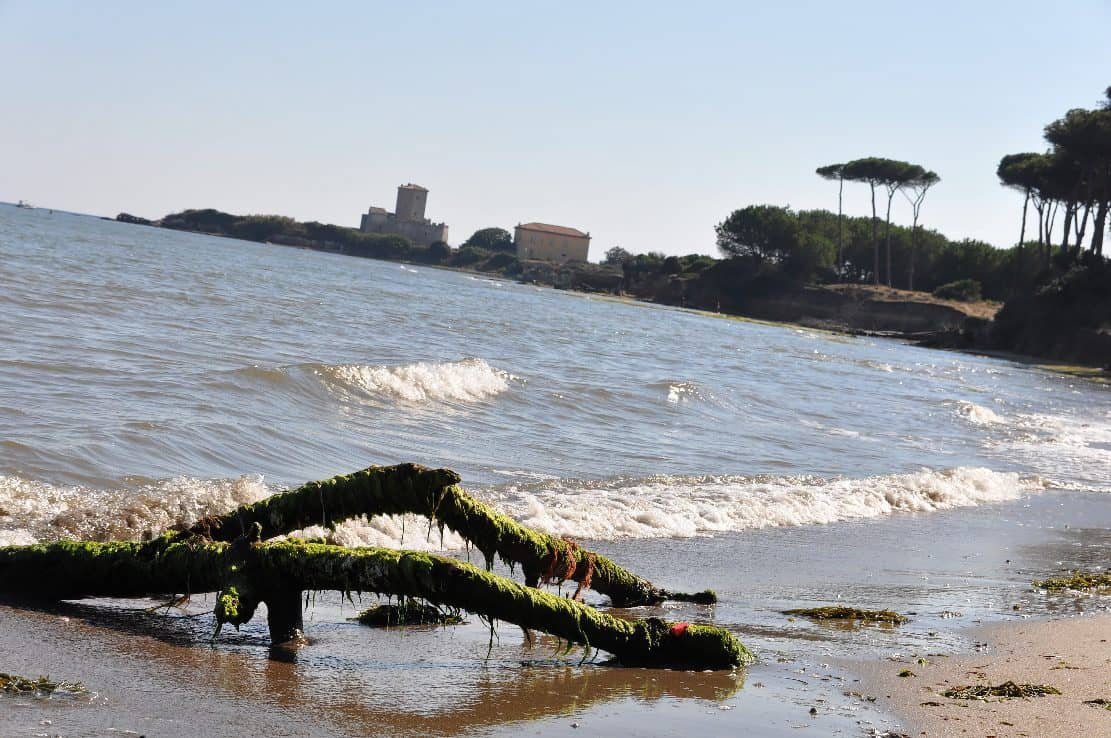
There are places that tell their own story, with a sign at the entrance and a ticket booth, and then there are places like Torre Astura Grove, which have to be explained even before they're seen, because the first fact to make clear isn't what they contain but where they are. Torre Astura Grove lies inside the Nettuno military range, on the coast that runs between Anzio and Nettuno, on that tongue of sand and scrub the Romans called Astura and which today is, for a very large part of its extent, an area removed from free access. I say it right away, without beating around the bush, because it's the information that changes the meaning of everything else: you don't get here the way you get to a park, you don't buy a ticket, you don't book a visit with a click. Torre Astura Grove is a fragment of nature protected by a restriction that wasn't born to protect it, and for that very reason protects it better than any environmental law.
Here the account is made of words alone, because it's the only way almost everyone will have of coming here. The account tries to say not only what is there, but why it's there, how it ended up there, and what it means that it's still there. Because Torre Astura Grove, seen with the right eye, isn't an ordinary wood: it's one of the last strips of the Lazio coast where dune, pine wood and Mediterranean scrub still touch in the order in which nature had arranged them, with no beach club in between, no row of second homes, no paved road passing two meters from the sea.
Where Torre Astura Grove really is
Let's put the points on the map. Torre Astura Grove extends along the Tyrrhenian coast of southern Lazio, in the stretch of coast that administratively belongs to the municipality of Nettuno, just south of the urban center and the boundary with Anzio. We are a little under 60 kilometers from Rome as the crow flies, in that coastal band the Romans were already frequenting 2,000 years ago and which today is known above all for a name that weighs in twentieth-century history: Anzio, the landing, the 1944 beachhead. But here, going further south along the sand, you enter a different world, quieter, where the dominant voice isn't that of tourism but, paradoxically, that of the military restriction.
The place name Astura comes from the river, or rather from the watercourse that flows out in this very stretch: the Astura, a short lowland river that collects the waters of the northern Agro Pontino and carries them to the sea in a low, sandy mouth surrounded by vegetation. Around that mouth, and for a good stretch north and south of it, the natural area we're talking about develops. Torre Astura Grove takes its name from the tower that dominates the point, Torre Astura proper, but it's best to keep the three things distinct: there's the tower, which is a building. There's the Roman villa with the fishponds, which is an archaeological site. And there's the grove, that is the wooded area and coastal scrub surrounding both. They are three faces of the same place, but they tell different stories, and it's best to take them one at a time.
Torre Astura Grove and the Nettuno military range
The reason Torre Astura Grove is so hard to reach is that most of this coast falls within the Nettuno military range, a state-owned area managed by the Armed Forces and used for decades for training activities. A firing range, in practical terms, is a piece of territory where shooting takes place, units train, materials are tested: by definition, a place where the public cannot enter freely, for reasons of safety even before confidentiality. This means that the coastal road, in this stretch, is interrupted. That the gates are guarded. That access is allowed only at set times, such as the summer opening of the beach which in 2025 covered July, August and the weekends of September, and always subject to the military activity calendar.
And here the most fascinating paradox of Torre Astura Grove opens up, the one we'll come back to several times because it's the key to understanding the place. The military restriction, born for reasons that have nothing to do with the environment, worked for decades as an impassable barrier against the only force that truly threatened this coast: building speculation. While to the north, toward Anzio and Nettuno, and to the south, toward Sabaudia and Circeo, the coast was being cemented, urbanized, filled with beach clubs and villas, almost nothing has been built in here. The barbed wire kept the bulldozers away. And so, by a reversal of fortune no environmentalist could have planned, Torre Astura Grove has come down to us preserving an appearance that no longer exists elsewhere on the Lazio Tyrrhenian coast.
The landscape of Torre Astura Grove: dune, pine wood and scrub
Anyone lucky enough, rarely, to walk this stretch of coast on one of the days when access is granted faces a sequence of environments worth learning to read, because it's the classic sequence of the Mediterranean sandy coast when man hasn't taken it apart. You start from the sea and climb, by degrees, toward the interior. First there's the beach proper, the waterline and the shore, where no plant manages to take stable root because the sand moves with every storm surge. Then begins the embryonic dune, those first low sand rises held by the first pioneer plants. Then the true dune, higher, fixed by roots. And finally, behind the dune, the scrub and the wood: the most stable, oldest part, the one that gives Torre Astura Grove its name.
This progression isn't a naturalists' detail. It's the way a healthy coast defends itself from the sea. The dune is a living dike: it absorbs the energy of storm surges, stores sand in summer and gives it back in winter, protects the interior from salt water and from salt-laden winds. When the dune is leveled to build a beach club or a parking lot on it, the coast loses its first line of defense, and in fact almost all the urbanized Lazio coast suffers from erosion today. In Torre Astura Grove, instead, the dune is still in place, and with it everything that lives there.
The Mediterranean scrub of Torre Astura Grove
Mediterranean scrub is the plant formation that best tells this climate: long, dry summers, mild, rainy winters, a sun that in summer doesn't forgive. The plants that make it up have all, one way or another, learned to resist drought and salt. They have small, leathery leaves, often covered with wax or down to limit transpiration. They have deep roots to look for water. They have essential oils that protect them and that, in the hot hours, fill the air with that unmistakable scent of resin, myrtle and mastic that anyone who has walked a Mediterranean coast carries with them like a physical memory.
In Torre Astura Grove the scrub is made up of the classic species of this environment. There's the mastic tree, with its compound leaves and berries that turn from red to black in autumn. There's myrtle, a shrub sacred to Venus already for the ancients, with its very fragrant white flowers in summer and dark berries in winter. There's the big-berry juniper, which on the dune takes prostrate forms, almost flattened by the wind, and which is one of the most precious and threatened species of the whole Tyrrhenian coast. There's the phillyrea, the strawberry tree with its red fruits that ripen while the tree is already in flower, the Italian buckthorn, the rockrose that in summer smells of balsam and in spring covers itself with flowers like tissue paper. And there is, where the soil allows, the dwarf palm, the only native palm of Europe, an ever rarer presence.
The pine wood of Torre Astura Grove
Above and behind the scrub, where the ground is more stable and deeper, the pine wood grows. One thing must be said, for honesty, because the pine woods of the Lazio coast are almost all, originally, a human fact: the stone pine and the maritime pine were planted in large quantities between the nineteenth and twentieth centuries, both to fix the dunes and for productive reasons, resin and pine nuts. In Torre Astura Grove too the pine wood coexists with spontaneous vegetation, in a mosaic where it's hard, at times, to say where the natural wood ends and the planted one begins. But the distinction, over time, has become blurred: the oldest pine woods have developed an understory, have welcomed animals and birds, have become in every respect part of the coastal ecosystem.
The stone pine, the one with the umbrella crown that is by now a symbol of the Roman and Lazio landscape, has a silhouette recognizable from afar: the straight trunk, bare below, and on top that dome of branches that seems designed on purpose to give shade. Walking under a mature pine wood of Torre Astura Grove means entering an environment that's cool even in the hottest hours, with the ground covered in needles that muffle your steps and that scent of resin that intensifies with the heat. The maritime pine, more common near the sea, has instead a more reddish bark and a more irregular crown, and tolerates wind and salt better.
The fauna of Torre Astura Grove
A preserved environment like this is, for wildlife, a rarity. Precisely because human access is very limited, Torre Astura Grove and the surrounding coast offer animals something that has disappeared on the rest of the coast: tranquility. There's no constant coming and going of bathers, no dogs let loose on the dune, no constant pressure that elsewhere has driven most of the wildlife away from the beaches. And this shows, or rather, it would show, for anyone with eyes and patience.
The birds of the coast near Torre Astura Grove
The Lazio coast is, for birds, a corridor of enormous importance. It lies along one of the great migratory routes connecting Africa to Europe, and every spring and every autumn millions of birds pass along this coast. The wetlands, the river mouths, the dunes, the pine woods: everything that offers shelter and food becomes a precious stopover. The mouth of the Astura, with its brackish water and riparian vegetation, is one of these points. Here, depending on the season, you can observe herons, little egrets, black-winged stilts, passing waders, wintering ducks in the calmer waters.
On the dune and in the scrub of Torre Astura Grove live the passerines typical of the Mediterranean environment: the Dartford warbler, small and shy, which nests right in the low bushes of the scrub. The Sardinian warbler, with its characteristic black head and red ring around the eye. The zitting cisticola, which sings in flight above open areas. Raptors and corvids nest in the pines, and it's not rare to see a passing raptor appear in the sky. The fact that this stretch of coast is off-limits to the public makes it, unintentionally, one of the most effective de facto bird reserves on the coast, even if it doesn't bear that name on the maps.
The mammals and other animals of Torre Astura Grove
In the scrub and pine wood of Torre Astura Grove find refuge the mammals typical of coastal Mediterranean environments: the fox, adaptable and everywhere. The wild boar, which in recent decades has recolonized many coastal environments. The badger, nocturnal and discreet. The porcupine, which at night leaves its characteristic tracks and its quills. Wild rabbits, hedgehogs, small rodents. The presence of undisturbed areas lets these animals lead less stressed lives than their kind in human-altered zones.
But the chapter perhaps most interesting, and most delicate, is that of the reptiles and the small inhabitants of the dune. The preserved beaches of the Tyrrhenian are, or have been, nesting places for precious species. Among these, on the Lazio coast, the historical presence of the loggerhead sea turtle Caretta caretta is reported, which chooses quiet sandy beaches to lay its eggs: and there's no quieter beach along this coast than the one protected by the military restriction near Torre Astura Grove. On the dune live lizards, the green lizard, and harmless snakes like the western whip snake. It's a microcosm that holds precisely because no one tramples it.
Ancient history: Astura and Torre Astura Grove
To truly understand Torre Astura Grove you have to go back 2,000 years, because this stretch of coast is not at all a place forgotten by history: on the contrary, it's one of the densest in memory of the whole Lazio coast. The name Astura appears in ancient sources tied to a river, an island or promontory, and a settlement. In Roman times this was an area of seaside villas, those luxury residences that the aristocracy of the Republic and then the Empire built along the coasts to escape Rome's heat and enjoy the sea, leisure, beauty. Astura, because of its position halfway between Rome and the great villas of the Campanian gulf, was a sought-after stop.
The coast here offered everything a villa of otium needed: closeness to the sea, the chance to raise fish in fishponds, woods for hunting, the fresh water of the river. Roman seaside villas weren't simple beach houses: they were articulated complexes, with terraces over the sea, porticoes, nymphaea, private baths, gardens, and precisely the fishponds, those masonry tanks in which prized fish were raised both for the table and, often, for pure display of wealth. At Torre Astura the Roman fishponds still exist, and are one of the most remarkable archaeological elements of the whole coast: structures in opus reticulatum and concrete that the sea has partly submerged and partly left emerging, a silent testimony to a highly refined hydraulic engineering.
The Roman villa and the fishponds near Torre Astura Grove
The fishponds of Astura form a complex system of communicating tanks, fed by the exchange of sea water through channels that exploited the tides and the movement of the waves. The Romans were masters at this: they knew how to design fishponds in which the water was constantly renewed, keeping the fish healthy, and with barriers and sluices they regulated the flow. At Torre Astura these structures are partly below sea level today, a sign that the coastline has changed over the centuries, through the combined action of erosion and variations in sea level. Looking at them from above, when the water is clear, means seeing the geometric grid of a work of 2,000 years ago take shape beneath the surface.
The villa to which these fishponds were connected is, by tradition and by a long scholarly debate, associated with the name of Marcus Tullius Cicero. It's best to be precise, because much has been written on this and with many cautions: ancient sources tell us with certainty that Cicero owned or frequented a property at Astura, and that this place played a dramatic role in his life. The precise archaeological identification of "his" villa with these specific remains is a matter on which scholars remain cautious, but the link between Cicero and Astura is in the sources, it's not a tourist legend. It's a link documented by letters and ancient accounts, and we talk about it because it's an essential part of the memory of Torre Astura Grove.
Cicero at Astura and the embarkation of 43 BC
Astura enters great Roman history at one of its darkest moments. After the assassination of Caesar in 44 BC, the Republic plunges into civil war. Cicero, who with his Philippics had openly sided against Mark Antony, becomes one of the most exposed men in Rome. When in 43 BC the second triumvirate is formed among Antony, Octavian and Lepidus, and the list of proscriptions is drawn up, that is the list of political enemies to be eliminated, Cicero's name is among the first. Antony wants him dead: it's a personal score, as well as a political one.
Cicero, by now elderly, attempts to flee. And one of the stops of this desperate flight is precisely Astura. From here, according to the accounts of ancient historians, he tried to embark to reach the open sea and get to safety, perhaps heading toward Macedonia where he might have found protection. But the sea was adverse, the decision uncertain, the old orator's spirit broken by tiredness and dismay. The sources paint him hesitant, embarking and then returning to land, taking to the sea again and again going ashore, unable to resolve on flight like someone who has already sensed there's no escape. In the end, not far from here, at his villa in Formia, the assassins caught up with him and killed him. His head and hands were taken to Rome and displayed on the Rostra, at Antony's wish.
That's why, when Torre Astura Grove is named, it's not just a wood that is named: it's a place that saw pass, at a turning point of Western history, one of the men who had written that history. From this beach, or one very close, Rome's greatest orator looked at the sea for the last time as a free man. It's a density of memory few coasts can claim, and it gives this silent place a particular gravity.
The Middle Ages: the Frangipane tower at Torre Astura Grove
The history of Astura doesn't end with Rome. After the fall of the Empire and the dark centuries of the early Middle Ages, the Lazio coast becomes frontier land, exposed to raids from the sea, contested between baronial families and local powers. It's in this context that Torre Astura is born as we see it today, or rather as it has been handed down: a coastal fortification built, partly exploiting the pre-existing Roman structures, by the powerful Frangipane family, one of the great baronial houses of medieval Lazio.
The tower rises on a base that reuses the ancient Roman walls and projects out over the sea, connected to the mainland by a bridge. It was, to all effects, a maritime castle: a coastal control point, a refuge, a bulwark against the raids of the Saracen pirates who for centuries scourged these shores. The coastal towers, along the whole Tyrrhenian coast, formed a system of sighting and defense: from one you could see the next, and with fires and signals the alarm was given when enemy sails appeared on the horizon. Torre Astura is one of the most imposing and best preserved of this system, and is today the symbol image of the whole place, the one that gives its name to Torre Astura Grove.
The capture of Conradin of Swabia in 1268
Tied to Torre Astura is one of the most famous and most tragic episodes of the Italian Middle Ages: the capture of Conradin of Swabia. To understand it you must remember the picture. Conradin was the last heir of the great Swabian dynasty of the Hohenstaufen, the house of Frederick II, the emperor stupor mundi. With the death of Frederick and then of his son Manfred, the papacy and the house of Anjou had joined forces to wrest from the Swabians the Kingdom of Sicily and of southern Italy. Charles of Anjou had defeated and killed Manfred at Benevento in 1266. The young Conradin, little more than 16, came down to Italy from Germany to reclaim his family's inheritance.
The matter was decided at the battle of Tagliacozzo, in August 1268, where Conradin's army was defeated by the Angevin troops. The young heir tried to flee toward the sea, seeking to embark and get to safety. And he reached Astura itself. But here, according to historical tradition, he was betrayed and captured by the Frangipane, the lords of the tower, who handed him over to Charles of Anjou. Conradin was taken to Naples, tried and beheaded in Piazza del Mercato in October 1268. He was 16. With him the Swabian dynasty died out, and his death became, over the centuries, the romantic symbol of youth sacrificed to reason of state, sung by poets and playwrights.
So Torre Astura, and with it the whole Torre Astura Grove, carries the memory of two flights toward the sea that ended in tragedy: Cicero's and Conradin's. Two men, 1,300 years apart, who from this same point sought safety in embarking and did not find it. It's a coincidence that feels literary, and no guide can tell it without feeling its weight.
The Astura river and its mouth near Torre Astura Grove
The name comes from the river, and the river deserves a few lines, because it's the element that gives unity to this whole landscape. The Astura is a watercourse modest in length and flow, a lowland river that descends gently toward the sea gathering the waters of the countryside north of the Agro Pontino. It has none of the drama of mountain rivers: it flows slowly, between low banks covered in reeds and riparian vegetation, and reaches the sea in a mouth that is one of the most interesting environments of the whole Torre Astura Grove area.
River mouths are, in nature, places of border and mixing. Here the fresh water of the river meets the salt water of the sea, and a brackish, transitional environment is created, which hosts highly specialized life. There are fish that enter and leave the river with the tides, birds that come to fish, plants that tolerate salt. The riparian vegetation at the mouth of the Astura, with its reed beds and rushes, offers shelter and nesting to many species of waterbirds, and works as a natural filter, trapping sediments and purifying the water before it reaches the sea. It's a delicate little world, kept in balance by invisible flows.
The river's presence also explains why the Romans chose this point for their villas: fresh water was a precious resource, and a navigable mouth, even for small boats, offered a landing. Astura was, in a sense, a natural harbor, a point where the sandy, uniform coast finally offered a reference, a discontinuity useful to navigation. The relationship among the river, the mouth, the grove and the tower is not random: it's the very logic of human settlement on a coast, repeated across the centuries.
The twentieth century: the Anzio landing and Torre Astura Grove
If ancient and medieval history left the fishponds and the tower on this coast, the twentieth century left a scar and a restriction. The scar is that of the war: in January 1944, on the beaches between Anzio and Nettuno, the Allies landed as part of Operation Shingle, with the aim of outflanking the German defensive line that blocked the advance toward Rome along the Cassino front. The Anzio landing was one of the hardest and bloodiest episodes of the Italian campaign: the beachhead, which according to plan was supposed to quickly spread inland, remained pinned down on the coast for months, under the fire of German artillery posted on the heights of the Alban Hills.
For months, from January to the spring of 1944, this stretch of coast was the scene of fierce fighting, bombardment, destruction. The beaches that are silent today were covered with landing craft, depots, trenches. The coast of which Torre Astura Grove is part carries, under the sand and in the memory of the places, the mark of those terrible months. The war cemeteries of Anzio and Nettuno, with their crosses lined up by the thousands, recall the price paid then. It's good to keep it in mind, because this coast's military vocation doesn't come from nowhere: it has its roots in geography itself, in that strategic position that has made it, over the centuries, a point of landing, defense, control of the sea.
From front to firing range: the military restriction of Torre Astura Grove
After the war, this stretch of coast did not return to civilian life as happened to most of the coast. Its military designation was consolidated, and the area became a firing range, home to Armed Forces training activities. The coastal road was cut off, the gates closed, the coast withdrawn from urbanization. For decades, while the Italy of the economic boom filled its coasts with concrete, in here time has as if stopped. And in this stopped time, nature has taken back its spaces.
It's the great paradox of Torre Astura Grove, the one I keep repeating because it's its deepest truth: the same military vocation that brought war to these beaches then saved them from speculation. The barbed wire that keeps the public away also kept the bulldozers away. The coast that could have become an unbroken row of beach clubs and second homes remained dune, scrub, pine wood, river mouth. Not through an environmental choice, but as a side effect of the military restriction. It's a lesson, if you like, about how fragile preserved nature is and about what strange circumstances, at times, protect it.
Why Torre Astura Grove is a rare place
I want to insist on this point, because it's the reason it's worth knowing Torre Astura Grove even without being able to set foot there. Anyone who knows the Lazio coast knows how little of it remains intact. From Ostia to Terracina, the Lazio Tyrrhenian coast was for the most part urbanized during the twentieth century: beach resorts, seafront promenades, second homes, tourist marinas. The dunes, which once ran unbroken, have been leveled almost everywhere. The coastal pine woods have been reduced, fragmented, cut by roads. The wetlands have been largely reclaimed.
In this picture of almost total transformation, the few stretches of coast that escaped cementing have taken on enormous value, ecological and scenic. They are the "islands" in which species and habitats vanished elsewhere survive, the reservoirs of biodiversity from which, in theory, nature could one day start again. The coast of Torre Astura Grove, protected by the military restriction, is one of these islands. Together with the preserved stretches of the Circeo National Park, farther south, it represents one of the last examples of what this whole coast was like before modern man.
There's something almost moving in this. A place that nobody can freely see is, for that very reason, one of the few left worth seeing. Its inaccessibility is the condition of its survival. And whoever tells of it knows they're telling of something that exists largely beyond the reader's reach: a paradox that is also, if you think about it, a form of respect. Not everything that exists has to be consumed. Some places are worth more precisely because they stay intact.
How you can see Torre Astura Grove
We come to the question everyone asks: can you visit it? The honest answer is: almost never, and never as a given. Since Torre Astura Grove and its coast fall within the Nettuno military range, access is normally forbidden. Historically there have been occasions when the area, or part of it, was opened to the public: special days, cultural initiatives, extraordinary openings promoted together with the competent authorities, authorized guided visits to the archaeological site of the tower and the fishponds. To this is added the summer opening of the beach: according to the Lazio Region's tourism portal, in 2025 it was open free every day of July and August and on weekends in September, with parking on Via Valmontorio. Dates and hours change every year and should be checked on the Nettuno municipality website. In any case it is not free and permanent access.
For anyone who truly wants to try to see the tower and the coast, it's best to proceed with realism and patience. Any openings should be checked with the competent authorities: the military bodies that manage the range, the municipality of Nettuno, any cultural or environmental associations that, in agreement with the military authority, organize visits. You don't show up at the gate hoping to get in: you inquire, you book when possible, you scrupulously respect every rule. And you allow for the fact that, for safety reasons, a scheduled opening may be canceled at the last minute. I don't promise access, because nobody can promise it: it would be unfair to you.
It should also be said that part of the coast and of the tower is visible, from afar, from the sea. Anyone sailing along this stretch of coast, respecting any navigation bans during periods of range activity, can make out the unmistakable silhouette of Torre Astura jutting out over the sea, with the dark grove behind it. It's perhaps the most authentic way to see it: from that same sea perspective from which Cicero and Conradin saw it, in flight. But this too should be done with caution and by learning the rules in force.
Telling the grove, the tower and the villa apart
It's worth restating, because it's the source of much of the confusion: when we speak of Torre Astura Grove we are actually overlapping three distinct things, which are best kept separate in the mind in order to truly understand the place. The first is Torre Astura, the medieval fortified building of the Frangipane, jutting out over the sea on a Roman-era base. It's a monument, a piece of medieval military architecture, and it's what catches the eye and gives its name to everything.
The second is the Roman villa with the fishponds: an archaeological site, that is a set of ancient remains, partly submerged, which testify to the presence here, 2,000 years ago, of an aristocratic residence with its fish-farming installations. This is the level of Roman history, of Cicero, of imperial otium.
The third, the one this page is named after, is the grove proper: the natural area, the pine wood and the Mediterranean scrub, the dune, the river mouth, the coastal environment that surrounds and encloses the tower and the Roman remains. It's the level of nature, of habitats, of fauna and flora. The three things stand in the same place, they overlap, but they belong to different planes: architecture, archaeology, environment. A good way to orient yourself is to keep these three words in mind and ask yourself, each time, which of the three is being talked about. The fascination of Torre Astura Grove arises precisely from the fact that all three coexist, overlapping, in the space of a few hundred meters of coast.
The climate and seasons of Torre Astura Grove
The climate of this coast is the classic Mediterranean coastal climate: mild winters, with temperatures that rarely drop below a few degrees above zero, and rain concentrated mostly between autumn and early spring. Hot, dry summers, tempered by the sea breeze that on clear days picks up punctually in the afternoon. It's a climate that has shaped the vegetation, as we've seen, and that governs the rhythm of life across the whole Torre Astura Grove ecosystem.
Spring is perhaps the most beautiful season, the one in which the scrub covers itself with flowers: the rockroses open their paper petals, the myrtle smells sweet, the brooms, where there are any, light the dune with yellow. It's also the season of the great migratory passage, when birds return from Africa and the mouth of the Astura fills with wings. Autumn brings the migration back in the opposite direction, and gives the warm colors of ripe berries, the red of the strawberry tree, the black of the mastic and the myrtle. Summer is the season of parching heat, when the scrub defends itself from the sun by closing in on itself and the pine wood offers the only shade. Winter, finally, is the season of storm surges, when the sea reshapes the beach and the dune shows its function as a living dike.
Coastal erosion and the role of the dune in Torre Astura Grove
There's a technical theme worth tackling, because it explains much of this place's environmental value: coastal erosion. Sandy beaches aren't motionless: they live on a continuous exchange of sediments. Winter storm surges carry sand away from the shoreline. Currents redistribute it along the coast. Rivers bring new sand to their mouths. In summer the calmer sea gives it back to the beach. It's a dynamic balance, and the dune is its pivot: it works as a warehouse, storing sand when there's plenty and giving it up when needed.
When this balance breaks, for example because someone builds on the dune or the sediment supply from the rivers is reduced, the coast begins to erode: the beach thins, the sea advances, and to defend against it barriers and reefs are built that often worsen the problem by shifting it farther along. Much of the urbanized Lazio coast suffers from erosion today for exactly this reason. In Torre Astura Grove, where the dune is intact and nobody has built on the shoreline, the system still works as it should. It's a natural laboratory of how a healthy coast regulates itself, and as such it has a value that goes well beyond the landscape.
The architecture of the tower and the defensive system of Torre Astura Grove
Let's go back for a moment to the tower, because it deserves a close look, even if only told. Torre Astura belongs to the great family of coastal towers that dot the whole Tyrrhenian coast, from Tuscany to Calabria. They are structures born of a precise need: to defend the coasts from pirate raids, in particular the Barbary and Saracen corsairs who for centuries, from the Middle Ages to the modern age, scourged the shores of the Mediterranean, sacking villages and kidnapping inhabitants to sell them as slaves. The threat was so concrete that entire coastal populations withdrew inland, abandoning the sea, and the system of lookout towers we still see along the coasts was born.
Torre Astura, though, is something more than a simple lookout tower: it's a maritime castle, an imposing fortification built on the water, connected to land by a bridge, with the function not only of sighting but of resisting, of housing a garrison, of controlling the landing. Its base reuses Roman walls, in a continuity of stone that crosses the centuries: under the medieval castle are the ancient structures, and under them still, in the water, the fishponds. It's a palimpsest, that is a parchment rewritten several times without completely erasing what was there before. Each era has added its layer, and Torre Astura Grove preserves this stratification like a history book written in stone and sand.
The coastal towers and the Saracen pirates
To understand why Torre Astura was built so sturdy you have to imagine the Mediterranean of past centuries as a dangerous sea, crossed by corsair fleets that could appear on the horizon at any moment. An undefended coastal village was easy prey: the corsairs landed by surprise, sacked, captured as many people as they could and left before help arrived. Capturing slaves was a veritable trade, and the Italian coasts were for a long time a hunting ground. The towers served to break this mechanism: from above you could see the sails arriving, signal fires were lit, the alarm was raised, and the population had time to take shelter.
The network of towers was designed so that each was in sight of the next: an optical communication system that could transmit an alarm along tens of kilometers of coast in very short time, from tower to tower. Torre Astura was a node of this network, and its position, jutting out over the sea near the river mouth and the landing, made it particularly strategic. Walking today, in the imagination, along the coast of Torre Astura Grove also means reconstructing this geography of fear and defense, which for centuries organized the life of those who lived by the sea.
The geology and sand of Torre Astura Grove
Underfoot, on this coast, there's a geological story worth mentioning. The coastal plain between Anzio, Nettuno and the Agro Pontino is the result of long processes of sedimentation: rivers carried to the sea materials eroded from the inland reliefs, currents redistributed them, wind shaped the dunes. The sand of these beaches isn't all the same: it changes color, grain, composition depending on where the sediments come from and on the action of the sea. Near the river mouths fluvial materials prevail. Elsewhere, minerals of volcanic origin, because not far away, inland, is the complex of the Lazio volcanoes, the Alban Hills, whose activity over the geological ages has left traces in these sediments too.
The dunes of Torre Astura Grove are cordons of sand built by the wind and held by vegetation. They are young structures, in geological terms, in continuous transformation: they grow, shift, are eroded and rebuilt. Vegetation fixes them, but if the vegetation dies the dune becomes mobile again and can migrate inland, burying everything it meets. It's a delicate balance between sand, wind and plants, and the fact that here it's still working, undisturbed, is one of the most precious things about this place.
The silence of Torre Astura Grove
If I had to name the quality that more than any other characterizes this place, I would not speak of a monument or a species: I would speak of silence. The coast of Torre Astura Grove is, by its very inaccessibility, one of the quietest stretches of coast in Lazio. There's no background noise that accompanies frequented beaches everywhere: the music of the beach clubs, the voices, the engines, the seafront traffic. Here the soundscape is made almost only of natural elements: the sound of the waves, the wind in the pines, the rustle of the scrub, birdsong, the distant call of a raptor.
This silence isn't an emptiness: it's full of sounds, but natural sounds, the ones our ear recognizes as right for a place like this. It's a silence that has become extremely rare today, because human noise has invaded almost every corner of the country. Scholars speak of "soundscapes" and recognize their value, environmental and even therapeutic. Torre Astura Grove, unintentionally, preserves one of these intact soundscapes. Whoever is lucky enough to hear it, even just from the sea, carries away an impression that's hard to forget: that of a piece of coast restored to its original order, where the dominant voice is that of nature and not that of man.
The night and the sky over Torre Astura Grove
There's another quality that the absence of urbanization gives this stretch of coast: darkness. On a coast lit up like day by seafronts, beach clubs and second homes, night no longer really exists. Here, instead, where there are no artificial lights, the night sky keeps its depth. Light pollution, which elsewhere erases the stars, is reduced here, and on clear nights the sky above Torre Astura Grove is still populated with stars as it was for Cicero and for the Roman sailors who navigated this coast steering by the stars. It's another of those invisible values, which aren't bought or sold, and which the forced preservation of this place has saved almost by chance.
The Agro Pontino, the land reclamation and Torre Astura Grove
You can't understand this piece of coast without widening your gaze to the great plain behind it: the Agro Pontino. For centuries this was one of the unhealthiest zones in Italy, a vast marshy, malarial territory, where stagnant water made life almost impossible and malaria claimed victims. The integral reclamation, carried out during the 1920s and 1930s, drained these marshes, founded new towns there and turned the Agro Pontino into one of the most productive agricultural areas of Lazio. It was an enormous undertaking, which changed the face of the territory forever.
The coast of Torre Astura Grove lies at the northern edge of this reclaimed world, in the stretch where the plain meets the sea. The reclamation, which elsewhere erased the original wetlands, here brushed against without overwhelming: the Astura mouth, the dune, the scrub survived, partly thanks to the military restriction, partly because they sit right on the line between the reclaimed land and the sea. Recalling the reclamation helps understand how rare what remains is: the plain behind has been entirely transformed by man, while this thin coastal strip still preserves the memory of how everything was before. It's an instructive contrast, that between the geometric, productive countryside of the Agro Pontino and the disordered, ancient nature of the grove.
Torre Astura Grove and Circeo: two faces of the preserved coast
Anyone who knows the Lazio coast can't help thinking, speaking of Torre Astura Grove, of the Circeo National Park, a little farther south, beyond Sabaudia. Circeo is the great protected area of this coast, established in 1934 precisely to save, in the midst of the reclamation, a sample of the original environments: the lowland forest, the dunes, the coastal lakes, the promontory, the scrub. It's the official, recognized model of conservation of the Lazio coast.
Torre Astura Grove, on the other hand, isn't a park: it's a protected area in fact, not in law, saved not by an environmental law but by a military restriction. Yet it preserves many of the same values: the same dunes, the same scrub, the same river-mouth environments. In a sense, the grove is the hidden and unrecognized cousin of Circeo, a piece of the same natural world that has come down to us by a different and unexpected road. Putting the two places in relation helps understand the picture: along this coast, what has been saved is owed either to environmental protection, as at Circeo, or to chance circumstances, as here. Everything else has been built. That's why every surviving fragment counts.
The value of Torre Astura Grove for research
A preserved environment is, for scientists, much more than a beautiful landscape: it's a reference point, a sample of how nature works when man doesn't interfere. Studying the intact dune of Torre Astura Grove, its vegetation, its fauna, means having a model against which to compare degraded environments to understand what they've lost and how, perhaps, to restore them. Preserved areas are nature's living libraries: they contain the information, the genetic heritage, the balances that elsewhere have been destroyed.
This holds for botany, for zoology, for ecology, but also for archaeology and history. The Roman fishponds, the medieval tower, the stratigraphy of the places are documents that scholars read and interpret. And the fact that the site has remained relatively undisturbed, protected from mass access, means that these documents have been preserved better than elsewhere. Torre Astura Grove is, in this sense, an open-air archive, guarded by a restriction that has slowed its consumption. That it's hard to access is, for the preservation of this archive, a stroke of luck.
The experience of the sea at Torre Astura Grove
Let's imagine, for a moment, being among the few admitted on one of the rare openings, or sailing respectfully along this coast. What does it feel like? The first impression is one of vastness. Without the buildings that elsewhere interrupt the view, the coast of Torre Astura Grove stretches out in a long line of golden sand, with the dune covered in silvery green behind it and the dark pine wood farther back. The sea, in these little-frequented waters, often has a clarity that surprises, and on clear days you see the light-colored seabed, the submerged meadows, the geometric design of the Roman fishponds under the surface.
The silhouette of the tower dominates the scene: massive, ancient, jutting out over the water, with that bridge connecting it to land. It's an image that joins in a single glance nature and history, dune and stone, grove and monument. And there is, in all this, a quality of suspension, of stopped time, that comes precisely from the absence of modern man. It feels like looking at the coast as it might have appeared centuries ago, before the twentieth century rewrote the shoreline. It's a rare experience, and so a precious one, and it should be lived with the respect owed to a place that survives precisely because almost no one touches it.
Roman otium and villa life at Astura
It's worth dwelling on what a seaside villa like the one that stood at Astura really was, because it tells of a world. For the Roman aristocracy, the seaside villa wasn't a simple vacation home: it was the place of otium, a word that doesn't simply mean idleness in the modern sense, but that time free of public affairs devoted to self-care, study, conversation, reading, writing. Cicero himself, in his works, theorizes the value of otium as the time of the soul, as opposed to negotium, business, politics, the forum. And where better to cultivate otium than in a villa by the sea, far from the din of Rome?
Seaside villas were designed for this: big terraces overlooking the water to enjoy the view, porticoes for strolling in the shade while conversing, libraries, dining rooms with a sea view, private baths, gardens. The fishponds, which we've talked about, were both a source of prized food and a sign of refinement and wealth: raising fish was expensive, required hydraulic expertise, and was therefore a way to show one's rank. Around the villa, the grove and the scrub offered hunting and coolness. The place where Torre Astura Grove stretches today was, 2,000 years ago, a setting of this kind: a theater of aristocratic otium, where cultured men like Cicero came to take refuge from the toils of politics. That it was precisely here that Cicero lived one of the most dramatic episodes of his end is a bitter irony of history: the place of the soul's rest became the place of desperate flight.
The place names and memory of Torre Astura Grove
Place names are historical documents in every respect, and Astura is a precious example. The name is very ancient, earlier than the full Romanization of the area, and has been preserved through the centuries, attaching itself in turn to the river, the settlement, the tower. This continuity of the name, from antiquity to today, is itself a form of memory: despite all the transformations, the collapse of Rome, the Middle Ages, the modern age, the word Astura has stayed there, marking the place. Torre Astura Grove carries in its name 2,000 years of layered history.
There's something powerful in this persistence. The name has crossed the fall of an empire, pirate raids, abandonment, the building of the tower, the wars, the reclamation, the military restriction. It saw Cicero and Conradin pass, it witnessed the Anzio landing, and still today it designates this stretch of coast. When we say it, without knowing it we repeat a very ancient sound. It's the thin thread that ties the inaccessible present of this militarized grove to its very distant past of villas and otium. Knowing this thread means looking at the place with different eyes, able to see, under the sand and behind the barbed wire, the depth of time.
The future conservation of Torre Astura Grove
What will become of this place in the future? It's a legitimate question, because its survival, as we've seen, depends on a chance circumstance, the military restriction, and not on a stable, planned environmental protection. If one day the military designation were to lapse, what would happen to this stretch of coast? Speculation, held at bay for decades, would come knocking again. The pressures to open the coast to tourism, building, exploitation would be strong. And an environment preserved by chance is, by definition, fragile: it's enough to change the circumstance that protects it for everything to be put back in question.
That's why those who love Torre Astura Grove hope that, sooner or later, the chance protection of the military restriction will be replaced or joined by real, conscious environmental protection, able to recognize the value of this coast and guarantee its conservation even if the military were one day to leave. Because one thing is certain: what has been saved here, the intact dune, the scrub, the pine wood, the river mouth, the silence, the dark sky, could not be rebuilt once lost. These are values that are conserved or destroyed, but not remade. And so knowing this place, telling about it, understanding its importance, is already a form of protection: because only what one knows and loves is truly protected.
Around Torre Astura Grove
Since the grove proper is almost always inaccessible, anyone who wants to get close to this world can get to know the places around it that share its history. Anzio and Nettuno, the two coastal towns immediately to the north, offer a lot to those who know how to look. Anzio, ancient Antium, was an important city already in Roman times, birthplace of emperors, home to imperial villas of which remarkable remains survive on the sea. Nettuno preserves a fine fortified medieval village, Sangallo Fort, and a long seafaring tradition. Both were at the center of the 1944 landing, and the war cemeteries and the museums dedicated to those events let you understand that terrible chapter of history.
Whoever visits these places breathes the same coastal air, the same layered history of which Torre Astura Grove is, farther south and more hidden, one of the most intense points. And perhaps, by inquiring with local authorities and the competent bodies, they may catch one of those rare occasions when the grove, the tower or the fishponds are opened to the public. In the meantime, knowing the context, the Roman history of Antium, the medieval story of the towers, the tragedy of 1944, the reclamation of the Agro Pontino, already means entering, in the mind, that world of which the grove is the secret heart.
A curiosity about Torre Astura Grove
The curiosity I prefer to tell about this place is that of the two flights toward the sea, because it feels prodigious and no guide could invent it, being written in the sources. From this same point of coast, 1,300 years apart, two men whom history had backed into a corner tried to save themselves by embarking, and neither succeeded. The first was Cicero, in 43 BC, fleeing Antony's proscriptions: ancient historians portray him boarding the boat and then returning to land, undecided, broken, like someone who has already understood that the sea will not save him. And in fact he was caught and killed shortly after. The second was Conradin of Swabia, in 1268, the last heir of the Hohenstaufen, fleeing after the defeat at Tagliacozzo: he reached Astura hoping to embark, but was captured right here and handed over to Charles of Anjou, who had him beheaded in Naples at 16.
That two of the most famous and most tragic flights in Italian history, 13 centuries apart, both ended on this same beach is a coincidence that feels literary. Torre Astura Grove is, if you think about it, a place of missed thresholds: the threshold between land and sea, between salvation and capture, between life and death, which twice closed on the most illustrious of fugitives. Some have seen in this a sort of curse of the place, but it's more convincing to read it as a sign of its position, of that geography of landing and frontier that for centuries has made Astura a point where human stories come to meet the sea. And the sea, as we know, doesn't save those whom history has already condemned.
Something nobody tells you about Torre Astura Grove
The thing almost nobody says, because it disturbs a certain environmentalist rhetoric we're used to, is that this piece of nature was saved thanks to cannons. Yes, you read that right: it's the military range, with its exercises, its gunfire, its barbed wire, that for decades protected the dune, the scrub, the pine wood and the river mouth of Torre Astura Grove. Not a park, not a landscape protection law, not the initiative of some association: a military restriction, born for reasons that have nothing to do with the environment, and which nonetheless has done more for the conservation of this coast than any environmental measure has done elsewhere on the Lazio coast.
It's a paradox worth meditating on, because it tells us something uncomfortable about the relationship between man and nature. While the whole accessible coast was being cemented, filled with beach clubs and second homes, leveled and consumed, in here, where nobody could enter, nature stayed intact. Freedom of access, which we consider a value, proved elsewhere to be the condition of destruction, and the ban, which we consider a deprivation, was here the condition of survival. Nobody will tell you in these words, because it's more comfortable to tell conservation as the fruit of virtue. But the truth of Torre Astura Grove is rougher and more instructive: sometimes nature is saved not because we protect it, but because we build a barrier around it for a completely different reason, and forget it. And in forgetting it, we let it live.
The advice I give you for visiting Torre Astura Grove
The most important advice I can give you is, for once, advice of realistic renunciation combined with preparation. Don't leave home thinking you can enter Torre Astura Grove the way you enter a park: almost certainly you'll find the gates closed and the range in operation, and you'll come back disappointed. On the vast majority of days of the year the place is inaccessible. Making that clear to yourself before leaving will spare you frustration. The golden rule is: find out beforehand, always, from the competent authorities, and never take access for granted.
That said, here's how to proceed if you really want to try. First: check with the bodies that manage the area, the military command of the range, the municipality of Nettuno, any cultural and environmental associations that, in agreement with the authorities, organize guided visits to the tower and fishponds from time to time. These openings, together with the summer opening of the beach, are the only legal and safe way to see the site up close. Second: if you catch one of these occasions, scrupulously respect every rule, don't leave the indicated routes, don't collect anything, don't trample the dune, don't disturb the fauna: you are guests in a very fragile environment. Third: allow for the fact that even a scheduled opening can fall through at the last minute for military security reasons, and don't take it as a wrong. Fourth, and perhaps most precious: if you can't get in, be content to know the surroundings, Anzio, Nettuno, the history of the places, and to know that Torre Astura Grove is there, intact, precisely because almost no one touches it. Sometimes respect for a place is measured in the ability to leave it in peace.
Another well-known fact, yet rarely cited
A fact that all Roman history enthusiasts know, but which is almost never connected to this stretch of coast by non-specialists, is Astura's link with Cicero and his tragic end. At school you study Cicero's death, the Philippics against Antony, the proscriptions of the second triumvirate, the head displayed on the Rostra, but very few know that one of the last places of his flight, one of the points from which the great orator desperately tried to embark to save himself, was precisely this Astura, that is the coast of Torre Astura Grove. It's a well-known piece of history, yet geographically forgotten: we all know how Cicero died, but almost no one connects that death with this beach.
Yet the link is in the sources, it's not a fantasy. Astura was one of the properties, or one of the stopping points, of Cicero's flight in 43 BC, and from here he looked at the sea seeking an escape he did not find. Bringing this well-known fact back to its precise place means restoring density to a stretch of coast that the general public knows, when it knows it, only as a military range. Under that barbed wire, behind that dune, lies the memory of one of the founding moments of Western culture, the death of the man who more than any other embodied the eloquence and political thought of Rome. Torre Astura Grove is, without fanfare, one of the Ciceronian places par excellence, even if no plaque shouts it from the rooftops.
The right photo to take at Torre Astura Grove
Since access by land is almost always barred, the right photo of Torre Astura Grove is, in most cases, a photo stolen from afar: from the sea, if you happen to sail respectfully along this coast during the permitted periods, or from the stretches of accessible coast at the edges of the military area. And the photograph worth seeking is the one that holds together, in a single frame, the two poles of the place: the massive, dark silhouette of Torre Astura jutting out over the sea, and behind it the low green line of the grove and the dune. In a single shot, history and nature, the stone of the Frangipane and the Mediterranean scrub.
The best light is that of the early morning hours or the late afternoon, when the raking sun lights the tower's stone in warm tones and draws the relief of the dune with shadows. At noon, with the sun high, the landscape flattens and loses depth. At dawn and sunset, instead, it gains relief and drama. If you're on the sea, look for the moment when the tower stands out against the sky with the grove behind it: it's the image that sums up everything, the same one that sailors 2,000 years ago saw, arriving or leaving. But the real right photo, the one no lens captures, is mental: it's the image of a piece of coast that stayed intact because it was protected, and the awareness that what you're looking at is rare precisely because it can't be possessed. Photograph it with respect, from afar, without forcing access: Torre Astura Grove lets itself be looked at, not conquered.
Some important events that happened here in history
Let's recap, because few places of this size can claim such a concentration of history. In the 1st century BC, the seaside villas of the Roman aristocracy flourished at Astura, and here, in 43 BC, Marcus Tullius Cicero attempted to embark during his flight from the proscriptions, in one of the most dramatic episodes of the end of the Republic. It's the first great event tied to the soil of Torre Astura Grove: the threshold of one of the most famous deaths of ancient history.
In the Middle Ages, the Frangipane built the tower-castle here, reusing the Roman structures, as a bulwark against pirate raids. And it was at Astura, in 1268, that the second great event took place: the capture of Conradin of Swabia, the last Hohenstaufen, fleeing after the battle of Tagliacozzo. Betrayed and handed over to the Angevins, the young heir was beheaded in Naples, and with him the Swabian dynasty died out. It's one of the decisive turning points of southern Italian history, and it happened here.
In the following centuries, the tower continued to guard the coast against corsairs, within that system of lookout towers that defended the Tyrrhenian coast throughout the modern age. And then, in January 1944, the third great event: the Anzio landing, Operation Shingle, with the Allied beachhead that for months stayed pinned down on these beaches under German fire, in one of the bloodiest episodes of the Italian campaign. The coast of Torre Astura Grove was both stage and rear area of that fighting. Finally, in the postwar period, the least spectacular but most lasting event: the consolidation of the military restriction, which turned this coast into a firing range and, without meaning to, saved it from speculation, delivering it intact to our time. Five turning points, from the age of Cicero to today, all on this same sand.
Who has passed through Torre Astura Grove
Who has passed through here, then? The list is short in names but very high in rank. Cicero passed, Rome's greatest orator, who from this coast looked at the sea for the last time as a free man, in 43 BC, before being caught and killed by Antony's assassins. It's a weighty presence: the place of Torre Astura Grove is bound inseparably to the last act of his existence, that flight toward the sea that did not save him.
Conradin of Swabia passed, the young heir of the Hohenstaufen, who here, in 1268, sought refuge after the defeat and here was captured, at 16, to be then beheaded in Naples. With him an entire dynasty passed and died out, the Swabian one, and his figure became, over the centuries, the romantic symbol of sacrificed youth. The Frangipane passed, the powerful baronial family that built and held the tower, protagonists of the medieval history of Lazio. Passed, in a broader sense, the Romans of the republican and imperial age who came here to cultivate otium in their seaside villas, and the sailors who for centuries navigated this coast steering by the tower and the stars.
And in the twentieth century the soldiers passed: those of the 1944 Anzio landing, of many nationalities, who fought on these beaches and in large numbers died, and whose cemeteries still dot the nearby coast. Then the military personnel who, in the postwar period, have manned the range, and whose presence, by a paradox of history, has guarded the place's nature. Cicero, Conradin, the Frangipane, the Romans of otium, the soldiers of two very distant eras: the list of those who have passed through Torre Astura Grove spans 2,000 years and touches some of the highest and most tragic moments of Italian history. Few stretches of coast, silent and closed like this one, can tell so much.
Quick questions about Torre Astura Grove
Where is Torre Astura Grove
Torre Astura Grove lies on the Tyrrhenian coast of southern Lazio, in the municipality of Nettuno, just south of the urban center and the boundary with Anzio, a little under 60 kilometers from Rome as the crow flies. It extends around the mouth of the Astura river. The thing to know first of all is that it falls inside the Nettuno military range, so you don't get there as you would to a park.
Can you visit Torre Astura Grove
Almost never, and never as a given. The area is inside the Nettuno military range and access is normally forbidden: the coastal road is cut off and the gates are guarded. The exception is the summer opening of the beach, which according to the Lazio Region's tourism portal in 2025 was free every day of July and August and on weekends in September. Dates change every year and should be checked on the Nettuno municipality website. Guided visits to the tower and the fishponds remain rare. If you set off without checking, you'll almost certainly find the gates closed.
How do you find out about openings and do you need to book
You have to check beforehand with the competent bodies: the military command of the range, the municipality of Nettuno and the cultural and environmental associations that, in agreement with the authorities, organize guided visits from time to time. You don't show up at the gate hoping to get in: you inquire and book when possible. Allow for the fact that even a scheduled opening can be canceled at the last minute for military security reasons.
What you see at Torre Astura Grove
You find three overlapping things in a few hundred meters of coast. There's Torre Astura, the medieval maritime castle of the Frangipane jutting out over the sea and connected to land by a bridge. There's the Roman villa with the fishponds, partly submerged. And there's the grove proper, that is dune, Mediterranean scrub, pine wood and river mouth, one of the last stretches of the Lazio coast left without beach clubs and second homes.
Can you see the tower without entering the range
Yes, from afar. Part of the coast and the silhouette of Torre Astura are visible from the sea, if you sail along this stretch respecting any navigation bans during periods of range activity, or from the stretches of accessible coast at the edges of the military area. The best light is that of early morning or late afternoon. Always find out the rules in force and don't force access.
What is there to see near Torre Astura Grove
If you can't get in, it's worth getting to know the surroundings. Anzio, ancient Antium, preserves remarkable remains of imperial villas on the sea. Nettuno has a fortified medieval village, Sangallo Fort and a long seafaring tradition. Both were at the center of the 1944 landing, and the war cemeteries and the museums dedicated to those events help you understand the history of this coast.
Article written by the editorial team of TourLeaderPro, contact them for Private/Corporate/V.I.P. Tours and Experiences.
Planning a trip to Rome? The English-language guides to visiting the city are on ItalyPlanner.com.