Civita Castellana (VT)
In short. Civita Castellana is in the province of Viterbo, in the southern Tuscia, perched on a spur of red tuff about 80 kilometers from Rome along Via Flaminia.


Civita Castellana is in the province of Viterbo, in the southern Tuscia, perched on a spur of red tuff about 80 kilometers from Rome along Via Flaminia. The town hall is at Piazza Giacomo Matteotti 48, 01033 Civita Castellana (VT). The monument almost everyone comes to see, the Forte Sangallo with the Archaeological Museum of the Agro Falisco, is instead at Via del Forte 1, a few steps from the historic center. The museum is open Tuesday through Sunday from 8:30 to 19:00, with last entry at 18:00, and is closed on Monday, as well as on January 1 and December 25. The useful number for information is 0761 513735. Since June 2025 admission has been reorganized with the introduction of a ticket, after years of being free: before leaving it's best to check the updated fare and the Sunday hours on the museum's official website, because the conditions changed recently. By car you arrive from the Flaminia or from the Civita Castellana exit of the expressway. By train, the Rome-Viterbo regional line stops at the station down in the valley, from which you climb up to town, while Cotral buses connect the village with Rome and with the other towns of the Tuscia.
Those planning a wide loop through the villages north of Rome can also read the page devoted to Calcata and the one on Nepi, because they are a quarter of an hour away by road and complete the Faliscan day. This guide, instead, keeps together everything that is worthwhile in Civita Castellana: the ancient Falerii of the Falisci, the Sangallo fortress with its museum, the Duomo with the portico signed by the Roman marble workers, the dozens of churches of the center, the gorges carved by the Treja and the ceramic vocation that made the town's name familiar in half the world.
Where Civita Castellana is and how to get there
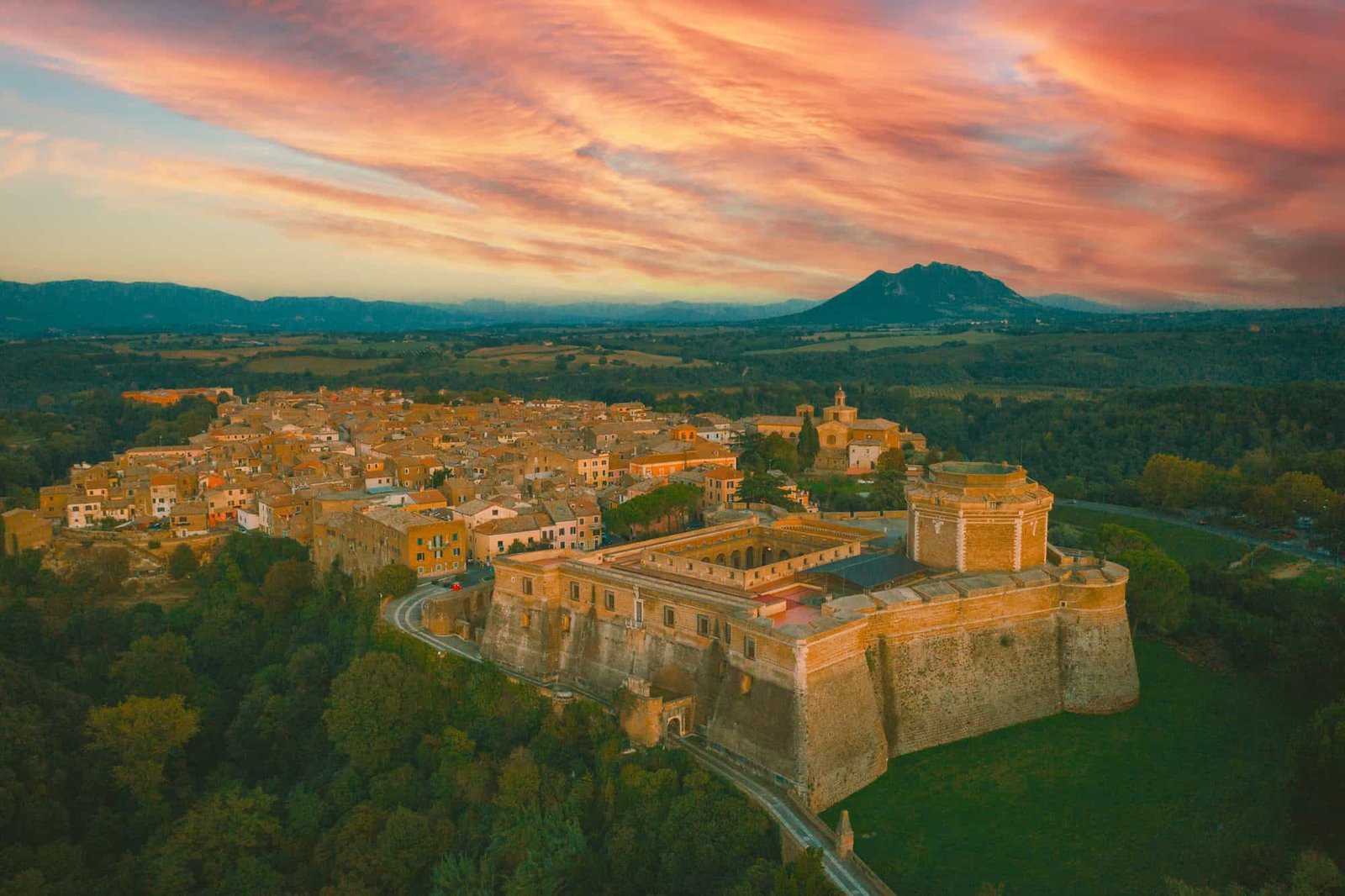
The village rises on a tuff spur isolated by the deep gorges of two tributaries of the Treja, the stream that a little further downstream flows into the Tiber. Around it are the Cimini Mountains, in front opens the valley and in the background you can recognize the solitary silhouette of Monte Soratte. This position, a plateau defended on three sides by vertical walls of tuff, is the reason the site has been inhabited without interruption for nearly 3,000 years: first the Falisci, then the Romans in the surroundings, then the medieval village that still shapes the historic center today. The elevation is the typical one of Tuscia towns perched on tuff, with the center overlooking the gorges and the modern districts spreading over the plateau.
By car Civita Castellana is easy: the turnoff for the town leaves from Via Flaminia, and from Rome you reach it in a little over an hour outside rush hours. The railway station of the regional line linking Rome to Viterbo is in the valley, below the town, and from there you climb to the center. Cotral buses provide the connection with the capital and with the other municipalities of the Agro Falisco. A practical tip, valid for almost all tuff villages: park outside the historic center and walk it, because the alleys are narrow and the panoramic streets above the gorges can't be enjoyed stuck in traffic inside the car.
Falerii Veteres: the Faliscan origins of Civita Castellana
Beneath Civita Castellana lies Falerii Veteres, the capital of the Falisci. The 3,000-year history of the place begins with this people who spoke a language close to Latin but lived in the middle of Etruscan territory, among the Etruscans, the Capenates and the Romans. The Etruscan influence was deep, to the point that the Faliscan writing itself, of proto-Latin stock, adopted signs of Etruscan origin. The Treja valley was for Falerii a fundamental route of communication: it led to the prehistoric ford of the Tiber and to the archaic road network of the centers of Foglia and Poggio Sommavilla. Falerii Veteres is today one of the main Bronze and Iron Age sites of central Italy, rich in temple areas, necropolises and sanctuaries, and its ancient ceramic workshops were famous throughout the Mediterranean basin.
The Falisci, a people between Etruria and Rome
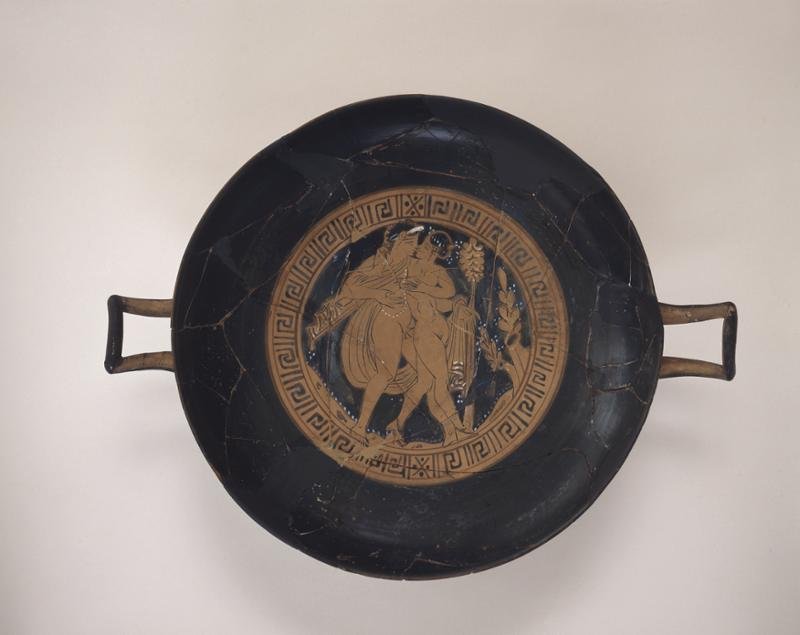
The Falisci were a warrior people, and this led them to the inevitable clash with neighboring Rome. The first traces of their civilization come from the excavations of Falerii Veteres, which had trade relations with the whole Mediterranean. The richest part of the finds today is not in Civita Castellana but elsewhere: many pieces of great value are in the Museo Nazionale Etrusco di Villa Giulia in Rome, others are kept right here, in the Archaeological Museum of the Agro Falisco inside the Forte Sangallo, and Faliscan finds have ended up even in the Louvre in Paris. It is worth keeping this dispersion in mind: Faliscan red-figure pottery, with its elegant shapes and mythological subjects, is big-museum material, and whoever visits Civita Castellana sees a part of the heritage produced here, not all of it.
The legend of Halaesus, the Greek founder
Ancient literary tradition gives Falerii a heroic and Greek founder: Halaesus, in Italian Aleso. According to the legend he was the son of Agamemnon, king of Mycenae, and of the war slave Briseis, the one contested between Achilles and Agamemnon in the Iliad. Having fled after the killing of his father, Halaesus is said to have landed on the Tyrrhenian coast and gone up the Tiber to Falerii. It is not chronicle, it is a founding myth, but a myth that the great Latin authors took seriously. Ovid, in the Fasti, writes "Halaesus a quo se dictam terra falisca putat", that is, the Faliscan land believes it takes its name from him. And Virgil, in the Aeneid, together with his late commentator Servius Maurus Honoratus, leaves testimony of the same hero. When people say a place has deep roots it is often rhetoric: here it can be verified in the classical texts, and it is one of the most fascinating things about Civita Castellana.
Falerii Novi and the Roman walls
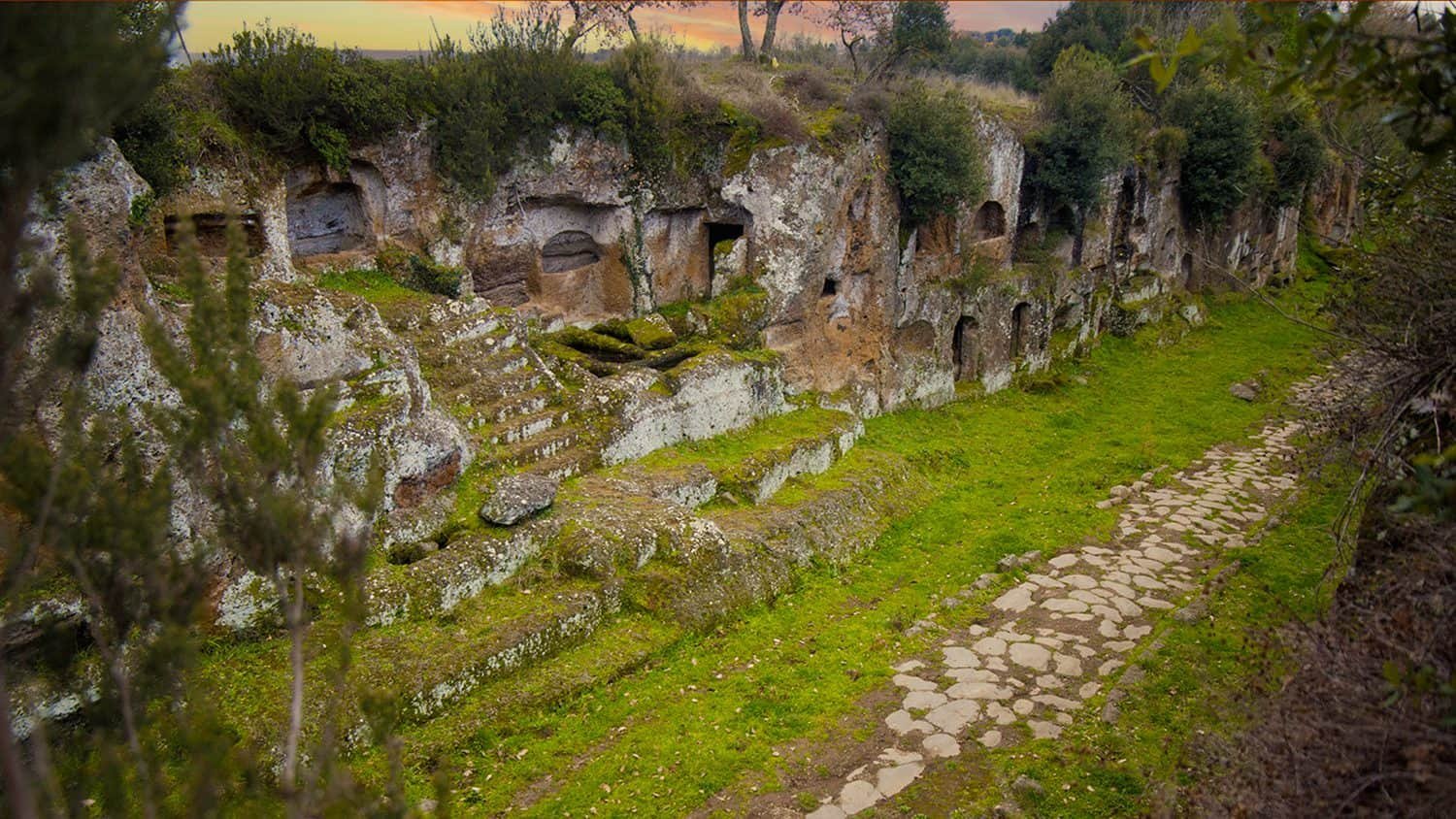
The clash with Rome ended badly for the Falisci. At the end of the First Punic War they rebelled, the city was retaken in 241 BC and the Falisci were literally driven out of the fortified site of Falerii Veteres: forced down to the plain, they founded a new city on a terrace about 5 kilometers away, which took the name Falerii Novi. It is one of the clearest cases of forced transfer of a population in antiquity: from the impregnable height to the open, controllable plain. Of that Roman city the walls remain, and they are the thing to see for anyone who loves archaeology: a circuit of about 2,400 meters in blocks of tuff, with dozens of towers, a good half of them still standing, and several gates along the perimeter. Inside the walls, where the Roman urban fabric once stood, today rises the Cistercian abbey of Santa Maria in Falleri, built at the end of the 12th century reusing the ancient materials of the site: a church isolated in the countryside, with its apses, which is at once a medieval monument and a witness to the reuse of Roman stones over a thousand years. Via Amerina, the consular road that branched off Via Cassia passing through Nepi, crossed this very territory, and along its route stretches of Faliscan necropolis carved into the tuff are preserved.
The Forte Sangallo of Civita Castellana
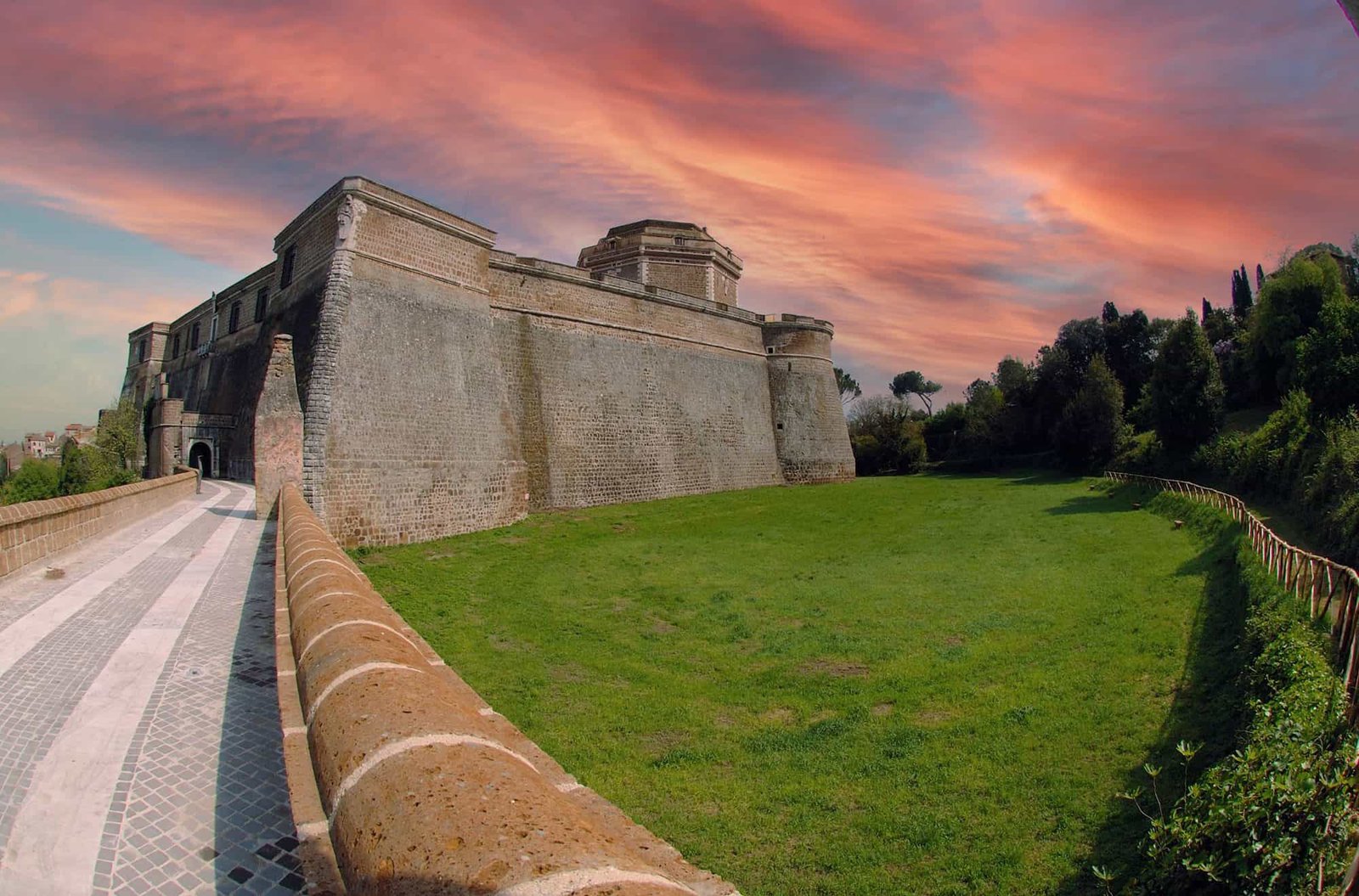
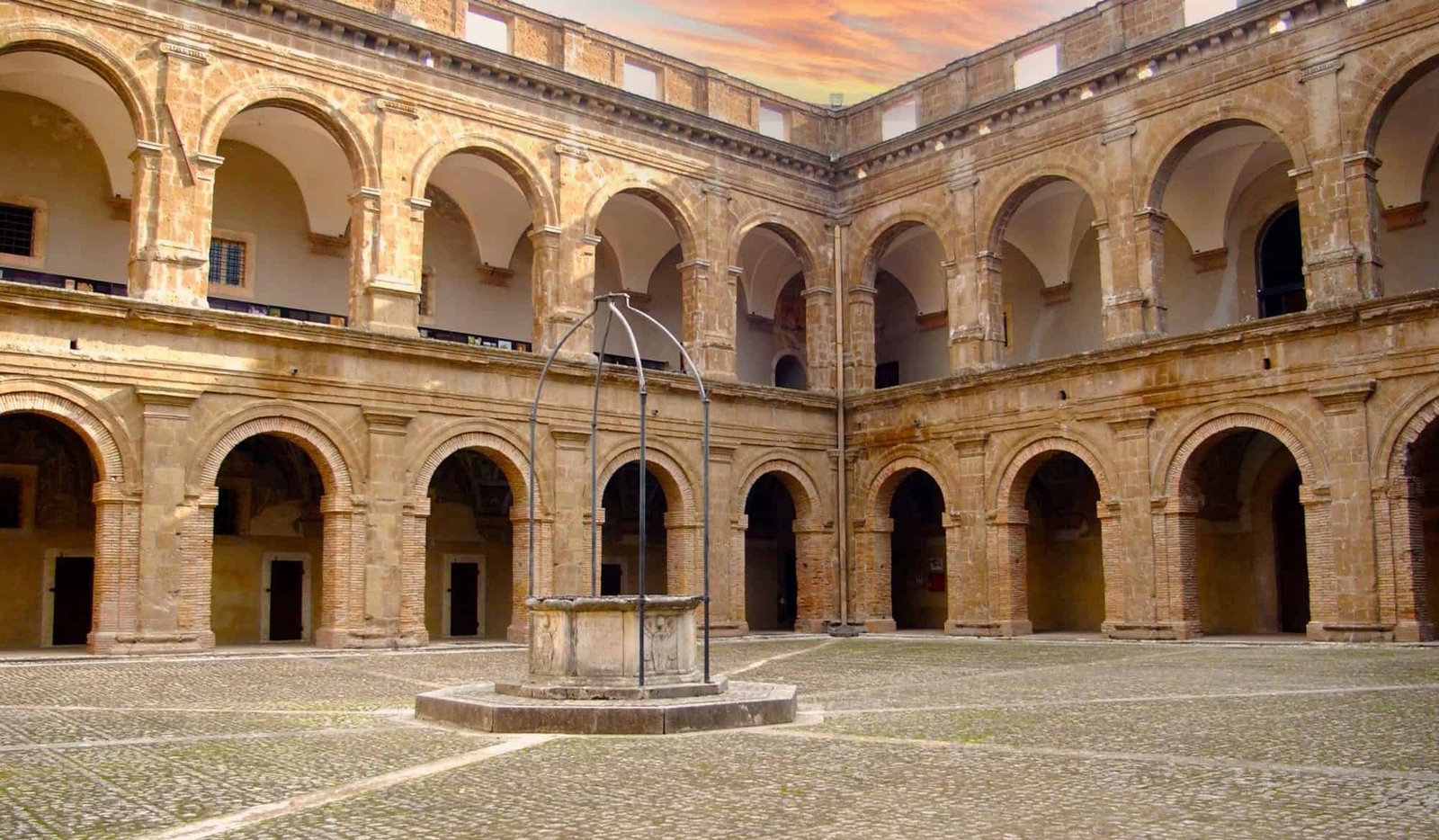
The symbol monument of Civita Castellana is the Forte Sangallo, the fortress that dominates the village's main square. Pope Alexander VI Borgia had it built starting in 1494, over a pre-existing medieval building. The project was entrusted to Antonio da Sangallo the Elder and completed by his nephew, Antonio da Sangallo the Younger, under the pontificate of Julius II della Rovere. To that phase belong the octagonal keep, the well of the larger courtyard and the great entrance gate of the fortress. Later pontiffs added restoration and embellishment work. The Forte Sangallo was not only military architecture: it also served as a papal residence, and this double function lasted until the 19th century. Whoever enters today finds an arcaded courtyard of great Renaissance balance, an elegant cloister and the grand staircase, and understands right away why the name of the Sangallo, the dynasty of architects who marked the Roman and Tuscan Renaissance, is tied to this place.
The Archaeological Museum of the Agro Falisco
Inside the Forte Sangallo you visit the Archaeological Museum of the Agro Falisco, inaugurated in 1977, which gathers the materials coming from ancient Falerii Veteres and the neighboring areas. This is where Faliscan civilization becomes visible again: tomb assemblages, ceramics, bronzes, architectural terracottas from the temples. Some finds date from the 8th to the 12th centuries and come from cellars and wells of the town. Others come from the area of the sanctuary of Juno Curitis, datable to the first half of the 6th century BC. To the early years of the 5th century BC belong instead the materials of the Temple of Mercury and of two other temples identified on the Colle del Vignale. Over the years the collection has been enriched with works donated by private individuals and with artistic ceramics from the town's state art institute, testifying to the continuity of a vocation. The display occupies the fortress's noble rooms, and the visit puts together two levels of reading: Faliscan and Roman archaeology on one side, Renaissance military and residential architecture on the other.
Practical tips for the museum in Civita Castellana
A few concrete pointers so you don't get the visit wrong. Admission to the museum allows a limited number of visitors at a time, about 30, so on high-season weekends you may wait a few minutes at the entrance. The hours cover morning and afternoon from Tuesday to Sunday, with Monday closing: whoever arrives at the beginning of the week risks finding the gates shut, a classic mistake of those who improvise. On Sundays, in some periods, opening can be reduced to the morning only, so it's best to check beforehand. For a thoughtful visit of the fort and the museum allow at least an hour and a half. If you then add the tour of the historic center and the walk above the gorges, the half day fills up without effort.
The Duomo of Civita Castellana and the Cosmatesque portico
The Duomo of Civita Castellana, the cathedral of Santa Maria Maggiore, is the second thing to see and for many the most beautiful. The facade is from the 12th century, but the piece worth the trip is the portico in front of it, from 1210, a great central arch framed by polychrome mosaics in Cosmatesque style. It is signed, and this makes it rare: the work is by the Cosmati, the school of Roman marble workers who between the 12th and 13th centuries covered the churches of Rome and Lazio with geometric inlays of porphyry, serpentine and gilded glass paste. The inscription recalls Lorenzo di Cosma and his son Jacopo, that is, Laurentius and his son Jacopo. The father Lorenzo is credited in particular with the portal, while the son worked on the portico. In front of this facade it's worth stopping and looking closely at the inlay: the small marble disks, the braided bands, the light that ignites the gold of the tesserae. It is Cosmatesque art at its best, and finding it on a provincial duomo, far from the beaten circuits, is exactly the kind of surprise for which it is worth venturing as far as the Tuscia.
Beneath the church is preserved a large crypt of the 7th and 8th centuries, a memory of the oldest phases of worship on the site. The Cosmatesque substance of the Duomo, its medieval facade and the early medieval crypt make this cathedral a small treatise on Lazio art history, from the early Middle Ages to the 13th century, all in one glance.
The churches of Civita Castellana, one by one
Civita Castellana has a heritage of churches out of proportion to its size: a sign of centuries in which it was a papal residence and a bishop's seat. It is worth walking the center with your head up, because many of these facades tell precise stories.
Santa Maria del Carmine and the other medieval churches
The church of Santa Maria del Carmine, formerly Santa Maria dell'Arco, dates to 1100, with a bell tower with mullioned windows and an interior of three naves marked by columns and capitals all different from one another, the unmistakable sign of the reuse of older materials. Next to it stands the monastery of the Poor Clares of San Damiano with its cloister. The church of San Francesco, once dedicated to St. Peter, is from the 13th century and holds a 15th-century panel by Antoniazzo Romano and an altarpiece of 1531, as well as a frescoed cloister. The church of San Gregorio, also 13th-century, has three naves, remains of 15th-century frescoes and a bell tower with a single-light and a mullioned window. The church of Sant'Antonio Abate preserves Renaissance frescoes. That of Santa Susanna, with its 13th-century convent, has a portico facing the hamlet of Borghetto.
The minor churches and the sacred shrines of Civita Castellana
The census continues among small churches and popular devotions. Santa Maria delle Piagge, of medieval origin, holds a Madonna and Child celebrated on Low Sunday, near Porta Lanciana. The church of Madonna delle Rose is from the 16th century, built on early medieval remains between Via Ponte Ternano and Largo Roma. The church of San Benedetto stands opposite the former church of San Giovanni Decollato, with a small bell tower with a mullioned window, now used as a flower shop. Just outside the built-up area, carved into the tuff on the northwest slope of the Colle del Vignale, south of the town, opens the rock-cut church of San Cesareo deacon and martyr, a space made entirely in the rock. In the historic center there are also two deconsecrated churches, now private homes. To these are added the sacred shrines that dot the alleys: the shrine of the Madonna delle Nevi of 1718, with a 17th-century fresco, in Piazza dei Martiri delle Fosse Ardeatine. The shrine with St. George and the dragon of the 12th century on Via Corsica 30. And a fresco of the Madonna and Child from the late 1600s on Via Garibaldi 4. They are details that the distracted tourist skips and that instead stitch together the devotion of an entire town.
The transformed churches and the abbey of Faleri
Several churches have changed function over the centuries and tell the community's story well. The former church of San Giorgio, in the village, now houses the Museo della Ceramica Casimiro Marcantoni and the tourist office, near the Ulderico Midossi art institute. The former church of Santa Chiara, formerly the nuns', with an elegant rose window on the facade on Via Ferretti, was for a long time a hospital for the chronically ill. The former church of the Santissimo Sacramento of the Franciscan Poor Clares, opposite the church of the Carmine, has become a nursery and school. Outside the built-up area, in the territory of Fabrica di Roma in the hamlet of Faleri, stands the abbey of Santa Maria in Faleri, Cistercian, from 1200, with its five apses: it is the same Santa Maria in Falleri built inside the walls of Falerii Novi reusing the Roman stones, one of the most evocative places in the Faliscan countryside for those seeking silence and archaeology together.
The palaces and civil architecture of Civita Castellana
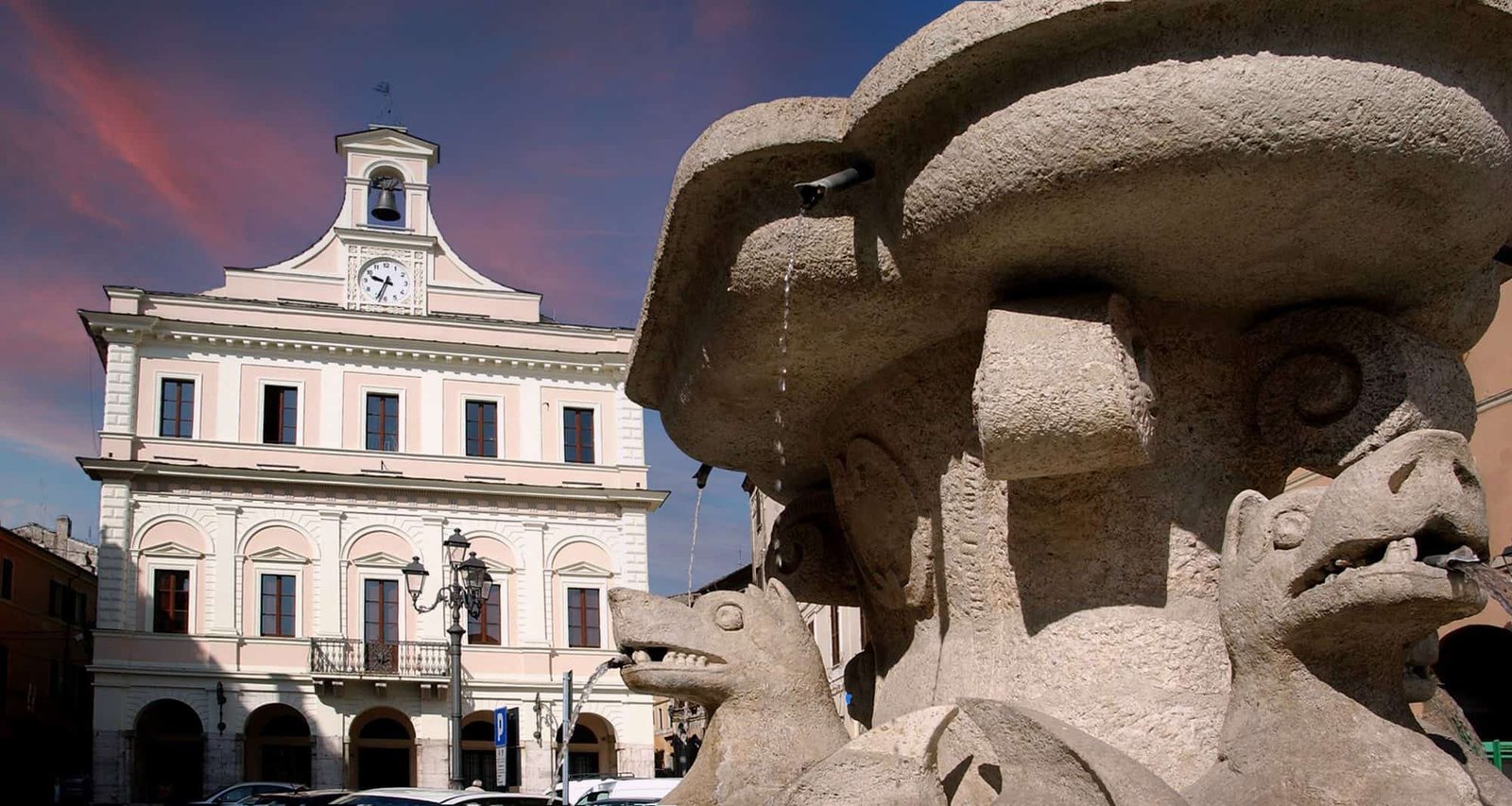
Alongside the churches, Civita Castellana preserves a fabric of palaces that mark the passage from the medieval village to the town of the Papal State. Palazzo Petroni-Trocchi, from 1544, is the work of Sangallo's brother, with two rusticated portals and coats of arms on the facade: several illustrious figures passing through stayed there. Palazzo Baroni preserves frescoes by the Zuccari, the famous family of Mannerist painters. Palazzo Montalto, from the 16th century, also has frescoes. Palazzo Onorati is from 1745 and Palazzo Morelli from 1740. Then there is the 16th-century town hall. The urban landscape is completed by the bridges that span the gorges: the Ponte Clementino, from 1709, built in an era of great public works, and the Ponte Felice over the Tiber, from 1589. In the center you still meet Via del Rivellino with its medieval gate, the Porta Borgiana on the road to Castel Sant'Elia, medieval houses and towers, painted sundials, palaces with mullioned windows, and the scenic Fontana dei Draghi of 1585, one of the most beloved photo spots of the village. Modern civil monuments are not lacking: Silvio Canevari's Monument to the Victory, the one to the fallen of the sea, the monument to the ceramists and the one to the fallen in Africa, which recall the recent history and the productive identity of the town.
The gorges, the tuff and the landscape of Civita Castellana
The landscape of Civita Castellana is the child of a volcano. The territory was born from the eruptions of the Vicano volcanic complex, the one that also left Lake Vico a little further north as its legacy. From those eruptions comes the red tuff that colors the walls and buildings of the village. At a later stage, with the uplift of the area, the erosive action of the waters cut into the tuff bank, digging the deep gorges, the forre, that wrap around the town and make it a natural fortress. Walking along the edge of the gorges, with dense greenery rising from the walls and the stream at the bottom, is one of the best experiences of the place and costs nothing. The phenomenon of the gorges is not exclusive to Civita Castellana: it characterizes all the southern Tuscia and continues in the nearby gorges of Corchiano and in the Treja valley. It was this very landscape that struck the travelers of the Grand Tour.
Civita Castellana through Goethe's eyes
The most illustrious witness is Johann Wolfgang von Goethe, who noted the impression he received here in his journey through Italy. "The town is built on volcanic tuff, in which I seemed to recognize ash, pumice and fragments of lava. The view of the castle is beautiful: Monte Soratte, a limestone mass that probably belongs to the Apennine chain, rises solitary and scenic." They are a few lines from the Italienische Reise, but they capture exactly what whoever looks out from the fort still sees today: the tuff underfoot and the isolated Soratte on the horizon. Having Goethe as an eyewitness is no small detail for a village of 15,000 inhabitants.
The ceramics of Civita Castellana
If there is one word the world associates with Civita Castellana, that word is ceramics. The vocation is very ancient and arises from a banal geological reason: clay is easy to find here. The Falisci already produced fine pottery. In the 19th century the tradition became industry thanks to Giuseppe Trevisan, a Venetian entrepreneur who set up the first ceramic factories in the town. Alongside the artistic sector the industrial one developed, which reached its peak in the second postwar period and gave life to a real district, extending to the neighboring municipalities as well. The main product is sanitaryware, followed by tableware: a significant share of national sanitary ceramics production still comes out of here today, so much so that Civita Castellana has often been called the Italian capital of the sector. The Museo della Ceramica Casimiro Marcantoni, set up in the former church of San Giorgio, tells this story and is worth a stop to understand how a tuff town became a known name in showrooms in half the world.
The history of Civita Castellana
The historical story of Civita Castellana is long and full of turns. After the end of Falerii Veteres and the Roman founding of Falerii Novi, the site of the ancient Faliscan capital went through a period of abandonment, then became inhabited again following the Gothic wars and the Lombard invasions. It was then that it came back to life, giving rise to the medieval urban fabric still recognizable in the center today: Falerii Veteres was becoming Civita Castellana. In the following centuries the city became a refuge: popes such as Clement III and Adrian IV found safety here at moments of grave danger. At the end of the 12th century it was the lordship of Giovanni dei Papareschi, senator of Rome, and during the late Middle Ages it was contested between two powerful families, the Prefetti di Vico and the Savelli, until in 1426 the Holy See reasserted its jurisdiction.
Civita Castellana in the Renaissance
From that moment the city followed the fortunes of the Papal State, and many popes visited and stayed here, among them Alexander VI, Julius II and Pius VI. It was under Alexander VI Borgia that, in 1494, work on the Forte Sangallo began. The most dramatic episode of the 16th century was the attack of the Landsknechts in 1527, the same mercenaries who sacked Rome that year: twice they tried to seize Civita Castellana, having sensed its strategic value, but the city held. On that occasion, however, the city archive was destroyed, set on fire. The 17th and 18th centuries were peaceful and were devoted to public works: in 1589 the Ponte Felice, in 1609 the variant of Via Flaminia, in 1709 the Ponte Clementino, and in 1787 the link between Via Cassia and Via Flaminia wanted by Pius VI.
Civita Castellana between the Revolution and the Risorgimento
The ideas of the French Revolution arrived early here too. On December 5, 1798 the French troops led by General MacDonald, part of General Championnet's army, defeated the Neapolitan troops of General Mack at Civita Castellana: it was an important battle in the campaign that led to the Roman Republic. The following year the insurgents of Arezzo joined the enemies of the French and took the city on August 25, 1799. The French retook it, but within the year Civita returned to the Papal State. It fell again under French rule in 1809, when Rome and Lazio were annexed to the Empire, and remained so until 1814. In 1831 it was the base from which the papal soldiers stopped the patriots of General Giuseppe Sercognani heading for Rome, with clashes at Otricoli, Ponte Felice and Borghetto. In 1867 the Garibaldians heading for Mentana passed through the valley using the railway, but did not climb up to the town.
The capture of Civita Castellana in 1870
The final chapter of temporal power, at Civita Castellana, played out on September 13, 1870. The city, defended by a company of papal Zouaves and a disciplinary company, a little over 200 men in all, was attacked by two of the five Italian divisions marching on Rome. Two battalions of bersaglieri were sent to circle around the town to cut off the papal troops' retreat. At nine in the morning the field artillery of the Italian 4th Corps opened fire on the fortress and the walls. Meanwhile a company of the 35th Bersaglieri forded the Treja and climbed up into town, reaching the square, followed by a battalion of the 39th Infantry. Infantrymen and bersaglieri slipped into the houses around the Forte Sangallo and began shooting from the windows. Shortly afterward the fort raised the white flag and sent an envoy. The agreement was quick and the commander of the garrison, Captain Count Papi, surrendered with the whole garrison. The papal troops had no losses. The Italians had seven wounded, one of whom died during the night. With the city taken, the Italians continued on to Nepi, Monterosi, La Storta and Rome, closing the centuries-old power of the Church and annexing Civita Castellana to the Kingdom of Italy.
Festivals and events in Civita Castellana
Civita Castellana has a lively and heartfelt calendar of festivals, worth considering when planning the visit, because it is on festival days that the village shows its character.
The Carnevale Civitonico
The Carnival of Civita Castellana, the Carnevale Civitonico, is among the most deeply rooted in the Tuscia. It opens on January 17 every year with the carrying of the Puccio, a papier-mache dummy, in Piazza Matteotti. In the following weeks come the frittelloni festival, Fat Thursday with the children's allegorical parade organized by the schools, the parades of allegorical floats on the last two Sundays and Shrove Tuesday, the dance in Piazza Matteotti and, to close, the bonfire of the Puccio with fireworks. It is a town carnival in the best sense: homemade, with floats built by local groups and the square as a stage.
The Fiera nazionale delle sagre
Since 2010 the Pro Loco of Civita Castellana has organized in May what has become the most important review of food festivals in Lazio: the Fiera nazionale delle sagre e della pasta, a sort of festival of festivals in which the main Italian Pro Loco associations meet once a year in the Tuscia city. For those who love local food it is the right occasion to taste in one go specialties that come from half of Italy.
The year's other events
In mid-September there are historical reenactments of ancient medieval festivals, with races, jousts and costume parades with ladies and knights. Typical too is the infiorata of Corpus Domini, with carpets of petals laid along the streets of the center, and to these are added the different summer events that animate the village. The advice, if you can choose, is to make your visit coincide with one of these dates: the fort and the Duomo stay there all year, but the living Civita Castellana is better caught when the square is full.
What to see around Civita Castellana
Civita Castellana is an excellent base camp for exploring the southern Tuscia and the Treja valley, because everything that matters is within half an hour. The most famous neighbor is Calcata, the tuff village suspended over the gorge that became an artists' town, one of the most photographed places in the area. A few kilometers away is Nepi with its waterfalls and fortress, and a little further Sutri with the Roman amphitheater carved into the tuff and the Mithraeum. Also worth the detour are Castel Sant'Elia, with its sanctuary over the sheer drop of the gorge and the frescoed Romanesque basilica, and Faleria, another tuff balcony over the valley. Further north you meet Ronciglione and Lake Vico, the volcanic body of water inside its nature reserve. Those who love walking find plenty to keep them busy in the gorges of Corchiano and in the Treja valley park, while heading back toward Rome along Via Flaminia you pass beneath Monte Soratte, the mountain sung by Horace and Goethe, and near Castelnuovo di Porto with its fortress. A bit farther, but in the same spirit of an outing, are Lake Bracciano and the town of Civita di Bagnoregio, the other Civita of Lazio, the one that loses pieces of tuff every year.
A curiosity about Civita Castellana (VT)
The nicest curiosity concerns the very name of the town. Civita Castellana has not always been called that: for almost all of antiquity it was Falerii, the capital of the Falisci. The present name was born in the Middle Ages and has its roots in the word civitas, the city in the full sense. Tradition links the rebirth of the village around the year 1000 to the figure of Pope Gregory V, who is said to have recognized it as a civitas, but the precise detail should be taken for what it is, that is, local memory more than a certain document. What is documented, and surprising, is that beneath the feet of this town of 15,000 inhabitants lies one of the capitals of pre-Roman Italy, with a language of its own, Faliscan, and a pantheon of its own, from Juno Curitis to Mercury. Few centers the size of Civita Castellana can claim such layering: Faliscan, Roman, early medieval, papal, industrial, all readable by strolling for an afternoon. The curiosity, if you like, is precisely this continuity: not a dead archaeological site to visit, but a living city built on top of its own ancestor, which still bears its name transformed.
Something nobody tells you about Civita Castellana (VT)
The thing almost no guide says is that the masterpieces that came out of Civita Castellana, for the most part, are not in Civita Castellana. Faliscan red-figure pottery, the kind that made Falerii famous in the ancient world, is today divided between the Museo Nazionale Etrusco di Villa Giulia in Rome, where the best of the production is found, and leading foreign collections: finds from the Faliscan area are kept even at the Louvre in Paris. The museum of the Forte Sangallo holds an important and very representative part of the heritage, but whoever arrives thinking to see here, all together, the textbook pieces is left with a piece of history elsewhere. It is practical information, not a reproach: it serves to set expectations and to read better what you see. There is then a second little-known fact, of the opposite sign: the plain of Falerii Novi, five kilometers farther on, is one of the least visited and best preserved archaeological sites in Lazio, with almost two and a half kilometers of Roman walls still standing and a medieval abbey in the middle, almost always deserted. Tourism concentrates on the fort in the center and leaves the Roman walls to those who feel like looking for them: a privilege for those who know.
My advice for visiting Civita Castellana (VT)
It's better not to shut Civita Castellana inside the Forte Sangallo alone. The fort and its museum are the reason to come, but the part that stays with you is another: the tour of the historic center at the right pace. Start from the fort while the museum is open, early in the morning, when the entrance limited to a few people at a time creates no waits. Then go down to the Duomo and give a few real minutes to the Cosmatesque portico of 1210, looking at it up close rather than in passing. From there, on foot, look for the edge of the gorges and the Fontana dei Draghi, and let the tuff and the gorges do their effect. Avoid Monday, the museum's closing day, and in general avoid coming in a hurry: this is a village for half a day at least, better if combined with Calcata or Nepi to make the area a full outing. If you choose spring, the Fiera nazionale delle sagre in May adds the main course. If you prefer silence, a weekday at the end of summer gives you the fort almost to yourself. One last thing: bring comfortable shoes, because on the tuff and along the gorges smooth soles are unforgiving.
Another well-known fact, yet rarely mentioned
Everyone knows there is a Renaissance fort in Civita Castellana. Few remember that it is signed by the Sangallo, the dynasty of architects who designed half of the Italian Renaissance. The fort was begun on commission from Alexander VI Borgia by Antonio da Sangallo the Elder and completed by his nephew Antonio da Sangallo the Younger under Julius II: the same Sangallo who in Rome left their mark in St. Peter's, at Palazzo Farnese and in the papal fortifications. Having an entire fortress of theirs, with the octagonal keep, the courtyard well and the original gate, in a provincial town, is a fact that would deserve more prominence. There is more, and it is the second little-cited fact: the Forte Sangallo was at once a war machine and a papal residence, and kept this residential function until the 19th century. Its noble rooms, the elegant cloister, the harmony of the arcaded courtyard tell of a building conceived as much to defend itself as to host a pope. This double nature, military and residential, is the key to understanding why the fort is so beautiful and not only so solid.
The right photo to take at Civita Castellana (VT)
The photo that brings home the sense of the place is the one from the edge of the gorges with the village's tuff spur plunging into the green gorge: it is the image that explains in one stroke why a city has existed here for 3,000 years. Look for a panoramic overlook on the side of the gorges, better in the late afternoon, when the raking light ignites the red of the tuff. The second obligatory photo is the Cosmatesque portico of the Duomo: frame the central arch of 1210 with its polychrome mosaics, getting close enough to make the marble disks and the golden braids readable. Whoever wants the most immediate postcard shot finds it at the Fontana dei Draghi of 1585, scenic and recognizable. And if you are lucky enough to land on a clear day, move away for a moment toward an open spot and set Monte Soratte on the horizon, the one that struck Goethe: the same solitary mountain that Grand Tour travelers drew from their notebooks. Four photos, four different stories of the same tuff village.
Some important events that happened here in history
Civita Castellana and its ancestor Falerii have been the stage of events that weigh in Italian history. The first, and oldest, is the defeat of the Falisci and their deportation in 241 BC: driven from the impregnable height of Falerii Veteres, they were forced by the Romans to found Falerii Novi on the plain, a textbook example of how Rome bent unruly peoples. The second is the attack of the Landsknechts in 1527: the same mercenaries who sacked Rome tried twice to take Civita Castellana, which held, though paying with the destruction of the city archive set on fire. The third is the battle of December 5, 1798, when the French troops of General MacDonald defeated the Neapolitans of General Mack here, a decisive episode in the campaign that led to the Roman Republic. In 1799 the city changed hands twice in a few months. The fourth, and perhaps the most symbolic, is the capture of September 13, 1870: a little over 200 papal defenders, between Zouaves and disciplinary soldiers, against two Italian divisions. After the bombardment of the fortress and the rush of the bersaglieri who had forded the Treja, Captain Count Papi raised the white flag and surrendered. From there the Italians continued toward Rome. In these four episodes, 2,000 years apart from one another, there is the same constant: the strategic position of this tuff spur, which no one could afford to ignore.
Who passed through Civita Castellana (VT)
Quite a lot of history has passed through Civita Castellana, and with it quite a few names. On the side of the popes, the city was a residence and a refuge: Clement III and Adrian IV found safety here in the Middle Ages, and in the Renaissance Alexander VI Borgia, who wanted the fort, Julius II della Rovere, under whom it was completed, and Pius VI stayed here. On the side of artists and architects, the two Antonio da Sangallo, the Elder and the Younger, left the fortress here. The painter Antoniazzo Romano signed a panel kept in San Francesco. The Zuccari, a dynasty of Mannerist painters, frescoed Palazzo Baroni. On the side of travelers, the most famous witness is Johann Wolfgang von Goethe, who in the Italienische Reise noted the tuff and the view of the Soratte during his journey through Italy: his lines remain the finest description of the village's landscape. On the side of armies, the Landsknechts passed in 1527, the French of MacDonald and Championnet at the end of the 18th century, the Italian bersaglieri in 1870. And on the side of industry there is Giuseppe Trevisan, the Venetian entrepreneur who in the 19th century started the ceramic factories here and changed the town's economic destiny forever. Popes, architects, painters, poets, generals and industrialists: for a tuff village of 15,000 souls, a list worthy of respect.
Quick questions about Civita Castellana (VT)
Where is Civita Castellana?
Civita Castellana is in the province of Viterbo, in the southern Tuscia, on a tuff spur along Via Flaminia, about 80 kilometers from Rome. The town hall is at Piazza Giacomo Matteotti 48.
Why is Civita Castellana famous?
For three things above all: the Forte Sangallo with the Archaeological Museum of the Agro Falisco, being the heir of ancient Falerii, capital of the Falisci, and ceramic production, which made it a known name in the sector across Italy.
How much does it cost to enter the Forte Sangallo in Civita Castellana?
Since June 2025 an admission ticket for the museum has been introduced, after years of being free. Since the fares changed recently and the official sources do not agree, it's best to check the updated price on the museum's official website before the visit.
What are the hours of the museum in Civita Castellana?
The Archaeological Museum of the Agro Falisco is open Tuesday through Sunday from 8:30 to 19:00, with last entry at 18:00, and is closed on Monday. In some periods the Sunday hours may be reduced. It is also closed on January 1 and December 25.
How much time do you need to visit Civita Castellana?
For the fort and the museum allow about an hour and a half. Adding the Duomo, the historic center and the walk above the gorges, half a day fills comfortably.
How do you get to Civita Castellana from Rome?
By car along Via Flaminia or the expressway in a little over an hour. By train on the Rome-Viterbo regional line to the station in the valley. By bus with the Cotral connections. The historic center is walked on foot.
Is the museum in Civita Castellana suitable for children?
Yes. The fort with its keep, courtyard and well strikes the imagination of the little ones, and the museum rooms with the Faliscan tomb assemblages can be visited in short times. The walk above the gorges completes the day outdoors.
What is Falerii Veteres?
It is the ancient capital of the Falisci, which arose on the site where Civita Castellana now stands. It was one of the main centers of the Bronze and Iron Age in central Italy, with temples, necropolises and a flourishing ceramic production.
What is Falerii Novi and where is it?
It is the Roman city founded in 241 BC when the defeated Falisci were forced to leave the height. It is on the plain about 5 kilometers from Civita Castellana and preserves almost two and a half kilometers of Roman walls and the medieval abbey of Santa Maria in Falleri.
What is the portico of the Duomo of Civita Castellana?
It is a Cosmatesque portico of 1210 signed by the Roman marble workers Lorenzo di Cosma and his son Jacopo, with a great central arch and polychrome mosaics in porphyry and gilded glass paste. It is one of the most beautiful examples of Cosmatesque art outside Rome.
Who built the Forte Sangallo?
Pope Alexander VI Borgia wanted it from 1494. The design is by Antonio da Sangallo the Elder, completed by his nephew Antonio da Sangallo the Younger under Pope Julius II. The octagonal keep, the well and the gate date from that phase.
Why is Civita Castellana tied to ceramics?
Because clay is easy to find. From the Faliscan tradition it passed in the 19th century to industry, started by Giuseppe Trevisan, up to the sanitary ceramics district that still produces an important share of the national total today.
What are the gorges of Civita Castellana?
They are the deep gorges carved by the erosion of the waters in the bank of volcanic tuff, which wrap around the village isolating it on a spur. They are the most characteristic feature of the landscape and can be followed on foot from the center.
Can you visit the abbey of Santa Maria in Falleri?
The Cistercian abbey stands in the countryside, inside the walls of Falerii Novi, in the territory of Fabrica di Roma in the hamlet of Faleri. It is an isolated building reached by car. For hours and access it's best to inquire on site or at the tourist office.
When is the Carnival of Civita Castellana held?
The Carnevale Civitonico opens on January 17 with the carrying of the Puccio in Piazza Matteotti and continues with food festivals, parades of allegorical floats on the last two Sundays and Shrove Tuesday, up to the bonfire of the Puccio with fireworks.
What is the Fiera nazionale delle sagre of Civita Castellana?
It is the most important review of food festivals in Lazio, organized in May by the Pro Loco since 2010: the Italian Pro Loco associations gather in the village for a great food festival, a sort of festival of festivals.
What to see near Civita Castellana?
Half an hour away are Calcata, Nepi, Sutri, Castel Sant'Elia, Faleria, Ronciglione and Lake Vico. For walkers, the gorges of Corchiano and the Treja valley park. Heading back toward Rome, Monte Soratte and Castelnuovo di Porto.
What is the best time to visit Civita Castellana?
Spring, for the climate and for the Fiera delle sagre in May, and early autumn. Late afternoon is the best time for the light on the tuff and the gorges. Avoid Monday because the museum is closed.
Is Civita Castellana the same as Civita di Bagnoregio?
No, they are two different towns, both in Lazio and on tuff spurs. Civita di Bagnoregio is the famous village in the province of Viterbo reachable only on foot by a footbridge. Civita Castellana is a living town, heir of ancient Falerii.
Is it worth coming all the way here? Yes, but come at the right pace. Civita Castellana is not an antiquity theme park, it is a town that works, makes ceramics and lives its square, built on top of one of the capitals of pre-Roman Italy. Give it half a day, look at the Duomo's portico up close, look out over the gorges and then widen the trip to Calcata or Nepi. You will go home with the impression of having seen a piece of real Italy, of the kind that doesn't end up on covers but stays in the mind.
Article written by the editorial team of TourLeaderPro, contact them for Private/Corporate/V.I.P. Tours and Experiences.
Planning a trip to Rome? The English-language guides to visiting the city are on ItalyPlanner.com.