Church of Sant’Andrea al Quirinale
In short. The Church of Sant’Andrea al Quirinale is on Via del Quirinale, a few steps from the Palazzo del Quirinale and the Scuderie del Quirinale, in one of the densest stretches of Roman Baroque in existence.
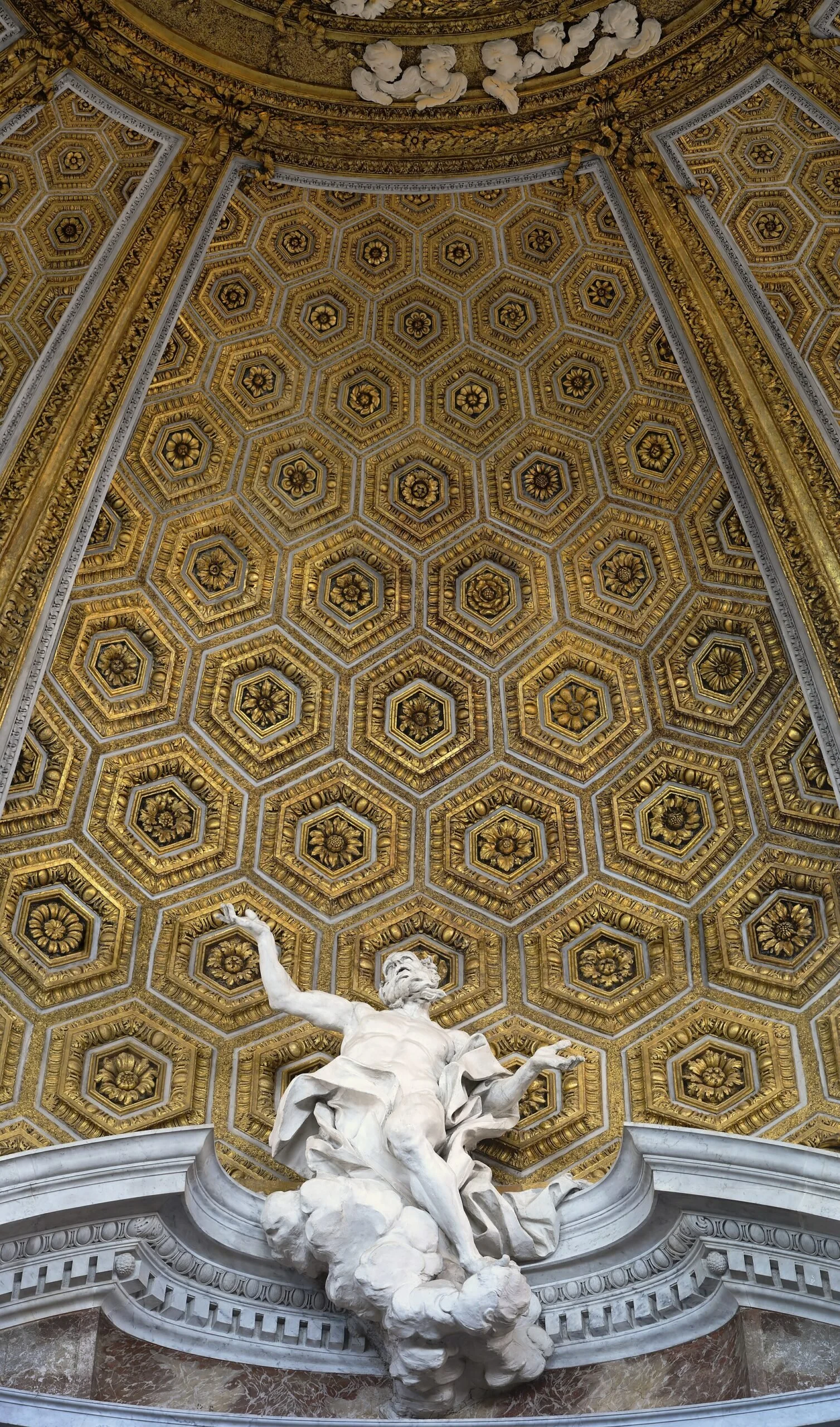
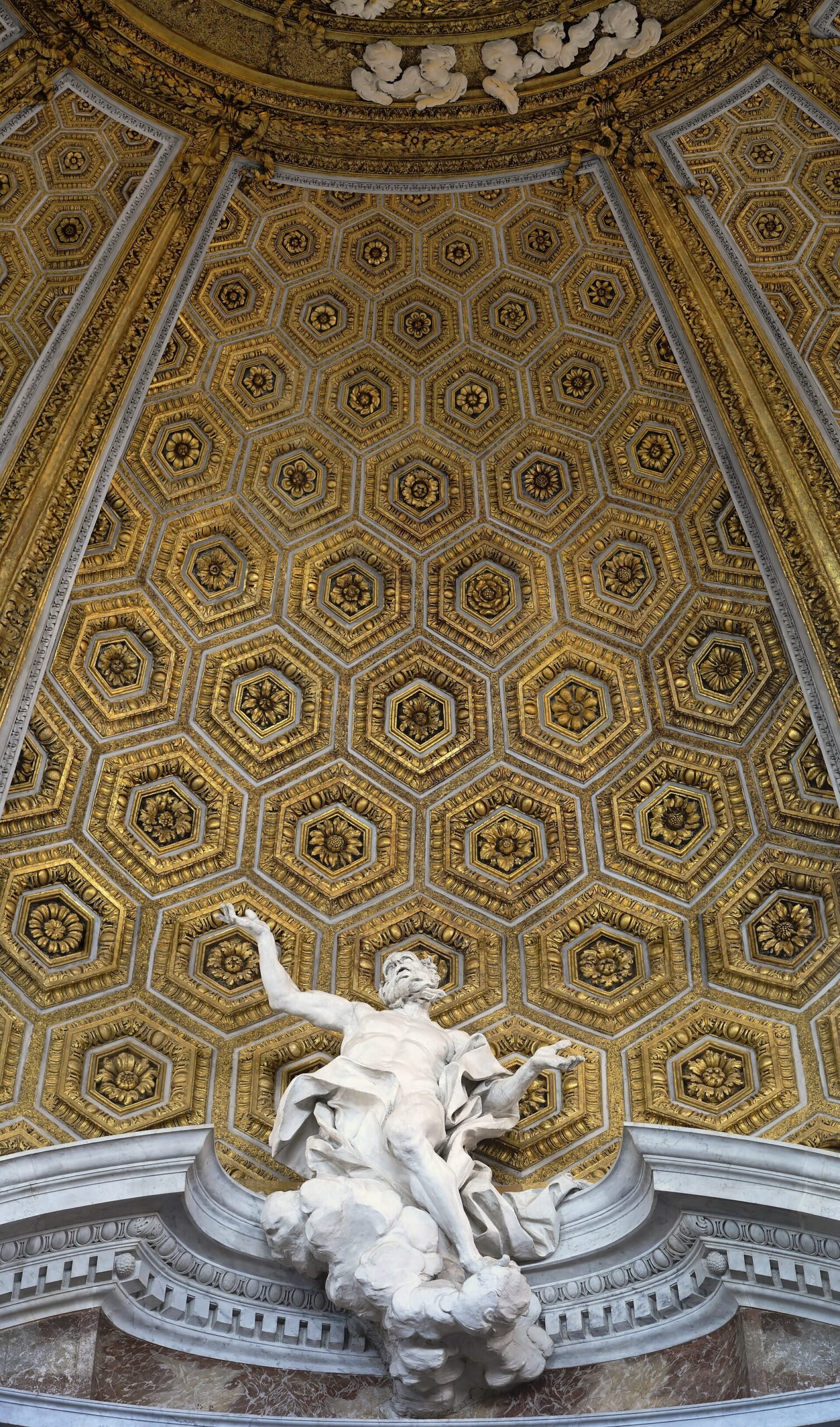
The Church of Sant’Andrea al Quirinale is on Via del Quirinale, a few steps from the Palazzo del Quirinale and the Scuderie del Quirinale, in one of the densest stretches of Roman Baroque in existence. Gian Lorenzo Bernini designed it between 1658 and 1670 for the Jesuit novitiate, on commission from Cardinal Camillo Pamphilj and with the approval of Pope Alexander VII, and he considered it, according to the biographical tradition handed down by his son Domenico, his most successful architectural work: as an old man he came back to sit here, in silence, just to look at it. The elliptical plan with the major axis running transversally, the dome with gilded coffers and the polychrome marbles that cover every wall make this small building, almost hidden among the palaces of the Quirinale, one of the absolute peaks of Roman Baroque. A little farther on, toward the Quattro Fontane, stands the church of San Carlino, signed by Bernini's great rival, Francesco Borromini: a comparison that alone is worth the climb up here. Anyone who arrives knowing nothing about the narrow, concave facade risks walking right past it without noticing, while those who know the story know that behind that discreet threshold hides one of the most refined interiors ever conceived in Rome. To get your bearings in the area, the pages devoted to the Quirinal Palace, the Scuderie del Quirinale and Palazzo Barberini are also worth reading.
Where the Church of Sant’Andrea al Quirinale is and how to get there
The address is Via del Quirinale 30, 00187 Rome, on the side of the street that runs along the flank of the Palazzo del Quirinale, between Piazza del Quirinale and the intersection with Via delle Quattro Fontane. It is one of the highest streets in the historic center, laid out on the ridge of the hill, and for that very reason it is also one of the windiest and most panoramic: from here the view drops toward Trajan's Forum and the rooftops of Rome with a sweep that few tourists really stop to look at, absorbed as they are by the facade of the church. The Quirinal Hill is the highest of the city's seven historic hills, and walking along this street, with the long wall of the papal garden on one side and the noble palaces on the other, gives a feeling of quiet that contrasts with the traffic of Via Nazionale a little lower down.
On foot from the historic center
The best way to get there is still to walk. From Piazza Venezia you climb up Via Nazionale or Via IV Novembre to reach the Quirinale in a good quarter of an hour. From the Trevi Fountain it takes 10 minutes going up Via della Dataria, a stairway that comes out almost in front of the portal of the presidential palace. Anyone coming from Via Veneto and Piazza Barberini instead walks along Via delle Quattro Fontane, which is exactly the street that Borromini's San Carlino faces before it flows into Via del Quirinale: a route that lets you see the two churches, Bernini's and Borromini's, almost in sequence, with no detours. It is probably the walking itinerary with the most Baroque masterpieces that can be done in Europe in under 20 minutes.
By metro, bus and car
The nearest metro stop is Barberini, on line A, from which you walk up Via delle Quattro Fontane in about 10 minutes. Repubblica, also on line A, works too for those who don't fear a slightly longer walk. Several surface bus lines pass along Via del Quirinale and Via Nazionale, and the Quirinale stop is the most convenient for those arriving by bus. By car the area is not recommended: traffic around the Quirinale is regulated by closures linked to the presence of the presidential residence, free parking is almost nonexistent and the nearest paid parking lots are toward Via del Tritone. Anyone arriving by car does better to leave it in a garage and continue on foot, also because part of the street, at times of greatest traffic to the presidential palace, may be temporarily closed to private vehicle traffic.
The Quirinal Hill before Bernini: from Roman hill to papal seat
Before becoming the elegant, discreet district seen today, the Quirinal Hill had a very long and layered history. In Roman times temples and villas stood here, and the very name of the hill derives, according to the most accredited tradition, from the god Quirinus, with whom Romulus was identified after his apotheosis. During the Middle Ages the area lost importance compared with other districts of the city, only to become central again from the 16th century onward, when the great Roman noble families began to build villas and residences on this windy ridge, away from the unhealthy air of the lower areas near the Tiber.
From the popes' summer villa to the presidential residence
In 1583 Pope Gregory XIII chose the hill to have a summer residence built there, taking advantage of precisely its elevated and windy position. From then on the Palazzo del Quirinale gradually became the papal seat of choice in the hot months and, later, one of the main residences of the Roman curia. It is in this context, with the papacy investing heavily in the urban decor of the hill, that the decision of Alexander VII to give the nearby Jesuit novitiate a new church, entrusted to the most celebrated architect then in the service of the Church, should be placed. Today the Palazzo del Quirinale is the official residence of the President of the Italian Republic, but the urban layout of the hill, with its narrow streets and its religious buildings set among the palaces of power, still faithfully tells of this layering of centuries.
A district of convents, gardens and gates
Strolling today along Via del Quirinale and the neighboring streets you still meet many other religious buildings, convents and walled gardens, a legacy of an era when the hill was considered a privileged place for the contemplative life precisely because of its elevated position and its relative seclusion from the traffic and noise of the lower city. The Church of Sant’Andrea al Quirinale fits into this fabric dense with religious presences, but clearly stands apart from it for the quality and ambition of its architectural design, the result of the will of a pope who wanted to leave a lasting mark in the very district where he had chosen to live.
A curiosity about the Church of Sant’Andrea al Quirinale
The curiosity that surprises most concerns the plan. Nearly all the elliptical churches built in the 17th century have the major axis pointing toward the altar, so that the worshipper, on entering, covers the longest distance of the ellipse to reach the presbytery: it is the most natural solution, the one that stretches the space in the direction of the liturgical path. At Sant’Andrea al Quirinale Bernini does exactly the opposite: he places the major axis transversally, perpendicular to the path between entrance and altar, so that whoever enters finds himself before a space that widens at the sides instead of lengthening in depth. The physical distance to cover to reach the altar is minimal, but the perception is of a wide, enveloping space that opens like an embrace around the viewer.
It is a technically risky and conceptually bold choice, because it forces the architect to resolve in a few meters a route that normally unfolds along a long axis: the two side chapels, the entrance vestibule and the presbytery with the high altar follow one another over such a short distance that the attentive visitor notices almost at once, with an effect of surprise that very many guides continue to point out as the real stroke of genius of the building. Few other Baroque architects dared so much in so small a space, and still today architecture students are brought here precisely to study how an inverted axis can completely change the perception of a space identical in size.
Bernini, Alexander VII and Camillo Pamphilj: the birth of the church
The story of the church begins with a decision by Pope Alexander VII, who ascended the papal throne in 1655 and was immediately engaged in a program of urban and architectural renewal of the Quirinale, where the summer papal residence stood right across from the construction site. The Jesuit novitiate on the hill had existed for some time, with a small 16th-century church dedicated to Saint Andrew, but the pontiff wanted to replace it with a new building, worthy of the rank of the area and able to represent in stone the prestige of the Society of Jesus. The construction was made possible thanks to the funding of Cardinal Camillo Francesco Maria Pamphilj, nephew of Pope Innocent X and a figure of great weight in the Rome of those years, whose family coat of arms, the dove with the olive branch, still recurs today in the stuccoes of the interior as the silent signature of the patron.
The construction project between 1658 and 1670
Work began in 1658 under the direction of Gian Lorenzo Bernini, who was already at the peak of his career and fresh from the colonnade of Saint Peter's. The masonry structure and the dome were completed within a few years, but the interior decorative apparatus, with the polychrome marbles, the gilded stuccoes and the canvases, required a full decade more of work: the decoration can be considered complete around 1670. Bernini was assisted by trusted collaborators such as the sculptor Antonio Raggi, who made the great stucco of Saint Andrew in Glory above the high altar, and by painters such as Guillaume Courtois, author of the altarpiece with the Martyrdom of Saint Andrew dated 1668, and Giovanni Battista Gaulli, known as Baciccio, who painted some of the canvases in the side chapels. It was a long construction project by the standards of the time, carried out at a pace compatible with the patron's finances and with Bernini's commitments, as in those same years he was simultaneously overseeing other major projects for the papal court.
The third Jesuit church of Rome
Sant’Andrea al Quirinale was born as the church of the novitiate, that is, the place where the young men who entered the Society of Jesus spent the first years of spiritual formation before taking their final vows. It was the third church built in Rome for the Jesuits, after the Church of the Gesù and the Church of Sant’Ignazio di Loyola in Campo Marzio, but unlike those two, conceived for large public ceremonies and to host masses of worshippers, this one had to serve above all the internal community of the novitiate: hence the contained dimensions and a more intimate layout, almost domestic in scale, though lavish in materials. The direct connection between the church and the buildings of the novitiate, which rise over several floors behind the facade, is an element that distinguishes Sant’Andrea al Quirinale from almost all the other great Bernini churches: it is not a building conceived to stand alone, but to be the liturgical heart of a community that lived literally attached to its walls.
Something nobody tells you about the Church of Sant’Andrea al Quirinale
What is rarely explained well is how much the concave facade, with its small semicircular portico supported by columns and the large triangular pediment above it, is actually a scenic device designed for the bottleneck of Via del Quirinale. The street here is narrow and does not allow an open frontal view like that of a square. Bernini solves the problem by curving the facade inward, so that the building seems to welcome those who arrive even from close range and from an oblique angle. Anyone who passes by car or on foot along Via del Quirinale without knowing what to look for risks passing it without noticing: the entrance is deliberately discreet, almost camouflaged in the line of the street, the exact opposite of the monumental, frontal facade you would expect from a masterpiece of this caliber.
There is also a detail that almost everyone misses: the colonnade of the small entrance portico is not decorative only in the aesthetic sense, but works as a sort of ritual threshold, a space of passage between the street and the interior that prepares the eye before the luminous shock of the nave. Entering here on a sunny day means passing in a few steps from the shade of the portico to the golden light that pours down from the lantern above the dome, an effect that Bernini calculated with the same precision with which he designed the colonnade of Saint Peter's, only on a domestic scale.
Another particular that the hasty miss concerns the two curved arms that descend on either side of the entrance stairway, little more than low masonry wings: they serve to visually separate the small forecourt from the roadway of Via del Quirinale, creating a silent buffer between the pedestrian traffic of the street and the sacred threshold of the church. It is a minimal device, almost invisible to those who don't look for it, yet it tells well how much Bernini thought out every centimeter of space, even that which is not part of the building proper.
One last element should be added that rarely appears in the more concise guides: the exterior of the dome, visible only from certain elevated points of the surrounding area and partly hidden by the buildings of the novitiate abutting the church, has a low, flattened silhouette, almost discreet, that deliberately contrasts with the exuberance of the interior. Bernini chose not to emphasize the dome from the outside, letting the experience of the interior space, and not the urban profile of the building, communicate the grandeur of the project: a choice of understatement that is rarely found in other Roman Baroque masterpieces, often conceived also to dominate the city's skyline.
The interior: marbles, gilded stuccoes and the coffered dome
Once across the threshold, the effect is immediate. The walls of the ellipse are entirely covered in marmi mischi, that is, polychrome marbles with complex veining, chosen and combined with a chromatic taste that alternates warm and cool tones to accompany the eye along the curve of the hall. Above, past the entablature, the dome opens like a corolla of gilded coffers that progressively shrink in size as they rise toward the lantern, a perspective device that amplifies the sense of height in a space that, in reality, is not large at all. The light that comes down from the lantern and from the windows hidden at the base of the dome illuminates the hall with a theatrical effect studied down to the smallest details, typical of the way Bernini thought of architecture as a total experience, able to involve the viewer in a single scenic gesture.
The high altar and the martyrdom of Saint Andrew
Above the high altar, the altarpiece by Guillaume Courtois depicts the martyrdom of Saint Andrew, who according to tradition was crucified on an X-shaped cross. Above the altarpiece, in a gilded false attic, the stucco by Antonio Raggi shows the soul of the saint rising in glory toward a small hidden dome, invisible from the ground, where a gilded dove represents the Holy Spirit bathed in natural light coming from a concealed window: an effect of scenic illusion that unites sculpture, painting and architecture in a single vertical story, from earthly martyrdom to heavenly ascent. It is one of the most successful theatrical mechanisms in the whole Bernini repertoire, because the viewer does not see the source of light, only its effect, and therefore reads the episode as a true prodigy taking place.
The side chapels and the canvases of Baciccio
The two side chapels, placed on the minor axis of the ellipse, house canvases and altars dedicated to other saints and moments in the life of the Society of Jesus, with works attributed among others to Giovanni Battista Gaulli and Giacinto Brandi. Each chapel is framed by the same polychrome marbles as the main hall, so that the eye never perceives a break between the different spaces: the whole church, despite its small size, is conceived as a single coherent decorative organism, where architecture, sculpture and painting work together without rigid hierarchies.
The floor and the minor details
The floor too takes part in the overall composition, with marble inlays that follow the curvature of the ellipse and accompany the visitor's step toward the altar without ever imposing a rigid path. The minor details, from the gilded frames of the holy water fonts to the small Pamphilj coats of arms scattered among the decorations, reward those who take the time to look beyond the main sweeping view: it is a church that holds up very well to a quick visit, but gives back much more to those who stop for at least a quarter of an hour to observe the particulars.
The organ too, placed in a discreet position relative to the main axis, contributes to the general atmosphere during liturgical celebrations: those lucky enough to attend a Mass accompanied by music experience a further level of that integration of the arts that characterizes the whole Bernini project, where sound, light and architecture work together to create a single coherent sensory environment, exactly as the most mature Baroque sensibility wanted.
The small 16th-century church that preceded Bernini's masterpiece
Before Bernini took the project in hand, on the site where the Church of Sant’Andrea al Quirinale stands today there already stood a place of worship, much more modest, built in the second half of the 16th century precisely as the church of the Jesuit novitiate on the hill. It was in that first church, today completely vanished and replaced by the Baroque masterpiece, that Stanislaus Kostka spent the last months of his life in 1567 and 1568: a full century separates the death of the young saint from the present building, and it is a chronological detail that often escapes visitors, inclined to imagine the statue by Pierre Legros and the gilded dome as contemporary, when in reality they tell of two distinct historical phases of the same religious community.
Why the novitiate chose this very place
The choice of the Quirinal Hill for the Jesuit novitiate was not casual: the healthy air, the relative distance from the chaos of the historic center and the proximity to the summer papal residence made this area ideal for a place of spiritual formation, where the young novices could devote themselves to prayer and study in a quieter setting than the more densely populated districts of the lower city. When Alexander VII decided to renovate the whole complex with the help of Bernini, the position of the new building remained the same, confirming that the value of the place, even before that of the architecture, was already well rooted in the tradition of the Jesuit community.
This continuity between the old 16th-century church and Bernini's explains also why, walking along Via del Quirinale today, one senses a feeling of sacredness a little different from that of other Roman Baroque churches built from scratch in a place with no prior religious history: here every stone rests on a tradition of prayer and formation whose roots go back more than a century before Bernini drew even the first sketch of the concave facade.
The rooms of Saint Stanislaus Kostka and the Jesuit novitiate
Next to the church, in the rooms of the old novitiate that Bernini did not rebuild but that remain connected to the building, are preserved the rooms linked to Stanislaus Kostka, the young Polish Jesuit who died in this very novitiate in August 1568. Stanislaus had come to Rome from Poland at the end of October 1567, after a journey on foot of hundreds of kilometers undertaken to escape his family's opposition and enter the Society of Jesus. He was admitted to the novitiate of Sant’Andrea a few days after his arrival. He fell ill in the first half of August 1568 and died on the night between August 14 and 15 of the same year, at just 17, after having predicted, according to the hagiographic tradition, that he would die precisely on the day of the Assumption.
The statue by Pierre Legros and the cult of the saint
In the room that tradition indicates as the place of his death, today turned into a chapel, stands the famous statue that depicts Stanislaus Kostka stretched out on his deathbed, the work of the French sculptor Pierre Legros the Younger, made in the early years of the 18th century in polychrome marbles that imitate with extraordinary realism the pallor of the skin and the black cloth of the Jesuit habit. Stanislaus was beatified by Pope Paul V in 1605 and canonized by Pope Benedict XIII in 1726. He is still venerated today as patron of Jesuit novices, of students and, together with other saints, of Poland, and his liturgical memorial falls on August 15.
The cult of the young saint has never stopped: generations of Jesuit novices, arriving in Rome from all over the world, have for centuries continued to pass through these rooms as an almost obligatory stage of their formation, and still today groups of pilgrims, often Polish, come specifically to pay homage to the countryman who died very young far from home. The rooms of the novitiate do not always follow the same hours as the main church, and their opening may depend on the presence of the religious community: before going up it is always best to ask at the church desk or call ahead to find out if they can be visited at that moment.
A very young saint in a century of great commissions
Comparing the dates, it is striking that the human story of Stanislaus Kostka belongs to a century before the construction of the church that celebrates him today: he died in 1568, the present church was begun in 1658. 90 years separate the two events, a span of time during which the cult of the young novice grew steadily until it justified, when the moment came to rebuild the whole religious complex, an architectural project worthy of the by then established fame of the future saint. It is a rather rare example of how popular devotion and great Baroque architecture can meet across generations, with the second phenomenon coming to celebrate in stone and marble what the first had already affirmed in the everyday practice of the community.
My advice for visiting the Church of Sant’Andrea al Quirinale
The most useful advice concerns opening hours, which are more limited than you would expect from a monument of this level: the church is open Tuesday through Sunday, roughly from 9:00 to 12:00 and from 15:00 to 18:00, and closed on Monday. The hours may vary for religious services, holidays or special events, so it is always best to check before setting out, perhaps with a phone call or a look at the website of the Jesuit parish. Entrance to the church is free, as for the great majority of Roman places of worship, but precisely because it is a religious building still in use, with Mass on Sunday morning and evening, it is best to avoid scheduling the visit right around the services, so as not to disturb those who are praying.
The second piece of advice concerns the time of the light. The dome and the gilded coffers look their best in the middle hours of the morning, when the sun is high and the light filtering through the lantern strikes the inside of the cap directly. In the late afternoon the space becomes warmer and more intimate, with longer shadows that bring out the marbles of the walls. If you have the chance to choose, go on a weekday morning: fewer visitors, better light and the chance to stay a few minutes in silence looking at the dome without the comings and goings of the groups.
The third piece of advice is practical and concerns dress and behavior: as in every Roman church, you need covered shoulders and knees, a low voice and a silenced phone, and access remains suspended during liturgical services for those who are not attending Mass. The building is not equipped with great comforts for those with mobility difficulties, with a short rise of steps in front of the portico, so those traveling with a wheelchair or a stroller should find out in advance about the easiest access arrangements. Anyone planning a more structured itinerary on Roman Baroque, with qualified guides and times calibrated between Bernini and Borromini, may find it useful to rely on a service such as TourLeaderPro, while to build a walking itinerary on your own among the Quirinale, the Trevi Fountain and the Quattro Fontane it may be handy to consult the practical guides of ItalyPlanner.
Another well-known fact, yet rarely mentioned
Anyone who has studied even a little art history knows that Bernini and Borromini were rivals all their lives, from the youth spent together as collaborators on the construction site of Saint Peter's to maturity, when the two competed for the most prestigious commissions in Rome with opposite styles: sunny, scenographic and confident in the grandeur of materials in Bernini's case, tormented, geometric and experimental in Borromini's. What is cited less often is the physical distance between their two most celebrated works in this area: from Sant’Andrea al Quirinale to San Carlino alle Quattro Fontane it is a walk of under five minutes, along the same Via del Quirinale that becomes Via delle Quattro Fontane. Two geniuses of the same generation, two nearly contemporary commissions, two radically different solutions to the problem of the centrally planned church, a stone's throw from each other: it is one of the densest comparisons that the whole history of European architecture can offer in such a restricted space.
Many tourist guides limit themselves to citing the fact without really taking visitors on the walk between the two churches, perhaps for reasons of time or because one of the two is outside the standard itinerary: it is a pity, because it is precisely the immediate contrast, experienced with your own eyes a few minutes apart, that makes it viscerally understandable how different the answers to the same architectural problem could be in the Rome of the 17th century.
Bernini versus Borromini: from Sant’Andrea al Quirinale to San Carlino alle Quattro Fontane
The comparison deserves a few more lines, because the two churches, although both arising from an elliptical plan and a not-enormous budget, take opposite paths. At Sant’Andrea al Quirinale Bernini invests everything in the richness of materials: precious marbles, gilded stuccoes, a decorative system that aims to strike the eye with the sumptuousness of the surface. Borromini at San Carlino, built for the Spanish Trinitarian order a few years earlier, between 1638 and 1641, with the facade completed only toward the end of the 1660s, works almost in reverse: reduced budget, poor materials, but a complex geometry of concave and convex curves that interweave in a plan that recalls, according to many scholars, the shape of a bee, the heraldic symbol of the Barberini family, which was its protector.
Two different ways of understanding the Baroque
The difference is not only technical, it is conceptual. Bernini thinks of space as a theater of light and precious matter, an environment that must move through the senses. Borromini thinks of space as a geometric problem to be solved with pure intelligence, an almost mathematical exercise that nonetheless generates, in the end, an effect of great spirituality. Walking from one church to the other in a few minutes, with the gilded marbles of Sant’Andrea al Quirinale still in your eyes and then the white cloister of San Carlino, is probably the most instructive experience you can have in Rome to truly understand what the word Baroque means, beyond textbook definitions.
The role of the Quattro Fontane as a hinge of the route
The intersection of the Quattro Fontane, where Via delle Quattro Fontane meets Via del Quirinale and Via XX Settembre, is in turn a small urban-planning monument of the late 16th century, with the four corner fountains that give the crossroads its name and that depict river deities and allegories. Passing through here, between Bernini's church and Borromini's, means crossing one of the most studied urban nodes of Baroque Rome, designed along perspective axes that originally linked visually some of the obelisks and main gates of the city: a detail of urban planning that is rarely noticed by those who walk distractedly from one church to the other, but that adds a further level of reading to a walk already dense with meaning.
Why it is worth visiting them on the same day
Anyone with only one morning available for Roman Baroque should seriously consider devoting it to this double comparison, instead of rushing among more famous monuments that are farther apart. The time needed is minimal, perhaps an hour in total between the two visits and the short walk, but the density of what you see is very high: two opposite interpretations of the same era, the same religious patrons, the same city, made a few meters apart by two men who knew each other well and who, according to many historiographical sources, esteemed and at the same time professionally detested each other.
The right photo to take at the Church of Sant’Andrea al Quirinale
The most effective photo is not the one of the facade, however elegant, but the one taken from inside looking straight up, at the center of the hall, with the coffered gilded dome narrowing toward the lantern. You need to aim the lens almost vertically, resting your back against one of the pews to hold the phone or camera steady, and wait for the natural light coming down from the lantern to light the upper part of the cap: the effect is that of a golden vortex that few other Roman Baroque interiors manage to give back with the same force in such a contained space.
A second interesting framing is the one that catches the concave facade from a side angle, perhaps from the opposite sidewalk of Via del Quirinale, which conveys well the curvature designed by Bernini to adapt to the narrow street: a frontal, centered photo, taken right in front of the portal, instead flattens the curve and loses the sense of the architectural solution. The best hours for this shot are late morning, when the raking light along Via del Quirinale accentuates the reliefs of the facade without creating overly harsh shadows.
Always remember, when shooting inside, to move with discretion: it is a church in use, not a museum, and it is common to find worshippers praying even outside Mass times. Avoiding flash is not only a matter of respect but also technical: artificial light completely flattens the effect of depth that the dome creates with natural light, wasting the very element that makes the shot special.
Some important events that happened here in history
The most dramatic historical event linked to this building remains the death of Stanislaus Kostka in August 1568, an event that turned the novitiate into a place of pilgrimage within the Society of Jesus well before the present church was built: the fame of the young Pole's sanctity spread rapidly among the novices and led within a few decades to his beatification, in 1605, and then to his canonization, in 1726.
The burial of a king
A second episode, much less known to the general public, concerns the burial in one of the side chapels of Charles Emmanuel IV, King of Sardinia, who abdicated in 1815 after a reign marked by the Napoleonic wars and the temporary loss of the Savoy territories, and entered the Society of Jesus in the last years of his life, dying in Rome in 1819. The presence of the remains of a sovereign who chose to become a Jesuit precisely in the final years of his existence tells, better than many pages of history, the spiritual weight that this small building has had for generations of religious, well beyond its purely artistic value.
The liturgical feast of August 15
Every year, on August 15, the day of the liturgical memorial of Stanislaus Kostka that coincides with the feast of the Assumption, the Jesuit community celebrates the saint with a dedicated service, an appointment that has repeated for centuries and that keeps alive the direct link between the church built by Bernini and the small novitiate room where the young Pole died a century before the present building was even designed.
Who passed through the Church of Sant’Andrea al Quirinale
The first name, inevitably, is that of Gian Lorenzo Bernini himself, who according to the biography written by his son Domenico often came back here in the last years of his life, when the architect was by then old and his fame consolidated by decades of papal commissions: sitting in silence inside his most successful work, for an artist used to working under pressure for demanding pontiffs, must have had the flavor of a rare moment of peace.
Among the religious who have lived in or passed through the novitiate attached to the church over the centuries are generations of young Jesuits from all over Europe, of whom Stanislaus Kostka remains the most famous and venerated example, but not the only one: the novitiate of Sant’Andrea al Quirinale was for a long time one of the most important centers of formation of the Society of Jesus in Rome, a place that saw pass through it figures later destined for positions of responsibility throughout the world, from the Asian missions to the European university chairs. And among the lay faithful, for centuries, the church has attracted Romans and pilgrims drawn as much by the beauty of the architecture as by the cult of the young Polish saint.
In more recent centuries, the small church has also become a regular stop for art historians, architects and photographers who come from all over the world to study at close range the solution of the transverse elliptical plan: few other Roman Baroque buildings, despite their contained size, have been the subject of as many academic studies and as many citations in architectural history textbooks.
The Grand Tour travelers too, between the 18th and 19th centuries, often included Sant’Andrea al Quirinale among the stops in their guides to Rome, along with the most famous churches and the great basilicas: the building, though it never had the monumental dimensions of Saint Peter's or Santa Maria Maggiore, was recognized even then as an example of compositional refinement able to stand comparison with much more imposing works, precisely for the quality of the architectural design more than for the scale of the building.
In the surroundings: the Quirinale, the Scuderie and Palazzo Barberini
Anyone visiting Sant’Andrea al Quirinale has before them one of the districts richest in monuments in all of Rome. A few steps away, on the square of the same name, is the Quirinal Palace, official residence of the President of the Republic and for centuries a papal seat, with the famous changing of the guard and rooms open to the public on certain days. Right in front of the palace, in the 18th-century building overlooking the square, are the Scuderie del Quirinale, today among the most important exhibition spaces in the city, where temporary exhibitions of international level follow one another.
Going down toward Via delle Quattro Fontane, besides Borromini's San Carlino, in a few minutes you reach Palazzo Barberini, which houses the Galleria Nazionale di Arte Antica with masterpieces by Caravaggio, Raphael and Pietro da Cortona, author among other things of the famous frescoed ceiling of the central hall. In the opposite direction, going down toward Via della Dataria, in a few minutes you also reach the Trevi Fountain, one of the most crowded stops in Rome and a sharp contrast with the relative quiet of Via del Quirinale.
A walking itinerary combining these stops, perhaps beginning with the morning light at Sant’Andrea al Quirinale and closing in the afternoon with the painting of Palazzo Barberini, gives perhaps the most complete possible synthesis of Roman Baroque in half a day's walk, without needing to take a single piece of public transport.
Anyone with more time available can widen the loop to the Palazzo del Quirinale and consider, if the dates coincide with public opening, a visit to the interior rooms, or check the calendar of the exhibitions under way at the Scuderie del Quirinale, which often offer large retrospectives devoted to the very same centuries and the very same protagonists that you breathe in walking among Sant’Andrea al Quirinale, San Carlino and Palazzo Barberini.
Conservation and restoration: how the church is kept alive today
A building like Sant’Andrea al Quirinale, with marbles, gilded stuccoes and canvases dating back more than three and a half centuries, requires constant maintenance that is rarely told to visitors distracted by the splendor of the decoration. Humidity, the air pollution of the historic center and the simple passing of time act slowly on the gilded surfaces and the polychrome marbles, and that is why over the decades the church has been the subject of several cleaning and consolidation interventions, carried out with the caution needed to preserve the chromatic balance Bernini intended.
The responsibility of the Jesuit community
Unlike many other Roman monuments run directly by state or municipal bodies, the Church of Sant’Andrea al Quirinale remains in the care of the Jesuit community that still lives there today, the same one that celebrates its Sunday Masses and opens the doors to the public according to the stated hours. This double role, as an active place of worship and at the same time a monument visited every day by tourists and scholars, requires a delicate balance between the needs of artistic conservation and those of daily religious life, a balance that the Jesuit community has maintained for over three centuries without substantial interruptions, except in periods of specific restoration work, when some parts of the building may remain temporarily closed to the public.
It is worth recalling, for those wondering how a building so rich in precious materials could survive practically intact to this day, that the continuity of the Jesuit presence on the site has probably played a decisive role. Unlike many Roman churches that passed between different religious orders or were suppressed and reopened several times over the centuries, Sant’Andrea al Quirinale has remained uninterruptedly in the hands of the Society of Jesus from its foundation to today, a thread of continuity that has allowed constant and consistent care of the artistic heritage kept within.
The materials and the artists who made the masterpiece possible
Behind the effect of unity that strikes anyone entering Sant’Andrea al Quirinale lies the coordinated work of a team of specialized craftsmen and artists, led with a firm hand by Bernini according to an organizational model the architect had already tested on the great Vatican construction sites. The polychrome marbles come from different quarries, chosen not only for the quality of the stone but for chromatic coherence with the overall design: an operation of supply and selection that required no trivial technical skills, since the blocks had to be cut and fitted together so as to hide the joints and bring out the natural veining.
A style that still shapes Roman Baroque
Bernini's team at Sant’Andrea al Quirinale, with Antonio Raggi on the stuccoes and Guillaume Courtois on the painting, later became a reference model for many other Roman religious construction sites of the second half of the 17th century. The formula tested here, that is, the very close integration of architecture, sculpture and pictorial decoration in a single coherent project, influenced generations of Baroque architects well beyond the borders of Rome, and art historians still cite it today as one of the most accomplished examples of what is called the total work of art, a concept that in the Rome of the 17th century found in buildings like this its greatest practical expression.
Frequently asked questions about the Church of Sant’Andrea al Quirinale
Is entrance to the Church of Sant’Andrea al Quirinale free?
The Church of Sant’Andrea al Quirinale can be visited free of charge, like most active places of worship in Rome. No entrance ticket is required to access the nave and admire the dome and the decorations by Bernini. Since it is a religious building used for services, it is best to avoid Mass times if you want to visit at leisure.
What are the opening hours of the Church of Sant’Andrea al Quirinale?
The Church of Sant’Andrea al Quirinale is open Tuesday through Sunday, roughly from 9:00 to 12:00 and from 15:00 to 18:00, and closed on Monday. The hours may vary for holidays, extraordinary services or particular periods of the year, so it is always advisable to check them before planning the visit, especially if you are coming from far away.
Can you visit the rooms of Saint Stanislaus Kostka?
The rooms linked to Saint Stanislaus Kostka, connected to the novitiate adjacent to the Church of Sant’Andrea al Quirinale, can generally be visited but do not necessarily follow the same hours as the main church. Their opening may depend on the availability of the religious community, so it is best to ask at the church desk or phone ahead before going up.
Can you take photos inside the church?
In the Church of Sant’Andrea al Quirinale photography without flash is generally permitted, as long as it is done discreetly and with respect for those who are praying. Since it is a place of worship in use and not a museum, it is best to avoid tripods, artificial lights and noisy behavior, especially during the morning and evening liturgical services.
How long does it take to visit the Church of Sant’Andrea al Quirinale?
For the Church of Sant’Andrea al Quirinale, 20 to 30 minutes is generally enough, allowing time to observe the dome, the side chapels and the high altar at leisure. Anyone who also wants to add a visit to the rooms of Saint Stanislaus Kostka, when available, should allow a few more minutes for the route through the adjacent novitiate.
Why did Bernini consider this his most successful work?
The Church of Sant’Andrea al Quirinale is remembered, according to a biographical tradition handed down by Bernini's son Domenico, as the place where the architect often returned in old age to observe his own work in silence. The solution of the elliptical plan with transverse axis, resolved in a small space with great scenic effectiveness, is pointed to by many scholars as the peak of his architectural maturity.
What is the relationship with Borromini's San Carlino alle Quattro Fontane?
The Church of Sant’Andrea al Quirinale is under five minutes on foot from San Carlino alle Quattro Fontane, signed by Bernini's great rival Francesco Borromini. The two churches, nearly contemporary and both centrally planned, show opposite solutions to the same architectural problem and remain one of the most studied comparisons in the whole of Roman Baroque.
Is it suitable for a visit with children?
The Church of Sant’Andrea al Quirinale can be visited with children without particular difficulty, as long as they behave properly since it is an active place of worship. The intimate space and the gilded dome easily strike the imagination of the little ones, but it is best to avoid the times of religious services so as not to cause discomfort to the worshippers present.
Are Masses still celebrated in the Church of Sant’Andrea al Quirinale?
In the Church of Sant’Andrea al Quirinale Sunday Masses are celebrated regularly, with a time slot also dedicated to the young people connected to the Jesuit community. Anyone who wants to visit the church to admire the architecture, without taking part in the service, should choose a time slot different from that of the services so as not to disturb the worshippers present.