Caravaggio in Rome: where to see his paintings
In short. Rome is the city where Michelangelo Merisi da Caravaggio worked the longest, and it is also the city where today you can see the largest number of his paintings within walking distance.
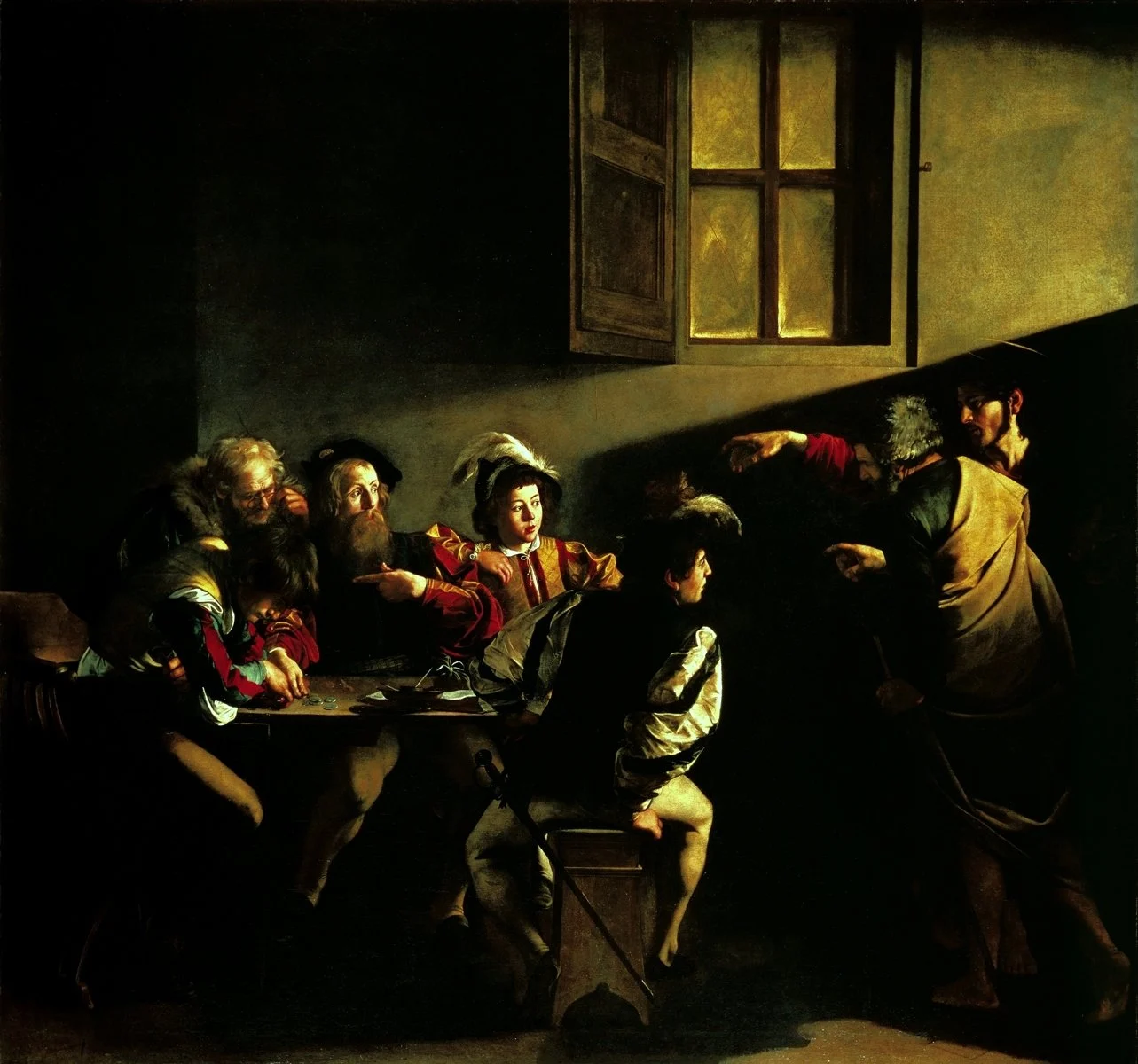
Rome is the city where Michelangelo Merisi da Caravaggio worked the longest, and it is also the city where today you can see the largest number of his paintings within walking distance. The works are spread across three free churches, six paid museums and a couple of places that can't be visited at all, and the difference between a successful visit and a wasted morning depends almost entirely on two banal things: knowing at what hours the churches are closed and knowing that in front of the chapels you need a coin to turn on the light. The lines that follow list all the places in Rome where you can see paintings by Caravaggio, explain which ones are free and which cost money, reconstruct what became of the works that are no longer in Rome, and propose two concrete itineraries, one of one day and one of two, built on geographic order and not on the chronological order of the paintings.
How many Caravaggio works are there in Rome and where
In Rome today you can see about 20 paintings attributed to Caravaggio, spread across three churches and six museums and galleries, almost all of them inside the ring of the Aurelian Walls and many concentrated in the quadrant between Piazza Navona and Piazza del Popolo. The exact number changes depending on how you count the works of disputed attribution, and it is worth clarifying right away because it is the first source of confusion for anyone looking for a reliable list.
A number that depends on how you count
The catalog of Caravaggio accepted by the majority of scholars runs to about 60 or 70 works in the whole world, and the margin of uncertainty concerns mainly the replicas: paintings executed twice by the same painter, or in the workshop under his supervision, or copied by others so closely that they fooled generations of connoisseurs. In Rome this problem comes up at least three times: for the Saint John the Baptist, of which there are several versions in the city in different places. For the Narcissus at Palazzo Barberini, whose attribution to Caravaggio is now much debated. And for the Saint Francis in Meditation at the Capuchins on Via Veneto, which the prevailing critical view considers a workshop version of the one kept at Palazzo Barberini. Whoever counts only the works of undisputed authorship arrives at one figure, and whoever also counts the disputed versions arrives at a higher one. Neither is wrong, as long as you say which criterion you are using.
The three poles of the visit: churches, museums, closed collections
From a practical standpoint the places divide into three very different categories. There are the three churches, where entry costs nothing and the paintings are still on the altars they were painted for: San Luigi dei Francesi, Santa Maria del Popolo and Sant'Agostino in Campo Marzio. Then there are the museums, where the paintings hang in collection rooms and you pay a ticket: the Galleria Borghese, the Capitoline Museums, Palazzo Barberini, the Galleria Corsini, the Galleria Doria Pamphilj and the Vatican Museums. And finally there are the places that can't be visited: private apartments, closed noble villas, and the cases of works that left Rome forever.
Why Rome in particular
Caravaggio arrives in Rome barely past 20, around 1592, and stays until May 1606, when he flees after killing Ranuccio Tomassoni in a brawl in Campo Marzio and is sentenced to death in absentia. That is about 14 years, which coincide with the entire central part of his career: in Rome he paints the early works for Cardinal Del Monte, wins the three public commissions that make him famous and produces almost all the easel painting that now fills the Roman galleries. The later works, from Naples, Malta and Sicily, remained elsewhere. Rome therefore preserves the documented heart of a career, and that is why the route makes sense as a route.
A note on the distance between stops
All the places in the historic center lie within a quadrilateral that you cross on foot in just under 20 minutes: San Luigi dei Francesi, Sant'Agostino, Palazzo Doria Pamphilj, the Capitoline Museums and the Pantheon are practically contiguous. Outside this core there remain four poles: Santa Maria del Popolo at the northern end of the Tridente, Palazzo Barberini toward the Quirinale, the Galleria Borghese inside Villa Borghese, the Vatican Museums across the Tiber and, at the end of Via della Lungara, the Galleria Corsini. It is a geography worth keeping in mind before booking anything, because the Galleria Borghese works on rigid time slots and shifts the whole rest of the day.
The three free-entry churches: where Caravaggio stayed in place
The three Roman churches that keep works by Caravaggio, San Luigi dei Francesi, Santa Maria del Popolo and Sant'Agostino, can be visited without a ticket and without a reservation, and they are the only place in the world where six of the painter's paintings can still be seen in the setting for which they were commissioned. It is a difference that is not merely sentimental: these paintings were designed for those walls, for that distance from the eye and for that light, and in a museum they would lose half the logic that holds them together.
San Luigi dei Francesi and the Contarelli Chapel
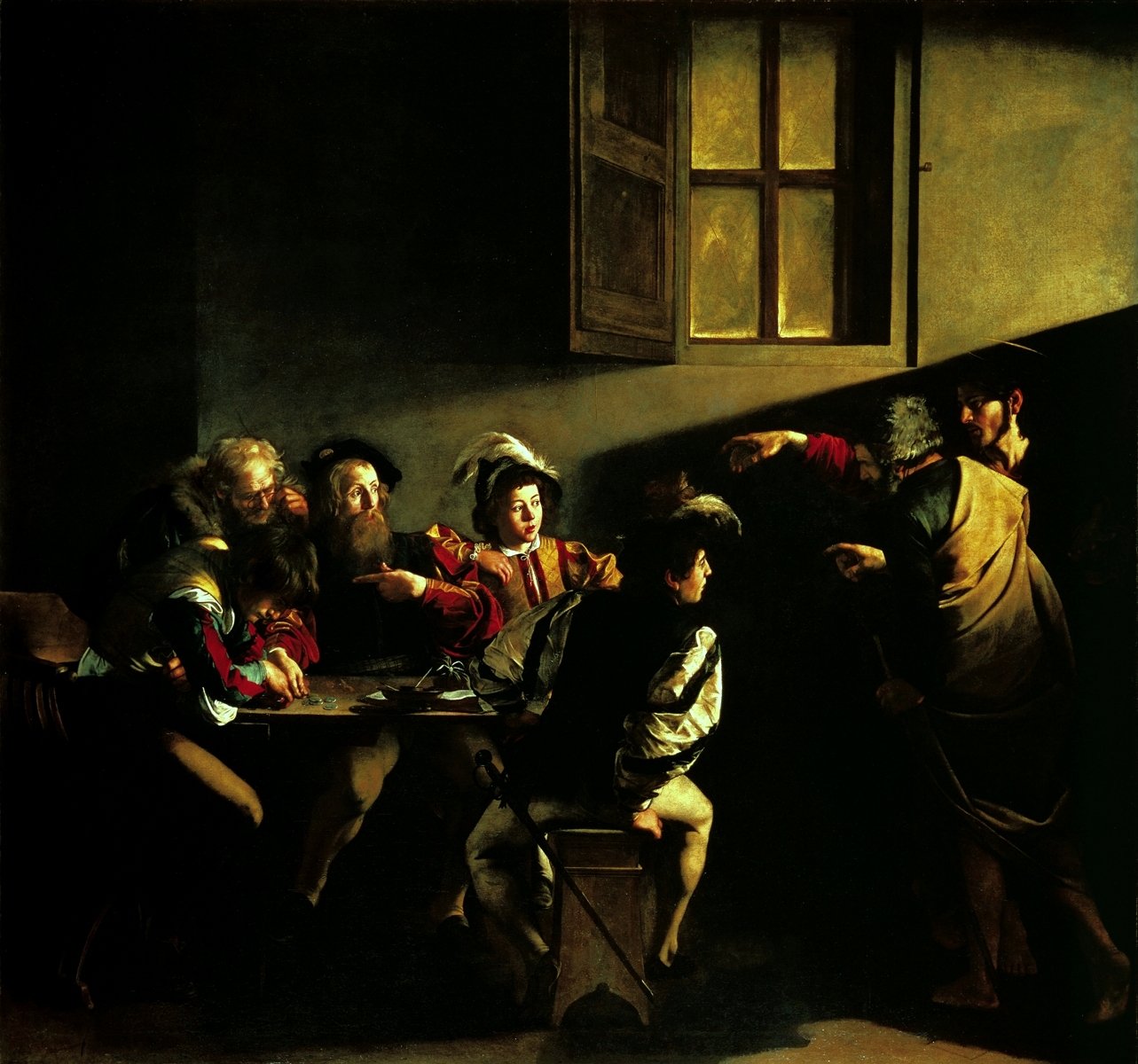
The French national church in Rome, a few steps from Piazza Navona and from the Senate at Palazzo Madama, keeps in the last chapel of the left aisle the three canvases of the Stories of Saint Matthew, executed between 1599 and 1602: the Calling on the left, the Martyrdom on the right, and above the altar the Saint Matthew and the Angel. It is the public commission that changes Caravaggio's career and, in all likelihood, the history of 17th-century European painting. The site devotes to the single chapel a dedicated page on the Contarelli Chapel, which goes into the detail of the commission, the payment phases and the relationship among the three canvases: here what matters instead is how to get there and what you can actually see.
The chapel is the last one on the left side, so it is at the end of the nave, on the side opposite the light entering from the facade. The canvases are large and dark, the public crowds behind a barrier a few meters away and the viewing point is fixed: you don't get closer, you don't walk around. With the lights off you make out masses and little else. Once they are on, the relationship between the figures and the background changes. Those who arrive when the chapel is already lit by someone else have saved a coin but have only a few minutes.
Opening hours of San Luigi dei Francesi
The church of San Luigi dei Francesi publishes visiting hours that differ by day: Monday to Friday from 9:30 to 12:45 and from 14:30 to 18:15, Saturday from 9:30 to 12:00 and from 14:30 to 18:30, Sunday from 12:00 to 12:45 and from 14:30 to 18:30. The community also notes that it is closed to the public on the morning of the first Wednesday of every month. Entry is free and no ticket is required. Hours may vary on the occasion of special celebrations, and the church says so explicitly: those with only one day available do well to check the parish website the same day.
Santa Maria del Popolo and the Cerasi Chapel
At the northern end of the historic center, on the corner of Piazza del Popolo next to Porta del Popolo, the Augustinian basilica keeps in the Cerasi Chapel, the first on the left of the high altar, two canvases painted between 1600 and 1601: the Conversion of Saul and the Crucifixion of Saint Peter, on either side of an altarpiece by Annibale Carracci. It is the only documented case in which the two painters who vied for the Roman scene worked in the same space, one facing the other, and the chapel should be looked at with exactly this in mind: not as a sequence of three paintings, but as a confrontation.
The Cerasi Chapel is narrow and deep, and the two side canvases are mounted almost edge-on to someone looking from the entrance: this means that from a certain angle you see one of the two very well and the other rather badly, and that to see both you have to move. It is a physical limit of the space, not a lighting problem, and no coin solves it. It is worth knowing beforehand, so as not to stand for half an hour in the same position waiting for something to improve. The same basilica keeps the Chigi Chapel designed by Raphael, with later work by Gian Lorenzo Bernini, and in any case deserves a longer visit than just a stop in front of the two Caravaggios.
Opening hours of Santa Maria del Popolo: sources that disagree
On the opening hours of Santa Maria del Popolo the available sources give different indications, and it is better to say so than to choose arbitrarily. Some guides report weekday opening from 7:00 to 12:00 and from 16:00 to 19:00, with holiday hours from 8:00 to 13:30 and from 16:30 to 19:15. Others give much narrower slots for tourist visits, on the order of two or three short windows in the morning and a couple of hours in the afternoon, and on holidays only the afternoon. A third source speaks of continuous opening from 7:30 to 19:00. What is certain and agreed is that entry is free, that tourist visits are suspended during services and that on holidays the morning is in practice inaccessible to anyone not attending Mass. Those who want to see the Cerasi Chapel at leisure should aim for the early afternoon of a weekday and call the basilica before setting out.
Sant'Agostino and the Madonna of the Pilgrims
Two minutes on foot from San Luigi dei Francesi, behind Via della Scrofa, the Augustinian basilica of Sant'Agostino in Campo Marzio keeps in the first chapel of the left aisle the Madonna of the Pilgrims, also called Madonna of Loreto, painted in the early 17th century for the Cavalletti Chapel. The commission comes from the will of the Bolognese notary Ermete Cavalletti, who died in 1602 and had asked for burial in this church and a chapel dedicated to the Madonna of Loreto: the chapel was built after his death and the altarpiece was entrusted to Caravaggio.
The painting is smaller and closer to the viewer than the canvases at San Luigi, and it is just inside on the left: there is no need to push your way to the back of the nave, and the chapel can be reached in a few steps even when the church is crowded. What struck contemporaries was the physical condition of the two kneeling pilgrims, rendered with a concreteness that was not usual in the devotional painting of the time. The same basilica holds the Prophet Isaiah frescoed by Raphael and the Madonna del Parto by Jacopo Sansovino, the object of a popular cult that is still alive: a full visit lasts well beyond the 10 minutes devoted to it by those who come in only for the Caravaggio.
Opening hours of Sant'Agostino
The basilica of Sant'Agostino in Campo Marzio gives on its website weekday hours from 7:30 to 12:30 and from 16:00 to 19:30, and holiday hours from 8:00 to 12:45 and from 16:00 to 19:30. Entry is free. The Augustinian community warns that tourist visits are not permitted during liturgical celebrations and that hours may change on solemnities: those who arrive at 13:00 find the door closed, and those who arrive at 18:00 on a Sunday risk finding the church in service.
The break rule: three churches, one gap in the day
The three churches have different hours but share a feature that ruins many itineraries: they all close in the middle hours of the day. Sant'Agostino reopens at 16:00, San Luigi at 14:30, Santa Maria del Popolo in the afternoon according to slots that the sources report inconsistently. The window between 12:45 and about 14:30 is therefore useless for the churches, and it is exactly the one in which the museums stay open: a well-built itinerary puts the churches in the early morning and late afternoon and the museums in the middle.
Image: the interior of a Roman Baroque side aisle, with one lit chapel at the far end and the others in shadow.
The paid museums: where the other Caravaggios are
Besides the three churches, in Rome the paintings by Caravaggio can be seen in six museum venues, all paid with the sole exception of the free-entry days set by the respective institutions. The prices and hours given below are those published by the official ticket offices and institutional portals at the time of writing: Italian museum rates change with the temporary exhibitions under way, and it is always best to check them again on the museum's website before buying.
Galleria Borghese: the largest group
The Galleria Borghese, inside Villa Borghese, keeps six paintings by Caravaggio and is therefore the richest single venue in Rome. They are the Sick Bacchus and the Boy with a Basket of Fruit, both from his first Roman years, the Saint Jerome Writing, the Madonna and Child with Saint Anne known as the Madonna dei Palafrenieri, the Saint John the Baptist and the David with the Head of Goliath, datable to around 1609 and documented in the collection of Cardinal Scipione Borghese from 1613. The core is explained by the figure of the cardinal, a voracious collector and not always delicate in his methods, who intercepted several of the painter's works by routes that today we would call, to say the least, cavalier.
The Galleria Borghese is visited in fixed-time slots, and this is the constraint that shapes the whole day. It is open Tuesday to Sunday from 9:00 to 19:00, closed on Monday as well as on January 1 and December 25. Booking is mandatory for everyone and carries a booking fee of €2. The full ticket is given as €16, the reduced rate for European Union citizens aged 18 to 25 as €2. Slots start every hour from 9:00 until late afternoon and the visit lasts about two hours. In high season the slots sell out weeks in advance: it is the first thing to book and the last to improvise.
Capitoline Museums: two paintings in the Pinacoteca
The Capitoline Museums, on the square of the Capitoline Hill, keep in the Capitoline Pinacoteca two works by Caravaggio: the Fortune Teller, dated by the museum to 1596 or 1597 and coming from the Pio collection, and the Saint John the Baptist of 1602, coming from the Mattei collection and later passed to Cardinal Del Monte. Both are displayed in the Santa Petronilla Room, devoted to the great Roman painting of the 17th century, which is the latest room on the Pinacoteca route and is found at the end of a long itinerary.
The museum is open every day from 9:30 to 19:30, with last entry one hour before closing, closed on May 1 and December 25 and with reduced hours on December 24 and 31. Rates change with the temporary exhibitions included in the ticket: at the time of the survey the museum gave a full price of €16.50 including one exhibition and a reduced price of €11, with free entry for residents of Rome and the Metropolitan City who show ID. Those who are not residents and want to see only the two Caravaggios must allow for the fact that the Pinacoteca is at the end of the route and that the ticket covers the whole complex, including the Palazzo dei Conservatori: two hours is the reasonable minimum.
Palazzo Barberini: three certain paintings and one disputed
Palazzo Barberini, which together with the Galleria Corsini houses the National Galleries of Ancient Art, keeps the Judith Beheading Holofernes, the Saint Francis in Meditation from Carpineto Romano and a Saint John the Baptist, as well as the Narcissus, whose attribution to Caravaggio is now a matter of discussion among scholars and must be presented as such. To these has recently been added the Portrait of Monsignor Maffeo Barberini, purchased by the Italian State in March 2026 for €30 million and destined to enter the palace's collections permanently: the painting, datable to around 1599 or 1600, depicts the future Pope Urban VIII a little over 30 years old and is one of the very few certain portraits in the painter's catalog. It had already been shown to the public at Palazzo Barberini from November 2024 until the end of the large 2025 exhibition.
The museum is open Tuesday to Sunday from 10:00 to 19:00, with the ticket office closing at 18:00, and is closed on Monday. The full ticket is given as €15, the reduced rate for European Union citizens aged 18 to 25 as €2, with free entry under 18 and on the first Sunday of the month. It is worth checking on the National Galleries website if the Portrait of Maffeo Barberini is actually on display on the day of the visit, because the move from administrative formalities to permanent display is not immediate and a work just acquired may be temporarily out of view. The site also devotes to the palace a page on the building, useful to those interested in Baroque architecture as well as the collection.
Galleria Corsini: the Saint John the Baptist on the Lungara
The Galleria Corsini, on Via della Lungara in Trastevere, opposite Villa Farnesina, keeps a Saint John the Baptist attributed to Caravaggio. It is the least visited venue on the route, and it is also the only one where you may find yourself alone in front of the painting. It belongs to the same institution as Palazzo Barberini: the full ticket is given as €15, the reduced rate for young people of the European Union as €2, with opening Tuesday to Sunday from 10:00 to 19:00, ticket office closing at 18:00 and closed on Monday. There is a combined ticket that allows one entry to each of the two venues, valid for 20 days, and it is the most convenient option for those who visit both, even on different days.
Galleria Doria Pamphilj: the Flight into Egypt and the Magdalene
The Galleria Doria Pamphilj, on Via del Corso, keeps two works by Caravaggio that the collection documents as purchased by Donna Olimpia Maidalchini Pamphilj in 1650: the Rest on the Flight into Egypt and the Penitent Magdalene, both dated by the gallery to 1597. Several sources attribute to the same collection a third painting as well, a Saint John the Baptist, but the gallery's official catalog lists under Caravaggio's name the two works mentioned: the third piece should therefore be treated as a version of disputed attribution, not as a certainty.
The gallery is open Monday, Tuesday and Thursday from 9:00 to 19:00, Friday to Sunday from 10:00 to 20:00, with last entry one hour before closing, and is closed on Wednesday as well as on January 1, at Easter and on December 25. The full ticket is given as €16 at the ticket office and €17 with online booking, with an audio guide in four languages included in the price. The Wednesday closure is the most common trap of the whole Roman Caravaggio route: whoever builds the itinerary without checking it loses a stop.
Vatican Museums: the Deposition in the Pinacoteca
The Vatican Museums keep in Room XII of the Pinacoteca the Deposition from the Cross, datable between 1600 and 1604 and commissioned by Girolamo Vittrice for the family chapel in Santa Maria in Vallicella, the Chiesa Nuova. It is therefore a work born for a Roman church and now visible in a museum, but without ever having left the city except for a Napoleonic interlude: taken to Paris in 1797 following the Treaty of Tolentino, it returned to Rome in 1817 and entered the collections of Pius VII.
The Vatican Museums are open Monday to Saturday from 8:00 to 20:00 with last entry at 18:00, and on the last Sunday of the month from 9:00 to 14:00 with last entry at 12:30 and free admission. The full ticket without booking is given as €20, the reduced one as €10 without booking or €15 with the skip-the-line option. The institution explicitly warns to be wary of sites with domains similar to the official one, which resell at much higher prices. Those who enter the Vatican for the Deposition alone should know that the Pinacoteca is in a building separate from the main route toward the Sistine Chapel and that the forced flow of visitors often leaves it out of the tour: you have to look for it deliberately, preferably at the start of the visit. The site also hosts an overview page on Vatican City and one on St. Peter's Basilica, which have access and rules different from those of the museums.
The case of the Capuchins on Via Veneto
The Museum of the Capuchin Friars, attached to the church of Santa Maria della Concezione on Via Veneto, displays a Saint Francis in Meditation long attributed to Caravaggio. The question is open: the prevailing critical view considers autograph the version kept at Palazzo Barberini, coming from the church of San Pietro at Carpineto Romano, on the basis of X-ray investigations that revealed second thoughts absent from the other example, and considers the Capuchin version a replica executed in the workshop, perhaps with touches by the master. Not all scholars agree, and some maintain that the original prototype is neither of the two. It should be seen knowing what it is: it is an interesting stop for those who want to understand how replicas worked in Caravaggio's workshop, not a seventh masterpiece to tick off.
How much it costs to see all the Caravaggios in Rome
Adding up the full tickets published by the official ticket offices, an adult who wants to see all the works in the six museum venues spends a not insignificant sum: the Galleria Borghese alone exceeds €18 with the booking fee, and with the Capitoline Museums, Doria Pamphilj, the Vatican and the combined Barberini plus Corsini ticket you easily reach around €80 per person. The three churches cost nothing. Those who want to cut the expense can take advantage of the first Sunday of the month, free in state museums such as Palazzo Barberini, and the last Sunday of the month at the Vatican Museums, with the warning that these are also the most crowded days of the year. The site collects free-entry opportunities in a page on free museums in Rome and an overview of the state venues in the page on state museums.
Image: a room of a Roman picture gallery with 17th-century paintings on a dark wall and an empty bench in the middle.
The works that are no longer in Rome, and why
At least three paintings that Caravaggio made for Roman patrons can no longer be seen in the city, and in one case can no longer be seen anywhere. Telling it is not a melancholy exercise: two of these stories explain how the relationship between a painter and his patrons really worked in Rome in the early 17th century, and the third explains why guides keep citing a work that doesn't exist.
The Death of the Virgin: rejected at Santa Maria della Scala, now in the Louvre
The Death of the Virgin, datable between 1604 and 1606, was commissioned in 1601 by the jurist Laerzio Cherubini for his chapel in the church of Santa Maria della Scala in Trastevere, the main church of the Discalced Carmelites. The friars rejected it. The reasons reported by contemporary sources concern the depiction of the Virgin, rendered with an earthly body, a swollen belly, bare feet and a limp arm, without any of the attributes that traditional iconography demanded, and there was also the rumor, reported by several witnesses, that the painter had used a courtesan as a model. The painting was removed from the altar and replaced by a version of the same subject painted by Carlo Saraceni, with a seated, luminous Madonna perfectly in line with expectations.
What happened next is perhaps more interesting than the rejection. Cherubini found himself with a canvas unsellable in the eyes of ecclesiastical patrons and extremely valuable in the eyes of the market, and in January 1607 the Duke of Mantua bought it through his agent in Rome, on the advice of Peter Paul Rubens. From the Gonzaga collection, dispersed because of financial difficulties, the work passed to Charles I of England, then to the Parisian banker Everhard Jabach and finally to Louis XIV: it is because of this chain of transfers that it is now in the Louvre. Those who visit Santa Maria della Scala therefore find the chapel, find the painting that took the place of Caravaggio's, and don't find the Caravaggio. In the same church you can visit, with separate access arrangements, the Antica Spezieria dei Carmelitani, which has its own rules and hours.
The first version of the Saint Matthew: destroyed in Berlin in 1945
For the altar of the Contarelli Chapel Caravaggio painted the Saint Matthew and the Angel twice. The first version, from 1602, showed the evangelist as an elderly, clumsy man with dirty feet, his hand physically guided by the angel as one guides the hand of someone who can't write. It was not accepted: the figure turned out too crude and clashed with the two large side canvases already in place. Caravaggio painted a second one, the one seen today on the altar, with a more composed evangelist and an angel dictating from above without touching him.
The first version was not lost right away: it entered a private Roman collection and in the 19th century arrived in Germany, where it was kept at the Kaiser Friedrich Museum in Berlin. During the Second World War it was sheltered, along with hundreds of other works, in one of the city's flak towers, the Flakturm Friedrichshain. In 1945 a fire destroyed the depot and with it the painting. The exact circumstances of the blaze are still debated: some reconstructions speak of the bombings, others attribute the fire to what happened in the tower in the days immediately after the fall of the city. Of the painting only black-and-white photographs taken before the war remain, from which the color reproductions that circulate today were derived. It is the reason why in the Contarelli Chapel you see a single altarpiece and not two, and why the most discussed work of the entire cycle is the one nobody can see anymore.
The first Conversion of Saul: it exists, but it is in a private home
For the Cerasi Chapel at Santa Maria del Popolo too, Caravaggio worked twice. Of the Conversion of Saul there is a first version on cypress panel, now kept in a private Roman collection, in the apartments of Palazzo Odescalchi. It cannot be visited and is on no itinerary: it is occasionally lent for temporary exhibitions, and it is on those rare and unpredictable occasions that the public sees it. Scholars debate whether the first version was rejected or whether the painter himself redid it, perhaps to adapt it to the narrow dimensions of the chapel. Anyone who reads about two Conversions and expects to find both in the basilica will be disappointed: at Santa Maria del Popolo there is only one.
The Deposition: in Rome yes, but not where it was painted
A fourth case is more subtle. The Deposition from the Cross now in the Vatican Museums was not painted for a museum but for the chapel of the Vittrice family in Santa Maria in Vallicella, the church of the Oratory of Saint Philip Neri. It never left Rome except in the Napoleonic period, but it changed home. Anyone who goes into the Chiesa Nuova today looking for the Caravaggio finds a copy in its place: it is a different case from that of the Louvre, because the work stayed in the city, but it belongs to the same story, that of paintings born for an altar and ending up on a museum wall.
Caravaggio in Rome in one day: the essential route
A single day is enough to see the three churches, the Galleria Borghese and one gallery in the center, as long as you accept two sacrifices: the Vatican Museums and the Galleria Corsini. The route below takes into account the two rigid constraints of the day, the booked slot at the Galleria Borghese and the afternoon closing of the churches, and assumes a weekday other than Monday and Wednesday.
Early morning: the two churches in the center
You start at 9:30 at San Luigi dei Francesi, just opened, when the Contarelli Chapel is still almost empty and the line in front of the barrier hasn't formed. Half an hour is enough if you arrive prepared. From there you reach Sant'Agostino in five minutes on foot, passing behind Palazzo Altemps and crossing Via della Scrofa: the Madonna of the Pilgrims is in the first chapel on the left and can be seen well even with the church crowded. If there is time left, you can add a short stop at the basilica of Sant'Eustachio or at the Pantheon, both a few minutes away, but without stretching it too much.
Late morning: the Galleria Doria Pamphilj
Around 11:30 you head for Via del Corso and the Galleria Doria Pamphilj, which stays open during the lunch hour when the churches close: it is the right way to use the middle of the day. The visit with the included audio guide comfortably lasts an hour and a half, and the two Caravaggios sit within a route that is worth it in itself. On Wednesday the gallery is closed: in that case the natural replacement is the Capitoline Museums, 10 minutes on foot along Via del Corso and Piazza Venezia, which open every day.
Early afternoon: the slot at the Galleria Borghese
The slot at the Galleria Borghese should be booked in the early afternoon, roughly at 14:00 or 15:00, and takes up two full hours including travel. From the center you reach Villa Borghese by bus or by metro to Spagna station, then climbing up to the Pincio, or on foot from Piazza di Spagna with an uphill walk of about 20 minutes. You must be punctual: the slots have limited numbers and whoever arrives late loses entry without a refund.
Late afternoon: Santa Maria del Popolo
On leaving the Galleria Borghese you go down from the Pincio toward Piazza del Popolo, with a downhill walk of a quarter of an hour that overlooks one of the best-known views in the city, and you reach Santa Maria del Popolo in the afternoon reopening window. It is the best moment of the day for the Cerasi Chapel: the basilica empties, and whoever stays has time to move from side to side to look properly at both canvases. From there, depending on the energy left, you can continue along Via del Babuino toward Piazza di Spagna and the Barcaccia fountain, or go down along Via del Corso.
The variants to know
If the slot at the Galleria Borghese can only be found in the morning, the itinerary flips: Borghese at 9:00, Santa Maria del Popolo going down from the Pincio around 11:30, lunch, then the churches of the center in the afternoon and the gallery last. On Monday the Galleria Borghese, Palazzo Barberini and Galleria Corsini are closed, leaving the churches, the Capitoline Museums, the Vatican Museums and the Doria Pamphilj, which is open on Monday. On Sunday the churches have reduced hours in the morning and should all be moved to the afternoon.
Caravaggio in Rome in two days: the complete route
With two days you see all the public works without rushing, and you gain the thing that is always missing from the one-day route: the time to go back twice to the same place. The criterion of division is not chronological but geographic, and it separates the left bank of the Tiber from the right bank.
First day: the historic center and Villa Borghese
The first day follows the one-day itinerary but with more room to breathe. Morning between San Luigi dei Francesi and Sant'Agostino, with time to look at the rest of the two churches as well. Late morning at the Galleria Doria Pamphilj. Early afternoon at the Capitoline Museums, with the Pinacoteca and the Santa Petronilla Room. Late afternoon at Santa Maria del Popolo. The slot at the Galleria Borghese goes on one of the two days according to availability: it is the constraint that decides everything else, and it should be booked first.
Second day: Vatican, Barberini, Lungara
The second day starts early at the Vatican Museums, entering at opening and heading straight to the Pinacoteca before the flow toward the Sistine Chapel makes any detour difficult. On leaving, you cross the Tiber and go down Via della Lungara to the Galleria Corsini, where you see the Saint John the Baptist in an almost always quiet room and, opposite, the Villa Farnesina with Raphael's frescoes. In the afternoon you climb back toward the Quirinale for Palazzo Barberini, which with its core of Caravaggios and the ceiling by Pietro da Cortona calls for at least an hour and a half. Those with energy left can finish with the Capuchins on Via Veneto, 10 minutes on foot, for the Saint Francis in Meditation and for the ossuary crypt, which is an entirely different experience.
If you have a third half day
A third half day serves two purposes. The first is to go back to San Luigi dei Francesi in the late afternoon of a weekday and look at the Contarelli Chapel without crowds: it is the advice that changes the quality of the visit the most. The second is to add the places the route brushes past without touching, such as the Galleria Spada, the Galleria Colonna or the basilica of Santa Maria sopra Minerva, which tell the story of the same 17th-century Rome from the side of the patrons and rivals.
What not to try
It is not a good idea to put the Vatican Museums and the Galleria Borghese on the same day: they are at opposite ends of the city, both have timed entries, and the sum of travel, lines and internal routes doesn't fit into a day together with anything else. It is not a good idea to schedule a church close to the midday closing, because 15 minutes before closing the sacristan starts to usher visitors out. And it is not a good idea to count on the first Sunday of the month to save money: at the free entries of state museums the density of the crowd turns the viewing of a dark, reflective painting into an exercise in patience.
Image: a stylized map of the center of Rome with the points of the route joined by a continuous line, without text.
What you really see: light, reflections, distance
The difference between a visit to the Caravaggios in Roman churches and the same visit done badly lies almost entirely in material details that guides rarely talk about: how much light there is on the canvas, from what angle you look at it, how many people are in front. These are variables you can manage, and it is worth knowing how.
The coins for the light
In the chapels of Roman churches the artificial lighting of the works is almost always coin-operated: there is a metal box beside the chapel, you insert the coin and the spotlights turn on for a limited period. For San Luigi dei Francesi guides give a one-euro coin as the usual amount. There is no official rate published by the parishes, and amount and duration may vary over time and from church to church: the practical rule is to arrive with a few one- and two-euro coins in your pocket and not count on banknotes or electronic payment. The light lasts a few minutes, usually no more than two or three, and goes off suddenly. It is best to look first at the painting that interests you most and keep the others for the second round.
The trick of waiting for someone else
In peak hours the Contarelli Chapel is lit almost permanently, because someone inserts a coin every few minutes: you see it for free but you see it badly, with 20 people in front of the barrier. In the empty hours the chapel is dark, but one coin is enough and you have the canvas to yourself. The second situation is clearly better, and you get it in the first half hour after opening or in the last hour before the evening closing.
Reflections, the problem nobody mentions
17th-century canvases have varnished surfaces that reflect natural and artificial light, and in some chapels the reflection wipes out whole portions of the painting from certain angles. In the Cerasi Chapel the problem adds to the edge-on placement of the two canvases: moving by a meter takes you from an almost impossible view to a good one. It is not a matter of patience but of position. The same holds in museums, where protective glass and spotlights produce similar effects: in general you see better standing slightly to the side of the center of the painting.
How much time you really need
For the three churches half an hour each is enough, including short transfers, if the goal is the Caravaggios alone. If you also want to look at the rest, Santa Maria del Popolo alone calls for a good hour between the Chigi Chapel, the funerary monuments and the choir. For the museums the reasonable minimum times are two hours at the Galleria Borghese, which in any case imposes a two-hour slot, two hours at the Capitoline Museums, an hour and a half at Palazzo Barberini and the Doria Pamphilj, 40 minutes at the Galleria Corsini. At the Vatican Museums the time depends on what you want to see besides the Deposition: the Pinacoteca alone takes an hour, the full route to the Sistine Chapel more than doubles it.
Masses and the times when you can't enter
All three churches are active places of worship and suspend tourist visits during services. Sant'Agostino says so explicitly on its website. In practice this means that on weekdays the first morning and the late afternoon may be taken up by a Mass, and that on holidays the morning is effectively ruled out. Those who are inside when a service begins are not necessarily sent away, but the chapel lights stay off and moving in front of the altar becomes inappropriate: it is better to leave and come back.
Photos: allowed, with limits
In Roman churches photography without flash and without a tripod is generally tolerated, and in the Contarelli Chapel it is in fact the norm. Flash is banned everywhere, because repeated direct light damages the varnishes. In museums the rules change from venue to venue and even for single rooms or temporary exhibitions: it is better to ask the staff than to deduce from other people's habits.
Accessibility
The three churches have entrances with a few steps and flat naves, and the chapels with the Caravaggios can be reached without internal level changes, but none of the three is equipped like a museum and services are limited. Among the museums, the Galleria Corsini declares accessibility with ramps and an elevator and admits guide dogs for people with visual disabilities. The other venues have situations that differ from one another, with historic buildings that pose real constraints: those who need precise information on elevators, alternative routes and accessible restrooms do well to contact the individual venue in advance, because the information published online is often generic.
Children
The route works with kids more than you'd think, on two conditions. The first is to pace it: three churches and two museums in a day are too many for anyone under 12. The second is to give them a task, instead of asking for admiration: look for the light source inside the painting, work out who Matthew is in the Calling. The coin that lights the chapel, for once, helps. Among the museums, the Galleria Borghese is the most suitable because it is short and fixed in its timing, and the Vatican Museums the least suitable because they are long and crowded.
Frequently asked questions about Caravaggio in Rome
Where can you see Caravaggio paintings in Rome for free?
Caravaggio paintings can be seen for free in Rome in three churches: San Luigi dei Francesi, with the three canvases of the Stories of Saint Matthew in the Contarelli Chapel, Santa Maria del Popolo, with the Conversion of Saul and the Crucifixion of Saint Peter in the Cerasi Chapel, and Sant'Agostino in Campo Marzio, with the Madonna of the Pilgrims. All three have free entry, require no booking and are a few minutes on foot from one another.
How many Caravaggio paintings are there in Rome?
In Rome today you can see about 20 paintings attributed to Caravaggio, spread across three churches and six museum venues. The exact number varies depending on how you count works of disputed attribution, such as the Narcissus at Palazzo Barberini and the Saint Francis in Meditation of the Capuchins: those who count only works of certain authorship arrive at a lower figure than those who also include workshop versions.
How much does it cost to see all the Caravaggios in Rome?
Seeing all the Caravaggios in Rome costs around €80 per person, counting only the full tickets of the six museums, because the three churches are free. The main items are the Galleria Borghese at €16 plus €2 of mandatory booking, the Vatican Museums at €20, the Doria Pamphilj at €16, the Capitoline Museums around €16.50 and the combined Barberini plus Corsini ticket. Rates change with the exhibitions under way.
Which church in Rome has the most Caravaggios?
The church in Rome with the most works by Caravaggio is San Luigi dei Francesi, which in the Contarelli Chapel keeps three canvases: the Calling of Saint Matthew, the Martyrdom of Saint Matthew and the Saint Matthew and the Angel, executed between 1599 and 1602. It is the public commission that made the painter famous, and the three canvases are still in their original setting, with free entry.
Why is Caravaggio's Death of the Virgin no longer in Rome?
Caravaggio's Death of the Virgin is no longer in Rome because the Discalced Carmelites of Santa Maria della Scala rejected it, judging the depiction of the Virgin incompatible with traditional iconography. The patron resold it and in January 1607 the Duke of Mantua bought it on Rubens's advice. After several transfers it reached Louis XIV and is now in the Louvre. On the Roman altar a version by Carlo Saraceni was placed.
What happened to the first version of the Saint Matthew and the Angel?
The first version of Caravaggio's Saint Matthew and the Angel was destroyed in 1945 in Berlin. Rejected by the patrons of the Contarelli Chapel for being too crude, it had ended up in a private collection and then in the Kaiser Friedrich Museum, which during the war sheltered it in the Flakturm Friedrichshain flak tower: a fire destroyed the depot. Only black-and-white photographs taken before the conflict remain.
Do you need to book to see the Caravaggios in Rome?
For the three churches with Caravaggios in Rome there is no need to book and nothing to pay, while for the Galleria Borghese booking is mandatory for everyone and carries an extra cost of €2, with entry slots at fixed times and a visit of about two hours. At the other museums booking is recommended but not mandatory, and at the Vatican Museums it lets you avoid the line.
How many days do you need to see all the Caravaggios in Rome?
To see all the Caravaggios in Rome you need two full days: one for the historic center and the Galleria Borghese, one for the Vatican Museums, the Galleria Corsini and Palazzo Barberini. In a single day you cover the three churches, the Galleria Borghese and one gallery in the center, giving up the Vatican. The constraint that decides the order is the booked slot at the Galleria Borghese.
Are the museums with Caravaggios open on Monday?
On Monday in Rome the Galleria Borghese, Palazzo Barberini and the Galleria Corsini are closed, while the Capitoline Museums, the Vatican Museums and the Galleria Doria Pamphilj stay open, the latter closing instead on Wednesday. The three churches are open every day with the usual break in the middle hours, except on the morning of the first Wednesday of the month at San Luigi dei Francesi.
A note on how to use this route
The Caravaggio route works better if you don't treat it as a list to tick off. Six paintings out of 20 can still be seen in their place, in three free churches, in settings built to hold them: those are the heart of the day, and they deserve the second visit more than the sixth gallery does. The others are museum paintings, beautiful and well displayed, that you look at for the time you look at a painting. Anyone who tries to see them all at once leaves with the feeling of having seen nothing. Anyone who picks eight and really spends time on them leaves remembering them.
Those who want to turn these stops into a broader itinerary in the center of Rome, combining them with the churches, squares and galleries of Campo Marzio and the Tridente, will find planning tools on Tour Leader Pro, while for an overall picture of transport, connections and destinations in Lazio Italy Planner is a good resource.