Palace of the Conservators on Capitoline Hill
In short. When I climb the cordonata that Michelangelo designed wide and gentle, with that oblique slope that brings the visitor up without tiring them, I always arrive at the threshold of Palazzo dei Conservatori al Campidoglio with the same flutter in my chest.

Palazzo dei Conservatori al Campidoglio: where to begin the story
When I climb the cordonata that Michelangelo designed wide and gentle, with that oblique slope that brings the visitor up without tiring them, I always arrive at the threshold of Palazzo dei Conservatori al Campidoglio with the same flutter in my chest. It is the building that closes the square on the right as you face the staircase, and it is the oldest and liveliest heart of the Capitoline Museums. The story of Palazzo dei Conservatori al Campidoglio is the story of how Rome learned to preserve its own memory, to gather it into a collection, and to show it to the public. It is no ordinary palace: here, on the lowest of Rome's hills yet the one most loaded with meaning, the citizens kept the symbols of the city.
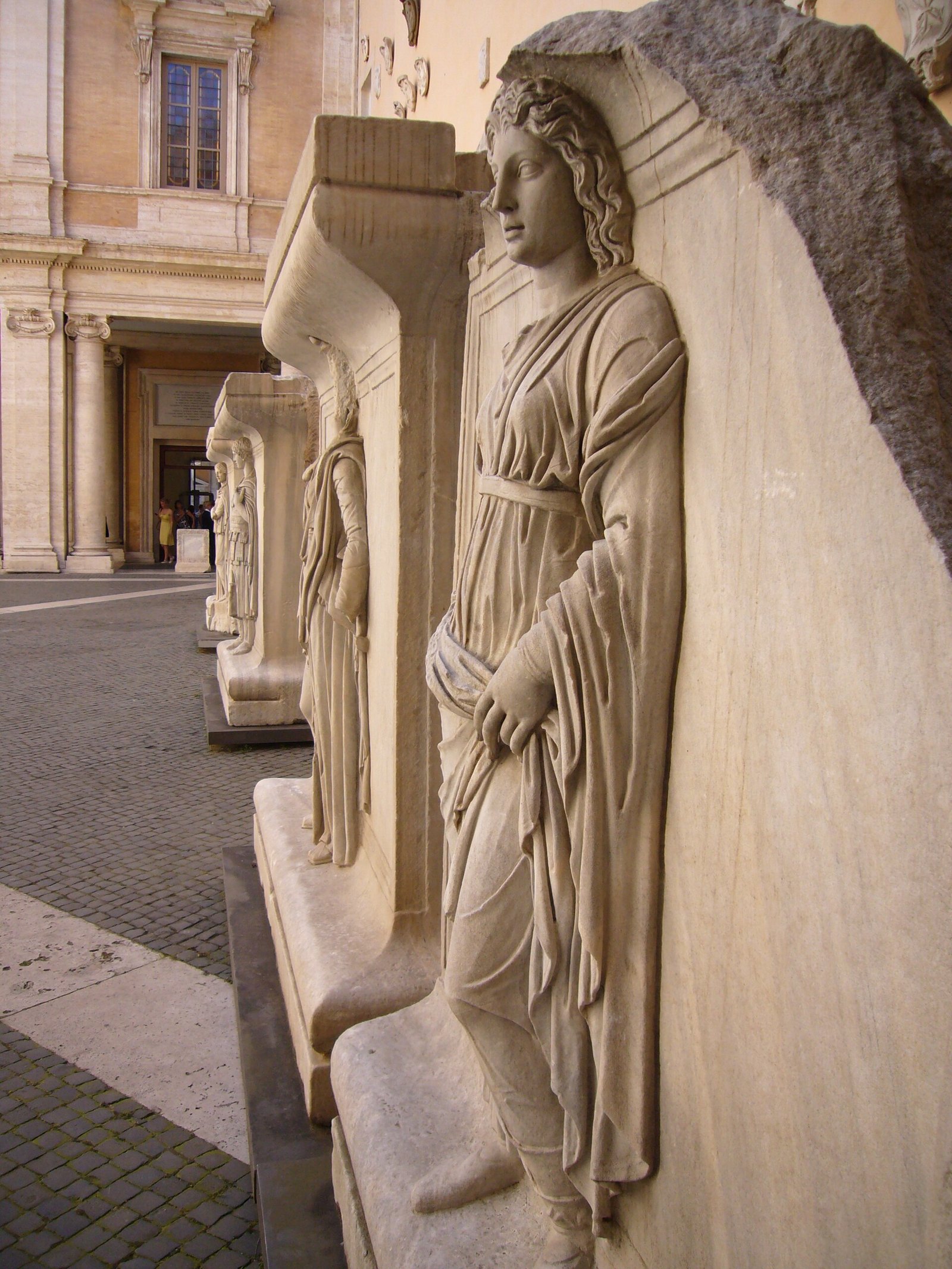
The name itself says it all. The Conservatori were city magistrates, elected to represent the Roman people, and this was their seat of government long before it became a museum. For centuries decisions were made here, ambassadors were received, and the bronzes and marbles we admire today were preserved. Walking inside Palazzo dei Conservatori al Campidoglio means passing through the tangle of civic power and art, of city administration and devotion to its antiquity. It's worth keeping this in mind: you are not entering a neutral container of artworks, you are entering a house with a very long biography.
Before I describe room by room, I want to clear up something that often gets confused. Palazzo dei Conservatori al Campidoglio is not Palazzo Nuovo, the twin building across the square, on the other side. The two look alike by Michelangelo's precise design, but their histories and contents are different. Palazzo dei Conservatori is the older one, the one with the Lupa, the Spinario, the colossus of Constantine in the courtyard, and the Pinacoteca on the upper floors. Keep this distinction in mind: it will save you from looking for the Lupa in the wrong place.
Many people come up here thinking of a quick stop, a photo of the square, and off they go. But Palazzo dei Conservatori al Campidoglio asks for slowness and rewards it. It is a place where each room opens onto a different era, where an Etruscan bronze lives alongside a Baroque fresco and the foundation of an archaic temple, and where the thread of the story is not chronological but layered, like the city that houses it. Those who enter with this frame of mind leave enriched. Those who cross it in a hurry see only statues. For this reason, before describing the works, it's better to give yourself time: the Capitoline Hill is not a box to tick off, it is a place to spend a few hours.
The Capitoline Hill square designed by Michelangelo and Palazzo dei Conservatori al Campidoglio
You cannot understand Palazzo dei Conservatori al Campidoglio without looking at the square in which it is set. Pope Paul III Farnese, in the 1530s, commissioned Michelangelo Buonarroti to redesign the entire Capitoline Hill, which at the time was a disorderly place, with medieval buildings facing the Roman Forum, that is, facing the past in ruins. Michelangelo made a revolutionary gesture: he turned the square toward the modern city, toward Saint Peter's, and organized it as a single trapezoidal space, closed on three sides by three palaces and open on the fourth toward the cordonata.
Palazzo dei Conservatori al Campidoglio is one of those three sides. Michelangelo redid its façade and designed, opposite it, the twin palace that would become Palazzo Nuovo, so that the two buildings, identical and mirrored, framed Palazzo Senatorio in the center. The stroke of genius was the geometry: the two side palaces are not parallel, but diverge slightly as they move away from the Senatorio, and this widening optically corrects the perspective, making the square appear wider and more harmonious than the topography allowed. Anyone who stops in the center doesn't notice, but their eye has been guided.
In the middle of the square is the star-shaped pavement, the oval with its 12-pointed design that Michelangelo conceived and that was only completed in the 1900s, and on which the equestrian statue of Marcus Aurelius stands out. All of this together forms the frame of Palazzo dei Conservatori al Campidoglio, and I recommend spending a few minutes in the square before going in: you'll better understand why the building has exactly that façade, with that rhythm of pilasters that echo, at a distance, those of the palace across from it.
There's also an urban planning detail I love pointing out. Michelangelo oriented the square not toward the Roman Forum, that is, toward ancient glory, but toward the Campus Martius and the Rome of the popes, toward Saint Peter's. It was an almost provocative choice: symbolically turning one's back on the ruins to face the living city. The Palazzo dei Conservatori on Capitoline Hill takes part in this rotation, looking together with its twin palace toward those who climb the cordonata. It's a gesture that says a lot about sixteenth-century Rome, determined not to be merely the keeper of ruins but a modern capital, and the Capitoline square became its architectural manifesto. Even today, when you reach the top of the ramp, you feel this embrace of the three palaces welcoming those who arrive from the city.
The facade of Palazzo dei Conservatori on Capitoline Hill and the giant order
The facade of Palazzo dei Conservatori on Capitoline Hill is one of the most imitated architectural inventions in history. Michelangelo, redesigning the building starting around 1563, introduced here the so-called giant order: Corinthian columns and pilasters running the full height of both floors, unifying the facade in a single vertical thrust instead of dividing it into stacked bands as was done before. It's a technical detail, but it changed the language of European architecture forever, and you'll find it cited in a thousand later buildings, from Baroque palaces to 19th-century banks.
Beneath these great pilasters runs a portico on the ground floor, with smaller columns supporting the entablatures: a minor order set within the major order. This double register gives the facade of Palazzo dei Conservatori on Capitoline Hill a monumental breadth and, at the same time, deep shadow at street level, where the entrances open. Michelangelo never saw his idea completed. He died in 1564, and work continued for decades under Giacomo della Porta, who followed the design very faithfully.
Looking up at the cornice, you see the statues that crown the building, in dialogue with those of the palace opposite. It's a detail I always invite people to notice: the facade of Palazzo dei Conservatori on Capitoline Hill doesn't end where the wall ends but continues into the sky, with figures that seem to lean out over the square. Photograph it from an angle in late afternoon, when raking light carves the giant columns and reveals their relief. That's when Michelangelo's order shows its best.
Finally, it's worth remembering that the building was slow to build and spanned several generations. Michelangelo drew the design but didn't see it realized: at his death, in 1564, the facade had only just begun. Giacomo della Porta carried it forward in the following decades, faithfully following the master's drawings, and the work dragged on into the early 17th century. Palazzo dei Conservatori on Capitoline Hill as we see it today is therefore the product of an enormous construction site, in which one genius's idea was translated into stone by those who came later. This continuity between design and execution, between master and followers, is one of the reasons for the remarkable formal coherence of the square, which looks unified even though it was born from different hands at different times.
The Capitoline Museums and the role of Palazzo dei Conservatori on Capitoline Hill
Together with Palazzo Nuovo, Palazzo dei Conservatori on Capitoline Hill is the historic home of the Capitoline Museums, which can rightfully call themselves the oldest public museums in the world. This isn't a tourist exaggeration: it's a precise date. In 1471 Pope Sixtus IV gave the Roman people a group of bronze statues that until then had been kept at the Lateran, and placed them right here, on the Capitoline, with the explicit intention of returning them to the city. That donation is considered the birth certificate of the museum, because for the first time an ancient art heritage was made accessible to the public as a common good.
From that first donation, the collection grew for five centuries. Palazzo dei Conservatori on Capitoline Hill gradually housed new statues, inscriptions and bronzes. When Palazzo Nuovo was built and furnished in the 18th century, the two buildings became the first museum conceived from the start as a public space for display. In 1734 Pope Clement XII officially opened Palazzo Nuovo to the public, giving the word "museum" the modern sense we take for granted today. But the root, the origin, is here, in the palace of the city magistrates.
This primacy isn't just a chronological point of pride. It means the very idea of a public museum was born in Rome, on the Capitoline Hill, within the walls of Palazzo dei Conservatori. Think about it: every time you enter a museum anywhere in the world, from the Uffizi to the Louvre to the British Museum, you're following an idea that began to take shape in this very building, with that 1471 donation.
1471, Sixtus IV and the birth of Palazzo dei Conservatori on Capitoline Hill as a museum
It's worth pausing on 1471, because that's the year Palazzo dei Conservatori al Campidoglio changed from a seat of government into a treasure house of art. Sixtus IV della Rovere, the same pope who would commission the Sistine Chapel, decided to take some of the most famous ancient bronzes from the Lateran and give them to the Roman people. Among them were the Capitoline Wolf, the great colossal head of Constantine with the hand and the globe, the Spinario, and the Camillus. They were moved to the Capitoline Hill and placed here, as a symbol of ancient Rome returned to its citizens.
That gesture carried enormous political weight. The Capitoline Hill was the seat of civic government, and placing the symbols of ancient Roman greatness there meant tying the city's present government to its imperial and republican past. The Wolf, in particular, had for centuries been the very emblem of the city, and its presence at Palazzo dei Conservatori al Campidoglio made it almost a secular sanctuary of Roman identity. It's no coincidence that the bronzes were first displayed outdoors and then gradually moved inside to protect them.
From then on, every pope and every administration added something. The collection at Palazzo dei Conservatori al Campidoglio is layered like an archaeological site: papal donations, finds from the city's excavations, purchases, private bequests. But it all starts with 1471, with a pope's decision to say that ancient art belonged not to him but to all of Rome. It's a statement worth keeping in mind as you walk through the rooms.
One last reflection on this primacy. Being the oldest public museum in the world doesn't mean being an old-fashioned museum. It means having invented a category. Before 1471 there were collections, but they were private, reserved for princes, popes and cardinals. The donation to the Roman people introduced a new principle, that of collective access to heritage, which is the foundation of every modern museum. Every time you enter Palazzo dei Conservatori al Campidoglio, you unknowingly repeat that original gesture: citizens and travelers climbing up to see what belongs to everyone. It's a thought that adds depth even to the quickest visit, and one I'd suggest taking with you as you cross the threshold.
The Courtyard of Palazzo dei Conservatori al Campidoglio and the Fragments of the Colossus of Constantine
As soon as you enter Palazzo dei Conservatori al Campidoglio, before even going upstairs, you arrive in the courtyard, and this is where one of the most striking encounters of the whole visit takes place. Against one wall are lined up the giant fragments of a colossal statue of the emperor Constantine: a head more than two and a half meters tall, a hand with its index finger pointing upward, a foot, an arm, a kneecap. They were parts of an acrolith statue, that is, one with the head and extremities in marble and the rest of the body in lighter material covered over, which once sat in the Basilica of Maxentius in the Roman Forum.
Visitors always stand openmouthed in front of these fragments, and I understand why. Constantine's head looks at you with huge eyes turned upward, following the imperial iconography of the emperor in contact with the divine. The whole statue must have been around 12 meters tall: a colossus designed to crush anyone who looked at it with the power of late antique imperial authority. In the courtyard of Palazzo dei Conservatori al Campidoglio, those separated pieces keep their force intact, perhaps even increased by the fragmentation.
It's worth getting close to the hand and imagining your own hand beside it: that's the only way to grasp the scale. The index finger alone is longer than a human arm. And there's a detail I love telling: for centuries that finger and that hand were displayed separately, and only in recent times have studies made it possible to reassemble the puzzle and place each fragment correctly. The courtyard is the first great surprise of Palazzo dei Conservatori al Campidoglio, and it's free just to step in and look, but the best is yet to come.
There's also a fact that makes the courtyard even more evocative. These fragments come from the Basilica of Maxentius, the last great civil basilica of the Forum, and the colossal statue they made up sat in the apse, dominating the immense hall. Picture that building, with its very high vaults, and at the far end this figure 12 meters tall: anyone who came in for a legal case or a public act found themselves crushed by the emperor's presence. Today, in the courtyard of Palazzo dei Conservatori al Campidoglio, that power is dismembered but not extinguished, and it lets you reconstruct in your mind the staging of late antique power. It's one of those cases where the fragment, instead of diminishing the work, charges it with an almost dramatic force.
The Capitoline Wolf, the Heart of Palazzo dei Conservatori al Campidoglio
If there's one work that alone justifies a visit to Palazzo dei Conservatori al Campidoglio, it's the Capitoline Wolf. It's the bronze everyone knows, reproduced everywhere, from T-shirts to team pennants: the she-wolf nursing the twins Romulus and Remus. But seeing it in person is a whole different experience. The wolf is shown in tension, its body taut, its head snapped sharply around, its ears upright, in an attitude that is both maternal and fierce and has something hypnotic about it.
The dating of the Capitoline Wolf has been debated for decades, and that makes it even more fascinating. For a long time it was considered an Etruscan masterpiece from the 5th century BC, while the twins under her are certainly a Renaissance addition, attributed to Antonio del Pollaiolo. More recent studies, based on analyses of the casting technique, have proposed a medieval date for the bronze of the wolf too, sparking a heated debate that is not yet settled. To be honest, we don't know for certain when it was cast, and this mystery is part of its charm.
What is certain is its symbolic value. The Capitoline Wolf in Palazzo dei Conservatori on the Capitoline Hill has been the emblem of Rome since time immemorial, and it is among the bronzes that Sixtus IV gave to the people in 1471. Stop in front of her without rushing, walk around the case, and look at the chiseled fur along her back and the tension in her legs. It is the metal portrait of a founding myth, and it stands right here, within sight, inside Palazzo dei Conservatori on the Capitoline Hill.
I'd like to add a note on the cult of the Wolf over the centuries. From antiquity, the image of a she-wolf nursing the twins was the seal of Rome, stamped on coins, standards, and legion banners. Placing it on the Capitoline Hill, in the palace of the city government, meant reaffirming in the Renaissance an unbroken continuity between the Rome of its origins and the Comune. Even today the she-wolf is the symbol of the Comune and its sports teams, and Romans feel it deeply as their own. In front of the bronze you're not just looking at a work of art, but at the living emblem of a city that has been telling its story through this image for almost 3,000 years, kept right here, in Palazzo dei Conservatori on the Capitoline Hill.
The Spinario at Palazzo dei Conservatori on the Capitoline Hill
Not far from the Capitoline Wolf, inside Palazzo dei Conservatori on the Capitoline Hill, is another ancient bronze of remarkable delicacy: the Spinario, that is, the boy removing a thorn from his foot. It is a small sculpture of a young seated figure, focused and bent over himself while he pulls out with his fingers a thorn lodged in the sole of his left foot. The pose is completely natural, everyday, almost intimate, and for this reason it struck Renaissance artists deeply, who drew and copied it constantly.
The Spinario is a work that plays on the contrast between the head, with its archaic taste, and the body, in a softer Hellenistic style. This pairing has led scholars to debate the exact date of casting, placed around the 1st century BC. But beyond the philological questions, what wins you over is the tenderness of the gesture: a tiny, ordinary moment, frozen in bronze. The Spinario was also part of the donation of Sixtus IV in 1471.
In front of the Spinario in Palazzo dei Conservatori on the Capitoline Hill, it's worth looking at the fall of the curls and the concentration on the face. It proves that ancient art could tell the stories not only of heroes and emperors, but also of humble, universal gestures. A boy with a thorn in his foot: a subject that could stand in a square in any era, and yet it has been speaking to us for over 2,000 years.
The Capitoline Brutus at Palazzo dei Conservatori on the Capitoline Hill
There is a face, inside Palazzo dei Conservatori on the Capitoline Hill, in front of which it's worth stopping in silence: it is the so-called Capitoline Brutus, a bronze head that many consider the most intense portrait of Republican Rome. It is the face of a mature man, with eyes inlaid in ivory and glass paste that seem to look right at you, with a severe, thoughtful expression full of moral authority. Tradition identifies him with Lucius Junius Brutus, the founder of the Roman Republic, although this attribution is more legendary than documented.
The dating places it between the 4th and 3rd centuries BC, and its fame comes precisely from the psychological force of the portrait. There is no idealization: there is a man, with wrinkles, with a gaze that weighs on you. Michelangelo admired it, and it's not hard to imagine how much a Renaissance artist could have been struck by a bronze able to convey character with such simplicity. The Brutus in Palazzo dei Conservatori on the Capitoline Hill is one of those cases where ancient art seems to erase the centuries.
Look especially at the eyes: that light that seems to come from within is due to the original inlays, largely preserved, which is rare for a bronze of this period. I assure you the effect in person is disarming. It's like standing in front of a real person, frozen in metal. An encounter that alone is worth the climb up to the Capitoline Hill.
The charm of the Capitoline Brutus, moreover, also lies in what we don't know. The name we give it is a tradition more than a certainty, and the body the head belonged to is lost. This face remains isolated, looking at us with very vivid eyes for over 2,000 years, and perhaps it is precisely the lack of context that makes it so universal: it is not the portrait of a specific man, but the very image of Republican severity, of Roman virtus. Standing before him, in Palazzo dei Conservatori on the Capitoline Hill, you fall silent, because that gaze seems to judge us. It proves that an ancient portrait can still, after millennia, question those who look at it.
The Hall of the Horatii and Curiatii at Palazzo dei Conservatori on the Capitoline Hill
Climbing to the piano nobile of Palazzo dei Conservatori on the Capitoline Hill, you enter the historic apartments, and the most solemn room is the Hall of the Horatii and Curiatii. It is the reception room where the Conservators received guests, and where official ceremonies of the Comune di Roma are still held today. It takes its name from the large frescoes that cover its walls, painted by the Cavalier d'Arpino, Giuseppe Cesari, between the late sixteenth and early seventeenth century, with episodes from the legendary history of Rome, including the famous duel between the three Roman Horatii and the three Alban Curiatii.
But the Hall of the Horatii and Curiatii at Palazzo dei Conservatori on the Capitoline Hill is not famous only for its frescoes. It is the place where the Treaties of Rome were signed on March 25, 1957, which gave birth to the European Economic Community, the ancestor of the European Union. In this room, under these frescoes, representatives of six countries laid the foundations of a united Europe. It is a remarkable historical short circuit: in the same space, the Rome of its origins and the Europe of the twentieth century meet.
The room also holds two statues of great value: the bronze one of Pope Urban VIII, by Gian Lorenzo Bernini and his workshop, and the marble one of Innocent X, sculpted by Alessandro Algardi. Having a Bernini and an Algardi face each other in the same room, the two greatest rivals in Roman Baroque sculpture, is a privilege that Palazzo dei Conservatori on the Capitoline Hill offers naturally. Look up at the carved and gilded wooden ceiling: that too is a masterpiece.
A practical detail that visitors always appreciate: the Hall of the Horatii and Curiatii is still a living place today, not a frozen museum space. Here the Comune di Roma holds weddings, confers honorary citizenships, and receives delegations. You may happen to find it set up for a ceremony when you walk in. The detail matters, because it shows that Palazzo dei Conservatori on the Capitoline Hill has not stopped being the house of the city's magistrates: under the same frescoes by the Cavalier d'Arpino, after centuries, Rome continues to carry out its public acts. It is a rare example of functional continuity, in which the past is not turned into a museum but lived in, and this gives the room a particular aura that no caption could convey.
The Conservators' apartments and historic rooms of Palazzo dei Conservatori on the Capitoline Hill
Besides the Hall of the Horatii and Curiatii, the piano nobile of Palazzo dei Conservatori on the Capitoline Hill preserves an entire sequence of frescoed rooms that were the reception apartments of the city's magistrates. There is the Hall of the Captains, with honorary statues of papal commanders and frescoes that tell episodes of Republican Roman history, and there is the Hall of Triumphs, which houses some of the most famous bronzes in the collection, including the Spinario and the Camillus.
Walking through these rooms means reading, on the walls, the way Renaissance and Baroque Rome looked at its own antiquity. The frescoes are not simple decorations: they are a political and ideological program, weaving the legendary history of the city, from Romulus to the Punic Wars, together with the legitimization of city government. Basically, Palazzo dei Conservatori on the Capitoline Hill was the place where Rome told itself its own greatness.
I suggest you don't rush through these rooms to head straight for the Pinacoteca or the most famous bronzes. Stop to read the fresco cycles, look at the monumental fireplaces, the coffered ceilings, the tapestries. These rooms convey the atmosphere of an early modern government palace, and they serve as a precious frame for the ancient works. Here the history of art and the civic history of Rome intertwine at every step inside Palazzo dei Conservatori on the Capitoline Hill.
The Horti and the great bronzes of Palazzo dei Conservatori on the Capitoline Hill
A fascinating part of the collection of Palazzo dei Conservatori on the Capitoline Hill comes from the Horti, the large villas with gardens that wealthy Romans owned on the city's hills, particularly on the Esquiline. When, between the nineteenth and twentieth centuries, Rome became the capital and expanded at a dizzying pace, excavations for new buildings brought to light an extraordinary quantity of ancient sculptures, many of which ended up here.
Among these works stands out the Esquiline Venus, a delicate female figure in marble who arranges her hair, found precisely in the Horti on the Esquiline, and considered one of the most refined Venuses of ancient art. And then there are the great gilded bronzes, such as the gilded bronze Hercules found near the Forum Boarium, an imposing statue that still shines with its original gilding, displayed in one of the monumental rooms of Palazzo dei Conservatori on the Capitoline Hill.
These rooms of the Horti tell a particular chapter in the city's history: that of Umbertine Rome, which, digging to build the new neighborhoods, rediscovered buried imperial Rome. Every statue in this section has a double biography, the ancient one and that of its nineteenth-century discovery. Walking among these marbles in Palazzo dei Conservatori on the Capitoline Hill, you can see firsthand how literally the modern city has grown on top of the ancient one.
There is also an emotional side to these rooms of the Horti that I want to point out. Every statue on display here was buried for centuries and then brought back to light by the picks of the workers building the capital city of Rome, between the late 1800s and the early 1900s. Imagine the amazement of someone digging the foundations of an Umbertine palace on the Esquiline and finding the Venus adjusting her hair in front of them, intact after 2,000 years. Palazzo dei Conservatori al Campidoglio holds on to that amazement and preserves it: when you enter these rooms, you share in a way the wonder of those rediscoveries, and you understand that beneath every street in Rome there is still a world that now and then resurfaces.
It's worth saying a word about the Bruto in relation to the other bronzes. Together with the Lupa, the Spinario, the Camillus and the head of Constantine, it forms a group of bronzes that makes Palazzo dei Conservatori al Campidoglio unique in the world: no other collection holds such a set of large original ancient bronzes, which survived the melting of the Dark Ages precisely because the city protected them from the Middle Ages onward. As you move from one room to the next, from one metal gaze to the next, you get the feeling of walking through a gallery of faces and figures that time should have erased and that are instead still here, direct witnesses, telling us how the ancients saw themselves.
The Equestrian Statue of Marcus Aurelius and the Exedra at Palazzo dei Conservatori al Campidoglio
One of the strongest emotions at Palazzo dei Conservatori al Campidoglio is meeting the original equestrian statue of Marcus Aurelius. What you see at the center of the square, outdoors, is in fact a copy: the original in gilded bronze, to protect it from the weather, has been placed under shelter in a large glass-walled hall called the Exedra of Marcus Aurelius, built specifically inside the Capitoline complex and connected to Palazzo dei Conservatori al Campidoglio.
The statue of Marcus Aurelius survived thanks to a lucky mistake: in the Middle Ages, when almost all ancient bronzes were melted down, this one was saved because it was believed to depict the Christian emperor Constantine, and so it was spared destruction. It is the only large ancient Roman bronze equestrian statue to have reached us almost intact, and its influence on equestrian art in all the centuries that followed is incalculable. It was Michelangelo who wanted it at the center of the square, designing the pedestal on which it stands.
Seeing the original up close, in the Exedra, lets you notice details that are invisible from the square: the traces of gilding, the serene and authoritative expression of the philosopher emperor, the gesture of the hand extended in a sign of clemency. Nearby, other large bronzes are on display, such as the remains of the bronze colossus of Constantine and the statue of Hercules. This hall is one of the culminating moments of a visit to Palazzo dei Conservatori al Campidoglio.
One last thought about the Exedra. Building a dedicated hall to house the original Marcus Aurelius was a bold and successful museum choice: the large glass wall floods the gilded bronze with light and lets you glimpse, in the background, the remains of the Temple of Jupiter and the profile of the city. So, in a single glance, you take in the philosopher emperor, the most sacred sanctuary of archaic Rome and the contemporary skyline. It's the image I always carry with me when I leave Palazzo dei Conservatori al Campidoglio: proof that here the millennia don't exclude each other but live together in the same gaze, and that the Capitoline Hill remains, even today, the place where the history of Rome becomes visible all at once.
Palazzo Nuovo and Palazzo Senatorio around Palazzo dei Conservatori al Campidoglio
To get your bearings, it helps to understand how Palazzo dei Conservatori al Campidoglio relates to the other two buildings on the square. Opposite, on the other side, is Palazzo Nuovo, built in the 1600s to mirror the Palazzo dei Conservatori exactly and house the other half of the collections: here you'll find masterpieces such as the Dying Gaul, the Capitoline Venus, the Red Faun and the extraordinary gallery of portraits of Roman emperors.
At the center, at the far end of the square, stands Palazzo Senatorio, seat of the Comune di Roma, with its tower and the double-ramp staircase designed by Michelangelo. It is the building of the city government and is not open to visitors as a museum, but beneath it, in the basements, the remains of the Tabularium, the ancient Roman state archive, are preserved. The two museum palaces, Conservatori and Nuovo, are connected by an underground passage that runs right under the square and through the Tabularium.
This means that with a single ticket to the Capitoline Museums you can visit both palaces, and I strongly suggest you set aside time for both. But to avoid confusion, always keep the mental map in mind: the Lupa, the colossus of Constantine, the Pinacoteca and the original Marcus Aurelius are at Palazzo dei Conservatori al Campidoglio, the Dying Gaul and the imperial portraits are at Palazzo Nuovo. Don't mix them up, or you risk looking for the Lupa where it isn't.
There is one last reason not to confuse the two palaces, and it is emotional as well as practical. Each has a different character: Palazzo Nuovo, although very rich, has the quiet atmosphere of a sculpture gallery arranged in rows, almost a catalog of marbles. Palazzo dei Conservatori al Campidoglio instead has the soul of a historic residence, with its frescoed halls, the symbolic bronzes, the Pinacoteca, and the colossus in the courtyard. They are two complementary experiences, and it's best to approach them as two chapters of a single book. If I had to suggest an order, I would always start with the Conservatori, because it is here that the story of the museum and of the city begins, and from here the route naturally descends toward the Tabularium and climbs back up into the palace opposite.
I should add that the underground connection between the two palaces, passing beneath the square, is an experience in itself. You walk through a gallery that passes through the Tabularium, and from it unexpected views open onto the Forum. You physically move from one building to the other without coming back up to the surface. It is a route that connects not only two palaces but two eras and two halves of the collection, and that makes Palazzo dei Conservatori al Campidoglio and Palazzo Nuovo a single organism, stitched together by the Republican structures of the hill. Don't rush through this stretch: it is one of the most fascinating and least crowded parts of the entire museum.
The Capitoline Picture Gallery at Palazzo dei Conservatori al Campidoglio
On the upper floors of Palazzo dei Conservatori al Campidoglio you enter a different world: the Pinacoteca Capitolina, that is, the gallery of paintings, one of the most important painting collections in Rome and the city's first public collection of pictures, formed in the 18th century under Pope Benedict XIV with the purchase of important private collections. After so many marbles and bronzes, going up to the Pinacoteca is like catching your breath.
The walls hold absolute masterpieces. There is Caravaggio's Buona Ventura and his Saint John the Baptist, with that dramatic light that cuts through the darkness. There is Guercino's large telero with the Burial of Saint Petronilla, an immense canvas painted for Saint Peter's. There are works by Titian, Rubens, Guido Reni, Pietro da Cortona, Domenichino, and Garofalo. Every room of the Pinacoteca at Palazzo dei Conservatori al Campidoglio is a small compendium of great Italian and European painting between the 16th and 17th centuries.
There is also a curiosity I love to show: the so-called Sala di Santa Petronilla also holds models and sketches, and in one section you'll find porcelain and furnishings. The Pinacoteca is often the least crowded part of the museum, because many visitors stop at the bronzes and don't go up. I'll let you in on a secret: spending an hour with the paintings at Palazzo dei Conservatori al Campidoglio, maybe during the middle hours when the lower floors are full, is one of the best ways to enjoy the museum in peace and quiet.
Anyone who loves painting will also find in the Pinacoteca a small section devoted to the porcelain collection and the sketches, and above all the chance to follow the evolution of Roman taste between the Renaissance and the full Baroque in a few adjoining rooms. You move from the composure of gold backgrounds and 16th-century portraits to the theatrical explosion of the 17th century, with Caravaggio's naturalism and the magniloquence of Guercino and Pietro da Cortona. It is an almost perfect teaching route. In these rooms at Palazzo dei Conservatori al Campidoglio you can see, painting after painting, how art learned to use light as a tool for emotion. It's worth the climb, even for this alone.
The Tabularium, the Underground Levels and the View of the Forum from Palazzo dei Conservatori al Campidoglio
The route of the Capitoline Museums, starting from Palazzo dei Conservatori al Campidoglio, leads down into the underground levels as far as the Tabularium, the imposing Republican-era building constructed in the 1st century BC, which housed the archives of the Roman state. Its massive arches, made of tufa and travertine blocks, are among the best-preserved ancient structures on the hill, and walking through them gives a dizzying sense of time: in a few meters you pass from Renaissance bronzes to Republican masonry.
But the moment everyone is waiting for, in this part of the visit, is the view. From the Tabularium and from the gallery that links the palaces, windows and balconies open onto one of the most beautiful views in Rome: the Roman Forum spreading at the foot of the hill, with the Temple of Saturn, the Arch of Septimius Severus, Via Sacra, and in the background the Palatine and the Colosseum. It is a perspective no postcard can convey, and you reach it precisely thanks to the underground connection of Palazzo dei Conservatori al Campidoglio.
I recommend not rushing through this passage. Many people, worn out by then, hurry through the underground levels to get out. Instead, this is where the Capitoline reveals its nature as a hinge between the Rome of museums and the Rome of ruins. Stop at the windows of the Tabularium, breathe in that view, and you'll understand why this hill was for millennia the symbolic center of the world. Palazzo dei Conservatori al Campidoglio gives you this too, besides its statues.
How to Visit Palazzo dei Conservatori al Campidoglio
Let's get practical, because a good visit to Palazzo dei Conservatori al Campidoglio depends a lot on how you organize it. The entrance to the Capitoline Museums is right in the Palazzo dei Conservatori, on the right side of the square as you face Palazzo Senatorio. From there the route begins: the courtyard with the colossus of Constantine, the halls of the bronzes and the historic apartments on the noble floor, then the Pinacoteca on the upper floors, then the descent toward the basements, the Tabularium and Palazzo Nuovo.
The full route takes time. Plan at least two hours for a visit that covers both palaces without rushing, and three hours or more if you want to take your time enjoying the Pinacoteca too. The museum is large and spread over several levels, with stairs and changes in elevation. There are still elevators and accessible routes, but it's worth checking in advance if you have special needs. Comfortable shoes are a must, as always in Rome.
Another practical tip: there's a café with a panoramic terrace above the Palazzo dei Conservatori, the so-called Terrazza Caffarelli, which offers an open view over Rome's rooftops and the dome of St. Peter's. You can get there even without a museum ticket, and it's a great spot to stop. Plan your visit to Palazzo dei Conservatori al Campidoglio with a break up there: the view is worth the climb.
A word about orientation, because it's the most common mistake. Since the entrance and the ticket office are in the Palazzo dei Conservatori, many people think they've seen everything by staying in this building and skip the underground connection to Palazzo Nuovo. Remember: the ticket is single and covers both, and the natural route goes down from the Conservatori halls toward the Tabularium and back up into the palace opposite. Don't leave after seeing the Capitoline Wolf and the Pinacoteca thinking the museum ends there. Palazzo dei Conservatori al Campidoglio is the entrance to a larger itinerary, and anyone who leaves halfway will miss the Dying Gaul, the gallery of emperors and one of the best views over the Forum. Follow the signs toward the basements and let the route guide you.
Hours, tickets and official information for Palazzo dei Conservatori al Campidoglio
For up-to-date hours, rates and opening days at Palazzo dei Conservatori al Campidoglio, always rely on official channels, because conditions change from season to season and for temporary exhibitions. The official website of the Capitoline Museums is museicapitolini.org, while the portal for Rome's system of civic museums is Musei in Comune di Roma. On these pages you'll find the ticket office, the calendar and information on accessibility.
In general, the Capitoline Museums are open every day with continuous hours, and the ticket office closes about an hour before the museum does. There are regular, reduced and combined tickets that include any exhibitions, along with free admission for residents of Rome and the Città metropolitana. The first Sunday of the month and some special dates may have special conditions. Always check the official website before you go, so you won't have any surprises.
If you'd rather skip the line or plan ahead, buying your ticket online through official channels is the safest option, especially during high season and on weekends, when the number of visitors to Palazzo dei Conservatori al Campidoglio is considerable. Beware of unrecognized resellers instead: for a civic museum like this one, the official channel is what best protects the visitor, both on price and on the validity of the entrance ticket.
One final recommendation about getting around inside. The museum is big and spread over several levels, with the entrance in the Conservatori, the climb to the noble floor, the floors of the Pinacoteca, the descent to the basements and the return up into Palazzo Nuovo. It isn't a loop you walk in just one direction, and you may end up retracing your steps. I suggest picking up a map at the entrance or following the signs carefully, and above all pacing your energy. Many people arrive at the Tabularium and the viewpoint over the Forum already tired, and those are among the best moments. Palazzo dei Conservatori al Campidoglio rewards those who approach it methodically, saving something for the final part of the route, which is less crowded and more atmospheric.
The neighborhood and surroundings of Palazzo dei Conservatori al Campidoglio
Palazzo dei Conservatori al Campidoglio is in a strategic position, a short walk from some of Rome's most famous sights. Going down the side opposite the cordonata, you come out directly over the Roman Forum, and from there the Colosseum is a few minutes' walk away. On the side of Piazza dell'Ara Coeli, on the other hand, stands the basilica of Santa Maria in Aracoeli, with its steep staircase and its frescoes by Pinturicchio, which deserves a visit of its own.
Not far away is Piazza Venezia, with the monumental Altare della Patria, the Vittoriano, whose terrace offers another spectacular view. And on the back of the hill, toward the Theater of Marcellus and the Portico of Octavia, the Jewish Ghetto begins. It is one of the most characteristic and ancient neighborhoods in the city, and stopping to eat there after a visit to Palazzo dei Conservatori al Campidoglio is almost a ritual, among carciofi alla giudia and Roman cooking.
This concentration of monuments makes the Capitoline Hill an ideal starting point for a day in Rome. It's best to begin the morning right at Palazzo dei Conservatori al Campidoglio, when the museum opens and is still not very crowded, then head down toward the Forum and the Colosseum over the course of the day. This way you follow a coherent historical thread, from the Rome of the kings and the republic to the imperial one.
A word for those traveling with children too. Palazzo dei Conservatori al Campidoglio, contrary to what many think, works very well with the little ones. The giant head of Constantine, the Lupa with the twins, and the boy pulling a thorn from his foot are images that capture a child's imagination more than a thousand captions. I suggest parents turn the visit into a small treasure hunt among the bronzes and the colossi, and not force the stop at the Pinacoteca if the kids are tired. With the right pace, the museum becomes a story of myths and giants, and the little ones come out thrilled, remembering it for a long time.
When to Visit Palazzo dei Conservatori al Campidoglio
Choosing the right time makes a difference. Palazzo dei Conservatori al Campidoglio, being an indoor museum, works well even on hot or rainy days, when the Forum and the outdoor sites are less enjoyable. In midsummer, with the intense Roman heat, spending a few hours among the shaded marbles of the museum is a wise choice, and the Terrazza Caffarelli offers outdoor relief in the evening hours.
To avoid the crowds, the ideal is to arrive at opening in the morning or in the late afternoon, when organized groups have already passed. Weekends and holiday bridge weekends are the busiest times, while weekdays offer a calmer experience. Spring and autumn remain the most pleasant seasons for combining the indoor visit to Palazzo dei Conservatori al Campidoglio with a walk on the hill and toward the Forum.
A word about light too. Piazza del Campidoglio and the palace's facade look their best in the late afternoon, when the low sun lights up the travertine and stretches the shadows of the giant columns. If you love photography, plan your exit from the museum so that you find yourself on the square at that moment. The combination of the indoor visit and the outdoor light makes a day at Palazzo dei Conservatori al Campidoglio truly complete.
I'll close this practical part with a thought on the value of the time spent up here. In a city that offers endless destinations, dedicating half a day to Palazzo dei Conservatori al Campidoglio may seem like a luxury, but it is actually one of the best investments for understanding Rome in depth. Here, in a few rooms, you move through 25 centuries: from the archaic temple of Jupiter to the Republican foundations of the Tabularium, from the imperial bronzes to the Renaissance frescoes, all the way to the signing of the European treaties of the twentieth century. No other place condenses the history of the city so compactly and, in filigree, that of the West. Those who understand this stop checking the clock and let the story of the rooms lead them along.
Why Palazzo dei Conservatori al Campidoglio Tells the Story of Rome's Identity
All things considered, Palazzo dei Conservatori al Campidoglio is much more than the sum of its works. It is the place where Rome chose to keep its own image: the Lupa that is its emblem, the colossus of Constantine that is its late antique power, Marcus Aurelius that is its imperial wisdom, and the frescoes that tell its founding myths. Everything here speaks of who Rome is and of how it has wanted to tell its story over the centuries.
It is also the place where a universal idea was born: that of the public museum, of heritage as something belonging to everyone. When Sixtus IV donated the bronzes to the Roman people in 1471, he opened a path that the whole world would follow. In this sense, Palazzo dei Conservatori al Campidoglio is a monument not only to ancient art, but to the very idea that art should be shared. It is a civic lesson before it is an aesthetic one.
For this reason, here it's worth looking not only for the names of the statues, but for the sense of the place. Palazzo dei Conservatori al Campidoglio is the house of Rome's memory, on the hill that for millennia has been its sacred and civic center. Leaving means carrying away a piece of that very long history, and looking at the city with slightly different eyes.
I'll end the practical section on the seasons with a thought about evenings. At certain times of year the Capitoline Museums stay open late, and visiting Palazzo dei Conservatori on Capitoline Hill when it's already dark outside has a charm all its own: the half-empty rooms, the illuminated bronzes, the silence surrounding the colossus of Constantine. If you're in Rome during an evening opening period, check the official website and take advantage of it. It's a chance to experience the museum in an almost intimate atmosphere, far from the daytime crowds, and then to step out onto the lit Capitoline square, which at night, deserted, returns the magic of Michelangelo's design intact.
The Camillus, the Hercules and the minor bronzes of Palazzo dei Conservatori on Capitoline Hill
Alongside the most famous bronzes, Palazzo dei Conservatori on Capitoline Hill holds a series of metal works that deserve attention and are often overlooked by those rushing toward the She-Wolf. There's the Cammillo, or Camillo, a youthful bronze figure representing an assistant at sacred rites, a boy with delicate features who carries a tray or a vessel for offerings. He was part of Sixtus IV's 1471 donation as well, and he bears witness to the refined taste with which the ancients treated even the minor subjects of worship.
There's also the gilded bronze Hercules from the Forum Boarium, an imposing and luminous statue, found in the area of ancient Rome's cattle market near the Tiber, where a temple dedicated to the demigod once stood. Its gilding, still largely preserved, makes it one of the best-preserved gilded ancient bronzes, and its bulk dominates the hall where it is displayed. Looking at the powerful musculature and the still-shining surface, you can sense the effect it must have had, gleaming inside its temple.
To these are added many other bronzes, heads, votive statuettes and fragments, which together make up a true metal treasure, rare for antiquity, because bronze, a precious and recyclable material, was almost always melted down in the dark centuries. That Palazzo dei Conservatori on Capitoline Hill preserves so many is almost a miracle, due precisely to having been protected by the city from the Middle Ages and the Renaissance onward. They form the backbone of the collection, the core around which everything else grew.
The Capitoline Fasti and the inscriptions of Palazzo dei Conservatori on Capitoline Hill
A less flashy treasure of enormous historical value, kept at Palazzo dei Conservatori on Capitoline Hill, is the Capitoline Fasti: large marble slabs inscribed with lists of the consuls and triumphers of ancient Rome. They were part of a monument in the Roman Forum, possibly linked to the Arch of Augustus, and they record year by year the names of the supreme magistrates of the republic and the generals who celebrated a triumph. For historians they are a precious source, almost an official calendar of Roman civilization.
These lists were recovered in the 16th century during excavations of the Forum and placed right here, in the palace of the city magistrates, with an obvious symbolic choice: the ancient Fasti of Roman magistrates housed in the home of Rome's modern magistrates. Walking past these inscribed slabs, you literally read the sequence of Roman power measured out in names. It's a different and fascinating way to sense the depth of time that this building holds.
The epigraphic collection of Palazzo dei Conservatori on Capitoline Hill doesn't end with the Fasti. It includes honorary inscriptions, dedications and cippi, which together form a stone archive of public life in antiquity. It isn't the part that excites the passing visitor most, I admit, but for anyone who loves history it's an essential chapter that shouldn't be skipped, because here the words of the ancients come straight through, carved in marble, without intermediaries. It's worth slowing down for at least a moment in front of these texts.
The hall of wall hangings and the decorative collections of Palazzo dei Conservatori on Capitoline Hill
Beyond the sculptures and paintings, Palazzo dei Conservatori on Capitoline Hill preserves a heritage of decorative arts that completes the picture of its wealth. There's the hall of wall hangings, with large woven pieces made by Roman workshops from artists' cartoons, which covered the walls of the reception rooms and bear witness to the splendor of the Capitoline court. The hangings, with their mythological and allegorical scenes, add warmth and color to the solemn halls of the piano nobile.
There are also period furniture, porcelain, medals and precious objects that belonged to the civic collections and to the papal ones that flowed into the museum. This decorative component is often skipped by visitors focused on ancient masterpieces, but it restores the authentic atmosphere of a palace that was, above all, a government residence, furnished to receive and impress Rome's illustrious guests.
Walking through these halls of Palazzo dei Conservatori on Capitoline Hill means understanding that the museum is not just a collection of pieces but a layered historic setting. Every surface, from the gilded wooden ceilings to the wall hangings and the floors, tells part of the story of Roman taste. I suggest looking at the monumental fireplaces and the overdoors: they are details that speak to the luxury and power of those who lived and governed here.
The Giardino Romano and the History of the Displays at Palazzo dei Conservatori on the Capitoline Hill
Part of the route through Palazzo dei Conservatori on the Capitoline Hill takes place in the so-called Giardino Romano, a modern, indoor, glass-enclosed wing created in recent times to host temporary exhibitions and sections of the collection, as well as architectural remains. It is here, in particular, that the foundations of the great Temple of Jupiter Optimus Maximus are preserved. It was the most important sanctuary of ancient Rome, standing right on the Capitoline hill, and the imposing structures built from blocks of tufa still remain.
Seeing the foundations of the Temple of Jupiter is an experience that connects Palazzo dei Conservatori on the Capitoline Hill directly to the original sacredness of the hill. Even before the museums, before the Renaissance palaces, this was the site of Rome's most venerated temple, where consuls took office and where triumphal processions marched. Walking beside those walls means touching the religious roots of the city, buried beneath the floors of the modern museum.
The history of the displays at Palazzo dei Conservatori on the Capitoline Hill is itself a story five centuries long, made of continuous reorganizations, expansions, and restorations. Every era has added to or reorganized it, from the Renaissance to united Italy, up to contemporary interventions such as the Giardino Romano and the Esedra of Marcus Aurelius. This makes the museum a living organism, one that keeps transforming while preserving a very ancient core. And perhaps this is its most fascinating quality: it is not a place standing still in time, but a place that time passes through and changes constantly.
A Curiosity About Palazzo dei Conservatori on the Capitoline Hill
The curiosity I like best concerns Constantine's finger. For a very long time, among the fragments of the colossus kept in the courtyard, one remained an enigma. It was known that a large bronze finger was in the Louvre, cataloged generically as a Roman fragment, without anyone connecting it to the statue on the Capitoline Hill. Only in recent years have scholars realized that this Parisian finger belonged precisely to the hand of Constantine displayed at Palazzo dei Conservatori on the Capitoline Hill.
Thanks to this discovery, it was possible to make a copy of the finger and put it back in its place, restoring the colossal hand to its correct form. It was a small archaeological mystery that lasted for centuries, solved almost by chance by comparing measurements and curvatures. It is a story that shows how even the most famous and most studied works can still hold surprises, and how research never really stops.
Something Nobody Tells You About Palazzo dei Conservatori on the Capitoline Hill
Here's something that rushed guidebooks often skip: the Terrazza Caffarelli sits above Palazzo dei Conservatori, and you can go up there without paying for the museum ticket. Many visitors don't know this and leave without enjoying one of the most beautiful and least crowded views in central Rome, with the dome of St. Peter's rising above the rooftops. It's the perfect spot for a break, a coffee, or a photo at sunset.
There's also another little-known fact: the underground passage between the two palaces runs through the Tabularium, and from there it overlooks the Roman Forum from a viewpoint very few tourists know about, because it's inside the museum route. Anyone who only visits the Forum from the outside will never see that elevated perspective. Knowing that Palazzo dei Conservatori on the Capitoline Hill also offers this hidden view is a small advantage to keep in mind.
The Advice I Give You for Visiting Palazzo dei Conservatori on the Capitoline Hill
My most honest advice is this: don't rush straight to the Capitoline Wolf and leave. I know it's the most famous work, and of course you want to see it, but Palazzo dei Conservatori on the Capitoline Hill shows its best to those who know how to pace themselves. Start calmly in the courtyard with the colossus of Constantine, let the staircase impress you, then go up to the piano nobile and take your time with the frescoes in the Hall of the Horatii and Curiatii before reaching the bronzes.
The second piece of advice is not to overlook the Pinacoteca on the upper floors or the view from the Tabularium. These are the two parts that hurried visitors skip, and they are among the most beautiful. If you have little time, sacrifice a few minor rooms instead, but not these. And arrive early, at opening, or in the late afternoon. The difference between a crowded museum and a quiet one completely changes the experience of Palazzo dei Conservatori on the Capitoline Hill.
Another Well-Known Fact, Yet Rarely Mentioned
Everyone knows that the equestrian statue of Marcus Aurelius stands at the center of Piazza del Campidoglio. What is said less often is that the one outdoors is a copy, and that the original gilded bronze is kept safe inside the complex, in the Esedra connected to Palazzo dei Conservatori on the Capitoline Hill. Many people take a photo of the copy convinced it's the ancient one, and don't know that by going into the museum they can see the real Marcus Aurelius, with its surviving traces of gold, just a few meters away.
It's well known, but rarely pointed out, that this statue survived the medieval destruction only because of a mistake. People believed it depicted Constantine, the Christian emperor, so it wasn't melted down like almost all the other ancient bronzes. The survival of one of the absolute masterpieces of Roman art is therefore the result of a fortunate misunderstanding. Once you know these details, they change the way you look at the work.
The right photo to take at the Palazzo dei Conservatori on the Capitoline Hill
If I had to suggest just one shot, I'd say the colossal head of Constantine in the courtyard, photographed from below to convey its monumental scale, maybe with a human figure beside it to show the proportions. It's the image that best tells the story of the impact of Palazzo dei Conservatori on the Capitoline Hill: that enormous face with its eyes turned to the sky makes an impression on anyone who sees it in a photo.
But if you want the most dramatic photo, go up to the Terrazza Caffarelli and frame the rooftops of Rome with the dome of Saint Peter's in the background, even better at sunset when the light turns warm. And for the facade, wait for the late afternoon and photograph it at an angle, so Michelangelo's giant order reveals the relief of the columns. Three different shots, three sides of Palazzo dei Conservatori on the Capitoline Hill: the ancient power, the panorama, the architecture.
Some important events that took place here in history
Palazzo dei Conservatori on the Capitoline Hill has witnessed centuries of Roman civic history. It was here that the Conservatori, magistrates of the people, governed the city for generations, receiving ambassadors and sovereigns. It was here that, with the donation of Sixtus IV in 1471, the first public museum in the world was effectively born. And it was around this palace that Michelangelo, in the sixteenth century, redesigned the entire square, giving shape to one of the most famous urban spaces in the history of architecture.
The most famous event of modern times, however, is the signing of the Treaties of Rome on March 25, 1957, in the Hall of the Horatii and Curiatii. On that occasion, representatives of six European countries laid the foundations of the European Economic Community, the forerunner of the European Union. That the united Europe was born in this very hall, under frescoes that tell the legendary origins of Rome, is a coincidence full of meaning, linking the palace to the history of the entire continent.
Who has passed through Palazzo dei Conservatori on the Capitoline Hill
The walls of Palazzo dei Conservatori on the Capitoline Hill have seen figures from every era pass through. Popes such as Sixtus IV, Paul III Farnese, Clement XII and Benedict XIV, who with their donations and their displays shaped the museum. Artists such as Michelangelo, who redesigned its facade and the square, and Gian Lorenzo Bernini and Alessandro Algardi, whose papal statues face each other in the Hall of the Horatii and Curiatii. And then generations of city magistrates, the Conservatori, who governed Rome from here.
In modern times, heads of state and government have passed through these halls, for official ceremonies of the City of Rome, as have the signatories of the Treaties of Rome of 1957. But when I think of who has "passed through" Palazzo dei Conservatori on the Capitoline Hill, I also think of the millions of anonymous visitors who, from 1471 to today, have climbed the hill to see the Capitoline Wolf, the colossal statue of Constantine, the Marcus Aurelius. It's this unbroken flow of ordinary people, alongside the big names, that keeps the oldest public museum in the world alive.
Quick questions about Palazzo dei Conservatori on the Capitoline Hill
Where is the entrance to Palazzo dei Conservatori on the Capitoline Hill
The entrance to the Capitoline Museums, with the ticket office, is right in Palazzo dei Conservatori, on the right side of Piazza del Campidoglio as you face Palazzo Senatorio. You reach it by climbing Michelangelo's cordonata. Don't confuse it with Palazzo Nuovo, the twin building across from it: the Capitoline Wolf, the colossal statue of Constantine, the Picture Gallery and the original Marcus Aurelius are at the Conservatori, while the Dying Gaul and the imperial portraits are at Palazzo Nuovo.
How long does a visit to Palazzo dei Conservatori on the Capitoline Hill take
Allow at least two hours for a visit that covers both palaces of the Capitoline Museums without rushing, and three hours or more if you want to enjoy the Pinacoteca at a leisurely pace too. The museum is large and spread over several levels, with stairs and changes in elevation, and you may find yourself backtracking. Pick up the map at the entrance and save some energy for the Tabularium and the view over the Forum, which come at the end.
What ticket do you need for Palazzo dei Conservatori on the Capitoline Hill
You need a Capitoline Museums ticket, which is a single ticket covering both Palazzo dei Conservatori and Palazzo Nuovo, connected by an underground passage beneath the square. There are regular, reduced and combined tickets that include any exhibitions on, plus free entry for residents of Rome and the Metropolitan City. For up-to-date prices and conditions, check the official website museicapitolini.org. In high season and on weekends, it's best to buy online through the official channels.
What are the opening hours of Palazzo dei Conservatori
In general, the Capitoline Museums are open every day with continuous hours, and the ticket office closes about an hour before the museum closes. In some periods of the year, opening hours are extended until late. The first Sunday of the month and some special dates may have special conditions. Hours change with the season and with the exhibitions, so check them on the official website before you leave.
What you can see inside the palace
In the courtyard you'll find the fragments of the Colossus of Constantine, with its head standing more than two and a half meters tall. On the noble floor there are the Capitoline Wolf, the Spinario, the Capitoline Brutus, and the Hall of the Horatii and Curiatii, where the Treaties of Rome were signed on March 25, 1957. In the Esedra you'll find the original equestrian statue of Marcus Aurelius, and on the upper floors the Pinacoteca with two paintings by Caravaggio.
Can you go up to the Terrazza Caffarelli without a ticket?
Yes. The Terrazza Caffarelli is the panoramic café above the Palazzo dei Conservatori, and you can access it even without a museum ticket. From there you can see the rooftops of Rome and the dome of St. Peter's, and it's a good spot to stop or take a photo at sunset. Many visitors don't know this and leave without going up. In summer, in the evening hours, it is also a cool place outdoors.
Article written by the editorial team at TourLeaderPro, contact them for Private/Corporate/V.I.P. Tours and Experiences.
Planning a trip to Rome? Guides in English for visiting the city are on ItalyPlanner.com.