Historical Museum of the Liberation of Rome
In short. The Historical Museum of the Liberation of Rome occupies the building at Via Tasso 145, on the Esquiline Hill, a five-minute walk from Piazza San Giovanni in Laterano.
The Historical Museum of the Liberation of Rome occupies the building at Via Tasso 145, on the Esquiline Hill, a five-minute walk from Piazza San Giovanni in Laterano. The most convenient stop is Manzoni on metro line A, which since 2007 carries the museum in its name too and is called Manzoni - Museo della Liberazione. A little further on is San Giovanni, where you change to metro line C. Above ground the area is served by tram 3 and buses 16, 51, 85, 87, 360, 590 and 714. Entrance is free for all visitors. The phone is 06 7003866, the email info@museoliberazione.it, the official website museoliberazione.it. The opening hours are published there and it is wise to check them before setting out, because the museum observes closures on some holidays and changes the entry slots on anniversaries. Schools and organized groups book the guided visit at least 20 days in advance, filling in the form on the website. For a visit done properly, without rushing and really reading the walls, allow a full hour. If you stop in the library, much more.
This guide is part of the collection devoted to the museums of Rome, and it is worth saying right away: here the word museum has to be used with caution.
What the Historical Museum of the Liberation of Rome really is
It is not a museum in the usual sense of the word. There is no display that interprets, no staging, no reconstructions. There is a city apartment, or rather four stacked apartments in a residential building of the 1930s, which between September 1943 and June 1944 were turned into a prison by the headquarters of the German security police in Rome, and which after the war were left exactly as the fleeing Germans had abandoned them. The wooden doors painted gray are those. The grates, the peepholes, the bolts are those. The windows walled up from the inside, with the brick infill thrown up in haste against the original frame, are those. Even the light switches, in Bakelite, are those of the early 1940s.
The result is that the building works like a document that contains others. The documents displayed in the cases are important, and we will see them one by one. But what the visitor takes away is not a display case, it is the measure of a room. The passage from the apartment-block staircase to the landing, and from the landing to the apartment door, is identical to that of 1,000 other Roman homes. Then the door opens and inside there is a prison. This continuity between the ordinary and the atrocious, with no break, with no iron gate to warn you, is the reason Via Tasso is visited in silence.
It is also the reason why the most common mistake of those who arrive is the wrong comparison. Anyone expecting a structured history museum, with the timeline on the wall and interactive totems, is thrown off and sometimes disappointed. Anyone who goes in knowing they are about to cross a material place, where the value is authenticity and not mediation, comes out with one of the strongest experiences Rome can offer. It is worth arriving prepared: the half hour of reading that follows is for this.
The building on Via Tasso before 1943
The Ruspoli building and the new Esquiline district
The building at Via Tasso 145-155 stands in a stretch of city built in the last two decades of the 1800s on the grounds of the old Villa Giustiniani, when the Esquiline Hill was divided into lots and filled with residential buildings, colleges and religious institutions. The specific building you enter today is much more recent: it was put up at the end of the 1930s on the initiative of Francesco Ruspoli, first Duke of Morignano. Four floors plus an attic, two separate entrances at numbers 145 and 155, an inner garden. The year of completion given in the architectural survey records is 1939.
Under and around the building there are Roman remains, among them an exedra-shaped structure whose curved profile can still be read in the way the building runs toward the east. It is a detail almost no visitor notices, and yet it says something true about Rome: here the layering spares nothing, and the pozzolana quarry, the imperial barracks, the 19th-century college and the 20th-century prison overlap within the same radius of a few hundred meters. A short walk from here, under the Lateran basilica, are the foundations of the barracks of the equites singulares of Septimius Severus. That is the neighborhood.
From the German cultural office to the security police headquarters
As soon as it was finished, the property was rented to the German embassy in Rome, which installed its cultural office there together with the military and police attachés. In 1939, when in Italy there was still peace and the alliance with Germany was a matter of treaties and official visits, Via Tasso was a diplomatic address like any other. The police official seconded to the embassy was called Herbert Kappler, held the rank of SS captain with the cover of attaché, and from 1939 had free access to the Italian Ministry of the Interior.
The turning point comes with the armistice of September 8, 1943 and with the German occupation of the city. The museum dates the occupation from September 10, 1943 to June 4, 1944: exactly nine months. From that moment the whole building became the seat of the Sicherheitspolizei and the Sicherheitsdienst, the security police and the security service of the Reich, at whose head in Rome Kappler always remained, in the meantime promoted to lieutenant colonel. The left wing, at number 155, housed barracks and offices. The right wing, at number 145, was set aside as the Hausgefaengnis, literally house prison. The two wings were linked by through corridors on the first and third floors, so that a prisoner could be moved from the cell to the interrogation room without ever leaving the building.
Via Tasso prison: how it worked
Apartments turned into cells, in a practical and hasty way
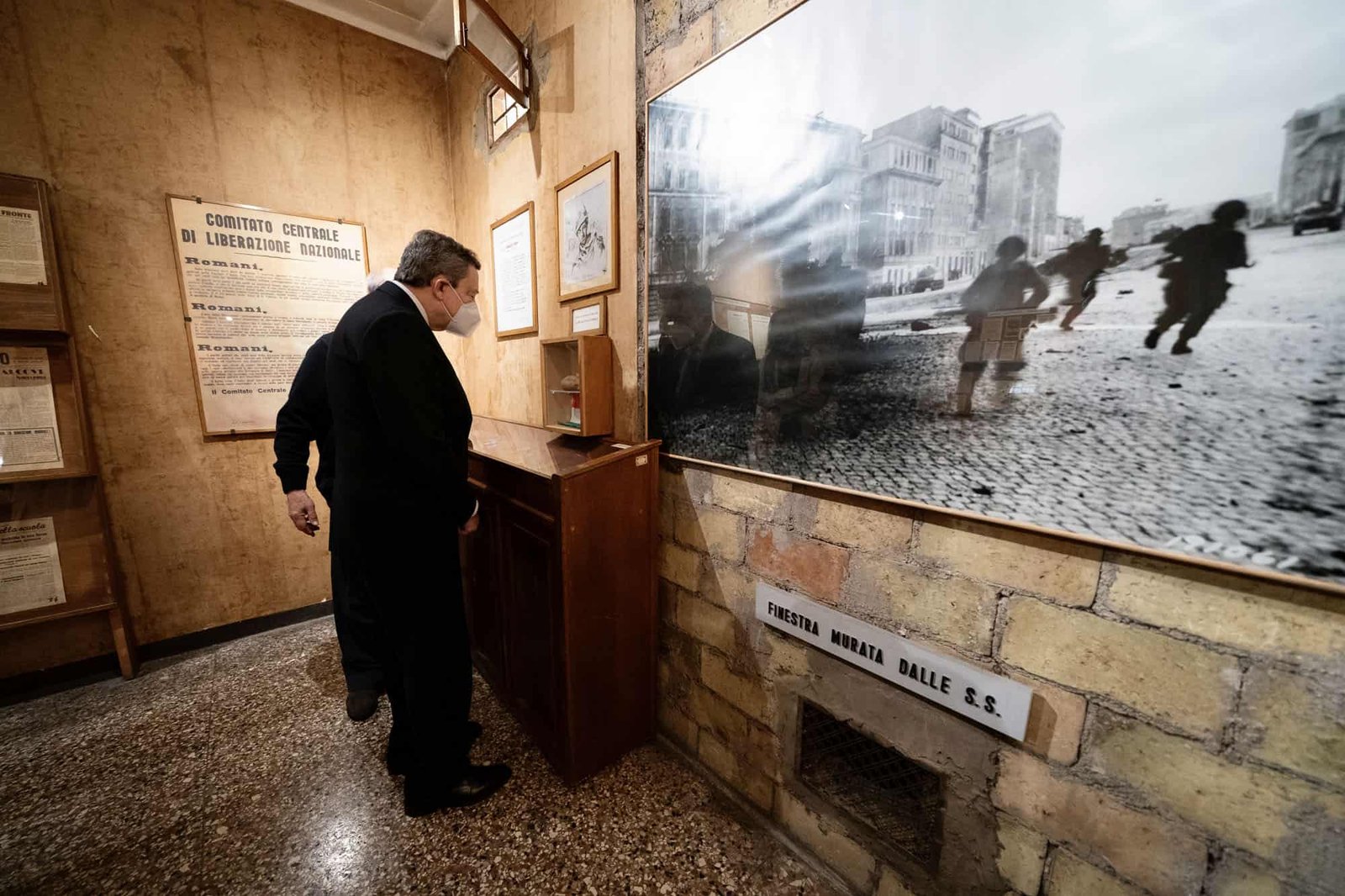
The transformation was quick and without any building plan. A prison was not built: an apartment was taken and shut up. The windows were walled up from the inside, leaving the wooden frames in place, so that from the street the facade kept looking like that of any ordinary house. Grates were applied to the few openings that remained. To the interior doors, which stayed apartment doors, peepholes and bolts were added. The service rooms, storerooms and closets, became isolation cells. The kitchen became a cell. The living room became a large common cell.
Anyone visiting the second floor today walks in the plan of a middle-sized bourgeois apartment: entrance, corridor, rooms opening onto the corridor, bathroom and kitchen at the back. Every door is a cell. The distance between the entrance door and the last room is a few meters, and in those few meters passed an amount of suffering no caption can contain. At the museum they have kept a light hand, and they were right to: in the harshest cells the commentary is reduced to the minimum.
A teaching detail worth looking for: in one of the second-floor cells, the one made from the old kitchen, the wall that blocked the window has been cut vertically in half. You see the thickness of the infill, you see the original wooden frame left trapped behind the bricks, you understand with your eyes what it means to wall up a window from the inside. Of the kitchen remain the stone washtub, the wall tiles and even the hood, left in place by the Germans.
Who decided: Herbert Kappler and the chain of command
It was Kappler who decided that the right wing of the building should become a prison. He was a police official, not a line soldier, and the machine he directed from Via Tasso joined information gathering, interrogation, detention and the selection of prisoners to hand over to the firing squad. On the tortures practiced in this building there is trial documentation, starting from the report of the doctor Rodosindo Cardente, who was later among the authors, together with Attilio Ascarelli and Arrigo Paladini, of a volume on the Ardeatine Caves published by the association of the victims' families.
Kappler was tried in Rome in 1947 and sentenced to life in prison. In 1977 he left the military prison of Gaeta in circumstances that caused a scandal. Erich Priebke, his subordinate, was located in Argentina in 1995, tried in 1996 and sentenced to life in prison by the Court of Appeal in 1998. The Fascist police chief of Rome Pietro Caruso, who helped draw up the lists, was sentenced to death in 1944. These names come back in the rooms of the museum, but they are not the museum's subject: the subject is the prisoners.
How many people passed through here
The available estimates speak of about 2,000 people imprisoned in this building in the nine months of the occupation. It is a figure to be handled with caution, because a political police prison does not keep complete records and many transits lasted a few hours. The museum nonetheless documents a mixed prison population, with a section devoted to the women detainees and one to the interned soldiers. Of those who left Via Tasso, many were shot at Forte Bravetta, many were killed at the Ardeatine Caves on March 24, 1944, some were deported, 14 were massacred at La Storta on the very day of the city's liberation.
How the Historical Museum of the Liberation of Rome came to be
Princess Ruspoli's donation, June 15, 1950
The history of the museum begins with a notarial deed. On June 15, 1950, Princess Josepha Ruspoli in Savorgnan di Brazzà, owner of the property, donated to the Italian State four of the apartments that had been used as a prison, setting a precise condition: that they be destined exclusively and permanently to house a historical museum of the struggle for Liberation in Rome. It was not a formula of convenience. Binding the use meant preventing those rooms from becoming homes again, and therefore the graffiti on the walls from ending up under two coats of paint.
It is worth stopping a moment on this point, because it explains why Via Tasso exists and other similar places in Italy don't. The preservation was not decided by a superintendency or by a ministry: it was a private owner who gave up four apartments in a central neighborhood, and it was the victims' families and the survivors who fought for the restriction to become an institution. The museum was born from below, and this can still be felt in the way it is kept.
1955, 1957 and the founding law
On June 4, 1955, the 11th anniversary of the liberation of Rome, the President of the Republic Giovanni Gronchi inaugurated the first core of the museum, set up in the ground-floor and second-floor apartments. The third-floor section was inaugurated on August 4, 1957. In the meantime, on April 14, 1957, the museum had been recognized as a public body under the protection of the Ministry of Public Education with law no. 277.
Alberto Maria Ghisalberti, then president of the Istituto per la storia del Risorgimento italiano, was called to chair the promoting committee. The material realization of the display was entrusted by the Ministry of Public Education to Guido Stendardo, director of the Library of Archaeology and Art History. The choice of two scholars from historical institutions, and not of exhibit designers, explains the documentary layout of the museum: here the display case serves to protect a paper, not to stage it.
Arrigo Paladini, Elvira Sabbatini Paladini and the direction
In 1980 the presidency was taken by Paolo Emilio Taviani, who kept it until his death in 2001. The direction was entrusted to Arrigo Paladini, who had been a prisoner of this building: arrested on May 4, 1944, held a full month in the segregation cell on the second floor, he escaped death because the fleeing Germans left him locked inside and it was the population that freed him on June 4, 1944. Paladini also wrote a book on this prison, published by the Istituto poligrafico e Zecca dello Stato in 1994. After him the museum was directed for a long time by his wife, Elvira Sabbatini Paladini. The direction is now entrusted to the historian Roberto Balzani.
That the museum was directed for decades by a former prisoner and then by his wife is not a sentimental anecdote: it is the reason why the criterion of preservation was absolute fidelity to the state of the places. Whoever had to choose between restoring or leaving, left.
The floor-by-floor visit to the Historical Museum of the Liberation of Rome
The route unfolds on several levels of the same staircase, and the sequence is not accidental: you start from the context, you climb into the prison, you end in the persecution. The museum's official website arranges the exhibition by thematic cores: the historical context, the transformation of the building into a Nazi prison, life in the prison, the liberation and the end of the prison, life in the occupied city, and then the monographic rooms devoted to the Ardeatine Caves, to Forte Bravetta, to Montezemolo, to the segregation cells, to the women's section, to the posters, to the clandestine press, to the internees, and the corridor with the room devoted to the Jewish prisoners. Let's see them in the order in which they are met.
The ground floor: reception, conference room, archive and library
The ground floor is the only space that does not keep its original appearance. Here were the administrative offices the Germans installed, and here work was done to make a conference room, on whose walls are displayed documents and relics relating to the Roman Resistance. There are the reception office, the archive, the library, the services and a small teaching classroom for school groups.
Practical advice: don't write off the ground floor as the anteroom. The panels of the conference room frame the occupation of Rome with a precision that is very useful to anyone going up for the first time, and the teaching classroom is the place where, with a class, the real work is done. Going up without having read the ground floor means finding yourself in front of the cells without knowing what the GAP were, what the Fronte Militare Clandestino was and why in Rome the Resistance had that very particular composition, with monarchist soldiers, communists, Catholics, Action Party members and socialists in the same corridor.
The second floor of the Historical Museum of the Liberation of Rome: the intact prison
You climb a flight and enter through an ordinary apartment front door. From here on the museum is seen in silence. The prison has been recovered exactly as it was when the Germans abandoned it, down to the details: the same wooden doors painted gray, the same wall coverings, the windows still walled up, the iron grates, the peepholes, the floor, the handles, the switches of the electrical system of the early 1940s. The cells face onto the entrance.
The large common cell of the Historical Museum of the Liberation of Rome and the martyrs of the Ardeatine Caves
The largest room, originally the apartment's living room, was used to hold a large number of prisoners together. Among them Father Pietro Pappagallo, a priest from Puglia who hid wanted people in Rome and forged documents, and who would be killed at the Ardeatine Caves on March 24, 1944. Many of the men who passed through this room ended up in the same quarry.
The cases display brief biographical profiles of the fallen and of those decorated for valor, and then the personal effects found on their remains when the caves were reopened and the bodies exhumed, at the end of July 1944. They are minimal objects: a wallet, a wedding ring, a comb, a fragment of a letter. It is the part of the museum in front of which groups stop the longest, and no comment from a guide is needed. The advice, if one is really needed, is this: read the names. There are 335 of them, and their force is not in the number but in the fact that each has a trade next to it.
The segregation cell of the Historical Museum of the Liberation of Rome
This is the hardest point of the Historical Museum of the Liberation of Rome. It was a very narrow storeroom, with no windows, of tiny volume, and it was used for isolation. On the walls are the graffiti traced in the dark, partly with fingernails, by those locked in it: tallies of the days spent in isolation, tallies of the tortures suffered, prayers, phrases of defiance, messages left for whoever would take over the same cell.
Here Arrigo Paladini was held for a full month, from May 4 to June 4, 1944. The museum you visit today had as its director the man who counted his own days in this little room. There is no teaching apparatus, no theatrical lighting: there is a space of a few cubic meters and there are the writings. If you go with young people, this is the moment to stay quiet and let them read on their own.
The Forte Bravetta cell
One of the second-floor cells hosts a monographic exhibit devoted to the antifascist prisoners shot at Forte Bravetta, on Via Aurelia. In the nine months of the Nazi-Fascist occupation of Rome, Forte Bravetta was the place where the greatest number of executions took place, with the exception of the Ardeatine Caves. It is a part of Roman history less often told, because the fort is far from the center and does not have the symbolic force of the quarry on the Ardeatina. The exhibit serves this too, to put the places of the repression back in line.
The cell of the La Storta massacre
One cell is devoted to the last victims of Via Tasso: those shot in the La Storta massacre, carried out by the Germans retreating north at kilometer 14 of Via Cassia on June 4, 1944, while the Allies were entering the city. The 14 men had been evacuated a little earlier from Via Tasso prison. Among them was Bruno Buozzi, the socialist trade unionist who had been general secretary of the Federazione Italiana Operai Metallurgici and then commissioner of the unions after July 25, 1943. He was held under the false name Mario Alberti.
This cell is also the cruelest to read, because it tells of a massacre that took place on the very day of the liberation, a few hours from the end. Anyone visiting the museum on June 4, when there are often ceremonies, has in front of them two overlapping dates: the liberation of the city and the last slaughter by its occupiers.
The Montezemolo cell and the white flag of September 10, 1943
A second small room, also used as an isolation cell, keeps the relics of Colonel Giuseppe Cordero Lanza di Montezemolo, head of the Fronte Militare Clandestino, arrested, held in this building and shot at the Ardeatine Caves. The most important object is a makeshift white flag: the one with which the colonel, on September 10, 1943, crossed the lines on Via Tuscolana during the battle for the defense of Rome.
It is worth dwelling on this piece of cloth, because it holds in itself all the ambiguity of those days. It is an object of surrender, used by an officer who shortly after would organize the city's clandestine military network and would die for it. In Resistance museums the tendency is to display weapons and clandestine press. Here there is a white sheet, and it is the most eloquent item in the room.
The kitchen, the bathroom and the service rooms
The prison reads best precisely from the service rooms, the ones no real prison would have. The apartment's kitchen became a cell and keeps the stone washtub, the tiles and the hood. The bathroom, on other floors, has been closed and turned into an archive. Every time you recognize the original domestic function of a room, the distance between the home and the prison shrinks by another step. It is the most powerful effect of this place, and also the hardest to explain to someone who hasn't been inside.
The third floor of the Historical Museum of the Liberation of Rome
The third-floor apartment has a plan identical to the one below and is kept by the same criterion. Four cells are open to visitors, while the bathroom and kitchen are closed and used as an archive. Here too the walls speak: among the graffiti there are some left by British prisoners, and one bears the signature of a British Army soldier. It is a detail that always throws Italian visitors off and says something important: Via Tasso was not only the prison of the Roman antifascists, but also of captured Allied soldiers, of officers of the Fronte Militare Clandestino, of arrested Jews, of internees.
The clandestine press room and the four-pointed nails
One of the third-floor cells hosts an exhibit devoted to the nascent Resistance: clandestine newspapers, testimonies, and specimens of the four-pointed nails produced clandestinely in the tens of thousands and scattered on the roads to sabotage German logistical transport. They are very poor and ingenious objects: four points welded so that, however the object falls, one point always faces up. The partisan war in the city is made of this too, of improvised workshops and of enemy logistics to be slowed down.
In the same section is displayed a loaf of bread with the last message of a young man condemned to death carved into it: two words, courage, Mom. It is the object that produces the longest silence. It isn't spectacular, it isn't terrible to look at: it is simply true.
The poster room and the first tricolor on the Capitoline Hill
The next cell continues the previous exhibit and concentrates on the production of posters, leaflets and proclamations addressed by the Resistance to the citizens. On the other front, the museum keeps orders, proclamations, warnings, rules on food rationing and limits on personal freedom, calls to informing: the language of the occupier read next to the language of those who opposed him. It is an instructive comparison, and for teachers it is first-quality material.
In this same room is displayed the first tricolor that flew over the Capitoline Hill at the liberation of Rome, on June 4, 1944. Go and see it after seeing the La Storta cell: the coincidence of date between the flag and the massacre on the Cassia is the best way to understand what liberation means in a real city, where things end and begin in the same afternoon.
The fourth floor and the section on the persecution of the Jews
The fourth-floor apartment, number 9, has not been returned to its original appearance like the two below and also shows some differences in plan. It is taken up largely by the museum's offices and archives, but it hosts an exhibit documenting antisemitism in Rome and in Italy from 1938 onward, with particular reference to the persecution, deportation and extermination of the Roman Jews. The route also includes a corridor and a room devoted to the Jewish prisoners who passed through this prison.
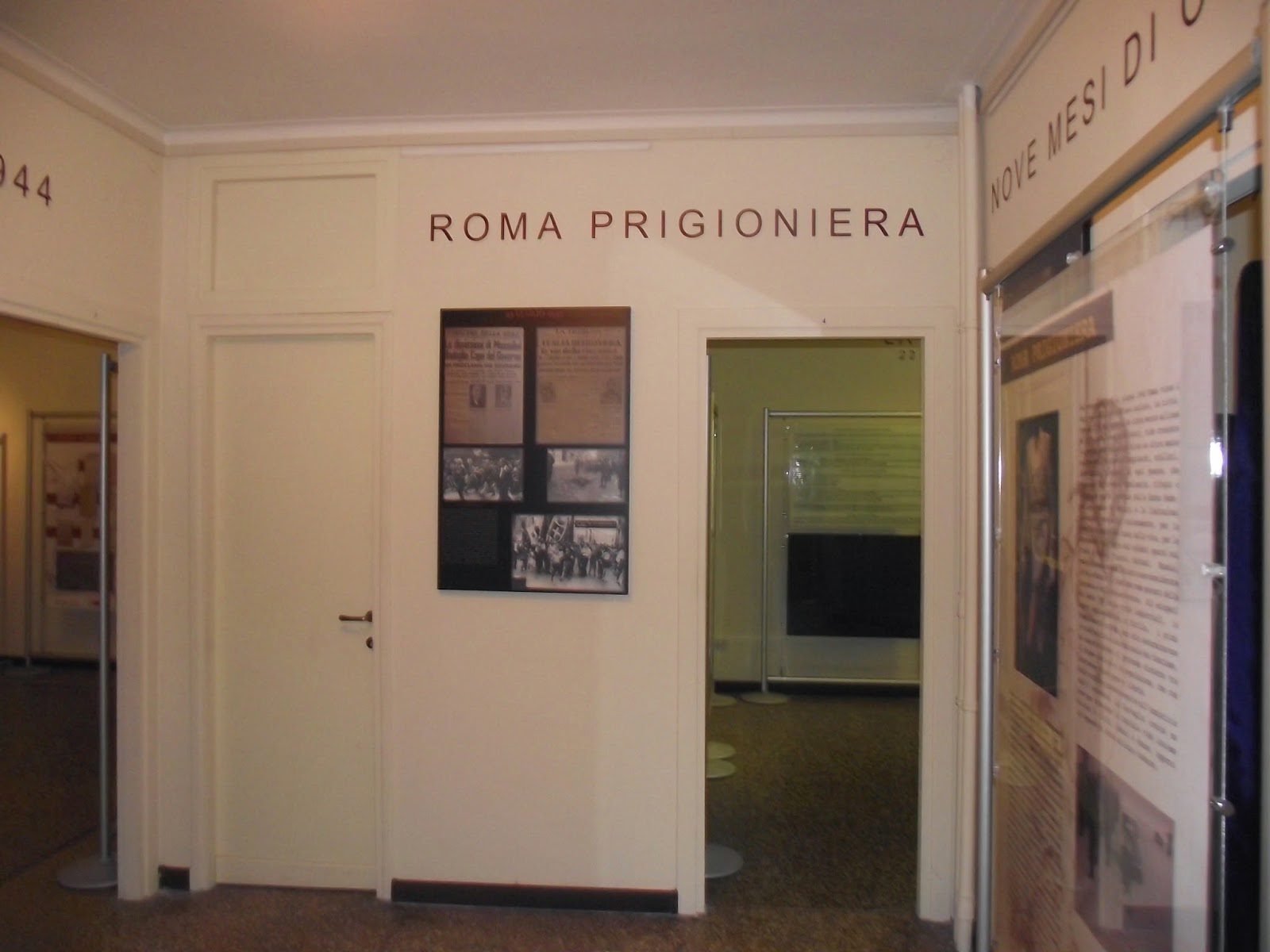
The October 16, 1943 section at the Historical Museum of the Liberation of Rome
The persecution of the Roman Jews is not a side chapter of the history of Via Tasso: it passes through this building. On September 26, 1943, Kappler summoned the representatives of the Jewish community of Rome and demanded 50 kilograms of gold within two days, threatening deportation. The gold was handed over, collected also thanks to the solidarity of non-Jewish citizens. It was of no use: in the following days the plunder continued, with the seizure of the community's libraries and registry lists.
On October 16, 1943, the Saturday that in Rome is still called Black Saturday, the roundup began before dawn and did not concern only the former ghetto: the squads operated throughout the city. By 14:00 the operation was over and 1,259 people were crowded into the Collegio Militare della Lungara, a few steps from the Regina Coeli prison. In the following hours the non-Jews, the protected foreigners and the spouses of mixed marriages were released. On the morning of October 18 the remaining ones, more than 1,000 people including a baby born the day before, were taken to Tiburtina station, loaded onto 28 cattle cars and deported to Auschwitz-Birkenau. The journey lasted more than four days. 16 came back: 15 men and one woman, Settimia Spizzichino.
The museum exhibits this story on the fourth floor, inside a building that was the operational center of the seizures and arrests. It is a sober and entirely right exhibition choice: the racial persecution is not treated as a guest exhibit, but as part of the same machine. If you want to complete the route, the visit to the Jewish Museum of Rome, under the Great Synagogue, tells the story of the community before and after, and the two places read very well on different days of the same trip.
The Ardeatine Caves and the Historical Museum of the Liberation of Rome
The link between Via Tasso and the Ardeatine Caves is direct and documented. On March 23, 1944, the GAP attacked on Via Rasella a column of the third battalion of the SS police regiment Bozen. The explosion killed 27 soldiers on the spot. Others died of their wounds, and the German count reached 33. The reprisal was decided during the night on the criterion of 10 Italians for every German killed.
The lists were drawn up in haste, drawing on the available prisoners: those of Via Tasso, those supplied by the police chief Caruso from Regina Coeli, and some Jews arrested that same morning. On March 24, 1944, in the afternoon, 335 men were taken to the pozzolana quarries on Via Ardeatina and killed with a shot to the back of the neck, in groups, until evening. The entrance of the caves was then blown up with explosives to hide the bodies. The caves were reopened after the liberation and the bodies exhumed from the end of July 1944: the personal objects you see in the second-floor cases come from there.
Anyone visiting Via Tasso should, on the same trip or in the nearby days, go to the Ardeatine Caves Mausoleum, on Via Ardeatina. The two places complete each other and don't replace each other: here is the prison, there are the quarry and the tombs. The order I recommend is this, first the prison and then the mausoleum, because the names you will have read in the second-floor cases you will find again carved on the slabs.
The library and the archive of the Historical Museum of the Liberation of Rome
Attached to the museum is a library that collects volumes, newspaper collections, pamphlets and materials relating above all to the war, the struggle for Liberation and the political movements that drove it. It is not a decorative accessory: it is a real research tool, used by students, thesis writers and family members looking for news of a relative. The archives occupy part of the third and fourth floors, in addition to the spaces on the ground floor.
The bibliography on this prison, moreover, is made in good part by people who passed through it. Guglielmo Petroni, arrested and held, wrote about it in a book published in 1948 and reprinted several times, which remains one of the driest and strongest literary testimonies on the subject. Arrigo Paladini published in 1994 a volume entirely devoted to Via Tasso. Angelo Ioppi had published his testimony as early as 1945. Fabio Simonetti devoted to the building, as German headquarters and prison during the occupation, a study that came out in 2016. If a visit leaves you wanting to go deeper, these are the titles to start from.
The databases and digital projects on the Resistance
Alongside the work on the rooms, the memory of the Roman Resistance now has remote consultation tools that are worth knowing before you come. The Partigiani d'Italia database, run by the archival administration, makes searchable the card file of the commissions for the recognition of partisan status: these are the applications submitted by men and women asking for recognition of their role in the Resistance, with the related digital reproductions. For anyone looking for a grandfather, an uncle, a family name, it is often the first place to look.
There is also the virtual museum of the Resistance and of the war of Liberation, a project created to spread knowledge of the facts and places tied to the Resistance and the war of Liberation, also outside national borders. These tools do not replace the visit, and anyone who thinks so hasn't understood what Via Tasso is. They do serve, however, to prepare the visit and, above all, to continue it. The museum itself keeps dossiers in the names of individual victims, with the biographical and historical data collected over time.
How to visit the Historical Museum of the Liberation of Rome
How long the visit to the Historical Museum of the Liberation of Rome lasts
A careful visit to the Historical Museum of the Liberation of Rome takes between 60 and 90 minutes. In 40 you get out, but you get out having looked and not read. The cells are small and visitors spread out badly. If there is a group in front of you, it is best to reverse the order and go up to the upper floor first, then come back down. The museum is not big, and for exactly that reason managing the flow makes the difference between a collected visit and a visit in single file.
The Historical Museum of the Liberation of Rome with school groups
For more than 20 years the museum has worked with Italian and European secondary schools, with routes that pair the visit with the use of the archive, the library and the video collections, and a teaching classroom on the ground floor. Bookings for school and organized groups are made at least 20 days in advance, filling in the form published on the museum's website. It is not a formality: the spaces are tiny and a whole class simply doesn't fit in a cell, so visits are organized in small rotating groups.
A tip for anyone accompanying a class: do the historical part first, in the classroom or on the ground floor, and let the climb to the cells be silent. Explaining inside the segregation cell is a mistake. 15-year-olds, put in front of those graffiti with no voice laid over them, react better than you would expect. The questions come afterward, and they are good ones.
The museum with children and teenagers
A judgment some won't share: under 11 or 12 years old this is not a suitable place. Not because of the harshness of the images, which the museum doses with great sobriety, but because the meaning of the place lies entirely in understanding the context, and without context only dark rooms and an unpleasant feeling remain. From age 13 up, conversely, it is one of the most formative places Rome has, and it is worth more than 10 lessons.
Accessibility and services
The museum is listed as accessible to people with disabilities in the reference institutional records, but since it is a residential building with narrow cells and original passages, it is best to call 06 7003866 and arrange the visit in advance, stating your specific needs. The museum's brochures are available in Italian and English and can be downloaded from the official website. If you are accompanying foreigners, download them beforehand, because the captions in the rooms are essentially in Italian.
When to go to the Historical Museum of the Liberation of Rome
The dates around which the museum is most alive, and also most crowded, are October 16, March 24, April 25 and June 4. If you are looking for the ceremony, the participation, the civic climate of the city, go on those days. If you are looking for empty cells and time to read the walls, go on any morning in November or February. The second option is the one to prefer the first time: the anniversaries are important, but the first encounter with this building should be made alone.
One last recommendation of method: don't pair Via Tasso with a day full of other visits. Whoever leaves here and slips 30 minutes later into a Baroque basilica ends up seeing neither. Put this visit at the start of the morning and leave yourself an hour of walking afterward.
What is around the Historical Museum of the Liberation of Rome
San Giovanni in Laterano, the Lateran and the Holy Stairs
Five minutes' walk away, at the end of Via Tasso, opens Piazza San Giovanni in Laterano. The Basilica of San Giovanni in Laterano is the cathedral of Rome, the church of the city's bishop, and its history begins with the Constantinian donation of land that had belonged to the Laterani and later was the barracks of the equites singulares. On the other side of the piazza, the Holy Stairs complex keeps the staircase that tradition holds came from Pilate's praetorium and, at the top, the Sancta Sanctorum with the acheiropoieta image of the Savior.
The contrast between the two places is brutal and instructive: in the same handful of blocks, the cathedral of Latin Christendom and a political police prison of the 1900s. It is worth doing them on the same outing, in this order: first the museum, then the basilica. Not the other way around.
Porta Maggiore, Santa Croce and the underground basilica
In the other direction, toward the east, in a quarter of an hour you reach Porta Maggiore, the junction where the Aurelian Walls absorbed the great aqueducts and where the tomb of the baker Eurysaces stands. A short distance away, below ground level, the Underground Basilica of Porta Maggiore keeps Neo-Pythagorean stuccoes of the Julio-Claudian age that almost no Roman has seen. A little further north, the basilica of Holy Cross in Jerusalem closes the Lateran trident, and inside the same complex is the National Museum of Musical Instruments, little visited and surprising.
The other places of memory in Rome
Anyone who comes to Via Tasso for reasons of study or family memory should plan for at least three other addresses. The Ardeatine Caves Mausoleum, on Via Ardeatina, is the natural completion of this visit, and is reached by going up toward the Appian Way Park. The House of Memory and History, on Via San Francesco di Sales in Trastevere, brings together the institutes and associations that work on the Resistance and on the deportation, and hosts meetings and presentations all year round. The Jewish Museum of Rome, at the Great Synagogue, is the other end of the thread that begins on the fourth floor of Via Tasso.
Anyone who wants to go further back, to the Risorgimento roots of the idea of a republican Rome, will find material at the Museum of the Roman Republic and of Garibaldian Memory, on the Janiculum. And if you have the Colosseum planned for the same trip, know that it is a little over a kilometer from here: you get there on foot in 20 minutes passing under the Arch of Constantine, but I advise you not to do it the same afternoon.
A curiosity about the Historical Museum of the Liberation of Rome
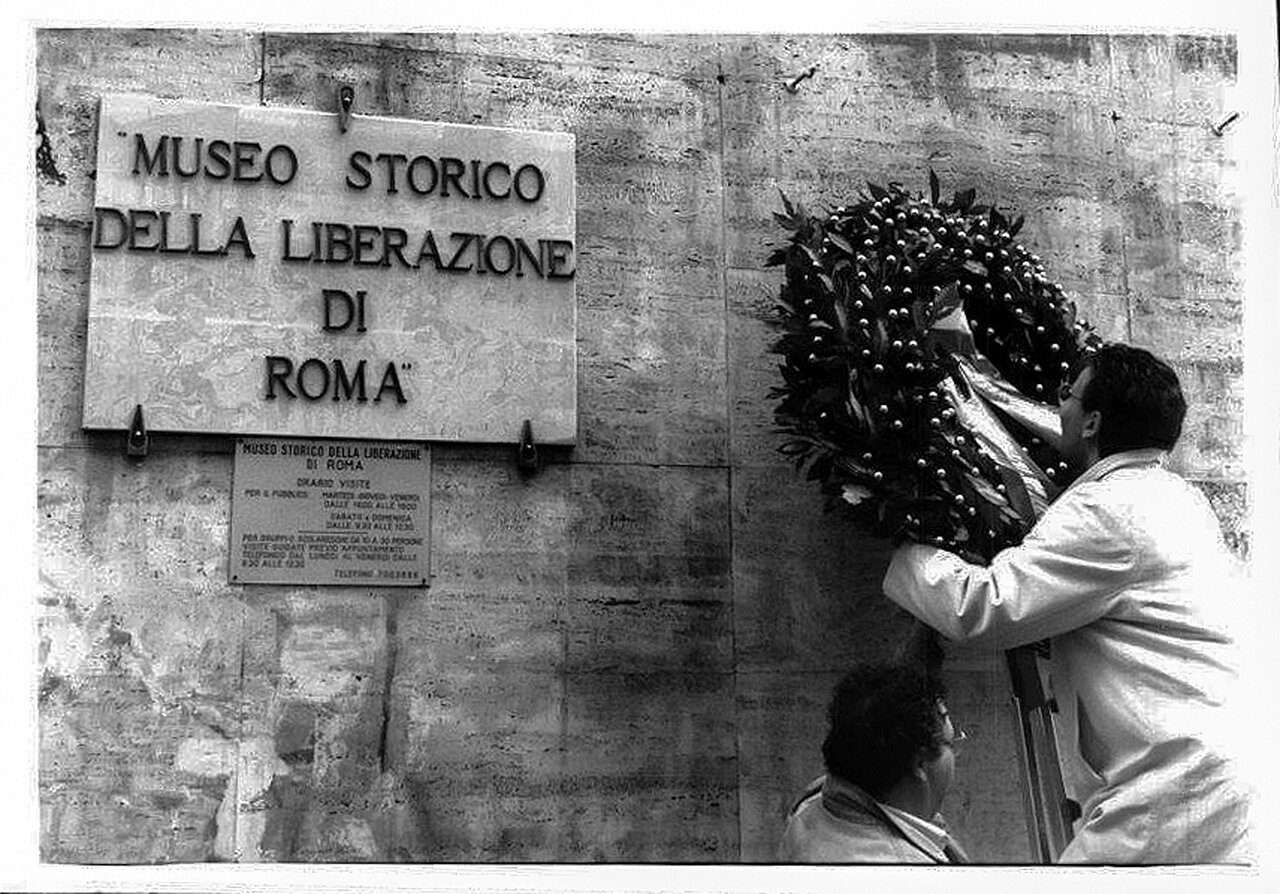
The curiosity is not inside the museum: it is underground, 200 meters away. The metro stop that serves Via Tasso is no longer called just Manzoni. Since 2007, when it reopened after a long modernization of line A, the station officially carries the name Manzoni - Museo della Liberazione. It is a rare case in the naming of Roman transit: stations normally take the name of the street or piazza they open onto, and the addition of a museum reference is a deliberate decision, which serves to direct those getting off and at the same time to say something to the city.
The same thing happens in the minor place names of the neighborhood. The building's address is Via Tasso 145, but in current Roman speech, and in historiography, the name of the place is simply Via Tasso, without a street number, as if the whole street coincided with the prison. It is a phenomenon we know well in Rome: Regina Coeli is a prison and not a monastery, the Ardeatine are a massacre and not a street. When a street name becomes the name of an event, it means that event has beaten geography.
I'll add an architectural curiosity that very few notice. The building has two entrances, 145 and 155, and the two wings were linked internally by through corridors on the first and third floors. Whoever enters today at 145 is walking in half of a system: the other half, that of the offices and the barracks, is now private property and cannot be visited. The building you see from the street, in short, is bigger than the museum, and the real extent of the German command in Rome was double what you walk through.
Something nobody tells you about the Historical Museum of the Liberation of Rome
That this museum exists because of a contractual clause. On June 15, 1950, Princess Josepha Ruspoli in Savorgnan di Brazzà donated four apartments to the State, requiring that they be destined exclusively and permanently to a museum of the struggle for Liberation in Rome. Without that clause, those rooms would have been cleaned up, whitewashed and re-rented within a few years, as happened to dozens of similar places in Italy, and the graffiti traced with fingernails in the segregation cell would not exist today.
The second part of what nobody says concerns the type of preservation. The cells were not restored, they were left. It is a technical distinction that weighs enormously: to restore means choosing a state to bring back, to leave means accepting also the wear, the historical dust, the wrong color of a plaster. The line was held by a director who had been a prisoner in those cells, Arrigo Paladini, and then by his wife Elvira Sabbatini Paladini. The museum has gone through decades of museographic fashions without giving in to any, and when you enter a cell today you see what was seen by whoever was locked in it.
There is a third element, an administrative one but not a minor one. The museum is a public body recognized by law since April 14, 1957, not an association or a private foundation. This protected it from the cycles of voluntary funding, but also tied it to public budgets, with all the fragilities that implies. An institution of this importance that survives with a minimal structure, in a four-story building without a monumental elevator and without a bookshop, is something the foreign visitor has trouble believing. It is also the reason why entrance is free: here an experience is not sold, a door is kept open.
My advice for visiting the Historical Museum of the Liberation of Rome
The first piece of advice is about the time. Arrive at opening, not in the middle of the day. The cells on the second and third floors face a narrow corridor, and 10 people are enough to make it impossible to read the graffiti: the light is what it is, you have to get close to the wall and stay there for a few minutes. In the first half hour after opening, on a weekday, the museum is practically yours.
The second piece of advice is about the order. Don't skip the ground floor. The historical context of occupied Rome, with the chronology of the nine months, the GAP, the Fronte Militare Clandestino, the Fascist police headquarters, is what makes the cells readable. Then go up, and go up without turning back: the route has a narrative order that works, from the prison to the persecution, and breaking it weakens everything.
The third piece of advice is the most important, and it is about time. Give yourself a rule: in the segregation cell, stand still for at least three minutes, without photographing, without talking. It is a space of a few cubic meters and by eye it is exhausted in 20 seconds. The three minutes serve to do the only thing that room asks, which is to read one by one the writings on the walls: the tallies of days, the dates, the names, the phrases left for whoever would take over. They are the only document those men were able to write, and they are still there.
Fourth and last: bring a notebook, not your phone. Many visitors photograph the walls and don't read them, and then never look at the photographs again. If a name strikes you, write it down. Back home, look it up in the Resistance databases: in most cases you will find a record, a date of birth, a trade, a place of death. That is the real end of the visit, and it happens three days later, at a desk.
Another well-known fact, yet rarely mentioned
That in Rome the Resistance was, to a much greater extent than elsewhere, a matter of soldiers. Historians know it, it is read in all the serious textbooks, and yet in current imagination the Roman Resistance coincides with Via Rasella and the GAP, that is, with the communist component. Via Tasso museum corrects this reading with the force of documents: the cell devoted to Giuseppe Cordero Lanza di Montezemolo, general staff colonel and head of the Fronte Militare Clandestino, and the papers displayed next to it tell of a network of officers who stayed in the city after September 8, which kept contact with the government of the South, organized military intelligence and assistance to Allied prisoners, and paid a very high price.
The makeup of the 335 killed at the Ardeatine Caves says the same thing: there were communists, Action Party members, socialists, Catholics, monarchists, career soldiers, Jews arrested as such, and men who had nothing to do with the Resistance and were taken to make up the number. It is one of the reasons this place belongs to everyone and not to one political side, and its institutional history confirms it: the promoting committee was chaired by the president of the Istituto per la storia del Risorgimento, the presidency was then held for a long time by a Christian Democrat politician, Paolo Emilio Taviani, and the museum was inaugurated in 1955 by the President of the Republic.
The well-known fact, then, is that the Roman Resistance was plural. The consequence almost no one draws is that Via Tasso is not a museum of one side, and treating it as such, in either direction, is the surest way not to understand it. You go in as a citizen, not as a fan.
The right photo to take at the Historical Museum of the Liberation of Rome
First the rule, which here comes before composition: before shooting, ask reception what is allowed. Filming conditions in places of memory change over time and may vary from room to room, and in this museum respect for the internal rule is part of the visit. That said, the right photograph exists, and it is only one.
It is not the segregation cell. That is the place where the lens should stay closed: photographing the graffiti traced with fingernails by a man in isolation, to take home a memento, is a gesture that adds nothing and takes away a lot. If you need to document those writings for study reasons, the museum is the right counterpart and reproductions exist.
The right photograph is the walled-up window. In the cell made from the old kitchen the brick infill has been cut vertically in half, and you see in a single glance the original wooden frame, the thickness of the bricks and the light that doesn't get through. It is an image that holds the whole story of the building: an ordinary house, an ordinary window, and the decision to close it from the inside so that nothing would be noticed from the street. Frame it head-on, without flash, letting a portion of the kitchen tile into the frame too. Whoever looks at the photograph understands on their own.
The second possible framing, if you are looking for something that tells its story from the outside, is the facade of the building from the street. Via Tasso is an ordinary street, with its doorways, double-parked scooters and shop signs. Photograph street number 145 with the whole building rising in the frame and the street continuing at the sides. That normality is the point: no monumental sign, no churchyard, no respectful distance. Anyone passing there in 1944 saw exactly this, and didn't know, or knew and stayed silent.
Some important events that happened here in history
The first event is the very transformation of the building, in the days after September 8, 1943. A property rented to the German embassy, until then the seat of a cultural office and of the military and police attachés, becomes within a few weeks the operational center of the security police and the security service of the Reich for Rome, with a prison made in the apartments of the right wing. The museum dates the German occupation of the city from September 10, 1943 to June 4, 1944.
On September 26, 1943, in this building, Herbert Kappler summons the representatives of the Roman Jewish community and demands 50 kilograms of gold within two days, threatening deportation. The gold is handed over. On October 16, 1943, the roundup strikes anyway: 1,259 people are gathered in the Collegio Militare della Lungara and on October 18 more than 1,000 are deported to Auschwitz-Birkenau from Tiburtina, in 28 cattle cars. 16 will return.
On March 23, 1944, a GAP action on Via Rasella hits a column of the third battalion of the SS police regiment Bozen: 27 soldiers die on the spot, others of their wounds, up to 33. In the night between the 23rd and 24th the reprisal is decided at the rate of 10 Italians for every German killed, and the lists are drawn up drawing on the prisoners of this prison and those of Regina Coeli supplied by the police chief Caruso. On the afternoon of March 24, 1944, 335 men are killed in the pozzolana quarries on Via Ardeatina. The entrance is then blown up with explosives.
On June 4, 1944, the city is liberated. In the preceding hours the retreating Germans evacuate the last prisoners of Via Tasso: 14 of them are shot at La Storta, at kilometer 14 of Via Cassia, among them the trade unionist Bruno Buozzi, held under the false name Mario Alberti. Other prisoners remain locked in the cells and are freed by the population of the neighborhood. The same day the first tricolor flies over the Capitoline Hill: that flag is now displayed on the third floor.
At the end of July 1944 the exhumation of the bodies from the Ardeatine quarries begins, and from that operation come the personal effects now displayed in the second-floor cases. On June 15, 1950, the owner of the property donates to the State four apartments with a museum-use restriction. On June 4, 1955, the President of the Republic Giovanni Gronchi inaugurates the first core of the museum. On April 14, 1957, the museum is recognized as a public body with law no. 277. On August 4, 1957, the third-floor section is opened. In 2007 the metro line A station serving the area takes the name Manzoni - Museo della Liberazione.
Who passed through the Historical Museum of the Liberation of Rome
Of this building one should speak in the passive: not who passed through it, but who was brought to it. The list of documented prisoners is long and the museum treats it with the sobriety it deserves. Here remain the established and verifiable names.
Giuseppe Cordero Lanza di Montezemolo, general staff colonel, head of the Fronte Militare Clandestino of Rome, was held in this prison and killed at the Ardeatine Caves. At the museum is kept the makeshift white flag with which on September 10, 1943, he crossed the lines on Via Tuscolana during the battle for the defense of the city. Father Pietro Pappagallo, a priest, was held in the large second-floor cell and was also killed at the Ardeatine Caves on March 24, 1944. Bruno Buozzi, a trade union leader, was held under a false name and shot at La Storta on June 4, 1944.
Arrigo Paladini was arrested on May 4, 1944, and shut for a month in the second-floor segregation cell. He survived because the fleeing Germans left him locked inside, and he was freed by the population on June 4. He later became director of the museum and wrote a book on this prison, published in 1994 by the Istituto poligrafico e Zecca dello Stato. Guglielmo Petroni, a writer from Lucca, also passed through Via Tasso and drew from it a book that came out in 1948, one of the driest literary testimonies on imprisonment. Angelo Ioppi published his own testimony as early as 1945. Nicola Ruffolo told of his capture and escape from the Germans in a volume of 2012.
On the upper floors the graffiti also record the presence of British prisoners: on the walls of a third-floor cell appears the signature of a British Army soldier, a memory of a prison population that also included Allied soldiers captured in the city.
On the opposite side, the name this building has sewn onto it is that of Herbert Kappler, commander of the German security police in Rome, tried in 1947 and sentenced to life in prison. With him operated at this site his subordinate Erich Priebke, sentenced to life in prison on appeal in 1998, and other officers later judged by Italian military justice.
After the war, for the museum, those who have passed through here include the President of the Republic Giovanni Gronchi, who inaugurated it on June 4, 1955, the historian of the Risorgimento Alberto Maria Ghisalberti, who chaired the promoting committee, the librarian Guido Stendardo, who curated the display, the president Paolo Emilio Taviani, who held the office from 1980 to 2001, and Elvira Sabbatini Paladini, who directed the institute for a long time. The direction is now entrusted to the historian Roberto Balzani.
Quick questions about the Historical Museum of the Liberation of Rome
Where is the Historical Museum of the Liberation of Rome
At Via Tasso 145, on the Esquiline Hill, about a five-minute walk from Piazza San Giovanni in Laterano. The building has two entrances, 145 and 155: the museum's entrance is 145.
How much is the ticket for the Historical Museum of the Liberation of Rome
Nothing. Entrance is free for all visitors.
What are the hours of the Historical Museum of the Liberation of Rome
The hours in force are published on the official website museoliberazione.it. It is best to consult it before setting out, because the museum observes closures on some holidays and changes the entry slots on anniversaries. For direct confirmation, the phone is 06 7003866.
How to get to the Historical Museum of the Liberation of Rome by public transportation
Metro A, stop Manzoni - Museo della Liberazione, or metro C and metro A at San Giovanni. Above ground the area is served by tram 3 and buses 16, 51, 85, 87, 360, 590 and 714.
How long the visit to Via Tasso museum lasts
Between one hour and an hour and a half for a careful visit. Anyone who just walks through the rooms is out in 40 minutes, but misses the part that counts, which is reading the graffiti.
Do you need to book
For individual visitors, normally no. For schools and organized groups you book at least 20 days in advance, filling in the form on the museum's website.
Can you take photographs inside the Historical Museum of the Liberation of Rome
Filming conditions should be asked at reception at the entrance. Regardless of the rule, in the segregation cell the best choice is not to photograph at all.
Is the Historical Museum of the Liberation of Rome suitable for children
Under 12 years old I advise against it: without historical context the place produces only discomfort. From age 13 up it is one of the most formative museums in the city.
Is it accessible to people with disabilities
The institutional records list it as accessible, but it is a residential building with narrow cells and original passages: it is best to call 06 7003866 and arrange the visit in advance.
Is there a library and can it be consulted
Yes, on the ground floor, with volumes, newspaper collections, pamphlets and materials on the war and the struggle for Liberation. For consultation you apply to the museum.
What is the difference between Via Tasso museum and the Ardeatine Caves Mausoleum
Via Tasso is the prison where many victims were held and from which they were taken. The Ardeatine Caves Mausoleum is the site of the massacre and the burial place of the 335 killed. The two places are visited in sequence, first the prison.
Why is it called Via Tasso and not the Liberation museum, in common speech
Because in Roman memory and in historiography the name of the prison is the address. It is the same mechanism by which Regina Coeli means a prison and the Ardeatine mean a massacre.
How many people were held on Via Tasso
The available estimates speak of about 2,000 people in the nine months of the occupation. A political police prison does not keep complete records, so the figure should be taken as an order of magnitude.
Are the cells of the Historical Museum of the Liberation of Rome really original
Yes. Doors, grates, peepholes, walled-up windows, floors, handles and switches are those left by the Germans in June 1944. There are no reconstructions.
What are the graffiti on the walls
Writings traced by the prisoners, partly in the dark and with fingernails: tallies of the days of isolation and of the tortures suffered, prayers, phrases of defiance, messages for whoever would take over the cell.
Who was Herbert Kappler
The SS officer who commanded the security police in Rome from this building. It was he who decided to turn its right wing into a prison. Tried in 1947, he was sentenced to life in prison.
Does the Historical Museum of the Liberation of Rome also talk about the persecution of the Jews
Yes. The fourth floor hosts an exhibit on antisemitism in Rome and in Italy from 1938 onward, with the persecution, deportation and extermination of the Roman Jews, and the route includes a room devoted to the Jewish prisoners who passed through the prison.
What is the La Storta massacre
The shooting of 14 prisoners evacuated from Via Tasso, carried out by the retreating Germans at kilometer 14 of Via Cassia on June 4, 1944. Among the victims was the trade unionist Bruno Buozzi.
What is Forte Bravetta
The fort on Via Aurelia where, in the nine months of the occupation, the greatest number of executions of antifascists in Rome took place, after the Ardeatine Caves. A cell of the museum is devoted to it.
When it is best to go to the Historical Museum of the Liberation of Rome
A winter weekday morning, at opening, if you are looking for silence and time to read. October 16, March 24, April 25 and June 4 if you are looking for the ceremonies and the participation of the city.
Are there materials in English
The museum's brochures are available in Italian and English and can be downloaded from the official website. The captions in the rooms are mostly in Italian: if you are accompanying foreigners, download them beforehand.
What to visit near the Historical Museum of the Liberation of Rome
The Basilica of San Giovanni in Laterano and the Holy Stairs are five minutes away. Porta Maggiore with the Underground Basilica and Holy Cross in Jerusalem are a quarter of an hour's walk.
Can the visit be paired with other museums on the same day
Technically yes, but I advise against it. Leaving here and going into a Baroque basilica half an hour later means seeing neither. Better to spend the morning here and keep the afternoon free.
Is there a way to look for news of a partisan relative
Yes. The Partigiani d'Italia database makes searchable the card file of the commissions for the recognition of partisan status, with the digital reproductions of the applications. The museum also keeps dossiers in the names of individual victims.
Does the Historical Museum of the Liberation of Rome run activities for schools
For more than 20 years it has worked with Italian and European secondary schools, with routes that use the archive, the library and the video collections, and with a teaching classroom on the ground floor.
Why is the metro station called Manzoni - Museo della Liberazione
Because when line A reopened after modernization, in 2007, the name of the museum was added to the name of the street, to direct visitors and as a civic acknowledgment.
I come here at least once a year, and every time I leave convinced of two things. The first is that no photograph, no documentary and no book can convey the measure of those rooms: you have to walk through them. The second is that the way this place is told outside of here, at school as on television, is often too emphatic, and the emphasis ends up pushing people away instead of drawing them closer. Via Tasso works the opposite way: it is sober, it is bare, it never raises its voice. If you go, do it at the same pace. And if you have only one hour in Rome to understand Italy's 1900s, spend it here and not elsewhere.
Article written by the editorial team of TourLeaderPro, contact them for Private/Corporate/V.I.P. Tours and Experiences.
Planning a trip to Rome? The English-language guides to visiting the city are on ItalyPlanner.com.