New Year in Rome: What to Do on December 31 and January 1
In short. New Year in Rome is two different days glued together. On December 31 the city concentrates in very few places: the Circus Maximus, where the Comune organizes the night's main public event with free entry, the theaters, the restaurants…
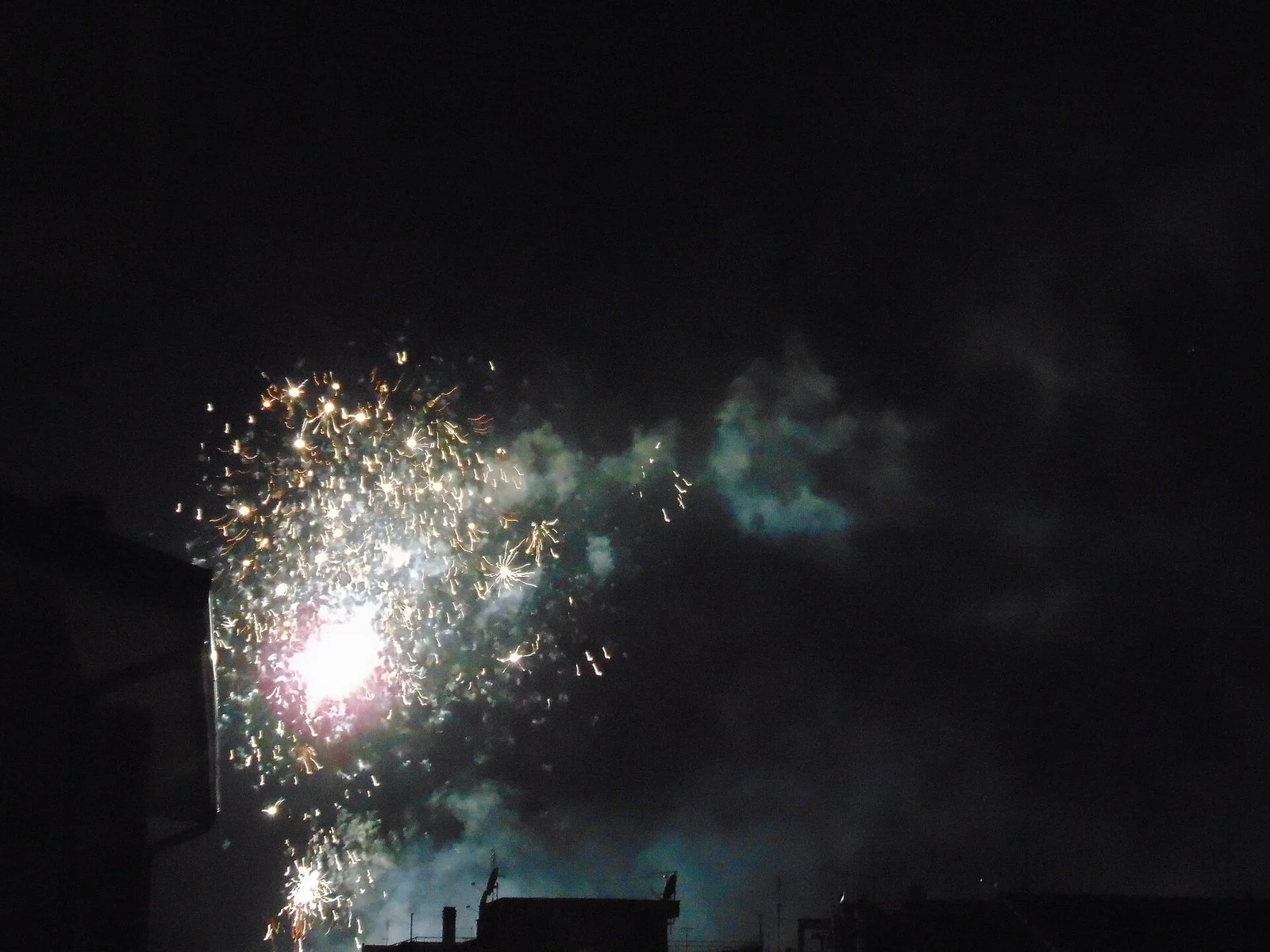
New Year in Rome is two different days glued together. On December 31 the city concentrates in very few places: the Circus Maximus, where the Comune organizes the night's main public event with free entry, the theaters, the restaurants with the fixed menu, the homes. On January 1 the opposite happens: Rome empties out, most shops stay closed, public transport starts late, and anyone who gets up early finds a city you don't see on any other day of the year. Here you'll find how these two days really work: what the Circus Maximus concert is and how you get in, what the municipal ordinance says about firecrackers, until what time the metro and buses run on the night of the 31st, where not to go if you don't like crowds, what opens and what stays closed on the first day of the year, how the Te Deum and the Mass of Mary Most Holy Mother of God in St. Peter's work, and where to go with children or outside Rome.
A word on method: programs and artists change every year and the holiday hours of the museums are usually known only in mid-December. Here you'll find what stays stable from year to year, with an indication of what needs rechecking on the official sources before you set out.
New Year in Rome: how the two days are built
The Roman New Year has a single public center of gravity, the free concert of December 31 at the Circus Maximus, and a day after that is almost entirely private, apart from the celebrations in the Vatican and the special openings of the civic museums. Anyone who arrives expecting a network of events spread over every square is thrown off: on December 31 most of the nightlife stays inside venues, theaters and homes.
The night of December 31
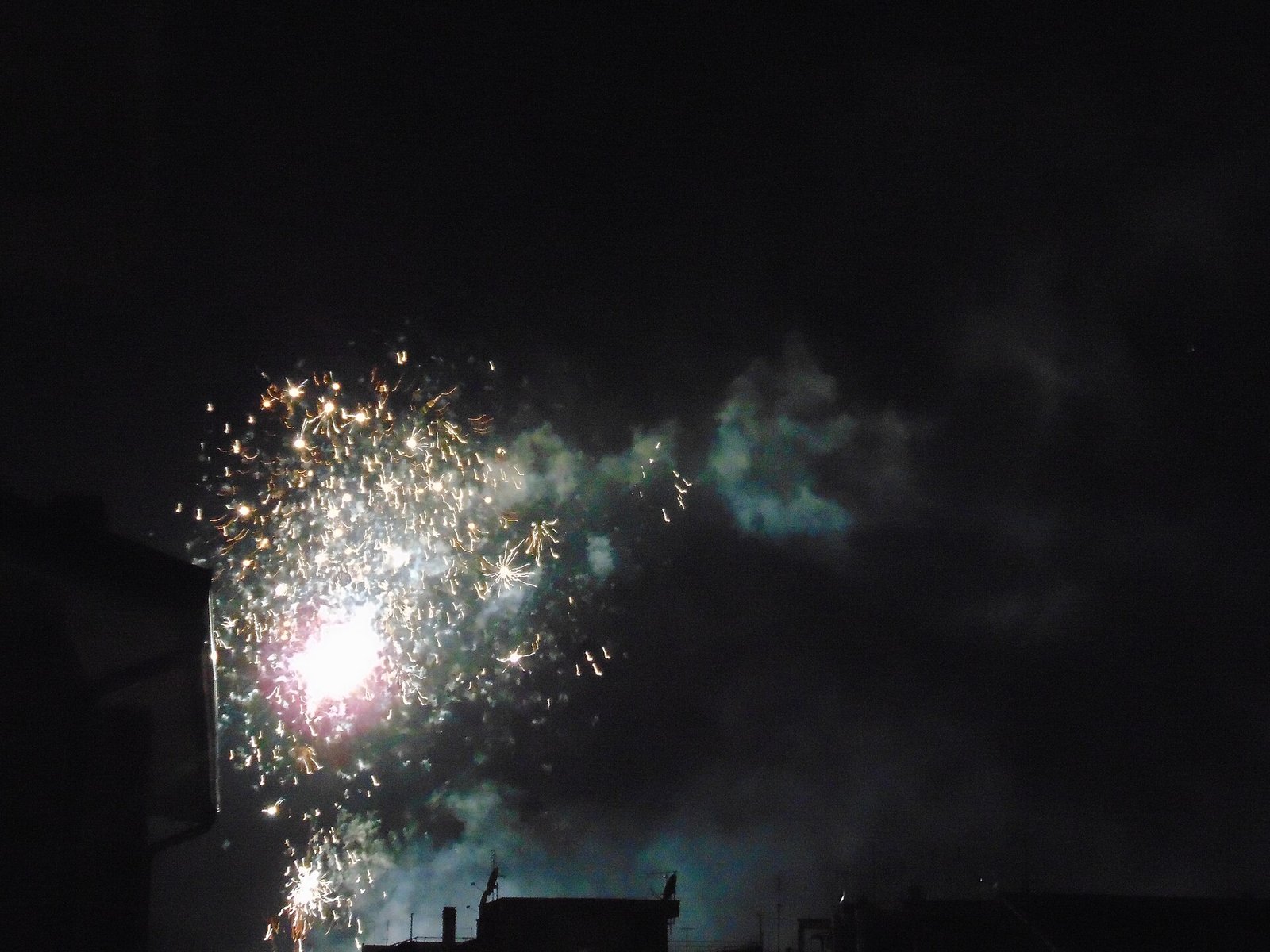
The evening starts early for those going out to dinner, because restaurants with a fixed menu almost always do a single evening seating. Anyone aiming for the concert arrives in the late afternoon or early evening, because lines form at the checkpoints and the area fills up progressively. In between are the theaters, the concert halls like the Auditorium Parco della Musica and the Auditorium Conciliazione, the clubs and the private dinners in homes, which remain the most common formula.
January 1
The first day of the year in Rome is a holiday in every respect: offices and shops closed with exceptions, public transport at full service only from late morning. The city comes back to life in the middle of the day around two poles: the Basilica of St. Peter's, where at 10:00 the Mass of the solemnity of Mary Most Holy Mother of God is celebrated, and the civic museums, which for some years have joined an initiative of free openings coordinated by Roma Capitale. In between there is the thing that in our view is worth the trip: the almost deserted historic center between 9:00 and noon, with a low light that photographs better than on any other day.
The New Year concert at the Circus Maximus
The main public event of the Roman New Year is held at the Circus Maximus, is organized by Roma Capitale, takes place on the evening of December 31 and admission is free without a ticket: you enter through the checkpoints until the authorized capacity is reached. The formula, though, has changed several times over the years.
From the Festa di Roma to the concert: how the formula changed
For some editions the event was called Festa di Roma and was built as a 24-hour marathon, opening at 21:00 on December 31 and closing at the same time on January 1, with street theater, aerial dance, readings, installations and DJ sets spread across the valley of the Circus Maximus and, in other editions, along an axis that included the Forums area and a few squares of the center. In the most recent editions the format was simplified into an evening concert with several artists on stage, which starts in early evening and continues past midnight. The venue has remained the Circus Maximus, the formula has not: that's why it's best to look for the program on the Roma Capitale site and not trust the generic descriptions circulating online, many of which recycle the old 24-hour format.
How you get in: checkpoints, screening and the glass ban
Access to the valley of the Circus Maximus is through staffed checkpoints, limited in number, set along Via dei Cerchi and Via del Circo Massimo and at the entrances toward Piazza di Porta Capena and Via San Teodoro, each with a metal detector and bag check. For big events in this area the Prefecture of Rome regularly issues ordinances that forbid bringing in and selling drinks in glass containers and cans, extending the ban to the businesses in the surrounding perimeter. In practice you get in with no glass, no cans, no long umbrellas and no bulky backpacks. The number and position of the checkpoints are published every year a few days beforehand in the security plan: read it, because it changes.
How many people there are and where it's best to stand
The attendance figures announced by Roma Capitale for recent editions run to the order of tens of thousands of people, with at least one edition in which the administration spoke of over 70,000 present. Under the stage you can't turn back, the field packs together in the hour before midnight and leaving after the countdown takes time. Anyone who wants to avoid the densest spot places themselves in the half of the valley farthest from the stage, where the sound reaches anyway, or gives up the field and stops on the high walkway of Piazzale Ugo La Malfa and the Orange Garden, on the Aventine. Even those terraces, though, can be subject to restrictions under the security plan.
How to get there and, above all, how to get out
The natural stops for the Circus Maximus are the Circo Massimo and Colosseo stations of line B, but on big-event evenings in the valley these two stations are often temporarily closed to the public to manage flows, depending on the attendance recorded. It's the classic trap: you arrive by metro and discover that to get back you have to walk. The rule we recommend is to identify before going in a backup station 20 minutes away on foot, for example Piramide or Cavour on the same line B, and to agree to meet there with whoever is with you, because in the crush the phone cells saturate.
The streets around the valley are closed progressively in the afternoon of the 31st: Via dei Cerchi first, then Via del Circo Massimo, Via della Greca, Piazzale Ugo La Malfa and the climbs toward the Aventine, generally between 18:00 and 19:00. Anyone who has booked a dinner between Testaccio and the Aventine should figure that in those hours cars can't get through and taxis don't enter the closed perimeter.
Concerts, theaters and venues: the night outside the Circus Maximus
Besides the municipal concert, on December 31 the program is distributed among theaters, concert halls, clubs and restaurants with shows, almost always paid and with mandatory booking. It's an offering that changes every year in content but not in geography: the places are always the same.
Concert halls and theaters
The two main music hubs of the night and of the day after are the Auditorium Parco della Musica, at Flaminio, and the Auditorium Conciliazione, a stone's throw from St. Peter's, which traditionally hosts a concert on New Year's Day. The theaters of the center offer evening shows on the 31st with formulas that often include a midnight toast in the hall. The calendar is published between the end of November and the beginning of December and the best seats sell out in a few days.
The squares and the historic center
On the night of the 31st Piazza Navona, Piazza del Popolo, Piazza di Spagna and the area of the Trevi Fountain fill up spontaneously, without an organized event. It's not a party, it's a concentration: no stage, no services, often barriers and capacity limits decided on the day by the Questura and, at the most delicate spots like the Trevi basin, a fixed guard. At Campo de' Fiori and around Piazza Colonna and Via del Corso the flow is constant until late at night. Anyone who wants to see Rome at night without the crush will find a dedicated guide in the page on Rome at night.
Clubs and dance music
The circuit of venues is concentrated between Testaccio, the area of the ex Mattatoio, Ostiense, Trastevere, the Monti rione and Milvian Bridge. On the evening of the 31st almost all switch to a fixed-price formula with advance sales: you pay in advance, entry isn't bought at the door and the access time is earlier than usual. Showing up without a ticket on New Year's Eve almost always means staying outside.
The San Silvestro dinner: restaurant, home, square
The big dinner of December 31 in Rome is almost always done in two ways: at a restaurant with a fixed menu and a price agreed in advance, or at home. Anyone going to the concert has a third constraint, which is to eat early and outside the perimeter that will be closed in the afternoon, choosing a neighborhood that is served but outside the closures like Testaccio or the Monti rione, both within walking distance of the Circus Maximus. In all three cases booking is not optional: on December 31 there is no such thing as a table found by chance.
Booking at a restaurant: when and what to ask
Booking the big dinner is done weeks ahead, and in the most requested places in the center and in Trastevere the calendar is already full at the end of November. The questions to ask are always the same four: if the menu is fixed or à la carte, what exactly the price includes (drinks, midnight sparkling wine, live music), if a deposit is required and under what refund conditions, and until what time you stay in the room. The last point generates more misunderstandings than any other: many places with a fixed menu close shortly after midnight. Getting the menu sent in writing, even just by message, and flagging allergies and intolerances at booking and not on the night itself avoids almost all problems.
Lentils, cotechino and the Roman tradition
The symbol dish of midnight all over Italy, Rome included, is lentils with cotechino or zampone, associated by popular tradition with the idea of prosperity because of their shape reminiscent of small coins: it's a popular belief, not a documented historical fact. Anyone who buys the ingredients on the last day finds the neighborhood markets open on the morning of the 31st with reduced hours, from the Nuovo Mercato Testaccio to the Nuovo Mercato Esquilino: the full overview is in the page on the markets of Rome.
Firecrackers and fireworks: the ordinance, the penalties, the numbers
In Rome the use of firecrackers, bangers and pyrotechnic devices of categories F2 and F3 is forbidden by a mayoral ordinance signed every year close to the holidays, which covers a span of days straddling December 31 and the Epiphany, both in public places and on private property when the effects may fall on public areas or on other people's property, with a monetary administrative fine and seizure of the material. The signing date, the duration of the ban and the amount of the penalties change from year to year: the text should be looked up on the institutional site of Roma Capitale in the preceding days.
What it forbids and what remains allowed
The ban concerns devices of categories F2 and F3, that is those with noisy effects and increasing power, and includes lighting them in private areas when fragments or effects may reach the street or third parties' property. Outside the ban are professional pyrotechnic shows duly authorized and category F1 articles, the very low risk class that includes light fountains, sparklers and confetti launchers. Anyone who wants a scenic effect at midnight without violating the ordinance therefore has a legal margin, as long as they stay in F1 and buy from authorized retailers with the marking legible on the package. The reasons cited in the measure are the safety of people and in particular of minors, the protection of animals and the protection of the historic and archaeological heritage from the risk of fire, to which air quality has been added in recent years.
The injury numbers and animals
The national toll of injuries from pyrotechnic devices on New Year's night is released every January 1 by the Ministry of the Interior and by hospitals and regularly runs to the order of hundreds of people across Italy, with a substantial share of minors and injuries concentrated on hands, eyes and face. Rome takes part with numbers normally lower than those of the cities of the south, but not zero. Kennels and Roman associations record every year lost and fled dogs: the basic precaution is to keep animals indoors with the windows closed and to check that the microchip is registered with an up-to-date contact.
The air on January 1
The peak of fine particulate in the first hours of January 1 is a phenomenon measured by the Arpa Lazio monitoring stations, with exceedances of the daily PM10 limit across a good part of the city network in the editions in which a lot was fired and the air was stagnant. It's not automatic, though: in recent editions rain, wind and lower intensity of explosions have kept the values low. Anyone with breathing problems, or accompanying small children and elderly people, should consult the Arpa Lazio bulletin on the morning of January 1 before planning hours outdoors.
Rome has no institutional fireworks show
This is the point that surprises most people arriving from elsewhere: the Comune di Roma does not organize a big fireworks show at midnight at a fixed point in the city. What you see over the rooftops, and what from the high terraces looks like a coordinated show, is the sum of thousands of private launches, most of them in violation of the municipal ordinance. As a result there is no official time, no official viewing point and no security plan dedicated to a show that formally is not on the program. Anyone looking for a panoramic view chooses in any case the classic high points, from the Janiculum to the Pincio, bearing in mind that access there too may be regulated.
Public transport on the night of the 31st and getting back
On the night of December 31 the Rome metro service is extended beyond the ordinary hours, with last runs generally around 2:30, while a selected group of surface lines stays in service until the same time and the rest of the network closes much earlier. After the metro closes, the night lines that follow its routes come into operation. The precise times are published every year by Atac and by Roma Servizi per la Mobilità in the preceding days: the structure of the service is stable, the minutes are not.
The extended metro
In recent editions all the metro lines have extended service until about 2:30 on the night between the 31st and the 1st, against a much earlier ordinary closing on weekdays: it's the fact that determines the time by which it's best to start walking toward the station. After that time the night lines that follow the metro routes come into operation, in service until early morning. Two possible exceptions: the temporary closure of individual stations to manage flows, which in the Circus Maximus area typically concerns Circo Massimo and Colosseo, and scheduled work on individual stretches.
Buses and trams: few lines, but until late
On the night of the 31st most surface lines close early, with last departures from the terminals in early evening, and a small group of strategic lines stays active that connect the main quadrants and the metro hubs, plus at least one dedicated night line. The list is short and is published every year: it's worth saving on your phone, because on the night of the 31st the stop signs and apps often give indications that differ from the actual service.
Taxis, private hire and apps
New Year's Eve is one of the few nights of the year in which demand for taxis in Rome steadily exceeds supply: long waits on the phone and in apps, night and holiday surcharges provided for by the fare, and, in the perimeters closed for the event, vehicles that can't get near the requested point. Anyone with a flight or a train on the morning of January 1 should book a transfer in advance, bearing in mind that the rail links with the airports also follow the holiday schedule.
Closures, detours and limited traffic zones
On the night of the 31st and January 1 the limited traffic zones of the historic center and of Trastevere follow a special regime, with suspensions or changes to the gate hours decided year by year. It's the information that anyone arriving by car must look for first, together with the closure plan around the Circus Maximus: both are published by Roma Servizi per la Mobilità in the preceding days. Parking in the center on the evening of the 31st is in any case a possibility we advise against, because the closed perimeter is wide, forced towing in the event areas is ordinary practice and recovering the vehicle on January 1 is complicated by the holiday hours.
Image: a Rome metro station platform in the dead of night on December 31, with few people and the information panels lit.
Where not to go if you can't stand crowds
On the night of December 31 the crush is concentrated in a very small number of places, always the same: the valley of the Circus Maximus in the hour before midnight, the quadrilateral between the Trevi Fountain, Piazza di Spagna and Via del Corso, and the band of venues between Campo de' Fiori, Piazza Navona and Trastevere. Anyone who can't stand crowds has two strategies: change neighborhood or change time.
The spots to avoid and why
The Trevi Fountain is the extreme case: an enclosed square, a single big usable space and narrow entrances, managed with controlled flow in peak hours, with the perennial ban on entering the basin. Piazza di Spagna and the stairway of Trinità dei Monti have the opposite problem, a continuous flow on a single axis, and sitting on the steps is moreover forbidden all year. Piazza Navona is long and narrow, with few side openings. In none of the three cases is there an event to see: you stand squeezed in order to stand squeezed.
The alternatives 10 minutes' walk away
A short distance from the most crowded spots there are areas that on the night of the 31st stay breathable. The Aventine with the Orange Garden and the keyhole of the Villa of the Priory of Malta is 15 minutes from the Circus Maximus and has a completely different pace. The Janiculum, reachable on foot from Trastevere, offers the best panorama without the packing of the low squares. The Aqueducts Park and the Appia Antica Park are almost deserted on the evening of the 31st, but they are unlit areas without any guard: it's not a walk to do alone in the dead of night. Anyone looking for a compromise finds in the Coppedè district and the area of Villa Torlonia with the Casina delle Civette a quiet urban walk a few minutes from the center.
Change the time instead of the place
The most effective solution, and the least practiced, is to move the visit to the historic center from the night to the morning of January 1. Between 8:00 and 10:00 Rome is practically empty: the city stayed up late, the shops are closed, the tourist buses haven't arrived yet. It's the moment when the Trevi Fountain, the Pantheon and Piazza Navona can be seen as on no other day of the year.
January 1 in Rome: Vatican, museums, empty city
January 1 is in Rome a holiday with two fixed appointments that repeat every year: the Holy Mass of the solemnity of Mary Most Holy Mother of God in St. Peter's, celebrated in the morning, and the special opening of the civic museums as part of a cultural initiative coordinated by Roma Capitale. Everything else, shops included, stays largely closed.
The Te Deum of December 31 in St. Peter's
On the afternoon of December 31 the Basilica of St. Peter's hosts the First Vespers of the solemnity of Mary Most Holy Mother of God with the singing of the Te Deum of thanksgiving for the year just ended, presided over by the Pope: in recent years the celebration has been set at 17:00. It's a short liturgy, with the basilica full and the checks at the checkpoints of St. Peter's Square slowing entry. Time and presiding celebrant are checked on the Holy See's calendar.
The Mass of January 1 and the World Day of Peace
On January 1 the Catholic Church celebrates the solemnity of Mary Most Holy Mother of God and, since 1968, the World Day of Peace, for which the Pope issues every year a message published in advance. The Mass in St. Peter's has been celebrated in recent years at 10:00 in the morning. Those who don't get into the basilica follow it on the giant screens in St. Peter's Square, where at the end the Pope appears at the window for the midday Marian prayer.
How you get in to the papal celebrations
For liturgical celebrations presided over by the Pope in St. Peter's Basilica you need a ticket, which is always free: it isn't sold and no intermediary has the right to make you pay for it. The request is made to the Prefecture of the Papal Household, which for some years has managed reservations through a dedicated online portal. The ticket doesn't assign a seat: it gives access until places run out, and anyone who arrives late finds the basilica already full. The procedures and time windows for the request change over time and should be checked every year on the Holy See's site.
The Roman Te Deum at the Church of the Gesù
Alongside the papal celebration there is a second Te Deum, that of the diocese of Rome, which is traditionally held on the evening of December 31 at the Church of the Gesù, a stone's throw from Piazza Venezia, with a Mass of thanksgiving presided over by the Cardinal Vicar. It's a celebration attended less by visitors and more by Romans, in a church that is one of the manifestos of Roman Baroque. The time is checked on the diocese's site.
The New Year concert
On January 1 in Rome the New Year concert is not a single institutional event, but a constellation of concerts in different halls: the Auditorium Conciliazione traditionally hosts a concert on New Year's Day, and other halls, starting with the Auditorium Parco della Musica, offer their own programs. They are paid shows with an ordinary ticket office, with the program published during December.
Museums open and free admissions
For some years Roma Capitale has organized on January 1 a widespread cultural day with free admission to the civic museums, the municipal archaeological areas and a series of exhibition spaces. The initiative includes the Capitoline Museums, the Centrale Montemartini, the Ara Pacis, the Museo di Roma in Trastevere, the museums of Villa Torlonia with the Casina delle Civette, the Museo Carlo Bilotti, the Museo Pietro Canonica, the MACRO and areas like Largo Argentina and the Villa of Maxentius. The hours on January 1 are reduced, with opening in late morning and last entry an hour before closing. The list of venues changes every year and is read on the portal of the Musei in Comune and on that of the Sovrintendenza Capitolina.
What is open, and above all what is not
The picture on January 1 is irregular and must be checked case by case, but some constants hold. The big state sites, starting with the Colosseum with the Roman Forum and the Palatine, were open in recent editions with reduced hours and closing in early afternoon. The Galleria Borghese and Castel Sant'Angelo opened with limited time slots. The Vatican Museums, by contrast, are regularly closed on January 1, as are the Quirinal Palace and several private collections open to the public. Among places for the youngest, Explora and the Casina di Raffaello have been closed on New Year's Day in several editions. None of these data should be taken for granted: the holiday hours are published in mid-December on the sites of the individual institutions, not on the aggregators.
The dive into the Tiber from Ponte Cavour
The best-known Roman tradition of January 1 is the dive into the Tiber from Ponte Cavour, born in the years after the Second World War and continued for decades, first with a historic protagonist nicknamed Mister Ok and then with his successors, who every New Year's Day throw themselves from the parapet around noon. It's not an event organized by the Comune, it has no official program and it's not guaranteed to take place: it's a custom. Those who watch position themselves on the Lungotevere and on the nearby bridges, a short distance from the Ara Pacis and from Piazza del Popolo. It must be said clearly that diving into the Tiber is not a permitted or safe practice: you watch, you don't imitate.
Image: the Lungotevere at Ponte Cavour on the morning of January 1, with a small crowd leaning on the parapet and the dome of St. Peter's in the distance.
The January 1 walk: Rome with an empty city
On January 1 Rome offers a condition that doesn't repeat on any other day of the year: a nearly deserted historic center in the first hours of the morning, traffic reduced almost to zero and raking light that lasts all day because the sun stays low. Below are three routes that exploit this condition, all on foot and with no tickets to buy.
The route of the Aventine and the Circus Maximus
You start from the Circus Maximus, which on the morning of January 1 is still in the setup of the day before or already being dismantled, and climb the Aventine to the Orange Garden, overlooking the Tiber. From there you reach Piazza dei Cavalieri di Malta with the keyhole of the Villa of the Priory of Malta, go down toward the Forum Boarium and finish on Tiber Island passing in front of the Ponte Rotto: an hour and a half of walking, moderate elevation, three viewpoints.
The route of the Caelian, the Colosseum and the Appia
Anyone who wants to walk more starts from the Colosseum and climbs to Villa Celimontana, on the Caelian, one of the seven hills of Rome. From there you go down toward the Baths of Caracalla and take the first stretch of the Appia Antica Park, which on January 1 is frequented almost only by Romans out for a stroll. Anyone who wants to go farther reaches the Villa of the Quintilii or the Aqueducts Park. On this axis it's best to check in advance the holiday hours of the paid sites.
The route of the Tiber, Trastevere and the Janiculum
The third itinerary makes better use of the light: you start from Piazza del Popolo and climb to the Pincio with its obelisk, cross Villa Borghese to Villa Medici, or follow the Tiber to Trastevere, with a stop at the Basilica of Santa Maria in Trastevere and a final climb to the Janiculum. Anyone who prefers greenery cuts toward Villa Doria Pamphilj, the largest public park in the city, or toward Villa Ada.
The January light and the cold factor
In early January in Rome the sun stays low throughout the day: long shadows and warm light even in mid-morning, the best condition of the year for photographing facades and colonnades, but also good light that is already over by late afternoon. Temperatures generally stay mild compared with northern Italy, but the mornings are damp and almost no cafe is open to warm up along the route: dressing in layers is part of the planning. Anyone looking for indoor alternatives in case of rain will find a collection in the page on Rome when it rains.
New Year in Rome with children
With children the Roman New Year is organized by reversing the order: December 31 is the difficult day, because of the firecrackers and the hours, while January 1 is the one that works, because the civic museums open for free and the emptied city is more manageable with a stroller.
The early midnight
The formula we recommend for small children is the early toast: you eat dinner early, do the countdown at a time compatible with sleep and avoid altogether the window between 23:30 and 1:00, the one of the firecrackers. Taking children under six into the valley of the Circus Maximus in the hour before midnight is not a good idea: the field is packed, visibility at ground level is zero and the exit is slow.
Where to go on January 1
On the first day of the year the destinations with children split into two groups. Outdoors, always workable: Villa Borghese with its little lake, Villa Doria Pamphilj, Villa Ada, the EUR lake and the Aqueducts Park. Indoors, to be checked one by one: the Bioparco, theme parks like Cinecittà World and Luneur Park, the child-friendly civic museums, while Explora and the Casina di Raffaello have been closed in more than one edition. A reasoned selection of destinations for families is in the page Rome with children.
New Year outside Rome, within an hour
Anyone who wants to spend the night away from the city has, within an hour's travel from Rome, four different directions. There is just one common rule: on December 31 and January 1 the suburban rail and road links follow a reduced holiday schedule, so anyone not using a car must check the last return run before leaving, and in many cases will discover that there isn't one.
The Castelli Romani
The most classic direction is that of the Castelli Romani: Frascati for the fraschette and the view over Rome, Ariccia with its Palazzo Chigi, Castel Gandolfo on Lake Albano with the Papal Palace, Nemi on its lake, and then Marino, Genzano, Albano and Rocca di Papa. New Year in the Castelli is almost always a New Year at the table, with big dinners in the restaurants of the historic centers: booking is mandatory and the kitchens close early.
Tivoli and the east
To the east, Tivoli holds together within a few kilometers Villa d'Este, Hadrian's Villa and the Villa Gregoriana Park, all paid sites with holiday hours to be checked. Farther away, but still within day-trip range, Subiaco and Palestrina with the sanctuary of Fortuna Primigenia: the right direction for anyone who wants a January 1 of walking and not of crowds.
The lakes and the north
To the north, Lake Bracciano with Bracciano and the Odescalchi Castle, and farther up the villages of the Tuscia, from Calcata to Civita di Bagnoregio, as far as Orvieto. These are destinations for a day more than for a night: on January 1 many villages have closed restaurants and reduced services, and it's best to call first. Monte Soratte is the option for anyone who wants to walk at altitude without going far.
The sea in winter
The fourth direction is the coast: Ostia Antica with its village and the archaeological area, Anzio and Nettuno to the south, Civitavecchia to the north, and farther away Sperlonga. The sea in winter an hour from Rome is a stroll along almost deserted seafronts: anyone going for lunch on January 1 books, anyone going to walk needs nothing.
Frequently asked questions about New Year in Rome
Where is New Year celebrated in Rome?
The main public event of New Year in Rome is the free concert organized by Roma Capitale at the Circus Maximus on the evening of December 31. Alongside it are the concerts in theaters and halls like the Auditorium Parco della Musica and the Auditorium Conciliazione, the club nights between Testaccio, Ostiense and Trastevere and the big dinners in restaurants. There is, by contrast, no single official square where the city gathers at midnight.
Is the New Year concert at the Circus Maximus free?
Yes, the New Year concert at the Circus Maximus has free entry and doesn't require a ticket. You enter through the staffed checkpoints set up around the valley until the authorized capacity is reached, passing a security check. The prefectural ordinances for big events in that area forbid bringing in drinks in glass containers and cans. Program, times and checkpoint positions are published every year a few days beforehand on the Roma Capitale site.
Are New Year firecrackers banned in Rome?
Yes, in Rome New Year firecrackers are banned by a mayoral ordinance signed every year, which prohibits bangers and pyrotechnic devices of categories F2 and F3 both in public places and on private property when the effects fall on public areas or on other people's property, with an administrative fine and seizure of the material. Category F1 articles, like fountains and sparklers, and authorized professional shows remain allowed.
Until what time does the metro run in Rome on New Year's night?
On the night of December 31 the Rome metro extends service beyond the ordinary hours, with last runs set in recent editions around 2:30, and after closing the night lines that follow its routes come into operation until early morning. A small group of surface lines stays active until the same time. The exact times are published every year by Atac in the preceding days.
What can you visit in Rome on January 1?
On January 1 in Rome the civic museums open with reduced hours and, for some years, with free admission as part of a cultural day coordinated by Roma Capitale, which also involves municipal archaeological areas and exhibition spaces. Several state sites open with reduced hours, while the Vatican Museums and the Quirinal Palace are closed. Shops and offices stay closed and the restaurants open at lunch are few and by reservation.
How do you attend the Mass of January 1 in St. Peter's?
For the Mass of the solemnity of Mary Most Holy Mother of God on January 1 in St. Peter's Basilica, celebrated in recent years at 10:00 in the morning, you need a ticket that is always free, requested from the Prefecture of the Papal Household through the dedicated online portal. The ticket gives access until places run out and doesn't assign a seat. No intermediary has the right to make you pay for it: paid offers are irregular.
What time is the Te Deum of December 31 in the Vatican?
The Te Deum of December 31 is sung in St. Peter's Basilica during the First Vespers of the solemnity of Mary Most Holy Mother of God, set in recent editions at 17:00 and presided over by the Pope. The checks at the checkpoints of St. Peter's Square slow entry, so it's best to arrive well ahead. There is also a second Te Deum, that of the diocese of Rome, traditionally celebrated at the Church of the Gesù.
Is New Year in Rome suitable for children?
New Year in Rome with children works better on January 1 than on December 31, because on the first day of the year the civic museums open for free and the nearly deserted city is easy to get around with a stroller. On the evening of the 31st the valley of the Circus Maximus in the hour before midnight is not recommended under six, and the firecracker window between 23:30 and 1:00 should be avoided altogether.
Where can you see the fireworks in Rome at New Year?
In Rome there is no institutional fireworks show at midnight organized by the Comune at a fixed point in the city, unlike other European capitals. What you see over the rooftops as the new year strikes is the sum of private launches, largely in violation of the municipal ordinance. Anyone looking for a panoramic view chooses the classic high points like the Janiculum and the Pincio, where however access may be regulated.
Who wrote this page
This page is edited by the editorial team of Tour Leader Pro, the Rome-based project office that designs and coordinates tours, itineraries and cultural events in Rome and Lazio. Hours, fares and access conditions given here are verified as of the publication date on the official sources named in the text: it's best to recheck them before leaving, because they often change. If you find a piece of data that is out of date, let us know.
Anyone building a complete program for the Roman holidays, crossing the night of the 31st with the days before and after among the historic center, museums and day trips in Lazio, can find useful planning tools on Tour Leader Pro, while for a wider picture on transport, moves between cities and destinations in Lazio and the rest of Italy a good resource is Italy Planner.
For other ideas on the holiday period you'll find the pages devoted to free Rome, to underground Rome and to the Birthday of Rome, the April 21 observance, which has nothing to do with the civil New Year.