Albano Laziale (RM)
In short. Albano Laziale is in the province of Rome, in the Alban Hills, just under 25 kilometers from the center of the capital along Via Appia (State Road 7).
Albano Laziale is in the province of Rome, in the Alban Hills, just under 25 kilometers from the center of the capital along Via Appia (State Road 7). By car you leave the Grande Raccordo Anulare at exit 23 and continue toward Ciampino and Castel Gandolfo, with a travel time that outside rush hour stays under 40 minutes and that on weekday mornings can easily double. By train you arrive on the regional FL4 line on the Roma Termini-Albano Laziale branch, which stops at Ciampino, Pantanelle, Marino Laziale, Villini and Castel Gandolfo. The average travel time is about an hour, service is at regular intervals, and Albano Laziale station is the terminus, a few minutes' walk from the historic center. By bus there are Cotral runs that leave from the Roma Anagnina terminus, on metro line A. The historic center is visited on foot and without paying anything: there is no ticket to enter the town, the churches or the public parks. You do pay admission to the civic museums and the Diocesan Museum. The Civic Museum is at Viale Risorgimento 3, inside Villa Ferrajoli, open Monday to Saturday from 9:00 to 13:00 and in the afternoon on Monday and Thursday from 15:30 to 18:30. The Museum of the Legio II Parthica, on Via Volontari del Sangue, is open the second and fourth Sunday of the month from 9:00 to 13:00, while on the first and third Sunday it is the turn of Viale Risorgimento site. The phone number of the civic museums is 06 93295443. The Diocesan Museum is at Via Alcide De Gasperi 37, with the catacombs of San Senatore at Via della Stella 5, phone 06 93269490. It is open Tuesday and Wednesday mornings from 9:00 to 13:00, and Wednesday and Saturday afternoons from 15:00 to 19:00. Fares and reductions are listed at the respective ticket offices and on the official websites of the institutions. For groups of more than 10 people and for guided tours, booking is mandatory, with a week's notice for the civic museums. Parking inside the walls is scarce and mostly paid: it's best to leave the car along the ring road or in the area near the station and walk up.
Albano is part of the Castelli Romani Regional Park, which is the natural gateway to this whole territory and the chapter to start from to understand how the towns of the Alban Hills hold together.

Where Albano Laziale (RM) Is and What Its Territory Is Like
The town occupies the outer slope of the crater that holds Lake Albano, between 384 and 431 meters above sea level in the historic core, with the highest point of the municipal territory on Colle dei Cappuccini at 615 meters. The municipality covers 23.80 square kilometers and has just under 40,000 inhabitants, spread between the main town and the two hamlets of Cecchina and Pavona, which alone account for a considerable share of the population and have a completely different character from the historic center. They are lowland settlements, grown along Via Nettunense and the railway, with a recent and not very monumental fabric. Whoever arrives in Albano looking for the postcard Castelli Romani must know this: the postcard is up high, on the ridge, and takes up a rectangle a few hundred meters on a side.
That rectangle, however, is one of the densest places of Roman ruins in Lazio outside Rome. The municipal boundary touches Castel Gandolfo, Ariccia and the shores of Lake Albano, and the closeness to Rome did the rest. Here rich Romans put their villas, here the popes put their summer holidays, here the imperial army put the only permanent legionary camp in Italy. The landscape you see is the sum of these three layers, squashed one on top of the other within a few streets.
Our opinion: Albano is the town of the Castelli that is hardest to visit and that deserves the most. It doesn't have the scenery of Nemi, it doesn't have the Bernini square of Ariccia, it doesn't have the pilgrim traffic of Castel Gandolfo. What it has is an amount of archaeology that none of the others dream of, almost all of it wedged into the urban fabric, often without signs and without opening hours. You have to look for it. Whoever looks for it takes home a day worth three times a stroll along the lake.
The Name Albano Laziale: Albanum, Alba Longa and the 1873 Addition
The origin of the name remains debated and it's worth separating the levels well. In Roman times the territory was called Albanum. The estates of the rich in the Alban Hills were called Albanum, with the owner's name added, the Albanum Pompeii, the Albanum Domitiani, and Ager Albanus was the whole district. The etymological hypothesis considered most solid today traces the place name to the Indo-European root alb or alp, which indicates a high ground, and therefore to the Mons Albanus, Monte Cavo, which was both a Latin federal place of worship and a common pasture. Other explanations, weaker, bring in the Latin albus, white, or a Greek word for ash. These are second-hand hypotheses, not documented.
The delicate point is the relationship with Alba Longa, the Latin capital of legend. Medieval tradition placed it exactly where Albano is today, and the city's civic identity was built on this, white sow and the motto Mater Urbis included. Modern archaeological research, however, tends to place the site of Alba Longa on the opposite side of the lake, straddling Marino, Rocca di Papa and Ariccia, that is on the wrong side as far as Albano is concerned. The link between Albano and Alba Longa is therefore toponymic and symbolic, not topographic: the town does not stand on top of Alba Longa, it inherits its name and memory. It is a distinction that is often lost in local guides, and that instead changes the meaning of everything you see.
The addition of Laziale is administrative and recent: it was adopted to distinguish the municipality from its namesakes in the Kingdom of Italy, that is Albano Sant'Alessandro in the province of Bergamo, Albano Vercellese and Albano di Lucania. On the date, local sources waver between 1873 and 1882. The exact year has to be checked in the municipal records, but the reason for the change is certain and concerns the duplication of names after unification.
The Archaeological Circuit of the Castra Albana
In AD 197 Septimius Severus created the Legio II Parthica, and around 198 he quartered it here, inside the imperial estate that had belonged to Domitian, 21 kilometers from Rome. It is an enormous and little-told fact: by republican law and Augustan practice the legions were not stationed in Italy, and Albano became the only permanent legionary base of the peninsula. About 6,000 men, with families, craftsmen, merchants and prostitutes in tow, planted on a ridge that until then had hosted only luxury villas. The camp measured about 95,000 square meters, with a perimeter wall of 1,334 meters built in opus quadratum of peperino quarried on the spot: one of the last appearances of that technique in the Ager Romanus. The legion stayed until the middle of the 3rd century. The urban layout of Albano's historic center, with its trident of streets, still follows the plan of the castrum today.
Porta Pretoria, the Monumental Entrance of the Castra Albana
It is the most spectacular piece and the luckiest for a terrible reason. The Porta Pretoria was 36 meters wide and keeps an elevation of 14, with a central arch of about three meters by five and two narrower side passages, all in squared blocks of peperino. It faced toward Via Appia, and was designed as a manifesto: whoever came up from Rome saw that wall of stone before anything else. For centuries it remained absorbed into the houses of the main street, invisible. It was the bombing of 1944 that unroofed the buildings hiding it and gave it back to sight. That is to say, the most beautiful monument of Albano is owed to a tragedy. Today it is at the end of Piazza San Paolo, in front of Palazzo Savelli, and can be viewed freely from the outside at any hour.
Practical advice: look at it twice, the first time in the early morning when the raking light brings out the texture of the blocks, the second after sunset when the artificial lighting makes the outline of the arches readable. In the middle of the day, with cars parked in front, it is the least photogenic thing in town.
The Porta Principalis Sinistra and the Stretches of Wall
Less known and more intact in its design, the Porta Principalis Sinistra has a single arch with a span of about three meters and 80. The archaeologist Giuseppe Lugli, who left the reference study on the Castra Albana, considered it one of the finest remains of the camp. There are no traces of guard towers nearby. Stretches of curtain wall surface here and there among the houses, on Via Don Minzoni and along the perimeter of the seminary. They are peperino blocks as big as crates, and recognizing them is a good exercise for understanding how literally the present-day town sits on top of the barracks.
The Cisternoni, the Roman Cistern Still in Use
If I had to point to just one thing to see in Albano, I would point to this. The Cisternoni are a cistern dug partly into the peperino bedrock, to a depth of three or four meters, and completed in masonry. It has an almost rectangular plan of 1,436.50 square meters, with long sides of 47.90 and 45.50 meters and short sides of 29.62 and 31.90, five longitudinal aisles, 36 pillars connected by brick arches and barrel vaults, and a capacity of 10,132 cubic meters of water. They were built at the beginning of the 3rd century to serve the camp and the imperial villas along the Appia, fed by two aqueducts that brought the springs of the lake basin. They are located under the park of the Bishop's Seminary attached to the church of San Paolo.
The fact that makes visitors' jaws drop is another one: the cistern is not a ruin. It kept serving the houses of Albano from the 17th century to 1880, then irrigation, and still today it receives water from its ancient system. Local sources identify it as the only perfectly functioning cistern in the Roman world. Going in means walking inside a hydraulic system 1,800 years old that has never stopped working. The visit is arranged through the civic museums, in a group and by appointment, because access is from the seminary and it has no continuous hours. Ask when you book, because availability changes from week to week.
The Severan Amphitheater
Built outside the enclosure of the castrum toward the middle of the 3rd century, the amphitheater of Albano is the only one in the Alban Hills. It measured about 113 meters on the major axis, with an arena of 67.5 by 45 meters and a double order of arcades that reached 22 meters in height. Estimates of its capacity range from the 15,000 spectators given in the current literature to the roughly 16,000 calculated by Lugli at full load. In any case more than the military population, which says that the civilians of the settlement that had grown up around the legion came too. The slope of the ground forced the builders to a supporting terrace 6.75 meters high and almost 60 long, and to shift the vomitoria off axis. The arena had a system of channels for draining water that also served as a service passage.
In the niches of two vomitoria there are painted little chapels of the Christian age, and medieval burials have been found in the structure: the building was reused as an oratory and perhaps as a fortress. Local tradition sees in it a place of Christian martyrdoms, but this is an old devotional reading and not an archaeological certainty: the paintings prove the cultic reuse, not the executions. In summer the amphitheater hosts concerts and open-air theater, and that is when it is at its best.

The Cellomaio Baths, Known as the Baths of Caracalla
Attributed to Caracalla, who supposedly offered them to the soldiers as a donative right after the killing of his brother Geta, the baths of the camp are the most disguised ruin in Albano. The great hall of about 37 meters by 12, with mosaic floors and a hypocaust heating system, today contains the church of San Pietro. Around it, inside the ancient walls, a medieval village of crowded houses has grown. In the Middle Ages and throughout the modern age it was believed that those walls were the remains of the Palace of Ascanius, that is a piece of the mythical Alba Longa: an old error that says a lot about how ruins were read before archaeology.
The thing to do here is to look up. The windows of the houses are opened inside Roman masonry almost two meters thick, and the differences in texture between Severan brick and medieval patching can be read with the naked eye from the street. It is the best exercise in urban stratigraphy that the Castelli Romani offer for free. Whoever has seen the Baths of Caracalla in Rome should make the comparison: there the imperial scale, here the garrison scale, and the result is more instructive than the bigger monument.
The Sanctuary of Santa Maria della Rotonda
A circular building of the 1st century, part of the complex of Domitian's villa, later absorbed into the area of the Castra Albana and finally turned into a church. For centuries it was called the temple of Minerva. Modern studies read it rather as an isolated nymphaeum at the edge of the imperial estate. The interior measures 16.10 meters in diameter and 49.10 in circumference, with a dome in opus mixtum: it is a Pantheon on a reduced scale, and the comparison with the Roman Pantheon holds up better than you'd expect. The foundation of the Christian sanctuary probably dates to the 8th century, on the initiative of Eastern-rite monks fleeing Byzantine iconoclasm, while the first documented consecration is on December 7, 1060, under Nicholas II.
In the 14th century, four side niches received painted cycles, among them a Story of the True Cross, found under later additions during the 1919 restorations. The decisive intervention, though, is the one of 1935-1938, which removed the Baroque modifications and lowered the floor by 3.30 meters to the Roman level: since then the space reads for what it is, an ancient room reused. In 1960 a moisture problem called for a new floor with an air gap, which saved the mosaics of the portico. The Romanesque bell tower dates to the early 14th century and was restored between 1951 and 1952 after war damage. The icon of the Madonna della Rotonda has received three solemn coronations, in 1728, in 1829 and in 1905.
A firm opinion: it's the most interesting church in all the Castelli Romani and almost nobody puts it on the schedule. Go in mid-morning, when the light falls from the oculus and the dome stops looking like a ceiling.

The Tomb Known as the Horatii and Curiatii
On the old Appia toward Ariccia, a square base of large peperino blocks supports four truncated cones at the corners, in all likelihood with a fifth, taller one in the center on a drum. The shape is the one Pliny describes for the mausoleum of Porsenna at Chiusi, and for this reason the monument was read for centuries as the tomb of the champions of the challenge between Rome and Alba Longa.
Here we need to be clear, because the legend is stronger than the facts. The construction dates to the first half of the 1st century BC, that is, in the full late Republican age: six and a half centuries after the era in which tradition places the challenge of the Horatii and Curiatii. It can't be their tomb. The most accredited reading today considers it a learned, archaizing reconstruction of the tomb of Arruns, perhaps commissioned by the Arruntii family, who owned land in the area. Other ancient attributions, to Pompey the Great for example, hold up no better. The value of the monument is exactly this: it's a deliberate ancient forgery, a Roman of the 1st century BC playing at being Etruscan. Giovanni Battista Piranesi engraved it, honestly titling it tomb falsely called that of the Horatii and Curiatii.
You can see it from the road, for free, at any time. Watch out for traffic: the pullout is narrow and cars come fast around the curve.
The Tomb and Villa of Pompey the Great
Before entering Albano coming from Rome, on State Road 7, a tall masonry tomb is commonly identified as that of Pompey the Great: a plausible and traditional identification, not proven. Pompey's villa itself, the Albanum Pompeii, is instead documented by the sources and its ruins are inside the present Villa Doria park. The change of ownership is instructive: after Pharsalus the estate entered the public and then imperial patrimony, and Domitian absorbed it into the great Albanum Caesaris, the unified estate within which he built the monumental residence whose largest remains are today in the Villa Barberini of Castel Gandolfo.
The Roman Villa at Cavallacci
Outside the center, in the Cavallacci area, the remains of another villa of the Ager Albanus complete the picture. It's a visit for those who have already done everything else and want to understand how dense the network of suburban residences along the Appia was. Access conditions must be asked of the civic museums, which manage the circuit.

The Catacombs of San Senatore
Under the convent of Santa Maria della Stella, at Via della Stella 5, a network of tunnels opens, born as pozzolana quarries. Funerary and cultic use begins around the 3rd century AD. One of the rooms functioned as a sacred space, originally dedicated to the local martyrs and later perhaps tied to a monastic community. The name comes from Saint Senator, a martyr of Albano. In the 17th century the church of Santa Maria della Stella rose above the catacombs, with the Carmelite convent. The tunnels are partly still unexplored.
The visit is booked through the Diocesan Museum, phone 06 93269490. Bring a sweatshirt even in July: underground the temperature stays low and stable, and the stairs are steep. Not recommended for people with walking difficulties.
The Churches of Albano Laziale
San Pancrazio Cathedral Basilica
The Liber Pontificalis attributes to Constantine, under the pontificate of Sylvester I between 314 and 335, the founding of a basilica in the city of Albano dedicated to Saint John the Baptist. Local tradition fixes the year at 326. It's a significant fact: only Rome, Ostia, Naples, Capua and Albano had basilicas of imperial foundation in Italy. Constantine, according to the sources, endowed the new church with sacred furnishings amounting to 65 pounds and with estates in the Ager Albanus. That a garrison that had been disbanded for 70 years justified such a privilege says how much Albano still counted in the 4th century.
The building you see today is the result of a long series of rebuildings. Leo III, between 795 and 816, restored it after a fire. Cardinal Michele Bonelli, between 1591 and 1598, reorganized its structure and prerogatives. The decisive renewal begins with Cardinal Bishop Ferdinando d'Adda and ends under his successor Fabrizio Paolucci: between 1719 and 1722 the interior and front were redone, and the peperino and travertine facade with giant-order pilasters was designed in 1722 by the architect Carlo Buratti. The interior is a basilica with three aisles, barrel vaults and side chapels that keep 17th- and 18th-century paintings. The restorations of 1854-1858 and those of 1912-1913 followed. Pius IX conferred the title of minor basilica on it in September 1865. In 2008 Benedict XVI consecrated the new main altar during a pastoral visit.
A detail visitors ignore: until 1687 the dead of the parishes were buried under the cathedral floor. It was Cardinal Bishop Flavio Chigi who ordered the construction of a cemetery right against the church, facing Piazza Pia. When in 1826 the third aisle was built in place of that cemetery, the burials were moved to a plot of land near the church of Santa Maria della Stella, consecrated in 1833. With the opening of the new Municipal Cemetery in the years after World War II, on the border with Castel Gandolfo, the one at Stella became the Historic Municipal Cemetery. Walking in Piazza Pia means walking over three centuries of burials moved twice.
San Pietro Apostolo Church
It's the church that occupies the hall of the Severan baths, on Via San Pietro, and for this reason it should be seen right after the Cellomaio Baths: inside, the Roman masonry is the load-bearing structure. The medieval layout grafts onto the ancient one without masking it. The Romanesque bell tower is one of the most beautiful in the Alban Hills, with two-light windows and ceramic inserts. Whoever looks for the exact moment when the Roman city becomes the Christian city finds it here, in a single building.
San Paolo Church and Convent, or San Gaspare del Bufalo
The complex in Piazza San Paolo, next to the Porta Pretoria, is tied to the name of Saint Gaspar del Bufalo, founder of the Missionaries of the Most Precious Blood, who had one of his houses here. Under the park of the adjoining seminary are the Cisternoni: the overlap between the Roman military cistern and the bishop's seminary is one of those urban coincidences that tell, better than a manual, how the continuity of sites works.
Santa Maria della Stella Church and Convent
Built in the 17th century over the catacombs of San Senatore, with an attached Carmelite convent, the Stella is the point where modern devotion rested on the early Christian one without a break. To the Carmelites is presumably owed the introduction in Albano of the feast of the Madonna del Carmelo. Next door, the 19th-century historic cemetery deserves a stop for the quality of its bourgeois funerary sculpture.

The Capuchin Friars Convent and San Francesco Church
On the Colle dei Cappuccini, at 615 meters, the convent with the church of San Francesco dominates the highest point of the municipality. The Capuchins' garden was one of the most celebrated views of the Grand Tour: Joseph Addison, who passed through here between the 17th and 18th centuries, called that prospect one of the most delightful scenes he had ever seen. The pine grove around it is now a public green area and is the right place to understand the geography of the Alban Hills at a glance, with the crater of the lake on one side and the plain toward the sea on the other.
The professional's advice: climb on foot from Via San Francesco d'Assisi instead of by car. It's 20 minutes of ramp and you pass under the spot where the Porta dei Cappuccini stood. Arriving sweaty changes the way you look at the view.
The Other Churches: San Bonaventura, San Filippo Neri, the Minor Duomo
The ecclesiastical fabric of Albano is denser than a town of 40,000 inhabitants would justify, and it's the legacy of its role as a suburbicarian episcopal see. Still to see are the church and convent of San Bonaventura, the church of San Filippo Neri with its Oratorian layout, and the internal chapels of the cardinals' palaces, almost all closed but occasionally open on patron saint feast days. The diocese of Albano is one of the seven suburbicarian sees of Rome, and its bishop is by tradition a cardinal: among the holders of the see are Pietro Martino Boccapecora, cardinal of Albano from 1004 to 1009 and then pope with the name Sergius IV, and Saint Bonaventure of Bagnoregio, cardinal of Albano from 1273 to the year of his death, 1274.
The Historic Palaces of Albano Laziale
Palazzo Savelli
Built in the 13th century by the Savelli family as a fortification, it preserves the memory of that function in the square towers visible on Corso Giacomo Matteotti. After the Apostolic Chamber acquired Albano in 1697, the palace became the residence of the papal Governor and hosted notable figures. It was then that the portico on the main front was made and an overpass connected it to the Palazzo Camerale on Via Cavour, today the seat of municipal offices. Since 1870 it has been the seat of the Town Hall. Restorations were carried out in the 1930s and in the first decade of the 2000s. In the atrium are gathered the coats of arms, ornaments and the plaque that stood on the demolished Porta Romana: it's a small civic lapidary with free access during office hours, and almost nobody knows it.
Palazzo Lercari, the Bishop's Palace
Built in 1727 by Cardinal Nicolò Maria Lercaro to host Pope Benedict XIII, it was then granted Ecclesiae ac Episcopis Albanensibus, to the Church and the bishops of Albano. The entrance portal on the atrium and the internal chapel are notable. Since 1759 it has housed the Bishopric and the curia offices, and today also the Diocesan Museum, at Via Alcide De Gasperi 37. The structure stands over the remains of a 17th-century villa and, further below, of Roman bath rooms: one more stratigraphy of Albano.
Palazzo Campano
Built in 1465 by the bishop and man of letters Giannantonio Campano, who lived between 1429 and 1477, on what is now Via del Collegio Nazareno. It's one of the very first patrician palaces of Albano and marks the moment when the city, out of the cycle of medieval destructions, begins to give itself representative buildings. Campano was a leading humanist, biographer and orator: his presence here is not a local detail.
Palazzo Rospigliosi
Built in 1667 by the Rospigliosi family, with an attached garden, since the 1930s it has housed the Josephite fathers of the Leonardo Murialdo Institute. The date of construction coincides with the election of Giulio Rospigliosi to the papal throne as Clement IX, and that is not by chance: papal families built in the Castelli at the exact moment of their rise.
Palazzo Pamphilj, or Palazzo del Collegio Nazareno
Built in 1655 by Cardinal Vincenzo Maculani, it was bought by Camillo Francesco Maria Pamphilj, to whom the restorations and the present appearance are owed. In 1764 it passed to the Collegio Nazareno of Rome, run by the Piarist fathers, who made it the college's summer seat. Hence the name of the street.
Palazzo Paolucci and Palazzo Poniatowskj
The first was built in the 17th century by Cardinal Fabrizio Paolucci, the same who completed the cathedral facade, and faces Via Cairoli near Piazza Pia. The second is 19th-century, commissioned by Prince Amedeo Poniatowskj, a large landowner and at the time owner of Lake Albano, on Corso Matteotti. That a volcanic lake could be the private property of a naturalized Polish prince is one of those details of property history that explain why access to the shores remained complicated until the 20th century.
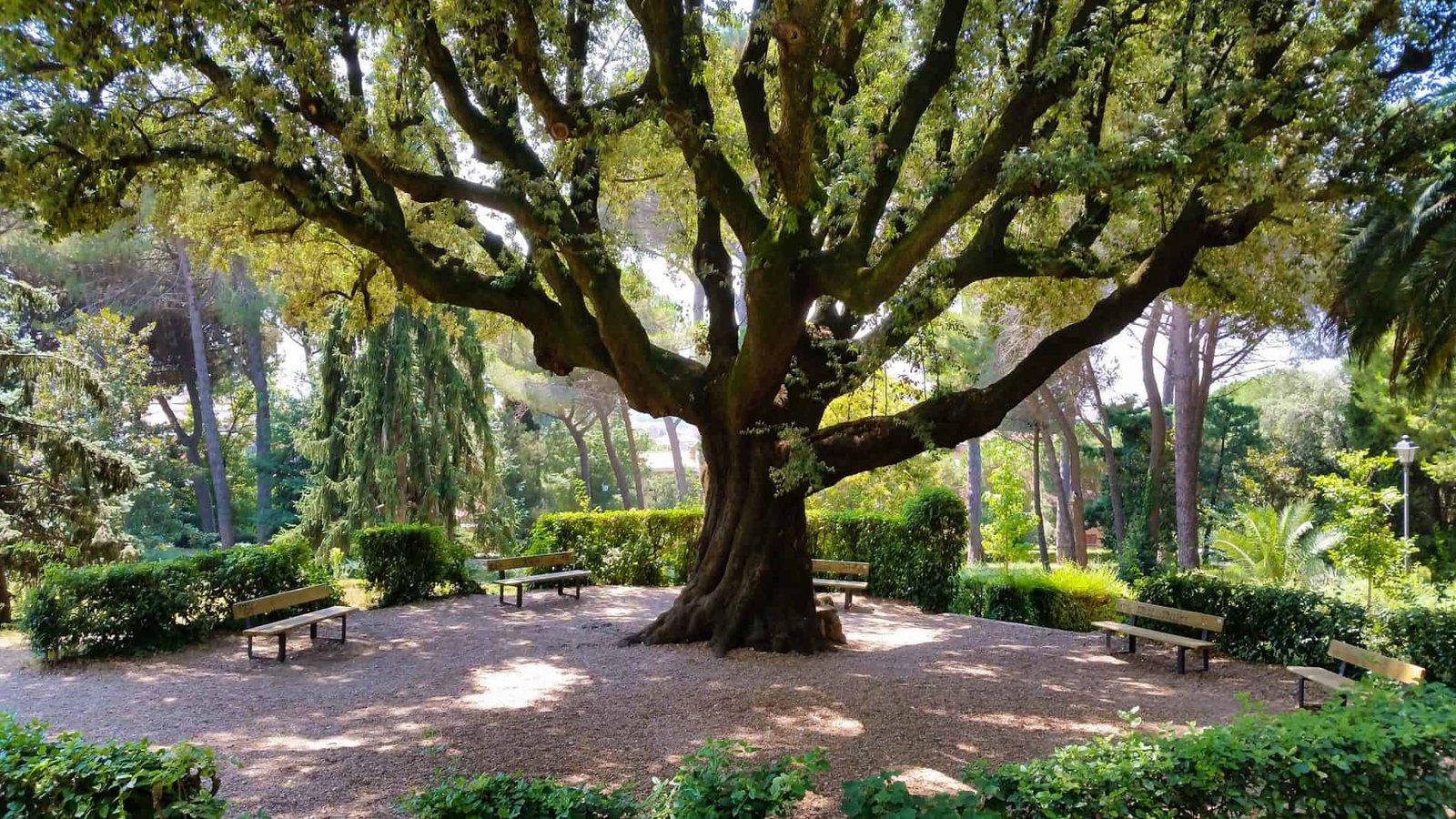
The Villas and Parks of Albano Laziale
Villa Doria Pamphilj, the Villa of the People of Albano
Built in the 18th century by Cardinal Fabrizio Paolucci and then passed to the Doria, it is the city's main public park, the one the people of Albano call simply 'a Villa. The small palace that faced the Appia was razed in 1951 because of damage from the Anglo-American bombings, and in its place the present Piazza Mazzini opened. In the center of the green area are the ruins of the Roman villa attributed to Pompey the Great. Free admission.
Opinion: it's the best place in Albano for a stop with kids and the worst for understanding the archaeology, because the Pompeian remains are poorly signposted and hard to read. Bring a map of the archaeological circuit picked up at the museum, otherwise you'll mistake them for retaining walls.
Villa Corsini, the Royal Inn
Built in the mid-18th century along the Appia toward Ariccia by the Corsini, it was called the royal inn for the number of illustrious guests who passed through: Maria Luisa of Bourbon-Spain, Charles IV of Spain, Charles Emmanuel IV of Savoy, Giuseppe Garibaldi. Today it houses health offices and can't be visited, but the front on the road is still readable.
Villa Altieri
From the 18th century, built for Cardinal Lorenzo Altieri on an old farmhouse right at the entrance to Albano for those arriving from Rome along the Appia. It hosted Pope Pius VI, a fact recalled by a Latin plaque put up by Prince Emilio Altieri in which, by prosopopoeia, the villa itself speaks in the first person. It's the kind of detail that is worth a five-minute stop: 18th-century rhetoric carved in travertine explains an era better than a museum room.
Villa Ferrajoli and the Civic Museum
Built starting in 1845 by the Ferrajoli family over a pre-existing casino of the Benucci, it consists of three small buildings: the central one, neoclassical and aligned on the Appia, houses the Civic Museum. Since 1948 the villa has been public. Before becoming a museum, the small building had been the seat of the Nicola Garrone State Vocational Institute. The park around it is open and shady, and the staircase toward Viale Risorgimento is the right way to reach it.
Villa Venosa Boncompagni
Built in 1857 by the Boncompagni, also on the Appia, with a large monumental park. Margherita of Savoy often stayed there. The queen's presence marks the moment when Albano stops being a papal vacation retreat and becomes a Savoyard one, without changing a stone.
The Other Green Areas: Cappuccini, Rimembranza, Cecchina and Pavona
Urban greenery makes Albano one of the most tree-lined municipalities of the Castelli Romani. Besides the historic villas there are the pine grove of Colle dei Cappuccini, the Parco della Rimembranza, Villa Del Vescovo at Cecchina and the Villa Comunale of Pavona. Part of the municipal territory falls within the perimeter of the Castelli Romani Regional Park, established by the Lazio Region in 1984. The story of the boundaries deserves a mention: the regional law of January 13, 1984 included the entire municipal territory, but already on September 28 of the same year the areas assigned to the park were drastically reduced to leave room for building expansion. The current boundaries, set in 1998, are wider than the previous ones and also include the historic center and its western offshoots.
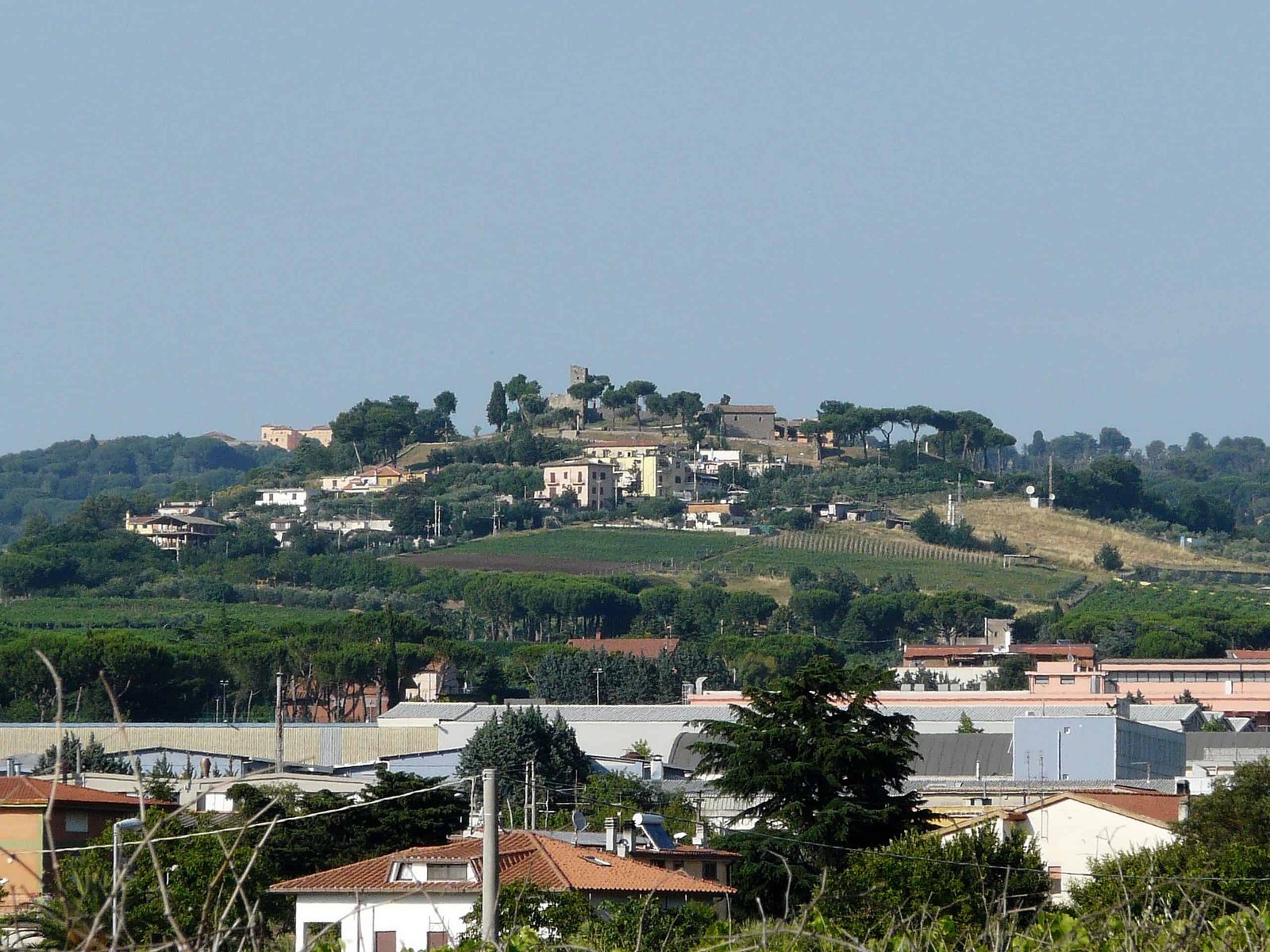
Walls, Gates and Military Architecture of Albano Laziale
The Vanished Walls and Gates
The fortification of the historic center is today almost entirely dismantled, and the process begins at the end of the 18th century with the widening of Via Appia. At the time of the Gothic War, between 535 and 553, Albano was an oppidulum, a small fortified settlement. The walls then followed the course of the city's destructions and reconstructions. The fortified core of Palazzo Savelli would date to the 13th century. Of the gates, documentary memory remains and little else.
The Porta Romana, or Porta di San Rocco, was on the Appia in the direction of Rome, flanked by the Doria small palace and the church of San Rocco. Its definitive appearance was given in the 18th century. It was demolished in 1908 together with the nearby church to widen the road and let the Rome-Genzano tram line of the Castelli Romani Tramways pass. Ornaments, coats of arms and plaque are in the atrium of Palazzo Savelli. The Porta San Paolo, in Piazza San Paolo, is the only one of the circuit to survive. The Porta dei Cappuccini was an arch over the road to the convent, on the present Via San Francesco d'Assisi, and was torn down in the 19th century with the widening of the road, which took the name Via dell'Anfiteatro.
An observation: in Albano, Roman archaeology survived because it was too big to demolish, while the medieval walls disappeared because they were the right size to be taken apart. The modern Via Appia was built with the stones of the gates.
Castel Savello and the Countryside Towers
On a height toward Pavona, Castel Savello was one of the family's first castles, built in the High Middle Ages. Razed in 1436 by Cardinal Giovanni Maria Vitelleschi, it began to be depopulated because of the scarcity of water and was abandoned altogether in the 18th century. The complex also had a church, Santa Maria in Porta Coeli. The ruins on Monte Savello are a short, little-trodden walk, with a view that pays off.
In the countryside between Pavona and Cecchina, towers and fortified farmhouses remain. Tor Paluzzi, a holding of the monks of St. Paul in Albano, was granted by Pope Clement X to a certain Paluzzo and today gives its name to an urban zone of Cecchina. The Torraccia, or Torre di Cancelliera, built on Roman ruins at the seventh kilometer of Via Nettunense, belonged to the Cancelliera, the Savelli and the Chigi, and is today partly within the territory of Ariccia. The Tor di Sbarra, or Tor di Montagnano, anciently turris Gandulphorum, was built in the Middle Ages as a defensive point against raids from the Tyrrhenian Sea and passed through several Roman noble families, including the Altieri and the Boncompagni.
Fountains and Monuments of Albano Laziale
Four minor pieces that make the character of the squares. The Turtle Fountain, which reproposes on a reduced scale a theme dear to Roman sculpture, the Fontana del Mascherone, with the grotesque face that drips, the Fontanella del Re, a memory of the Savoy commission in the town, the Monument to the Fallen, which in Albano has a different weight than average, given the hundreds of civilian deaths of 1944. It's five minutes in all if you know where to look, and they're the best way to fill the time between the end of the archaeological tour and the afternoon opening of the museums.

The Museums of Albano Laziale
The Civic Museum of Villa Ferrajoli
Viale Risorgimento 3. The collection holds about 4,400 archaeological finds covering a span from the Lower Paleolithic to the Renaissance, spread over 23 exhibition rooms plus outdoor installations and detached sites. It is named after Mario Antonacci. Weekday hours are 9:00 to 13:00 Monday through Saturday, with Monday and Thursday afternoons from 15:30 to 18:30. On Sundays the opening alternates, first and third Sunday of the month for the Villa Ferrajoli site, second and fourth for the Museum of the II Parthian Legion. Individual visitors and groups of up to 10 people enter without booking. Above 10 people and for guided visits, booking must be made at least a week in advance, at 06 93295443 or by writing to the addresses given on the museum's official website. The facility is equipped for visitors with disabilities.
The museum also manages the monumental archaeological circuit: this is where access to the Cisternoni, the amphitheater and the Villa dei Cavallacci is organized. Anyone who wants to see Albano's underground has to go through this ticket office, there is no alternative.
The Museum of the Second Parthian Legion
On Via Volontari del Sangue, inside rooms that belong to the imperial villa complex. It is the only Italian museum dedicated to a single legion, and the approach is the right one: not a showcase of gravestones, but the story of how a corps of 6,000 men quartered in Italy lived. There are reconstructions of equipment, marble reliefs, everyday pottery, coins, game pieces, bricks stamped with the legion's insignia and made on site, and a section dedicated to funerary practices drawn from the finds in the necropolises. An interactive room lets you handle and wear reproductions of the weaponry: with kids it works better than any panel.
Note: the available sources do not agree on the hours and the exact street number, so it's best to check by phone with the civic museums before going up. The safe rule remains the one published by the civic museum, second and fourth Sunday of the month from 9:00 to 13:00.
The Diocesan Museum
Inside the Bishop's Palace at Via Alcide De Gasperi 37, donated to the diocese in 1757, the museum spreads over three floors archaeological finds and liturgical objects ranging from the Roman imperial age to the twentieth century. Open Tuesday and Wednesday from 9:00 to 13:00, Wednesday from 15:00 to 19:00 and Saturday from 15:00 to 19:00. Telephone 06 93269490. There is no reserved parking. The museum's ticket office also handles visits to the Catacombs of San Senatore.
The advice: the Diocesan Museum takes 40 minutes and should be combined with the catacombs in the same outing, because the same facility handles both entrances and because the meaning of one is only understood with the other.

Lake Albano and the Shores of Albano
Lake Albano occupies a double crater of the Lazio volcanic complex and is the deepest crater lake in Italy. The municipality of Albano touches its southern slope, the less frequented one: the equipped beaches and pedal boat rentals are on the side of Castel Gandolfo, while on this side the relationship with the water is more discreet and wilder. On the southern ridge, toward the border with Ariccia, the ruins of a Roman villa have been recognized that scholarly tradition attributes to Lucius Annaeus Seneca: a traditional attribution, not proven by documents.
Below Malafitto, still on the southern side, the hermitage of Sant'Angelo in Lacu is documented for the first time in 1116. The springs of Malafitto and Palazzolo fed the two aqueducts of the Cisternoni: it's the direct link between the crater and Roman military engineering, and it's the reason the legion was put right here and not two kilometers further on. A camp of 6,000 men can't last without an aqueduct.
The full circuit of the lake is done on foot in about three hours, with modest elevation changes and a stretch on paved road that is best tackled in the morning. The Albano part is the least signposted and the quietest. Anyone with half a day who wants to understand why the Romans fell in love with this place should walk it from south to north, with the sun behind them.
The History of Albano Laziale
The Ancient Age, from the Paleolithic to the Castra Albana
The first ascertained evidence of human settlement in the municipal territory dates to the Latial period I A, at the beginning of the 1st millennium BC: the remains of the settlements of Tor Paluzzi, Castel Savello and Colle dei Cappuccini belong to that time. Human presence continues in later periods with phases of depopulation, and from the Latial period II B, between 830 and 730 BC, traces appear that the literature has linked to the founding of Alba Longa.
Favored by the route of the Appia and the quality of the territory, the Albanum soon became the seat of the villas of the greatest figures of Roman public life: that of Pompey the Great in the Republican age, that of Domitian in the imperial age. Domitian united the whole area into a single estate of imperial property, the Albanum Caesaris, and built there a monumental residence whose largest remains are today in the Villa Barberini of Castel Gandolfo. The topographic layout changed radically between the end of the 2nd and the beginning of the 3rd century with the construction of the Castra Albana for the Second Parthian Legion. The legion stayed until the middle of the 3rd century, but the city that had grown up around the barracks did not dissolve with it: it was by now the most important in the area, and in 326 Constantine had a basilica built there, a privilege granted in Italy only to Rome, Ostia, Naples and Capua.
The Middle Ages, from 476 to 1697
During the Gothic War Albano shrank from a municipium, as it was still attested in the 5th century, to an oppidulum. With the fall of the Empire the territory was exposed to raids: between the 6th and 9th centuries the city was sacked by Lombards, Goths, Franks, Alemanni and finally by the Saracens in 846. In 964 the emperor Otto I conferred the investiture of Albano, Ariccia and three other castles on Virginio Savelli, his captain in Rome. There begins the relationship between the city and a family that would mark it for four centuries.
The catalog of Albano's medieval misfortunes is impressive. In 1116 the first mention of the hermitage of Sant'Angelo in Lacu. In 1118 Pope Paschal II took refuge in Albano because the Colonna occupied Rome, and found in the people of Albano such loyalty that he granted them perpetual exemption from the grain milling taxes. In 1137, during the schism of the antipope Anacletus II, the antipope marched on Albano to extend his dominion there, but the territories were immediately retaken by Innocent II. In 1142 a new Saracen sack. In 1168, after the battle of Prata Porci, the Roman people took revenge on Albano, which had sided with Frederick Barbarossa, and razed it to the ground. Innocent III, seeing the state of abandonment, gave the monastery of Saint Paul Outside the Walls the Palatium with the churches of Santa Maria Minore and San Nicola. Honorius III in 1217 granted Albano in possession to its bishops, a situation in fact since 1137, with a bull reconfirmed by Nicholas III in 1278. In 1436 the city was again razed, together with Castel Savello, by Cardinal Giovanni Maria Vitelleschi on orders of Pope Eugene IV.
The Savelli, allies of the Colonna and almost always at war with the papacy, held Albano until 1697, when very serious economic problems forced them to put the fief up for auction. The Apostolic Chamber bought it, and the city passed to the direct rule of the Holy See. In the meantime, between the 16th and 17th centuries, Albano had taken on the appearance it has today, with squares, streets and palaces laid out on the plan of the Roman castrum: hence the trident of the historic center, which has its fulcrum in the San Paolo district. The closed fabric of the medieval age, gathered around the Appia, becomes an open system of streets.
The Modern Age, from 1699 to 1798
At the wish first of Cardinal Bishop Ferdinando d'Adda, in office between 1715 and 1719, then of his successor Fabrizio Paolucci, between 1719 and 1724, work was carried out between 1719 and 1722 on the Cathedral of St. Pancras that led to the present facade in peperino and travertine, with the direction entrusted to the architect Carlo Buratti.
The turning-point year is 1780, when Pius VI began the renovation of Via Appia to connect Rome quickly to Terracina, where reclamation work on the Pontine Marshes was under way. The first route of the new national road reached Albano following almost faithfully the Appia Antica, then veering along the ridge of Vallericcia toward Genzano, avoiding the steep drop at Ariccia. Only with the construction of the Ariccia bridge, between the pontificates of Gregory XVI and Pius IX and so between 1839 and 1849, would the present State Road 7 take shape.
The opening of the new route brought clear benefits to Albano, which became once again a vacation place for Roman patrician families, and to the towns along the route: the community of Velletri went so far as to beg the pope to lengthen the route so it would pass through their town. The flip side is less told: important trading centers along the old postal road to Naples, like Marino and Nemi, lost a great deal from the shift of traffic. A new road enriches those it passes through and impoverishes those left outside. In the Castelli Romani this happened twice, with the Appia of Pius VI and then with the railway.
On February 18, 1798, during the first French occupation, Albano proclaimed itself a sister republic of the nascent Roman Republic, together with Frascati, Velletri and later Marino. After the uprising of the Trasteverini the people of Albano also rebelled against the French, and on February 28 the town was occupied and sacked by the troops of Joachim Murat. The following year Fra Diavolo settled there in command of a Neapolitan column.
The Contemporary Age, from 1798 to 1944
In 1816, with the restoration of the Papal States desired by Pius VII, Albano entered the Comarca of Rome and became a seat of Government. 1867 was a terrible year: the population was decimated by a cholera epidemic, brought in all likelihood by the thousands of pilgrims who flocked to Rome for the centenary of the martyrdom of Saints Peter and Paul. The town joined the Kingdom of Italy in 1870 and became the seat of a magistrate's court.
Then 1944. On January 22 the Anglo-Americans landed at Anzio, about 30 kilometers from here, and the Castelli Romani suddenly found themselves on the German supply line between the Anzio front and the Cassino front. The Allied bombings began on January 30 at Genzano. On February 1 it was the turn of Albano and Ariccia: the cloistered Poor Clares convent in Piazza Pia, attached to the Papal Villa complex, and many civilian homes were hit. The victims were a few hundred. On February 10, between 9:00 and 10:00 in the morning, the bombers hit the Propaganda Fide College and Villa Barberini, in extraterritorial Vatican territory at Castel Gandolfo, where about 12,000 people had taken refuge: the municipality of Castel Gandolfo counts 211 resident dead, while Emilio Bonomelli, head of the Papal Villas, spoke of over 500 victims, and some testimonies reach much higher figures. The most widespread estimate today is about 500 dead, all civilians. Among the victims of 1944 there were many displaced people from Albano.
On this one thing must be said that is known in Albano and nowhere else: the most photographed monument of the town, the Porta Pretoria, is visible because those bombs demolished the houses that covered it. The town paid for its archaeology with its dead.
The Postwar Period and the Town Today
After the war Albano rebuilt quickly, and commercial life resumed with an intensity it has never lost: the town is still today one of the main natural shopping centers of Rome Province, that is, a place where commerce happens in the streets and shops of the Historic Center and not in a warehouse outside town. The main street, the market, the artisan workshops of wrought iron and goldsmithing make a fabric that has no equal in the Castelli Romani. Anyone arriving on a Saturday morning sees it right away: Albano is where the Castelli do their shopping.
The Coat of Arms of Albano Laziale and the Sow Mater Urbis
The official blazon, granted by decree of the President of the Republic on November 24, 2008, reads: per fess azure and vert, a sow argent, crossing, accompanied by five piglets of the same, two in the act of suckling at the teats, one placed on the right, two in the corners of the point, the whole with a bordure in fillet per pale or and purpure. Below the shield, on a bifid and fluttering ribbon or, the motto in capital letters sable, MATER URBIS. External ornaments of a City.
The white sow is the one that appears in a dream to Aeneas to show him the place where the capital of the Latin people would be born, an episode that Virgil tells in the Aeneid. In the civic reading of Albano the sow represents the mother city of Alba Longa nursing the 30 cities of the Latin League, pictured by the piglets, under an ancient oak at the edge of the lake and of the Mons Albanus, where Jupiter Latiaris had his federal sanctuary. The motto Mater Urbis declares the same thing in two words: mother of Rome.
The city colors are yellow and red, which are at once the colors of Rome, tied to Albano by a symbolic filial bond, and those of the Savelli family, feudal lords from the 13th century to 1699. The same colors appear in the coat of arms of the suburbicarian diocese of Albano. Three different identities, a single color pair: rarely does heraldry get so efficient.
Festivals, Traditions and Folklore of Albano Laziale
Among the traditional economic activities of the city, craft work stands out, in particular ironworking and goldsmithing, still present in workshops of the historic center.
The calendar of festivals is dense and worth reading for what it is, that is, a devotional stratigraphy parallel to the archaeological one.
Patron saint festival of San Pancrazio, May 12: procession through the city streets and fair. It's the main civic festival.
Festival of the Madonna della Rotonda, first Sunday of August: the community remembers the saving of the city from the cholera epidemic of 1867, which happened according to popular tradition through the intercession of the Madonna della Ritonna, as she is called in the Albano dialect. It's the most deeply felt festival and the oldest in its structure.
Festival of the Madonna del Rosario, October 7: Pope Pius V established the observance as a national holiday of the Papal States to solemnize the victory of Lepanto of October 7, 1571, and in Albano it continues to be celebrated every year on the same date.
Festival of San Francesco d'Assisi: in the past it was awaited above all for the animal fair held at the Campo Boario, near the present railway station.
Festival of the Madonna del Carmelo: introduced presumably by the Carmelites who settled in the 17th century near the church of Santa Maria della Stella.
Arrival of the Minenti: the women of the people of Trastevere ended in Albano, in traditional costume, a pilgrimage to the Sanctuary of Divino Amore on the first Monday after Pentecost. The observance stayed alive until the early 1960s and today takes place only rarely. It's the piece of Albano folklore whose disappearance weighs most: it was the last visible remnant of the relationship between the rioni of Rome and the sanctuaries of the Hills.
Antique market: on the second Sunday of the month the streets of the center fill with stalls of antiques, crafts and knickknacks.
Bajocco Festival: the festival of performing arts and street artists, born in the streets of the historic center, turns 15 in 2026 and takes place from September 11 to 13 between Piazza Mazzini and the surrounding streets, with free admission, dedicated this year to the imagery of Federico Fellini and organized by the Associazione XV Miglio with the support of the Lazio Region, the Metropolitan City of Rome Capital, the Municipality of Albano Laziale and the Castelli Romani Regional Park. Companies from dozens of countries, installations, screenings and workshops. If I had to name the three days when it's worth coming to Albano rather than elsewhere in the Castelli, I'd name these.
Amphitheater Festival: concerts and theater performances in August inside the Severan Amphitheater. The program changes every year and should be checked on the official channels of the Municipality and the organizers.
How to Really Visit Albano Laziale (RM)
The historic center can be covered on foot in a little over one kilometer of length, but the elevation change is there and the slopes are real. A full tour of the archaeological circuit plus two museums takes a full day. If you have half a day, this is the recommended sequence: station or parking lot, climb to Piazza San Paolo, Porta Pretoria, church and convent of San Paolo, Cisternoni if booked, Corso Matteotti and Palazzo Savelli, Santa Maria della Rotonda, church of San Pietro and Cellomaio Baths, Severan Amphitheater, return along the Appia for Villa Doria and Piazza Mazzini. It's about three and a half hours with stops, four and a half if you go into the Cisternoni.
With the full day you add the Civic Museum of Villa Ferrajoli in the morning, the Diocesan Museum and the catacombs of San Senatore in the afternoon, and at the end, if light remains, the climb to Colle dei Cappuccini for sunset. The tomb of the Horatii and Curiatii and the tomb of Pompey are seen by car along the Appia, on the way in or out.
Need a guide? For the Cisternoni and the catacombs yes, because access is accompanied. For the rest no, as long as you first stop by the civic museum to pick up the map of the monumental archaeological circuit: without it, half the monuments stay invisible even to those who walk right in front of them. Those who organize groups, corporate outings or private visits in Lazio can rely on the professionals of TourLeaderPro in Rome, who work across the whole territory of the Castelli.
Albano Laziale (RM) with Kids
Albano is a surprisingly good place for kids, as long as you choose the right stops. The interactive room of the Museum of the Second Parthian Legion, where you handle and wear reproductions of military equipment, keeps even the most listless hooked. The Cisternoni work because they're an enormous underground space and because the story of the water still flowing after 1,800 years can be told in 30 seconds. The amphitheater serves to explain concretely what an ancient show was. Villa Doria is the park to let off steam. The catacombs, instead, with small children I'd skip: steep stairs, little light, tight spaces.
Practical advice: bring water. There are drinking fountains in the center, but in August the climb to the Cappuccini with a tired child becomes a serious problem.
Accessibility: Albano Laziale (RM) with Limited Mobility
The Civic Museum of Villa Ferrajoli is equipped for visitors with disabilities, and for specific information it's best to phone ahead. The rest of the city is more complicated: the historic center has significant slopes and historic paving, the Porta Pretoria is observed from a level square and so is accessible, while the amphitheater has paths on uneven ground. The catacombs of San Senatore and the Cisternoni are not accessible to anyone who can't handle steep stairs. Visitors with reduced mobility should plan the visit on the flat axis of Piazza San Paolo, Corso Matteotti, Piazza Mazzini, with the addition of the civic museum, and skip the underground.
How Much It Costs to Visit Albano Laziale (RM) and How to Save
The most spectacular part of the city costs nothing: Porta Pretoria, the Porta Principalis Sinistra, the stretches of wall, the tomb of the Horatii and Curiatii, the Cellomaio Baths seen from the street, all the churches, Villa Doria, Colle dei Cappuccini and the lake shores have free access. You pay for the ticket to the civic museums and the Diocesan Museum, and for the guided visit to the Cisternoni. Fares and any reductions are posted at the ticket offices and published on the websites of the bodies that manage the museums. For tickets that can be bought online, when available, the body indicates on its site the authorized reseller.
The real saving in Albano is the train. The FL4 from Roma Termini costs as much as a short-range regional ticket, avoids the parking fee and leaves you 10 minutes from the center. A car in the center of Albano on Saturday morning is a choice you pay for in time, not in euros.
What to Eat in Albano Laziale (RM)
We're in the Castelli Romani, and the cooking is that: homestyle hard-dough bread baked in a wood oven, locally produced cured meats and cheeses, fettuccine and gnocchi, grilled meats, and the white wines of the Alban Hills, which here are drunk young and fresh. Porchetta is a specialty of Ariccia, two kilometers away, and that's the destination to plan for a real fraschetta. In Albano the strength is instead everyday food retail: bakeries, pork butcher shops, market stalls. If you want to take something home, buy bread and cheeses at the market in the center, not in the shops along the Appia.
I prefer not to name places: they change management and quality so fast that any written recommendation is out of date within a year. The rule that always works in the Castelli is the usual one: where the local elders eat at noon, you eat well.
What's Around Albano Laziale (RM)
Within a 10-minute drive there are more interesting things than in many whole provinces. Castel Gandolfo with the Pontifical Villas and the lake overlook is three kilometers away. Ariccia, with the monumental bridge, Bernini's piazza and Palazzo Chigi, is right next door. Genzano di Roma, with Via delle Infiorate and the lake of Nemi, is eight kilometers away. Marino and its Grape Festival are seven. Higher up are Rocca di Papa and Monte Cavo, farther east Grottaferrata with the Greek abbey and Frascati. To the south Lanuvio and Velletri, toward the sea Anzio and Nettuno. Anyone who wants to build a wider itinerary in Lazio will find ideas in the tourist attractions section and can organize their days with my trip.
When to Go to Albano Laziale (RM) and When to Avoid It
The best months are April, May, September and October: reasonable temperatures, good light on the peperino, woods in good condition. July and August are hot but not scorching thanks to the elevation, and in August the amphitheater hosts shows: if you come in summer, come for those. September is the month of the Bajocco Festival. November and February are the months when the Castelli are at their worst, with low fog and short days.
To avoid: Saturday morning if you come by car, because the natural commercial center works extremely well and traffic is that of a much bigger city. And the wrong Sunday, if you're aiming at a specific museum: Sunday opening alternates between the two civic venues, and showing up on the right Sunday for the wrong museum is the most common mistake I see people make.
A Curiosity About Albano Laziale (RM)
Albano hosted the only permanent legionary base of Roman Italy. It's not a local-pride record: it's a constitutional anomaly. From the end of the Republic on, Italy had been deliberately kept without legions, because a standing army on Italian soil was considered a direct threat to the political power of Rome. The legions stayed at the borders, in Britain, on the Rhine, on the Danube, in Syria. Septimius Severus broke the rule in 197, created the Legio II Parthica and in 198 planted it 21 kilometers from the Forum, inside an imperial estate in the Alban Hills.
The message was crystal clear and no one in Rome missed it: the Senate now had 6,000 armed men a day's march away. The legion wasn't there to defend Italy from anyone, it was there to guarantee the dynasty. And that's why the Castra Albana were built so ostentatiously, with the monumental Porta Pretoria facing the Appia, that is, toward those arriving from Rome: a manifesto in peperino blocks, 36 meters wide and 14 high, that told every traveler which side the force was on.
The urban consequence still lasts. The historic center of Albano traces the plan of the castrum: the trident of streets that today organizes the pedestrian traffic of the corso is the medieval and modern translation of the Severan military grid. Walking between Piazza San Paolo and Piazza Mazzini you trace the perimeter of a 3rd-century barracks without noticing. Very few Italian cities can say as much, and none in Lazio with this clarity. It's the curiosity I recommend keeping in mind for the whole rest of the visit, because it explains the position of the Cisternoni, that of the baths and even that of the amphitheater.
One Thing Nobody Tells You About Albano Laziale (RM)
The most famous monument of the city, the tomb known as that of the Horatii and Curiatii, has nothing to do with the Horatii and Curiatii. And, more interesting, it isn't even a modern mistake: it's a misunderstanding built on purpose almost 2,000 years ago.
The tomb dates to the first half of the 1st century BC. The challenge between the three Roman champions and the three Albans, in Livy's account, belongs to the age of Tullus Hostilius, that is, the 7th century BC. Well over 600 years separate the two events. But the monument is built in a deliberately archaic form, that of the mausoleum of Porsenna at Chiusi that Pliny the Elder describes with those stacked cones: a late Republican Roman building himself an Etruscan tomb, like a 19th-century industrialist having a villa made in Gothic style. The most accredited reading today recognizes in it a learned reconstruction of the tomb of Arruns, perhaps commissioned by the Arruntii family, owners of land in the area.
The result is that Albano preserves an ancient forgery by a master hand, and that its legendary fame began because the shape suggested something archaic and the geography suggested Alba Longa. Piranesi, who engraved it in the 18th century, was more honest than the guidebooks that came after him and titled it the tomb falsely called that of the Horatii and Curiatii. 300 years later, the street sign still says the opposite. Looking at it with this in mind changes everything: it is not the cemetery of the legend, it is proof that the Romans were already doing sentimental archaeology.
My advice for visiting Albano Laziale (RM)
Call the civic museum before you leave and book the Cisternoni. It's the only piece of advice that really matters, and it's the one almost nobody follows.
The reason is simple. Above ground, Albano is a nice Castelli town with a few notable ruins: you can walk it in three hours and go home half satisfied. Albano underground is another city. The Severan cistern of 10,132 cubic meters, five aisles, 36 pillars, still fed by its ancient aqueduct, has no visitable equivalent in Lazio, and you can only see it with an accompanied visit through the seminary park. It has no continuous opening hours, you can't walk in by chance, and there are few places in the groups. Whoever arrives without booking finds the gate closed and doesn't even know it, because from the outside nothing signals what lies below.
The second part of the advice concerns the order. Do the civic museum first, not last. At the ticket office on Viale Risorgimento you pick up the map of the monumental archaeological circuit, which is the tool that makes the monuments scattered around town readable: without it, the Porta Principalis Sinistra is an anonymous arch between two houses and the stretches of wall look like low garden walls. With it, the historic center becomes a Roman military plan you can read step by step. The museum opens at 9:00 and closes at 13:00: whoever arrives at 11:00 and plans to visit in the afternoon will discover that the afternoon, except Monday and Thursday, doesn't exist.
Third: check which of the two civic sites is open on the Sunday you've chosen, because the alternation between first and third and second and fourth Sundays ruins a great many trips.
Another well-known fact, yet rarely mentioned
That Albano was bombed in 1944 everyone in the Castelli knows. What is rarely mentioned is the link between those bombs and the present look of the town.
The Anzio landing of January 22, 1944 put the Alban Hills in the middle of the German supply line between the Anzio front and the Cassino front. The bombings began on January 30 in Genzano, on February 1 they hit Albano and Ariccia, and on February 10 they destroyed the Collegio di Propaganda Fide and Villa Barberini in Castel Gandolfo, in the extraterritorial Vatican zone where about 12,000 people had taken refuge, convinced they were safe. The casualty figures vary a lot depending on the source, from 211 residents according to the municipality of Castel Gandolfo to over 500 according to Emilio Bonomelli, who ran the Pontifical Villas. The current estimate is about 500 dead, all civilians. In Albano on February 1, the cloistered Poor Clares convent in Piazza Pia and many houses were hit, with several hundred victims.
Here is the link. The Porta Pretoria, the symbol monument of the town, was built into the buildings along the main street and invisible: it was the bombs that uncovered those buildings and gave it back. The 18th-century small palace of Villa Doria, damaged, was razed in 1951 and in its place Piazza Mazzini opened, which today is the town's living room and the home of the Bajocco Festival. Two of the places every visitor photographs exist in this form because of those days. It has to be said without rhetoric: in Albano the urban landscape we admire is in part the cast of a destruction, and the war memorial in the center weighs more than it does in other towns.
The right photo to take in Albano Laziale (RM)
The photo everyone takes is the Porta Pretoria head-on, in full daylight, with cars parked in front. It is the worst possible one: the overhead light flattens the peperino blocks and erases exactly what makes that wall extraordinary, namely the texture of the opus quadratum.
The right photo is the same gate in the raking light of early morning, shot from the left at three quarters, so that the shadow digs into the joints between the blocks and gives back the thickness of the facing. In summer that means being there before 8:00. The central arch, 3 by 5 meters with 14 meters of elevation above it, should be kept slightly off-center: put in the middle it loses its scale, moved to the side it lets the row of blocks into the frame and you understand how long the front is.
The other two worth taking home. Inside Santa Maria della Rotonda Church, mid-morning, pointing upward: the circle of the dome in opus mixtum, 16 meters in diameter, with the light coming down and defining the curve. Keep the camera steady, because the interior is dark and the flash ruins everything. And then the Colle dei Cappuccini in the last hour of light, not toward the lake, which is the obvious choice, but toward the west, where the plain slopes down toward the sea and on clear days you can see the line of the Tyrrhenian: it is the view the English of the Grand Tour came here looking for, and it is still in its place.
One serious recommendation: in the catacombs of San Senatore and in churches during services, ask before you raise the camera. It is not a formality.
Some important events that happened here in history
197-198 AD, the founding of the Castra Albana. Septimius Severus creates the Second Legion Parthica and quarters it in the Albanum, inside the imperial estate inherited from Domitian. 95,000 square meters, 1,334 meters of walls in opus quadratum, 6,000 men: the only permanent legionary fortress in Italy.
326, the Constantinian basilica. Constantine has a basilica built in Albano, according to the Liber Pontificalis dedicated to Saint John the Baptist, endowing it with furnishings worth 65 pounds and with estates in the Ager Albanus. In Italy this privilege went only to Rome, Ostia, Naples, Capua and Albano.
846, the Saracen sack. The raids from the Tyrrhenian reach all the way up here. Albano is sacked, and will be again in 1142.
964, the investiture of the Savelli. Otto I grants Albano, Ariccia and three other castles to Virginio Savelli, his captain in Rome. A relationship begins that will last until 1697.
1168, the destruction after Prata Porci. Albano had sided with Frederick Barbarossa against Rome. The Roman people raze it to the ground.
1436, the second total destruction. Cardinal Giovanni Maria Vitelleschi, by order of Eugene IV, razes Albano and Castel Savello in the war against the Savelli. It is the blow from which the castle will never recover.
1697, the end of the fief. The Savelli, ruined economically, put the fief up for auction. The Apostolic Chamber buys it and Albano passes under the direct rule of the Holy See.
1780, the Appia of Pius VI. The pope starts the restructuring of Via Appia toward Terracina for the reclamation of the Pontine Marshes. Albano becomes a patrician summer retreat again, while Marino and Nemi, cut off by the new route, lose out.
February 18, 1798, the sister republic. Albano proclaims itself a sister republic of the Roman Republic. 10 days later it rebels against the French and is sacked by Murat's troops.
1867, the cholera. An epidemic decimates the population, in all likelihood brought by the pilgrims who flocked to Rome for the centenary of the martyrdom of Peter and Paul. Popular devotion attributes the saving of the town to the Madonna della Rotonda, and since then it has been celebrated on the first Sunday of August.
February 1 and 10, 1944, the bombings. Albano and Ariccia hit on February 1, with several hundred victims. On February 10, the massacre at Propaganda Fide in Castel Gandolfo, in the Vatican zone, with about 500 civilian dead according to the most widespread estimate.
Who passed through Albano Laziale (RM)
Gnaeus Pompeius Magnus had his villa here, the Albanum Pompeii, whose ruins are inside today's Villa Doria park. After Pharsalus the estate passed to the public holdings and then to the imperial ones.
Domitian merged all the properties of the area into a single imperial estate, the Albanum Caesaris, and built on it the monumental residence whose largest remains are in Villa Barberini in Castel Gandolfo. The circular building that is now Santa Maria della Rotonda Church was part of that complex.
Septimius Severus founded the Castra Albana here in 198, and Caracalla, according to the tradition reported by local sources, gave the baths to the soldiers as a gift right after the murder of his brother Geta: a detail that, if authentic, says everything about the relationship between that dynasty and its legionaries.
Constantine, in 326, endowed the city with the basilica. Pope Paschal II took refuge here in 1118 when the Colonna occupied Rome and repaid the loyalty of the people of Albano with a perpetual exemption from the milling tax. Saint Bonaventure of Bagnoregio was cardinal bishop of Albano from 1273 to 1274, the year of his death, and Pietro Martino Boccapecora had been between 1004 and 1009 before becoming Pope Sergius IV.
Benedict XIII was hosted in the palace that Cardinal Lercaro built for the purpose in 1727. Pius VI stayed at Villa Altieri, where a Latin plaque has the villa itself speak in the first person, and in 1780 he started the work on the Appia that changed the commercial destiny of the city. Benedict XVI consecrated the new high altar of the cathedral in 2008.
The Grand Tour came through here in droves. Joseph Addison, between the 17th and 18th centuries, called the view from the Capuchin garden one of the most delightful scenes he had ever seen. Charles de Brosses crossed the Albano countryside in 1739. John Moore, in the retinue of the Duke of Hamilton between 1769 and 1778, described the hills between Frascati and Albano as being of infinite variety. Élisabeth Vigée Le Brun, portraitist of Marie Antoinette, rented three donkeys to get around between Lake Albano and Lake Nemi. In the 19th century came Henry Wadsworth Longfellow, who noted the woodland paths between Ariccia, Genzano, Nemi, Albano and Castel Gandolfo, John Ruskin, who in 1843 described the autumn colors of the woods on Monte Albano, the composer Charles Gounod and the American journalist Lilian Whiting.
In the villas of the town stayed Maria Luisa of Bourbon-Spain, Charles IV of Spain, Charles Emmanuel IV of Savoy and Giuseppe Garibaldi, all at Villa Corsini, which for this reason was called the royal inn. At Villa Venosa Boncompagni Margherita of Savoy often stayed. Giovanni Battista Piranesi engraved the tomb of the Horatii and Curiatii. And among the less solemn but more lasting presences, Fra Diavolo, who in 1799 settled in the town in command of a Neapolitan column.
Quick questions about Albano Laziale (RM)
How far is Albano Laziale (RM) from Rome?
Just under 25 kilometers from the center of Rome along Via Appia, State Road 7. By car, outside rush hour, you get there in about 40 minutes. By train on the FL4 from Roma Termini, the average travel time is about an hour.
How do you get to Albano Laziale (RM) by public transportation?
By regional train FL4, Roma Termini-Albano Laziale branch, which stops at Ciampino, Pantanelle, Marino Laziale, Villini and Castel Gandolfo: Albano is the end of the line and the station is a few minutes' walk from the center. Alternatively there are Cotral buses from the Roma Anagnina terminus, on Metro line A.
How long does it take to visit Albano Laziale (RM)?
Three and a half hours for the tour of the historic center and the archaeological circuit above ground. A full day if you add the Civic Museum, the Diocesan Museum, the catacombs of San Senatore and the accompanied visit to the Cisternoni.
Do you pay to enter Albano Laziale (RM)?
No. The historic center, the churches, the Porta Pretoria, the tomb of the Horatii and Curiatii, Villa Doria and the Colle dei Cappuccini are free to enter. You only pay for the museums and the accompanied visit to the Cisternoni.
How much is a ticket to the museums of Albano Laziale (RM)?
Rates and discounts are posted at the ticket offices and published on the official websites of the Civic Museum and the Diocesan Museum. It's worth checking them before your visit, because they vary between single admission, reduced and circuit tickets.
What are the opening hours of the Civic Museum of Albano Laziale?
Monday to Saturday from 9:00 to 13:00, with afternoon opening on Monday and Thursday from 15:30 to 18:30. On Sundays the opening alternates: on the first and third Sunday of the month the Villa Ferrajoli site, on the second and fourth the Museum of the Second Legion Parthica.
Do you need to book to visit the Cisternoni of Albano?
Yes. Access is through the park of the Bishop's Seminary and is accompanied: it has to be arranged with the civic museums at 06 93295443. For guided visits and for groups of more than 10 people, booking has to be made at least a week in advance.
How do you visit the catacombs of San Senatore?
Through the Diocesan Museum, which manages access: Via della Stella 5, phone 06 93269490. The space is cold all year and the stairs are steep.
Is Albano Laziale (RM) suitable for wheelchair users?
In part. The Civic Museum at Villa Ferrajoli is equipped for visitors with disabilities. The axis of Piazza San Paolo, Corso Matteotti, Piazza Mazzini can be traveled, with the Porta Pretoria viewable from a level square. The Cisternoni, the catacombs and the amphitheater routes are not accessible.
Can you take photos inside the monuments of Albano Laziale (RM)?
Outdoors, yes, freely. In museums, in the catacombs and in churches during services you have to ask the staff: the conditions change from site to site and the use of flash is almost always ruled out.
Where do you park in Albano Laziale (RM)?
Inside the walls the spaces are few and mostly paid. It's best to leave the car along the ring road or in the area near the train station and walk up. On Saturday morning the center is congested by the market and by trade.
Is Albano Laziale (RM) good for kids?
Very, if you pick the right stops: the interactive room of the Museum of the Second Legion Parthica, where you put on reproductions of military equipment, the Cisternoni, the amphitheater and the Villa Doria park. With the youngest ones, it's better to leave the catacombs alone.
What is the difference between Albano Laziale and Castel Gandolfo?
Castel Gandolfo is a small village overlooking the lake, built around the papal residence and the Vatican Villas: you visit it in two hours and it lives off that relationship. Albano is a real city of 40,000 inhabitants, with its commerce, its urban fabric and above all its Roman military archaeology. They are complementary and 3 kilometers apart: the right day takes in both.
Why is Albano Laziale called that?
From Albanum, the name of the Roman estates on the Alban Hills, which goes back to the Indo-European root alb or alp in the sense of a rise, and so to the Mons Albanus, today's Monte Cavo. The addition of Laziale dates to the 19th century and served to distinguish the town from the other Albanos of the Kingdom of Italy.
Does Albano Laziale stand on top of Alba Longa?
No, according to the prevailing archaeological research. Scholars place the site of Alba Longa on the opposite side of the lake, between Marino, Rocca di Papa and Ariccia. Albano inherits its name and symbolic memory, with the white sow and the motto Mater Urbis in its coat of arms, but does not occupy its place.
Is the tomb of the Horatii and Curiatii really their grave?
No. The monument dates to the first half of the 1st century BC, six centuries after the period to which tradition assigns the challenge. The most accredited reading considers it a learned reconstruction of the tomb of Arruns, perhaps commissioned by the Arruntii family.
When is the Bajocco Festival held in Albano Laziale?
In 2026 from September 11 to 13, for the 15th edition, in the historic center between Piazza Mazzini and the surrounding streets, with free admission. The dates of later editions have to be checked on the organizers' official channels.
Who is the patron saint of Albano Laziale (RM)?
Saint Pancras, celebrated on May 12 with a procession and a fair. The town's cathedral is dedicated to him and has been a minor basilica since September 1865.
What do you eat in Albano Laziale (RM)?
The cooking of the Castelli Romani: wood-fired home-style bread, local cured meats and cheeses, fettuccine and gnocchi, grilled meats and the white wines of the Alban Hills. Porchetta is a specialty of Ariccia, 2 kilometers away, and that is where you should look for the fraschetta.
What is the best time to visit Albano Laziale (RM)?
April, May, September and October. In August the Severan Amphitheater hosts shows, and in September there is the Bajocco Festival. November and February are the worst months, with low fog and few hours of daylight.
What is there to see near Albano Laziale (RM)?
Castel Gandolfo 3 kilometers away, Ariccia right next door, Marino at 7, Genzano and Nemi at 8, then Rocca di Papa and Monte Cavo, Grottaferrata and Frascati to the east, Lanuvio and Velletri to the south, Anzio and Nettuno toward the sea. If you're planning a tour of the Castelli in English, you'll find the information in the ItalyPlanner day trips from Rome.
The last word on Albano Laziale (RM)
On the Alban Hills the mistake is always the same: Albano treated as the stop before Castel Gandolfo, half an hour's pause, one photo of the Porta Pretoria, and off you go. It is a shame you pay for in content, because this is the only Italian city that grew up inside a legionary fortress, and the only one where you can go down into a Roman cistern that still works after 1,800 years. Give it a day, book the underground, arrive early. And forget the legend of the Horatii and Curiatii: the true story of this place, that of 6,000 soldiers stationed at the gates of Rome to prop up a dynasty, is far more interesting than any mythological duel. If you want a well-built visit, with a professional who knows the area, you can contact the certified guides of TourLeaderPro. If you're planning your trip in English, a good starting point is the ItalyPlanner guide to things to do in Rome.
Article written by the editorial team of TourLeaderPro, contact them for Private/Corporate/V.I.P. Tours and Experiences.
Planning a trip to Rome? The English guides to visiting the city are on ItalyPlanner.com.