Three Days in Rome: Day-by-Day Itinerary
In short. Three days in Rome is the most common format for visiting the city and also the most misunderstood: it's enough to see the ancient core, the Baroque center and the Vatican well, it's not enough to add Ostia Antica, Tivoli and the…
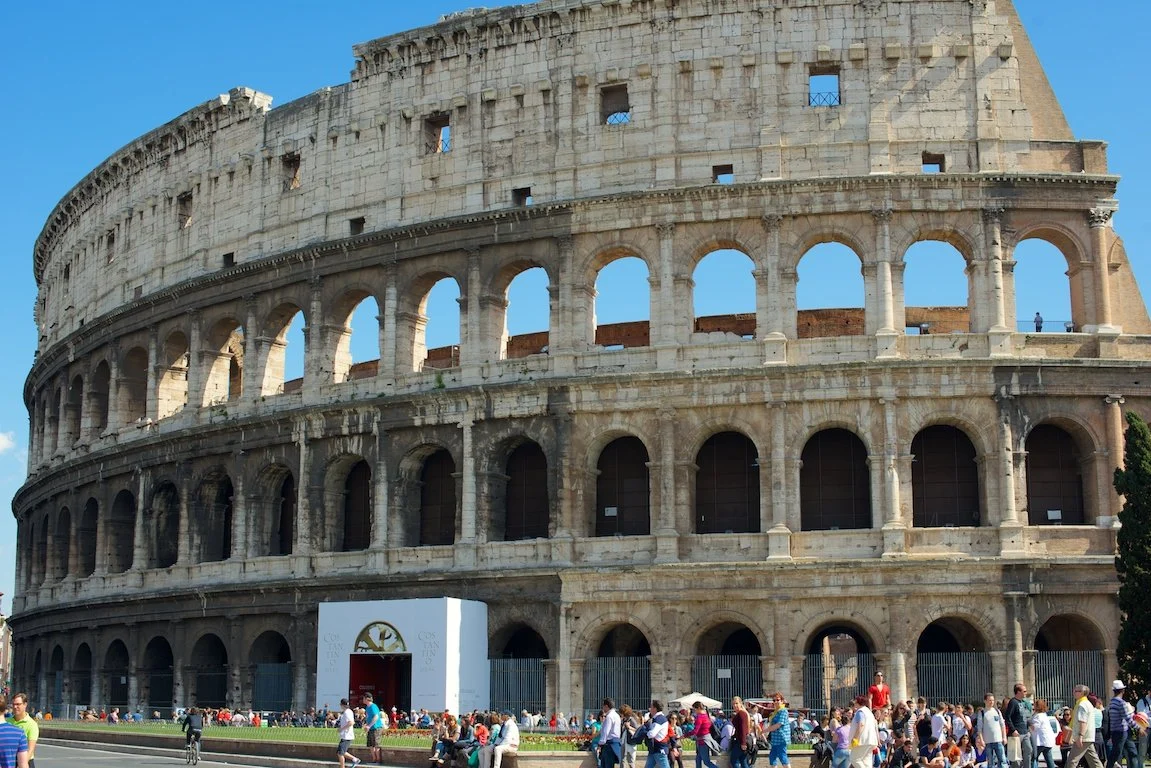
Three days in Rome is the most common format for visiting the city and also the most misunderstood: it's enough to see the ancient core, the Baroque center and the Vatican well, it's not enough to add Ostia Antica, Tivoli and the Castelli without turning the vacation into a race. The itinerary that follows divides the 72 hours into three themed days, each split into morning, afternoon and evening, with walking times measured on the real route and not as the crow flies. It contains the only three admissions to book weeks in advance (the Colosseum, the Vatican Museums and the Galleria Borghese), the closing days that wreck a badly built plan, the 2026 novelty that no guide printed before February reports, namely the paid access to the Trevi Fountain, and the points where time is lost. Prices and hours cited are those published by the operators in 2026: they change often, and where a figure is subject to change the text says so and refers you to the official site.
How this itinerary works and why it's built this way
The itinerary covers three full days, with an average of eight or nine kilometers on foot a day and no more than two paid admissions per day. It's designed for those who come to Rome for the first time, have three whole days available and don't want to spend half the vacation in line.
Why the order of the days matters
The sequence ancient, Baroque, Vatican is not arbitrary. Ancient Rome is concentrated in a little over one square kilometer between the Colosseum, Palatine Hill and Capitoline Hill, and it's the day with the most elevation, the most uneven ground and the least shade: it has to be tackled with fresh legs. The Baroque center is almost all flat and holds up well on the second day. The Vatican, which is the most rigid block for hours and reservations, goes third because if something goes wrong in the first two days you can recover, while a missed Vatican Museums slot can't be recovered.
There is, however, a constraint that overturns everything: the Vatican Museums are closed on Sunday, with the sole exception of the last Sunday of the month. If the third day falls on a Sunday, the Vatican day has to be moved to first or second position and the others slide. It's the first check to make before booking anything.
How much you really walk
Distances are deceiving because real routes curve, climb and descend hills, pass along narrow sidewalks. The useful figures: from the Colosseum to the Capitoline Hill you walk a good kilometer in 20 minutes. From the Pantheon to Piazza Navona five minutes are enough. From the Trevi Fountain to Piazza di Spagna it takes 12. From the Vatican Museums to Castel Sant’Angelo, going around the walls, 25. The sampietrino, the squared lava stone that covers a good part of the center, defeats any rigid sole. If you have knee problems, add 20 to 30 percent to the times indicated. Left out of three days are the papal basilicas outside the walls, Palazzo Massimo alle Terme, the Baths of Diocletian, the Coppedè district and the Aqueducts Park: they fit into a five-day stay, not a three-day one.
What to book before leaving and what not to
In Rome only three admissions really require advance reservation: the Colosseum, the Vatican Museums and the Galleria Borghese. Everything else, including the Capitoline Museums, Castel Sant’Angelo and St. Peter's Basilica, is handled on the same day without risk of being left out. Confusing the two categories leads you to pay useless fees on admissions that don't need them and to underestimate those that sell out.
Book without discussion: Colosseum, Vatican Museums, Galleria Borghese
The Colosseum ticket costs €18 in the standard version that also includes the Roman Forum and Palatine Hill, is valid for 24 hours from the first entry and is named: at the entrance they ask for an ID matching the name on the reservation. Sales go through the Colosseum Archaeological Park portal, with mandatory choice of the time slot, and availability opens about a month ahead: in high season the slots for special routes (underground, arena, attic) sell out in a few minutes, the standard ones in a few hours. If you don't book, you'll find the ticket office at Piazza del Colosseo, with lines that in summer exceed an hour.
The Vatican Museums with the Sistine Chapel cost €20 for the full ticket, which becomes €25 with the €5 reservation fee on the Vatican's official portal: five euros well spent, because without a reservation the line along Viale Vaticano on spring mornings can take two hours. The official site is tickets.museivaticani.va and the Museums themselves warn to be wary of similar domains that resell at inflated prices.
The Galleria Borghese has mandatory reservation for capacity, not for convenience: you enter in hourly shifts of 180 people and the visit lasts about two hours. The full ticket costs €16 (€11 for the last shift) plus €2 for the reservation, with a reduced ticket at €2 for ages 18-25 and free admission under 18. There are no skip-the-line tickets, precisely because the limit is for safety, and the weekend shifts in spring sell out weeks ahead.
Book if you want, but you can also do it on the spot
The Pantheon has had a paid admission since 2023 and the full ticket went to €7 from July 1, 2026, with a reduced price of €2 for ages 18-25 and free entry under 18. It's bought on the Musei Italiani portal or on site: the line at the box office moves, because there isn't a strict cap like at the Colosseum, and reserving saves 10 minutes, not two hours. The same goes for the Capitoline Museums, Castel Sant'Angelo, the Ara Pacis museum and the Baths of Caracalla, with the only exception of the free Sundays.
Where you don't need to book anything
St. Peter's Basilica is free to enter and requires no ticket: what you buy online is only a time-slot reservation with an audio guide, which lets you skip the line at the security checks, not the entrance itself. Roman churches are almost all free and can't be reserved, including those with masterpieces: San Luigi dei Francesi with the three Caravaggios of the Contarelli Chapel, Santa Maria del Popolo with the Conversion of Saul, Sant’Ignazio di Loyola with Andrea Pozzo's fake dome, San Pietro in Vincoli with Michelangelo's Moses. Squares, fountains and viewpoints aren't reserved, with the new and only exception of the Trevi Fountain.
Official sites and resellers: how not to pay double
The difference between the official price and the price of third-party resellers is substantial: the Colosseum costs €18 on the official portal and is resold at higher figures on intermediary platforms, which manage their own quotas and often have availability when the official channel is sold out. In April 2025 the Competition Authority fined the then ticketing operator and several tour operators a total of €20 million for hoarding tickets. The rule remains: official site first, and only if it is sold out do you consider an alternative, knowing you pay more. The domains to keep in mind are ticketing.colosseo.it, tickets.museivaticani.va, galleriaborghese.cultura.gov.it and museiitaliani.it.
Closing days, free Sundays and calendar traps
In Rome the day of the week you arrive changes the itinerary more than the season does: the Vatican Museums are closed on Sunday except the last of the month, the Galleria Borghese on Monday, Castel Sant’Angelo on Monday except for special openings.
Monday, the day to handle with care
Monday is the weekly closing day for a good part of Italy's state museums. In Rome the Galleria Borghese closes (open Tuesday to Sunday, 9:00-19:00 with last entry at 17:45) and, normally, the National Museum of Castel Sant’Angelo. In 2026, though, the Direzione Musei nazionali della città di Roma started the Lunedì di Castello initiative, with special afternoon openings at a reduced rate, whose calendar needs to be checked on the Direzione's website because it was offered again with different schedules between 2025 and 2026. Open on Monday are the Colosseum with the Forum and Palatine Hill, Vatican Museums, Pantheon, Capitoline Museums and Ara Pacis: a Monday in Rome is not a lost day, it's a day when you don't go to the Galleria Borghese.
Sunday and the case of the Vatican Museums
The Vatican Museums are closed every Sunday except the last of each month, when they open from 9:00 to 14:00 with last entry at 12:30 and free admission. It's the most insidious trap in the Roman calendar: admission costs nothing but can't be reserved, the line starts forming at dawn and the rooms are as crowded as at no other time of the month. If you happen to be in town on the last weekend of the month you have a clear choice between paying €25 and visiting the Museums calmly on Saturday or accepting two hours of waiting: in most cases it's better to pay. The free opening is skipped when it coincides with Easter, with Saints Peter and Paul on June 29, with Christmas, Saint Stephen's Day and New Year's Eve. The Museums are also closed on fixed dates including January 1 and 6, February 11, March 19, May 1, June 29, August 14 and 15, December 8, December 25 and 26.
The first Sunday of the month
On the first Sunday of every month state museums and archaeological parks are free to enter under the Ministry of Culture's Domenica al Museo initiative: in Rome the list includes the Colosseum with the Forum and Palatine Hill, the Pantheon, Castel Sant’Angelo, Palazzo Massimo, the Galleria Borghese and the sites of the Appia Antica. The arrangements are not uniform: for the Colosseum Archaeological Park no reservation is provided and the free ticket is picked up on site with a single line for everyone, while the Galleria Borghese, Palazzo Barberini and the Galleria nazionale d’arte moderna require reservation even on the free day, with spots on sale about 10 days ahead and sold out in a few hours. The math is less favorable than it seems: saving €18 at the Colosseum costs on average an hour and a half of line and a much more crowded visit, and out of 72 hours that's a lot.
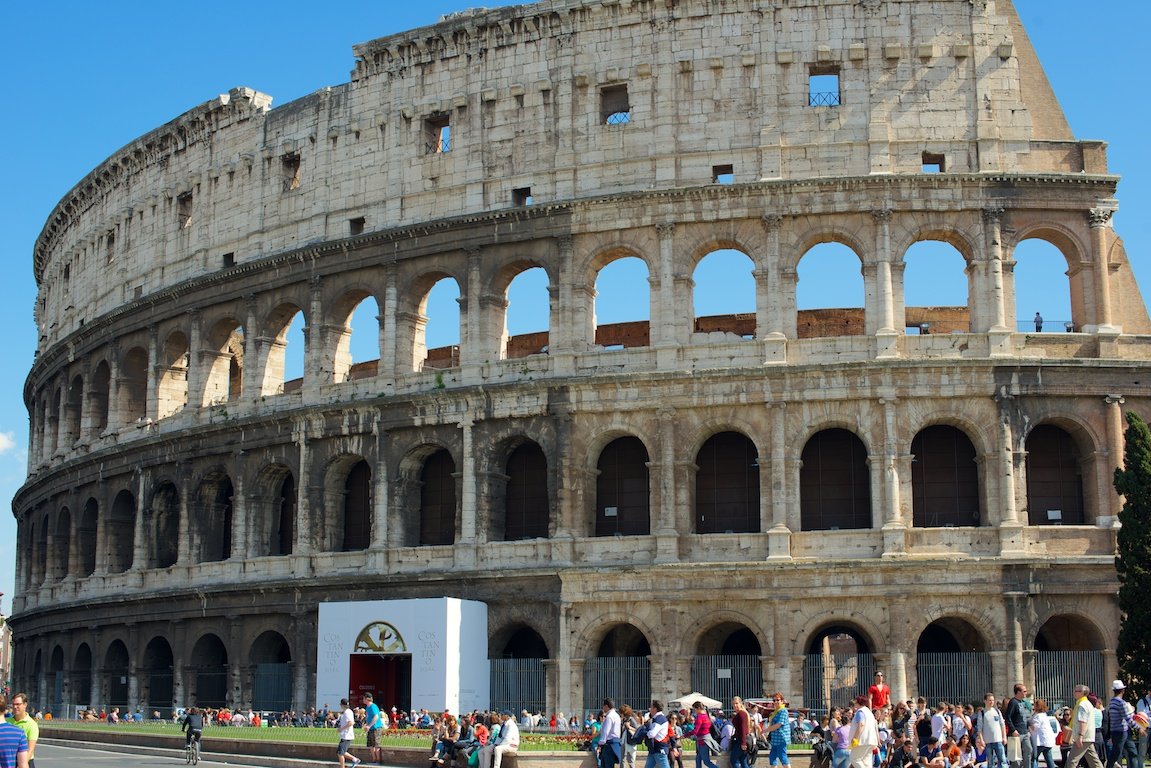
Day 1: ancient Rome, from the Colosseum to the Capitoline Hill
The first day covers the central archaeological area, a little over one square kilometer that contains the Colosseum, Roman Forum, Palatine Hill, Imperial Forums and Capitoline Hill, and ends with an evening in Monti or Testaccio. You walk between eight and 10 kilometers on ancient, irregular ground, with about a hundred meters of elevation: it's the most tiring of the three days and that's why it goes first.
Morning: the Colosseum right at opening
The slot to take is the first of the day. From March 29 to September 30 the Colosseum opens at 8:30 and the Forum and Palatine Hill area at 9:00. From October 1 to 24 last entry is at 17:30. From October 25 to the end of February it drops to 15:30 with closing at 16:30. The Park closes on December 25 and January 1 and is free, besides the first Sunday of the month, on April 25, June 2 and November 4. Arriving at 8:30 in summer means having the amphitheater almost empty for 40 minutes and raking light. Going in at 11 means finding thousands of people inside and 38 degrees. The visit to the two levels included in the standard ticket takes between 40 minutes and an hour. On the way out, the Arch of Constantine is 50 meters away, requires no ticket and deserves the five minutes it takes to walk around it.
Roman Forum and Palatine Hill: the right order and the right entrance
The Colosseum ticket includes the Roman Forum and Palatine Hill, which form a single enclosed area with several gates: Via Sacra is the closest to the Colosseum, Largo della Salara Vecchia the most convenient for leaving toward the Capitoline Hill, Via di San Gregorio the one that leads directly to the climb up the Palatine Hill. The recurring mistake is entering by the wrong gate and redoing the same route. The sequence that works: you enter from Via Sacra, go down toward the Arch of Septimius Severus and the Curia, climb back up onto the Palatine Hill by the ramp near the Arch of Titus between the House of Augustus and the Domitianic stadium, look out from the Farnese Gardens over the Forum and from the opposite viewpoint over the Circus Maximus, and exit from Largo della Salara Vecchia. The Palatine Museum, included in the ticket, takes half an hour. For the Forum and Palatine Hill together you need at least two hours.
Three mistakes recur regularly: stopping for the costumed gladiators outside the Colosseum, whose activity is sanctioned by the City. Buying a guided visit from the promoters who approach tourists in line, while authorized guides have a regional badge and work by reservation. Entering the Forum without water and without a hat, because the shade is scarce and the heat on Via Sacra is the number one reason people give up halfway.
Lunch: between the Colosseum and Monti, not in front of the Colosseum
The strip of restaurants that looks directly at the Colosseum, along Via di San Giovanni in Laterano and Piazza del Colosseo, has the worst value for money in the city: laminated menus in six languages and staff who invite you in from the door. Five minutes uphill on Via Cavour are enough to enter the Monti district, where prices drop by a third: the area between Via del Boschetto, Via Panisperna, Via dei Serpenti and Piazza della Madonna dei Monti concentrates osterias, bakeries and tavole calde with a mixed clientele of Romans and visitors, which is the best indicator available.
Afternoon: Imperial Forums, Capitoline Hill, Capitoline Museums
From the Forum you go back up Via dei Fori Imperiali. Trajan's Forum with Trajan's Column is partly visible from the street for free. Trajan's Markets, which host the Museum of the Imperial Forums, require a separate ticket and an hour and a half: those who already did two hours of Forum in the morning usually look at them from above and move on.
The climb to the Capitoline Hill is made by the Capitoline Cordonata, the ramp with low steps designed by Michelangelo to be climbed on horseback. The square is open and free day and night and the Marcus Aurelius in the middle is a copy. The Capitoline Museums are open every day from 9:30 to 19:30 with last entry an hour earlier, closed only on May 1 and December 25, and require no reservation. They contain the Capitoline Wolf, the Dying Gaul, the colossal head of Constantine and the terrace of the Tabularium overlooking the Forum, the only point from which you understand its plan as a whole. Two hours is the minimum. Behind the square, the viewpoint above the Mamertine Prison and the terrace of the Vittoriano, reached by a paid elevator, close the route: from up there you see the Colosseum, Forums, Pantheon and the dome of St. Peter's all at once.
Those who leave the archaeological area before two have time for an addition: the Domus Aurea on the Oppian Hill, visitable only with a guided route and reservation, generally Friday to Sunday. San Pietro in Vincoli with the Moses, free, 10 minutes uphill. The Roman Houses of Palazzo Valentini at Piazza Venezia, by reservation and in fixed shifts.
Evening: Monti or Testaccio
Monti lies between the Colosseum, ancient Subura and Via Nazionale: narrow alleys, artisan workshops, wine bars, Piazza della Madonna dei Monti where people sit on the steps of the fountain. It's 15 minutes on foot from the Colosseum and fits in without transfers. The church of Santi Silvestro e Martino ai Monti, with the early Christian crypt, is the serious monument of the district. The alternative is Testaccio, a working-class neighborhood of the late 1800s that grew around the slaughterhouse and the center of traditional Roman cooking, two stops on metro line B plus 10 minutes on foot: the market closes in the afternoon but the trattorias open for dinner.
The real timing of the first day
8:30 Colosseum entry, 9:30 exit and Arch of Constantine, 9:45 Forum entry from Via Sacra, 12:00 exit from Largo della Salara Vecchia, 12:15-13:30 lunch in Monti, 14:00 climb back up the Imperial Forums, 14:45 Cordonata and Piazza del Campidoglio, 15:00-17:00 Capitoline Museums, 17:15 Vittoriano terrace, 20:00 dinner. That leaves about 90 minutes of margin for the unexpected, which in Rome you always need.
Image: Via Sacra seen from the Arch of Titus toward the Capitoline Hill in the light of early morning, with the columns of the Temple of Saturn in the background.
Day 2: Baroque Rome and the Historic Center, all on foot
The second day takes place inside the Campus Martius and the neighboring districts, a flat area where no transit is needed: the Pantheon, Piazza Navona, the Trevi Fountain and Piazza di Spagna can be reached on foot from one another in less than 15 minutes. It's also the area with the highest tourist density in Rome, and the hour you arrive matters more than everything else.
Morning: the Pantheon at opening
The Pantheon opens every day at 9:00 and closes at 19:00, with last entry at 18:30 and the ticket office closed at 18:00. It stays closed on December 25 and January 1. It's also a church with services, dedicated to Santa Maria ad Martyres, and visitor access is suspended during services: the Saturday evening Mass at 17:00 and the Sunday one at 10:30 are the two times to avoid. At nine on the dot the rotunda has a few dozen people inside and the cone of light falls from the oculus onto an empty floor. At 11 there are hundreds of people and the noise covers everything. The dome, in unreinforced Roman concrete with a 43.3-meter diameter, remains, 2,000 years later, the largest in the world of its kind, and the nine-meter oculus is open: when it rains the water comes in and drains through the holes in the floor.
The churches around the Pantheon, where the art is free
Within five minutes there are churches with works that elsewhere would be in a paid museum. San Luigi dei Francesi has in the Contarelli Chapel Caravaggio's cycle on Saint Matthew, with coin-operated lighting. The Basilica of Santa Maria sopra Minerva is the only Gothic church in the center, keeps Michelangelo's Christ the Redeemer and the tomb of Saint Catherine of Siena, and outside has Bernini's little elephant. Sant’Agostino has Caravaggio's Madonna of the Pilgrims and Raphael's prophet Isaiah. A little farther south, Sant’Ignazio di Loyola has Andrea Pozzo's vault with the fake perspective dome, and on the floor a marble disc marks the exact spot from which the illusion works: move three meters and the dome distorts. The church of the Gesù has Baciccio's Triumph of the Name of Jesus. All free, none can be reserved.
Piazza Navona and what's underneath
Piazza Navona has that elongated shape because it is built over the Stadium of Domitian, inaugurated in AD 86: the houses that enclose the square rest on the stands. In the middle is Bernini's Fountain of the Four Rivers with the personifications of the Danube, Ganges, Nile and Rio de la Plata, on the long side along Borromini's Sant’Agnese in Agone. The legend that the Nile covers its eyes so as not to look at Borromini's facade is popular tradition, not historical fact: it was depicted veiled because its sources were unknown, and the fountain was finished before the facade. The remains of the Stadium of Domitian can be visited below street level, with entrance from Via di Tor Sanguigna, in about 40 minutes and for a few euros.
Lunch: where to eat between Navona and Campo de’ Fiori
The two main squares, Navona and Campo de’ Fiori, are exactly the two places where it's not worth sitting down: they have the highest markup in Rome and the lowest average quality, because no customer comes back a second time and so no one has an interest in maintaining a standard. The alternatives are five minutes away: the Ghetto, around Via del Portico d’Ottavia and the Synagogue, with Jewish-Roman cooking, Jewish-style artichokes and the historic bakeries, and the streets between Campo de’ Fiori and Via Giulia, where the small osterias live off regulars.
Afternoon: the Trevi Fountain, which has cost money since 2026
Since February 2, 2026 access to the basin area of the Trevi Fountain is capped and paid: the ticket costs €2, you enter from Via della Stamperia and exit onto Via dei Crociferi, in a regulated flow with separate entrance and exit. Exempt are residents of Rome and the Metropolitan City with ID, people with disabilities and one companion, children under six, MIC Card holders and licensed tour guides. The ticket is bought on the spot, at automatic ticket machines or by card, or online.
According to Roma Capitale's announcement of January 28, 2026 the hours are from 9:00 to 22:00, with a later opening at 11:30 on Monday and Friday, days devoted to collecting the coins and cleaning the basin. Last entry is at 21:00. After 22:00 access is free again and uncapped. These hours were changed several times in the first months and it's best to check them on the City of Rome's website. The consequence is clear: the fountain seen after nine in the evening is free, less crowded and lit up. On the coin gesture, the custom of throwing it with the right hand over the left shoulder to make sure you return to Rome is a 20th-century habit spread by the movies, not an ancient rite.
Piazza di Spagna and the Tridente
From Trevi to Piazza di Spagna you walk 12 minutes along Via delle Muratte and Via del Tritone. In the square are the Barcaccia Fountain by Pietro Bernini, the staircase of 135 steps that climbs to Trinità dei Monti and the house museum where John Keats died. Since 2019 a city ordinance forbids sitting on the steps and consuming food or drinks on them, with fines. From the top, the Pincio promenade leads in 10 minutes to the terrace that dominates Piazza del Popolo, with the view reaching all the way to the dome of St. Peter's: it's the most popular sunset in the city. In the square, Santa Maria del Popolo has in the Cerasi Chapel Caravaggio's Conversion of Saul and Crucifixion of Saint Peter and in the Chigi Chapel Raphael's architecture, with free admission.
The 15:30 choice: Galleria Borghese or Ara Pacis
In the afternoon there is room for only one museum and the choice is between two very different things. The Galleria Borghese, inside Villa Borghese, contains the core of Bernini's sculptures (Apollo and Daphne, the Rape of Proserpina, David) and six paintings by Caravaggio, and is probably the collection with the highest density of masterpieces per square meter in Italy. It does require reservation with a fixed shift and ties down the afternoon. From Piazza di Spagna it's 20 minutes on foot through the park. The Ara Pacis, on the Lungotevere in Augusta at the corner with Via Tomacelli, is the alternative with no reservation: open every day from 9:30 to 19:30 with last entry an hour earlier, closed on May 1 and December 25. It contains the Augustan Altar of Peace of 9 BC inside Richard Meier's glass case, takes an hour to visit and is four minutes from the Mausoleum of Augustus.
Evening: Trastevere
From Piazza Navona to Trastevere you walk 20 minutes, crossing the Tiber on Ponte Sisto. The district has two souls: the part around the square of Santa Maria in Trastevere, which fills up in the evening and has the highest prices, and the one south of Viale Trastevere around Santa Cecilia, quieter. The basilica, with its 12th-century apse mosaics and those by Pietro Cavallini, is worth a stop as the light fades. Those who arrive an hour ahead of dinner can climb the Janiculum, a 20-minute climb from Piazza Trilussa, and stop by San Pietro in Montorio, where in the adjoining courtyard there is Bramante's Tempietto. The Villa Farnesina with Raphael's frescoes and the Botanical Garden close in the early afternoon and need to be fitted in earlier.
The real timing of the second day
9:00 Pantheon, 9:45 Santa Maria sopra Minerva and Sant’Ignazio, 10:45 San Luigi dei Francesi, 11:15 Piazza Navona and Stadium of Domitian, 12:30 Ghetto, 13:00-14:15 lunch, 14:45 Trevi Fountain, 15:30 Piazza di Spagna, 16:00-18:00 Galleria Borghese or Ara Pacis, 18:30 Pincio terrace for sunset, 20:00 dinner in Trastevere, 22:30 return to Trevi with free access for those who still have energy. About seven kilometers, all flat.
Image: the oculus of the Pantheon seen from below with the cone of light falling on the marble floor on a clear morning.
Day 3: Vatican, Castel Sant’Angelo and an afternoon of your choice
The third day has a morning that is set and rigid in its hours and a free afternoon among three options. The Vatican morning requires four to five real hours including the lines.
Morning: the Vatican Museums and the Sistine Chapel
The Vatican Museums are open Monday to Saturday with a morning opening at 8:00 and an evening closing, and last entry a few hours before. Hours have been extended in recent years and should be checked on the official site, because they vary by season and for extraordinary openings. The slot to take is the first of the day. The mandatory route goes through the Pinacoteca, the Pigna courtyard, the Pio Clementino Museum with the Laocoön, the Galleries of the Candelabra, the Tapestries and the Maps, the Raphael Rooms and finally the Sistine Chapel. Three things nobody tells you beforehand: the route is one-way and exceeds six kilometers if you see everything. In the Sistine it is forbidden to take photos and to talk, and the real time the crowd allows you to stay is 10 or 15 minutes. The Gallery of Maps, 120 meters long, is the point where the flow stops because it is narrow and everyone looks at the ceiling.
St. Peter's Basilica and the Dome
Entry to St. Peter's Basilica is free and the basilica is open every day from 7:00 to 20:00, with variations for celebrations and in the winter months. From the Sistine Chapel there is a side exit that leads into the portico of the basilica and avoids the walk around the walls, but it is reserved for groups accompanied by a guide. Those who visit alone exit onto Viale Vaticano and walk the perimeter again, 20 or 25 minutes, and then queue at the security check, which is in the right arm of the colonnade and in the busiest periods produces long lines. The dress code is enforced: shoulders covered for everyone, long pants for men, skirt below the knee or pants for women, with no exceptions for the heat. Inside, be sure to see Michelangelo's Pietà protected by glass, Bernini's baldachin, the chair in the apse and the slabs in the floor of the nave that mark the sizes of the other great basilicas of the world, all shorter. The climb to the dome is paid separately, with two distinct fares depending on if you choose the full staircase or the elevator to the terrace plus the final 300 or so steps. The last stretch is a narrow spiral staircase that follows the curve of the shell, not recommended for those who suffer from claustrophobia, and prices should be checked at the ticket office in the portico. The Vatican Grottoes have free entry, the Necropolis with the tomb of Peter only by reservation at the Ufficio Scavi, months in advance.
Lunch: Prati, Not Borgo
Via della Conciliazione and the streets of Borgo are, for density of traps, the Vatican equivalent of Piazza del Colosseo. Prati, which begins 200 meters farther north beyond Via Crescenzio, is a residential neighborhood where you eat at normal prices. Between Via Cola di Rienzo, Via Marcantonio Colonna and the covered market of Via Andrea Doria there are tavole calde, pizza-by-the-slice places and trattorias that work with office workers and residents. It's a 10-minute walk from the museum exit, and the bill is cut in half.
Castel Sant'Angelo
Castel Sant'Angelo is a 10-minute walk from Piazza San Pietro along Via della Conciliazione. Born as the mausoleum of the emperor Hadrian in the second century, it became a fortress, prison and fortified papal residence. The Roman spiral ramp, the frescoed Renaissance rooms and the terrace of the angel at the top are covered in a single ascending order, in about an hour and a half. The museum opens Tuesday to Sunday, except for the extraordinary Monday afternoon openings of the Castle Mondays active in 2026, and does not require a reservation on ordinary days. Ponte Sant'Angelo is adorned with the angels designed by Bernini. The two by the master's own hand are in Sant'Andrea delle Fratte, and on the bridge there are copies.
Afternoon A: The Appia Antica
The Appia Antica Archaeological Park is the choice for those who want to leave the city without leaving it: 10 kilometers of paved consular road among tombs, medieval towers and countryside, with the Mausoleum of Cecilia Metella, the Villa of the Quintilii and the catacombs of San Sebastiano and San Callisto along the way. The combined ticket costs €12 and is valid for seven days across six sites, and single entries are between €6 and €8. The main sites open Tuesday to Sunday with seasonal hours from 9:00 to 16:30 in winter and until 19:15 between April and September, while the catacombs are run by the Church and have their own closing day. From June 22, 2026 the Tombs of Via Latina and the Capo di Bove complex are closed for restoration.
The novelty that changes the visit: from September 19, 2026 a limited traffic zone is in force on the Appia Antica, active on Saturday and Sunday from 7:00 to 19:00 all year except August, with electronic gates and a speed limit of 30 kilometers per hour. Public transit, taxis, emergency vehicles, tourist buses, vehicles serving people with disabilities, bicycles and authorized residents are still allowed: for those arriving on foot or by bicycle it's a clear improvement. You get there by bus 118 from the Circus Maximus or by 660 from Colli Albani on metro line A, and the Appia Antica Services Center rents bicycles. Allow a full half day.
Afternoon B: the Aventine and the Circus Maximus
The Aventine is the quiet hill of Rome, one metro line B stop from the Circus Maximus. You climb from the Clivo dei Publicii, cross the Orange Garden with its terrace over the Tiber, enter the Basilica of Santa Sabina, the best-preserved early Christian church in Rome with the fifth-century wooden door, and end in Piazza dei Cavalieri di Malta in front of the gate of the Priory, where through the keyhole you frame the dome of St. Peter's at the end of an avenue of hedges, with lines of even 20 minutes at peak hours. Going down you find the Circus Maximus, today an open and free green space with a paid archaeological route in the hemicycle, and in spring the Rose Garden of Rome, open only in bloom. At the foot of the hill the Forum Boarium concentrates in 200 meters the Arch of Janus, the Republican temples of Hercules and Portunus and the Mouth of Truth. A little farther on are the Theater of Marcellus and the Tiber Island.
Afternoon C: Testaccio
The third option is Testaccio, one stop farther on metro line B: the district takes its name from Monte dei Cocci, an artificial hill 35 meters high made of the fragments of oil amphorae unloaded from the river port between the 1st and 3rd centuries. Around it are the New Testaccio Market, open in the morning until early afternoon, the Museo diffuso del rione Testaccio, the former slaughterhouse converted to a cultural space, the Pyramid of Cestius and the Non-Catholic Cemetery where Keats, Shelley and Gramsci are buried.
The real timing of the third day
8:00 Vatican Museums entry, 11:00 exit from the Sistine Chapel, 11:30 arrival in St. Peter's Square after the trip around the walls, 12:00 entry into the basilica, 13:00 exit (13:45 with the dome), 13:15-14:30 lunch in Prati, 15:00-16:30 Castel Sant’Angelo, 17:00 onward the afternoon of your choice. Those who choose the Appia must shorten the morning or give up the dome, because the park closes in the late afternoon and a half hour of transfer is needed.
Image: Bernini's colonnade in St. Peter's Square, with the dome framed between the columns in mid-morning light.
Getting around, eating and not wasting time
In three days built like this you walk a lot and use transit little: three or four rides a day. The standard ATAC ticket, the BIT, costs €1.50 and is valid for 100 minutes on buses and trams with a single entry to the metro. The timed tickets cost €8.50 for 24 hours, €15 for 48 hours and €22 for 72 hours.
The two metro lines you really need
Line A serves the Vatican (Ottaviano), Piazza di Spagna, the Trevi Fountain (Barberini, eight minutes on foot) and Piazza del Popolo (Flaminio). Line B serves the Colosseum, the Circus Maximus and the Aventine, Testaccio and the Pyramid. The two lines cross at Termini. The Baroque center has no metro: the Pantheon, Piazza Navona and Via del Corso can be reached only on foot, by bus or by taxi, and that's why the second day is built as a continuous walk. The Roma Pass costs €38 for 48 hours, with one free admission and unlimited transit, and €62.90 for 72 hours with two admissions: it doesn't include the Vatican Museums, because the Vatican is another State, and on a mostly on-foot itinerary the math rarely works.
The three rules for eating well
First rule, the menu: if it's translated into six languages, has photos of the dishes and is displayed on an easel that says tourist menu, the place lives off passersby and not off return customers. Second rule, the location: a place that looks directly onto a monument pays a rent that it recovers on the plate, and two or three blocks are enough to change price bracket. Third rule, who is inside at 13:30 on a weekday: if there are people speaking Italian and eating alone, the place holds up. On the bill: the cover charge is allowed if clearly indicated on the menu, generally between €1 and €3 per person, while it's not legitimate to add unannounced percentages or service as a separate item if not declared beforehand. Fish and meat sold by weight must be weighed in front of the customer or indicated per kilo on the menu: it's the point where the most frequent complaints concentrate.
The lines you could have avoided and the wrong hours
The longest and most easily avoided lines are the one at the Colosseum box office for those who haven't reserved, the one at the St. Peter's checks between 10 and 13 and the one on the free Sunday at the Vatican Museums: all are avoided by shifting the time. At the Mouth of Truth you wait even half an hour for a photo in front of a Roman-era manhole cover while 20 meters away the portico of Santa Maria in Cosmedin and the temples of the Forum Boarium are empty.
Between 11:00 and 16:00 the triangle between the Pantheon, Navona and Trevi is at maximum pressure, while at eight in the morning or after 21:30 the same squares are another city: it's best to put the outdoor monuments in the early hours and the indoor museums in the middle window, where the crowd is regulated by the shifts. The open-top buses with multiple stops, €20 or €30 a day, are not needed here: they go where Roman traffic goes and cover in 40 minutes trips that take 20 on foot.
With children, in winter, with mobility difficulties
With children from age seven up the itinerary holds up by cutting to one museum a day and using Villa Borghese and the Circus Maximus as outlets for energy. Under 18, admission is free at most state sites, and the worst stretch for a stroller is the Palatine Hill. From late October to the end of February the Colosseum closes at 16:30 and the archaeological day is two hours shorter, but there are no lines. If it rains, plan B is made of interiors: the Capitoline Museums, Palazzo Massimo alle Terme, the Roman Houses of Palazzo Valentini and the churches of the center. Those with mobility difficulties will find elevators and accessible routes at the Colosseum, the Vatican Museums, in St. Peter's and at the Capitoline Museums, while the Palatine Hill, the upper part of the Forum and the sampietrini remain critical. Elevators in metro stations are not everywhere and breakdowns are frequent.
Frequently asked questions about a three-day itinerary in Rome
Are three days in Rome enough to see the main things?
Three days in Rome are enough to see the ancient core, the Baroque center and the Vatican, that is the three blocks of the classic visit to the city. They're not enough for day trips like Ostia Antica or Tivoli, nor for the papal basilicas outside the walls. The practical rule is two big visits a day plus the neighborhoods on foot: if you try to do four, you end up remembering nothing.
How much does the Colosseum ticket cost and does it need to be reserved?
The standard Colosseum ticket costs €18 and also includes the Roman Forum and Palatine Hill for 24 hours from the first entry. Online reservation with choice of the time slot is in fact necessary in high season, because the daily quota is limited and the ticket is named, with an ID check at the entrance. Availability opens about a month ahead on the official portal of the Archaeological Park.
Are the Vatican Museums open on Sunday?
The Vatican Museums are closed every Sunday except the last of each month, when they open from 9:00 to 14:00 with last entry at 12:30 and free admission. The free opening can't be reserved and generates very long lines along Viale Vaticano. On ordinary days the full ticket costs €20, plus a €5 reservation fee if you buy on the official site.
How much does it cost to enter the Trevi Fountain?
Since February 2, 2026 access to the basin area of the Trevi Fountain costs €2, with entrance from Via della Stamperia and exit onto Via dei Crociferi in a regulated flow. Exempt are residents of Rome and the Metropolitan City, people with disabilities with one companion, children under six, MIC Card holders and licensed guides. The hours are from 9:00 to 22:00, with opening at 11:30 on Monday and Friday and last entry at 21:00. After 22:00 access is free again and uncapped.
Can you get into St. Peter's Basilica for free?
Admission to St. Peter's Basilica is free and requires no ticket: you only go through the security check in the right arm of the colonnade, which generates lines in the middle hours. The tickets sold online are time-slot reservations with an audio guide, not entrance tickets. The climb up the dome is paid separately and the dress code, with shoulders covered and long pants or a skirt below the knee, is strictly enforced.
How much do you walk in a three-day itinerary in Rome?
A three-day itinerary in Rome built on foot involves between eight and 10 kilometers a day, with the first day the most tiring because of the elevation of the Palatine Hill and the Capitoline Hill. The road surface in the center is largely sampietrini, which make rigid soles and heels impractical. Those with joint problems should add 20 to 30 percent to the times indicated.
What is the worst day to arrive in Rome?
For a three-day itinerary in Rome the most rigid constraint is the Sunday closure of the Vatican Museums, which forces you to move the Vatican day if it falls on a Sunday. On Monday the Galleria Borghese and, normally, Castel Sant’Angelo close, while the Colosseum, Pantheon, Capitoline Museums and Vatican Museums stay open. On Wednesday morning the general audience in St. Peter's Square limits access to the basilica, but not to the Vatican Museums.
One last piece of advice for those leaving
The difference between three successful days and three frustrating days in Rome is not made by the number of monuments seen, but by the hour you get there: the same stops of the second day, done between nine and 13, are seen with half the people around and in the best light. Book the three admissions that require it, get up early the first two days, keep the evenings for the neighborhoods and accept from the start that something will be left out: it's the normal condition of those who visit Rome, and it holds for those who live there too.
If you want to build a tailor-made itinerary, crossing these three days with guided visits and half-days outside the city, you'll find planning tools on Tour Leader Pro, while for connections, trains and the destinations in Lazio beyond the center of Rome a good resource is Italy Planner.