Altar of the Fatherland (Vittoriano)
In short. The Altar of the Fatherland is visited at Piazza Venezia, on the northern flank of the Capitoline Hill: the monumental entrance of the Vittoriano opens onto the square, while the administrative office of the museum that runs it, VIVE,…
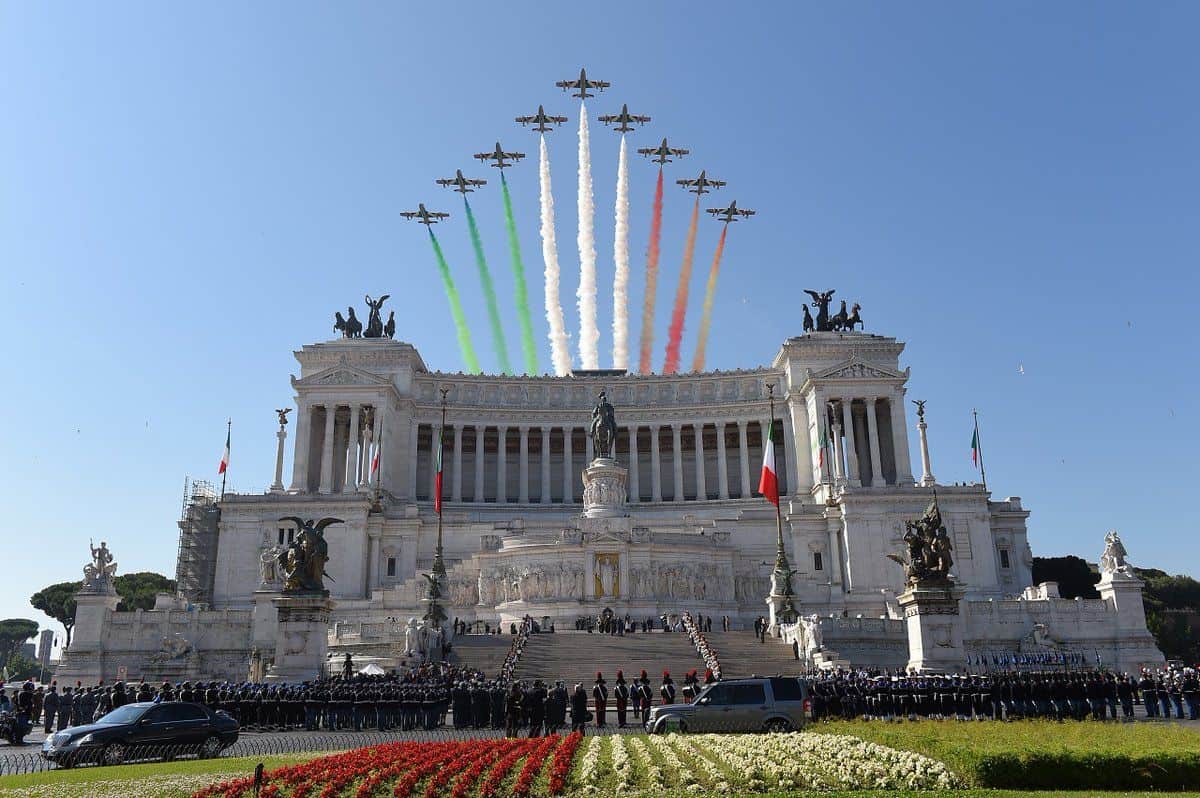
The Altar of the Fatherland is visited at Piazza Venezia, on the northern flank of the Capitoline Hill: the monumental entrance of the Vittoriano opens onto the square, while the administrative office of the museum that runs it, VIVE, is at Piazza San Marco 49, 00186 Roma, phone +39 06 69994211. The monument's spaces open every day from 9.30 to 19.30, with last entry at 18.45. During the evening opening season, the Vittoriano stays open until 23.30 on set dates, with last entry at 22.45. Climbing the staircase and reaching the Altar of the Fatherland proper, the one with the Tomb of the Unknown Soldier, costs nothing: entry to the Vittoriano and the Giardino Grande of Palazzo Venezia is free. You do pay for the single ticket that opens the Panoramic Terrace of the Quadrigas, the Central Museum of the Risorgimento, the National Museum of Palazzo Venezia and the Sommoportico: €18 full price, €5 reduced for visitors aged 18 to 24 years old according to the categories listed on the official website, and free for those under 18 and for people with disabilities. That ticket is valid for seven days from the day of issue and also includes the temporary exhibition currently on view. Entry is free on the first Sunday of every month. Food and drinks are not allowed in VIVE's spaces. The restrooms open with the ticket's QR code or for a fee (€1), and the changing of the guard at the Tomb of the Unknown Soldier takes place every hour.
To buy tickets Click here
One warning that is worth more than all the opening hours put together: Piazza Venezia is a construction site today. The Venezia station on Metro C is being dug right underneath, the bus stops around the monument are being moved in alternating phases, and traffic changes so often that no printed guide can keep up. Anyone arriving by bus should check their stop on the transport company's website the same day: it's the only way to avoid finding yourself 200 meters from the planned spot with suitcases in hand. Anyone arriving on foot has no problem, because the Vittoriano is visible from practically every entrance to the square.
Where the Altar of the Fatherland Is and How to Get There
The monument occupies the north side of the Capitoline Hill, the one that faces Piazza Venezia. It is a location that was not chosen for convenience: it was chosen to be seen. Modern Rome, in the late 19th century, was laid out in a radial pattern around that square, and the new State wanted its founding monument to be the backdrop of every street leading in. It succeeded splendidly. From the Corso, from Via del Plebiscito, from Via dei Fori Imperiali, from Via del Teatro di Marcello, the white of the Vittoriano closes the view like a curtain.
The Entrances to the Vittoriano and the Altar of the Fatherland
The main entrance is the monumental one on Piazza Venezia, at the base of the great staircase: you pass through the wrought-iron gate and start climbing. A second access is on the side of Via del Teatro di Marcello, and it's the one that leads most directly to the panoramic elevators. A third overlook, the wing facing the Imperial Forums, has its own entrance on Via dei Fori Imperiali and is the doorway to the Shrine of the Flags and the exhibition spaces. The VIVE headquarters, with the offices and the library, is instead at Piazza San Marco 49, on the side of Palazzo Venezia.
Buses, Trams and Metro to the Altar of the Fatherland
Piazza Venezia has always been the best-served hub in the Historic Center: dozens of surface lines pass through or terminate there, and the historic stops are those on Piazza Venezia, Piazza d'Aracoeli, Via del Plebiscito and Via del Teatro di Marcello. The Metro C construction site has shaken things up: some lines no longer stop at Aracoeli and are rerouted to Via del Teatro di Marcello, others moved to Via del Plebiscito at the height of Via degli Astalli, and still others to Corso Vittorio Emanuele at Largo Argentina. The changes come in phases, so the line number matters less than the stop: before you set out, the advice is to open the transport company's app and check where to get off today.
For now, the metro does not reach the square. The useful stop is Colosseo, on Line B, from which you head up Via dei Fori Imperiali on foot in about 12 minutes, a stroll that is worth the trip on its own: you walk between the Palatine and the Imperial Forums and reach the Altar of the Fatherland from the right side, the one where the monument rises in front of you as you walk. The alternative is the Cavour stop, also on Line B, with a slightly longer downhill walk.
Getting to the Altar of the Fatherland on Foot
Those staying in the center should do without public transport. From Piazza di Spagna it's 20 minutes along via del Corso. From the Pantheon it's a good eight minutes. From the Trevi Fountain it's 10. From the Colosseum, 12. My suggestion is to arrive from Via dei Fori Imperiali, walking west in the late afternoon: the sun hits the botticino and the monument goes from white to honey in about half an hour, with a progression you don't get to see the same way from the square.
Tickets, Hours and Free Admission at the Altar of the Fatherland
This is where the most widespread misunderstanding lies, and it's worth clearing up before anything else. Many people arrive convinced they have to pay to see the Altar of the Fatherland and give up. Others pay thinking the ticket also covers the lower part. Neither is true.
What Is Free at the Vittoriano
The staircase, the intermediate terraces, the Piazzale del Bollettino, the Altar of the Fatherland with the Tomb of the Unknown Soldier, the Terrazza Italia at the base of the propylaea, and the Giardino Grande di Palazzo Venezia are free. That means a serious visit of a good hour, covering the part of the monument with the most civic meaning, can be done without spending a single euro. Those with little time and little money can stop here and still take home the best of it.
The Single Ticket for the Vittoriano Complex
The paid ticket opens four things: the Terrazza Panoramica delle Quadrighe with its elevators, the Central Museum of the Risorgimento, the Museo Nazionale di Palazzo Venezia, and the Sommoportico. The full price is 18 euros. It includes the temporary exhibition currently on display and is valid for seven days from the day of issue. Seven days are not an accounting detail: they're the tool that lets you split up the visit. One afternoon for the Vittoriano and the terrace, another morning for the Risorgimento Museum, a third stop for Palazzo Venezia. Anyone who tries to do everything in one block comes out worn out and remembers nothing.
Reduced Tickets, Free Admission and the First Sunday of the Month
The reduced ticket costs 5 euros and applies to visitors aged 18 to 24, according to the categories listed on the official website. Under 18s enter for free, and so do people with disabilities and the other categories provided for by national regulations. Every first Sunday of the month, admission is free for everyone: it's the busiest day of the year, multiplied by 12, and honestly I wouldn't recommend it to anyone who wants to see the Risorgimento rooms calmly. If your goal is the terrace, though, the first Sunday makes sense: you queue for the elevator and save 18 euros.
Booking and Buying Tickets
Tickets can be bought online through the booking system listed on the museum's official website, or at the ticket office on site. On weekdays in low season, the ticket office is not a problem. On spring weekends, during long holiday weekends and in August, it's best to arrive with your ticket already in hand, because the line for the elevators adds to the ticket office queue, and the minutes stack up fast.
Practical Rules Inside the Vittoriano
Food and drinks are not allowed in the VIVE spaces. Restrooms open when you scan the QR code on your ticket. Otherwise they cost 1 euro per person, or you can enter by showing the café receipt. Bulky backpacks and selfie sticks follow the rules of the state museums and must be left at the cloakroom when indicated. Finally, on the Altar of the Fatherland there's a rule that isn't written but is enforced by the soldiers on guard: you don't sit on the steps of the tomb, you don't eat, and you don't sunbathe. It's a war tomb, and Romans treat it that way.

What the Altar of the Fatherland really is
Three names overlap and cause confusion even among Romans. It's best to separate them once and for all, because understanding them means understanding the monument.
Monument, Vittoriano, Altar of the Fatherland
The official name is Monumento nazionale a Vittorio Emanuele II. The current name, the one used by architects and in documents, is Vittoriano, sometimes Mole del Vittoriano. Altar of the Fatherland, originally, referred to something much smaller and much more precise: the altar of the goddess Roma placed at the center of the façade, below the equestrian statue, above the first balustrade. That altar, since 1921, also houses the Tomb of the Unknown Soldier, and for this reason it ended up absorbing the name of the entire building. We're looking at a perfect synecdoche: the part for the whole. When a Roman says Altar of the Fatherland, they now mean the whole white mountain. When a museum official says it, they still mean only the altar.
The nicknames of the Altar of the Fatherland
Wedding cake, typewriter, dentures. Rome has been fierce with this monument from the very first day, and the nicknames have a precise reason: the color. Botticino is a very white, compact marble, almost impervious to changes in light, and Rome had nothing like it. The city is built of travertine, tuff, brick, and ochre and orange plaster, materials that light up at sunset and fade at dawn. The Vittoriano doesn't. It stays white at seven in the morning and white at seven in the evening. That stubborn whiteness, in a city that lives on warm tones, has been read as foreignness. Over the years the eye has gotten used to it, and today many visitors find it magnificent. Roman irony, however, has never fully disarmed.
The dimensions of the Altar of the Fatherland
The façade measures about 135 meters wide. The height reaches 70 meters up to the edge of the upper terraces and 81 meters counting the quadrigas that crown the two propylaea. The colonnade of the sommoportico extends for some 70 meters, with columns 15 meters tall each. These figures say little on paper, but in front of the monument they say everything, because the Vittoriano completely hides the side of the Capitoline Hill and the bulk of the basilica of Santa Maria in Aracoeli, which until 1885 dominated that side of the city.
The history of the construction of the Vittoriano
1878: the king's death and the law for the monument
Vittorio Emanuele II dies in Rome in January 1878. The city council allocates funds for a national monument within a few days, and the minister Giuseppe Zanardelli brings to Parliament the law that is approved in May of the same year. You need to understand the climate: united Italy was 17 years old, Rome had been the capital for eight, and the relationship with the papacy was an open wound. A monument to the first king was not a posthumous tribute. It was a political statement about the legitimacy of the new State, written in marble and planted 500 meters from the Quirinale and one kilometer from the Vatican.
The competitions of 1880 and 1882
The first competition is launched on September 23, 1880, and it is international. Over 300 designs arrive from about a dozen different countries. The Frenchman Henri-Paul Nenot wins, and all hell breaks loose. A monument to Italian unity designed by a foreigner strikes many as an intolerable contradiction. Press controversy intertwines with diplomatic tensions, and the project remains on paper.
The second competition was announced on September 16, 1882, reserved for Italian artists and with much stricter technical requirements. Almost a hundred projects arrived. The committee got stuck on three names, including Manfredo Manfredi and Giuseppe Sacconi, and decided to hold a third, restricted competition. On June 24, 1884, the winner was Giuseppe Sacconi, a native of the Marche, barely over 30, trained in the classical and Renaissance tradition and in particular in the language of Donato Bramante. It was a bold choice: the national monument was entrusted to a young, almost unknown architect.
March 22, 1885: the first stone of the Altar of the Fatherland
The laying ceremony took place on March 22, 1885, in the presence of King Umberto I. From that moment on, the worksite became the largest in Italy and one of the most complicated in Europe. The ground of the Capitoline hill proved unstable. The excavations uncovered archaeological material of the first importance, including a stretch of the Servian Walls from the 6th century BC and a quarry of tuff and pozzolana from the Trajanic era. Sacconi was forced to thoroughly revise the original project and redesign the foundations to shift the weight of the monument away from the uncovered cavities.
The demolitions on the Capitoline hill
This is the page that Rome has never entirely forgiven. To make room for the Vittoriano, the three medieval cloisters of the Franciscan convent of the Aracoeli were torn down, along with the church of Santa Rita da Cascia, the overpass that connected the hill to Palazzo Venezia and was known as the Arco di San Marco, and an entire quarter of houses built against the hill. The demolished area exceeds 19,000 square meters. Entire medieval blocks, convent gardens, streets that dated back to the Middle Ages: everything disappeared in a few years. Anyone who wants to realize it should look at the 19th-century photographs displayed in the Gallerie Sacconi, under the staircase. The comparison is brutal.
The tower of Paul III
Among the losses, the most debated is the tower of Paul III. It was a belvedere tower built against the Capitoline side, associated with the name of the Farnese pope, and it was part of the Palazzo Venezia complex. It was torn down to clear the front of the monument. Palazzo Venezia itself also got the treatment: the so-called palazzetto, the building that closed off the garden, was dismantled and rebuilt farther west, moved stone by stone to give the new square room to breathe. Rome has a long tradition of relocated buildings, and this remains one of the most striking cases.
Botticino marble and the choice of white
Sacconi had first considered travertine, then Carrara marble. In the end, botticino was adopted, quarried from the Val Trompia and Brescia area, about 500 kilometers from Rome. There were two reasons, one economic and one political: botticino cost less than Carrara, and the supply rewarded an area that had firmly supported the national undertaking. Visually, the result is the one everyone knows: the compactness and brightness of the white, surfaces that don't yellow and don't get dirty like travertine. That's why the Vittoriano never ages, for better and for worse.
1905: Sacconi's death and his successors
Giuseppe Sacconi dies in 1905, with the worksite still largely open, without seeing anything finished. Management passed to Gaetano Koch, Manfredo Manfredi and Pio Piacentini, three professionals who had already worked within the project and who had the good sense not to rewrite it. Koch signed the drawings for the floors and ceilings of the sommoportico, completed in 1907. Manfredi worked on the entrance gate together with the sculptor Gaetano Vannicola.
June 4, 1911: the inauguration of the Altar of the Fatherland
The monument was inaugurated on June 4, 1911, by Vittorio Emanuele III, in the year of the fiftieth anniversary of Italian unification and in the context of the international exhibition that filled Rome with pavilions. By the date of the inauguration, many parts were unfinished or temporary, covered by quick-finish structures. This is normal practice in large celebratory worksites, but it's worth knowing, because the Vittoriano of 1911 is not the Vittoriano of today.
From 1921 to 1935: the Altar, the quadrigas, Brasini's wing
In 1921 the Tomb of the Unknown Soldier arrives and transforms the meaning of the monument. Between 1924 and 1927, the two bronze quadrigas on the propylaea are completed and installed. Between 1924 and 1935, Armando Brasini designs and builds the wing facing the Imperial Forums, the part that today bears his name. The worksite formally closes in 1935, 50 years after the first stone. The Central Museum of the Risorgimento, already conceived in 1884 as an integral part of the project, actually opens to the public only in 1970.
The visit to the Altar of the Fatherland step by step
Now we climb. The route that follows goes from bottom to top, and it has a logic: the Vittoriano is built like an argument, and reading it in order means understanding what the Italian state wanted to say about itself in 1885.
The main entrance and the gate
Start with the wrought iron railing on Piazza Venezia, made in 1911 to a design by the architect Manfredo Manfredi with the sculptor Gaetano Vannicola. It is not a simple fence: it is the threshold that separates the city from the sacred enclosure, and the design of the ironwork declares this with a vocabulary of crowns, festoons and eagles. Look up before you go in, because once you are inside, you no longer turn around.
The Bronze Groups of Thought and Action
On either side of the railing, on the marble bases, stand the two bronze groups that sum up the moral program of the monument. To the east is Thought, by Giulio Monteverde: a winged figure places a hand on the shoulder of Wisdom, who in turn reaches out a hand to the Italian People to raise them up. The composition also includes Discord being driven out and the spirit of war. To the west is Action, by Francesco Jerace: soldiers raising the flag, the Lion of Saint Mark, figures ready to drive out the oppressor. The two sculptors received the commission in 1907 and delivered between 1911 and 1912.
The message is clear and anything but obvious: the Risorgimento is presented as the necessary meeting of intelligence and strength. It was not enough to think Italy, and it was not enough to fight for it. The pairing of Thought and Action is the sculptural translation of a precise political idea, that of a nation made together by Mazzini and Garibaldi, by the pen and by the bayonet.
The Fountains of the Tyrrhenian and the Adriatic
On the sides of the staircase stand two monumental fountains that personify the two seas of Italy. The one to the east depicts the Adriatic and is the work of Emilio Quadrelli, the one to the west, the Tyrrhenian, was sculpted by Pietro Canonica. Both received the commission in 1908 and delivered in 1911. Here too, geography becomes politics: a unified Italy is defined by its seas, and in 1911 the Adriatic was anything but a settled frontier. Look closely at Canonica's Tyrrhenian, because the Piedmontese sculptor works in a sensual naturalism that has little to do with official rhetoric.
The Staircase, the Winged Lions and the Victories
The monumental staircase rises in two flights and leads to the first terrace, that of the Altar of the Fatherland. On the parapet stand two winged lions made between 1908 and 1910 by Giuseppe Tonnini, a sculptor from the Marche: the iconographic source is openly Assyro-Babylonian, the lamassu, the protective spirit with the body of a lion and outspread wings that guarded the entrances of Mesopotamian royal palaces. It is a surprising choice for a neoclassical monument, and it shows how willing the Liberty taste of those years was to mix things up.
At the ends of the parapet rise two winged bronze Victories, made between 1908 and 1911 by Edoardo Rubino and Edoardo De Albertis: classical iconography, palm and laurel wreath, a foot on the prow of a Roman ship. Behind each Victory, Gaetano Vannicola modeled the bronze pinnacles crowned with eagles and decorated with festoons. They are the first bronzes you meet on the way up, and almost nobody looks at them: everyone walks past with a phone in hand, headed for the tomb.
The Four Groups of the First Balustrade
On the first balustrade, above the fountains, four marble sculptural groups in Botticino stone line up, representing the founding values of the Kingdom: Strength, Harmony, Sacrifice and Right. Rivalta and Pogliaghi received the commission in 1906, Bistolfi and Ximenes in 1907. The works were completed between 1911 and 1912.
Strength is by Augusto Rivalta, from Piedmont, and shows a muscular young man armed with a spear and shield, flanked by a medieval soldier who personifies military energy and a modern worker who personifies civic energy. Concord is by Lodovico Pogliaghi, from Milan: a female figure holds the cornucopia of abundance between the Principality, depicted as an older man, and the People, depicted as a young man. The group is completed by a woman nursing a child, an allegory of the family. Sacrifice is by Leonardo Bistolfi and shows a dying soldier receiving the kiss of the Genius of Liberty. It is the most modern of the four groups, with that symbolist sense of dissolution Bistolfi had brought over from the world of funerary monuments. Right is by Ettore Ximenes, from Sicily: a nude young man stands over the fallen Tyranny, while above him Liberty sheathes her sword and the People close the scene.
My honest opinion: if you have only 10 minutes, spend them in front of Bistolfi's Sacrifice. The other three groups are official rhetoric executed very well. That one is real sculpture, and it holds its own against anything you could have seen in Europe in 1911.
The Altar of the Fatherland and Angelo Zanelli's Frieze
In the center of the first terrace stands the Altar of the Fatherland proper, designed by Sacconi and decorated by the sculptor Angelo Zanelli from Brescia, who won the art competition held to create its decorative elements. The large marble frieze that frames it was composed between the second and third decades of the twentieth century and develops two side-by-side themes: the triumph of Labor on the left and the triumph of Patriotic Love on the right, processions of figures converging toward the center, where the goddess Rome sits enthroned.
It is worth pausing on the theme of Labor. In a monarchic and military monument, dedicated to a king and a dynasty, the place of honor beside the homeland is occupied by farmers, blacksmiths, shepherds, and mothers. It is a trace of an Italy that had changed in the meantime: between 1885 and 1925 the country went through industrialization, social struggles, and mass emigration. Zanelli places that world on the altar of the nation as well, and he does it with a quality of carving that holds up under photographic enlargement.
The Goddess Rome and the Braziers
At the center of the aedicule, above a background of gold mosaic, stands the statue of the goddess Rome, also by Zanelli, modeled on the iconography of Athena: helmet, spear, shield, the attribute of warrior wisdom. On either side burn two braziers that are kept lit at all times. The combination of mosaic gold, white marble, and living fire is the highest point of Liberty style applied to civic ritual: they wanted a secular temple, and exactly that is what they got.
The Tomb of the Unknown Soldier
Beneath the altar, since November 4, 1921, rests the Milite Ignoto. The tomb is watched over without interruption by an honor guard of the Armed Forces, and the changing of the guard takes place every hour. It is the best moment to understand what this place means for the Italian State. Visitors fall silent, the soldiers carry out their duties, and the noise of Piazza Venezia fades away for a minute.
The story of that burial deserves a chapter of its own, and you'll find it further on. For now it is enough to say that the idea was formalized in 1921, and that Senator Antonio Fradeletto set its principle with a sentence that still holds today: the tomb of the unknown soldier had to be immediately in view, lit by the sun of Rome. Not hidden in a crypt, not protected by an enclosure: out in the open, in front of the city, reachable by anyone.

The Equestrian Statue of Victor Emmanuel II
Above the Altar of the Fatherland rises the bronze that gives the monument its official name: the equestrian statue of Victor Emmanuel II. The work was begun by Enrico Chiaradia and completed, after his death, by Emilio Gallori. The bronze was cast from cannons of the Royal Army, following a nineteenth-century practice that gave the metal an added meaning: the weapons of the war of independence became the image of the king that war had won.
The dimensions are out of scale with any other equestrian statue in Rome: about 12 meters high and 10 meters long. The most immediate comparison is with the Marcus Aurelius in Piazza del Campidoglio, behind it: that one is just over four meters tall. The message, again, is political. The new king had to be visible from Piazza Venezia and the Corso, so he had to be gigantic.
The Base and the 14 Noble Cities
The marble base that supports the horse is decorated with personifications of 14 Italian cities, chosen as the historical foundations of the Kingdom: Turin, Venice, Palermo, Mantua, Urbino, Naples, Genoa, Milan, Bologna, Ravenna, Pisa, Amalfi, Ferrara and Florence. It is not a random list, nor a ranking of importance: it is a story. There are the capitals of the Kingdom (Turin, Florence), the maritime republics (Venice, Genoa, Pisa, Amalfi), the capitals of humanism (Urbino, Ferrara, Mantua), the great centers of the South (Naples, Palermo) and the cities that claimed continuity with antiquity (Ravenna, Bologna). Taken together, they make up the thesis the new state wanted to prove: Italy did not begin in 1861, but had existed forever as a civilization and had finally given itself a state.
The Piazzale del Bollettino and the Gates of Liberty and Unity
Climbing further, you reach the Piazzale del Bollettino, so called because the text of the Bollettino della Vittoria of November 4, 1918, signed by Armando Diaz, is walled up there. It announced the end of the First World War on the Italian front. Reading it there, a few meters from the tomb of the nameless soldier, has an effect that no museum room can reproduce.
On the same level open the two large bronze doors dedicated to Liberty and Unity, the two values the monument repeats obsessively in every part. They are service and ceremonial passages at the same time, and almost no visitor looks at them carefully.
The Terrace of the Redeemed Cities
The next level is the so-called Terrace of the Redeemed Cities. Under the colonnade, six small altars line up, dedicated to the cities that became part of Italy after the peace treaties of the early postwar period: Trieste, Trento, Gorizia, Pola, Zara and Fiume. It is a historically delicate chapter, because three of those names now belong to other states, and the way they were acquired and then lost runs through some of the most painful pages of Italy's twentieth century. The monument keeps them just as they were engraved, and that is exactly why it is a document: it tells you what Italy thought of itself in 1921.
The Sommoportico of the Altar of the Fatherland and the 16 Regions
The sommoportico is the large curved colonnade that crowns the front of the Vittoriano: 16 columns, 15 meters high, capitals with turreted female heads that personify Italy, and a statue on top of each column. The 16 statues represent the Italian regions as they were recognized in the second half of the 19th century, when some areas of the northeast were not yet part of the Kingdom. They were made between 1909 and 1910 by different sculptors, with a rigid iconographic coordination and a margin of personal invention that becomes visible when you compare one statue with another.
The ceiling and the floor were designed by Gaetano Koch in 1907. The stucco of the vault is by Giuseppe Tonnini, executed between 1908 and 1910. The back wall has tempera decorations by Primo Panciroli, Silvio Galimberti and Carlo La Spina, and the frieze with the eagles is by Eugenio Maccagnani. Walking under the sommoportico at sunset, when the sun slants in between the columns, is one of the most beautiful experiences in the historic center of Rome, included in the VIVE single ticket, and almost nobody knows about it.
The Propylaea, the Mosaics of Rizzi and Bargellini
At either end of the sommoportico rise the propylaea, one dedicated to the Liberty of the citizens, with the inscription CIVIUM LIBERTATI, the other to the Unity of the homeland, with the inscription PATRIAE UNITATI. On the sides, the winged figures of Fame fly. The reliefs of the tympanums, executed between 1908 and 1910, saw sculptors at work including Emilio Gallori and Enrico Butti.
Inside is what I consider the best-kept secret of the entire monument. The vaults bear diamond-shaped stuccos executed by Adolfo Consolani between 1916 and 1921, and the lunettes hold mosaics by Antonio Rizzi and Giulio Bargellini, winners of a competition announced in 1912 and completed in 1921. These are mosaics openly indebted to Gustav Klimt and the Vienna Secession: gold, geometries, elongated figures, a taste that in Rome in those years was almost subversive. Rizzi develops the theme of Liberty with the personifications of Valor, Law, Strength and Peace. Bargellini develops that of Unity with Strength, Labor, Faith and Wisdom, and includes references to Aeneas and Virgil. The allegorical bronze statues of the arts are by Lio Gangeri and Antonio Garella, and the floor is still Koch's design, completed in 1907.
Terrazza Italia
At the base of the propylaea opens the Terrazza Italia, the intermediate lookout that comes before the elevator ride. To the west you can see the Theater of Marcellus, begun by Caesar and completed by Augustus in 17 BC, and the Cordonata Capitolina designed by Michelangelo. In the background appear the domes of Sant'Andrea della Valle and St. Peter's. To the east open the Imperial Forums: the Forum of Trajan with its column 30 meters high, the Forum of Augustus, the Forum of Nerva. Far off to the south, the Colosseum. It's free, and it's already a panoramic view that many people would pay for.
The Terrace of the Quadrigas of the Vittoriano
The panoramic terrace is 70 meters above street level and is reached by glass elevators that climb along the side of the monument, almost suspended over the void. The climb alone, with the Basilica of Aracoeli sliding past the glass, is worth the ticket. At the top you step out between the two bronze quadrigas that crown the propylaea and represent Unity and Liberty, the two founding values of the monument. Each one is a winged Victory drawn by four horses, and they were installed between 1924 and 1927. Thanks to them, the monument's total height reaches 81 meters.
The panoramic views are 360 degrees and, for centrality and height combined, have no rivals in Rome. Nowhere else can you see at the same time the Colosseum with the Forums in the foreground, the dome of Saint Peter's, the Quirinal, the Pantheon from above, and the outline of the Castelli. The reason is simple and almost comical: from up there you can't see the only building that spoils the Roman skyline, because the building that spoils the Roman skyline is the very one you climbed. If I had to point to just one paid terrace in the city, I would point to this one, and I wouldn't have any doubts.
The Gallerie Sacconi and the Camino Sacconi
Beneath the staircase run the Giuseppe Sacconi Galleries, rooms with parallel and concentric curves that the architect designed to relieve the weight of the monument. Restored in 2016, they now house a permanent exhibition on the history of the Vittoriano: competition drawings, construction photographs, and models. In a side room is the Camino Sacconi, a brick fireplace that incorporates a Roman wall found during the demolitions. It is decorated with ancient marbles and a mosaic panel made by Antonio Rizzi in 1914. It is one of the most unusual rooms in the complex, and barely one visitor in 50 goes in.
The Underground Areas of the Vittoriano
Below all of this are the underground areas, where the remains of a tuff and pozzolana quarry from the Trajanic age are preserved, and therefore datable to between 98 and 117 AD. The quarry came to light during the foundation excavations and forced Sacconi to redesign the building's footing. During World War II, part of these rooms was turned into an air-raid shelter for the population, equipped with an infirmary, drinking water, emergency exits, benches, and restrooms. Graffiti left by those who sheltered there remains on the walls, with phrases that speak of hunger and fear. It is the part of the monument that touches you the most, and it is visited as part of the VIVE routes.

The History of the Tomb of the Unknown Soldier at the Altar of the Fatherland
The Commission and the 11 Bodies
In 1921 the Italian State decided to give a solemn burial to a fallen soldier who had never been identified, as a representative of all the missing of the Great War. A commission traveled the main fronts of the conflict and selected 11 bodies of unknown combatants, placed in identical coffins without any identifying mark. The coffins were gathered in Gorizia and then moved to the Basilica of Aquileia.
Maria Bergamas and the Choice
Maria Bergamas was called upon to make the choice. She was a woman from Trieste of humble means and the mother of Antonio, who fell in the war and was never found. Her figure was charged with meaning: Trieste was the center of Italian irredentism, and a mother who had lost her son without being able to mourn at his grave represented, better than any authority, the condition of tens of thousands of families. The 10 bodies not chosen rest in the Cemetery of the Heroes next to the Basilica of Aquileia.
The Train Journey and the Entombment on November 4, 1921
The chosen coffin was placed on a cannon carriage and taken to Rome by train, along the line Aquileia, Venezia, Bologna, Firenze, Roma, with about 100 and 20 stops spread over five days. At every station, even in the dead of night, silent crowds gathered. It was one of the first great collective rituals of contemporary Italy, and its power lay in its anonymity: each family could believe that the coffin held their own son.
On November 4, 1921, the third anniversary of the victory, the remains were solemnly entombed in the Altar of the Fatherland. Since then the tomb has been guarded without interruption by an honor guard. In 1921 the Vittoriano changed its nature: from a dynastic monument to a king, it became a national tomb, and it was that tomb, not the equestrian statue, that made it untouchable.
The Central Museum of the Risorgimento inside the Vittoriano
The museum was conceived as early as 1884, as an integral part of the monument's design, but it did not actually open to the public until 1970. It occupies a series of monumental halls carved out of the body of the Vittoriano and tells the story of Italy from the eighteenth century to the First World War through documents, relics, paintings, weapons and personal objects of the protagonists. It is part of the paid route included with the single ticket.
The works and relics of the Central Museum of the Risorgimento
The route alternates large canvases and tiny objects, and it is the small ones that leave a mark. Among the pieces on display you'll find Liberty Threatened by Tyranny, the portrait of a patriot writer in prison by Vincenzo Niccolini, the tricolor sash that belonged to Giuditta Bellerio Sidoli, a portrait of Giuseppe Mazzini, the travel bag of Attilio Bandiera, the flag of the Italian Legion in Uruguay from 1846, a flag of the Roman Republic from 1849, the funeral mask of Cavour, the painting Soldiers by Girolamo Induno, the stretcher on which Garibaldi was carried after he was wounded at Aspromonte in 1862, a photograph of the breach at Porta Pia from 1870, a bust portrait of Queen Margherita, a Red Cross volunteer's uniform, the text of the Bulletin of Victory, and the cannon carriage that carried the remains of the Tomb of the Unknown Soldier in 1921.
I'd point out two pieces above all. The first is Giuseppe Garibaldi's blue canvas trousers, a work garment that we would today call jeans, which the general wore by choice, in open protest against the uniform: the most political piece of clothing of the entire Risorgimento. The second is the Aspromonte stretcher, because it tells the story of the moment the national hero was wounded by the state's own troops, the state he had helped found. If you want to go deeper into the subject, you can also look at the Institute for the History of the Italian Risorgimento, which is based in the same complex.
How to visit the Central Museum of the Risorgimento
Allow an hour and a half if you read the captions, 40 minutes if you go straight to what you want to see. The halls are spacious, the lighting is museum quality, and the number of visitors stays low even on peak days. It is one of the quietest state museums in central Rome, and that's almost unbelievable, since it sits inside the most photographed monument in the city.
The Shrine of the Armed Forces Flags
In the wing of the Vittoriano that faces the Forums is the Museo Sacrario delle Bandiere delle Forze Armate, managed by the Difesa. It holds the war flags of disbanded Army, Air Force, Carabinieri and other state armed corps units, together with the combat flags and standards of naval units struck from active service. Inside you'll also find the chapel of the Tomb of the Unknown Soldier.
Entry is free and is through via dei Fori Imperiali. The hours set by the Difesa are Tuesday to Friday from 9.30 to 12.00 and from 14.00 to 16.00, and Saturday, Sunday and holidays from 9.30 to 12.00 and from 14.00 to 18.00, with closure on Mondays for maintenance. It's best to arrive at least 20 minutes before closing time. Seasonal closures are scheduled, so check the calendar on the Difesa website before you go. Group visits have a dedicated booking address.
Personal opinion: this is the most underrated place in the whole complex. Room after room of worn banners, each one bearing the name of a unit that no longer exists, creates an effect that no staged exhibition manages to achieve. Entry is free, and you'll stay 40 minutes without noticing.
The Brasini Wing and the exhibitions of the Vittoriano complex
The wing overlooking the Imperial Forums was designed and built by Armando Brasini between 1924 and 1935, and it takes its current name, Ala Brasini, from him. For years it hosted the major monographic exhibitions that made the fortune of the so-called Complesso del Vittoriano, and the current project is meant to turn it into one of the capital's main exhibition spaces, capable of hosting scientific and institutional exhibitions of high level. Restoration work is underway: anyone arriving with the idea of seeing an exhibition should check the program on the official website, because the availability of spaces varies.
Meanwhile, the VIVE exhibition calendar remains busy and is spread between the Vittoriano and Palazzo Venezia, with projects that often involve other Roman state institutes as well. The temporary exhibition currently on is included in the single ticket price, and this makes the 18 euro ticket much better value than it seems at first glance.
Palazzo Venezia, the other half of the ticket
The Vittoriano ticket also includes Palazzo Venezia, and it would be a shame to waste it. The palace was founded by Cardinal Pietro Barbo, who later became Pope Paul II between 1464 and 1471, and for centuries it hosted popes, cardinals and ambassadors. From the outside it has severe facades, almost like the walls of a fortress. Inside, courtyards, gardens and halls of surprising size open up. Among its distinguished guests were Erasmus of Rotterdam and Emperor Charles V.
The museum displays art from the Middle Ages to Neoclassicism, with important collections of Renaissance painting and decorative arts. The Giardino Grande has free admission and is one of the most restful spots in the center: a square of greenery 20 meters from the traffic of Piazza Venezia, closed off by the small tower and the loggia. Be aware of one thing: the historic halls of the palace are affected by a restoration site, and their accessibility varies, so the visit program should be confirmed on the official website before you set out.
The celebrations at the Altar of the Fatherland
Three times a year the Altar of the Fatherland stops being a monument and goes back to being what it was built for. On April 25, the anniversary of the Liberation. On June 2, Festa della Repubblica. On November 4, Giornata dell'Unità Nazionale e delle Forze Armate. On these dates the President of the Republic and the highest offices of the State climb to the shrine of the Tomb of the Unknown Soldier and lay a laurel wreath there in memory of the Italian war dead and missing.
Anyone who happens to be in Rome on one of these days should know two things. First: the square is closed and access to the monument is suspended for several hours, so the tourist visit is off. Second: if you accept giving up the visit and plant yourself behind the barriers, you watch a civic ceremony carried out with a military precision that is rarely seen anywhere else, Frecce Tricolori included on June 2. The better choice is the second.
How long a visit to the Altar of the Fatherland takes
It depends on how far up you want to go. For the free part, from the gate to the Altar of the Fatherland, 40 minutes at a normal walking pace is enough. Adding the Terrace of the Quadrigas by elevator brings it to an hour and a quarter, lines included. With the Museo Centrale del Risorgimento, it comes to two and a half hours. If you also want to do the Sacrario delle Bandiere and Palazzo Venezia, plan on a full day, and this is where the seven-day ticket becomes valuable: split it up.
For those short on time, the best plan is this: 45 minutes on the free lower part, elevator up, 20 minutes on the terrace, then down and a walk to the Trajan's Markets. Two hours, two monuments, no rush.
The Altar of the Fatherland with children
It works better than you might think, as long as you reverse the order. Kids aren't interested in the Risorgimento. They're interested in the glass elevator that rises over empty space, and they're interested in the giant horse. Start with the elevator, have them look for the Colosseum and the dome of St. Peter's from above, then come back down and tell them that people really ate inside the belly of that horse in 1911. From then on, they'll listen to you.
The route has many stairs, so you'll need to manage the stroller. The elevators handle the bigger level changes, but the monumental staircase is still a staircase. Restrooms are located in the complex and open with the QR code on your ticket. Food and drinks are not allowed in, so have snacks beforehand, at the small gardens of Piazza d'Aracoeli or the Giardino Grande of Palazzo Venezia. The changing of the guard every hour is the moment kids remember most: ask for the schedule at the entrance and time your visit to match.
Accessibility at the Altar of the Fatherland
The monument was born as a mountain of stairs, but today the situation is better than its look suggests. Panoramic elevators take you to the upper terrace. Accessible routes and service elevators let you reach the main levels and the museum spaces. Entry is free for people with disabilities. VIVE also offers tactile experiences and accessible routes as part of its program. For a visit in a wheelchair, it's best to contact the museum in advance through its official contact details and arrange the route. It's the safest way to avoid finding a ramp closed for works.
Frequently asked questions about Altar of the Fatherland, Vittoriano
How much does it cost to enter the Altar of the Fatherland?
Climbing the stairs and reaching the Altar of the Fatherland with the Tomb of the Unknown Soldier costs nothing. The staircase, the intermediate terraces, the Piazzale del Bollettino and the Altar itself are all free. The VIVE single ticket, needed for the Terrazza Panoramica, the Museo Centrale del Risorgimento, the Museo Nazionale di Palazzo Venezia and the Sommoportico, costs 18 euros full price and 5 euros reduced.
How much time do you need to visit the Altar of the Fatherland?
For the free part of the Altar of the Fatherland, from the gate to the Tomb of the Unknown Soldier, 40 minutes at a walking pace is enough. Adding the Terrazza delle Quadrighe by elevator brings you to an hour and a quarter, lines included. With the Museo Centrale del Risorgimento, the visit rises to two and a half hours.
Is the Altar of the Fatherland suitable for a visit with children?
Yes, it works better than people think, as long as you reverse the order. Children are interested in the glass elevator that rises into the void and in the giant equestrian statue. Starting with the elevator, having them look for the Colosseum and the dome of Saint Peter's from above, and telling them that people really did eat inside the belly of the bronze horse in 1911, holds their attention for the rest of the visit.
Is the Altar of the Fatherland accessible to people who use a wheelchair?
Yes, today the situation is better than the monumental look suggests. Panoramic elevators take you to the upper terrace, while accessible routes and service elevators let you reach the main levels and the museum spaces. Entry is also free for people with disabilities.
What is the best time to visit the Altar of the Fatherland?
The best season to visit the Altar of the Fatherland is the second half of October, with November close behind, when the light is low, the sky is clear and the temperatures are right for climbing stairs. April and May are just as beautiful but more crowded, while in July and August it's best to go at 9.30 or after 18.30 because of the heat on the staircase exposed to the south.
What is the sommoportico of the Altar of the Fatherland, and can you visit it for free?
The sommoportico, that is, the colonnade at the top of the facade of the Altar of the Fatherland, is visited with the VIVE single ticket according to the official website, and above it stand the 16 statues of the Italian regions. The two propylaea that close it hold in their vaults the mosaics of Antonio Rizzi and Giulio Bargellini, a part of the monument that most visitors don't walk through.
What is there to see near the Altar of the Fatherland?
A few minutes on foot from the Altar of the Fatherland, in any direction, you'll find some of the most important places in Rome. Behind the monument, you climb to the Campidoglio via Michelangelo's Cordonata to reach the Musei Capitolini, the oldest public museum in the world. Toward the Forums, you'll find the Foro Romano and the Mercati di Traiano.
What's around the Altar of the Fatherland
10 minutes on foot, in any direction, and you're in the middle of the best of Rome. Behind the monument, you climb to the Capitoline Hill by way of Michelangelo's Cordonata capitolina, and from there you enter the Capitoline Museums, the oldest public museum in the world. Next to the Cordonata rises the very steep staircase of the Aracoeli, 124 steps leading to Santa Maria in Aracoeli.
Toward the Forums you'll come across the Mamertine Prison, the Trajan's Markets with the Imperial Forums Museum, and farther on the Colosseum and the Palatine. Toward the river you go down to the Theatre of Marcellus and the Circus Maximus. Toward the Corso, a few minutes away, are the Pantheon and the Trevi Fountain. Anyone who wants to build a well-reasoned itinerary over several days will find a solid route, in English, in the ItalyPlanner guide dedicated to Rome in three days.
A curiosity about Altar of the Fatherland, Vittoriano
The year 1911, when it was inaugurated, gave the monument its most incredible story, and its protagonist is the belly of a horse. The equestrian statue of Vittorio Emanuele II is so large that the animal's body forms a usable space: a hollow chamber, tall enough to stand in, wide enough to hold a table. Before the bronze was closed and permanently placed, a reception for some 20 people was set up inside that belly, among those who had worked on the project, on the occasion of the king's visit. Period photographs document it, and some copies are displayed along the monument's route: you can see gentlemen in suits and ties seated at a table set inside a bronze horse, with an expression somewhere between solemn and amused.
The scene says a lot. It says that in 1911 the Vittoriano's staircase was seen as an engineering feat before it was seen as an artistic one, and that those who built it wanted to celebrate inside their own work. It also says something about Italian irony applied to national rhetoric: the most solemn monument of the Kingdom begins its career with a clandestine banquet in the belly of a horse. When you pass the equestrian statue of the Altar of the Fatherland, look up at the animal's belly and think about that table set inside it: it's the best possible measure of the real size of the bronze, far more effective than any figure in meters. And I promise you that no one in the group forgets that detail afterward.
I'll add a second curiosity that is connected to the first one. The bronze of the statue comes from melting down cannons of the Royal Army. That means the belly where lunch was eaten had been, until a few years earlier, field artillery. Few works condense so well the passage from war to the memory of war.
One thing nobody tells you about Altar of the Fatherland, Vittoriano
The best part of the monument is one that almost no one walks through. I'm not talking about the staircase and the tomb, which everyone does. I'm talking about the lower portico and the interior of the propylaea. The colonnade at the top of the façade is visited with the single VIVE ticket, and above it line up the 16 statues of the regions. The two propylaea that close it contain, in their vaults, the mosaics of Antonio Rizzi and Giulio Bargellini, completed in 1921 after a competition held in 1912, openly indebted to Klimt and the Vienna Secession. Gold, geometry, elongated figures, a modernity that in Rome at that time had almost no public precedents.
Nearly all visitors arrive at the Altar of the Fatherland, photograph the tomb, turn toward Piazza Venezia and go back down. No one looks up at the upper level, no one crosses the colonnade, no one enters the propylaea. Yet the route is marked, the stairs are there, and in 20 minutes you can see works that in any other European city would have a line at the entrance.
The second thing nobody tells you concerns the underground. Beneath the monument survives a quarry of tuff and pozzolana from the Trajanic age, and during World War II part of those spaces became an air-raid shelter for civilians, with an infirmary, drinking water, benches and emergency exits. Graffiti left by those who spent the nights of the bombings there remains on the walls. The contrast between the marble rhetoric of the upper floors and those pencil writings in the dark is the most instructive thing the Altar of the Fatherland has to offer, and it doesn't appear on any postcard.
Third thing, practical: the Terrazza Italia, at the base of the propylaea, is free and already offers panoramic views that many people pay for elsewhere. If your budget is tight or the elevator line is long, stop there and you won't regret it.
The advice I give you for visiting Altar of the Fatherland, Vittoriano
Go there twice on the same day, and the second time go at sunset. It's not a photographer's whim: it's how this monument is understood. Botticino is a marble that by day gives back a flat, relentless light, the same light that earned it the cruel nicknames the Romans gave it. In the hour before sunset, however, the white warms up, the reliefs of Zanelli's frieze gain depth, the columns of the sommoportico cast long shadows, and the entire facade changes character. From the terrace up top, at the same moment, the city lights up from east to west and the dome of St. Peter's becomes a silhouette against the light.
The second tip is about order. Don't start with the elevator. Walk up the staircase, stop at the groups on the first balustrade, reach the Tomb of the Unknown Soldier, wait for the changing of the guard, cross the sommoportico, and enter the Propylaea. Only then take the elevator. Anyone who does it the other way around spoils the big reveal and then looks at the sculptures with their mind elsewhere.
Third: avoid the window between 11 and 14 on weekends from March to October. The staircase faces south, there isn't a scrap of shade, the marble reflects the glare, and the line for the elevator gets longer. At 9.30, when it opens, is the golden hour: the monument is almost empty, low light from the east falls on the Forums, and the temperature is civilized. Otherwise, go in the late afternoon on weekdays.
Fourth, and this one matters more than all the others: take the time to watch the changing of the guard. It happens every hour, lasts a few minutes, and no plaque explains it. It's the only moment when the Altar of the Fatherland reminds passersby that it is a tomb and not a backdrop. Those who visit with a professional guide or a licensed escort, among other things, get the advantage of arriving in sync: the operators at TourLeaderPro for services in Rome build their itineraries precisely around these timing details.
Another Well-Known Fact, Yet Rarely Mentioned
To build the Altar of the Fatherland, a huge piece of medieval Rome was demolished, and that demolition is the reason the Capitoline Hill has lost its historic facade. Everyone vaguely knows that the Vittoriano hides the Capitoline Hill. Almost no one knows what was there before and how much was lost.
On the northern side of the Capitoline Hill stood the Franciscan convent of the Aracoeli, with three medieval cloisters, gardens, cells, and buildings piled up over the centuries. There was the church of Santa Rita da Cascia, a fabric of houses leaning against the slope, alleys and stairs that climbed from the square toward the basilica. There was the tower of Paul III, a belvedere tower tied to the Farnese pope that closed the corner toward Palazzo Venezia. There was the overpass known as the Arco di San Marco, which spanned the road connecting the hill to the palace. All of this was torn down between 1885 and the early years of the 1900s, for a demolished area of more than 19,000 square meters. Even the small palazzo of Palazzo Venezia, the wing that closed the garden, was taken apart and rebuilt farther west to clear the view.
There's no point in getting angry after the fact by today's standards: nineteenth-century Europe did this everywhere, from Paris to Vienna, and sacrificing the old for the new state was considered a duty. But knowing the cost makes the visit more honest. When you climb the staircase, you are walking over the site of three medieval cloisters. The construction photos kept in the Gallerie Sacconi show it with a rawness no digital reconstruction can match: the houses are still standing beside the first foundations, and you suddenly understand why the Romans, for two generations, looked at this monument with resentment.
There is also a positive side, and it should be said. The excavations uncovered a stretch of the Servian Walls from the 6th century BC and the Trajanic quarry beneath the monument: pieces of ancient history that, without the Vittoriano construction site, would have remained buried and unknown.
The Right Photo to Take at Altar of the Fatherland, Vittoriano
The photo everyone tries is the front view from the square, and it almost always comes out badly: the monument is too wide, the light is flat, and the traffic and the railing fill the foreground with noise. If you want to take home an image that's worth something, I suggest three, and none of them is that one.
The first is taken from the side of the Imperial Forums, walking toward Piazza Venezia, in the hour before sunset. From there the Vittoriano appears at three-quarters, the low sun carves the reliefs, and the Trajan's Column and the remains of the Mercati enter the foreground: a single frame holds 2,000 years. Use a normal lens, not a wide-angle one pushed to the limit, or the depth will flatten.
The second is taken from the Terrazza delle Quadrighe, but not toward the view: toward the quadrigas themselves. Position yourself so that one of the winged Victories and its four horses stand out against the sky, with the city blurred below. It's the only angle in the world from which those bronzes, installed between 1924 and 1927, can be seen up close, and 99 percent of visitors turn their backs and photograph the Colosseum.
The third is a detail, and it closes the discussion: the face of the dying soldier in Leonardo Bistolfi's Sacrificio, on the first balustrade, shot from below in the morning light. Botticino marble, a single figure, no context. Anyone looking at it doesn't even realize they're at the Altar of the Fatherland, and that's totally fine.
Two technical notes. The tripod is subject to the rules of the state museums and has to be agreed upon. Drones are banned across the whole area, for obvious safety reasons above a military tomb and an institutional building. And please, no silly poses in front of the tomb: the guards on duty rightly call people out, and the result is awful.
Some important events that took place here in history
The first is the laying of the first stone on March 22, 1885, in the presence of Umberto I: the start of the largest construction site in post-unification Italy, set to last 50 years and go through four directors of works.
The second is the inauguration on June 4, 1911, celebrated by Vittorio Emanuele III in the year of the fiftieth anniversary of the Unification, within the framework of the International Exhibition that brought pavilions, exhibits and delegations from half the world to Rome. It was the moment when the capital showed itself as a modern city, and the monument was its symbolic center.
The third, and the most important, is the entombment of the Tomb of the Unknown Soldier on November 4, 1921. After Maria Bergamas chose it in the basilica of Aquileia on October 28, and after a five-day train journey with about 100 and 20 stops, the body of a nameless soldier was laid beneath the altar of the goddess Rome. That day the Vittoriano stopped being the monument of a dynasty and became the tomb of the nation.
The fourth is the years of Fascism. Piazza Venezia became the backdrop of the regime, which had its headquarters at Palazzo Venezia, and the Vittoriano became the backdrop for its parades. It is one of the political uses of the monument that historians have studied at length, and the museum today tells this story without embarrassment, instead claiming the antifascist and democratic identity of the site in the present.
The fifth is the Second World War, when the monument's underground rooms were fitted out as an air-raid shelter for civilians, with an infirmary and drinking water, and the walls filled with graffiti from those who sought refuge there during the bombings of Rome.
The sixth is the long closure of the postwar period and the reopening of the monument to the public on November 9, 1997, which gave the city back the staircase, the terraces and the interior spaces after decades of limited access. From that date begins the contemporary history of the Vittoriano as a place for visits and exhibitions.
The seventh, finally, is the daily and uninterrupted story of the honor guard: from 1921 to today, every hour, without exception, in war and in peace. It is the least spectacular and the most meaningful event of all.
Who has passed through the Altare della Patria, Vittoriano
The first name is that of the man who imagined the monument without seeing it finished: Giuseppe Sacconi, a native of the Marche, who won the competition on June 24, 1884, when he was little more than 30, and died in 1905 with the construction site still in full swing. After him, Gaetano Koch, Manfredo Manfredi and Pio Piacentini worked on it, and in the 1920s and 1930s Armando Brasini worked on the wing facing the Imperial Forums.
Then there is the generation of sculptors who left their mark here, and they are not minor names: Giulio Monteverde and Francesco Jerace for the bronzes at the entrance, Augusto Rivalta, Lodovico Pogliaghi, Leonardo Bistolfi and Ettore Ximenes for the four groups on the first balustrade, Pietro Canonica and Emilio Quadrelli for the fountains of the two seas, Edoardo Rubino and Edoardo De Albertis for the Victories, Giuseppe Tonnini for the winged lions, Angelo Zanelli for the frieze of the Altar of the Fatherland and for the goddess Rome, Enrico Chiaradia and Emilio Gallori for the equestrian statue, Antonio Rizzi and Giulio Bargellini for the mosaics of the propylaea. A considerable part of Italian sculpture between the 19th and 20th centuries passed through this construction site.
As for the monarchs: Umberto I laid the first stone in 1885, Vittorio Emanuele III inaugurated the monument in 1911, and in 1921 he attended the entombment of the Tomb of the Unknown Soldier. But the figure who matters more here than any king is a woman without titles: Maria Bergamas, from Trieste, mother of Antonio, who fell and was never found, who on October 28, 1921, in Aquileia chose from among 11 identical coffins the one destined for Rome. Her gesture is the true founding act of the Altar of the Fatherland as we understand it today.
Since 1921, all the Presidents of the Italian Republic have passed through here, every April 25, every June 2, every November 4, as well as during state visits: laying a laurel wreath at the shrine of the Tomb of the Unknown Soldier is the first official act of almost every foreign head of state on an official visit to Rome. Added together, they amount to thousands of ceremonies in a little over a century.
And then Romans have passed through here, en masse and for opposite reasons: to celebrate, to protest, to mourn. The Vittoriano has been the backdrop for rallies and processions, for state funerals and Scudetto victories. No other place in the city has hosted such a wide range of collective emotions, and this, for a monument that many consider foreign to Rome, is a contradiction worth keeping in mind.
When to Visit the Altar of the Fatherland
The best season is the second half of October, followed by November: low light, clear skies, temperatures right for climbing stairs, and November 4, which gives the monument its full meaning. April and May are beautiful but crowded. July and August, on the south-facing staircase, are a physical test: if you go, go at 9.30 or after 18.30, and take advantage of the evening openings when they're on the calendar.
As for hours: opening at 9.30, closing at 19.30 with last entry at 18.45. The two best windows are the first hour of the morning and the two hours before closing. On dates with extended hours until 23.30, the lit-up monument is something else, and the terrace at night, with Rome lit up below, is one of those memories that stay.
One last calendar note: on April 25, June 2 and November 4, the regular visit is cancelled for ceremonies. If your only day in Rome falls on one of those dates, reorganize your schedule and plan on the ceremony instead of the visit. To plan the rest of the day around this constraint, the English-language overview of the best things to do in Rome on ItalyPlanner helps you fit in alternatives.
Quick Questions About the Altar of the Fatherland, Vittoriano
How much does it cost to enter the Altar of the Fatherland?
Climbing the staircase and reaching the Altar of the Fatherland with the Tomb of the Unknown Soldier costs nothing. The combined VIVE ticket, needed for the Panoramic Terrace, the Central Museum of the Risorgimento, the National Museum of Palazzo Venezia and the Sommoportico, costs €18 full price and €5 reduced, and includes the temporary exhibition currently on.
How much does it cost to go up to the Vittoriano's panoramic terrace?
The terrace is included in the €18 combined ticket, which also covers the monument's other paid spaces and is valid for seven days from the day of issue.
What are the opening hours of the Altar of the Fatherland?
Every day from 9.30 to 19.30, with last entry at 18.45. On the evening opening dates on the calendar, the Vittoriano stays open until 23.30, with last entry at 22.45.
Is the Altar of the Fatherland closed on Mondays?
No. The Vittoriano is open every day of the week. The Sacrario delle Bandiere delle Forze Armate, however, is closed on Mondays for maintenance.
Is entry free at the Altar of the Fatherland on the first Sunday of the month?
Yes. Entry to VIVE spaces is free on the first Sunday of every month. It's the busiest day: if you want the museums in peace, choose another day, if you only want the terrace, it's worth it.
Do you need to book to visit the Altar of the Fatherland?
Not for the free part. For the paid spaces, tickets are bought online through the booking system listed on the official website, or at the box office. On high-season weekends, buying ahead saves several minutes of waiting in line.
How long does a visit to the Altar of the Fatherland take?
40 minutes for the free part alone, an hour and a quarter adding the terrace, two and a half hours with the Central Museum of the Risorgimento, and a full day if you add the Sacrario and Palazzo Venezia.
Can you take photos at the Altar of the Fatherland?
Yes, amateur photography is allowed in the monument's open spaces. Tripods and professional equipment follow the rules of state museums and must be arranged in advance. Drones are banned across the entire area.
Is the Altar of the Fatherland wheelchair accessible?
Largely yes, thanks to the panoramic elevators and the accessible routes that reach the main levels and the museum spaces. Entry is free for people with disabilities. For a visit without surprises, it's best to contact the museum in advance using the official contact details.
Where exactly is the Altar of the Fatherland?
In Piazza Venezia, on the northern side of the Capitoline Hill, in Rome's Historic Center. The VIVE office that manages it is at Piazza San Marco 49, 00186 Roma.
How do you get to the Altar of the Fatherland by public transport?
By surface lines serving Piazza Venezia, Piazza d'Aracoeli, Via del Plebiscito and Via del Teatro di Marcello. The Metro C construction site periodically moves the stops, so check on the day itself using the transit company's app. By subway, the useful stop is Colosseum on Line B, about 12 minutes on foot.
Who is buried at the Altar of the Fatherland?
The Unknown Soldier, an Italian soldier who fell in World War I and was never identified, chosen from 11 bodies by Maria Bergamas in Aquileia on October 28, 1921, and laid to rest in Rome on November 4, 1921.
Why is it called the Altar of the Fatherland?
Because at the center of the facade is the ara dedicated to the goddess Roma, the altar itself, which has also held the tomb of the Unknown Soldier since 1921. The name of that part ended up referring to the whole monument, whose official name remains National Monument to Vittorio Emanuele II.
What is the difference between the Altar of the Fatherland and the Vittoriano?
The Vittoriano is the entire building designed by Giuseppe Sacconi. The Altar of the Fatherland is the central altar with the Tomb of the Unknown Soldier. In everyday use, the two terms overlap.
How tall is the Altar of the Fatherland?
70 meters up to the upper terraces, 81 meters counting the quadrigas that crown the two propylaea. The facade measures about 135 meters wide.
Who designed the Altar of the Fatherland?
Giuseppe Sacconi, winner of the competition on June 24, 1884. After his death in 1905, the work continued under Gaetano Koch, Manfredo Manfredi and Pio Piacentini. The wing facing the Imperial Forums was added by Armando Brasini between 1924 and 1935.
What marble is the Altar of the Fatherland made of?
Botticino marble, quarried in the Brescia area. Sacconi had initially considered travertine and then Carrara marble. The final choice came down to economic and chromatic reasons, and it explains the whiteness that earned the monument the Roman nicknames "wedding cake" and "typewriter."
When was the Vittoriano inaugurated?
On June 4, 1911, by Vittorio Emanuele III, in the year of the fiftieth anniversary of the Unification of Italy. Work had begun on March 22, 1885 and was completed in 1935.
Is there a changing of the guard at the Altar of the Fatherland?
Yes, at the Tomb of the Unknown Soldier, and it happens every hour. It lasts a few minutes, and it's worth timing your visit. Ask the staff at the entrance for the exact time.
Can you visit the Sacrario delle Bandiere?
Yes, admission is free and access is from Via dei Fori Imperiali. The hours listed by the Ministry of Defense are Tuesday through Friday 9.30-12.00 and 14.00-16.00, and Saturday, Sunday and public holidays 9.30-12.00 and 14.00-18.00, closed on Monday. Seasonal closures are scheduled, so check the calendar beforehand.
Is the Museo Centrale del Risorgimento included in the ticket?
Yes, it's part of the single VIVE ticket, along with the Panoramic Terrace, the Museo Nazionale di Palazzo Venezia and the Sommoportico.
Is the Altar of the Fatherland suitable for children?
Very much so, if you start with the panoramic elevator and the equestrian statue. The monument has a lot of stairs, so strollers need to be managed with the elevators. Food and drinks aren't allowed inside, so have snacks beforehand.
Is there a bar or café at the Altar of the Fatherland?
Yes, the complex has a café service. The café receipt is one of the ways to access the restrooms, which otherwise open with the QR code on your ticket or by paying 1 euro.
Can you bring backpacks and bags into the Vittoriano?
The rules for state museums apply. Bulky items must be left at the luggage deposit when staff direct you to do so, and food and drinks are not allowed in VIVE spaces.
How long is the wait in line at the Altar of the Fatherland?
For the free section, usually nothing or a few minutes at security checks. For the panoramic elevators, the line peaks between 11 and 15 on weekends and long weekends. Arriving at opening or in the last two hours, you can go up almost right away.
Is it worth going up to the Vittoriano's terrace?
If I had to choose just one paid terrace in Rome, I'd choose this one. The combination of central location and height is unmatched in the city, and the view takes in the Forums, the Colosseum, the dome of St. Peter's and the rooftops of the center in one turn.
What is the difference between the Altar of the Fatherland and the Capitoline Museums?
They are two different institutions and two different eras. The Altar of the Fatherland is the nineteenth-century national monument of the Italian State. The Capitoline Museums, on the Capitoline Hill behind the Vittoriano, are the oldest public museum in the world and house the ancient sculpture collections of the Comune di Roma. The tickets are separate.
Can you go up the Vittoriano in the evening?
On the extended opening dates on the calendar, yes. The monument stays open until 23.30 with last entry at 22.45. The evening program should be checked on the museum's official website.
Can the Altar of the Fatherland be visited with a guide?
Yes. The museum offers guided tours and activities as part of its own program, and licensed tour guides and escorts for private groups are also available. For Tours and experiences that are private, corporate or V.I.P., the operational reference is professional tour escorting from TourLeaderPro.
What is there to see around the Altar of the Fatherland within a 10-minute walk?
The Capitoline Hill with Michelangelo's Cordonata, the basilica of Santa Maria in Aracoeli, the Mamertine Prison, the Trajan's Markets, the Theater of Marcellus and, a little further on, the Colosseum.
One last thing. The Altar of the Fatherland has a reputation as a bulky, rhetorical, not very Roman monument, and the irony with which the city christened it has never completely disappeared. Take it as an invitation to look at it more closely, not as an excuse to skip it. Climb slowly, stop at the bronzes nobody looks at, wait for the changing of the guard, walk the colonnade at the top and look out from the Propylaea. When you come back down to Piazza Venezia you'll notice that the monument hasn't changed: you have, and that's the only thing that could really interest a visitor.
Article written by the editorial team of TourLeaderPro, contact them for Tours and Private/Corporate/V.I.P. Experiences.
Are you planning a trip to Rome? English-language guides for visiting the city are available at ItalyPlanner.com.