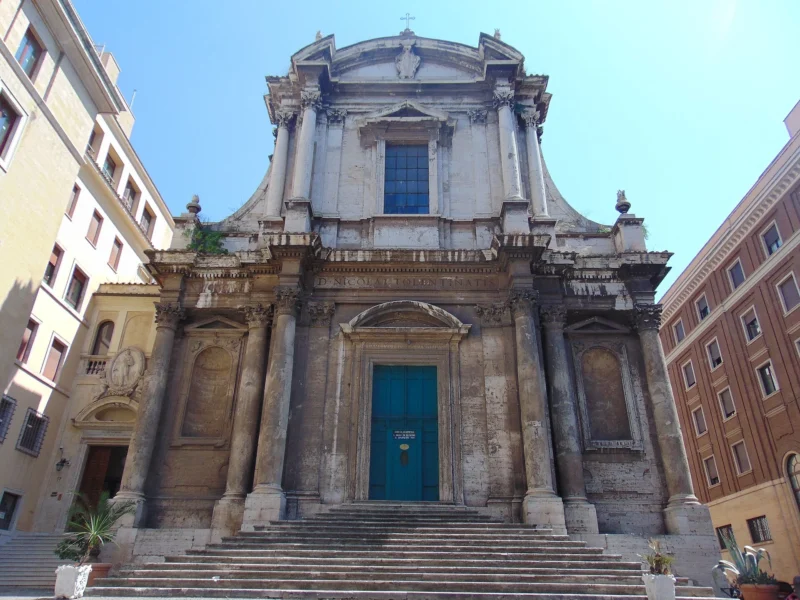
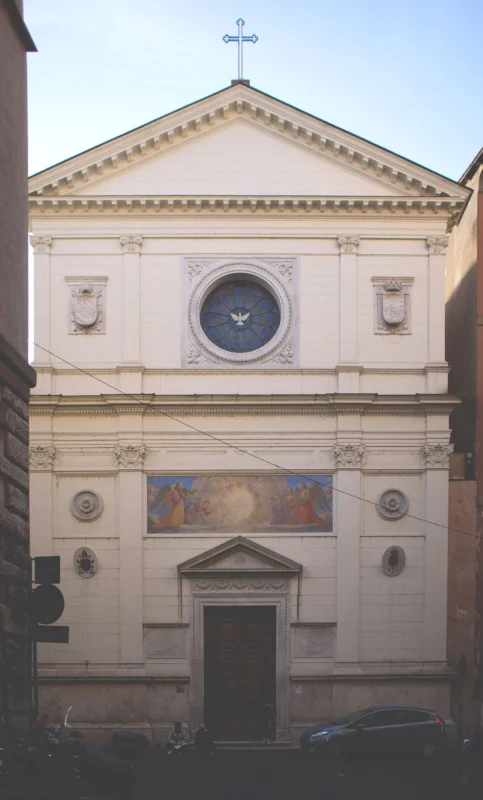
Basilica di Sant’Apollinare
In short. The Basilica di Sant'Apollinare is at Piazza di Sant'Apollinare 49, at the northern end of Piazza Navona, and is open only Monday through Friday, from 7:30 to 9:00 and from 12:00 to 13:30.
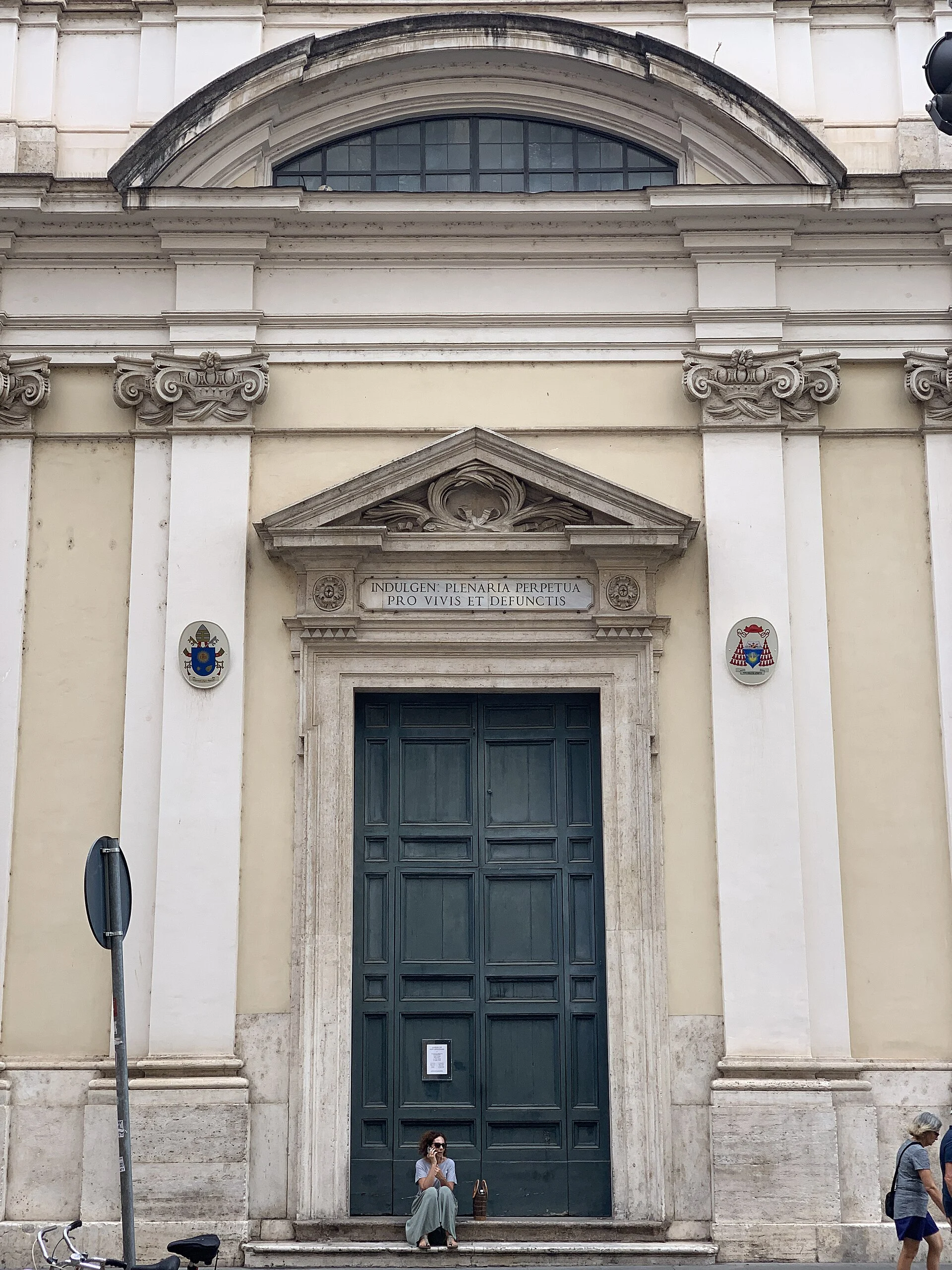
The Basilica di Sant'Apollinare is at Piazza di Sant'Apollinare 49, at the northern end of Piazza Navona, and is open only Monday through Friday, from 7:30 to 9:00 and from 12:00 to 13:30. Saturday, Sunday and holidays it stays closed. Admission is free, there's no ticket and nothing to book. Weekday Masses are at 8:00 and 12:45. The rectory is tied to the Prelature of Opus Dei and to the Pontifical University of the Holy Cross, within the Diocese of Rome.
From outside it looks like a church you pass through, squeezed between the university building and the traffic coming up from Corso del Rinascimento. Inside is one of the cleanest 1700s naves in the center, designed by Ferdinando Fuga, and in the vestibule a 1400s Madonna that for a century and a half stayed under the plaster. Then there's the recent news story, that of the tomb opened in 2012, which gave the basilica a notoriety it hadn't sought.
The opening hours, Masses, confessions and adoration reported here are those published by the basilica on its own website as of September 29, 2026. The rectory follows to a large extent the rhythm of the university next door, so academic vacation periods, religious holidays and special celebrations can change things. Before organizing your day around this visit, call the official number 06 681641 and have the day's schedule confirmed.
Where it is and what you actually see
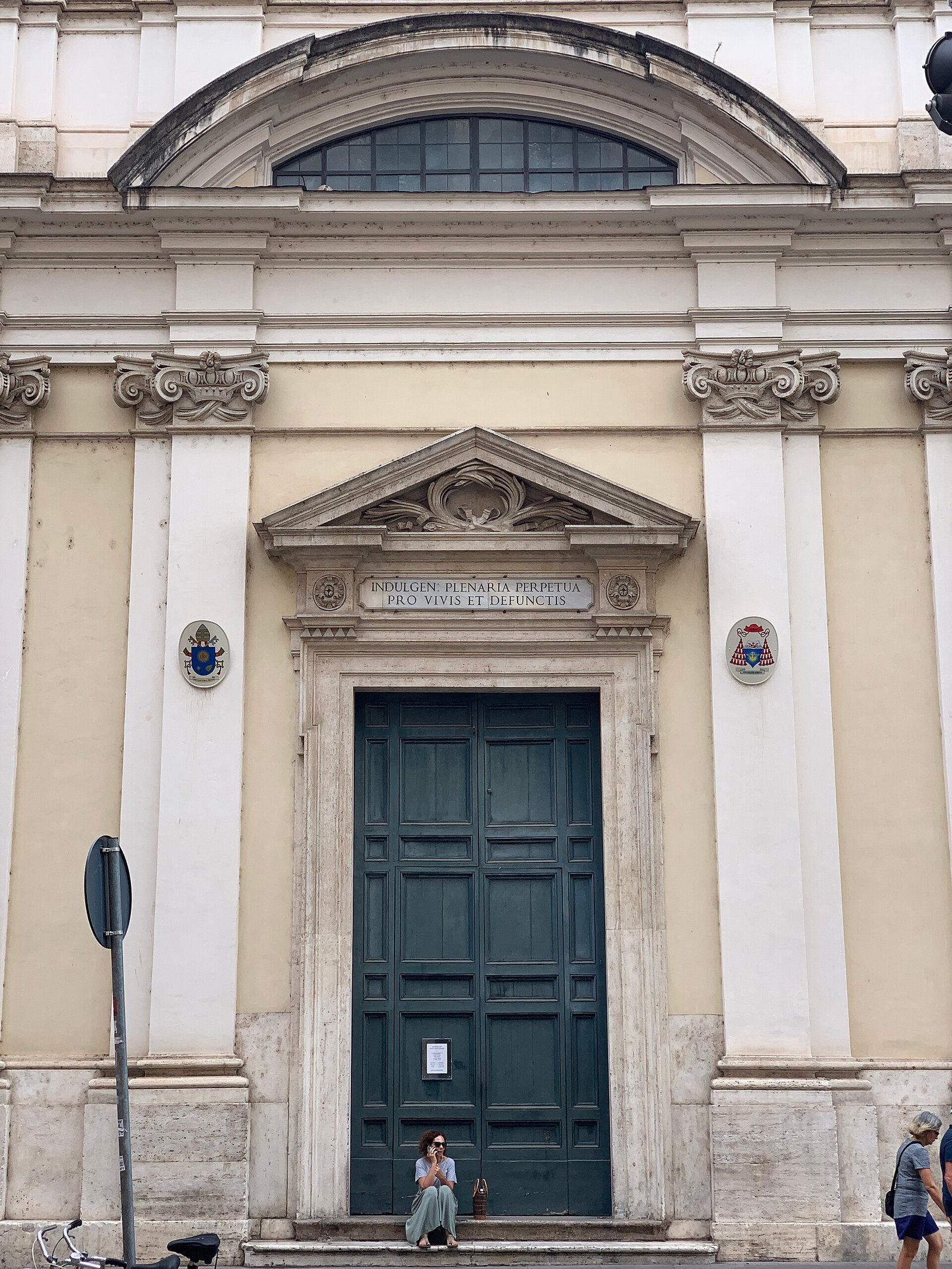
Piazza di Sant'Apollinare is the point where Corso del Rinascimento ends and the historic center bends toward the Tiber and Via Zanardelli. To the south, in a few steps, you reach Piazza Navona, and on the same piazza faces Palazzo Altemps, seat of Museo Nazionale Romano. The basilica occupies the side with Palazzo di Sant'Apollinare, today the seat of the Pontifical University of the Holy Cross. We're in the rione Ponte, on the border with Parione.
Palazzo di Sant'Apollinare, which closes the piazza next to the church, is a university building in full activity. During class hours in front of the door there are students, priests, teachers on break, and the piazza has a different rhythm from Navona. The palazzo isn't a museum and can't be visited. The only door of the complex open to the public, during the hours given, is that of the basilica.
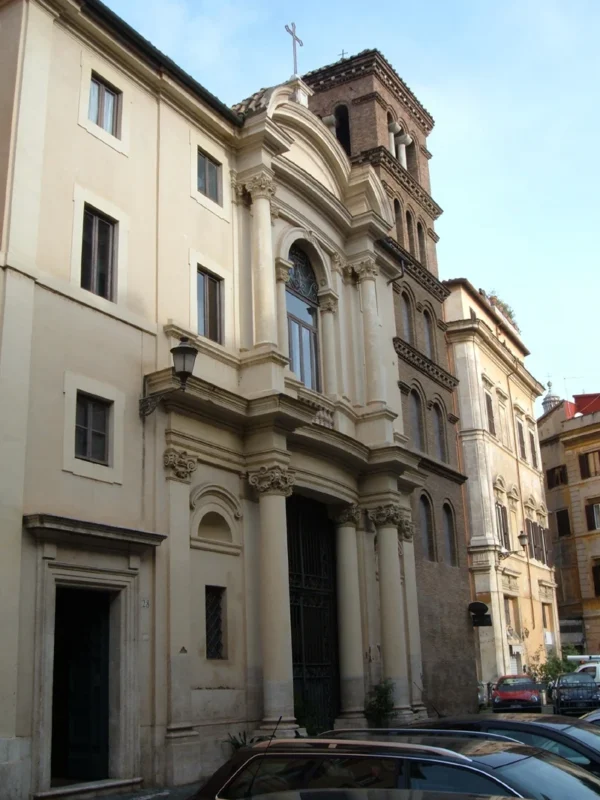
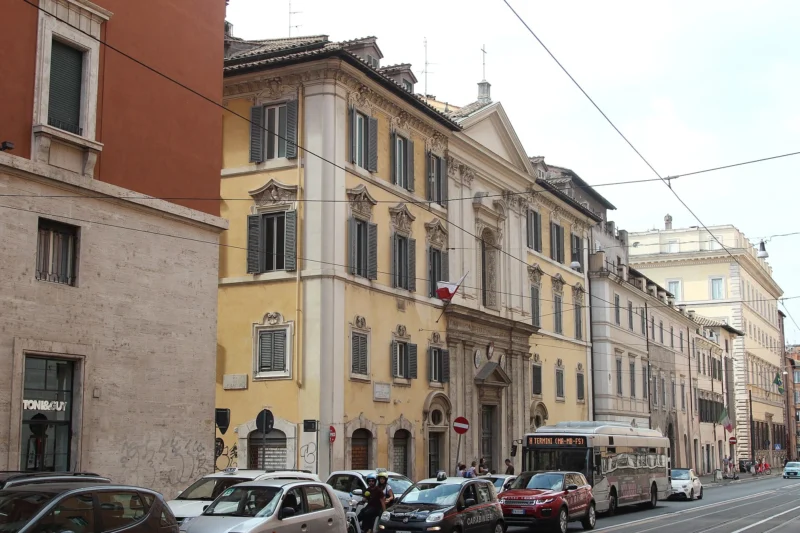
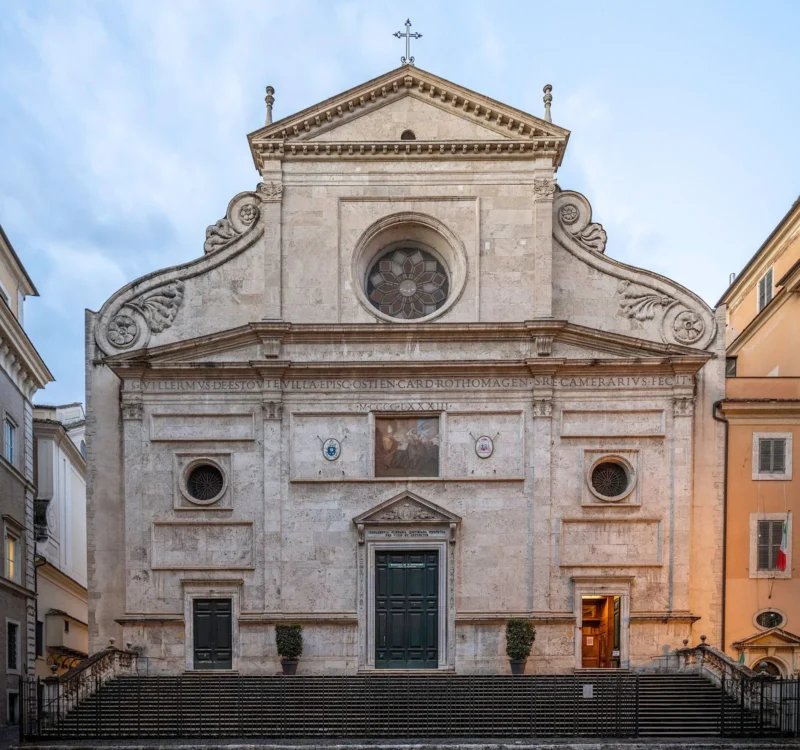
The facade is sober, in two orders, and doesn't look for effect. Anyone arriving from Navona easily mistakes it for the entrance of a college, and isn't entirely wrong: church and palazzo form a single complex and for centuries shared the same institution. The bell tower, with its octagonal base, is best seen by stepping back a few meters in the piazza. Looking up, you realize the church is deeper than the front suggests.
On entering you don't go straight into the nave. First there's a vestibule, a sort of narthex, where the 1400s fresco of the Madonna and Child enthroned between Saints Peter and Paul is kept. It's the oldest piece visible, and its story is the most curious in the complex. From the vestibule you enter the single nave, bright, with shallow side chapels and a frescoed vault that closes off the whole space above.
The chapels on the right are dedicated to St. Aloysius Gonzaga, St. Joseph and St. Francis Xavier. Those on the left to St. John Nepomuk, St. Josemaría Escrivá and St. Ignatius of Loyola. This sequence of dedications tells the building's history by itself: three Jesuit saints for the two centuries of the Collegio Germanico, a Bohemian saint tied to the German-speaking students, and the founder of Opus Dei for the current management.
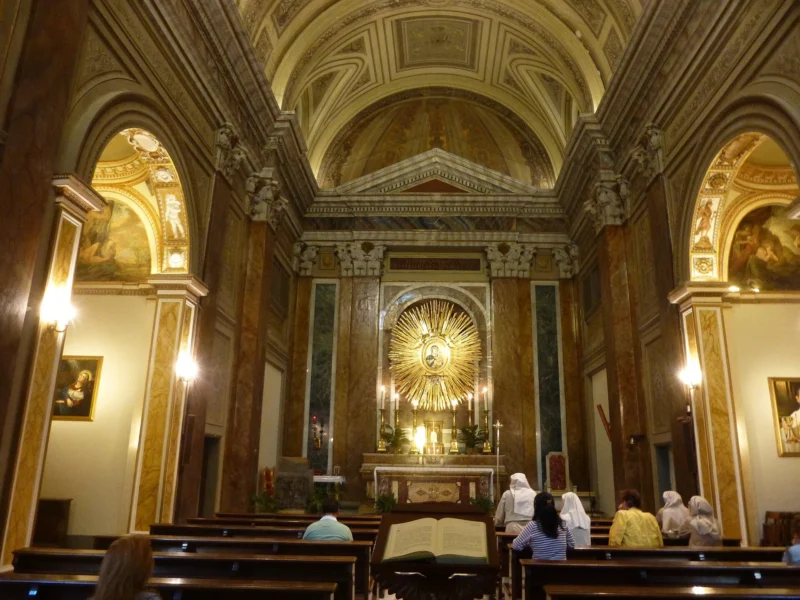
On the high altar is the altarpiece by Ercole Graziani with St. Apollinaris consecrated bishop by St. Peter, from 1745. Above the nave, the Glory of St. Apollinaris frescoed by Stefano Pozzi, which the basilica gives as completed in September 1746. The rest is architecture: pilasters, cornices, calibrated windows. Anyone looking for polychrome marbles and gilded stucco in profusion has to go elsewhere. Here the effect comes from proportion, and it takes a few minutes of silence to notice.
How to get in: hours, Masses and confessions
Admission is free and there's no ticket office. The basilica publishes an opening Monday through Friday in two windows, from 7:30 to 9:00 and from 12:00 to 13:30. Saturday, Sunday and holidays it's closed. For a place of worship in the tourist center of Rome it's a very tight schedule, and it comes from the fact that the church works first of all as a university chaplaincy, serving the students, teachers and staff of the building next door.
There are two weekday Masses, at 8:00 and 12:45, always Monday through Friday. Confessions are held from 7:30 to 8:20 and from 12:00 to 12:40, or by appointment. On Thursday there's Eucharistic adoration from 9:30 to 11:30. The language of the celebrations isn't given on the website. The official contact is the phone 06 681641, and for group requests or celebrations it's best to go through there.
There are no paid guided visits organized by the rectory, no audio guides, no routes with reservations. Anyone selling a ticket for Sant'Apollinare is selling something that doesn't exist. The case of the guided walking tours of the rione is different, which sometimes include a stop in front of the facade: those are third-party services and have no relationship with the church. You go in as a worshiper or as a discreet visitor, during the published hours.
The operator doesn't publish special rules on photographs, dress or groups. Those of any church in use apply: shoulders and legs covered, phone silent, no photos during Mass and no visits in the nave while someone is confessing. The two opening windows coincide almost entirely with the celebrations, so the margin for looking in peace is reduced to the minutes before and after the services.
A curiosity about the Basilica di Sant'Apollinare
The Madonna in the vestibule was hidden on purpose. The fresco, of the Umbrian school, depicts the Virgin with the Child enthroned between St. Peter and St. Paul and is dated 1494. In that same year the troops of Charles VIII of France were coming down into Italy, and in Rome it was decided to cover the image with a layer of plaster. It re-emerged on February 13, 1647, when an earthquake made the covering fall.
So far the documents and the ecclesiastical sources. Tradition adds the rest: the fear that the French soldiers, quartered in the area, would desecrate the image, and the rediscovery as a sign, followed by a wave of popular devotion that led to the arrangement of the chapel. Legend, finally, is everything told about the miracles attributed to the image right after the discovery, which open sources neither list nor document.
The interesting point is another one. For more than 150 years Romans walked past that wall without knowing what was under it. When the Madonna reappeared, the church was still the medieval one. A century later, with the demolition of 1742, the fresco survived again, and was incorporated into the vestibule of the new basilica. Saved twice, once from the plaster and once from Fuga's building site.
Today the image is also known by the title of Mary Queen of the Apostles, and the basilica's website devotes a page to the Chapel of the Madonna. In front of the fresco there's almost always someone praying, even in the shortest opening windows. If you go in only for this, stop in the vestibule without crossing the nave during Mass. From there you see her well and you disturb no one.
Something nobody tells you about the Basilica di Sant'Apollinare
On weekends it's closed. It seems like a detail, and instead it decides everything. Most people arrive at Piazza Navona on a Saturday or a Sunday, see the facade, try the door and leave convinced the church is under restoration or abandoned. It isn't. The rectory simply follows the weekly calendar of a university, and on Saturday and Sunday the student isn't there.
Even on weekdays the window is short. An hour and a half early in the morning, an hour and a half at lunch. Anyone touring the center at a tourist's normal pace, breakfast late and first stop around 10, finds the door closed even on Tuesday. The good window is the one at 12:00, and it's worth building the morning around it, leaving the other churches in the area, which open longer, for before or after.
The second thing nobody says concerns the news story. Many people come here for the story of Enrico De Pedis's tomb, hoping to see something. There's nothing to see. The burial was opened in 2012 and the body, according to the press, was then moved out of the basilica. The crypt, circular in plan and at the level of the ancient church, doesn't appear to be open to the public, and the operator doesn't give visits.
The third is a question of gaze. Anyone who goes in looking for mystery looks at the floor and the side doors, and misses the nave. It's a shame, because the real surprise of the building is the architecture: a church built in six years, from 1742 to 1748, with a unified design, without the layering that makes so many Roman churches tiring. It reads in a single glance, from the entrance to the altar.
Ferdinando Fuga's reconstruction
The church you see is not the medieval one. In April 1742 the demolition of the ancient building began, and on August 27 of the same year Pope Benedict XIV laid the first stone of the new construction. The design was by Ferdinando Fuga, a Florentine architect then very close to the papal court. The consecration, celebrated by the same pontiff, took place on April 21, 1748. Six years in all, a short time for a Roman building site.
In those years Fuga was working on several fronts. His are Palazzo della Consulta on Piazza del Quirinale and the facade of Santa Maria Maggiore, both more famous than this church. At Sant'Apollinare the language is the same but drier: less sculpture, more rhythm of the structural members. The sources describe it as a typical example of the transition between Baroque and Neoclassical, and the definition holds.
The contrarian position, and I say it plainly: the widespread judgment that dismisses Sant'Apollinare as a minor Fuga, cold and utilitarian, is wrong. Precisely because here the architect didn't have to astonish anyone, the church shows better than Santa Maria Maggiore how he thought. A single nave, uniform side light, chapels that don't steal space. Anyone who wants to understand the Roman 1700s after Bernini and Borromini learns more here.
The building site involved artists who worked for the same papal patronage. Besides Pozzi and Graziani, the sources mention Carlo Marchionni for the statue of St. Ignatius of Loyola from 1748, Pierre Legros for the marble St. Francis Xavier from the early 1700s, and the altarpieces by Ludovico Mazzanti, Giacomo Zoboli and Placido Costanzi. The altar cross and the gilded metal candlesticks are attributed to Luigi Valadier and dated 1748.
Legros's St. Francis Xavier is the work that deserves the detour. The French sculptor, active in Rome for the Jesuits, had already worked in the Church of the Gesù and in Sant'Ignazio, and the statue, earlier than the reconstruction, found a place in the chapel of the new building. It's a theatrical marble in a sober church, and the contrast works better than you'd expect.
One last detail on the architecture. Fuga had to solve a lot squeezed between the college building and the piazza, and had no room for a scenographic facade. The solution was to bring all the attention to the interior, with a nave that widens in height more than in plan. Anyone passing from the vestibule into the nave perceives this jump in scale, and it's the key to reading the whole church.
My advice for visiting the Basilica di Sant'Apollinare
Come on a weekday at 12:00 sharp. It's the moment when the basilica reopens after the morning break, before the 12:45 Mass, and you have almost three quarters of an hour to look at the nave, the vestibule and the chapels without interrupting any celebration. Confessions are going on in the same interval, so move slowly and stay away from the confessionals. If you arrive at 12:40, go in, sit down and wait for the end.
The second piece of advice is to pair the church with Palazzo Altemps, which faces the same piazza. A morning built this way works well: museum around 10, out shortly before noon, cross the piazza and the basilica at 12:00. Then lunch and, in the afternoon, the churches of the area that have longer hours. The museum's hours should be checked on the official channel of Museo Nazionale Romano, because they change with the seasons.
The third concerns the light. The nave catches the midday sun well from the high windows, and Pozzi's vault reads better in that window than at the first opening of the morning. If you chose 7:30 because you're an early riser, know that in the winter months the church is still in half-light and the fresco on the vault stays almost invisible. Bring small binoculars, or use your phone's zoom without flash.
Last: phone. The number 06 681641 is the only published contact, and it serves to find out if on a given day there are university functions, openings of the academic year or extraordinary closures. The website doesn't flag summer variations and doesn't publish a calendar of special celebrations. With hours already this tight, a skipped opening means giving up the visit, especially if you're in Rome only for a few days.
A final practical tip concerns groups. A large party entering at 12:30 fills the vestibule just as the faithful arrive for Mass, and creates discomfort for everyone. If you're accompanying more than 10 people, explain the story of the Madonna and of Fuga outside, in the piazza, then go in silently, make a short tour of the nave and leave the space free before 12:40.
The vestibule and the chapel of the Madonna
The vestibule is a filter space between the piazza and the nave, and Fuga used it to solve a practical problem: keeping the venerated image of the old church without having to detach and move it. The fresco stayed in a position close to the original one, and the new architecture was built around it. That's why the Madonna isn't in the nave, where a visitor would look for her, but at the entrance.
Stylistically the fresco belongs to Umbrian painting of the late 1400s, the same figurative culture that in Rome can be seen in the chapels of the big papal building sites of those years. The author's name isn't established by open sources, and anyone who presents it as certain goes beyond the documents. It remains a very legible image, with the two apostles at the sides of the throne recalling the link between the church and the see of Peter.
Anyone going in only for the fresco often doesn't notice a practical detail: the vestibule is also the space where you wait for Mass to begin, where the rectory's notices are read and where students stop before going in. It's not a museum room. Looking at the image up close is possible, but without leaning, without touching the candles and leaving the passage to the nave door free.
The relationship between Peter and Apollinaris, after all, is the theological thread of the whole building. Tradition has the saint as a disciple of Peter and first bishop of Ravenna, and the altarpiece of the high altar shows precisely the episcopal consecration at the hand of the apostle. It's the Roman version of a cult born on the Adriatic. Anyone who knows the Sant'Apollinare basilicas of Ravenna will find here a saint different in manner and identical in the story.
Another well-known fact that is rarely mentioned
For 200 years this was the church of the Collegio Germanico. In 1574 Pope Gregory XIII entrusted the complex to the Jesuits, who set up in the building next door the college meant to train the clergy of German-speaking countries, later becoming the Collegio Germanico-Ungarico. The following year they restored the church. The Jesuits kept it until 1773, the year of the suppression of the Society of Jesus.
The fact is known to historians of the Church and almost ignored by tourist guides, and yet it explains a lot. It explains the chapels dedicated to Ignatius, to Francis Xavier, to Aloysius Gonzaga. It explains the presence of St. John Nepomuk, a saint of Bohemia much venerated in the German-speaking world. And it explains why the sacred music of this church, between the 1500s and the 1600s, had a European weight that today one wouldn't imagine.
The second rarely cited fact is recent. Since the early 1990s the basilica has been entrusted to Opus Dei and is the seat of the chaplaincy of the Pontifical University of the Holy Cross, which occupies the building next door. The chapel dedicated to St. Josemaría Escrivá, founder of the prelature, is the visible sign of this change. On March 16, 1984, a few years earlier, Pope John Paul II had raised the church to the rank of minor basilica.
The third concerns the cardinal title. Leo X established it in 1517, a later pope suppressed it, and Pius XI restored it in the 1900s (the sources diverge on the year, 1929 or 1936) with the full name of Sant'Apollinare alle Terme Neroniane-Alessandrine. The sources name Cardinal Raniero Cantalamessa as titular. It's a yearbook detail, but it says that the church, despite its size, has a rank that many larger churches in the center don't have.
The right photo to take at the Basilica di Sant'Apollinare
The photo to take is that of the nave from the far end, just past the vestibule, with the high altar in the center and the vault closing off the top. Hold the phone vertically and lower it to chest height, so the pilasters stay straight and the vault fits entirely. Shoot it only when the church is empty, before 12:45 or after Mass ends, and without flash.
From outside, the facade photographs badly from the piazza, because the space is narrow and traffic passes constantly. A foreshortened framing from the corner toward Palazzo Altemps works better, which catches the front diagonally and lets you see the depth of the complex. The octagonal-base bell tower fits in the same photo if you step back a few meters and raise the lens, leaving out the parked cars.
The second right photo is a detail: Legros's St. Francis Xavier in his chapel, taken three-quarters, with the light coming from the nave. White marble on a dark background fools the automatic exposure and burns out the drapery. Tap the screen on the statue to focus and lower the brightness slightly before shooting. The result is much more legible.
Avoid instead photographing the Madonna in the vestibule if someone is praying in front of her, and in any case avoid flash on the fresco. It's an image of active devotion, not a museum piece, and the faithful make that clear. If you need a photo of the fresco as a keepsake, wait until the vestibule is free, or make do with the images the basilica publishes in the gallery on its website.
The De Pedis tomb and the Orlandi case: the documented facts
Enrico De Pedis, named by the news reports as one of the leaders of the Magliana gang, was killed in Rome in 1990 and buried in the underground rooms of Sant'Apollinare. A burial in a basilica for a person with no ecclesiastical roles is a rare fact, and the affair stayed unknown to the general public for years. When it became known, it raised questions about the permissions granted by the ecclesiastical authority of the time, questions discussed at length in the press.
The link with the Orlandi case comes from geography and from journalistic reconstructions. Emanuela Orlandi, a Vatican citizen, disappeared in June 1983 after leaving a lesson at the music school that was based in the building next to the basilica. In the 2000s some investigative and journalistic leads suggested a connection between the disappearance and De Pedis, and the tomb became the focus of public requests to open it.
On May 14, 2012, the tomb was opened in the presence of the investigators. The press of that day reported that the body was De Pedis's, and that in the underground rooms a box with other bones had also been found, attributed by the first accounts to burials of earlier centuries. The body was then taken out of the basilica, according to what local press reported. The crypt did not become a place that can be visited.
On everything else the reconstructions split, and here we don't go into the merits of hypotheses that haven't had judicial confirmation. The visitor needs to know only two things. The first is that the church is a place of worship in use, with faithful and students, and has to be treated as such. The second is that the Orlandi family is still looking for answers, and that search deserves respect, not tourism.
Some important events that happened here in history
The foundation is attributed to Pope Hadrian I, who reigned between 772 and 795, and the traditional date is around 780. More recent sources propose a slightly earlier construction, between the mid-7th and the early 8th century, in the years of the Byzantine presence in Rome. In both cases the church rises on remains of structures from the imperial age, and the name still recalls it today.
In 1494 the fresco of the Madonna is painted and in the same year covered, at the passage of Charles VIII's troops. In 1517 Leo X creates the cardinal title. In 1574 Gregory XIII entrusts church and palazzo to the Jesuits of the Collegio Germanico, who the following year start a restoration. On February 13, 1647, an earthquake makes the plaster fall and the Madonna reappear, with a wave of devotion the medieval church had never known.
In April 1742 the old church is demolished. On August 27, Benedict XIV lays the first stone of Ferdinando Fuga's project, in September 1746 Stefano Pozzi completes the fresco of the vault, and on April 21, 1748 the same pope consecrates the new basilica. The old organ built in the second half of the 1600s by Willem Hermans, recalled by the basilica's website, has been lost, like most of the furnishings of the previous church.
In 1773 the suppression of the Society of Jesus ends the Jesuit era. In the 1900s Pius XI restores the cardinal title. On March 16, 1984, John Paul II raises the church to minor basilica. In the early 1990s the basilica is entrusted to Opus Dei and becomes the chaplaincy of the Pontifical University of the Holy Cross. In 1990, in the underground rooms, Enrico De Pedis is buried.
On May 14, 2012, the tomb is opened in the presence of the investigators, in a media climate that brings the piazza onto the televisions of all of Italy. Since then the basilica has resumed the ordinary life of a university chaplaincy, with weekday Masses, confessions and Thursday adoration. The official website mentions projects dedicated to the altarpiece, the choir, the organs and restorations, without publishing schedules or amounts there.
Who passed through the Basilica di Sant'Apollinare
Hadrian I, the pope to whom tradition attributes the foundation, one of the most active pontiffs of the 8th century in the care of Roman churches, an ally of Charlemagne. His name opens the history of the building even though the exact dating remains disputed. Next to him goes Gregory XIII, the pope of the calendar reform, who in 1574 handed church and palazzo to the Jesuits and to their college for German clerics.
Benedict XIV, Prospero Lambertini, from Bologna, a canon lawyer, a learned and practical pope, who wanted the reconstruction, laid its first stone and consecrated it six years later. With him Ferdinando Fuga, his trusted architect in those years, and the team of painters and sculptors working for the court: Stefano Pozzi, Ercole Graziani, Carlo Marchionni, Placido Costanzi. It's a small sampler of 1700s Roman art concentrated in a single nave.
Music had a long season here. According to current biographies, Giacomo Carissimi was for decades choirmaster of the Collegio Germanico, and therefore of this church, in the 1600s, and Tomás Luis de Victoria was tied to the same college in the 1570s. They are two central names of European sacred music. Of their church, though, nothing remains: it was demolished in 1742, and with it the spaces in which they had worked.
Generations of German and Hungarian collegians, trained here between 1574 and 1773, returned to their countries as priests, bishops and professors, and carried north the experience of this piazza. Then, from the 1990s, the students of the Holy Cross, who come from dozens of countries. The basilica's public has remained, centuries later, a public of foreign students in Rome.
Finally the holders of the cardinal title, among whom today the sources name Cardinal Raniero Cantalamessa, and the many faithful of the rione who come for the Madonna in the vestibule. In recent news, the names tied to the 2012 affair, already told above, have to be added. It's a list that doesn't resemble that of any other Roman church, and that reads well only by holding together devotion, study and news.
The name: Nero's baths and Domitian's stadium
The full name of the cardinal title is Sant'Apollinare alle Terme Neroniane-Alessandrine. The baths were the great public complex built by Nero in the Campus Martius and rebuilt in the Severan age by Alexander Severus, hence the double adjective. The complex extended over the area between the Pantheon and the current Corso del Rinascimento, where today stand buildings like Palazzo Madama.
That the church is built on remains of imperial structures is stated by the ecclesiastical sources. Which structures they are, precisely, the operator doesn't publish and the crypt isn't accessible. The right level of caution is this: the certain document is the name, the detailed archaeological reconstruction under the basilica isn't published, and anyone presenting it as visitable confuses this building with the underground rooms of Piazza Navona.
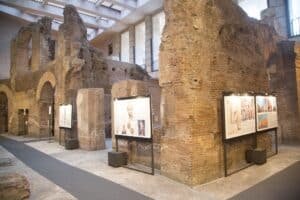
Domitian's stadium, on the other hand, you really can see. The elongated shape of Piazza Navona follows the track, and the remains of the northern end can be visited with a ticket in the Stadium of Domitian, underground of Piazza Navona, with the entrance on the side of Piazza di Tor Sanguigna. It's the ideal stop for understanding what was under this part of the city when the church didn't yet exist.
For those who want to see a large Roman bath complex standing, Nero's baths aren't enough, because they're incorporated into the buildings of the center. You need to move to the Baths of Diocletian, seat of Museo Nazionale Romano like Palazzo Altemps, where the scale of the complex can still be perceived inside the halls and the Michelangelo basilica. A single national museum ticket, when provided by the operator, can link the two sites.
A methodological warning holds for the whole area. Every building between Navona and the Pantheon is presented, sooner or later, as built on top of something ancient, and almost always it's true. But the difference between a documented and visitable remain, a documented and inaccessible remain and a simple neighborhood rumor is enormous. For Sant'Apollinare, in the state of the published sources, you are in the second case.
How to get there
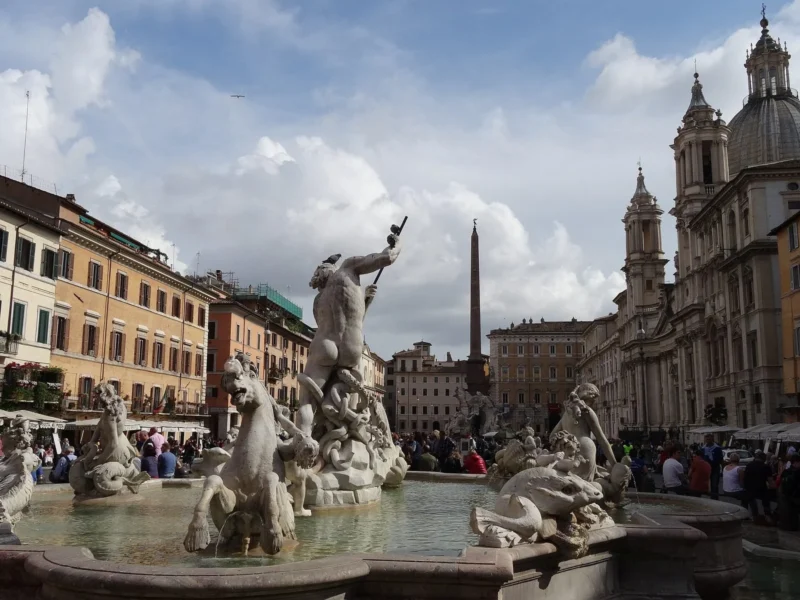
On foot is the simplest way. From Piazza Navona you leave from the northern end, the one with the Neptune Fountain, and in a few minutes you reach Piazza di Sant'Apollinare. From the Pantheon you pass through Piazza di Sant'Eustachio and Corso del Rinascimento, about 10 minutes' walk. From Castel Sant'Angelo you cross Ponte Sant'Angelo and continue east.
From Termini station on foot it takes more or less three quarters of an hour through the center, a route that makes sense only if you use it as a stroll and not as a transfer. From the Vatican the distance is similar, going by Via della Conciliazione and the Lungotevere. If you plan to attend the 8:00 Mass, consider that at that hour the center is empty and the walk is the most pleasant of the day.
By public transport it's best to aim for Corso del Rinascimento or Corso Vittorio Emanuele II, served by several urban bus lines. Line numbers and detours change often in the historic center because of works and events, and the basilica's operator doesn't give connections: the day's route is checked on the ATAC website or on the official app of Rome's public transport. The metro doesn't reach the area.
By car it makes no sense. The piazza is inside the Limited Traffic Zone of the historic center, with electronic gates active on weekdays, and the nearest paid parking is far and expensive. Anyone coming from outside Rome does better to leave the car near a metro station and continue by public transport or on foot. By bicycle the center is easy to get around, but the sampietrini cobblestones demand attention.
When it's closed and what not to expect
The church is closed on Saturday, Sunday and holidays, and outside the two weekday windows. The website doesn't indicate summer closures, but with a calendar tied to the university it's best to ask before coming in August or during the weeks of Christmas and Easter. Anyone who finds the door closed shouldn't think of a restoration under way: the published schedule really is this.
Don't expect tourist services. There are no bookshops, extended explanatory panels, audio guides or marked routes. There are no public restrooms. Information on the works is found on the basilica's website, in the sections dedicated to the history and to the chapel of the Madonna, and it's best to read it before going in. Inside the church people speak in low voices and stop briefly, especially in the minutes before Mass.
Don't expect either to visit the crypt or the underground rooms, or to see Roman remains under the floor. The operator doesn't publish visits to those spaces. Anyone looking for the underground archaeology of the area has to go to Domitian's stadium. Anyone looking for the tomb from the news should know the body is no longer in the basilica. What remains visitable is Fuga's church, with its works, and that's already a lot.
On accessibility the operator doesn't publish information. Anyone moving in a wheelchair or with mobility difficulties has to ask on the official phone if the entrance from the piazza has steps and if there's an alternative access, and which time window is best for going in without crowding. On weekday mornings the church is rarely full, except for celebrations tied to the university.
Eating in the area
The area between Piazza Navona, the Pantheon and Via dei Coronari has the highest density of food traps in the historic center, and the traps can be recognized. The first is the menu with photographs of the dishes, laminated and translated into six languages. A place that has to show you the picture of carbonara is talking to someone who has never eaten it, and builds its kitchen on a customer who won't come back.
The second is the lady rolling out fresh pasta in the window or at a table in front of the entrance. It's scenery, not a guarantee. Pasta is made in the kitchen in the morning, away from dust and traffic. When you see it staged on the sidewalk, what's working is the lure for the passerby, and the bill factors in the show too. Romans walk past without stopping.
The third is the buttadentro, the person at the door who stops you with a menu in hand. A place that has to get its customers on the street has no regulars, and regulars are the only guarantee there is. Same goes for kitchens open without interruption from 11 in the morning to midnight: a real kitchen has a break, because the crew has to rest and prepare for service.
The fourth concerns tables with a view of a famous piazza. There prices tend to adapt to the customer, unpriced items appear like catch of the day or chef's dish, and sometimes the menu inside doesn't match the one displayed outside. Always ask the price before ordering, and check the cover charge and service on the written menu. It isn't distrust, it's the habit of people who live here.
Then there's the question of hours, which helps more than any review. Romans have lunch between one and half past two and dinner from eight on. A kitchen that serves the same menu at 11 in the morning and at five in the afternoon works for a passing public. Anyone coming out of the 12:45 Mass lands at exactly the right time for a real lunch.
Coffee at the bar has one price, at the table another, and in famous piazzas the difference can be steep. It's a known and legitimate rule, you just have to know it. If you only want a quick coffee before the 12:00 opening, drink it standing like the office workers of the area. An outdoor table on a monumental piazza is paid for as a service, and makes sense only if you have time to enjoy it.
None of these remarks is snobbery. Anyone traveling with tired children and looking for a table at four in the afternoon has good reasons to sit wherever they can. It's simply worth knowing what you're buying. Just move three or four streets away from the main piazzas, toward the alleys of Ponte and Parione, to find kitchens with normal hours, short menus and neighborhood customers. To avoid going at random there is our list of the places where we eat.
What to pair it with in the same day
The basilica sits in the middle of a concentration of churches and museums rare even for Rome. A few minutes away are the Basilica of Sant'Agostino, with Caravaggio's Madonna of the Pilgrims, and the Church of San Luigi dei Francesi with the Contarelli Chapel. If you're following the painter, you'll find the complete itinerary in Caravaggio in Rome.
On the west side of Navona are Santa Maria della Pace and the Chiostro del Bramante, next to Santa Maria dell'Anima, the German national church, which dialogues well with the history of the Collegio Germanico. In the piazza, Sant'Agnese in Agone and the Fountain of the Four Rivers, for those following the thread of Bernini in Rome.
For museums, besides Palazzo Altemps, there are the Museo di Roma at Palazzo Braschi, facing Navona and close to Pasquino, and toward the Tiber the Napoleonic Museum and the Mario Praz Museum, in the same palazzo. Those who love historic libraries have the Biblioteca Angelica, next to Sant'Agostino.
Toward the west, the natural route goes down Via dei Coronari to San Salvatore in Lauro, then bends toward Santa Maria in Vallicella and the Oratorio dei Filippini. From there you reach Campo de' Fiori and Via Giulia, with a whole afternoon of churches open longer than Sant'Apollinare.
Toward the east, after the basilica, you pass the Basilica of Sant'Eustachio and Sant'Ivo alla Sapienza, and arrive at the Minerva and Santa Maria in Campo Marzio. Those who collect national and community churches can continue toward San Claudio dei Borgognoni and San Stanislao dei Polacchi, two more stories of foreigners in Rome.
If you arrive on a Saturday or Sunday
If you're in Rome only on the weekend, you see Sant'Apollinare from outside. It's a real limit, and it's best to accept it without trying to force it. The facade, the bell tower and the piazza still tell the position of the complex between Navona, Palazzo Altemps and the Tiber, and with a few minutes of reading before you arrive you understand what's behind that closed door.
On the weekend the nearby churches with wider hours become the obvious choice. Sant'Agostino and San Luigi dei Francesi, with their Caravaggios, follow their own hours that should be checked on the official channels of the respective churches before going out. For the Roman 1700s, which here you see in Fuga's nave, the same era can be found in other churches of the center with holiday hours.
Palazzo Altemps, on the same piazza, is the real weekend alternative. The museum holds the collection of ancient sculptures of the Roman families and occupies a palazzo that closes the story of the piazza on the side opposite the basilica. The hours and weekly closures have to be checked on the official website of Museo Nazionale Romano, because they change during the year and on holidays.
If instead you can choose, move the visit to a weekday and make the stop coincide with the midday opening. A half-hour stop inside the nave, with Pozzi's vault lit by the high sun, is worth more than 10 passes in front of the closed facade. It's one of the few churches in the center where the day of the week matters more than the hour.
Frequently asked questions
When is the Basilica di Sant'Apollinare open?
The basilica publishes an opening Monday through Friday, from 7:30 to 9:00 and from 12:00 to 13:30. Saturday, Sunday and holidays it's closed. The hours are those given on the official website as of the date stated at the start, and it's always best to confirm them by calling 06 681641, because the calendar also follows the activities of the university next door.
Is there an admission fee?
No, admission is free and there's no ticket office. There are no paid guided visits organized by the rectory and no reservations to make. Any ticket sold as access to the basilica has no relationship with the operator. Walking tours of the rione offered by third parties may include a stop in front of the facade, but they are not an official entry channel.
What time are the Masses?
Masses are celebrated Monday through Friday at 8:00 and 12:45. On weekends and holidays the basilica is closed and there are no published celebrations. Confessions are from 7:30 to 8:20 and from 12:00 to 12:40, or by appointment, and on Thursday there is Eucharistic adoration from 9:30 to 11:30. The language of the celebrations isn't given on the website.
Who runs the basilica?
Since the early 1990s the basilica has been entrusted to Opus Dei and is the seat of the chaplaincy of the Pontifical University of the Holy Cross, which is based in Palazzo di Sant'Apollinare next door. The official website presents it as tied to the Prelature of Opus Dei, to the university and to the Diocese of Rome. Since 1984 it has had the rank of minor basilica.
Can you see De Pedis's tomb?
No. The tomb was opened on May 14, 2012 in the presence of the investigators and the body, according to the press, was then taken out of the basilica. The crypt doesn't appear to be open to the public and the operator doesn't give visits. The church is a place of worship in use, attended by students and faithful, and should be visited as such.
Who designed the current church?
The current church is by Ferdinando Fuga, commissioned by Pope Benedict XIV. The demolition of the medieval building began in April 1742, the first stone was laid on August 27, 1742 and the consecration took place on April 21, 1748. The vault with the Glory of St. Apollinaris is by Stefano Pozzi, the altarpiece of the high altar by Ercole Graziani.
What is the Madonna in the vestibule?
It's a 1400s fresco of the Umbrian school with the Madonna and Child enthroned between St. Peter and St. Paul. It was painted in 1494 and covered with plaster the same year, at the arrival of the troops of Charles VIII of France. It reappeared on February 13, 1647 after an earthquake and was kept in the vestibule of the church rebuilt by Fuga.
Are there visible Roman remains under the basilica?
The name recalls the Neronian-Alexandrine Baths and the sources indicate that the church rises on remains from the imperial age, but the operator doesn't publish visits to the underground rooms. To see Roman archaeology in the area you go to the underground rooms of Domitian's stadium, with the entrance from Piazza di Tor Sanguigna, a few minutes' walk away.
Is the basilica wheelchair accessible?
The operator doesn't publish information on the accessibility of the entrance and the interior spaces. Anyone with specific needs should phone the official number 06 681641 before the visit and ask if the entrance from the piazza has steps, if there's an alternative access and in which time window the church is least busy. The information should be requested at every visit, because it can change.
Who wrote the page
The page comes from the editorial team of Tour Leader Pro, the Rome-based structure that designs itineraries, visits and cultural events across Rome and Lazio. The hours, Masses and contacts given here come from the basilica's official website as of the date stated at the start. A university chaplaincy changes its hours with the academic calendar: check again before you go and tell us what you find different.
Building a day in the historic center means fitting together churches open at different hours, museums with seasonal shifts, Masses that close the naves to visitors and limited traffic zones that change with events, for yourself or for a group of 40 people. Anyone facing this kind of work will find on Tour Leader Pro materials designed for those who accompany groups and for those who organize on their own.
For the wide picture, that is regional trains and seasonal schedules, rentals, airports, travel between one province and another and Lazio destinations outside the center of Rome, from the Castelli to the volcanic lakes of the north, the Tyrrhenian coast and the villages of the interior, a useful resource when you need to put together a multi-day itinerary is Italy Planner.
Contact Information
Nearby
 Palazzo Altemps – National Roman Museum100 m
- Basilica of Sant’Agostino in Campo Marzio100 m
- Biblioteca Angelica100 m
- Sant’Antonio dei Portoghesi Church100 m
- Stadium of Domitian – Piazza Navona Underground100 m
- Neptune Fountain100 m
Upcoming events nearby
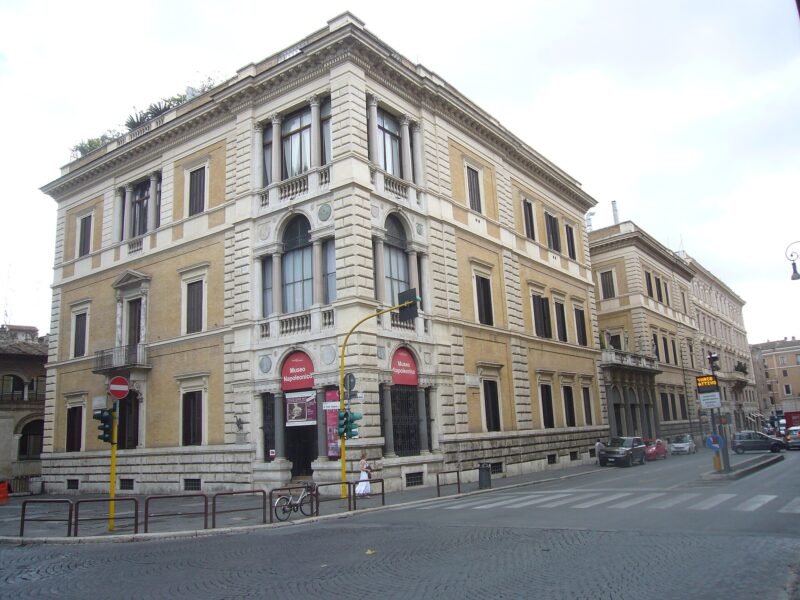
- Italian Baroque in Dresden at the Napoleonic Museum, September 25, 2026 to January 10, 2027200 m
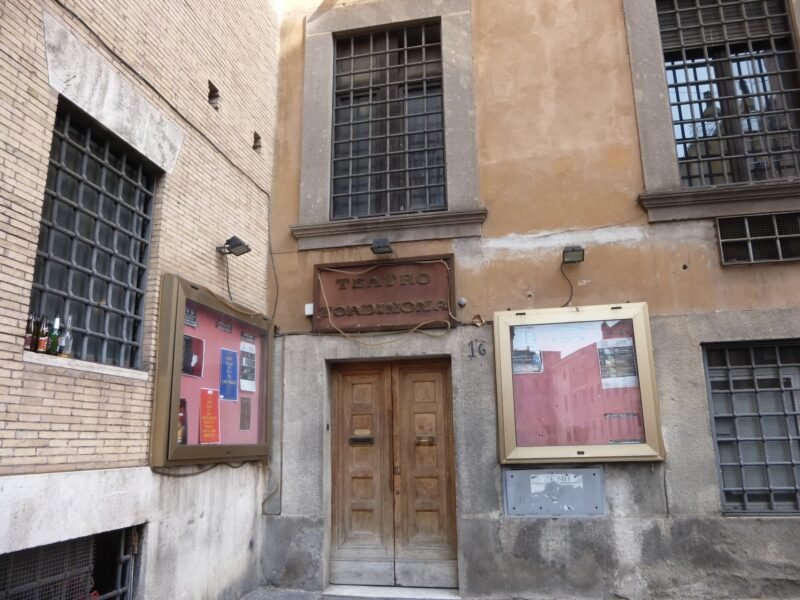
- Teatro Tordinona 2026-2027 Season, September 12, 2026 to May 25, 2027200 m
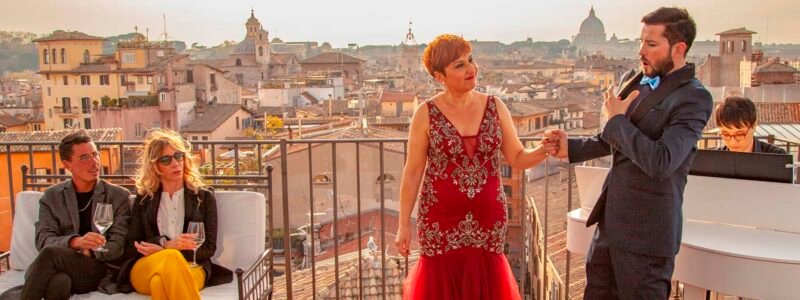
- Rooftop Bar Opera Show at Palazzo Pamphilj, until December 30, 2026200 m
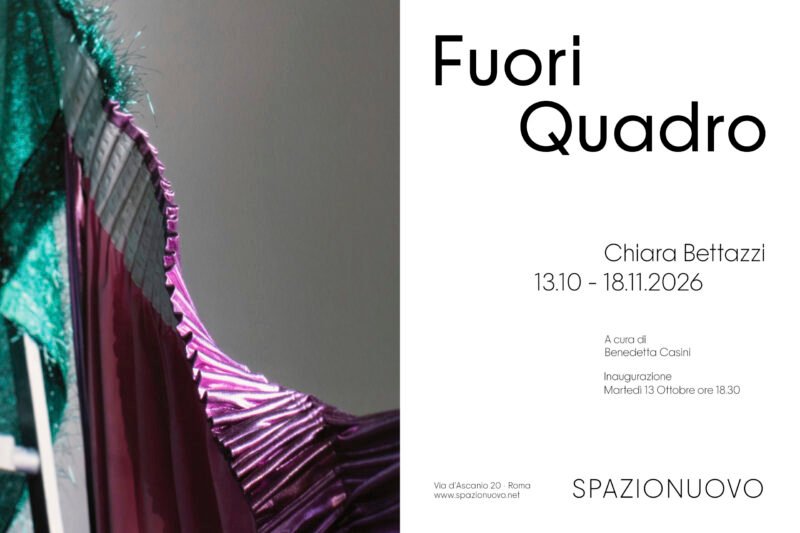
- Chiara Bettazzi, Fuori Quadro at Spazio Nuovo, from October 13 to November 18, 2026300 m