Biblioteca Angelica
In short. The Biblioteca Angelica is at Piazza di Sant'Agostino 8, in Rome, in that knot of alleys between Piazza Navona and the Pantheon where the Campo Marzio narrows and the tourist signs suddenly thin out.
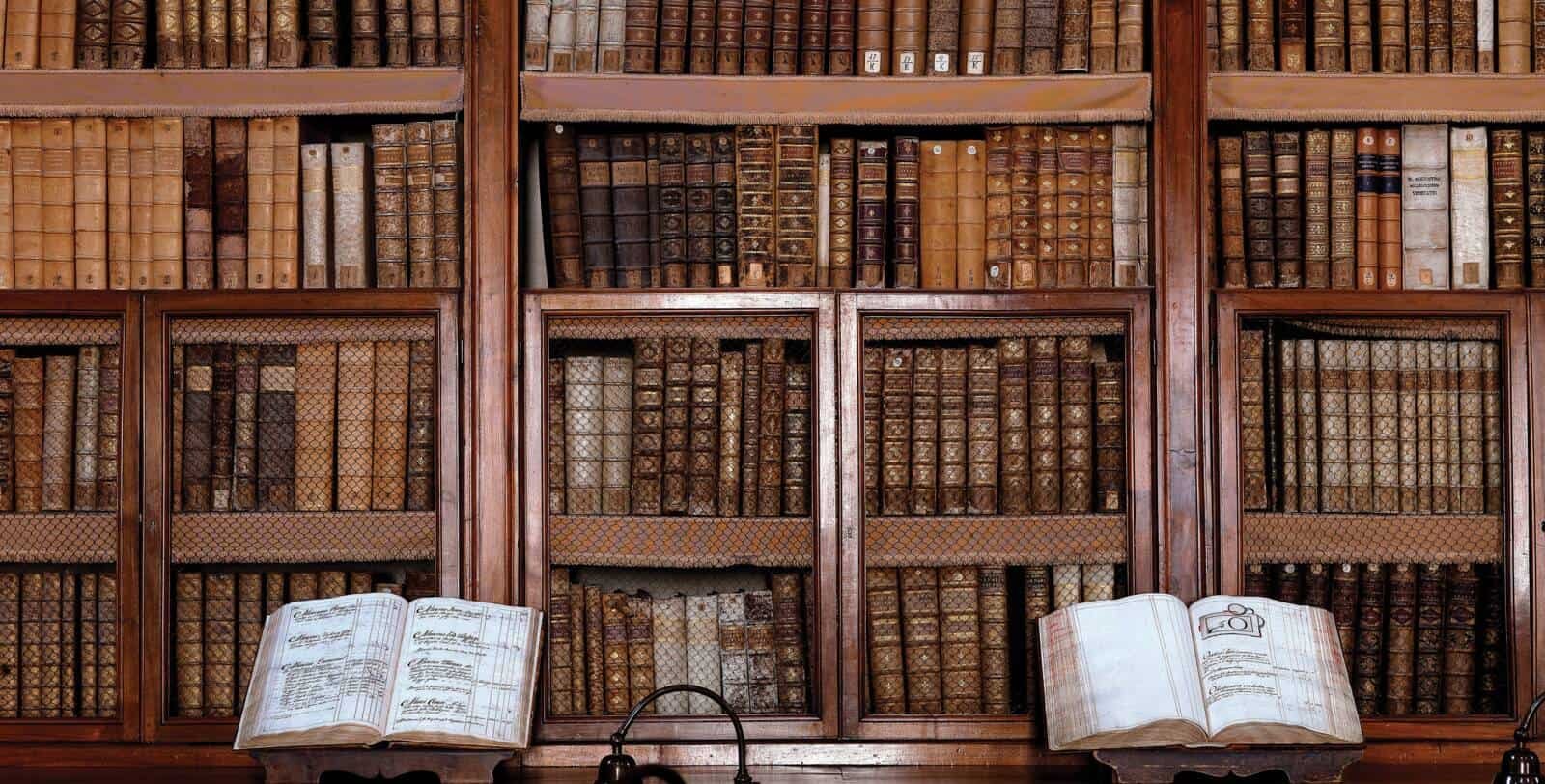
The Biblioteca Angelica is at Piazza di Sant'Agostino 8, in Rome, in that knot of alleys between Piazza Navona and the Pantheon where the Campo Marzio narrows and the tourist signs suddenly thin out. Admission is free, with no ticket and no reservation for ordinary consultation: anyone who is 16 or older may enter, with an ID document, which the staff registers at reception, issuing a numbered personal card. Bags and backpacks are left in the cloakroom. The reading room, that is the Salone Vanvitelliano, opens in the morning hours Monday through Friday, roughly from 9:00 to 13:30, with possible afternoon reopenings and closures for works or events: the exact calendar for the week is published on the library's site, bibliotecaangelica.cultura.gov.it, and the switchboard answers at 06 6840801. Anyone with mobility difficulties uses the entrance at Via di Sant'Agostino 13, calling first to arrange access. The surface lines serving the area are the 30, 40, 46, 62, 63, 64, 70, 81, 87, 492 and 628: you get off on Corso del Rinascimento or on Corso Vittorio Emanuele II and arrive on foot in three or four minutes. The metro doesn't come here: the useful stop is Spagna on line A, then a 20-minute walk, or Barberini and a bus.
If you're building this walk into a wider day, the natural starting point is Piazza Navona, exactly 150 meters away.
How to Get to the Biblioteca Angelica Without Getting Lost in the Alleys
The problem with the Biblioteca Angelica isn't distance, it's geography. Piazza di Sant'Agostino is a closed little square, almost an urban courtyard, and anyone arriving from Piazza Navona following instinct regularly ends up on Via dei Coronari or in front of Palazzo Altemps. There is only one right way: from the north side of Navona, the one with the Fountain of Neptune, you exit onto Via Agonale, cross Corso del Rinascimento and take Via di Sant'Agostino. 30 seconds of alley and the square opens onto the white staircase of the basilica. The library isn't inside the church: the door is on the left as you face the facade, at number 8, plain, with the plaque of the Ministry of Culture. Many walk past it and think it's an office.
By Bus and on Foot to the Biblioteca Angelica
The stops on Corso del Rinascimento are the most convenient: from there the Biblioteca Angelica is two minutes away. From Corso Vittorio Emanuele II, served by half of Rome, you walk up by Via della Cuccagna or by Sant'Agostino and it takes barely five minutes. Anyone arriving from Termini station has two routes: the 64 as far as Argentina and then on foot, or metro A to Spagna and the walk down by Via Condotti, Via Fontanella Borghese, Via della Scrofa. The second is longer but it is one of the most beautiful walks in the center.
By Car and Taxi: Why It's Better to Give Up
Piazza di Sant'Agostino is inside the limited traffic zone of the Tridente and the Centro Storico, active in the time slots published by the Comune. The taxi leaves you on Corso del Rinascimento or in Piazza delle Cinque Lune, then you walk anyway. The nearest parking lots are the one on Via Giulia and the one at the Janiculum, both 15 or 20 minutes on foot. A practical tip: here the car is dead weight, and whoever organizes a group always finds that out too late.
What the Biblioteca Angelica Really Is
It's best to clear up a misunderstanding right away. The Biblioteca Angelica is not a museum with a route, a ticket office and a bookshop: it is a working state library, with real readers studying, a distribution desk, a catalog and a lending service. Only that reading room is one of the most important 18th-century interiors in Rome, and the library lets anyone who enters quietly look at it. This is where its double nature comes from: a place of study for specialists in patristics, the Reformation and Counter-Reformation, Italian literature, and a place to visit for those who have understood that in Rome the most beautiful places have no line.
The overall holdings come to around 200,000 volumes. Over 100,000 are editions between the 1400s and the 1800s. The manuscripts exceed 2,700 pieces among Latin, Greek and Oriental, with a chronological range from the 9th to the 20th century, to which are added about 24,000 loose documents. The incunabula, that is books printed before 1501, number more than 1,100. The 1500s printed books are counted at around 20,000. The engravings, drawings and maps reach about 10,000 items. The periodical titles preserved are 640. The old collection proper, the one tied to Augustinian thought and to the history of the Protestant Reformation and the Catholic Counter-Reformation, is estimated at about 120,000 volumes. Alongside all this there is a living contemporary collection, on which lending works: a detail that almost none of the occasional visitors suspect.
The Institutional Mission of the Biblioteca Angelica
Protection, enhancement and growth: these are the three words with which the library defines its task. Growth is the one that surprises. A historic library could limit itself to preserving, and instead the Angelica continues to acquire, to catalog, to digitize and to lend for exhibitions. Since 1975 it has depended on the Ministry of Cultural Heritage, today the Ministry of Culture, and it is one of the Italian state public libraries.
A Curiosity About the Biblioteca Angelica
In 1644 the French librarian Gabriel Naudé, the man who was building for Cardinal Mazarin the most celebrated private library in Europe and who had written the first modern manual of library science, put in writing an observation that today counts as a certificate: in all of Europe, he maintained, only three libraries guaranteed every scholar regular access. The Bodleian in Oxford, the Ambrosiana in Milan and the Angelica in Rome. Three names, on a whole continent.
The real curiosity is that this distinction came from a clause in a will, not from a state project. Angelo Rocca prescribed that his collection be open to all, without any limit: no distinction of wealth, no letter of introduction, no academic requirement. In a century in which books were patrimonial wealth and knowledge circulated through private networks, that phrase was a small legal revolution. The actual opening to the public is placed in 1609, five years after the formal founding of 1604, and in 1614 the deed of donation to the Augustinian convent of Sant'Agostino was completed.
On the wording of the distinction it's best to be precise, because all sorts of things are read around. The Biblioteca Angelica is the oldest public library in Rome: on this the ministerial sources have no uncertainty. On the European distinction the literature oscillates between two formulas, the one that names it as the first library in Europe open to the public and the one, more cautious and more common in official documents, that places it among the first and clearest examples of a public library together with the Ambrosiana, founded in 1609, and the Bodleian, reopened in 1602. The difference between the two formulas is a few years and a few quibbles over the meaning of public. The substance doesn't change: when the Angelica opened its doors, an ordinary reader who wanted to consult a book in Europe had very few places to go, and this was one.
Why It Is Called Angelica
Not for the angels. The name comes from the founder, Angelo Rocca, and the coincidence between his first name and the adjective has fed the misunderstanding for centuries. Rocca himself, in 1608, published a booklet titled Bibliotheca Angelica, a kind of introductory guide for those who entered: the first Roman example of an orientation tool for the reader.
Angelo Rocca and the Founding of the Biblioteca Angelica
Angelo Rocca was born in Rocca Contrada, in the Marche, in 1546, and died in Rome in 1620. He joined the Augustinians very young, studied in Padua, became titular bishop of Tagaste, that is the native city of Saint Augustine, a choice anything but random for an Augustinian of culture. He was papal sacristan and above all a man of printing: he oversaw for Sixtus V the work of the Vatican Press, edited editions, handled textual revisions. The trade explains the library. Rocca didn't collect books as precious objects, he collected them as working tools, and a man who thinks of books as tools sooner or later arrives at the conclusion that they must be used.
His collection exceeded 20,000 volumes. Clement VIII authorized the donation in 1595, the founding is dated to 1604, the formal transfer to the convent of Sant'Agostino was completed in 1614. Rocca endowed the institution with its own income, because a library without a budget dies within a generation, and imposed two conditions: that the books not be moved from the premises built expressly to hold them, and that access be guaranteed to everyone regardless of income and social condition. The second condition is the one that made the Angelica famous. The first is the one that explains why it is still here.
The Verdict on Rocca
Among the Roman patrons of the early 1600s, Rocca is the least theatrical and the most effective. He didn't leave a painted chapel or a fountain with his coat of arms. He left a regulation. In historic libraries the public gets excited about the shelves: fair enough, but the great thing about the Angelica is a clause written on a notarial paper.

The Salone Vanvitelliano of the Biblioteca Angelica
The reading room is the work of Luigi Vanvitelli, the architect of the Reggia di Caserta, and was completed in 1765. It arose from a concrete problem: the purchase of the Passionei library, in 1762, had doubled the holdings and the books no longer fit. The renovation work kept the library closed for a long time, according to the account of specialist historians from 1748 until the full reopening to the public, placed in 1786.
What you see on entering is a rectangular space covered by a barrel vault, with wooden shelving running along the whole perimeter and rising to the springing of the vault, served by a continuous gallery with a balustrade. The woodwork is by the cabinetmaker Nicola Fagioli. The light comes from above and cuts the spines of the volumes diagonally. The hall holds around 120,000 old volumes: not a stage set, a real storage that is also architecture.
How to Look at the Salone of the Biblioteca Angelica Without Disturbing
A rule of behavior is needed here, and the library applies it politely but without discounts. A visitor who hasn't requested books stays in the entrance area, looks, possibly photographs without flash if the staff allows it, and doesn't cross the room among the tables. The seated readers are working. Groups should enter in batches of four or five people: a whole coach unloaded into a study room is discourteous, and in a state library discourtesy is paid for with a ban on entry.
Comparison with the Other Great Roman Halls
Rome has three historic reading rooms worth the trip, and it is worth lining them up. The Biblioteca Casanatense, a short walk from the Collegio Romano, has a 1600s hall that is more theatrical and more decorated. The Biblioteca Vallicelliana, in the Borromini Oratorian complex, has the most architecturally daring space. The Angelica is the plainest of the three and, in our opinion, the most beautiful to be inside: the pale wood, the vault without intrusive frescoes, the silence. The Casanatense impresses, the Angelica convinces. Anyone looking instead for the contemporary library machine, with kilometers of storage and digital services, should look to the National Central Library of Rome, at Castro Pretorio.
The Collections of the Biblioteca Angelica
The history of the Angelica is the history of the collections that flowed into it. Each one changed the institution's physiognomy, and knowing them helps explain why a researcher of European religious history sooner or later arrives at Piazza di Sant'Agostino.
The Rocca Collection, the Original Core
Over 20,000 volumes gathered by the founder over a lifetime of editorial work: theology, patristics, Augustinian texts, works of scholarship, printing tools. It is the core that gives the library its Augustinian orientation, never abandoned.
The Lucas Holste Collection, 1661
Lucas Holste, or Holstenius, a German from Hamburg converted to Catholicism, was custodian of the Vatican Apostolic Library and one of the finest scholars of his time, a geographer, philologist and librarian to Francesco Barberini. At his death he left to the Augustinians of the Angelica his large collection of printed books, valued at around 3,000 pieces. It was the first great outside acquisition and certified the Angelica as an international research library.
The Library of Cardinal Domenico Passionei, 1762
This is the acquisition that changed everything. Domenico Passionei, who died in 1761, had been nuncio and papal legate in several countries of Protestant Europe, and had taken advantage of those years to buy in quantity religious and polemical texts that nobody sold in Rome: Lutheran and Calvinist works, controversial literature, Dutch and German scholarship. Passionei was also tied to the circle of Roman Jansenism, and his library bears the marks of it. The purchase, financed with the income that Rocca had provided, in practice doubled the holdings and definitively steered the institution's scholarly vocation toward the history of the Reformation and the Counter-Reformation.
The Forbidden Books Kept at the Biblioteca Angelica
A direct consequence of the Passionei collection: the Angelica holds a notable number of works that the Index of Forbidden Books prohibited to Catholics. They were kept by an Augustinian convent, in the very center of Rome, 200 meters from the ideal Palazzo del Sant'Uffizio of anyone's imagination. Reading licenses existed and were granted to scholars: the irony of the situation remains intact.
The Bodoni Collection, 1919
In 1919 an important collection of editions printed by Giambattista Bodoni came into the library, the printer from Saluzzo who in Parma invented the modern typeface and the page that we all have in our eyes without knowing it. For anyone interested in the history of the book, this collection is one of the best reasons to climb the stairs of the Biblioteca Angelica.
The 954 Opera Libretti of Nicola Santangelo
At the end of the 1800s an unexpected collection arrived: 954 libretti of 19th-century operas that had belonged to Nicola Santangelo, former Minister of the Interior of the Kingdom of the Two Sicilies and a fanatical opera lover. A Bourbon minister who collected libretti ends up in a Roman Augustinian library: the history of book collections is made of these short circuits, and the collection is today a precious source for the history of musical theater.
The Accademia dell'Arcadia from 1940
Since 1940 the Biblioteca Angelica has hosted the literary Accademia dell'Arcadia, founded in Rome in 1690 in the orbit of Queen Christina of Sweden, and keeps its book holdings, about 4,000 pieces, as well as the picture gallery with the portraits of the academicians. The Arcadia has its historic open-air seat in the Bosco Parrasio on the Janiculum: anyone interested in the Rome of the 1700s should see the two places in the same week, because each explains the other.
The Arnaldo Bocelli Collection, 1975
In 1975, the same year as the transfer to the newly formed Ministry of Cultural and Environmental Heritage, the book collection of Arnaldo Bocelli came in, a militant literary critic of 20th-century Italy. It is a sign that the Angelica didn't stop growing when it became state-run.
Manuscripts, Incunabula and Maps
Among the famous pieces is the copy of Cicero's De Oratore printed at Subiaco in 1465 by the first printers Sweynheym and Pannartz, that is the first book put to press in Italy, and an edition of the Divine Comedy from 1472. The manuscripts cover Latin, Greek, Arabic and Syriac, and include notable medieval codices. The maps and engravings form a collection of their own, little visited and very rich.
Something Nobody Tells You About the Biblioteca Angelica
That you can walk in. Really, for free, without a reservation, without a guided tour, without an organized group, on any weekday morning. This information, which should be the first in every guide to Rome, is regularly omitted because the Biblioteca Angelica is cataloged as a library and not as an attraction, and those who write about travel copy from lists of attractions. Result: Romans who live a kilometer from here and have never been in.
The practical detail that follows is even less known. The ID document isn't for a generic security check: it's because entering a state library involves a registration. You fill in a form, you receive a numbered personal card, and from that moment you are a reader of the Angelica, with the right to request volumes at the distribution desk during service hours. You don't need to be a university student, you don't need a letter from your department, you don't need a research project. You need to be 16 or older. Anyone who compares this with the procedures of other great research libraries understands how much Angelo Rocca's clause still weighs, four centuries later.
Second thing rarely said: requests for old books have tighter hours than the opening of the room, and the most delicate pieces may require specific authorizations. Anyone who arrives at 12:45 thinking of having an incunabulum brought goes home empty-handed. Anyone who arrives at 9:15 and already knows the call number of the volume they need works for two hours in conditions that, in the rest of Europe, cost a lot.
Third thing: lending. A library with 1,100 incunabula also has a modern collection and lends current books to its registered users. The Angelica is not a book museum, it is a working library. For anyone living in central Rome, it's a public service, not a curiosity.
Frequently Asked Questions About the Biblioteca Angelica
How much does it cost to enter the Biblioteca Angelica?
Entrance to the Biblioteca Angelica is free, both for consultation and for viewing the Salone Vanvitelliano from the threshold. You don't need to pay a ticket and you don't need to be part of an organized group: a weekday morning is enough. Free entry also applies to those who only want to look in at the reading room without staying to study.
Do you need to book to visit the Biblioteca Angelica?
For ordinary entry during opening hours the Biblioteca Angelica doesn't require a reservation. You do need to book for guided tours of the salone and for extraordinary openings, which have a limited number of places. Anyone who only wants to see the reading room can therefore show up freely on a weekday.
Where exactly is the Biblioteca Angelica?
The Biblioteca Angelica is in Piazza di Sant'Agostino, in the Campo Marzio district of Rome, a few steps from Piazza Navona. The square is closed and compact, almost an urban courtyard, and anyone arriving from Navona following instinct risks ending up on Via dei Coronari or in front of Palazzo Altemps instead of the right place.
How do you get to the Biblioteca Angelica from Piazza Navona?
From Piazza Navona it's best to exit from the north side, the one with the Fountain of Neptune, onto Via Agonale, cross Corso del Rinascimento and take the street that leads straight to Piazza di Sant'Agostino. It is the most direct route to reach the Biblioteca Angelica without wandering aimlessly in the alleys of the Campo Marzio.
Who founded the Biblioteca Angelica and when?
The Biblioteca Angelica was founded by Angelo Rocca, an Augustinian bishop born in 1546 and died in Rome in 1620, a man of printing close to Sixtus V. In 1595 Pope Clement VIII authorized Rocca to donate his collection to the Augustinian friars, and the library was formally born in 1604 at the convent of Sant'Agostino.
What do you need to bring to enter the Biblioteca Angelica?
To enter the Biblioteca Angelica you need a valid document: without it access is not possible. The backpack must be left in the cloakroom, and in the room you can bring only a notebook and a pencil, because pens are not allowed in the consultation rooms.
What is the best time to visit the Biblioteca Angelica?
The best time to visit the Biblioteca Angelica is early in the morning, between 9:00 and 10:00, on a midweek day, preferably not a Monday. In that time slot the room is still not very crowded and the light on the wood of the shelves is the most beautiful of the day.
Is the Biblioteca Angelica really only a library or can it be visited like a museum?
The Biblioteca Angelica is a working state library, with readers studying, a distribution desk and a lending service, not a museum with a route and bookshop. The 18th-century reading room, however, remains visible to anyone who enters quietly, which makes it an unusual but real stop for those visiting Rome.
My Advice for Visiting the Biblioteca Angelica
Go early in the morning, between 9:00 and 10:00, on a midweek day, preferably not a Monday. The room fills up around mid-morning and the best light on the wood of the shelves falls precisely in the first hour. Bring a valid document: without it you don't get in, and there is no negotiating. Leave your backpack in the cloakroom without making a fuss, take only a notebook and a pencil. Pens, in rooms with old material, are often banned: a pencil never creates problems.
When you enter, stop where the staff indicates and stay there two or three minutes in silence before looking up. The salone is hard to read if you attack it with a phone in your hand. First you listen to the sound a real reading room makes, then you raise your gaze toward the gallery.
The least obvious advice concerns time. An honest visit to the Biblioteca Angelica lasts 20 minutes, not two hours: it is an interior, not a route. Those 20 minutes, however, should be set into a well-built morning, because within a radius of 300 meters there are things that hold up against any comparison. You can put it this way: Angelica at 9:30, the basilica of Sant'Agostino at 10:00, San Luigi dei Francesi at 10:45, the Pantheon at noon. Four stops, two Caravaggios, an intact Roman architecture and an 18th-century room, all on foot and almost all free. Anyone who guides professional groups and wants to build itineraries of this kind with licensed guides will find the service at TourLeaderPro Roma.
Last recommendation, the most unpleasant: if you're looking for a place to make noise, this is not your morning. The library grants a view of the salone as a courtesy to the public, and that courtesy is preserved by behaving well.
The Biblioteca Angelica and the Basilica of Sant'Agostino in Campo Marzio
The library and the church are two bodies of the same historic organism. The basilica of Sant'Agostino in Campo Marzio, built between 1479 and 1483 with the funding of Cardinal Guillaume d'Estouteville, is one of the first Renaissance churches in Rome and has a travertine facade that, according to tradition, reuses material from the Colosseum. The Augustinians have been present here since the 1200s and still officiate in it today. The adjoining convent is the building that houses the Biblioteca Angelica: without the friars of Sant'Agostino, Rocca's bequest would have had nowhere to rest.
Inside the basilica, entry is free and the hours given by the parish cover the morning from 7:30 to 12:30 and the afternoon from 16:00 to 19:30, with slightly different holiday hours. In the first chapel of the left aisle is Caravaggio's Madonna dei Pellegrini, also called the Madonna di Loreto, painted around 1604, that is in the same year as the founding of the library. On the third pillar of the left aisle is Raphael's Prophet Isaiah, a fresco of 1512, and beneath it the Madonna del Parto sculpted by Jacopo Sansovino, an uninterrupted object of Roman popular devotion for five centuries. The relics of Saint Monica, mother of Augustine, are kept in the basilica. There are also works by Guercino and Lanfranco.
The most curious coincidence is chronological. In 1604 Angelo Rocca founds a library so that anyone can read, and a few meters away Caravaggio paints a Madonna with two pilgrims with dirty feet kneeling on the threshold. Same square, same year, same idea: the sacred and knowledge stop being reserved.
The whole chain is here, in 50 square meters of square: the saint of Tagaste, the religious order that bears his name, the church that guards his mother and the library that studies his thought. For anyone who wants to understand Saint Augustine's fortune in Rome, the Biblioteca Angelica remains the obligatory point of reference, together with the basilica that is its next-door neighbor.
Another Well-Known Fact, Yet Rarely Cited
That the Biblioteca Angelica became public in the administrative sense of the term through a law of expropriation, and not through a donation to the State, is written in all the reference works and almost never told. The law suppressing church property of 1867, applied in Rome after 1870, transferred to the Italian State the assets of the suppressed religious bodies. In 1873 the library of the convent of Sant'Agostino passed to the Kingdom of Italy. The sources oscillate between 1871 and 1873 depending on if one considers the start of the procedure or the completion of the transfer.
The interesting point isn't the date, it's the paradox. A collection born from the will of a bishop, kept for almost three centuries by Augustinian friars and opened to the public by a clause in a will, becomes the property of the liberal State as church property to be absorbed. The continuity of service did not break: the owner changed, the function stayed, and Rocca's clause survived its own legal framework. It is one of the few cases in which the suppression of church property produced exactly what the founder had wanted.
It is worth adding a second fact of the same family: the Biblioteca Angelica belongs to the group of Italian state public libraries, a set of a few dozen institutions scattered across the country, and its management passed in 1975 to the ministry just then created. The public that enters today enters an office of the State, with everything that entails in terms of regulations, and at the same time a convent of the 1500s. The two things coexist behind the same door.
The Right Photo to Take at the Biblioteca Angelica
The good photograph in this place is only one and it isn't the one everybody takes. Everyone points the phone horizontally toward the back of the salone and gets a dark rectangle with two rows of books: the barrel vault flattens the perspective and the result looks like a faded postcard. The right photo is vertical, taken from the threshold, with the gallery cutting the frame at two thirds of its height and the light coming down from above along the shelving. The vertical format returns the real height of the room, which is its defining feature.
Second rule: no flash, ever, for any reason. Old materials don't tolerate it and the staff immediately interrupt the visit. Third rule: no recognizable reader's face in the frame. Someone studying in a public room hasn't agreed to end up on a social profile, and this is good manners before it is a rule.
If you want a detail instead of the whole, frame a stretch of Nicola Fagioli's wooden shelving at an angle, with the spines of the volumes receding: the 18th-century wood and the pale parchment of the bindings give a range of warm colors that holds up very well even without filters. Anyone with a real camera should bring a fast lens and work handheld: tripods are not allowed in the reading room.
Outside the library, the best photograph of the square is taken from the staircase of the basilica, late afternoon, with the travertine of the facade warming up and the library's door on the right of the frame. For the rest of the neighborhood, the classic advice applies here too: the night lights of the Campo Marzio are an underrated subject, and for anyone who wants to understand how to get around Rome after sunset there is a reasoned guide on ItalyPlanner.

Some Important Events That Happened Here in History
1595, Clement VIII's authorization. The pope authorizes Angelo Rocca to donate his collection to the Augustinian friars. It is the act that makes everything else legally possible: without that permission, a private collection of 20,000 volumes would have been scattered among heirs and booksellers as dozens vanished in the Rome of the 1600s.
1604, the founding. The Biblioteca Angelica is formally born at the convent of Sant'Agostino, with its own income and with the clause of opening to anyone. In the same months, a few meters away, Caravaggio is working on the Madonna dei Pellegrini for the Cavalletti chapel of the basilica.
1608, the printing of the Bibliotheca Angelica. Rocca publishes the booklet that presents the contents of the collection to readers. It is the first Roman tool designed to orient a general public inside a library, and it anticipates by centuries the very idea of service to the reader.
1609, actual opening to the public. The doors open. From that moment anyone who needs to consult a book enters without having to prove anything.
1614, the transfer to the convent. The deed of donation is completed and the volumes pass permanently to the friars, in the premises built to hold them.
1644, Gabriel Naudé's certification. Mazarin's librarian writes that in all of Europe only three libraries guarantee regular access to every scholar, and includes the Angelica. It is the moment when the Roman model becomes a continental reference.
1661, the bequest of Lucas Holste. The custodian of the Vatican Library leaves the Augustinians his printed collection. The Angelica enters the circuit of European scholarship.
1762, the purchase of the Passionei library. The holdings double in one stroke and change nature: thousands of texts of the Reformation and of religious polemic from beyond the Alps come in.
1765, Vanvitelli's salone. The new reading room is completed, designed to bear the weight, literal and cultural, of the previous acquisition. The full reopening to the public after the long construction site is placed in 1786.
1873, the transfer to the Italian State. In application of the law suppressing church property, the library becomes the property of the Kingdom of Italy. The sources give the two-year span 1871-1873 for the different phases of the procedure.
1919, the Bodoni collection. The collection of editions by Giambattista Bodoni comes in, and with it an entire chapter of the history of Italian printing.
1940, the Arcadia in the Angelica. The literary Accademia dell'Arcadia, born in 1690, establishes its seat here and deposits its library and picture gallery.
1975, the Ministry and the Bocelli collection. The library passes to the newly formed ministry of cultural heritage and acquires the collection of the critic Arnaldo Bocelli.
Who Has Passed Through the Biblioteca Angelica
The first name is obvious and must be said in full: Angelo Rocca, bishop of Tagaste, papal sacristan, editorial curator of the Vatican Press. Here he worked, here he left everything, here the story began.
Gabriel Naudé knew the library and in 1644 cited it as one of the three in Europe truly open: his testimony is the most authoritative outside certification the Angelica possesses.
Lucas Holste, the great scholar from Hamburg who converted to Catholicism, librarian of the Barberini and custodian of the Vatican Library, frequented the Augustinian circle to the point of destining his books to it in 1661.
Cardinal Domenico Passionei, a man of the curia, nuncio, stubborn bibliophile and close to Roman Jansenism, did not work at the Angelica but transferred to it, by bequest and by money, half a lifetime of European purchases.
Luigi Vanvitelli, the architect who was building the Reggia di Caserta for Charles of Bourbon, designed this room. Few Roman rooms can claim to be his work.
The academicians of the Arcadia, at home within these walls since 1940, bring with them a genealogy that goes back to Christina of Sweden and runs through the whole literary 1700s in Italy, from Gravina to Metastasio: the Academy is that one, the portraits in the picture gallery are theirs.
Arnaldo Bocelli, one of the militant critics of 20th-century Italy, left his working library here in 1975.
And then the cinema, which fell in love with this room. The Salone Vanvitelliano has hosted important film shoots, from Vittorio De Sica's The Garden of the Finzi-Continis to international productions shot in Rome in the 2000s. Anyone who has seen those films and then enters Piazza di Sant'Agostino has the feeling of having already seen that room, and for once it's not a trick of memory.
It should also be said who didn't pass through here, because urban legend always tries: there are no documented visits by Goethe or Stendhal to the Angelica, and whoever tells you otherwise is embroidering. The library has a history strong enough not to need imaginary guests.
What to See Around the Biblioteca Angelica
The 10-minute walking radius around the Biblioteca Angelica is probably the densest in Rome, and this makes the visit an investment with immediate returns.
Two Minutes from the Biblioteca Angelica
The basilica of Sant'Agostino, with Caravaggio, Raphael and Sansovino, is on the same square. Palazzo Altemps, seat of the Museo Nazionale Romano with the Ludovisi collection and the Galata suicida, is 150 meters away. Piazza Navona with Bernini's Fountain of the Four Rivers is around the corner, and beneath the square you can visit the Stadium of Domitian with the original structures of the 1st century.
Five Minutes from the Biblioteca Angelica
San Luigi dei Francesi with Caravaggio's cycle of Saint Matthew. Palazzo Madama, seat of the Senate, open to visits on set days. The Pantheon, which since 2023 has an entrance ticket. The basilica of Santa Maria sopra Minerva, the only Gothic one in Rome, with Michelangelo's Christ and Bernini's little elephant in front.
10 Minutes from the Biblioteca Angelica
Campo de' Fiori with the morning market and the statue of Giordano Bruno. The Museo di Roma at Palazzo Braschi, which tells the story of the city from the Middle Ages to today. Farther away, but within the same day, the Capitoline Museums on the Capitoline Hill. For the mid-morning break, the historic counters of Roman coffee are a few steps toward the Pantheon and toward the Minerva: anyone who wants to know how to order and how much to pay will find an honest guide on ItalyPlanner.
The Biblioteca Angelica for Students, Groups and Children
Who Studies at the Biblioteca Angelica
For a scholar of patristics, church history, the Reformation and Counter-Reformation, the history of the book or Italian literature, the Angelica is a first-rate working tool. The combination of the Rocca, Holste and Passionei collections isn't found elsewhere in that concentration. The practical advice is always the same: you arrive with the call numbers already taken from the catalog, you respect the distribution hours, you ask in advance for materials subject to consultation restrictions.
The Biblioteca Angelica for Groups and Guided Tours
There are guided tours of the Salone Vanvitelliano, organized by the library itself and on the occasion of events such as the European Heritage Days and the extraordinary spring openings. Numbers are kept small, typically around 20 people per turn, and booking is mandatory. Dates are published on the library's site and should be checked in good time, because places run out fast. For anyone building professional itineraries with licensed guides, the organizational part is better solved by delegating it to people who do it for a living: the reference is TourLeaderPro.
The Biblioteca Angelica with Children
Honestly: under 10, no. There is nothing to touch, silence is mandatory and the visit is short. From 12 up, however, it works well if told right, because the idea that four centuries ago someone decided that books should belong to everyone is a concept that kids grasp right away. Remember that under 16 entry for consultation is not allowed, so for minors access goes through the guided tours and the extraordinary openings.
Accessibility of the Biblioteca Angelica
The entrance for anyone with mobility difficulties is at Via di Sant'Agostino 13 and must be arranged by phoning the library. The building is a historic convent: some parts remain difficult, and a phone call beforehand avoids unpleasant surprises.
Quick Questions About the Biblioteca Angelica
How much does it cost to enter the Biblioteca Angelica
Nothing. Entrance is free, both for consultation and for viewing the Salone Vanvitelliano from the threshold.
Do you need to book to visit the Biblioteca Angelica
No for ordinary entry during opening hours. Yes for guided tours of the salone and for extraordinary openings, which have limited places.
Where exactly is the Biblioteca Angelica
At Piazza di Sant'Agostino 8, in Rome, next to the basilica of Sant'Agostino in Campo Marzio, 150 meters from Piazza Navona.
What are the hours of the Biblioteca Angelica
The reading room opens in the morning hours on weekdays, roughly from 9:00 to 13:30 Monday through Friday, with possible changes, afternoon reopenings and extraordinary closures. The updated calendar is on the library's site and at the phone number 06 6840801.
Do you need an ID to enter the Biblioteca Angelica
Yes, and it is mandatory. People who are 16 or older may enter, with a personal identification document.
Do you have to register at the Biblioteca Angelica
At the entrance the staff record your details and issue a numbered personal card, which enables consultation and the request of volumes.
Can you take photographs at the Biblioteca Angelica
Filming has to be agreed with the staff and without flash. No tripods, no readers' faces, and in any case you ask first.
How long does a visit to the Biblioteca Angelica last
20 minutes for the salone, much more if you consult something. With a guided tour, it comes to an hour.
Is the Biblioteca Angelica wheelchair accessible
Easier access is at Via di Sant'Agostino 13 and must be booked by phone.
Can you borrow books at the Biblioteca Angelica
Yes, from the modern collection, under the lending rules and for registered users. Old and valuable materials are consulted on site.
How many books does the Biblioteca Angelica hold
About 200,000 volumes in all, of which over 100,000 are editions from the 15th to the 19th century, more than 1,100 incunabula, about 20,000 books of the 1500s and over 2,700 manuscripts.
What is the oldest book in the Biblioteca Angelica
Among the most famous pieces is Cicero's De Oratore printed at Subiaco in 1465, the first book put to press in Italy. The manuscripts date back to the 9th century.
Is the Biblioteca Angelica really the first public library in Europe
It is the oldest public library in Rome. On the European level it is named among the first examples of a library open to the public together with the Ambrosiana in Milan and the Bodleian in Oxford, and some scholars grant it the absolute first place.
Who founded the Biblioteca Angelica
The Augustinian bishop Angelo Rocca (1546-1620), in 1604, with the clause that access be open to all without any limit.
Who designed the salone of the Biblioteca Angelica
Luigi Vanvitelli. The room was completed in 1765, with the wooden shelving made by Nicola Fagioli.
What is the relationship between the Biblioteca Angelica and the church of Sant'Agostino
The library occupies the former Augustinian convent attached to the basilica. The Augustinians have officiated in the church since the 1200s and were the custodians of Rocca's collection until 1873.
What is the best time to go to the Biblioteca Angelica
The first hour of the morning on a midweek day. Fewer readers, better light, more helpful staff.
Is there a cloakroom at the Biblioteca Angelica
Yes, and it is not optional: bags and backpacks are left with the staff before entering the room.
What is the difference between the Biblioteca Angelica and the Casanatense
They are both state libraries with historic halls. The Casanatense, of Dominican foundation and 1600s layout, has a more decorated room, the Angelica, Augustinian and 18th-century, has a plainer and more vertical room. Anyone who loves the old book visits both.
Does the Biblioteca Angelica organize exhibitions and events
Yes, the salone hosts exhibitions, presentations and concerts, and takes part in the European Heritage Days. The program is published on the institute's site.
Can you study at the Biblioteca Angelica with your own computer
The room is equipped for readers' work and multimedia stations are available. The rules for using personal devices are asked about at the desk.
If I had to name a single place in Rome that gives back more than it asks, I would name this one. It costs nothing, has no line, no audio guides, no bookshop. It has a room that four centuries of history have built around a simple idea: that a book serves whoever reads it, whoever they are. Go in with your ID in hand and your mouth shut, look up for two minutes, and leave. Then go see the Caravaggio in the church next door and tell me if you know another square in the world where within 50 meters you find a thing like this together.
Article written by the editorial team of TourLeaderPro, contact them for Private/Corporate/V.I.P. Tours and Experiences.
Planning a trip to Rome? The English-language guides to visiting the city are on ItalyPlanner.com.