San Biagio degli Armeni
In short. San Biagio degli Armeni is on Via Giulia, at number 63 according to the tourist portal of Roma Capitale and 64 according to the Fiorentini parish, and is a small church with free entry at no charge.
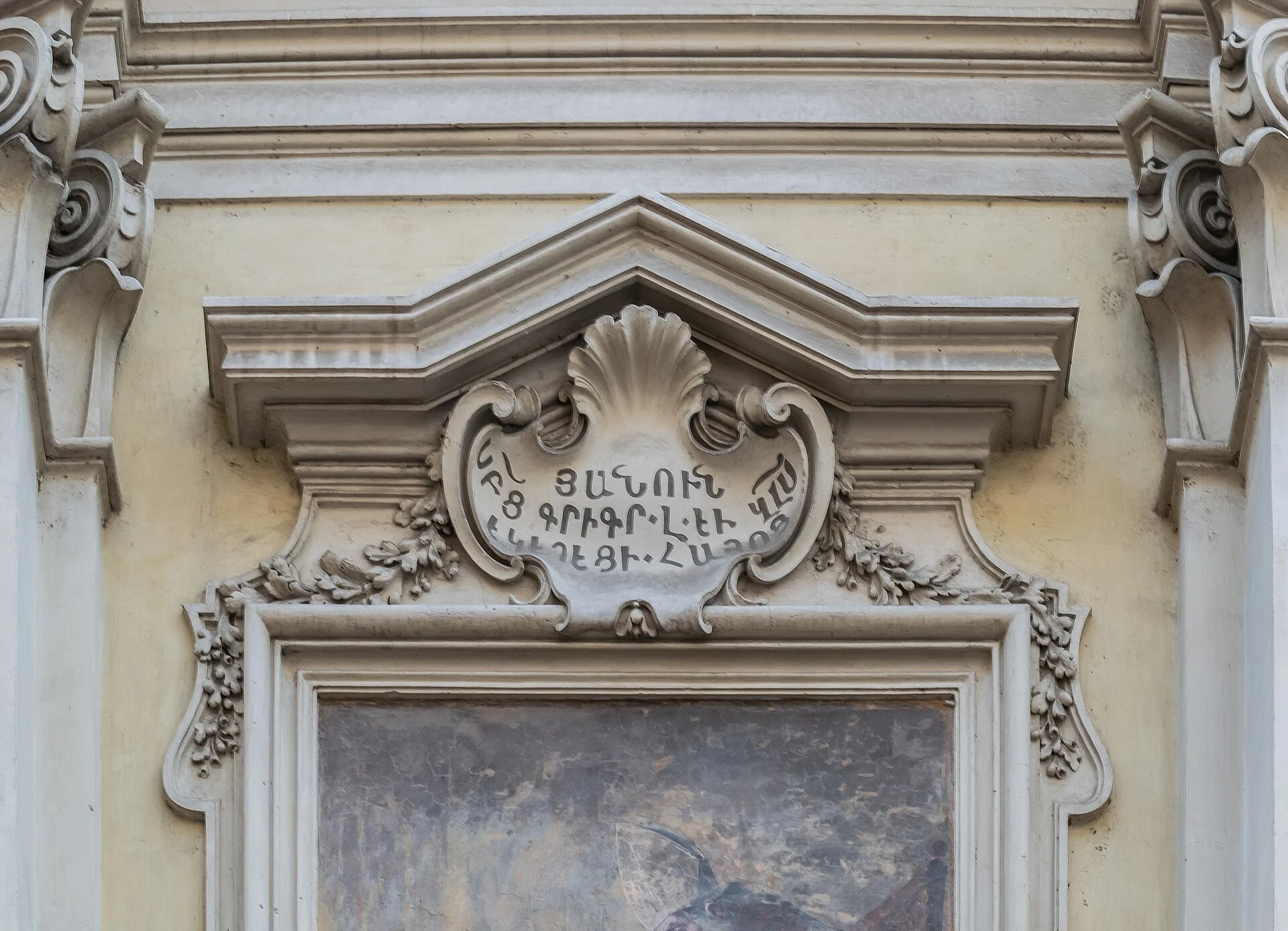
San Biagio degli Armeni is on Via Giulia, at number 63 according to the tourist portal of Roma Capitale and 64 according to the Fiorentini parish, and is a small church with free entry at no charge. It is a rectorate tied to the Armenian Catholic community, with the rector of the Pontifical Armenian College as its point of reference. Opening hours and those of the Divine Liturgy in the Armenian rite are not published online by the operator: ask by phone at 06 68804891.
Romans call it San Biagio della Pagnotta, for the small blessed loaves that on February 3, the saint's feast, are handed out to the faithful and once above all to the poor of the area. The saint is Blaise, bishop of Sebaste, a city of Lesser Armenia, and for this reason the church, which already existed before the year 1000, passed in the 19th century to the Armenians as their national church. The facade you see is 18th-century.
The practical information given here comes, as of September 28, 2026, from the tourist portal of Roma Capitale, from the website of the parish of San Giovanni Battista dei Fiorentini, from documents published by the Holy See and from the other sources cited further on. Since this is a rectorate with no site of its own, openings and services can change from one week to the next: before crossing Rome on purpose to get in, phone and have them confirm day and time.
Where It Is and What You Really See
The church is on the stretch of Via Giulia that runs between Vicolo del Cefalo and Via del Gonfalone, in the Ponte district, next to Palazzo Sacchetti, which is number 66. It is the stretch where the street is straightest and quietest, away from the foot traffic of Campo de' Fiori. Coming from the side of Ponte Sisto, you find it after about 10 minutes on foot, on the left, with no sign announcing it.
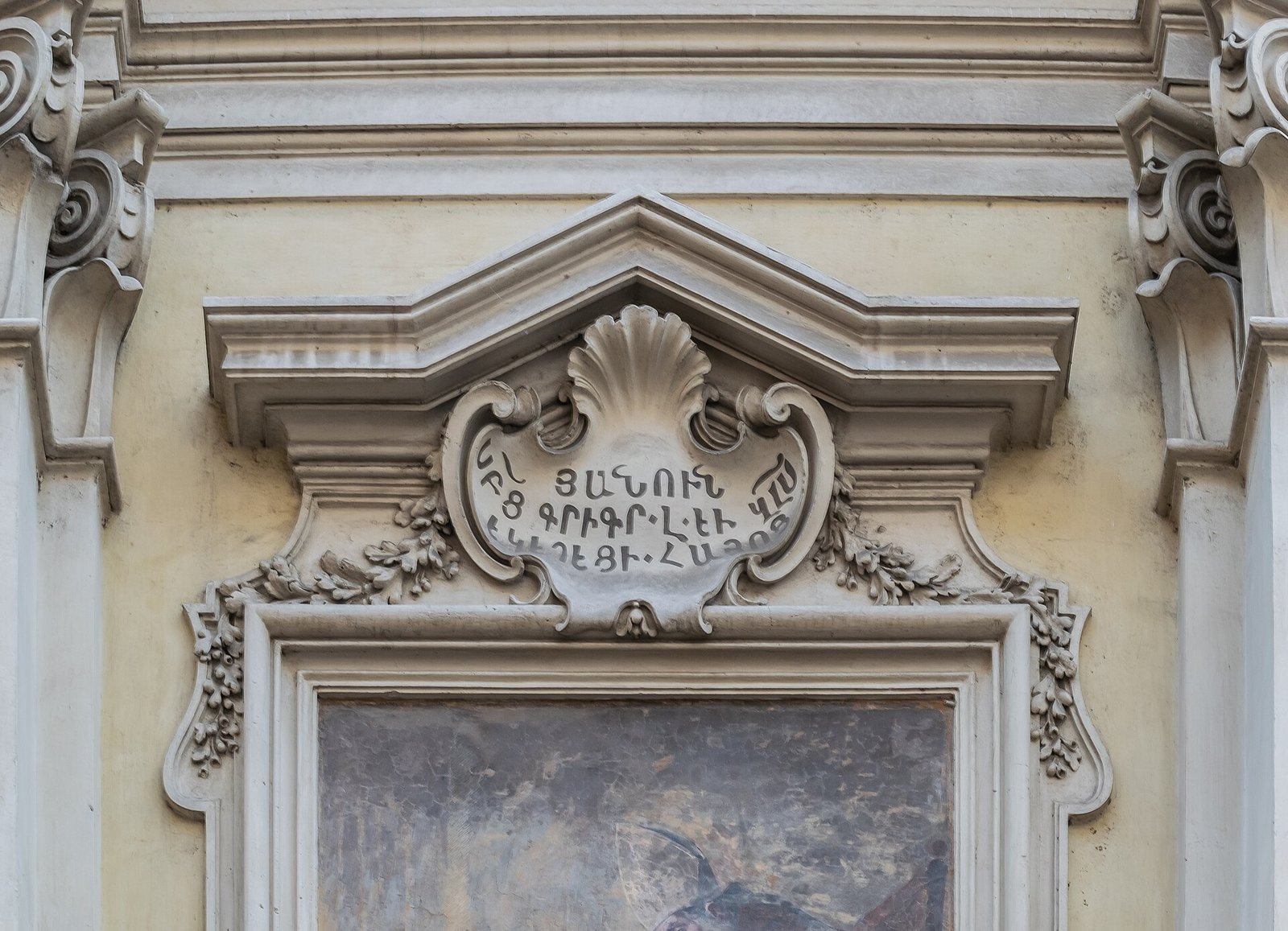
From outside you see a narrow facade, of a single order, marked by four pilasters with composite capitals, with a simple portal and, above, a fresco of the saint performing a miracle. It is the 18th-century design of Giovanni Antonio Perfetti. The sources don't agree on the author of the painting: the Roma Segreta portal assigns it to Andrea Sacchi, the other listings describe it without a name. The color is the warm one of Via Giulia facades, and it easily goes unnoticed.
Inside there is a single hall, intimate, renovated in the first half of the 19th century by the architect Filippo Navone. The encyclopedic sources note three elements: a fresco with angels adoring the Sacrament attributed to Pietro da Cortona, an image of the Madonna delle Grazie tied to 1671, an altar with the copy of the icon of Maria Santissima di Ripalta, venerated at Cerignola and Ascoli Satriano. The piece that matters to the devout, however, is the relic.
The church in fact keeps a relic described as a fragment of the throat of Saint Blaise. According to the tourist portal of Roma Capitale, on the feast day it is displayed for veneration near the entrance. The rest of the year, don't count on it. On the furnishings of the Eastern rite the public listings say little, and the operator doesn't publish a description of the interior: what you find also depends on which community is celebrating at that moment, as I explain further on.
How to Get In, Hours and Liturgy
Entry is free and at no charge, there is no ticket office and there is no paid guided visit organized by the operator. The church is listed by the parish of San Giovanni Battista dei Fiorentini among the subsidiary places of worship in its territory, under the name of rectorate church San Biagio della Pagnotta, Via Giulia 64, telephone 06 68804891. The same number appears on the tourist portal of Roma Capitale, which adds a second contact.
The municipal portal in fact also gives an administrative number, 06 42458607, and the email rettore@pontificiocollegioarmeno.org, that is, the mailbox of the rector of the Pontifical Armenian College. There is no church website with an updated calendar. The operator doesn't give online the hours of weekday openings, nor those of the Divine Liturgy in the Armenian rite: to know them you have to call or write, and it's best to do it a few days beforehand.
The unofficial guides circulating online give opening windows in the early morning and in the late afternoon, different from each other and undated. I don't repeat them here because none comes from the operator. The tourist contact center of Roma Capitale answers at 060608 every day from 9 to 19 and can help, but for a rectorate of this size the most reliable information remains the one given by phone by the church itself.
During services you enter as in any church: in silence, staying at the back if you aren't taking part, without photographing the altar and the celebrants. The Armenian liturgy is long, sung, and has moments when the priest stays hidden behind a curtain drawn in front of the altar. Whoever walks in at that moment thinks nothing is happening, and yet it is one of the most deeply felt passages. Wait, don't leave right away.
A Curiosity About San Biagio degli Armeni
The Armenians didn't choose this church by chance. Blaise, venerated in the West as protector of the throat, was bishop of Sebaste, present-day Sivas in Turkey, a city that the tourist portal of Roma Capitale places in Lesser Armenia, and he was martyred at the beginning of the 4th century. For an Armenian he is a saint of the home, not a generic wonder-worker. When the church passed to them, it passed to their own saint.
The real curiosity is the round trip. In Rome the cult of Saint Blaise had taken root for centuries on its own, with its feast, its loaves and the blessing of the throat, with no link to Armenia. In the 19th century a pope entrusts that thoroughly Roman devotion to a community that came from the East, which finds its own bishop in it. A story of going and returning that nobody had planned.
There is a second detail that makes people smile who know the South. Inside an Armenian church, on Via Giulia, there is an altar dedicated to the Madonna di Ripalta, with the copy of an icon whose original the sources date to 1172, protector of Cerignola and Ascoli Satriano, in Puglia. None of the sources explains how it got there. It's the kind of layering that small Roman churches accumulate without asking permission.
The third detail is the medieval name. The catalogs of Roman churches record it as San Biagio de cantu secuta, with garbled variants such as gastru secuta or gatta secuta. According to the encyclopedic sources the expression indicated the bank of the Tiber where the current deposited sand and silt. The river, before the 19th-century embankment walls, came within a few meters of here, and the church's name preserved its geography.
Something Nobody Tells You About San Biagio degli Armeni
This church was supposed to disappear. At the beginning of the 16th century Julius II entrusts Bramante with the design of a great Palace of the Courts along the new Via Giulia, an arcaded quadrilateral with towers at the corners intended to bring together the city's magistracies. Work starts around 1508 and, according to the reconstruction published on the blog Innamorati di Roma, the project called for the demolition of the old church of San Biagio.
In its place Bramante begins to build a new church, at the back of the great courtyard, with the apse toward the river. Vasari remembers it as a temple of the Corinthian order left unfinished near San Biagio. By 1511 work has already stopped, then the pope and the architect die and the project is abandoned. The medieval church stays standing through the exhaustion of its demolisher.
Of the palace there remain the travertine blocks of the base that stick out along the sidewalk and that Romans call the sofas of Via Giulia. Many sit on them without knowing they are sitting on the foundations of a courthouse never finished. The palace was so tied to the church that the sources also call it Palazzo di San Biagio della Pagnotta. The small building gave its name to the large one, not the other way around.
It is worth looking at the scene with this story in mind. The little church you see today, rebuilt in the 18th century and entrusted to the Armenians in the 19th, survived the most ambitious urban construction project of Renaissance Rome. Via Giulia bears the name of the pope who wanted to erase it. It's worth stopping at the sofas before going in and telling this story: the church changes face for whoever looks at it.
The February 3 Feast: Loaves, Throat and Relic
February 3 is the day this church comes out of anonymity. The patronal feast is celebrated, the small loaves that give the church its nickname are blessed and handed out, and the throat relic is displayed for veneration. In 2010 the liturgy of the solemnity was celebrated in the presence of Cardinal Leonardo Sandri, then prefect of the Congregation for the Eastern Churches, with the rector of the Pontifical Armenian College and the seminarians.
Let's put the levels in order, because here they like to mix. What the documents say: the nickname of the Pagnotta is old and tied to the distribution of bread to the poor on the saint's day, the relic is kept and shown, the epigraph of 1072 attests the church. The sources don't agree on the period when the distribution of bread is first documented: the municipal portal speaks of the 14th century, other listings of the 16th.
What tradition says: Saint Blaise's blessed bread protects the throat, is eaten that day or kept at home, and the blessing of the throat given by the priest keeps winter ailments away. It is a devotion widespread across Italy, from the panettoni kept in Milan to the ring-shaped breads of the South. In Rome its historic seat is this one, and that is why the nickname has survived the change of community.
What is legend: Saint Blaise physician of bodies and souls, who saves a child choking on a fish bone stuck in his throat, and the martyrdom with the iron combs of wool carders, tools that also made him patron of wool workers. These are hagiographic tales, which came down through the late-antique passions and medieval tradition, and no historian treats them as chronicle. They remain the reason people ask him to protect the throat.
On the day's program the general rule of the page applies: the operator doesn't publish the calendar of services online. The Fiorentini parish, in a notice of 2020, announced for February 3 an evening Mass with the blessing of the throat tied to the rectorate, also noting a temporary closure in that period. The Armenian Community of Rome reported news of the feast in 2024 as well. For the current year, phone in January.
My Advice for Visiting San Biagio degli Armeni
Don't come on February 3 if you want to see the church. Come on February 3 if you want to see the feast. They are two different visits. On Saint Blaise's day the small hall fills up, people line up for the blessing and for the bread, and you look at the interior from behind. On any weekday afternoon, if you find it open, you have the church almost to yourself and the time to read the fresco.
Phone first, always. The number 06 68804891 is the one given both by the Fiorentini parish and by the municipal portal. Ask three things: if the church is open on the day you're interested in, in what time window, and if at that moment there is a celebration in the Armenian rite or the Latin rite. If they tell you it opens only for services, organize your walk along Via Giulia around that time.
If your interest is the Armenian liturgy, treat it as a service and not as a spectacle. Arrive before it starts, sit at the back, stay until the end or leave at a moment of pause. The chant is the part that stays with you, and it can't be understood in a quarter of an hour. Whoever comes in halfway, takes two photos and leaves has seen a curtain and a few candles, and little else.
Read the facade from the opposite side of the street, not from underneath. Via Giulia is narrow and the front of the church flattens if you look at it with your nose in the air. Cross over, lean against the wall opposite and look at the fresco above and the four pilasters. Then take a few steps toward Palazzo Sacchetti and see how the church fits into the street's frontage: that is the interesting thing.
One last practical piece of advice concerns clothing, which applies to all the churches on Via Giulia. Shoulders covered and trousers or skirts below the knee, even in summer, especially if you enter during a service. In Eastern communities attention to these details is often higher than in the big basilicas used to tourists. Carry a light scarf in your backpack and the problem doesn't arise.
The Armenian Rite, in Brief, for Those Who Don't Know It
The Armenian Catholic Church is one of the Eastern Catholic Churches: it celebrates with Armenian liturgy and traditions, has its own patriarch, and recognizes the primacy of the bishop of Rome. It should not be confused with the Armenian Apostolic Church, which is the majority Church of the Armenian people and is not in communion with Rome. In this church on Via Giulia, as we will see, the two traditions have met.
The language of the liturgy is Classical Armenian, grabar, which compared with the Armenian spoken today is what Latin is to Italian. The readings and some parts may be in the current language, according to the community's customs. The chant is entrusted to the celebrant, the deacon and the choir, and occupies almost the whole celebration. Whoever arrives used to the Latin Mass recognizes the general structure but not the gestures.
The detail that strikes the most is the curtain. At some moments of the celebration a large veil is drawn in front of the altar and hides the celebrant from the assembly, then opens again. It is not a malfunction and not an intermission. The vestments too are different, with the miter and the headgear proper to the Armenian clergy. If you want to know more, the right person to ask is the priest at the end of the service.
A few rules of conduct for those attending as guests. Those who are not Catholic do not approach communion, according to the discipline of the Catholic Church, and those who are but don't know the rite can ask the priest beforehand how it proceeds. There's no need to take part in gestures you don't know: standing when everyone rises and staying silent is enough. Nobody will ask more of you.
For the broader context, in Rome there are other churches of Eastern rite that are visited with the same discretion: Sant'Atanasio dei Greci on Via del Babuino, for the Byzantine rite, and inside the Vatican walls Santo Stefano degli Abissini, tied to the Ethiopians. For Russian Orthodoxy there is the Russian Church of Santa Caterina, on the upper Janiculum.
Another Well-Known Fact, Yet Rarely Cited
Before Via Giulia, the reference point of the Armenians in Rome was an ancient temple. The church of Santa Maria Egiziaca, carved in the Middle Ages inside what we now call the Temple of Portunus, at the Forum Boarium, was the national Armenian church of Rome, and worked as a church until the early 1900s. Then it was deconsecrated and cleared of later additions to give the monument back its classical look.
It is a fact that all archaeology manuals cite in passing and that almost nobody connects to San Biagio. Whoever looks at the little Ionic temple next to the Temple of Hercules Victor sees a perfectly legible Republican monument, and doesn't imagine that for centuries people prayed in Armenian inside that cella. The sources don't agree on the details of the move between the two sites, and the operator doesn't publish a chronology.
The second little-cited fact concerns the other home of the Armenians in Rome. In 1883 Leo XIII establishes the Pontifical Armenian College for the training of the Armenian Catholic clergy, with its seat on Salita San Nicola da Tolentino, near Palazzo Barberini, next to the church of the same name, officiated in the Armenian rite. From the college, according to the encyclopedic sources, three patriarchs of the Armenian Catholic Church have come.
In the college cloister there is a khachkar, the typical Armenian stone cross, placed in memory of the genocide of 1915. It is a private place and not a tourist destination, but it explains why San Biagio is not just a neighborhood church. For a community that has lost much of its land of origin, a Roman church of its own saint is also a place of memory. Keep it in mind when you go in.
The Right Photo to Take at San Biagio degli Armeni
The right photo is not the facade alone. It is the facade with the sofas of Via Giulia in the foreground. Get low, at the level of the travertine blocks of the Bramantesque base, and frame the church above and behind them. In a single shot you have the palace that was meant to erase it and the church that remained. It is the story of the place told in one image, with no need for a caption.
The right format for the facade alone is vertical. Via Giulia is narrow and the church is tall relative to its width: in horizontal you take in two extra buildings and lose the fresco above. From the opposite sidewalk, with a moderate wide-angle, you can keep the pilasters straight. Correct the perspective afterward, if needed, but don't get too close, because the fresco disappears behind the cornice.
Direct light on the facade lasts a short time, because the street is enclosed between tall buildings. Overcast days work better than you think: the warm color of the plaster holds up well in soft light and there are no sharp shadows cutting the portal. Avoid the middle hours of summer, when the contrast between the lit upper band and the shaded base burns out the fresco.
Inside, during services, no photography. Outside services, ask whoever looks after the church, and if they say yes avoid flash on the frescoes and on the icon. On February 3 the temptation to photograph the line for the loaves is strong: the people in line are praying, not posing. If you want a souvenir of the feast, photograph the bread they give you, not those who receive it.
Some Important Events That Happened Here in History
The church is older than the year 1000, according to the encyclopedic sources, but the first sure document is an epigraph of 1072 kept inside. It records that Abbot Domenico rebuilt the church during the pontificate of Alexander II. We are in the Rome of the Gregorian reform, a few years before the clash between papacy and empire. In this area along the river there were gardens, landings and small religious settlements, very far from the monumental center.
Between the 13th and 14th centuries the church appears regularly in the medieval catalogs of the churches of Rome, with the name tied to the sandy bank of the Tiber. It is in these centuries, according to the tourist portal of Roma Capitale, that the custom of loaves distributed to the poor on the saint's day took hold, which gives the nickname that still endures. Other listings move the attestation to the 16th century, and the sources don't agree.
Around 1508 Julius II opens the street that bears his name and entrusts Bramante with the Palace of the Courts. The project calls for the demolition of the church and the construction of a new temple at the back of the courtyard. By 1511 the building site has already stopped, and with the death of the pope in 1513 and of the architect the year after, the project is abandoned. San Biagio survives, and the area keeps the travertine bases.
In the first half of the 18th century, around 1730 according to some sources, the church is rebuilt and receives its present facade designed by Giovanni Antonio Perfetti. In 1832 the architect Navone renovates the interior and, according to Roma Segreta, also the annexed building that housed the convent and hospice. In 1836 Gregory XVI entrusts the church to the Armenians, who make it their national church in Rome.
In the 20th century, with the end of worship at Santa Maria Egiziaca at the Forum Boarium, San Biagio becomes the stable reference of the Catholic Armenians in the center. On February 3, 2010 the patronal feast is celebrated in the presence of Cardinal Leonardo Sandri, who in the homily published on the Holy See's website calls it the oldest church in Rome dedicated to the saint and recalls that Armenian Catholic, Armenian Apostolic and Latin liturgies are celebrated there.
Who Has Passed Through San Biagio degli Armeni
Abbot Domenico, of whom we know only what the epigraph of 1072 says: he rebuilt the church under Alexander II. He is the first name tied with certainty to this building, and he comes from an inscription, that is, from a document. Everything that came before, including the origin that the sources place before the 10th century, has no name of its own. It's the fate of so many Roman churches along the river.
Julius II and Donato Bramante, who didn't go in to pray but to measure it and tear it down. The pope wanted a straight street and a courthouse that would bring order to the city, the architect designed a quadrilateral with towers and a new temple. They left Via Giulia, the travertine sofas and a Renaissance church never finished, of which no visible trace remains today. San Biagio was luckier than its demolishers.
Pietro da Cortona, to whom the fresco with the angels adoring the Sacrament is attributed. The painter also worked in the palace next door: Roma Segreta recalls frescoes of his at Palazzo Sacchetti, together with those of Francesco Salviati. It is a few meters' distance between a noble commission and a neighborhood church, and says a lot about how the great painters of the 17th century worked, moving from one building site to another on the same street.
Giovanni Antonio Perfetti and Filippo Navone, the two architects who gave the church its present form. The first designed the 18th-century facade, the second renovated the interior in the 19th century. They are names you won't find in architectural history manuals, professionals of papal Rome who worked on small buildings. A municipal source calls the second Antonio and not Filippo, and the sources don't agree on the first name.
Gregory XVI, the pope who in 1836 handed the church over to the Armenians, and then the generations of priests and seminarians of the Pontifical Armenian College who have officiated in it. In 2010 the patronal feast saw Cardinal Leonardo Sandri, Argentine of Italian family, then prefect of the Congregation for the Eastern Churches. And every February 3 Romans who know little about the Armenians come by and ask only for a loaf for the throat.
Mistakes and Legends in Circulation
The first mistake concerns the date. Many online listings write that the church was entrusted to the Armenians in 1832. The encyclopedic sources and the tourist portal of Roma Capitale agree instead on 1836, with Gregory XVI. 1832 is the year of Navone's work on the interior and on the annexed building. The confusion arises from the fact that the two events are close and are often summarized in the same line.
The second mistake is thinking the church was always Armenian. For at least eight centuries it was a Roman neighborhood church, with an abbot in the 11th century, a popular nickname and an entirely local devotion. The Armenians arrived last, and inherited an already long history. Whoever tells San Biagio as an Armenian foundation is turning the chronology upside down, even if with good intentions.
The third misunderstanding concerns the sofas. Some present them as ancient Roman ruins, others as remains of medieval walls. They are the travertine bases of the Palace of the Courts, begun around 1508 and halted since 1511. Renaissance, not antiquity. The fourth concerns attributions: the interior fresco is attributed to Pietro da Cortona and the one on the facade, according to a single source, to Andrea Sacchi. Attributions, not signatures.
Then there are the legends about the bread. You read that Saint Blaise's loaf cures a sore throat, that kept at home it keeps illness away all year, that eating it on an empty stomach is more effective. These are popular beliefs, part of devotional tradition, and should be told as such. No ecclesiastical source presents them as facts. The blessing is a gesture of faith, not a therapy.
The last misunderstanding is confusing Armenian Catholics and Armenian Apostolics. They are two distinct Churches, with different hierarchies, even though they share the liturgical language, the rite and much of the tradition. According to the 2010 homily published by the Holy See, liturgies of both were celebrated in this church, and also Latin Masses. Ask by phone which community is celebrating on the day you're interested in, and you'll know what to expect.
The Churches of the Communities Along Via Giulia and Nearby
Via Giulia and the nearby streets are the best place in Rome to understand how the national churches worked. Within a few minutes on foot you pass from San Biagio to the Basilica of San Giovanni Battista dei Fiorentini, at the end of the street toward the Tiber, to Santo Spirito dei Napoletani, on the other side, as far as Sant'Eligio degli Orefici, the church of a guild.
A little farther on are Santa Maria in Monserrato, church of the Spaniards, and Santa Maria dell'Orazione e Morte, with its confraternity devoted to burying the nameless dead. The Oratorio del Gonfalone, a few steps from San Biagio, is the seat of another confraternity and hosts concerts in its frescoed hall.
Widening the tour toward the Tiber and Campo Marzio you meet the other nations: San Girolamo dei Croati, San Nicola dei Lorenesi, San Luigi dei Francesi with its Caravaggios, Sant'Antonio dei Portoghesi. The Sicilians have Santa Maria Odigitria, near the Pantheon, and the Anglicans the All Saints Church.
What sets San Biagio apart from almost all these churches is that it was not born as a national church. The Florentines, the Neapolitans, the Spaniards built their churches for themselves. The Armenians received in the 19th century a very ancient Roman church, with a worship already alive and a nickname already fixed. For this reason the church has two overlapping identities, and Romans keep calling it the Pagnotta one.
The Stretch of Via Giulia Around the Church
San Biagio is better understood if you look at its block. Right next door, at number 66, is Palazzo Sacchetti, built by Antonio da Sangallo the Younger on land that had been a garden, passed from hand to hand several times after the architect's death in 1546 and bought by the Sacchetti in 1648. From outside you read the travertine-framed windows and the marble portal with the balcony.
Continuing toward the Fiorentini you meet Palazzo Medici Clarelli at number 79, built in 1535, also tied to Sangallo, and at number 85 the so-called House of Raphael. Roma Segreta recalls that it was built after 1525 for the Vatican Chapter, that the 19th-century inscription attributes ownership to Raphael and that the painter probably owned only the adjoining land. Another street legend, this time written on marble.
On the other side, toward the south, the street crosses the stretch of the sofas, between Vicolo del Cefalo and Via del Gonfalone, and then continues toward the confraternity churches and the Farnese arch. In a few meters you pass from the architecture of the great family palaces to the remains of an aborted papal building site, to a foreign community's church. Via Giulia is a compressed catalog of five centuries of Rome.
The advice is to walk this stretch twice, once in each direction. On the first pass you look at the facades, on the second at the joints: where one palace touches the next, where the church breaks the frontage, where the courthouse bases stick out from the street line. That is where urban history is read, not in the individual monuments. San Biagio, small and squeezed between the palaces, is a perfect observation point.
How to Get There
On foot is the right way. From Campo de' Fiori you go through Piazza Farnese, take Via Giulia under the Farnese arch and walk north for about 10 minutes. From Castel Sant'Angelo you cross the bridge, go down along the Lungotevere and enter Via Giulia from the Fiorentini side, walking in the opposite direction.
Public transport doesn't reach the front of the church. Via Giulia is largely pedestrian and narrow, and the nearest stops are on Corso Vittorio Emanuele II and on the Lungotevere, a few minutes' walk away. Lines often change route because of roadwork and detours: check the route the same day with the trip planner of ATAC, Rome's transit company, instead of trusting lists of lines found online.
If you're coming from the Vatican, you can make it a walk. From Piazza San Pietro, follow Via della Conciliazione, pass Santo Spirito in Sassia, cross the Tiber on one of the bridges downstream from Castel Sant'Angelo and enter Via Giulia from the Fiorentini end. It's 20 or 25 minutes at an easy pace, almost all on the flat, along the river.
By car it makes no sense. Rione Ponte lies inside the limited traffic zone of the historic center, surface parking is scarce and largely reserved for residents, and Via Giulia itself is not a street where you stop. If you're coming from outside Rome, leave the car at a metro park-and-ride and continue by public transport or on foot from the first convenient point.
When it's closed and what not to expect
Expect to find it closed. That's the most likely outcome if you walk past at random along Via Giulia in the middle of the day, as with almost all the rectories in the historic center, which don't have the staff to stay open long. It's not a sign of neglect. It's the normal way a small church works when it is served by a community whose main seat is elsewhere, on the other side of the city.
Don't expect information panels, audio guides, a bookshop or services. There is no organized visit and no route. What you know about the church, you bring with you, and what you're told on site depends on who you find. Over the years the Fiorentini parish has also reported periods of temporary closure of the rectory, and the operator does not publish notices about works or extended closures.
On accessibility, the information is not published. The church is small, the entrance opens directly onto the street, and the paving of Via Giulia is sampietrini, which are awkward for wheelchairs and strollers. If you need to know if there are steps at the entrance or inside, you have to ask by phone, because none of the official sources consulted describes it.
The contrarian view is this: San Biagio della Pagnotta has become a calendar curiosity, told once a year for the loaves and forgotten the other 364 days. The nickname is cute, but calling it that, as almost all the guides do, erases the Armenians who have kept it alive for almost two centuries. If you go in, you're going into San Biagio degli Armeni. The loaf is the least interesting part of the story.
Eating in the area
Via Giulia is not a street of restaurants, and that is one of its merits. The places cluster toward Campo de' Fiori and Piazza Farnese, where the restaurant trade lives largely off tourist passing trade. I won't give you names. I'll give you the signs for spotting the traps, which are frequent in that area and which Romans can read at a glance, without needing reviews.
First sign: the menu with photographs of the dishes, laminated and translated into five languages. A place that has to show you a picture of a cacio e pepe is talking to someone who has never eaten one. Second sign: the lady rolling fresh pasta in the window or on the sidewalk. It's a staged show to stop passersby, not a guarantee. Serious pasta is made in the kitchen, in the morning, away from the street.
Third sign: the barker, the person at the door who stops you and invites you to sit down. A place that has to find its customers on the street has no regulars. Fourth sign: a kitchen open nonstop from morning to night, which means reheated dishes. Fifth: the places set up in front of monuments that adjust the price to the customer, with items that have no price, fish of the day with no figure, a different menu inside and outside.
Romans don't go there not out of snobbery but out of experience. They know that in those places the bill doesn't match what arrives on the plate, and that five minutes away, on a side street with no view, you eat better and spend less. The simplest rule is still to look at who is sitting there: if at lunch there are office workers, craftsmen and local families ordering without reading the menu, you're in the right place.
If you don't want to go by trial and error, we keep our list of the places where we eat up to date, in Rome and the surrounding area, with addresses we really go to and that change when the places change. It's not sponsored. On February 3, by the way, the blessed loaf does not replace lunch: if you come for the feast, think first about where to eat.
What to combine it with in a day
The most natural combination is a full walk along Via Giulia, from the Farnese arch to the Fiorentini, with the open churches you find along the way and Bramante's sofas as an obligatory stop. It extends well toward Galleria Spada with Borromini's perspective and toward Santissima Trinità dei Pellegrini. It's a full half day, with no need for public transport.
If you prefer the side of the big churches, you can go up toward the Chiesa Nuova and the Oratorio dei Filippini, pass by Santa Maria della Pace and end at Piazza Navona. Along the way you also meet the Palazzo della Cancelleria and San Lorenzo in Damaso.
If you want to stay on the theme of communities, cross the river. From Ponte Sisto you enter Trastevere, covered in our guide to what to see in Trastevere, visit Villa Farnesina and climb up to the Janiculum. Alternatively, head down toward the Jewish Ghetto and the Tiber Island, then on to the Forum Boarium for the Temple of Portunus.
If you've already seen the churches and want a comparison between rites, you can build an Eastern day: San Biagio in the morning, if you find it open, then Sant'Atanasio dei Greci near Piazza di Spagna, and in the afternoon the Vatican loop to see, at least from a distance, the area of Santo Stefano degli Abissini, which stands behind St. Peter's Basilica. Three rites, three communities, one city.
On rainy days the area offers quite a few interiors close to each other, and a wet Via Giulia has a quiet appeal of its own, with the sampietrini shining and few passersby. For a list of indoor ideas, there's our page on what to do in Rome when it rains. The tour of the national churches, with an umbrella and the phone calls made the evening before, works well even in February.
Frequently asked questions
Do you pay to enter San Biagio degli Armeni?
No, entry is free, as in all churches open for worship. There is no ticket office and the operator does not offer a paid guided visit. The church, however, has no opening hours published online: to find out when it's open you have to call 06 68804891, given by the Fiorentini parish and by the Rome city tourism portal.
Who runs the church?
The church is a rectory entrusted since 1836 to the Armenian Catholics, who have made it their national church in Rome. The Rome city tourism portal lists as a contact the email of the rector of the Pontifical Armenian College, and the feast day celebrations are presided over by the rector of the college. Territorially, the Fiorentini parish lists it among its subsidiary places of worship.
Why is it called San Biagio della Pagnotta?
The nickname comes from the small loaves that on the saint's feast day, February 3, are blessed and distributed to the faithful, and that in the past went mainly to the poor of the area. The sources don't agree on when this custom is first attested, which the city portal dates to the 14th century and other entries to the 16th. The name stayed even after the church passed to the Armenians.
When is the divine liturgy celebrated in the Armenian rite?
The operator does not publish the schedule of celebrations online. To find out the days and times of the divine liturgy in the Armenian rite and of any Masses in the Latin rite, you have to call 06 68804891 or write to rettore@pontificiocollegioarmeno.org, given by the Rome city tourism portal. It's best to do it a few days ahead, because services can vary over the year.
What happens on February 3?
February 3 is the patron saint's feast. The solemn liturgy is celebrated, the loaves are blessed and distributed, the blessing of the throat is given and the relic described as a fragment of the saint's throat is displayed for veneration near the entrance. The program with the exact times is not published online by the operator and has to be asked for by phone in the weeks before.
Who was Saint Blaise and why is he linked to the Armenians?
Blaise was bishop of Sebaste, a city in Lesser Armenia, today in Turkey under the name Sivas, and according to tradition he was martyred at the beginning of the fourth century. In the West he is invoked as protector of the throat because of a hagiographic story that has him saving a child choking on a fishbone. For the Armenians he is a saint of their own land, and this explains why the church was entrusted to them.
Can you take photographs inside?
Not during services, out of respect for those celebrating and those taking part. Outside services the operator does not publish a policy, so it's best to ask whoever is looking after the church at that moment. If permission comes, avoid flash on the frescoes and on the icon. The most interesting photo, though, is taken from outside, with the facade and the sofas of Via Giulia in the same frame.
How much time does the visit take?
For the interior, 10 or 15 minutes is enough, because the church is small and has a single nave. The real time goes to the context: the facade read from the opposite sidewalk, the bases of Bramante's Palazzo dei Tribunali, Palazzo Sacchetti next door. If you attend the divine liturgy in the Armenian rite, ask by phone how long it lasts, because it is much longer than a Latin Mass, and stay to the end if you can.
Where is the main seat of the Armenian Catholics in Rome?
The Pontifical Armenian College, established by Leo XIII in 1883 for the training of the Armenian Catholic clergy, is located on Salita San Nicola da Tolentino, in rione Trevi, near Piazza Barberini. Next to the college stands the church of San Nicola da Tolentino, served in the Armenian rite. San Biagio on Via Giulia is instead the historic church entrusted to the Armenians in the center, since 1836.
Who wrote this page
The page comes from the editorial team of Tour Leader Pro, the Roman outfit that designs itineraries, visits and cultural events across Rome and Lazio. The contacts, management and information on celebrations given here come from the official sources cited in the text as of the date indicated at the top: since this is a small rectory with no website of its own, recheck them by phone before setting out. Tell us what you find changed.
Lining up a morning among the national churches of Via Giulia means fitting together rectories that open only for services, liturgies in different languages and rites, confraternities with their own hours and a street where the phone counts for more than the printed guide, for yourself or for a group of 40 people. If you're facing this kind of puzzle, Tour Leader Pro has working materials designed for those who guide and for those who organize on their own.
For the wider picture, meaning regional trains and seasonal timetables, airports, transfers between provinces and Lazio destinations outside central Rome, from the Castelli to the volcanic lakes of the north, the Tyrrhenian coast and the villages of the interior, a useful resource for putting together a multi-day itinerary is Italy Planner.