Ponte Sisto
In short. Ponte Sisto is the pedestrian bridge that connects Via dei Pettinari, in the Regola district, to Piazza Trilussa in Trastevere, and it was rebuilt by Pope Sixtus IV between 1473 and 1479 on the ruins of a Roman bridge that had collapsed…
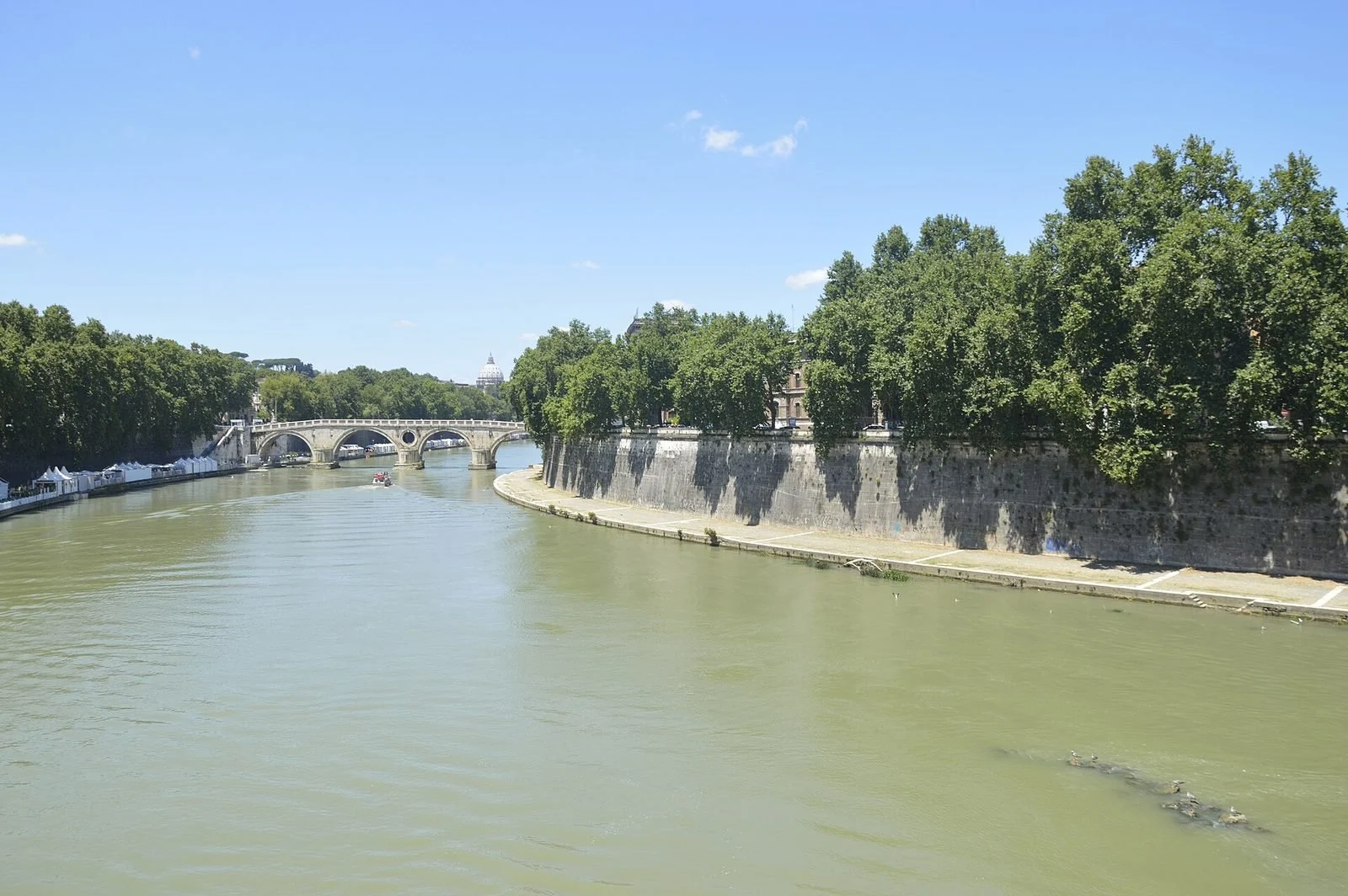
Ponte Sisto is the pedestrian bridge that connects Via dei Pettinari, in the Regola district, to Piazza Trilussa in Trastevere, and it was rebuilt by Pope Sixtus IV between 1473 and 1479 on the ruins of a Roman bridge that had collapsed in the early Middle Ages. It is the only bridge in Rome built from scratch between antiquity and the 1800s, and the reason it was ordered has to do with public order before architecture: on December 19, 1450, during the jubilee of Nicholas V, the parapets of Ponte Sant'Angelo gave way under the crush of pilgrims and dozens of people died. Rome had only one convenient crossing toward the Vatican, and that day it became clear it was not enough. The lines that follow tell what was there before, when and why the bridge was rebuilt, who really designed it (the most widespread answer is almost certainly wrong), what the large circular hole seen in the middle pier is for, what the plaques say, how the 1800s changed it and then the restoration of the late 1900s brought it back, and how the most walked-across bridge in the city works today.
Where Ponte Sisto is and how to get there
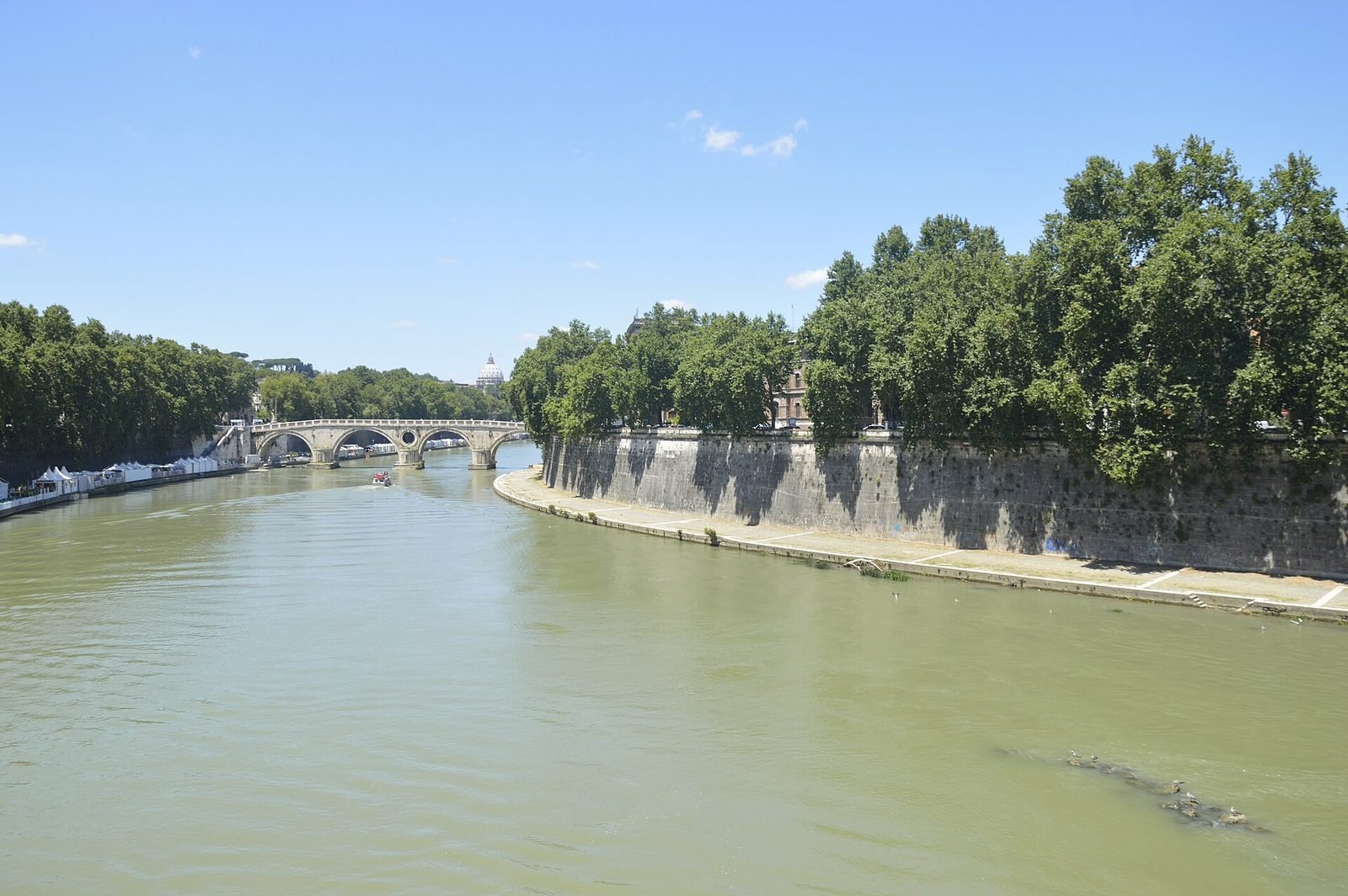
Ponte Sisto crosses the Tiber between Lungotevere dei Vallati and Lungotevere della Farnesina, in the stretch between the Tiber Island downstream and Ponte Mazzini upstream. On the left bank it opens onto Via dei Pettinari, which climbs toward Via Giulia and toward Campo de' Fiori. On the right bank it opens onto Piazza Trilussa, the north entrance of Trastevere. The distance between the two ends is short: you cross in two or three minutes at a normal pace, less if you don't stop to look at the river.
On foot from the historic center
From Piazza Navona you get there in about 10 minutes going down Corso Vittorio Emanuele II and then Via dei Pettinari. From Campo de' Fiori five minutes are enough: you take Via dei Giubbonari, reach Largo dei Librari and continue straight to the river. Whoever starts from the Ghetto or the Synagogue walks Lungotevere de' Cenci and Lungotevere dei Vallati in barely a quarter of an hour, with the bridge always in view. From Largo di Torre Argentina it's best to go down Via Arenula to Ponte Garibaldi and then go back up the lungotevere on the Trastevere bank: you arrive at Piazza Trilussa from below, which is also the best way to see the bridge in full.
By public transport
The surface stop that carries the right name is called Piazza Trilussa and is on Lungotevere della Farnesina, served by the lines that run along the right bank, among them the 280. On the opposite side of the river, Via Arenula is the reference corridor: tram 8 and line H pass here, connecting Largo di Torre Argentina and Viale Trastevere across Ponte Garibaldi, about 300 meters from Ponte Sisto. Lines and routes are changed with some frequency because of work sites and detours, so it's best to check the updated route on the transport company's website or app the same day.
The metro does not directly serve this area. The nearest line B station is Circo Massimo, from which you walk a full 20 minutes passing in front of the Mouth of Truth. On line A the useful stop is Spagna or Barberini, but from there the walk exceeds half an hour. Whoever arrives by train at Roma Trastevere has ahead a stretch of about two and a half kilometers along Viale Trastevere, or a change to tram 8.
By car: not worth it, and often not allowed
The bridge has been closed to vehicle traffic since 2000 and the two ends fall within limited traffic zones: the historic center zone on the left bank and the Trastevere ZTL on the right bank, the latter also active in evening and night bands on weekends. The electronic gates, the hours and the exemptions change over time and must be checked on the website of the Rome city mobility agency before getting in the car. Parking along the lungotevere is paid and on the busiest evenings practically impossible to find. The practical advice is simple: leave the car outside and arrive on foot or by public transport.
What Ponte Sisto is: a 15th-century bridge on Roman foundations
Ponte Sisto has four masonry arches faced in travertine and a large circular hole in the central pier, and it is the only Roman bridge built between the end of the empire and the Napoleonic age. All the other historic bridges of the city are ancient (like Ponte Rotto or the two bridges of the Tiber Island), or 19th- and 20th-century, born with the embankment walls and with Rome as capital. In between, for almost 1,500 years, there is only this work site.
The measurements, and why the sources don't agree
On the length of the bridge the sheets diverge: some indicate about 108 meters, others reach 130. The difference depends almost certainly on where you measure, that is, if you count the connections with the quays and the ends rebuilt in the 1800s. On the width there is instead a fairly solid historical datum: the 15th-century roadway was narrower than the current one, and the widening to about 11 meters came with the works of 1877, when two cast-iron hanging sidewalks supported by brackets were added. Whoever finds a single measurement, reported without a source, should take it with caution.
The Roman bridge that was there before: Aurelius, Antoninus or Agrippa
On the site of Ponte Sisto there was a Roman bridge, but its name is one of the most tangled questions of the topography of ancient Rome and modern sources are divided. The most widespread reconstruction traces it to Marcus Vipsanius Agrippa, who died in 12 BC, and calls it the pons Agrippae. A second tradition identifies it with the pons Aurelius, from the name of the Porta Aurelia that opened a little farther upstream. A third calls it the pons Antoninus, because it would have been rebuilt under Antoninus Pius around AD 147. Almost all scholars believe it is the same crossing, called by different names in different eras, but whoever writes that the question is closed says more than the sources allow.
The name of Valentinian and the lost arch
A fourth name appears in the late empire: pons Valentiniani, from the restoration carried out between AD 366 and 367 under the emperors Valentinian I and Valens, with the urban prefect Lucius Aurelius Avianius Symmachus overseeing the works. On that occasion an honorary arch with bronze statues was erected on the left end. The arch has disappeared, but some fragments referred to that complex resurfaced during the excavations for the embankment walls, in 1878 and 1892, and are kept at the Museo Nazionale Romano. It is one of the few cases in which the 19th-century works that erased the landscape of the river gave something back.
The collapse and the centuries as a ruin
The ancient bridge was damaged by a flood between 589 and 590 and gave way for good in another flood, which the sources place in 791 or 792. From that moment it remained for almost 700 years a stump in the middle of the river, and the Romans of the Middle Ages gave it the names given to broken things: pons Ruptus, pons Fractus, pons Tremulus, that is, broken bridge, fractured bridge, trembling bridge. At the point where the bridge no longer existed a ferry operated between the Arenula beach, on the left bank, and the Renella beach, on the Trastevere bank: the two place names, both linked to the sand of the river, survive today in the names of Via Arenula and Via della Renella.
Careful not to confuse it with today's Ponte Rotto
Here arises a misunderstanding that circulates even in serious publications. The monument that everyone calls Ponte Rotto today, that is, the isolated arch seen next to the Tiber Island, is what remains of the pons Aemilius, a bridge of the 2nd century BC that gave way for the last time in the flood of Christmas 1598 and that inherited that nickname permanently. The ruin on which Sixtus IV built his bridge was another one, a kilometer farther upstream, and bore the same nickname three centuries earlier. The 15th-century plaque set into the bridge says so explicitly, calling it by the name people gave it: broken. Whoever reads the medieval chronicles must therefore look at the date and the context, because for a long period Rome had two broken bridges at the same time.
Why Sixtus IV ordered a new bridge: the disaster of 1450
The decision to build Ponte Sisto stems from a mass accident that occurred 25 years earlier, on December 19, 1450, when the parapets of Ponte Sant'Angelo gave way under the pressure of the crowd of pilgrims arriving for the jubilee of Nicholas V and a large number of people died crushed or drowned in the Tiber. The figure most cited by the Roman chronicles is 172 victims, other reconstructions speak of about 200 dead, and the most cautious sheets limit themselves to giving an unspecified number. That day made evident a structural problem of the city: a single practicable bridge to carry hundreds of thousands of people toward the basilica of St. Peter.
What differs from the page on Ponte Sant'Angelo
The dynamics of the collapse, the role of the panicked mule in the chronicles, the demolitions of the chapels that followed and the count of the victims are told in detail in our page on Ponte Sant'Angelo, where that episode is the center of the story. Here what matters is the urban consequence, that is, the reason a second bridge was added in Rome: it is the same fact read from the other end of the causal chain.
Who paid
The financing of the work weighed on the papal coffers and, according to a tradition repeated by many local sources, also on an extraordinary tax imposed on Roman courtesans. This second piece of news should be treated as scholarly tradition rather than as a verified accounting fact: it appears in antiquarian literature and in 19th-century guides, and its archival documentation is debated. We report it because it is met everywhere, pointing out that it is not an established fact.
The work site of 1473-1479: how it was built
The works on Ponte Sisto lasted six years, from 1473 to 1479, with opening to passage in time for the jubilee of 1475. The bridge was set on the foundations of the Roman bridge, reusing the ancient piers where they were still solid: a construction choice that explains both the speed of the work site and some geometric anomalies of the structure, such as the spans of the arches, which are not perfectly equal to one another.
Materials: travertine outside, reuse inside
The outer facing is travertine, the stone of Tivoli that appears in Rome on almost every monumental work site. The inner masonry is largely reused, with material taken from ancient buildings in ruins, according to a practice that in 15th-century Rome was the norm and that made quarried travertine an expense to limit to the visible surfaces. Above the central hole, on the upstream side, is set the coat of arms of the della Rovere family, with the oak that gives the house its name. In all, five papal coats of arms in marble are counted on the bridge.
The original width and the bottleneck
The 15th-century bridge was narrower than the one crossed today. The sources indicate a roadway of a little over six meters, carved out of a wider structure, and it is a measurement that in the 1400s was enough for two carts side by side and for pilgrims on foot. When Rome becomes the capital and traffic changes scale, that width becomes the problem that the 1800s would try to solve first with metal walkways and then, for a moment, with the idea of tearing everything down.
Who designed Ponte Sisto: the current answer is probably wrong
The architect of Ponte Sisto is not known, and the attribution read almost everywhere, to Baccio Pontelli, has been rejected by modern studies. Its origin is precise: Giorgio Vasari, in the Lives, assigns the bridge to Pontelli, and from there the name passed through three centuries of guides without anyone checking it. The problem is both chronological and documentary, because Baccio Pontelli, a Florentine architect born around 1450, appears active in Rome only after the construction of the bridge and no work-site document links him to the work. The sheet of the Capitoline Superintendency considers the attribution outdated.
The alternatives proposed
Studies have put forward other names, none of which has prevailed: among them Meo del Caprina from Settignano, a Tuscan architect documented on the Roman work sites of those years, and in general the circle of Florentine and Lombard workers that Sixtus IV employed on his own works. There are also those who maintain that the design should be attributed to the technical direction of the papal building works rather than to a single author, a reasonable hypothesis for a work of hydraulic engineering where the workers and master builders count more than the signature. In the present state of research the correct entry to write next to the word architect is: unknown.
A second name that appears by mistake
On some pages the attribution to Bartolomeo Rossellino is also found, which is untenable for an elementary reason: Rossellino died in 1464, nine years before the work site opened. When a name like that appears on a sheet, it is usually the sign that the sheet copied from an unchecked source.
A curiosity about Ponte Sisto
The bridge changed name by decree of the patron, and the plaque declares it without circumlocutions. In the text set into the bridge it is read that Sixtus IV rebuilt from the foundations the bridge that they rightly called Broken, for the benefit of the Roman people and of the multitude of pilgrims arriving for the jubilee, and wanted it to be called Sisto after his name. It is one of the first operations of explicit public naming in modern Rome: not a posthumous dedication decided by others, but a signature put by the patron on the work as he hands it over to the city.
The second plaque asks for a prayer in exchange
Next to the celebratory one there is another, dated 1475, that addresses directly whoever crosses: you who pass, thanks to Sixtus IV pray the Lord to keep the pontiff long and in good health. It is a spiritual toll in place of the monetary one, and it reads well as a document on the relationship between public works and consensus in 15th-century Rome. Whoever finances a bridge asks in exchange not a tax but a prayer, and carves it in stone so that it lasts.
Where the original plaques are
The slabs read today on the bridge are reproductions: during the restoration of the late 1900s the original inscriptions of Sixtus IV were detached and museumized to protect them from decay, and the texts were transcribed on the new parapets. Whoever looks for the 15th-century stone within reach will be disappointed. Whoever looks for the text, instead, finds it exactly where it has always been, in faithful copy.
The occhialone: the circular hole that measures floods
The occhialone of Ponte Sisto is the circular opening carved in the central pier of the bridge, and it has a precise hydraulic function: when the Tiber rises, the water that reaches the hole passes through it instead of pressing on the mass of masonry, reducing the thrust on the structure and the risk of breakthrough. It is at the same time a relief device and a measuring instrument, because the level reached relative to the hole says at a glance how serious the flood in progress is.
How the flood was read
The rule handed down by the Romans is simple: when the water touches the occhialone, the river is in flood. When it begins to go inside, the situation is serious. When the hole disappears under the water, the quays and low streets are already flooded. Before modern hydrometric systems, in a city where floods were a recurring fact, an indicator visible from afar and understandable by anyone was worth more than a graduated scale. It is a form of risk communication, built in masonry in the 1400s and still perfectly legible.
What the occhialone is not
You read now and then that the hole was meant to let boats through, or that it was a decorative choice inspired by Roman aqueducts. The first hypothesis doesn't hold: the opening is too high above the ordinary water level and too narrow for river traffic, which passed comfortably under the arches. The second confuses the effect with the cause. Lightening piers with circular openings is a Roman construction technique, used in ancient bridges to reduce weight and resistance to water, and the 15th-century work site takes it up knowing what it does.
Where you can see it well
From the deck of the bridge the occhialone is invisible, because it is under the feet of whoever walks. The good points to see it are three: Ponte Mazzini, upstream, from which the whole side of the bridge is framed. The low quay of the Tiber, when it is open and not flooded. And the sidewalk of Lungotevere dei Tebaldi or Lungotevere dei Vallati, leaning out from the parapet toward downstream. With the river low, in August, the hole is seen in full and with part of the masonry below it.
One thing nobody tells you about Ponte Sisto
Under the deck of Ponte Sisto drinking water still passes: the bridge is the point where the Paolo aqueduct, reactivated by Paul V in the early 1600s on the traces of the ancient Trajan aqueduct, crosses the Tiber to serve the left bank. The pipes run along the structure and the bridge works as a hydraulic viaduct as well as a pedestrian passage. No tourist sheet says so, and no sign on site points it out.
The link with the Fontanone of the Janiculum
The Paolo aqueduct has its monumental display on the Janiculum, that is, the Acqua Paola Fountain that Romans call the Fontanone, inaugurated in 1612. The one that closes Piazza Trilussa carries the same official name and belongs to the same system, but it is another thing and has another story: we keep them on two separate pages for exactly this reason, and further on we explain why the name repeats.
The plaques, coats of arms and inscriptions
On the bridge there are two 15th-century inscriptions dated 1475, reproduced today on the parapets, five papal coats of arms in marble and two 19th-century inscriptions linked to the moving of the fountain. Put together they are the instruction booklet of the monument: they say who wanted it, why, when, and what happened to it afterward.
The dedication of Sixtus IV
The celebratory text is the one already cited, in which the pope declares he rebuilt from the foundations the bridge called Broken, for the benefit of the Roman people and of the jubilee pilgrims, and that he wishes to name it after himself. The Latin formula is carefully constructed and repeats two key words of 15th-century papal patronage: utilitas, that is, public advantage, and impensa, that is, the expense incurred. Saying how much was spent, in the rhetoric of papal inscriptions, is part of the merit.
The two plaques of the 1800s
To these are added the inscriptions put up after 1898 on the rebuilt fountain at Piazza Trilussa, which document the dismantling and relocation of the monument following the works for the embankments. They are bureaucratic texts, little read, and they are the only inscribed testimony of an affair that would otherwise remain only in the records: without those lines, nobody would understand that the fountain of Piazza Trilussa was born on the other side of the river.
The advice I give you for visiting Ponte Sisto
The practical advice is only one: don't cross Ponte Sisto, look at it. The bridge is a monument that is read from the side and from below, and whoever just walks over it sees a paving, two parapets and the crowd. The route we recommend lasts 20 minutes: you start from Lungotevere dei Vallati, go onto the bridge as far as halfway to read the plaques and coats of arms, arrive at Piazza Trilussa, turn right along Lungotevere Sanzio and stop on Ponte Mazzini, from which the side of the bridge with the occhialone is seen in full.
The right time
The two best bands are early morning, between 7:00 and 9:00, and late afternoon in winter. In the early morning the bridge is almost empty, the light comes from the east and lights the Trastevere front, and Piazza Trilussa is in the condition in which you can look without going around groups. Between 10:00 and 19:00 the passage is continuous all year. From 21:00 on, in the warm months, Piazza Trilussa becomes a very crowded evening meeting place and the bridge works as a corridor.
The verdict: what is overrated and what is not
The evening view from Piazza Trilussa toward the lit bridge is the photographic cliche of the area and, frankly, it is overrated: you get it in the middle of hundreds of people, with the street lamps burning the exposure and the groups sitting on the steps entering every frame. The same view at 7:00 in the morning, with the river still and the bridge deserted, is worth much more. Underrated, instead, is the side of the bridge seen from Ponte Mazzini: it is the only position from which you understand what you are looking at, and there is almost never anyone there.
With children
The bridge is pedestrian and therefore calm for those walking with small children, but the parapets are solid masonry and don't let the shortest see the river: to look over you have to be picked up. The stretch is short, without shade, and in summer in the middle of the day the travertine reflects a lot of heat. The most comfortable stop with children is Piazza Trilussa in daytime hours, or the river quay when it is open.
The 1800s: the embankment walls, the widening and the risk of demolition
Between 1876 and the early 1900s the Tiber within Rome was channeled between masonry banks up to 12 meters high, the muraglioni, designed after the catastrophic flood of December 1870 and built under the direction of the engineer Raffaele Canevari. The work saved the city from flooding and in the same movement erased the relationship between Rome and its river: the quays with the ports, the floating mills, the houses that went down to the water, the Tiber landing places all disappeared. Ponte Sisto survived, but changed skin.
1877: the hanging sidewalks of Angelo Vescovali
In 1877 the roadway of the bridge was widened to about 11 meters with the addition of two metal walkways suspended on brackets, designed by the engineer Angelo Vescovali and made of iron and cast iron. It was a typically 19th-century solution: instead of touching the historic structure, a metal extension was hung on its sides, reversible and quick to assemble. The result, in period photographs, is a 15th-century bridge with two industrial balconies, with openwork cast-iron parapets that hide the profile of the arches.
The idea of tearing it down
Around 1875, in the debate on the embankments, the proposal was put forward to demolish Ponte Sisto and replace it with a new bridge, wider and with greater spans, to improve the flow of the river. It is a proposal consistent with the hydraulic logic of the Canevari project, which considered the piers of the historic bridges an obstacle to the regime of the waters, and it is worth remembering because in the same decade quite a lot was actually demolished along the river in Rome. The bridge was saved, the cast-iron widening was the compromise.
The moving of the fountain
The Acqua Paola fountain that today closes Piazza Trilussa was not born there. It was built in 1613 at the wish of Paul V, on a design by Giovanni Vasanzio and Giovanni Fontana, on the left bank at the mouth of Via Giulia, set against the hospice of the Mendicanti also called of the Cento Preti, and it was the terminal display of the branch of the Paolo aqueduct that crossed the river precisely over Ponte Sisto. The works for the embankments overwhelmed the hospice: the fountain was dismantled in 1879, the pieces stayed stored away for years and the monument was rebuilt in 1898 on the opposite bank, in line with the bridge, where it stands now.
Why two different monuments have the same name
This is the point that generates the most confusion. In Rome there are two Acqua Paola fountains: the Fontanone of the Janiculum, from 1612, and the one in Piazza Trilussa, from 1613. They carry the same name because they are two displays of the same aqueduct, built a year apart by the same pontiff, the first as a monumental terminal above, the second as a delivery point below, serving the districts across the river. They are two distinct buildings, in two distinct places, with two different stories: whoever is looking for the Fontanone of the photographs, with the five arches and the large basin, will find the page on the Acqua Paola Fountain of the Janiculum.
Another well-known fact, yet rarely cited
Ponte Sisto has been pedestrian for less time than almost everyone imagines: until the end of the 1990s cars crossed it. The definitive closure to vehicle traffic came with the restoration carried out in view of the jubilee of 2000, which removed the 19th-century metal structures and gave back to the bridge the section and the parapets of its Renaissance layout. Whoever has in mind the bridge as a place for strolling is looking at a recent condition, not a continuity of five centuries.
What was removed and what was added
The intervention, followed on the scientific side by Gaetano Miarelli Mariani, dismantled the 1877 cast-iron hanging sidewalks and the related brackets, rebuilt parapets in travertine and brick consistent with the 15th-century layout, and secured the masonry and the paving. The original plaques were removed for conservation and replaced by copies with the texts transcribed. The result is a restoration of reinstatement, that is, an operation that chooses one historical phase (the 1400s) and erases a later stratification (the 1800s): a legitimate and debated choice, as always in these cases, because those cast-iron sidewalks were also a document of the city.
The exact date of the pedestrianization
The sources place the completion of the works and the closure to traffic around 2000, with the work site started in the second half of the 1990s: some sheets indicate 1998 as the start, others speak of a longer cycle of interventions. The solid datum is that from the holy year of 2000 the bridge has been reserved for pedestrian passage and no longer has a road function.
The right photo to take of Ponte Sisto
The photograph that does justice to the monument is taken from Ponte Mazzini, about 300 meters upstream, framing the side of Ponte Sisto with the four arches aligned and the occhialone in the center. It is the only point from which you see together the structure, the hole in the pier and the level of the river, that is, the three elements that explain the bridge. With a telephoto lens the perspective compresses and the arches overlap. With a moderate wide-angle, around 28 or 35 millimeters equivalent, the whole bridge fits and stays legible.
The framings that work
Besides the side from Ponte Mazzini, three positions are worthwhile. From the low quay of the Tiber, when accessible, you look at the bridge from below and the arches become enormous. From Piazza Trilussa, putting the fountain in the foreground and the bridge in the background, you get the classic image of the square, which however works only if the steps are clear, that is, almost never after 20:00. From the deck, looking downstream, you frame the front of Lungotevere dei Vallati with the dome of San Giovanni dei Fiorentini on the left and, on clear days, the silhouette of the dome of St. Peter's.
Rules and common sense
Handheld photography is free, as on all Roman public land. Professional shoots with crews, sets, bulky tripods or lighting must be authorized by Roma Capitale with advance request. Drones are subject to the rules of the national civil aviation authority and to the airspace limitations of the center of Rome, which in this area are strict: unauthorized flight is penalized. A tripod on the bridge, in the evening hours of heaviest passage, is in any case a terrible idea for practical reasons before regulatory ones.
Piazza Trilussa in the evening: what happens and which rules apply
Piazza Trilussa, the Trastevere end of the bridge, has been the district's main evening gathering point since the 2000s: the steps in front of the fountain work as bleachers and on warm evenings host hundreds of people sitting. The phenomenon has three consequences documented by the borough's records and by local chronicles: night noise in the houses overlooking the square, trash and glass left on the ground, and consumption of alcohol bought in the area's minimarkets.
The city ordinances
Roma Capitale intervenes with mayoral ordinances that limit the takeaway sale of alcoholic drinks after a certain hour and ban the carrying and abandonment of glass containers on public land in nightlife areas, Trastevere included. These measures have a set duration and are renewed or modified from season to season, with hours and perimeters that change. For this reason we don't give precise hours here: they would be wrong within a few months. Whoever wants the exact datum finds it in the ordinances section of the City of Rome's institutional website, updated at every renewal.
What this means in practice
For those passing through, the practical translation is this: in the evening rush hours crossing the bridge takes three or four times the normal time. In the evening bands covered by the ordinance the minimarkets don't sell takeaway alcohol, venues with table service keep serving at the tables according to their own license, and walking around with a glass bottle in hand can cost a fine. Fines for abandoning trash and for drinking alcohol in violation of the bans are administrative and are enforced with targeted checks on weekends.
The point of view of those who live there
The residents' associations of the district have been asking for years for more stable measures on night noise and on the cleanliness of the square. The merchants' associations contest the economic weight of the restrictions. The discussion goes on in the borough council without a definitive solution, and it is a tension that concerns all of central Rome, not just this square. We record the terms of the problem because whoever arrives here at midnight on a Saturday in July finds a full square and it's better to know beforehand.
The summer events on the river
In the summer months the Tiber quays between Ponte Sisto and Ponte Sublicio host an event of kiosks, shows and small markets that changes name and formula from year to year. Whoever is looking for the program of that series, with dates and hours of the current season, will find the dedicated page on Lungo il Tevere Roma: that is an event sheet, updated season by season, while this page stays on the monument and its history.
Some important events that happened here in history
The chronology of Ponte Sisto covers 2,000 years and divides into two blocks: the life of the Roman bridge, made of restorations and collapses, and that of the modern bridge, made of work sites and urban planning choices. The dates that follow are those the sources report with the greatest agreement, with the warning that for the ancient age the picture remains open.
From the age of Augustus to the collapse
Before 12 BC the bridge that tradition attributes to Agrippa is built. Around AD 147 the bridge appears rebuilt under Antoninus Pius, hence the name pons Antoninus. In the Severan age, according to other reconstructions, the intervention is to be placed around 215 under Caracalla. Between 366 and 367 Valentinian I and Valens order its restoration with the honorary arch on the left end. Between 589 and 590 a flood damages it severely. In 791, or 792 according to other sources, the bridge collapses and remains a ruin for 700 years.
The 1400s
On December 19, 1450 the disaster of Ponte Sant'Angelo shows that the city needs a second crossing. In 1471 Francesco della Rovere is elected pope with the name of Sixtus IV. In 1473 the work site of the bridge opens. In 1475 the passage is opened for the jubilee, with the two plaques dated to that year. In 1479 the works are completed.
From the 1500s to the 1800s
Around 1565 and 1567 strengthening works are carried out, which some sources link to the direction of Vignola and to the work of Matteo di Città di Castello. On December 24, 1598 the Christmas flood devastates the urban course of the Tiber, brings down two arches of Ponte Santa Maria (today's Ponte Rotto) and also requires works on Ponte Sisto. In 1599 Clement VIII finances its restoration with new paving and parapets. In 1613 Paul V has the Acqua Paola display built at the mouth of Via Giulia. In December 1870 the highest flood ever measured in Rome submerges the low districts and speeds up the decision on the embankments. In 1876 the muraglioni begin. In 1877 the bridge is widened with the cast-iron hanging sidewalks of Angelo Vescovali. In 1879 the fountain of Via Giulia is dismantled. In 1898 it is rebuilt at Piazza Trilussa. In 1878 and 1892 the excavations return fragments referred to the arch of Valentinian.
The 1900s and the present
During the 1900s the bridge remains open to vehicle traffic, with growing volumes. At the end of the 1990s the restoration begins that removes the 19th-century metal structures, rebuilds the parapets and museumizes the original plaques. From 2000, the holy year, the bridge is pedestrian. In the following years Piazza Trilussa becomes the center of the district's nightlife and the object of city ordinances on a seasonal basis.
An episode that concerns the whole area
During the French siege of 1849 the defense of the Roman Republic was played out on the front of the Janiculum and inside Trastevere, that is, in the quadrant that Ponte Sisto connects to the rest of the city. The military events of those weeks, with the fighting of June 3 and 30 and the surrender decided by the Assembly, are reconstructed at the Museum of the Roman Republic and Garibaldian Memory, at Porta San Pancrazio. On the specific role of the bridge in those days the sources we consulted offer no unambiguous datum, and we prefer not to attribute one to it.
Who has passed by Ponte Sisto
Ponte Sisto was designed to let pilgrims pass, and the first documented crowd that crossed it is that of the jubilee of 1475. Since then the bridge has been an ordinary passage, which means that almost everyone who has lived in or visited Rome has crossed it. The list that follows concerns those who left a written, built or inscribed trace there.
Sixtus IV della Rovere
The patron is also the first name inscribed on the monument. Francesco della Rovere, pope from 1471 to 1484, is the figure who changed the look of Rome most deeply in the 1400s: to him we owe the Sistine Chapel in the Vatican, the reorganization of many streets, the founding of the apostolic library in the form we know and the donation of the ancient bronzes to the Roman people, at the origin of the museums of the Capitoline Hill. The bridge is, among his works, the one that has had the longest daily use.
The pilgrims of the jubilees
From 1475 on every holy year has brought to this bridge flows of hundreds of thousands of people heading to St. Peter's. The bridge is part, together with Ponte Sant'Angelo and Via della Lungara, of the system of jubilee routes on the right bank, and the road that derives from it passes in front of Villa Farnesina and Palazzo Corsini before reaching the Borgo and Borgo.
Trilussa
Carlo Alberto Salustri, known as Trilussa, a Roman-dialect poet who died in 1950, gives his name to the square onto which the bridge opens, and his bust is next to the fountain. The poet's study, with his personal objects, is reconstructed at the Museo di Roma in Trastevere, a few hundred meters away. Whoever crosses the bridge and reads the name of the square without knowing whom it belongs to has available, five minutes farther on, a museum that explains it.
What to see around Ponte Sisto
Ponte Sisto stands at the center of an area that can be covered entirely on foot in a morning: from the Trastevere end in 10 minutes you are at Santa Maria in Trastevere, from the Regola end in as many you reach Campo de' Fiori and the Ghetto.
On the Trastevere bank
Besides Piazza Trilussa and its fountain, within a quarter of an hour you find the Museo di Roma in Trastevere at Piazza Sant'Egidio, the basilica of Santa Cecilia, the Botanical Garden with its entrance from Largo Cristina di Svezia, the Villa Farnesina with the frescoes of Raphael and his workshop, and higher up the Tempietto del Bramante in the courtyard of San Pietro in Montorio. The climb to the Janiculum starts from here and takes 20 minutes at a slow pace.
On the bank of Regola and the center
From the end on Via dei Pettinari you reach in a few minutes Campo de' Fiori with its morning market, the Galleria Spada with Borromini's perspective, the church of San Paolo alla Regola, and continuing the Ghetto with the Turtle Fountain and the Theater of Marcellus. Toward the north, Via Giulia leads in a straight line to Piazza Navona and the Chiostro del Bramante.
Along the river
Whoever wants to understand the urban Tiber should line up three stops: Ponte Sisto, the Tiber Island with its two ancient bridges, and Ponte Rotto, that is, what remains of the pons Aemilius. A kilometer and a half in all, and inside it 2,200 years of river engineering. Downstream you continue to Testaccio and Monte dei Cocci. Upstream you reach Castel Sant'Angelo in a little over 20 minutes along the right bank.
Frequently asked questions about Ponte Sisto
How much does it cost to cross Ponte Sisto?
Crossing Ponte Sisto is free: it is a public pedestrian street of Roma Capitale, open 24 hours a day, with no ticket, no turnstiles and no access hours. There are no paid visits of the bridge as such, and no body issues tickets to go up on it. The only possible expenses concern the nearby attractions, such as the museums of Trastevere or the Villa Farnesina, which have their own ticket offices.
Can you cross Ponte Sisto by car or by bicycle?
Ponte Sisto has been closed to vehicle traffic since 2000 and is crossed only on foot. Bicycles must be walked by hand in the hours of heaviest passage, as on every crowded pedestrian area of the center, and on summer evenings riding is in fact impossible because of the number of people. Whoever travels by car must consider that both ends fall within limited traffic zones, with electronic gates and hours to be checked beforehand.
What is the occhialone of Ponte Sisto?
The occhialone of Ponte Sisto is the large circular hole opened in the central pier of the bridge, which serves to let water flow out during floods, reducing the thrust on the structure, and at the same time to signal the level of the river at a glance. When the water comes to lap it, the Tiber is in flood. When it submerges it, the quays are already flooded. It can be seen only from below or from the nearby bridges, not from the deck.
Who built Ponte Sisto and when?
Ponte Sisto was built by order of Pope Sixtus IV della Rovere between 1473 and 1479, with opening to passage for the jubilee of 1475, on the foundations of a Roman bridge that had collapsed in the early Middle Ages. The name of the architect remains unknown: the traditional attribution to Baccio Pontelli comes from Vasari and has been rejected by modern studies, because Pontelli appears active in Rome only after the construction of the bridge.
What was the Roman bridge that stood before Ponte Sisto called?
The Roman bridge that preceded Ponte Sisto is known by several names and the sources diverge: pons Agrippae, from the construction attributed to Agrippa before 12 BC. Pons Aurelius, from the nearby Porta Aurelia. Pons Antoninus, from the rebuilding linked to Antoninus Pius. And pons Valentiniani, from the restoration of 366-367. It is in all probability the same crossing, called by different names in different eras.
How much time do you need to visit Ponte Sisto?
To visit Ponte Sisto 20 or 25 minutes are enough, including the crossing, reading the plaques and coats of arms and stopping on Ponte Mazzini from which the occhialone is seen. The crossing alone takes three minutes. Adding the descent to the Tiber quay, when it is practicable, you get to 40 minutes. The bridge works well as a stop on a route between the historic center and Trastevere, less so as a destination in itself.
Is Ponte Sisto accessible to people in wheelchairs?
Ponte Sisto is flat and free of steps, so it can be traveled in a wheelchair or with a stroller, but the sampietrini paving is irregular and the connections with the ends can be uncomfortable. Piazza Trilussa side is reached on the level from the sidewalk of Lungotevere della Farnesina. The low quay of the river, under the bridge, is instead reached only by ramps and stairways and is not always open.
Can you photograph Ponte Sisto freely?
Handheld photography of Ponte Sisto is free, since it is outdoor public land. Professional shoots with crews, sets or bulky equipment require an authorization from Roma Capitale, to be requested in advance, and the use of drones is subject to the rules of the national civil aviation authority and to the airspace limitations of the center of Rome. A tripod in the evening hours of heavy passage is not recommended for practical reasons.
What is the difference between the fountain in Piazza Trilussa and the Fontanone of the Janiculum?
The fountain in Piazza Trilussa, at the end of Ponte Sisto, and the Fontanone of the Janiculum are two distinct monuments that carry the same name of Acqua Paola fountain because they are two displays of the same aqueduct, commissioned by Paul V in 1613 and 1612 respectively. The one in Piazza Trilussa originally stood on the left bank, at the mouth of Via Giulia: it was dismantled in 1879 for the works on the embankments and rebuilt in 1898 where it stands now.
Who wrote this page
This page is edited by the editorial team of Tour Leader Pro, the Rome-based project office that designs and coordinates visits, itineraries and cultural events in Rome and Lazio. The hours, rates and access conditions reported here were checked at the publication date against the official sources indicated in the text. Before leaving it's best to recheck them, because they change often. If you find an outdated piece of data, let us know.
Whoever is building an itinerary that joins the historic center and Trastevere, with the real travel times between one stop and the next and the choice of the right hours for each, will find planning tools and operational support at Tour Leader Pro, which works on Rome and Lazio with groups, schools and independent travelers.
For the wider picture, that is, how to get to Rome, how to move between the city and the rest of the region and how to fit Rome into a longer trip in Italy, a good resource is Italy Planner, which collects information on transport, seasonality and destinations in Lazio and in the other regions.