Prati and Borgo: Things to See Between the Vatican and Castel Sant’Angelo
In short. Prati and Borgo are two neighboring districts that look nothing alike.
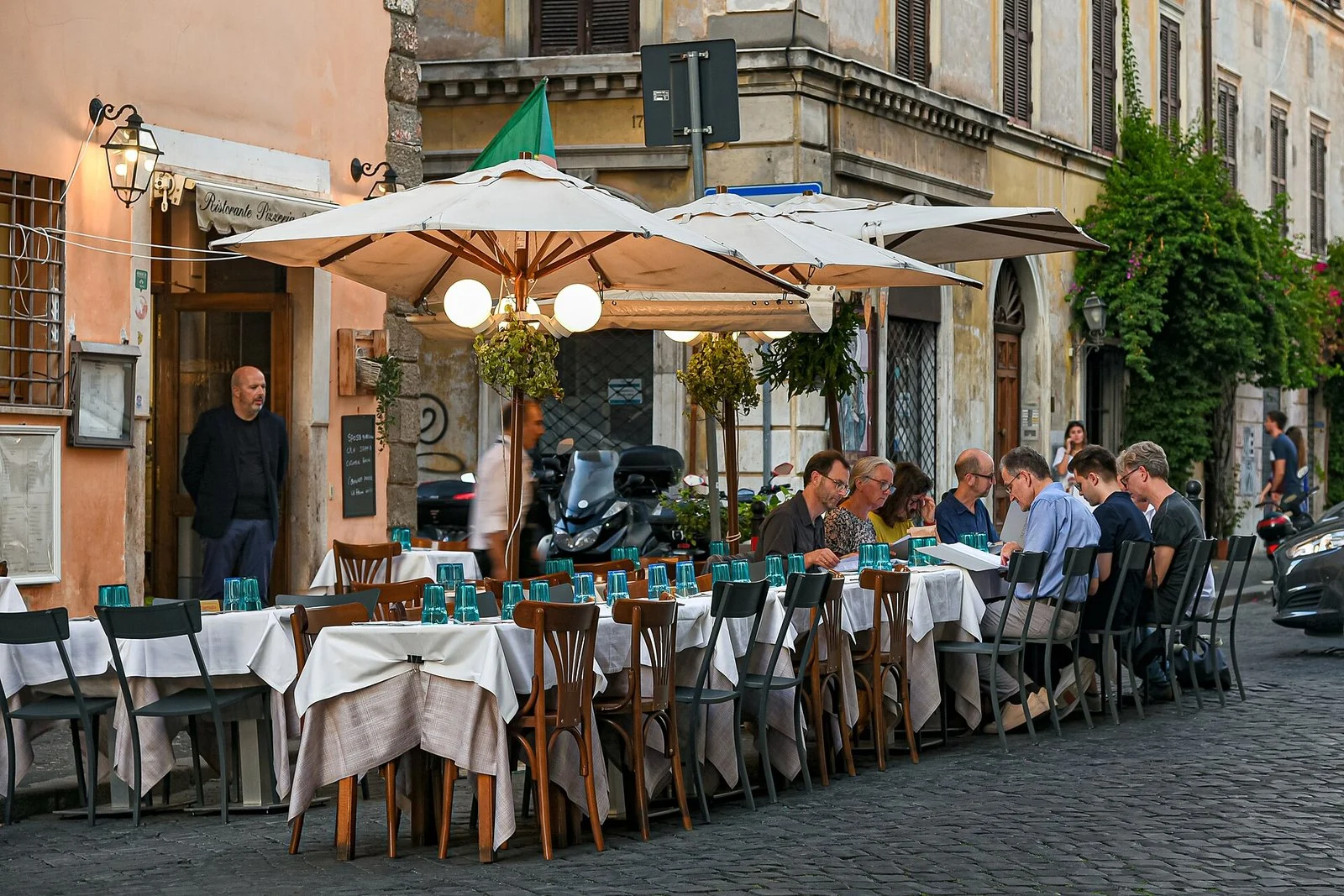
Prati and Borgo are two neighboring districts that look nothing alike. Borgo is the medieval rione that grew around the tomb of Peter, the only one in Rome born in the service of a basilica, while Prati is the Umbertine district thrown up after 1870 on a grid, with wide streets and period-style buildings, on land that until then was flood-prone fields. Only a few hundred meters and a century and a half of Italian history separate them. Wedged between the two are Castel Sant'Angelo, the Passetto that links the fortress to the Vatican, the bridges over the Tiber and the front of the Vatican Museums. Anyone who arrives for Saint Peter's Basilica and leaves right away misses the most interesting part: a rione amputated in the 1930s and a district built to turn its back on the pope, or so the story goes. The pages that follow explain what remains of Borgo after the demolition of the Spina, what to visit in Prati, how to avoid the Vatican crowds and the criteria for choosing where to eat.
Two Districts, One Border: How Prati and Borgo Are Laid Out
Borgo and Prati border each other along a line that runs roughly between Piazza del Risorgimento, Via Crescenzio and the lungotevere: to the south is rione XIV, Borgo, to the north rione XXII, Prati, which is the last rione established in Rome, on August 20, 1921. The border is not a bureaucratic curiosity: it marks the point where the city of the popes ends and that of the Kingdom of Italy begins, and you can see it with the naked eye in the passage from narrow lanes to rectangular blocks of 6 floors.
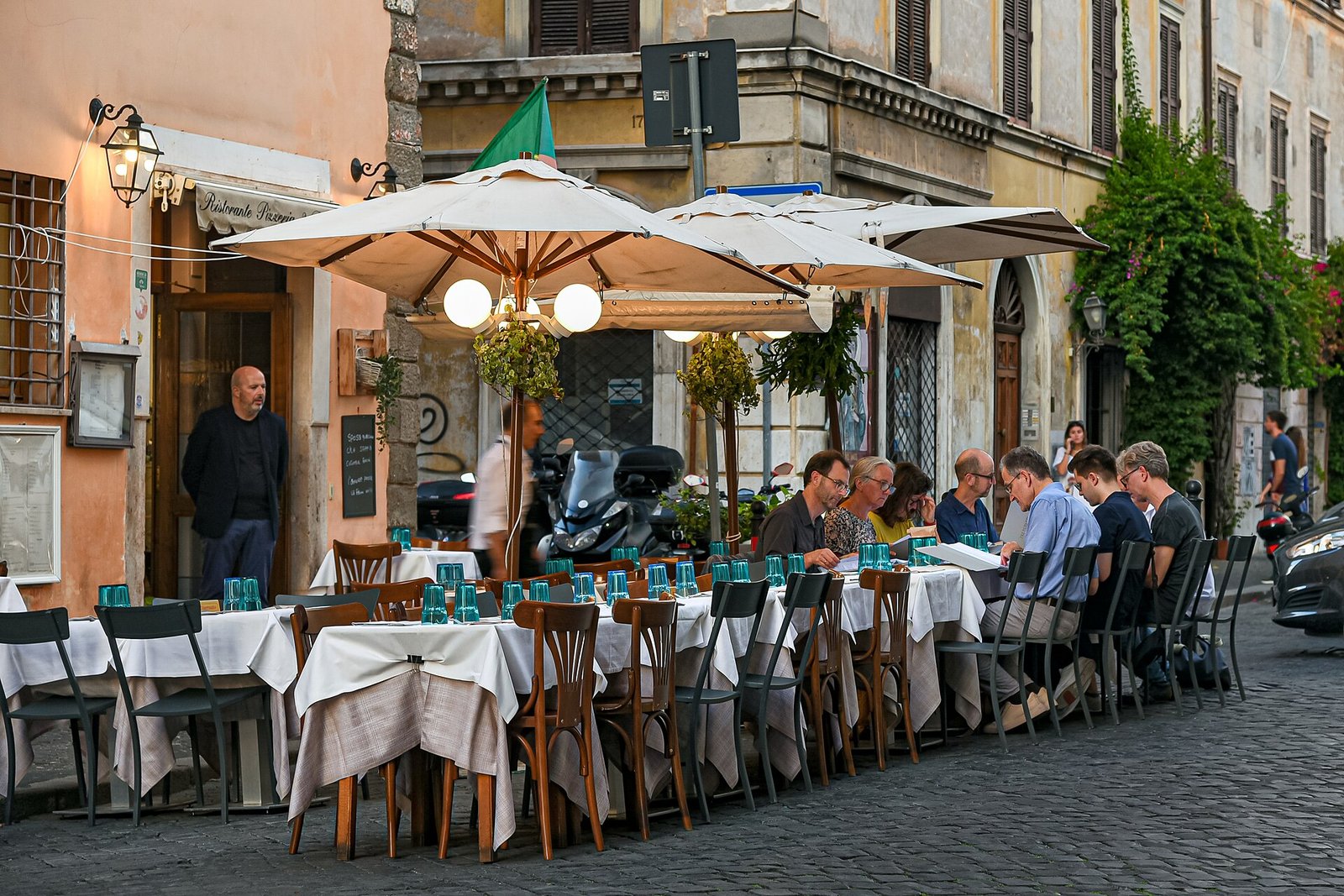
What Is Meant by Borgo
Borgo occupies the strip between the Vatican walls, the Tiber and Castel Sant’Angelo. It is a small, flat rione, crossed by Via della Conciliazione and by the parallel streets with the same prefix: Borgo Pio, Borgo Vittorio, Borgo Angelico, Borgo Santo Spirito. Until 1586 it was not part of Rome in the administrative sense: it was the Leonine City, a fortified settlement in its own right, and only Pope Sixtus V annexed it to the city as the 14th rione, on December 9 of that year.
What Is Meant by Prati
Prati takes its name from the Prati di Castello, the floodplain upstream of Castel Sant’Angelo that for centuries was countryside: reed beds, vegetable gardens, vineyards and a few farmhouses, periodically submerged by Tiber floods. Building starts from a 1873 agreement between the city and the big landowners of the area, but the district enters official planning only with the 1883 master plan. The result is a regular orthogonal grid, with wide sidewalks and blocks closed around courtyards.
Borgo: The Only Rione Born Around a Basilica
Borgo is born as a service appendix of Saint Peter's Basilica, and this is the difference that sets it apart from all the other rioni of Rome: the others grew around a market, a port, a forum or a consular road, Borgo around a venerated tomb. From the 4th century the Constantinian basilica drew pilgrims from all over Europe, and those who arrived needed lodging, food, assistance and burial: from there, the rione.
The Scholae Peregrinorum and the Origin of the Name
Between the 8th and 9th centuries the scholae peregrinorum settled around the basilica, national communities of pilgrims with their own church, hospice and cemetery: Saxons, Franks, Frisians, Lombards. The best known is the Schola Saxonum, founded according to tradition by the Saxon king Ine in the 8th century, from which comes the place name Sassia that still survives in Santo Spirito in Sassia and in the name of the lungotevere. The Germanic pilgrims called the fortified settlement burg: Borgo comes from burg, and this is why the rione has a German name amid Latin place names.
Leo IV and the Leonine City
In 846 a Saracen raid sacked Saint Peter's Basilica, which stood outside the Aurelian Walls and was therefore undefended. Pope Leo IV's response was the construction of a wall around the entire Vatican settlement, built between 848 and 852. Thus the Civitas Leonina was born, the Leonine City: a fortified enclosure with towers and gates that for 700 years remained an urban organism distinct from Rome. Stretches of those walls can still be read, in particular in the high wall that carries the Passetto along Borgo Sant’Angelo.
The Spina di Borgo and Its Demolition: What Was There Before
The Spina di Borgo was the triangular block, about 300 meters long, that separated the two main streets of the rione, Borgo Nuovo and Borgo Vecchio, and that hid the view of the basilica until the last moment. It was demolished between 1936 and 1937 to open Via della Conciliazione. According to the estimates reported by local sources, it removed from the center of Rome about 600,000 cubic meters of buildings, largely medieval and Renaissance.
Borgo Vecchio and Borgo Nuovo
Borgo Vecchio was the oldest street, heir to the arcaded route that led from the bridge to the basilica. Borgo Nuovo, also called Via Alessandrina, was opened by Pope Alexander VI Borgia for the Jubilee of 1500, as a straight and more dignified axis for papal processions. The two streets started almost parallel from the Tiber and converged toward Piazza Rusticucci, in front of the colonnade: between them, the Spina, a spindle of palaces, churches, shops and rental houses.
What Stood on the Spina
On the spindle and at its edges stood Piazza Scossacavalli with its fountain by Carlo Maderno, the church of San Giacomo Scossacavalli, the Palazzo del Governatore di Borgo, the church of Sant’Angelo al Corridore, the Palazzo dei Convertendi, the Palazzo Rusticucci-Accoramboni, the Palazzo degli Alicorni, the house of Giacomo Bartolomeo da Brescia and the church of the Nunziatina, besides dozens of ordinary houses. Not everything was destroyed in the same way: some buildings were taken apart and rebuilt along the new street or not far away, others simply disappeared.
What Was Rebuilt and What Was Lost Forever
The Palazzo dei Convertendi, the Palazzo Rusticucci-Accoramboni, the Palazzo degli Alicorni and the house of Giacomo da Brescia were taken apart and reassembled. The Maderno fountain of Piazza Scossacavalli was moved to Piazza Sant’Andrea della Valle, where it can still be seen. Disappeared without reconstruction are the church of San Giacomo Scossacavalli, the Palazzo del Governatore di Borgo and Sant’Angelo al Corridore. With them went the fine fabric of the houses: and that, unlike noble palaces, cannot be taken apart and reassembled.
Who Decided, and When: The Dates
The political precondition is the Lateran Treaty of February 11, 1929, which closes the Roman question and makes a link between the Italian State and the Vatican workable. The project was entrusted to Marcello Piacentini and Attilio Spaccarelli. The first blow of the pickaxe was struck by Mussolini in the presence of the two designers: the sources do not agree on the day, some give October 28, 1936, others 9 a.m. on October 29, 1936. The date is in any case tied to the anniversary of the March on Rome, October 28, and the coincidence is no accident. The demolitions ended on October 8, 1937, when the Spina had ceased to exist.
What You See Today in Place of the Spina
Today in place of the spindle there is a wide roadway lined with travertine buildings of 1930s and 1940s design, with a few authentic survivors set into the front: the church of Santa Maria in Traspontina and, a little farther on, the Auditorium Conciliazione on the right-hand side as you face the basilica, and the reassembled Renaissance palaces. On the same street there is also the Leonardo da Vinci Experience Museum.
The Unresolved Question: The Basilica's Scenographic Effect
The most debated point of the demolition is not how much was lost in cubic meters, but if the new street ruined or improved the arrival at the basilica. Gian Lorenzo Bernini designed the colonnade between 1656 and 1667 with a square that opened suddenly: the pilgrim came out of a narrow lane and found the ellipse right on top of him. Via della Conciliazione replaced the surprise with the announcement.
What Was Gained
Those who defend the operation point to two concrete things: Michelangelo's dome, which from the square is largely hidden by Maderno's facade, can be seen in full and from afar from Via della Conciliazione. And a square meant to receive crowds of hundreds of thousands of people needs wide routes for inflow and outflow, not lanes. The second argument is less romantic than the first but it is the one that, in practice, holds up the management of the big Vatican events.
What Was Lost
A rione was lost, not a viewpoint. The most solid criticism of the demolition is not about perspective but about the urban fabric: inhabited houses, shops, a parish, a neighborhood square, wiped out in 12 months, with the forced relocation of the residents toward the borgate. On the visual side, the result is that the basilica appears at once, flattened by distance: to understand what effect it had before, you have to look at the engravings and the 19th-century photographs.
The Passetto di Borgo, the Popes' Escape Corridor
The Passetto di Borgo is a covered walkway about 800 meters long that links the Vatican Palaces to Castel Sant’Angelo, running high up on the Leonine wall: it is the escape route that saved at least 2 popes. You see it from the ground by walking along Borgo Sant’Angelo or Borgo Pio, recognizable by the row of battlements and the walled-up arches that span the streets.
The Two Documented Escapes
In 1494 Alexander VI used it to take refuge in the castle during the descent into Italy of Charles VIII of France. In 1527, during the Sack of Rome, Clement VII fled along the Passetto while the Landsknechts were entering Borgo, and he escaped by a hair: it is the episode that made the corridor famous.
Can You Visit It?
The Passetto was made accessible again for the Jubilee of 2000 and since then has been opened on an irregular basis, mostly with a guided visit and in limited periods of the year. It is not a free-entry route and it is not always available: before counting on it in your itinerary, check the updated schedule with the management of Castel Sant’Angelo, because openings change from season to season. If you find no availability, you can follow it from the outside along Borgo Sant’Angelo, for free.
Castel Sant’Angelo: Mausoleum, Fortress, Prison, Museum
Castel Sant'Angelo is born as the mausoleum of the emperor Hadrian: work starts in the first half of the 2nd century, with the sources oscillating between 123 and 135, and the construction was completed in 139 under Antoninus Pius. In 18 centuries it has been an imperial tomb, a bastion, a prison, a fortified papal residence and a national museum, and none of these functions has entirely erased the others.
What You See Inside
The visit route passes through the Roman helicoidal ramp, the funerary chamber, the courtyard of the cannonballs, the historic prisons, the Renaissance papal apartments with the Sala Paolina frescoed under Paul III and the terrace under the angel, from which there is one of the best views of the Vatican front. The Museo Nazionale di Castel Sant’Angelo was established in 1925 and the monument is today managed by the Direzione Musei statali di Roma of the Ministry of Culture.
The Name and the Angel
The name comes from the tradition, reported by medieval chronicles, according to which in 590 Pope Gregory the Great, during a procession against the plague, saw on top of the mausoleum the archangel Michael sheathing his sword, a sign of the end of the epidemic. It is a popular tradition, not a verifiable historical fact, but it gave its name to the monument, to the bridge and to a whole slice of the city. On the summit a number of statues of the angel have followed one another: the marble one by Raffaello da Montelupo, now kept inside, and the bronze one by Peter Anton von Verschaffelt, placed in 1753, which is the one you still see today.
Ponte Sant’Angelo and the Other Bridges in the Area
Ponte Sant’Angelo was built by the emperor Hadrian in 134 with the name pons Aelius, to link his mausoleum to the left bank: it is the best-preserved Roman bridge among those in use in the center of Rome, and it is entirely pedestrian. The three central arches are the ancient ones, in peperino faced with travertine. The access ramps with smaller arches were demolished in 1893, when the Tiber retaining walls were built.
Bernini's Angels
The 10 statues of angels holding the instruments of the Passion were designed by Gian Lorenzo Bernini for Pope Clement IX and made between 1668 and 1669 with the collaboration of his workshop. The 2 angels carved by Bernini's own hand, the one with the crown of thorns and the one with the INRI scroll, were never placed on the bridge because they were considered too precious to stand outdoors: donated in 1729, they are today in the church of Sant’Andrea delle Fratte. On the bridge you see the copies. If you want to follow the thread of the master's works in the city, you will find a dedicated guide in the itinerary on Bernini in Rome, and a wider context in the page on Baroque Rome.
The Other Bridges to Know
Between Prati and the historic center there are several useful crossings: Ponte Vittorio Emanuele II, which leads straight toward Corso Vittorio and Piazza Navona. Ponte Umberto I, which comes out in front of Palazzo Altemps. Ponte Cavour, aligned with Piazza Cavour and the Palazzo di Giustizia. Ponte Regina Margherita, which arrives at the Pincio and Piazza del Popolo by way of Via Ferdinando di Savoia. Farther upstream are Ponte della Musica and Milvian Bridge, which serve the area of the Foro Italico and the MAXXI. On the opposite side, toward the Isola, the stump of the Ponte Rotto remains, a reminder of how hard it was to keep a bridge standing on this river.
Santo Spirito in Sassia and the Oldest Hospital in Europe
The Santo Spirito in Sassia complex, on Borgo Santo Spirito, includes a 16th-century church and the oldest hospital in Europe still recognizable in its original structure: it was founded by Pope Innocent III in 1198 on the site of the Schola Saxonum, with the bull Religiosam vitam that entrusted the institution to the hospital order led by Guy of Montpellier.
The Corsia Sistina
After the fire of 1471, Pope Sixtus IV had the hospital rebuilt, creating the Corsia Sistina: a hall 120 meters long and 12 wide, divided in half by an octagonal tiburio under which stood the altar, so that the bedridden patients in the two wings could follow Mass. It is a Renaissance hospital space preserved in full, a rare case in Europe. The walls carry a cycle of frescoes from 1478 that tells the founding of the hospital and the deeds of Sixtus IV, the work of artists of the Umbrian-Roman school close to Melozzo and Pinturicchio.
The Biblioteca Lancisiana and the Museum of Medical Art
Inside the complex are 2 little-known institutions: the Biblioteca Lancisiana, founded in 1711 and inaugurated in 1714 by the papal physician Giovanni Maria Lancisi, which holds hundreds of medical manuscripts from the 14th to the 20th century, and the museum of the Academy of the History of the Healing Arts, with surgical instruments, a historic pharmacy and laboratory reconstructions. Neither has the continuous schedule of an ordinary museum: they are visited by appointment or on dedicated occasions, so they have to be contacted beforehand and can't be improvised.
Santa Maria in Traspontina, the Church with the Flattened Dome
Santa Maria in Traspontina, on Via della Conciliazione, is the church of the Carmelites of Borgo and has an architectural peculiarity that comes from a military reason: the dome is deliberately low and flattened so as not to get in the way of the fire of Castel Sant’Angelo's cannons. It is not a choice of taste, it is a defensive requirement.
Why the Earlier Church Was Demolished
There was an older Traspontina, closer to the castle, which Pope Pius IV had demolished precisely because it obstructed the trajectories of the fortress's bombards. The present church was rebuilt starting in the 1560s on a set-back site, with a project begun by Sallustio Peruzzi and carried on by Ottaviano Mascarino, and it kept the limit on its height. The name Traspontina simply means beyond the bridge, that is, on the far side of Ponte Sant’Angelo for someone looking from the city.
The Two Columns of the Flagellation
In a chapel of the right aisle are kept 2 small columns venerated by popular tradition as those to which Peter and Paul would have been tied and flogged. It must be said clearly that this is devotional tradition, not an archaeological fact: the columns are objects of worship and their identification has no historical confirmation. It is nonetheless a useful example of how Borgo for centuries multiplied points of minor devotion around the main basilica.
The Surviving Streets: Borgo Pio, Borgo Vittorio, Borgo Angelico
Of the Borgo that existed before 1936, what remains is mostly the streets north of Via della Conciliazione: Borgo Pio, Borgo Vittorio, Borgo Angelico and Borgo Sant’Angelo, a narrow grid of low houses opened by Pope Pius IV in 1565 and left substantially intact. It is the piece of the rione where you understand what Borgo really was before the wide street.
Borgo Pio
Borgo Pio is pedestrian along a good part of its length and is the most lived-in street of the rione: workshops, trattorias, bakeries, shops of religious articles and a density of outdoor tables that in the warm months becomes notable. It runs parallel to the Vatican walls and stays out of the tourist bus corridor: it is the best alternative to Via della Conciliazione for going to or coming back from the basilica.
Borgo Sant’Angelo and the Wall of the Passetto
Borgo Sant’Angelo runs under the Passetto and is the street to walk to see the corridor from below along its whole length, up to where it meets the castle. In the evening it is poorly lit and very quiet, which makes it one of the most evocative stretches of Rome after sunset: if you are organizing an evening walk, you will find ideas on the page about Rome at night.
Prati: The District Built by the Kingdom of Italy
Prati is the district that the Italian State built after 1870 to house public offices, ministries, courts and the officials who arrived in Rome from all over the country: building starts from the 1873 agreement between the city and the owners and takes off with the 1883 master plan. The model is not Roman but northern European: regular blocks, wide streets, apartment buildings of 5 or 6 floors.
The Orthogonal Grid and the Sidewalks
The grid of Prati is orthogonal, with rectangular blocks and 2 strong commercial axes, Via Cola di Rienzo running east-west and Viale Giulio Cesare running north-south, plus the diagonals that converge on Piazza Cavour and on Piazza Mazzini. The width of the sidewalks, which in Rome is almost an exception, is a 19th-century design choice consistent with the function of the district: urban strolling, shop windows, cafes with outdoor seating.
Street Names as a Political Program
The streets of Prati bear names from ancient, pagan Rome and from the Risorgimento: Scipioni, Ottaviano, Germanico, Marcantonio Colonna, Cola di Rienzo, Giulio Cesare, Vespasiano, Crescenzio, and then Piazza Cavour, Piazza Mazzini, Piazza del Risorgimento. There is, in the original street names, almost no saint. This is a documented fact and not a rumor, and it is the main clue in favor of an anticlerical reading of the district.
The Streets That Turn Their Back on the Vatican: Truth or Legend?
The short answer is that it is a very widespread tradition, repeated even by authoritative sources, but that nobody has ever produced the planning document that proves it: the missing view of Saint Peter's dome from the streets of Prati is an observable fact, while the resolution that supposedly imposed it has never been shown. We checked the question against several sources and this is the picture.
What the Supporters of the Thesis Claim
The sharpest formulation is that of the Touring Club Italiano, which states that the city council of Rome gave the new district a precise direction, that is, to avoid the perspective view of Saint Peter's dome. The same reading is taken up by the English Wikipedia entry on the rione, which speaks of a street layout planned so that from none of the new streets would the dome be visible in the background, and attributes the choice to the tensions between the new Kingdom and the Holy See.
What the Proof Lacks
The primary source is missing. None of these reconstructions cites a resolution, a council minute or a planning report in which the prescription is written. Those who have tackled the question in an argued way, such as the analysis published on the site Gli scritti, explicitly admit that the orientation of the streets is a fact not documented in the contemporary planning documents, and acknowledge that part of the critics consider it a rumor for exactly this reason.
The Alternative Technical Explanation
There is a simpler and sufficient explanation. The grid of Prati is laid out parallel and perpendicular to the bend of the Tiber between Ponte Cavour and Ponte Regina Margherita and to the new embankment walls, and is hooked onto the heads of the bridges built in those same years. Saint Peter's Basilica is to the southwest, behind the Vatican walls and behind the hill, in a direction that matches none of the axes generated this way. Given the geometry of the river and the position of the bridges, not seeing the dome from the streets of Prati required no ideological decision: it was enough to follow the Tiber.
And Then It Is Not Even Entirely True
The thesis also has a factual problem. Its own supporters admit an exception: from Via Ottaviano the dome is not seen until you reach Piazza del Risorgimento, where it instead appears. If the intention had been a general and binding prescription, a main axis of the district that opens out right onto the view would not have got through. The correct formulation is therefore that from the great majority of the streets of Prati the dome is not framed, not that it is invisible everywhere.
The Honest Answer
To sum up: the anticlerical street naming of Prati is documented and intentional, the absence of the dome from the street perspectives is real, the causal link between the two is tradition, not document. Anyone who tells the story of Prati passing the legend off as an established fact makes a methodological error. Anyone who dismisses it as pure invention makes another, because the political climate that generated it is historically real.
The Palazzo di Giustizia, the Palazzaccio
The Palace of Justice, universally known in Rome as the Palazzaccio, was designed by Guglielmo Calderini and built between 1889 and 1911: it measures about 170 meters by 155, is entirely clad in travertine and faces the Tiber with a bronze quadriga by Ettore Ximenes placed in 1926.
The Construction Site and the Scandal
The first stone was laid on March 14, 1889 in the presence of King Umberto I and Queen Margherita. The construction site lasted 22 years, with a cost increase large enough to trigger a parliamentary inquiry begun in 1912 and chaired by Senator Secondo Frola. The alluvial ground required enormous concrete foundations, and despite this the building kept settling for decades, so much so that demolishing it was discussed: consolidation work started in 1970.
Why They Call It the Palazzaccio
The nickname comes from the sum of 3 things: the bulk out of proportion to the surroundings, the decoration judged excessive already by contemporaries and the suspicion of irregularities in the management of the contract. The art critic Lionello Venturi called it a heap of travertine struck by tetanus, a phrase that has gone further in the city than any technical judgment.
What It Houses Today
The building is the seat of the Supreme Court of Cassation, the Rome Bar Council and the Biblioteca centrale giuridica. For 50 years it also housed the city's ordinary court, later moved elsewhere. Between 1926 and 1943 the Special Tribunal for the Defense of the State operated there, and during the German occupation the building was the scene of executions.
Can You Visit It?
It is not a museum: it is a working judicial seat, with checks at the entrance and access tied to service reasons. Openings to the public happen on extraordinary occasions, for example on days dedicated to heritage, and have to be checked each time. From the outside you walk around the whole block in a quarter of an hour.
Piazza Cavour and the Monumental Front
Piazza Cavour is the central square of Prati and its space of representation: a garden with palms and magnolias occupies it, at the center stands the monument to Camillo Benso, Count of Cavour, the work of the sculptor Stefano Galletti, inaugurated in 1895. On one side the Palazzaccio looms, along the others public buildings and the district's historic theater line up.
The Monument to Cavour
Placing in the new district the monument to the statesman who had built the unified State was a declaration of intent consistent with the street names. If you want to go deeper into the Risorgimento thread in the city, you can stop by the Central Museum of the Risorgimento or the Institute for the History of the Italian Risorgimento.
The Museums and Churches of Prati
Prati is not a district of great museums, but it keeps 2 very particular ones and a church unlike any other in Rome.
The Little Duomo and the Museum of the Souls of Purgatory
The church of the Sacro Cuore del Suffragio, on Lungotevere Prati, is the only significant neo-Gothic building in the center of Rome: it was designed by the engineer Giuseppe Gualandi, the first stone was blessed in 1894, work took place between 1908 and 1917 and the consecration came on May 17, 1921. Romans call it the little Duomo for the evident echo of Lombard Gothic. Next to the sacristy is the Museum of the Souls of Purgatory, a single display case that gathers documents and objects tied to alleged manifestations of souls in purgatory, collected starting from an episode in 1897. It is a devotional collection, not a scientific one. The visit takes a few minutes and depends on the church's hours, which should be checked.
The Museo Storico dell’Arma dei Carabinieri
In Piazza del Risorgimento, exactly on the border between Prati and Borgo, is the Museo Storico dell’Arma dei Carabinieri, with uniforms, weapons, flags, documents and a section devoted to the historic figures of the corps. It suits those traveling with teenagers. Since it is a military facility, opening days and hours may vary and entry may require an ID: better to check before showing up.
What You Won't Find in Prati, Contrary to What You Read
2 museums are often attributed to this district by mistake. The Museo Storico dei Granatieri di Sardegna is not in Prati: it is in Piazza Santa Croce in Gerusalemme, in Esquilino, on the other side of the city. And the Janiculum Ossuary Mausoleum, which holds the remains of those who fell defending the Roman Republic of 1849, among them Goffredo Mameli, is on the Janiculum, on the opposite bank from Prati: you get there from Via Garibaldi, not from Via Cola di Rienzo. These are 2 frequent mistakes in online guides.
Via Cola di Rienzo and Shopping in Prati
Via Cola di Rienzo is the main commercial axis of Prati: about a kilometer and a half in a straight line between Piazza del Risorgimento, at the Vatican walls, and Piazza della Libertà, on the Tiber. It is the Roman alternative to shopping on the Corso and around Piazza di Spagna, with wide sidewalks and far fewer crowds.
The District of Lawyers, Courts and Offices
The presence of the Palazzo di Giustizia has turned Prati into the legal district of Rome: around Piazza Cavour there has been for over a century the highest density of law, notary and consulting firms in the city, with everything that follows in terms of street life. It is something you perceive right away as you walk, and it explains several things about the district.
Cinemas and Evenings in Prati
Prati is historically the district with the highest concentration of movie theaters in Rome outside the historic center, spread mainly along Via Cola di Rienzo, Viale Giulio Cesare and around Piazza Cavour. It remains one of the few areas of the city where you choose among several theaters within a 10-minute walk, with a regular share of screenings in the original language. The sector is, however, in constant flux: before an evening out it is worth checking the schedule on the theaters' official channels.
Alternatives in the Area
In the warm months the offer shifts to open-air arenas and widespread festivals: the general picture is on the page about Estate Romana. For concerts, the nearest reference is the Auditorium Conciliazione, in Borgo, while for the symphonic season and the big events you head up to the Auditorium Parco della Musica at Flaminio, 2 tram stops away.
How to Avoid the Vatican Crowds
The crowds in the Vatican area gather at 3 precise points and in predictable time slots: the entrance of the Vatican Museums on Viale Vaticano between 9 and 12, Saint Peter's Square on Wednesday morning for the general audience and on Sunday around noon for the Angelus, and Via della Conciliazione in the middle hours of the day.
The Rules
First: on Wednesday morning, if you are not attending the audience, avoid the whole area. Second: visit the basilica early, at opening, or in the late afternoon, while the museums are typically more crowded in mid-morning. Third: the security check for entering the basilica is a bottleneck that does not depend on tickets, and the waiting time has to be counted separately. Fourth: covered shoulders and knees are an entry requirement, and whoever does not comply is stopped after having already stood in line.
What to Book and What Not To
The Vatican Museums and the Sistine Chapel are booked in advance on the official site, and in high season booking is in effect mandatory if you don't want to lose hours. The Vatican Gardens are visited only with a guided visit by reservation. Entry to Saint Peter's Basilica is free and cannot be booked, while the climb to the dome has a separate ticket. For the general audience you need a free ticket to be requested in advance. Castel Sant’Angelo is gladly booked on weekends and long weekends. Hours and fares change often: they should be checked on the official sites before you leave and not on third-party lists.
A Warning About the Square
In the area between Piazza del Risorgimento, Viale Vaticano and Via della Conciliazione the presence of sellers of tickets and of unofficial escort services is routine. Vatican Museums tickets are bought on the official channel, entry to the basilica is not paid for, and any offer promising to skip the line for the basilica concerns a service different from what it seems. The general picture on free admissions and discounts is on the page about free museums in Rome.
Where to Eat Well a Short Walk from the Museums: The Criteria
The working rule in the Vatican area is just one: moving three blocks away from the museum entrance and from the Conciliazione radically changes the ratio between price and quality. We don't point out signs: managements and kitchens change, and a name recommended today can turn out to be misleading in six months. We give the criteria, which stay valid.
The Signs to Avoid
A tourist menu displayed in five languages with photographs of the dishes, staff who invite you in from the sidewalk, a laminated menu with 120 items, pasta and pizza and salads and sandwiches all together on the same menu, a kitchen open nonstop from 11 in the morning to midnight.
The Positive Signs
A short, seasonal menu, a blackboard with the dishes of the day, mostly local customers at lunch on weekdays, cover and service charges clearly indicated, house wine in carafes or a reduced but coherent wine list, kitchen hours with an afternoon closing. In Prati, the table occupied by lawyers at 13:30 on a Tuesday is the best indicator available.
Where to Look, Geographically
Three directions work better than the others. To the north, the side streets of Via Cola di Rienzo between Via Ezio and Via Vespasiano, where the customers are almost only from the neighborhood. To the east, the area between Piazza Cavour and Via Crescenzio, with office-lunch dining. To the south, the streets of Borgo north of the Conciliazione, where some rione trattorias survive but the rate of traps is higher.
A Walking Itinerary Between Prati and Borgo
The two districts can be covered on foot without any transport, and the maximum distance between two extremes, from Piazza della Libertà to Borgo Santo Spirito, is about two kilometers. The route that follows is designed for those who have already seen, or will see separately, the basilica and the museums.
The Full Loop in One Day
You start from Castel Sant’Angelo, follow the Passetto along Borgo Sant’Angelo, turn into Borgo Pio, go down into Borgo Santo Spirito with a stop at the hospital complex, return to Via della Conciliazione at Santa Maria in Traspontina and finish in Saint Peter's Square. In the afternoon you cross Ponte Sant’Angelo, go back up the lungotevere to the Sacro Cuore del Suffragio, cut across to Piazza Cavour with the Palazzaccio and walk Via Cola di Rienzo to Piazza del Risorgimento. Lunch break in the side streets of Cola di Rienzo. If you have more days, you can fit it into a wider program with the pages on Rome in one day, three days in Rome and one week in Rome. For getting to and from the district, the reference is the page on getting around Rome, and for those looking for lodging in the area, the one on where to stay in Rome.
How to Get to Prati and Borgo
Prati and Borgo are served by metro line A with three useful stops, Lepanto, Ottaviano and Cipro, as well as by many surface lines and by tram 19, which heads up toward Flaminio. No metro stop is inside Borgo: for the basilica area the reference is Ottaviano, from which you walk along Via Ottaviano to Piazza del Risorgimento.
By Metro, by Car and from the Airports
Ottaviano is the stop most used by those going to the Vatican, Cipro the most convenient for the Vatican Museums entrance on Viale Vaticano, Lepanto serves the northern part of Prati. The area is largely subject to traffic restrictions and street parking is paid during daytime hours: arriving by car and looking for parking around the basilica is the worst possible choice. If you come from outside Rome, you do better to leave the vehicle in a park-and-ride lot connected to the metro. From the airports, the options and real travel times are on the page about the airports of Rome.
Nearby: What to Add to the Itinerary
Prati and Borgo border some of the most visited areas of Rome, and extending the itinerary costs a few minutes of walking. Below are the directions that work best, in order of proximity.
Toward the Vatican
Besides Saint Peter's Basilica, the Vatican Museums and the Sistine Chapel, it is worth knowing that the Vatican obelisk at the center of the square is the only obelisk in Rome that has stood upright without interruption since antiquity, and that the institutional context is explained on the page about Vatican City. Those who follow Michelangelo in Rome find here the dome and the frescoes of the Sistine.
Toward the Janiculum and Trastevere
Climbing south from Borgo Santo Spirito you reach in 20 minutes the Janiculum, with the Janiculum Ossuary Mausoleum, the Acqua Paola fountain, San Pietro in Montorio and the Tempietto del Bramante. From there you go down to Trastevere and close the circle on the right bank of the river.
Toward the Center and the Tridente
Crossing Ponte Cavour or Ponte Regina Margherita you enter Campo Marzio: the Ara Pacis, the Mausoleum of Augustus, Piazza del Popolo with the Porta del Popolo and the church of Santa Maria del Popolo are all a few minutes away. Those who follow the works of Caravaggio in Rome find right there one of the obligatory stops.
Toward the North
From Lepanto and from Piazza Mazzini you quickly reach the Foro Italico, the MAXXI and the Ponte della Musica, which links the two banks in the Auditorium area. It is the quadrant for those who have already done the historic center and want the Rome of the 20th century, as in the page on EUR.
Frequently Asked Questions About Prati and Borgo
What is the difference between Prati and Borgo?
Borgo is rione XIV of Rome, born in the Middle Ages around Saint Peter's Basilica and annexed to the city by Sixtus V on December 9, 1586, while Prati is rione XXII, the last one established, on August 20, 1921, and corresponds to the Umbertine district built after 1870 on the Prati di Castello. Borgo has narrow lanes and a medieval layout, Prati an orthogonal grid with wide streets and late 19th-century apartment buildings.
Is it true that the streets of Prati were oriented so as not to see Saint Peter's?
It is not proven: it is a very widespread tradition, repeated also by the Touring Club Italiano and by Wikipedia, but no source has ever produced the resolution or the planning document that attests it. It is true and documented that the street names of Prati are Risorgimento and pagan, almost without saints, and that from the great majority of the streets the dome is not framed. But the orientation of the grid follows the bend of the Tiber and the heads of the bridges, which is enough to explain the effect without any anticlerical intention.
When was the Spina di Borgo demolished?
The Spina di Borgo was demolished between 1936 and 1937: the first blow of the pickaxe was struck by Mussolini, on October 28 or 29, 1936 depending on the sources, and the demolitions ended on October 8, 1937. The project for Via della Conciliazione, signed by Marcello Piacentini and Attilio Spaccarelli, was born after the Lateran Treaty of 1929, but the street was completed only for the Jubilee of 1950.
Can you visit the Passetto di Borgo?
The Passetto di Borgo is visited only on scheduled occasions and with an escort, not with free entry: it was made accessible again for the Jubilee of 2000 and since then openings have been irregular and seasonal. Before putting it in your itinerary, check the schedule with the management of Castel Sant’Angelo. From the outside, the corridor can be followed along its whole length of about 800 meters by walking along Borgo Sant’Angelo, for free.
Why is the Palazzo di Giustizia called the Palazzaccio?
The Palazzo di Giustizia of Rome is called the Palazzaccio for its disproportionate bulk, its decoration judged excessive and the suspicions of irregularities that emerged during the construction, which lasted from 1889 to 1911 and led to a parliamentary inquiry begun in 1912. Designed by Guglielmo Calderini and clad entirely in travertine, it measures about 170 meters by 155 and today houses the Court of Cassation. It cannot be visited as a museum.
How much time do you need to visit Prati and Borgo?
To visit Prati and Borgo on foot, three to four hours are enough for each of the two districts, and a full day for both with a lunch break. The count does not include Saint Peter's Basilica and the Vatican Museums, which require at least half a day separately. The maximum distance between the two extremes of the itinerary, from Piazza della Libertà to Borgo Santo Spirito, is about two kilometers on the flat.
How do you avoid the line at the Vatican?
The crowds at the Vatican gather at the Museums between 9 and 12, in Saint Peter's Square on Wednesday morning for the general audience and on Sunday around noon for the Angelus. The Vatican Museums should be booked in advance on the official channel, while entry to the basilica is free and cannot be booked, with a security check that remains a bottleneck anyway. Clothing with covered shoulders and knees is an entry requirement.
Where can you eat well near the Vatican?
Near the Vatican you eat better by moving at least three blocks away from the museum entrance and from Via della Conciliazione, in particular in the side streets of Via Cola di Rienzo and in the area between Piazza Cavour and Via Crescenzio, where the customers are from the neighborhood and the offices. The signs to avoid are menus with photos in several languages, staff who invite you in and a kitchen open nonstop all day.
Who Wrote This Page
This page is edited by the editorial team of Tour Leader Pro, the Rome-based project office that designs and coordinates visits, itineraries and cultural events in Rome and Lazio. Hours, fares and access conditions given here are checked as of the publication date against the official sources named in the text: it is worth rechecking them before you leave, because they change often. If you find an out-of-date item, tell us.
Those who build an itinerary that holds together the Vatican front, the bridges over the Tiber and the Umbertine district of the right bank can find useful planning tools at Tour Leader Pro, while for a wider picture of transport, travel times and destinations in Lazio, a good resource is Italy Planner.
Prati and Borgo remain the quickest way to understand two Romes that touch without mixing: that of pilgrims and fortified corridors, and that of offices, courts and shop windows built by the unified State a few hundred meters away. Crossing that border on foot, in 10 minutes, remains the most instructive exercise in this part of the city.