Estate Romana: what it is, how it works, how to find your way around
In short. Estate Romana is the program of cultural events that the City of Rome promotes every year in the warm months.
Estate Romana is the program of cultural events that the City of Rome promotes every year in the warm months. Born in 1977 on the initiative of the then culture councilor Renato Nicolini, it is today an administrative container that holds hundreds of different initiatives, from free neighborhood outdoor cinemas to the opera season in archaeological areas, from jazz festivals in historic villas to summer villages on the Tiber. Understanding Estate Romana means understanding two things together: that it is not a festival with a single ticket, an artistic director and a compact program, and that behind the name there is a precise public procedure, with a call for proposals, a ranking and grants, which determines a large part of what you then find in the parks and on the riverbanks. The lines that follow explain where Estate Romana comes from, how it has changed in almost half a century, how it works today from an administrative point of view, where the official program is, which places and series return every year, what you pay for and what you don't, and how to get around if you are in Rome in July or August.
What Estate Romana is and what it is not
Estate Romana is a program, not a festival. It is the way Roma Capitale gathers under a single label, and in part funds, a very broad set of cultural events organized by different parties between late spring and mid-October. The difference is not a formality. A festival has an organization that decides the lineup, a central box office and a recognizable artistic identity. Estate Romana has none of this. It has an institutional coordination, a brand, a project selection procedure and a calendar that lines up things that remain independent of one another.
A container, not a single lineup
The most important practical consequence concerns anyone who arrives in Rome and looks for "the Estate Romana program" the way they would look for a theater's program. That single document, in the form of a booklet with all the evenings in chronological order, has not existed in an exhaustive printed version for many years, and even online the institutional calendar is an aggregator: it collects the pages of the individual events, each with its own organizer, its own times and its own box office. Someone who wants to go to a concert at the Baths of Caracalla and someone who wants to watch a free film at Aqueducts Park are consulting two completely different channels, even though both evenings appear under the same heading.
Who organizes what
At least four channels coexist inside Estate Romana. The first is that of the city's large cultural institutions, which program in summer with their own resources: the Rome Opera House with its summer season, the music foundation of the Auditorium Parco della Musica, the civic museums and the national museums. The second is that of private associations and cultural businesses selected through the city's public call, which receive a grant and in exchange carry out a project in an agreed location. The third is that of the Municipi, which fund or host initiatives in their own area. The fourth is that of the parties who organize on their own, without public money, and who ask only to appear in the calendar and to obtain the permits to occupy a space.
Why the name stays even as the season gets longer
In recent years the Capitoline administration has explicitly adopted a principle of de-seasonalization, meaning it has moved part of the resources to projects that also take place outside the summer months. The Estate Romana brand nevertheless endures, because it indicates a season that Romans recognize and because it marks the only period of the year in which the city systematically uses its open spaces: parks, riverbanks, courtyards, neighborhood squares, archaeological areas. The name, put differently, has outlived the administrative formula that produced it.
Image: an audience of empty chairs in a Roman park at sunset, with the white screen of an outdoor cinema set up among the pines.
The birth in 1977: Renato Nicolini and the ephemeral
Estate Romana was born in 1977 on the initiative of Renato Nicolini, culture councilor of the City of Rome in the left-wing administrations led by Giulio Carlo Argan, Luigi Petroselli and Ugo Vetere. On the start date of his term the sources do not fully agree: some reconstructions have it starting in 1976, others in 1977, while all agree on its end in 1985. Nicolini, born in Rome in 1942 and died in 2012, was an architect lent to politics, and his idea of cultural programming grew out of an urban planning diagnosis even before an artistic one.
Rome in 1977: the context
1977 is one of the hardest years in the history of the Republic. Rome is a city crossed by political violence, with a historic center that empties out in the evening and outskirts lacking any cultural offering. Cinemas close in summer, theaters too, and the public calendar shrinks to a few village fairs. Nicolini's insight was that filling public space with mass cultural events could be, at once, a cultural policy and a security policy: not a substitute for social conflict, but a way to bring back onto the street a population that had stopped going out.
Massenzio, the screen in the basilica
The symbol of the first Estate Romana was the film series set up in the Basilica of Maxentius, in the Roman Forum. The most cited reconstructions give August 25, 1977 as the date of the first screening, with "Senso" by Luchino Visconti in front of a few hundred spectators. Within two or three seasons the audience grew to the point of making the space of the basilica insufficient, and the series, which permanently took the name Massenzio, moved to larger venues, among them the Circus Maximus, turned into a sort of film city with screenings running from sunset to dawn.
Castelporziano and the poets' festival
Among the most discussed episodes of that season is the international poets' festival organized in 1979 on the beach of Castelporziano, with the participation of leading authors of international poetry, including Allen Ginsberg and William Burroughs. The event entered collective memory as much for the names present as for the protests of the audience and the collapse of the stage, and it is usually cited as the moment when the formula of the mass open-air cultural event showed both its strength and its fragility.
Cinema in front of the Colosseum
Another recurring episode in the chronicles of those years is the screening, in 1981, of Abel Gance's "Napoléon" in the version restored by Francis Ford Coppola, on a giant screen set up in the area between the Colosseum and the Arch of Constantine, with live musical accompaniment composed by Carmine Coppola. It is the kind of operation that explains better than any theory what the original Estate Romana was: a silent film from the 1920s, an ancient monument, tens of thousands of people sitting on the ground and no ticket to pay.
The controversy over the ephemeral
The formula with which the politics of the time dismissed or defended those seasons is "the ephemeral." The accusation was that spending public money on events meant to last one evening diverted resources from permanent cultural infrastructure, from libraries to neighborhood theaters. The defense, supported by Nicolini himself, was that the temporary event served to make usable spaces that nobody frequented anymore, and that lasting transformations would come out of that practice.
The end of the Nicolini era
The last Estate Romana curated by Nicolini is commonly identified with the 1985 edition, titled "Ultimo Atto" and focused on the metaphysical landscape of the EUR district. With the end of that councilorship, the phase in which Estate Romana has a single recognizable artistic direction also ends. From that moment on the name survives, but the model changes profoundly.
Image: editorial illustration of a crowd sitting on the ground in front of a large white screen, with the arches of an ancient monument barely sketched in the background.
How Estate Romana has changed from the 1980s to today
From the mid-1980s Estate Romana stops being a unified artistic project and gradually becomes a system for funding and coordinating other people's initiatives. It is the decisive transformation, the one that explains the current shape of the series and also a large part of the criticism leveled at it every year.
The era of the calls
From the 2000s onward the selection of projects goes steadily through public tender procedures: calls published on the City's website, applications submitted by private parties, evaluation committees, rankings, grants paid out against expense reports. This step made the mechanism more transparent, but it introduced a side effect visible to the naked eye: the final calendar is known late, often when the season has already started, because it depends on the administrative timing of the ranking.
From the summer season to year-round programming
The most recent change concerns the time frame. The administration has adopted an explicit direction of de-seasonalization, with calls that fund activities spread over several months and not concentrated only in July and August. The result is that some series that were purely summer ones in the past now have tails in September and October, and that alongside Estate Romana in the strict sense there is a program supported with the same instruments that continues in autumn, until it joins up with events such as the Romaeuropa Festival, Short Theatre and the Rome Film Festival.
How it works today: the public call, the grants, who decides
Today the part of Estate Romana funded by the City goes through a public call from the Department of Cultural Activities of Roma Capitale, not through a procurement tender and not through discretionary awards. It is a public selection procedure that grants contributions and economic benefits to private parties, governed by the Capitoline regulation on grants for cultural activities approved by resolution of the Capitoline Assembly no. 65 of September 6, 2022 and by article 12 of law 241 of 1990.
Public call, not a procurement tender
The distinction matters and is repeated in the official documents. In a procurement contract the administration buys a service and pays a fee. Here, instead, there is no reciprocal exchange of obligations: the administration grants a contribution to a cultural project that remains the property and responsibility of the proposer, who keeps their artistic and organizational autonomy. This is why the City is not directly answerable for the artistic quality of individual evenings, and why you find proposals of very different levels in the calendar.
The call currently in force: Roma Creativa 365
The instrument currently in force is called "Roma Creativa 365. Cultura tutto l'anno," published by the Department of Cultural Activities under a protocol dated April 17, 2025 to compose the program of cultural activities for the two-year period 2025 and 2026. The total allocation is 8,541,040.68 euros, divided into three sections: Section 1 "Roma tutto l'anno" with 4 million euros, Section 2 "Le forme del contemporaneo" with 2.6 million, Section 3 "Lo spettacolo dal vivo fuori dal centro" with 1,941,040.68 euros for a single year, funded with resources from the National Fund for Live Performance assigned by decrees of the Ministry of Culture. Since it is a call with a deadline, anyone reading outside the reference two-year period must check which instrument has taken over. The underlying mechanism, however, has stayed the same for several cycles.
Who can take part and how it is decided
Private parties not owned by public bodies, who meet the requirements set out in the call, can submit an application. Projects are evaluated by a committee on the basis of criteria stated in the document: territorial spread and attention to the least served areas, enhancement of non-traditional places, environmental sustainability of the event, accessibility for audiences with disabilities, development of new audiences, cultural welfare, innovation of languages. Whoever obtains a qualifying score enters the ranking and receives the grant within the limits of the funds available.
What does not go through the call
A substantial part of what Romans call Estate Romana does not depend on that call. The summer season of the Teatro dell'Opera has its own budget. The series of the civic museums and of the Sovrintendenza Capitolina follow their own channels. Some outdoor cinemas have been supported with European funds from the Next Generation EU program under the National Recovery and Resilience Plan. And several historic festivals rely on ticket sales and private sponsors, appearing in the city calendar only as guests. When you read that Estate Romana "costs" a certain amount, that figure almost always refers to the public call alone, not to the whole.
Why the program comes out late
The administrative sequence explains a recurring complaint: call, deadline for applications, preliminary review, committee, ranking, executive determination, agreement with the beneficiaries, and only at that point the calendars. With projects that start in June the margin is very tight, and in practice you should assume that in mid-May the picture is still incomplete.
When it takes place: the months of Estate Romana
Estate Romana is concentrated between June and the first half of October, with the heart of the program in July. In recent editions the institutional calendar has given as its reference span the period from mid-June to mid-October, and the City's call sets for the free outdoor cinemas a period running from June 1 to October 15.
June: the opening
June is the month in which the city gets ready: the outdoor cinemas open, the villages are set up on the riverbanks and in the parks, and the music festivals in the villas get under way. It is also the month with the longest daylight: at 21:00 it is not yet fully dark, and many screenings start later than in July.
July: the full month
July is the month in which everything is open at the same time. The big productions in the archaeological areas, the concerts in the villas, the jazz festivals, the neighborhood outdoor cinemas, the food villages on the Tiber: anyone in Rome in this period really has the opposite problem, which is choosing.
August: the city that empties out, but not entirely
August is the month about which the most legends circulate. It is true that many venues close and that around Ferragosto the number of events drops noticeably, but the City's part of Estate Romana continues: the free outdoor cinemas stay almost all active, the riverside villages too, and several music series carry on. What really shrinks is the ordinary commercial offering, not that of the public program.
September and October: the long tail
September is the month in which Estate Romana overlaps with the start of the theater season and the big autumn festivals. Temperatures drop, evenings outdoors become more comfortable and several outdoor cinemas continue until the first half of October, when the official calendar closes. For anyone coming to Rome, it is the window with the best ratio between climate and amount on offer.
Where to find the program and how to read it
The official Estate Romana program is consulted on the cultural portal of Roma Capitale and in the events section of the City's institutional website, which are the two channels indicated by the administration itself in its communications on the series. Everything else, including the websites of individual festivals, is second-level material, useful for details but not for getting the overall picture.
The official channels
The City's cultural portal publishes the pages of the individual events, with place, dates, times and, when available, the link to the organizer's box office. The institutional website hosts the press releases on the season, the public call and the rankings. Alongside these there is the City's tourist information phone service, which also answers questions about events. For events held at state sites, such as the archaeological areas managed by the Ministry of Culture, the reference for times and access is the website of the relevant archaeological park.
How to read an event page
Three pieces of information should always be looked up, because they are the ones that change most often. The first is the real start time, which for outdoor cinemas depends on sunset and shifts by about 20 minutes between June and September. The second is the access formula: free entry until seats run out, free entry with mandatory reservation and a free ticket to pick up online, or a paid ticket. These are three different things and they are often confused. The third is the physical entrance to use, because in big parks like Villa Ada or the Appian Way Park getting the gate wrong means half an hour of walking.
Image: illustrated detail of a hand holding a fan of flyers for summer events, with the silhouette of an urban park blurred in the background.
The places that return every year
Some places appear in the Estate Romana program with such regularity that they have become synonymous with the season: the Baths of Caracalla, the Circus Maximus, the Tiber riverbanks between Ponte Sublicio and Ponte Sisto, Villa Ada, Villa Celimontana, the Casa del Jazz, Tiber Island, Parco degli Acquedotti and a network of neighborhood outdoor cinemas spread across all the Municipi. None of these events is guaranteed by law. Operators, formats and sometimes locations change, and for this reason they must always be checked against the current edition.
Baths of Caracalla and Circus Maximus
The Baths of Caracalla are the historic home of the summer season of the Teatro dell'Opera di Roma, which since the 1930s has brought opera and ballet into the bath complex. When the monument is affected by restoration work the season can move. This is what happened recently with the transfer to the Circus Maximus, where the capacity declared by the theater rises to about 6,000 seats compared with that of the baths site. Anyone looking for information on a single edition will find the details on the page dedicated to the Teatro dell'Opera summer festival. Within the same perimeter there are also different, independent series, among them a historic free concert event, Jazz & Image, and, on the nightlife side, the Muccassassina summer season.
The Tiber and Tiber Island
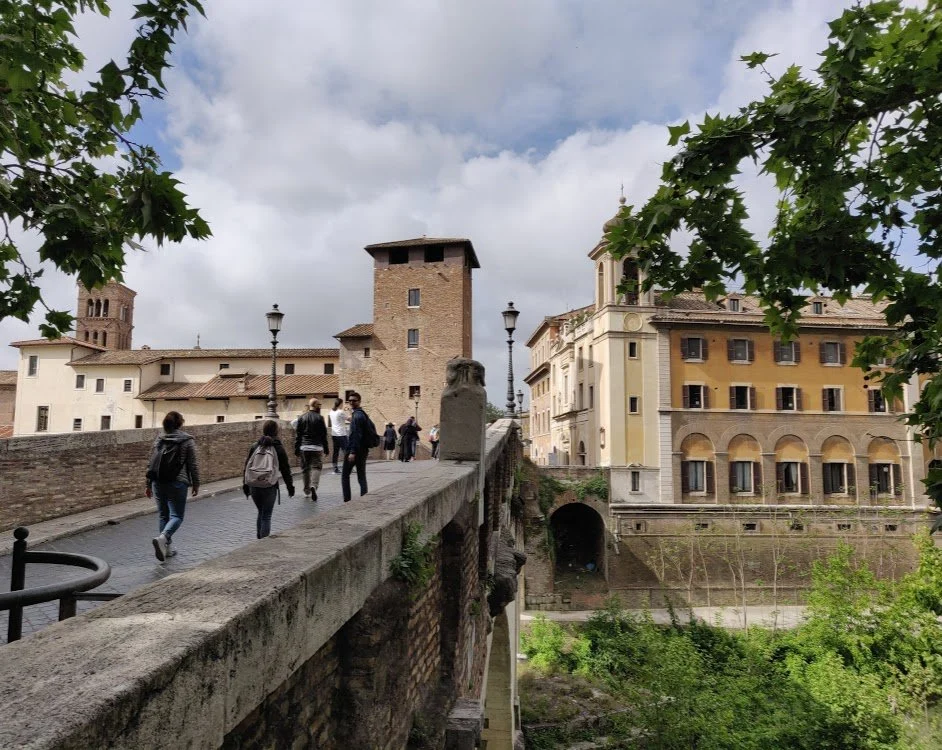
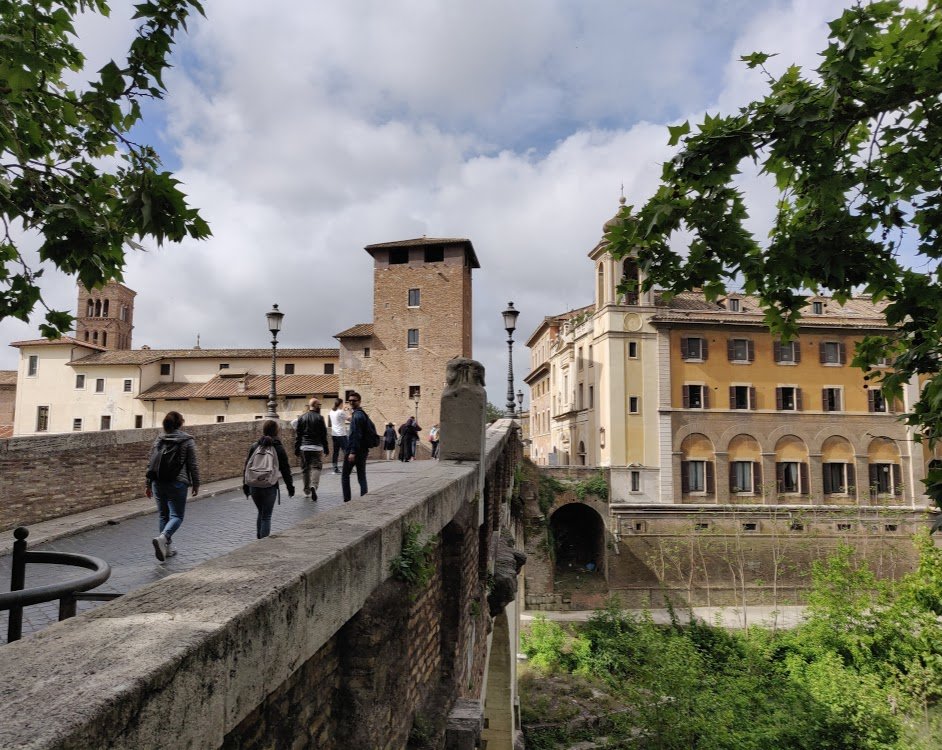
The river is the other constant. On the riverbanks between Ponte Sublicio and Ponte Sisto the summer village known as Lungo il Tevere is set up every year, with craft stalls, food, small stages and spaces for children. It is the place where Estate Romana looks most like a village fair, and it is also the one most frequented by Romans with families. A little upstream, on Tiber Island, the outdoor film series that has made the island one of the city's summer symbols has been held for many years, with screens facing the water. Both events are easily reached on foot from Trastevere and from Testaccio.
Historic villas and parks
The network of historic villas is the second big container. Villa Ada has hosted an international music festival on its little lake for decades, today organized as evening ticketed concerts, and inside the same park, in the area of Forte Antenne, a separate outdoor cinema lights up. Villa Celimontana is the historic home of Rome's summer jazz, with a village that occupies the park for months. The Casa del Jazz, in the park of a former villa confiscated from organized crime, runs its own summer series in the garden. Villa Torlonia, Villa Borghese, Villa Sciarra, the Janiculum, the Caffarella Park and the Botanical Garden also appear regularly.
The archaeological areas
Besides Caracalla and the Circus Maximus, archaeology enters the program at several points. The Appian Way Park hosts concerts, evening visits and electronic music nights such as Utopia Open Air. The Aqueducts Park hosts one of the largest free outdoor cinemas in the city. The Aurelian Walls serve as a backdrop for an outdoor cinema. At Ostia Antica the Roman theater hosts a summer theater festival. The Theater of Marcellus has hosted a series of outdoor chamber concerts for many years. One administrative point to note: several of these sites are state-run, so times, tickets and access rules do not depend on the City.
Museums and cultural centers
In summer even the museums move outdoors. The square of MAXXI becomes a space for cinema, concerts and electronic music, MACRO programs series and screenings, the former Slaughterhouse of Testaccio hosts exhibitions and shows in its pavilions and courtyards, and the Casa del Cinema in Villa Borghese runs the free outdoor cinema of the Teatro Ettore Scola. The Casa delle Letterature is in charge of the network of the City's literary festivals. Special openings also fit the summer logic: one example is the cycle of summer visits to the bunker of Villa Torlonia.
EUR, the coast and the outskirts
The southern quadrant has a season of its own. At EUR, around the little lake, summer villages such as Ninfeo Village are set up, while at Parco Rosati Fiesta, the village of Latin American music, returns every year, and at the Eur Social Park series of civic cinema such as Schermi di Piombo are programmed. On the coast the City has structured a section dedicated to programming by the sea, which includes the free cinema at the Idroscalo di Ostia and the family theater at the Teatro del Lido. In the outer neighborhoods the Tor Bella Monaca theater festival, the Casilino Urban Fest, the Roma Borgata Festival, the Aniene Festival in Parco Nomentano and the summer village of Parco Talenti return regularly.
The outdoor cinemas: the popular heart of the series
The outdoor cinemas are the largest and most accessible component of Estate Romana. A recent official survey on the City's cultural portal counted about 50 of them, with free and reduced admission, spread across all quadrants of the city. It is the segment for which the public call has a dedicated subsection, with the explicit request to favor areas without movie theaters.
The free outdoor cinemas
Among those that recur most consistently are the big screen of Aqueducts Park, the Teatro Ettore Scola in Villa Borghese, the outdoor cinema at Forte Antenne inside Villa Ada, Il Cinema alle Mura under the Aurelian Walls, Celio Stellato, Cinema sul Tetto at the Casilino Sky Park, L'Aperossa between Garbatella and Ostiense, the San Lorenzo film festival, the circuit of outdoor cinemas in Santa Maria della Pietà, Corviale and Tor Marancia and the Puntasacra Film Fest at the Idroscalo. The Notti di Cinema in Piazza Vittorio cover the Esquilino instead.
Music, theater, dance: the recurring series
The music side of Estate Romana is split between big ticketed concerts at a few large venues and a dense network of smaller series, often free, in parks and neighborhood cultural centers. The two channels have completely different audiences, prices and booking logic.
Jazz
Rome in summer has a well-established jazz tradition, largely free. The village of Villa Celimontana offers evening concerts in the park on the Caelian Hill, Jazz & Image brings concerts to the Caracalla area, and the summer series of the Casa del Jazz takes over the garden of the venue on Viale di Porta Ardeatina. They are three different formulas: the first is free entry with a required purchase, the second is free, the third has tickets for the main concerts.
The big concerts
The large venues for summer concerts are few and always the same: the cavea of the Auditorium Parco della Musica, where the Roma Summer Fest takes place, the little lake of Villa Ada, and for mass concerts the Circus Maximus and the stadium. In all cases these are events with named tickets and limited entry, for which booking well in advance is the norm.
Theater
Summer theater in Rome is concentrated in a few recurring venues: the ancient theater of Ostia Antica, the summer program of the Teatro India on the Lungotevere, the outdoor stage of the Teatro di Tor Bella Monaca and the family series of the Teatro del Lido di Ostia.
Dance and performing arts
Contemporary dance and the performing arts have a growing space, helped by the section of the call dedicated to the contemporary. Among the organizations that program in summer are the center in Pietralata with Territori Creativi, the square of MAXXI, and the festival hosted in the park of the German academy, Sempre Più Fuori. In September the season joins up with the autumn performing arts festivals.
Clubs, DJ sets and night villages
A substantial part of the young audience spends the summer at villages with DJ sets, which occupy parks and disused industrial areas: the Testaccio summer village at the Città dell'Altra Economia, the Ninfeo Village at EUR, the nights on the Appia Antica. Outside the city, on the coast and in the towns of the surrounding belt, similar seasons run, such as the Fiumicino village and the summer areas of Tor San Lorenzo, which are not part of Estate Romana in the administrative sense but share its audience and calendar.
Literary festivals and spoken-word series
Literature has been present in Estate Romana since the beginning: already in 1979 the series organized an international poetry festival on the beach of Castelporziano, and the line has never been interrupted. Today the literary chapter revolves around the civic libraries and the Casa delle Letterature, with an international festival traditionally held in the Basilica of Maxentius, in the Roman Forum.
Readings in the Forum
The format of the City's literature festival consists of evenings in which Italian and foreign authors read an unpublished text written for the occasion on a common theme, with live musical accompaniment. The venue in the late-antique basilica is the same one from which Estate Romana's cinema started in 1977: it is the most direct continuity between today's program and the original one.
Tickets and costs: what is free and what is not
There is no single ticket in Estate Romana: each event has its own box office, and the share of free events is high but not total. The practical rule is simple: the more an initiative is supported by the City's contribution, the more likely entry is free. The more it is a production with high artistic costs, the more likely it is paid.
What is free
These are generally free: the outdoor cinemas funded by the dedicated subsection of the public call, the concerts of the series supported by the Municipi, the activities of the libraries, most of the initiatives in the villages on the Tiber (where you pay only for what you consume) and many events in neighborhood parks.
What you pay for
These are paid: the summer season of the Teatro dell'Opera, the big concerts at the Auditorium cavea and at the Circus Maximus, the main concerts of the music festivals in the villas, a large part of professional theater and some outdoor cinemas showing first-run films. Prices vary too much, by venue and by seating section, for it to make sense to list them here. They should be read on the organizer's page, which is also the only party authorized to change them.
Where to buy tickets
Each organizer indicates its own sales channel, generally an online box office plus the on-site ticket window in the hours before the show. For big productions the evening ticket window is often for pickup only. We recommend buying exclusively from the channels indicated on the event's official website and keeping the ticket also in paper form, because in archaeological areas the phone signal can be weak.
Discounts and reduced access
Many series offer discounts for under 26, over 65, students and residents. Policies change from organizer to organizer and are never automatic: they must be declared at the time of purchase and documented at the entrance. Anyone looking for a zero-cost itinerary can combine the free outdoor cinemas with the other opportunities listed in our guide to free Rome and with the free-entry museums.
How to get your bearings if you're in Rome in July or August
Anyone in Rome in the heart of summer has dozens of events available at the same time every evening, and the problem is not finding one but building an evening that works, taking into account heat, distances and transport. The Roman heat of July and August makes it unrealistic to fill the afternoon and the evening with the same intensity.
An evening that works
The pattern we recommend is this: afternoon indoors or in the shade until 18:00, move toward the event venue between 19:00 and 20:00, a light dinner on site or nearby, show from 21:00 onward. Archaeological areas and parks cool down noticeably after sunset, much more than the built-up historic center, which gives back heat until late at night. For a broader picture of the possibilities after dark we have gathered the options in the guide to Rome at night.
Transport and getting back
The weak point of summer evenings is getting back. The metro lines close late in the evening, with extended hours on some weekend nights, and in summer closures for works with bus replacement are frequent. Before choosing an outlying outdoor cinema it's worth checking how you get back: the night line almost always exists but with long intervals. For places along the river and in the center, walking back is often the fastest solution.
With kids
The villages on the Tiber and the parks with outdoor cinemas are the simplest solutions for those with small children, because they let you move around and leave without disturbing anyone. Several series have sections dedicated to children, with shows in the late afternoon instead of the evening. More ideas are collected in the guide to Rome with kids.
Accessibility
The City's call explicitly asks proposers to guarantee that initiatives are accessible to people with motor or sensory disabilities, but implementation varies a great deal from place to place: an outdoor cinema on compact lawn and an archaeological area with a dirt surface and changes in level do not offer the same conditions. We recommend contacting the organizer in advance to check reserved seats, routes and accessible restrooms, because this information rarely appears on the event page.
Heat, thunderstorms and the unexpected
In case of a heat wave the Ministry of Health publishes daily bulletins for Rome and the City can adopt extraordinary measures. Summer thunderstorms are rare but violent, and many outdoor events are suspended for safety reasons: the refund or rescheduling conditions depend on the organizer and should be read before purchase. If an evening is canceled, there are the indoor alternatives we have gathered in the guide to Rome when it rains.
If you only have two days
Anyone spending a summer weekend in Rome gets the best result by choosing a single strong evening, in a place that has value as a monument too, and a light evening in a village or a neighborhood outdoor cinema. For the daytime the classic itinerary remains valid and is described in our guide to a weekend in Rome, to be supplemented with an evening stop at the Testaccio Market or around Monte dei Cocci.
Image: illustration of a Tiber riverbank in the evening, with rows of low gazebos, hanging light bulbs and the silhouette of a bridge in the background.
Frequently asked questions about Estate Romana
What exactly is Estate Romana?
Estate Romana is the program of cultural events promoted by the City of Rome in the summer months, born in 1977 on the initiative of culture councilor Renato Nicolini. It is not a single festival with a single ticket, but a container that gathers hundreds of initiatives organized by different parties: outdoor cinemas, concerts, theater shows, literary festivals and summer villages spread across the whole city.
When does Estate Romana take place?
Estate Romana takes place between June and the first half of October, with the period of greatest intensity in July. The City's public call sets for the free outdoor cinemas a span running from June 1 to October 15, while performing arts series may start earlier. The exact dates of each individual event change every year and are generally announced between the end of May and mid-June.
Is Estate Romana free?
A substantial part of Estate Romana is free, but not all of it. Usually free entry applies to the outdoor cinemas funded by the City's contribution, library events and many neighborhood series. Paid are the summer season of the Teatro dell'Opera, the big concerts at the Auditorium cavea and at the Circus Maximus, and a large part of professional theater. Even when it is free, entry may require online booking.
Where is the official Estate Romana program?
The official Estate Romana program is consulted on the cultural portal of Roma Capitale and in the events section of the City of Rome's institutional website, the two channels indicated by the administration. The pages show place, dates, times and the link to the individual organizer's box office. There is no single printed booklet containing all the events of the season.
Who invented Estate Romana and in what year?
Estate Romana was conceived in 1977 by Renato Nicolini, an architect and culture councilor of the City of Rome in the administrations led by Giulio Carlo Argan, Luigi Petroselli and Ugo Vetere, until 1985. His idea, which critics called the "politics of the ephemeral," consisted of filling the city's public spaces with mass cultural events, starting with the screenings in the Basilica of Maxentius.
How is Estate Romana funded today?
Today the City's part of Estate Romana is funded through a public call of the Department of Cultural Activities of Roma Capitale, which grants contributions to projects submitted by private parties. The call currently in force, called "Roma Creativa 365. Cultura tutto l'anno," allocates 8,541,040.68 euros for the two-year period 2025 and 2026, divided into three sections. Many events, however, have independent funding.
Does Estate Romana continue in August?
Yes, Estate Romana continues in August too, with a noticeable reduction in the number of events around Ferragosto. The free outdoor cinemas and the villages on the Tiber riverbanks generally stay active for the whole month, while what shrinks is mainly the ordinary commercial offering, with many venues and restaurants closed. Anyone who stays in the city in August finds less crowded shows.
Is the summer Opera season still held at the Baths of Caracalla?
The historic home of the summer season of the Teatro dell'Opera di Roma is the Baths of Caracalla, but when the monument is affected by restoration work the season can be moved elsewhere: recently it was held at the Circus Maximus, where the theater declares a capacity of about 6,000 seats. Before buying tickets it's worth checking the venue of the current edition on the theater's website.
What are the recurring places of Estate Romana?
The recurring places of Estate Romana are the Baths of Caracalla, the Circus Maximus, the Tiber riverbanks between Ponte Sublicio and Ponte Sisto, Tiber Island, Villa Ada, Villa Celimontana, the Casa del Jazz, Parco degli Acquedotti, the Auditorium cavea, the ancient theater of Ostia Antica and a network of neighborhood outdoor cinemas present in all the Municipi. Venues and operators can change from one edition to the next.
Who wrote this page
This page is edited by the editorial team of Tour Leader Pro, the Roman project office that designs and coordinates visits, itineraries and cultural events in Rome and Lazio. Times, rates and access conditions given here are verified at the date of publication against the official sources indicated in the text: it's worth rechecking them before you go, because they change often. If you find outdated information, let us know.
Anyone building a summer stay in Rome who wants to combine Estate Romana evenings with guided visits, evening openings of monuments and itineraries through the rioni can find planning tools and operational support at Tour Leader Pro, which works on the same places cited in these pages.
For a broader picture of getting around, rail connections and the destinations in Lazio reachable in a day from Rome in the summer months, from the coast to the lakes to the villages of the Castelli, Italy Planner is a good resource.