Villa Ada, Roma Incontra il Mondo 2026: “Music That Heals”
In short. For two months, every summer, part of the park of Villa Ada changes jobs.
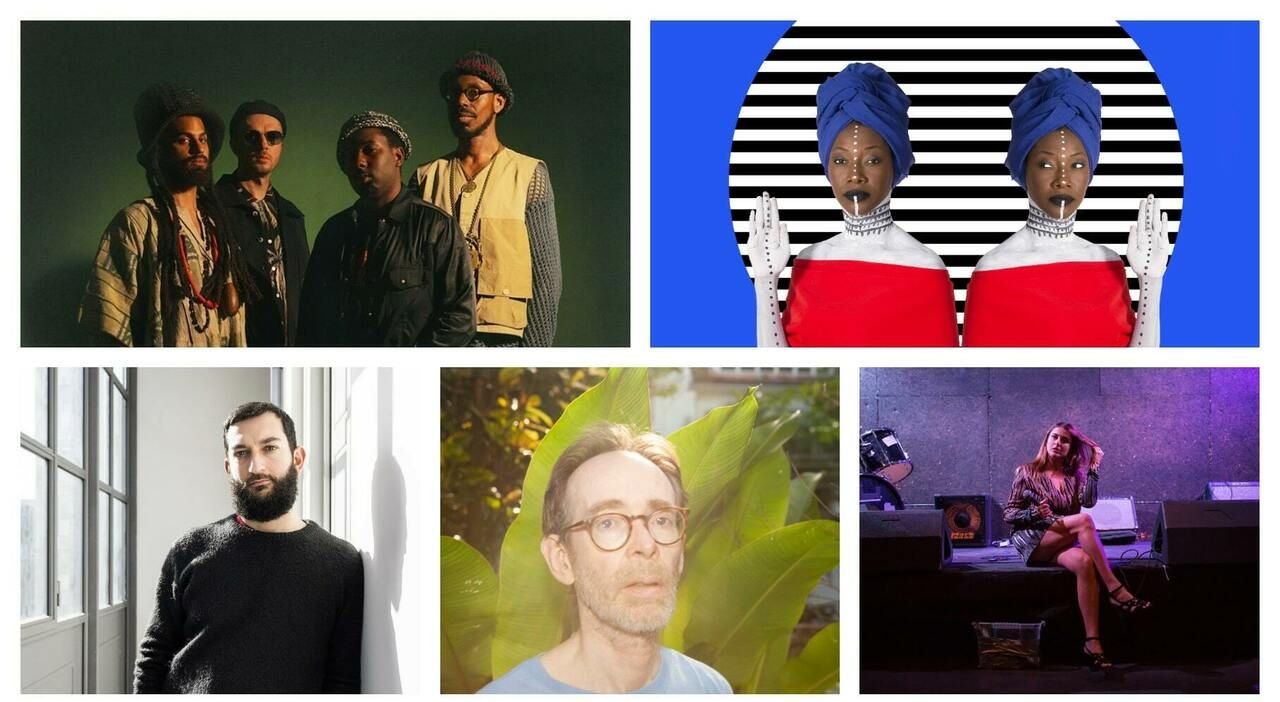
For two months, every summer, part of the park of Villa Ada changes jobs. The lawn that by day hosts runners, dog walkers and people stretched out under the pines turns at sunset into an open-air audience, with the lake acting as a mirror and the stages set up on the shore. This is the formula of Roma Incontra il Mondo, the series that has occupied this corner of the northern quadrant of the city for more than 20 years and that in the 2026 edition carried the title “Music That Heals”.
The 2026 edition ran from June 20 to August 18, with two stages and a calendar of about 60 dates among concerts, talks, screenings and debates. At the time you're reading, the season is over. The pages that follow are meant to explain how the series is set up, how you get in, how you get there and what to expect when the festival returns, as well as to describe the place that hosts it, because the lake at Villa Ada is worth a walk even when the stages are taken down.
What Roma Incontra il Mondo is and where it takes place
Roma Incontra il Mondo is a summer festival of live music held inside the park of Villa Ada, in the area around the lake. It doesn't take over the whole park. The setup covers a delimited portion, with the stages facing the grassy bowl that slopes down toward the water, the food areas along the paths and the associations' tables spread among the trees. The rest of the villa carries on its normal life during the festival too, with the afternoon runners and the families in the little gardens.

The setting is the main reason for the success of the formula. The lake at Villa Ada sits in a natural depression, with the banks rising gently on three sides. It is a shape that works as an amphitheater without anyone having had to build it. Those who arrive early take the low part, near the stage and the water. Those who arrive later settle on the slope, which still offers a clear view and, in exchange, a bit more air. Around are pines, holm oaks and plane trees, and overhead, on clear evenings, you see a piece of sky that would be unthinkable in the city center.
Access for the festival is from the side of Via di Ponte Salario, on the northern side of the park, and not from the main gates that Romans use every day to enter Villa Ada from Via Salaria side or the Trieste side. It is a distinction worth keeping in mind, because entering from the wrong side means crossing the park on foot for a long stretch, in the dark, on unpaved ground. Anyone who knows the place takes it for granted. Anyone going for the first time risks missing the first half hour of the concert.
The audience is made up in large part of Romans, and you can tell. Many arrive by bicycle or on foot from the nearby neighborhoods, Trieste, Salario, Parioli, Montesacro, and the evening begins long before the concert, with a beer and a chat on the lawn. Part of the program, over the years, has rested on this habit: the series also lives on evenings where the music is only one of the ingredients, alongside book presentations, debates and open-air screenings.
It's worth placing the festival within the broader context of the Roman summer, the season of outdoor initiatives that has for decades filled parks, piazzas, courtyards and the banks of the Tiber between June and September. Roma Incontra il Mondo belongs to the family of the historic series, the ones with a recognizable identity and an audience that comes back. Anyone who goes to the Village Celimontana or to the neighborhood arenas will find here the same basic idea, on a bigger scale and with a more marked international vocation.
The name of the series already says a lot about its design. “Roma incontra il mondo” (Rome meets the world) is a declaration of intent that dates to a period when world music was the great novelty of European festivals, and the choice has stayed, even as it widened over the years to genres that have since become central: Italian singer-songwriters, electronic, hip hop, contemporary jazz, sounds of the Mediterranean basin and West Africa. The title of the 2026 edition, “Music That Heals”, should be read along this line: every year the artistic direction chooses a formula that holds together the lineup and the spoken-word events.
A curiosity about Villa Ada, Roma Incontra il Mondo 2026: “Music That Heals”
The lake that forms the backdrop to the stages is not a natural body of water in the strict sense of the term. It is part of the villa's 19th-century landscape design, when the property was laid out according to the taste for the English garden: winding paths, open clearings, clumps of trees arranged to create scenic wings and, precisely, a water surface designed to reflect the green and lengthen the perspective. That means the scenery we see today behind a band already existed, designed on paper a century and a half before anyone thought of setting up a sound system on it.
The curiosity lies in this reversal of function. The romantic garden was built to be looked at in silence, while strolling. The water served to create an effect of calm and distance, with the play of reflections and the vegetation mirrored in it. The festival uses exactly the same elements to get the opposite result, that is, to concentrate several thousand people in a bowl and have them listen to amplified music. And yet the scene holds, and holds well, because the slopes, the distances and the green masses are still those conceived by the designer.
There is a second level of curiosity, less obvious. Villa Ada as a whole is not a park built all at once. It is the result of successive mergers of farm estates, vineyards and country villas that occupied the strip outside the gate along Via Salaria. The interior landscape preserves traces of this layering: there are areas that stayed wooded and almost wild, others with orderly plantings of pines, others still where you recognize the geometry of an old formal garden. Anyone walking in the park off the main paths passes from one landscape to another within a few minutes without noticing.
The lake, finally, has a life of its own that the evening audience doesn't see. By day it is visited by ducks and other water birds, and in the hot hours it becomes the coolest spot in the park, with the riverside vegetation closing off the view and muffling the noises of the city. Anyone who wants to really understand the place should take a turn there early in the morning, perhaps in winter, when low fog stays caught among the reeds. The same corner that in summer hosts thousands of people is then one of the quietest places in the northern quadrant of Rome.
The history of the series, from the 1990s to today
The series was born in the 1990s, in a period when Roman cultural associations were experimenting with new formulas for the summer: public spaces used as containers, long programming instead of a single evening, low prices, and particular attention to non-European music, which in those years found little room in the commercial circuits. The lake at Villa Ada was a perfect place to try it, because it offered capacity, greenery and a certain distance from housing.
The initial formula put at the center world music in the broad sense: African, Latin American and Mediterranean groups, artists you wouldn't hear elsewhere in Rome. Around the music, from the start, a surrounding scene developed made of information tables, stands of associations, cooperatives, third-sector organizations and international cooperation projects. This non-musical part is not an accessory. It is a component of the festival's identity, and it explains why the series has stayed recognizable even as the landscape of Roman festivals got crowded.
As the seasons went by, the programming widened. Alongside the international names came the protagonists of the Italian independent scene, singer-songwriters, electronic projects, rap. The festival followed the change in music consumption without abandoning its original vocation, and added other languages: book presentations, meetings with journalists and writers, screenings, readings, debates on civic and environmental themes. In the most recent editions the two-stage structure has allowed big evenings and small evenings to coexist on the same day.
Not all seasons have been alike. A series that depends on permits, on balances with the neighborhood, on tenders and on budgets goes through periods of uncertainty. There were years when the festival risked not taking place, years when the formula was revised, and the long parenthesis of the health restrictions of 2020 and 2021 affected all Italian summer events. The fact that the series is still standing, with an audience that considers it a fixed appointment, is in itself a fact that tells of its solidity.
The 2026 edition, titled “Music That Heals”, was presented as a long season, from June 20 to August 18, with about 60 dates spread across the two stages. Alongside the music lineup, a section devoted to “La Bella Estate di Renato” was announced, a tribute to Renato Nicolini and his idea of popular culture, with exhibitions, poetry marathons and film nights.
The reference to Nicolini is no accident and deserves an explanation for those unfamiliar with the story. Councillor for culture of Rome between the second half of the 1970s and the mid-1980s, Nicolini is the figure who invented the very idea of the “Roman summer”: bringing film, theater, music and readings into the city's public spaces, in parks and archaeological areas, at popular prices or for free, in a historical period when Roman nightlife was perceived as dangerous and the city emptied out. The screenings at the Basilica of Maxentius are the symbol of that season. Every Roman summer series that today occupies a park descends, directly or indirectly, from that insight, and Roma Incontra il Mondo acknowledged it explicitly by dedicating a section of the program to him.
It is worth adding that the series has helped change the perception of Villa Ada among Romans themselves. Before the festival became a recognized appointment, the park was frequented mainly by people who lived nearby. Today it is a name that anyone in the city associates with summer evenings, and this has drawn attention to the rest of the villa too, to its historical heritage and its maintenance problems.
Something nobody tells you about Villa Ada, Roma Incontra il Mondo 2026: “Music That Heals”
What you won't find written on the posters is that inside the festival area there are very different spots, and the difference between an excellent evening and a mediocre one depends almost only on where you put yourself. Under the stage you stand and gain in intensity, but the acoustics in that position are often unbalanced, because you're inside the direct field of the speakers and the low frequencies cover the rest. The best listening point, in an outdoor setup of this kind, is usually at some distance from the stage, at the height of the mixing desk or just behind it: there the sound arrives already blended the way the sound engineer is setting it.
The second thing concerns the ground. The lawn that slopes toward the water is not a uniform carpet: there are dips, surfacing pine roots, unpaved stretches and areas that stay damp for days after a storm. Open shoes and smooth soles are a choice you pay for, especially on the way out, when you move in the dark among the crowd. A blanket to spread out, or even just a sweatshirt to put underneath, noticeably changes the quality of the evening for those who want to sit.
Third point, and here Romans smile: being near water has a price. Near the lake, on the humid evenings of late June and July, mosquitoes are present in significant numbers, and anyone sitting on the grass in a T-shirt and shorts notices after 20 minutes. A repellent in your bag is the difference between listening to the concert and scratching yourself for two hours. Nobody writes it in the practical information, but it is the recommendation that every regular makes to someone going for the first time.
Fourth observation, on flows. Entry and exit happen through limited gates, and on evenings with a big turnout, lines form both before opening and at the end of the main concert. Arriving well ahead of the first set, and considering leaving before the last encore or else waiting 10 minutes for the bulk of the crowd to clear, is a tactic that saves a lot of time. Anyone arriving by bicycle has an obvious advantage over someone who has to reach a bus stop along with several thousand people.
There is also a question of temperature that surprises those who don't frequent Roman parks in the evening. Villa Ada sits in a green bowl crossed by air currents, with dense tree cover and a body of water. The difference between the temperature felt in the center at nine in the evening and that on the lawn at midnight is considerable, even in August. A light sweatshirt in your backpack, even when it hit 35 degrees Celsius during the day, is a reasonable choice.
Finally a note on the relationship with the neighborhood. The festival coexists with homes not very far away and with precise limits on hours and sound levels. This means the concerts end at a set time and the evenings have a rather rigid structure. Anyone expecting a prolonged late-night tail is disappointed, while anyone who plans the evening knowing it closes at a certain hour enjoys everything else better.
The lake at Villa Ada and the park around it
The park of Villa Ada is one of the largest in Rome, second in area only to Villa Doria Pamphilj, and its vastness is the first thing that strikes anyone who enters with the idea of a city garden. It is an environment that passes without a break from manicured lawn to woods, with real changes in elevation, paths that climb, hidden clearings and stretches where the noise of traffic disappears entirely. It is not a park you visit in an afternoon. You spend time in it, and each time you get to know a new piece of it.
The lake occupies the northern part of the villa, in a bowl reachable from Via di Ponte Salario side. It is fed by the water table and by the runoff of the area, and it is surrounded by riverside vegetation that grows thick in summer. Paths run along the shores and there are open spaces that in winter serve dogs and children and in summer become the audience area. Not far away are the park's service structures and a kiosk, and the area is one of the most used meeting points in the villa.
Climbing toward the west you reach Monte Antenne, the rise that overlooks the confluence of the Aniene and the Tiber. The name preserves the memory of Antemnae, one of the oldest Latin settlements in the area, cited in the sources on the origins of Rome and excavated between the 19th and 20th centuries. At the top is Forte Antenne, one of the 19th-century fortifications built to defend the city after 1870, now restored and used for cultural initiatives. It is right there, in summer, that a cinema arena operates, which is the park's other big evening appointment, described in the page devoted to cinema at Forte Antenne.
Inside the villa there is also a bunker built in the 1940s for the royal family, dug under a hill and equipped with technical rooms and a long access corridor. For years it stayed abandoned, then it was made safe and opened to visits on specific occasions. Anyone interested in this kind of heritage will also find interesting the air-raid shelter of nearby Villa Torlonia, which has a parallel history and more regular accessibility.
The upper part of the park preserves buildings tied to the history of the property: small villas, stables, greenhouses, a chapel, structures with different uses and very uneven states of preservation. A portion of the estate is not public and hosts the residence of the Egyptian embassy, which explains why some sectors are fenced and can't be crossed. Anyone walking along the internal boundaries meets walls and gates that seem out of place: this is the reason.
From a naturalistic point of view the villa is one of the richest environments in the city. The tree cover includes stone pines, holm oaks, oaks, plane trees, cedars and ornamental species planted in different eras. The undergrowth in some areas is dense. The birdlife is varied and includes diurnal and nocturnal raptors, woodpeckers, jays, as well as the water birds of the lake. In the evening hours, before the concerts begin, you often see bats over the water.
The park also has an intense sporting function: running routes, equipped areas, a riding stable, fields and spaces for outdoor activity. On summer evenings this produces a curious overlap between those arriving for the concert and those finishing their own run, and it contributes to that atmosphere of a living park that distinguishes Villa Ada from a fenced area used only for events.
A piece of advice for those with time: arrive at least an hour early and spend that time on a walk uphill, leaving the lake behind you. 10 minutes of climbing are enough to find yourself in a real wood, with a view opening to the north, and to understand how anomalous it is to have an environment like this inside the Grande Raccordo Anulare.
My advice for visiting Villa Ada, Roma Incontra il Mondo 2026: “Music That Heals”
The main advice is simple and holds for any edition: treat the evening as an outing, not as a timed appointment. Arrive at least an hour before the first set, enter by the right gate on Via di Ponte Salario, take the time to find a spot on the lawn that convinces you, and use the wait to eat something and wander among the tables. Anyone who arrives five minutes before the concert finds a line, low lights, a lawn already taken, and ends up listening standing at the back.
On what to bring, the short list is this: a light sweatshirt, a blanket or cushion to spread out, mosquito repellent, closed shoes with a sole that grips, a water bottle, and an external battery for your phone if you plan to take photos and videos. Cash is no longer as indispensable as it once was, but having a few small bills in your pocket makes life easier at the busiest tables and speeds up the lines.
On how to get there, the advice is to forget the car. The neighborhood around already has high parking pressure on its own, and on evenings with a big turnout finding a spot at a reasonable distance becomes an undertaking that costs more time than the whole trip. The bicycle is the best solution by far, followed by public transport and, for those returning late, by a taxi or on-demand service with a pickup point agreed outside the main flow.
If you go with children, consider the evenings early in the program or the non-musical ones: the talks, screenings and concerts with shorter hours are more suitable, while the main dates have attendance and volumes that for the youngest can be too much. In any case, ear protection for children is a precaution that every parent who goes to outdoor concerts knows.
A less obvious piece of advice concerns before and after. The area around, between Trieste, Salario and Parioli, has an offering of neighborhood venues and restaurants that isn't crowded early in the evening. Eating out and then going in is a sensible alternative to eating inside, especially if you're a group. After the concert, on the other hand, it's best to have already decided where to go, because everyone leaves together and improvising at midnight in front of a gate with 2,000 people doesn't get you far.
Last suggestion, for those coming from outside Rome: devote the previous afternoon to the neighborhood instead of the center. The Catacombs of Priscilla are a few minutes away, the Coppedè neighborhood is reachable on foot with a walk of medium length, and this way the day makes complete sense without crossing the city at the worst hours.
How the program is set up
The structure of the program, in recent editions, rests on two stages of different sizes. The main stage hosts the headline concerts, with one or two performances per evening. The second space, more intimate, welcomes emerging projects, electronic sets, talks and hybrid formats. This arrangement lets the festival fill a long calendar without having to bear every night the costs of a big name, and offers the audience evenings of varying intensity.
The music component remains the center of gravity, with a lineup that mixes international and Italian artists. The proportion between the two groups changes from year to year, as does the relative weight of genres. Some editions pushed African and Mediterranean music, others gave room to singer-songwriters and the Italian independent scene, others still to electronic and rap. Anyone who wants to know who is playing in a given season must consult the series' official calendar, which is announced in installments between spring and the start of summer.
Alongside the concerts, the program has always included a spoken-word section. This covers book presentations, meetings with authors and journalists, debates on civic, environmental and international themes, often promoted together with associations and non-governmental organizations. These initiatives are placed in the early hours of the evening, before the main music begins, and in many cases are free to enter for those in the area.
In the 2026 edition the section “La Bella Estate di Renato” added a themed block devoted to Renato Nicolini, with exhibitions, poets' marathons and film nights. It is a format that recovers the spirit of the first Roman summers, when programming mixed languages without too many genre distinctions, and that shows well how the series understands its role: not just a sequence of concerts, but a cultural container with a declared position.
The festival area, besides the stages, includes food points with kitchen and drinks, craft and record tables, association spaces and rest areas. Openings happen in the late afternoon or early evening, with the first initiatives starting while there is still light. This allows you to treat the evening as a route: you go in early, wander, eat, attend a talk and arrive at the main concert already inside the atmosphere.
The film screenings deserve a separate note. Rome has an established tradition of summer arenas, and the park of Villa Ada hosts more than one in different spots. Besides what is part of the festival program, the Forte Antenne arena runs with its own programming. Anyone who loves outdoor cinema therefore finds in the same park two distinct experiences, with very different atmospheres.
One element that characterizes the calendar is its length. Two full months of daily programming is a demanding choice, which involves continuous organizational work and sets this series apart from festivals concentrated in a few days. For the audience it means being able to choose calmly, to come back several times in the same season and to treat the festival as a recurring meeting place instead of a single appointment.
Another well-known fact, yet rarely mentioned
Villa Ada was called Villa Savoia, and it is here that on July 25, 1943, Benito Mussolini was arrested. After the night session of the Grand Council of Fascism that had voted the Grandi order of the day, Mussolini went to see King Victor Emmanuel III, who resided in this villa. The meeting ended with the revocation of his post as head of government. On his way out, Mussolini was put into a carabinieri ambulance and driven away. It was the act that marked the fall of the Fascist regime, and it took place a few hundred meters from the lawn where the concerts are held today.
The fact is known to anyone who has studied contemporary history, and yet almost nobody connects it with the park when they go in for a summer evening. There are no big signs to remind you, and the festival audience walks those paths without having in mind that it is the same place. It is a disproportion that strikes: one of the most important moments in 20th-century Italian history played out in a garden that the city today uses for running and for listening to music.
The reason the king was here concerns the history of the property. The estate had been purchased by the House of Savoy in the 19th century, then sold and subsequently bought back. The name Ada comes from Ada Boncompagni Ludovisi, wife of Count Tellfner, who was the owner in the period when the villa temporarily left royal hands. With the end of the monarchy the property passed to the State and later the largest part became a public park, while a portion remained earmarked as a diplomatic seat.
The underground bunker in the park belongs to the same story. It was built in the early 1940s to protect the royal family from bombing, with a reinforced concrete structure and independent systems. The bombing of San Lorenzo on July 19, 1943, fell in that context, a few days before the events of July 25. Anyone who visits the bunker, when it is accessible, sees with their own eyes how intertwined the history of this park is with that of the conflict.
It is worth noting that this historical density is not a Roman exception but almost a rule. The same thing happens at Villa Torlonia, Mussolini's residence for 20 years and now a public park with museums, or at Villa Borghese, which combines art collections, a Baroque garden and daily use as a neighborhood park. In Rome the archaeological level, the modern one and the contemporary one coexist in the same square meter, and the attentive visitor learns to read them one on top of the other.
Tickets and entry, how they work
The access mechanism for the series provides for tickets to the individual concerts, with online presale through the authorized circuits indicated by the organizers and, when available, sales at the box office the same evening. Prices vary from evening to evening, depending on the artist on the bill, and there is no single price list valid for the whole season. Passes or multiple-ticket packages, when offered, are announced together with the program.
A part of the initiatives, traditionally, is accessible without a ticket: talks, presentations, debates and some side activities that take place in the festival area before the concerts. Access to the food areas and the tables is also part of the experience and doesn't necessarily require the ticket for the main concert, but the rules change with the editions and with individual evenings: the information should be checked each time on the series' official channels.
Some practical recommendations always apply. The first is to buy in presale when the artist is a draw, because the big evenings sell out and showing up at the box office without a ticket means risking being left outside. The second is to keep the electronic ticket accessible without a network, by saving the file on your phone: on crowded evenings, cell coverage inside the park can degrade at precisely the moments of greatest traffic. The third is to arrive early, because entry checks take time.
On what you can bring in, outdoor events of this kind normally apply limits on glass bottles, cans, sharp objects, long umbrellas and large bags. The precise rules are published by the organizers together with the information on the evening, and it's best to read them before leaving home, so as not to have to leave something at the gate.
A note on animals. Rome's public parks admit dogs under the ordinary rules, but a concert area with a sound system is an environment ill suited to them: high volumes, crowds, darkness. Even when there is no formal ban, bringing the dog to an outdoor concert is a choice best avoided for the animal's well-being.
Frequently asked questions about Villa Ada, Roma Incontra il Mondo 2026, “Music That Heals”
What is Roma Incontra il Mondo?
Roma Incontra il Mondo is a summer festival of live music held inside the park of Villa Ada, in the area around the lake, with the stages facing the grassy bowl that slopes down toward the water. The series was born in the 1990s with particular attention to non-European music.
Is the 2026 edition “Music That Heals” still going on?
No, the 2026 edition of Roma Incontra il Mondo at Villa Ada, titled “Music That Heals”, ran from June 20 to August 18, 2026 and is over. The dates of the following season are normally announced in the spring months.
Where exactly is the festival held?
Roma Incontra il Mondo is held in the park of Villa Ada, around the lake, on the northern side of the park. The festival area is reached from the gate on Via di Ponte Salario, the point to set in your maps, because aiming generically at Villa Ada leads to the entrances on Via Salaria or on the Trieste side, much farther away.
How do the tickets work?
For Roma Incontra il Mondo at Villa Ada, the access mechanism provides for tickets to the individual concerts, with online presale through the authorized circuits and, when available, sales at the box office the same evening. Prices vary from evening to evening, depending on the artist on the bill, with no single price list for the whole season.
How is the program organized?
The program of Roma Incontra il Mondo rests on two stages of different sizes. The main stage hosts the headline concerts, with one or two performances per evening, while the second space, more intimate, welcomes emerging projects, electronic sets and hybrid formats.
Is the festival suitable for people with limited mobility?
Villa Ada, home of Roma Incontra il Mondo, is a historic park with natural ground, unpaved paths, gravel and real slopes, and the stage area develops on a slope that descends toward the water. Use by wheelchair users therefore requires planning, even though the park is not an impassable environment.
Is it worth arriving early?
Yes, for Roma Incontra il Mondo it's worth arriving at least an hour before the first set, entering by the gate on Via di Ponte Salario and taking the time to find a spot on the lawn before it fills up, as well as to eat something and wander among the tables.
Those who handle organized groups, schools, associations or group trips normally find in the organization a contact for dedicated terms, but they should be contacted in advance. Professional operators who build itineraries around events of this kind can look at the tools of TourLeaderPro for the management side.
The right photo to take at Villa Ada, Roma Incontra il Mondo 2026: “Music That Heals”
The photograph that tells this place better than any other doesn't frame the stage. It frames the water. The right moment comes in the half hour after sunset, when the light of the sky is still blue and the festival's artificial lights are already on. In that window the two sources balance, the lake reflects the colored lights of the stage and the silhouettes of the pines remain readable against the sky. After that, the contrast becomes too strong and the image splits into solid blacks and blown-out areas.
To get a clean reflection you have to get low. A shot taken from eye level compresses the water's surface and reduces the reflection to a thin strip. Going down to half a meter from the ground, or resting the phone on the edge, the reflective surface takes up a much larger portion of the frame and the effect changes completely. If there is wind the reflection shatters and becomes a texture of luminous dots, which has its own appeal but tells a different story.
The second image to look for is the audience seen from behind, from the top of the slope. From that position you read together the bowl, the mass of heads, the lit stage and the curtain of trees that closes the scene. It's the shot that explains why this place works. It should be done with the phone held horizontally and with a shooting point as far back as possible, to include the line of the woods too.
A third subject, much less practiced, is the park by day: the lake with the ducks, the riverside vegetation, the paths that climb toward Monte Antenne, the pines of Forte Antenne backlit in the afternoon. If you want a memory of the place and not only of the evening, the daytime photograph says things the nighttime one can't, and it requires no particular condition beyond a bit of patience.
Two warnings. The first concerns the flash: turned on in a dark audience it lights nothing at a useful distance, ruins the view for those around you and produces worse photos than you would get without it. The second concerns filming during concerts: many artists and many productions set limits on recording, and in any case holding the screen up for the whole length of a song in front of those behind you is a habit that doesn't win you sympathy.
One last technical suggestion for recent phones: in night scenes it's best to turn off the most aggressive automatic modes and consider a slightly reduced exposure. The stage lights are much more intense than the rest of the scene and the automatic mode tends to brighten everything, blowing out the spotlights and flattening the atmosphere. Darkening by one stop gives images closer to what the eye really sees.
How to get there
The festival area is reached from the gate on Via di Ponte Salario, on the northern side of the park, near the lake. This is the reference point to set in your maps: aiming generically at Villa Ada most likely leads to the entrances on Via Salaria or on the Trieste side, from which you would need a long walk inside the park in the dark. Anyone arriving for the first time would do well to check the exact point indicated by the organizers for the specific evening, because in some editions additional gates have been opened.
By surface public transport, the reference is Via Salaria axis, served by several bus lines that connect the northern quadrant with the center and with the area of Piazza Fiume and Porta Pia. Lines and routes change over time and in the evening hours, and in summer some runs are reshaped. It's best to check updated schedules and routes on the Rome public transport app on the same day, because a skipped run at 11 at night weighs far more than the same run skipped by day.
By metro, the reference is the B1 branch of line B, which serves the quadrant with the stops of Sant'Agnese/Annibaliano, Libia and Conca d'Oro. None of these is right next to the festival entrance: from all of them you need a not trivial stretch on foot or a bus ride. Anyone who has no trouble walking can consider the walk as part of the evening, crossing the Trieste neighborhood. Anyone leaving late and tired will do well to plan the alternative.
There is also the railway option. The Nomentana station, served by the regional trains that cross the city, is in the quadrant and is an option for those arriving from outside Rome without passing through Termini. Here too it is a matter of combining the train with a stretch on foot or a bus, and the evening schedules of the regional trains must be checked carefully because the service thins out.
The bicycle remains the most efficient solution. The neighborhood has rideable streets, the park is equipped for access by bike and, above all, on the way out you avoid congestion completely. Shared scooter and bike services cover the area, with the usual recommendation to check availability before counting on them for the return: on evenings with a big turnout, the free vehicles around the exit run out quickly.
On the car, the point has already been touched on and it's worth repeating: parking in the area is difficult in normal conditions and very difficult on concert evenings, with paid parking widespread and residents occupying the spaces. Anyone who really must use one would do well to park far away, at a distance that allows an easy exit, and cover the last stretch on foot or by public transport. Taxis and car services work well on the way there, a bit less on the way back, when demand is concentrated in a few minutes.
For those staying in the center, the average travel time by public transport is around half an hour, which becomes 40 or 50 minutes at times of heavier traffic or with a transfer. It is a figure to take into account when planning the evening, especially if you want to arrive with the recommended lead time.
Accessibility
The context must be described honestly: it is a historic park, with natural ground, unpaved paths, gravel, grassy stretches and real slopes. The area that hosts the stages develops on a slope that descends toward the water, and this means that use by wheelchair users or people with mobility difficulties requires planning. It's not an impassable environment, but it's not a theater with a flat floor and numbered seats either.
Organizations that run events of this kind normally provide dedicated solutions: reserved spots, eased routes from the entrance gate, assistance staff, specific purchase options for the person with a disability and for the companion. Since these solutions change from edition to edition and depend on the year's setup, the correct way to proceed is to contact the series' organizers directly a few days ahead, stating the evening and the type of need.
Some practical recommendations apply in any case. Arriving early is even more important, because it lets you reach your spot calmly and without the pressure of the crowd. Locating the restrooms in advance and checking which ones are equipped avoids pointless trips in the dark. Planning an exit ahead of the general outflow greatly reduces discomfort, because the worst moment, for anyone with reduced mobility, is when everyone moves together toward the same gate.
For those sensitive to loud noise, it should be said that these are amplified outdoor concerts, with significant sound levels under the stage. The rear positions on the slope, besides offering better acoustics, reduce the perceived intensity, and filtering earplugs let you listen comfortably without losing quality. The evenings of talks and screenings naturally have a much lower sound profile.
On the non-festival part of the park, accessibility is the typical kind of a large historic Roman garden: the main avenues are passable, the interior areas less so, and the changes in elevation toward Monte Antenne are demanding. Anyone who wants to see the lake without tackling the whole park can reach the area directly from Via di Ponte Salario side, which is the access point closest to the water.
Some important events that happened here in history
The first chapter is very ancient. The hill of Monte Antenne, inside the villa, corresponds to the site of Antemnae, a Latin city located at the point where the Aniene flows into the Tiber. Ancient sources link it to the events of the origins of Rome and to the conflict with the Sabines. Excavations carried out between the 19th and 20th centuries have yielded traces of settlement and necropolises. The name itself, according to the etymologies handed down by Latin authors, would refer to the position in front of the river.
The second chapter concerns the suburban strip along Via Salaria, one of the oldest consular roads, tied to the salt trade. Along this axis in antiquity there developed villas, tombs and, in late antiquity, the great Christian cemetery complexes. The Catacombs of Priscilla extend a short distance from the villa and are one of the most important underground systems in the city, with paintings of great value.
The third chapter is 19th-century. The estate, formed by merging agricultural properties, enters the orbit of the House of Savoy in the middle of the century and is laid out according to the taste for the landscape park. It is in this phase that the lake, the winding paths, the clearings and the distribution of trees that still determines the look of the place are born. After a period in which the property passes to the Tellfner family, from whom the name Ada derives, the villa returns to the Savoys in the early 20th century and becomes a royal residence.
The fourth chapter belongs to the fortification of the city after 1870. Forte Antenne is part of the system of forts built around Rome for the defense of the new capital, a ring of military works that today is a heritage largely recovered for civilian uses. The structure, inside the park, preserves its original layout and has been used in recent years for cultural initiatives and summer screenings.
The fifth chapter is that of the Second World War. The construction of the royal bunker in the 1940s, the bombing of Rome in July 1943, the arrest of Mussolini on July 25 of the same year in front of the king's residence, the flight of the royal family after September 8: the villa passes through the most dramatic moment of recent Italian history and keeps its material traces.
The sixth chapter is the transformation into a public park. With the end of the monarchy the property passes to the State, a portion is earmarked as a diplomatic seat and the largest part enters public ownership, gradually opening to the city. This is the moment when Villa Ada becomes what it is today: a large urban park used daily, with a historical heritage that coexists with the morning run and the summer concerts.
The seventh chapter, the most recent, is that of the festival itself. Starting in the 1990s, the summer programming on the lake has brought thousands of people every season to this corner of the northern quadrant, with lasting effects on the perception of the park and on its role in the cultural life of the city. A series that has lasted for decades fully enters the history of the place that hosts it.
Who has passed through Villa Ada, Roma Incontra il Mondo 2026: “Music That Heals”
Those who have passed through this place, in the historical sense, include names rarely associated with a concert lawn. The sovereigns of Italy lived here, and here on July 25, 1943, Victor Emmanuel III revoked Mussolini's office, closing a phase of national history. Before them the property had belonged to the Tellfner family and to Ada Boncompagni Ludovisi, who left the park her name. In far older times, on the same hill, the inhabitants of Antemnae moved about.
As for music, the lineup changes every year and our principle is not to list artists without a source for the season in question. What can be said with certainty is the overall profile: over its editions the series has hosted African, Latin American, Caribbean and Mediterranean musicians, contemporary jazz groups, electronic projects, Italian singer-songwriters and groups from the national independent scene, as well as major international names who choose the summer dates in European parks. The audience that has attended the festival for years associates with this lawn a number of concerts that elsewhere in the city would not have found room.
Alongside the musicians, writers, journalists, researchers, activists and representatives of international organizations have come to the lake, invited for the spoken-word events that precede the concerts. This part of the program has built over the years a community of regulars who come as much for the debate as for the music, and who are a stable component of the audience.
One figure must be named separately, although he did not pass through the festival but through the history that makes it possible: Renato Nicolini, the councillor who in the 1970s and 1980s invented the Roman summer as cultural policy. The 2026 edition devoted an entire section to him, “La Bella Estate di Renato”, and the reference is not a formality: without that season of experimentation, the idea of setting up a stage on the shore of a small lake inside a public park would not have become a Roman habit.
Finally, the audience itself must be counted. Tens of thousands of people cross the festival area every season, and several generations of Romans have spent a substantial part of their summers here. In a festival that has lasted for decades, the returning audience is to all effects one of the protagonists, and the continuity of the relationship between the series and the city is the reason the name Villa Ada, in Rome, immediately evokes an evening of music.
What's around
The quadrant around Villa Ada offers quite a lot to anyone who wants to build a full day. The Catacombs of Priscilla, on Via Salaria, are a short distance away and are one of the most interesting underground visits in the city, with a guided route through galleries, cubicula and early Christian paintings of great importance. It is a visit that works well in the afternoon, also because the underground temperature is pleasant on hot days.
Heading south you reach the Coppedè neighborhood, the block of eclectic early 20th-century architecture that mixes medieval, Liberty, Baroque and fantastical references in a play of facades, arches, fountains and decorative details. You can see it in barely half an hour walking the streets around Piazza Mincio, and in the light of late afternoon it is especially photogenic.
A little further on you meet Villa Torlonia, a public park with a museum system that includes the Casino Nobile, the Casina delle Civette with its Liberty stained glass and the obelisks in the garden. It is a stop that combines well with Coppedè and that offers an interesting counterpoint to Villa Ada, with a more ornamental layout and an equally heavy 20th-century history.
Toward the northwest, beyond the Aniene, you reach the area of Milvian Bridge, with the ancient bridge, the market and the evening life of the neighborhood, and from there the Auditorium Parco della Musica, which in the summer season has its own outdoor programming. Anyone who wants to spend two evenings in a row listening to music in different settings finds here the most immediate alternative to the lake.
Staying on the theme of parks, Villa Borghese is easy to reach and offers a whole day among galleries, gardens, small lake and museums, while anyone looking for an evening of free jazz in another historic park can look at the program of the Village Celimontana, on the other side of the city, inside Villa Celimontana.
Within a few stops you also find the National Etruscan Museum of Villa Giulia, one of the most important Etruscan collections in the world, housed in a 16th-century villa with a nymphaeum. For anyone coming to Rome with an archaeological interest who has already seen the center, it is one of the visits that pays off the most.
On the food front, the area between Trieste, Salario and Parioli is residential and has a rather solid neighborhood offering: pizza-by-the-slice shops, bakeries, trattorias, historic gelaterias and local places. It's not the postcard Rome, and that is exactly why it's worth trying: the prices are those of places working for the local public and not for passing tourism.
Quick questions
Is the 2026 edition already over?
Yes. The edition titled “Music That Heals” ran from June 20 to August 18, 2026 and is therefore over. The dates of the following season are normally announced in the spring months, together with the first names on the lineup.
Is the festival held every year?
The series has an established annual schedule, with programming concentrated between the second half of June and the first half of August. Like all events that depend on permits and resources, it is not immune to changes: the exact dates and the length change from season to season.
Where exactly do you enter?
Access to the festival area is from Via di Ponte Salario side, on the northern side of the park, near the lake. It's not wise to aim generically at Villa Ada, because the park's other entrances are at a considerable distance from the concert area.
Are the concerts free?
The main concerts are paid, with online presale and, when planned, sales at the box office the same evening. Some side initiatives, such as talks and presentations, are traditionally free to enter. Conditions change from edition to edition and must be checked on the series' official channels.
Can you bring food and drink?
Events of this kind apply limits on glass containers and cans and provide food points inside. The specific rules are published together with the information on the evening and it's best to read them before leaving.
Do you sit or stand?
It depends on the evening and the position. Under the stage you stand. On the grassy slope many people sit, and bringing a blanket or cushion noticeably improves the situation. The evenings of talks and screenings normally have a more orderly layout.
How long does an evening last?
The area opens in the late afternoon or early evening, the side initiatives start early and the main concert takes up the central part of the night, closing at a set time to respect the noise limits in the residential area. The precise hours are given for each date.
Is it suitable for children?
It depends on the evening. The early-evening initiatives, the screenings and the talks are more suitable. The headline music dates have attendance and volumes that can be demanding for the youngest. Ear protection is a reasonable precaution.
What's the best way to get there?
By bicycle or public transport. The car means a search for parking that on concert evenings becomes long, and on the way out congestion is added. The B1 metro serves the quadrant but requires a stretch on foot or a bus.
What can you see in the surroundings before the concert?
The Catacombs of Priscilla, the Coppedè neighborhood, Villa Torlonia with its museums and, moving a little farther, Ponte Milvio and the Auditorium. Or else the park itself: the climb toward Monte Antenne and Forte Antenne is worth the walk.
What's the weather like in the park in the evening?
In the park the evening temperature is lower than that felt in the center, because of the tree cover and the presence of water. Even in midsummer a light sweatshirt is a sensible choice, and on humid evenings a mosquito repellent spares you some annoyance.
Can you visit the lake outside the festival too?
Yes. Villa Ada is a public park open daily and the lake can be reached freely during opening hours. Outside the concert season the area is one of the quietest spots in the villa.
To continue the journey
Roma Incontra il Mondo works because it holds together two things that usually travel separately: a place with a dense history and a popular, everyday use, without awe. The lawn where you listen to music borders the hill of the ancient Antemnates, the residence where a regime fell and a 19th-century fort converted to cinema. Nobody points it out, and for exactly that reason it's worth knowing before you go in: the evening takes on a depth that the lineup alone wouldn't give.
Those who work in organized tourism and build itineraries around the big Italian summer events will find tools dedicated to managing groups and bookings on TourLeaderPro. Those who are instead planning a trip to Italy and want ideas, routes and practical information city by city can start from ItalyPlanner, where they find guides and tools to build their own itinerary.