Forte Antenne Cinema 2026: The Secret Arena Inside Villa Ada
In short. The event. From May 28 to September 2026 the Forte Antenne complex, inside Villa Ada, hosts its outdoor cinema series: free screenings every evening at 21:00, until seats run out, in one of the most fascinating and least known places in Rome.
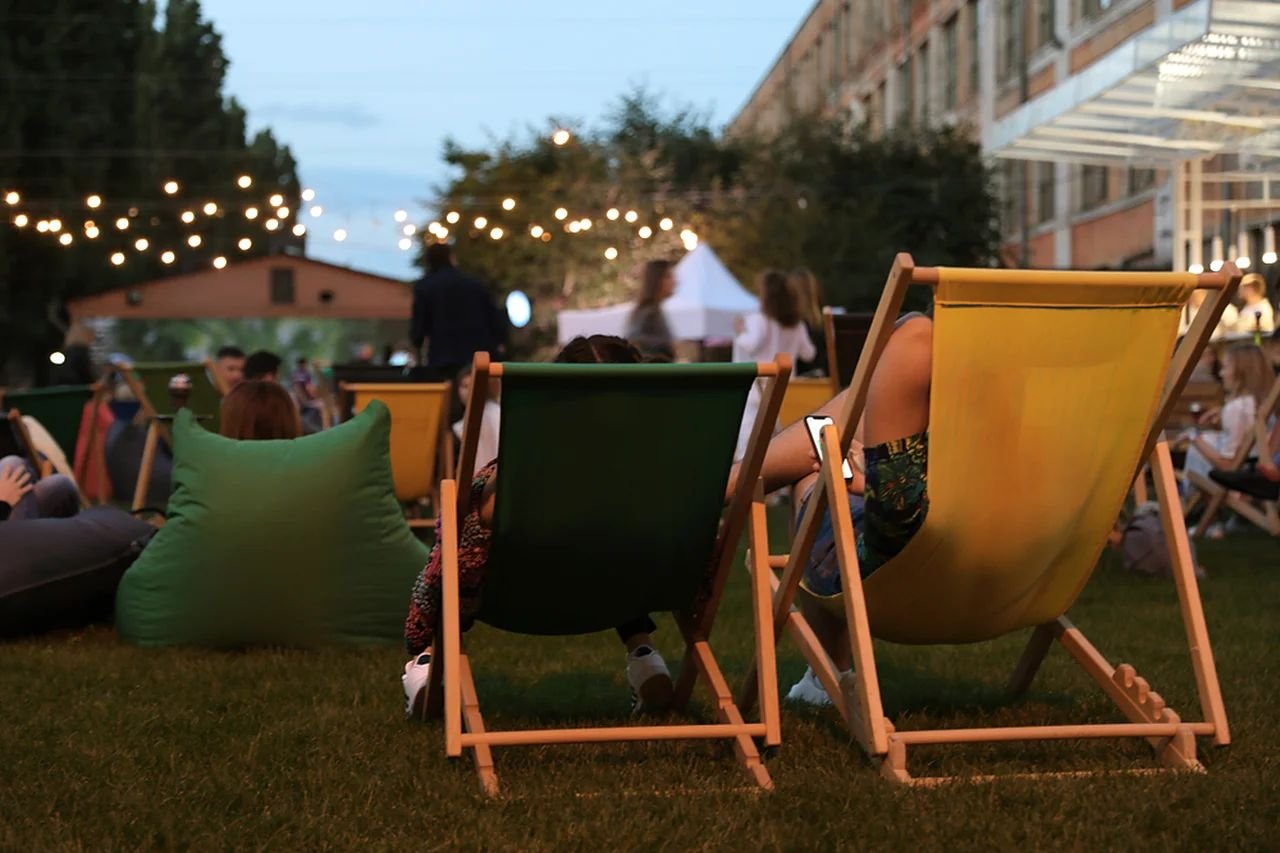
The event. From May 28 to September 2026 the Forte Antenne complex, inside Villa Ada, hosts its outdoor cinema series: free screenings every evening at 21:00, until seats run out, in one of the most fascinating and least known places in Rome. The 2026 season is now winding down. The announced calendar generally runs to September with no declared closing date, so as I write we are in the week when the projector is either being switched off for the last time or has just been switched off. Before heading up, it's best to check the channels of the association that organizes it, because the last evenings of a summer series are the ones most easily moved by rain or by volunteer fatigue.
What it is. The festival, organized by the APS il Condominio, pairs the screenings with guided tours of the 19th-century fort, Cinema for Kids for the youngest, talks and contemporary art installations: a cultural outpost born from the recovery of a place abandoned for decades. It's not a commercial arena with a ticket office and an industrial popcorn kiosk. It's a piece of the city that someone took back in hand, cleaned up, lit and gave back to the people of the neighborhood and to anyone who feels like climbing a hill at half past eight in the evening.
The location. Forte Antenne, Via del Forte Antenne 12, on the hill where ancient Antemnae stood, inside Villa Ada Savoia. You climb on foot from the park, and the woods around are part of the experience. The hill is called Monte Antenne, is about 60 meters high and looks out over the point where the Aniene flows into the Tiber. The fort occupies barely two and a half hectares on the summit, and is the smallest of the 15 forts of the entrenched camp of Rome.
I'll tell you right away the thing that matters most, if you've never been: the value of this place is not only the film. The film is the alibi. The real value is that to get to the screen you have to cross a 160-hectare park at sunset, climb a wooded slope, pass through a military gate from the late 1800s and find yourself inside the courtyard of a fortress that for almost a century nobody could look at up close. When the light drops and the projector starts, over your head you have the stone pines and the silhouette of the earthworks. It is one of the few Roman evenings in which the setting is worth as much as the content, and sometimes more.
Where Forte Antenne is and how you really get there
The official address is Via del Forte Antenne 12, but that address alone isn't enough, because the fort doesn't face a street in the sense we usually mean. It stands on top of a rise inside the park of Villa Ada, in the northern quadrant of the city, between the Parioli and Via Salaria. To get there you walk: from the spot where you leave the car, the scooter or the public transport there are in any case 10 to 25 minutes on foot, and the last three or four are uphill.
The geography explains everything better than any map. Monte Antenne is the last spur of the Parioli toward the north. Below it the Tiber bends and receives the Aniene. Whoever designed the fort in the 19th century chose that point for the same reason the Latins had put a fortified village there almost 3,000 years earlier: from up there you control the confluence of the two rivers and the start of Via Salaria, that is, the northern gate of Rome. The hill is not high, but it is the only height that dominates that junction, and this made it strategic for two different civilizations millennia apart.
On foot from the park entrances
Villa Ada has several entrances, and they are not equivalent for someone going to the fort. The main entrances open on Via Salaria at numbers 267, 273 and 275, then there are Via di Ponte Salario, Via di Monte Antenne and Via Panama. The park keeps the hours of Roman historic parks, that is, from dawn to sunset, and this raises everyone's first question: if the park closes at sunset, how do I get out after a film that ends at midnight? The practical answer is that during the evenings of the series the access route to the fort stays staffed, and you move along the route indicated by the organizers, not, of course, through the woods. The first time, follow the signs and the crowd: the last thing you want is to look for a gate in the dark in a 160-hectare park.
The most logical access to the fort is from Via di Monte Antenne side, which is the street that bears the hill's name and is the point where the rise begins to climb. From there the change in elevation takes a few minutes. From Via Salaria entrance, on the other hand, the walk is longer and nicer: you cross the central part of the park, you skirt the lake, you pass under the pines, and you arrive at the screen out of breath but with your head already settled. If it's your first time and you have time, I recommend the second option: the walk is part of the ticket, and there is no ticket.
By public transport
Public transport to Villa Ada works reasonably well, and this is a point in its favor compared with other summer arenas that end up in poorly connected suburbs. The reference axis is Via Salaria, served by the surface lines that climb from the center toward the northern quadrant, and the urban rail junction that runs along the Tiber, with stops in the area between Campi Sportivi and Monte Antenne. The practical advice: the rail link is convenient for going, less so for coming back, because the evening frequency thins out a lot. Check the last run before you sit down, not after the end credits.
Anyone coming from the historic center has an alternative that almost nobody considers: go up the Tiber to Milvian Bridge and cross from there, or else lean on the hub of the Auditorium Parco della Musica, which is in the same quadrant and is well served in the evening. They are somewhat roundabout solutions, but if the evening at the fort is part of a longer outing in northern Rome they work very well.
By car, scooter and bicycle
By car you get there, but then you have to leave it. The streets around the park perimeter have the typical neighborhood parking of the Parioli and the Salaria: on summer evenings you find something, but not within 50 meters of the entrance. Allowing 10 minutes of searching and five more of walking is realism, not pessimism. The scooter is the Roman solution par excellence and here it works better than elsewhere, because spaces for two wheels along the Salaria and in the side streets of the Parioli don't run short.
The bicycle deserves a separate mention. Villa Ada has a ring route of about four kilometers, unpaved with stretches of asphalt, which is one of the most pleasant urban cycling loops in Rome. Arriving by bike at sunset, leaving it in the indicated parking area and climbing the last stretch on foot is the best way to live the evening. Keep in mind that the final climb to the fort can't be cycled in a civilized way: it's a slope, not a ramp.
How an evening at the fort works, in practice
The screenings begin at 21:00, every evening, and are free until seats run out. These are two pieces of information that seem trivial and yet determine the whole rest of the evening. Free and until seats run out, put together, mean one thing only: whoever arrives first sits better. There is no reservation that saves you from this arithmetic.
The real rhythm of a typical evening is more or less this. From half past seven on people begin to climb, in groups of two or three, with a bag and a sweatshirt in hand because at that hour it's still warm and at midnight it isn't. Around eight the courtyard is half full. At a quarter to nine those who calculated well arrive. At nine the film starts, and in the following 20 minutes there are still people tiptoeing in looking for a spot at the back. Anyone who arrives at half past nine, on full evenings, sees the screen from the side or standing.
The program is not limited to the screenings. Over the years the series has built a precise surrounding offering: guided tours of the 19th-century fort, which are the only reasonable way to see from inside a military structure otherwise not open to the public, a Cinema for Kids section designed for children, with hours and titles different from those of the main evening, talks and meetings, contemporary art installations scattered through the spaces of the complex. Not everything happens every evening, and the detailed program is the one published by the association, which remains the source to look at before leaving home.
What to bring with you
A sweatshirt or light jacket, always, even in August. 60 meters of elevation is not mountains, but the fort is surrounded by trees, the hill takes in cool air from the two rivers and at midnight the difference with the asphalt of Piazza Fiume is real. Then a mosquito repellent, and I'm not joking: you are in a wood a few hundred meters from the water, and the mosquitoes have lived there longer than you. A bottle of water, closed shoes with a sole that grips on the dirt, and a small flashlight or simply your phone's light with a charged battery for the way back. A stadium cushion or a blanket, if the seats run out before you arrive, make the difference between two comfortable hours and two hours of back pain.
With children
The section devoted to the youngest is one of the reasons this series has taken root in the neighborhood. Bringing a child here works, on three conditions. The first: check which evening has the children's programming, because the 21:00 screening isn't always suitable. The second: a stroller on the final climb is a battle, and a carrier or a child-carrying backpack solves it better. The third: bear in mind that a six-year-old inside a military fort at sunset will be far more interested in the walls, the loopholes and the dark among the trees than in the screen, and this is good news, not a problem.
A curiosity about Forte Antenne Cinema 2026: the secret arena inside Villa Ada
The name fools almost everyone, and I have to say it fools in a delightful way. When you hear Forte Antenne, Monte Antenne, Via del Forte Antenne, the mind automatically goes to pylons, radio antennas, repeaters. It is the most natural deduction in the world, and in this case it is wrong by about 2,800 years.
Antenne comes from Antemnae, the name of the Latin village that occupied this hill before Rome existed as a city. And Antemnae, in turn, comes from the Latin ante amnes, that is, in front of the rivers. The ancients called that place by its geographic description: the place located in front of the confluence, the promontory that watches the Aniene enter the Tiber. A place name that is a finger pointed at the map. When you climb up there today with a folding chair under your arm, the name you read on the gate is an archaic Latin name that means, literally, in front of the rivers.
And here comes the part that makes the curiosity a real curiosity, because history decided to play a joke. After the First World War the forts of the entrenched camp of Rome were struck from the roster of the State's fortifications and converted into barracks and depots. Forte Antenne, until the 1940s, was used as a depot of the Radiotelegraphists Regiment. You read that right: radiotelegraphists. The place that was called Antenne for river reasons, and that had nothing to do with radio waves, ended up hosting precisely the military transmission personnel. The name, for two decades, earned itself for the wrong reason.
It's a story to tell up here, because it explains better than a thousand speeches what Rome is: a place where names survive their meanings, and then every now and then history passes by and pretends to prove them right.
Antemnae, the city that was there before Rome
Up here there was a city, and not just any city. Antemnae is recalled by the ancient sources as one of the settlements of Latium vetus, and the literary tradition loads it with enormous weight: Dionysius of Halicarnassus, Livy and Plutarch all name it, and they name it at war with Rome.
The story is that of the rape of the Sabine women. According to the account handed down, among the women abducted by the Romans there were many from Antemnae itself, and the Antemnates, to take revenge, took advantage of the fact that the Romans were busy elsewhere, against the Caeninenses, to raid the territory of the new city. Romulus came back, attacked Antemnae, took it, celebrated his second triumph and sent Roman colonists there. These are the founding pages of the city, the ones every Italian child has heard at least once, and they physically concern the hill on which you sit to watch a film.
There is also a version that says otherwise: Pliny the Elder tells that the city was subdued by Romulus after the defeat of Titus Tatius, the Sabine king later associated with the Roman kingdom. The ancient sources on Antemnae disagree even on its origin: Plutarch makes it Sabine, Dionysius wants it founded by the Sicels and then conquered by the Aborigines, Virgil puts it among the five cities that took up arms against the Trojans, Silius Italicus declares it older than the Crustumini. Translated: the ancients knew that place was old, very old, and didn't agree on how old.
Archaeology, when it finally arrived, told a more sober story and an equally remarkable one. The site occupied an area of about 12 hectares. The walls were built in cappellaccio, the gray, crumbly tuff of the first Roman fortifications, laid in square blocks, and in some points reached seven meters in height according to measurements made before the fort erased everything. Dating places them between the end of the sixth and the beginning of the fifth century BC. Of the houses we know tuff foundations and tile roofs. There were water systems, and a cistern was destroyed in the 19th-century works.
Then there is the piece I like best. In a place of worship of the seventh century BC, votive materials have emerged that suggest the veneration of Juno Sospita, and among them an antefix depicting Juno with a helmet made of bovine elements, datable to the early fifth century. That antefix is today in the collections of the Museo Nazionale Romano, whose best-known seat for sculpture and finds is Palazzo Massimo alle Terme. It is a terracotta face that looked over the Tiber valley when Rome was a city of huts, and it is a quarter of an hour by bus from where you sit tonight.
Antemnae began to decline starting in the third century BC. Around the first century BC, in place of the city there was by now a Roman villa. Pliny the Elder included it in his list of the vanished cities of Latium: a list of names that the ancients themselves could no longer place on the map. The fact that we today know where it was, and project a film over it, is one of those paradoxes that in Rome are accepted without making a fuss.
Something nobody tells you about Forte Antenne Cinema 2026: the secret arena inside Villa Ada
Here it is, and it's not good news: the fort you like so much killed the city that lay beneath it.
The sequence of facts is documented and should be told in full, because it is subtler than it seems. In 1834 the archaeologist Antonio Nibby first proposed the identification: this hill, he argued, is Antemnae. He deduced it from the citations of Strabo and Plutarch, who placed the city just outside Porta Collina. His hypothesis remained for decades a hypothesis, discussed and not accepted by everyone. What turned it into shared certainty? The excavations of 1878, that is, the earthmoving for the construction of Forte Antenne.
We understand each other. The shovel that confirmed Nibby's identification is the same shovel that largely destroyed what it was confirming. The archaeological site of Antemnae was to a great extent erased by the construction of the fort between the last decades of the 19th century and 1891. The seven-meter walls we know through measurements taken before they vanished. The cistern we know because someone saw it while it was being demolished. It is a story of 19th-century archaeology in miniature: you discover by destroying, and you record what you manage to look at in time.
Later investigations tried to recover what remained, in 1978 and then in 1986, but on a surface by then compromised. So, when tonight you sit in the courtyard and raise your eyes toward the brick walls of the military complex, know that you are sitting on top of two layers: what was built and what was removed in order to build it. And the film series, which came to this place last, is doing with the fortress exactly what the fortress did with the Latin city, but with the opposite sign: instead of burying it, it is putting it back into circulation.
There is a second one, of things nobody tells, and it is more prosaic. In 1958, in view of the Rome Olympics of 1960, the fort was transferred from the state property office to the Municipality with the idea of making it a campground for visitors to the Games. The campground was built, but only in the surrounding park: inside the fort, in the meantime, private residences had already been built. Inside a protected 19th-century fort, in the middle of a public park, people lived. This is the very unromantic reason why the complex arrived in the 21st century in a state of partial and confused use, with one part taken over by the Municipality and used halfway, and the rest in limbo. The summer series was born inside this limbo, and this explains why it has the flavor of a reconquest instead of a normal summer lineup.
What the fort is like, and why it is like that
Forte Antenne belongs to a precise family of military architecture, that of the so-called Prussian forts, and knowing its grammar changes the way you look at the place while you wait for darkness to fall.
The entrenched camp of Rome was conceived right after 1870, when the city became capital of the Kingdom and people realized it had no modern defenses. The Aurelian Walls were a masterpiece of the third century AD and, against the rifled artillery of the 19th century, were worth about as much as a garden wall. New works were needed, and they were needed far from the center. The forts were commissioned by Royal Decree no. 4007 of August 12, 1877 and built between 1877 and 1891: 15 forts of the Prussian type and four batteries with a hexagonal plan, placed at a distance of four or five kilometers from the Aurelian Walls and two or three kilometers from one another, for a total development of about 40 kilometers.
The logic is that of the ring: no fort was meant to hold out alone, each covered with its own fire the stretch of countryside in front of its neighbors. The first seven, all except the Appia Antica on the right bank of the Tiber, were started in 1877 to protect the city from a possible landing on the Tyrrhenian coast. The other eight, among them Antenne, started in 1880 when new funds arrived, and by Royal Decree of November 1, 1882 they were named after the roads on which they stood.
Forte Antenne is the end of the ring on the north side, at the confluence of the Tiber and the Aniene, and its area of two and a half hectares makes it the smallest of all. To give you the measure: Forte Pietralata occupies 25, the Tiburtina almost 24, the Trionfale 21. Antenne is a tenth of those. The reason is purely topographic: the hill offered no other space. The fort had to adapt to the shape of the hill, and the hill already had the shape the Latins had given it almost 3,000 years earlier, when they had built the cappellaccio walls on top of it.
The standard structure of these forts includes a moat, an earthwork, a gorge front with the entrance gate, casemates and vaulted shelters under the earthwork, and platforms for the artillery pieces on top. The facing is brick, the vaults are brick, and the real defense isn't done by the wall but by the earth: meters of ground over the vaults, so that the explosive shell is spent in the mass and doesn't reach the men. When you walk in the courtyard and see those grassy bumps that look like ornamental mounds, they're not mounds: they're armor.
The final paradox of all this engineering is that it never served any purpose. The forts fell out of use very early, for two reasons that added up: the city expanded and swallowed them, bringing them inside the urban fabric instead of out in the countryside, and in the meantime ballistics and military strategy changed so much that the very idea of a ring of fortifications around a capital became obsolete. With Royal Decree number 2179 of October 9, 1919, they were struck from the State's fortifications. 42 years of construction sites and spending on a defensive belt that never fired a shot at an enemy. The cinema, in that courtyard, is the first truly satisfying use anyone has found for those walls.
My advice for visiting Cinema a Forte Antenne 2026, the secret arena inside Villa Ada
There's really only one piece of advice, and I'll say it plainly: arrive an hour and a half early and treat it as part of the evening, not as waiting. If the screening is at 21:00, you need to be inside the park at 19:30.
Let me explain why, and it's not only about the seat. At that hour, in this place, three things happen that are already over by 21:00.
The light
The first is the light. Villa Ada at sunset, in the hour before dark, is one of the most beautiful things in Rome and almost nobody knows it, because all Romans go there in the morning to run or in the afternoon with their kids. The low light coming through the umbrella pines, the little lake turning into an orange sheet, the silhouettes of the big isolated trees that the 19th-century gardeners placed on purpose as focal points of the landscape. The park is 80 percent wooded and the remaining 20 percent is lawn and shrubs. That means you walk through a continuous alternation of deep shade and open clearings, and at that hour every clearing is a different scene. Arriving with daylight gives you a walk that is worth the evening by itself.
The climb
The second is the climb. Doing the last minutes of the slope with the sun low is a completely different thing from doing them in the dark with a phone in your hand. You see where you put your feet, you see the bulk of the fort appearing above your head between the trees, and above all you see the view toward the Tiber before the dark swallows it. Once you're at the top with still enough light, walk around the outer perimeter before going in. That's when you understand the shape of the fortification, something you can't do anymore inside the courtyard, with the screen set up and the chairs laid out.
The seat
The third, quite simply, is the seat. Free until full means the clock does the selecting. At 19:30 you choose where to sit. At 20:45 you take what's left. At 21:15 you lean against the wall. From experience, the best spot isn't the front row but the central area toward the back, a bit raised if the ground allows it. The screen of an open-air arena should be watched from a distance, and the farther back you are, the more the context comes into the frame too, meaning the walls and the trees, which is half the reason you came.
The other three tips, shorter
Go on a weeknight if you can choose. Friday and Saturday in a free Roman arena are crowded by definition. On Tuesday and Wednesday the place breathes, you can hear the wind in the pines, and the screening has that neighborhood feel that is its best trait.
If a guided tour of the fort is on the calendar, take it even if it forces you to change your evening. The chances to get inside a 19th-century military structure in Rome are few and can be counted on the fingers of one hand. A large part of the 15 forts is still in the hands of State bodies, abandoned or closed to the public, and Antenne is one of the few that now and then opens with a guide in front. You can catch up on the screening another night, not on the tour.
And finally: don't run off at the credits. The best moment of the evening at the fort, the one nobody talks about, is the 10 minutes after the end, when the screen goes off, your eyes get used to real darkness and you realize that above the hill, in the middle of a city of almost 3 million people, you can still see stars. Villa Ada has enough dark mass around it to keep the sky decent, and Monte Antenne is its high point.
Another well-known fact, yet rarely mentioned
Everybody knows Villa Ada was the residence of the Savoy family. That the park is called Villa Ada Savoia and that the villa houses the Egyptian embassy is written in the guidebooks and on the signs. The well-known fact, and almost never told in full, is why it's called Ada: she wasn't a Savoy, and the name comes from a change of ownership that made the royal house lose the villa for 26 years.
The chronology, because it deserves to be read in a row. In 1872 Victor Emmanuel II buys the estate. He likes the park, buys land around it to enlarge it up to the 160 hectares it still has today, and has stables and other useful works built there. At his death his son Umberto I inherits a place he isn't interested in: Umberto doesn't like living in the countryside, he prefers the Quirinale. In 1878 the villa is sold, at a favor price, to the administrator of the royal family's assets, Count Giuseppe Telfener. And Telfener names it after his wife: Ada.
So the name we read today on every map of Rome, on bus stops, on summer concert posters, is the given name of the wife of a 19th-century estate administrator. Not a queen, not a saint, not a Roman empress. Mrs. Ada Telfener.
The story then rewinds. In 1904 Victor Emmanuel III buys the estate back, it becomes a royal residence again and changes its name to Villa Savoia, and it stays that way until 1946. But the popular name, Villa Ada, never went away, and it won. Today the official place name holds them both together, Villa Ada Savoia, like a compromise between the count's wife and the dynasty.
There's also a tail to this story, and it's the kind that sets the picture right. When the monarchy fell, the property ended up in a very long legal dispute. One part stayed privately owned by the Savoys and was later sold off in several ways. Paradoxically, it's exactly that portion, left in neglect, that still preserves readable traces of the 18th-century garden layout. The part toward Via Salaria passed to the public state property in 1957, and it's the one we walk through today, reworked, equipped and replanted over the years with species that aren't always native. As for the royal villa, Umberto gave it to Egypt in exchange for the hospitality his parents had received during their exile in Alexandria between 1946 and 1947. That's why, crossing a Roman public park, at some point you find the Egyptian flag and a gate that doesn't open.
The right photo to take at Cinema a Forte Antenne 2026, the secret arena inside Villa Ada
I'll give you three, in order of time, because here photography is a matter of timing more than equipment.
The first: the gateway, 20 minutes before dark
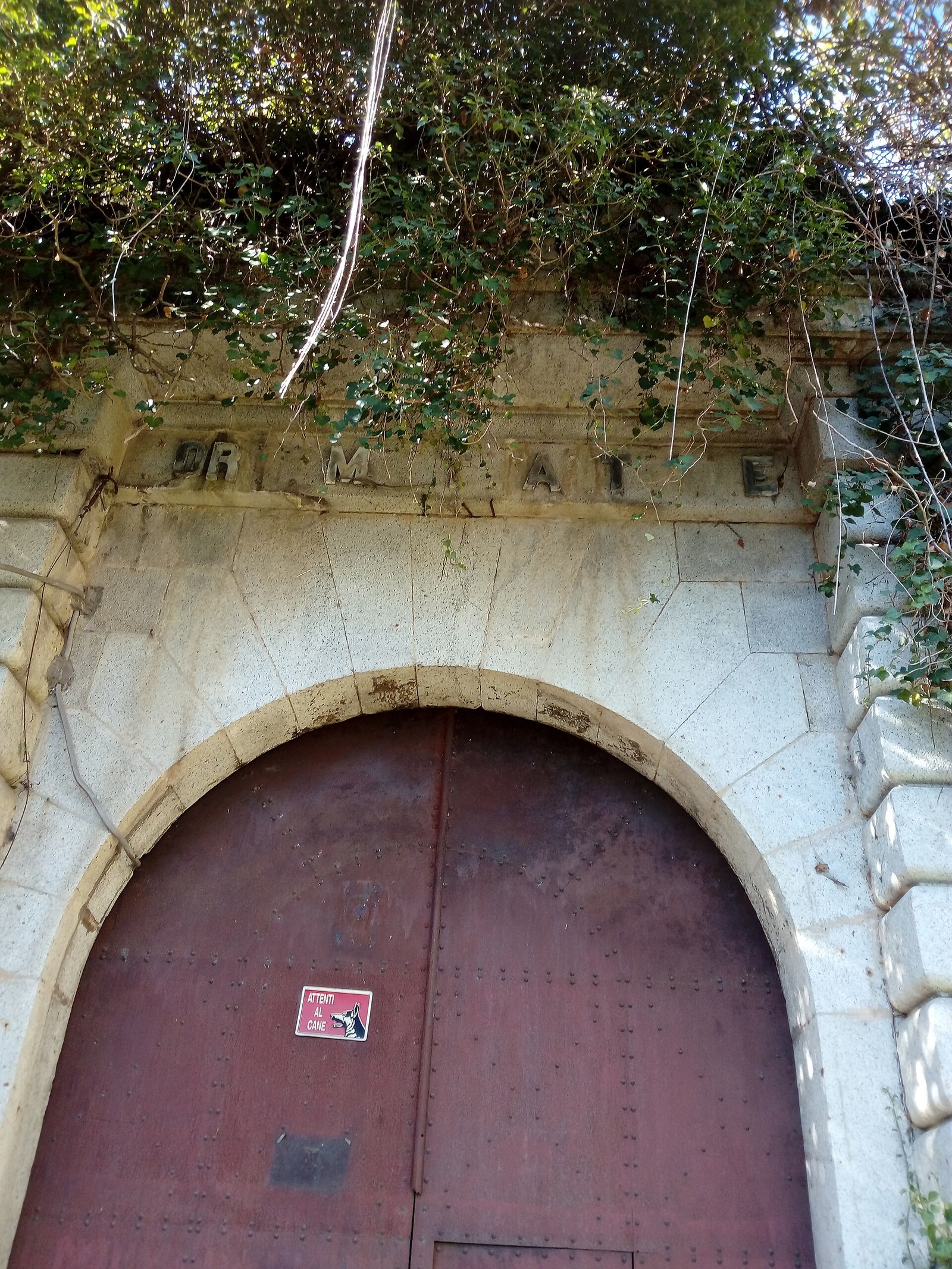
The photo that sums it all up is the entrance of the fort with the sign, shot from below, in the last quarter hour of usable light. The 19th-century brick takes on a warm color at that hour that it doesn't have by day, the arch casts a shadow that gives depth, and if you wait for the right moment someone walks by with a folding chair and a shopping bag and steps into your frame. That contrast between military architecture and people going to the movies is the meaning of the whole program in a single image. Stand slightly diagonal to the gateway instead of straight on, and let some trees in at the edge. The woods around are half the subject.
The second: the lit screen in the courtyard
This one has to be taken in the first minutes of the screening, when the sky isn't black yet but deep blue. It's the short window, 15 or 20 minutes, in which the luminance of the screen and that of the sky are equal. You can keep in the frame both the lit sheet and the outline of the walls and the treetops, without one of the two parts turning into a black blotch or a white blotch. 10 minutes later, with the sky black, that photo no longer exists. All that's left is a bright rectangle in the middle of nothing, which is the photograph everybody takes and says nothing about this place. Shoot from the last row or from a raised side, including the heads of the audience in silhouette at the bottom.
Two recommendations of good manners, worth more than any technical advice: never use the flash, for any reason, and keep your phone screen brightness at the minimum. You're inside a dark arena with 200 other people watching a film, and your photo isn't worth their annoyance.
The third: the view toward the two rivers
Before going in, from the outer perimeter of the fort or from the slope during the climb, look for the opening between the trees toward the north. From there you can sense the confluence of the Aniene and the Tiber, the reason this hill exists in history. Don't expect a postcard view. The vegetation has grown and the modern city has built quite a lot in that direction. But if you catch the right gap with the sun going down, you have in a single frame the reason the Latins put a fortified village here, the reason the Royal Army put a fort here, and the reason you climbed all the way up with a blanket under your arm. Three different reasons, same point of view.
A fourth, if you feel like it
Inside the park, on the way back, the street lamps and the night mist rising from the little lake make an effect that comes out surprisingly well with modern phones. Rest your elbow on a trunk, hold your breath, and shoot on the way out. It's the photo that will remind you what it was like to go home, which is always the part people forget.
What's around, and how to build a whole day
Villa Ada is big enough to fill an afternoon before the screening, and the things to see aren't obvious.
The park is the fourth largest of Rome's public parks, after the Appia Antica, the Pineto and Villa Doria Pamphilj: 160 hectares with a ring route of about four kilometers, equipped with panels that explain the features of the different zones and crossed by transverse shortcuts. Inside there are neoclassical and eclectic buildings that have survived with very different fortunes: the Temple of Flora, the Belvedere, the Cafehaus, the Villa Polissena, the Swiss Chalet, the Gothic Tower. The Royal Stables, which were meant to house the European Museum of Games and Toys with the collection of antique toys bought in 2005, do not house it: the project was never completed, partly because of opposition from environmental associations, and the stables lie abandoned. It is another of those Roman stories in which the piece of heritage exists, the project exists, the money partly existed, and the thing did not happen.
The park's wildlife is truly rich, thanks to the size of the grounds and the closeness of the Tiber: squirrels in quantity, moles, hedgehogs, wild rabbits, porcupines, and a remarkable bird population including the colonies of parrots that have settled mostly toward the former king's villa. If you go up to the fort at sunset in silence, you can really run into the porcupine: it is a nocturnal animal, big, slow and completely harmless, and it scares to death anyone who doesn't know it lives in Rome. On the botanical side, the dominant species is the stone pine, with holm oaks, laurels, olives, elms, maples, poplars and many kinds of oak, plus non-native ornamental species. There is even a very rare metasequoia, a water conifer brought in in 1940.
Under your feet, then, there is another world. The route of the Catacombs of Priscilla extends for the most part right under the territory of the villa, and in ancient times the area belonged to the gens Acilia, which had a family hypogeum here: the memory of that tomb is tied to the consul Manius Acilius Glabrio, condemned in 95 by Domitian for plotting against him and probably converted to Christianity, and a small basilica was added to it under Pope Sylvester I. Walking toward an evening screening knowing you have a Christian cemetery of the first centuries under your soles is a feeling I recommend to everyone at least once.
And there is Via Salaria, which runs along the park: the oldest of the Roman consular roads, born for the salt trade, since the first Romans imported salt from the Adriatic. The name says it, the geography confirms it, and Antemnae stood exactly where that road reached the rivers. Every piece of this place answers another piece.
Some Important Events That Happened Here in History
Few places in Rome pack so many different moments into two and a half hectares. Here they are, from the oldest to the most recent.
The Rape of the Sabine Women and the Conquest by Romulus
The founding episode. The Antemnates, after the rape of the Sabine women, raid Roman territory, taking advantage of the absence of the Romans, who are busy against the Caeninenses. Romulus returns, faces them, occupies the city and celebrates his second triumph, then sends Roman colonists onto the hill. Be it history or legend put in order after the fact, that story has come down to us attached to this precise rise of ground.
The Alliance with Tarquin the Proud and Porsenna
The centuries of the kings pass, and Antemnae appears again at a very delicate moment: it backs the attempt of Tarquin the Proud, allied for the occasion with Porsenna, to retake control of Rome after the expulsion. It bets on the wrong horse, and from an outpost it becomes a fortified Roman garrison. The temple dedicated to Juno belongs to this phase, between the late Archaic and the Republican age.
82 BC: The Last Act of the Battle of Porta Collina
This is the most striking episode, and almost nobody associates it with Villa Ada. In 82 BC, in the civil war between Sulla and the Marians, an army made up of the legions of the populares and the Italic militias led by the Samnite commander Pontius Telesinus marches on Rome. The decisive clash, the battle of Porta Collina, is fought at the gates of the city, and its concluding episode takes place right in front of Antemnae, with the victory of Sulla's troops. That day decides who rules in Rome and opens the season of the Sullan proscriptions. The final battlefield, the evening when everything was decided, is the slope where the screen is set up today.
From the First Century BC to 1834: The Void
Then silence. The city declines from the third century BC, and by around the first century a Roman villa stands in its place. Pliny the Elder lists it among the vanished towns of Lazio: gone, wiped off the map. For almost two millennia the hill is countryside, pasture, vineyard, estate. In the 1600s the property is the seat of the Irish College, more an agricultural estate than an urban villa. At the end of the 1700s the Pallavicino princes reorganize it as a landscape garden, with geometric paths and small buildings, using the changes in level of the ground to create backdrops and views that were already romantic. In 1834 Antonio Nibby proposes the identification with Antemnae, and the hill starts to have an ancient name again.
1872 and 1904: The Savoy, Twice
Victor Emmanuel II buys the estate in 1872 and enlarges it to the current 160 hectares. Umberto I, who prefers the Quirinale, has it sold in 1878 to Count Giuseppe Telfener, who gives it his wife's name. Victor Emmanuel III buys it back in 1904 and the villa becomes a royal residence again, under the name Villa Savoia, until 1946.
1877 and 1891: the fort
In the middle of this dynastic story, the Royal Army builds the fortress. The founding decree of the entrenched camp is dated August 12, 1877, the Antenne works start with the second group of forts in 1880 and the structure is completed in 1891. The official name comes with the decree of November 1, 1882, when it is established that the forts be named after the roads they stand on. In 1919 the whole system is struck from the State's fortifications, and Antenne becomes a military depot.
1940 and 1942: the Savoys' bunker
With the Second World War the villa changes function one last time. At the start of the conflict the royal family uses the cellars of the villa as an air-raid shelter, reached through trapdoors and even furnished like a small sitting room. Then, as the situation worsens and the fear of Allied bombing becomes real, it is decided to dig a real bunker into the tuff bank. It is built between 1940 and 1942 in the hill called the Cavalle Madri, about 350 meters as the crow flies from the villa, with no underground connections to the residence. Precisely because of that distance it is given a driveway entrance: you went in directly by car.
The numbers tell the mood of those years better than any adjective. A nearly perfectly circular plan, a little over 200 square meters, a doughnut shape dug in the tuff. An entrance gallery of about 10 meters, at the end of which is a two-leaf vehicle gate. Each leaf weighs 1,800 kilograms, an outer iron structure filled with concrete, with six bolts per leaf, three at the top and three at the bottom, which a central toothed wheel pushes into the ceiling and the floor. Past the gate, the room for sheltering the cars, with brick vaults with lowered arches, baseboards and cornices in fake travertine and rounded corners: pure Italian rationalism, the aesthetics of the time applied to a hole underground. Curiously, no official documents exist about its construction, neither plans nor spending specifications.
July 25, 1943: the arrest of Mussolini
This is the date that makes this park a place of national history and not just Roman. After the approval of the Grandi motion in the night between July 24 and 25, 1943, the king summons Mussolini to Villa Ada. The meeting is short. On the way out Mussolini is arrested and taken away in an ambulance. That afternoon, inside this park, the 20-year Fascist period ends.
It's worth pausing a moment on this fact: the same green perimeter you cross tonight with your cooler bag and the mosquitoes is the place where a regime was materially broken. There's no monumental plaque, no square named for it, no marked route telling you about it as you walk. There's a park, with joggers and dogs and parrots. Rome does that: it leaves the enormous things where they happened, without adding anything.
From 1957 to today: the long return
In 1957 the part toward Via Salaria passes to the public state property and becomes the park we know. In 1958, in view of the 1960 Olympics, the fort is handed over to the city to make a campground, which is built only in the surrounding park because inside the fort there are by now private homes. In 1994 the music program Roma incontra il mondo is born at the little lake, bringing world music into Villa Ada every summer, and over the years it has become one of the institutions of the Roman summer. In 2008 the fort is protected as a cultural asset by ministerial decree of August 6. The bunker, abandoned for decades and visited by anyone, restored by an urban speleology association under a city concession, opens to the public in March 2016, and the visits stop five years later, in March 2021, when the agreement expires. In the meantime, on the hill, the summer cinema has taken root.
Who has passed through Cinema a Forte Antenne 2026, the secret arena inside Villa Ada
The list of people who have set foot on this hill is as lopsided as can be imagined: it begins with a mythological king and ends with a family climbing up with a folding seat. In between there are a dictator, three sovereigns, a Roman consul, a 19th-century archaeologist, an Oscar-winning director and a generation of hippies.
The founders and the generals
Romulus, according to tradition, conquers Antemnae and celebrates a triumph over it. Titus Tatius, the Sabine king, enters the same story as an antagonist later associated with the kingdom. Tarquin the Proud and Porsenna pass through here in the failed attempt to take Rome back. And then Lucius Cornelius Sulla and Pontius Telesinus, who in 82 BC decide in front of these walls who would govern the republic. These are names you usually meet in high school textbooks, not in the description of a summer arena, and yet they concern the exact address where you go to watch a movie.
Antonio Nibby, the Man Who Gave the Hill Its Name Back
In 1834, when there was nothing here but an estate and a few walls poking out of the ground, Antonio Nibby put together the quotations from Strabo and Plutarch, looked at the map of the surroundings of Rome and said: Antemnae is this. It took him 44 years to be fully believed, and the confirmation came from the excavations of the fort, which proved him right by destroying the evidence. Nibby is one of those 19th-century topographers to whom Rome owes half of its ancient geography and for whom it has never named anything important.
The Royal Family and Count Telfener
Vittorio Emanuele II bought the park in 1872 and spent real time here: he liked hunting, and the estate was for a long time a hunting reserve of the family. Umberto I couldn't stand it and got rid of it. Count Giuseppe Telfener, administrator of the royal properties, got it at a favorable price in 1878 and put it ideally in the name of his wife Ada, giving her without knowing it a place in the street names of a European capital forever. Vittorio Emanuele III bought it back in 1904 and lived here until the end of the monarchy, with the court, the stables, the children. Umberto II left it for exile, and later donated the lodge to Egypt to repay the hospitality his parents had received in Alexandria.
July 25, 1943
Benito Mussolini arrived here on the afternoon of July 25, 1943, summoned by the king after the vote of the Grand Council. He left it arrested, loaded into an ambulance. It is the shortest and the heaviest passage of the whole list: a car that goes in through a gate and doesn't come out the way it went in.
The Signals Soldiers
Between the two wars and up to the 1940s the fort was the depot of the Radiotelegraphists Regiment. They left no names, they left a use: hundreds of soldiers who went in and out of those casemates to handle signals equipment, in a building designed to stand up to artillery and ended up keeping cables and apparatus. The real life of Rome's forts has been almost all like that, prosaic and administrative.
Cinema, Before Outdoor Cinema
Curiously, cinema came to Villa Ada well before the summer program. Vittorio De Sica shot inside this park the bicycle exteriors of his Il giardino dei Finzi-Contini: the tree-lined avenues that look like Ferrara in the film are the avenues here. In 1999 Pier Francesco Pingitore set and shot a film here titled precisely Villa Ada, an interweaving of stories that take place during a spring Sunday in the park. The fact that films are screened on the hill today is therefore a kind of giving back: the park served as a set, and now it serves as a theater.
Writers, Musicians and the People Who Live on It
A large part of Niccolò Ammaniti's novel Che la festa cominci, published by Einaudi in 2009, takes place inside the park of Villa Ada: a monstrous, grotesque party in the greenery of a Roman villa, which anyone who knows the place recognizes line by line. Since 1994 the little lake has hosted every summer the world music concerts of Roma incontra il mondo, and a Roman reggae group, the Villa Ada Posse, also took its name from the park. And then there are the ones who don't end up in books: the regulars of the pratone and of the so-called contropratone, a destination for generations of Roman kids for more than 20 years, the runners on the ring route, the retirees of the Parioli, the families with children and the squirrels.
The last category of people to pass through here, in order of time, are the volunteers of the association that put the fort back on its feet as a public space and the people, a few hundred of them, who climb up every summer evening to sit inside it. In the long history of this hill they are a tiny detail. In the history of the last 50 years they are the only good thing that has happened to it.
Frequently Asked Questions
Is It Really Free?
The evening screenings of the program are free of charge until seats run out. Free means free, it doesn't mean guaranteed: the limit is capacity, and capacity in a fort courtyard is not that of a multiplex. Some side activities, for example the guided tours, may have different ways of access, and for those it is worth checking the organization's channels.
Do I Need to Book?
The declared formula is until seats run out, so the main rule remains to arrive early. When a specific event requires registration, the association that organizes it announces it.
Can I Bring Food?
Bringing a bottle of water and something to snack on is in the nature of an open-air arena. Common sense counts more than any rule: no glass that breaks in the dark, no paper rustling during the film, and everything you carry up you carry back down. You're inside a public park with a real ecosystem and an archaeological site underneath: trash left there isn't bad manners, it's damage.
Is it accessible for people with mobility problems?
This is the weak point of the place and I'd rather say so clearly than dance around it. You reach the top of a hill through a park, with unpaved stretches and a final change in level on a slope. It isn't a comfortable route for people with difficulty moving, and anyone who has to organize with a wheelchair or with an elderly person should contact the organization beforehand, to find out which is the closest approach point and if it's passable on the night of the event.
What happens if it rains?
It's an open-air arena in a courtyard, so rain rules. Roman summer programs usually move or cancel the evening, announcing it the same day on their channels. In September, with the first thunderstorms, the probability grows. Check before setting out, because climbing up for nothing with the sky closing in is the worst possible evening.
Can I visit the fort at other times of the year?
The fort is not normally open to the public. Its official condition remains that of a protected structure, owned by the city, used only in part. The chances to get in are tied to the seasonal initiatives of those who manage it, and the guided tours of the summer program are the most reliable window. Out of season, the hill of Monte Antenne can still be walked inside the park during opening hours.
Other Roman arenas, if you liked this one
The 2026 season of open-air cinema in Rome was packed and largely free, and it's worth knowing what there is beyond this hill, also for next year.
If you're interested in the historic arena in a park formula, the Casa del Cinema inside Villa Borghese is the most solid reference in the city and works all year, not only in summer. If you like the idea of watching a film with a piece of ancient Rome behind you, the cinema under the Aurelian Walls plays the same card as Forte Antenne, swapping the 19th-century fortification for the third-century one. For the neighborhood arena in the fullest sense, the cinema nights in Piazza Vittorio in Esquilino are a piece of Roman summer history. And for those who want open space and big numbers, the arena at the Parco degli Acquedotti puts a thousand free seats under the arches.
If instead what caught you is the historical context more than the screening, then the thread to pull is a different one: Villa Torlonia for another noble Roman villa that entered 20th-century history, the Baths of Diocletian and Palazzo Massimo alle Terme to see where the finds from sites like Antemnae end up, the catacombs of Priscilla to go down under the same quadrant of the city. They are four stops that stand up on their own and that, lined up with an evening at the fort, tell 3,000 years of the same portion of Rome.
Frequently asked questions about Cinema a Forte Antenne 2026, the secret arena inside Villa Ada
What time do the screenings start?
The screenings of Cinema a Forte Antenne start at 21:00, every evening of the program, inside the fort's courtyard within Villa Ada. The start time is fixed, but the evening begins earlier for anyone who wants to find a seat and enjoy the park at sunset.
How much is the ticket?
The screenings of Cinema a Forte Antenne are free until the seats run out. Free means free, but it doesn't mean guaranteed: the limit is the capacity of the fort's courtyard, much smaller than that of a multiplex, so it's best to arrive early.
Do you need to book to secure a seat?
No, there's no booking that guarantees a seat at the evening screenings of Cinema a Forte Antenne: entry is free and regulated only by order of arrival, until the courtyard's capacity runs out. Some side activities, like the guided tours, may have different access rules.
Where is Forte Antenne?
Forte Antenne is at Via del Forte Antenne 12, at the top of a rise inside the park of Villa Ada, in the northern quadrant of Rome between the Parioli and Via Salaria. It doesn't face a road reachable by car up to the entrance. From the point where you leave the car, the scooter or the public transport, it's 10 to 25 minutes on foot.
Why is it best to arrive well before 21:00?
It's best to arrive at Forte Antenne an hour and a half early, so around 19:30 for a 21:00 screening, because at that hour the sunset light over Villa Ada is still good for enjoying the park, and because the best seat in the fort's courtyard can only be found by arriving before most of the audience.
Where does the name Forte Antenne come from?
The name Forte Antenne has nothing to do with radio antennas or relays, as the ear might suggest. It comes from Antemnae, the name of the Latin village that occupied this hill even before Rome existed, cited by ancient sources such as Dionysius of Halicarnassus, Livy and Plutarch.
What kind of structure is Forte Antenne?
Forte Antenne is a military fort of the family of the so-called Prussian forts, part of the entrenched camp built around Rome right after 1870, when the city became capital of the Kingdom and realized it had no modern defenses beyond the third-century AD Aurelian Walls.
A last thought, before the season closes
There's one thing I keep finding moving in all this, and I say it without rhetoric. This hill has been a Latin city wiped out by a fortress, a fortress decommissioned without ever having fought, a military depot, an Olympic campground project never built, a property occupied by private houses, a protected ruin nobody knew what to do with. For a century and a half, the story of Monte Antenne has been a long sequence of wrong uses and missed opportunities.
Then, at some point, someone set up a white sheet in the courtyard, switched on a projector and said: come in, it's free. And it's the first time, since Rome's forts have existed, that one of those places does something useful for the people who live around it. If the 2026 season has just closed, or is closing these days, the only thing to do is to mark the spot for next year and, in the meantime, to climb up there on an autumn Sunday to see what the woods and the light are like without the screen.
If you're building a trip to Rome around these evenings, or putting together an itinerary that includes historic parks, archaeology and summer arenas, I'm happy to leave two tools. For those who organize groups, parties or accompanied visits and look for certified professionals in the Roman area, the reference is TourLeaderPro, which connects you with tour guides and escorts who really work on these itineraries and know how to move outside the historic center circuits too. For those who instead plan the trip on their own, and want to understand how many days are needed, how to fit the days together and what's worth the detour outside Rome, ItalyPlanner collects itineraries and practical guides for the whole of Italy, with particular attention to the area around the capital. They are two different doors onto the same problem, which is always the same: going from a list of places to a day that works.