Roma Summer Fest 2026 at the Auditorium: The Summer of Big Concerts at the Cavea
In short. Today is September 12, 2026 and the Roma Summer Fest has reached its last week.
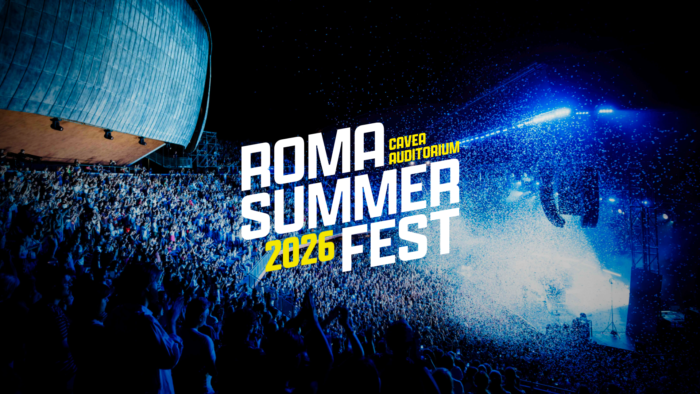
Today is September 12, 2026 and the Roma Summer Fest has reached its last week. The official Auditorium website lists the summer series from June 12 to September 15, 2026. That means only the last few days of the whole program are left, and that anyone reading now doesn't have three months of choices ahead but two or three evenings at most, plus the chance to plan a return next year. It's worth saying right away, before any description, because the difference between reading about a series in June and reading about it in mid-September completely changes what it makes sense to do.
That said, the Cavea of the Auditorium Parco della Musica Ennio Morricone is not a dismountable stage that disappears on September 16. It is a permanent amphitheater, built of stone, designed by Renzo Piano together with the rest of the complex, and it stays there all year. You can walk through it freely, it is used for the Festa del Cinema in October, and it fills up again the following spring. Anyone arriving in Rome now, or planning a trip for next year, still needs to know how the place is laid out, which side to enter from, how long it takes to get there, what happens if it rains, where to park and what there is 200 meters away.
Frequently asked questions about Roma Summer Fest 2026 at the Auditorium, the summer of big concerts at the Cavea
Where is the Roma Summer Fest held?
The Roma Summer Fest is held in the Cavea of the Auditorium Parco della Musica Ennio Morricone, Viale Pietro de Coubertin 30, Rome, in the Flaminio neighborhood. It is the open-air space between the three volumes of the halls designed by Renzo Piano.
Until when does the Roma Summer Fest 2026 run?
The official website places the Roma Summer Fest 2026 from June 12 to September 15, 2026. Anyone reading in mid-September therefore finds the series in the very last days of the calendar, with the closing already near.
How does the Roma Summer Fest program work?
The Roma Summer Fest has no single thread and no reference genre. It is a grid of evenings that differ from one another, one per night, each with its own ticket, its own start time and its own artist, set within the summer season of the Auditorium's Cavea.
What time do the gates open for concerts at the Cavea?
For Roma Summer Fest events at the Cavea the doors open 30 minutes before the start of the show, according to the Auditorium's official instructions. Late entry, once the concert has started, is limited by the venue's rules.
How do you get to the Auditorium's Cavea?
The Cavea, home of the Roma Summer Fest, is at Viale Pietro de Coubertin 30, 00196 Rome. Metro line A stops at Flaminio, which the Auditorium itself gives as the reference station for reaching the complex.
Is the Auditorium accessible for people with motor disabilities?
Yes. For Roma Summer Fest events the venue welcomes spectators in wheelchairs with reserved seats, which can be booked by phone at 06 8024 1281, open every day from 11:00 to 18:00 according to the official website. Since the seats are limited in number, it's best to call well in advance.
What is there to see nearby before a concert at the Cavea?
Near the Cavea, home of the Roma Summer Fest, in the Flaminio neighborhood, is the MAXXI, the national museum of 21st-century arts designed by Zaha Hadid and opened in 2010, reachable on foot in a few minutes.
What follows is therefore a double story. On one side, what the Roma Summer Fest is as a formula, how a summer program of this kind is put together and how to read it. On the other, a guide to the place, the Cavea and the Flaminio neighborhood around it, valid for the tail end of this edition and for all the next ones. The current calendar, at any time of the year, can be consulted on the page for the Auditorium Parco della Musica and on the website auditorium.com. Anyone organizing a trip to Rome and thinking in English will find a general overview in the guide Best things to do in Rome.

What the Roma Summer Fest is and where it is held
The Roma Summer Fest is the summer open-air season of the Auditorium Parco della Musica Ennio Morricone. It is not a festival in the strict sense of the term, that is, it is not an event concentrated in a few days with a single theme. It is rather a container that gathers, under one name and in one place, three months of evening concerts that differ from one another, one per night, each with its own ticket. Anyone expecting a pass for the whole series will be disappointed, and it's good to know that before looking for one.
The exact place
The address is Viale Pietro de Coubertin 30, 00196 Rome, in the Flaminio neighborhood, north of the historic center, in an area between the Olympic Village, the Parioli hill and Villa Glori. The complex occupies about 55,000 square meters. The space that hosts the summer concerts is the Cavea, the open-air amphitheater that opens in the middle, between the three closed volumes of the concert halls. No other places are involved: when you read Roma Summer Fest, read Cavea, except for different indications for individual events that also use the piazza and the outdoor spaces.
The 2026 calendar
For 2026 the official Auditorium website places the series between June 12 and September 15. You often read June 13 as the opening date. The one-day difference probably depends on how the opening night is counted, and in any case it doesn't change the substance, which is that the season fills the warm months entirely and closes in mid-September, when Roman evenings start to get cold enough to make the stone of the tiers uncomfortable.
Why summer and not winter
The reason is practical before it is artistic. The three indoor halls of the complex are occupied for most of the year by the symphonic season of the Accademia Nazionale di Santa Cecilia and by the programming of the Fondazione Musica per Roma. In summer that programming lightens up, the Roman audience moves outdoors and the Cavea becomes available for a parallel season, with another repertoire and another kind of listener. It is the same mechanism that in Rome gives rise to the summer series at the Baths of Caracalla, at Villa Ada and at the city's other open-air spaces.
The name and the domains
A useful note for anyone looking for information online: the reliable reference remains the Auditorium website, auditorium.com, where the series has its own dedicated section and where you find the updated calendar. Domain names dedicated to the series circulate online that don't respond reliably, and relying on them leads to blank pages or resolution errors. Anyone who wants the confirmed program should look on the venue's website, not on a domain dedicated to the name of the event.
What remains after September 15
When the summer season closes, the complex doesn't hibernate. From October 14 to 25, 2026 the same piazza and the same halls host the Festa del Cinema di Roma, 21st edition, with the red carpet running right across the Cavea. In December the residencies return to the indoor halls, like the five evenings of Max Gazzè from December 26 to 30 in the Sala Santa Cecilia. The Cavea, in the meantime, can still be walked through.
The Auditorium's Cavea as a space
To understand why the Cavea works well as an open-air concert hall you need to look at how the complex around it is built. It is not an architectural detail for enthusiasts. It directly affects what you hear sitting in the tiers.
The complex and its dates
The design is by Renzo Piano. The inauguration took place in two stages: the Sala Sinopoli on April 21, 2002, and the rest of the complex, with the Sala Grande later renamed Sala Santa Cecilia, on December 21, 2002. Since 2020, by decision of the Rome City Council, the whole complex has borne the name of Ennio Morricone. This explains why in documents and on tickets you find both the short form and the extended one, Auditorium Parco della Musica Ennio Morricone.
The three beetles
The shape you recognize from afar is that of three closed volumes, clad in lead, that look like three big insects resting on the ground. Romans call them beetles, and the nickname has also entered official communication. Inside are the three concert halls: the Sala Santa Cecilia, the largest, with 2,744 seats according to the official website and 2,756 according to other sources, the Sala Sinopoli, with 1,133 seats, and the Sala Petrassi, with 673 seats. To these is added the Teatro Studio Borgna, about 300 seats, built below the level of the piazza.
The capacity of the Cavea
The Cavea is the empty space that the three volumes leave between them. It is an open-air amphitheater, with stone tiers arranged in a horseshoe around a fixed stage. The official website describes it as a space of 3,000 to 5,000 seats, the range depending on the configuration chosen for the individual event. The variable is the parterre, that is, the flat space in front of the stage. When chairs are added on the parterre the capacity rises toward the upper limit. When the space is left open or reduced, it stays around 3,000. In the typical configuration of the summer concerts the seats are numbered and divided into sectors.
Why the shape matters
The design is not decorative. The three closed halls, clad in lead, work as an acoustic barrier toward the outside and give the Cavea a relatively protected sound environment, with the noise of the city filtered by the volumes themselves. Anyone sitting up high perceives the traffic of Viale Tiziano as a distant background, not as a disturbance. The amphitheater looks downward and the view stays clear from almost all the rows, because the slope of the tiers is steep enough to clear the head of whoever sits in front.
The Sala Santa Cecilia and the cherry wood
It's worth knowing how the big hall is built even when the concert is outdoors, because it is the reason this complex has the reputation it has. The ceiling of the Sala Santa Cecilia is made of 26 shells in American cherry wood, each of about 180 square meters, suspended over the stalls. They work as resonance chambers and are adjustable. It is a hall designed for the symphony orchestra, home of the Accademia Nazionale di Santa Cecilia, and not for amplification.
The hanging gardens
Around the halls extend the hanging gardens named after Claudio Abbado, about 38,000 square meters of greenery and pedestrian paths open to the public. You don't need tickets to walk in them. It is one of the few well-kept, shaded green spaces in that part of the city, and on summer evenings, before the concerts, it fills with people waiting for the gates to open. Even out of season it remains one of the best ways to spend half an hour in Flaminio without spending anything.
What you see without a ticket
The central piazza, the gardens, the bookshops and the bars of the complex are accessible during opening hours without an entry ticket. The hours given by the official website for the summer period, from April to October, are 11:00 to 20:00, with early opening at 10:00 on Sundays and holidays. On show days at the Cavea, however, the piazza closes to the general public at 16:00, because setup and screening operations begin. Anyone who wants to visit the complex during the day and then come back in the evening for the concert has to take this schedule into account.
The Archaeological Museum under the piazza
During the excavations for the construction of the complex the remains of a villa of the Republican age emerged, with agricultural installations and traces of one of the oldest grape-pressing structures found in the Roman area. Instead of removing them, the project incorporated them. Today the Archaeological Museum of the Auditorium can be visited inside the complex, in a protected area a short distance from the Cavea. It is the only case in Rome where you go from the lawn of a pop concert to an agricultural installation 2,000 years old in less than 100 meters.
The other indoor spaces
The complex also hosts the MUSA, the museum of musical instruments of the Accademia Nazionale di Santa Cecilia, with historic instruments and memorabilia, the Aristaios collection, dedicated to ancient bronzes, AuditoriumArte, an exhibition space, and the Sound Corner, dedicated to sound art. Anyone interested in instruments finds complementary material also at the National Museum of Musical Instruments, which is in another part of the city, and at the MUSA.
How the program is built
This is the part most often misunderstood by people coming from outside. The Roma Summer Fest has no single thread and no reference genre. It has a grid of evenings and a sequence of genres that alternate almost without apparent logic. The logic exists, but it is that of tour calendars, not that of an artistic director.
One evening, one ticket
Each event has its own title, its own start time and its own price. There is no general pass for the series, and there is no wristband giving access to multiple evenings. Anyone who wants to see two concerts buys two separate tickets. This is the first practical fact to fix in mind, because the word festival often leads people to expect the opposite.
The mix of genres
Within a single week the Cavea can go from Italian singer-songwriters to new-generation rap, from American cult rock to British heavy metal, from Brazilian music to electronic. It isn't disorder. It's the consequence of the fact that in Rome, in summer, this is one of the very few open-air spaces with medium capacity, good acoustics and a permanent structure able to host complex productions. Anyone touring Italy stops here, whatever the genre.
The tail end of the 2026 edition
To give a concrete measure of how the mix works, it's enough to look at the last two weeks of this edition, all at the Cavea: Wilco on August 31, Sal Da Vinci on September 3, Fiorella Mannoia on the 4th and 5th, Il Tre on the 6th, Levante on the 7th, Tony Boy on the 8th, Judas Priest on the 9th. American alt country, Neapolitan song, singer-songwriter song, rap, singer-songwriter pop, trap, heavy metal: seven different languages in 10 days, on the same stage.
How this edition closes
The 2026 closing is entrusted to Dissonanze New Chapter, on September 12 and 13, two days that start at 12:00 and take over the Cavea and the outdoor spaces with live sets and DJ sets. The festival that in the early 2000s brought the international electronic avant-garde to Rome returns as the concluding chapter of the summer season. The official website still places the end of the series on September 15, so anyone checking the calendar these days finds the real tail end of the edition.
Start times
The majority of concerts at the Cavea start in the evening, typically around 21:00, but it is not an absolute rule. The official website lists for example, for the Marisa Monte evening on September 11, 2026, a start at 20:00. Events built as whole days, like the concluding chapter of Dissonanze, start at noon. The start time is therefore something you read on the ticket and on the page of the individual event, never something you take for granted.
Where to check the lineup
The primary source is the website auditorium.com, which keeps the calendar by date and by series. The reference point in Italian, for those who follow the Roman summer as a whole, remains the page for the Auditorium Parco della Musica, where the calendar is kept together with that of the city's other series. For the announcement of the next edition it's best to look between March and April, when the first names come out.
The series that orbit around it
The Roma Summer Fest is not isolated in the city calendar. In the same season you have Santa Cecilia a Massenzio, with concerts among the ruins of the Forum, Villa Ada Roma incontra il mondo, Summertime alla Casa del Jazz, Jazz e Immagine under the Terme di Caracalla and Estate al MAXXI, a few hundred meters from the Cavea. Anyone staying in Rome for a few days, in the middle of summer, almost always has more than one option for the same evening.
And if the series is over
Anyone arriving in Rome in autumn or winter who still wants to hear live music finds the city very active. The Auditorium's indoor halls keep working, the Auditorium Conciliazione has its own season, the theaters in the center host the winter singer-songwriter tours, like Roberto Vecchioni or Francesco De Gregori. The Cavea, in those months, remains a place to walk through rather than to occupy.
How entry works
The rules of the Cavea are few and recurring. Anyone who knows them avoids almost all the typical problems of the evening, and they are the same for any concert in the series, regardless of genre and artist.
Gates opening
The doors open 30 minutes before the start of the show, according to the official instructions. Late entry is limited by the rules: anyone arriving after the concert has started may have to wait for a pause to reach their seat. In an amphitheater with steep tiers this is not a bureaucratic formality, because letting one person through an occupied row means making 10 people stand up.
Box office
The Auditorium's physical box office, according to the official website, keeps the hours 11:00 to 20:00, extended to 21:30 on show nights. There is also a dedicated phone service. Online purchase goes through the circuit indicated on the event page each time. For canceled events the refund follows the official communication on the venue's channels and is handled by whoever issued the ticket. All the detailed information is on auditorium.com.
Seats and sectors
In the typical concert configuration the seats are numbered and divided into sectors, from the parterre near the stage to the high tiers. The numbering is printed on the ticket, and the staff in the tiers direct you without difficulty. On evenings with a different layout, like those built as whole days, the configuration can change. It's best to read what the ticket says instead of taking the usual formula for granted.
Rain
This is the point that creates the most misunderstandings. The Cavea is an open-air space and events take place even in the rain. The official rules say explicitly that in that case no refund is due. So you set out with a light waterproof jacket. Open umbrellas, for obvious reasons of visibility, cannot be used in the tiers when there is an audience behind. A light rain cape takes up nothing in a bag and saves the evening. Only extreme weather conditions, and not normal rain, lead to a cancellation, which in that case is announced on the official channels.
Temperature
Rome in the evening, in September, cools down more than a visitor expects. At 23:00, after the concert, the difference from the afternoon can be eight or 10 degrees, and the stone of the tiers stays cold under your legs. A sweatshirt or a light shawl is worth more than any other accessory. In July the opposite is true: the tiers give back until late the heat accumulated during the day, and the problem becomes drinking water.
Bags, bottles, photographs
As in almost all Italian performance venues, you go through a check at the entrance. Glass bottles don't get in, the caps of plastic bottles are generally taken, large backpacks cause problems and lengthen the line. The rules on photographs depend on the individual event and on the production's requests. The professional camera with an interchangeable lens is almost always excluded, the phone almost always tolerated.
Bars and food
The complex has bars and refreshment points in the central piazza, open on show nights as well. In the half hour before the start the line is considerable, because 3,000 people arrive in the same quarter of an hour. Anyone who wants to have dinner calmly does better to do it outside, in the neighborhood, and then arrive with half an hour to spare.
Exit
The outflow of 3,000 people toward Viale de Coubertin and Viale Tiziano lasts about 20 minutes. Anyone in a hurry leaves during the last song. Anyone not in a hurry stays seated five minutes and then walks without queuing. The second option loses less time than the first, because the exit line clears in exactly the time you gained by leaving early.
How to get there
The address is Viale Pietro de Coubertin 30, 00196 Rome. It's a spot that looks inconvenient on the map and is actually well served, as long as you choose the right means. The directions that follow refer to the complex in general and are valid for any event at the Cavea.
Metro
Line A stops at Flaminio, which is the reference station given by the Auditorium itself. From Flaminio to the Auditorium there are about two kilometers left. It's not a distance to cover on foot in the wrong shoes, but it is exactly the stretch the tram serves. From Termini, take line A toward Battistini and get off at Flaminio, eight stops.
Tram
Tram 2 leaves from Piazzale Flaminio, in front of the metro exit, and heads up toward Piazza Mancini passing through the Auditorium area. It is the most direct connection and the one the venue lists first. On concert nights the tram fills up and it's best to allow a margin: 15 extra minutes of waiting are not a theoretical hypothesis. It should be added that tram 2 service, in some periods, has been replaced by buses because of work on the line, so it's best to check the situation for the day on the Roman transport company's website before leaving.
Bus
The lines listed by the Auditorium are 910, 53, 982 and 168. The 910 connects the area with Termini via Via Nomentana and Villa Ada, and has its terminus at Piazza Mancini. The 53 arrives from the center. On show nights the return load is all concentrated in half an hour and the vehicles leave full from the first stop.
Roma Nord railway
There is a lesser-known and often convenient possibility: the Roma Nord railway stops at Piazza Euclide, from which you walk up in about a quarter of an hour. For anyone coming from the northern neighborhoods, or from outside the city along that line, it's the solution that avoids the center and its evening traffic entirely.
Car and parking
The complex has two paid parking lots run by Park it s.r.l., according to the official website: one open-air, with access from Viale Pietro de Coubertin, and one covered multistory. Both have spaces reserved for people with disabilities. Availability on concert nights at the Cavea runs out early, because the parking also serves the other shows in the halls. The area around, between Viale Tiziano and Via Guido Reni, has paid street parking during daytime hours and very high demand. Anyone arriving from the Tangenziale Est or the Salaria finds the most convenient access from Viale Tiziano.
Taxis and chauffeur services
The Auditorium has a taxi waiting area. On nights with big crowds, at the exit, the line gets longer and the wait easily exceeds 20 minutes. Anyone with a train or a flight to catch does well to book in advance or to start walking toward Piazzale Flaminio. For organized trips, transfers and private services the reference is TourLeaderPro.
On foot
From Piazza del Popolo you walk along Via Flaminia and arrive in about 30 minutes. The route isn't pretty everywhere, but in the last stretch you pass the MAXXI and the walk starts to make sense. Alternatively you enter Villa Borghese and exit from the north side, lengthening the route slightly and walking in the shade, a solution that in summer changes the quality of the trip.
By bicycle and scooter
Flaminio has bike lanes that are discontinuous but usable, and the Tiber embankment road on the opposite side offers a continuous route. The bike racks in front of the Auditorium exist but are few compared with the demand on concert nights. Shared vehicles can be found in quantity in the area, and are probably the quickest solution for the evening return to the center, when public transport thins out.
From the airports
From Fiumicino the natural route is the train to Termini or to Trastevere, then urban transport. From Ciampino you reach Termini by bus and continue. In both cases it's best to allow at least an hour and a half from landing to the entrance of the Cavea, and it makes no sense to plan a landing in the late afternoon for a concert that starts at 21:00. Anyone planning a complete Roman itinerary can start from the guide Rome itinerary 3 days.
How much time to allow
From the historic center, by public transport, 40 minutes is an honest estimate. From Termini station, between metro and tram, between 40 and 50. By car, on concert nights, the time depends almost entirely on finding parking and can double. The rule of thumb: arrive in the area an hour before the start time, and use the wait to have dinner or to walk in the hanging gardens.
Accessibility
On this point the Auditorium has declared procedures, and it's best to report them as they are, without paraphrase.
Reserved seats
The venue welcomes spectators in wheelchairs with reserved seats. Booking is by phone at 06 8024 1281, open every day from 11:00 to 18:00 according to the official website. Since the seats are limited in number, the call must be made well ahead of the date, not on the same day and even less the same evening.
Discounts
The concessions listed by the official website include a 20 percent discount for people with disabilities and for the companion, free entry for the companion when necessary, and a 50 percent discount for blind people. The exact conditions and the documents required should be checked with the box office, because they can vary depending on the individual event and on who produces it.
Routes and elevators
The complex is equipped with elevators and accessible routes. It is a recent building, designed with these criteria, and the difference from the historic theaters in the center of Rome is sharp: here there are no unexpected steps or corridors 60 centimeters wide. The Cavea, being an amphitheater, does have tiers, however. The accessible seats are placed at points reachable without steps, and that is why booking by phone in advance really matters.
Parking
The complex's two parking lots have spaces reserved for people with disabilities. Anyone arriving by car with a permit therefore has a solution a few meters from the entrance, which in this area is a concrete advantage, because street parking on concert nights is practically full.
Children
The Cavea has no particular restrictions beyond those of the individual event, but a concert that starts at 21:00 and ends after 23:00 remains a long evening commitment for a small child, sitting on stone, moreover. For families traveling to Rome with children, the guide Rome with kids offers daytime alternatives in the same part of the city, starting with Explora and the Bioparco.
What's around, in the Flaminio neighborhood
Flaminio is one of the Roman neighborhoods where the density of things to see is highest and the fame lowest. Anyone coming for a concert and arriving a few hours early has a full afternoon available without taking a single vehicle.
The MAXXI
A few minutes' walk from the Auditorium is the MAXXI, the national museum of 21st-century arts, designed by Zaha Hadid and opened in 2010. The building, with its suspended corridors and intertwining ramps, is a visit in itself, regardless of the exhibitions. In 2026 the program includes, among others, Vitalità dell'architettura italiana and the exhibition dedicated to Andrea Pazienza. In summer the museum's piazza in turn hosts an evening series.
The Etruscan Museum of Villa Giulia
A little further south, toward Villa Borghese, is the National Etruscan Museum of Villa Giulia, housed in the 16th-century villa of Pope Julius III. It is the most important Etruscan collection in Italy, with the Sarcophagus of the Spouses and the Ficoroni Cista, and it remains one of the least crowded Roman museums in proportion to what it contains. Anyone with an afternoon before a concert finds it at the right distance.
The National Gallery of Modern Art
In the same direction is the National Gallery of Modern and Contemporary Art, with Italian painting and sculpture of the 19th and 20th centuries. In 2026 the programming included GAM 100, dedicated to the centenary of the municipal gallery of modern art. Between Villa Giulia, the Galleria Nazionale and the MAXXI you cover in one afternoon a span that runs from the Etruscans to contemporary art.
The Ponte della Musica
The Ponte della Musica, for pedestrians and bicycles, connects Flaminio to the Foro Italico across the Tiber. It is the natural walk before a concert: you cross, look at the river, and come back in 20 minutes. At sunset, in summer, it is one of the most pleasant spots in the area and one of the few places in Rome where you walk over the water with no traffic around.
Villa Borghese and its spaces
To the south you enter Villa Borghese, the historic park that holds the Galleria Borghese, the secret gardens, the Casa del Cinema and the Bioparco. The Galleria Borghese requires a booking with a time slot. Anyone combining it with an evening concert has to fit the times together carefully, but it is a pairing that works.
Milvian Bridge
To the north, toward the Olympic Village, you reach Milvian Bridge, one of the oldest bridges in the city, the setting in 312 of the battle between Constantine and Maxentius. The neighborhood around it, in the evening, is one of the hubs of Roman nightlife, with a density of venues that in summer spills along the river.
Villa Ada
A little further east stretches Villa Ada, one of the largest parks in Rome, with its small lake, its paths and the summer series that occupies the space next to the water. For anyone who wants two different musical evenings in the same part of the city, the pairing of the Cavea and Villa Ada is the natural one.
Where to eat
Flaminio is not a neighborhood of historic trattorias, but around Via Guido Reni, Piazza Mancini and along Viale Tiziano you find pizzerias, restaurants and venues that work precisely on concert nights. The practical rule: book for 19:00 and not 20:00, because between 20:00 and 21:00 the whole area fills up at once with people who have the same ticket in their pocket.
A curiosity about Roma Summer Fest 2026 at the Auditorium: the summer of big concerts at the Cavea
The Cavea wasn't born as a space for pop music. In Renzo Piano's design it was conceived as a public piazza, as a place of passage and meeting between the three volumes of the halls, with occasional use for spectacle. It was the real use, in the years after the opening, that turned it into the most important open-air space for Roman music: the audience went there, the productions realized it worked, and the summer calendar ended up occupying three full months.
The curious detail is that this transformation required almost no structural change. The stage was already fixed, the slope of the tiers was already right, the acoustic isolation offered by the three beetles was already working. All that changed was the technical setup, that is, what gets assembled and dismantled. The result is that a piazza became an amphitheater for 5,000 people without ceasing to be a piazza for the rest of the year.
Something nobody tells you about Roma Summer Fest 2026 at the Auditorium: the summer of big concerts at the Cavea
That the best seat, on many evenings, is not the most expensive one. In the Cavea the slope is such that from the last sector you see everything, the sound arrives intact and you get one more thing that the parterre doesn't have: the overall view. From up there you see the whole amphitheater, the three volumes that enclose it, the sky above the stage and the lights of the neighborhood in the background. The parterre gives closeness, the height gives the image. For certain concerts, especially those built on lights and staging, the height is objectively better.
The second thing that doesn't get said concerns noise. Many people avoid Rome's open-air spaces because they fear background traffic. At the Cavea this problem is largely solved by the shape of the place: the three closed buildings act as a screen and the urban noise stays below the threshold of annoyance. It is not a closed theater, and in certain quiet passages you can hear the difference, but the comparison with other Roman summer stages comes out in favor of this space by a wide margin.
The third concerns the gardens. Almost everyone arrives at 20:45 and runs to the turnstiles. Whoever arrives at 19:30 finds the hanging gardens of Claudio Abbado open, 38,000 square meters of greenery at the level of the roof of the halls, with no ticket and no crowd. It is the best way to spend the hour before a concert, and the overwhelming majority of the audience doesn't do it because they don't know the space exists.
The advice I give you for visiting Roma Summer Fest 2026 at the Auditorium: the summer of big concerts at the Cavea
The main advice is to build the evening, not the concert. The concert lasts two hours and the ticket decides it. The evening lasts five and you decide it. The formula that works best, from experience, is this: arrive in the area at 18:00, a quick visit to the MAXXI or to the Archaeological Museum of the Auditorium, dinner booked for 19:00 on one of the streets around Via Guido Reni, a walk on the Ponte della Musica at sunset, enter at the gates when they open, take your seat calmly 10 minutes before the start.
The second piece of advice concerns clothing, and it's not trivial. You go in at 20:30 with 30 degrees and come out at 23:30 with 18. The stone of the tiers stays cold, there is no backrest, and anyone who has spent three hours sitting without support feels it. A light sweatshirt and something to put underneath solve both problems. A foldable waterproof rain cape covers the risk of rain, since the events take place anyway and an open umbrella isn't used in the tiers.
The third concerns the return. The outflow concentrates 3,000 people into the same quarter of an hour on two roads. If you have a train or a plane early the next morning, consider walking back to Piazzale Flaminio, 30 minutes downhill, or a shared vehicle. The taxi line, on full nights, exceeds 20 minutes and grows while you watch it.
Another well-known fact, yet rarely mentioned
The complex has no pipe organ. It is a fact known to insiders and unknown to almost everyone else, and it has a striking consequence: Rome remains the only European capital without a pipe organ in a concert hall. In its place digital samples are used, with the limits this entails for the organ repertoire and for certain symphonic pages that call for it in the orchestra.
It's not a technical detail for its own sake: it tells how this complex was built, that is, in a context of tight budget, long timelines and gradual choices. The organ was planned, was postponed, and the postponement became permanent. Every time a symphonic program requires that instrumentation, the question resurfaces in the specialized press.
The second rarely mentioned fact concerns the numbers of the halls. The Sala Santa Cecilia is given by the official website as 2,744 seats, while other sources report 2,756. The discrepancy is nobody's mistake. It depends on how many seats are made available in a given configuration, on those occupied by technical stations and on those reserved. The same is true, to a much greater degree, for the Cavea, whose capacity ranges between 3,000 and 5,000 depending on how the parterre is set up.
The third concerns the name. Since 2020 the complex has been named after Ennio Morricone, by decision of the City Council, but almost nobody calls it that in speech. For Romans it remains the Auditorium, with no other specification, and the Cavea remains the Cavea. On tickets and in official documents the full name appears instead, and this occasionally causes confusion for people who look for the address under the wrong name.
The right photo to take at Roma Summer Fest 2026 at the Auditorium: the summer of big concerts at the Cavea
The photograph worth taking home is not the one of the stage. The stage, from afar and with a phone, produces a luminous rectangle indistinguishable from any other concert in the world. The right photo is taken by turning the other way.
The best spot is the last sector of the tiers, up high, in the center. From there you frame the whole amphitheater: the horseshoe of the full tiers, the stage below, and above all the three lead-clad volumes that close the space on the sides. With the stage lit and the sky still dark blue, in the half hour after sunset, that image tells exactly what this place is. After 22:00, when the sky turns black, you lose the profile of the beetles and only darkness remains.
The second photograph, the one almost nobody takes, is shot before going in. From the hanging gardens of Claudio Abbado you look down at the roof of the halls and see the geometry of the complex as a whole, with the city around it. It is a perspective you can't get from any other point, and it requires no ticket.
The third is taken on the Ponte della Musica, 200 meters away, at sunset: the Tiber, the white structure of the bridge, the Foro Italico on the other bank. Whoever arrives an hour before the concert has time to take it calmly, and it remains the best photograph of the neighborhood.
Some important events that happened here in history
The history of this place is short in architectural terms and much longer in archaeological terms, and the two met in a rather spectacular way during construction.
The prehistory of the site
The area between the Olympic Village and the Parioli hill was suburban countryside in the Roman age. The excavations for the foundations brought to light the remains of a villa of the Republican age, with structures linked to agricultural production and traces of one of the oldest grape-pressing installations found in the territory of Rome. The discovery forced a revision of the project and a lengthening of the timeline.
The choice not to remove
The interesting point is the decision taken then: instead of documenting and removing, they chose to preserve the remains in place and build around them. The result is the Archaeological Museum of the Auditorium, which can be visited inside the complex. It is not a frequent solution on Italian construction sites, where an archaeological find is more often experienced as an obstacle to overcome.
The construction and the inaugurations
Renzo Piano's complex opened in two stages: the Sala Sinopoli on April 21, 2002 and the rest, with the Sala Grande later renamed Santa Cecilia, on December 21, 2002. From that moment the Accademia Nazionale di Santa Cecilia, which for decades had had temporary and inadequate venues, finally obtained a hall designed for the symphony orchestra.
The birth of the summer season
The Cavea began to host open-air concerts over the years, in an increasingly structured way, until it became a season with its own name and its own audience. The process was gradual: from a few isolated dates it arrived at a program that runs from June to September and that in 2026 covers June 12 to September 15.
The naming after Ennio Morricone
In 2020, on the death of the composer, the Rome City Council resolved to name the complex after Ennio Morricone. It is a choice that has a precise meaning in this place: Morricone had a direct relationship with the Auditorium and his music, born for cinema, occupies exactly the borderland between cultivated repertoire and popular culture that this complex has tried to hold since its opening.
The Festa del Cinema
Since 2006 the complex has hosted the Festa del Cinema di Roma every autumn. The red carpet runs across the Cavea and the screenings occupy the halls. In 2026 the 21st edition is held from October 14 to 25. It is the other big annual event that transforms the character of the place, and together with the summer season it defines the rhythm of the year.
What I am not writing
I don't list the individual historic concerts of the Cavea, because the available accounts don't allow reconstructing with certainty the dates and lineups of every evening, and an imprecise list would be worth less than no list. What can be said with certainty is the general picture: a permanent amphitheater opened in 2002, used increasingly for open-air live music, today at the center of the Roman summer season.
Who has passed through Roma Summer Fest 2026 at the Auditorium: the summer of big concerts at the Cavea
The question lends itself to two answers, and it's best to separate them, because one is documented and the other is not.
Who permanently occupies this stage
The structural answer is the Accademia Nazionale di Santa Cecilia, which is based in the complex, and the Fondazione Musica per Roma, which manages its programming. They define the character of the place over the course of the year, and the summer season grafts onto this permanent base.
The documented 2026 lineup
For the current edition the names that emerge from the calendar and from the pages of the individual events cover a very wide range. In the tail end of the series alone, the Cavea has seen Wilco of Jeff Tweedy, a Chicago band born from the ashes of Uncle Tupelo, Sal Da Vinci, with Neapolitan song, Fiorella Mannoia, in two evenings dedicated to the repertoire of Fabrizio De André and Ivano Fossati, the rapper Il Tre, the singer-songwriter Levante with the tour dedicated to her latest repertoire, Tony Boy, among the new names of the Italian trap scene, and Judas Priest, born in Birmingham in 1969, with Rob Halford on vocals.
The electronic closing
The concluding chapter of the season is entrusted to Dissonanze New Chapter, on September 12 and 13, with Björk, Peggy Gou, Daphni, Donato Dozzy, Floating Points and Honey Dijon between the Cavea and the outdoor spaces. The official website also lists, for September 11 at 20:00, an evening with the Brazilian singer Marisa Monte.
A methodological warning
I don't reconstruct the list of past editions. The sources that can be consulted reliably cover the current calendar. For earlier years, partial and conflicting lists circulate, and attributing to this stage a concert that took place elsewhere would be an easy mistake to make and a hard one to correct. Anyone looking for a complete history will find it in the venue's official archives.
The kind of artist who comes back
What you observe, looking at the makeup of the lineups, is a preference for artists with an adult or cross-generational audience, who prefer a medium capacity and a seated setting to a big standing space. The Cavea is too small for stadium tours, like that of Jovanotti at the Circo Massimo, and too big and prestigious for niche projects. It occupies an intermediate band that has few equivalents in Italy.
Quick questions
Is the Roma Summer Fest 2026 still going on
The official website places the series from June 12 to September 15, 2026. Today, September 12, the very last days of the calendar therefore remain.
Where exactly is the Cavea
Inside the Auditorium Parco della Musica Ennio Morricone, Viale Pietro de Coubertin 30, 00196 Rome, in the Flaminio neighborhood. It is the open-air space between the three volumes of the halls.
How many people does it hold
The official website gives a capacity of 3,000 to 5,000 seats depending on the configuration adopted for the individual event.
Are the seats numbered
In the typical configuration of the summer concerts, yes, divided into sectors. The numbering appears on the ticket.
Is there a pass for the whole series
No. Each concert has its own ticket and its own price.
What happens if it rains
The events take place anyway and the official rules specify that in case of rain no refund is due. Only extreme weather conditions lead to a cancellation, announced on the venue's channels.
Can you use an umbrella in the tiers
Open umbrellas can't be used when there is an audience behind. A light waterproof rain cape solves the problem without blocking anyone's view.
What time do the gates open
30 minutes before the start of the show, according to the official instructions.
What time do the concerts start
The most frequent time is in the evening, around 21:00, but it varies by event. The official website lists for example 20:00 for the evening of September 11, 2026 and 12:00 for the days of the concluding chapter of Dissonanze. The exact time is read on the page of the individual concert.
Can you enter once the show has started
Late entry is limited by the rules and may require waiting for a pause to reach your seat.
How do you get there by public transport
Metro line A to Flaminio, then tram 2 toward Piazza Mancini. Alternatively buses 910, 53, 982 and 168, or the Roma Nord railway to Piazza Euclide and a quarter of an hour on foot.
Is tram 2 always in service
In some periods the service has been replaced by buses because of work on the line. It's best to check the situation for the day on the Roman transport company's website.
How far is it from Termini station
Between 40 and 50 minutes by metro and tram, in normal conditions.
Is there parking
Two paid parking lots run by Park it s.r.l., one open-air with access from Viale Pietro de Coubertin and one covered multistory, both with spaces reserved for people with disabilities. On concert nights they fill up early.
Can you walk from Piazza del Popolo
Yes, about 30 minutes along Via Flaminia, or by crossing Villa Borghese and exiting on the north side.
How do you book a wheelchair space
By phone at 06 8024 1281, open every day from 11:00 to 18:00 according to the official website. The spaces are limited in number, so the call must be made in advance.
Are there discounts for people with disabilities
The official website lists a 20 percent discount for the person with a disability and for the companion, free entry for the companion when necessary, and a 50 percent discount for blind people.
Is the complex accessible
Yes, with elevators and barrier-free routes. The Cavea, being an amphitheater, has tiers, and the accessible seats are placed at points reachable without steps.
What can you bring in
The check at the entrance excludes glass bottles and generally takes the caps of plastic bottles. Large backpacks cause problems. The rules on photographs depend on the individual event.
Can you enter the gardens without a ticket
Yes. The hanging gardens named after Claudio Abbado, about 38,000 square meters, are open to the public during the complex's hours.
What are the complex's hours
In the summer period, from April to October, from 11:00 to 20:00, with opening at 10:00 on Sundays and holidays. On event days at the Cavea the piazza closes to the general public at 16:00.
How many halls does the Auditorium have
Three main halls, Santa Cecilia with 2,744 seats according to the official website, Sinopoli with 1,133 and Petrassi with 673, plus the Teatro Studio Borgna with about 300 seats and the open-air Cavea.
Can you visit the Auditorium's museums
Yes: the Archaeological Museum with the remains of the Republican-age villa, the MUSA of musical instruments, the Aristaios collection, as well as the exhibition spaces AuditoriumArte and Sound Corner.
Who designed the complex
Renzo Piano. The complex covers about 55,000 square meters and was inaugurated in two stages in 2002.
Why is it named Ennio Morricone
By decision of the Rome City Council, taken in 2020 after the composer's death.
Where do you find the updated calendar
On the official website auditorium.com, in the section dedicated to the calendar and the series, and on the page for the Auditorium Parco della Musica.
What happens after September 15
The programming moves to the indoor halls and in autumn the complex hosts the Festa del Cinema di Roma, from October 14 to 25, 2026.
Is it worth going even without a concert
Yes. The piazza, the hanging gardens and the Archaeological Museum can be visited without a ticket for the show, and the area around, between the MAXXI, the Ponte della Musica and Villa Giulia, easily fills an afternoon.
The final advice
If you're in Rome these days, check the calendar on auditorium.com right away: the 2026 season closes on September 15 and the last chances are few. If instead you're planning a trip for next year, keep in mind that the most requested concerts at the Cavea sell out in the first weeks of sale, and that announcements come out in stages between March and June.
In both cases, and this is the advice that matters most, don't treat the Cavea as just any hall you walk into 10 minutes beforehand. It is an amphitheater inside a complex that is worth a visit in its own right, in a neighborhood that holds a contemporary art museum, the most important Etruscan museum in Italy, a pedestrian bridge over the Tiber and a historic park. A concert at the Cavea, used well, is half a day of Rome, not two hours of music.
For trips, transfers and chauffeur services the reference is TourLeaderPro, which also covers evening arrivals from the airports. To build the Roman itinerary around the evening, with realistic timing and sensible priorities, the starting point is ItalyPlanner, and in particular the guides Rome in one day and Rome itinerary 5 days.