Rome Film Fest 2026: The 21st Edition at the Auditorium
In short. The event. From October 14 to 25, 2026 the Festa del Cinema di Roma returns, 21st edition: almost two weeks of international premieres, red carpets, meetings with filmmakers, restorations and retrospectives at the Auditorium Parco della…
The event. From October 14 to 25, 2026 the Festa del Cinema di Roma returns, 21st edition: almost two weeks of international premieres, red carpets, meetings with filmmakers, restorations and retrospectives at the Auditorium Parco della Musica Ennio Morricone and in other venues of the city. With a novelty worth making clear right away, because it changes the plans of those who had already marked the dates on the calendar: on September 4 the Fondazione Cinema per Roma announced one extra day of programming, and the opening has been moved up to Tuesday, October 13. The closing remains Sunday the 25th. So 13 full days, not 12, and an opening night that falls the day before the one many had in mind.
What it is. Organized by the Fondazione Cinema per Roma, recognized by FIAPF as a competitive festival, the Festa is the capital's big film event: an international competition, parallel non-competitive sections, meetings with the public, special screenings, tributes and restorations. The word the Foundation uses in its documents is synthesis: quality programming and popular enjoyment together. Translated for the reader: the vast majority of the events on the program are aimed at ordinary viewers, not industry insiders, and every year part of the lineup is free admission. It is not a detail of facade, it is the reason this event is called Festa and not Festival.
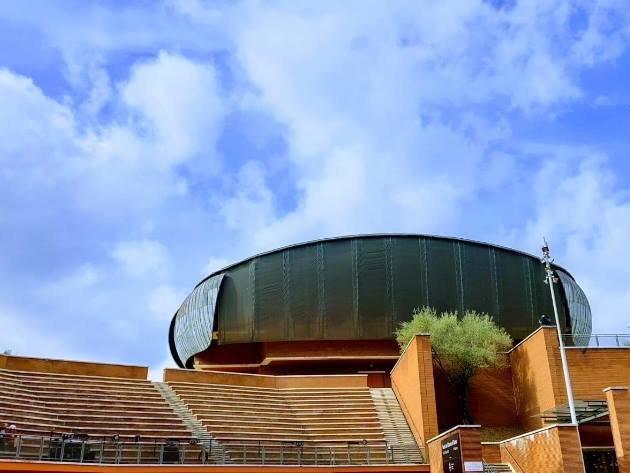
The location. The heart is the Auditorium Parco della Musica Ennio Morricone (Viale Pietro de Coubertin 30), with its screening rooms and with the red carpet set up along the avenue that leads to the Cavea, one of the longest in the world. All the spaces of the Auditorium are accessible to people with disabilities. The program then involves other places and cultural organizations of the city: over the years screenings have been hosted by the MAXXI, the Casa del Cinema in Villa Borghese, the Teatro Palladium, the Nuovo Cinema Aquila, Rebibbia prison, the Policlinico Gemelli, the shelter homes of the Lazio Region and a network of independent bookstores spread around the neighborhoods.
The exact dates, and why they changed in September
The dates of the 21st edition had been announced in February. Then, on September 4, 2026, the President of the Fondazione Cinema per Roma, Salvatore Nastasi, and the Artistic Director, Paola Malanga, announced that the Festa would open on Tuesday, October 13, with one extra day of programming. The stated reason is concrete and says a lot about the health of the event: the increase in the number of films submitted over the year and the requests that came from producers and distributors of independent cinema. Put differently, there were too many good films for the available space, and instead of cutting they lengthened.
For those organizing now the practical consequence is simple. If you have October 14 in mind as the first day, know that the opening night and the first red carpet fall the evening before. If you are coming to Rome just for it, Tuesday the 13th is the day to block off. If instead you are coming for the bulk of the program, the dense period remains the middle one, between Thursday and the following weekend, when the halls work from morning to night and the repeat screenings let you catch up on what you missed.
The opening film was already announced in July: Il rumore delle cose nuove by Paolo Genovese, presented in the Grand Public section during the opening ceremony, hosted by DJ and television and radio presenter Ema Stokholma. It is an ensemble film with Emanuela Fanelli, Claudia Pandolfi, Vittoria Puccini, Stefano Accorsi, Lino Musella, Edoardo Pesce and with the participation of Claudio Santamaria. It tells of three couples who don't know each other and who have in common the cage they have built around themselves, until an unexpected event forces them to put everything into question. It will be released in Italian theaters on November 12, 2026, distributed by 01 Distribution. This fact matters for whoever has to decide if they should spend an evening at the Festa: it means that on October 13 you see it almost a month ahead of the rest of the country, and with the director and cast in the theater.
The rest of the program comes later. The Foundation says so explicitly on its own page: the program for the 21st edition will be available in the first days of October and distributed through all of the festival's channels. Anyone planning in mid-September, then, is still working blind on the titles. It's not a communication failure, it's the normal way a festival works when it closes its selections at the end of summer: the call for film submissions closed on July 30, 2026, and the selection committee works until the last minute.
How the Festa Works for People Outside the Business
Here is the most common misunderstanding, and it's worth taking apart calmly. Many people think an international festival is an enclosure for journalists, producers and distributors, and that the public can at most watch the stars from behind a barrier. The Festa del Cinema di Roma doesn't work that way, and never has: the box office is open to anyone, the official screenings have seats on sale as usual, the meetings with filmmakers are designed for the audience and not for the press room, and part of the schedule costs nothing.
The ticket mechanism is what throws occasional visitors. Presale doesn't open in July like for a concert: it opens about a week before the opening, and the exact date is announced through the festival's official channels. With the opening on October 13, this means the right time to have your phone in hand falls around the first days of October, that is, more or less when the program comes out. The two things are linked and happen close together: first you find out what's on, then you rush to grab a seat.
A practical tip, because this is where the best screenings get lost: sign up for the Foundation's newsletter and follow the official social channels now, not in October. The announcement that the box office is opening goes out through them, and the difference between getting into the Sala Sinopoli for a much-awaited event and being left outside is measured in a few hours, not days. The box office stays open for the whole festival anyway, so even those who wake up late find something, but they are rarely the titles with the red carpet in front of them.
The pricing policy deserves a paragraph of its own, because it is one of the distinctive traits of the festival. The Foundation states a particular attention to price and the presence of many free-admission events. On top of this there is a really wide network of discounts, updated every year and published on the site: the list includes film trade associations like ANAC, ANCCI, ANEC Lazio, ARCI UCCA, FICE, FIC, FEDIC and FICC, but also city cultural institutions like the MAXXI, the Palazzo delle Esposizioni, the Galleria Borghese, the Romaeuropa Festival, the Teatro Olimpico, the Casa del Cinema, the Biblioteche di Roma with the Bibliocard, the MIC Card, the Roma Pass 48 and 72 hours, and then FAI, Feltrinelli and IBS, ACI, NABA, IED, the Accademia Nazionale di Santa Cecilia. The typical discount is 20 percent. For Santa Cecilia subscribers, for example, it is 10.
It's worth checking that page before buying, because almost all of us have at least one of those cards in our pocket without knowing it. If you have the Bibliocard because you borrow books in Trastevere, the MIC Card because you go to the civic museums, or the Roma Pass because you came from out of town: these are all cards that are worth a discount on a Festa ticket.
Accreditations: Who Can Ask for Them, and September 29 to Mark Down
If instead you work in the industry, or study cinema, things change. Accreditations for the 21st edition are reserved for press and media, film industry professionals, university students, and film culture associations and organizations. The deadline for the request is September 29, 2026. It's a hard date, it comes before the box office opens and before the program is published, and this is why every year someone misses it: people wait to know which films are on before deciding if it's worth it, and when the program comes out the window to get accredited has already closed.
The point that often gets missed concerns university students. You don't need to be enrolled in a strictly cinema course or have publications behind you: the category is explicitly among those that can be accredited. For someone studying in Rome, with classes two bus stops from Flaminio, it is probably the cheapest way in Italy to see 20 international films in 12 days. The precise rules, the required documents and the badge pickup procedures change from year to year and are published on the accreditation page of the official site: it's best to read them there, and it's best to do it before the end-of-September deadline.
A recommendation from someone who has seen quite a few people show up unprepared: accreditation is not a universal pass. It gives you access according to a system of priority and screening-room booking, which in Rome is traditionally more generous than at other festivals, but on the busiest days the gala screenings fill up all the same. Whoever has the badge and wants to see the famous actor's film still has to book in advance and show up early.
A Curiosity About Festa del Cinema di Roma 2026: The 21st Edition at the Auditorium
This event has changed its name three times in 20 years, and the name was never a marketing matter: each time it was a declaration of war or peace with the very idea of a festival.
In 2006 the first edition was called Cinema. Festa Internazionale di Roma. The noun chosen was Festa, with a capital letter, and the jury that awarded the main prize was a popular jury, chaired by Ettore Scola. The prize was called Marco Aurelio, after the equestrian statue on the Campidoglio, and it went to a Russian film, Izobrajaya Zhertvy by Kirill Serebrennikov. Rome was telling the film world: here the spectators decide, not the critics.
In 2008 the event changes skin and becomes the Festival Internazionale del Film di Roma. President Gian Luigi Rondi, then Paolo Ferrari. From 2012 to 2014 the artistic direction passes to Marco Müller, who comes from the Venice Film Festival and brings with him a much more competitive and much more market-oriented idea. These are the years of the Marc'Aurelio d'Oro, of the international juries chaired by James Gray and Jeff Nichols, of Matthew McConaughey awarded best actor for Dallas Buyers Club and of Scarlett Johansson awarded best actress for Her, in 2013. On paper it was the most ambitious festival Rome has ever had.
In 2015 it goes back, and the name returns to Festa del Cinema di Roma. Artistic director Antonio Monda, who stays until 2021 and builds the event around meetings with the public, around the great personalities invited to talk about themselves on stage, around an idea of cinema as conversation rather than as competition. In 2022 the direction passes to Paola Malanga, who reintroduces into the rules a true international competition, the Concorso Progressive Cinema, with a jury of professionals. Today's Festa lives inside this double nature: a competition recognized by FIAPF and, at the same time, a city event in which the public plays the leading part.
There is a second curiosity inside the first, and it is the place it occupies in the calendar. Rome comes after Venice, after Toronto, after San Sebastián, and for years this was described as a sentence: the best films would already have gone elsewhere. In practice the opposite has happened. Arriving in October means intercepting the titles that come out in Italian theaters between November and Christmas, and in fact at the Festa you see in preview the films that the following month you find at the cinema down the street. For the Roman spectator this is an enormous advantage, and it explains why the audience is made mostly of people from the city and not of festival tourists.
How to Get to the Auditorium, and How to Get Home at Midnight
The Auditorium is in the Flaminio neighborhood, between the Olympic Village and the Tiber, in an area that in the evening has no subway stop within easy reach. This is the single logistical fact that ruins the most evenings, because nobody thinks about it until they find themselves outside the Sala Santa Cecilia at 23:30 with the desire to get home fast.
The surface lines indicated by the Foundation are these: the 2, which connects Piazzale Flaminio to Piazza Mancini with a stop at Piazza Apollodoro, running on weekdays and holidays. The 910, from Piazza Indipendenza to Piazza Mancini. The 53, from Piazza Mancini to Largo Chigi. The 982, from Viale XVII Olimpiade to the Quattro Venti station. The 168, from Largo Maresciallo Diaz to Tiburtina station, weekdays. The 223, from Termini to La Giustiniana station, weekdays. The 2 is the one almost everyone uses: you take it below Piazza del Popolo, at the Flaminio station of Metro A, and in a few minutes it drops you a short walk from the entrance.
The trick for long evenings is another, and it appears in no brochure: walk back toward the center over the Ponte della Musica, the white pedestrian bridge that connects Flaminio to Piazzale Maresciallo Diaz, on the other side of the river. It is a 10-minute walk, the bridge is lit, and on the other bank you find the lines that go to Prati and the Vatican. Alternatively, still on foot, you go down toward Milvian Bridge in a good quarter of an hour, and there in the evening the city is alive until late.
Those arriving by car must reckon with the Auditorium's underground parking, which fills up on gala evenings, and with the hunt for a space along Viale de Coubertin and Viale Tiziano, which on the same evenings is a civil war. If you can, leave the car at Piazza Mancini or at the park-and-ride and do the last stretch on the 2. If you come by taxi, the address to give is Viale Pietro de Coubertin 30, but on red carpet evenings traffic around the Cavea is altered and the driver drops you farther away than expected: allow 10 minutes of margin.
One last note on accessibility, because the Foundation states it in black and white and it's worth repeating: all the spaces of the Auditorium are accessible to people with disabilities. The halls, the foyers, the outdoor routes. For the dedicated spots in the hall it is still best to mention it when buying the ticket or at the physical box office, so they assign you the right seats without last-minute scrambling.
Something Nobody Tells You About Festa del Cinema di Roma 2026: The 21st Edition at the Auditorium
The repeat screenings. Nobody talks about them, everyone chases the official screening with the red carpet, and meanwhile the smartest way to experience the Festa is almost always the second showing.
It works like this: the films in the program have their official screening, the one with the director, the cast, the photographers and the room full of accreditations, and then they have one or more repeat screenings in the following days, in smaller rooms and at less contested times. The official screening is a social event, and like all social events it is noisy: people coming in late, phones raised to film the actor on stage, applause on cue, introductions that eat 20 minutes. The repeat is a normal cinema, with the same film, at half the crowding, and often at a lower price. Those who go to the Festa to see the films, and not to see who is watching the films, learn quickly to build their day around the repeats.
There is also an extreme version of this advice, reserved for the last day. In recent editions the closing day has hosted a broad program of repeats of the winning films, right after the awards ceremony: in 2025, for example, the repeats of the awarded titles were scheduled on the last day, with screenings at the Teatro Olimpico too. If you have only one day to devote to the Festa and don't want to gamble on it blind, the final Sunday is statistically the day when you see the best films of the whole edition, because they have already been selected by a jury in your place.
Second thing nobody will tell you: the Incontri (meetings). Every year a substantial part of the program is made of conversations with directors, actors, screenwriters, often in large rooms and often at a symbolic price or free. These are the events in which a person who has made film history talks for an hour and a half without the filter of a press office, answers the audience's questions and tells things they don't say in interviews. They cost less than a screening and are worth twice as much, and in most cases they sell out last, because the occasional public only looks at the titles of the films.
Third, and more prosaic: food. The Auditorium has bars and internal catering, but on Festa days the lines at the counter between one screening and the next are as long as those to get into the room. Those with three films scheduled in a day bring something to eat, or leave the complex and walk five minutes toward Viale Tiziano and the streets of the Olympic Village, where there are neighborhood bars with normal prices and no lines.
The Auditorium's Halls, and How to Choose Where to Sit
The complex designed by Renzo Piano has a shape that everyone in Rome recognizes: three large lead-clad volumes arranged around an open-air cavea, and below them a level of foyers, exhibition spaces and services. During the excavation of the foundations the remains of an ancient settlement emerged, which instead of being removed were preserved and made visitable in an archaeological area set among the halls: it is one of the few Roman building sites where archaeology did not stop the work but modified it. During the Festa that area stays there, a few meters from the red carpet, and almost nobody looks at it.
Of the halls, the largest is the Sala Santa Cecilia, the one designed for the great symphony orchestra: on Festa days it hosts the events with the largest audience and the gala screenings. The Sala Sinopoli is the middle hall, and for cinema it is probably the best in the complex in terms of the ratio between size and quality. The Sala Petrassi is the most intimate of the three, and has a precise tradition within the event: in 2025 the awards ceremony of the 20th edition took place right there, on October 25 at 17:00. Then there are the Teatro Studio, the exhibition spaces and the smaller rooms that during the Festa are converted to screenings or meetings.
A warning that applies to all of them: these halls were born for music, not for cinema. The acoustics are extraordinary, the slope of the rows and the distance from the screen are designed for a stage, not for a sheet. Translated into practical advice, in the large halls avoid the first side rows, which for a concert are excellent and for a film are torture, and aim for the center of the central section or the first rows of the gallery. If the ticket is numbered, choose it calmly on the map. If it isn't, arrive 20 minutes early and let the others settle on the sides.
Outside the halls, the lower level houses the bookstore, the information desks and the ticket pickup points. During the Festa days the space changes face: the accreditation desks appear, the partner displays, the points where photographers pick up their bibs. It's a good place to understand how the machine works, if that interests you, and to realize how many people work behind an event of this size.
My Advice for Visiting Festa del Cinema di Roma 2026, the 21st Edition at the Auditorium
Don't build your day around the stars. Build it around a section.
It's worth explaining, because it's the most useful advice for anyone coming to the Festa for the first time. The program is organized in sections with precise criteria: the Progressive Cinema Competition gathers the films competing before the international jury, Freestyle holds together the more irregular works and the formats that traditional cinema struggles to contain, Grand Public is the section for films aimed at a wide audience, where the opening film was placed in 2026, and then there are the Special Screenings, the Restorations, the Tributes, the Retrospectives and the Meetings. Whoever picks films one by one, based on the actor's name on the poster, ends up seeing five titles that have nothing in common and goes home with the feeling of having channel-surfed. Whoever picks a section and follows it for two or three days understands what the selection committee was thinking, and that is the real content of a festival.
The second part of the advice is about pace. Three films a day is the maximum sustainable for a normal person, and I'm already exaggerating. Between one film and the next you need at least 40 minutes: to get out of the hall, wait in the bathroom line, drink something, cross the foyer again and get back in line. If you plan two back-to-back screenings, with a 20-minute gap, you'll miss the second or watch it standing at the back of the hall. Better two films and a meeting, with a walk in between.
Third part: the mornings. The morning screenings, especially on weekdays, are the best-kept secret of the festival. Half-empty halls, no lines, an audience made up of people who are there for the film and not for the event, tickets you can find even at the last minute. If you can take a free morning between October 14 and 23, that's where the Festa is at its best as a cinema experience.
Fourth, and last: bring a sweatshirt. The Auditorium keeps the halls at concert temperature and the foyers are often cooler than the Roman October would suggest. Whoever spends six hours inside the complex comes out with a stiff neck, and not because of the films.
The Red Carpet, the Cavea and the Barrier Game
The Festa's red carpet runs along the avenue that leads to the Cavea, and it's one of the longest in the world. This length isn't bragging, it's an urban staging choice: the route lets the public walk alongside the guests for dozens of meters, instead of squeezing into a funnel in front of a door as happens at most festivals. It's also why in Rome the photos of the actors come out different: there's air around, there's the city in the background, and there's a crowd that isn't held 50 meters away.
To see the guests go by you don't need the screening ticket. You need to arrive early, work out which side the cars come from and pick the right side of the barriers. The red carpet times are published day by day on the festival's channels, usually with the details of the expected names and the time: whoever wants to see someone in particular checks that list the same morning, because last-minute changes are the norm. On full days there are two passages, one in the early afternoon and one in the evening, and the evening one is always the most crowded.
The Cavea, the large open-air amphitheater between the three volumes, hosts concerts and series in the summer like the Roma Summer Fest. In October it's the backdrop of the red carpet and the space where people spill out between one screening and the next. Climbing the highest steps in the late afternoon, with the light dropping behind the rooftops of Flaminio, is the best thing you can do at the Auditorium without paying for a ticket.
A recommendation from someone who has seen too many evenings end badly: don't push. The barriers of a red carpet are the rudest environment I know, and security has the right to remove anyone who causes problems. If you're with children, look for the initial stretches of the route, the ones close to where the cars arrive, where the crowd is less dense and the view is still good.
Another Well-Known Fact, Yet Rarely Mentioned
The Festa del Cinema doesn't stay at the Auditorium. It goes out, and goes to places where cinema usually doesn't reach.
Just scroll through the list of venues from past editions, published by the Foundation, to see it. Alongside the Auditorium, the MAXXI, the Casa del Cinema and the halls of the city circuit, the Carcere di Rebibbia Nuovo Complesso and the Casa Circondariale Femminile di Rebibbia have appeared for years, as have the Fondazione Policlinico Universitario Agostino Gemelli together with MediCinema Italia, the Regione Lazio's safe houses, the Teatro di Tor Bella Monaca, the Teatro Palladium in Garbatella, the Casa di Reclusione di Civitavecchia. In 2022 the festival also involved a network of independent bookstores scattered across the neighborhoods, from Ottimomassimo to Tomo Libreria Caffè, from Acilia Libri to the Libreria Fahrenheit.
This part of the program doesn't make the news, doesn't produce photographs with the stars and almost never appears in the recaps you read the next day. Yet it is the reason the festival has the right to call itself a Festa of a city and not of an auditorium. A film screened in the women's section of Rebibbia, with the director there to answer questions, is a cultural event in every respect, and for 20 years it has happened every October a few kilometers from the red carpet.
The historic presence of Alice nella città, the autonomous and parallel section for young people, which has accompanied the festival since its first years, should be read within the same logic. In the minutes of the old editions you can read about awards given by juries made up of children and teenagers, divided by age group, with dozens of kids selected across the whole country. In 2009, for example, the two juries were made up of 29 kids between eight and 13 years old and 35 between 14 and 17. Part of the audience that fills the Auditorium halls today began that way, as kids, voting on films in a jury of their peers.
Then there is the industry side, just as rarely mentioned. For years the festival hosted The Business Street and New Cinema Network, that is, the market and the project factory, held in the hotels around Via Veneto and in the halls of the center. In 2015 and 2016 the first two editions of the MIA, the Mercato Internazionale dell'Audiovisivo, took place, which for the first time in Italy brought together cinema, TV series, documentaries and video games. That part now has a life of its own and its own calendar, but it was born here, and it explains why so many professionals who have no intention of standing in line for a red carpet are around Rome every October.
The Right Photo to Take at Festa del Cinema di Roma 2026, the 21st Edition at the Auditorium
The photo everyone tries to take is the actor on the red carpet, with the phone held up over the head of the person in front. It always comes out badly: backlit, heads, a distant dot that could be anyone. Forget it.
The right photo, at the Festa del Cinema, is from the top of the Cavea steps, at sunset, with the red carpet cutting diagonally across the frame and the three lead shells closing the scene. You go up from the side opposite the main entrance, sit on the highest steps and wait for the light to drop. In October, in Rome, the good moment falls between six and six 30 in the evening: the sky turns orange behind Monte Mario, the lights along the route come on, the crowd below starts to pack together and you can see the whole design of the event, the carpet, the people, the photographers lined up, the architecture. It's a photograph that tells about an event, not a face.
The second photo I recommend is nighttime and more intimate: the profile of the Auditorium's volumes seen from Ponte della Musica, with the river in the foreground. 10 minutes on foot from the entrance, no crowd, and a perspective that almost none of the Festa's spectators bother to look for. You need to rest the phone on the parapet to keep the long exposure still, because the bridge vibrates when someone walks across.
The third, for those who feel like playing, is inside the complex: the reflection of the lights on the lead cladding of the three volumes, shot up close on a damp evening. Over time the lead has taken on an irregular patina, gray and brown, and with the night lighting it gives a texture you can't see in daytime photos. It's not a postcard, it's a detail, and it works much better than a blurry red carpet.
A rule of good manners, which always applies and here more than anywhere: in the halls you don't photograph or film during the screenings. The screen is covered by rights, the staff steps in, and above all you ruin the viewing for those who paid for a ticket to watch a film and not your phone screen. Photos are for before, after and outside.
The Neighborhood Around: What to Do Between Screenings
Flaminio, in October, is one of the most pleasant neighborhoods in Rome. It doesn't have the siege of the historic center, it has wide sidewalks, plane trees, and a concentration of culture that few other parts of the city can match. If you have a three-hour gap between two films, don't stay wandering around the foyers.
Five minutes on foot from the Auditorium, on Via Guido Reni, is the MAXXI, the national museum of 21st-century arts designed by Zaha Hadid, which over the years has regularly hosted Festa screenings and meetings and remains one of the most interesting visits in contemporary Rome. A little farther on opens the Olympic Village, the neighborhood built for the 1960 Games, with its buildings on pilotis and its gardens: a 20-minute walk through a piece of Italian architectural history that Romans cross by car without looking at it.
Toward the river, the Ponte della Musica takes you to the other bank, toward the Foro Italico and the Stadio Olimpico. Toward the south, walking along Viale Tiziano, you reach Piazza Apollodoro and from there in about 10 minutes Piazzale Flaminio, at the gates of Villa Borghese and Piazza del Popolo. Inside Villa Borghese, the Casa del Cinema is the Foundation's permanent film outpost: during the Festa it hosts events, and for the rest of the year it carries on series and tributes that are worth the trip even when the Auditorium is closed.
For eating, the rule is to move away. The places immediately attached to the complex work on an audience that has 40 minutes and no alternative, and behave accordingly. Just walk back up toward the Olympic Village or down toward Viale del Vignola to find neighborhood bars, bakeries, trattorias with residential-area prices. If you have only half an hour, a tramezzino and a coffee in any bar on Via Guido Reni cost a third of what you'll pay in the foyer, and the line is shorter.
One last idea, for those coming from out of town with a whole day. Morning at the MAXXI, light lunch in the Olympic Village, afternoon and evening at the Festa: you cover everything on foot, you don't take any transport, and you see a piece of Rome that no standard tourist itinerary includes. In a city where getting around eats up hours, a program that rests on five minutes of walking is a rare luxury.
Some Important Events That Took Place Here in History
20 years of editions have left behind an archive that the Foundation publishes in full, edition by edition, with venues, juries and prizes. It's worth scrolling through, because it tells not only the history of an event, but the history of how Rome tried to take its place in world cinema.
2006 is year zero. The first edition, from October 13 to 21, is called Cinema. Festa Internazionale di Roma and is produced by the Fondazione Musica per Roma, with Goffredo Bettini as president and a collegial artistic direction made up of Maria Teresa Cavina, Piera Detassis, Gianluca Giannelli, Giorgio Gosetti and Mario Sesti. The jury is popular, chaired by Ettore Scola, and awards the Premio Marco Aurelio for best film to Izobrajaya Zhertvy by Kirill Serebrennikov. Also awarded are Ariane Ascaride for Le voyage en Arménie and Giorgio Colangeli for L'aria salata, while This Is England by Shane Meadows receives the special jury prize. The venues of the first edition already include the Auditorium, the Villaggio del Cinema, the Casa del Cinema, the Teatro di Tor Bella Monaca, Cinecittà and a long string of outlying theaters, from Ostia to Frascati to Guidonia.
In 2008 comes the change of name and approach: Festival Internazionale del Film di Roma, president Gian Luigi Rondi, artistic direction coordinated by Piera Detassis. That year the Premio Marc'Aurelio d'Oro for lifetime achievement goes to the Actors Studio, and Al Pacino goes up on stage to collect it. A second lifetime achievement award goes to Gina Lollobrigida. The following year, in 2009, the international jury is chaired by Milos Forman and includes Gabriele Muccino, Gae Aulenti, Jean-Loup Dabadie, Pavel Lungin and Senta Berger. Helen Mirren is awarded best actress for The Last Station, Sergio Castellitto best actor for Alza la testa, and the lifetime achievement award goes to Meryl Streep, the actress with the most Oscar nominations in the history of the Academy. The same year the public awards L'uomo che verrà by Giorgio Diritti, a film that had gone through New Cinema Network, the event's project workshop, three years earlier.
2011 is the edition of the most singular jury ever: it is chaired by Ennio Morricone, and its members are Susanne Bier, Roberto Bolle, Carmen Chaplin, David Puttnam, Pierre Thoretton and Debra Winger. Un cuento chino by Sebastián Borensztein wins, and also takes home the audience award. That year the Marc'Aurelio for best actor goes to Richard Gere. The name of Ennio Morricone, today, is the one the Auditorium carries in its official name: a circle that closes.
Between 2012 and 2014 the artistic direction is Marco Müller's, and the stamp is clearly competitive. In 2012 the jury chaired by Jeff Nichols awards Marfa Girl by Larry Clark and gives Isabella Ferrari the award for best female performance for E la chiamano estate, while Alì ha gli occhi azzurri by Claudio Giovannesi receives the special jury prize and the one for best first or second work. In 2013, with the jury chaired by James Gray, the Marc'Aurelio d'Oro goes to Tir by Alberto Fasulo. Matthew McConaughey is awarded best male performer for Dallas Buyers Club and Scarlett Johansson best female performer for Her. Dallas Buyers Club also wins the audience award. They are, in all likelihood, the two years in which the event had its widest international audience.
From 2015 it goes back to the name Festa del Cinema and to the artistic direction of Antonio Monda, who stays in charge until 2021 with Richard Peña, Giovanna Fulvi, Alberto Crespi, Francesco Zippel and Valerio Carocci on the selection committee. These are the years of the Audience Award as the central recognition, won among others by Captain Fantastic by Matt Ross in 2016, by Borg McEnroe in 2017, by Il vizio della speranza by Edoardo De Angelis in 2018, by Santa subito by Alessandro Piva in 2019, by Été 85 by François Ozon in 2020 and by Mediterráneo by Marcel Barrena in 2021. The 2020 edition, it should be remembered, took place as scheduled in the middle of the pandemic, from October 15 to 25, with limited-capacity rooms and the audience in masks: one of the few major Italian cultural events not to have skipped that year.
2022 marks the arrival of Paola Malanga as artistic director and the introduction into the rules of an international competition, the Concorso Progressive Cinema. The first jury includes Marjane Satrapi, Louis Garrel, Juho Kuosmanen, Pietro Marcello and Gabrielle Tana, and awards best film to Janvāris by Viesturs Kairišs. In those years the awards named for Monica Vitti for best actress and for Vittorio Gassman for best actor are born, along with the award for best comedy named for Ugo Tognazzi, given in 2022 by a jury chaired by Carlo Verdone with Marisa Paredes and Teresa Mannino.
The 20th edition, that of 2025, closed on October 25 with a ceremony in the Sala Petrassi. The jury of the Concorso Progressive Cinema, chaired by Paola Cortellesi, awarded the prize for best film to Left-Handed Girl by Shih-Ching Tsou and the Grand Jury Prize to Nino by Pauline Loquès. The award for best director went to Wang Tong, the one for screenplay to Alireza Khatami, the Premio Monica Vitti to Jasmine Trinca for Gli occhi degli altri and the Premio Vittorio Gassman to Anson Boon for Good Boy, with a special prize to the cast of 40 secondi. The award for best first work went to Tienimi presente by Alberto Palmiero. For the first time a prize for best documentary was also awarded, which went to Cuba & Alaska by Yegor Troyanovsky. The audience award chose Roberto Rossellini, più di una vita. During the same edition the Festa presented lifetime achievement awards to Richard Linklater and Jafar Panahi, the Master of Film to Edgar Reitz, the Progressive Career award to Nia DaCosta and the Industry Lifetime Achievement Award to Lord David Puttnam.
Two recent losses have touched the event closely. On March 6, 2026 Giorgio Gosetti died, a journalist and film critic, festival director and teacher: he was among the founders of the Festa del Cinema di Roma, of which between 2006 and 2008 he was General Director and Artistic Director, and from 2014 to 2022 he directed the Casa del Cinema. The name of Ennio Morricone, jury president in 2011 who died in 2020, has instead entered the official name of the Auditorium. They are two different ways in which an event carries its own history with it.
One last piece of news useful for framing 2026: since May 28 it has been announced that Banca Ifis will be Main Partner of the Festa for the next three years, starting precisely with this 21st edition, after the years of BNL BNP Paribas. For the spectator little changes, for the event quite a lot changes: it means three years of programming with a defined financial base, which in Italy, for a cultural event, is not at all a given.
Who Has Passed Through Festa del Cinema di Roma 2026: The 21st Edition at the Auditorium
The most honest way to answer is to look at the archive of past editions, which the Foundation publishes in full. The Auditorium's red carpet, in 20 years, has seen hundreds of actors, directors and figures from the worlds of cinema, art and culture parade across it. Only the names that result from the event's official documents appear here, because there are many legends circulating about the rest.
Among the career awards, the festival honored Sean Connery, Sophia Loren and Al Pacino in its first seasons, Gina Lollobrigida in 2008, Meryl Streep in 2009. In 2011 the Marc'Aurelio for actor went to Richard Gere. In 2025 the career awards went to Richard Linklater and Jafar Panahi, the Master of Film to Edgar Reitz, the Progressive Career Award to Nia DaCosta, the Industry Lifetime Achievement Award to Lord David Puttnam, while the Regione Lazio gave the Lazio Terra di Cinema award to Can Yaman.
The juries tell yet another story. Ettore Scola chaired the popular jury of the very first edition, in 2006. Milos Forman chaired the one in 2009, with Gae Aulenti, Senta Berger, Gabriele Muccino, Jean-Loup Dabadie and Pavel Lungin. Sergio Castellitto led the 2010 jury, Ennio Morricone the 2011 one, together with Roberto Bolle, Susanne Bier, David Puttnam, Carmen Chaplin, Debra Winger and Pierre Thoretton. Then Jeff Nichols in 2012, with Timur Bekmambetov, Valentina Cervi and Leila Hatami. James Gray in 2013, with Luca Guadagnino, Verónica Chen, Noémie Lvovsky, Amir Naderi, Aleksei Guskov and Zhang Yuan. Larry Clark at the head of the CinemaXXI jury, after having been awarded as a director the year before. In 2022 the jury of the Progressive Cinema Competition was made up of Marjane Satrapi, Louis Garrel, Juho Kuosmanen, Pietro Marcello and Gabrielle Tana, while Carlo Verdone chaired the one for the comedy prize with Marisa Paredes and Teresa Mannino. In 2025 the presidency went to Paola Cortellesi, with Teemu Nikki, William Oldroyd, Brian Selznick and Nadia Tereszkiewicz.
Among the actors awarded for their performances are Helen Mirren and Sergio Castellitto in 2009, Toni Servillo in 2010, Isabella Ferrari in 2012, Matthew McConaughey and Scarlett Johansson in 2013, Jasmine Trinca and Anson Boon in 2025. Kiyoshi Kurosawa won the award for best director in 2013. Over the years Matthew Modine, Alice Rohrwacher, Stefania Rocca, Valerio Mastandrea, Cristiana Capotondi, Sydney Sibilia, Jonathan Nossiter, Francesca Comencini, Roberto Faenza, Julie Bertuccelli, Santiago Mitre, Barbara Ronchi and Alexander Nanau have also served on the juries.
The 2025 edition brought to the red carpet, among others, the cast of No Place Like Rome with Stephen Dorff, Cristiana Capotondi, Radha Mitchell and Sebastiano Pigazzi, and had on the program California Schemin' directed by James McAvoy, which received a special mention for its two young performers.
For 2026, at the time of writing, the only official name is that of the opening night: Paolo Genovese with the cast of his Il rumore delle cose nuove, that is, Emanuela Fanelli, Claudia Pandolfi, Vittoria Puccini, Stefano Accorsi, Lino Musella, Edoardo Pesce and Claudio Santamaria, with the ceremony hosted by Ema Stokholma. Everything else will arrive with the presentation press conference and with the program, in the first days of October. Be wary, between now and then, of any guest list circulating online: dozens go around every year, and every year almost all of them are made up.
Frequently Asked Questions About the Festa del Cinema 2026
When exactly does the 21st edition take place?
From October 13 to 25, 2026. The opening was planned for the 14th, then on September 4 the Fondazione Cinema per Roma added a day of programming and moved the opening up to Tuesday the 13th. The closing remains Sunday the 25th.
Do I need accreditation to get in?
No. Most of the events are open to the public with a ticket, and every year a share of the program is free admission. Accreditations are reserved for press and media, industry professionals, university students and film culture associations.
When do ticket sales open?
About a week before the opening, so presumably in the first days of October. The exact date is announced on the festival's official channels and the box office then stays open for the whole length of the Festa.
How much does a ticket cost?
Prices are published together with the program. The Foundation states a policy of low prices and the presence of many free events. There is also a very long list of discounts, with reductions that generally reach 20 percent, valid for association members and holders of the Bibliocard, MIC Card, Roma Pass and several other cultural cards.
By when do I request accreditation?
By September 29, 2026, according to what the Foundation indicates on the dedicated page. It's a deadline before the publication of the program.
Where does the festival take place?
The heart is the Auditorium Parco della Musica Ennio Morricone, at Viale Pietro de Coubertin 30, with the red carpet along the avenue that leads to the Cavea. Other screenings and events take place in places and cultural institutions of the city, which change from year to year and are listed in the program.
How do I get there by public transit?
With the buses indicated by the Foundation: the 2 from Piazzale Flaminio to Piazza Mancini with a stop at Piazza Apollodoro, the 910 from Piazza Indipendenza, the 53 from Largo Chigi, and then the 982, 168 and 223. There is no subway stop in front of the entrance: the nearest useful one is Flaminio on Line A, from which you continue with the 2 or on foot in about half an hour.
What is the 2026 opening film?
Il rumore delle cose nuove by Paolo Genovese, presented in the Grand Public section. It will be released in Italian theaters on November 12, 2026, so at the Festa you see it almost a month ahead.
Is the Festa suitable for children?
Yes, and it always has been. The autonomous, parallel section Alice nella città is dedicated precisely to young people, with prizes awarded by juries of children and teenagers divided by age group. The detailed program comes out together with the general one.
Are the spaces accessible to people with disabilities?
Yes. The Foundation states that all the spaces of the Auditorium are accessible. For the dedicated seats in the hall it's best to mention the need when buying or at the box office.
Can you see the stars without buying a ticket?
Yes, the passage on the red carpet can be followed from behind the barriers along the avenue, without an entry ticket. The times are published day by day, and position matters more than how early you arrive.
What can you see on the last day?
Traditionally the awards ceremony and a broad program of repeats of the winning films. For those with only one day available it's the safest choice.
What to Expect from This 21st Edition
A festival is judged by its films, and we don't know those yet. But we already have some clues about the direction of the event, and in mid-September it's worth lining them up.
The first clue is the lengthening of the calendar. An extra day isn't added on a whim: the Foundation declared that the films submitted have increased and that the requests of independent film producers and distributors were too many for the available space. It means a wider selection, more small titles, more debuts. For the curious spectator it's good news, because the films that surprise at the Festa are almost never the red carpet ones.
The second clue is the selection committee that works alongside Paola Malanga: Giovanna Fulvi, an expert in Asian cinema and programmer at the Toronto festival. Enrico Magrelli, critic and former director of the Settimana internazionale della critica. Emanuela Martini, former director of the Torino Film Festival. Alberto Pezzotta, critic and film historian, formerly on the selection committee of the Venice Film Festival. Alberto Libera, director of the magazine Lo specchio scuro and of the Brianza Corto Film Festival. They are profiles that explain well why in recent years the Roman program has fished a lot in Asia, a lot in documentary and a lot in revisited genre cinema.
The third clue is the opening film. Putting at the opening an Italian ensemble comedy by Paolo Genovese, in the Grand Public section and a month before its theatrical release, says that the Festa continues to claim its popular nature. It is not a choice for a festival of cinephiles only, and it is consistent with 20 years of the event's history.
The fourth, less visible but decisive, is economic stability: a new Main Partner for the next three years, announced in May, after a long cycle with the previous sponsor. In the world of Italian festivals, continuity of support is almost always the difference between an event that grows and one that survives.
If I have to make an honest prediction, I say this: the 21st edition will be more crowded than the previous ones, the tickets for the gala screenings will fly away in the first hours, and the best part of the program will remain the one nobody talks about, namely the afternoon repeats and the morning screenings on weekdays. Whoever organizes now still has all the time to play it well.
The Final Advice on the Festa del Cinema di Roma 2026
This event has changed its name three times, has passed between six presidents and five different artistic directions, has grown, has been scaled back, and has been given up for dead at least twice by those who compared it with Venice. It has survived everything for one reason alone, which those who attend know well: in Rome the public really does go into the theater. It is not a festival you look at from outside, it is an event you consume inside, and you only understand this by buying a ticket and sitting down among the others.
So, if I can leave you with three things to do in the coming days, they are these. First: mark September 29 on the calendar, if you fall into one of the categories that can ask for accreditation, and don't wait to know the titles to decide. Second: in the first days of October, when the program and the box office come out, devote a serious half hour to the choice, with the program open in front of you, and book the meetings right away as well as the films, because they are what you'll remember in 10 years. Third: take at least one weekday morning. A half-empty room at 11:00 in the morning, a film nobody knows, the director waiting outside to hear what people think of it: this is the Festa del Cinema, not the red carpet at 20:00.
And then, when you come out, don't take the bus right away. Take a few steps to the bridge, look at the river and the three lit lead shells behind you, and let the film settle. Rome in October, in the evening, is at its best temperature, and Flaminio at 23:00 is one of the most civilized places in the city. It's worth half the ticket.
Article written by the editorial team of TourLeaderPro, contact them for Private, Corporate and V.I.P. Tours and Experiences.
Planning a trip to Rome in the fall? The English-language guides for organizing your days in the city, understanding distances and choosing what is really worth seeing are on ItalyPlanner.com.