Vatican Gardens
In short. The Vatican Gardens cover 23 hectares of Vatican City, a little more than half of the entire state's area (0.23 square kilometers out of 0.44).
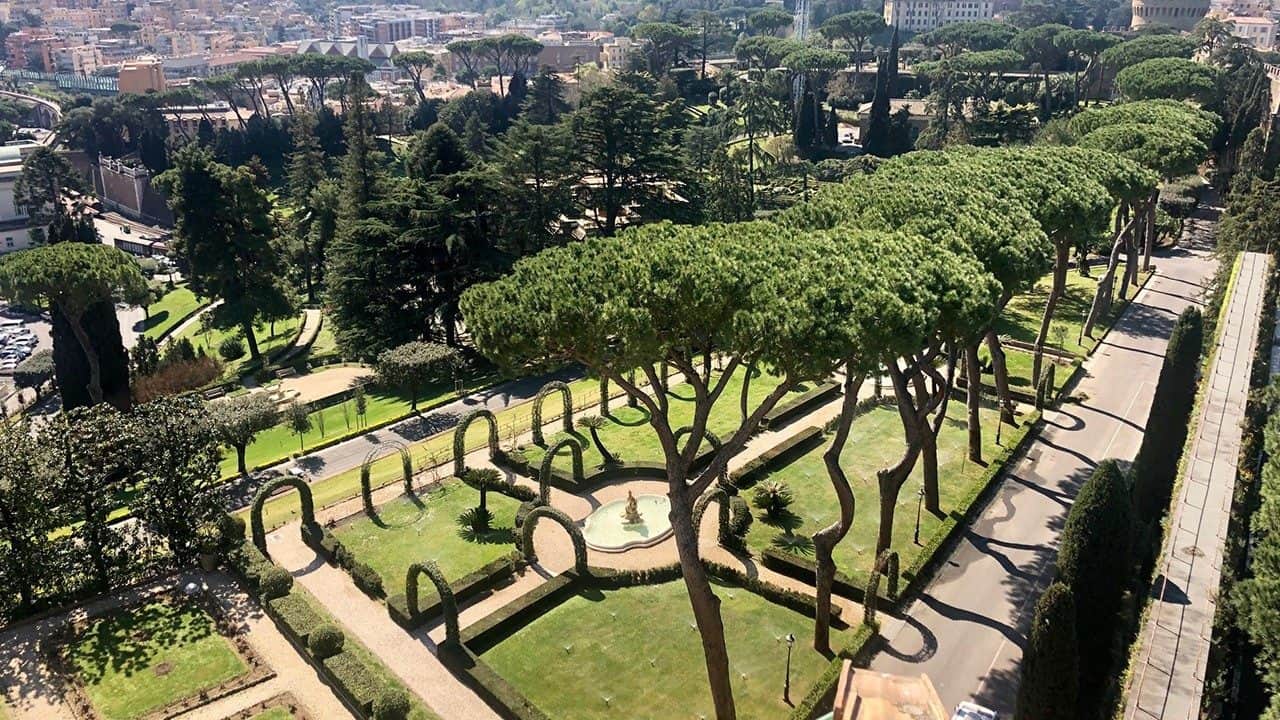
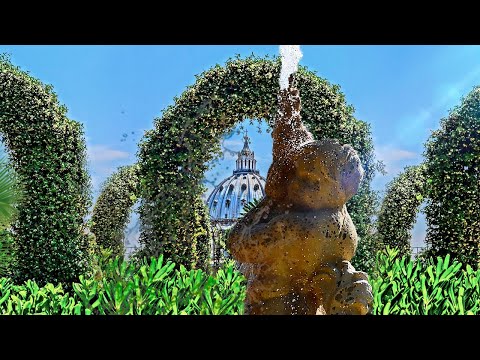
The Vatican Gardens cover 23 hectares of Vatican City, a little more than half of the entire state's area (0.23 square kilometers out of 0.44). They can only be visited on the official Vatican Museums tours: the guided walking tour of about two hours, the open bus tour with audio guide (full ticket €37.00, reduced €23.00, lasting about 45 minutes), and, on Saturdays, the full train itinerary to Castel Gandolfo (full ticket €43.00, reduced €38.00). All the tickets also include same-day entry to the Vatican Museums and the Sistine Chapel, and they can only be booked through the Museums' official online ticket office, tickets.museivaticani.va. No other channel sells access to the gardens. Tours run Monday to Saturday according to the Vatican calendar, departing from the entrance to the Vatican Museums on Viale Vaticano. To get there, take metro line A (stops Ottaviano or Cipro), bus 49 to the square in front of the Museums, tram 19 to Piazza Risorgimento, or buses 40 and 64 from Termini, getting off close to St. Peter's. You need an identity document and appropriate clothing, as for sacred areas.
This guide is part of Estate Romana's Vatican pages. The general overview of the state, with its borders, entrances and institutional facts, is in the entry on Vatican City.

What the Vatican Gardens Are
Anyone who imagines a public park with its gates open will be caught off guard. The Vatican Gardens are the private garden of a head of state, tended by professional gardeners employed by the Governorate, and at the same time the green district where the world's smallest state has concentrated almost all of its services. Within the 23 hectares, you'll find the Governorate Palace with its offices, the Tribunal, the management of Vatican Radio, the railway station, the heliport, the Ethiopian College, the building of the former Specola, and the Mater Ecclesiae monastery. The Vatican Museums separate the gardens from the northern part of the state, the area of economic services and the Apostolic Palaces. To the south and west, the city walls mark the border with Rome, and from the highest paths on the hill you can see the city all the way to the Castelli Romani.
Visitors pass through three different ways of understanding the garden in sequence: a woodland, a vegetable garden, and two kilometers of water history, channeled and sculpted. They do this while walking beside buildings that are fully active: the Floreria van passing by, gendarmes on bicycles, the Radio technicians. In our view, this coexistence of official representation and everyday life is the most instructive part of the entire visit. No other monumental garden in Rome is also the working courtyard of a sovereign state.
How to Really Visit the Vatican Gardens
Let me clear up the most common misunderstanding first: you can never enter the Vatican Gardens on your own, in any season. Access is only possible on a guided visit, with three official formats, and places are limited. In high season, it's best to book several weeks ahead.
The Guided Walking Tour of the Vatican Gardens
The classic option: about two hours in a group with a Vatican Museums guide, along a route that covers the three garden styles, the monumental fountains, the Lourdes Grotto, the Casina di Pio IV, and the viewpoints over the dome. You'll walk quite a bit, partly on gravel and on gentle but continuous slopes. The Vatican hill is still a hill, and comfortable shoes matter more than a hat. The ticket also includes free access to the Vatican Museums on the same day. For the price list of this option, it's best to contact the official ticket office, because rates vary by type and booking fees. The prices given at the top for the open bus and train come from the Museums' official information sheets.
The Vatican Gardens Open Bus Tour
This panoramic tour on an open, eco-friendly vehicle lasts about 45 minutes and costs €37.00 (reduced €23.00), with an audio guide in seven languages: Italian, English, Spanish, German, French, Russian, and Portuguese. It's the right choice for those who walk little or have tight schedules, with some specific warnings from the official rules: children under 6 are not allowed, it is not accessible to people in wheelchairs, the seatbelt is mandatory, and you may not get off the vehicle during the route. The tour goes ahead even in bad weather, so keep that in mind if you book in winter. The ticket includes free access to the Museums and the Sistine Chapel, valid only on the day of issue.
Saturday Train: From the Vatican Gardens to Castel Gandolfo
The richest option is the Saturday full day, with the outbound train at 11:00 and the return train from Castel Gandolfo at 17:18: reserved entrance to the Museums with audio guide, a walk through the gardens, a ride on a dedicated electric train from the Vatican City railway station to Castel Gandolfo, a shuttle to the Pontifical Villas and a tour of the Giardino Barberini with audio guide, then the train back. It costs 43,00 euro (reduced 38,00), with a smart family formula: parents pay the full price, the first child pays the reduced price, and from the second child on it's free, as are children aged 0 to 5. Anyone who wants to learn more about the destination will find profiles of Castel Gandolfo and Albano Laziale on this site. For me, it's the best train purchase possible in Italy: you leave from the only station in the world built for a single distinguished passenger.
Where and how to book the visit to the Vatican Gardens
One channel only: the official online ticket office of the Vatican Museums, tickets.museivaticani.va, also reachable from museivaticani.va. Tickets for the garden tours are non-refundable, and spots run out fast during the spring holidays and in autumn. Be wary of resellers who promise free entry to the gardens: that product doesn't exist, and whatever you buy elsewhere is always a resale of the same official visit, usually with a markup. For direct information, the Museums list the email musei@scv.va and the numbers +39 06 69883145 and +39 06 69884676.

The three garden styles inside the Vatican Gardens
The Vatican Gardens are a living manual of landscape history: in less than a kilometer you pass from the Renaissance geometric design to the nineteenth-century romantic woodland. The main areas are the Italian garden, the French garden, the English garden and the Papal Orchard, plus the service areas and the wood that covers the slope toward the walls.
The Italian garden
Formal, geometric, a child of the Renaissance: boxwood hedges clipped into designs, regular flower beds, perspective axes framing the dome of Saint Peter's. Here the garden is architecture made of plants, following the sixteenth-century lesson that came down from Bramante's Belvedere into all the villas of Europe. It's the most photographed area of the Vatican Gardens, and rightly so: the flower bed with the coat of arms of the reigning pope, redesigned with flowers and ground-covering plants at every change of pontificate, is the only heraldic coat of arms in the world remade in gardening at every conclave.
The French garden
The French section breathes between classical and baroque art: embroidered parterres, statues, water games, the theatricality of Versailles scaled down to the size of a Roman hill. It's the stretch where the fountains interact best with the greenery, and where the open bus audio guide happily lingers on the scenic points.
The English garden and the Papal Orchard
The English garden reverses the logic: no geometry, but an apparently spontaneous landscape with grottoes, streams, monumental trees, shrubs, pagodas, pergolas, small temples and mock ruins, following the picturesque taste that the nineteenth century imposed even beyond the Leonine Walls. The Papal Orchard, finally, keeps alive the productive vocation the gardens have had since the thirteenth century: vegetables and fruit trees for the papal table. Olive trees also grow here, including the one planted in 2014 during the prayer for peace in the Middle East, which I'll tell you more about later.
The fountains of the Vatican Gardens
Water is the true baroque protagonist of the Vatican Gardens. There are dozens of fountains, historically fed by the Acqua Paola, and at least three deserve to be described one by one.
The Galera Fountain, the galleon that shoots water
A lead galleon, armed with cannons that fire jets of water instead of cannonballs: the Galera Fountain is the result of three centuries of reworking and rebuilding, starting in the early seventeenth century, and it's one of the wittiest inventions of Roman hydraulics. Pope Urban VIII Barberini celebrated it with a Latin couplet that's worth quoting in full: Bellica Pontificem non fundit machina flammas, sed dulcem belli qua perit ignis aquam. That is: the papal war machine doesn't spit out flames, but the sweet water that puts out the fire of war. In a Europe torn apart by the 30 Years' War, that water toy was a full-fledged political statement.

The Aquilone Fountain and the Acqua Paola
The large Aquilone Fountain, also known as the Eagle Fountain after the Borghese bird of prey that crowns it, was built at the start of the 1600s under Paul V Borghese to celebrate the arrival of the Acqua Paola in the Vatican, the aqueduct the pope had just restored. Scholars describe it as a true display of the Acqua Paola, designed to act as a pendant to the other great display of the aqueduct, the Fontanone del Janiculum Hill: two water brothers, one public and facing Rome, the other reserved for the pope's gardens. Around the basin, artificial rocks, dragons and eagles repeat the Borghese heraldic emblems.
The Fountain of the Sacrament and the Leonine Walls
Near the Palazzina della Zecca stands the Fountain of the Sacrament, also called the Fountain of the Towers, and next to it runs the oldest section of the Leonine Walls, the circuit that Pope Leo IV had raised after the Saracen sack of Saint Peter's Basilica in 846. A second section, restored by Nicholas V in the mid-1400s, climbs the hill with two large circular towers, called the Radio Tower and the Gregorian Tower. Walking along these walls inside a garden is a rare privilege: outside, the same stones can only be seen from the traffic on Viale Vaticano.
The Marian Sites of the Vatican Gardens
The Lourdes Grotto
The replica of the Massabielle grotto was built starting in 1902 as a gift from French Catholics to the pope: a faithful copy of the grotto in the Pyrenees where, in 1858, Bernadette Soubirous reported the apparitions of the Virgin. It is the most beloved devotional spot in the gardens, a destination for the private walks of many popes. Every year, at the end of May, the Marian month closes here with the Aux Flambeaux procession: the torches lit among the trees recreate the evenings of Lourdes in miniature, one of the rare occasions when the gardens open to the faithful for a liturgy.
Our Lady of the Guard and the Other Aedicules
The Genoese pope Benedict XV had the grotto dedicated to Our Lady of the Guard built in 1917, in the midst of World War I, a replica of the sanctuary that overlooks Genoa from Mount Figogna: a piece of Liguria transplanted onto the Vatican hill. Along the paths you then come across dozens of aedicules, small temples and Marian images donated by nations and dioceses from around the world, an open-air devotional atlas that guides describe by choosing different examples each time. They are, together with the about 570 works catalogued among statues and artifacts, the most fragile heritage of the gardens.
The Buildings Inside the Vatican Gardens
The Casina of Pius IV and the Pontifical Academy of Sciences
The architectural gem of the gardens is the Casina of Pius IV, a miniature villa designed by Pirro Ligorio in the mid-1500s: begun under Paul IV and completed for Pius IV, with its nymphaeum, stucco work and mosaics, it is one of the most refined episodes of Roman Mannerism, a villa d'otium 200 paces from Saint Peter's. Since 1936, at the wish of Pius XI, it has been the seat of the Pontifical Academy of Sciences: Nobel laureates from every discipline and every faith have discussed matters in its halls, and it is here that the Church officially engages with scientific research. The guided walking tour shows it from the outside, and the view of the nymphaeum's facade alone is worth a large part of the ticket.
The Governorate Palace
Behind the basilica, the massive Governorate Palace, built in the 1930s right after the Lateran Pacts, houses the civil administration of the State: it is the city hall, the prefecture and the public works ministry of the Vatican in one building. In front of the facade stretches the large floral coat of arms of the pope, remade by the gardeners at every election: today it depicts the arms of Leo XIV.
Vatican Radio and the Marconi Tower
On February 12, 1931, Guglielmo Marconi personally inaugurated Vatican Radio from the gardens, presenting to the world the first radio message from a pope, the Qui arcano Dei of Pius XI. The radio station was built right here, on the high point of the hill, and the tower that carries its memory remains one of the visual reference points of the route. For the history of telecommunications, it is a primary site: a pope's voice went beyond the physical borders of Rome for the first time thanks to an antenna planted among the flower beds.
The Mater Ecclesiae Monastery, the Home of Benedict XVI
In 1994, John Paul II wanted a cloistered monastery inside the gardens, the Mater Ecclesiae, entrusted on a rotating basis to several contemplative orders so they could pray for the pope. History has made it famous for another reason: from May 2013 to December 31, 2022, Benedict XVI lived there, the first emeritus pope of the modern era, who spent almost 10 years there between study, music and prayer. For a decade, Vatican City had, only a few hundred meters apart, a reigning pope at Santa Marta and an emeritus pope among the flower beds. The monastery cannot be visited, but the route runs alongside it, and guides gladly tell its story.
The Vatican Railway Station and the Heliport
The railway of the State of Vatican City is the shortest in the world: a few hundred meters of track, provided for by the Lateran Pacts of 1929 and completed in the 1930s with a marble station worthy of a capital. For decades it was used almost only for freight and for a few solemn papal trips. Today it is the terminus of the Saturday tourist train to Castel Gandolfo, and it also houses indoor retail spaces. At the opposite end of the gardens, on the bastion facing Rome, Paul VI had the heliport fitted out in the 1970s. It allows popes and state guests to reach the Vatican without crossing the city. Railway, heliport and even a gas station. The smallest state in the world has all the infrastructure of a large one, in model-scale.
The Ethiopian College and the Vatican Observatory
The Ethiopian College, a seminary for priests of the Ethiopian and Eritrean rite, bears witness to an ancient bond between Rome and Christianity in Ethiopia. As early as the 15th century, Ethiopian monks already had a church behind St. Peter's. Not far away is the memory of the Vatican Observatory. In 1891 Leo XIII, with the motu proprio Ut mysticam, refounded the popes' astronomical observatory, installing it on the heights of the gardens in a building that the pope also used as a summer retreat. In the 1930s the lights of Rome made the sky unusable, and Pius XI moved the telescopes to Castel Gandolfo, where the Observatory still works. In the gardens the historic buildings remain, along with the taste, all Vatican, of a state that has been studying the stars for more than a century.

The history of the Vatican Gardens, from the viridarium to today
1279: Nicholas III's viridarium
The gardens have been the place of rest and meditation of the popes since 1279, when Nicholas III Orsini, pope from 1277 to 1280, built his residence on the Vatican hill next to the basilica and permanently moved the papal seat there. Until then the papal seat had revolved around the Lateran. Within the walls built to defend the new residence, the pope planted an orchard, the pomerium, a meadow, the pratellum, and a true garden, the viridarium. That first core stood near the hill of Sant'Egidio, where the Belvedere Palace and the courtyards of the Vatican Museums stand today. Whoever visits the Courtyard of the Pinecone walks, without knowing it, on the medieval garden of a thirteenth-century pope.
The Renaissance: Bramante, Pirro Ligorio and the engravers
The great leap happens between the 16th and 17th centuries. Donato Bramante, for Julius II, connects the papal palace to Innocent VIII's Belvedere with the famous terraced courtyard, inventing the model of the modern architectural garden. Pirro Ligorio designs the Casina of Pius IV. The monumental fountains arrive with Paul V and his Acqua Paola. Painters and engravers such as Antonio Tempesta, Giovanni Maggi and Giovanni Battista Falda capture the image of the gardens in their views, which circulate throughout Europe and help make the Italian garden a cultural export. Art, philosophy of nature and hydraulics go hand in hand. The Renaissance garden is a machine for thinking, before it is one for strolling.
From the Lateran Pacts to the current layout of the Vatican Gardens
With the Lateran Pacts of 1929, the gardens become the lung of the new sovereign state and change face. Pius XI has the Governorate, the railway and the Radio built, and redesigns avenues and services. In the 1930s the Vatican Gardens take on the layout visited today. The 20th century adds devotional places, the heliport and the monastery. The new century brings tourist openings, the Passeggiata del Gelsomino inaugurated for the Jubilee of 2000 and, from 2015, the train to Castel Gandolfo, along with the expansion of visit routes wanted by Pope Francis. For the first time, he made rooms of the Apostolic Palace of Castel Gandolfo also accessible to pilgrims.
The restoration of the 570 works of the Vatican Gardens
Since the end of 2014 a conservation plan has been underway for the roughly 570 works scattered among the avenues: statues, fountains, aedicules, and structures that have lived for centuries in symbiosis with the vegetation. The enemy is biodeterioration: microorganisms, mosses and lichens that colonize the surfaces, especially in the undergrowth areas, altering colors and causing structural damage. The Vatican restorers chose to abandon old chemical biocides, which are toxic and poorly biodegradable, in favor of natural products based on essential oils. In particular, they use essences of oregano (Origanum vulgare) and thyme (Thymus vulgaris), used singly or in synergy. These are effective antibacterials, quick to evaporate, with negligible residues and compatible with the health of the operators. A textbook case cited at restoration conferences: chemical pruning replaced by the aromatic garden.

A curiosity about the Vatican Gardens
The Black Madonna venerated in the Holy House of Loreto, one of the most important sanctuaries of Christianity, was born in these gardens. In the night between February 22 and 23, 1921, a furious fire broke out in the shrine of the Holy House and reduced the ancient wooden statue of the Virgin of Loreto to ashes. Pius XI wanted the new image carved from the wood of a Lebanon cedar grown in the Vatican Gardens. The choice of tree was not accidental, because in Scripture the Lebanon cedar is the tree of royalty and incorruptibility. The statue was modeled by Enrico Quattrini and executed and painted by Leopoldo Celani, then solemnly carried to Loreto, where it is still venerated in the basilica in the Marche region. Standing before the great cedars of the gardens, this story strikes you more than any date. The idea that a tree that gave papal shade became one of the most kissed Marian images in Italy leaves you silent a moment longer than expected. It is also a good example of the Vatican way of understanding greenery. Here trees are not furnishings. They are a reserve of meanings, and every so often one of them is called to a different fate.
One thing nobody tells you about the Vatican Gardens
The Vatican Gardens ticket is also always a Vatican Museums ticket. Every official formula, from the walking visit to the open bus to the Saturday train, includes entry to the Museums and the Sistine Chapel on the same day, with a self-guided visit. Translated into practical terms: if you have already decided to visit the Museums, the price difference between the simple museum ticket (€20.00 full price plus €5.00 online booking fee) and the open bus tour of the gardens (€37.00) is the real cost of the ride among the flower beds. It is one of the best-repaid expenses in the Vatican. Second thing almost nobody says: the gardens don't have a physical ticket office of their own. There is no window where you can show up in the morning hoping for a spot. Either you booked online, or you don't get in. Third: the open bus leaves even in the rain, per regulations, and no refund is provided. Anyone booking in November would do well to factor in a poncho. These are three minor details, but they decide the success of the day more than any description of fountains.
The advice I give you for visiting the Vatican Gardens
Choose the guided walking visit, not the open bus, if your legs allow it. From a moving vehicle the fountains are only glimpsed, the Casina di Pio IV slips past in a few seconds, and the scents, which in the gardens are half the experience, stay outside. Book the first slot of the morning. The light is cooler, the groups are smaller, and when you exit you have the whole day ahead for the Museums, which with the same ticket are waiting a few meters away. Dress as you would for a church, with shoulders and knees covered, because the entrance check is real and admits no exceptions. Bring an ID, shoes with real soles, and a bottle of water. Inside there are no bars, and the route offers no comfortable stops. One warning: the two hours of the visit are dense and the guide cannot stretch them out. So if a place interests you in particular, such as the Grotto of Lourdes, the Galera, or the viewpoint over the dome, tell the guide at the start. A question asked at the right moment is worth more than 10 readings. The Museum guides know the gardens inch by inch and gladly light up if someone shows genuine curiosity.
Another well-known fact, yet rarely mentioned
Everyone knows the Vatican is the smallest state in the world: 0.44 square kilometers. Almost no one pauses on the arithmetic consequence. The Vatican Gardens, with their 0.23 square kilometers, make up more than half of the national territory. Seen from above, from the dome of St. Peter's or from aerial photos, the Vatican is essentially a garden with a basilica and a museum attached. No other state in the world has a similar proportion between green and built space, and no capital devotes 52 percent of its soil to trees. This has a concrete implication for the visitor. Anyone who leaves the Vatican Museums convinced they have seen the Vatican has in fact seen its smaller part. The absolute majority of the state remains invisible to anyone who doesn't book a garden tour, which is why I consider the visit not an add-on for completists but the necessary complement to any day in the Vatican. There is also an institutional side. Within that green half the state keeps its railway, its heliport, its radio, its tribunal. The garden, in the Vatican, is not an ornament of power. It is the physical place where power administers, broadcasts, departs and lands.
The right photo to take at the Vatican Gardens
The photo worth the trip is taken from the Italian garden, looking east: the geometric hedges in the foreground, the flower bed with the pope's floral coat of arms, and above all the dome of St. Peter's seen from behind, whole, without Maderno's facade blocking it. This is the shot Michelangelo would have wanted for his dome, visible here as from no other point in Rome: from the square the facade hides half of it, from the gardens it rises free above the greenery. Two technical notes: in the morning the sun rises behind the dome, so in the early hours you'll be shooting against the light, which gives dramatic silhouettes but blows out the details. If you're after the golden stone, go for a late-morning time slot. And selfie sticks are banned by the rules, so your phone's wide-angle lens is your only ally. The second photo I recommend is more intimate: the galleon of the Fontana della Galera shot from the side, with the jets from the cannons on a diagonal. Shoot in burst mode, because the wind moves the water and one frame in 10 is the right one. If you want a third postcard shot, you'll find it at St. Peter's Basilica, seen from the high avenues, framed by the pines.
Some important events that happened here in history
The green hill of the Vatican has passed through 12 centuries of documented history. In 846 the Saracens went up the Tiber and sacked St. Peter's Basilica, which stood outside the walls of Rome. It was that trauma that convinced Leo IV to enclose the hill with the Leonine Walls, completed in 852, whose surviving sections still run through the gardens. In 1279 Nicholas III moved the papal residence here and planted the first viridarium. On February 12, 1931, Guglielmo Marconi inaugurated Vatican Radio from the gardens, and Pius XI delivered the first papal radio message in history, the Qui arcano Dei, heard throughout the world. In 1921 the fire at Loreto forever linked a cedar tree on these avenues to the statue of the Black Madonna. On May 2, 2013, Benedict XVI crossed the threshold of the Mater Ecclesiae monastery, opening the era, unprecedented in centuries, of a pope emeritus living alongside his successor. Finally, on June 8, 2014, Pope Francis planted an olive tree in the gardens together with Presidents Shimon Peres and Mahmoud Abbas and Ecumenical Patriarch Bartholomew, in a prayer for peace between Israelis and Palestinians. It is a political tree, in the highest sense of the word, which guides today point to as one of the most requested stops. A few hectares, and inside them runs the history of the walls, the radio, diplomacy and the Church itself.
Who has passed through the Vatican Gardens
The list starts with the popes, of course, because these avenues have been their private space for eight centuries. Nicholas III, who wanted them. Julius II, who had Bramante work here. Pius IV, who received the literati of his time in the Casina. Urban VIII, who dictated couplets about the fountains. Leo XIII, who spent his summers here and watched the stars from his Specola. Pius XI, who built the modern State. John Paul II walked here every day reciting the rosary, a habit widely documented in Vatican chronicles. Benedict XVI lived here for a decade as pope emeritus, and the photos of his meetings with Pope Francis among the flower beds of Mater Ecclesiae have gone around the world. Alongside the popes, the artists: Bramante, Pirro Ligorio, and the engravers Tempesta, Maggi and Falda, who spread its image across Europe. Then the scientists, from Marconi with his 1931 antenna to the Nobel laureates who every year sit in the Casina of Pius IV for the sessions of the Pontifical Academy of Sciences. Finally, the protagonists of recent history: Shimon Peres, Mahmoud Abbas and Patriarch Bartholomew around the olive tree of peace in 2014, and the heads of state who land at the heliport for official visits. We expect the next chapter from Leo XIV, elected in May 2025. His coat of arms has already bloomed in the flower bed in front of the Governorate.

New in 2025-2026: Leo XIV, the Vatican Gardens and Castel Gandolfo
The election of Leo XIV in May 2025 brought the green axis linking the Vatican Gardens to the Ville Pontificie dei Castelli back into focus. In July 2025 the new pope spent 16 days resting at Villa Barberini in Castel Gandolfo, resuming a summer holiday tradition that Pope Francis had interrupted. In July 2026 he took a further step, returning to live for three weeks, from July 5 to July 27, in the Apostolic Palace of Castel Gandolfo, with the Angelus recited in Piazza della Libertà. For visitors, the consequence is twofold. On one hand, the Saturday train tour, which leaves from the Vatican Gardens station, remains the most elegant way to see the two hubs of papal greenery in a single day. On the other hand, during the popes' summer stays some areas of Castel Gandolfo may be closed to visitors, as happened in July 2026, so it's worth checking the calendar on the official ticket office before you plan. The Passeggiata del Gelsomino, inaugurated for the 2000 Jubilee along the embankment that leaves the Vatican station, rounds out the picture for those who love walking routes with views of the dome.
When to Visit the Vatican Gardens
The calendar runs Monday through Saturday, according to Vatican holidays, and the choice of season really changes the experience. April and May are the best time by far: roses in bloom, freshly redone flower beds, fountains at full flow. It's also the most in-demand period, and tickets must be booked well in advance. Autumn through late October brings golden light and smaller groups. The Roman summer hits the Vatican hill too. The tree-lined avenues help, but the stretch of Italian-style garden is exposed, and a morning slot in the early hours is strongly preferable to a midday one. Winter is the photographers' secret: clear skies after the tramontana wind, very green lawns, and almost no one around. The open bus runs even in bad weather, which in January is a double-edged sword. One last traffic note: on Wednesday mornings the general papal audience fills St. Peter's Square and the surrounding area, and the entrance area of the Museums is more congested than usual. If you can choose, a Tuesday or Thursday flows better.
Visiting Rules and Accessibility at the Vatican Gardens
The rules are those of a place that remains, first of all, the residence of a head of state and a sacred area. Decent dress is mandatory for everyone: no tank tops, low necklines, short shorts or miniskirts. Bring an identity document. Smoking, food along the route, selfie sticks, picking flowers and plants, and photographs for commercial purposes are prohibited. Personal photos are welcome, and in the outdoor gardens there's no flash problem of the kind that plagues the Sistine Chapel. On the open bus the seatbelt is mandatory and you may not get off during the tour. The vehicle is not accessible to wheelchair users and does not take children under six years old. Those with reduced mobility will find the documentation of the barrier-free route dedicated to the gardens on the Museums' official site. The hill remains a hill, with slopes and gravel, but attention to the issue exists and is organized. According to an explicit official warning, the Saturday train is not currently accessible to wheelchairs. For any special situation, the right move is to write in advance to musei@scv.va: the Vatican machine is formal, but it responds.
Things to See Near the Vatican Gardens
The geography decides the itinerary: you exit the Museums entrance onto Viale Vaticano, and within a 15-minute walk there is half of Western history. The Basilica di San Pietro needs at least two hours for the nave, the dome and the grottoes. The Vatican Museums, included in the gardens ticket, take up the rest of the day. Walking down via di Porta Angelica and Borgo brings you to Castel Sant'Angelo, Hadrian's mausoleum, linked to the Vatican by the Passetto di Borgo. A morning in the gardens followed by the castle at sunset is one of the best days you can put together in Rome. Those who prefer green to marble can climb to the Janiculum to compare the two faces of the Acqua Paola, the public Fontanone and the papal Aquilone. And if you're in the mood to collect museums, the Rome museums page has a curated list to continue in the following days. A pacing tip: after two hours of gardens and four of museums, the smartest thing to do is have dinner in Borgo with no plans, because the Vatican wears you out in its own way, sweet and total.
Quick Questions About the Vatican Gardens
Can you visit the Vatican Gardens on your own, without a guide?
No, under no circumstances. Access is allowed only with the official Vatican Museums tours: guided on foot, open bus with audioguide, or the Saturday train tour to Castel Gandolfo. There are no entrance-only tickets, and there is no free walk.
How much does a visit to the Vatican Gardens cost?
The open bus tour costs €37.00 (reduced €23.00). The Saturday full-day tour with train to Castel Gandolfo costs €43.00 (reduced €38.00). Both figures come from the official information sheets of the Vatican Museums. For the guided walking tour, check the price list at the official ticket office, because it varies by type and booking fees. All options include the Museums and the Sistine Chapel on the same day.
Where do you buy tickets for the Vatican Gardens?
Only at the official online ticket office, tickets.museivaticani.va, which is reachable from the Vatican Museums website. Outside resellers offer the same official visit with a markup. There is no physical ticket office dedicated to the gardens.
How long does the Vatican Gardens visit last?
The guided walking tour lasts about two hours. The open bus tour takes about 45 minutes. The full-day tour with train to Castel Gandolfo takes up the whole day, with the outbound train at 11:00 and the return from Castel Gandolfo at 17:18. You need to add time for the Museums, which are included in the ticket, to these hours.
What days are the Vatican Gardens open?
Visits run from Monday to Saturday, according to the Vatican holiday calendar, which is different from the Italian one. On Sundays the gardens are not open to visitors, not even on the last Sunday of the month when the Museums are free.
Does free entry on the last Sunday apply to the Vatican Gardens?
No. The last Sunday of the month only concerns the Vatican Museums (9:00-14:00). The gardens are excluded, because their visits run from Monday to Saturday and are always paid.
Does the Vatican Gardens ticket include the Vatican Museums?
Yes, always. Every option includes free admission to the Vatican Museums and the Sistine Chapel, valid only on the day the ticket is issued. It's the most convenient way to combine the two experiences.
Are the Vatican Gardens suitable for children?
The walking tour is, for children who are used to walking for two hours. Fountains and galleons help a lot with keeping their attention. The open bus does not admit children under six years old. The Saturday train has a family rate: from the second child onward, travel is free, and children aged 0 to five don't pay.
Are the Vatican Gardens wheelchair accessible?
The open bus and the train tour are not accessible to people in wheelchairs, according to an official notice. However, the Museums publish documentation for a barrier-free route through the gardens. To plan ahead, it's best to write in advance to musei@scv.va.
Can you take photos in the Vatican Gardens?
Yes, for personal use and without selfie sticks, which are banned. Photos for commercial purposes require authorization. Outdoors there are not the restrictions of the Sistine Chapel.
Is there a dress code for the Vatican Gardens?
Yes, the same as for sacred areas: shoulders and knees covered, no tank tops, low necklines, shorts or miniskirts. The entrance check is strictly enforced and applies to adults and young people.
Can you see the Pope from the Vatican Gardens?
It's very unlikely, because the tourist routes are designed to respect the privacy of the Pontifical residence. Anyone who wants to see the pope should aim for the Wednesday general audience or the Sunday Angelus in St. Peter's Square.
What is included in the Vatican Gardens open bus tour?
A panoramic tour of about 45 minutes on an open-top eco-friendly vehicle, with an audio guide in seven languages, plus admission with a free visit to the Vatican Museums and the Sistine Chapel on the same day. You don't get off the vehicle during the route, and the tour is confirmed even in case of bad weather.
What is the Passeggiata del Gelsomino?
A panoramic pedestrian path opened for the Jubilee of 2000 along the railway that leaves from the Vatican station, with a view of the dome of St. Peter's. It takes its name from the jasmine that scents its route, and it is ideally linked to the train trip to Castel Gandolfo.
How does the train from the Vatican Gardens to Castel Gandolfo work?
It leaves on Saturdays from the railway station inside the gardens, on a dedicated train, as part of the full-day tour (outbound train at 11:00, return from Castel Gandolfo at 17:18): Museums, crossing the gardens, train ride, shuttle and visit to the Giardino Barberini at the Ville Pontificie, return by train. It can be booked only through the official ticket office.
What is the best time to visit the Vatican Gardens?
April and May for the blooms, October for the light and quiet. In summer, the first morning slot is best. In winter you enjoy the most intense greenery and smaller groups, but you have to account for rain.
How far in advance do you need to book the Vatican Gardens?
In peak months, from March to June and in October, it's best to plan a few weeks ahead, because spots are limited and the best dates sell out. In low season you can still find a spot even a few days ahead.
Can you visit the Mater Ecclesiae monastery?
No. It's a monastery and is not part of the visitable areas, but the routes skirt it and guides tell its story, including the nearly 10 years Benedict XVI lived there as pope emeritus, until December 31, 2022.
What is the difference between the Vatican Gardens and the gardens of Castel Gandolfo?
The Vatican Gardens are the urban garden of the State, inside Rome. The Giardino Barberini in Castel Gandolfo belongs to the Ville Pontificie on the Alban Hills, laid out on terraces overlooking the lake. The Saturday train tour combines both in a single day.
Are there any bars or refreshment stops in the Vatican Gardens?
Along the visit route, no. It's best to bring a small bottle of water and eat before or after, at the facilities of the Vatican Museums or in the Borgo neighborhood. Eating food during the visit is forbidden by the regulations.
Why do the Vatican Gardens take up half of the State?
Because the Vatican came into being in 1929 around a hill that the popes had been cultivating since 1279. When the Lateran Treaty drew the borders, the historic greenery ended up almost entirely within the new State. Today, 0.23 square kilometers out of 0.44 are garden.
Is the open bus or the walking visit better for the Vatican Gardens?
Walking lets you see and understand much more: fountains up close, scents, stops for photos. The open bus requires less effort, lasts 45 minutes, and is the sensible choice for those with mobility problems or very tight schedules. With children under six, the only option is the walking visit.
The question remains whether the Vatican Gardens are worth the advance booking, the ticket procedure and the two hours taken away from the Museums. The answer is yes, precisely because they are the exact opposite of the Museums. Inside there, you walk through the crowds looking at masterpieces in a line. Here, you walk almost alone through a living place, where history isn't hung on a wall but grows, flowers and every so often gets repotted. Seeing a gardener arrange by hand the flowers of the papal coat of arms in front of the Governorate explains how the Vatican works better than many readings. Gardens serve exactly this purpose, and no museum room can replace them.
Article written by the editorial team at TourLeaderPro, contact them for Tours and Private/Corporate/V.I.P. Experiences.
Planning a trip to Rome? English-language guides for visiting the city are available at ItalyPlanner.com.