From the Airports to Central Rome: Fiumicino, Ciampino and All the Options
In short. Rome has two civilian airports, Fiumicino and Ciampino, and neither is in the city.
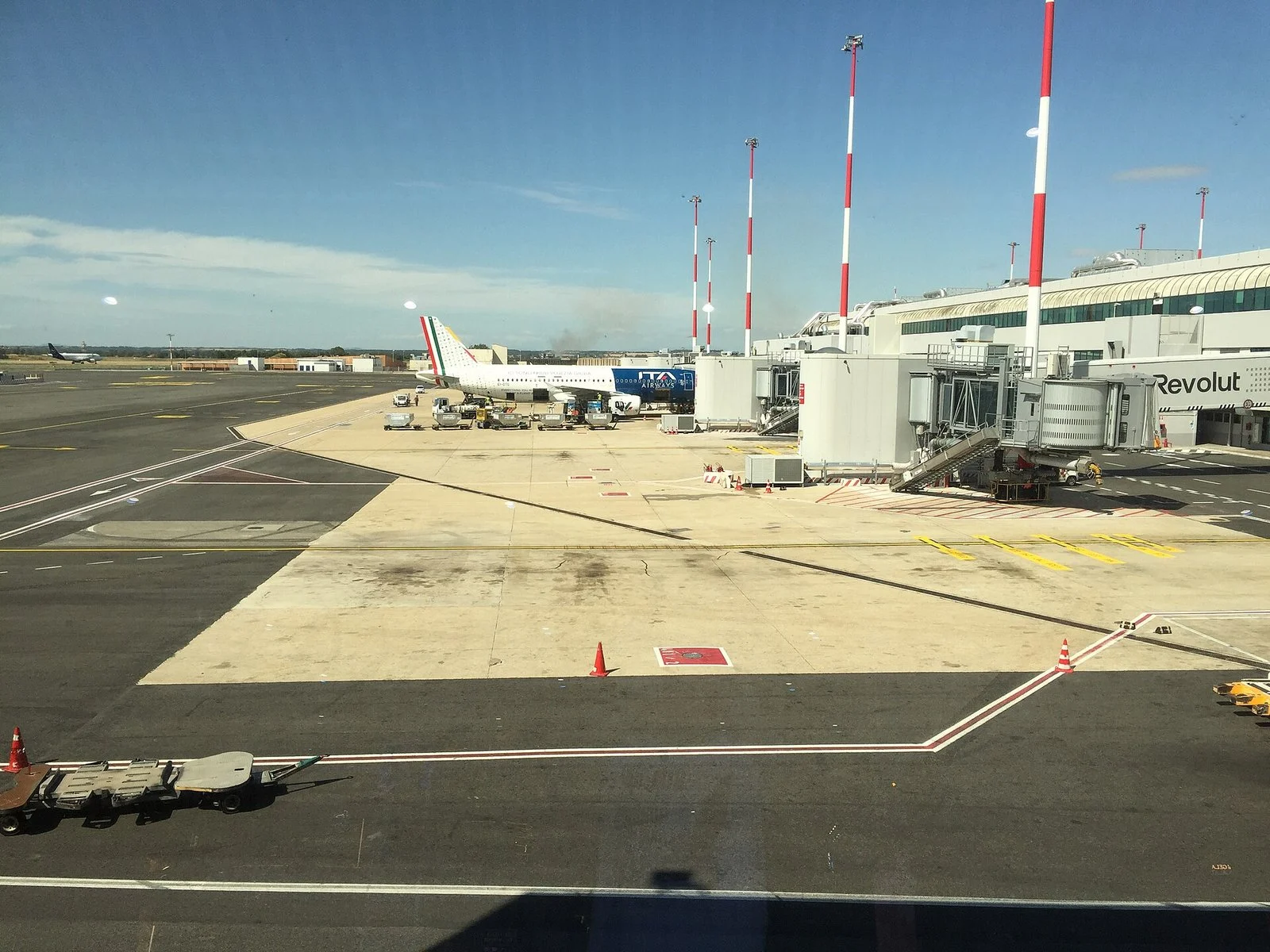
Rome has two civilian airports, Fiumicino and Ciampino, and neither is in the city. Aeroporti di Roma gives a distance of about 32 kilometers from the center for Fiumicino, while Ciampino lies to the southeast along Via Appia Nuova, closer but with no railway station of its own. The practical difference, for those arriving, is all here. From Fiumicino a train enters the city every 15 minutes and the travel time is predictable to the minute. From Ciampino you always go by bus, and the time depends on traffic on the Appia and the Tuscolano. On top of this there is the port of Civitavecchia, where hundreds of thousands of cruise passengers disembark every year with only a few hours at their disposal, and the three big Roman railway stations, Termini, Tiburtina and Ostiense, which are not interchangeable. The lines that follow lay out the real options, with fares checked against the official sources as of September 2026 and with the mechanism that determines them: the numbers change, and it's good to know where to look them up again.
The Big Picture: Two Airports, One Port, Three Stations
Fiumicino, named after Leonardo da Vinci, is the main airport of the Roman system and the only one of the two directly connected to the railway network. Fiumicino Aeroporto station is inside the airport grounds, a few steps from the terminals. Ciampino, named after Giovan Battista Pastine, is a smaller airport, used mostly by low-cost carriers, and has no station. The rail connection exists, but it goes through a shuttle that takes you to Ciampino città station, on the line to Roma Termini.
Fiumicino: The Numbers That Matter
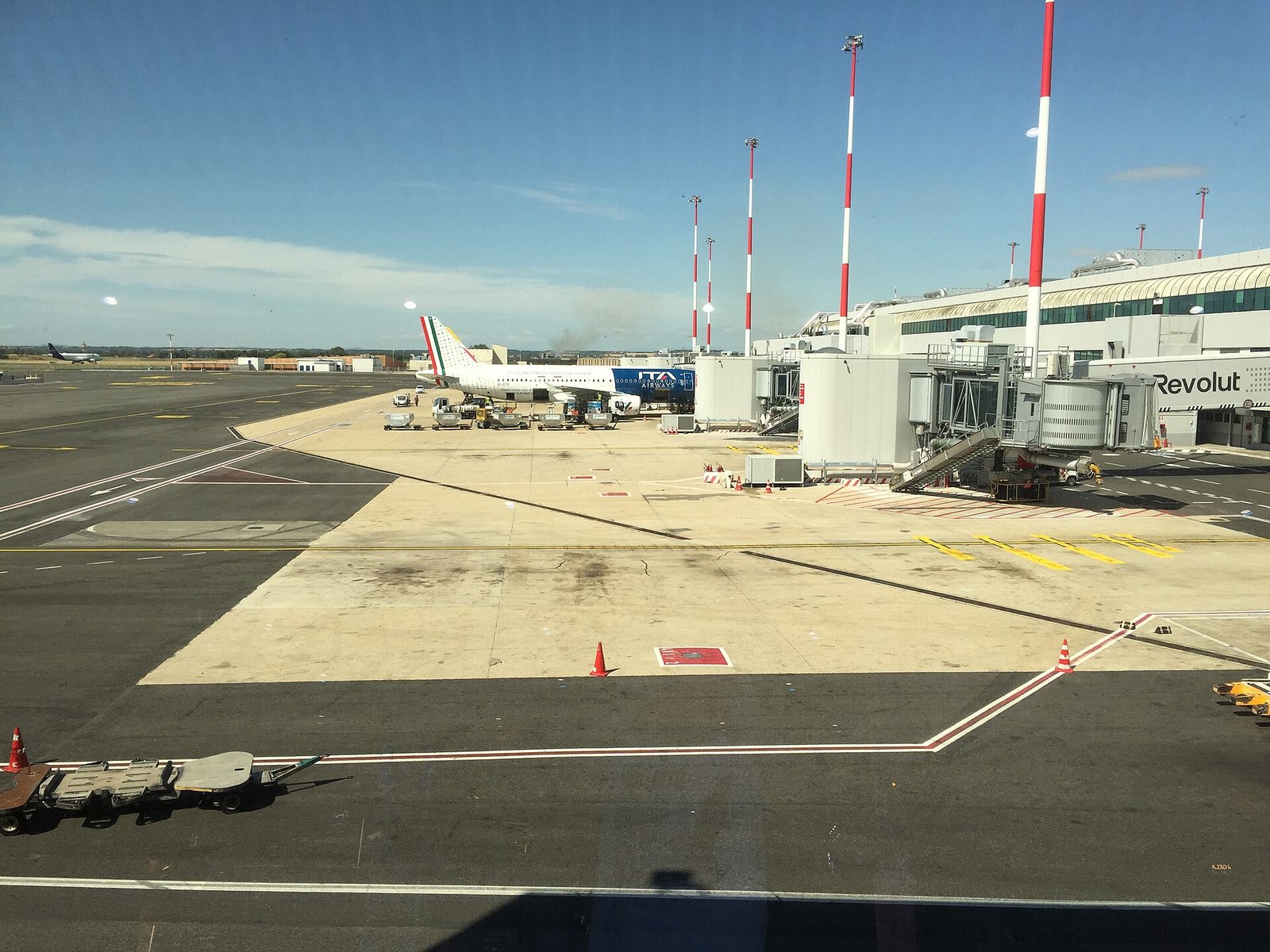
Aeroporti di Roma, the company that runs both airports, gives on its website a distance of about 32 kilometers from the center of Rome. The tourist portal of Roma Capitale instead reports a distance of 26 kilometers. The difference depends on which point you take as a reference and which route you consider, and neither figure is wrong. What matters for travelers is another, steadier number: the Leonardo Express covers the trip to Roma Termini in 32 minutes with no intermediate stops, and that time doesn't depend on traffic.
The airport is organized into two passenger terminals, Terminal 1 and Terminal 3, linked by a free shuttle that also serves the parking lots and the cargo city. Aeroporti di Roma gives a frequency of about 15 minutes for this shuttle, with longer maximum waits at night between 1 and 5 in the morning. It's a detail that becomes important when you get the terminal wrong, which happens more often than you'd think. The departure terminal is shown on the boarding pass and should be read before getting off the train or the taxi.
Ciampino: A Small Airport and an Always Indirect Connection
Ciampino is much closer to the center than Fiumicino, but this closeness doesn't automatically translate into a shorter travel time. The reason is that every connection to Rome goes by road, and the road in that direction means Via Appia Nuova, the Tuscolano and the inner ring of the Grande Raccordo Anulare, that is, some of the most congested stretches of the metropolitan area at peak hours. A direct bus that takes 40 minutes by the official timetable can take 60 at 8 in the morning on a Thursday.
Image: the information desk and the signs toward the railway station in the arrivals hall of Terminal 3 at Fiumicino.
Fiumicino With the Leonardo Express: 32 Minutes to Termini
The Leonardo Express is the direct train linking Fiumicino Aeroporto to Roma Termini in 32 minutes with no intermediate stops, at a price of €14 per ticket according to what Aeroporti di Roma and Trenitalia publish. It's the fastest and most predictable connection between the two points, and it remains the reference choice for those staying in the area around Termini, that is, Monti, the Esquiline, the Santa Maria Maggiore area and the Viminal.
How Much It Costs, How Often It Leaves, When It Stops
The ticket costs €14. Aeroporti di Roma gives a frequency of one train every 15 minutes and, on the same page, a service that runs from 04:50 to 23:05 from Roma Termini and from 05:38 to 23:27 from Fiumicino Aeroporto. The tourist portal of Roma Capitale instead reports a slightly different time window, from 06:23 to 23:23, and a frequency that at certain hours drops to one train every 30 minutes. The two sources don't match and the discrepancy needs to be stated. The operating hours are updated with the railway timetable changes, and the only reference to use for planning a departure at the limit is the real-time schedule on the Trenitalia website or on the monitors in the station.
Where to Catch the Train Inside the Airport
Fiumicino Aeroporto station is inside the airport area, in a central position relative to the terminals. From arrivals you follow the dedicated signs, which are continuous and easy to see. The walk includes a stretch of moving walkway and an elevated walkway. Those arriving at Terminal 1 have a slightly longer route than those arriving at Terminal 3. Allow a good quarter of an hour between leaving the baggage belt and reaching the platform, more with a family and three suitcases.
Who Really Benefits From the Leonardo Express
It suits anyone sleeping within 10 or 15 minutes on foot of Termini, anyone traveling alone or as a couple, anyone with a flight with little margin, and anyone arriving at peak hours, because it's the only option traffic doesn't touch. It suits a family of four much less: four tickets at €14 come to €56, which is more than the fixed taxi fare to the center, and the taxi takes you to the exact address without the final stretch with suitcases over the cobblestones.
Fiumicino With the FL1 Regional Train: €8, but It Doesn't Go Through Termini
The FL1 line links Fiumicino Aeroporto to Rome with an €8 ticket, according to what the tourist portal of Roma Capitale publishes and the railway ticket offices confirm, and with a frequency that Trenitalia gives as one train every 15 minutes on weekdays and every 30 on Sundays and holidays. It's the best connection for a good share of those visiting Rome, and it's also the one most often misunderstood, for a very simple reason: the FL1 doesn't stop at Roma Termini.
The Roman Stops of the FL1 and Who They Serve
Leaving the airport, the FL1 crosses the southwestern quadrant of the city and calls, among others, at Roma Trastevere, Roma Ostiense and Roma Tiburtina, then continues northeast outside the municipality. Roma Trastevere is the reference stop for those staying in Trastevere and in the area of the Janiculum. Roma Ostiense serves Testaccio, the Aventine, Garbatella and, via metro line B from the nearby Piramide station, the whole axis toward the Circus Maximus and the Colosseum. Roma Tiburtina is the hub for those continuing by high-speed train or toward the northeastern neighborhoods.
Frequencies and Real Times
Trenitalia gives 48 minutes between Fiumicino Aeroporto and Roma Tiburtina. Trastevere and Ostiense are reached sooner, because they come earlier along the route. The ride to Trastevere is around half an hour, the one to Ostiense a few minutes more. These are timetable times, and the timetable of a regional train on a very busy line has a real tolerance. Anyone with a rigid appointment shouldn't count on the minimum.
The Most Common Mistake: Waiting for the FL1 at Termini
You regularly see travelers standing on the platforms at Termini waiting for an €8 airport train that doesn't pass through Termini and never will. From Roma Termini to Fiumicino there is the Leonardo Express at €14, period. If you want to pay €8 you have to move to a station served by the FL1. Ostiense can be reached from Termini by metro line B to Piramide, Trastevere by bus or by tram 8 from the center, Tiburtina by metro line B in the direction of Rebibbia or Jonio. The calculation has to be done in full: €8 plus a €1.50 urban ticket and 20 minutes of travel against €14 and zero transfers.
When Changing Makes Sense and When It Doesn't
Changing suits those who are already sleeping near one of the three FL1 stations, and in that case the saving is clear and the route is shorter than going via Termini. It doesn't suit those sleeping in the historic center, between Piazza Navona, the Pantheon and Campo de' Fiori. From there none of the three stations is convenient, and the time saved on the ticket is all lost on the transfer with luggage.
The ATAC Urban Ticket Is Not Valid to the Airport
The ATAC integrated time-based ticket, the BIT, costs €1.50 and is valid for 100 minutes on the urban network. It doesn't cover the rail stretch to Fiumicino, which requires a dedicated ticket. The tourist time-based tickets too, Roma 24 hours at €8.50, 48 hours at €15, 72 hours at €22 and the weekly CIS pass at €29, are valid on the urban network and don't replace the airport ticket. The fares are those published by ATAC and are worth rechecking, because they were revised recently.
Buses From Fiumicino: Where They Leave, What They Cost, When They Make Sense
A large number of bus lines leave Fiumicino, both toward Rome and toward the rest of Italy, and for the Roman connections Aeroporti di Roma lists operators such as Cotral, Rome Airport Bus Schiaffini, SIT Bus Shuttle, T.A.M. Bus and Terravision, along with a long list of interregional carriers. The bus is the cheapest option, but it's also the only one fully exposed to traffic on the A91 motorway and on the roads into the city.
Where to Find the Stops at the Airport
Aeroporti di Roma states that interregional buses leave from the bus hub on the arrivals level of Terminal 3, at the bays between 20 and 26, near exit 6. Local transport leaves from the area in front of Terminal 3, while Cotral operates from Terminal 1. It's a distinction worth memorizing before you walk out. Looking for your bay by walking back and forth in front of arrivals with two suitcases is the fastest way to miss a ride.
Prices, Tickets and Destinations
Tickets are bought at the bus hub ticket offices, online or on board, with arrangements that change from operator to operator. The main Roman destinations are Roma Termini and Roma Tiburtina, with some lines that also serve the Vatican area, the Aurelia, Ostiense and Lido di Ostia. The fares of the individual carriers aren't set by city resolution the way taxi fares are. They vary by operator and by purchase channel, and should be read on the website of the chosen carrier on the same day. Any figure given here would be out of date within a season.
The Night Service
Aeroporti di Roma notes that night buses run from Fiumicino, in particular to Roma Termini, with evening departures and departures after midnight, and invites travelers to check the updated times before leaving. It's the reference connection for those who land when the Leonardo Express has already closed and don't want to take a taxi. The precise times of the night runs change with the season and with flight schedules, and should be read on the operator's website on the day of travel. Publishing a fixed time here would be a terrible service.
The Taxi From Fiumicino: The €55 Fixed Fare and How It Works
A taxi ride between Fiumicino airport and any destination within the Aurelian Walls costs €55, a predetermined fare set by Giunta Capitolina resolution number 157 of May 21, 2026 and also reported by Aeroporti di Roma. It's a fare per ride, not per person, and includes all surcharges except the one for passengers from the fifth onward. It also includes any motorway tolls.
What Exactly Predetermined Fare Means
The Capitoline fare schedule establishes that predetermined fares apply to direct routes, with one pickup point and one arrival point, with no detours or intermediate stops. If you ask the driver to stop along the way to drop off a passenger, the condition lapses and you go back to the meter. The fare schedule also specifies that on rides at a predetermined fare taken without waiting, the driver turns off the meter when you get in. Seeing the meter off on a fixed-fare airport ride is normal and not a sign of irregularity.
The Other Fixed Fares To and From Fiumicino
The same resolution sets other destinations: from Fiumicino to Tiburtina station and back €60, to Ostiense station and back €50, to Ciampino airport and back €55, to the port of Civitavecchia and back €130, to Castello della Magliana and Parco dei Medici €31, to the Nuova Fiera di Roma €26. From inside the Aurelian Walls to the port of Civitavecchia the fixed fare is €150. These are the figures in force according to the reference fare schedule published by Roma Capitale, and they are the first data to recheck on the City's website, because they change by resolution and without notice to travelers.
If the Hotel Is Outside the Aurelian Walls
Outside the perimeter of the Aurelian Walls the fixed fare doesn't apply and you go by meter, with two limits set by the fare schedule. The first is the Fiumicino airport minimum fare, equal to €35, which applies to all rides picked up at the airport to destinations with no predetermined fare and vice versa. Surcharges count toward that amount and are not added to it. The second is the maximum cap: for rides to or from Fiumicino with pickup inside the Grande Raccordo Anulare, the amount cannot exceed €80, surcharges included.
Surcharges, Discounts and Starting Fee
On metered rides the starting fee is €3.50 Monday to Friday between 06:00 and 22:00, €5 on Saturdays and holidays in the same time window, and €7.50 between 22:00 and 06:00. The first piece of luggage is free, and each additional piece larger than 35 by 25 by 50 centimeters costs €1. From the fifth passenger onward, on vehicles with a capacity above four, the surcharge is €5 per passenger. The discounts provided by the fare schedule, including the 15 percent one for women traveling alone at night and the 10 percent one toward public hospitals, don't apply to rides at a predetermined fare or to those to and from airports and ports.
The Real Math: When the Taxi Beats the Train
For one person headed to Termini, the train wins without question. For four people with luggage headed to an address in the historic center, €55 per ride against €56 in train tickets plus the final stretch on foot makes the taxi the most sensible choice. The break-even point also shifts in favor of the taxi for those arriving in the dead of night, for those traveling with a stroller or bulky luggage, and for those staying in an area not well served by the network, for example the upper Aventine or certain uphill streets of Monti.
Private Transfers, NCC and Car Rental
Alongside the taxi there is chauffeured hire, abbreviated NCC, which in Rome is a distinct service and regulated differently: it has no fares set by resolution, can't be hailed on the street, and works by reservation. On paper a private transfer booked in advance and a fixed-fare taxi get you to the same result. In practice there are three differences and they are worth knowing before choosing.
How to Recognize a Legitimate Service
A legitimate NCC has a traceable reservation, a contract with a price stated before departure and a driver who issues a tax receipt. A vehicle that offers itself spontaneously at the arrivals exit is neither a taxi nor a booked NCC. Aeroporti di Roma states this explicitly on its page dedicated to taxis: any other vehicle present at the airport exit may be driven by people without a regular license. There's no need to add anything else, and above all no need for anecdotes. The operating rule is only one: you don't accept unsolicited offers of transport.
Car Rental: When It's a Mistake
The main car rental companies operate at Fiumicino and pickup is convenient. The problem isn't the rental itself, it's the destination. The historic center of Rome is covered by limited traffic zones active during wide time bands, garage parking is expensive and street parking in the blue lines is paid for much of the day. Renting a car to stay in the center means paying for it and not using it, with the real risk of a fine for entering the ZTL.
When Renting Really Makes Sense
It makes sense for those using Rome as a base for Lazio: Tivoli with Hadrian's Villa and Villa d'Este, the Castelli Romani and Lake Nemi, the coast to the south. In that case the neatest solution is to pick up the car on the day you leave Rome, not on arrival, and return it before going back to the center. Aeroporti di Roma also notes the presence of car sharing services, Enjoy and Free2move, with vehicles in the Short Stay parking area, useful for single trips but not for those arriving with luggage.
Which Option to Choose From Fiumicino Based on Time, Luggage and Hotel Area
If the Hotel Is Near Termini
Leonardo Express, no question, unless the group is four people or more. From Termini you can walk to Santa Maria Maggiore and a good part of the Monti district, and metro line A takes you in a few minutes to Piazza di Spagna and toward the Vatican area.
If the Hotel Is in Trastevere, Testaccio, Ostiense or on the Aventine
FL1, getting off at Roma Trastevere or Roma Ostiense depending on the address. You save €6 per person compared with the Leonardo Express and avoid the trip through Termini altogether, which from those areas is a detour. From Ostiense you can walk to Monte dei Cocci and to the Basilica of Saint Paul Outside the Walls with one metro line B stop. From Trastevere you reach the Basilica of Santa Maria in Trastevere in a few minutes.
If You're Traveling With Family or Lots of Luggage
Fixed-fare taxi. The cost math breaks even at four people already, and the practical advantage is huge: no transfers, arrival at the address, no suitcase dragged over the cobblestones. The theoretical saving of the train is used up entirely on the final stretch, which in Rome's historic center is never flat and almost never short.
If the Flight Arrives at Peak Hours or Late
Train, any train. Between 7 and 10 in the morning and between 5 and 8 in the afternoon, entering the city by road is slow and unpredictable, while the railway keeps its times. For a departing flight with a tight margin the choice is even clearer: you take the train and arrive earlier than necessary, because the time lost in a queue on the A91 can't be recovered in any way.
Image: the platform of Fiumicino Aeroporto station with a stationary train and the signs pointing to the terminals.
Ciampino: Shuttles, the Train via Ciampino città, and Taxis
Ciampino airport, named after Giovan Battista Pastine, has no railway station and every connection with Rome starts with a bus. There are three options: a direct bus to Roma Termini, a bus to the Anagnina metro terminus, and the combined Ciampino Airlink service, which joins a shuttle to Ciampino station with the train to Termini. On top of these there is the taxi, with a fixed fare of €40 to the area inside the Aurelian Walls.
The Direct Buses to Roma Termini
Aeroporti di Roma lists for Ciampino a long list of operators, including Atral, CIA Airlink, Terravision, Sitbus Shuttle, RomeAirpBus and others, and says the stops are in front of the international departures area. Atral, the operator that runs a large part of the public transport of the Castelli area, gives for the direct connection with Termini a travel time of about 40 minutes and an operating window from 3:30 to 23:20 leaving the airport and from 4:15 to midnight leaving Termini. The fares of the individual carriers vary and should be read on the operator's website.
The Bus to Anagnina and Metro Line A
The second option is the bus to Anagnina station, the terminus of metro line A, which Atral gives as about 20 minutes of travel with a fare of €1.20. From Anagnina metro line A crosses the whole city and serves, among others, the San Giovanni stop for the Basilica of San Giovanni in Laterano, Termini, Barberini for the Trevi Fountain, Spagna, and Ottaviano for the Vatican Museums and Saint Peter's. It's the cheapest solution by far, and also the slowest. You have to add between 20 and 40 minutes to metro line A depending on the arrival stop.
The Ciampino Airlink: Bus Plus Train for €2.70
The Ciampino Airlink is an integrated Trenitalia service that, with a single travel ticket, priced by the operator itself at €2.70, includes the shuttle from the airport to Ciampino station and the train to Roma Termini. Aeroporti di Roma says the bus stop is a few meters from the airport entrance and that the runs have a frequency of about 20 minutes, on a direct route with no intermediate stops to the station. Atral gives the shuttle time as about 10 minutes. Children under four don't pay.
Why the Airlink Is Often the Best Choice
The advantage isn't only the price, which is the lowest among all the direct options to Termini. It's that well over half of the trip is on rail, and so safe from traffic: the bus covers only the short stretch to Ciampino station. On the Ciampino-Termini rail link frequent regional trains run, and the overall time, adding up shuttle, wait and train, generally stays competitive with the direct bus, with much less variability. Frequencies and exact times should in any case be checked on trenitalia.com on the day of travel.
The Taxi From Ciampino: €40 Fixed Fare
Giunta Capitolina resolution number 157 of May 21, 2026 sets at €40 the taxi ride between Ciampino airport and any destination inside the Aurelian Walls, and at €55 the one between Ciampino and Fiumicino. For destinations with no predetermined fare, the Ciampino airport minimum fare applies, equal to €25, an amount that absorbs the surcharges instead of being added to them. It should be noted that the tourist portal of Roma Capitale still reports lower figures, €30 to the Aurelian Walls and €35 to Tiburtina. These values are superseded by the fare schedule in force, and in case of doubt the schedule published by the Mobility and Transport Department is the authority.
Real Times and the Margins to Keep
From landing at Ciampino to arriving in the center, under normal conditions, between an hour and an hour and a half go by, counting disembarking, baggage, waiting for the vehicle and the ride. At peak hours the direct bus can exceed an hour for the ride alone. For the return, anyone leaving the center by bus should add at least 30 minutes of margin to the theoretical timetable. It's the single planning mistake that makes people miss the most low-cost flights at Ciampino, where boarding closes early and with no flexibility.
Arriving in Rome by Train: Termini, Tiburtina and Ostiense Are Not the Same Thing
Those arriving in Rome by train can get off at three main stations, and the choice noticeably changes the time needed to reach your lodging. It's not a detail: many high-speed trains stop at both Tiburtina and Termini, and getting off at the wrong stop can cost half an hour.
Roma Termini
It's the main station, the interchange between metro lines A and B and the terminus of a very large number of surface lines. It's also the terminus of the Leonardo Express. For those staying in the historic center, on the Esquiline, in Monti or along the metro line A axis, it's almost always the right stop. You have to allow for the fact that Termini is big and crowded: from the platform to the exit on Piazza dei Cinquecento, with luggage, several minutes go by.
Roma Tiburtina
It's the second high-speed station and is served by metro line B and by the FL1 to the airport. It suits those staying in the northeast quadrant, in San Lorenzo, the Nomentano or Pietralata, and those who then have to take a long-distance coach, because the coach station is next to the railway station. For the historic center it's a less convenient choice than Termini, and for those arriving from Fiumicino by taxi the fixed fare is higher, €60 against €55.
Roma Ostiense
It's the station for regional trains in the southern quadrant, adjacent to the Piramide stop of metro line B, and is served by the FL1 to the airport. From here you can walk to the Pyramid of Cestius, Testaccio and Garbatella, and one train stop away is the Basilica of Saint Paul Outside the Walls. The fixed taxi fare from Fiumicino to Ostiense is €50, the lowest among the three big stations.
How to Choose the Station by Area
The practical rule is simple: look at where you're sleeping and choose the station from which that area can be reached without changes. For the historic center, the Trevi Fountain area and Piazza del Popolo, Termini with metro line A. For the area of Vatican City and Castel Sant'Angelo, Termini and metro line A to Ottaviano or Lepanto. For the archaeological axis of the Colosseum, the Roman Forum and the Palatine Hill, Termini or Ostiense with metro line B. For Trastevere, the Roma Trastevere regional station.
Arriving by Ship: Civitavecchia and the Transfer to Rome
The port of Civitavecchia is about 70 kilometers northwest of Rome and is the main cruise port of the central Mediterranean. For those disembarking for a day excursion, the transfer to Rome is the constraint that determines everything else in the program, and it's almost always underestimated. The count doesn't start from the railway station. It starts from the dock.
From the Ship to the Gate: The Port's Internal Shuttle
Cruise ships don't dock next to the port exit and you don't leave the docks on foot. The Municipality of Civitavecchia notes an internal shuttle service that leaves from Largo della Pace with a frequency of about 10 minutes, run by Civitavecchia Servizi Pubblici, set up after the closure of the Civitavecchia Marittima station. On top of this, in most cases, come the shuttles provided by the cruise lines between the docking quay and the terminal. Between leaving the ship and arriving at the railway station, between 30 and 40 minutes easily go by, and this time has to be counted twice, outbound and return.
The Train to Rome: The FL5 Line
The FL5 line links Civitavecchia to Roma Termini via Roma San Pietro, Roma Trastevere and Roma Ostiense depending on the service. Travel times vary noticeably from one train to another, because the line is served both by runs with many stops and by faster ones. The difference between the two types can exceed half an hour on the same route. Anyone with a window of a few hours has to choose the train by looking at the real timetable on trenitalia.com, not an average.
The Civitavecchia Express
The Civitavecchia Express is a seasonal service for cruise passengers that links Civitavecchia to Roma San Pietro and Roma Ostiense with no intermediate stops. The tourist portal of Roma Capitale gives operation from April 1 to December 14, four daily runs, two toward Rome in the morning and two returning in the afternoon, with travel times of 35 or 40 minutes to Roma San Pietro and about 55 minutes to Roma Ostiense, and a price of €10 for the single ride and €15 for the round trip, with free travel for accompanied children under 12 and no surcharge for bulky luggage. The operating period and times change from season to season and should be checked before departure.
The Taxi From the Port and the Fixed Fares
The Roma Capitale fare schedule sets at €150 the taxi ride between the inside of the Aurelian Walls and the port of Civitavecchia, and at €130 the one between Fiumicino airport and the port. These are predetermined fares per ride and include tolls. They should be read for what they are: a reasonable option for a group of four with a rigid time constraint, a disproportionate expense for someone traveling alone with a train leaving in 20 minutes.
The Excursion Trap and Counting the Time
The real risk for a cruise passenger isn't the price of the transfer. It's the arithmetic. A ship that docks at 07:00 and sails at 18:00 leaves 11 hours on paper, but after subtracting disembarkation, the internal shuttle, the outbound train, the return train, the return to the gate and the safety margin imposed by the cruise line, the effective hours in Rome often fall below six. The operating point is only one: whoever organizes on their own takes on the risk of delay, because the ship doesn't wait for those who haven't arrived on transport organized by the cruise line. Official excursions cost more but transfer that risk to the organizer, and that is exactly what you're paying for, not the content of the visit.
What You Can Really See in One Day
With five or six full hours in the city, a sensible program covers a single area. Those getting off at Roma San Pietro have the Vatican quadrant in front of them, with Saint Peter's and, if booked well in advance, the Sistine Chapel within the route of the Vatican Museums. Those getting off at Roma Ostiense have metro line B and the archaeological axis. Trying both in one day, with the transfers to and from the port, doesn't work. For a program spread over several days, the itineraries for three days in Rome or a weekend in Rome are the ones to use.
Official and Unlicensed Taxis: How to Recognize Them and Where the Stands Are
A taxi authorized by Roma Capitale is white, carries a sign on the roof reading TAXI, and shows the symbol of the City and the license number on the front doors and inside the rear left door. These are the three elements the tourist portal of Roma Capitale gives as identification, and they are enough: if one of the three is missing, that is not a Roma Capitale taxi.
Where the Official Stands Are at the Airport
At Fiumicino the authorized taxis wait at the arrivals level of Terminals 1 and 3. At Ciampino the stand is at the arrivals exit. In both cases the stand is signposted and staffed, and the queue forms there: you get into the first available car, not the one belonging to someone who approached to offer a ride. Aeroporti di Roma warns explicitly that any other vehicle present at the airport exit may be driven by people without a regular license.
The Main Stands in the City
In the center the most useful stands are Piazza dei Cinquecento in front of Termini, Largo di Torre Argentina, Piazza Venezia under the Altar of the Fatherland, Piazza San Silvestro a few steps from the Trevi Fountain, Piazza Risorgimento near the Vatican, and Piazza Fiume. This is the list published by the tourist portal of Roma Capitale. In Rome a taxi doesn't stop when you raise a hand on the street like in London or New York. You take it at a stand or you call it.
The Meter and the Receipt
On a metered ride the driver must have the meter on and visible, and you should check before setting off. On a predetermined-fare ride to or from the airport, instead, the fare schedule provides for the meter to be turned off when you get in, and in that case the amount is the one set by the resolution. The Capitoline fare schedule also establishes that taxi operators are required to issue a receipt. The Roma Capitale portal says the receipt must show the route, the license number, the amount and the driver's signature. Always ask for the receipt, not because you suspect anything, but because without a license number any report can't be investigated.
How to Call a Taxi and How to Report a Problem
Roma Capitale has a single number for calling a taxi, 060609, alongside the Chiama Taxi Utente app. For irregularities, the municipal tourist portal gives as a reference the Polizia Locale at 0667104282 and the possibility of filing a complaint with the Mobility and Transport Department of Roma Capitale, also by email to the department's institutional address. The useful procedure is this and no other: you note the license number shown on the door, keep the receipt, and report it. Numbers and contacts should be rechecked on the City's website, because they can change.
Luggage Storage: At the Airport, at Termini and in the City
Luggage storage solves the most frequent problem of those who arrive early or leave late: having a free day and two suitcases between your feet. In Rome the official solutions are two, one at the airport and one at the station, and they have different features.
At Fiumicino
Aeroporti di Roma gives a luggage storage at Terminal 3, in the international arrivals area near the bus station, open from 7 to 23 every day, at a cost of €10 per piece for 24 hours, VAT included, with payment at pickup and no need to book. The same operator offers a porter service, bookable online or at the information desks, priced at €9 per piece for standard luggage and €12 for non-standard luggage, with payment by card only.
At Roma Termini
At Roma Termini the KiPoint luggage storage is on the platform level, on Via Giolitti side, with hours given as 7 to 21. The fares are set by time bands and are worth reading at the counter or on the operator's website before leaving your luggage, because the cost grows with the hours and a long deposit can turn out less convenient than it seems.
What to Check Before Leaving a Suitcase
Three things, always. The closing time, which is the real constraint: a storage that closes at 21 is useless for someone with a midnight flight. The accepted payment method, because not all of them take cash. And the queue time at peak hours, which at Termini in summer is not negligible. Anyone with a free day between check-out and the flight can use it well in areas where no long trips are needed, for example Villa Borghese with the Borghese Gallery, which must be booked in advance.
The Return: How Much Lead Time to Leave and What to Do if the Flight Arrives at Night
There's no single answer on how much time to leave for the return to the airport, and Aeroporti di Roma says so openly: the timing depends on the airline, the destination and the operating conditions of the airport. The check-in closing time also varies by carrier and by type of flight, and should be verified with the airline. What you can responsibly do is work out the transfer times, which are known, and add them to what the airline requires.
How to Build the Margin for Fiumicino
The calculation is done backward from the check-in closing time given by the carrier. You add the travel time, 32 minutes with the Leonardo Express or about 48 minutes with the FL1 from Tiburtina, the wait for the train, up to 15 minutes, the trip from home or hotel to the station, and the walk inside the airport from the station to the desk of your terminal, which is not short. Then you add a margin for the unexpected. Anyone going by taxi or bus should add a wider margin, because traffic is the uncontrollable variable.
Why Ciampino Needs More Margin, Not Less
The shorter distance is deceiving. At Ciampino every connection is by road for at least part of the route, low-cost airlines apply rigid boarding closing times, and security checks at a smaller airport saturate sooner. Whoever leaves from the center should add at least half an hour to the theoretical time of the direct bus, and whoever uses the Ciampino Airlink has to count the wait for the shuttle and the one for the train too, which are two separate waits.
If the Flight Arrives After Midnight
The Leonardo Express has stopped running and the regional trains are sparse or absent. Three options remain. The first is the taxi at the official stand, with the fixed fare that is valid 24 hours a day: €55 from Fiumicino and €40 from Ciampino to the inside of the Aurelian Walls, with no night surcharges because the predetermined fare already includes them. The second is the night bus, which Aeroporti di Roma notes as running from Fiumicino to Roma Termini even after midnight and from Ciampino with the operator RomeAirportBus, with times to be checked on the carrier's website. The third, often the most sensible, is the private transfer booked before departure, with the driver waiting at arrivals.
If the Flight Leaves at Dawn
The mirror case is the 06:00 flight. The first Leonardo Express from Termini leaves before 05:00 according to Aeroporti di Roma, which makes it usable for some morning flights but not all. The alternatives are the taxi, available at a fixed fare at any hour, or staying overnight at a hotel near the airport, which for a flight before 07:30 is almost always the most restful choice and not necessarily the most expensive, once you add up the night taxi and the nerves.
Image: the taxi stand at the arrivals exit of a Roman airport, with the white cars lined up and the markings on the ground.
Frequently Asked Questions About Rome's Airports
How much is the train from Fiumicino to central Rome?
From Fiumicino airport the Leonardo Express to Roma Termini costs €14 per ticket, according to what Aeroporti di Roma and Trenitalia publish, and takes 32 minutes with no stops. The FL1 regional train costs €8 but doesn't stop at Roma Termini. It serves Roma Trastevere, Roma Ostiense and Roma Tiburtina. Children under 12 accompanied by a paying adult travel free on both services.
How much is a taxi from Fiumicino to central Rome?
A taxi from Fiumicino airport to any destination inside the Aurelian Walls costs €55, a predetermined fare set by Giunta Capitolina resolution number 157 of May 21, 2026. It's a price per ride and not per person, includes tolls and all surcharges except the one for passengers from the fifth onward. Outside the Aurelian Walls you go by meter, with a minimum fare of €35 and a cap of €80 inside the Ring Road.
How much is a taxi from Ciampino to central Rome?
A taxi from Ciampino airport to the inside of the Aurelian Walls costs €40 according to the fare schedule in force of Roma Capitale, while the connection between Ciampino and Fiumicino is set at €55. For destinations with no predetermined fare, the Ciampino airport minimum fare applies, equal to €25, which absorbs the surcharges. Some portals still report lower figures, superseded by the fare schedule in force.
How do you get to the center from Ciampino without a taxi?
From Ciampino airport there are three alternatives to the taxi: the direct bus to Roma Termini, which Atral gives as about 40 minutes of travel, the bus to the Anagnina metro terminus, about 20 minutes at €1.20, and the combined Ciampino Airlink service, which with a single €2.70 ticket includes the shuttle to Ciampino station and the train to Termini. The stops are in front of international departures.
Is the ATAC ticket valid for going to Fiumicino?
No. The ATAC integrated time-based ticket, the €1.50 BIT valid for 100 minutes, doesn't cover the rail stretch to Fiumicino airport, and the same goes for the Roma 24, 48 and 72 hour tourist tickets and the weekly CIS pass. For the train to and from the airport you need a dedicated ticket, €14 on the Leonardo Express and €8 on the FL1. Traveling with only the urban ticket exposes you to a fine.
How do you recognize a legitimate taxi in Rome?
A taxi authorized by Roma Capitale is white, carries on the roof the sign reading TAXI and shows the symbol of the City and the license number on the front doors and inside the rear left door. You take it at the official stand, never by accepting offers at the arrivals exit. The meter must be on for ordinary rides and the receipt, with route, license and amount, should always be requested. The single number for calling is 060609.
How long does it take from the port of Civitavecchia to Rome?
From the port of Civitavecchia to central Rome the real time clearly exceeds the duration of the train alone: to the train ride you must add the ship's shuttle, the port's internal shuttle from Largo della Pace, given with a frequency of about 10 minutes, and the wait at the station. The Civitavecchia Express, seasonal, links the port to Roma San Pietro in 35 or 40 minutes and to Roma Ostiense in about 55 minutes, at €10 a ride.
Is there luggage storage at Rome's airports?
At Fiumicino airport the luggage storage is at Terminal 3, in the international arrivals area near the bus station, open from 7 to 23 with a fee of €10 per piece for 24 hours, payment at pickup and no booking. At Roma Termini the KiPoint storage is on the platform level on Via Giolitti side, given with hours from 7 to 21 and fares set by time bands.
What do you do if the flight lands in Rome after midnight?
If the flight lands in Rome after midnight the Leonardo Express is no longer running and three options remain: the taxi at the official stand, with the fixed fare valid 24 hours a day, €55 from Fiumicino and €40 from Ciampino to the Aurelian Walls. The night buses, which Aeroporti di Roma notes as running to Roma Termini with times to be checked. Or a private transfer booked before departure.
Who Wrote This Page
This page is edited by the editorial team of Tour Leader Pro, the Roman project office that designs and coordinates visits, itineraries and cultural events in Rome and Lazio. The hours, fares and access conditions given here are verified as of the publication date against the official sources named in the text. Before leaving it's worth rechecking them, because they change often. If you find outdated information, let us know.
Anyone putting together a complete Roman itinerary, fitting arrival times around the bookings for the Vatican Museums, the Borghese Gallery or the Colosseum, will find planning tools and operational support at Tour Leader Pro, which works on exactly this: making transfers, openings and real times fit together without leaving gaps in the day.
For a broader picture of Italian transportation and of the destinations in Lazio reachable from Rome in a day, from the villas of Tivoli to the excavations of Ostia Antica to the coast and the Castelli Romani, Italy Planner is a good resource.