Criminology Museum
In short. The Criminology Museum at Via del Gonfalone 29, in the Regola district, as of September 29, 2026 appears closed to the public: its Google Maps listing marks it "temporarily closed," recent visitor reports speak of a closure sign for…
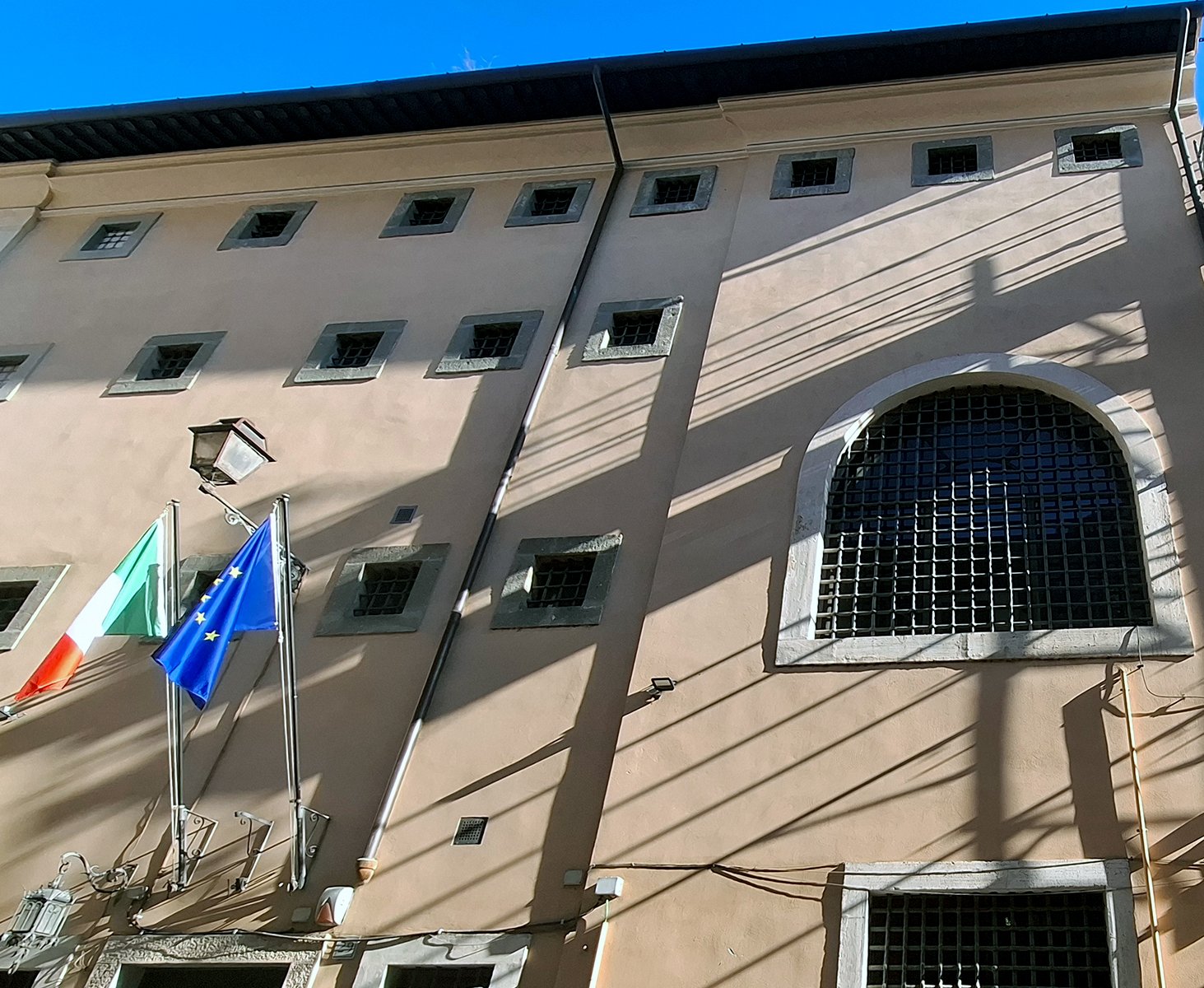
The Criminology Museum at Via del Gonfalone 29, in the Regola district, as of September 29, 2026 appears closed to the public: its Google Maps listing marks it "temporarily closed," recent visitor reports speak of a closure sign for maintenance, and no source from the operator, the Ministry of Justice, announces a reopening. The entries of the Ministry of Culture and of Turismo Roma still report hours from Tuesday to Saturday. Before setting out, call 06 68899442 or write to museo.criminologico@giustizia.it.
Inside, according to the available descriptions, is the collection born in 1931 at the wish of Minister Alfredo Rocco: instruments of punishment and torture, guillotines, objects tied to famous crimes, the cloak of Mastro Titta, the tools secretly made by inmates to escape or to hide weapons. All in a building that Leo XII had built in 1827 as a juvenile prison. A prison museum inside a former prison, in short.
The practical information given here comes from the check of September 29, 2026 on the institutional sources cited in the text. If the answer on the phone is negative, the visit is not lost: the street is a step from Via Giulia, from the Carceri Nuove, from the Oratorio del Gonfalone and from the churches of the confraternities that assisted the condemned. The theme of papal justice can be told very well from the outside too, walking.
At a glance: address, hours, ticket
- Address: Via del Gonfalone 29, 00186 Rome, Regola district. The building also has a front on Via Giulia.
- Operator: Ministry of Justice, according to Turismo Roma. The museum's old blog was signed by the press office of the Department of Penitentiary Administration.
- Status: temporarily closed as of September 29, 2026, no reopening date announced by the operator.
- Hours still reported by the Ministry of Culture, to be considered outdated while the museum is closed: Tuesday and Thursday 9:00-18:30, Wednesday and Friday 9:00-13:00, Saturday 9:30-13:00.
- Price: the operator does not publish fares. The Ministry of Culture indicates that no reservation is needed.
- Contacts: 06 68899442 and 06 6889941, museo.criminologico@giustizia.it.
- How to get there: for the same street the Oratorio del Gonfalone indicates lines 64, 40, 916, 62 and 46, Chiesa Nuova stop.
Where it is and what you really see
Via del Gonfalone is a narrow street that runs alongside Via Giulia, on the Tiber side, in the stretch where the Renaissance street becomes quieter. The Palazzo del Gonfalone occupies the block between the two streets, on the same front as the Carceri Nuove. Number 29 is the entrance given by the sources. A little further on, at 32A, is the entrance to the concerts of the Oratorio del Gonfalone: it's easy to confuse the two entrances, which are on the same street.
The name of the street comes from the confraternity of the Gonfalone, which had its seat here. Anyone arriving from the Lungotevere sees the river first and then, looking up, the flanks of the buildings of Via Giulia. It's best to note the exact street number before leaving and, if the museum has confirmed an appointment, to ask also which door to use and whom to ask for on arrival.
In the years it was open, according to the description published by the encyclopedia entry on the museum, the visitor found a chronological route set up after 1994. The first section covers the exercise of justice from antiquity to the 1700s. The second concerns prison institutions and the criminal anthropology of the 1800s. The third is devoted to modern crime: theft, espionage, forgery, gambling. A separate small room gathers material from contemporary crime reporting.
The most cited objects are pillories, whips, the so-called scold's bridle, an iron maiden, the guillotines recalled by Turismo Roma. Then the pistol of Gaetano Bresci, the anarchist who killed Umberto I, and the plaster cast of the skull of Giuseppe Villella, which Cesare Lombroso used to support his theory of atavistic delinquency. Heavy material, displayed with an approach that appears dated today.
The part that the Ministry of Culture highlights, and which in our judgment is worth more than the torture machines, concerns prison ingenuity: devices built by inmates to hide weapons or attempt escape. They are poor objects, made with what there was in the cell. They tell the prison from the point of view of those locked inside, which is rare in a museum born at the initiative of the State that ran the prison.
If the museum stays closed, a lot can still be seen from the street. The 1800s facade of the building, the Carceri Nuove of Innocent X with their Latin inscription, the Oratorio del Gonfalone, Santa Maria del Suffragio and, toward Ponte Sisto, the church of the confraternity of the Orazione e Morte. The whole geography of papal justice can be read in a few hundred steps.
A curiosity about the Criminology Museum
The current name is recent. Until the move of 1975 the collection was called the Museo criminale, then it became the Museo criminologico, with the acronym MUCRI that still appears in many guides. The change of word is not a detail: it marked the passage from a showcase of crime and punishment to a collection designed for the study of the criminal phenomenon and of the State's response.
The starting idea, too, was aimed at specialists. The encyclopedia entry on the museum reports that the Minister of Justice Alfredo Rocco wanted to gather and make available to scholars the instruments that had characterized the world of crime. The general public, at the beginning, was not the main addressee. The museum's historical blog adds another date: a ministerial circular of 1930 that started the collecting of materials.
There is also a detail that surprises those who think of museums as stable institutions. In its history the MUCRI has been closed, dismantled or in storage for longer than it has been open continuously. Open from 1931 to 1968, closed until 1975, visitable by appointment for a few years, closed again for about 15 years, reopened in 1994, suspended since 2016 according to some sources.
During one of these pauses, the one that followed the closure of 1968, the long stay in storage caused the loss of some pieces. The same encyclopedia entry notes it, without specifying which. Those who study public collections know the phenomenon: every move of a museum is a small hemorrhage. In the case of such a particular collection, made of seized objects and judicial evidence, the loss weighs double.
One last curiosity concerns the fame of the museum. The MUCRI is often remembered as the place where the executioner's cloak is kept, more than for its sections. A single object has become the symbol of an entire collection. With the closure, the museum lives mostly in stories and in online entries, which continue to describe its rooms as if they were accessible every week.
Something nobody tells you about the Criminology Museum
Tourist listings give the museum as open, with precise hours and the note that no reservation is needed. The Turismo Roma entry bears an update date of October 31, 2025. Yet the museum's official blog stops at February 2014, the domain museocriminologico.it does not respond as of September 29, 2026, and several sources speak of temporary closure since June 1, 2016. An updated portal does not mean an open door, and indeed those who go today find it closed.
The museum's blog, still consultable, is a useful clue. The last articles, from late January and February 2014, present the museum, tell of its birth and announce initiatives and events in the rooms. After that, silence. No update has reported the closure or a reopening. For those planning, an official channel stalled for more than 10 years is a signal to take seriously, not a technical detail.
The most common mistake, and here is our opposing position, is to build half a day around this museum trusting the hours that bounce from one site to another. Aggregators copy the institutional entries, and institutional entries sometimes stay frozen for years. The only check that counts is a phone call to the museum's number or an email to the ministry's address, made on weekdays.
There is also an overrated label: that of museum of horrors, with which the MUCRI is sold on many Roman curiosity sites. The torture instruments are the least original part, because similar collections exist in several European cities. What makes the Rome collection unique is the link with the Italian prison system, with trials and with the criminal anthropology theories of the 1800s.
Finally, the museum does not belong to the Ministry of Culture, even though it appears in its list of places. It depends on the Ministry of Justice, and therefore follows logics different from those of state museums: no online ticket office, no free openings on national Sundays, no coordinated communication with the circuit of the state museums of Rome. Those planning must take this into account.
Where does the collection come from and why is it here?
The idea of a Roman criminology museum, according to the encyclopedia entry, goes back to the late 1800s, when the criminal anthropology of Lombroso was at the center of scientific and judicial debate. It took a few decades, however, to take shape. A ministerial circular of 1930 started the collecting of materials. The following year the collection found a place on the ground floor of the Carceri Nuove on Via Giulia.
The Carceri Nuove, at number 52 on Via Giulia, were built between 1652 and 1655 at the wish of Innocent X Pamphilj, to a design by Antonio Del Grande. They stayed in operation until the opening of Regina Coeli in the early 1900s, then housed pretrial detainees and minors. In 1931 they became the seat of the Centro di studi penitenziari and of the museum. Today the building houses the National Anti-Mafia and Counter-Terrorism Directorate.
In 1968 the spaces were used for something else and the collection ended up dismantled in storage. Work on the new seat in the Palazzo del Gonfalone began in 1972 and the move was completed in 1975. The building chosen had a history consistent with the collection: it had been built in 1827, under Leo XII, as a prison for minors. The museum thus passed from one prison to another, staying on the same street.
After the move, visits were only by appointment. At the end of the 1970s came a new closure, lasting about 15 years, devoted to reorganizing the materials. The museum's historical blog places the start of the renovation project in 1991 and the reopening to the public in 1994. It is on that occasion that the chronological route in three sections was born, still described by all the consultable sources.
The original structure of 1931, by contrast, was thematic. It was divided into three parts: the main subdivisions of crimes, the search for evidence and judicial investigations, the execution of punishment seen both from the side of the State and from that of the condemned. A logic from a forensic science manual, designed for those training in those trades. The new installation of the 1990s shifted the emphasis to history.
My advice for visiting the Criminology Museum
The advice is simple: call first, on a weekday morning, 06 68899442 or 06 6889941, and ask three precise questions. If the museum is open that day, if you need to book, if there is a cost. If you prefer to write, the address is museo.criminologico@giustizia.it, and it's best to do so a few days ahead. Without a direct answer from the operator, don't travel on purpose from another neighborhood.
For a group, a class or an association the matter changes little, but the timing gets longer. The request must be made in writing, with a proposed date, number of participants, age range and a contact. It's best to ask for written confirmation and bring it with you on the day of the visit. In places run by non-cultural administrations, the person who answers the phone is often not the one who opens the door.
If the answer is positive, calculate the time by the sections and not by the fame. The sources do not indicate an average length of the visit. A route in three sections with an additional small room, in a not-huge building from the 1800s, suggests a visit of modest size. It's best to pair it with a walk on Via Giulia, which completes the discussion of justice and prison in the Rome of the popes.
With small children the rule is caution. The materials concern torture, executions and crimes, and the crime-reporting room is not suited to everyone. The operator does not publish guidance on recommended age. For families, on the site you will also find a page dedicated to Rome with kids, with more suitable alternatives in the same area and in the rest of the city.
If instead the answer is negative, use the time for the walking itinerary of justice described further on: Carceri Nuove, Oratorio del Gonfalone, Santa Maria dell'Orazione e Morte, San Giovanni Decollato. Many of these places have limited openings too, so the same rule applies: check first on the dedicated pages.
Can you go in, how much does it cost and how do you book?
Today you cannot go in. The museum appears temporarily closed and no page of the operator announces a reopening in 2026. The Ministry of Culture still reports hours from Tuesday to Saturday and indicates that no reservation is needed, the encyclopedia entry speaks of closure since 2016, and visitors who passed by recently found the door closed. No institutional source publishes a ticket price.
The official channel to find out if and how you can get in remains direct contact: telephone 06 68899442 and address museo.criminologico@giustizia.it, reported on the Ministry of Culture entry and on the Turismo Roma page. There is no online ticket office for the museum, and no resale products dedicated to this place appear. Be wary of anyone selling tickets or tours with guaranteed entry.
Extraordinary openings, for example on national or European heritage days, are a possibility worth checking. For 2026 none of the sources consulted announces one. If one is announced, the rule stays the same: confirmation from the operator or from the organizing body, with date and access arrangements.
In the past the museum has been the destination of guided visits organized by Roman cultural associations, usually with booking through the association. No updated calendar of these initiatives appears. If you find an announcement, check that the organizer states it has the museum's authorization for that date, and ask for confirmation at the official number too. A visit announced and then canceled is the most frequent experience with places of uncertain opening.
A concrete alternative is to place the theme in the circuit of the city's lesser-trodden museums. On the site you will find the complete list of Rome's museums and the page on free museums in Rome. For those interested in the history of science and the body, in the same area of interest are the Museum of the History of Medicine and the Academy of the History of the Healing Arts.
Another well-known fact, yet rarely cited
It is well known that Via Giulia was for centuries the street of the Roman prisons. Less cited is that the Carceri Nuove were born with a declared program of humanity. The inscription on the facade, ordered by Innocent X in 1655, speaks of justice and clemency, and of a safer and milder custody of offenders: IVSTITIAE ET CLEMENTIAE SECVRIORI AC MITIORI REORVM CVSTODIAE NOVVM CARCEREM INNOCENTIVS X PONT MAX POSVIT.
Those words, reread in front of the door of a judicial office, have a certain effect. For the time the Carceri Nuove were truly a modern building, designed to replace older and unhealthier prisons. The juvenile prison of the Gonfalone, built almost two centuries later under Leo XII, continued the same idea: separating boys from adults. The museum, which came afterward, ended up living right inside this history of reforms.
Another known and little told fact concerns the White Lady of Poggio Catino, a skeleton with restraint irons kept in the museum and tied to a legend of walling-up. A 2021 study by Marco Strano and Simone De Fraja cast doubt on the story: the skeleton could be male and many details of the tale would have been constructed in the Fascist era, around 1933.
The episode is useful for understanding how to read the whole museum. Many objects arrived with a story already packaged, written by those who wanted to impress or warn. Separating the find from the tale sewn onto it is the work that historical research has been doing for some decades. The attentive visitor can do it alone, asking each time who wrote the caption and in what year.
The right photo to take at the Criminology Museum
The photo that counts is taken from the street. From Via Giulia, at number 52, frame the facade of the Carceri Nuove with the inscription of Innocent X, and widen to include the front of the Palazzo del Gonfalone. In the same image are two centuries of Roman prison history. The best light is the morning, when the street is still quiet and there are fewer parked cars.
Remember that the Carceri Nuove building is the seat of a judicial office. Photograph the facade and the inscription from the public roadway, without insisting on the service entrances and without trying to film the interior through the doors. The same discretion applies to Via del Gonfalone, which is a residential street. For a detail, aim at the letters of the inscription against the light: they work better than a wide shot.
If the museum is open, ask at the entrance if photographs are allowed. The operator does not publish a regulation on this. In museums with judicial materials and human remains restrictions are frequent, and in any case it's best to avoid photographing bone remains. The cloak of Mastro Titta and the inmates' devices are the subjects that tell the most, without sliding into the macabre.
A photographic alternative a few minutes' walk away is the Farnese arch that spans Via Giulia, covered with ivy, with the view down the straight street. Further on, Ponte Sisto offers the perspective on the Tiber and on the dome of St. Peter's. They are two much-used shots, true, but in the context of this walk they acquire a precise meaning: the city of the popes seen from the side of justice.
How do you get there from central Rome?
Via del Gonfalone is in the Regola district, between Via Giulia and the Lungotevere, in an area of alleys where a car is more of a problem than a solution. The most sensible means is the bus, or your legs. The Oratorio del Gonfalone, on the same street, indicates for its concerts lines 64, 40, 916, 62 and 46 with the Chiesa Nuova stop, on Corso Vittorio Emanuele. From there you go down toward the river in a few minutes.
On foot, from Campo de' Fiori you pass through Piazza Farnese and take Via Giulia northward. From Piazza Navona you go down toward the Chiesa Nuova and the Oratorio dei Filippini, then take one of the alleys toward the Tiber. From Trastevere it is enough to cross Ponte Sisto and go back up Via Giulia.
For those arriving from Termini station, the buses that run along Corso Vittorio Emanuele are the most direct solution. Check the updated routes on the transport company's website before leaving, because in the historic center detours for works and events are frequent. By car you enter the limited traffic zone of the historic center, with the permits and hours set by Roma Capitale, and finding a spot is hard.
The road surface of Via Giulia and the alleys around it is largely sampietrini cobblestones, with narrow or absent sidewalks. For strollers and wheelchairs the route is tiring but practicable with a bit of care, better on the Lungotevere side for the longer stretches. Comfortable shoes, always. In the evening the area empties and the pace changes: it is the moment when Via Giulia shows its most secluded face.
Some important events that happened here in history
The chronology of the street begins well before the museum. Between 1652 and 1655 Innocent X has the Carceri Nuove built. In 1827 Leo XII adds the juvenile prison, the future Palazzo del Gonfalone. The system stays in operation throughout the papal 1800s and even after Unification, until the opening of Regina Coeli, in the early 1900s, moves most of the inmates elsewhere.
In 1930 a circular of the Ministry of Justice starts the collecting of materials for a museum. In 1931, under Minister Alfredo Rocco, the Museo criminale opens on the ground floor of the Carceri Nuove, next to the Centro di studi penitenziari. It is an institution of the regime, designed partly to warn and partly to train. It stays in that seat for almost 40 years, until 1968.
1968 marks the dismantling. The spaces of the Carceri Nuove are needed for other functions, the collection goes into storage and loses some pieces. In 1972 work begins in the Palazzo del Gonfalone and in 1975 the museum reopens with the new name. Subsequently the Carceri Nuove house the United Nations Interregional Crime and Justice Research Institute, and then the National Anti-Mafia and Counter-Terrorism Directorate.
In 1994 comes the reopening with the chronological route, after about 15 years of closure. In the following years the MUCRI appears in guides and on Roman curiosity sites. Since June 1, 2016, according to the encyclopedia entry on the museum, opening has been suspended on a temporary basis. No institutional source consulted announces a reopening date, and tourist listings continue to report the hours of the earlier period.
Finally there is a date that concerns an object and not the building. On August 17, 1864 Giovanni Battista Bugatti, Mastro Titta, is replaced in his post as papal executioner. His cloak, kept in the museum, is one of the few objects that directly connect the collection to the criminal justice of the Papal States, the kind that was carried out in public in the squares of the city.
Who has passed through the Criminology Museum
The first name is that of the political founder, Alfredo Rocco, the Minister of Justice who wanted the collection in 1931. His name remains tied above all to the penal code of 1930. The museum was born in the same climate: a State that codified crimes and penalties also wanted to show their instruments. Those who visit today should keep this in mind, because the original approach left traces in the choice of objects.
Then there are the names that pass through the finds. Cesare Lombroso, with the cast of the skull of Giuseppe Villella, which the doctor from Verona used for his theory of atavistic delinquency, rejected by science today. Gaetano Bresci, through the pistol with which he killed King Umberto I in 1900. And Mastro Titta, the papal executioner, through his scarlet cloak. Indirect presences, but documented.
Behind the buildings are two popes. Innocent X Pamphilj, who signed the Carceri Nuove with his inscription, and Leo XII, who wanted the juvenile prison in 1827. Two pontificates far apart, both attentive to the theme of public order. The museum was born almost a century later, but lives inside their choices: without those two building sites, Via Giulia would not be remembered as the street of the prisons.
On the opposite side are the thousands of people who passed through the cells of the Carceri Nuove and of the juvenile prison, almost all nameless in the accessible sources. The museum, with its section on prison ingenuity, is one of the few places where these people appear through what they built. You don't need to know their identity to understand what it meant to spend years in those rooms.
Finally, there are the scholars and students of criminology and forensic science, the original addressees of the collection, and the visitors of the years it was open, of whom the sources keep no lists. No famous guest appears documented in the sources consulted. The museum, by its nature, has had an audience of insiders more than of illustrious travelers.
Mastro Titta: what do the documents, the tradition and the legend say?
The documents, to begin with. Giovanni Battista Bugatti was born in Senigallia on March 6, 1779 and died in Rome on June 18, 1869. He entered service as executioner of the Papal State on March 22, 1796, at 17. His personal notebook records 516 names, and the confirmed executions up to 1864 are 514, of which 55 during the period of French rule. He lived in the Borgo, at Vicolo del Campanile 4.
Again from the documents: on August 17, 1864, at 85, he was replaced by Vincenzo Balducci and received from Pius IX a lifetime pension of 30 scudi a month. His scarlet cloak is kept in the Criminology Museum. These are sober data, which tell of a long administrative career more than a figure from a novel, and which need no additions to be impressive.
Roman tradition has preserved two sayings. Boia nun passa Ponte recalled that the executioner, who lived on the right bank of the Tiber, was not to cross the river except on duty. Mastro Titta passa ponte, by contrast, announced an execution coming on the other bank. They are attested sayings, and they say a lot about the relationship between the city and its executioner: a necessary figure, kept at a distance.
Then there is the legend. According to popular tales, the ghost of Mastro Titta walks at first light in the places of the executions, in his red cloak, offering a pinch of snuff to those he meets. It is the version that circulates on evening walks and that you find on the site's page dedicated to the ghosts of Rome. No document supports it, obviously.
One last warning concerns the most cited book about him. The so-called memoirs of Mastro Titta, published in 1891 by the publisher Lapi, are a false autobiography written by an anonymous author years after Bugatti's death, in an anticlerical key. They present him as a cynical and cold killer. Many sentences attributed to the executioner that circulate online come from there, and should be read as propaganda literature.
What to see nearby if the door stays closed?
Via Giulia is the most natural answer. Opened in the early 1500s for Julius II, it runs straight from the end of San Giovanni dei Fiorentini to Ponte Sisto. Along the way you meet the Carceri Nuove, the Oratorio del Gonfalone, San Biagio degli Armeni, Santo Spirito dei Napoletani, the back of Palazzo Farnese and the Farnese arch.
The Oratorio del Gonfalone is the most direct neighbor: the seat of a confraternity, today a concert hall, with a cycle of 1500s frescoes of the Passion. You go in mainly for concerts, with entrance from Via del Gonfalone 32A. A little further down, Santa Maria dell'Orazione e Morte recalls the confraternity that buried the abandoned dead, even those found in the river.
To complete the discussion of papal justice, San Giovanni Decollato is in the Ripa district, at Via di San Giovanni Decollato 22, toward the Bocca della Verità. There was the seat of the archconfraternity of Florentine origin that assisted those sentenced to death to the very end and buried their bodies. In the cloister remain the marble slabs that cover the mass graves of the executed.
Those who want to widen the theme can reach the Mamertine Prison at the foot of the Capitoline Hill, the oldest prison of the city, or Castel Sant'Angelo, which was also a state prison. In front of the castle, Ponte Sant'Angelo and the square before it were for centuries one of the places of public executions.
To the north, in the Banchi area, Santi Celso e Giuliano, and toward Campo de' Fiori San Lorenzo in Damaso, incorporated into the Palazzo della Cancelleria, complete the geography of papal power in the neighborhood. Between Via Giulia and the river, Sant'Eligio degli Orefici, and further south San Paolo alla Regola, tell instead of the district of guilds and trades.
For an overall reading of the district, on the site you will find the page on the 22 rioni of Rome. Those drawn to the dark side of the city can continue with Esoteric Rome and with Underground Rome. The thread of popular voices against power passes instead through the talking statues, starting with Pasquino, a few minutes from here.
Palazzo Farnese, seat of the French embassy, shows on Via Giulia its lesser-known side, that of the garden toward the river. Visits inside follow the rules published by the embassy, which you find summarized on the dedicated page. A little further on, on the other side of the Corso, Piazza Navona area offers the Stadium of Domitian and the Mario Praz Museum, two visits with published hours.
Who is this visit for, and who is it not for?
It suits those interested in the history of law, criminology, the history of prisons and forensic science, and those who want to understand how a State chose to tell its own story through crimes and penalties. In these cases even a dated museum becomes a document. The collection must be read together with its history, with the dates and with the context in which it was born.
It suits less those looking for a strong experience to tell about, in the wake of the sites that present the MUCRI as Rome's house of horrors. Those who arrive with that expectation risk finding sober rooms, essential captions and a closed door. For the thrill of an evening walk, the legends of the neighborhood work better than the museum, and don't require phone calls.
Those with little time in Rome and a single morning in the historic center can quite safely skip it. The museum today is closed and the alternatives within a few minutes are many and certain. Different is the case of those who come back to the city several times and build a thematic route: then it is worth pressing the operator and waiting for the right occasion.
When is it closed and what should you not expect?
Today it is closed every day. The Google Maps listing marks it temporarily closed, recent visitors found a closure sign for maintenance, the museum's historical site is unreachable and in 2026 no calendars or reopening notices appear. When it was open, according to the Ministry of Culture and Turismo Roma, it closed on Sunday and Monday. Until the operator announces otherwise, closure is the rule.
Don't expect a museum with modern services. The sources do not indicate a bookshop, cafe, audio guides or panels in other languages. The operator does not publish accessibility information for people with motor disabilities, and the building is an 1800s structure born as a prison. Those with specific needs must ask by phone before setting out, specifying the type of aid needed.
No information is published on holiday or summer closures. The entries consulted report no variations for August or for holidays. If the visit falls close to Christmas, Easter or Ferragosto, the probability of finding it closed rises, as for ministerial offices. Ask explicitly by phone if the chosen day is covered by staff.
Don't expect a museum that explains everything either. The exhibition approach dates largely to the 1990s, and some finds carry with them stories born in the Fascist period, as the case of the White Lady of Poggio Catino shows. It's best to arrive with a minimum of historical preparation, or to pair the visit with reading the pages dedicated to papal justice and the confraternities of the neighborhood.
Eating in the area
The area between Via Giulia and Campo de' Fiori is one of the most touristy in the center, and the traps are the usual ones. The menu with photos of the dishes, the barker who stops you on the sidewalk, the kitchen open all day without a break, the lady rolling out fresh pasta in the window to catch the eye. None of these signs guarantees bad food, but all together they describe a place designed for people passing through once.
Watch out also for items without prices, especially fish and dishes of the day, and for a different menu between the one displayed outside and the one handed to you at the table. Places facing the most photographed squares tend to adjust the bill according to the customer. Romans avoid them not out of snobbery, but because they know that a few alleys away you eat better and pay a fair price, without surprises.
The practical rule is to move one or two streets away from the points of passage, look at where the neighborhood people sit during the weekday lunch break, and distrust signs in five languages. For some concrete pointers, without naming names, there is the list of addresses on Google Maps kept by the editorial team, divided by area.
What to combine in a day
The most coherent combination is with the Galleria Spada, a few minutes' walk away, with Borromini's illusory perspective and a 1600s picture gallery. The theme is different, but the neighborhood is the same and the hours of the state museum are published. On the site you also find Borromini in Rome, for those who want to follow the architect to other buildings in the city.
Crossing Ponte Sisto you reach Trastevere, where Villa Farnesina and the Museo di Roma in Trastevere offer two visits with regular openings. The page on what to see in Trastevere helps build the afternoon. Uphill, the Janiculum closes the day with the view over the city.
To stay on the theme of memory and justice, the page on the places of memory in Rome gathers the sites tied to the events of the 1900s. Continuing south along the river, past Via Arenula, the Jewish Ghetto and the Jewish Museum tell another story of urban confinement, the one imposed by the popes on the Jewish community for more than three centuries.
Those who prefer to stay in ancient Rome can go down toward Largo Argentina and the Crypta Balbi, where the Museo Nazionale Romano tells the layering of a city block from the imperial age to the 1900s. It is a complementary visit in method: there too you reason about how a building changes function over the centuries, just like the prisons of Via Giulia that became offices and a museum.
Going up to the Janiculum, the Museum of the Roman Republic and Garibaldian Memory ideally closes the discussion of the temporal power of the popes. The Republic of 1849 abolished the death penalty for a few months, before the return of papal government. Putting the two visits in line, on the same day, gives a political reading of Roman justice in the 1800s.
Frequently asked questions
Is the Criminology Museum in Rome open?
No. As of September 29, 2026 it appears temporarily closed, with no reopening date announced by the operator. The entries of the Ministry of Culture and Turismo Roma still report hours from Tuesday to Saturday, but they are data from the period it was open. The website museocriminologico.it does not respond. For any news call 06 68899442 or write to museo.criminologico@giustizia.it.
Where is the Criminology Museum?
At Via del Gonfalone 29, 00186 Rome, in the Regola district, inside the Palazzo del Gonfalone, the former juvenile prison built in 1827 under Leo XII. The building also has a front on Via Giulia, on the same stretch as the Carceri Nuove of Innocent X. A few steps away, at number 32A of the same street, is the entrance to the concerts of the Oratorio del Gonfalone.
How much does a ticket cost?
None of the institutional sources consulted publishes a price. The Ministry of Culture indicates only that no reservation is needed, but the data refers to a period of opening that is not confirmed today. The cost must be asked of the museum directly by phone or email. Be wary of resellers or sites offering tickets or tours with guaranteed entry without citing an agreement with the operator.
Who runs the museum?
The museum depends on the Ministry of Justice, as Turismo Roma indicates. The museum's old blog, stalled in 2014, was signed by the press office of the Department of Penitentiary Administration. Even though it appears in the Ministry of Culture's list of places, it is not part of the state museum system and does not follow their rules on tickets, discounts and free openings.
What do you see inside?
According to the available descriptions, a route in three sections: justice from antiquity to the 1700s, prison institutions and the criminal anthropology of the 1800s, modern crime. Among the best-known objects are guillotines, torture instruments, the pistol of Gaetano Bresci, the cloak of Mastro Titta and the devices built by inmates to escape or hide weapons.
Is it suitable for children?
The operator does not publish guidance on recommended age. The materials concern torture, executions and crimes, with a small room devoted to crime reporting, and for small children the most prudent choice is to skip it. With older kids interested in history it can work, if they are prepared beforehand. For families there are more suitable alternatives in the same area and a dedicated page on the site.
Is Mastro Titta's cloak really his?
The sources consulted, including the Turismo Roma entry and the encyclopedia entry on Giovanni Battista Bugatti, indicate that the scarlet cloak of the papal executioner is kept in the Criminology Museum. No specific analyses of the object appear to have been published. Different is the case of the memoirs of Mastro Titta published in 1891, which are a false autobiography by an anonymous author and should not be taken as a source.
How do you get there by public transport?
For the same street, the Oratorio del Gonfalone indicates lines 64, 40, 916, 62 and 46 with the Chiesa Nuova stop, on Corso Vittorio Emanuele. From there you walk down toward the Tiber in a few minutes, through the alleys of the district. Alternatively you can walk from Campo de' Fiori, from Piazza Navona or from Trastevere by crossing Ponte Sisto. Check for any detours before leaving.
What can you do if the museum is closed?
A walk on Via Giulia, which tells justice and prison in the Rome of the popes better than many display cases. The Carceri Nuove with the inscription of Innocent X, the Oratorio del Gonfalone, Santa Maria dell'Orazione e Morte, and farther away San Giovanni Decollato and the Mamertine Prison. Nearby, the Galleria Spada and Palazzo Farnese have openings published by their respective operators.
Who wrote this and from what sources
The text comes from the editorial team of Tour Leader Pro, the Rome-based outfit that designs itineraries, visits and cultural events between Rome and Lazio. The fares, hours and booking arrangements given here come from the official sources cited in the text, as of the date stated at the top: for the Criminology Museum, temporarily closed today, the hours in the institutional entries are those of the period it was open. Tell us what you find changed.
Organizing a visit to a place with uncertain opening, for yourself or for a group, requires an alternative plan ready and written confirmation from the operator. In the case of a group, the email to the museum must be sent well in advance, stating number of participants and date. For those who organize group trips, a useful resource for setting up this kind of checks is Tour Leader Pro.
The Regola district lends itself to a whole day between Via Giulia, Campo de' Fiori, Palazzo Farnese and Trastevere, and from here start many itineraries that then touch the rest of Lazio, from the villas of Tivoli to the villages of the Sabina. Those building a longer trip must fit together different openings and regional transport, and a useful resource for building a multi-day itinerary is Italy Planner.