Rome’s ghosts: legends and places
In short. The ghosts of Rome are not apparitions. They are tales. None of the stories that follow has ever been verified, and none ever will be, because none was born to be verified.
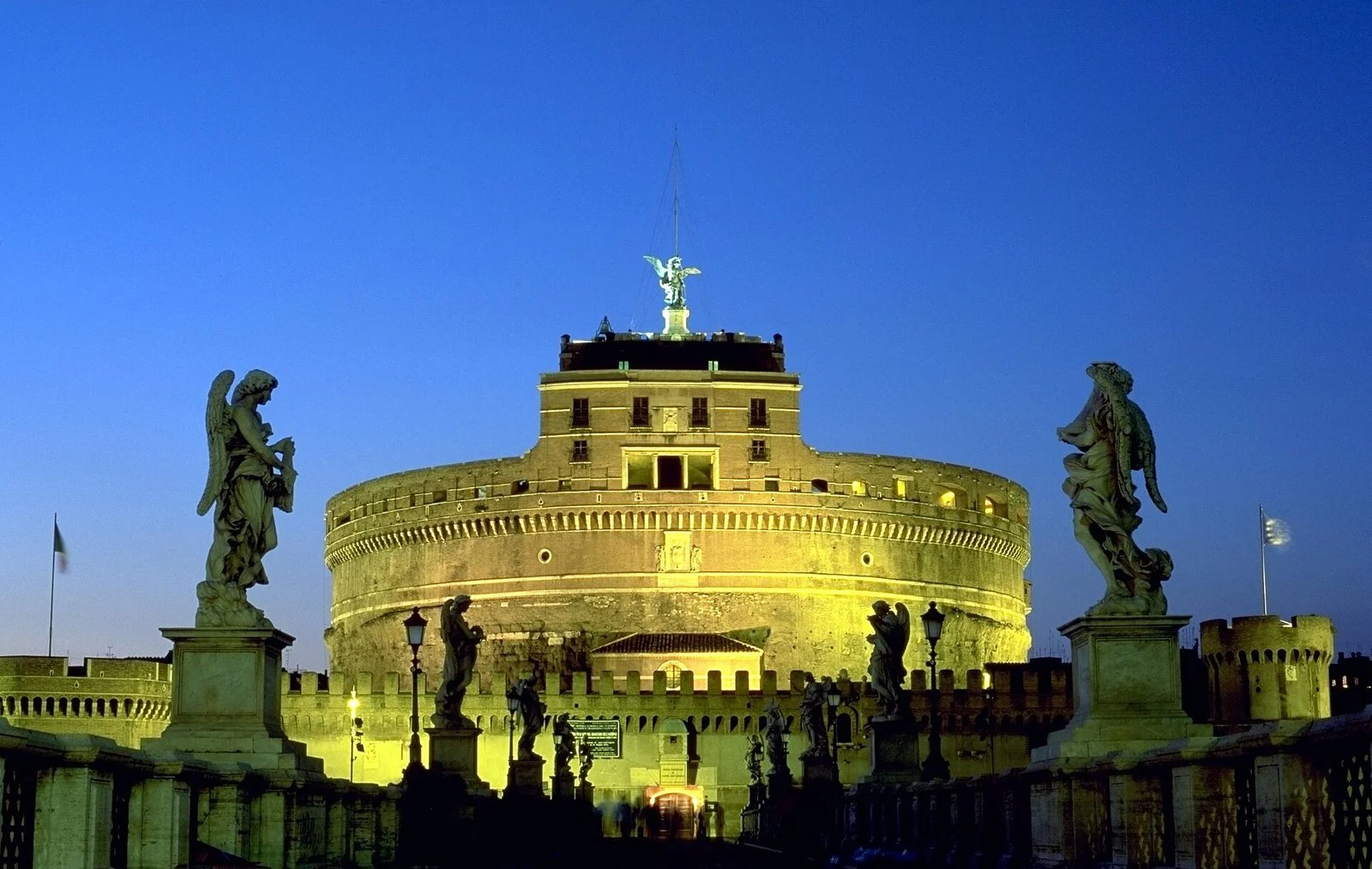
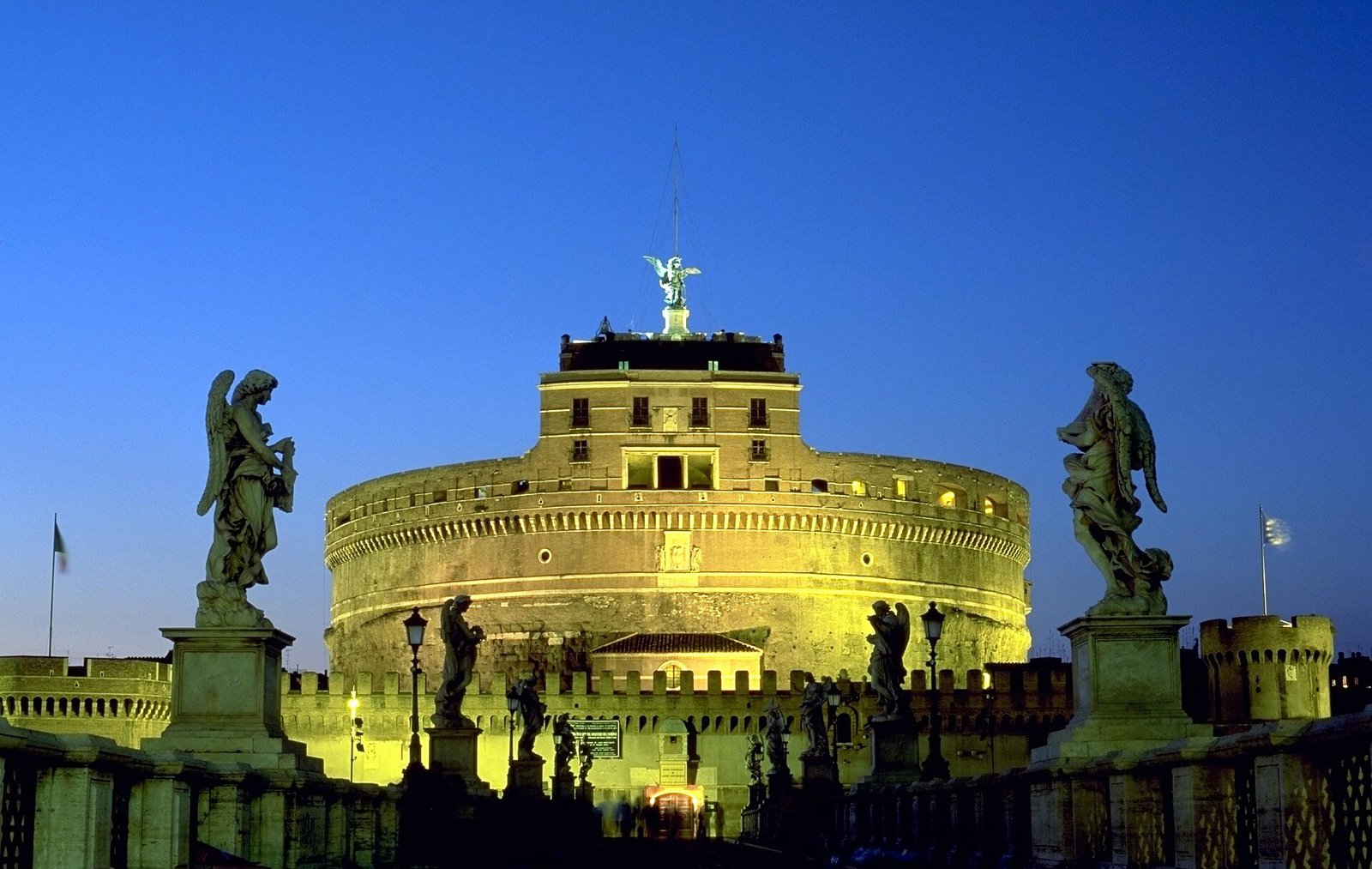
The ghosts of Rome are not apparitions. They are tales. None of the stories that follow has ever been verified, and none ever will be, because none was born to be verified. They were born in taverns, in workshops, on church forecourts, and they were repeated for centuries because they served a purpose: explaining a strange name, making sense of an unjust death, warning children, taking a small revenge on the powerful. The interesting point is not if Beatrice Cenci really crosses Ponte Sant’Angelo on the night of September 11 holding her severed head. The point is that the execution of Beatrice Cenci, on September 11, 1599, on that bridge, really happened, and that in Rome a rage stayed attached to it that no archive document manages to express better than a specter. The pages that follow tell the stories in full, with relish, and then do something that almost nobody does on Roman legend sites: they separate the documented line from the invented line, and say which is which.
How to read these stories: the method
Every tale in this collection is divided into three parts: the story as it is told, the documented historical core where one exists, and an honest line on what is missing. You will not find here testimonies, sightings, accounts of people who supposedly saw something. That material does not exist in verifiable form and passing it off as news reporting would be a swindle.
Three labels, always used
Three distinctions recur in the pages that follow. Documented means that a primary source or a solid historiographical reconstruction exists: a trial record, a parish register, a published excavation, a contemporary chronicle. Popular tradition means that the story has circulated for a long time by word of mouth or in folklore collections, without any document confirming it. Controversial means that scholars disagree and that the debate is open: not that the truth is hidden, but that the available data support more than one reading.
Why the distinction matters more than the story
Many Roman places owe their fame to a tale, not to a fact. Hadrian's Mausoleum is called Castel Sant’Angelo because of a vision that nobody recorded, and that name is today an official datum. The legend produced a fact: the place name. Keeping the two things separate takes nothing away from the tale, because it shows the mechanism by which a city builds its memory.
Beatrice Cenci and the bridge in front of the castle
Beatrice Cenci was beheaded in Rome on September 11, 1599, on a scaffold set up at the head of Ponte Sant’Angelo, together with her stepmother Lucrezia Petroni and her brother Giacomo. The sentence and the execution are documented by the trial records and by the Roman chronicles of the time. It is the most told judicial case of papal Rome, and the only Roman apparition that almost everyone knows even without knowing its name.
The tale as it is handed down
Tradition has it that every year, on the night between September 10 and 11, a figure of a young woman dressed in white crosses the bridge holding her own head in her hand, and disappears at the height of the castle. Some versions make her stop halfway, where the scaffold stood. Others make her climb toward the fortress, where Beatrice had been shut up and tortured. No version adds words. The specter never speaks, and this is an almost constant trait of Roman ghosts, who act and do not explain.
The historical core: a real trial, a city taking sides
Francesco Cenci, Beatrice's father, was a rich, violent Roman noble, more than once in legal trouble, and the family claimed at the trial to have suffered systematic abuse from him. In September 1598 Francesco died falling from a balcony of the fortress of Petrella Salto, in Abruzzo. The inquiry established that he had been killed and that the fall had been staged. Beatrice, her brother Giacomo, her stepmother Lucrezia and her younger brother Bernardo were tried in Rome. Clement VIII did not grant a pardon, even though a substantial part of Roman public opinion had sided with the defendants. Beatrice and Lucrezia were beheaded, Giacomo was executed with a harsher penalty, and Bernardo was forced to watch and then sentenced to the galleys.
What is missing
Of the apparition there is no trace in contemporary sources. The 17th-century chroniclers do not speak of it, and it does not appear in the learned guides to Rome before the Romantic age. The ghost is born when the case becomes European literary material, between Stendhal, Shelley and 19th-century painting, and the historical Beatrice is replaced by a Beatrice who is a symbol of innocence crushed by power. Even the portrait of a young woman with a turban, kept at Palazzo Barberini and for two centuries attributed to Guido Reni as a portrait of Beatrice on the eve of the execution, has no documentary basis. The identification is today rejected by scholars, and the painting is probably a sibyl. The ghost of September 11 is therefore a recent creation, grown on a very hard and real fact.
Donna Olimpia, the Pimpaccia, and the chariot of fire
Olimpia Maidalchini Pamphilj, born in Viterbo on May 26, 1592 and died at San Martino al Cimino on September 26, 1657, was the most powerful woman in 17th-century Rome. Sister-in-law of Pope Innocent X, she shaped his court to the point that foreign ambassadors dealt with her before dealing with the pontiff. The nickname the Romans stuck on her, the Pimpaccia, comes from a Latin pasquinade: Olim pia, nunc impia, once devout, now impious.
The tale as it is handed down
The legend says that on the night of January 7, the anniversary of the death of Innocent X, a black carriage wrapped in flames and drawn by black horses comes out of the family palace and races toward the Tiber, to sink into the water at the height of Ponte Sisto. On the carriage would sit Donna Olimpia with the chests of gold she had carried off. Some versions start the race from the Janiculum and from the area of Villa Doria Pamphilj, the family's great estate on the right side of the river. Others make it come out directly from Piazza Navona, where the Pamphilj had concentrated their self-representation, from the Fountain of the Four Rivers to the church of Sant’Agnese in Agone.
The historical core: a woman who governed and a miserable funeral
Innocent X died on January 7, 1655. The chronicles of the time tell that the pope's body stayed for days without a decent burial, because none of the relatives wanted to take on the expenses. The funerary monument in Sant’Agnese in Agone came much later, on the initiative of his nephew Camillo. Asked to contribute, Olimpia is said to have answered that she was a poor widow. The phrase is reported by the sources of the time, but the sources of the time detested her, and it is material that has to be read knowing which side the writer is on. What is documented instead is the power, the accumulated wealth, the appointments that passed through her hands and the popular hatred that surrounded her. Olimpia died of plague two years later, in her fief of San Martino al Cimino, in the Viterbo area.
What is missing
Of the flaming carriage there is nothing. No 17th-century chronicler records it, and the story appears in Roman folklore collections much later. Even the two chests of gold taken from under the papal bed belong to hostile pamphleteering more than to an inventory. One detail the legend ignores should be pointed out: Ponte Sisto, where the carriage is supposed to sink, has no documented link with Olimpia, and the Pamphilj palace in Piazza Navona is on the other side of the city from the direction of the tale. The geography of the legend is, as often happens, an emotional geography.
Where you go today
The family villa is today the largest public park in Rome, Villa Doria Pamphilj, with free entry. The family picture gallery can be visited at Palazzo Doria Pamphilj on Via del Corso, which is a private museum with a ticket. The palace in Piazza Navona, instead, is the seat of the embassy of Brazil and cannot be visited freely.
Costanza De Cupis and the marble hand
The story of Costanza De Cupis's hand is told in Piazza Navona, in the palace at the corner with Via dell’Anima, and it is the most elegant Roman legend and at the same time the worst documented of all: none of the sources that spread it cites an archive, a record, a verifiable date.
The tale as it is handed down
Costanza Conti De Cupis, a 17th-century Roman noblewoman, had hands of a beauty that was proverbial in Rome. A sculptor asked to be allowed to reproduce them in marble, and the copy became a small object of cult among the artists of the city. A friar, seeing the work, is said to have pronounced a prophetic phrase to the effect that those hands would soon be deprived of their perfection. Shortly after, Costanza, while embroidering, pricked a finger. The wound became infected, gangrene advanced, the hand was amputated and she died. Since then, says the legend, on moonlit nights a very white hand appears behind the glass of a window of the palace, and for this reason the window was walled up.
The historical core: the palace exists, the rest does not
The palace at the corner between Piazza Navona and Via dell’Anima is real and has a reconstructable building history, with passages between Roman noble families between the 15th and 17th centuries. The De Cupis family is attested in the Rome of the period. Of Costanza, instead, there is at the moment no independent documentation: no records, no certain dates of birth or death, not even the sculpture the story speaks of, never identified in a collection. The versions in circulation do not agree among themselves on the name of the sculptor, on the exact period and even on which window was supposedly closed.
What is missing
Everything is missing. This is one of those stories that live only in tourist literature and in blogs of Roman curiosities, where they have been copied for a decade with the same details and without a single primary source behind them. A search in the encyclopedia entries and in the official heritage records returns no Costanza De Cupis. The tale should therefore be treated for what it is, an anecdote of recent tradition, and not as a 17th-century affair. Its origin is not known, and it is not even certain that it has roots earlier than the 20th century. The theme too is suspect, because the motif of beauty punished by prophecy is a narrative topos widespread all over Europe, not a Roman fact.
The Torre della Scimmia and the ever-lit lamp
The Torre della Scimmia is at Via dei Portoghesi 18, a few minutes from Piazza Navona, and it is a medieval tower absorbed into Palazzo Scapucci. The shaft is probably of 13th-century origin, the crenellation dates to the 15th century, and the Scapucci family worked on it in the 16th century, incorporating it into their residence. At the top, toward the east, there is a 19th-century statue of the Virgin with a wrought-iron halo of rays, and beside it a votive lamp that according to tradition must never go out.
The tale as it is handed down
The family that lived in the tower kept a trained monkey. One day the animal took in its arms the newborn son of the owners and climbed to the top of the tower, holding him suspended in the void. The father, desperate, made a vow to the Madonna and then called the monkey with the whistle it was used to. The animal obeyed and brought the child back down unharmed. In fulfillment of the vow the father had an image of the Virgin placed at the top of the tower with a lamp that has burned day and night ever since. Some versions replace the whistle with prayer alone.
The historical core: the tower, the statue and Hawthorne
The tower exists, the statue exists, the lamp exists and is visible from the street. The literary fortune of the story is also documented: Nathaniel Hawthorne noted it in his Italian notebooks during his Roman stay and took it up in the novel The Marble Faun, published in 1860, which is the channel through which the legend reached the Anglo-Saxon public and from there bounced back to Italy. The formula of the Marian vow fulfilled with a perpetually lit shrine is instead a very widespread Roman devotional practice, and in this the tower is no exception.
What is missing
The episode is missing. There is no record, name or date linking the Scapucci family to a child carried off by a monkey, and the story does not appear in Roman sources before the advanced modern age. The opposite of what the legend tells is plausible: the statue and the lamp came first, and the tale was built afterward to explain why a light burned at the top of a private tower. Etiological legends almost always work like this, backward.
Mastro Titta, the executioner who crossed the bridge
Giovanni Battista Bugatti, called Mastro Titta, was the executioner of the Papal States from 1796 to 1864 and lived from 1779 to 1869. He is the only figure in this collection whose career is documented line by line, because he kept a personal register of executions. His notebook lists 516 names, of which 514 are counted as executions actually carried out by him.
The tale as it is handed down
Of Mastro Titta it is said that his specter appears in a scarlet cloak between Ponte Sant’Angelo and the castle, along the stretch he walked to go to work. The most widespread version has him appear on the nights when an execution was scheduled, and joins him to the figure of Beatrice Cenci in a kind of recurring couple. Some local versions give him the role of guardian of the bridge.
The historical core: a phrase that entered the language
Bugatti lived in Borgo, on the right bank of the Tiber, in Vicolo del Campanile, and he was not allowed to cross the river toward the center except for reasons of service. His appearance on the bridge therefore announced an execution. Hence the Roman saying Mastro Titta passa ponte, which simply meant that that day someone would die in the square, and which remained in the spoken language long after the end of the Papal States. He beheaded with the axe and then with the guillotine, and he hanged. In 1864, at 85, he was replaced by Vincenzo Balducci and Pius IX assigned him a monthly pension of 30 scudi. His scarlet cloak is kept in Rome in the Museo Criminologico in Via del Gonfalone. It is best to check opening times and access terms before showing up, because the museum has had periods of closure and reduced calendars over time.
What is missing
The autobiography that circulates under his name, Mastro Titta il boia di Roma. Memorie di un carnefice scritte da lui stesso, published in 1891, is not his work. It is an anonymous late-19th-century text built on the character, and it is the source from which many of the colorful details you read around derive, including the habit of offering tobacco to the condemned. It should be used as a document of Mastro Titta's fame, not of his life. As for the specter, it does not appear in any 19th-century Roman folklore collection. It is a recent figure, probably grown next to that of Beatrice Cenci to complete the scene on the bridge.
Isabella de’ Medici and the castle of Bracciano
Isabella de’ Medici, born in Florence on August 31, 1542 and died on July 16, 1576, was the wife of Paolo Giordano I Orsini, duke of Bracciano. The Orsini Odescalchi castle of Bracciano keeps a room that bears her name and is the place where her story is told to visitors.
The tale as it is handed down
The popular version has it that Paolo Giordano, informed of his wife's relationship with her cousin Troilo Orsini, strangled her during an apparently ordinary meeting, and that since then the ghost of Isabella walks the rooms of the castle of Bracciano. The scene has become a classic of the castle's tourist narration, and it is the reason many visitors arrive knowing the name of Isabella even before that of the Orsini.
The historical core: a probable murder, in another place
Here a correction is needed that most tales omit: Isabella did not die at Bracciano. She died in the Medici villa of Cerreto Guidi, in Tuscany, on July 16, 1576. The official version spread at the time spoke of a sudden illness while she was washing her hair. Modern historiography, in particular the archival work of Caroline P. Murphy on the diplomatic correspondence of the period, considers the hypothesis of murder by strangulation prevalent, with the probable consent of her brother Francesco I, grand duke of Tuscany. In the same week and in similar circumstances Eleonora di Toledo, wife of her brother Pietro, also died. Some recent popularizing reconstructions have put forward again the thesis of natural death and read the murder as a diplomatic rumor. It is a minority position, and whoever encounters it should know that it does not represent the current state of studies.
What is missing
The link between the death and the castle is missing. The ghost of Bracciano is a graft: a Tuscan affair transplanted into her husband's Roman residence, where it works better because the castle is intact, visitable and scenic. The room of Isabella in the castle of Bracciano is a staging, not a crime scene.
Where you go today
The castle of Bracciano is visited with a paid ticket and a guided route. It is private property of the Odescalchi family and is also used for events, which can change the opening calendar, so it is best to check days and hours before leaving. Around it, the village of Bracciano and the lake with its legend of a sunken city.
The two child ghosts: Sermoneta and Fumone
Lazio has two castles with the same legend, 120 kilometers apart. In both, the tale is of a child who died young and who would keep playing in the rooms. It is the most useful pair in this collection, because it shows how little original legends are and how instead their motifs recur.
The Caetani castle of Sermoneta
The Caetani castle of Sermoneta, in the province of Latina, is a 13th-century fortress expanded over the centuries, passed from the Annibaldi to the Caetani and for a time to the Borgia, and today belonging to the Fondazione Roffredo Caetani, which opens it to the public with guided visits. The legend tells of a blond child, identified with a little Caetani who died in circumstances never clarified, whose presence would manifest itself with laughter and steps in the rooms. The story has fused with a portrait kept in the castle, which visitors point out as his.
The castle of Fumone
The Longhi De Paolis castle of Fumone, in the province of Frosinone, was for centuries the main papal fortress of southern Lazio, so much so that the local saying went that when Fumone smoked the whole countryside trembled. Here Boniface VIII had Celestine V shut up, the pope who had abdicated on December 13, 1294 after a little more than four months of pontificate. Captured while trying to take ship for Greece, Celestine died at Fumone on May 19, 1296, at about 87 years old. In 1584 the castle passed to the Longhi, who turned it into a residence and made there a hanging garden of about 3,500 square meters. The legend concerns the young marquis Francesco Longhi, who died as a child. It is said that he was killed by his sisters over an inheritance question, that his mother had his body embalmed instead of buried, and that his ghost still plays in the rooms, leaving the toys moved.
The historical core of the two castles
Both castles are real, visitable and well documented in their architectural and dynastic history. At Fumone the imprisonment and death of Celestine V is documented, which is a fact of the history of the Church and not a legend. On the pope's skull, examined in 1313 and in 1888, a hole attributed to a nail was noted, but a survey in 2013 traced it back to natural causes or to postmortem damage, and historians rule out direct murder while acknowledging that the detention hastened his end. The embalmed body of the child is indeed kept in the castle and is part of the visiting route.
What is missing, in both cases
Of the child of Sermoneta the name, the date of birth or death are not known, and no document of the Caetani family has ever been produced in support. At Fumone the existence of the child and the preservation of the body are not in question, but the version of poisoning by the sisters for reasons of inheritance is local tale, not the outcome of an investigation, and the apparitions with moved toys belong to the color reporting. The motif of the dead child who keeps playing is one of the most widespread in European castle folklore, and its recurrence is a sign of cultural transmission, not of coincidence.
Nero, the walnut tree of the demons and Piazza del Popolo
The basilica of Santa Maria del Popolo, at the northern corner of Piazza del Popolo, was founded in 1099 on the initiative of Paschal II. The foundation is documented, and with it the fact that the area was linked to the memory of Nero's tomb.
The tale as it is handed down
On the site of Nero's tomb an enormous walnut tree is said to have grown, inhabited by crows and by demons who assaulted wayfarers arriving from Via Flaminia. After a dream in which the Virgin showed him what to do, Paschal II led a procession, had the tree cut down, the emperor's bones burned and scattered in the Tiber, and on the spot had a chapel built that became the basilica.
The historical core: a tomb in the right place
The tomb of the Domitii Ahenobarbi family, to which Nero belonged on his father's side, was indeed at the foot of the Pincio, that is exactly in that zone. On this the ancient sources agree, and the memory of the place was preserved throughout the Middle Ages. The foundation of the church in 1099 and its 15th-century enlargement are documented, as is the role of the basilica as the northern entrance gate of the city for pilgrims.
What is missing
The walnut tree, the crows, the demons and the dream belong to the medieval hagiographic tradition, the kind of tale that was built to justify the foundation of a church in a place charged with pagan memories. The entry on the basilica tells at length how this story is born. No papal exorcism of 1099 is recorded in independent contemporary sources, and Nero's bones, if they were ever there, are not shown as removed by any record.
The Colosseum, the demons and the night of Benvenuto Cellini
The Colosseum was throughout the Middle Ages the Roman place with the worst supernatural reputation. Abandoned, overgrown with vegetation, used as a quarry and as a fortress, it was considered a gate of hell and a place where people went to gather herbs for magic.
The tale as it is handed down
The most famous scene is told by Benvenuto Cellini in his own autobiography: one night, together with a Sicilian priest who practiced necromancy, he is said to have entered the amphitheater for a rite. Inside a circle drawn on the ground, amid fumigations and formulas, the amphitheater would have filled with legions of demons, to the point that one of those present lost control. Cellini writes that he came out of there terrified and at the same time convinced he had seen.
The historical core: the text exists, the fact does not
The episode is documented in the sense that it really exists and can be read in Cellini's Vita, written in the mid-16th century. It is a real source. But the Vita is an autobiography built with literary intent, where the author presents himself as an exceptional man and draws extraordinary episodes to himself. Using it as the record of an event is a methodological mistake. What is documented instead is the infernal fame of the amphitheater in the Middle Ages, which is found in several texts and which explains why in the 18th century the monument was consecrated to the memory of the martyrs and a Via Crucis was installed there.
What is missing
Any outside confirmation of the night described by Cellini is missing. Nobody else tells it, no document records it. The chapter dedicated to the magical fame of the Colosseum in the monument's entry reconstructs at length the context in which these stories were born. As for the martyrdom of Christians in the arena, which is the foundation of the 18th-century consecration, modern studies do not consider it demonstrated for the Colosseum in particular. It is devotional tradition, not archaeological data.
The Muro Torto and those who were buried outside
The Muro Torto is the inclined stretch of Aurelian walls that runs under the Pincio, between Villa Borghese and Piazzale Flaminio. The lean is real, due to the subsidence of the ground on which the wall rests, and the stretch has never collapsed.
The tale as it is handed down
The legend says that the wall is protected by Saint Peter, and that this is why it does not fall. Belisarius, during the Gothic siege of the 6th century, is said to have given up repairing it, saying that it defended itself. At the foot of the wall, in the zone now covered by the gardens, those excluded from consecrated cemeteries were buried: suicides, excommunicated people, executed people, prostitutes. Among the presences that tradition makes walk there at night are the Carbonari Angelo Targhini and Leonida Montanari, beheaded in 1825, who would appear with their heads under their arms.
The historical core: the burials are real
The use of the area as a burial place for those who could not be buried in consecrated ground is documented, and it is one of the most concrete things in this whole collection. The topography of death in papal Rome had precise boundaries, and being outside the wall meant being outside the community even in death. Targhini and Montanari were really executed on November 23, 1825 in Piazza del Popolo, condemned for Carbonari activity, and their execution was carried out by Mastro Titta.
What is missing
The anecdote of Belisarius is not attested by the late antique sources and is in all likelihood a later construction. The protection of Saint Peter is popular devotion. The apparitions with the head under the arm are a generic folkloric motif, which recurs everywhere in Europe where someone has been beheaded, and have no documentary link to the two Carbonari.
The other places where Rome and Lazio tell themselves
Apparitions are only a part of the repertoire. The same logic, a tale built on top of a fact, holds up dozens of other places in Lazio.
The Bocca della Verità and the severed hand
The mask in the portico of Santa Maria in Cosmedin is said to punish whoever swears falsely by cutting off his hand. The disk is a Roman artifact of the imperial age, probably a well cover or a drain cover with a river face, placed in the portico in 1632. The oracular function appears in the Middle Ages and has nothing ancient about it. The entry dedicated to the Bocca della Verità reconstructs how the tale was formed, including the medieval story of the woman who cheats the test by having herself embraced in public by her lover disguised as a madman.
The Park of Monsters at Bomarzo
The Sacro Bosco of Bomarzo, commissioned by Pier Francesco Orsini from 1552, is full of monstrous figures arranged without a readable sequence, and an inscription declares that the wood was made only to unburden the heart. Commission, dating and inscriptions are documented. The alchemical, initiatory and esoteric readings that have been laid over it for a century are all modern hypotheses, not witnessed by 16th-century sources, as the chapter dedicated to the meaning of the Sacro Bosco reconstructs.
The Alchemical Gate of Piazza Vittorio
The Porta Magica is the only remnant of the villa of the marquis Massimiliano Savelli Palombara, who dabbled in alchemy. The legend tells of a pilgrim who vanished at dawn leaving flecks of gold and sheets of symbols. Current studies instead attribute the inscriptions to a Vatican manuscript of 1655 by Palombara himself. The gate, dismantled in 1873 and repositioned around 1888, is viewed from the gardens of the square, and the chapter on the alchemist pilgrim explains how the romanticized version took shape.
Ninfa, the dead city
The Garden of Ninfa, in the territory of Cisterna di Latina, rises on the ruins of a medieval city destroyed in 1381 and never repopulated, abandoned for centuries to malaria. Destruction, depopulation and 20th-century rebirth as a Caetani garden are documented. The curse and the murdered noblewoman who is said to wander among the ruins are popular tradition, as the chapter on the curse of Ninfa clarifies. The garden is visited only on set dates and by booking. The calendar must be checked every year.
Lake Bracciano and the sunken city
Under Lake Bracciano would lie Sabate, a city swallowed up as divine punishment. The place name of the Sabatino basin does in fact derive from Sabate, and on the lake bed there is the submerged Neolithic village of La Marmotta, which is a first-rate archaeological discovery. No swallowed city has ever been found, however, and the chapter on Sabate explains what is really on the bottom. On the opposite shore, Trevignano Romano.
Nemi, the king of the wood and the burned ships
Lake Nemi was the mirror of Diana, and the sanctuary of Diana Nemorensis had a priest, the Rex Nemorensis, who won the office by killing his predecessor. Caligula's two ceremonial ships were recovered by draining the lake between 1928 and 1932 and destroyed by a fire in 1944. The Museo delle Navi Romane keeps what remains and the reconstructions. Submerged treasures and presences on the shore are local tale, as the chapter on the king of the wood specifies.
Calcata and the vanished relic
At Calcata, in the Viterbo area, a relic was venerated for centuries that arrived, according to tradition, after the Sack of Rome in 1527. In 1983 the reliquary vanished from the parish priest's house and was never found. The disappearance is a matter of news reporting, the authenticity of the relic is not sustainable and the Church had already discouraged the cult. The chapter on 1983 tells how the town reacted.
The underground basilica of Porta Maggiore
In 1917 a collapse of the ground during railway works revealed an underground basilica of the 1st century, intact, decorated with white stuccoes. It was hypothesized at once that it was the meeting hall of a Neopythagorean sect, and that reading passed into popularization as if it were settled. In reality it remains a debated hypothesis, and other readings are still on the table, as the chapter on the function of the building explains. The visit is possible only by booking and in limited groups.
The Capuchin crypt
Under the church of Santa Maria della Concezione, in Via Veneto, five chapels are decorated with the bones of about 3,700 friars: rosettes of vertebrae, chandeliers of femurs, skeletons dressed in the habit. It is not a place of legends but a 17th-century memento mori, closed by the inscription that reminds the visitor that he will be what those friars are. The Museo dei Frati Cappuccini and the Ossuary Crypt are visited with a ticket. The esoteric readings that circulate online have no foundation.
The Mamertine Prison and the footprints of the Appia
In the Mamertine Prison, at the foot of the Campidoglio on the side of the Roman Forum, they show the spring that is said to have gushed so that Peter could baptize his jailers. The Tullianum is the oldest prison in Rome and its Republican history is documented, the water vein is natural and predates Christianity, the imprisonment of Peter and Paul is tradition. In the same way, in the church of Domine Quo Vadis on the Appia Antica they show a slab with two footprints. It is a copy, the original is at San Sebastiano fuori le Mura, and it is in all likelihood a Roman ex-voto of travelers. At the Abbey of Tre Fontane, finally, Paul's head is said to have bounced three times, making three springs gush. The fountains exist, but today they give no water.
Santa Sabina, the devil's stone and the orange tree
In the narthex of the basilica of Santa Sabina on the Aventine is displayed a block of black stone that the Dominican tradition indicates as the one hurled by the devil at Saint Dominic. It is in reality a weight or counterweight of the Roman age. The orange tree you see from the peephole in the corridor, and which devotion attributes to the saint's hand in 1220, is a descendant by sucker of the tree of tradition, not the original.
Trevi Fountain, Tiber Island, Palatine
At the Trevi Fountain the maiden who pointed out the spring to Agrippa's soldiers is legend, while the Virgo aqueduct of 19 BC and the bas-relief depicting her are real. The coin thrown over the shoulder is a 19th-century rite, made global by 20th-century cinema. At the Tiber Island the serpent of Aesculapius that chooses the island is an etiological tale, but the temple of the healing god and the remains of the prow-shaped decoration, visible toward the Ponte Rotto, are documented. On the Palatine, finally, the underground chamber identified in 2007 and announced as the Lupercal, the cave of the she-wolf, was immediately contested by some of the archaeologists, who consider it more probably a nymphaeum of the house of Augustus. The question is not closed.
Outside Rome: Sutri, Tivoli, Viterbo, Vulci, Anagni
The chivalric tradition has Orlando born in a cave at Sutri, identified with the rock-cut church of the Madonna del Parto dug into the tuff inside the park of the very ancient city. The church and its Mithraic phase are real, Orlando is a literary character. At Tivoli the Sibyl is said to have shown Augustus the vision that legitimizes the basilica of Santa Maria in Aracoeli on the Capitoline Hill: a medieval Christian legend, built after the fact. At Viterbo the beautiful Galiana and the white sow explain a reused sarcophagus and the lion of the city coat of arms. At Vulci the single-arch bridge over the Fiora is called the Devil's Bridge, following a folkloric motif that recurs identically dozens of times in Europe. At Anagni, in the palace of Boniface VIII, the slap of September 7, 1303 is not attested by the most reliable contemporary sources. The attack is historical, the iron glove on the pope's face is a narrative addition, made famous by Dante. At Palestrina, in the sanctuary of Fortuna Primigenia, the sortes praenestinae were a real oracular practice, while the finding of the tablets inside a split rock is the founding myth of the sanctuary, already told by Cicero as a local tale. At Villa Medici the cannonball in the fountain is attributed to Christina of Sweden, but the fountain predates the episode. At Subiaco, on Monte Soratte and at Civita di Bagnoregio the mechanism repeats identically. At Genazzano the 15th-century fresco of the Mother of Good Counsel is real and the cult is documented from the 15th century on, while the flight of the image from Scutari is devotional tale. At Torre Astura, where Conradin of Swabia was captured in 1268 before being beheaded in Naples, the glove thrown from the scaffold and the falcon that brings it back belong to 19th-century romanticism, not to the chronicles. At Bolsena the Eucharistic miracle of 1263 is devotional tradition, while the institution of Corpus Domini in 1264 and the building of the Cathedral of Orvieto for the corporal are history, and the causal link between the two facts is debated by historians.
Why these stories all resemble each other
Whoever reads 20 Lazio legends in a row notices that the motifs recur: the dead child who keeps playing, the murdered woman who walks, the pact with the devil to build a bridge, the river that swallows an impious city, the severed hand. It is no accident and it is the most interesting thing in the whole repertoire.
The legend says who was hated
Donna Olimpia on the chariot of fire and Nero among the crows are not stories about the supernatural. They are popular judgments. The Rome of the 17th century could not put the pope's sister-in-law on trial and the medieval Rome could not put on trial an emperor dead a thousand years, but it could put both of them in hell and make them come back to serve their sentence in public. Roman apparitions almost always hit the powerful, and it is rare for them to touch ordinary people. The geography of ghosts follows the geography of power.
The legend compensates the one who lost
Beatrice Cenci is the exact reverse of Donna Olimpia. Here the people do not condemn, they absolve. The ghost that returns does not serve a guilt, it denounces an injustice. The fact that the Rome of 1599 was largely on the side of the condemned woman and that the pope did not grant a pardon is documented, and the ghost is the way in which that sentence was never accepted.
A walking itinerary in the center, in half a day
The Roman places of this repertoire are almost all inside a quadrilateral that can be walked in three or four hours, not counting the paid visits. The physical closeness makes it evident how much the stories pass the baton to each other.
From Ponte Sant’Angelo to Piazza Navona
You start from the bridge, which is free and always open, with Castel Sant'Angelo in front of you. Here stand Beatrice Cenci, Mastro Titta and the archangel of the plague of 590. You cross toward Tor di Nona, take Via dei Portoghesi for the Torre della Scimmia and go down onto Piazza Navona, where you look at Palazzo Pamphilj on the long side and the corner with Via dell’Anima for the hand of Costanza. The stretch is barely 20 minutes.
Frequently asked questions about the ghosts of Rome
What is the most famous ghost in Rome?
The most famous ghost in Rome is that of Beatrice Cenci, who according to popular tradition crosses Ponte Sant’Angelo on the night of September 11 holding her own head. The execution of Beatrice Cenci on September 11, 1599 on that bridge is a historical fact documented by the trial records. The apparition, instead, does not appear in any contemporary source and is a tale formed in the Romantic age, when the case became European literary material.
Can you visit the places of the ghosts of Rome for free?
Most of the places tied to the ghosts of Rome are outdoors and can be reached without paying anything: Ponte Sant’Angelo, Piazza Navona, Via dei Portoghesi with the Torre della Scimmia, Piazza del Popolo and the stretch of the Muro Torto walls are public spaces always accessible. You pay only to enter Castel Sant’Angelo, the Capuchin crypt, the Mamertine Prison and the other museum monuments, each with its own fares and hours to be checked before the visit.
Where is the Torre della Scimmia in Rome?
The Torre della Scimmia is at Via dei Portoghesi 18, in the Campo Marzio district, about five minutes on foot from Piazza Navona. It is a medieval tower absorbed into Palazzo Scapucci, with 15th-century crenellation and, at the top, a 19th-century statue of the Virgin beside an ever-lit votive lamp. The building is private and cannot be visited. The tower and the lamp are observed from the street, at any hour.
Is the ghost of Isabella de’ Medici tied to the castle of Bracciano?
Isabella de’ Medici did not die at the castle of Bracciano but in the Medici villa of Cerreto Guidi, in Tuscany, on July 16, 1576. The link between her death and the Roman castle is therefore a narrative graft, not a historical datum. She was however the wife of Paolo Giordano I Orsini, duke of Bracciano, and the castle dedicates a room to her. Modern historiography considers the hypothesis of murder prevalent, supported by the diplomatic correspondence of the period.
Who was Mastro Titta and how many people did he execute?
Mastro Titta was the nickname of Giovanni Battista Bugatti, executioner of the Papal States from 1796 to 1864, who noted in his register 516 names, of which 514 are counted as executions carried out by him. He lived in Borgo and could not cross the Tiber except on duty, hence the Roman saying that when Mastro Titta crossed the bridge someone died in the square that day. His scarlet cloak is kept in the Museo Criminologico of Rome.
Can you visit the castles of Sermoneta and Fumone?
The Caetani castle of Sermoneta and the Longhi De Paolis castle of Fumone are both visited with guided routes at set times. The first is run by the Fondazione Roffredo Caetani, the second is privately owned and has been open to the public since 1990. Hours, fares and closing days vary during the year and on the occasion of events, so it is best to check directly with the two venues before setting out, above all out of season.
Do the legends about the ghosts of Rome have a historical basis?
The legends about the ghosts of Rome almost always have a real historical core, but the core concerns the life of the person and not the apparition. The execution of Beatrice Cenci, the power of Olimpia Maidalchini, the imprisonment of Celestine V at Fumone and the career of Mastro Titta are documented, while the specter that returns is not, in any case. The apparitions appear in folklore collections and in tourist literature, not in contemporary sources.
One last note, before setting out
These stories hold up very well without needing to be true, and they hold up better if you know which piece is true and which is not. A city that executed a 22-year-old girl in front of the crowd and then regretted it for four centuries does not need a specter to be unsettling. The specter is the way in which the regret took shape. Whoever walks between Ponte Sant’Angelo and Piazza Navona with this awareness sees two superimposed layers, and they are more interesting taken together than taken one at a time.
Whoever wants to build a Roman route that holds these stops together with the rest of the historic center, or to insert a trip to Bracciano, Sermoneta or Fumone into a broader itinerary, will find planning tools at Tour Leader Pro, while to get oriented on connections, distances and destinations in Lazio Italy Planner is a good resource.