Trevignano Romano (RM)
In short. The address to start from is Piazza Vittorio Emanuele III, 1, 00069 Trevignano Romano (RM).

The address to start from is Piazza Vittorio Emanuele III, 1, 00069 Trevignano Romano (RM). It's the Town Hall building, and on its ground floor you'll find the Etruscan-Roman Civic Museum, the first fixed point of a visit. From Rome you can get there by Cotral bus, which leaves from the Saxa Rubra terminus, on the route toward Manziana. The ride costs around €2.80 and stops in town at several points, including Piazza Vittorio Emanuele III itself, Viale Garibaldi and Via Settevene. By car from Rome, take Via Cassia (SS2), exit at La Storta toward Bracciano and Anguillara, continue toward Osteria Nuova and then follow the lakeside road that runs along the lake to Trevignano. If you're coming from outside Rome, exit the Grande Raccordo Anulare at exit 5, take Cassia Veientana and after about 25 kilometers turn onto Via Settevene-Palo. There's no train station in town. The nearest is Anguillara Sabazia, about 15 kilometers away, connected to Trevignano by a bus service. Entry to the historic center and the lakefront is free. The number of the town's Tourist Information Point is 06.99.91.99.79. The village is small and can be covered entirely on foot: allow a full half day if you want to combine the Rocca, the three churches, the museum and a walk by the water.
To place the area as a whole, keep an eye on the page for Lake Bracciano, the basin that Trevignano overlooks together with the other two lakeside towns.
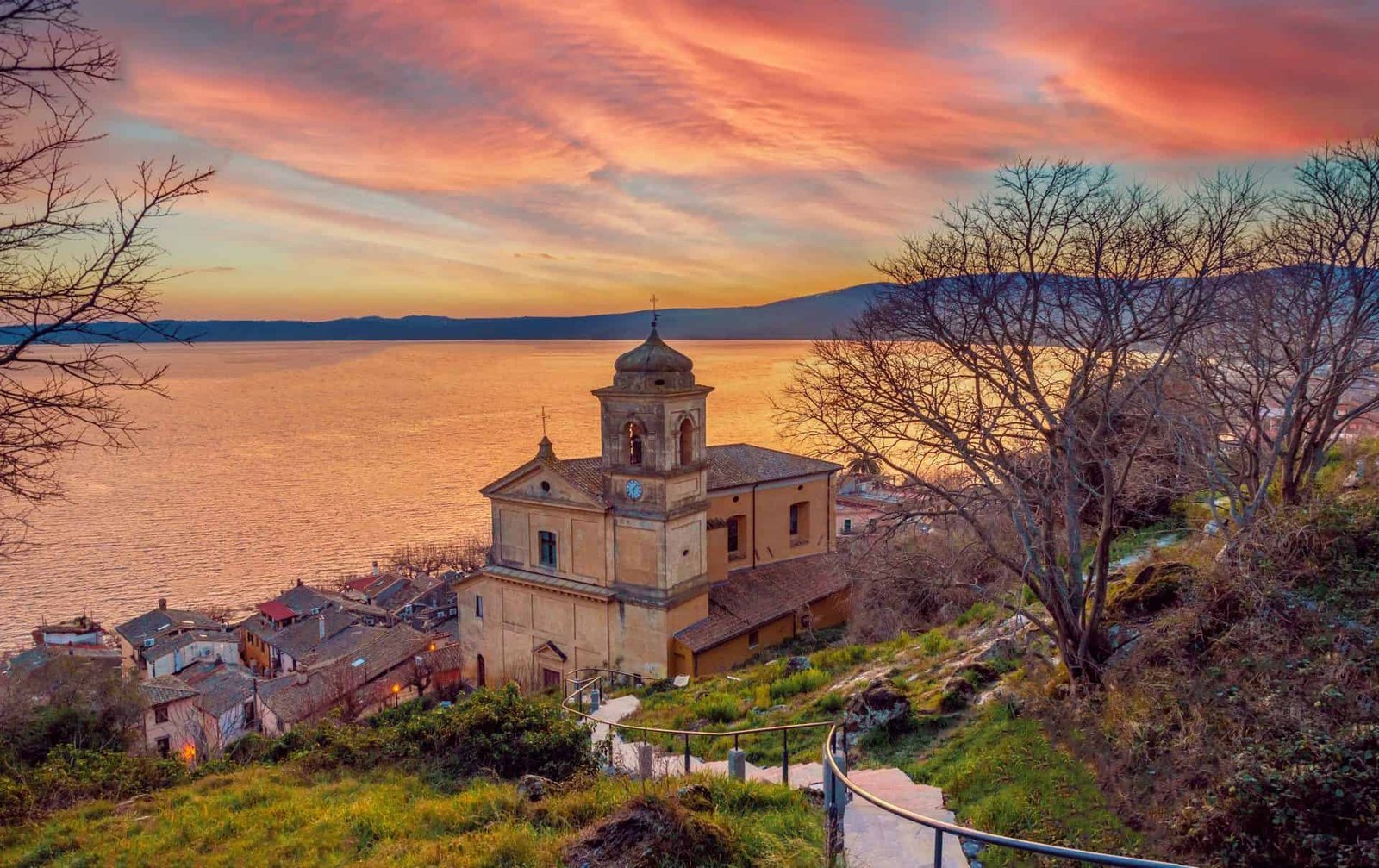
Where Trevignano Romano (RM) is and what the village is like
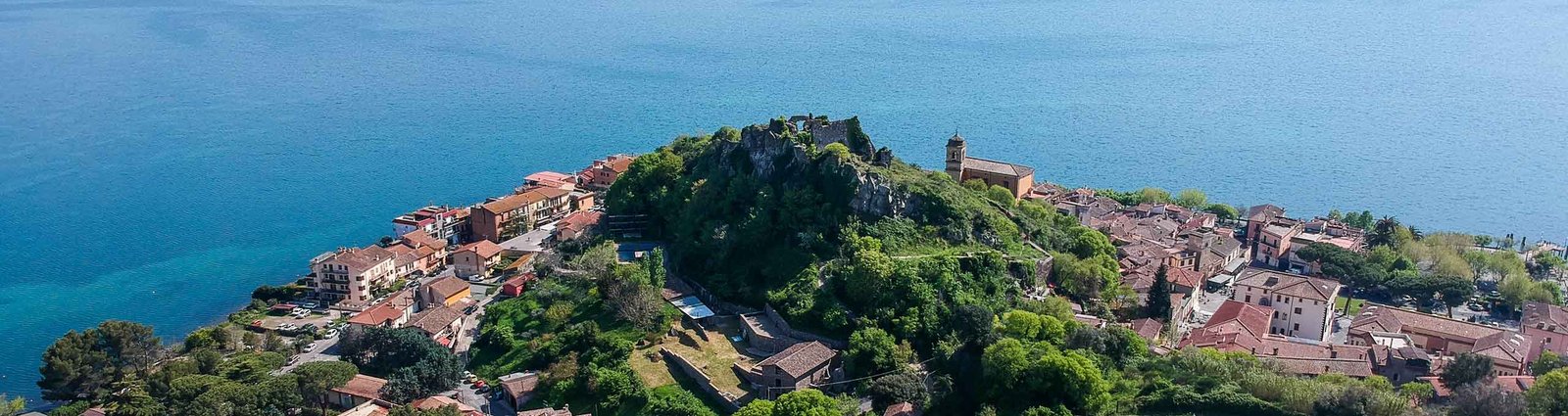
Trevignano Romano occupies the northern shore of Lake Bracciano, at the foot of the Sabatini Mountains and Monte di Rocca Romana, the rise that closes off the town behind it. It's the northernmost vertex of an almost perfect triangle that has Bracciano and Anguillara Sabazia at the other two corners. The three towns face each other across the same body of water, of volcanic origin, and Trevignano is a dozen kilometers from Anguillara, on the other side. The municipality has roughly 5,800 inhabitants, a figure that swells considerably in summer because of vacationers and Romans who have second homes here. The distance from the capital is modest, a little under 50 kilometers by road, and this explains why the place works as well as a day trip as it does as a base for a long weekend.
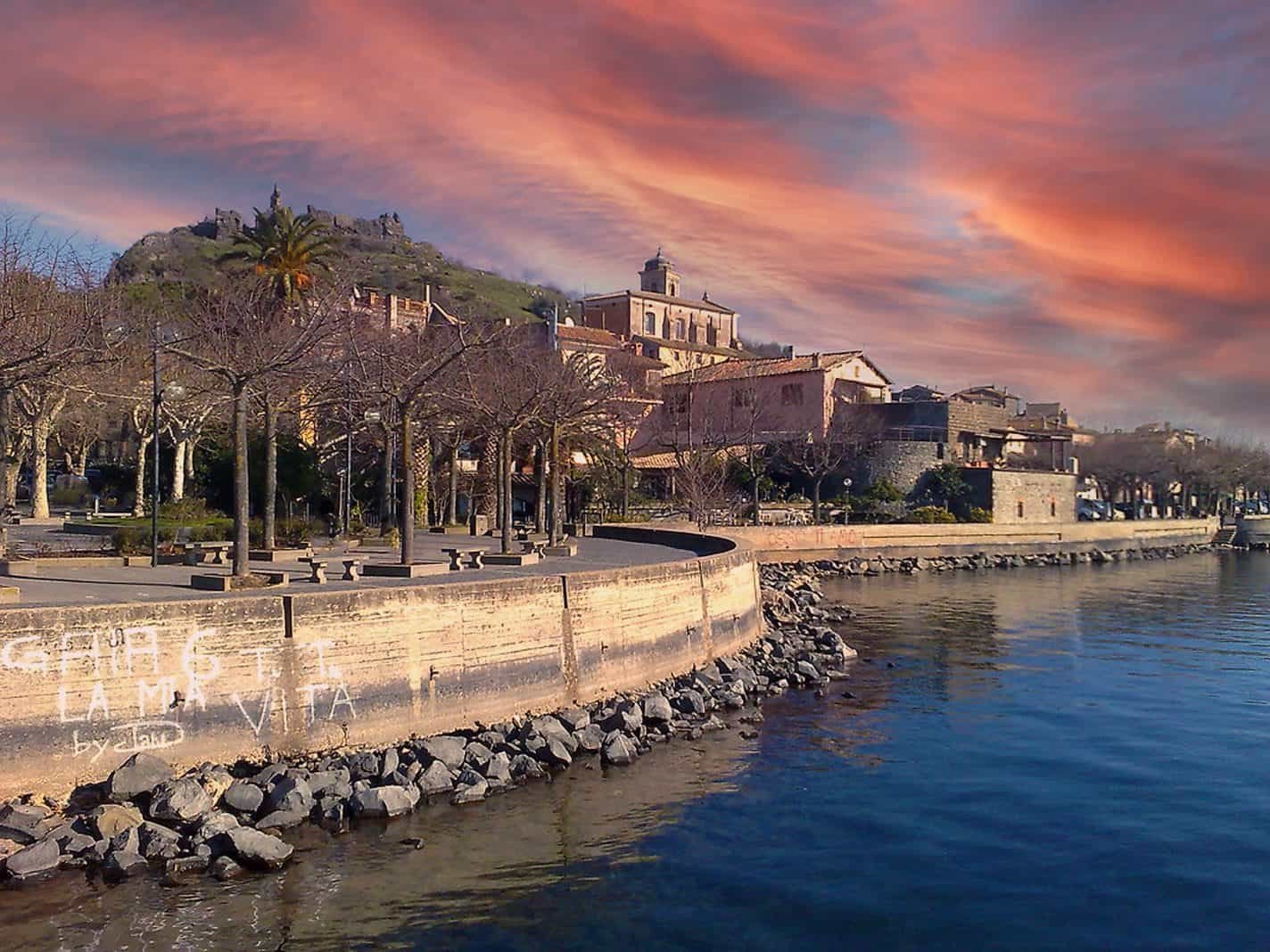
The fabric of the village is the classic one of fishing towns: narrow lanes climbing from the lake toward the hill, houses crowded together, staircases, and at the top the ruins of the Orsini fortress as a crown. Below runs the lakefront, with the bike path, the small squares overlooking the water and the shops. The town has earned two recognitions worth more than a slogan: the Orange Flag of the Touring Club Italiano, the tourism and environmental quality mark reserved for small inland towns, and the Blue Flag, which in Trevignano is a rare case: it's the only lake municipality in Lazio to have obtained it, a fact that says something about the cleanliness of the water and the management of the shores.
How to get to Trevignano Romano (RM) without a car
If you travel by public transport, you need to allow for a change or a long ride. The most direct route is the Cotral from Saxa Rubra, reachable from Rome by the Roma-Nord railway line or by city buses. From there leaves the ride to Manziana that serves Trevignano, with a ticket around €2.80 and several stops in town. Alternatively you can take the train to Anguillara Sabazia, on the regional line, and from there continue with the bus service that connects the station to the Trevignano lakefront. Cotral timetables change between weekdays and holidays and should be checked on the company's official website before you leave. The frequency isn't that of a metro, and in the late afternoon the last runs to Rome thin out. If you're traveling for the day, write down the return time as soon as you arrive.
A curiosity about Trevignano Romano (RM)
The first curiosity is in the name, and it isn't the one the coat of arms tells. On the municipal banner stand three vine shoots, an image that points straight at winegrowing and has fed for generations the idea of a town born around vineyards. Philology, though, points another way. The most accepted form derives Trevignano from an ancient praedium, an agricultural estate of the Roman age named for an owner called Trebonius, giving an adjective like Trebonianum: the land of Trebonius. The Latin family name Trebonianus calls to mind the brief reign of the emperor Gaius Vibius Trebonianus Gallus, in the middle of the third century, and the coincidence has made more than one local scholar dream. But the prudent etymology, the one a historian would sign, stops at the agricultural estate and its owner, without claiming dynastic ties. There is also a third hypothesis, which traces the root back to a term of Umbrian origin meaning inhabited place. The "Romano" at the end of the name, by contrast, is recent and administrative, added after unification to distinguish this Trevignano from the namesake Lombard municipality on Lake Garda.
The lesson to take home is that the town changed its skin many times before settling into what you see today, and that the cluster of grapes in the coat of arms is more a heraldic play on the sound of the name than proof of origin. When someone at the bar swears to you that Trevignano means "three vines," you can smile: it's folk etymology, pleasant and false, the kind that always arises when an ancient name stops being transparent.
The Rocca of Trevignano Romano (RM), the castle of the Orsini
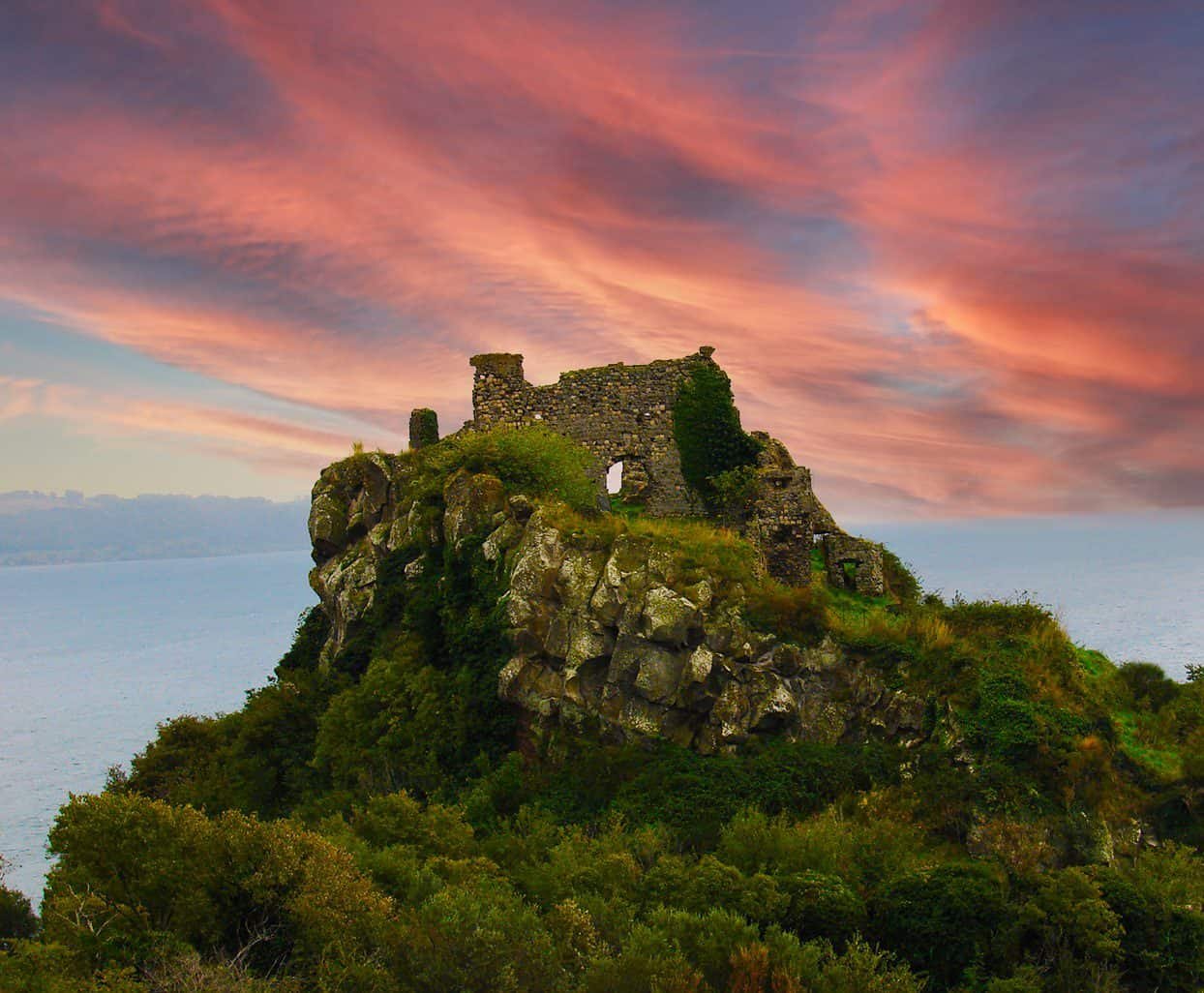
At the top of the town, where the village ends and the sky begins, the ruins of the Rocca remain. Its history begins around 1200, when the castle was erected at the will of Pope Innocent III. The Orsini, lords of the lake for a large part of the Middle Ages and beyond, then strengthened it and made it a real fortress. The defensive system was serious: three rings of walls that descended, climbing down the hill from the highest point to the lakeshore, so that anyone wanting to take Trevignano had to break through three of them, one after the other. On the north side the Rocca was protected by a trench that cut it off from the plateau in front. On the south side, defense was offered for free by nature, with the sheer drop to the water.
The end came in 1497, in the long war between the Orsini and the Borgia. The troops of Cesare Borgia, led in the field by the condottiero Guidobaldo da Montefeltro, assaulted and devastated the fortress. From then on the story is all downhill: centuries of abandonment, bad weather, a few earthquake tremors, and the mighty defensive machine was reduced to the heap of stones you see now. Don't expect whole towers or frescoed halls: what remains is the plan, the broken walls, and above all the point of view. The land around the ruins has been tidied up and today you reach it on foot along a path that starts from the churchyard of the Church of Santa Maria Assunta. The climb is short but steep. Closed shoes, not flip-flops.
In our view the Rocca should be visited for the panorama even before the stones. From up there Lake Bracciano opens out completely, with Bracciano and Anguillara on the other shore and the Sabatini Mountains closing the horizon. Go in the last hour of light: the lake turns gold, and the view repays the climb more than any caption.
The churches of Trevignano Romano (RM), one by one
The village's religious heritage is concentrated in three buildings, very different in date and function. It's worth seeing all three, because they tell three distinct moments in the town's history: the big parish church above the center, the little church outside the walls tied to a national figure, and the small country shrine of the patron saint.
The Church of Santa Maria Assunta in Trevignano Romano (RM)
This is the mother church, set in a dominant position above the historic center, with a panorama that alone justifies the climb. Its origins go back to between the end of the fourteenth century and the beginning of the fifteenth, when the building arose in Romanesque forms. It was then rebuilt during the sixteenth century, and the traditional date of 1500 and the dedication to the Virgin Assumed into heaven belong to this phase, on the foundations of an older place of worship in Gothic forms. The current look, though, is eighteenth-century: the rebuilding work began in 1786 to a design by the architect Pilucchi and was completed in 1794. A general restoration followed in 1922, the post-conciliar liturgical adaptation around 1970 with the addition of the altar facing the congregation and the ambo, a new intervention between 1989 and 1991, and the cleaning of some paintings in 1998.
The facade is gabled and faces southwest, divided into two registers by a cornice and marked by pilasters, with the portal topped by a tympanum and a window above. The bell tower deserves a separate note: it was made from one of the towers of the Rocca's circuit of walls, that is, recycling a military structure into a bell tower. It housed four bells. Today two remain, one of which was recast and restored after cracking. Inside, the hall has a single nave covered by a barrel vault, with side chapels opened by round arches and a raised presbytery ending in an apse.
The highlight is the apse fresco, dated 1517. The subject is the Dormition of the Virgin, that is, her death, followed by the assumption and the coronation in heaven: a vertical story that guides the eye from below, where the Madonna falls asleep among the apostles, upward, where she is welcomed and crowned. The work is tied to the school of Raffaello Sanzio and attributed to Pellegrino da Modena, a painter also known as Pellegrino Aretusi, one of the assistants who gravitated around the workshop of the master from Urbino in the Rome of those years. The quality of the drawing and certain passages have suggested that behind the execution there is at least the idea, the sketch, of a higher hand. It's a fascinating hypothesis and should be taken as such, without turning it into certainty. In front of the original, look at the construction of the figures and the ease of the drapery, which betray the Raphaelesque milieu far more than a signature. The church also holds a wooden statue of the Madonna enthroned with Child, carved in the fourteenth century, a small thirteenth-century triptych with Christ blessing between the Virgin and Saint John the Evangelist, and an eighteenth-century organ.
The Church of Santa Caterina d'Alessandria in Trevignano Romano (RM)
This church stands outside the walls, extra moenia, and rests on the remains of a building of the Roman age of which stretches of masonry in opus reticulatum remain clearly legible, the regular mesh weave typical of the Romans. The plan is cruciform with two small side chapels. In the left chapel rests a figure who alone is worth the trip: the abbot Tommaso Silvestri, the first educator of the deaf in Italy, who at the end of the eighteenth century brought to Rome the method for the instruction of the deaf-mute and opened the first dedicated school there. On the apse wall a fresco depicts Saint Catherine of Alexandria between Saint Sebastian and Saint Roch.
The story of the building says a lot about the town's alternating fortunes. In 1843 the church stopped being a parish and was downgraded first to a granary and then to a carpenter's shop. Only in 1928, on the occasion of the celebrations for Tommaso Silvestri, was it restored and returned to worship, precisely to receive the abbot's remains. It's a story that repeats itself in a thousand Italian towns, where a sacred building becomes a warehouse and then a church again. Tell it to children in front of the Roman walls, it works better than any textbook.
The Church of San Bernardino da Siena in Trevignano Romano (RM)
The third church is the most secluded. It stands about a kilometer from the center, at the spot where tradition says San Bernardino da Siena stopped to preach to the people. It was built in 1452 in honor of the saint, who a few years earlier had been elected patron of the community of Trevignano. The building is disarmingly simple, with a single nave, and keeps a curious relic: the boulder from which, according to the story, the saint gave his speech to the local people. In the apse a painting stages that very sermon, and all around are piled the ex-votos left by the faithful over the centuries. You get there with a walk outside the town. It's the right destination for anyone who wants to see the countryside side of Trevignano, away from the lakefront.
The Etruscan-Roman Civic Museum of Trevignano Romano (RM)
On the ground floor of the town hall, in Piazza Vittorio Emanuele III, is the Etruscan-Roman Civic Museum named for Professor Gregorio Bianchini. It's the town's main cultural institution and the place where Trevignano tells its most remote past. It was born in 1964 as the municipal Antiquarium and took its current name in 2000, with the official inauguration on March 20 of that year and the appointment of Bianchini as director. It isn't a huge museum, but the quality of the pieces is high and the story it holds together is that of an Etruscan community that lived on these shores long before the Romans arrived.
The territory has yielded a necropolis extending for about three kilometers behind the town, and some identify the site with the ancient Etruscan city of Sabate, the one that gave its name to Lake Sabatino. The identification is plausible but not proven by certain urban remains, and should be stated as a hypothesis. The museum displays the grave goods of three large burials, brought to light in the excavations of the 1960s.
The Annesi-Piacentini Tomb and the Flabella at the museum of Trevignano Romano (RM)
The Annesi-Piacentini Tomb is the richest core: about 230 artifacts, among them bucchero ware, that black, shiny Etruscan pottery that imitates metal, Etruscan-Corinthian storage jars and amphorae of Orientalizing taste, gold work, silver, jewelry in gold and Baltic amber, bronze fibulae. The Baltic amber says something important: already in the seventh and sixth centuries BC these communities were inside very long trade networks, reaching as far as the Baltic. The Tomb of the Flabella, discovered together with the other and intact, takes its name from the large, finely decorated bronze flabellum it contained. The flabellum was a ceremonial fan, a symbol of rank and power, and along with it the grave goods included painted ceramics and the remains of a parade chariot, a currus. Seeing these objects means understanding that the lords buried here traveled on ceremonial vehicles and had themselves buried with the signs of their authority.
The Warrior's Tomb and the Villanovan finds in Trevignano Romano (RM)
The piece that strikes visitors most is the intact burial of a warrior of the eighth century BC, with all his weaponry still in place: the sword, the dagger, the shield, the razor with a crescent-shaped blade. It's a set of grave goods that takes us back to the Villanovan phase, the early Iron Age from which Etruscan civilization set out. The museum in fact also holds Villanovan cistae and other material from that period, along with a marble cippus and fragments of the Roman age. Anyone who arrives thinking of a provincial museum to get through in 10 minutes usually changes their mind in front of the warrior's display case. It's rare to see an eighth-century armament so complete, and the disproportion between the smallness of the town and the importance of what was found there is what stays most in the mind.
The lakefront and beaches of Trevignano Romano (RM)
The real living room of the town is the lakefront. It's here that the people of Trevignano stroll in the evening, that Romans come to sunbathe in summer and that the places overlooking the water are concentrated. Lake Bracciano is swimmable and its water has a reputation for cleanliness that the Blue Flag confirms. The Trevignano shore offers equipped stretches and free stretches, with bottoms that slope gently and without the currents of the sea, which makes it suitable for families with small children too. In season a good number of water sports are practiced: sailing, windsurfing, canoeing, kitesurfing, and there are clubs that rent equipment and run courses. Anyone who doesn't like deep water can simply walk or bike along the bike path that follows the shore, stopping in the shops and small squares overlooking the lake.
A practical detail few people in Rome know: on Lake Bracciano there is a restriction that bans internal-combustion motor navigation, because the body of water feeds the aqueduct and has to be kept clean. The result is a quiet lake, without roaring motorboats and without diesel trails, where you hear the oars and the wind in the sails. It's a huge difference from the tourist lakes of the north, and worth savoring for what it is: a rarity.
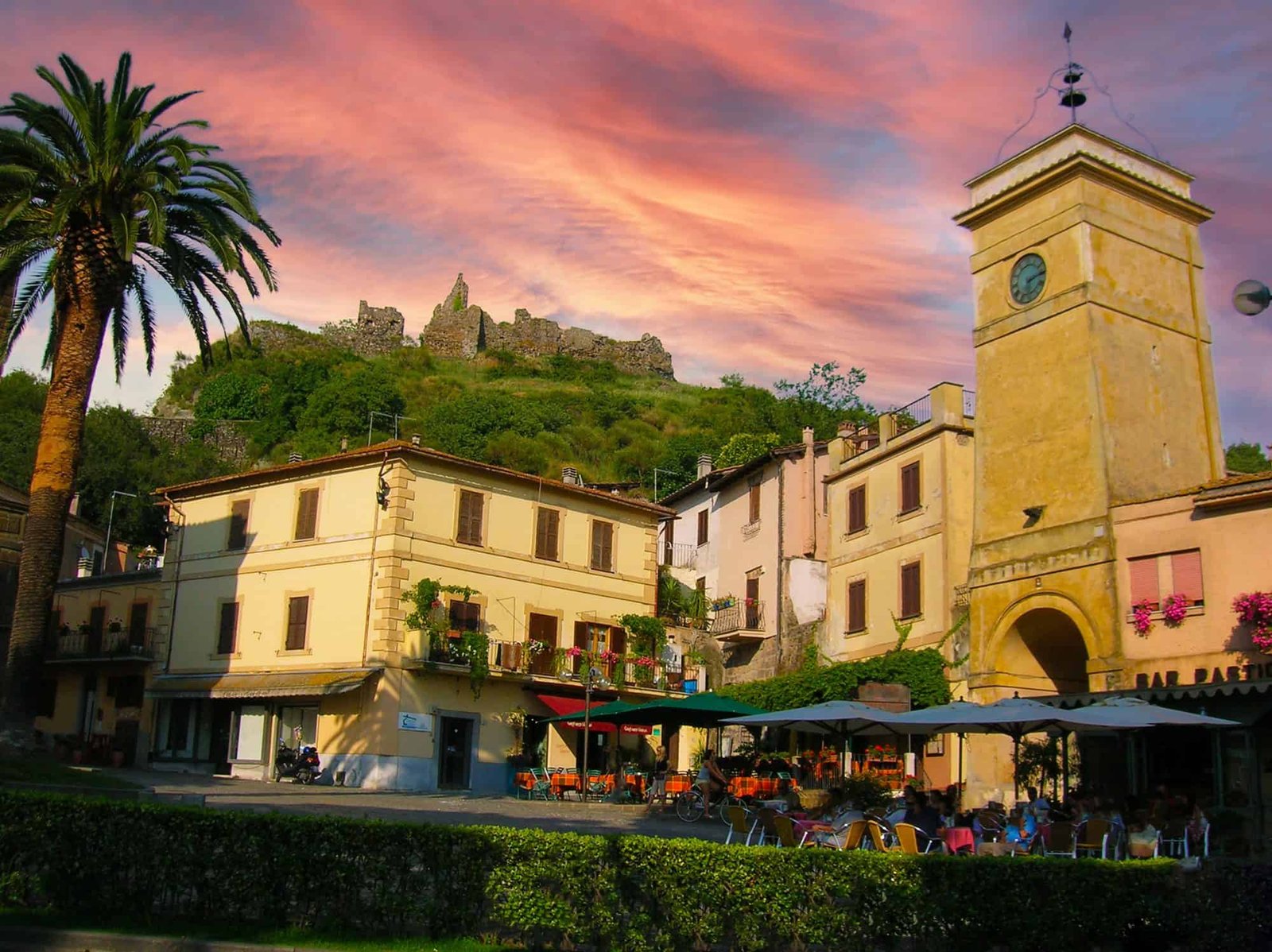
The historic center and shops of Trevignano Romano (RM)
Between the lakefront and the climb to the Rocca the historic center tightens, and it's the place where the village keeps its character as a fishing town: narrow lanes, crowded houses, arches and little stairways climbing toward the mother church. The pace is slow, and should be indulged. On the lakefront and in the small squares overlooking the water, in particular around Piazza del Molo, the shops are concentrated: small, well kept, often selling crafts and local products, which multiply on the first and third Sundays of the month with the antiques market. It's the kind of town where shopping isn't the chain-store window kind but that of the one-of-a-kind piece, the little jar of honey or the ceramic plate. And the evening stroll, when the sun goes down behind the mountains and the lights come on over the water, is still a community ritual before it's entertainment for tourists.
A tip: don't rush to take a photo and leave. The center of Trevignano is enjoyed by walking aimlessly, letting the lanes lead where they will, with the certainty that, the town being small, sooner or later you come out on the lake or under the Rocca. The best part of a day here is the part you don't plan.
Nature around Trevignano Romano (RM): park, pantane and birds of prey
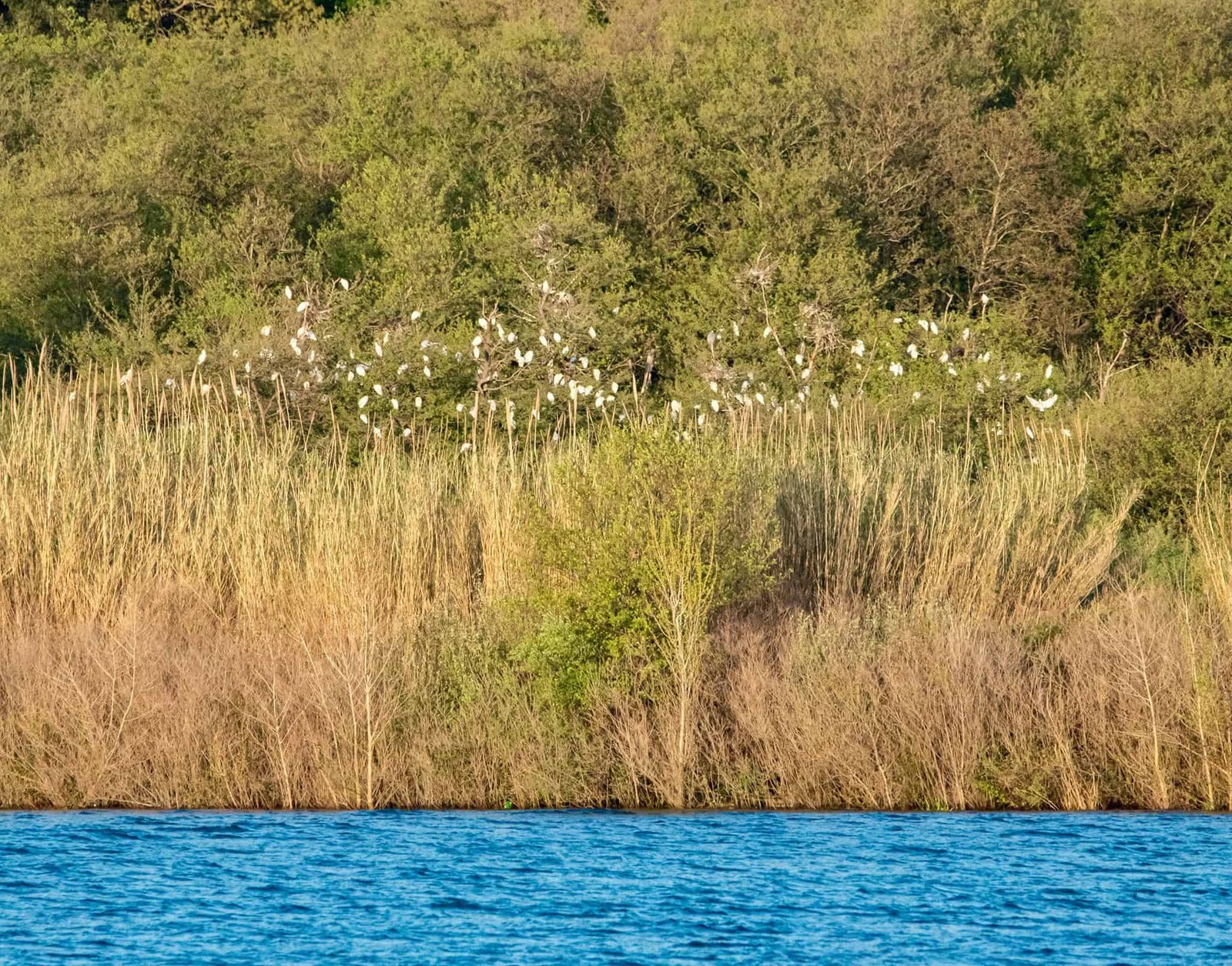
Trevignano falls within the Bracciano-Martignano Lake Complex Regional Natural Park, the protected area that safeguards the two volcanic lakes and their shores. Even before the park was born, in 1997 the Lazio Region had established the Le Pantane e Lagusiello Natural Monument, which protects the marshy zone of the Pantane and the small crater of Lagusiello. The shallow waters and dense vegetation of this area make it a stopover and breeding point for many waterbirds, above all migratory ones. Anyone with binoculars and a bit of patience goes home with a good list of sightings. The municipal territory is crossed by a network of trails that can be walked, ridden on horseback or biked on a mountain bike, climbing toward Monte di Rocca Romana and looking out over the lake.
On the slopes of Monte di Rocca Romana there is also a special center, I Falchi di Rocca Romana, dedicated to environmental education and the flight of birds of prey. On weekends the center opens to the public for demonstrations: eagles, buzzards, falcons and owls fly free in front of visitors, and it's a show that wins over children and doesn't leave adults indifferent. If you're traveling with family, this and the beach are the two cards to play to keep the little ones' interest high.
The history of Trevignano Romano (RM), from the Paleolithic to the twentieth-century expropriations
The history of Trevignano is long and layered, and it's worth following in full because every era has left something that can still be seen. The first traces of human presence go back to the Paleolithic age, documented by finds in the localities of Montecchio and Monte dell'Olmo: already tens of thousands of years ago these shores, rich in water and game, attracted people. But it's with the Etruscans that the territory becomes a protagonist. The necropolises that extend for about three kilometers behind the town tell of a stable and wealthy community, in trade contact with the eastern Mediterranean and with continental Europe. Some recognize here the ancient city of Sabate, the one that would have given its name to Lake Sabatino, even though definitive urban proof is missing and the identification remains a well-founded hypothesis.
387 BC is the date of the Roman turning point: with Veii fallen and Caere conquered, the Sabatine territory enters Rome's orbit. The Romans immediately recognize the value of the area and line it with villas, mostly now found under the surface of the water, scattered along the whole perimeter of the lake. Two engineering works belong to this period and say how much Rome cared about this basin: the thermal installation at Vicarello, fed by the hot springs, and the Trajan aqueduct, built to bring the water of the Sabatino to the city. Trevignano, in Roman times, was not an isolated center. It was a piece of the water and residential system that gravitated around the capital.
With the end of antiquity and the arrival of the Middle Ages the territory passed first to the Prefetti di Vico, the powerful family that dominated Roman Tuscia, and then to the Orsini, who made it a stronghold of their dominion over the lake and gave it the defensive fortress. Peace lasted until the end of the fifteenth century, when Trevignano was crushed in the power clashes between the Orsini and the Borgia. In 1497 the Rocca was stormed by the troops of Cesare Borgia led by Guidobaldo da Montefeltro and reduced to ruin. At the death of Pope Alexander VI, the Borgia father, and with the election of Julius II, Gian Giordano Orsini regained Bracciano and Trevignano, but the family's arc was by then in decline.
Toward the end of the seventeenth century the Orsini's economic difficulties led to the sale of the territory of Trevignano to Prince Livio I Odescalchi, nephew of Pope Innocent XI. From there began a waltz of owners that runs through the whole eighteenth and nineteenth centuries: first the Del Grillo family, then the Cybo Malaspina, then Prince Cosimo Conti, who started major land reclamation works and innovation in agricultural labor. The Torlonia, the Ginori Conti and finally the Del Drago followed. This last house kept managing the territory as a fief even after the unification of the Kingdom of Italy and after the birth of the Republic, applying to the peasants the burdensome "quarta regia," a tithe on the harvest that smacked of the old regime. Only with the push of the Opera Nazionale Combattenti did the expropriation of those lands begin, gradually, to assign them to veterans of the Great War. It was a long process, which closed Trevignano's very long feudal season only well into the twentieth century.
Vicarello, the aqueduct and the water of Rome seen from Trevignano Romano (RM)
It's worth pausing on the relationship between this lake and the water of Rome, because it's a thread that ties antiquity to today's tap. At Vicarello, on the shore of Bracciano, the Romans exploited thermal springs for an installation of which archaeological traces remain. The hot waters of this stretch of shore were frequented and considered healthful already in ancient times. And from the Sabatino basin the Trajan aqueduct set out, the work that the emperor Trajan had built to convey to Rome the water of this district: an infrastructure that says how much the capital cared about the lake that Trevignano overlooks today.
The interesting point is the continuity. Lake Bracciano is still one of the capital's water reserves, and precisely for this reason its protection is ironclad: hence the ban on internal-combustion motor craft, the restrictions on swimming in some stretches, the attention to the shores that earned Trevignano the Blue Flag. When you're on the lakefront and look at the water, you have in front of you the same basin the Romans tapped for Trajan and that today helps quench Rome's thirst: two millennia of water history contained in a body of water that seems only a nice place for a swim.
Something nobody tells you about Trevignano Romano (RM)
What quick guides almost always skip is that beneath the surface of the lake, in front of Trevignano and along the whole perimeter of the basin, there are the remains of Roman villas. When in 387 BC, after the fall of Veii and Caere, the Sabatine territory passed under Rome, the Romans lined the lake with residences and installations, and with the later rise of the water level many of those structures ended up underwater, where they can be found beneath the surface of the lake. It isn't material for a tourist visit, but it's the reason the bed of Bracciano is one of the most studied in Lazio: anyone who dives in the lake isn't looking for fish, they're looking for masonry.
The second little-known piece of information concerns the water you drink in Rome. Lake Bracciano is one of the capital's water reserves, connected to the aqueduct, and precisely for this reason its protection is strict: hence the ban on internal-combustion motor craft mentioned earlier, and the restrictions on swimming in certain stretches. The Romans had already understood the water value of the area: in the imperial age the thermal installation at Vicarello operated here, fed by the springs, and right around here passed the Trajan aqueduct, built to bring the water of the Sabatino to Rome. When you walk on the lakefront, in short, you have before your eyes the same basin that quenched the thirst of Trajan's Rome and quenches that of today's Rome: a continuity of almost two millennia that no sign tells you about.
My advice for visiting Trevignano Romano (RM)
The practical advice is one and is worth more than all the others put together: go on a weekday, and set your visit around the light of late afternoon. On summer weekends Trevignano fills with Romans looking for a beach, the parking lots saturate and the lakefront loses that silence that is its best quality. On a Tuesday in May or September, instead, the town goes back to being the real one, and the climb to the Rocca at sunset gives you the view that makes it worth coming all the way here.
As for the itinerary, the order that works is this: start with the Civic Museum as soon as you arrive, when you're fresh and your head can handle captions. Then climb to the Church of Santa Maria Assunta and from there take the path to the Rocca, so you combine in one go the mother church, the Raphaelesque fresco and the panorama from above. Finally go down to the lakefront for the slow part of the day, the stroll, a swim if it's the season, and a plate of lake fish at one of the restaurants on the water. If you have time and legs, add the Church of Santa Caterina outside the walls and that of San Bernardino in the countryside. Bring closed shoes for the Rocca path, a water bottle, and a swimsuit from April to October: the water is warmer than it looks.
One last recommendation: don't dismiss Trevignano as "the cute village on the lake." The warrior museum and the fresco of Raphael's school are material for big cities, which happened to land in a town of 5,000 souls. Give yourself time to really look at them.
Another well-known fact, yet rarely cited
The fact is the town's ownership history, which is a small treatise on Italian feudalism packed into a few lines. After the Middle Ages of the Orsini and the violent parenthesis of the Borgia, at the death of Pope Alexander VI and with the rise of Julius II it was Gian Giordano Orsini who regained Bracciano and Trevignano. Toward the end of the seventeenth century the family's economic misfortunes led to the sale of the territory to Prince Livio I Odescalchi, the house that still owns the castle of Bracciano today. Between the eighteenth and nineteenth centuries the town changed hands several times: first to the Del Grillo, then to the Cybo Malaspina, then to Prince Cosimo Conti, who started major land reclamation works and innovation in labor. The Torlonia, the Ginori Conti and the Del Drago followed.
And here is the detail almost nobody tells: this last house kept managing the territory as in feudal times even after the Unification of Italy and even after the birth of the Republic, applying to the peasants the burdensome "quarta regia," a tithe that weighed on the harvest. Only with the action of the Opera Nazionale Combattenti did the expropriation of those lands begin, to assign them in ownership to veterans of the Great War. In practice, at Trevignano the fief ended not in 1861 and not even in 1946, but piece by piece over the course of the twentieth century: a remnant of the old regime that survived inside contemporary Italy, which is worth keeping in mind when you look at the countryside around the town.
The right photo to take in Trevignano Romano (RM)
The photo that takes Trevignano home isn't shot on the lakefront, it's shot from above. Climb to the ruins of the Rocca and position yourself to keep in the foreground the broken walls of the fortress and, behind, the whole of Lake Bracciano opening up to the opposite shore, with Bracciano and Anguillara recognizable in the distance and the Sabatini Mountains closing the view. It's the framing that holds together the two souls of the place, history and water, and it works in every season. The moment is the last hour before sunset, when the low light ignites the stones and the lake becomes a golden slab. The so-called golden hour here is short because the sun goes down behind the mountains, so get to the top with a margin of 20 minutes.
The second photo, for those who love details, is inside the Church of Santa Maria Assunta, in front of the apse fresco of 1517. Frame the vertical that rises from the Dormition of the Virgin to the coronation, without flash, resting the camera or phone on a pew to hold the exposure steady in the dim light. The third, for sports lovers, is on the lakefront at dawn, when the sails go out on the still water and the lake gives back the reflection of the village. Go early, before the swimmers arrive. A technical tip: on the lake the light is more contrasty than it looks, so underexpose slightly so as not to blow out the reflections on the water.
Events and festivals in Trevignano Romano (RM)
The town's calendar revolves around the lake and the patron saint. In April the Marathon del Lago di Bracciano is run, a mountain bike event that takes cyclists onto the trails around the basin. Every first and third Sunday of the month Piazza del Molo and the lakefront host the crafts and antiques market, the right moment for anyone looking for a piece of mid-century design or a local product. On weekends, as mentioned, I Falchi di Rocca Romana open to the public for birds of prey flight demonstrations.
The two big dates are May 20 and August 15. On May 20 Trevignano celebrates its patron San Bernardino da Siena, and the festival is joined by the Sagra del Pesce Marinato, which puts lake fish on the table according to the traditional recipe. At Ferragosto, on August 15, the most spectacular event of the year takes place: the night Procession on the lake, the culmination of the celebrations for Maria Santissima Assunta in heaven, with illuminated boats gliding over the water in the dark. If you have to choose just one date to come and want to see the town at its most intense, that's the one. Expect the crowd and arrive early to find a spot on the lakefront.
Some important events that happened here in history
The first great event is archaeological before it is historical: the discoveries of 1965, when the Annesi-Piacentini tomb and the Tomb of the Flabella were brought to light intact. Finding an Etruscan burial not violated by tomb robbers is a rare stroke of luck, and at Trevignano two came up at the same time. From there come the large bronze flabellum, the Orientalizing storage jars, the gold and amber jewelry that now fill the display cases of the Civic Museum. Those discoveries changed the way people look at the town, transforming it from a fishing village into a first-rate Etruscan site.
The second event is the assault of 1497. Within the war between the Orsini and the Borgia for control of lower Lazio, the Rocca of Trevignano was stormed and devastated by the troops of Cesare Borgia, commanded in the field by Guidobaldo da Montefeltro, the duke of Urbino whom the Borgia had subdued and enlisted. It was the military end of the fortress and the blow from which the castle never recovered. What you see today as a ruin bears the date of that destruction.
The third, less bloody but just as decisive, is the slow liquidation of the fief in the twentieth century. The expropriation of the Del Drago lands, pushed by the Opera Nazionale Combattenti to assign them to veterans of the First World War, closed for Trevignano a feudal parenthesis that lasted centuries and survived well beyond the Unification of Italy. They are three events of different natures, a discovery, a war, an agrarian reform, but together they draw the character of the place: a small town over which big history passed more than once, leaving each time a mark that can still be seen.
Who has passed through Trevignano Romano (RM)
The most illustrious figure to pass through here, and not in passing, is San Bernardino da Siena. Tradition has it that the great fifteenth-century Franciscan preacher, one of the most listened-to orators of his time, stopped at Trevignano to preach to the people, so much so that a few years before his death he was elected patron of the community. In 1452 the little church outside the town was dedicated to him, and it keeps the boulder on which, according to the story, he climbed to speak to the people. It's a bond the town still celebrates every May 20.
On the military side, Guidobaldo da Montefeltro, duke of Urbino, passed through Trevignano at the head of the troops of Cesare Borgia who stormed the Rocca in 1497: a leading Renaissance lord, who ended up here in the unwelcome role of executor on behalf of the Borgia. And then there are the great families who held the village as a fief, and who passed through it in person over the centuries: the Orsini, lords of the lake. The Odescalchi, the house of Pope Innocent XI, who held the territory from the end of the seventeenth century and still own the castle of Bracciano. The Torlonia, the bankers who in the nineteenth century bought half the Roman countryside. The Ginori Conti and the Del Drago. On the art side, finally, a painter from the circle of Raphael, Pellegrino da Modena, worked on the apse of the mother church: not a front-rank name, but an artist who had breathed the air of the most important workshop in the Rome of the early sixteenth century, and who left at Trevignano his best work.
What to see around Trevignano Romano (RM)
Trevignano is an excellent base camp for the lake country and southern Tuscia. On the other shore of Lake Bracciano is Bracciano with its Odescalchi castle, the best-preserved fifteenth-century fortress in Lazio, and a little farther down Anguillara Sabazia, the third village of the lake, perched on a promontory. Next to Bracciano is the smaller and wilder Lake Martignano, with no roads on the shore and therefore left almost intact, inside the same protected area of Bracciano-Martignano.
Toward the north, in Tuscia, the rock-cut villages open up: Sutri with its Etruscan necropolis and the amphitheater carved into the tuff, Calcata perched on its spur, Nepi with its waterfalls and walls, Civita Castellana with the Sangallo fort, Castel Sant'Elia sheer above the gorge, Faleria and the spectacular Corchiano Gorges. Farther west is another volcanic lake, Lake Vico, and if you want you can stretch toward Oriolo Romano and its monumental woods or toward the nature of Canale Monterano. All within a few kilometers: by car you can put together a weekend that starts with the Etruscans and ends in the Renaissance without ever getting bored.
Trevignano Romano (RM) with children
For a family the town offers quite a lot without forcing lines or expensive tickets. The beach on the lake is the easiest card: still water, a bottom that slopes gently, no waves and no currents as at the sea, and in season the chance for the older ones to try a canoe or a sailing lesson. The I Falchi di Rocca Romana center, with its birds of prey flight demonstrations on weekends, captures even the children who usually get bored in front of monuments. The Civic Museum is small and can be visited in a short time, and the warrior's display case with sword and shield tends to work better than a thousand explanations. The climb to the Rocca is within reach of a child who walks, as long as they have suitable shoes, and at the top the view repays the effort. Plan an ice cream stop on the lakefront as a final reward: at Trevignano it's almost a ritual.
Where and what to eat in Trevignano Romano (RM)
The cooking here revolves around lake fish, which is different from sea fish and should be tasted for what it is. The signature dish is the coregone, or lavarello (whitefish), often served marinated, the same marinated fish that gives its name to the May sagra. Also common are European perch, pike, eel and latterino (sand smelt), the latter fried in fritters. The good restaurants are the ones overlooking the water on the lakefront and in the small squares of the center. Ask for lake-caught fish and be wary of menus that are too long, which on the lake as at the sea are a signal to read with caution. The professional's advice is to have lunch late and unhurried on a terrace over the water: lake fish is delicate and doesn't like haste, and the view over Bracciano is part of the dish.
When to go and when to avoid Trevignano Romano (RM)
The time of year radically changes the experience. Spring, from April to June, is the best season by far: the weather is mild, the shores are green, migratory birds populate the Pantane and the town hasn't yet been invaded by swimmers. Autumn, until mid-October, gives low, soft light perfect for photos and a lake still warm enough for a last swim, with the countryside turning to warm tones. Summer is the true bathing season, when Trevignano is at its best as a beach but also at its worst in crowds: on July and August weekends Romans arrive en masse, the parking lots fill by mid-morning and the lakefront loses the calm that makes it special. Winter, finally, is for anyone seeking the authentic and empty town: it's cold and the places on the water cut their hours, but the Rocca at sunset and the churches are still there, and you enjoy them in silence.
The time of day matters as much as the season. The early morning hours on the lakefront, with the sails going out on the still water, and the last hour before sunset from the Rocca are the two peaks. The summer midday, with the sun straight overhead and the beach full, is the moment to use for an indoor lunch or for the museum, not for walking.
Accessibility and practical tips for Trevignano Romano (RM)
The historic center of Trevignano is made of uphill lanes, staircases and cobblestones. It's the most beautiful part of the village, but it must be said frankly that it isn't comfortable for anyone with mobility difficulties or pushing a stroller. The lakefront, by contrast, is flat and easy, and remains the part of the town most accessible to everyone. The climb to the Rocca is on a steep dirt path, suitable for good walkers but not passable in a wheelchair. The Civic Museum, on the ground floor of the Town Hall, is the most reachable cultural destination without tackling stairs. For those arriving by car, the advice is to park near the lakefront and walk up toward the center: looking for a spot inside the lanes is pointless effort. Bring water in the warm months, closed shoes for the Rocca, and an extra layer in the evening, because on the lake the temperature drops quickly after sunset even in summer.
Quick questions about Trevignano Romano (RM)
Where is Trevignano Romano (RM)?
On the north shore of Lake Bracciano, at the foot of the Sabatini Mountains, in the province of Rome, a little under 50 kilometers from the capital. It forms a triangle with Bracciano and Anguillara Sabazia on the other two shores.
How do you get to Trevignano Romano (RM) from Rome?
By bus with Cotral from the Saxa Rubra terminus, on the line for Manziana, with a ticket around €2.80. By car from Via Cassia (SS2), exiting at La Storta toward Bracciano and Anguillara, then the lakeside road. By train you reach Anguillara Sabazia and continue by bus.
How much time do you need to visit Trevignano Romano (RM)?
A full half day is enough for the Rocca, the Church of Santa Maria Assunta, the Civic Museum and a walk on the lakefront. If you add the other two churches, the beach and an unhurried lunch, you fill a whole day.
How much does it cost to enter Trevignano Romano (RM)?
Walking around the village, climbing to the Rocca and strolling on the lakefront is free. The Civic Museum and some activities, such as the birds of prey center or the sports rentals, have a ticket. Current fares should be checked on site or through the town's official channels before your visit.
Can you swim in Lake Bracciano at Trevignano Romano (RM)?
Yes, the lake is swimmable and Trevignano is the only lake municipality in Lazio with the Blue Flag. The shore has free stretches and equipped stretches, with gentle bottoms suitable for children too. The good season runs from late spring to early autumn.
What water sports are practiced at Trevignano Romano (RM)?
Sailing, windsurfing, canoeing and kitesurfing, with clubs that rent equipment and run courses. Internal-combustion motor navigation is banned on the lake, because the water feeds the aqueduct: no motorboats, only oar and sail sports.
What can you see at the Etruscan-Roman Civic Museum of Trevignano Romano (RM)?
The grave goods of three Etruscan tombs: the Annesi-Piacentini Tomb with about 230 pieces among bucchero, gold work and Baltic amber, the Tomb of the Flabella with the large bronze flabellum and the remains of a chariot, and the Warrior's Tomb of the eighth century BC with sword, dagger and shield. There is also Villanovan material.
Why is the Church of Santa Maria Assunta important in Trevignano Romano (RM)?
For the apse fresco of 1517 with the Dormition, assumption and coronation of the Virgin, tied to the school of Raphael and attributed to Pellegrino da Modena. The church also holds a fourteenth-century wooden statue and a thirteenth-century triptych.
Who painted the fresco of the church of Trevignano Romano (RM)?
The work of 1517 is attributed to Pellegrino da Modena, also known as Pellegrino Aretusi, a painter of the circle of Raffaello Sanzio. The quality of the drawing has led to the hypothesis of a conceptual intervention from a higher level, but it remains a hypothesis.
Can you climb to the Rocca of Trevignano Romano (RM)?
Yes. The ruins of the Orsini fortress are reached on foot along a path that starts from the churchyard of the Church of Santa Maria Assunta. The climb is short but steep: closed shoes are better. At the top the panorama over the lake is the real reward.
When was the Rocca of Trevignano Romano (RM) destroyed?
In 1497, during the war between the Orsini and the Borgia. The fortress, erected around 1200 under Pope Innocent III and strengthened by the Orsini, was stormed by the troops of Cesare Borgia led by Guidobaldo da Montefeltro, and from then on fell into ruin.
Is Trevignano Romano (RM) suitable for children?
Very. Between the beach on the lake with still water, the birds of prey flight demonstrations at I Falchi di Rocca Romana on weekends, the small museum with the warrior's armament and the climb to the Rocca, the little ones find plenty to enjoy without getting bored.
Where does the name Trevignano Romano (RM) come from?
The prudent etymology derives it from a Roman agricultural estate named for an owner called Trebonius, a Trebonianum. The coat of arms with the three vine shoots is a heraldic play on the sound of the name, not proof of origin. The "Romano" was added after unification to distinguish it from the Lombard Trevignano.
What are the main festivals of Trevignano Romano (RM)?
On May 20 the feast of the patron San Bernardino da Siena with the Sagra del Pesce Marinato, and on August 15 the night Procession on the lake for Maria Santissima Assunta, with illuminated boats. In April the Marathon del Lago di Bracciano on mountain bikes.
Is there a market in Trevignano Romano (RM)?
Yes, every first and third Sunday of the month the crafts and antiques market is held in Piazza del Molo and on the lakefront. It's the chance for local products and small mid-century finds.
What do you eat in Trevignano Romano (RM)?
Lake fish: coregone or lavarello, often marinated, European perch, pike, eel and fried latterini. The best restaurants are the ones overlooking the water. Marinated fish is the dish of the May patron's feast.
What to see near Trevignano Romano (RM)?
Bracciano with the Odescalchi castle, Anguillara Sabazia, Lake Martignano, and farther north the villages of Tuscia: Sutri, Calcata, Nepi, Civita Castellana, Castel Sant'Elia, Lake Vico. All within a few kilometers.
When is it best to visit Trevignano Romano (RM)?
On a weekday in spring or early autumn, avoiding summer weekends when the town gets crowded. The best moment of the day is late afternoon, with the climb to the Rocca at sunset.
Can you get around Trevignano Romano (RM) on foot?
Yes, the village is small and is visited entirely on foot, from the lakefront to the historic center up to the Rocca. The only demanding climb is the path to the castle ruins.
Why are there no motorboats on Lake Bracciano at Trevignano Romano (RM)?
Because the lake feeds the aqueduct that supplies Rome and has to be kept clean: internal-combustion motor navigation is banned. The result is a silent body of water, where only sail and oar sports are practiced.
If I had to sum up in one sentence why I always gladly return to Trevignano, it would say this: it's a town that gives far more than its size lets you imagine. A fresco of Raphael's school, the intact armament of a warrior of almost 3,000 years ago, an Orsini fortress with the lake at its feet and water among the cleanest in Lazio: all in 5,000 souls facing Bracciano. Take the time to really look at it, and go when there isn't a crowd.
Article written by the editorial team of TourLeaderPro, contact them for Private/Corporate/V.I.P. Tours and Experiences.
Planning a trip to Rome? The English guides for visiting the city are on ItalyPlanner.com.