Genazzano (RM)
In short. Genazzano (RM) occupies a spur of volcanic tuff at an elevation of 375 meters, on the eastern edge of the Monti Prenestini, about 40 kilometers from Rome in the direction of the Sacco valley.
Genazzano (RM) occupies a spur of volcanic tuff at an elevation of 375 meters, on the eastern edge of the Monti Prenestini, about 40 kilometers from Rome in the direction of the Sacco valley. By car the most convenient road is still the Autostrada del Sole A1 with exit at Valmontone and then about 10 kilometers of provincial road. Alternatively you go up from the Casilina or the Prenestina, with a few more hairpin turns and a lot more scenery. By public transportation you get there by Cotral bus from the Anagnina terminal (metro A) and the Ponte Mammolo terminal (metro B): the sanctuary lists these two departures as the regular connections, and updated schedules are on the Cotral website. The town has no railway station of its own: anyone traveling by train gets off on the Cassino line at Valmontone and continues by bus or taxi. The historic center is visited on foot and costs nothing. You leave the car in the parking lots down in the valley, outside Porta Romana, and walk up. The Basilica Sanctuary of the Madre del Buon Consiglio, at Corso Cardinali Vannutelli 2, is open from 7:00 to 12:45 and from 15:00 to 18:45 in winter, until 19:45 in summer, with free admission (telephone 06 9579002). The Bramante Nymphaeum, outside the walls, is always accessible and free. The Museo Atelier inside the Castello Colonna, in Piazza San Nicola, is open from Friday to Sunday: 10:00-18:00 in the cold season, 9:30-13:00 and 14:30-19:00 in the warm one (telephone 06 95579203). The Church of San Nicola, according to the Comune's page, stays closed to the public during the year, with a special opening on December 6 for the feast of the patron saint. Comune switchboard: 06 955791. Hours and openings change with the seasons and with exhibitions: a phone call before leaving avoids a wasted trip.
If you are putting together a broader itinerary among the villages east of Rome, it's worth keeping an eye on the castagneto prenestino and the ridge of the Lepini Mountains, which you can clearly see on the horizon from Genazzano.

How to get to Genazzano (RM) and what it's good to know before leaving
By car from Rome to Genazzano (RM)
The fastest way is the A1 to Valmontone, then the provincial road that climbs toward the Prenestini: from the toll booth it's about 10 kilometers, and the town appears suddenly above the valley, a wall of houses gray and black like the tuff it rests on. The second option is the Casilina, the old consular road, which adds 20 minutes but crosses a piece of Roman countryside that the highway cuts out. The third is the Prenestina toward Fiuggi: it's the road of the 19th-century travelers, and it passes through Palestrina, which is worth a stop on its own. Allow an hour and 10 minutes from the Grande Raccordo Anulare in normal conditions, an hour and a half on Saturday morning.
Bus and train to Genazzano (RM)
The Cotral runs leave from Anagnina, the terminus of metro A, and from Ponte Mammolo, the terminus of metro B. These are the two gateways named by the sanctuary itself for those arriving without a car. The practical advice: check the return run on the Cotral website even before boarding the outbound one, because on weekdays the last departures from the town are early and on holidays service thins out a lot. Anyone arriving by train uses the Rome-Cassino line and gets off at Valmontone: from there you still need a bus or a ride. There is no rail connection to the center of Genazzano.
Where to leave the car and how to get up to the historic center
The old town develops on a tongue of rock 70 or 80 meters wide: there's no room inside, and no reason to try. The useful parking lots are down in the valley, toward Porta Romana and toward the Nymphaeum area. From there the climb is short but steep, with a few staircases. Anyone with difficulty walking should do the route in reverse: you arrive high, near Piazza San Nicola and the castle, and go down toward the sanctuary and the gate, avoiding the most tiring part. A firm opinion: Genazzano is enjoyed going down, not going up.
Genazzano (RM) in brief: a thousand years of history on a blade of tuff
Before the village: the countryside of the Roman gentes
The territory was frequented long before the town existed. Local sources connect the area to the country retreats of Roman families, the Gens Genucia in particular, to whom tradition traces the place name, along with the names of the gentes Antonina and Iulia. On this point it's best to be honest about the degree of certainty: this is a traditional etymology, not a demonstrated epigraphic fact. What is certain is the vocation of the hill belt between the Prenestini and the Sacco valley as an area of villas and farms in the Roman age, a dense agricultural landscape well served by the consular roads.
The 11th century and the birth of the castrum
The village as we see it was born in the 11th century, and the first documentary mention appears in the first decades of the millennium: the sanctuary gives 1021, the castle tradition recalls a document of 1022 relating to the fortress. The difference of one year between the two indications doesn't change the substance: we are looking at a fortified settlement of the full Middle Ages, grown where the geography offered an almost perfect natural defense. A narrow spur, sheer walls on three sides, a single access from the mountain: anyone designing castles in the 11th century couldn't ask for more.
The Colonna fief and control of the road to Naples
Genazzano became one of the strongholds of the Colonna, one of the two or three families that for centuries decided who ruled in Rome. The position explains everything: from here they watched the traffic between Rome and the Kingdom of Naples along the line of the Sacco valley. The baronial palace, which everyone calls Castello Colonna, began as a military machine and became, generation after generation, a noble residence. Around 1200 work began to make it a defensive outpost with two towers on the north side, the exposed one.
Oddone Colonna, the pope born here
The figure who brings Genazzano into European history is Oddone Colonna. The Dizionario Biografico degli Italiani places his birth in Genazzano between January 1369 and January 1370, while local tradition repeats 1368. He was elected pontiff on November 11, 1417 at the Council of Constance with the name Martin V, and that election effectively ended the Western Schism. He returned to Rome on September 28, 1420, with a solemn entry on September 30. He died on February 20, 1431 and is buried in San Giovanni in Laterano, under a bronze tomb slab with the relief portrait that can still be seen today. For his native town that pontificate meant money, building projects and privileges: the castle went from fortress to residence, the church of San Nicola was elevated to a collegiate church, the settlement was reorganized. Rome has dozens of places tied to Martin V. The town where he was born is only one.
Giovanni Brancaleone and the Challenge of Barletta
The second name Genazzano claims is that of Giovanni Brancaleone, of the de Carlonibus, one of the 13 Italian knights of the Challenge of Barletta of February 13, 1503. The clash took place on the plain between Andria and Corato, in the territory of Trani, 13 Italians against 13 Frenchmen led by Guy de la Motte, and ended with the Italian victory. The name of Brancaleone regularly appears in the list of the 13 alongside Ettore Fieramosca, Fanfulla da Lodi, Riccio da Parma, Francesco Salamone. The town's coat of arms recalls that episode, and his family tombstone is in San Nicola.
The 20th century: the bombs of 1943 and the 40 years of abandonment
In 1943 a squadron of the RAF hit the castle to destroy the ovens that the German army had set up there to supply the front at Cassino. The collapses mainly affected the north side. In the immediate postwar period the Genio Civile demolished the old access bridge and rebuilt it as a single reinforced concrete span, the first heavy building replacement in the history of the complex. 40 years of abandonment followed. Only in 1979 was the castle bought by the Province of Rome and transferred to the Comune of Genazzano, which began the restoration, completed with the massive intervention financed for the Jubilee of 2000.

What to see in Genazzano (RM), place by place
The Castello Colonna of Genazzano (RM)
The castle occupies the north end of the spur, the most defensible, and from there it dominates the town and the valley. Its history coincides with that of the family: every generation added, modified, embellished, turning a fortress into a manor house of considerable architectural value. The military core of the 13th century can still be read in the upper part, with the layout of the two towers facing the mountain. The turning point comes with Oddone Colonna, who had the west wing restored to use as his own residence: marble frames on the windows, fireplaces, marble seats in the reception rooms. On the east side you instead recognize the so-called Borgia wing, in travertine: between 1500 and 1503 the castle was in the hands of the Borgia, who strengthened the eastern defenses. They are two different languages side by side on the same building, and recognizing them is the real reading exercise to do here.
Today the complex covers about 3,000 square meters spread over more than 20 rooms. Look at it from below, from the valley, before going up: it's the only way to understand the relationship between the mass of the castle and the slenderness of the rock that holds it up.
The CIAC and the Museo Atelier inside the Castello Colonna
Inside the castle is the CIAC, Centro Internazionale di Arte Contemporanea, among the most active institutions in the field in the province of Rome, with a program of exhibitions that over the years has brought big names to the town. In the west wing you visit the Museo Atelier, organized in four sections: picture gallery, archaeology, folk arts and traditions, Infiorata. The hours, according to the museum circuit's listing, are Friday, Saturday and Sunday: from 10.00 to 18.00 in the winter season, from 9.30 to 13.00 and from 14.30 to 19.00 in the summer one. The number to call is 06 95579203. I'll point out something worth knowing in advance: some institutional listings report the castle as closed, others show the museum regularly open on weekends. The contradiction can only be resolved with a phone call. The castle also houses the municipal library, established in 1969 and moved here in 1981.
Personal opinion: the section on the Infiorata is the most interesting for anyone arriving out of season, because with sketches and tools it explains an event that lasts only a few hours when seen live.
The Basilica Sanctuary of the Mother of Good Counsel
It's the monument that brings pilgrims to Genazzano, and the reason this town is known well beyond Lazio. The original church of Santa Maria dates to the end of the 10th century. There is certain documentary record of it from 1277. In 1356 Pietro di Giordano Colonna entrusted the parish to the Hermits of Saint Augustine, and since then the Augustinian community has never left the place. The current building was built in 1621 to a design by Domenico D'Ottavio, but it incorporated earlier structures: the west facade keeps a Gothic portal and a 14th-century rose window, while the main front is neoclassical. Beneath the pavement lies the area of the ancient cemetery.
The devotional heart is the image of the Madonna and Child. Tradition tells that the fresco detached itself from a church in Scutari, in Albania, at the arrival of the Ottomans, and that it reached Genazzano accompanied by angels during vespers on April 25, 1467, settling on a wall of the church that Blessed Petruccia, a widow and Augustinian tertiary, had begun to rebuild amid a thousand difficulties. It's a story of tradition, not a documented fact, and it should be presented for what it is. What is documented, instead, is that already in 1467 Paul II sent two bishops to verify what had happened, and that from that moment the small church became a sanctuary and the alms of the pilgrims made it possible to finish the works that Petruccia had not managed to complete. The tympanum of the portal recalls the episode with a bas-relief: the Madonna carried by angels above the clouds.
Inside is a marble balustrade attributed to Bernini's circle, with putti holding up a heavy curtain while looking upward. The attribution to Gian Lorenzo Bernini circulates in the local literature, but it should be taken as critical tradition and not as established fact. Behind the altar the large liturgical organ built in 1930 dominates. The building also holds a crucifix of the Roman school from the end of the 1400s.
The sanctuary museum and the Saint John the Baptist by Andrea Bregno
On the ground floor of the complex you visit the museum, which holds a statue of Saint John the Baptist attributed to Andrea Bregno, a Lombard sculptor active in Rome in the second half of the 1400s and author of some of the most refined tombs in the Roman basilicas. There are also paintings by different artists and, above all, the frescoes detached from the choir loft at the beginning of the 1900s to make room for the organ. They're works nobody expects to find in a town of 5,000 inhabitants, and it's exactly that gap that makes Genazzano interesting.
The Church of San Nicola, the collegiate church of Martin V
Facing the castle, in Piazza San Nicola, stands the church dedicated to the patron saint, Nicholas of Bari. It was part of the Castelluccio, of which it was the official church, and its layout dates to the 1200s. Pope Martin V, born here and in all probability baptized in this church, raised it to a collegiate church, endowing it with privileges, relics and revenues. The late Gothic enlargement of that period can be recognized in the capitals of the apse and in the pointed side portal on the north side. What remains are the polychrome wooden ceiling and a Cosmatesque pavement with the classic wheels of porphyry and serpentine, in which fragments of ancient inscriptions and medieval tombs can be read. A major renovation dates to 1616, under Filippo I Colonna.
Among the walled-in inscriptions, those that stand out are that of a Gothic princess, Flavia Amalafrida Theodinanda, banished into exile in a villa in Genazzano, and that of the family of Giovanni Brancaleone. The two central columns frame an aedicule with the painting of Saint Nicholas with the Virgin and Child by the Genazzano painter Carlo Ascenzi, active in the 1600s. The organ on the choir loft above the main portal is the work of the Catarinozzi family of organ builders, and the wooden choir of the apse dates to the middle of the 1700s. A practical and stern warning: the Comune's listing shows the church as closed to the public during the year, with an extraordinary opening on December 6 for the patron saint's feast. Anyone who wants to see the Cosmatesque pavement has to arrange it with the Comune or choose that date.
The Church of San Paolo Apostolo
It faces Piazza G. E. D'Amico and in all likelihood was erected in the 13th century. Reliable information starts from 1277, from the Conventiones. An 18th-century renovation altered the original Romanesque appearance but spared the bell tower, which remains the oldest element readable from the outside. Inside are a marble aedicule of 1512, a baptismal font from the 1500s, the altarpiece of the main altar with Mary, Saint Peter and Saint Paul, and a series of marble busts of the titular saints: two from the 14th century on the facade, two from the 13th under the aedicule of 1512, two more on the triumphal arch. The decoration is sober despite the richness of the polychrome marbles, and the triumphal arch echoes, in its proportions, the nearby Nymphaeum. This church is the end point of the Infiorata procession: keeping that in mind helps in understanding the geography of the festival.
The Church of San Giovanni
Small, in the square below the castle, it can be visited in 10 minutes and it's worth it for three specific pieces. In the presbytery, set into the wall, a holy water font with a holy-oils cabinet above it carved in bas-relief, both in 15th-century marble, and a late Gothic marble column. To the right of the entrance, a marble baptismal font covered by a 15th-century wooden dome on an octagonal base with a lantern. That wooden cover is the kind of object that in museums ends up in a display case, and here instead is still in its place, above the font it was made for.
The Church of Santa Croce and the Sacrario dei Caduti
Inside the city walls, just to the right of Porta Romana, at the top of a steep staircase. The period of its founding is not known. It is believed to have been among the possessions of the Benedictines of Subiaco. Shortly after the middle of the 1400s it became the chapel of the new hospital commissioned by Antonio Colonna. Inside are frescoes traceable to three different painting cycles, from distinct periods: this is the reason someone, with emphasis, called it the Sistine Chapel of Genazzano. Nothing remains of the original paving, while a holy water font made from a reused capital is preserved, that is, from an ancient piece put to new use. Today the church is closed to worship and used as the Sacrario dei Caduti, with an underground ossuary in the center of the nave.
Palazzo Apolloni and the mullioned windows of Genazzano (RM)
The Gothic building in Aragonese style along the main street is one of the finest civic pieces in the town. Tradition wanted to recognize in it the birthplace of Martin V, but the most probable hypothesis is that it was the home of a noble courtier, given the elegance of the pointed-arch tuff mullioned windows, with twisted colonnettes and a carved rose window, and of the segmental-arch portal with moldings of dentils, foliage and friezes. Passed to the Apolloni, the building known as the Uditorato was the seat of the Baron's Court. In 1910 the palace was bought by Cardinal Vincenzo Vannutelli, who entrusted its restoration to the architect Giovenale: a restoration of recomposition, based on the reproduction of the original elements, following a school of thought that we debate today but that was then standard practice. Other notable mullioned windows are found in the palaces facing the same street, starting with the one directly opposite.
Porta Romana and the Portella
It is called Romana because it is the main entrance for those arriving from Rome, and it is the first access to the town from below. It dates to the Middle Ages, is protected by a large polygonal tower and carries above the arch the coat of arms of Genazzano in red terracotta. Next to it, near the fountain, remain the traces of the secondary access of the old Porta Portella. Anyone coming in from here understands the logic of the village at once: a single uphill street, exposed tuff, houses pressed together.

The Bramante Nymphaeum, the most debated monument in Genazzano (RM)
Outside the walls, in the valley below Porta Romana, stands the building that has had more pages written about it than all the rest of the town put together. At the beginning of the 1500s the Colonna conceived a garden in the Soglia valley, with a lake and a nymphaeum. What remains is a loggia front with three Serlian windows, a raised area and an octagonal hall intended for bathing, with shells, oculi and niches: a rigorous classical vocabulary, of the kind seen in Rome only in the best building sites of the early 1500s. The Comune lists the monument as always open and free of charge, not wheelchair accessible, in Via P. P. Pasolini.
The story of its attribution deserves to be told in full, because it is a lesson in method. Between the 1600s and the 1700s the building was mistaken for ancient and christened the Baths of Antoninus Pius: its resemblance to certain Roman bath rooms, such as the Baths of Diocletian, and to the surviving scheme of the Basilica of Maxentius, had deceived serious observers. Only at the end of the 1800s did Giuseppe Tomassetti recognize it as a Renaissance work. In the 20th century Gustavo Giovannoni judged it of the Bramante school. More recently Christoph Luitpold Frommel and Arnaldo Bruschi have argued with conviction for the attribution to Donato Bramante in person. Let us distinguish the degrees: Renaissance is certain, Bramantesque by school is widely accepted, and autograph by Bramante is the strong thesis of recent critics.
The functional reading proposed by the Comune is fascinating: the outer portico as the stage entrance, the loggia as the actors' space, the raised area for the musicians. A theater in the ancient manner built inside a garden, 50 years before the Italian-style theater became a genre. If I had to point to a single thing to see in Genazzano for someone with two hours, I would point to this, not the castle.
A curiosity about Genazzano (RM)
The curiosity concerns neither the castle nor the sanctuary, but a piece of Roman hydraulic engineering that slips under the valley: the 16th-century Nymphaeum was set in a context crossed by a branch of the Claudian Aqueduct, and the Soglia valley was also chosen for its abundance of water. But the real curiosity is chronological and it is this: for a good two centuries, from the 1600s to the late 1800s, everyone who wrote about Genazzano was convinced that the nymphaeum was a bath building of antiquity, and called it the Baths of Antoninus Pius. Guides, local scholarship, travelers' drawings: all in agreement, all wrong by about 1,400 years.
The reason for the misunderstanding is instructive and says something deep about the Roman Renaissance. Bramante and his circle studied ancient ruins with obsessive precision, measuring, redrawing, reconstructing. The result, when they succeeded, was an architecture so faithful to the ancient grammar that it was indistinguishable from the model. The Nymphaeum of Genazzano is one of the cases where the imitation fooled not the tourists but the scholars, for generations. Only the archaeology and philology of the 1800s, with Giuseppe Tomassetti, put the dates back in their place.
There is a second layer of curiosity, and it is even more enjoyable. If we accept, as recent critics maintain, that the design is by Bramante, this building a few dozen kilometers from Rome would be one of the very few private works of the architect who redesigned Saint Peter's. A nymphaeum for family parties, in a provincial valley, by the same man as the Tempietto of San Pietro in Montorio. The fact that the monument is always open, free, with no ticket office and almost no signs, while in the city people line up for far less, is one of those paradoxes that make Lazio an extraordinary place for those who know where to look.
The Selva di Genazzano and the green around the village
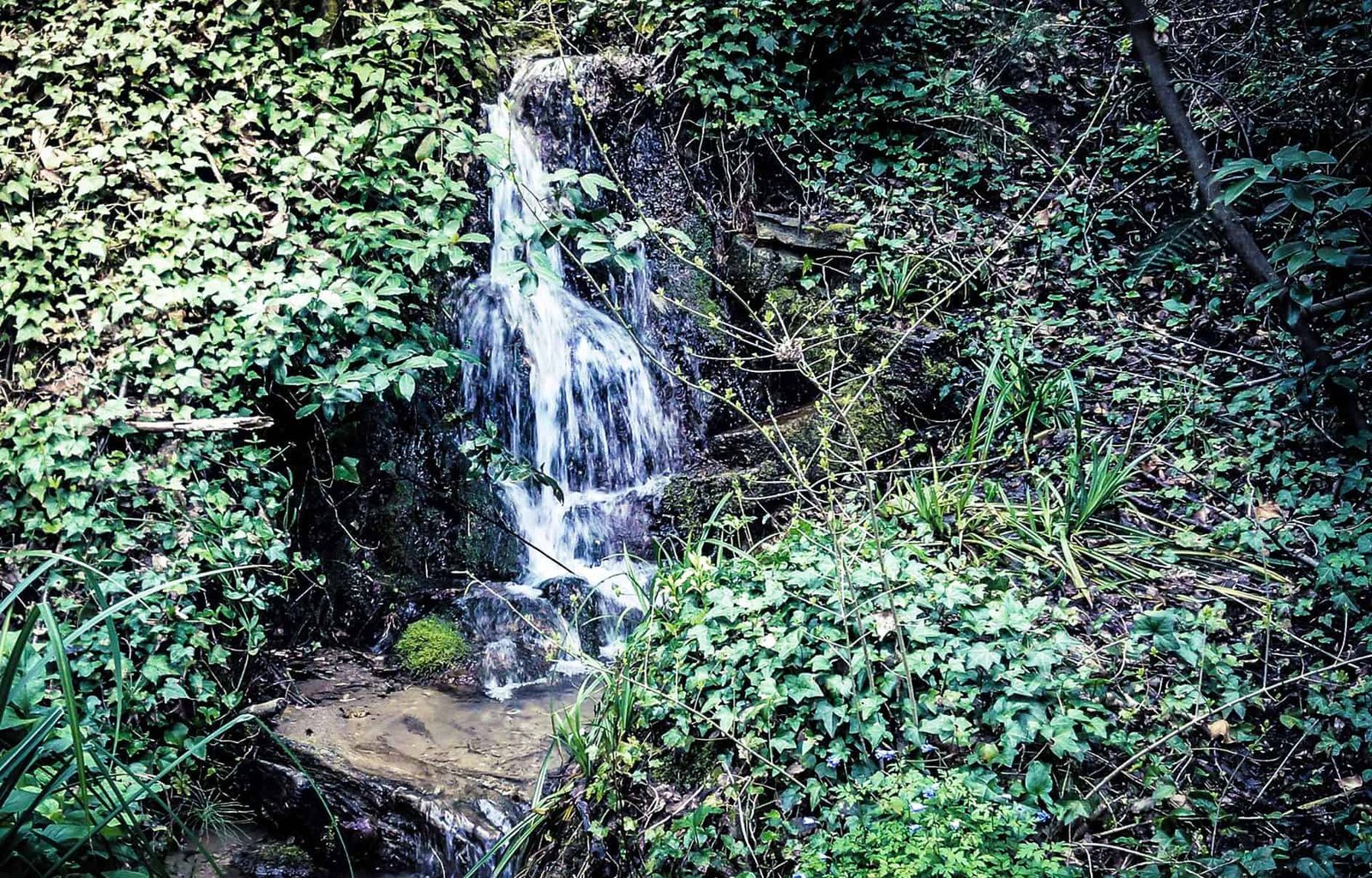
A short distance from the town stretches the natural monument of the Selva di Genazzano, established by the Lazio Region in 2000. It is one of the most beautiful woods of the small group of the Monti Prenestini and, according to the Comune's page, the only remnant of native vegetation observable in the upper Sacco valley: a fact that alone justifies the protection.
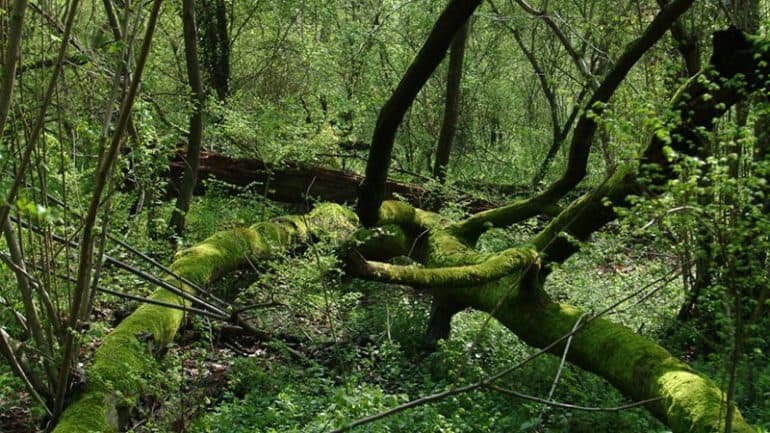
The forest composition is a Turkey oak woodland with holm oak, an association now almost vanished in the rest of the province of Rome as a result of cutting and agricultural transformation. Hornbeams, lindens and wild apple trees are also found. In the herbaceous layer two very rare species of sedge survive, at risk of extinction: the kind of detail a hiker doesn't notice and that instead defines the scientific value of a wood. The fauna includes the river crab in the watercourses, the porcupine, which digs its burrows on the steep slopes, and the tawny owl, the night raptor whose call can be heard at dusk.
The recent history of the wood is that of half the Apennines. Donated to the Comune by Cardinal Del Drago at the end of the 1800s with the grant of the civic right to gather wood, it was used until the 1950s and 1960s for charcoal production: the platforms where the charcoal pits were set up still remain today, circular levels perfectly recognizable once you know what to look for. The last cuttings date to 1975. Since then they have been forbidden, and the wood has recovered.
On access, the Comune indicates specific conditions and invites people to contact the offices: it is a natural monument, not an urban park, and the visiting rules can change. Anyone looking for more structured hikes in the same Apennine belt will find terrain in the Monti Simbruini and in the bosco di Paliano, a little farther south.
Something nobody tells you about Genazzano (RM)
The guides talk about the Infiorata, the castle, the sanctuary. Almost none of them says that this town is one of the Marian sites most frequented by popes over the last 150 years, and that this frequent attendance has left concrete and dated traces.
Leo XIII, the pope born at Carpineto Romano, about 30 kilometers from here, was devoted to the Madre del Buon Consiglio from boyhood. As pontiff he approved the new liturgical Office in 1884, instituted a scapular with indulgences in 1892, inserted the invocation into the Litany of Loreto on April 22, 1903 and elevated the sanctuary to a minor basilica on March 7 of the same year. This is not generic devotion: these are legal acts, with dates.
Before him, Paul II sent two bishops to verify what happened in 1467. Sixtus IV confirmed in 1475 the donation of the church to the Augustinians with privileges and indulgences. Alexander VI excommunicated in 1502 those who had plundered the convent. Innocent XI authorized in 1682 the double golden crown for the image. Benedict XIV approved in 1753 the Pia Unione, which in 1790 counted about 19,000 members.
In the 20th century the list continues. Pius XII frequented the sanctuary as a seminarian and as a young priest, before his pontificate, and in July 1953 sent a letter of praise and blessing for the bicentenary of the Pia Unione. John XXIII went there on August 25, 1959, with the greatest discretion, and was welcomed by a spontaneous crowd. John Paul II came on April 22, 1993, three days before leaving for Albania, and entrusted that journey to the protection of the Madonna: a gesture that symbolically closes the circle with the tradition of the image that left Scutari. Benedict XVI blessed an icon of the Madre del Buon Consiglio in the Vatican gardens on July 9, 2009. And on May 10, 2025 Leo XIV chose Genazzano for one of his very first outings as pontiff: for a town of 5,000 inhabitants, a fact worth an afternoon's trip on its own.
I add the saints, because they complete the picture: Don Luigi Orione, who confided here that his Piccola Opera had been born at the feet of the Madonna del Buon Consiglio, and Mother Teresa of Calcutta, who came back several times and in her visit of June 10, 1993 asked for an image to take to China.

Festivals, traditions and folklore in Genazzano (RM)
The Infiorata of Genazzano (RM), the largest in the world
The most deeply felt event is held on the first Sunday of July, on the occasion of the feast of the Sacred Heart. The tradition of the carpet of flowers to welcome the procession goes back to 1883, when Cardinal Vincenzo Vannutelli established the first celebrations with the solemn procession and published the statute of the Association of the Apostleship of Prayer in honor of the Sacred Heart of Jesus. Some reconstructions trace the custom of decorating the streets with flowers back to much earlier, to the 1600s. On this point the sources diverge, and the sure date remains 1883.
The record is documented: in 2012 the Guinness World Records certified in Genazzano the largest carpet of flower petals in the world, 1,642.57 square meters. In 2013 Poste Italiane dedicated a commemorative stamp to the achievement. The town today calls itself City of Art and of the Infiorata, and the event has been put forward for recognition as intangible cultural heritage.
The mechanism is more interesting than the record. In the preceding week each group takes care of gathering the flowers in the countryside and on the Prenestini, of the spruia, that is the separation of the petals, of the selection of colors and of storing the petals in the cool cellars dug into the tuff. The laying takes place on Saturday night, from the town's rioni, until the early hours of the morning, with participation involving the entire town. On the number of rioni the sources don't agree: some give 17, others 22. The floral pictures address sacred themes, current subjects and events of the year, and run from the courtyard of the Castello Colonna to Piazza della Repubblica, for a length that exceeds 1,500 square meters of decorated surface. In recent years, as part of exchanges with Infioritalia, master flower-carpet makers from other Italian cities have come.
Blunt practical advice: anyone who wants to see the Infiorata must arrive on the night between Saturday and Sunday, not on Sunday afternoon. During the day you see the finished carpet, with the crowd. At night you see it being made, and it's a completely different experience.

The Procession of the Sacred Heart
The procession that walks along the carpet is unique of its kind. The parade of about 400 costumed participants, who reenact episodes from the Old and New Testaments and the history of the Church, alternates with mysteries, promises, lanterns, crucifixes and sacred hangings. With them walk the bishop and a group of clergy who raise the tabernacle with the Eucharist. The procession leaves from Piazza G. E. D'Amico at 18.00, goes outside Porta Romana and returns under the portal of the Church of San Paolo.
The preparation is long: the type of fabric for the costumes is chosen, materials and accessories for the ornaments are sourced, and about a month ahead the parts to be performed are assigned. It's community theater in the full sense of the term, with a supply chain that involves dozens of families.
The Palio di Brancaleone
In the last week of May the town remembers its knight with the Palio di Brancaleone: games, parades in Renaissance costume and many occasions of agri-food interest. There are three high points: the oath of the knights in church, the assault on the castle and the reenactment of the victorious duel between Italians and French. In the setting of the village, with the castle closing the view, it works much better than many more prestigious reenactments.
The feast of the Mother of Good Counsel, September 8
In September the Marian patronal feast of September 8 is celebrated, with a week of religious events, music, cabaret shows and film screenings. April 25, the anniversary of the apparition according to tradition, is the other major date in the devotional calendar. The sanctuary also dedicates the 25th of every month to Marian worship, with liturgy at 16.00 in winter and at 17.00 in summer.
Music at the Castle, Ninfeo Live and the Sete Sois Sete Luas Festival
Throughout the year the Castello Colonna hosts music workshops, in particular advanced courses in classical guitar, violin, piano and ensemble music, concerts by young musicians, photography and crafts exhibitions and food events. In the third week of July, La Musica che Unisce and the Sete Sois Sete Luas Festival take place, a series that brings to Genazzano artists of contemporary folk music from the Euro-Mediterranean countries. From that project came the Orchestra Popolare a Colori, formed by members of the Banda Musicale di Genazzano to whom violins and guitars are added until reaching about 50 performers. The main concert is held on the first Saturday of July in the castle courtyard.
In the second week of July, in the green area in front of the Ninfeo, Ninfeo Live takes place: youth music groups, photography exhibitions, theater events and food stands. Playing in front of a loggia with three serliane attributed to Bramante is a privilege few festivals can offer. Over the course of the year there are also concerts by the Banda Musicale Comunale, the Orchestra Popolare a Colori and the Schola Cantorum Padre Belli, while two amateur theater groups put on shows at the Cinema Italia during the winter season.
Calici di Stelle and Cantine Aperte
Around August 10, on the weekend closest to San Lorenzo, Calici di Stelle is held, with food and wine tastings, music and shows, taking advantage of the valley's dark sky for the night of the shooting stars. In the second half of September the streets and squares of the historic center host the Cantine Aperte, with tastings of wines and typical dishes and traveling music groups. The exact dates change from year to year. Check them on the channel of the Comune or the Pro Loco before setting out.
The advice I give you for visiting Genazzano (RM)
The first piece of advice concerns the order of the visit, and it's worth more than any list of monuments. Don't enter the town from the top. Leave the car down in the valley, go first to the Ninfeo, which is always open and costs nothing, and look at the village from below: from there you understand in 30 seconds the logic of the settlement, the tufa blade, the castle that closes the north front, the sanctuary that occupies the lower part. Then walk up from Porta Romana. The visit becomes a story instead of a collection of stops.
The second piece of advice concerns the days. Genazzano is not a town turned into a museum: a large part of what you visit opens on its own calendars, and the castle with its museum can be visited from Friday to Sunday. Going on a Tuesday means seeing a beautiful village and little else. If you have to choose a day, choose Saturday: castle open, sanctuary open, shops open, and restaurants that are really working.
The third piece of advice is about seasons. July is the month of festivals, and it is also the month when the town fills up. If you come for the Infiorata, allow for distant parking and a sleepless night, because the best sight is at dawn, with the carpet finished and nobody on it. Outside July, the best months are April and May, when the green of the Prenestini is at its peak and the afternoon light cuts across the tuff from the side, and October, when the Selva changes color. August, in the middle hours, is simply a climb in the sun with no shade.
The fourth piece of advice is to phone. The Comune answers at 06 955791, the sanctuary at 06 9579002, the castle museum at 06 95579203. Five minutes on the phone are worth an hour in the car. And if you want someone to open the normally closed churches for you and tell you about the town properly, a professional guide can be found: the tourist accompaniment service of TourLeaderPro works on exactly this kind of itinerary outside Rome.
What to eat and drink in Genazzano (RM)
The wines: Genazzano DOC and Cesanese di Olevano Romano DOC
The municipal territory falls within two controlled designations of origin, and for a town of this size that is notable. The Genazzano DOC was recognized in 1992 and its zone includes, according to the regional page, the municipalities of Cave, Genazzano, Olevano Romano and San Vito Romano in the province of Rome, plus Paliano in the province of Frosinone. The white, according to the same source, is based on Malvasia di Candia from 50 to 70 percent, with Bellone and Bombino from 10 to 30 percent and the remainder made up of Trebbiano toscano, Pinot bianco and other white-berried varieties. It has a pale straw color with greenish reflections, a delicate fruity aroma, and a minimum alcohol content of 10.5 degrees. The red is based on Sangiovese from 70 to 90 percent with Cesanese from 10 to 30 percent and other red-berried varieties to complete it. It is bright ruby, fruity, fresh, with a minimum alcohol content of 11 degrees. It must be said clearly that older pages circulate with different percentages: in case of doubt the current production regulations prevail.
The second designation is Cesanese di Olevano Romano, or simply Olevano Romano DOC, which covers the whole territory of Olevano and part of that of Genazzano. It is a red of ancient tradition, ruby with violet reflections, dry and of good structure, produced mainly from Cesanese di Affile and common Cesanese. Cesanese finds here, on the Prenestine hills between the province of Rome and Ciociaria, one of its areas of election. Personal opinion, and not a popular one: young Cesanese is often easy-drinking and forgettable, while the superiore and riserva versions from this hill belt hold up against far more prestigious reds. It is worth spending a few euros more.
Gnocchetti a coa de sorica and gnocchetti di tiritello
Gnocchetti a coa de sorica, in Italian a coda di topo, are made from a dough of water and flour to which one egg per kilo is added, just enough to give the dough the consistency needed for the piece to hold its helical shape. They are a poor home pasta, and should be sought in the trattorias that still make them by hand. Gnocchetti di tiritello are something else: tiritello is wheat bran flour, and the dough of bran meal with cold water produces thick, heavy fettuccine, with a rustic flavor and dark color. It is subsistence cooking that has become identity, as often happens in inland Lazio.
The barachia and the sweets of Genazzano (RM)
The typical and unique sweet of the town is the barachia: shortcrust pastry and plum jam. Simple, not very photogenic, excellent. Alongside appear the ciambelline al vino, common to the whole Prenestine and Ciociaria area, which you dip in red wine at the end of the meal without apologizing to anyone.
The DE.CO. mark and local products
The Comune of Genazzano has established a DE.CO. mark, Denominazione Comunale di Origine, to promote typical products tied to ancient traditions and recipes. It is an administrative tool, not a European certification, but it serves a purpose: it puts in black and white which preparations belong to the town and under what rules. Cheeses and fruit of the hill belt complete the picture. The names of individual places do not appear here: management changes, and an old list does more harm than good. Ask in town, and trust where the people of Genazzano eat on Sunday.

Another well-known fact, yet rarely cited
That Genazzano gave birth to a pope many people know. What is rarely cited is the scope of that pontificate and how much the town benefited from it in material and legal terms.
Martin V was no ordinary pope. He was elected on November 11, 1417 by the Council of Constance, the assembly convened to end the schism that for 40 years had divided Western Christendom among several obediences. His election was the turning point of that crisis, and the process formally closed only on July 26, 1429, when the antipope Clement VIII resigned and the cardinals of the Avignon line recognized the Roman pontiff. In the meantime Martin V had brought the papal seat back to Rome, with his return on September 28, 1420 and the solemn entry from Santa Maria del Popolo to St. Peter's on September 30. He found a city reduced to a few tens of thousands of inhabitants, with crumbling basilicas and impassable streets, and he began to put it back on its feet. He died on February 20, 1431 of apoplexy and rests in San Giovanni in Laterano.
The effect on Genazzano was direct and verifiable on the ground. The castle stops being a fortress and becomes a residence: that's the west wing, with the marble frames, the fireplaces and the stone seats of the reception rooms. The church of San Nicola is raised to a collegiate church, endowed with privileges, relics and revenues, enlarged in late Gothic forms and enriched with the polychrome wooden ceiling and the Cosmatesque pavement. The village undergoes major urban transformations. To put it plainly: the most beautiful phase of Genazzano's architecture is financed by the papal power of a son of the town. It's the classic model of the relationship between Rome and the fiefs of Lazio, and here it can be read with a clarity that is missing elsewhere.
I'll add a detail that almost nobody tells and that helps date things by eye: the same family that finances this phase is the one that, a century later, calls a designer of European stature to the valley for the Ninfeo. Between the late Gothic frame of San Nicola and the serliane of the Ninfeo a little more than 100 years pass, and a complete change of language. Walking from one to the other, in 20 minutes on foot, is a lesson in the history of architecture that no textbook replaces.
How to visit Genazzano (RM): times, route, children and accessibility
How much time you need and in what order
A serious visit takes three to four hours, without lunch. Recommended route: Ninfeo del Bramante, the climb to Porta Romana, Chiesa di Santa Croce, Basilica del Buon Consiglio with the museum, back up along the main street to Palazzo Apolloni, Piazza San Nicola with the patron saint's church and the Castello Colonna, Chiesa di San Giovanni in the square below, down toward Piazza G. E. D'Amico and the Chiesa di San Paolo. Anyone with a full day should add the Selva and a loop among the vineyards toward Olevano.
Genazzano (RM) with children
The town works well with kids for two reasons: the castle, which unlike many palaces still looks like a real castle, and the Ninfeo, which is a building with shells, niches and oculi where you can tell the right stories. The Infiorata, for a child, is a memory that stays: petals on the paving, designs as big as a street, people working at night. Watch out for strollers: the slopes are significant and the stairways frequent, so a baby sling or a baby-carrier backpack is better for children under two.
Accessibility
The picture is an honest one and it has to be said plainly. The sanctuary has ramps for wheelchair access, according to the municipal listing. The Ninfeo del Bramante is listed as not wheelchair accessible. The Church of San Nicola can be reached only by stairs, without a ramp. The historic center has steep slopes and old paving. People with mobility problems can still make a beautiful and sensible visit by concentrating on the lower part, with the sanctuary, and on Piazza San Nicola reached by car.
How much a day in Genazzano (RM) costs
The village is free. The Ninfeo is free. The sanctuary has free admission during opening hours. The real expenses are fuel or the Cotral ticket, the possible admission to the castle museum and lunch. It's one of the cheapest trips you can make from Rome, and that makes it perfect even for those who travel for a long time on a tight budget. Anyone planning a complete Italian itinerary will find useful frameworks in ItalyPlanner's English guide to day trips in Italy.
When to go and when to avoid
Spring and early fall are the right seasons. July is the month of the festivals, with the peak of the Infiorata on the first Sunday. To avoid: the middle hours of August and the Mondays and Tuesdays out of season, when the town is closed. On Sunday morning, with the sanctuary full for Mass, the atmosphere is lovely but the visit is slower.
The right photo to take in Genazzano (RM)
The real photo of Genazzano is not inside the town: it is from outside, from below, with the village presenting itself edge-on like a prow. The best spot is on the road that climbs from the valley, in the area below Porta Romana and toward the Nymphaeum, where the line of houses above the tuff ridge reads in full and the castle closes the composition at the top. Ferdinand Gregorovius, who passed through here in the 1800s during his travels in Lazio, described exactly this image: the houses that seem to set out in procession toward the church of Buon Consiglio and toward the baronial castle that occupies the summit. He saw what can still be seen today from that point.
Now the technical part, which is what makes the difference. The good light is that of late afternoon, when the raking sun enters the irregularities of the tuff and the gray stops being flat. Early in the morning the front of the village is in shadow and the result is flat and washed out. Use a medium focal length, between 50 and 85 millimeters equivalent: the wide angle pushes the town away and shrinks it, and the prow effect disappears. If you have a telephoto lens, try to compress the plane of the village with that of the Lepini in the background: it is the photograph that explains the geography of this piece of Lazio better than a map.
The other two framings I recommend. The first: the courtyard of the Castello Colonna, with the slice of sky between the walls, best in mid-morning when the light bounces off the pale walls. The second, and the most difficult, is the interior of the Nymphaeum with the sequence of the three Serlian windows: you need a tripod or a surface to rest on, long exposures and patience, because the contrast between the shadow of the hall and the light of the garden is harsh. The day of the Infiorata changes everything: you shoot from above, from the elevated points along the main street, and you shoot at dawn, when the carpet is finished and nobody walks on it. Photographing it at 11 on Sunday, in the middle of the crowd, means taking home a photo of heads.
Some important events that happened here in history
The first, in order of time and symbolic weight, is April 25, 1467: the date that tradition assigns to the arrival of the Marian image on the wall of the church under construction. The ecclesiastical verification was immediate, because already in that year Paul II sent two bishops to Genazzano to establish what had happened. Documented fact: the inquiry. Fact of tradition: the image's journey from Scutari. The distinction matters.
The second is May 15, 1502, when Alexander VI issued an excommunication against those who had plundered the convent. Behind that date there is a war: those were the years when the Borgia were dismantling the power of the Colonna in Lazio, and Genazzano paid the price. Between 1500 and 1503 the castle is recorded in the hands of the Borgia, who built the fortifications on the east side still recognizable today in travertine.
The third is February 13, 1503, the Challenge of Barletta, with Giovanni Brancaleone among the 13 Italian knights. It did not happen in Genazzano, but it is the event the town has chosen as its civic memory: the municipal coat of arms recalls it, and the Palio at the end of May re-enacts it every year.
The fourth is 1883, the year Cardinal Vincenzo Vannutelli established the celebrations of the Sacred Heart with the solemn procession and published the statute of the Association of the Apostleship of Prayer. From that administrative and devotional act the Infiorata was born, which 140 years later is a certified world record.
The fifth is 1903, a double year: on March 7 Leo XIII elevated the sanctuary to a minor basilica, on April 22 he inserted the invocation of the Madre del Buon Consiglio into the Litany of Loreto. Since then that title is recited throughout the Catholic world, and it was born here.
The sixth is 1943, with the RAF bombing of the castle, aimed at the ovens installed by the Germans to supply the Cassino front. Serious collapses on the north side, and the beginning of a decline that would last decades: the bridge demolished and rebuilt in reinforced concrete after the war, then 40 years of abandonment until the purchase of 1979 by the Province of Rome and the transfer to the Comune.
The seventh is 2012, with the Guinness certification of the largest carpet of petals in the world, 1,642.57 square meters, followed in 2013 by the commemorative stamp from Poste Italiane. A town of 5,000 inhabitants that enters the world records with flowers gathered by hand in the preceding week: a fact that deserves to be told in full, not dismissed in a line.
Who has passed through Genazzano (RM)
The first name is that of Oddone Colonna, who was born here between 1369 and 1370 and left from here to become Martin V. It is not a passing through: it is an origin, and it changes how you look at the town.
Then come the pilgrim popes, with verifiable dates. Leo XIII, born at Carpineto Romano, devoted from boyhood, who in 1903 elevated the sanctuary to a minor basilica and put the title of Buon Consiglio in the litany. Pius XII, who frequented Genazzano as a seminarian and as a young priest and in July 1953 sent a letter of praise for the bicentenary of the Pia Unione. John XXIII, on August 25, 1959, arrived in great privacy and welcomed by a crowd that formed on its own. John Paul II, on April 22, 1993, three days before flying to Albania: it is hard to imagine a choice more loaded with meaning, given the tradition that ties the image to Scutari. Benedict XVI, who on July 9, 2009 blessed an icon of the Madre del Buon Consiglio in the Vatican gardens. And Leo XIV, who on May 10, 2025 went to Genazzano among the very first outings of his pontificate, putting the town back on the news of half the world for an afternoon.
The saints have passed through too. Don Luigi Orione, several times, who said here that his Piccola Opera was born at the feet of the Madonna del Buon Consiglio. Mother Teresa of Calcutta, who came back on several occasions and in her visit of June 10, 1993 asked for an image to take to China.
On the secular side, the most illustrious name is that of Ferdinand Gregorovius, the German historian of medieval Rome, who traveled on foot and on horseback through the Lazio of the castles and left of the profile of Genazzano above the valley a description that anyone can verify with their own eyes by climbing from the lower road. Before him, and after him, the town was crossed by Grand Tour travelers headed toward Naples along the Sacco valley: it was not a required stop on the classic itinerary, but the castle of the Colonna above the tuff regularly ended up in their notebooks.
Finally the Borgia, who did not pass through as guests but as occupiers, between 1500 and 1503, leaving in travertine the most concrete signature of all. Anyone looking for professional accompaniment on these stories, with guides who really work in the Lazio territory and not only inside the walls of Rome, will find the right structure in the TourLeaderPro service for Rome and Lazio.
What to see around Genazzano (RM)
Genazzano works very well as a base or as a stop on a wider itinerary, because it sits at the center of one of the densest areas of villages in Lazio. Toward the mountains you go up to Subiaco, with the Benedictine monasteries, and to the Monti Simbruini. On the same line you find Vallepietra with the sanctuary of the Santissima Trinità, Filettino and Guarcino with Campocatino.
Toward Rome, a quarter of an hour away, is Palestrina with the sanctuary of Fortuna Primigenia and the Nile mosaic, which alone is worth the trip. To the south open the Sacco valley and Ciociaria: Anagni, the city of the popes, Ferentino with its Cyclopean walls, Fumone, Alatri with its acropolis, Collepardo, Vico nel Lazio and Fiuggi with its waters.
To the west, toward the Lepini Mountains, are Artena, Segni, Carpineto Romano, birthplace of Leo XIII, Cori with the Temple of Hercules and Lake Giulianello. For those who love abandoned places, in the same area you can reach the ruins of Camerata Vecchia and the ghost village of Rocchettine. Farther west still you enter the Castelli Romani Park, another story and another geology.
Anyone traveling from abroad who wants to understand how to fit a village like this into a week-long Italian itinerary will find an honest approach in the English-language guide by ItalyPlanner on what to do in Rome, which also devotes space to what lies just outside the Grande Raccordo.
Quick questions about Genazzano (RM)
How far is Genazzano (RM) from Rome?
About 45 kilometers by road to the east. By car allow an hour and 10 minutes from the Grande Raccordo Anulare in normal conditions, more on Saturday morning and on holidays.
How do you get to Genazzano (RM) without a car?
With Cotral buses from the Anagnina terminal, on metro A, and the Ponte Mammolo terminal, on metro B. Schedules can be checked on the Cotral website. There is no railway station in town: anyone arriving by train gets off at Valmontone and continues by bus.
How much does it cost to visit Genazzano (RM)?
The historic center is free, the Bramante Nymphaeum is free and the sanctuary has free admission during opening hours. The only expenses are the trip, the possible ticket for the museum in the castle and lunch.
How much time do you need to visit Genazzano (RM)?
Three to four hours for the historic center and the main monuments. A full day if you add the Selva di Genazzano and a tour among the vineyards toward Olevano Romano.
When is the Castello Colonna open?
The museum housed in the west wing is listed as open from Friday to Sunday, from 10:00 to 18:00 in winter and from 9:30 to 13:00 and from 14:30 to 19:00 in summer. Some institutional pages list the complex as closed: it's best to call 06 95579203 before leaving.
What are the hours of the Sanctuary of the Madre del Buon Consiglio?
The basilica opens from 7:00 to 12:45 and from 15:00 to 18:45 in winter, until 19:45 in summer. Weekday Masses are at 7:30, at 9:00 and at 17:00 in winter or 18:00 in summer. On Sunday at 7:30, 9:30, 11:00 and 18:00.
Can you visit the Church of San Nicola in Genazzano (RM)?
The Comune's page lists it as closed to the public during the year, with a special opening on December 6 for the feast of the patron saint. For a visit outside that date you need to contact the Comune, at 06 955791.
When is the Infiorata of Genazzano (RM) held?
On the first Sunday of July, on the occasion of the feast of the Sacred Heart. The laying of the petals takes place on the night between Saturday and Sunday, and it is the most interesting moment to see.
Why is the Infiorata of Genazzano (RM) in the Guinness World Records?
Because in 2012 the Guinness World Records certified here the largest carpet of flower petals in the world, at 1,642.57 square meters. In 2013 Poste Italiane dedicated a commemorative stamp to the achievement.
Can you visit the Bramante Nymphaeum?
The Comune lists it as always open, with free and unrestricted access, in Via P. P. Pasolini, outside Porta Romana. It is not wheelchair accessible.
Is Genazzano (RM) suitable for people in wheelchairs?
Partly. The sanctuary has access ramps. The Nymphaeum and the Church of San Nicola are listed as not accessible. The historic center has steep slopes and staircases: it's best to concentrate on the lower part and on Piazza San Nicola reached by car.
Do you need to book to visit Genazzano (RM)?
No for the village, the Nymphaeum and the sanctuary. For the castle museum and for the normally closed churches it's best to call ahead, and for groups booking is always recommended.
Where do you park in Genazzano (RM)?
In the areas down in the valley, toward Porta Romana and in the Nymphaeum zone. The historic center develops on a tongue of tuff 70 or 80 meters wide and offers no useful parking spaces.
Is Genazzano (RM) suitable for children?
Yes, especially for the castle and the Nymphaeum, which lend themselves to storytelling. Watch out with strollers: steep slopes and frequent staircases make a child-carrier backpack preferable with the little ones.
What is the difference between Genazzano (RM) and Palestrina?
Palestrina is an ancient city, with the great sanctuary of Fortuna Primigenia and a first-rate archaeological museum. Genazzano is a medieval and Renaissance village, with a castle, a Marian sanctuary and a nymphaeum. They are two complementary visits and are a quarter of an hour apart.
What wines are produced in Genazzano (RM)?
The Genazzano DOC, recognized in 1992, in white and red versions, and the Cesanese di Olevano Romano DOC, whose zone also includes part of the municipal territory of Genazzano.
What do you eat in Genazzano (RM)?
Gnocchetti a coa de sorica, gnocchetti di tiritello, cheeses and fruit of the hill area, and for dessert the barachia, made of shortcrust pastry with plum jam. The Comune has established a DE.CO. mark for typical products.
How many inhabitants does Genazzano (RM) have and at what elevation is it?
A little over 5,700 inhabitants. The center rises at 375 meters above sea level, on a spur of volcanic tuff, with municipal elevations that reach up to 600 meters.
Which pope was born in Genazzano (RM)?
Martin V, born Oddone Colonna, born here between 1369 and 1370 according to the Dizionario Biografico degli Italiani and elected on November 11, 1417 at the Council of Constance. He died on February 20, 1431 and is buried in San Giovanni in Laterano.
What is the best time to visit Genazzano (RM)?
April, May and October for the light and the green. The first Sunday of July for the Infiorata, allowing for crowds and distant parking. Avoid the middle hours of August and the early days of the week in low season, when many places stay closed.
Can you visit the Selva di Genazzano (RM)?
It is a natural monument established by the Lazio Region in 2000. The Comune indicates specific access conditions and invites people to contact the offices at 06 955791 before the visit.
Genazzano is not a postcard village and doesn't try to be. It is a real town, with a history out of proportion to its size, a nymphaeum that scholars have been fighting over for a century and a half, a flower festival that has beaten the whole world, and a Cosmatesque floor that almost nobody manages to see. If I had to give a single piece of guidance, it is this: don't come in a rush between one stop and another. Arrive in the afternoon, look at the village from below, climb slowly, stop for a glass of Cesanese when the light starts to go down. The place opens up only to those who give it time.
Article written by the editorial team of TourLeaderPro, contact them for Private/Corporate/V.I.P. Tours and Experiences.
Planning a trip to Rome? The English-language guides for visiting the city are on ItalyPlanner.com.