Artena (RM)
In short. Artena occupies the northern slope of the Monti Lepini about 30 kilometers from Rome, with the town hall in Piazza della Vittoria and the built-up area stretched between an average elevation of 420 meters and the 621 meters of the…

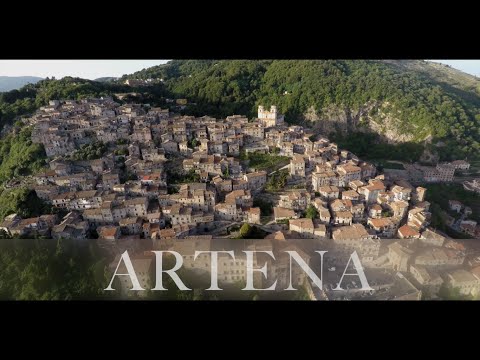
Artena occupies the northern slope of the Monti Lepini about 30 kilometers from Rome, with the town hall in Piazza della Vittoria and the built-up area stretched between an average elevation of 420 meters and the 621 meters of the highest point in the municipal territory. You reach it from the A1 by exiting at Valmontone and continuing for about 10 kilometers on the provincial road, or from the Casilina by taking the ramps that climb toward Colleferro. From Rome, by car, allow a little under an hour when the Grande Raccordo Anulare cooperates. The Roger Lambrechts civic archaeological museum, which is the most important monument you can visit in the town, occupies the Granaio Borghese in Via Fleming, 00031 Artena, and can be reached at 06 95191077 and 06 95191065. Entry to the municipal museum has no formal ticket office, but hours and openings should be confirmed by phone before you leave, because management is entrusted to the local Archaeological Group and the opening shifts can change. The Piano della Civita archaeological area is reached from Via Piano della Civita, about one kilometer above the built-up area. The practical fact that matters more than all the others: the upper part of Artena can't be covered by car, and anyone who arrives has to leave the vehicle in the lower village's parking lots and go up on foot.
The municipal territory borders Cori and Rocca Massima to the south, Colleferro and Segni to the east, Lariano and Rocca di Papa to the west, and Rocca Priora, Palestrina and Valmontone to the north. The main hamlet is Macere. The scattered settlement includes districts such as Colubro. Artena has about 13,600 inhabitants and belongs to the Metropolitan City of Rome Capital, but its landscape, its cooking and its history belong to the Lepini Mountains. Anyone who visits it thinking of a Roman suburb has the wrong frame.

How to get to Artena (RM) and where to leave the car
The most convenient way to reach Artena is still the car. From the A1 Rome-Naples you exit at Valmontone and follow the provincial road toward the southwest. From Via Casilina you go up from Colleferro. From Velletri and the Castelli you arrive on the road that crosses the Colubro saddle, and that is the scenic route, the one that gives you the first view of the town perched like a pyramid of houses. Anyone traveling by public transportation has to allow for one transfer: the regional bus lines connect Artena to the railway stations on the Rome-Cassino line, and the reference station is Colleferro-Segni-Paliano, served by regional trains leaving from Roma Termini. Intercity bus schedules change by season and thin out a lot on holidays. If you don't have a car, work out the return trip before leaving, because the last useful afternoon run arrives early.
Once you arrive, the geography of the place forces an immediate choice. Artena is divided in two: the lower village, modern, where cars go, and the upper village, medieval, where cars don't go. The parking is along the ring road and in the squares of the lower village, and from there you climb. It's not a country stroll: the total difference in elevation between the lower part and the Rocca at the top comes close to 150 meters, all of it covered by steps. In our judgment the best parking is the lowest one, not the one as close as possible to the arch: you climb with fresh legs and come down with tired legs, which is the right order of things.
The historic center of Artena, one of the largest car-free villages in Europe
Artena is often presented as one of the most extensive car-free historic centers in Europe and as one of the largest pedestrian areas in Italy. The formula is correct, but it needs to be explained properly, because the way it gets repeated creates a misunderstanding. Artena isn't pedestrian by municipal decree, it doesn't have a limited traffic zone with cameras and gates: it's pedestrian out of necessity. Its streets are staircases. A car can't pass because physically it doesn't fit, and that has been true for centuries, long before anyone invented pedestrian zones.
The urbanistic consequence is extraordinary and you can see it with the naked eye as soon as you pass through the Arco Borghese. In the second half of the 20th century, while almost all the towns of Lazio were being gutted to let cars through, widening alleys, demolishing arches, leveling open spaces for parking, Artena couldn't do it. The impossibility protected it. The result is a medieval and 16th-century built fabric that has arrived almost intact, with its noble palazzetti, stone portals, inner courtyards, climbing arches that span the alleys and the setbacks that join the changes in level.
The vertical labyrinth of Artena
The old town climbs up a long, narrow limestone rib, wedged between two karst cavities. One of them opens immediately below the houses, with a sheer wall that explains by itself why no besieger ever thought of attacking Artena from that side. The houses are in exposed masonry, with small, narrow windows that look more like arrow slits than windows: whoever built them was thinking about defense and cold, not about light.
The street system is made of stepped alleys that cross, split, pass under dwellings, come out on private terraces and start again higher up. Anyone who goes in for the first time gets lost, and that is the best part of the visit. I recommend going up without a map for the first half hour, simply following the rule of always going up: sooner or later you reach the Rocca, and from there everything else makes sense. The inner courtyards deserve a respectful glance, because they are private spaces that the layout of the village leaves open to view: you look, you don't go in.
The mules of Artena, the transport that never retired
Since cars don't go up, in Artena the heavy hauling has always been done by mules. This isn't folklore rebuilt for tourists: it's the technical solution the town adopted for centuries and in part still uses, because a loaded mule can go up a staircase where no wheeled vehicle can pass. Building materials, firewood, furniture, gas cylinders: everything that has to get to the upper part has traveled for generations on a mule's packsaddle, guided by a muleteer who knew the steps by heart.
At the entrance to the town a statue depicts the mule and the muleteer, and it isn't a decorative monument: it's the public recognition of a trade that kept the village's economy standing. It's worth stopping in front of it for two minutes before going up, because it changes the way you look at the staircases during the next half hour.
The 150 meters of elevation gain inside the historic center of Artena
From the lower village to the Rocca at the top, you climb about 150 meters of elevation. Put that way, it sounds like little. In practice it means climbing the equivalent of a 50-story building, on uneven steps, often of stone worn smooth by use. It isn't common in Italian villages: the internal elevation gain of a historic center rarely exceeds 50 or 60 meters, and Artena has almost triple that. Anyone with difficulty walking, anyone with a stroller or anyone traveling with elderly people needs to know it beforehand, not find out halfway up a staircase. The lower part of the village can be visited anyway and has notable views, and the museum in the Granaio is at an accessible elevation.
Palazzo Borghese in Artena
Palazzo Borghese is the building that dominates Piazza della Vittoria, at the address Via Municipio 8, and today it is a private residence. A visit to the interiors isn't open to the public and has to be arranged with the owners or included in special openings. The monumental garden, recently redone, is opened on specific occasions. Even seen only from the outside, it remains one of the largest Baroque palaces in Lazio and one of those that best explains how feudal power worked in the Papal States.
Vasanzio and the union of the two palaces
The current palace comes from the merging of two earlier, distinct buildings, belonging respectively to the Colonna and the Massimo. The west wing keeps structures dating back to the 13th century, with a series of arcades that supported the oldest residential core: anyone who looks carefully at the side of the palace can still see the medieval framework under the Baroque skin. The unification was ordered by Cardinal Scipione Caffarelli Borghese (1576-1633), nephew of Paul V, who had bought the fief in 1614, and was entrusted to the Flemish architect Jan van Santen, Italianized as Giovanni Vasanzio, the same one who in Rome had worked for the family on the casino of Villa Borghese on the Pincio.
The construction work ran through the second decade of the 17th century and continued after Vasanzio's death in 1621: the sources place completion around 1623. The element that visually unifies the two blocks is a loggia gallery on three levels, which runs along the facade and from the outside reads as a single large arcaded front. Inside are an elliptical staircase decorated with the family's heraldic emblems and a frescoed loggia, whose execution critics attribute to Giovanni Battista Corradini. The exact dates of the construction vary slightly from source to source: it's best to keep the 20 years from 1615 to 1623 as the overall span of the work.
The balcony of Palazzo Borghese and Romeo and Juliet
There is one detail that everyone in Artena tells, and for once it's true: the famous balcony dialogue in Franco Zeffirelli's Romeo and Juliet, released in 1968, was shot here. The Shakespearean Verona of the film is in large part a montage of places in Lazio and Umbria, and the balcony that Olivia Hussey leans out from belongs to Palazzo Borghese in Artena. Anyone who arrives in Piazza della Vittoria and looks up sees one of the most-viewed shots in the history of Italian cinema without any sign telling them so.
The Arco Borghese and Piazza della Vittoria in Artena
The Arco Borghese is the monumental gate of the village and the point where the visit really begins. It was built at the wish of Scipione Borghese on the main access road to the built-up area, in a project that the sources place between 1618 and 1624, with the contribution of Martino Longhi and Vasanzio himself. It is a mass of tuff blocks, lightened by architectural elements and crowned with stone battlements, and it has received recognition as a national monument. Recently restored, today you walk through it without thinking. That's a mistake, because it is the threshold between the Artena of cars and the Artena of steps, and it should be looked at from below before you pass under it.
Beyond the arch opens Piazza della Vittoria, created by Cardinal Borghese after 1615 and supported by a system of arcades that fills in the drop of the slope. Vasanzio conceived it as an urban stage: the baronial palace occupies one short side, the Palazzetto del Governatore faces it, and the long side opens onto the void, like a balcony over the Sacco valley. On clear days the view reaches the Monti Lepini on one side and the Tyrrhenian on the other. It's the place where the town has gathered for four centuries, and on a summer evening you understand that without any need for explanation.
The Palazzetto del Governatore
Across from Palazzo Borghese stands the Palazzetto del Governatore, which in the fief of Montefortino housed the public administration and also the prison for convicts. The two functions under the same roof explain better than any treatise how baronial justice worked in the Papal States: the governor who administered was also the one who locked people up. The building faces the square and closes off the space in perspective, completing the urban scene designed in the 17th century.
The cardinal's inn, today Artena's town hall
Less well known, but as important as the rest, is the building of the inn designed by Vasanzio starting in 1620 to receive pilgrims and travelers who walked the old route of Via Latina. It had a quadrangular plan with two orders of arcades on each side, and it is a rare case of a public lodging building designed by a leading architect for a provincial fief. Today it houses the town offices: anyone who goes in to ask for a certificate is walking inside a Vasanzio design without knowing it.

The Granaio Borghese and the Roger Lambrechts Archaeological Museum in Artena
The Granaio Borghese is a large 18th-century building on a rectangular plan, raised above the street front, which the Borghese princes had built to stockpile the fief's grain. It kept that function until the 1950s: anyone in Artena over 70 still remembers the sacks and the carts. Restored, it now houses the Council Chamber of the Comune and the Roger Lambrechts Civic Archaeological Museum, in Via Fleming.
A baronial granary turned into an archaeological museum isn't a stopgap: it's the right choice. The building has wide rooms, high ceilings, thick walls and controlled side light, exactly what is needed to display fragile materials. And there is a basic coherence, because the granary gathered the produce of the fief's land and the museum gathers the produce of that same land dug up from deeper down.
Who Roger Lambrechts was and why Artena's museum bears his name
Roger Lambrechts was a Belgian archaeologist who directed the excavations at Piano della Civita for 25 years. It wasn't a summer campaign or a test dig: it was a mission lasting a quarter of a century, carried out with the stratigraphic method, which brought back the plan of an ancient urban center and gave Artena the only archaeological context excavated continuously on the whole northern slope of the Lepini. Naming the museum after him was an act of scientific gratitude, not a token tribute. It's worth remembering in front of the display cases: almost everything you see in there exists as information, and not only as an object, thanks to that work.
The collections of the Archaeological Museum of Artena
The exhibition route covers a very wide chronological range, from the Neolithic to late antiquity. Pottery, architectural decorations in terracotta, personal ornaments, work tools, coins and glass: many pieces are intact, and some have an artistic quality that surprises anyone who walks in expecting to find only study fragments. The central core documents the daily life of a city of the Republican age whose ancient name remains unknown, and this is perhaps the most fascinating thing in the entire museum: you look in the eyes of a community whose houses, dishes, roof tiles and cults are known, but not its name.
One specific section is devoted to the settlement system of the territory crossed by Via Latina, made up of farms, rustic villas, rest stations and small sanctuaries. It's the part I recommend looking at most slowly, because it explains why Artena exists: a crossroads between the Sacco valley and the road to the South, watched over from above.
Hours and visiting the Archaeological Museum of Artena
The museum lists opening on Tuesday and Thursday from 15:00 to 18:00, Wednesday and Friday from 10:00 to 13:00, Saturday and Sunday from 10:00 to 13:00 and from 16:00 to 19:00, with closing on Monday and on January 1, May 1, Ferragosto and Christmas. Management is entrusted to the Archaeological Group of Artena and actual availability depends on the volunteers: a call ahead to the numbers of the Comune or the contact people avoids a climb for nothing, especially out of season. For groups, the guided visit has to be arranged in advance, and it's worth doing, because without an explanation the Republican section risks looking like a sequence of display cases when it is actually a continuous story.
Piano della Civita, the acropolis above Artena
About one kilometer from the built-up area, along Via Piano della Civita, stretches the archaeological area that makes Artena a case study in the prehistory and protohistory of Lazio. Here, on a naturally defended summit plateau, stood a fortified urban center datable between the late Archaic phase, that is the 6th and 5th centuries BC, and the middle Republican age, the 4th and 3rd centuries. The walls that enclosed it run for about two and a half kilometers and delimit an area of about 825 meters north-south and 525 meters east-west. These are the dimensions of a real city, not a hilltop village.
The Cyclopean walls of Piano della Civita
The building technique is the one commonly called Cyclopean or polygonal, with large limestone blocks roughly squared and fitted together without mortar. It's the same family of works that you can admire at Segni, at Alatri, at Ferentino and at Cori, and that draws the defensive geography of the Monti Lepini and the Ernici. At Artena the circuit is less spectacular than the one at Alatri, but the plateau also preserves terracing works and stretches of fortification that let you read the internal organization of the settlement. Anyone who has already seen the Lepini acropolises finds here the piece that completes the picture.
The Roman villa and the late phase
After the abandonment of the city, starting in the 1st century BC, a rustic villa of some importance was set up on the area, in use until the 3rd century AD. The excavation of this complex is still under way and yields new rooms year after year. In the imperial age an aqueduct cuniculus in opus caementicium was also built in the territory, of which fragments of frescoed plaster and bits of mosaic remain. These materials tell of a serious hydraulic investment, and therefore of a productive and inhabited countryside, not a marginal landscape.
The 19th-century excavations and the identification of the city
The first documented explorations date to 1830 and are due to Lord Beverley, who carried out research near the town and brought to light structures from the pre-Roman age. On the basis of those finds and of some passages of Livy, who places a city called Artena between Ecetra and Ferentino, the archaeologist and topographer Antonio Nibby proposed identifying this site with the Artena of the Volsci later absorbed by Rome. The identification convinced people for a long time and gave the town the name it has borne since 1873, but it should be presented for what it is: a 19th-century topographic proposal, authoritative and unproven. The ancient sources are ambiguous and the Livian Artena itself is placed by other scholars in different points of southern Lazio. Anyone visiting the plateau should keep this nuance in mind, because it is exactly the kind of detail that separates a serious guide from a brochure.

The churches of Artena
Artena's religious heritage is spread along the whole climb and accompanies the visit like a series of stops made obligatory by shortness of breath. The main ones are the church of Santa Maria delle Letizie, the church of Santa Croce, the church of Santo Stefano Protomartire, the church of the Rosario and the convent of the Franciscan Fathers.
The church of Santa Croce in Artena
Santa Croce dominates the built-up area from above and is the building you see first when arriving from afar. Its origins go back to the 13th century and are traced to the family of the Counts of Segni, lords of the castle. The current appearance, however, comes from the reconstruction carried out between 1659 and 1661 to a design by the architect Domenico Terzago. It has two tower-style bell towers, an unusual solution for a village church, and inside it keeps a wooden choir made up of 13 stalls and a fresco of the Last Supper attributed to Orazio Zecca. The choir deserves attention: 13 stalls is a telling number, and the woodwork is of a higher level than the peripheral position would lead you to imagine.
The sanctuary of Santa Maria delle Letizie
The sanctuary holds the statue of the Madonna delle Grazie, the most deeply rooted devotion in the town. The building you see today is a reconstruction carried out between 1984 and 1986, made necessary by the damage from the bombing of January 1944. Tradition holds that the first church arose around the year 1000 on the ruins of a temple dedicated to Juno. It is a local tradition, not a demonstrated archaeological fact, and as such it should be told that way. Inside, the atmosphere is that of a living, well-attended sanctuary, very far from that of a monument.
Santo Stefano Protomartire, the Rosario and the Franciscan convent
The church of Santo Stefano Protomartire and the church of the Rosario complete the picture of the village's historic parishes. The convent of the Franciscan Fathers was built in 1629 at the wish of Cardinal Scipione Borghese, and falls within the program with which the new lord wanted to give the fief stable institutions after decades of devastation. Together with the Asilo di San Marco, also founded by the Borghese, it tells of a precise strategy: rebuilding the town also meant rebuilding the structures that held it together.
Lago di Giulianello and the natural areas of Artena
Lake Giulianello lies about eight kilometers from the urban center, in an exclave of the municipal territory: a piece of Artena separated from the rest of the Comune, an administrative curiosity that throws off anyone looking at the map. It is a shallow, oval-shaped basin whose origin is traced to ancient volcanic activity, perhaps a crater from gas emission. In 2007, by decree of the president of the Lazio Region, the lake and the surrounding area were established as a natural monument.
It's a quiet place, suited to a walk of an hour and a half around the perimeter, with water birds and reed beds. Anyone who gets there in summer during the middle hours is disappointed: the light is flat and the shores get crowded. The right moment is early morning in spring, when the mist rises off the water and the east shore catches the light. The lake works well as a second stop after the village, not as a substitute for the climb.

The history of Artena, from the Volsci to Montefortino
The history of Artena reads in three stages, and anyone who keeps them separate understands the town in half an hour instead of in three visits. First stage: the Volscian city on the plateau, destroyed in the 5th century BC. Second stage: the medieval castle of Montefortino on the slope, razed in the 16th century. Third stage: the Borghese reconstruction of the 17th century, which is the town you visit today. Three different cities, three different places, one modern name.
404 BC: the Roman conquest
In 404 BC Rome, engaged in the siege of Veii begun the year before, turned its forces against the Volsci and defeated them in a pitched battle fought between Ferentino and Ecetra. Right afterward it attacked the Volscian city called Artena. The tradition reported by the ancient sources says that the conquest did not happen by assault but by betrayal: a slave showed the Roman soldiers a passage that led to the citadel, where the defenders had barricaded themselves. The city was destroyed. The plateau then saw long rural use, but as an urban center it never recovered.
Montefortino, the medieval castle
At the beginning of the Middle Ages, a few hundred meters lower down and on another rise, the settlement of Montefortino arose and developed, from the castrum that stood on the mountain. This was the town's name from the Middle Ages until 1873. The overall look of the village, even today, recalls that place name: looking at Artena from the valley you see more a fortress than a built-up area, and the medieval name described reality exactly.
Local chronicles say that bands of brigands set out from the hill of Montefortino and attacked travelers headed to Rome along the Sacco valley. The report should be taken as tradition, not as a document: the valley really was an important transit route, and the reputation as a land of brigands followed the town for centuries, to the point of weighing on the decision to change its name.
Counts of Tusculum, Counts of Segni, Colonna
Toward the end of the 11th century Montefortino belonged to the Counts of Tusculum, to whom tradition attributes the founding of the church of Santa Croce. From 1226 to 1475 the castle was under the lordship of the Counts of Segni. In 1475 it was stormed by the troops of Charles VIII of France on the march toward Naples, because the lord Jacopo Conti had sided with the Aragonese. Once the stronghold was taken, the king assigned it to Prospero Colonna. From that moment Montefortino entered the orbit of the Colonna, and that changed everything.
1526, 1543, 1557: the papal destructions
The Colonna's anti-papal policy fell on their fiefs. Montefortino was devastated three times in a little over 30 years: in 1526 under Clement VII, in 1543 under Paul III and in 1557 under Paul IV. The episode of 1557 is of a harshness that still strikes us today. Paul IV, the Neapolitan pope Gian Pietro Carafa, outlawed the inhabitants of Montefortino only because they had remained loyal to the Colonna, had the settlement razed to the ground and ordered that the rite of plowing and sowing salt be carried out on the ruins.
It's worth explaining what that gesture means, because almost nobody does. Plowing the ruins of a city and sowing salt on them is a formula of ritual curse of very ancient origin: it declares the place legally and symbolically dead, no longer inhabitable, struck from the list of communities. It wasn't a military punishment, it was a sentence not to exist. Artena, or rather Montefortino, is one of the very few Italian towns where the rite is documented in the modern age. That the town is still there, with the same streets and the same alleys, is the most eloquent possible rebuttal to a pontiff.
1614: Scipione Borghese and the rebirth
The Colonna, burdened with enormous debts, sold Montefortino in 1614 to Cardinal Scipione Borghese, nephew of Paul V. It was the turning point. The cardinal rebuilt the town with an organic program: the central Piazza della Vittoria, the Arco Borghese, Via del Borgo, Via Nuova, the convent of San Francesco, the Asilo di San Marco, the inn for travelers, and the remodeling of the baronial palace already begun by the Colonna. In a few decades a settlement brought to its knees by three destructions and by a ruined administration became an orderly town again, with a monumental square that no town of that size could have afforded.
Our opinion is that Artena is the best example in Lazio of 17th-century feudal urban planning applied to an existing village. Not a new city drawn on a blank sheet, like many foundations of the period, but a Baroque graft onto a medieval fabric that nobody wanted to erase. The result can still be read today, by walking: the regular square below, the irregular labyrinth above.
Plague, brigands and the new name
The adversities were not over. In 1656 the town was hit by the plague epidemic that devastated Lazio and the Kingdom of Naples. In 1702 it was assaulted by a large and organized band of brigands. The reputation as a town of brigands took hold in those decades and survived until the 19th century, when it became an image problem serious enough to push the administration to act on the name itself: in 1873 Montefortino became Artena, in memory of the Volscian city identified on the plateau. Changing your name to change your reputation is a choice that comments on itself, and that curiously has now reversed, because brigandage has become a subject for storytelling and film.
The Borghese family remained owner of the fief even during the Napoleonic period. In 1849, fleeing Rome after the fall of the Roman Republic, Giuseppe Garibaldi took refuge in Montefortino and spent one night there, then set out again toward Romagna. In January 1944 the town was bombed by Allied forces, and the damage to the building stock, including the sanctuary of the Letizie, was serious. In the postwar period, the closeness to Rome and Latina and the proximity of the highway exit brought steady demographic and economic growth.
Festivals and traditions of Artena
The Madonna delle Grazie and the Cristi Fioriti
The procession of the Madonna delle Grazie has been held without interruption since 1731, on the Saturday before the third Sunday of May, and is the most important and most deeply felt religious event in Artena. Since 1789 the Cristi Fioriti have been carried in it: huge wooden crucifixes, borne on the shoulders by the confraternities, topped by a structure of canes woven with wild asparagus and covered with thousands of flower petals. The result is a forest of flowering crosses that goes up and down the stepped alleys, with a visual impact that someone seeing it for the first time does not forget. Attendance usually exceeds 5,000 people.
The fact to point out is the continuity: almost three centuries without interruption, in a town that in the meantime has seen plague, brigands, bombings and depopulation. Anyone who wanted to see just one thing in Artena and could choose the date would choose that Saturday in May.
The Palio delle Contrade of Artena
The Palio delle Contrade della Città di Artena has its roots in a medieval palio tied to the feast of the Maddalena, documented from the 14th century, and was revived in 1992. It is held in August and involves 10 contrade, which compete for victory in about 20 popular games: the cart race, the song in dialect, the men's and women's relays, the sardamontone, the tug of war, the hoop race, jump rope, the barrel race, the grain threshing, the log cutting, the farmer's course, archery, the brigand game, the historic quintain and the donkey race.
The event opens with a Baroque dinner in the square and continues with a historical procession that re-enacts the visit of Pope Paul V to the fief of Montefortino, which took place in 1615 when the fief was held by his nephew, Cardinal Scipione Borghese. More than 1,000 costumed participants take part in the parade, both nobles and commoners, accompanied by mules, donkeys, horses and cattle. The procession starts from the lower part of the town and reaches Piazza della Vittoria, where the official start is given. The competitions are held in the park of the Villa Borghese of Artena, surrounded by the food stands set up by the contrada members. The exact dates change from year to year and should be checked on the municipal calendar before planning the trip.
A professional observation: the Palio of Artena is the only major secular festival on the local calendar, because all the other important occasions are religious. This makes it an unusual observation point, where the community stages its own feudal history without ecclesiastical mediation.
Santa Maria Maddalena, patron saint of Artena
On July 22 Artena celebrates its patron saint, Santa Maria Maddalena. In the past the feast of the Maddalena was accompanied by a large trade fair that drew merchants and visitors from the whole Sacco valley. In recent years the program has been scaled back and the fair component has shrunk a lot. The religious part remains, with the procession and the services, and it is the moment when the town shows itself to itself more than to outsiders.
The Madonna delle Grazie and the calendar of festivals
Anyone planning a visit to Artena around the festivals should keep three dates in mind: the Saturday before the third Sunday of May for the Cristi Fioriti, July 22 for the patron saint, August for the Palio. Outside these windows the town is quiet, and in some ways it is better to visit, because the alleys can be walked at an easy pace. Anyone leading large groups should think carefully: on festival days the upper part becomes impassable for a group of 40 people.
What to eat in Artena and in the Monti Lepini
The strong point of the tourist offer of Artena and of the whole Lepini Mountains area is its food heritage. The Lepini territory and the foothill belt around it are home to the cultivation of a very large number of products protected by European quality marks. It's a fact that escapes visitors, because they associate Lazio with urban Roman cooking and not with hill farm production.
Lardo dei Monti Lepini is a long-aged product, with an intense aroma and a soft texture, served thinly sliced on warm bread. Coppiette are long strips of dried muscle meat, from horse, pork or beef, seasoned with salt, oil and a generous amount of chili pepper. They started out as food for shepherds and carters, were kept for weeks and were eaten while walking. Anyone who tastes them for the first time is surprised by the heat. They are the best food souvenir you can take away from Artena, much better than the bottle bought at the supermarket.
Inns, farm stays and restaurants in Artena
The dining offer includes inns, farm stays and restaurants serving rustic cooking able to mix mountain and sea. La Rocca dei Briganti is a farm stay surrounded by woods and hills, with a property of 90 hectares that includes its own livestock. The facility, of recent construction, has two dining rooms, 14 rooms and two swimming pools, one indoor and heated and one outdoor, and serves zero-kilometer products, handmade pasta in the local tradition and wines from its own cellar.
The hotel restaurant Ciacitto focuses on grilled meat and a list of local and national wines. In contrada Colubro, a very small hamlet of the municipal territory, you find La Locanda del Principe, an address appreciated for its fish and meat. In the upper part of Artena, Chiocchiò dominates the view, a two-level building that is also a hotel, with every room painted a different color. Le Chiacchiere instead offers a wine and restaurant formula with gourmet-style dishes.
The practical advice is trivial and nobody follows it: book. In Artena there aren't many places, on Sundays they fill up with families from the surrounding area, and on weekends in May and August finding a table without a reservation becomes an exercise in luck. Anyone organizing a lunch for a group should do it at least a week ahead, and check where the bus can stop, because it doesn't reach the upper part.
Where to sleep in Artena
Accommodation in Artena is limited in size and concentrated in farm stays, country houses and countryside facilities in the foothill belt, along with a few small hotels. Anyone traveling in a group and looking for a larger base usually turns to the facilities in the Sacco valley or the Valmontone area, a few kilometers away. For a one-day visit, though, the most rational choice remains staying overnight in Rome or in the Castelli, with Artena included in an itinerary that also covers the other Lepini towns.

Artena at the movies
Few places in Lazio have worked as much as a set as Artena. The reason is technical: an intact historic center, without cars, without visible cables, without modern signs, with very steep changes in level and vertical glimpses. A director of photography finds here what no longer exists in Rome.
The first film shot here, in chronological order, seems to be L'inferno della Helios, directed by Giuseppe Berardi and Arturo Busnengo in 1911. Then comes genre cinema: L'amante del vampiro by Renato Polselli, from 1960, and L'ultima preda del vampiro by Piero Regnoli, shot in large part in Piazza della Vittoria, and then Il boia scarlatto and Le 7 cinesi d'oro in the 1960s, Un bianco vestito per Marialé in 1972, I vizi morbosi di una governante in 1977.
1968 brings the most famous title, Franco Zeffirelli's Romeo and Juliet, with the balcony scene on Palazzo Borghese. In 1969 Nino Manfredi shot many scenes of Vedo nudo in Artena. Il prefetto di ferro by Pasquale Squitieri, with Giuliano Gemma and Claudia Cardinale, won the David di Donatello for best film. Squitieri himself returned to Artena for Li chiamarono briganti, devoted to Carmine Crocco and the annexation of the South, with Enrico Lo Verso in the lead alongside Claudia Cardinale, Remo Girone, Carlo Croccolo, Franco Nero, Lina Sastri and Giorgio Albertazzi. In 1985 Squitieri had also shot Il pentito here, with Tony Musante and Franco Nero.
In 2000 the international production arrives: many scenes of The Golden Bowl, based on Henry James, with Uma Thurman, Nick Nolte, Kate Beckinsale and Anjelica Huston, along with Mattia Sbragia and Francesco Giuffrida, were shot right here. In 2011 it was the turn of Fantasmi, in 2012 of the Japanese film Hotaru no hikari, based on the hugely successful TV series, which brought the name of Artena to Japan: some sequences of the trip to Civita di Bagnoregio were shot in Artena's historic center. In 2016 the alleys hosted the crew of the Rai TV drama Tutto può succedere, and in 2022 the filming of Astolfo.
Anyone visiting Artena with a cinematic eye should do just one thing: stand in the middle of Piazza della Vittoria and look up toward the front of the palace. That is the shot that dozens of directors have chosen over a century, and not by chance.
The Rugby Museum in Artena
In one of the palazzetti of the historic center, the Rugby Museum of the Fondazione Fango e Sudore has found room. It is a minor institution in size and absolutely not minor in character: it gathers materials, jerseys, documents and memories of a sport built on codes, discipline, courage and respect for the referee. Finding it in a Lepini village is surprising, and it's exactly the kind of surprise that makes a visit memorable. The openings are tied to the activity of the foundation and have to be arranged.
What to see around Artena
Artena fits naturally into an itinerary of two or three days between the Lepini and the Ernici. A few kilometers away are Segni, with its acropolis and the famous Porta Saracena, and Carpineto Romano, birthplace of Leo XIII. Toward the south you reach Cori, with the Temple of Hercules, and the Ninfa Garden with nearby Sermoneta, which together make up one of the finest days in southern Lazio.
To the east, along the Sacco valley, are lined up Anagni with the cathedral and the palace of Boniface VIII, Ferentino with the walls and the Roman market, Alatri with the polygonal acropolis that is the most imposing in Italy, Fumone with the castle where Celestine V died, and the spa of Fiuggi. Going up toward the mountains you reach Collepardo, Guarcino and Vico nel Lazio, one of the best-preserved walled villages in Lazio.
Toward the north and the west the landscape changes: Genazzano with the Colonna castle and Bramante's Nymphaeum, the Bosco di Paliano, Palestrina with the sanctuary of Fortuna Primigenia, Velletri and Olevano Romano, which the German painters of the 19th century chose as the capital of the Italian landscape. For anyone with only one day who wants to combine two places, the best pair is Artena and Segni: same mountain chain, two opposite ways of sitting on the ridge.
Frequently asked questions about Artena (RM)
How far is Artena from Rome?
Artena is about 30 kilometers as the crow flies from Rome to the southeast, which by car becomes about 40 kilometers going through the Valmontone highway exit on the A1. The real travel time from the center of Rome varies a lot: outside rush hours it's under an hour, in Friday afternoon traffic it can take an hour and a half.
Can you get to Artena by public transportation?
Yes, you can get to Artena by public transportation, though with some limits compared with the car: anyone traveling without a car has to take a train to a station in the area and continue by road connection to the town, with longer overall times than the trip by car.
Why is Artena considered a car-free village?
Artena is considered one of the most extensive car-free historic centers in Europe because its streets are staircases, not because a limited traffic zone exists by municipal decree. The built fabric rests on a narrow limestone rib between two watercourses, where prohibitive slopes made it impossible for cars to pass from the very beginning.
Can you visit Palazzo Borghese in Artena?
Not freely: Palazzo Borghese, at Via Municipio 8 in Artena, is today a private residence, and a visit to the interiors isn't open to the public but has to be arranged with the owners or included in special openings. The monumental garden, recently redone, is opened only on specific occasions, while from the outside one of the largest Baroque palaces in Lazio remains visible anyway.
When is it best to go up to the historic center of Artena?
It's best to go up to the historic center of Artena in the late afternoon, around 16:30 in summer or 14:00 in winter, when the raking light enters the alleys. In the middle hours, from May to September, the exposed staircases of the village become a shadeless furnace, with the pale stone reflecting the light.
What is the Rugby Museum of Artena?
The Rugby Museum of Artena, run by the Fondazione Fango e Sudore, is a small institution that gathers materials, jerseys and documents linked to this sport, set up in one of the palazzetti of the historic center. It's an unexpected presence in a Lepini village, and it's exactly this kind of surprise that makes a visit to Artena more interesting than a simple tour of churches and squares.
What can you see around Artena?
Around Artena you find Segni, with its acropolis and the famous Porta Saracena, and Carpineto Romano, birthplace of Leo XIII. Toward the south you reach Cori, with the Temple of Hercules, and the Giardino di Ninfa with nearby Sermoneta, which together make up one of the most appreciated days in southern Lazio for anyone organizing a multi-stop itinerary.
To build a group itinerary in this area you need someone who knows the roads, the real travel times and the points where a bus can stop: TourLeaderPro works on exactly this kind of logistics. Anyone traveling from abroad who wants an English-language guide to the area around Rome will find organized material in the section dedicated to day trips on ItalyPlanner.
A curiosity about Artena (RM)
The best curiosity about Artena concerns its name, and it's a story of archaeology applied to politics. Until 1873 the town was called Montefortino, a medieval, descriptive name tied to the castrum on the mountain. In the 1800s that name carried a heavy reputation: the Sacco valley was considered bandit country, and Montefortino had become almost a synonym for it. In the meantime, on the plateau above the town, the excavations carried out in 1830 by Lord Beverley had brought to light the walls of a pre-Roman city, and the topographer Antonio Nibby, crossing those finds with some passages of Livy that placed a city called Artena between Ecetra and Ferentino, had proposed identifying the site with the ancient Artena of the Volsci.
The administration added it up: a prestigious ancient city over its head, a compromised medieval name on its back. And it chose to adopt the name of the settlement destroyed 22 centuries earlier. Artena, in short, took the name of a city that is not its own, on the basis of a 19th-century topographical hypothesis that has never been definitively proven. It's not a detail: it means that the town rewrote its own identity with an administrative act, betting on a scholarly reconstruction. It worked so well that today nobody calls the town Montefortino anymore, except the elderly and the history books.
One thing nobody tells you about Artena (RM)
What almost no guide explains is why Artena stayed intact, and the answer has nothing romantic about it. The historic center is not protected by a far-sighted restriction or by a cultural choice of the community. It survived because it was impossible to demolish it to run cars through it. The streets are stairs, the slopes are prohibitive, the built fabric rests on a limestone rib squeezed between two karst cavities, with a sheer wall opening right below the houses. No construction company could have widened those alleys without making the town collapse.
The building boom of the second half of the 20th century, which gutted dozens of historic centers in Lazio, simply gave up here and moved farther down, building the new village along the road. The result is that today Artena preserves a medieval and 17th-century urban fabric with an integrity that a few kilometers away has been lost everywhere.
The practical consequence for visitors is less poetic: in Artena there is no lift service at all, no public elevator, no shuttle that takes you to the top. Anyone who wants to see the Rocca walks up, and the 150 meters of elevation gain make themselves felt in full. The houses in the upper part are still supplied by hand or on muleback, and the people who live there shop calculating the weight. Knowing this before leaving avoids the misunderstanding of those who arrive in the wrong shoes.
The advice I give you for visiting Artena (RM)
Go up late. It's the most useful advice I can give about Artena and it goes against the habit of those who organize day trips out of town. The village is exposed, and in the middle hours, from May to September, the stairways become a shadeless furnace, with the pale stone reflecting the light. Arrive instead in the late afternoon, around 16:30 in summer or 14:00 in winter: the raking light enters the alleys, the town comes alive, the elderly come out onto their doorsteps and the climb costs half the effort.
Second piece of advice: closed shoes with a treaded sole, not sandals and not city shoes. The steps of Artena are stone polished by centuries of passage, and going down they become slippery even when dry. Third: bring water, because in the upper part there are very few places to refresh yourself and the drinking fountains are not everywhere.
Fourth, and the most important: plan the museum visit first and not after. The Museo archeologico Roger Lambrechts is in the Granaio, at a low elevation, and it closes in the early afternoon on weekdays. Anyone who goes up first and comes down after finds it closed, and misses the piece that gives meaning to everything else. The right order is museum, then arch, then square, then the climb to the Rocca, then sunset from the balcony. Anyone with half a day more should add the Piano della Civita early in the morning, when the plateau is still wet with dew and the walls read better.
Another well-known fact, yet rarely cited
That Artena was razed to the ground in 1557 on the orders of Paul IV is written by everyone. Almost nobody explains what that sentence really involved. The pontiff didn't limit himself to ordering the destruction of the buildings: he outlawed the inhabitants of Montefortino, guilty only of having remained loyal to the Colonna, and had the rite of plowing and sowing salt carried out on the ruins.
It's a very ancient ritual formula of curse, which in the Mediterranean world served to declare a place dead: plowed like a field, salted so that nothing would grow there, erased from the list of existing communities. It wasn't military vandalism, it was a legal and sacred act at the same time. In the modern era the documented cases are extremely rare, and Montefortino is one of them.
What followed deserves as much attention as the episode. 57 years later, in 1614, the fief was bought by Scipione Borghese, nephew of another pope, and rebuilt with a monumental square, a triumphal arch, a convent, an inn for travelers and a baronial palace among the largest in Lazio. The same institution that had ordered the salt to be sown financed, through the nepotism of a different family, the rebirth of the town. Walking today inside Piazza della Vittoria means walking inside this contradiction: an urbanistic masterpiece built on top of a papal curse.
The right photo to take in Artena (RM)
The photograph everyone takes in Artena is the overall view of the perched village, taken from the road that climbs from the valley. It works, it's true, but it's the least interesting one: it flattens the town into a mass of houses and tells nothing of what makes it unique.
The right photo is taken inside the upper village, at an angle, in one of the stepped alleys that run down toward the valley. You need to stand a few steps above the point where the alley crests and frame it vertically: you get the sequence of steps in the foreground, the climbing arches that span the alley at mid-height, and in the background, framed between the walls, the plain of the Sacco valley. It's the image that explains in one stroke the verticality of the town, the building technique and the relationship with the landscape.
The time of day matters more than the equipment. The good light arrives in the last hour before sunset, when the sun enters at an angle in the west-facing alleys and the stone warms in color. At midday the contrast is unmanageable and the shadows close everything off. If you happen to be there during the procession of the Madonna delle Grazie, the photograph to try is another one still: the Cristi Fioriti seen from above as they climb a staircase, with the petal-covered crosses emerging above the crowd. It's difficult, you need a vantage point, and it's worth the trip. A small rule of respect: in the upper village the doorsteps are private and the houses face the alleys at arm's length. Ask before photographing people.
Some important events that happened here in history
404 BC opens the list. While Rome was besieging Veii, the legions turned against the Volsci and beat them in open field between Ferentino and Ecetra. Right afterward they took the Volscian city of Artena, according to tradition thanks to the betrayal of a slave who showed a passage toward the citadel where the defenders had barricaded themselves. The city was destroyed and never rebuilt.
In 1475 the troops of Charles VIII of France, marching toward Naples, stormed Montefortino because the lord Jacopo Conti had sided with the Aragonese. The fief passed to Prospero Colonna. The three papal devastations of 1526, 1543 and 1557 followed, the last with the outlawing of the inhabitants, the razing of the settlement and the rite of salt. In 1614 the sale to Scipione Borghese opened the construction project that gave the town its current form. In 1615 Pope Paul V visited his nephew's fief, and that visit is still re-enacted by the historical procession of the Palio.
1656 brought the plague, which decimated the population. 1702 brought an assault in force by a band of brigands. In 1731 the procession of the Madonna delle Grazie began, and it has not stopped since. In 1789 the Cristi Fioriti were added to it. In 1849 Giuseppe Garibaldi, fleeing Rome after the fall of the Roman Republic, found refuge here for a night before setting out again toward Romagna. In 1873 came the change of name. In January 1944 Allied bombings hit the town hard, destroying among other things the sanctuary of the Letizie, rebuilt only in the 1980s.
Who has passed through Artena (RM)
The list is longer than the size of the town would lead you to suspect. The first name is that of Cardinal Scipione Caffarelli Borghese, the great Roman collector and patron, who commissioned Bernini and Caravaggio. He bought the fief in 1614 and treated it as a personal building site, calling here the Flemish architect Jan van Santen, Vasanzio, the same one who had worked for him in Rome. In 1615 his uncle, Pope Paul V, arrived on a visit to the fief: that event is today the heart of the historical procession of the Palio delle Contrade.
Before them had passed the Counts of Tusculum, the Counts of Segni, the Colonna with Prospero, and the troops of Charles VIII of France. In 1849 Giuseppe Garibaldi found refuge here, fleeing after the fall of the Roman Republic: he slept one night in Montefortino and set out again toward the north. In the 19th century, Lord Beverley, who financed and carried out the excavations of 1830, had also come up here, along with Antonio Nibby, the most important topographer of the Roman Campagna, who tied to these ruins the identification with the ancient Artena.
In the 20th century the town becomes a set. Franco Zeffirelli shot the balcony scene of Romeo and Juliet here in 1968. Nino Manfredi worked here in 1969. Pasquale Squitieri came back here three times, with Giuliano Gemma, Claudia Cardinale, Franco Nero, Remo Girone, Enrico Lo Verso, Lina Sastri and Giorgio Albertazzi. In 2000 Uma Thurman, Nick Nolte, Kate Beckinsale and Anjelica Huston arrived for The Golden Bowl. And finally the Belgian archaeologist Roger Lambrechts, who didn't just pass through Artena: he stayed 25 years, excavating Piano della Civita, and the town's museum bears his name.
Quick questions about Artena (RM)
How far is Artena from Rome?
About 30 kilometers as the crow flies to the southeast, which by car becomes about 40 kilometers going through the Valmontone highway exit. The real travel time from the center of Rome varies a lot: outside rush hours it's under an hour, in Friday afternoon traffic it can take an hour and a half.
Can you get to Artena by public transportation?
Yes, but with one transfer. The rail reference is the Colleferro-Segni-Paliano station on the Rome-Cassino line, connected to Artena by the regional bus lines. Service thins out on holidays and in the evening: anyone without a car should check the return schedule before leaving.
Can you drive into the historic center of Artena?
No. The upper part of the village is made up of stepped alleys and is not drivable. You leave the car in the lower village and continue on foot.
How much time do you need to visit Artena?
Half a day is enough for the museum, the Arco Borghese, Piazza della Vittoria and the climb to the Rocca. A full day lets you add Piano della Civita and Lago di Giulianello, or an unhurried lunch.
Is the visit to Artena tiring?
Yes, if you go up to the upper part: between the lower village and the Rocca there are about 150 meters of elevation gain, all of it steps. Anyone with difficulty walking can still visit the lower village, the Granaio and Piazza della Vittoria.
Is Artena wheelchair accessible?
The upper village is not, and there are no alternative routes or lifts. The lower area, with the Granaio and the museum, is the part that can be done. For a visit with people with reduced mobility, it's best to contact the Comune first to check the condition of the routes.
How much does it cost to enter the Archaeological Museum of Artena?
The civic museum doesn't use a commercial ticket office, and the entry conditions should be checked directly with the Comune or with the Archaeological Group that handles its opening, at 06 95191077 and 06 95191065.
What are the hours of the Roger Lambrechts Museum in Artena?
The openings listed are Tuesday and Thursday from 15:00 to 18:00, Wednesday and Friday from 10:00 to 13:00, Saturday and Sunday from 10:00 to 13:00 and from 16:00 to 19:00, with closing on Monday and on the main holidays. Since management is entrusted to volunteers, a phone call before leaving is the prudent choice.
Can you visit Palazzo Borghese in Artena?
The palace, at Via Municipio 8, is a private residence: the interiors aren't open to the public on a continuous basis. The monumental garden is opened on particular occasions. The exterior and the loggia on Piazza della Vittoria can be seen very well from the square.
Where was the balcony scene of Romeo and Juliet shot?
On the balcony of Palazzo Borghese in Artena, in Franco Zeffirelli's 1968 film. It's perhaps the most famous frame shot in this town.
Why was Artena called Montefortino?
The medieval name comes from the castrum that stood on the mountain and remained in use until 1873, when the Comune adopted the name Artena in memory of the Volscian city identified by Antonio Nibby on the Civita plateau.
What can you see at Piano della Civita?
The remains of a fortified urban center between the 6th and 3rd centuries BC: about two and a half kilometers of walls in polygonal masonry, terracing works and the remains of a rustic villa of the Roman age still being excavated. The area lies along Via Piano della Civita, one kilometer above the town.
Why are mules used in Artena?
Because wheeled vehicles can't pass through the stepped alleys of the upper part. The mule was for centuries the only way to bring building materials, firewood and supplies to the top, and at the entrance to the town a statue commemorates the mule and the muleteer.
When is the Palio delle Contrade of Artena held?
In August, with 10 contrade taking part in about 20 popular games, preceded by the Baroque dinner in the square and by the historical procession that re-enacts Paul V's visit of 1615. The precise dates change from year to year and should be checked on the municipal calendar.
What are the Cristi Fioriti of Artena?
Large wooden crucifixes carried on the shoulders by the confraternities during the procession of the Madonna delle Grazie, topped by a framework of canes woven with wild asparagus and covered with thousands of petals. The procession has been held since 1731 on the Saturday before the third Sunday of May, and the Cristi Fioriti have appeared since 1789.
Who is the patron saint of Artena and when is she celebrated?
Santa Maria Maddalena, celebrated on July 22. In the past the occasion was accompanied by a large trade fair, today much scaled back.
What do you eat in Artena?
Lepini inland cooking: lardo dei Monti Lepini, coppiette of dried and spiced muscle meat, handmade pasta, grilled meats. Many places work with products from their own livestock and their own cellars.
Is Artena suitable for children?
Very much, as long as they walk: the car-free alleys are a safe place and the labyrinth of staircases is more fun than a playground. With strollers, on the other hand, the upper part is impassable and it's best to stop at the lower village, the museum and Lago di Giulianello.
What is the difference between Artena and Segni?
They are two opposite ways of inhabiting the Lepini. Segni keeps a grand polygonal circuit of walls with the Porta Saracena and an urban layout of ancient origin on the ridge. Artena has its masterpiece in the car-free medieval fabric and in the Borghese Baroque graft. Visiting them on the same day is the best combination in the area.
Can you take photos in Artena?
Yes, with no restrictions in public spaces. In the upper village, though, the houses face the alleys at close range and the doorsteps are private: ask permission before photographing people or interiors.
What is the best time to visit Artena?
Spring and early fall. May has the advantage of the procession of the Cristi Fioriti, October that of the light and the ideal temperature for climbing. July and August in the middle hours are to be avoided, except for the Palio, which in any case takes place in the evening.
Do you need a guide to visit Artena?
You can walk the village on your own without problems. For the museum, for Piano della Civita and for an organized group, a guide radically changes how the visit pays off, because without an explanation the polygonal walls and the Republican section of the museum risk staying mute. Anyone organizing group visits or private experiences will find the authorized professionals of TourLeaderPro in Rome. Anyone preparing a trip to Italy in English can start from the guide to things to do in Rome and then widen out to the villages.
Our verdict on Artena
Artena isn't a convenient town and doesn't try to be. It asks for legs, it asks for time, it asks you to give up the car and the idea of seeing everything in an hour. In return it gives back something you almost can't find anymore in Lazio half an hour from Rome: a whole historic center, without traffic, without shop windows, where people really live and where goods still go up on a mule's back. If I had to point to a single moment, I'd say sunset from the parapet of Piazza della Vittoria, with the Sacco valley fading and the lights of Colleferro coming on below. Bring serious shoes, go up late, and make a phone call to the museum before leaving. The town does the rest.
Article written by the editorial team of TourLeaderPro, contact them for Private/Corporate/V.I.P. Tours and Experiences.
Planning a trip to Rome? The English-language guides for visiting the city are on ItalyPlanner.com.