Filettino (FR)
In short. Filettino (FR) is the highest municipality in Lazio: the town center is at 1,063 meters above sea level, in the province of Frosinone, at the eastern edge of the region, on the border with Abruzzo.
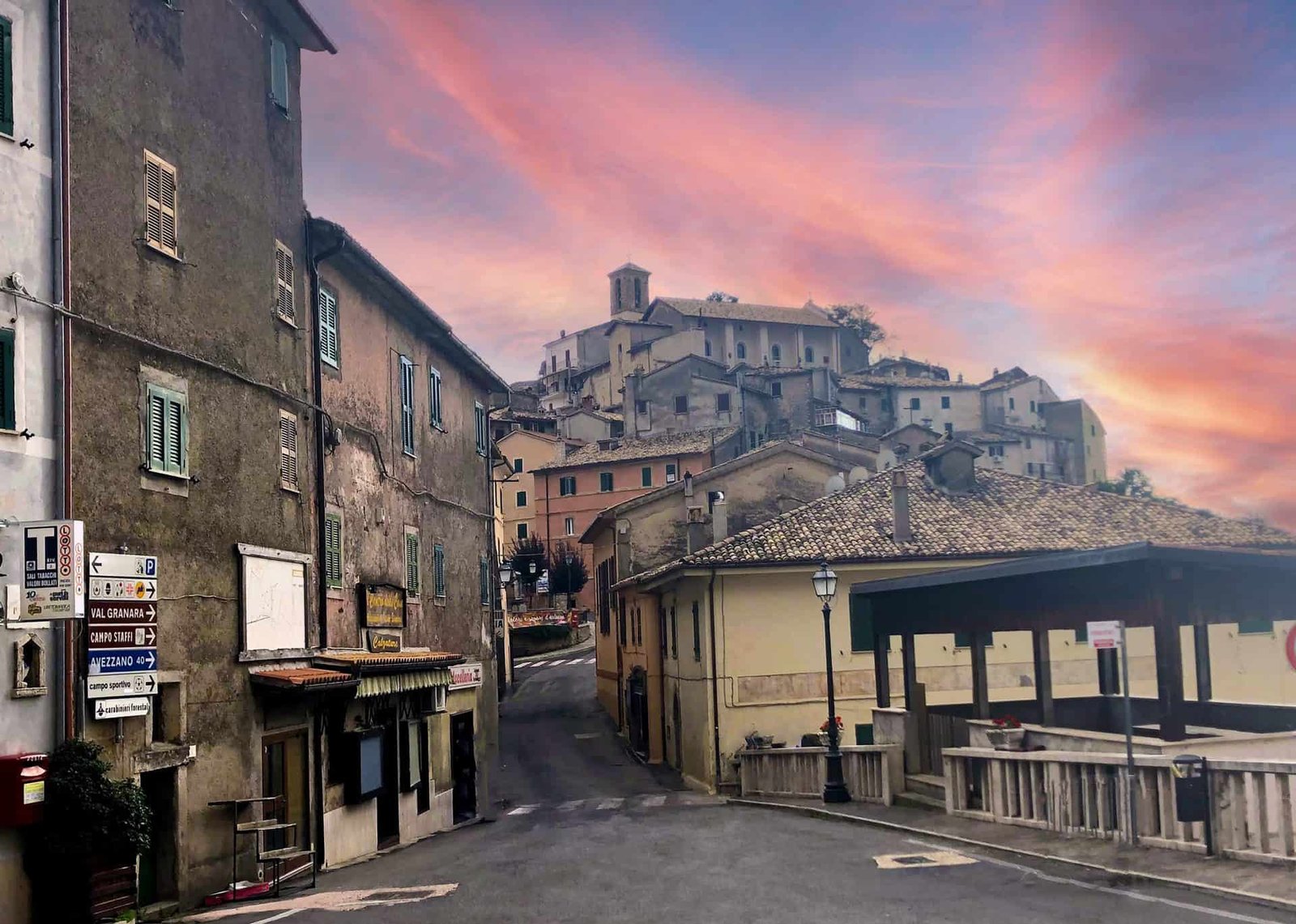
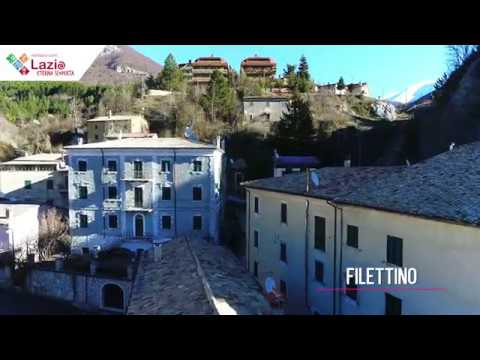
Filettino (FR) is the highest municipality in Lazio: the town center is at 1,063 meters above sea level, in the province of Frosinone, at the eastern edge of the region, on the border with Abruzzo. The municipal territory exceeds 77 square kilometers and the residents are a little over 500. The town hall is in Piazza del Comune, in the historic center. Phone numbers and office hours are on the municipality's official website. No ticket is needed to visit the town: Filettino is a lived-in village, you enter on foot and walk around for free. You arrive by car on provincial road 28 that climbs from Trevi nel Lazio, the last bend of a valley that from Subiaco upward narrows until it becomes a gorge. From Rome you take the A24 highway to Vicovaro-Mandela and then the Sublacense, or you come up from the Casilina passing through Fiuggi and Trevi. Anyone arriving in winter should count on carrying chains: the last stretch toward Campo Staffi is a real mountain climb, and snow here is not a hypothesis. Public transport exists on the routes of the Aniene valley but is sparse: the schedules of the regional bus runs should be checked on the carrier's website before setting out, because frequency changes between weekdays, holidays and ski season.
The town is part of the Monti Simbruini Regional Natural Park, the largest protected area in Lazio, and lies at the point where the Simbruini chain meets the Monti Cantari. Above your head you have two of the highest peaks of the Lazio Apennines: Monte Cotento, 2,015 meters, the top summit of the Simbruini, and Monte Viglio, 2,156 meters, the top summit of the Cantari and of all Apennine Lazio. Under your feet, water: in the municipal territory, toward the border with Trevi, the Aniene rises.
Where Filettino (FR) Is and How You Really Get There
Geography explains Filettino better than any adjective. The town occupies a long ridge at around 1,000 meters above sea level, with the houses lined up along the spine and the roofs stepping down toward the ravine. Around it, an amphitheater of mountains that exceeds 2,000 meters on three sides. To the east, beyond the Serra Sant'Antonio pass (1,602 meters), Abruzzo begins and the road descends toward Capistrello and the Fucino plain. To the west and north opens the upper Aniene valley, the one of the Benedictine monasteries. To the south, the barrier of the Ernici and the Ciociaria.
By Car from Rome to Filettino (FR)
Two roads, two different characters. The northern route goes by the A24, exit Vicovaro-Mandela, then the Sublacense state road along the Aniene: you cross Subiaco, pass the turnoff for Santa Scolastica, continue to Jenne and Trevi nel Lazio and climb. The southern route goes by the Casilina or the A1 highway to Anagni, then Fiuggi, Guarcino and Trevi. The first is smoother and more beautiful. The second suits those coming from the southern quadrant of the city or who want to combine the day with a town in the Ciociaria. In both cases the last 20 kilometers are tight hairpins: driving in the dark in December, with ice, is an exercise I advise against for anyone who doesn't do it out of habit.
Parking in town is on the street, in a village that has no huge spaces. Those going up to Campo Staffi find the lots of the ski resort, which on January and February weekends fill up early: at 9:00 in the morning, on Sundays of good snow, the good spots are already gone. A practical tip worth gold: park low and walk up the last stretch, instead of circling for 20 minutes looking for a spot up top.
By Public Transport to Filettino (FR)
Frequently Asked Questions About Filettino (FR)
Why is Filettino considered the highest municipality in Lazio?
Filettino is the municipality in Lazio with the highest altitude of its municipal seat: the town hall is at 1,063 meters, and no other town hall in the region reaches that. It doesn't mean it is the highest point in Lazio overall, because Monte Gorzano, in the Monti della Laga, exceeds 2,400 meters without being a town.
How much does it cost to visit Filettino?
Visiting Filettino costs nothing: it's an inhabited municipality, not a paid site, and you enter freely without any ticket. Expenses concern, if anything, services, such as the ski pass at Campo Staffi in winter, entry to the sports pond for fishing, dining and overnight stays.
Where does the Aniene river rise?
The Aniene river rises in the municipal territory of Filettino, toward the border with Trevi nel Lazio. It is the river that gave Rome the water and the form of four of its 11 ancient aqueducts, and that after carving the gorge of Tivoli flows into the Tiber at Ponte Salario.
Can you ski in Filettino?
Yes, in Filettino you ski at Campo Staffi, a summer and winter mountain tourist resort located at around 1,750 meters above sea level, on the border with Abruzzo, and it is the reason most Romans know the name of the town.
Is Filettino suitable for kids?
Filettino works well with kids, as long as you choose the right activities: in winter the Campo Staffi resort offers learning areas and easy runs, the sports pond is a guaranteed afternoon from April on, and the summer plateau allows walks without demanding elevation gains.
What do you eat in Filettino?
The cooking of Filettino is that of a poor mountain that learned to make itself good, with pork, potatoes, flour, sheep's cheese, mushrooms and truffles from the woods. The signature dish is patate sotto il coppo, cut into wedges and seasoned with pancetta, cooked under a metal lid covered with embers.
Where does the name Filettino come from?
Three explanations circulate for the name of Filettino, but the one most credited by linguists derives it from the Latin filictum, a collective of filex, that is fern: it would therefore be the place of ferns, which in August cover entire slopes along the damp ravines below the town.
When is the best time to visit Filettino?
It's best to go up to Filettino early in the morning, because the town tells its story in raking light and the alleys of the historic center at 8:00 in the morning have a quality that disappears by noon. Better to avoid the quick same-day trip from Rome, which with four hours of driving leaves little time for the town.
The truth is that Filettino is not an easy place to reach without a car, and whoever tells you otherwise has never been here in January. The regional bus runs go up the Aniene valley with connections that change by season, and the last stretch to the town has very few runs a day. If you don't have a car, the realistic alternative is a private transfer or an organized excursion departing from Rome: the tour guides who work in the Simbruini can be found through the network of TourLeaderPro, which selects certified professionals for groups and small groups.
When to Go to Filettino (FR)
Filettino has two strong seasons and two in between, and it's worth choosing them with care. From December to March the town lives on snow: Campo Staffi opens the lifts when snow cover allows, the village fills with Romans on day trips, and the cold is the real cold of the central Apennines. From June to September the register changes: the altitude becomes a refuge from the heat of the capital, and the beech forests of the Simbruini offer one of the few places in Lazio where on Ferragosto you walk in a T-shirt at noon without suffering. October is the season I prefer: the beech turns rust red, the herds come down from the high pastures, and the trails are empty. April and May are the most uncertain months, with leftover snow on the ridges and mud on the low trails.
The Monti Simbruini take their name from the Latin sub imbribus, that is under the rains, and it's not a learned affectation: more than 2,000 millimeters of rain fall here a year, the highest value in the central Apennines. Translated into practice: always pack a waterproof jacket, even in July.

The Highest Municipality in Lazio: What It Really Means
The record is one of those that people like to quote and understand little. Filettino (FR) is the municipality in Lazio with the highest altitude of its municipal seat: the town hall is at 1,063 meters, and no other town hall in the region reaches that. It doesn't mean it is the highest place in Lazio, because Monte Gorzano, in the Monti della Laga, exceeds 2,400 meters and is not a town. It means something else, much more concrete: here people live year-round at an alpine altitude, with everything that entails.
It entails a compressed farming calendar, with haymaking in July and snow possible from November to April. It entails houses built with walls of local stone as much as a meter thick, steeply pitched roofs and small windows, because cold is fought with mass and not with glass. It entails a depopulation that in the 1900s was brutal: from an agro-sylvo-pastoral community of over 2,000 souls to a village of a few hundred residents, with departure for Rome and abroad as the only way out for two generations. And it entails the opposite phenomenon, the one of today: houses reopened on weekends, second homes, a proximity tourism that in the good months multiplies the population.
The figure that best explains the contemporary economy of Filettino is that of active businesses: in 2015 there were 45 of them, with a total of 87 employees, a little under two employees per business. It is the typical fabric of the mountain villages of Lazio: family microbusinesses, lodging, restaurants, forest maintenance and services tied to the ski resort. Anyone who arrives from Rome expecting the shop windows of an Alpine resort in the North is thrown off. Anyone who arrives looking for a real village, where the bar on the main street is still the center of social life, finds exactly that.
The Name of Filettino (FR): Three Etymologies and No Certainty
Three explanations circulate for the name of the town, and the honest thing is to keep all three distinct by degree of solidity.
The first, the one most credited by linguists, derives Filettino from the Latin filictum, a collective of filex, that is fern. It would therefore be the place of ferns, and anyone who has walked in August along the damp ravines below the town understands right away why: the ferns here cover entire slopes, waist high, in a band of forest that runs from beech to chestnut.
The second brings in Byzantine Greek: the term phylaktérion, with which the Byzantines indicated the fortified posts set to control strategic points, would have become vulgarized into the place name Filetto, recurring throughout the peninsula. The same root would explain Filattiera in Lunigiana. A fascinating hypothesis, which would have the merit of placing Filettino within the Byzantine defensive system of central Italy, but lacking direct documentation for this site.
The third is the most prosaic and the most local: the place name would come from the arrangement of the dwellings in a row along the ridge. Anyone looking at the town from afar, from the road that climbs from Trevi, sees exactly this: a row of houses following the spine like a backbone of stone. This too remains a hypothesis, but it is the one that the landscape suggests most strongly.
A linguistic detail worth keeping in mind: in the archive documents of the 1700s the name appears in the form Felettino, and the community is called the Magnifica Comunità di Felettino. The variant with the e is not a writing error, it is the current form of the time.
What to See in Filettino (FR)
The heritage of Filettino is not measured in masterpieces: it is measured in coherence. It is a mountain village of medieval layout that has kept its structure, with three historic churches, a group of gentry palaces that tell of the local ruling class, a system of fountains tied to the source of the Aniene and a handful of sights outside the town that are worth the detour. Here is the complete list, then we take it apart piece by piece.
- Church of San Nicola, Benedictine, with frescoes that local tradition dates to 1220
- Church of San Bernardino da Siena, with 15th-century frescoes
- Church of Santa Maria Assunta
- Historic center of medieval layout, developed in a spine along the ridge
- Palazzo Parboni-Arquati
- Palazzo Pesci
- Palazzo Giovannoni
- Palazzo Ottaviani
- Palazzo Graziani
- The trails of the Monti Simbruini Regional Natural Park
- Boundary stones between the Papal States and the Kingdom of the Two Sicilies, still in place on the mountains
- Campo Staffi, winter and summer tourist resort with lifts and ski slopes
- Fiumata and Fontana Caraffa, where the Aniene river originates
- Fontana delle tre cannelle, which receives water from the source of the Aniene
- Fonte dell'Acqua Santa
- Sports pond, with sport trout fishing
- Snow cave (Grotta della neve) and Grotta dei saltari
- The Saracen Walls, about three kilometers from the center, along the provincial road that climbs from Trevi nel Lazio
The Historic Center of Filettino (FR)
The old core formed on the Cotardo hill, where defense was easier, and from there it stretched out in a spine following the terrain. Don't expect a monumental square: here the urban planning is that of the poor mountain, made of alleys that climb in steps, relieving arches between one house and another, covered passages, outside stone staircases, portals with a monolithic lintel. The materials are two, local limestone and beech wood. The houses lean on one another for structural and thermal reasons together.
Walking the whole village takes a little under an hour, if you stop to look. The most sensible route starts from the municipal square, climbs toward the upper part of the settlement, reaches the viewpoint from which you see the whole crown of mountains, and comes back down the opposite side toward the fountains. The best time is first thing in the morning, when the light enters the alleys at a slant and the people you meet are those of the village, not the ones on an outing.
An observation from a professional: Filettino is not a village restored for tourism. There are well-renovated houses and empty houses with walled-up windows, new plaster and peeling walls. I like this condition, because it is the honest photograph of a living mountain village. To anyone looking for the perfect postcard I recommend knowing it before going up.
The Church of San Nicola in Filettino (FR)
It is the oldest church in the village and the most interesting historically. The foundation is Benedictine, and this is not a detail: we are within the sphere of influence of the Subiaco abbey, the monastic complex that since the early Middle Ages has organized the whole Aniene valley religiously and economically, from the monastery of Santa Scolastica down. The churches of these villages almost always begin as dependencies or as foundations promoted by the monks, and San Nicola belongs to that family.
The centerpiece is the frescoes, which local tradition attributes to 1220. The dating must be taken with the caution that every tradition not confirmed by an inscription or an archive document deserves: we are in any case within the horizon of 13th-century painting of central Italy, the kind that precedes the Giottesque revolution and still works on Byzantine-leaning schemes, with frontal figures, drapery in stiff folds, backgrounds filled in flat color. If the dating holds, this is one of the oldest cycles of the upper Aniene valley, and it deserves attention well beyond the municipal borders.
The dedication to Saint Nicholas of Bari is one more clue. The cult of Nicholas spreads in central Italy above all after 1087, the year of the translation of the relics from Myra to Bari, and the churches dedicated to the saint in the Apennine area are often tied to the transhumance routes and merchant paths. Filettino, with its high pastures and its herding economy, fits perfectly.
The Church of San Bernardino da Siena in Filettino (FR)
It is the church of the patron saint, and it has a story worth the trip. Bernardino degli Albizzeschi, the great Franciscan preacher from Siena, stayed in Filettino in 1438, during one of his itinerant preaching campaigns in central Italy. Local tradition tells that during his stay the village was besieged by brigands and that the saint protected it by making a miraculous rain of iron acorns fall from the sky. From that episode comes the patronage: Saint Bernardino is still the patron of Filettino today, and the feast falls in May, the month of his death, which occurred in 1444 in L'Aquila.
What is historical and what is legendary. The Bernardine stay in the Apennines of Lazio and Abruzzo is documented in general terms: Bernardino traveled these mountains, preached in the villages, left behind a trail of dedications and confraternities. The rain of iron acorns belongs instead to the hagiographic repertoire, and it is one of those images that people build to say something true in a symbolic way. The iron acorns, in a village that lived on oaks and free-range pigs, are the perfect metaphor for defense that comes from the earth.
Inside the church are preserved 15th-century frescoes, thus contemporary with or a little later than the saint's passage. The devotional painting of that century, in these valleys, is the work of local workshops working on Umbrian-Lazio models, with full-length saints painted on commission of individual families: they are votive images more than theological programs, and they should be looked at as such. If the custodian is available, ask to be shown the original portions versus the reworkings: the difference can be seen in the graininess of the plaster.
The Church of Santa Maria Assunta in Filettino (FR)
The third of the village's historic churches, dedicated to the Assumption, a Marian title that throughout the central Apennines marks the main churches of towns. The structure, like the others in Filettino, dates after the 12th century. On this building the accessible documentation is scarcer than on the other two, and I prefer not to fill the gap with suppositions: opening hours and the possibility of visiting the interior should be asked at the parish or the municipality, because as in almost all mountain villages the minor churches stay closed outside liturgical hours.
The local Marian calendar nonetheless keeps two strong events: the feast of the Madonna Addolorata, on the last Sunday of July, and the feast of the Name of Mary in September. These are the dates when the village fills with emigrants and children of emigrants who return, and they are also the best occasions to understand what a mountain community in Lazio really is.
The Gentry Palaces of Filettino (FR)
Five palaces, five surnames: Parboni-Arquati, Pesci, Giovannoni, Ottaviani, Graziani. They are not noble residences in the Roman sense of the term, with courtyards of honor and monumental staircases. They are the houses of the families that made up the Ceto dei Consiglieri, that is the oligarchy that governed the Magnifica Comunità di Felettino for three centuries under the Papal States. Their architectural language is that of the well-off mountain dweller: regular facade in squared stone, portal with a coat of arms or a date, framed windows, an occasional loggia. Luxury is measured in centimeters of worked ashlar, not in meters of stucco.
Palazzo Parboni-Arquati bears the name of the family to which Eleuterio Arquati belonged, the 18th-century historian who wrote the first learned reconstruction of the events of Filettino, the one that credits the village with loyalty to Rome at the time of the Caudine Forks and the Second Punic War. Arquati's chronicle is a precious source for the 1700s and should be handled with caution for antiquity: like all the scholars of his century, he tended to ennoble the past of his own village.
Palazzo Graziani is the most discussed, for reasons that have nothing to do with architecture: it bears the surname of the family in which Rodolfo Graziani, Marshal of Italy, a central and bloody figure of the Italian colonial wars in Libya and Ethiopia, was born on August 11, 1882. We return to this later, because the affair left a mark even on the official name of the municipality.
Practical note: the palaces are largely private property and are not visited inside. You look at them from the street, and in a village of this size 20 minutes is enough to see them all. The advice is to look at the portals: the dates carved on the lintels, when there are any, are the most accessible archive document there is.

The Saracen Walls of Filettino (FR)
They are the most curious archaeological sight of the territory, and their name is almost certainly wrong. They are about three kilometers from the town, along the provincial road that links Trevi nel Lazio to Filettino, well signposted. The practical advice comes right away: vegetation grows fast and in summer covers the access, so they should be looked for calmly and with closed shoes, not flip-flops.
What you see. A curtain of limestone blocks leaning against a rock wall, 37 meters long, with a variable height that in some points reaches seven meters. The building technique is Roman in type: squared blocks laid dry, with a regularity that does not belong to early medieval fortifications.
Why they are called Saracen. The popular name refers to the Saracen raids that struck the Aniene valley in the 9th century, when the monastery of Santa Scolastica suffered two devastations, one in 828-829 and the other probably in 876-877. The Saracen groups that came up from the base on the Garigliano in all likelihood crossed these mountains, and collective memory attached their name to every ruin whose origin was unknown. It happens everywhere in central Italy: ownerless ruins become Saracen, or the brigands', or the devil's.
What scholars say. The hypotheses formulated over time are at least four. Construction or restoration in the 9th century, during the period of the invasions. A Roman work following the subjugation of the Aequi. The remains of an aqueduct. The remains of the roadbed of an ancient road, placed at a higher level than the current one. The last is the most convincing reading today, because a curtain leaning against the slope, long and not closed, makes much more sense as a road substructure than as a defensive wall. If you know the substructures of Via Amerina or of the Roman Apennine roads, the comparison comes by itself.
It is the most underrated place in the municipal territory. Few go there, the signs are modest, and those passing by car go straight on. Yet it is 37 meters of Roman wall in the middle of the woods, and for anyone who loves landscape archaeology it is worth more than many well-kept ruins of the Aniene Valley downstream.
The Boundary Stones Between the Papal States and the Kingdom of the Two Sicilies
Until 1860 Filettino was frontier land in the literal sense of the term: the border between the Papal States and the Kingdom of the Two Sicilies ran over the mountains of the municipality. On those ridges the stone markers that marked the line are still in place, with the coats of arms of the two States carved on opposite faces: the crossed keys and the triregnum on one side, the Bourbon arms on the other.
Looking for them is an excursion in itself, and one of the most beautiful you can do here. They are apparently anonymous blocks, often half buried, met along the ridges toward the Serra Sant'Antonio pass and on the spurs toward Abruzzo. Some carry progressive numbers, others dates. They represent the materialization of a border that for centuries determined duties, smuggling, brigandage and transhumance: the shepherd who brought sheep from the Fucino to the pastures of Lazio crossed a foreign State, and paid.
Anyone who wants to understand more should do the route with someone who knows the territory. It is not a matter for signage: the markers are not equipped as a visitable site, and finding them without precise directions is an exercise in patience. The guides and tour leaders of the TourLeaderPro professional network also work outside Rome, on the routes of the Lazio Apennines.
The Fountains and Springs of Filettino (FR)
Water is the real heritage of this municipality, and the fountains of the village are the way the community has staged it. At the entrance to the town a fountain of 1866 collects the waters of the source of the Aniene: it is the most significant hydraulic monument of the village, of that sober 19th-century taste that accompanied public works in the papal towns.
The Fontana delle tre cannelle also receives water from the Aniene spring, and remains the point where, still today, people fill their bottles. The Fonte dell'Acqua Santa bears a name that recurs often in the Apennines and that almost always signals a spring believed curative by popular devotion, often tied to a chapel or a shrine.
The Fiumata and Fontana Caraffa group is the place where the Aniene river takes shape. Don't expect a monumental spring with a spectacular jet: Apennine karst springs often emerge discreetly, with water filtering from the base of a wall and becoming a stream within a few tens of meters. The spectacle here is conceptual, and we return to it in the dedicated chapter.
The Pond and Caves of Filettino (FR)
The Pertuso sports pond is a body of water fed by cold mountain waters, stocked with trout and equipped for sport fishing. It is a place for families and Sundays, not wild nature, and it's honest to say so: anyone looking for the untouched alpine lake should look elsewhere. Anyone with kids who want to try the rod finds an easy and successful afternoon. The waters are clear and very cold even in August, because they come from the karst of the Simbruini a few degrees above zero.
The caves of the territory, the Grotta della neve and the Grotta dei saltari, belong to the karst chapter. The limestone of the Simbruini is riddled everywhere with swallow holes, sinkholes and cavities: rainwater, which falls here in abundance, goes deep instead of running on the surface, and digs. The cavities of Filettino preserve ascending and descending calcareous concretions, that is stalagmites and stalactites, and some of them for centuries had a precise economic function. The Grotta della neve, in particular, recalls the practice of the snow pits: pressed snow was accumulated during the winter, insulated with straw and brush, and sold in summer as ice to the lowland centers, Rome included. It was a serious trade, which gave income to mountain villages until the arrival of industrial refrigeration.
Warning: karst cavities are not equipped as tourist caves and you do not enter on your own. The visit, when possible, must be arranged with someone who has the authority and the equipment. An improvised entry into an Apennine cavity is the quickest way to ruin a vacation.

The Sources of the Aniene in Filettino (FR)
If I had to name a single reason to go up to Filettino, I would choose this one. In the municipal territory, toward the border with Trevi nel Lazio, the Aniene rises: the river that gave Rome the water and the form of four of its 11 ancient aqueducts, that carved the gorge of Tivoli, that turned the mills and ironworks of the Roman countryside and that today flows into the Tiber at Ponte Salario after 98.5 kilometers of course.
The geography of the Aniene sources is more complex than the postcard tells. The river has two main branches. The one that bears the name of Aniene proper rises at around 1,200 meters above sea level in the area of Monte Tarino, within the Filettino-Trevi district. The Simbrivio, the other branch, descends instead from Vallepietra at a much higher altitude, above 1,850 meters. The two waters join downstream, in that zone of confluences that in the local place names bears telling names like Comunacque, and from there the Aniene begins its work of incision.
The average flow that the Aniene delivers to the Tiber at Rome is about 31 cubic meters per second: it is the second left-bank tributary of the Tiber after the Nera, and in volume of water it is worth as much as a lowland river. All this begins in a band of limestone rock inside the highest municipality in Lazio.
Filettino (FR) and the Aqueducts of Rome
This is the part that people in Rome should tell more often. The tapping of the Aniene waters begins in the middle of the 2nd century BC, with the aqueduct commissioned by the praetor Quintus Marcius Rex: this is how the Aqua Marcia was born, the aqueduct that the Romans considered for centuries the best for quality of water. Before it the Anio Vetus, then in the Claudian age the Aqua Claudia and the Anio Novus: four aqueducts fed by the same basin, that of the upper Aniene valley.
It means that the water gushing here above built Rome as much as the travertine of Tivoli. The baths, the fountains, the naumachiae, the upper districts served by the Aqua Claudia, all of it comes from this fold of the mountain. And the matter did not end in antiquity: the Simbruini still today feed the water supply of the capital and of a large part of its hinterland, for a user base counted in hundreds of thousands of people.
There is a political corollary that explains much of the recent history of Filettino, and which we will take up in the chapter on 2011: when a municipality of a few hundred inhabitants supplies water to a metropolis, the relationship between the two is never neutral.
The Monti Simbruini Regional Natural Park
Filettino (FR) lies entirely within the Monti Simbruini Regional Natural Park, established by regional law in 1983 and covering about 30,000 hectares and seven municipalities: besides Filettino, Trevi nel Lazio, Vallepietra, Jenne, Subiaco, Cervara di Roma and Camerata Nuova. It is the largest regional protected area in Lazio, and its dominant character is the forest.
The Beech Forests of the Simbruini
The beech forests of this chain make up one of the most extensive beech forest complexes in Europe, and walking inside them is an experience unlike anything Lazio offers at low altitude. The beech here forms mature woods, with straight trunks and crowns that close the vault: below, the light is green and the undergrowth almost absent, because the shade leaves no escape. In autumn the color shifts through the whole scale of copper, and the trails are covered with leaves that muffle your steps.
The ecological value is high: these are environments that host the complete Apennine fauna, from the Apennine wolf to the wildcat, from the roe deer to the golden eagle on the high walls, with presences of the Marsican brown bear reported in the areas bordering Abruzzo. No one guarantees you the encounter, and whoever promises you sure sightings is selling you something. What you see for certain are the traces: prints in the mud, droppings, stripped bark, scratching posts.
Hiking in Filettino (FR): Trails and Routes
The Park's hiking network touches the territory of Filettino along several lines. The classic is the climb to Monte Viglio, which can be tackled from the north starting from the area of the Serra Sant'Antonio pass and passing by Fonte Moscosa and the Madonnina di Monte Piano, at 1,838 meters, then gaining the Cantari ridge up to the Gendarme del Viglio, at 2,113 meters, and finally the summit at 2,156. The Filettino side and the lines of the Valle Granara are more direct but more exposed itineraries, and in winter they become avalanche terrain: they are not routes to improvise.
Monte Cotento, 2,015 meters, is the highest peak of the Simbruini proper, and is reached from the Campo Staffi plateau with a gentler climb, suitable also for trained hikers who are not mountaineers. From the summit, on a clear day, the view takes in the Fucino plain, the Sirente-Velino group, the Maiella, the Sacco valley, the Ernici, and in the background the Gran Sasso.
Common-sense rules: real altitude and not perceived, so water and supplies even for a short loop. Layered clothing because above 1,500 meters the wind changes everything. A planned return with two hours of margin before sunset. And no ridge hikes with thunderstorms approaching: on the Cantari the lightning arrives fast and there is no shelter. Anyone who wants to look deeper into the subject of Italian mountains in English will find a general picture in the ItalyPlanner guide Mountains and nature in Italy.
Campo Staffi: Skiing in Filettino (FR)
Campo Staffi is the reason most Romans know the name of Filettino. It is a mountain tourist resort, summer and winter, in the municipality of Filettino, located at around 1,750 meters above sea level, on the border with Abruzzo. You reach it from the Lazio side by climbing from Filettino along the provincial road that leads to the Serra Sant'Antonio pass, or from the Abruzzo side of Capistrello, beyond the Renga plateau.
Lifts and Slopes at Campo Staffi
The resort has lifts and a district of downhill runs, alongside cross-country trails. The skiable area develops on the plateau and on the slopes that rise toward Monte Cotento, with exposures that hold snow well in the central months of winter. The number of lifts actually running and the kilometers actually groomed vary from season to season, and this is the most important thing to know before loading the skis in the car: opening status, ski pass prices and snow conditions should be checked on the resort's official website or on the operator's channels in the days immediately before the trip.
In short: Campo Staffi is not a resort to compare with the big Alpine ski areas, and whoever does starts off on the wrong foot. It is a proximity resort, serving a Roman and Ciociaria basin, with short lines, low prices and a direct relationship with the landscape. On good days, with fresh snow and a clear sky, the view from the high points toward the Fucino pays for the ticket on its own. In poor seasons, disappointment is around the corner: checking first isn't pedantry, it's the only way not to waste a Sunday.
Campo Staffi in Summer
With the snow gone, the plateau changes trade and becomes a first-rate hiking base. From here start the climbs to Monte Cotento and the traverses toward the Cantari. Herds and free-range horses graze here, and here you breathe one of the few truly cool airs that Lazio offers in July. It is also an ideal place for those walking with kids: the plateau is wide, the initial elevation gains are gentle, and you can measure the day on the shortest legs in the group.
A detail that makes the difference: at first light, in August, the plateau is often covered by a veil of low fog that lifts within half an hour. Whoever arrives at 7:00 in the morning sees a spectacle that whoever arrives at 11:00 can't even imagine.
The Serra Sant'Antonio Pass and the Road to Abruzzo
The Serra Sant'Antonio pass, at 1,602 meters, links the territory of Filettino with that of Capistrello, in the province of L'Aquila. It is one of the most beautiful mountain roads of eastern Lazio and one of the least traveled: it climbs in hairpins between beech forests and pastures, crests, and looks out on the Abruzzo side with the view opening toward the Fucino basin. Travel is seasonal, because in winter snow can close it: before planning it as an itinerary, check the state of passage.
This road is also the reason Filettino is historically linked to Capistrello: it was a route of transhumance and exchange, not a tourist track, and the boundary stones met along the ridges recall it. Along this line passed flocks, goods, smugglers and, in the modern age, also brigands.
The History of Filettino (FR)
The history of this village is a small manual of Italian history seen from below: Italic peoples, Roman conquest, Benedictine monasticism, papal feudalism, community self-government under the Papal States, unification, Fascism, depopulation, the present. It's worth telling in full, because each phase has left a visible trace on the ground.
The Aequi and the Roman Conquest
Before the Roman conquest the area where Filettino stands belonged to the Aequi, the Italic people who occupied the upper Aniene valley and the Fucino basin and who gave Rome a hard time throughout the 5th and 4th centuries BC. The Aequi were mountain dwellers and shepherds, organized in fortified hilltop settlements, and their subjugation, completed at the beginning of the 3rd century, opened to the Romans the road toward inland Abruzzo.
The 18th-century historian Eleuterio Arquati maintained that Filettino had remained faithful to Rome at the battle of the Caudine Forks and during the Second Punic War. It is a learned assertion of the modern age, not a documented fact: we record it as a local historiographic tradition, which says more about the village's 18th-century pride than about the 3rd century BC.
The Middle Ages: From the Monks to the Caetani
There is no certain news of a settlement called Filettino until a deed of the 11th century, by which the diocese of Trevi nel Lazio was suppressed and its territory merged into the diocese of Anagni. From that moment Filettino enters the written record as part of the so-called Terra Trebana, the district that included Trevi, Filettino and Vallepietra.
The first buildings arose on the Cotardo, where defense was easier, and the core developed in a spine adapting to the terrain: it is the form the village still keeps today. From 1257 control of the castle and the territory passes to the papal Conti family, the house of Innocent III. In 1299 the Caetani take over, the family of Boniface VIII, who in those same years was building a compact territorial domain between the Campagna and the Marittima, from Anagni to Sermoneta.
In 1438 the village hosts Bernardino da Siena, and from that stay comes the patronage we have already mentioned. In 1602, with the death sentence of Prospero Caetani decreed by Clement VIII, Filettino changes legal status: it becomes a Community immediate subiecta, that is directly dependent on the Apostolic Chamber, the body that administered the property of the Papal States. Leaving feudal subjection and passing under the direct administration of Rome was, for a mountain community, a leap in quality: it meant its own statutes, elected magistracies and a direct relationship with the central power.
The Statute of 1604 and the Government of the Magnifica Comunità
On May 16, 1604 Filettino adopts a Communal Statute. It is the document that regulates the life of the village for more than two centuries, and the mechanism it describes deserves to be told at length, because it is a piece of institutional history that almost no one knows and that also explains the palaces we have discussed.
The Sacra Consulta, the competent papal tribunal, sent to the village a governor, also called podestà or praetor, who remained in office one or more years. His task was to oversee the activity of the Civic Magistracy on behalf of the Central Government, without interfering with it: control, not administration. The real administration remained with the community.
The reform of Monsignor Albergotti, of 1702, provided that the Magnifica Comunità di Felettino would be administered by a General Public Council of 60 members, composed of the Magistrate pro tempore and the Councillors. A note of 1807 confirms that the members of the Council belonged to the so-called Ceto dei Consiglieri, and the office was hereditary. A note of August 2, 1800, concerning the request of the elected depositary Domenico Cerrocchi to hand the post over to his older brother, says so with notarial clarity: If then the older brother is a well-off person without children and has the requirement of being Councillor in place of the deceased father, it seems much more just that the office of Depositary be given to him. And a little further on: It is also true that his older brother holds the office of Councillor as a comfortable person without children who succeeded in place of their dead father.
The members of the Council had equal dignity and belonged to the so-called Bussolo di Magistrato, in turn divided into the Bussolo dei Sindaci and the Bussolo degli Ufficiali. A note of 1706 specifies who ended up in it: the best-off and fit for the exercise and administration of public affairs. The Congregazione Bussolare, formed by one ecclesiastical and one secular deputy chosen by the Council, periodically drew from the Bussolo di Magistrato 20 individuals to put into the Bussolo dei Sindaci and 40 into that of the Ufficiali. Sindaci and Ufficiali were then approved by vote of the Council and drawn by lot every six months, going on to constitute the Magistrate pro tempore.
The bussoli theoretically lasted 10 years, but in the meantime it happened that some Councillor died and was replaced by his sons, both in the office and in the bussolo of which he was temporarily part. Once the bussoli were exhausted, the Congregation met and redid them from scratch, renewing them according to the qualities of the members of the Ceto. If a family of the Ceto died out, another well-off family of civil condition was added: the number was fixed, the turnover controlled.
The offices of Magistrate could be exercised by the sons of the person elected. The same note of 1706 established that, if those drawn were already 70 years old but had sons fit to take their place, they could renounce in favor of the son. All those elected were solemnly installed by the podestà. Attending the Councils sat the Ecclesiastical Deputy, a local priest chosen to be present without right to intervene. Finally there was the office of depositary, also called collector, treasurer or chamberlain, assigned by lot to a landowner registered on a special list.
Let's pause a moment on what all this means. A mountain village at 1,000 meters above sea level, in the 1600s and 1700s, governed itself with a mixed system of election, co-optation and lot, with six-month offices to avoid accumulation of power and a hereditary notability that reproduced itself through families. It is a sophisticated institutional machine, much more like that of a city republic than the image of the backward village. The palaces Parboni-Arquati, Pesci, Giovannoni, Ottaviani and Graziani are the architecture of this class. Anyone who has dealt with parliamentary institutions and representation, and perhaps knows the history of the Chamber of Deputies at Montecitorio, recognizes in these bussoli a local ancestor of the drawing of lots and the rotation of offices.
From the 1700s to Unification
Between the 17th and 19th centuries Filettino went through a phase of prosperity, tied to the raising of sheep, cattle and horses and to a flourishing local trade. The wealth came from the high pastures, wool, cheese, timber and the frontier position, which made the village a transit hub between two States. Until 1860 the border with the Kingdom of the Two Sicilies ran over the municipal mountains, with everything that entails in terms of duties, smuggling and military control.
After Unification and the end of the Papal States, Filettino lost its frontier status and with it a good part of its economic reason. The 1900s brought the final blow with the decline of the agro-sylvo-pastoral tradition and emigration. In 1927, with the reorganization of the provincial districts decided by the Fascist regime, the municipality passed from the province of Rome to that of Frosinone: an administrative change that still today explains the abbreviation FR next to the name of the village, although Filettino looks geographically and historically toward the Aniene valley, that is toward Rome.
Filettino Graziani: The Name the Village Bore from 1938 to 1945
From 1938 to 1945 the municipality was not called Filettino: it was called Filettino Graziani. The name was imposed in homage to Rodolfo Graziani, Marshal of Italy, born here on August 11, 1882 and died in Rome on January 11, 1955. Graziani made his career in the Royal Army during the First World War, became a colonel in 1918 at age 36, and built his fame in the colonial campaigns of Libya between 1921 and 1931 and in Ethiopia between 1935 and 1937. He was named Marshal of Italy after the occupation of Harar, in 1936.
His is a heavy and much-discussed figure, associated with the ferocious repression of the Libyan resistance, which earned him a sinister nickname, and with the reprisals in Ethiopia. The fall of Fascism erased the double name, and from 1945 the municipality went back to being called simply Filettino. The subject is not closed: the construction in Affile, in 2012, of a monument dedicated to Graziani opened a judicial and political controversy that reached the Court of Cassation.
Why I tell it in a travel guide. Because it is part of the documented history of the municipality, because the surname appears on the facade of a palace in the center, and because staying silent would mean handing the reader a cardboard village. A village is told whole, including the pages that don't go in the brochures.
The Principality of Filettino of 2011
In August 2011, in the midst of the public accounts crisis, the Italian government announced that municipalities with fewer than 1,000 inhabitants would have to merge with neighboring municipalities to cut administrative costs. For Filettino, which had a few hundred inhabitants, the planned merger was with Trevi nel Lazio. Mayor Luca Sellari responded in a way nobody expected: he launched the campaign to make Filettino an independent State, a principality.
The affair occupied the TV news and the international press for weeks, with foreign correspondents climbing to 1,000 meters above sea level to report on the village that wanted to leave Italy. On September 24, 2011 the municipality arrived at the self-proclamation. The autonomy, of course, was never recognized by anyone: it wasn't and isn't.
But dismissing the story as folklore would be a misreading. The gesture was a precise political protest against a reform that, applied to the letter, would have erased the autonomy of hundreds of Italian mountain municipalities, that is precisely those that guard the most fragile and least profitable territory of the country. Filettino had concrete arguments to spend: a municipality that supplies water and environmental protection to an enormous basin, and that with that water fed Rome for 20 centuries, claimed it could not be treated as an expense item to cut. The provocation got what it wanted: national attention, and a debate on the fate of small municipalities that is still going on.
Today in the village the affair is remembered with a mix of irony and pride. Ask at the bar, and you'll see smiles appear.
Traditions and Folklore of Filettino (FR)
The festive calendar of Filettino is the classic one of Apennine communities, marked by saints and by the seasons of work. Here are the events that mark the year.
- Feast of San Bernardino da Siena, patron of the village, in May
- Feast of the Madonna Addolorata, the last Sunday of July
- Feast of the Name of Mary, in September
- Polenta Festival (Sagra della Polenta), in December
- Year-end torchlight procession at Campo Staffi, on December 30
- Carnival of Filettino, with the masks and local customs
The torchlight procession of December 30 at Campo Staffi is the event with the most visual force: the ski instructors and skiers come down the slope in a line with torches lit, and the serpent of fire can be seen from kilometers away. It is a rite that joins the ski resort and the village, and for those bringing kids it is probably the most memorable evening of the Filettino year.
The Polenta Festival in December tells instead of another Filettino, the peasant one. Polenta in the central Apennines is not the Po Valley dish you imagine: here it is served turned out on the pastry board, dressed with sausage sauce or with pork rind, and eaten in company, directly from the table, without a plate. It is a communal rite as well as a recipe.
A tip: the exact dates change from year to year, because they depend on Sundays and on the availability of volunteers. Before planning the day around a festival, a check of the channels of the municipality or the pro loco avoids disappointment.
What to Eat in Filettino (FR)
The cooking of Filettino is that of the poor mountain that learned to make itself good: pork, potatoes, flour, sheep's cheese, mushrooms and truffles from the woods. Two dishes represent it better than the others, and both are worth seeking out.
The patate sotto il coppo are the signature dish. The coppo is the metal lid placed on the baking pan and covered with embers: the potatoes, cut into wedges and seasoned with pancetta, cook slowly under that dome of heat, absorbing the fat and taking on a crust that no oven reproduces. It is hearth cooking, born when the hearth was the only fire in the house.
The pizza con gli sfrizzoli is the other workhorse. The sfrizzoli are the little pieces of pork left after the fat is rendered, the ciccioli: kneaded into the bread, they give a salty focaccia, crunchy and fatty in the best sense of the term. It is eaten hot, and to anyone trying it for the first time I advise not to do it before a climb up the Cotento.
Everything else revolves around these two dishes: legume soups, hand-rolled fettuccine with porcini mushrooms, lamb, sheep's cheeses aged in hay, locally produced cured meats. The mountain of Lazio, at the table, has nothing to envy anyone, and unlike central Rome the prices remain those of a village.
Filettino (FR) with Kids and Accessibility
Filettino works well with kids, as long as you choose the right activities. In winter the Campo Staffi resort offers learning areas and easy runs. The sports pond is a guaranteed afternoon from April on. The summer plateau allows walks without demanding elevation gains. Snow, for a Roman child, remains an attraction in itself: getting to touch it an hour and a half from home is worth the early alarm.
On accessibility the truth must be told, without sugarcoating. A medieval village developed on a ridge, with stepped alleys, uneven paving and steep slopes, is not easy terrain for anyone moving in a wheelchair or with mobility difficulties. The lower part of the village, the area of the fountains and the lots of Campo Staffi are reachable and walkable. The upper historic fabric is much less manageable. Anyone with specific needs does well to ask the municipality in advance about practicable routes and reserved parking.
For pets the situation is the typical one of regional parks: dogs allowed on a leash on the trails, with the limitations set by the Park's regulation in the zones of greater protection and maximum attention to the presence of flocks and guard dogs. An Abruzzo shepherd dog defending the flock does not negotiate: you avoid the encounter by widening your loop.

What's Around Filettino (FR)
Filettino alone fills half a day. To make it a full day, or a weekend, it's best to build a valley itinerary. Here are the combinations that work best.
To the north, the Aniene valley. Trevi nel Lazio, with the Caetani castle in the Civita district and the collegiate church of Santa Maria Assunta, is a few kilometers away and completes the historical picture of what was the Terra Trebana. Farther down, Subiaco and its Benedictine monasteries are the big chapter: the monastery of Santa Scolastica and the Sacro Speco tell the birth of Western monasticism better than any book. Vallepietra, with the sanctuary of the Santissima Trinità clinging to the rock wall, is one of the oldest and most impressive pilgrimage sites in central Italy. Toward the valley floor you reach Monte Livata, the other mountain resort of the Simbruini above Subiaco.
To the south, the Ciociaria. Fiuggi, with its spas and medieval upper town, is the classic destination. Guarcino and Collepardo open the Ernici side, with the Grotta dei Bambocci and the Pozzo d'Antullo. Alatri preserves one of the best-preserved polygonal-masonry acropolises in Europe. Anagni, the city of the popes, is the historic peak of the whole area.
To the west, Rome. On the way back the Aniene valley continues to Tivoli and then into the city, where the river crosses the districts of the northeast quadrant. Anyone who wants to see where this water ends up should find time for a visit to the Aniene Valley Nature Reserve, which protects the urban stretch of the river. For a lighter day with kids, in the city the greenery of the Eur and its little lake always work, or the Castelli Romani on the opposite side of the Roman countryside.
Anyone organizing a trip to Rome who wants to understand how to fit a day trip out of town into the program of the days in the city will find an overall picture in the guide Day trips in Italy and in the reasoned list of the best things to do in Rome from ItalyPlanner, both in English and designed for those arriving from abroad.
A Curiosity About Filettino (FR)
The strongest curiosity is not the altitude record and it is not the principality of 2011: it is the fact that this village of a few hundred souls governed itself, for two centuries, with a system of drawing lots. The mechanism of the bussoli, set by the reform of 1702, provided that from the body of 60 councillors 20 names were periodically drawn for the Bussolo dei Sindaci and 40 for the Bussolo degli Ufficiali, and that then from those bussoli the people actually called to govern were drawn by lot every six months. Not pure election, not appointment from above: drawing by lot within a restricted and vetted body.
It is exactly the device that the Italian republics used to prevent anyone from putting their hands on power in a lasting way, the same principle that in Venice produced the extremely complicated procedures for electing the doge. Seeing it applied in a village of the Simbruini, inside the Papal States, says two things. The first is that the institutional culture of the lot was widespread well beyond the big cities. The second is that the Apostolic Chamber, when it took Filettino under direct management in 1602, did not impose an absolute governor: it left the community real administrative autonomy, limiting itself to external control through the podestà.
There is a detail that makes the matter even tastier. The General Public Council of Filettino was called, in the documents, the Serenissimo Senato: a definition that at 1,000 meters above sea level, in a village of shepherds and woodcutters, sounds almost comic and yet was taken seriously. When in 2011 the mayor proclaimed the principality, he invented nothing foreign to local history: he restaged, in a contemporary key, the idea that Filettino is a community with its own order and not a number in a ministerial table. The two affairs, four centuries apart, speak to each other.
One Thing Nobody Tells You About Filettino (FR)
That the water coming out of the taps of half of Rome begins up here, and that this is not a tourist metaphor but a hydraulic chain documented for 2,000 years. Guides gladly tell of the Roman aqueducts in their monumental stretch, the one of the arches in the countryside and of the Parco degli Acquedotti. Almost none explains that the source of that whole machine is in the upper Aniene valley, between Filettino, Trevi and Vallepietra.
The numbers clarify the scale. Four ancient aqueducts, the Anio Vetus, the Aqua Marcia, the Aqua Claudia and the Anio Novus, drew water from this basin. The first of that family dates to the middle of the 2nd century BC, the work of the praetor Quintus Marcius Rex, and the Aqua Marcia was considered by the Romans the best water in the city for freshness and purity: they used it for drinking, not for the baths. In the Claudian age two more were added on the same line. Today the Simbruini intake system still serves Rome and its metropolitan area for a user base counted at around a million people.
The practical consequence for visitors is less obvious than it seems. It means that much of the municipal territory is a water protection zone, that the springs are largely tapped and fenced, and that there is no postcard walk with water gushing scenically from a rock. Anyone who comes up here expecting the monumental spring is disappointed: what you see is a system of intake works, of fountains downstream and of streams that are born discreetly under the woods. The charm is all in the awareness. Knowing that this thread of water will become, 100 kilometers farther on, the flow entering the Tiber at Ponte Salario changes the way you look at it.
I add a note that also clarifies local politics. When a municipality of 500 residents guards a water heritage of this scale, it claims to be providing a service to the entire region. It is the argument Filettino spent in 2011, against the idea of abolishing small municipalities. You may like the form chosen to express it or not, but the substance of the reasoning remains serious.
My Advice for Visiting Filettino (FR)
Go up early in the morning and not as a single day trip from Rome, if you can avoid it. The first piece of advice concerns timing: Filettino is a village that tells its story in raking light, and the alleys of the historic center at 8:00 in the morning have a quality that disappears completely by noon. The second concerns duration: the quick in-and-out day trip, with two hours of driving each way, leaves you barely three hours on site and forces you to choose between the village and the mountain. A night in the village or in the valley changes everything.
The operational advice is to build the day on two poles and not three. Pole one: the village, with the three churches, the palaces, the fountains and the viewpoint over the crown of mountains, an hour and a half of slow walking. Pole two: the mountain, that is Campo Staffi in summer or the lifts in winter, or the Saracen walls if you prefer archaeology to altitude. Trying to squeeze Vallepietra or Subiaco into the same day too means seeing everything badly.
On the season, the preference is clear and goes against common sense. Everyone goes up to Filettino in winter for the snow, and on those weekends the village and the road clog up. The right period is late September and October: the colors of the beech, the crisp air, free trails, low prices and no lines. If you are looking for snow you can find it too, but know that you are choosing the moment of maximum crowding and maximum uncertainty, because snow cover in the central Apennines is erratic and a poor season ruins the plan.
Three practical notes worth more than many pages. First: fill the tank before going up, because the gas stations at altitude are few and don't take your schedule for granted. Second: bring cash, because in the mountains electronic payment works but network coverage doesn't always. Third: check the wind forecast as well as the rain, because at 2,000 meters on the Cantari the wind decides if the day is beautiful or impassable. And if you walk off the marked trails, tell someone before leaving.
Another Well-Known Fact, Yet Rarely Mentioned
That the name Monti Simbruini comes from the Latin sub imbribus, that is under the rains, and that this is not a poetic label but an exact meteorological description. On these mountains more than 2,000 millimeters of precipitation fall a year, the highest value in the whole central Apennines. Rome, 50 kilometers farther west, receives less than half of it.
The fact is known to anyone who has opened a monograph on the Simbruini, yet it is rarely cited, and almost never are its consequences drawn. The consequences are three, and all visible on the ground. The first is hydrological: all that water, falling on limestone rock, does not run on the surface but infiltrates, travels deep inside a karst system of conduits and fractures, and re-emerges as springs farther downstream. That is why the Aniene, the Liri and the Simbrivio are all born from this same massif: they are not rivers fed by a lake or a glacier, they are rivers fed by rain stored in the rock.
The second consequence is botanical. The combination of very high rainfall, altitudes between 1,000 and 2,000 meters and calcareous soil produces beech forests of exceptional size and maturity, among the most extensive in Europe. The beech loves atmospheric humidity and cool summers: here it finds exactly its optimum, and grows as in few other places at this latitude.
The third consequence is historical, and concerns Rome directly. If Roman hydraulic engineering chose this valley and not another to build four aqueducts, it was not for logistical convenience: from here to Rome there are dozens of kilometers of difficult channeling. It was because this basin guaranteed constant flow and superior water quality, 12 months a year, even in dry summers. The rain that falls today on Filettino is the same natural capital in which the Roman Republic invested in the 2nd century BC.
There is also a corollary that nobody warns visitors about: the fog. With this rainfall, the clouds climbing the ravines often stop on the ridge, and the village can stay wrapped for hours while 200 meters lower down there is sun. It is not a flaw of the place, it is its climatic signature. And photographically, when it happens, it is a stroke of luck.
The Right Photo to Take in Filettino (FR)
The photograph that captures Filettino is not the close-up of an alley: it is the whole village seen from outside, resting on its ridge, with the crown of mountains behind. The best vantage point is along the provincial road that climbs from Trevi nel Lazio, in the last hairpins before the settlement, where the road widens enough to pull over safely. From there the village reads for what it is: a row of houses following the spine, with the mountains as backdrop.
On light: early in the morning the village is backlit from that point, so the right time is late afternoon, when the sun drops in the west and lights the facades at a slant. In winter, with snow on the peaks and a clear sky, the contrast between the pale stone of the village and the white of the ridges is the best shot this territory offers. Use a medium focal length, between 50 and 100 millimeters equivalent: a wide angle shrinks the mountains and kills the scene.
The second must-have photo is from the viewpoint above the settlement, the one that looks at the Simbruini. Here the subject is not the village but the space: a succession of ridges receding in overlapping planes, perfect on mornings of light haze, when the atmosphere separates the planes in ever lighter shades of blue. It is the classic layered landscape, and with a telephoto lens it becomes a high-impact image.
The third is at Campo Staffi, and here I change the advice depending on the season. In winter, the torchlight procession of December 30: the torches in a line on the slope, with a long exposure and a tripod, give a line of fire descending into the dark. In summer, first thing in the morning on the plateau, with the low fog and the horses at pasture emerging from the veil.
One last recommendation, which concerns respect more than technique. The historic center of Filettino is inhabited: the windows you frame are people's homes, and the elders sitting on the doorstep are not extras. Asking before photographing someone is not only good manners, it's the way to get better portraits. In mountain villages wariness melts in 30 seconds of conversation, and what you get in return is worth more than a stolen shot.
Some Important Events That Happened Here in History
The Saracen raids of the 9th century in the Aniene valley. Between 828-829 and, probably, 876-877 the monastery of Santa Scolastica at Subiaco suffered two devastations at the hands of Saracen groups that came up from the base on the Garigliano. The mountains of Filettino were in all likelihood crossed by those bands in their movements, and the memory of the episode stayed attached to the wall curtain that the village still today calls the Saracen walls. It is doubtful that those stones are truly Saracen. That the Saracens passed through this valley is historically established.
The deed of the 11th century that cancels the diocese of Trevi. It is the document with which Filettino enters written history. The suppression of the Trebana diocese and the merging of its territory into that of Anagni redraw the ecclesiastical geography of the upper valley and place the village definitively in the Anagni orbit, that is in the area that two centuries later would become the heart of Caetani power.
The passage to the Conti in 1257 and to the Caetani in 1299. Two dates that mark Filettino's entry into the great game of the papal families. The Conti are the house of Innocent III, the Caetani that of Boniface VIII: within 40 years the village passes from one to the other, following the rhythm of curial fortunes. For a mountain community it means changing master, exactions and alliances.
The stay of Bernardino da Siena in 1438. The most listened-to Franciscan preacher of 15th-century Italy stops in Filettino. Local tradition attributes to him the protection of the village from the siege of brigands by means of a miraculous rain of iron acorns. The episode, hagiographic in form, produces a concrete and permanent historical effect: Saint Bernardino becomes patron of the village, a church is dedicated to him, and the May feast has marked the community calendar for almost six centuries.
1602 and the end of feudal rule. With the death sentence of Prospero Caetani at the will of Clement VIII, Filettino ceases to be feudal land and becomes a Community immediate subiecta, under the Apostolic Chamber. Two years later, on May 16, 1604, the village gives itself a Communal Statute. It is the founding moment of Filettino's administrative autonomy, the one that will produce the bussoli, the sindaci chosen by lot and the Serenissimo Senato.
The border of 1860 and the end of the frontier. Until the year before the unity of Italy, on the mountains of Filettino runs the line between the Papal States and the Kingdom of the Two Sicilies, materialized by the boundary stones still visible. With the collapse of the Bourbon Kingdom that frontier disappears, and with it an entire economy made of duties, transits and trade. It is the beginning of the long decline of the 19th and 20th centuries.
1927 and the move to Frosinone. The reorganization of the provincial districts by the Fascist regime detaches Filettino from the province of Rome and assigns it to that of Frosinone. It is a desk decision that contradicts geography, because the village looks to the Aniene valley, but it remains in force to this day and explains the abbreviation FR.
1938 and the name Filettino Graziani. The municipality takes the name of the marshal born here in 1882 and keeps it until 1945. Seven years in which a mountain village carries on its identity card the surname of a man who is a symbol of the Italian colonial campaigns.
September 24, 2011, the proclamation of the principality. Against the idea of merging municipalities under 1,000 inhabitants, Filettino proclaims itself an independent principality. The autonomy was never recognized, but the case puts the name of the village in the papers of half the world and opens a national debate on the fate of small mountain municipalities that has not yet closed.
Who Has Passed Through Filettino (FR)
Bernardino da Siena is the most illustrious name this village can claim. Bernardino degli Albizzeschi, born in Massa Marittima in 1380 and died in L'Aquila in 1444, was the preacher who filled the squares of 15th-century Italy, the man of the radiant trigram with the name of Jesus, canonized barely six years after his death. In 1438 he was in Filettino, within that long preaching pilgrimage that took him through the central Apennines village by village. Local tradition ties his passage to the miracle of the iron acorns against the brigands. History documents with certainty that the village made him its patron and dedicated a church to him.
The Conti and the Caetani, that is two of the most powerful families in papal history, held this territory for more than three centuries. The Conti di Segni, house of Innocent III, from 1257. The Caetani, house of Boniface VIII, from 1299. These were not symbolic presences: their administration determined the landholding structure, the grazing rights and the physiognomy of local power until 1602. The last lord, Prospero Caetani, ended up condemned to death by Clement VIII, and with him the fief ended.
Eleuterio Arquati, an 18th-century scholar of the family that left its name to one of the palaces in the center, was the first to write the history of Filettino. It is to him that we owe the statements about the village's loyalty to Rome at the time of the Caudine Forks and the Second Punic War: news that modern historiography does not confirm, but which document the way in which, in the 1700s, a community built its identity by seeking ancient roots.
Rodolfo Graziani was born in Filettino on August 11, 1882 and died in Rome on January 11, 1955. A colonel at 36 in 1918, protagonist of the reconquest of Libya between 1921 and 1931 and of the Ethiopian campaign between 1935 and 1937, Marshal of Italy after the capture of Harar in 1936, then minister of war of the Italian Social Republic. The repression carried out in Cyrenaica earned him a nickname that tells his method. The village bore his surname from 1938 to 1945. He is the best-known and most uncomfortable figure to come out of these mountains, and his story continues to produce controversy, as the case of the monument erected in Affile in 2012 showed.
The shepherds of transhumance have no name of their own, but without them Filettino would not exist. For centuries, along the routes that cross at Serra Sant'Antonio toward the Fucino, flocks and herds passed that built the wealth of the village between the 1600s and the 1800s. Their traces are the trails, the dry-stone walls, the high-altitude folds and the place names of the pastures.
The world's journalists, finally, in September 2011. In the weeks of the principality the crews came up here from half of Europe, and for a few days the highest village in Lazio was the most-read news about the Italy of the cuts. A provincial mayor had understood, before many communication professionals, that a well-built provocation is worth a thousand documents sent to the ministry.
Quick Questions About Filettino (FR)
How much does it cost to visit Filettino (FR)?
Nothing. Filettino is an inhabited municipality, not a paid site: you enter freely, walk around on foot and there is no ticket at all. Expenses concern, if anything, services: ski pass at Campo Staffi in winter, entry to the sports pond for fishing, dining and overnight stays. Lift prices should be checked on the resort's official channels before going up.
How high is Filettino (FR)?
The town center is at 1,063 meters above sea level, and it is the municipality in Lazio with the highest altitude. The municipal territory, however, climbs much higher: Campo Staffi is around 1,750 meters, the Serra Sant'Antonio pass at 1,602, Monte Cotento at 2,015 and Monte Viglio at 2,156.
How far is Filettino (FR) from Rome?
As the crow flies about 70 kilometers to the east, but the real distance by car is noticeably greater because you travel the Aniene valley and climb in altitude. Count on a morning for a comfortable trip up, with a coffee stop, and don't plan arrivals at sunset in winter.
How do you get to Filettino (FR) from Rome?
By car, by two routes. From the north: A24 to Vicovaro-Mandela, then the Sublacense along the Aniene, Subiaco, Jenne, Trevi nel Lazio and provincial road 28 that climbs to the village. From the south: A1 or Casilina to Anagni, then Fiuggi, Guarcino and Trevi. Public transport serves the valley with infrequent bus runs, to be checked on the regional carrier's website.
Is Filettino (FR) really the highest village in Lazio?
Yes, if we speak of the municipal seat: no other municipality in Lazio exceeds Filettino's 1,063 meters. If instead we speak of inhabited places in the broad sense or of peaks, the ranking is different, because in Lazio there are mountains that come close to 2,500 meters.
When is the best time to go to Filettino (FR)?
From December to March for the snow and the Campo Staffi lifts. From June to September for the cool air and the hikes. In October for the colors of the beech forests and the empty trails, which is the period I recommend most gladly. April and May remain uncertain, with leftover snow up high and wet ground down low.
Can you ski in Filettino (FR)?
Yes, at the Campo Staffi resort, which has lifts, downhill runs and cross-country trails. Opening, rates and snow conditions vary a lot from season to season and should be checked on the resort's official channels before leaving.
Are there beginner slopes at Campo Staffi?
The resort has traditionally had an offering suitable also for those who are starting out, with learning areas and easy runs, as well as rental and teaching services during the opening periods. Actual availability depends on the season: ask the operator.
Where does the Aniene river rise?
In the municipal territory of Filettino, toward the border with Trevi nel Lazio. The branch that bears the name of Aniene gushes at around 1,200 meters above sea level in the area of Monte Tarino. The other branch, the Simbrivio, descends from Vallepietra from above 1,850 meters. The river then runs 98.5 kilometers to the Tiber.
Can you swim in the sources of the Aniene?
No, and it's not a question of colorful bans: a good part of the springs is tapped for the water supply and falls in protection zones. The water, besides, comes out a few degrees above zero. The Pertuso sports pond is equipped for fishing, not for swimming.
What are the Saracen walls of Filettino (FR)?
A curtain of limestone blocks leaning against a rock wall, 37 meters long and up to seven high, about three kilometers from the center along the provincial road that climbs from Trevi. The building technique is Roman. The popular name refers to the Saracen raids of the 9th century, but the hypothesis most convincing today reads them as the remains of the roadbed of an ancient road.
Are the churches of Filettino (FR) always open?
No. As in almost all mountain villages, the churches stay closed outside liturgical hours and open on request. Anyone who wants to see the frescoes of San Nicola and San Bernardino does well to ask at the parish or the municipality a few days ahead.
How long does it take to visit Filettino (FR)?
The village can be walked in full in an hour and a half at an easy pace. Adding Campo Staffi or the Saracen walls brings it to a full half day. To also do a high-altitude hike, to the Cotento or the Viglio, you need the whole day and it's best to sleep in the area.
Is Filettino (FR) suitable for kids?
Very much, if you choose the right activities: snow and learning area in winter, the pond for fishing in spring, easy walks on the Campo Staffi plateau in summer. The historic center, with its stepped alleys, is more tiring with a stroller: better a baby carrier backpack.
Is Filettino (FR) accessible by wheelchair?
Only in part. The lower part of the village, the area of the fountains and the lots of Campo Staffi are passable. The upper historic fabric, with uneven paving, steps and steep slopes, is not. For specific needs it's best to ask the municipality in advance.
Do you need snow chains to go up to Filettino (FR)?
In the winter months yes, and it's not a theoretical precaution: the obligation to carry winter tires or chains normally applies on mountain roads in the cold season, and the provincial roads that climb to the village and to Campo Staffi can be snowy or icy. Check the ordinance in force before leaving.
What do you eat in Filettino (FR)?
Patate sotto il coppo with pancetta and pizza con gli sfrizzoli are the two signature dishes. Alongside them, legume soups, handmade pasta with mushrooms, lamb, sheep's cheeses and local cured meats. In December the Polenta Festival is the best occasion to eat like a village and not like a restaurant.
Why did Filettino (FR) proclaim itself a principality?
As a protest against the 2011 rule that required municipalities under 1,000 inhabitants to merge with their neighbors, in Filettino's case with Trevi nel Lazio. Mayor Luca Sellari launched the campaign for independence and on September 24, 2011 the municipality proclaimed itself a principality. The autonomy was never recognized.
Why was the municipality called Filettino Graziani?
Because from 1938 to 1945 it was named for Rodolfo Graziani, Marshal of Italy born in the village on August 11, 1882. With the end of the war the double name was abandoned and the municipality went back to being called Filettino.
What is the difference between Filettino (FR) and Campo Staffi?
Filettino is the village, at 1,063 meters. Campo Staffi is the mountain tourist resort in its territory, at around 1,750 meters, home of the ski resort. Between the two is a road climb that in winter requires attention. They are two different experiences and it's best to plan both.
Can you bring dogs on the trails of Filettino (FR)?
Yes, on a leash, respecting the regulation of the Monti Simbruini Regional Natural Park and with maximum attention to the presence of flocks and guard dogs. In the zones of greater protection specific limitations may apply.
What is there to see around Filettino (FR)?
Trevi nel Lazio with the Caetani castle, Subiaco with the Benedictine monasteries, Vallepietra with the sanctuary of the Santissima Trinità, Monte Livata for the mountain above Subiaco, and on the Ciociaria side Fiuggi, Guarcino, Collepardo, Alatri and Anagni.
Do you need a guide to hike the mountains of Filettino (FR)?
For the marked and easy routes no, as long as you are equipped and informed about the weather. For the Cantari ridges, the climb to the Viglio in winter conditions and the search for the boundary stones, relying on a professional is the right choice: these are terrains where a misjudgment is paid dearly.
The Last Word on Filettino (FR)
Filettino is often treated in two wrong ways, opposite to each other. There are those who reduce it to a parking lot for Campo Staffi, go up by car, ski and come back down without having set foot in the village. And there are those who arrive looking for the textbook village, with geraniums at the windows and craft shops, and are disappointed because Filettino is not that. Filettino is a real mountain village, with closed houses and lived-in houses, a bar where people argue about snow and the town council, three churches that open when someone is there, a Roman wall in the woods that nobody looks at and a spring that has quenched Rome's thirst for 2,000 years.
If you can go up only once, go up in October, walk the village in the morning, eat the patate sotto il coppo at noon and spend the afternoon on the plateau among the beech forests turning to copper. It's the right day for anyone looking for where to go when Rome is still mild and the mountain begins to change color. And if you have half an hour left over, stop on the hairpins below the village and look at it from afar: the row of houses on the ridge explains the name of the place better than any etymology.
Article written by the editorial team of TourLeaderPro, contact them for Private/Corporate/V.I.P. Tours and Experiences.
Planning a trip to Rome? The English guides to visiting the city are on ItalyPlanner.com.