Castagneto Prenestino
In short. The Castagneto Prenestino is a 166-hectare natural monument that occupies the slope of the Monti Prenestini between the territories of Capranica Prenestina and San Vito Romano, in the province of Rome, at an elevation of 800 to 900 meters.
The Castagneto Prenestino is a 166-hectare natural monument that occupies the slope of the Monti Prenestini between the territories of Capranica Prenestina and San Vito Romano, in the province of Rome, at an elevation of 800 to 900 meters. Entry is free and open, the area can be walked all year, and there are no gates or ticket offices: you enter by the paths that climb from the two towns. The reference point for information, guided visits and reservations is the Museo Civico Naturalistico dei Monti Prenestini, at Piazza Aristide Frezza 6 in Capranica Prenestina (postal code 00030), telephone 335 8121634, email info@museonaturalisticomontiprenestini.com. The body that manages the monument also answers at 06 9584126 and at museonaturalistico.capranicapr@gmail.com. By car from Rome the three routes are the A24 with the Castel Madama exit and then Via Empolitana toward Pisoniano and San Vito Romano, the A24 with the Tivoli exit and then the Maremmana Inferiore toward Palestrina through Zagarolo, or the A1 with the San Cesareo exit in the direction of Palestrina. By public transportation you take the Cotral from Roma Anagnina (metro A) to Palestrina and from there the connection to Capranica Prenestina. Alternatively, take the Roma Termini-Zagarolo train and then the Cotral Zagarolo-Palestrina. Runs to the upper towns are few and concentrated in school hours: if you don't have a car, plan your return before you set out, checking the schedules on the transport company's site.
Here we tell the story of the chestnut groves of the Monti Prenestini as a whole, from Capranica Prenestina to Rocca di Cave, from Guadagnolo to San Vito Romano and as far as Genazzano, with the trails, the rules for gathering and the calendar of festivals. For the Genazzano side there is a dedicated guide: the Selva di Genazzano. For the town and its events you can start from the Genazzano page.
What the Castagneto Prenestino Really Is
The Castagneto Prenestino is a selva castanicola, that is, a cultivated wood. The distinction is not a forester's quibble: it changes everything, from how you walk to how you gather. Here the species is Castanea sativa Miller, the European chestnut, and the trees have been planted, grafted, pruned and tended by generations of people from Capranica. The result is a wood that no spontaneous dynamic would have produced on its own: isolated trunks, very wide crowns, regular spacing that lets light reach the ground and lets the burs fall on a clean carpet. When the Lazio Region recognized the area as a natural monument, it protected exactly this balance between nature and the human hand, not a wilderness that has never existed.
The Numbers of the Castagneto Prenestino Natural Monument
The protected area is 166 hectares, divided between the municipalities of Capranica Prenestina and San Vito Romano, which together are its managing body. It was established in 2019, by decree of the President of the Lazio Region number 267 of October 30, published in the Region's Official Bulletin on November 14 of the same year. It is a recent date for a wood with five centuries of documented history behind it, and it shows how long the administrative road was: the recognition came after years of review and after the favorable opinion of the regional environment committee.
Monumental Trees and Dead Wood
The oldest chestnuts of the Castagneto Prenestino exceed six meters in trunk circumference. They are hollow trees, often reduced to a shell of living wood around an empty space, and precisely for this reason they are the most precious of the whole selva. The cavities host bats, birds that nest in holes, colonies of wood-eating insects. The rotting wood on the ground is the ground floor of a food chain that starts with saprophytic fungi and reaches beetles of community interest. In technical jargon they are called habitat trees, and their presence brings the Castagneto Prenestino close to an old-growth wood, with ecological functions similar to those that a high-forest beech wood performs elsewhere. All without the use of chemical substances: the cultivation work is limited, localized and mechanical.
The Undergrowth of the Castagneto Prenestino
The acid soil that the chestnut prefers produces an undergrowth poor in showy species and very rich in discreet ones. Mosses that carpet the bases of the trunks, lichens on the high branches, ferns in the damp hollows, and then the mushrooms, which here are an economic resource and a risk of overexploitation. After the first rain in September the wood changes its smell within 48 hours. Anyone going for mushrooms must have the permit card required by regional rules and respect the quantities and days: inspections on the Monti Prenestini are not rare.
The Trails of the Castagneto Prenestino
It is not a wood to conquer, it is a wood to cross slowly. The slopes are moderate, the ground is earthy and slippery when it rains, and the total elevation gain from the town gates to the heart of the selva rarely exceeds 200 meters. You need a low trekking shoe, not a boot. You do, on the other hand, need a walking stick, because the carpet of burs under the leaves is treacherous.
The Trail Called il Ciuccio
The historic access to the Castagneto Prenestino is one of the old Capranica routes, called il ciuccio in town. It starts from the center of Capranica Prenestina and climbs to the wood following the line the donkeys took loaded with sacks: hence the name. It is a wide mule track, with paved stretches and dry-stone walls that hold up the slope, and in autumn it becomes a yellow-brown gallery. A comfortable round trip takes two or three hours including the downtime, the moments when you stop to look at a casetta or to photograph a root.
From the San Vito Romano Side
San Vito Romano, which shares the management of the monument with Capranica Prenestina, has its accesses on the eastern side of the selva. The town hall is at Via Borgo Mario Theodoli 34, and it is the place to ask for up-to-date directions on temporary closures or work on the trails. The town is just under three kilometers from Capranica as the crow flies but much lower in elevation: anyone climbing from here has a greater elevation gain and an honest effort.
How to Read a Day in the Castagneto Prenestino
My advice is to plan the loop in the opposite way from instinct: climb early, when the light comes in low between the trunks and the wood is still damp, and come down in the early afternoon, when the town has woken up and the osterias have opened. The wood in the early morning has a silence that you no longer find in the afternoon, because from noon on the families arrive, the dogs, the mushroom hunters and, on autumn weekends, the buses.

The Casette Drying Houses, the Technical Heart of the Castagneto Prenestino
Walking in the selva you come across small stone buildings, low, sometimes half buried by vegetation. They are the casette, the drying houses that turn the fresh chestnut into mosciarella. Anyone who mistakes them for shepherds' shelters misses the sense of the whole landscape: without the casette the Castagneto Prenestino would be a lovely wood and nothing more, with the casette it becomes a scattered factory centuries old.
How a Casetta Is Built
The structure is elementary and perfect. Two stacked rooms, dry-stone walls, a roof of clay tiles. The floor of the lower room is made of limestone slabs, where the fire is lit. About two meters up runs a lattice of canes that divides the two floors. The chestnuts are spread on that lattice, in a layer up to 70 centimeters deep. The smoke rises, the heat passes through the layer from below, the moisture escapes through the gaps in the roof. There is no chimney, no thermometer, nothing that can't be built with what the wood produces.
A Month of Slow Smoke
The drying lasts about a month and begins with the harvest, which runs from October to December. They burn dry branches and the previous year's burs, which give a slow burn and a heavy smoke. This is what gives the mosciarella its light smoky aroma, the one that sets it apart from any industrially dried chestnut. The fire must never flame. An experienced chestnut grower checks in twice a day and adjusts everything by nose.
The Beating
When the drying is finished, the chestnuts are pushed outward through a hole at the base of the lattice and subjected to the battitura, the beating, the operation that separates the fruit from the now dry and brittle skin. In the past the beating was done by hand inside jute sacks, with the feet or with wooden mallets. The process sterilizes the product: the mosciarella keeps for months in dry sacks, and this is the reason a seasonal fruit could feed a mountain town all winter.
The Mosciarella of Capranica Prenestina
The mosciarella is a small, elongated chestnut with a pointed tip and a dark color. It is not a variety for roasting and doesn't even try to be one: it is a chestnut for keeping, which after drying is eaten as it is, hard and sweet, or rehydrated and goes into soup, into milk, into a bean stew. The Slow Food Foundation has dedicated a Presidium to it, called the Mosciarella of the Casette of Capranica Prenestina, created to counter rural depopulation and to keep alive the technical knowledge that a drying house requires. Among the producers named by the Presidium are Loris Pergolini and the Società Agricola Agromnia.
How Much Is Produced on the Monti Prenestini
The Capranica area counts between 150 and 200 hectares of fruit-bearing chestnut grove, for an annual production of around 2,000 quintals. These are modest figures compared to the great Italian chestnut districts, and it is precisely these figures that explain why mosciarella isn't found in supermarkets: the quantity is enough for local consumption, the festivals and a small amount of direct sales. If you want it, you buy it here, from the producers or in the town's shops. Elsewhere it is almost always something else under another name.
The Prenestine Chestnut in Ancient Texts
The chestnut of this area already appears in Cato's De agri cultura, which treats grafting and varieties with the concreteness of the Roman agronomist. The systematic European cultivation of the chestnut is traditionally associated with the impetus given in the medieval period by Matilda of Canossa. On the Monti Prenestini the town statutes of the thirteenth century already regulated the use of the chestnut selve, a sign that the tree was a resource to be administered and not simply a good of nature. From the fifteenth century the policies of the Papal States encouraged chestnut growing, and between the sixteenth and seventeenth centuries the chestnut groves came to replace even the vineyards on a good part of these slopes.
Gathering Chestnuts in the Castagneto Prenestino: The Real Rules
Here I have to be blunt, because this is the point on which arguments arise every autumn and, at times, criminal complaints. The Castagneto Prenestino is not a wood with free gathering. The chestnut selve of these mountains are fruit-bearing chestnut groves, that is, crops, and the vast majority of the parcels are privately owned, exactly like a vineyard or an olive grove. The fact that there is no fence changes nothing.
What the Civil Code Says
Article 821 of the civil code establishes that natural fruits belong to the owner of the thing that produces them. Article 832 recognizes the owner's right to enjoy and dispose of things fully and exclusively. Gathering chestnuts in a private grove without the consent of its owner means appropriating someone else's fruit, with the consequences that entails. It is not a technicality: it is the same reason no one would walk into an orchard and fill their pockets with apples.
The Laws That Protect the Chestnut Selve
Two national laws are added to the civil law rules. Law 281 of 1962 places fruit-bearing chestnut groves under a specialized-cultivation restriction and obliges owners to keep them in good condition and to provide for their restoration. Law 352 of 1992 recognizes a public interest in the chestnut selve for the productive, protective and landscape functions they perform. Translated: these woods have an owner and, at the same time, a collective value that the law asks to be preserved.
How to Gather Legally
There are three ways, all workable and all honest. The first is to ask the owner's permission: in small towns you find out in half an hour who owns what, and it often happens that the answer is yes, especially for a token harvest. The second is to take part in the days organized by the museum or by local associations during the season, which exist precisely to let people who don't have a selva experience the gathering. The third is to buy them: two kilos of mosciarella from a producer cost less than a fine and support the people who keep the wood going. The rest, including the classic filling your backpack because no one is looking anyway, is theft, and I write it without beating around the bush.
The Chestnut Groves of the Monti Prenestini Beyond the Castagneto Prenestino
The natural monument is the protected portion of a much larger system. The Monti Prenestini are a limestone massif that closes the Palestrina plain to the east, with elevations between 600 and 1,200 meters, and the belt of chestnut groves covers almost the whole of the western and southern slopes. Anyone who wants to understand this landscape should plan on at least three outings, not one.
Capranica Prenestina, the Capital of the Chestnut
Capranica Prenestina is the reference municipality: 912 meters in elevation, just over 20 square kilometers of territory, about 300 resident inhabitants. It is the third highest municipality in the entire Metropolitan City of Rome Capital, and this altitude explains the climate, the late season and the quality of the chestnut. It borders Rocca di Cave at less than two kilometers, San Vito Romano at three, Genazzano at four and a half. The patron saint is San Rocco, celebrated on August 16.
Rocca di Cave and the Fossil Reef
Going up toward Rocca di Cave the chestnut grove thins out and bare limestone appears. The town preserves a fossil coral reef of Cretaceous age, protected as a natural monument, and hosts the Museo Geopaleontologico Ardito Desio with an attached astronomical observatory. It is the smartest pairing I know for a day in the Prenestini: the morning in the woods, the afternoon in front of the corals that 15 million years ago lived in a tropical sea at sea level and today look down on Rome from 700 meters.
Guadagnolo, the inhabited roof of Lazio
Guadagnolo is a hamlet of Capranica Prenestina and, at 1,218 meters, is the highest inhabited center in Lazio. Monte Guadagnolo is the highest peak of the Monti Prenestini and the whole area is protected as a Natura 2000 network site. Here the chestnuts give way to summit meadows and residual beech woods, and the rock cliffs below the town are frequented by climbers. The panorama, on tramontana days, reaches the Monti Ruffi and the Affilani to the east, the Monti Lucretili and the Tiburtini to the north, and over the Roman countryside as far as the city. On the eastern slope you reach the Sanctuary of the Mentorella, one of the oldest Marian places in Italy, wedged into a rock face.
San Vito Romano and the eastern slope
San Vito Romano is the monument's other titular municipality and its built-up area, gathered around the castle of the Theodoli, looks over the Giovenzano valley. Here chestnut growing coexists with the olive in the lower terraces, and the trails that climb to the woods pass between the two worlds within a few switchbacks. It is the slope least frequented by weekend Romans, therefore the best suited to those seeking silence.
Genazzano and its forest
A short distance away, on the southern slope, the great forest of Genazzano begins, which deserves a visit of its own and which I describe at length in the dedicated guide to the Selva di Genazzano. The town, with the Colonna castle and the Sanctuary of the Madre del Buon Consiglio, is the natural cultural stop of this itinerary.
The chestnut festivals in the Monti Prenestini
The festival season in the Prenestini does not coincide with that of the Castelli Romani, and this throws many people off. Here the date is late, because ripening at 900 meters is late and because the main product is not the fresh chestnut but the dried one, which requires its month in the hut.
The Sagra della Mosciarella in Capranica Prenestina
The Sagra della Mosciarella is the event that identifies the town. It takes place in November, and has been going on for over 20 years. It is not the usual fair with stands: in the best editions the huts are lit and the two key operations, drying and threshing, are shown live, with the chestnut growers explaining what they are doing while they do it. The dates change from year to year and need to be checked on the channels of the Comune of Capranica Prenestina before setting out, because the town is small and November bad weather sometimes moves everything by a week.
What you eat
Besides chestnuts in every form, the cooking of these towns revolves around three mainstays. The lane pelose, hand-pulled fettuccine with a deliberately rough surface, which hold the sauce like few other pastas of central Italy. Mushrooms, which the woods produce in abundance. And polenta, which in Capranica Prenestina is the winter dish par excellence, served on the pastry board with a hearty topping: anyone who arrives thinking of Roman cooking of tripe and carbonara finds something else here, more mountain and older.
The other autumn events
The Prenestine autumn is dotted with minor festivals in neighboring towns, often tied to the patron saint or the end of the harvest. There is no single reliable calendar published in advance: the best source remains the institutional pages of the individual municipalities and the Museo Civico Naturalistico, which schedules themed excursions in the chestnut season.
The Museo Civico Naturalistico dei Monti Prenestini
The museum is the cultured gateway to the Castagneto Prenestino and is housed in a 16th-century palazzo in the center of Capranica Prenestina, at Piazza Aristide Frezza 6. It is a small civic museum, with a scientific director who personally accompanies the visits, and it is worth more than many prestigious institutions because it tells about a territory it knows meter by meter. The official website is museonaturalisticomontiprenestini.com.
What you see and what you do
The museum's activity is organized along three lines: education for schools, research and field monitoring, and citizen science projects that involve visitors in data collection. The program includes guided visits with the scientific director, educational workshops, nature excursions in the selva and astronomy evenings, the latter helped by the dark sky that at 900 meters and far from Rome's lights is still a real sky. There is a catalog of educational activities for the 2026/2027 school year, downloadable from the site.
Booking Before You Go
The museum went through a phase of renovation of its exhibition spaces and in that period visits were possible only by reservation. Before going up, it's best to make a call to 335 8121634 or send an email to info@museonaturalisticomontiprenestini.com to find out how it works on the day you choose. The guided excursions in the Castagneto Prenestino, in any case, always require a reservation, and it is right that this is so: the wood is private in its parcels and being accompanied avoids misunderstandings.
Capranica Prenestina, the Town Above the Castagneto Prenestino
It would be a mistake to treat the town as a parking lot with a view. Capranica Prenestina, which overlooks the Giovenzano Valley, has an artistic heritage out of proportion to its 300 inhabitants, and half a day is fully deserved.
The Church of Santa Maria Maddalena
The parish church, which towers over the town, was built in the sixteenth century by Giuliano Capranica, great-nephew of the cardinals Angelo and Domenico Capranica, to honor the memory of his ancestors. The year is carved above the arch of the main niche of the presbytery: MARIA OPTIMAM PARTEM MDXX, that is, 1520. The dome is the work of the Bramante school, made by assistants and pupils of Donato Bramante: a dome of that design in a mountain town remains a surprise even for those who arrive forewarned. The bell tower, from the fifteenth century and off-axis with the church, probably belongs to an earlier building. In 1750 an invasive restoration added the vault and altered the facade. The following year the Roman painters Strigelli and Anellini frescoed the Glory of Saint Mary Magdalene. Between 1868 and 1869 the left nave and the new sacristy were built. The complete restoration of 2016 brought the original decorations back to light and put the pipe organ by Angelo Gaetani from 1751 back in voice. The church hosts classical music concerts with some regularity, and the acoustics under that dome are excellent. The parish site is chiesadellamaddalena.it.
The Coat-of-Arms Lion and the Michelangelo Question
In the left nave there is a marble lion holding a coat of arms that since 1754 local learned tradition has attributed to Michelangelo Buonarroti, together with an Aeolus now kept in the Museo Diocesano Prenestino di Arte Sacra in Palestrina. It is an old and tenacious attribution, not a documented certainty: you tell it for what it is, that is, a mid-eighteenth-century tradition, and you look at the sculpture for what it is really worth, which is already quite a lot. One opinion: the lion deserves the 10 minutes you give it regardless of who carved it, and hunting for the signature is the worst way to look at a work.
The Palazzo Barberini of Capranica and the Sanctuary of the Madonna delle Grazie
The town's baronial palace bears the name of the Barberini, the family that gave Rome Pope Urban VIII and that owned these fiefs. Not to be confused with the far better-known Palazzo Barberini on Via delle Quattro Fontane, which houses the Galleria Nazionale d'Arte Antica. A short way outside the town, the Sanctuary of the Madonna delle Grazie completes the devotional picture of the borgo. They are two short stops, to be slotted into the walk between one square and another.
A Curiosity About the Castagneto Prenestino
The loveliest curiosity of the Castagneto Prenestino is not about a tree: it is about a hole. At the base of the cane lattice of every casetta drying house there is a small opening, apparently insignificant, through which the dried chestnuts are pushed out at the end of the month of smoking. That hole is the point where the selva stops being nature and becomes manufacture, and it is the element that distinguishes a Prenestine drying house from any ordinary shepherd's shelter. The dry-stone walls, the clay-tile roof and the limestone slab floor are found in half of Apennine Italy. The double room with the lattice at two meters' height and the low exit are the technical signature of this area.
There is more, and it is the part almost nobody tells. The fuel used for smoking is not just any wood: it is dry branches and, above all, the previous year's burs. The chestnut grove burns its own waste to preserve its own fruit, in a closed cycle that today we would call circular economy and that has existed here for centuries without anyone ever calling it that. The dry bur gives a slow, smoky burn, exactly what is needed: a lively flame would ruin the load in a few hours.
A third curiosity, for those who love numbers: the layer of chestnuts on the lattice reaches 70 centimeters. It is an empirical measure, handed down by word of mouth, and it corresponds to the balance point between how much product can be dried in one cycle and how much heat can pass through the mass without cooking the lower layer. No chestnut grower in Capranica Prenestina has ever measured a temperature curve, and yet that number works. Peasant techniques that survive five centuries are almost always successful optimizations, arrived at by trial and error and selected by hunger.
Something Nobody Tells You About the Castagneto Prenestino
It has to be written plainly: the Castagneto Prenestino is a private wood inside a protected public area, and this double nature governs everything you can and can't do there. The natural monument established by the Lazio Region in 2019 protects a territory whose parcels remain in very large part the property of local families. The environmental restriction limits what the owners can do, it does not transfer to you the right to gather. The trail you walk, the fruit you don't.
The practical consequence is that every autumn the same scene repeats. A group arrives from Rome convinced that natural monument means a wood for everyone, starts filling bags, and within an hour meets an owner who doesn't take it well. The laws at play are clear: the civil code assigns natural fruits to whoever owns the plant, Law 281 of 1962 places fruit-bearing chestnut groves under a specialized-cultivation restriction, Law 352 of 1992 recognizes the public interest of the chestnut selve without thereby making them state property. It is not a quibble: it is the reason the wood still exists. A fruit-bearing chestnut grove requires pruning, sucker removal, clearing of the undergrowth and grafting. If the work doesn't pay, in 30 years the selva closes up and dies.
The second thing nobody says is that in Capranica Prenestina chestnut growing is an activity hanging in the balance. 300 residents, a high average age, 2,000 quintals of production: these are numbers that describe a fragile balance, which the Slow Food Presidium has tried to prop up precisely to counter depopulation. Buying two kilos of mosciarella from the producer is not folklore: it is the gesture that keeps one more casetta open next autumn.
My Advice for Visiting the Castagneto Prenestino
Go on a weekday in late October or early November, and leave Rome before seven. It's not fussiness: it is the difference between seeing the wood and seeing the people looking at the wood. From 10 o'clock on, on weekends in peak season, the road climbing from Palestrina clogs up, the town's few parking spots fill and the trails become a procession. At eight in the morning on a Tuesday you are alone, with the low mist melting between the trunks and a raking light coming in horizontally under the crowns: it is at that hour that the Castagneto Prenestino shows why it deserved protection.
Second piece of advice, on equipment. Shoes with a lugged sole, not sneakers: the carpet of leaves hides burs and roots, and a twisted ankle at 900 meters in a wood without reliable phone coverage is a ruined day. A walking stick helps more than you'd imagine. Bring water, because in the selva there are no safe drinking fountains, and an extra layer: between the town and the Palestrina plain there are six or seven degrees of difference, and in autumn the sun never reaches inside the chestnut grove.
Third piece of advice, the one that really counts. Call the museum and book a guided excursion instead of going on your own. Even for those who normally prefer to walk with no one underfoot, the added value here is enormous, because without someone to point them out, the casette are mistaken for ruins, the habitat trees for sick trees, and the cultivated wood for a spontaneous one. With a local guide you come away having understood a system. On your own you come away having taken a walk. And by booking you settle upstream the question of private property, which is the real stumbling block of this outing.
Another Well-Known Fact, Yet Rarely Cited
That the chestnut fed the Apennines is well known, so much so that the expression bread tree is repeated everywhere. What is rarely cited is how much this vocation on the Monti Prenestini is the result of a precise and dated political choice. From the fifteenth century the policies of the Papal States actively encouraged chestnut growing in these fiefs. Between the sixteenth and seventeenth centuries the chestnut groves came to replace the vineyards on large portions of the slope. It is a striking agricultural reversal, because wine was a cash crop and the chestnut a subsistence crop: the market was given up for food self-sufficiency, in an era of recurring famines and terrible roads.
Even less cited is that the regulation of the chestnut selve in these mountains is documented already in the town statutes of the thirteenth century. Two centuries before the papal impetus, local communities regulated access to the chestnut groves, the timing of the harvest, the penalties for those who entered out of season. Anyone who is surprised today that gathering in the Castagneto Prenestino is regulated should know that it has been for 800 years, with a legal continuity that few Italian natural resources can claim.
A third element that is rarely repeated: the literary attestation. The chestnut of this area appears in Cato's De agri cultura, the oldest surviving Latin agronomic treatise. It is not a tourist quotation put there to add prestige: it means that in the second century BC a Roman agronomist already considered the chestnut grafts of this area worthy of note, a handful of miles from Praeneste. The Castagneto Prenestino is not an ancient wood just as a manner of speaking.
The Right Photo to Take at Castagneto Prenestino
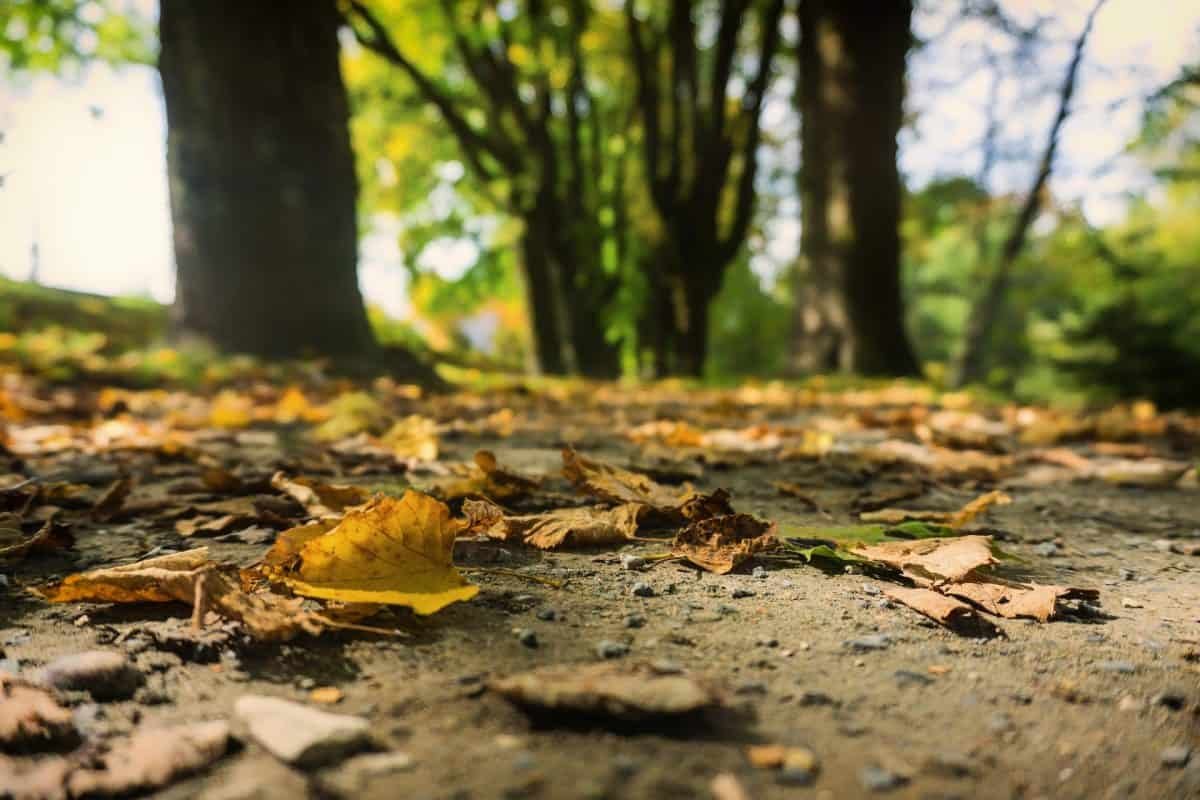
The photograph that brings home the sense of the place is not the carpet of yellow leaves, which is beautiful and identical in every chestnut grove in Europe. It is the casetta drying house in the wood, shot at three-quarter angle, with at least one monumental chestnut entering the frame on the left or the right to give scale. In that single frame there are the dry stone, the clay tiles, the hollow trunk and the cultivated selva: the entire productive system of the Castagneto Prenestino in one image. And if you happen to come on a drying day and the thread of smoke is coming out of the roof, you have the photograph of the year.
Technically, the wood is a difficult environment. The light under the crowns is two or three stops lower than that of the surrounding meadows, and the contrast between patches of sun and shade throws any automatic exposure into crisis. The solution is to go with a hazy sky or in the first hour after dawn, when the contrast collapses and the colors saturate by themselves. If you have a tripod, bring it: handheld under the chestnuts you work at long exposure times and moving leaves ruin the shot. With a smartphone, keep your finger pressed on the brightest point to lock the exposure and let the shadows stay shadows.
The second shot not to get wrong is vertical, from the bottom up, resting your back against the trunk of a hollow chestnut and framing the crown. The branching of these trees pruned for centuries has a geometry that no spontaneous chestnut has: thick knots, forks at a constant height, healed stumps. It is the visual proof that this wood is a manufactured thing. And finally, for once, some advice against the grain: don't photograph chestnuts in your hand. They are the most worn-out postcard of the Italian autumn, and in the Castagneto Prenestino they even risk looking like theft caught in the act.
Some Important Events That Happened Here in History
The first episode belongs to local memory more than to historiography, and must be told with that caution: Capranica tradition has it that during the sieges of Lucius Cornelius Sulla, in the first half of the first century BC, it was the chestnuts that kept the mountain population alive. The Sullan civil war was devastating in this part of Lazio and hit Praeneste hard, present-day Palestrina, which in 82 BC suffered a fierce repression after the siege. That the high villages held out thanks to a storable food reserve is plausible and consistent with what we know about the chestnut. That it happened exactly as they tell it in town is not supported by any ancient document.
The second fact is fully documented and concerns the thirteenth century, when the statutes of the Prenestine communities begin to regulate the use of the chestnut selve. It is the moment when the chestnut grove stops being a spontaneous resource and becomes a managed asset, with times, bans and penalties. From then on the history of the wood coincides with the administrative history of the towns that own it.
The third is the great crop conversion between the sixteenth and seventeenth centuries, when chestnut groves replaced vineyards on a vast part of the slopes, under the impetus of the papal agricultural policies begun in the fifteenth century. It is the event that drew the landscape we see today: the centuries-old trees of the Castagneto Prenestino belong in large part to that season of plantings.
The fourth event is very recent and no less important: on October 30, 2019 the President of the Lazio Region signs decree number 267 establishing the Castagneto Prenestino Natural Monument, published in the Region's Official Bulletin on November 14. A total of 166 hectares come under protection, and management is entrusted jointly to the municipalities of Capranica Prenestina and San Vito Romano. In the history of a wood five centuries old it is the last chapter written, and it has sheltered the selva from the two risks that really threatened it: abandonment of cultivation and building development.
The fifth, in parallel, is the recognition of the mosciarella as a Slow Food Foundation Presidium. It is not an event with a monument-style date, it is a process: it has put producers, cooks and local institutions back in touch around a product that was slipping away along with its last artisans.
Who Passed Through Castagneto Prenestino
The first name is that of Marcus Porcius Cato, the Censor, who in the De agri cultura deals with the grafting of the chestnut and attests to Roman agronomic interest in this area. It is not certain that he set foot on these slopes, but his text is the oldest written trace that indirectly concerns them.
The second name, which European chestnut-growing tradition associates with the systematic spread of the chestnut, is that of Matilda of Canossa, the great countess of the eleventh and twelfth centuries. Her figure works here as a cultural watershed: before her the chestnut is gathered, after her it is cultivated.
Then there are the Capranica, the family that gave the Church the cardinals Angelo and Domenico and that left in town its most visible work. Giuliano Capranica, great-nephew of the two cardinals, had the church of Santa Maria Maddalena built from the foundations in 1520, calling in workers of the Bramante school for the dome: it means that in the early sixteenth century the pupils of the greatest architect of the moment climbed up to work at 900 meters above the Palestrina plain.
On the name of Michelangelo Buonarroti we have to be honest: since 1754 learned tradition has attributed to him the coat-of-arms lion in the left nave and the Aeolus now in the Museo Diocesano Prenestino in Palestrina. It is an eighteenth-century attribution that has survived the centuries without ever finding documentary support. Michelangelo's passage through these parts remains, for now, a nice hypothesis.
In the seventeenth century the Barberini arrive, the family of Pope Urban VIII, who held these fiefs and gave their name to the town's baronial palace. In the nineteenth century the Prenestine slope enters the notebooks of the landscape painters of the Grand Tour, who from nearby Olevano Romano combed this whole belt of mountains in search of woods and rocks to draw: the pull of the chestnut selve appears constantly in the northern European painting of those years.
And then, without proper names, generations of people from Capranica have passed through here with their mules loaded along the ciuccio trail. The wood you see they made, one graft at a time.
When to Go to the Castagneto Prenestino
The area can be walked all year, and each season has a different reason.
Autumn, the Mother Season
From mid-October to the end of November the Castagneto Prenestino is at its best: color, harvest under way, casette lit, the festival in November. It is also the most crowded period on weekends and the rainiest. The trail surface turns muddy quickly.
Spring
April and May are the surprise. The wood is still bare or barely green, you see the structures of the trees and the casette without the filter of the leaves, and the undergrowth blooms. For photographing the architecture of the selva it is the best season, better than autumn.
Summer
At 900 meters, with the canopy closed, the Castagneto Prenestino is one of the coolest places reachable from Rome in an hour and a half. In July and August there are also the late flowering of the chestnut and, in the evening, the sky of Guadagnolo. Worth keeping in mind for the Sundays when the city is unlivable.
Winter
With snow the wood is beautiful and complicated: the access roads on the Prenestini close easily, and in Capranica Prenestina it snows for real. It's best to ask at the town hall before heading up.
The Castagneto Prenestino with Children and Accessibility
It is one of the few nature outings near Rome that really works with small children, because the elevation gain is modest, the surface is regular on the main stretches and there is a narrative reward at the end: the casette. A child who has just heard how chestnuts are smoked looks at a little stone wall with different eyes. The museum's educational workshops are calibrated for school groups and are the best solution for a family.
On accessibility, the monument's official source indicates broad usability, including for people with disabilities, along the equipped routes, but the wood remains a natural environment with a packed-earth surface. Anyone using a wheelchair or with mobility difficulties should make a phone call to the museum beforehand to be told which stretch can actually be used in the chosen period: conditions change with the rains and with seasonal maintenance.
Frequently Asked Questions About Castagneto Prenestino
How much does it cost to enter the Castagneto Prenestino?
Nothing: access to the Castagneto Prenestino natural monument is open and free. Only the guided visits and workshops organized by the Museo Civico Naturalistico dei Monti Prenestini in Capranica Prenestina have a cost, where one is set.
Where exactly is the Castagneto Prenestino?
The Castagneto Prenestino is on the Monti Prenestini, between the municipal territories of Capranica Prenestina and San Vito Romano, in the province of Rome, at an elevation between 800 and 900 meters. It is a selva castanicola, that is, a wood of chestnuts cultivated and tended by generations, not a spontaneous wood.
Can you gather chestnuts in the Castagneto Prenestino?
No, the Castagneto Prenestino is not a wood with free gathering. The chestnut selve of these mountains are fruit-bearing chestnut groves, that is, fully private crops, exactly like a vineyard or an olive grove, and the vast majority of the parcels belong to local families even though there are no fences.
Is the Castagneto Prenestino suitable for children?
Yes, it is one of the few nature outings near Rome that really works with small children, because the elevation gain is modest and the surface is regular on the main stretches. The stone casette drying houses, with their history of chestnut smoking, are the narrative reward at the end of the route.
When is the best time to visit the Castagneto Prenestino?
The best time for the Castagneto Prenestino is from mid-October to the end of November, when the wood is at its best with color, harvest under way and the casette drying houses lit. It is also the most crowded period on weekends, so it's best to go on a weekday, leaving Rome before seven in the morning.
What are the casette drying houses of the Castagneto Prenestino?
The casette drying houses of the Castagneto Prenestino are small stone buildings, scattered through the selva, where the fresh chestnut is turned into mosciarella, the dried chestnut typical of Capranica Prenestina. Without the casette the Castagneto Prenestino would be just a lovely wood: with the casette it becomes a scattered factory centuries old.
What can you visit near the Castagneto Prenestino?
Near the Castagneto Prenestino, within half an hour by car, is Palestrina, with the sanctuary of Fortuna Primigenia and the National Archaeological Museum that holds the Nile Mosaic, one of the absolute masterpieces of Hellenistic-Roman art in Italy. Just above the town there is also the Roman villa attributed to Hadrian.
What to See Around the Castagneto Prenestino
One day is not much, and within half an hour by car there is material for three.
Palestrina and Archaeology
At the foot of the mountains is Praeneste, with the sanctuary of Fortuna Primigenia and the National Archaeological Museum that holds the Nile Mosaic, one of the absolute masterpieces of Hellenistic-Roman art in Italy. Just above the town, the Roman villa attributed to Hadrian completes the ancient picture. Higher still, Castel San Pietro Romano looks over the valley from the top of its fortress.
The Other Mountains of Lazio
Anyone who takes a liking to the woods of Lazio has plenty to continue with: the Monti Simbruini with their high-forest beech woods, the Lepini Mountains beyond the Sacco valley, the Paliano wood a short distance away. Farther north, in the Tuscia, the Sasseto wood is the other great monumental wood of Lazio, very different from this one and just as memorable.
A Multi-Day Loop
Anyone who wants to turn the outing into a weekend can close the loop at Subiaco and the upper Aniene valley, or head down to Tivoli. These are itineraries that professional tour leaders build all the time for foreign groups. If you want to rely on someone, the tourist accompaniment services of TourLeaderPro cover exactly this kind of day outside Rome, and for small or corporate groups there are the custom experiences in Lazio. Anyone organizing for English-speaking guests will find the logic of daily transfers on the portal day trips from Italian cities, and an overview of mountain and nature destinations at mountains and nature in Italy.
Quick Questions About Castagneto Prenestino
How much does it cost to enter the Castagneto Prenestino
Nothing. Access to the natural monument is open and free. Only the guided visits and workshops organized by the museum have a cost, where one is set.
Where exactly is the Castagneto Prenestino
On the Monti Prenestini, between the municipal territories of Capranica Prenestina and San Vito Romano, in the province of Rome, at an elevation between 800 and 900 meters.
How far is the Castagneto Prenestino from Rome
About an hour by car from the Grande Raccordo Anulare in normal traffic conditions, via the A24 or the A1.
Can you get to the Castagneto Prenestino without a car
You can, with the Cotral from Roma Anagnina to Palestrina and the connection to Capranica Prenestina, or by train to Zagarolo and then the bus. Runs to the upper towns are few: check the schedules and plan your return.
How big is the Castagneto Prenestino Natural Monument
166 hectares.
When was the natural monument established
In 2019, by decree of the President of the Lazio Region number 267 of October 30, published in the Region's Official Bulletin on November 14, 2019.
Can you gather chestnuts in the Castagneto Prenestino
No, not freely. The selve are fruit-bearing chestnut groves largely under private ownership: gathering requires the owner's permission. The civil code assigns natural fruits to whoever owns the plant.
What does someone risk who gathers chestnuts without permission
They appropriate someone else's fruit, with the civil and criminal consequences that follow. On the Monti Prenestini the owners keep watch and inspections in season do happen.
So how do you gather chestnuts legally
By asking the owner's permission, by taking part in the days organized by associations and by the museum, or by buying the mosciarella directly from the producers.
What is the mosciarella
It is the chestnut dried over a slow fire in the casette of the Castagneto Prenestino: small, elongated, with a pointed tip and a dark color, with a light smoky aroma. It is a Slow Food Foundation Presidium.
What are the casette you come across in the wood
They are the traditional drying houses: two stacked rooms in dry stone with a clay-tile roof, a limestone slab floor and a lattice of canes about two meters up on which the chestnuts are spread.
How long does the drying of the chestnuts last
About a month, with a slow fire of dry branches and the previous year's burs.
When is the Sagra della Mosciarella held
In November, in Capranica Prenestina. The exact dates change every year and need to be checked on the Comune's official channels.
How much time do you need to visit the Castagneto Prenestino
Half a day for a comfortable loop in the wood, two or three hours for the round trip along the ciuccio trail. With the museum and the town you easily reach a full day.
Is the Castagneto Prenestino suitable for children
Yes. Modest elevation gains, a regular surface on the main routes and educational workshops at the museum designed for school groups.
Is the Castagneto Prenestino accessible to people with disabilities
The monument's official source indicates broad usability along the equipped routes. Since the surface is natural, it's best to phone the museum to be told which stretch can be used in the chosen period.
Do you need to book to visit the Castagneto Prenestino
Not to walk the trails. For the guided excursions and the activities of the Museo Civico Naturalistico dei Monti Prenestini, yes, reservation is required.
Can you bring dogs to the Castagneto Prenestino
The wood can be walked with a dog on a leash, bearing in mind that you cross cultivated properties and that during the harvest season there are people at work. During hunting season, ask at the town hall.
Can you gather mushrooms
Only in compliance with the regional rules on the gathering of epigeous mushrooms, with the permit card and within the quantity limits set, and in any case with the same caution regarding private property.
What is the difference between the Castagneto Prenestino and the Selva di Genazzano
They are two portions of the same Prenestine chestnut system on different slopes: the Castagneto Prenestino is the natural monument between Capranica Prenestina and San Vito Romano, the Genazzano selva is the great wood of the southern slope, with its own access points and history.
What is the highest town in the area
Guadagnolo, a hamlet of Capranica Prenestina, at 1,218 meters: it is the highest inhabited center in Lazio.
What do you eat in Capranica Prenestina
Chestnuts in every form, mushrooms, lane pelose and, in winter, polenta.
Where is the Museo Civico Naturalistico dei Monti Prenestini
At Piazza Aristide Frezza 6, in Capranica Prenestina, telephone 335 8121634.
Can you visit the Castagneto Prenestino all year
Yes. Autumn is the mother season, spring the best for photography, summer the coolest. In winter snow can close the access roads.
One last thing. The Castagneto Prenestino doesn't put on a show at first glance: it has no waterfalls, no postcard views, no monument to photograph at the entrance. What it has instead is something almost no wood near Rome still possesses, namely the visible proof of a relationship between a community and its trees that has lasted 500 years and has never been interrupted. If you go up and merely walk, you'll come back saying it was a nice wood. If you go up having understood that every trunk was grafted by someone and every casetta was lit by someone, you'll come back with something worth the trip. The final advice is brutal and sincere: book a guide, buy two kilos of mosciarella and leave the chestnuts on the ground where they aren't yours.
Article written by the editorial team of TourLeaderPro, contact them for Private/Corporate/V.I.P. Tours and Experiences.
Planning a trip to Rome? The English guides for visiting the city are on ItalyPlanner.com.