Selva di Genazzano (RM)
In short. La Selva di Genazzano is a Natural Monument of the Lazio Region, established by D.P.G.R.L.
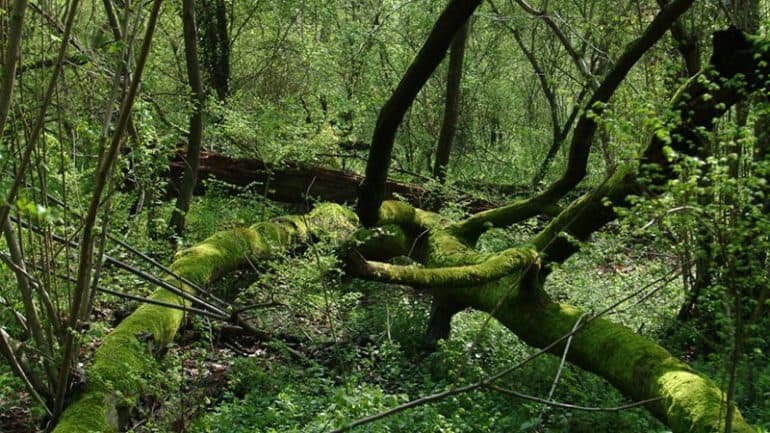
La Selva di Genazzano is a Natural Monument of the Lazio Region, established by D.P.G.R.L. No. 132 of February 29, 2000, published in the Bollettino Ufficiale della Regione Lazio of April 10, 2000, No. 10. It protects 25 hectares of woodland in the southern sector of the Monti Prenestini, in the territory of the municipality of Genazzano, in the Metropolitan City of Roma Capital, about 40 kilometers as the crow flies east of the capital. The managing body is the Municipality of Genazzano, based at Piazza Santa Maria 4, phone 06 955791. 25 hectares is small: it is less than a tenth of what the urban park of Villa Doria Pamphilj in Rome measures. Yet this patch of trees is considered by botanists one of the most precious remnants of surviving woodland in the whole of Lazio, because it preserves a plant formation that has been wiped out almost everywhere in the Roman plain.
The reason it is worth coming all the way here, then, is not size. It is rarity. The Selva is what remains of the ancient Prenestine forest, the Turkey oak and Hungarian oak woodland that covered the clay soils of the flat and low-hill belt around Rome before agriculture, grazing and fire reduced it to a few isolated patches. Inside it you walk among trees that nobody has cut since 1975, in an understory where laurel grows wild and where the river crab survives in the streams, a species that is found less and less often in Lazio. Above the wood, a few hundred meters away, the village of Genazzano with its Colonna castle, the basilica of the Madonna del Buon Consiglio and the 16th-century nymphaeum attributed to Bramante make up a complete day that combines nature, architecture and history.

What the Natural Monument La Selva di Genazzano Is
The Natural Monument is one of the protected-area categories provided for by the framework law on protected natural areas and taken up by Lazio's regional legislation. It serves to protect single natural elements or small complexes of significant value, when the surface is too limited to justify a park or a reserve but the quality of what needs protecting is high. That is exactly the case of the Selva: 25 hectares of woodland that, in terms of biodiversity, are worth much more than their extent.
The establishing decree is dated February 29, 2000, a day that exists once every four years, and it comes after a long process. First the hydrogeological restriction had been imposed, then the landscape restriction, both instruments that limit transformations but do not create a managing body or an active conservation program. The shift to Natural Monument was obtained thanks to the constant action of the local citizens' associations, which for years insisted that the Region formally recognize the value of the woods. In the same period the Lazio Region also established the Valle delle Cannuccete Natural Monument, in the nearby municipality of Castel San Pietro Romano: two twin protections, born from the same climate of attention toward the natural remnants of the Prenestini.
The Numbers of the Protected Area
25 hectares of surface, one municipality involved, one managing body. The perimeter is entirely within the municipal territory of Genazzano, in the province of Rome. The elevation sits in the lower band of the Prenestine range, in a transition zone between hill and valley floor: we are in the catchment of the Sacco river, and the wood receives the water of a network of small tributaries that cross it all year round. There is no ticket office, no visitor center with opening hours, no gate. There is a municipal wood reached on foot, and that is both a merit and its limit: whoever arrives without information risks going around it without finding the right entrance.
Why the Wood Is Called Selva
Selva, from the Latin silva, is the name that has been used in Lazio for centuries for high-forest woods under collective or seigniorial ownership, distinct from scrub and coppice. It is not a poetic place name invented by tourist signs: it is the name in use by which the people of Genazzano have always called this wood, long before it became a protected area. The same word recurs in dozens of Lazio localities, and almost always signals the same thing, that is, a remnant of mature woodland that survived inside an agricultural landscape.
Who Manages La Selva
Management is entrusted to the Municipality of Genazzano. There is no consortium or autonomous park body with dedicated staff, as is the case instead for Lazio's larger protected areas. This means that operational information, permits, any guided visits and the calendar of initiatives go through the municipal offices at Piazza Santa Maria 4 and the number 06 955791. It's best to call before organizing a group visit or an educational activity: the small natural monuments managed by municipalities have reduced staff and schedule on request rather than on a fixed calendar.
Where the Selva di Genazzano Is, in the Monti Prenestini
The Monti Prenestini are a limestone mountain group of the Metropolitan City of Roma Capital, southeast of the capital. They are bounded by the Monti Tiburtini to the north, the Monti Ruffi to the northeast, the Sacco Valley to the south and the Colli Albani to the west. They belong to the Lazio sub-Apennines and count several peaks above and below a thousand meters. The main summit is Monte Guadagnolo, 1,218 meters, followed by Monte Cerella at 1,202 meters and Spina Santa at 1,059 meters. 14 municipalities share the Prenestine territory, among them Palestrina, Capranica Prenestina, Castel San Pietro Romano, Cave and Genazzano.
The Selva occupies the southernmost sector of this area, where the limestone slopes down toward the upper Sacco valley. It is a border position, and that matters: the wood lives at a point where the mountain climate meets that of the inland plain, with abundant rain and high temperatures. This bioclimatic combination, together with a clay substrate that holds water well, explains why a vegetation that has vanished elsewhere has been preserved here.
The Monti Prenestini in Brief
Whoever arrives from Rome sees the Prenestini as a bluish barrier closing the horizon to the east, right after the basin of the Colli Albani. They are low mountains, densely inhabited along their flanks, with perched villages halfway up the slope that all share the same medieval origin: castles of Roman baronial families, the Colonna first among them, built to control the roads toward the Kingdom of Naples. On the summit of Monte Guadagnolo stands the village of the same name, the only hamlet of Capranica Prenestina and one of the highest settlements in Lazio, while on the southern side of the range lies the famous rock sanctuary of Mentorella.
The difference from the neighboring Monti Lucretili, separated by the Aniene valley, and from the Monti Simbruini, higher and wilder, is that the Prenestini are a domestic massif: you cross them by car in half an hour, they have paved scenic roads up to the ridge, and they keep woodland only in patches. Precisely for this reason, surviving fragments like the Selva have a value that a hiker used to the Apennines struggles to grasp at first sight.
The Karst of the Area
The Prenestine limestone area is rich in karst features: dolines, uvalas, shafts, grooves and caves. The substrate consists of limestones of Cretaceous age, on which rest marly and calcareous deposits of Miocene age. Karst is not a geologists' detail: it directly shapes the landscape and the life of the wood, because it determines where water disappears underground and where it re-emerges at the surface, feeding springs and streams. The Selva sits at a point where water re-emerges, and this is the physical reason for its survival.
Whoever walks the Prenestini often meets closed basins without an outlet, high meadows that after a storm become pools and then drain in a few hours, and cave entrances that Lazio's caving groups have been exploring for decades. The geopaleontological museum set up in the Rocca di Cave, not far away, tells exactly this geological story: the ancient fossil coral reef that today forms the limestone ridges of the Prenestini.
The Sacco River Basin
The Selva belongs to the catchment of the Sacco river, the watercourse that rises in the Monti Prenestini and runs southeast along the Latin valley until it joins the Liri. It has always been a valley of passage: Via Latina ran through it in Roman times and the southern route of Via Francigena in the Middle Ages, and today the A1 motorway and the Rome-Cassino-Naples railway pass through it. The wood of the Selva is the only significant remnant of native vegetation that can be seen in the upper Sacco valley, which says a lot about how intensely everything else has been transformed.
The Turkey Oak and Hungarian Oak Wood, the Heart of the Selva di Genazzano
The plant formation that characterizes the Selva is the mixed Turkey oak and Hungarian oak woodland. It was the prevailing formation in the plain and low-hill belt of today's province of Rome, and it has now almost completely disappeared because of human pressure. The Turkey oak, Quercus cerris, is a sturdy deciduous oak, able to withstand heavy soils and hot summers. The Hungarian oak, Quercus frainetto, is the species that makes the Selva scientifically interesting: it is a southern European tree, widespread in the Balkans and in southern Italy, that in Lazio reaches one of the northern limits of its range.
A wood of this type has a precise, recognizable look. The crowns are wide and close to form a continuous cover. Beneath, the light arrives filtered and greenish. The soil is deep, rich in leaf litter, and in spring it covers itself with herbaceous blooms before the leaves open fully. It is not the sparse, thorny wood of Mediterranean scrub that you see on the Lazio coast: it is a damp, cool wood, more like what you would expect to find hundreds of kilometers further north.
The Hungarian Oak and Its Northern Limit
The Hungarian oak is recognized by its large, deeply lobed leaves, with narrow and many lobes, and by a finely fissured gray bark. It is a thermophilous oak, which likes climates with hot summers and abundant rain in spring and autumn, and which prefers deep clay soils. In Lazio it forms pure or mixed woods only in a few stations, almost all in the inland belt. Finding it here, associated with the Turkey oak in a mature stand, means having in front of you a living testimony of how the territory east of Rome was clothed before the great agrarian transformations.
The presence of these species is due to a particular bioclimatic situation, with copious rainfall and high temperatures. The technical term that phytosociologists use for these woods is mesophilous mixed oak wood: the point is that mesophily, that is, the preference for intermediate moisture conditions, is precisely what has become rare in this part of Lazio. The surrounding hills are cultivated with vineyards, olive groves and arable land. The wood retreated where the ground was too steep or too wet for the plow.
The Other Tree Species of the Selva
Besides Turkey oak and Hungarian oak, the Selva hosts a retinue of broadleaves that completes the picture: the pedunculate oak, an oak of the cooler and wetter stations, the linden, the hornbeam, the Italian maple and the black alder. It is a list that describes a rich, articulated wood, far from the monotony of a chestnut coppice or a reforestation pine grove. The black alder unmistakably signals the presence of running water: it grows along stream banks, with its roots in the water, and forms small linear strips that cross the wood following the course of the hydrography.
The linden, in Lazio, is a tree that you meet more often on village avenues than in the woods. Its spontaneous presence inside the Selva, together with the hornbeam, draws a continental-type forest environment that has no equal in the surrounding landscape. For a botanist it is a precious sign of continuity: woods with this composition don't form in a few decades, they need developed soils and long periods without disturbance.
The Shrub Layer and the Wild Laurel
The shrub layer is also very interesting. Under the oaks grow wild laurel, butcher's broom, bramble, medlar, hawthorn, wild apple and perastro. The laurel deserves emphasis: we are used to considering it a kitchen and hedge plant, and we forget its nature as a forest element of the Mediterranean laurisilva. A tall, dense understory of wild laurel is a sign of high atmospheric humidity and mild winters, and it is one of the things that make the walk in the Selva different from any other in the surrounding area: you walk inside a scent that no other Lazio wood gives back with this intensity.
Butcher's broom, Ruscus aculeatus, is a species protected by European habitats legislation, and in the Selva it forms dense cushions at the foot of the oaks. The common medlar and the wild apple are two archaic fruit trees, survived as relics of old peasant uses. The perastro, that is, the wild pear, is the thorny ancestor of our pears. Together, these shrubs provide food for wildlife for much of the year, and explain why in a wood of 25 hectares animal life is more intense than you would expect.
The Two Very Rare Sedges of the Herb Layer
The herb layer holds the biggest surprise. In the Selva two species of sedge of great rarity have been recorded, one of them reported for Lazio only a few years before the area was protected. Sedges are plants of the Cyperaceae family, inconspicuous, with ribbon-like leaves and brown flower clusters that an untrained eye mistakes for any grass: yet they are among the most reliable ecological indicators that exist, because each species tolerates a narrow range of moisture, acidity and shade.
The fact that two rare sedges live inside the Selva means that damp, shady microenvironments persist here that have been eliminated in the rest of the Sacco valley. It is also the reason the wood should be walked with care: leaving the paths and walking in the damp depressions means, very concretely, crushing plant populations that number a few dozen individuals.
Why the Lowland Forest Has Almost Vanished
The ancient Prenestine forest once covered an enormous portion of the territory, and it shrank drastically over the centuries. The reasons are those of all central Italy: clearing to make fields, grazing that prevents regeneration, cutting for firewood and charcoal, and finally, in the 20th century, building expansion along the valleys. The lowland woods were the first to fall, because they occupied the best soils, the easiest to put under cultivation. The mountain ones survived precisely because nobody could plow on a slope.
The Selva was saved by a combination of factors: the ground was heavy and wet, ownership stayed unified and then passed to the Municipality, and finally the logging ban after 1975 allowed the wood to age. 50 years without a chainsaw, in forestry terms, do not make an old-growth forest, but they are enough to bring out trees of large diameter, dead wood on the ground and cavities in trees, that is, exactly the elements that are completely missing in woods managed as coppice.
The Monumental Trees and the Chestnuts Around the Selva di Genazzano
Inside, the Selva preserves majestic specimens of Turkey oak and many other tree species of notable size. They are the direct result of the suspension of cutting: a Turkey oak left to grow for half a century after the last coppicing reaches sizes that in Lazio are now seen only in the parks of historic villas. Walking, you meet trunks that two people with arms outstretched cannot embrace, and crowns that open like an umbrella 20 meters overhead.
It is worth explaining the difference between a big tree and a monumental tree. The list of the monumental trees of Italy is an official register kept by the ministry of agriculture, which records individual specimens on the basis of criteria of age, size, form, rarity and historical or landscape value. Inclusion in that list brings a specific protection regime. Anyone who wants to know which trees in the municipality of Genazzano and the nearby Prenestine municipalities are formally listed must consult the official list, which is updated periodically: it is a check to be done case by case and does not lend itself to generalizations.
The Prenestine Chestnut Grove
Around the Selva, on the more acidic and better-drained slopes of the Prenestini, another formation dominates, the chestnut grove. In Lazio the chestnut is a cultivated tree as well as a wild one: for centuries it supplied fruit, timber, vineyard stakes and firewood, and the fruit-bearing chestnut groves of the Roman mountains are landscapes built by humans as much as a vineyard. The Prenestine chestnut grove is the context in which the Selva should be framed: when you arrive in Genazzano crossing the hills you pass first among chestnut trees and only afterward enter the oak wood.
The difference between the two environments can be read at a glance. The fruit-bearing chestnut grove has spaced trees, hollow and twisted trunks, a clean understory and grass at the base. The oak wood of the Selva has a closed canopy, dense trees, an understory thick with laurel and butcher's broom. Anyone who wants to understand the forest landscape of the Monti Prenestini should see both on the same day: they are two different ways in which woods and people have coexisted in this part of Lazio.
The Fauna of the Selva di Genazzano
Knowledge of the Selva's fauna is still partial, and the official sources say so plainly: there is no complete systematic census. Three presences of particular significance are, however, documented, which alone justify the protection: the river crab, the porcupine and the tawny owl. The fact that three species so different from one another coexist in 25 hectares is proof that the wood works as an ecosystem and not just as a collection of trees.
The River Crab
The freshwater crab, Potamon fluviatile, inhabits the waters of the many streams that cross the Selva. It is a nocturnal crustacean, brown-violet in color, that digs burrows in the banks and moves even out of the water on damp nights. In Lazio the species was very widespread until a few decades ago and is now in clear decline, because it does not tolerate organic pollution, the cementing of riverbeds and the water withdrawal that dries up streams in summer. Where the river crab is still present, the water is good: it is a bioindicator as precise as a laboratory analysis, and much cheaper.
Seeing it is not easy, because during the day it stays hidden under stones and in burrows. Those with patience who walk along the streams on a summer evening meet a few on the move. The rule, obvious but often ignored, is not to collect them and not to move the stones of watercourses: the microhabitat under a rock in a streambed hosts, besides the crabs, the whole community of invertebrates on which the wood's food chain depends.
The Porcupine
Of the porcupine, Hystrix cristata, several systems of burrows dug into the steepest slopes are reported in the Selva. It is the largest rodent in Europe, reaches 10 kilos and exceeds 60 centimeters in length, and is protected by Italian wildlife law. It has strictly nocturnal habits and a vegetarian diet of roots, bulbs, tubers and fallen fruit. The burrows are deep galleries, with several entrances, dug in loose, well-drained soil: those in the Selva open on the steepest slopes, where water does not stagnate.
Those who walk by day will never see a porcupine, but will easily find its traces: the fallen quills, which the animal continually loses and which stay caught in the brambles, and the gnawing on exposed roots. Finding a black-and-white quill on the ground is one of the small satisfactions this wood gives to children, and it is worth explaining to them that picking it up is allowed, disturbing the burrow is not.
The Tawny Owl
The tawny owl, Strix aluco, is a medium-sized nocturnal raptor, whose call can easily be heard even during the day. It is the species that gives the wood its soundtrack: the male emits a long, modulated song, the female a drier, shriller cry. The tawny owl nests in tree cavities, and this ties it directly to the presence of old trees: in a young coppice it would not find a hole big enough. It is another of the indicators that signal the maturity of the Selva.
Hunting at night, the tawny owl feeds on mice, voles, young rats, large insects and small birds. Its stable presence implies a sufficient density of small mammals, and therefore a productive wood. If you arrive at an autumn sunset, stay silent for 10 minutes at the edge of the wood: the chance of hearing it is high, and the sound it makes in the Selva, with the echo of the closed canopy, is something you don't forget.
What Has Still Not Been Surveyed
A mature wood with running water, in central Italy, normally hosts amphibians such as the salamandrina and the newt, reptiles, bats, woodpeckers and a community of saproxylic invertebrates tied to dead wood. For the Selva these groups do not appear to be the subject of published surveys, and so they should not be taken for granted or listed as confirmed presences. It is in fact one of the aspects that make the protected area interesting from the standpoint of research: 25 hectares is an ideal surface for an exhaustive study, and the material for a university thesis in natural sciences is not lacking here.
The History of the Selva di Genazzano, from Cardinal Del Drago to Civic Use
The recent history of the wood is documented and worth telling in full, because it explains better than any botanical description why the Selva looks the way it does today. The wood belonged to Cardinal Del Drago, a member of a family of the Roman papal aristocracy, and at the end of the 19th century it was donated by him to the Municipality of Genazzano.
The Donation to the Municipality and Civic Use
The Municipality, having received the wood, authorized civic use there, that is, the collective right of the inhabitants to gather firewood. Civic uses are a very ancient legal institution, of medieval origin, which recognizes a community's right to draw certain benefits from a piece of land: wood, pasture, mushrooms, acorns for pigs. In Lazio they are still in force over considerable areas, and it was often civic uses themselves that prevented the parceling of municipal woods in the post-war period.
The 19th-century donation therefore had a double effect: on one side it subjected the wood to continuous removal of firewood, on the other it prevented its being divided, sold and cleared to make room for crops. It is a story that repeats in many Apennine municipalities, and explains why the best woods in Italy are often found on land under collective ownership.
The Charcoal Kilns and the Clearings in the Wood
As in a large part of the Apennine woods of middle and low elevation, until the 1950s and 1960s charcoal was produced in the Selva. Of the old preparation practices there still remain today the platforms where the charcoal kilns were set up: flat circular clearings carved into the slope, where the charcoal burner stacked the wood in a dome, covered it with earth and branches and let it burn slowly for days, watching over it without interruption.
Recognizing them is an exercise that changes the way you look at a wood. The platforms are low terraces, a few meters wide, with ground darker than the rest because of the charcoal left in the soil, and often slightly different vegetation. The Selva keeps quite a few. They are the only architecture this wood possesses, and they tell of a very hard trade that in Lazio died out within a generation, overwhelmed by gas and oil.
The Last Cuttings of 1975
The last cuttings in the Selva were carried out in 1975, and from that moment they have been banned. It is the date that explains everything: half a century of natural evolution, without removals, in a wood that for centuries had been managed as coppice. A suspension of this length produces visible effects. The shoots grown from the 1975 stumps have reached high-forest size. The trees begin to differ in age and diameter. Dead wood accumulates on the ground and standing, and with it come the wood-dwelling fungi, the wood-eating insects and the vertebrates that depend on them.
From the forestry point of view the Selva is a case study of natural conversion of coppice to high forest, a process that Italian forestry has been pursuing for decades with active interventions and that here has happened through simple planned abandonment. It is worth remembering when forest management is discussed: sometimes the best choice is to do nothing, but you must have the persistence of not doing it for 50 years.
The Establishment of the Natural Monument in 2000
The final step dates to 2000. After the imposition of the hydrogeological and landscape restrictions, and thanks to the tenacious action of citizens' associations, the Lazio Region established the Natural Monument with the decree of February 29, 2000, No. 132, together with that of the not far Valle delle Cannuccete. The wood had also been flagged as a place to protect in the campaigns of the Fondo per l'Ambiente Italiano, which testifies to how much grassroots mobilization it took to reach formal recognition.
Whoever looks for the exact text of the regulation will find it in the documents and regulations section of the regional portal of protected areas. It is dry reading but useful: the decree defines the perimeter, the banned and the permitted activities, and clarifies what can and cannot be done inside a Natural Monument of Lazio.
La Selva di Genazzano and the Memory of the Resistance
There is a chapter in the history of this wood that no botanical sign tells. The Selva di Genazzano is also tied to the Resistance during World War II, and in the village stories about that period are handed down from generation to generation. The front passed through these parts in the spring of 1944, and the Prenestine mountains, with their woods and karst caves, offered shelter to those who evaded the roundups and to those who organized against the German occupation.
Oral memory does not have the same status as an archive document, and it should be told for what it is: handed-down testimony, precious and fragile. Whoever visits the wood with this awareness looks at it differently. A dense wood, with running water and escape routes toward the ridges, is not just a habitat for the porcupine: for a few months it was also a refuge for people. It is worth asking in the village, the elderly and the local associations: that is where those stories are kept.
How to Visit the Selva di Genazzano: Access and Trails
Here we have to be honest about the information available. The regional portal of protected areas does not publish official itineraries for the Selva: the section dedicated to itineraries turns out to be empty. This doesn't mean that the wood cannot be walked, it means that there is no marked and described network run by a body, as is the case instead in the larger regional parks. The reference for learning about routes, access conditions and initiatives remains the Municipality of Genazzano, managing body of the area.
How You Get into the Wood
The wood is in the immediate vicinity of the town of Genazzano, on the slope that descends toward the valley floor. Those who arrive in town can ask for directions at the municipal office or at the local environmental associations, which periodically organize walks and environmental education initiatives. The visit is on foot, and the route is within reach of anyone who walks regularly: 25 hectares can be crossed in a little over an hour at an easy pace, even stopping often.
The practical advice is to phone the Municipality before leaving, especially off season or after periods of bad weather. Woods of this type, with clay soil and streams, become impassable after days of rain, and maintenance of the paths in an area managed by a small municipality is not continuous.
Which Shoes, Which Season, Which Gear
Hiking shoes with lugged soles, not sneakers: the soil is clayey and on descents, when wet, it turns into a bar of soap. Long pants, because of the brambles and the butcher's broom, which is a shrub with pointed leaves anything but hospitable. From April to October, mosquito repellent and a tick check when you get back, because a damp wood with wildlife is their ideal environment. Bring water: the streams of the Selva are not drinking sources.
Binoculars and, if you have one, a small guide to trees. In such a small wood the pleasure of the visit depends on the ability to read the details: the difference between the Turkey oak leaf and the Hungarian oak leaf, the bark of the alder along the stream, the charcoal-kiln platform recognized under the dry leaves. Without this eye, the Selva risks seeming just a wood like many others, and that would be a shame.
The Rules of Conduct
Inside a Natural Monument the prescriptions of the establishing measure and the ordinances of the managing body apply. The general rules are those of any protected area and boil down to a few lines: no picking plants, no disturbing animals, no lighting fires, no leaving trash, no leaving the existing paths, dogs must be kept on a leash. For the gathering of mushrooms and other undergrowth products, regional and municipal rules apply, which must be checked with the Municipality before gathering anything.
I add an unwritten rule that applies here in particular: no loudspeakers. In 25 hectares of closed wood sound travels everywhere, and the wildlife that makes the Selva precious is almost all shy. A quiet group sees 10 times more than a noisy group, and it is a rule that works in all the woods in the world.
How to Get to the Selva di Genazzano from Rome
Genazzano is about 45 kilometers east of Rome, on the border between the Metropolitan City of Roma Capitale and the province of Frosinone. The historic center stands at 375 meters above sea level. The municipal territory runs from about 280 meters on the valley floor up to 600 meters on the slopes of the Prenestini.
By Car
From the capital the simplest route is Via Casilina, State Road 6, which follows roughly the course of the ancient Via Latina along the Sacco valley. Alternatively you take the A1 motorway toward Naples and exit at Valmontone or Colleferro, then head northeast. The third route is Via Prenestina, slower but more beautiful, which crosses Gallicano, Zagarolo, Palestrina and Cave before reaching Genazzano: it is the itinerary to choose if you have time and want to understand the geography of the Prenestini instead of just crossing it.
Travel time from Rome varies a lot with traffic: outside rush hours it takes a good hour, at rush hour the Casilina leaving the city can double the times. Leaving early is the right choice for this reason too, not only for the light in the wood.
By Train and Bus
Extra-urban public transport in Lazio is run by Cotral, which from the Rome terminals of Anagnina, Ponte Mammolo and Tiburtina serves the whole Prenestine area and the Sacco valley with its lines. Schedules and stops can be consulted on the company's site, which provides a trip search engine and real-time arrival forecasts for its stops. The regional rail network serves instead the valley-floor centers on the line to Cassino: from there you continue by bus.
It must be said clearly: reaching the Selva without a car is possible but requires planning, because extra-urban runs on weekends thin out and the evening return should be checked before leaving. For a group the most efficient solution remains a private vehicle or the rental of a minibus with driver.
Where to Leave the Car
Genazzano is a medieval village on a spur, with narrow alleys and limited parking in the historic center. The logic that works in the towns of the Castelli and the Prenestini applies here too: you leave the car in the parking areas along the ring road or in the lots at the edge of town and walk up. On the days of the patron saint festivals and of the Infiorata the center is closed to traffic and the parking areas fill up early.

Genazzano, the Village Above the Selva
The town has a little over 5,700 inhabitants and has been known since Roman times as a vacation place. The village in its current form took shape in the 11th century and became a fief of the Colonna, the baronial family that from here controlled the passages between Rome and the Kingdom of Naples. It is a strategic position evident on the map: Genazzano stands exactly where the road climbing from the Prenestini meets the Sacco valley, and whoever held this point held a gate.
The result is a compact, perched village, with the castle closing the spur and the Marian basilica just below. The historic churches are many, from Santa Croce to San Paolo, from San Nicola to San Giovanni, and the territory also holds the convent of San Pio. For those who come for the wood, the town is not a side dish: it is the second half of the day.
The Castello Colonna
The Castello Colonna was built in the 13th century by the Colonna to guarantee the defense of the fief, on the site of an older fortification. It has a quadrangular plan and a massive look, determined by the mighty battered walls that clad it on every side, designed to absorb artillery blows. It is entered through two gates at the end of two bridges. The northern one was demolished during the last world war and rebuilt as a single-span reinforced concrete bridge, an intervention that still clashes with the rest.
At the center of the structure opens a lovely courtyard with an octagonal fountain, dominated at the back by a double loggia that connects the two residential wings. It is the point where the castle stops being a war machine and becomes a Renaissance residence: whoever enters from outside, after seeing the walled slopes, is thrown off balance by the lightness of the courtyard.
Martin V, the Pope Born in Genazzano
In 1368 Oddone Colonna was born in the castle, elected pope in 1417 with the name of Martin V and remaining on the throne until 1431. It is not a local detail: Martin V is the pontiff who ends the great Western Schism, brings the papal seat back to Rome after the Avignon exile and starts the reconstruction of a city reduced to a few tens of thousands of inhabitants, with its basilicas in ruins and the baronial families at war with one another. The Roman Renaissance begins, materially, with him.
During his pontificate the west wing of the castle was renovated. The east one was instead enlarged by the Borgia around 1500, when the fief passed briefly under their control within the wars of Alexander VI against the Roman barons. Further restorations and additions were carried out in the Baroque era. The castle, in short, is a palimpsest: every family that held it left a piece of itself there.
The Castle Today: Contemporary Art in Genazzano
The building was bought in 1979 by the Municipality of Genazzano, which started renovation work after a long period of neglect. Its spaces are used today as a center for contemporary art: display of the permanent collection, workshops for artists and multimedia rooms. It is one of the smartest uses you could imagine for a baronial castle in a village of 5,000 inhabitants, and it must be said that it works.
Opening hours, current exhibitions and visiting arrangements vary over time and should be checked with the Municipality before planning the day: a municipal castle with an exhibition function does not have the opening continuity of a state museum. If the date coincides with an exhibition, the pairing of wood in the morning and contemporary art in the afternoon is one of the most original programs you can build in Lazio.

The Sanctuary of the Madonna del Buon Consiglio
It is the most important church in Genazzano and has the rank of minor basilica. It stands in the heart of the village, just below the castle, and draws pilgrims from all over the world for a Marian image that tradition holds appeared on April 25, 1467. For those visiting the town starting from the wood, the basilica is the other pole of the day: the contrast between the silence of the Selva and the devotional density of the sanctuary is one of the things that make Genazzano different from the neighboring villages.
Petruccia di Ienco and the Unfinished Building Site
The story begins with a woman. In 1467 Petruccia di Ienco, a widow and Augustinian tertiary, spent her own goods to renovate the original church of 1356 dedicated to the Madonna del Buon Consiglio. The money ran out before the work did, and the building site stood still at a few rows of masonry. To the mockery of her fellow villagers, tradition has Petruccia answering that the Virgin and Saint Augustine would complete the work before her death.
The strength of the tale lies entirely here, and it is no accident that it has come down to us: it is a story of female stubbornness in a context that did not foresee it. Beyond the devotional reading, the historical fact is that the basilica exists, that the 15th-century building site resumed and that the current church, built between 1621 and 1629, incorporates the earlier structure of 1356.
The Image of April 25, 1467
According to tradition, on April 25, 1467 an image of the Madonna and Child detached itself from a wall in Scutari, Albania, during the Ottoman siege, and reached Genazzano carried by angels, in the presence of two devotees, Giorgi and De Sclavis, who are said to have followed it. The fresco, small in size and of extraordinary thinness, is still kept in the chapel dedicated to it and is the center of the cult.
The historical context makes the tale interesting even for those who don't read it in a religious key. In 1467 Albania was the hot front of Ottoman expansion in the Mediterranean, Scutari would fall in 1479 and in those years thousands of Albanians crossed the Adriatic and settled in central and southern Italy. The legend of the image that flies from Scutari to Genazzano is, read with a secular eye, also the story of a migration.
Minor Basilica Since 1903
Pope Leo XIII raised the sanctuary to the dignity of minor basilica on March 17, 1903. The walls of the chapel keep frescoes that recall the visits of several pontiffs, among them Urban VIII, Pius IX and John XXIII. Devotion to the Madonna del Buon Consiglio spread well beyond Lazio: the image of Genazzano is replicated in churches all over the world, and the title appears in the Litany of Loreto.
Blessed Stefano Bellesini
Between 1826 and 1840 Stefano Bellesini, an Augustinian, later proclaimed blessed, was parish priest in Genazzano. He died assisting the sick during an epidemic, and his figure remains tied to the history of the sanctuary. The basilica also keeps a 15th-century fresco with a crucifix to which local tradition attributes a miraculous episode that took place around the middle of the 16th century.
The Bramante Nymphaeum in Genazzano
Outside the town, in a small valley fed by waters linked to the system of the ancient Claudian aqueduct, are the remains of a construction that architectural historiography knows as the Ninfeo del Bramante. It is a Renaissance brick structure, with large arches and apses, conceived as a place of delight and refreshment tied to water, following a model that the 16th century takes directly from ancient Roman architecture.
The attribution to Donato Bramante is traditional and disputed: as often happens for architecture lacking contract documentation, scholars divide between those who recognize the hand of the master from Urbino in the structure and those who assign it to his circle. What is not in dispute is the quality of the spatial invention and the role the building has had in the history of studies on early 16th-century architecture.
Today the nymphaeum is a ruin immersed in vegetation, and precisely for this reason it produces on the visitor an effect that restored monuments can no longer achieve. Those who plan the Selva in the morning can fit it in in the afternoon, bearing in mind however that access and visiting conditions should be checked on site with the Municipality, since it is an archaeological asset in an open area.
The Festivals of Genazzano
The village calendar has three events that truly move people, and knowing them serves both those who want to see them and those who prefer to avoid the crowd.
L'Infiorata
The Infiorata of Genazzano is held on the first Sunday of July and in 2012 it entered the Guinness World Records. It is one of those events in which a whole town spends the night on its knees composing carpets of petals on the asphalt, and the next morning sees them destroyed by the procession. Whoever arrives in town that weekend will find the center closed to traffic and the parking lots full: it is the worst day for a quiet visit to the wood and the best to understand what a community festival means in Lazio.
Il Palio di Brancaleone
In May the Palio di Brancaleone is run, a historical reenactment with contests among the districts of the town, costume parades and games. The name recalls the Roman communal Middle Ages, and the event belongs to that family of palios and tournaments that in Lazio today constitute one of the liveliest forms of local identity.
La festa della Madre del Buon Consiglio
In September the festival of the Madre del Buon Consiglio is celebrated, the central moment of devotion in Genazzano, while April 25 marks the anniversary of the tradition of the image. These are the dates when the sanctuary is most visited and when the village shows its vocation as a pilgrimage destination.
What to See Around the Selva di Genazzano
One of the merits of this destination is the density of notable things within a radius of 20 kilometers. You can build a complete weekend without ever driving more than half an hour, and without repeating yourself.
Palestrina and the Sanctuary of Fortuna Primigenia
Palestrina is a few kilometers away and hosts one of the most imposing architectural complexes of ancient Italy: the sanctuary of Fortuna Primigenia, a grandiose construction datable to around the end of the 2nd century BC, built on artificial terraces on the rocky slope, of Hellenistic inspiration but made with Roman concrete techniques. The historic center of Palestrina is literally built inside the sanctuary: the streets of the town follow its levels.
At the top of the complex, inside Palazzo Colonna Barberini, since 1956 has been the Museo Archeologico Nazionale Prenestino, whose most famous piece is the Nile mosaic, datable to around 80 BC, which measures 5.85 by 4.31 meters and is one of the few preserved examples of Republican-era mosaic. The museum also holds the Capitoline Triad group and a rich set of funerary material. If you have only half a day beyond the wood, this is the destination that pays off most.
Olevano Romano and Landscape Painting
Olevano Romano stands on Monte Celeste, at the edge of the ranges, and in the 19th century was one of the favorite destinations of European landscape painters. Jean Baptiste Camille Corot, the Tyrolean Joseph Anton Koch, Friedrich von Olivier and dozens of others passed through, attracted by the light and the shape of the ranges. The civic art museum keeps drawings, prints and works by the artists who worked here between the 19th and 20th centuries.
Olevano is also wine country: the Cesanese di Olevano Romano is a controlled designation of origin produced from the native cesanese grape, in still, sparkling, sweet and riserva versions. Combining the visit to the wood with a tasting in a cellar, on the same day, is one of the few civilized ways to end an excursion in the Prenestini.
Cave, Castel San Pietro Romano and the Rocca di Cave
Castel San Pietro Romano occupies the top of the mountain above Palestrina, with the Colonna fortress and a panorama that on clear days reaches the sea. It is the municipality that hosts the other natural monument established together with the Selva, the Valle delle Cannuccete. Not far away, the geopaleontological museum of the Rocca di Cave tells the story of the fossil coral reef that forms the Prenestini, with fossils collected on site and an astronomical observatory.
It is the kind of small museum that works very well with kids and that gives meaning to the landscape crossed by car: after visiting it, the limestone walls you see along the road stop being just any rocks and become a raised sea floor.
Toward the Sacco Valley: Anagni, Fiuggi, Paliano
Heading southeast you enter Ciociaria. Anagni, the city of the popes, with its Romanesque cathedral and the frescoed crypt of San Magno, is half an hour away by road and is one of the most important historic destinations in southern Lazio. Fiuggi, a little further on, combines the spa and the medieval village on the heights. Halfway along, the wood of Paliano offers another patch of vegetation of the Latin valley, useful for a direct comparison with the Selva.
Toward the west you instead return to the Roman countryside: Artena with its car-free village, Segni with the polygonal cyclopean walls and the Porta Saracena, and then the basin of the Castelli Romani, which from the Prenestini looks like a green amphitheater on the horizon.
Tivoli, the Villas and the Mountains to the North
To the north, beyond the Aniene valley, is Tivoli with Hadrian's Villa and Villa d'Este, and there are the Monti Lucretili. Further east the Monti Simbruini and Subiaco with the Benedictine monasteries. To the south the Monti Lepini. The Selva di Genazzano works well as a piece of a multi-day itinerary devoted to inland Lazio, the one that foreign visitors almost never see and that Romans usually rediscover when someone tells them about it.
Another combination that is worth it, for those traveling by car, is the villa attributed to Hadrian in Palestrina, which completes the picture of the imperial presence in this sector of the Prenestini.
The Southern Via Francigena and the Walking Routes
The southern Via Francigena once passed through these parts, continuing in the direction of Anagni. The southern branch of the great European itinerary, the one that goes from Rome down toward Puglia and the embarkation ports for the Holy Land, follows the Latin valley using in large part the course of the ancient Via Latina. Medieval pilgrims walked these hills heading south, and the perched villages we admire today for the panorama were also born as a function of that transit.
In recent years the route has been reorganized and signposted, and walking the Lazio stretch has become feasible again. Those moving along this line can include Genazzano as a detour: the wood, the sanctuary and the castle make a cultural stop consistent with the spirit of the route. For those looking for long-distance itineraries in inland Lazio, the brigands' trail is the other great route to know.
When to Go to the Selva di Genazzano
Spring is the best season. Between April and May the wood leafs out, the herb layer blooms before the crowns close, the streams are in full flow and temperatures are ideal for walking. It is also the period when the laurel smells most and when the difference among the different tree species can be read best, because the young leaves have different shades.
Autumn is the second choice, and in some ways the first if you are after photography: between the end of October and mid-November Turkey oak and Hungarian oak turn bronze and the laurel understory stays green, with a color contrast that doesn't exist in evergreen woods and not in pure deciduous woods either. Summer is practicable only in the early morning, because the humidity of the wood makes the heat heavy and there are many mosquitoes. Winter offers the best legibility of the structure of the wood, but mud makes the trails slippery.
The Selva di Genazzano with Children
It works very well, provided you set up the visit as a hunt for details and not as a walk. Distances are short, the elevation gain is modest, and there are elements that catch attention right away: the stream with the crabs, the porcupine quills among the brambles, the charcoal-kiln platforms to recognize under the leaves, the different leaves to compare between Turkey oak and Hungarian oak.
The practical advice is to bring a paper bag to collect leaves and acorns to classify at home, a magnifying glass and a notebook. The afternoon in town completes the day, between the castle courtyard and the alleys. Local associations periodically organize environmental education activities and walks: asking the Municipality is always the quickest way to find out whether anything is scheduled on the dates you are interested in.
Accessibility of the Selva di Genazzano
It must be said frankly: a hill wood with clay soil, streams and unequipped paths is not independently accessible to those who move by wheelchair. There are no boardwalks or stabilized-surface paths. Those with specific accessibility needs will find better conditions in the village, where the sanctuary and the castle square can be reached by car, even with the slopes typical of a medieval town on a spur.
For groups with people with motor or sensory disabilities it is best to contact the Municipality beforehand, which as the managing body can indicate the stretches actually passable and any assisted-visit arrangements.
How Much It Costs to Visit the Selva di Genazzano
The wood has no ticket office and the visit carries no entrance cost. The expense items of a day are therefore transport, lunch in town and any admission to the castle's exhibition spaces or to the museums in the area, which have their own rates set by their respective operators. For a group that wants a guided visit with a tour escort or licensed guide, the cost depends on the professional hired.
It is an inexpensive destination, and this is an argument worth putting on the table when organizing a school trip or an association outing: free access to a protected area of this value, an hour from Rome, is not a frequent circumstance.
A Curiosity About Selva di Genazzano (RM)
The decree that established the Natural Monument is dated February 29, 2000. It is a day that exists only in leap years, and 2000 was moreover a special case: century years are not leap years, except those divisible by 400, and 2000 was. In practice the Genazzano wood was protected on a date that recurs identical once every four centuries. The previous February 29 of a century year was that of 1600, the next will be in 2400.
There is more: the decree was published in the Bollettino Ufficiale della Regione Lazio only on the following April 10, 40 days later. It is the kind of bureaucratic detail that usually nobody tells, but that is worth knowing here, because it explains why in the different sources you sometimes find slightly different dates for the birth of the protected area: some cite the signing, others the publication.
Something Nobody Tells You About Selva di Genazzano (RM)
The official portal of Lazio's protected areas, under the Selva's itineraries heading, returns zero results. Not a described route, not a track, not a downloadable map. It is a piece of information that no tourist guide reports, because admitting that a protected area has no published itineraries doesn't make headlines, and yet it is the most useful thing to know before leaving: here you won't arrive to find a notice board with trail tables and travel times, as in the larger regional parks.
The practical consequence is that this visit must be prepared by phoning. The number is that of the Municipality of Genazzano, 06 955791, and the office is at Piazza Santa Maria 4. The environmental associations of the area, which were the real architects of the establishment of the monument in 2000, remain the most effective channel for entering the wood with someone who knows it. Those who show up without having made that call risk going around the perimeter without understanding where to enter, and going home convinced there wasn't much to see.
The second thing nobody says concerns size. 25 hectares are a square 500 meters on a side. Whoever leaves Rome imagining a forest to get lost in will be disappointed. Whoever leaves knowing they are going to see a rare fragment, in the same frame of mind as going to see a small painting in a museum, will come back enthusiastic. Expectation, here, determines the judgment more than the wood itself.
Frequently Asked Questions About Selva di Genazzano (RM)
How much does it cost to visit the Selva di Genazzano?
The Selva di Genazzano has no ticket office at all and the visit to the wood carries no entrance cost. The expense items of a day are therefore transport, lunch in town and any admission to the castle's exhibition spaces or to the museums in the area, which have their own rates set by their respective operators.
Where is the Selva di Genazzano?
The Selva di Genazzano is a Natural Monument of 25 hectares in the Monti Prenestini, a limestone mountain group southeast of Rome, in the territory of the municipality of Genazzano. The town is about 45 kilometers east of the capital, on the border between the Metropolitan City of Roma Capitale and the province of Frosinone.
Are there marked trails in the Selva di Genazzano?
No, the regional portal of Lazio's protected areas does not publish official itineraries for the Selva di Genazzano: under itineraries, the dedicated section turns out to be empty. This doesn't mean that the wood cannot be walked, but that there is no marked and described network run by a body, as happens in the larger regional parks.
Is the Selva di Genazzano wheelchair accessible?
No, the Selva di Genazzano is a hill wood with clay soil, streams and unequipped paths, without boardwalks or stabilized surface, so it is not independently accessible to those who move by wheelchair. Those with specific needs will find better conditions in the village of Genazzano, where the sanctuary and the castle square can be reached by car.
Is the Selva di Genazzano suitable for children?
Yes, the Selva di Genazzano works well with children if the visit is set up as a hunt for details, with short distances and modest elevation gain. The stream with the river crabs, the porcupine quills among the brambles and the different leaves to compare between Turkey oak and Hungarian oak are the elements that catch attention right away.
When to go to the Selva di Genazzano?
Spring is the best season to visit the Selva di Genazzano: between April and May the wood leafs out, the herb layer blooms before the crowns close and the streams are in full flow. Autumn is the second choice.
What to see near the Selva di Genazzano?
Near the Selva di Genazzano are the Sanctuary of the Madonna del Buon Consiglio, a minor basilica in the heart of the village, and the Bramante Nymphaeum, a Renaissance structure in a small valley outside the town. A few kilometers away also stands Palestrina, with the grandiose sanctuary of Fortuna Primigenia.
When was the Selva di Genazzano established?
The Selva di Genazzano was established as a Natural Monument of the Lazio Region with a decree dated February 29, 2000, a date that recurs only in leap years. The wood protects a significant remnant of Turkey oak and Hungarian oak vegetation in the upper valley of the Sacco river.
The Advice I Give You for Visiting Selva di Genazzano (RM)
Reverse the order that would come naturally. Almost everyone comes to Genazzano for the village, sees the castle and the sanctuary, and then, if there is time left, asks about the wood in the afternoon, when the light is already harsh and the fatigue is showing. Do the opposite: wood early in the morning, town after lunch. In the Selva the first hour after dawn is the good part of the day, because the night humidity keeps the scent of the laurel low, the song of the tawny owl can still be heard and the light enters at a slant between the trunks. The castle and the basilica, instead, can be visited very well in any light.
Second piece of advice, which applies to anyone leading a group here: give people a task. In a small wood attention drops fast if you only walk. Have them look for the charcoal-kiln platforms, have them compare the leaves of Turkey oak and Hungarian oak, have them listen in silence for five minutes. The Selva rewards those who look at it closely and disappoints those who cross it. In inland Lazio there are few differences as sharp as that between a successful visit and a wasted one.
Third: include the Bramante Nymphaeum in the program too, checking its access conditions first. It is the piece that links the two halves of the day, because it is both learned architecture and a ruin immersed in greenery, and it closes the circle between the wood and the village better than any other stop. To organize all this with a professional tour leader, the TourLeaderPro tour leading network covers Rome and all of inland Lazio.
Another Well-Known Fact, Yet Rarely Cited
Everyone knows a pope was born in Genazzano. Almost nobody connects that pope to the story that makes Genazzano an important stop and not just any village. Oddone Colonna, born in the castle in 1368, elected in 1417 with the name of Martin V, is the pontiff who ends the great Western Schism, the 40 years in which Christendom had two and then three popes at the same time. The Council of Constance elects him as a compromise solution, and he brings the papal seat back to Rome.
What is cited less is the state in which he found the city. Rome in 1420 was a ruin inhabited by a few tens of thousands of people, with its basilicas on the verge of collapse, streets invaded by rubble, pastures inside the walls and baronial families in permanent war. Martin V starts the restoration of the basilicas, gets urban services working again, reorganizes the administration of the Papal State and lays the material foundations of what will be the Rome of the Renaissance. The history of Roman art of the 15th century begins with him, and being a Colonna he naturally brought offices and resources to his own family, which explains why in Genazzano the castle changes from fortress to residence precisely during his pontificate.
There is a second well-known fact that deserves to be reread: the Selva was donated to the Municipality by Cardinal Del Drago at the end of the 19th century. It is repeated everywhere as an erudite curiosity. In reality it is the reason the wood still exists: if it had remained divisible private property, it would have followed the fate of all the other woods in the Sacco valley, that is, sale, cutting and conversion to cultivation. Public ownership with civic use was, in fact, the first form of protection of this wood, 70 years before anyone thought of calling it a Natural Monument.
The Right Photo to Take at Selva di Genazzano (RM)
The photograph that describes this place better than any other is the vertical stratification of the wood: at the bottom the glossy dark green of the wild laurel with the butcher's broom, in the middle the gray trunks of the oaks rising straight, at the top the vault of the crowns. You need a wide-angle lens, the camera held low, and an overcast day: direct sun in a closed wood produces a contrast that no sensor can handle, with burned patches and black shadows. With the diffused light of a cloudy day, instead, all the greens come out.
The second photo is the stream. Look for a stretch with black alder roots descending into the water, rest the camera on a stone or bring a light tripod, close the aperture and lengthen the exposure to a second or two: the water becomes a ribbon and the still leaves stay sharp. It is the photo in which the reason for everything can be read, that is, that this wood exists because here there is water all year round.
The third is not in the wood. It is the Colonna castle seen from below, from the bottom of the climb, with the battered walls rising from the rock: photographed first thing in the morning or in the late afternoon, when the raking light sculpts the masonry, it conveys the sense of mass and threat for which those slopes were built. For the interior variant, enter the courtyard and frame the double loggia from the side opposite the octagonal fountain.
Some Important Events That Happened Here in History
1368: Oddone Colonna is born in the Colonna castle in Genazzano. 1417: he is elected pope with the name of Martin V, ending the great Western Schism. His pontificate, which lasts until 1431, coincides with the renovation of the west wing of the castle.
1356: the original church dedicated to the Madonna del Buon Consiglio is built. 1467: Petruccia di Ienco uses her own goods to renovate it and the work stops for lack of funds. On April 25 of the same year tradition places the arrival of the Marian image from Scutari. Between 1621 and 1629 the sanctuary in its current form is built, incorporating the 14th-century church.
Around 1500: the Borgia enlarge the east wing of the castle, within the policy of Alexander VI against the Roman barons. Baroque era: further restorations and additions to the building. End of the 19th century: Cardinal Del Drago donates the Selva to the Municipality of Genazzano, which authorizes civic use of firewood gathering there.
1903: on March 17 Pope Leo XIII raises the sanctuary to the dignity of minor basilica. 1944: the World War II front crosses the Monti Prenestini and the northern bridge of the castle is demolished. Stories about the Resistance, handed down in the village, remain tied to the Selva.
1950s and 1960s: charcoal production in the wood ends, leaving the charcoal-kiln platforms. 1975: the last cuttings are carried out, after which removal is banned. 1979: the Municipality of Genazzano buys the castle and starts the restorations. February 29, 2000: the Lazio Region establishes the Natural Monument La Selva with decree No. 132, published on April 10, 2000. 2012: the Infiorata of Genazzano enters the Guinness World Records.
Who Passed Through Selva di Genazzano (RM)
The Colonna family, first of all: from the 13th century onward Genazzano is one of the cornerstone fiefs of their rule in southern Lazio, and the castle is the machine with which they administer it. From that house comes Oddone, the future Martin V. Around 1500 the Borgia arrive, who lay hands on the east wing of the building in the brief period in which they wrest the fief from the Colonna. In the 16th century there passes through here, according to the prevailing critical tradition, the architecture of Donato Bramante, with the nymphaeum that bears his name.
In the 15th century the figure who most marks the town is a woman without noble titles: Petruccia di Ienco, widow and Augustinian tertiary, who spends everything she has on a building site she cannot finish. Between 1826 and 1840 the Augustinian Stefano Bellesini, later proclaimed blessed, is parish priest in Genazzano. The walls of the sanctuary chapel recall the passage of several pontiffs, among them Urban VIII, Pius IX and John XXIII.
At the end of the 19th century Cardinal Del Drago enters the scene, donating the wood to the Municipality. In the 20th century the protagonists change nature: they are the charcoal burners who until the 1960s lit the stacks on the platforms of the Selva, the partisans whose memory is handed down, and finally the citizens organized in associations who between the 1980s and 1990s fought the battle for protection and obtained, in 2000, the establishment of the Natural Monument. In a protected area with no staff and no gates, those people are still the real management structure.
On the Monti Prenestini, widening the view, there also passed the 19th-century European painters who stopped at Olevano Romano to paint the landscape, from Corot to Koch, and the pilgrims of the southern Via Francigena heading toward Anagni and the Apulian ports. Whoever visits the Selva today joins a long line.
Quick Questions About Selva di Genazzano (RM)
What is the Selva di Genazzano?
A Natural Monument of the Lazio Region of 25 hectares, in the municipality of Genazzano, that protects a Turkey oak and Hungarian oak wood in the southern sector of the Monti Prenestini. It is the only significant remnant of native vegetation in the upper valley of the Sacco river.
When was the Selva di Genazzano established?
With the decree of the president of the Lazio regional government of February 29, 2000, No. 132, published in the Bollettino Ufficiale della Regione Lazio of April 10, 2000, No. 10.
How big is the Selva di Genazzano?
25 hectares, all in the municipal territory of Genazzano. It is one of the smallest protected areas in Lazio.
Who manages the Natural Monument La Selva?
The Municipality of Genazzano, based at Piazza Santa Maria 4, phone 06 955791.
Do you pay a ticket to enter the Selva di Genazzano?
No. There is no ticket office: it is a protected municipal wood, reached on foot.
Are there marked trails in the Selva di Genazzano?
The regional portal of protected areas does not publish itineraries for this area. To learn about routes and access conditions the reference is the Municipality of Genazzano, the managing body.
What trees are found in the Selva di Genazzano?
The wood is characterized by the association of Turkey oak and Hungarian oak, with pedunculate oak, linden, hornbeam, Italian maple and black alder. In the shrub layer, wild laurel, butcher's broom, bramble, medlar, hawthorn, wild apple and perastro.
What is the Hungarian oak?
A southern European deciduous oak, Quercus frainetto, that likes deep clay soils and climates with hot summers and abundant rain. In Lazio it reaches one of its northern range limits, and this makes the Selva scientifically interesting.
What animals live in the Selva di Genazzano?
Among the documented presences are the river crab in the streams, the porcupine, of which burrow systems on the steepest slopes are reported, and the tawny owl, a nocturnal raptor whose call can be heard even by day. Knowledge of the fauna remains partial.
Why is the river crab important?
Because it does not tolerate pollution and the cementing of riverbeds: its presence indicates that the water of the streams is of good quality. In Lazio the species is in decline.
When were the last cuttings made in the Selva?
In 1975. Since then cutting has been banned, and the wood has evolved freely for half a century.
What are the charcoal-kiln platforms?
Flat circular clearings carved into the slope, where until the 1950s and 1960s stacks were set up to produce charcoal. Several are preserved in the Selva and can be recognized by the darker ground.
Who donated the Selva to the Municipality of Genazzano?
Cardinal Del Drago, at the end of the 19th century. The Municipality authorized civic use there for gathering firewood.
What is the best time to visit the Selva di Genazzano?
Spring, between April and May, for the blooms and the flow of the streams. Autumn, between the end of October and mid-November, for the colors. Summer only first thing in the morning.
How long does it take to visit the Selva di Genazzano?
A little over an hour at an easy pace to cross the area, but a visit done well, with stops and observation, comfortably takes a morning.
How do you get to the Selva di Genazzano from Rome?
By car along Via Casilina, or by the A1 motorway exiting at Valmontone or Colleferro, or by Via Prenestina passing through Palestrina and Cave. By public transport you use the Cotral lines from the terminals of Anagnina, Ponte Mammolo and Tiburtina, checking the schedules on the company's site.
How far is Genazzano from Rome?
About 45 kilometers to the east. The town stands at 375 meters of elevation, on the border between the Metropolitan City of Roma Capitale and the province of Frosinone.
Can you bring dogs to the Selva di Genazzano?
In a protected area the prescriptions of the managing body apply: the prudent rule is leash always and checking beforehand with the Municipality, because the fauna present includes species that nest and dig on the ground.
Can you pick mushrooms in the Selva di Genazzano?
The gathering of undergrowth products inside a Natural Monument is regulated by regional rules and by the provisions of the managing body, and should be checked with the Municipality before gathering anything.
Is the Selva di Genazzano suitable for children?
Very. Short distances, modest elevation gains and many details to look for: the stream, the porcupine quills, the charcoal-kiln platforms, the leaves to compare.
Is the Selva di Genazzano wheelchair accessible?
Not independently: the ground is clayey, the paths are not equipped and there are stream crossings. For specific needs it is best to contact the Municipality.
What to see in Genazzano besides the wood?
The Castello Colonna, today home to a center for contemporary art, the Sanctuary of the Madonna del Buon Consiglio, a minor basilica since 1903, and the Bramante Nymphaeum outside the town.
Why is the Castello Colonna important?
Because it was built in the 13th century by the Colonna on the site of an older fortification, because the future Pope Martin V was born there in 1368 and because it preserves 15th-century, Borgia and Baroque layers. It has belonged to the Municipality since 1979.
What is the Sanctuary of the Madonna del Buon Consiglio?
The main church of Genazzano, with the rank of minor basilica, tied to the tradition of the Marian image that arrived on April 25, 1467 from Scutari. The current building dates to the period between 1621 and 1629 and incorporates the church of 1356.
Who was Petruccia di Ienco?
A widow, an Augustinian tertiary, who in 1467 spent her own goods to renovate the church of Genazzano. The origin of the sanctuary is tied to her story.
Is the Bramante Nymphaeum really by Bramante?
The attribution is traditional and disputed among scholars, as often happens for architecture lacking contract documents. It remains, however, a work of great quality of the early Roman 16th century.
When is the Infiorata of Genazzano held?
On the first Sunday of July. In 2012 the event entered the Guinness World Records.
What is the Palio di Brancaleone?
A historical reenactment held in May in Genazzano, with contests among the districts, costume parades and games.
What are the Monti Prenestini?
A limestone mountain group southeast of Rome, bounded by the Monti Tiburtini, the Monti Ruffi, the Sacco valley and the Colli Albani. The main summit is Monte Guadagnolo, 1,218 meters, followed by Monte Cerella at 1,202 meters.
What can be combined with a visit to the Selva di Genazzano?
Palestrina with the sanctuary of Fortuna Primigenia and the national archaeological museum, Olevano Romano with the art museum and the Cesanese cellars, Castel San Pietro Romano, the Rocca di Cave with the geopaleontological museum, and further south Anagni and Fiuggi.
What other natural monument was established together with the Selva?
The Valle delle Cannuccete, in the municipality of Castel San Pietro Romano, protected by the Lazio Region in the same context.
If I had to boil everything down to one sentence, I'd say this: the Selva di Genazzano is not visited, it is read. 25 hectares impress nobody by extent, but they contain a wood that in the rest of the province of Rome has been erased, water clean enough to keep river crabs alive, 50 years of trees left to grow and the traces of a vanished trade. Go early in the morning, walk slowly, and then go up to town to see what the family that owned this wood built. It is one of the best-spent days that inland Lazio can offer, and it costs as much as the fuel.
To go deeper into organizing an itinerary in inland Lazio, the section on TourLeaderPro services in Rome and the page dedicated to tour design explain how a tailor-made program is built. For those traveling in Italy and looking for information in English, the ItalyPlanner guides to day trips and the guide to Rome are the starting point, together with the guide to Italian trains.
Article written by the editorial team of TourLeaderPro, contact them for Private/Corporate/V.I.P. Tours and Experiences.
Planning a trip to Rome? The English guides to visiting the city are on ItalyPlanner.com.